New Initiatives to Improve the Public Distribution System (PDS)

New Initiatives to Improve the Public Distribution System

New Initiatives to Improve the Public Distribution System Latest News

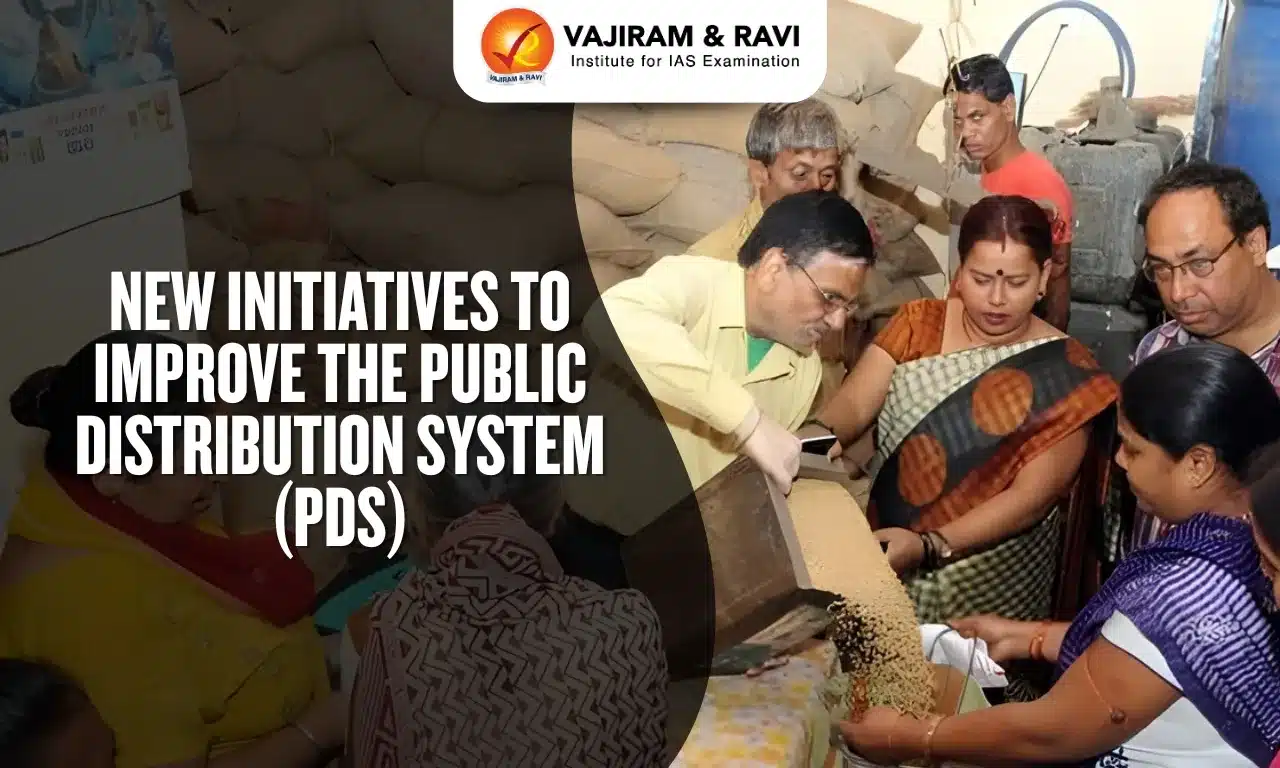
The Union Food and Public Distribution Ministry recently launched several digital initiatives aimed at modernising warehousing operations, improving supply chain efficiency, and enhancing transparency across the Public Distribution System (PDS).

About Anna Sahayata Holistic AI Solution (ASHA)

  • It is an AI-based platform that allows Public Distribution System (PDS) beneficiaries to share their feedback on ration distribution through AI-enabled calls in their preferred language. 
  • It was introduced by the Department of Food and Public Distribution.
  • The platform runs at a cost of ₹5 lakh.
  • ASHA reaches 20 lakh beneficiaries monthly across India, developed in partnership with the Wadhwani Foundation and backed by the India AI mission via Bhashini’s multilingual AI infrastructure.
  • Through ASHA, beneficiaries can report whether they received their full entitlement, the quality of foodgrains, and any difficulty faced at Fair Price Shops.
  • The system uses multilingual translation, sentiment analysis, automated grievance categorisation, and real-time dashboards for administrators

About Bhandaran 360

  • It is the Central Warehousing Corporation’s new Enterprise Resource Planning platform.
  • Implemented ahead of schedule, the system integrates 41 modules covering HR, finance, marketing, warehouse management, contract management, project monitoring, and other core functions.
  • It is also linked with 35 external systems, including ICEGATE, port systems, FCI, NAFED, NCCF, and WDRA, enabling seamless digital connectivity across the food storage and movement ecosystem.
  • The New System Introduces:
    • Single Sign-On and role-based access to improve security and reduce manual dependency.
    • End-to-end data encryption and audit trails.
    • Real-time dashboards showing operations from warehouse level to corporate level.
    • Automated workflows with Chatbots and RPA to improve turnaround time.
    • Predictive analytics for faster decision-making
  • The upgraded platform also adds several new features such as a lead and marketing management module, integrated HRMS, project planning, SAP FICO, smart material management, biometric and geo-tagged attendance, a mobile app for measurement books, and strengthened contract monitoring.

About Smart EXIM Warehouse System

  • It was introduced by the Central Warehousing Corporation for container freight stations and general warehouses.
  • This system uses AI, IoT, FASTag, OCR/ANPR, GNSS, and other technologies to automate key processes.
  • Major Components:
    • Gate Automation System integrated with port and rail systems for auto-fetching vehicle and container details, FASTag-based entry, and automatic record generation
    • Yard Management with Digital Twin, providing real-time tracking of containers and equipment and optimizing movement inside the yard
    • Smart Inventory Management, which counts and tracks cargo in real time and auto-updates records with ERP-WMS integration.

About ANNA DARPAN

  • It was introduced by the Food Corporation of India (FCI).
  • It is a new microservices-based platform that replaces the existing Depot Online System.
  • It connects key activities such as procurement, storage, movement, sales, quality checks, labour management and contract monitoring under one integrated system.
  • It serves as a single unified source of truth for both FCI and the Department of Food and Public Distribution.
  • Key Features:
    • A mobile-first design for anytime access.
    • Smooth integration with internal and external systems for uniform data.
    • Real-time dashboards across mandis, depots, railheads, and offices.
    • A single, reliable information flow for faster decisions and improved transparency.
  • The platform is expected to significantly improve the efficiency of India’s food supply chain.

Source: TH

New Initiatives to Improve the Public Distribution System (PDS) FAQs

Q1: What is the main purpose of the Anna Sahayata Holistic AI Solution (ASHA)?

Ans: Enable PDS beneficiaries to provide feedback through AI-enabled calls.

Q2: What is Bhandaran 360 in the context of warehousing?

Ans: It is the Central Warehousing Corporation’s new Enterprise Resource Planning platform.

Q3: Which technologies power the Smart EXIM Warehouse System’s automation?

Ans: This system uses AI, IoT, FASTag, OCR/ANPR, GNSS, and other technologies to automate key processes.

Q4: What is ANNA DARPAN platform?

Ans: It is a new microservices-based platform that replaces the existing Depot Online System.

Raulane Festival

Raulane Festival

Raulane Festival Latest News

Bright, colourful, and quite fascinating photos of the Raulane festival from Himachal Pradesh recently went viral on social media, with users discussing the unique ritual and culture of a centuries-old tradition.

About Raulane Festival

  • It is a traditional festival celebrated in Kalpa, Kinnaur district, Himachal Pradesh, in winter or early spring.
  • It is believed to be around 5,000 years old.
  • This ancient festival honours celestial fairies, known as Saunis, said to be radiant and gentle beings. 
  • Locals believe that the Saunis protect villagers during harsh winters by offering warmth and guidance.
  • During the festival, two men symbolically "marry" and become vessels for the Saunis, embodying a divine couple, the Raula (groom) and the Raulane (bride).
  • They get dressed in heavy woollen robes, ornaments and unique face masks. 
  • They also perform a slow, meditative dance at the Nagin Narayan Temple, and the whole community joins in.
  • The Raulane festival preserves ancient Himalayan culture and traditions, with villagers coming together to honour their protectors.

Source: NDTV

Raulane Festival FAQs

Q1: The Raulane Festival is traditionally celebrated in which region?

Ans: Kalpa in Kinnaur district, Himachal Pradesh

Q2: The Raulane Festival is believed to be approximately how old?

Ans: 5,000 years

Q3: The Raulane festival is dedicated to which celestial beings?

Ans: Raulane festival honours celestial fairies, known as Saunis, said to be radiant and gentle beings.

Q4: During Raulane, two men symbolically “marry” to represent which figures?

Ans: A divine couple, the Raula (groom) and the Raulane (bride).

Tetrachloroethylene

Tetrachloroethylene

Tetrachloroethylene Latest News

Researchers have identified that Tetrachloroethylene commonly used in dry cleaning and household items could lead to a 3x increased risk of liver diseases.

About Tetrachloroethylene

  • It appears as a clear colorless volatile liquid having an ether-like odor.
  • It is noncombustible and insoluble in water.
  • Other names for tetrachloroethylene include perchloroethylene, PCE, perc, tetrachloroethene, and perchlor
  • Health Impacts: Exposure to very high concentrations of tetrachloroethylene can cause dizziness headaches, sleepiness, incoordination confusion, nausea, unconsciousness, and even death.

How does it enter the Environment?

  • It breaks down very slowly in the air and so it can be transported long distances in the air.
  • It evaporates quickly from water into air. It is generally slow to break down in water.
  • It is generally slow to break down in soil.
  • It can also seep into soil and groundwater through factory waste or improper disposal, making drinking water another potential source of exposure.

Applications of Tetrachloroethylene

  • It is used to remove grease in industrial and household settings.
  • It is widely used for dry cleaning of fabrics
  • It is also used to make other chemicals and is used in some consumer products.

Source: HT

Tetrachloroethylene FAQs

Q1: What is the use of tetrachloroethylene?

Ans: It is used as a degreasing agent in vapour and liquid forms.

Q2: What is the primary route of exposure to Tetrachloroethylene?

Ans: Inhalation is the most common route of exposure to Tetrachloroethylene.

Antiphospholipid Syndrome (APS)

Antiphospholipid Syndrome

Antiphospholipid Syndrome Latest News

A 29-year-old man with a rare autoimmune condition, antiphospholipid syndrome, survived a second stroke and simultaneous clots in his heart and leg after a coordinated emergency intervention at a Chennai city hospital.

About Antiphospholipid Syndrome

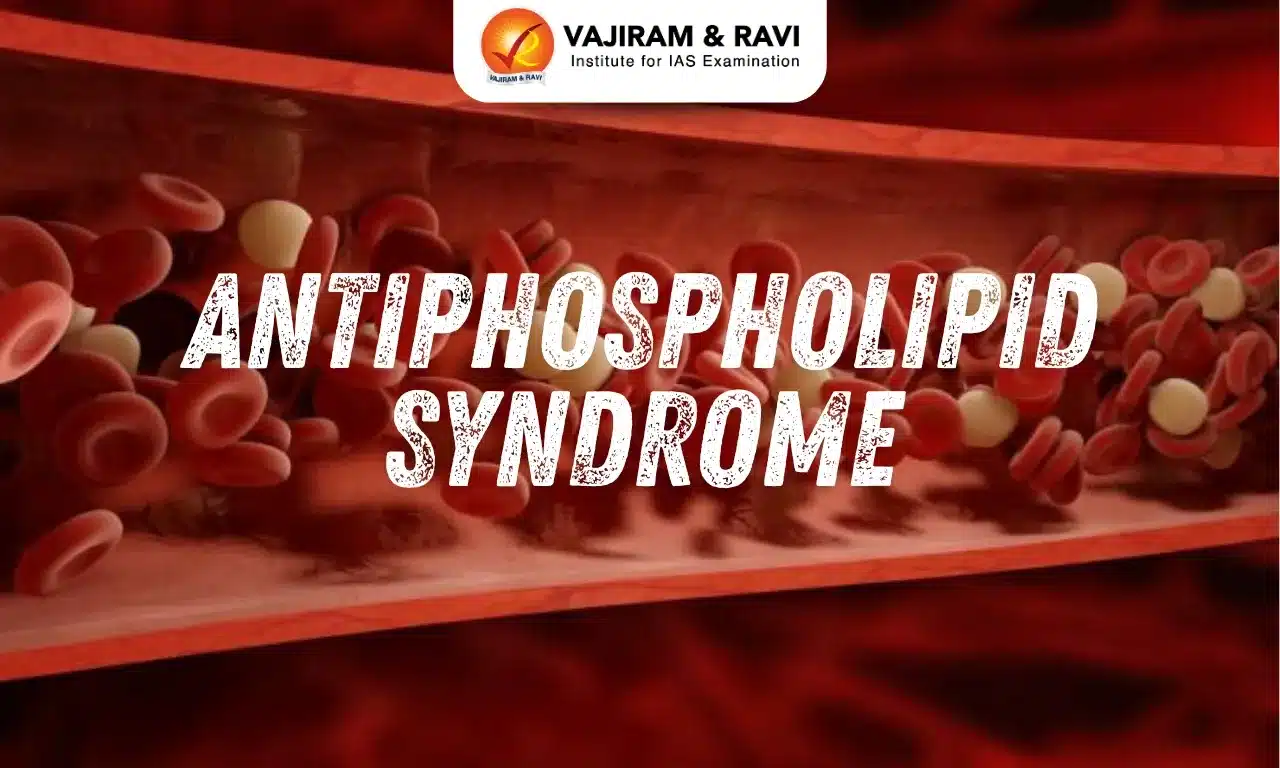
  • It is a rare autoimmune condition in which the immune system mistakenly makes certain abnormal antibodies that attack tissues in the body. 
  • These antibodies target proteins attached to fat molecules (phospholipids), which makes the blood more likely to clot.
  • APS can cause blood clots to form in arteries and veins.
    • Blood clots can form in the legs, lungs, and other organs, such as the kidneys and spleen.
    • The clots can lead to heart attack, stroke, and other conditions. 
  • During pregnancy, APS also can result in miscarriage and stillbirth. 
  • Some people who have the antibodies may not have any symptoms.
  • There's no cure for this uncommon condition, but medicines can reduce the risk of blood clots and miscarriage.
  • It is more common in women than in men. 
  • Having another autoimmune condition, such as systemic lupus erythematosus or other connective tissue diseases, increases the risk of APS.

Source: TH

Antiphospholipid Syndrome (APS) FAQs

Q1: What type of medical condition is Antiphospholipid Syndrome (APS)?

Ans: A rare autoimmune condition involving abnormal antibodies.

Q2: What do the antibodies in Antiphospholipid Syndrome (APS) primarily target?

Ans: Proteins attached to phospholipids.

Q3: What is the major complication of Antiphospholipid Syndrome (APS)?

Ans: Formation of blood clots in arteries and veins.

Trade Intelligence and Analytics Portal

Trade Intelligence and Analytics Portal

Trade Intelligence and Analytics Portal Latest News

Recently, the Union Minister of Commerce and Industry launched the Trade Intelligence & Analytics (TIA) Portal in New Delhi. 

About Trade Intelligence and Analytics Portal

  • It is a one-stop trade intelligence and analytics platform that integrates multiple global and national databases.
  • It is developed by the Department of Commerce, Minister of Commerce and Industry. 

Features of Trade Intelligence and Analytics Portal

  • It serves as a centralized digital hub that consolidates diverse trade databases—both global and bilateral—into a single integrated system.
  • It is designed to enhance trade analytics and foster data-driven evidence-based policymaking through a comprehensive and integrated platform.
  • It offers more than 270 interactive visualisations across over 28 dashboards.
  • It provides real-time, interactive insights on India and global trade, commodities and sectoral analytics, market intelligence. 
  • It also includes automated trade reports and tracking of trade trends for the production-linked incentive (PLI) sectors and critical minerals.
  • It also provides tools to compare and contrast macroeconomic, trade and investment indicators across countries.
  • It incorporates trade indices such as
    • Trade Complementarity Index: It assesses alignment between India’s export profile and partner countries’ import needs.
    • Revealed Comparative Advantage index: It highlights products where India holds a competitive edge.
    • Trade Intensity Index: It measures the strength of bilateral trade relationships relative to global flows.
  • Significance: Its new and more exhaustive capabilities of the TIA Portal significantly improve accessibility and usability of trade data at one place.

Source: PIB

Trade Intelligence and Analytics Portal FAQs

Q1: What is the primary objective of the Trade Intelligence and Analytics Portal?

Ans: To provide real-time trade data and analytics.

Q2: Which department developed the Trade Intelligence and Analytics Portal?

Ans: Department of Commerce

Ginkgo-Toothed Beaked Whale

Ginkgo-Toothed Beaked Whale

Ginkgo-Toothed Beaked Whale Latest News

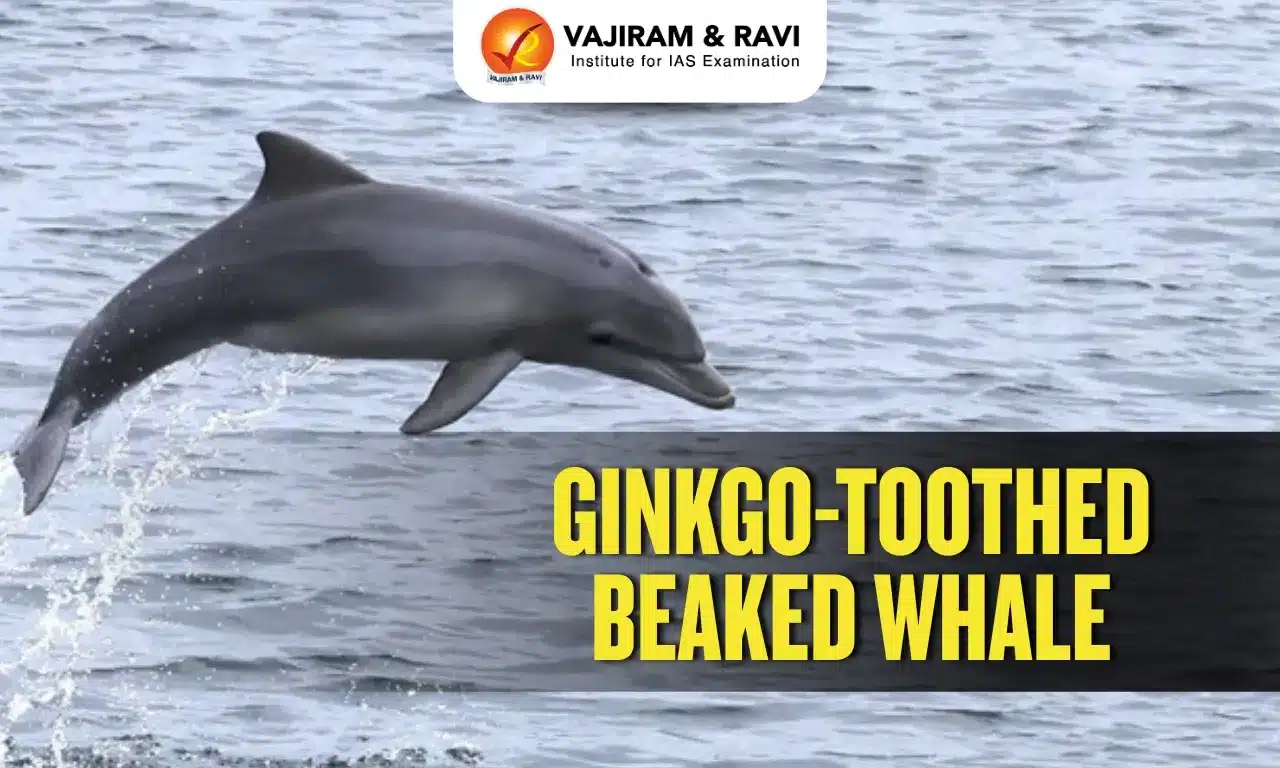
Recently, a team of scientists has spotted the rare ginkgo-toothed beaked whales (Mesoplodon ginkgodens) for the first time in the wild along the coast of Baja California in Mexico. 

About Ginkgo-Toothed Beaked Whale

  • It is one of 24 species of beaked whales, which are the second most diverse group of cetaceans after dolphins.
  • Distribution:  It resides in tropical and temperate waters throughout the Pacific and Indian Oceans.

Appearance of Ginkgo-Toothed Beaked Whale

  • It has a robust body and is less heavily scarred than other beaked whales.
  • The flippers are small, pointed and narrow.
  • It has a pair of distinguishing ginkgo-shaped teeth, one on each side of the lower jaw towards the middle of the beak.

Characteristics of Ginkgo-Toothed Beaked Whale

  • These beaked whales are the deepest-diving mammals on Earth.
  • They spend most of their lives in the oceans, only coming to the surface for air for a few minutes at a time, usually far away from coastlines.
  • They are very shy and easily frightened when approached by a boat.

Conservation Status of Ginkgo-Toothed Beaked Whale

  • IUCN Red List: Data Deficient
  • CITES: Appendix II

Source: IE

Ginkgo-Toothed Beaked Whale FAQs

Q1: What is distinctive about the Ginkgo-Toothed Beaked Whale's teeth?

Ans: They are shaped like a ginkgo leaf.

Q2: What is the conservation status of the Ginkgo-Toothed Beaked Whale?

Ans: Data Deficient

Viscose Staple Fibre

Viscose Staple Fibre

Viscose Staple Fibre Latest News

Recently, the Central Government has revoked the Quality Control Order (QCO) requirement for Viscose Staple Fibre (VSF) with immediate effect. 

About Viscose Staple Fibre

  • It is a natural and biodegradable fiber which has characteristics that are similar to cotton. 
  • It is produced by regenerating natural materials, such as cotton linter or wood pulp.

Production Process of Viscose Staple Fibre

  • It is made by processing cellulose xanthate, (main constituent of plant cell walls) which is extracted from wood and plant fibres into a viscous liquid.
  • It is then subjected to a series of chemical processes to make a fibre.

Characteristics of Viscose Staple Fibre

  • It is used as a substitute for cotton or polyester due to its favorable properties, such as good breathability, high moisture absorbency, and comfort.
  • It is a versatile fibre which blends very well with other fibres.
  • It has excellent colour retention capacity and is relatively light.
  • Chemically, viscose resembles cotton, but it can also take on many different qualities depending on its manufacture.

Applications of Viscose Staple Fibre

  • It is a highly versatile material that is widely adopted in the fashion & apparel industry.
  • It is widely used for home textiles, dress materials, knitted wear and non-woven applications.

Source: News On Air

Viscose Staple Fibre FAQs

Q1: Which country is a major producer of Viscose Staple Fibre?

Ans: China

Q2: What is viscose staple fiber?

Ans: It is a biodegradable fiber derived from natural sources that shares similarities with cotton.

African Swine Fever

African Swine Fever

African Swine Fever Latest News

The Assam Government recently banned the inter-District movement of live pigs in the State to arrest the spread of African swine fever, a highly contagious and lethal disease.

About African Swine Fever 

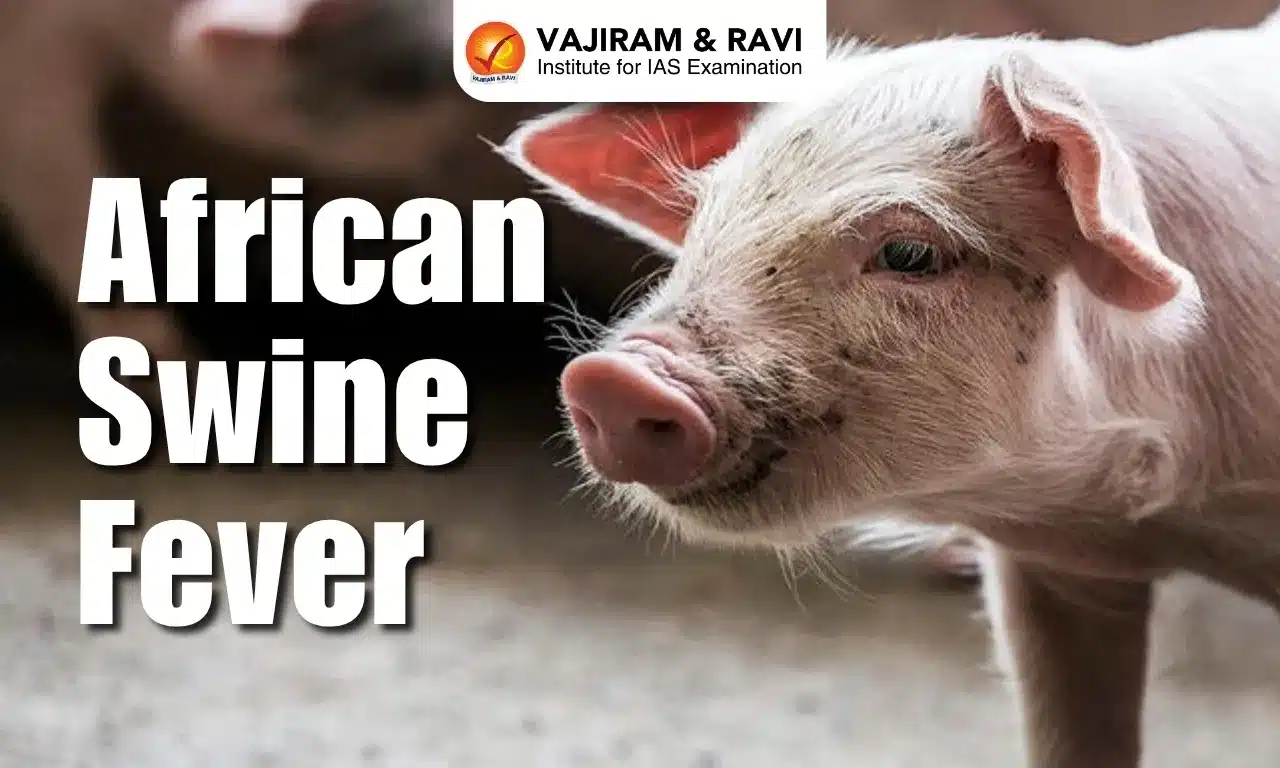
  • It is a highly contagious and hemorrhagic viral disease affecting pigs and wild boar.
  • The disease does not infect humans (not zoonotic) or other livestock species.
  • ASF causes a destructive effect on piggery due to high morbidity and mortality (up to 90-100%).
  • Originally found throughout sub-Saharan Africa, ASF is now prevalent in many countries in Europe, Asia, and Africa. 
  • India notified the first outbreak of ASF virus in January, 2020 in the Northeastern States of Assam and Arunachal Pradesh.
  • Transmission
    • The virus is highly resistant in the environment, meaning that it can survive on clothes, boots, wheels, and other materials. 
    • It can also survive in various pork products, such as ham, sausages, or bacon. 
    • Therefore, human behaviours can play an important role in spreading this disease.
    • Infection can occur through direct contact between pigs or boars, but also, for example, through soft ticks in (sub)tropical regions, through contaminated materials or contaminated feed.
  • Symptoms: The clinical symptoms can look very much like those of classical swine fever: fever, weak pigs, lack of appetite, inflamed eye mucous membranes, red skin, (bloody) diarrhea, and vomiting.
  • Prevention: Currently, there is no treatment or vaccine available against ASF, so prevention by adopting strict biosecurity measures, such as culling the animals, is the only way to prevent ASF.

Source: TH

African Swine Fever FAQs

Q1: What is African Swine Fever (ASF)?

Ans: It is a highly contagious and hemorrhagic viral disease affecting pigs and wild boar.

Q2: What is the mortality rate associated with African Swine Fever (ASF) outbreaks?

Ans: 90–100%

Q3: India reported its first ASF outbreak in January 2020 in which region?

Ans: Northeastern States

Q4: Does a vaccine exist for African Swine Fever (ASF)?

Ans: Currently, there is no treatment or vaccine available against ASF

Leadership Group for Industry Transition

Leadership Group for Industry Transition

Leadership Group for Industry Transition Latest News

Recently, the Union Minister for Environment, Forest and Climate Change addressed the Leadership Group for Industry Transition (LeadIT) Industry Leaders’ Roundtable, during UNFCCC CoP30 at Belém, Brazil.

About Leadership Group for Industry Transition

  • It was jointly launched by the governments of Sweden and India at the UN Climate Action Summit in September 2019.
  • It is supported by the World Economic Forum.
  • It was the first global high level initiative aimed at reaching net zero emissions from heavy industry. 
  • Aim: It gathers countries and companies that are committed to reaching net-zero carbon emissions from industry by 2050.
  • LeadIT fosters public and private partnerships to enable the necessary policy environment, finance flows, and exchange of best practice for a just and inclusive industry transition.
  • LeadIT 2.0 was initiated for the period 2024-26, at COP-28 in Dubai which focus on
    • Inclusive & Just Industry Transition
    • Co-development & transfer of low-carbon technology
    • Financial support to emerging economies for Industry Transition
    • LeadIT’s three-year Mission Statement, adopted at the annual LeadITSummit at COP28.
  • Secretariat: It is hosted by the Stockholm Environment Institute.
  • Member countries: 18 countries and 27 companies

Source: PIB

Leadership Group for Industry Transition FAQs

Q1: What is the primary objective of LeadIT?

Ans: To accelerate the transition of all industry sectors to low carbon pathways to reach net-zero carbon emissions by 2050.

Q2: Which countries launched LeadIT?

Ans: India and Sweden

Army Tactical Missile Systems (ATACMS)

Army Tactical Missile System (ATACMS)

Army Tactical Missile System (ATACMS) Latest News

Ukraine’s military recently said that it had struck military targets inside Russia using US-supplied ATACMS missiles, calling the operation a “significant development.

About Army Tactical Missile System (ATACMS)

  • It is a series of surface-to-surface ballistic missiles developed in the United States. 
  • It is manufactured by the US defense company Lockheed Martin.
  • ATACMS was first developed by the U.S. in the 1980s to rival the former Soviet Union’s long-range artillery and missile systems. 
  • It is also designated M39 by the US Army, and its Department of Defence (DoD) designation is MGM-140.
  • The missile first saw use during the 1991 Persian Gulf War.
  • This weapon’s known operators other than the US are Bahrain, Greece, South Korea, Taiwan, and the United Arab Emirates.

Army Tactical Missile System (ATACMS) Features

  • ATACMS are 24/7, all-weather, surface-to-surface, inertially guided ballistic missiles.
  • Range: It has a range of about 190 miles (305 km).
  • Propulsion: Single-stage, solid propellant.
  • These missiles are fired from either the tracked M270 Multiple Launch Rocket System (MLRS) or the wheeled M142 High Mobility Artillery Rocket System (HIMARS). 
  • Each one costs around $1.5m (£1.2m).
  • They can be configured to carry two different types of warhead. 
    • The first is a cluster fitted with hundreds of bomblets designed to destroy lighter-armoured units over a wide area. 
    • The second type is a single warhead, a 225 kg high explosive variant of which is designed to destroy hardened facilities and larger structures.
  • ATACMS missiles travel at high altitudes before descending at immense speeds, making them difficult to intercept.

Source: FP

Army Tactical Missile System (ATACMS) FAQs

Q1: The Army Tactical Missile System (ATACMS) was developed by which country?

Ans: United States

Q2: Army Tactical Missile System (ATACMS) was first used in which conflict?

Ans: 1991 Persian Gulf War

Q3: What is the approximate maximum range of Army Tactical Missile System (ATACMS)?

Ans: It has a range of about 190 miles (305 km).

Enquire Now