
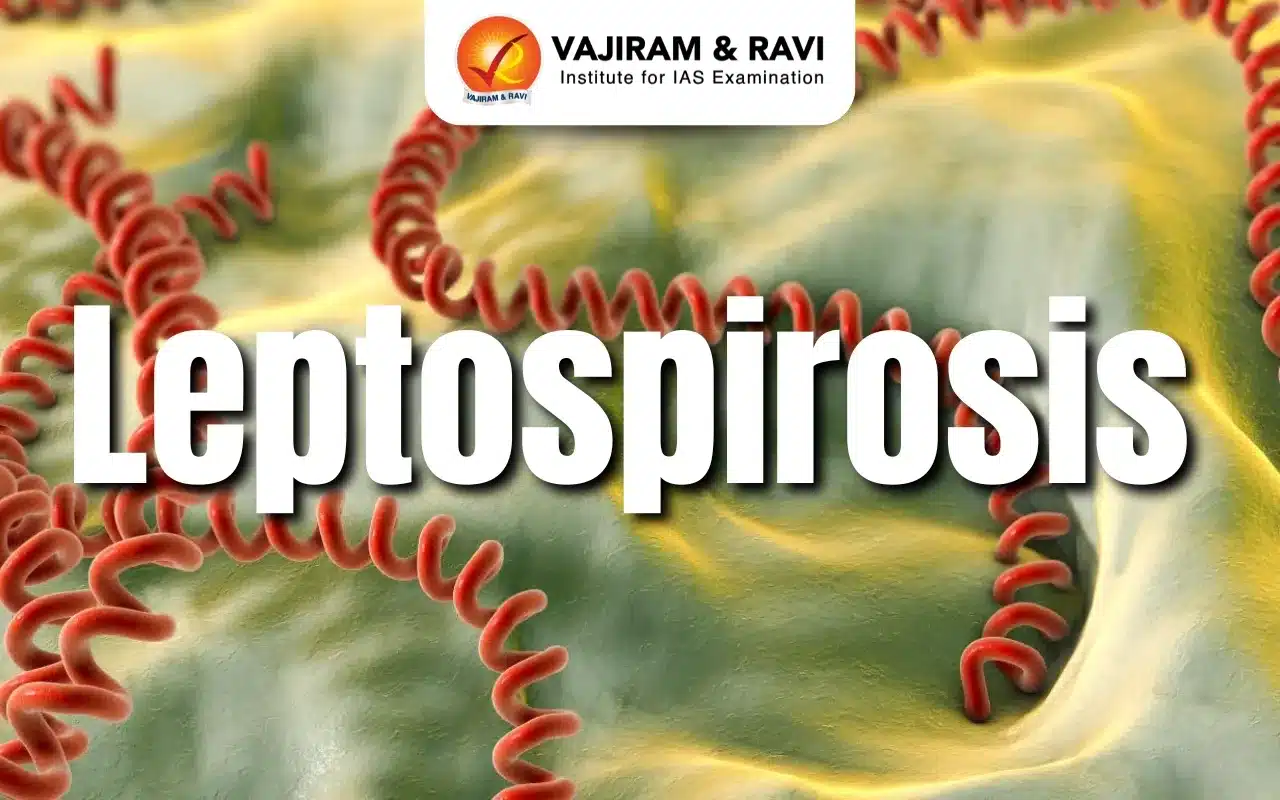
Leptospirosis Latest News
Recently, Jamaica has declared an outbreak of leptospirosis following the devastation from Hurricane Melissa.
About Leptospirosis
- It is a fatal bacterial disease.
- Cause: The disease is caused by a bacterium called Leptospira interrogans, or Leptospira.
- The bacteria can infect humans by entering the body through tiny cracks and wounds in the soles of the feet.
- Prevalence: It is more prevalent in warm, humid countries and both urban and rural areas.
- Leptospirosis may occur in two phases
- After the first phase (symptoms: fever, chills, headache, muscle aches, vomiting, or diarrhoea) the patient may recover for a time but become ill again.
- If a second phase occurs, it is more severe; the person may have kidney or liver failure or meningitis.
- Treatment: It can be treated with antibiotics.
Transmission of Leptospirosis
- It is a contagious disease in animals but is occasionally transmitted to humans in certain environmental conditions.
- The carriers of the disease can be either wild or domestic animals, including rodents, cattle, pigs, and dogs.
- The cycle of disease transmission begins with the shedding of leptospira, usually in the urine of infected animals.
- Infected animals can continue to excrete the bacteria into their surroundings for a few months, but sometimes up to several years.
Source: TH
Leptospirosis FAQs
Q1: What is Leptospirosis?
Ans: A bacterial disease
Q2: What are the common symptoms of Leptospirosis?
Ans: Fever, headache, and muscle pain
