Taningia silasii

Taningia silasii

Taningia silasii Latest News

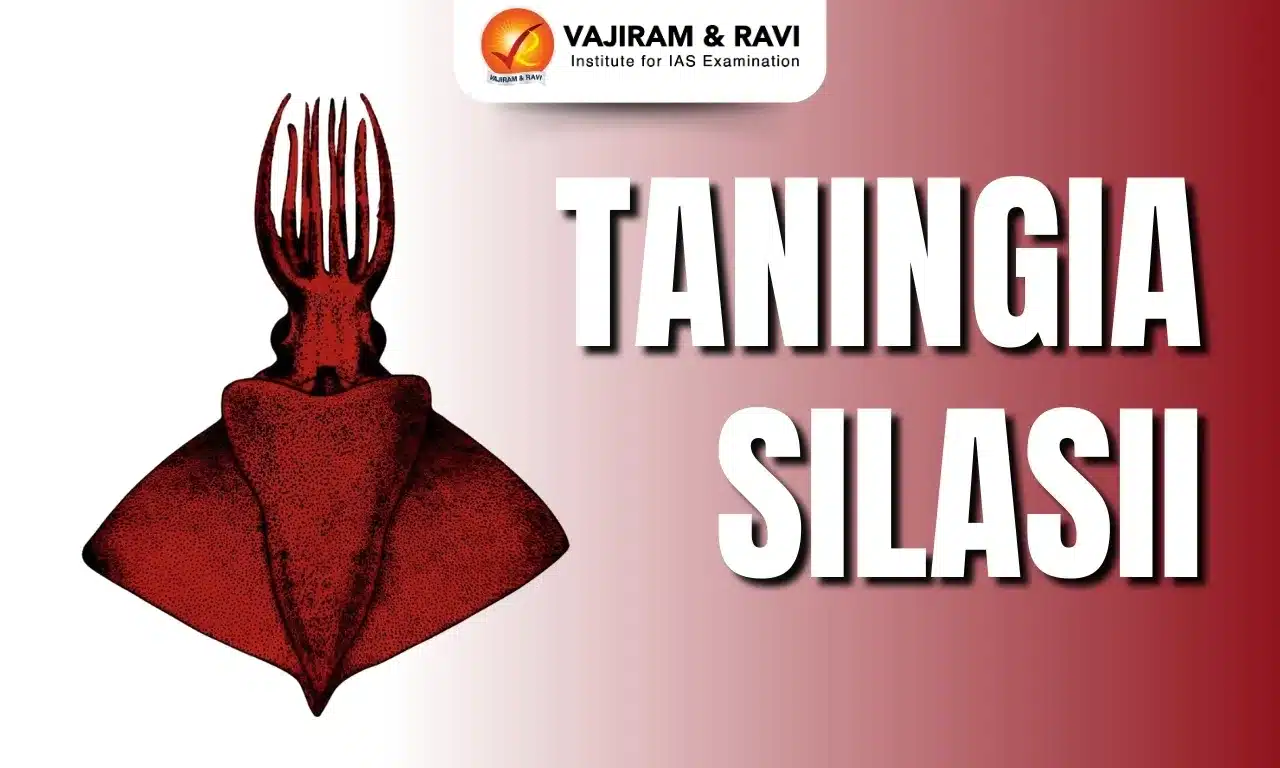
Researchers of the Central Marine Fisheries Research Institute (CMFRI), Kochi have discovered a new species of deep-sea squid from the Arabian Sea and named it as Taningia silasii (Indian octopus squid).

About Taningia silasii

  • It is discovered from the Arabian Sea from nearly 390 metres into the sea off the Kollam coast.
  • It belongs to the family Octopoteuthidae.
  • It is the only second formally recognised species in the Taningia genus. (Taningia danae was the first species found in the Atlantic Ocean belonging to this genus).

Characteristics of Taningia silasii

  • It has a length of 45 cm, whereas members of this family can also attain large sizes, with the Atlantic species growing up to 2.3 metres in length and weighing approximately 61.4 kg.
  • No Tentacles: One of the most striking features of the Indian octopus squid is the absence of the long feeding tentacles typically seen in most squid species.
  • Morphology: It has a reduced number of gill lamellae, which are tiny leaf-like structures on the gills. 
  • It also possesses a uniquely oval-shaped funnel-mantle locking cartilage and distinct morphological features in its beak, including a broadened wing on the lower beak.
  • DNA barcodes revealed 11% genetic divergence from its only previously confirmed relative, Taningia danae. 

Source: TH

Taningia silasii FAQs

Q1: Where was Taningia silasii discovered?

Ans: Arabian Sea

Q2: What is Taningia silasii?

Ans: A species of squid
Sulphur Dioxide

Sulphur Dioxide

Sulphur Dioxide Latest News

An analysis of Central Electricity Authority data revealed that 15 of 35 power units in the 300-km radius of Delhi continue to operate without flue gas desulphurisation (FGD) systems, which are critical for reducing sulphur dioxide emissions.

About Sulphur Dioxide

  • It is a colorless gas with a pungent odor.
  • It is a liquid when under pressure, and it dissolves in water very easily.
  • It has a pungent, irritating odor, familiar as the smell of a just-struck match.
  • Applications: It is used to manufacture chemicals, in paper pulping, in metal and food processing.
  • Impacts of Sulphur Dioxide: It is harmful for human health, environment and climate.

Occurrence of Sulphur Dioxide

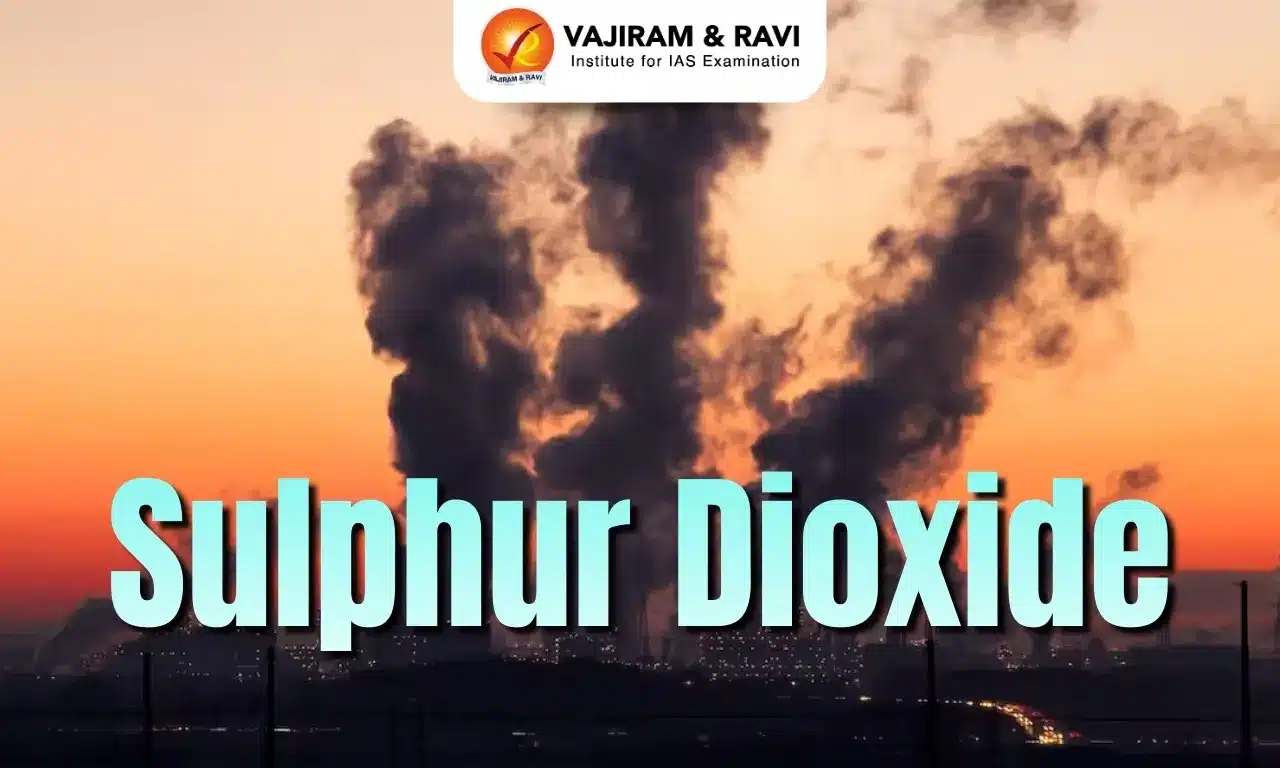
  • Sulfur dioxide in the air comes mainly from activities such as the burning of coal and oil at power plants or from copper smelting.
  • It is usually prepared industrially by the burning in air or oxygen of sulfur or such compounds of sulfur as iron pyrite or copper pyrite.
  • In nature, sulfur dioxide can be released to the air from volcanic eruptions.
  • The largest source of SO2 in the atmosphere is the burning of fossil fuels by power plants and other industrial facilities.

What is Flue Gas Desulphurisation (FGD)?

  • It is a pollution-control process that removes Sulphur Dioxide (SOâ‚‚) from the flue gases produced by the combustion of fossil fuels, especially coal.
  • FGD systems typically use limestone (CaCO₃), lime (CaO), or ammonia (NH₃) to react with and neutralize SOâ‚‚ in flue gases.

Source: IE

Sulphur Dioxide FAQs

Q1: What is the chemical formula of Sulphur Dioxide?

Ans: SO2

Q2: What is the effect of Sulphur Dioxide on human health?

Ans: It causes respiratory problems and skin irritation.

Sukhna Wildlife Sanctuary

Sukhna Wildlife Sanctuary

Sukhna Wildlife Sanctuary Latest News

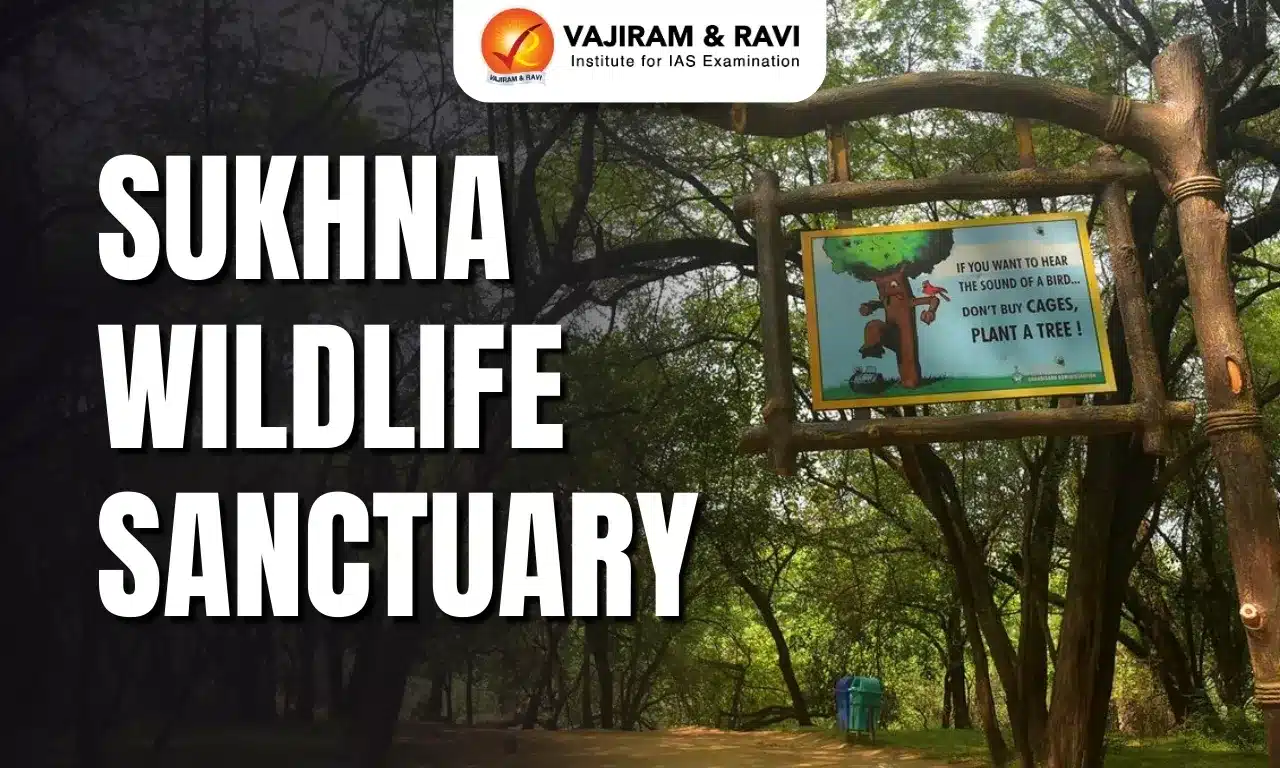
A 9-day wildlife census recently began in the Sukhna wildlife sanctuary.

About Sukhna Wildlife Sanctuary

  • It is a protected area located in Chandigarh, near the famous Sukhna Lake at the foothills of the Shivalik range.
  • The lake was created by the architect Le Corbusier in 1958 by diverting the Sukhna Choe, a seasonal stream that flows down from the Shivalik hills. 
  • The sanctuary was developed as a result of afforestation done for soil conservation around Sukhna Lake. 
  • Spreading over an area of 2600 hectares, Sukhna Wildlife Sanctuary was established in 1998.
  • The place is quite unstable geographically and becomes prone to soil erosion by surface runoff during rains.
  • It has sandy soil of Shivalik with pockets of clay embedded at places. 
  • Apart from the Sukhna Lake, there are around 150 small and large water bodies in the sanctuary that form its catchment area.
  • Vegetation: It is characterized by a mix of forests, grasslands, and wetlands, with the Sukhna Lake forming an important part of the ecosystem.
  • Flora: The common flora of the sanctuary includes Khair, Phulai, Kikar, Shisham, Moonj, Amaltas, Jhingan, Amla, Rati, Vasaka, and many more.
  • Fauna: 
    • Squirrels, Common-Mongoose, Indian Hare, Porcupine, Jungle Cat, Jackal, Wild boar, etc, are the mammals found in the sanctuary.
    • It is known to have the most number of sambar (a type of antelope) found in a group or cluster than anywhere else in the country.
    • Peacock, Hill myna, Jungle crow, Black drongo, Parrots, Doves, and others are the common birds of this region. Migratory birds also flock around this place.

Source: TR

Sukhna Wildlife Sanctuary FAQs

Q1: Where is the Sukhna Wildlife Sanctuary located?

Ans: It is a protected area located in Chandigarh.

Q2: At the foothills of which mountain range does the Sukhna Wildlife Sanctuary lie?

Ans: Shivalik range

Q3: Who created Sukhna Lake in 1958?

Ans: The lake was created by the architect Le Corbusier in 1958.

Juvenile Justice Board

Juvenile Justice Board

Juvenile Justice Board Latest News

Juvenile Justice and Children in Conflict with the Law: A Study of Capacity at the Frontlines’, by the India Justice Report (IJR) highlighted that more than half (55%) of the cases before 362 Juvenile Justice Boards (JJBs) remained pending as of October 31, 2023.

About Juvenile Justice Board

  • It is formed under section-4 of the Juvenile Justice Act, 2015 which functions relating to children in conflict with law under this Act.
  • It states that, the state government shall constitute for every district, one or more Juvenile Justice Boards.

Composition of Juvenile Justice Board

  • A board shall consist of
    • Metropolitan Magistrate or
    • A Judicial Magistrate of first class not being Chief Metropolitan Magistrate or
    • Chief Judicial Magistrate referred to as Principal Magistrate with at least three years’ experience
    • Two social workers selected in such a manner as may be prescribed, of whom at least one shall be a woman.

Powers of Juvenile Justice Board

  • Under Section 15, special provisions have been made to tackle child offenders committing heinous offences in the age group of 16-18 years.
  • The Juvenile Justice Board is given the option to transfer cases of heinous offences by such children to a Children’s Court (Court of Session) after conducting preliminary assessment.

Functions of Juvenile Justice Board

  • The board's responsibility is to ensure that the child’s rights are protected throughout the process of apprehending the child, inquiry, aftercare and rehabilitation.
  • It also ensures the availability of legal aid for the child through the legal services institutions.
  • The board undertakes at least one inspection visit every month of residential facilities for children in conflict with law and recommends action for improvement in quality of services to the District Child Protection Unit and the state government.

Source: TH

Juvenile Justice Board FAQs

Q1: What is the primary objective of the Juvenile Justice Board?

Ans: To rehabilitate and reintegrate juvenile offenders

Q2: Who is the chairperson of the Juvenile Justice Board?

Ans: A judicial magistrate

Strait of Malacca

Strait of Malacca

Strait of Malacca Latest News

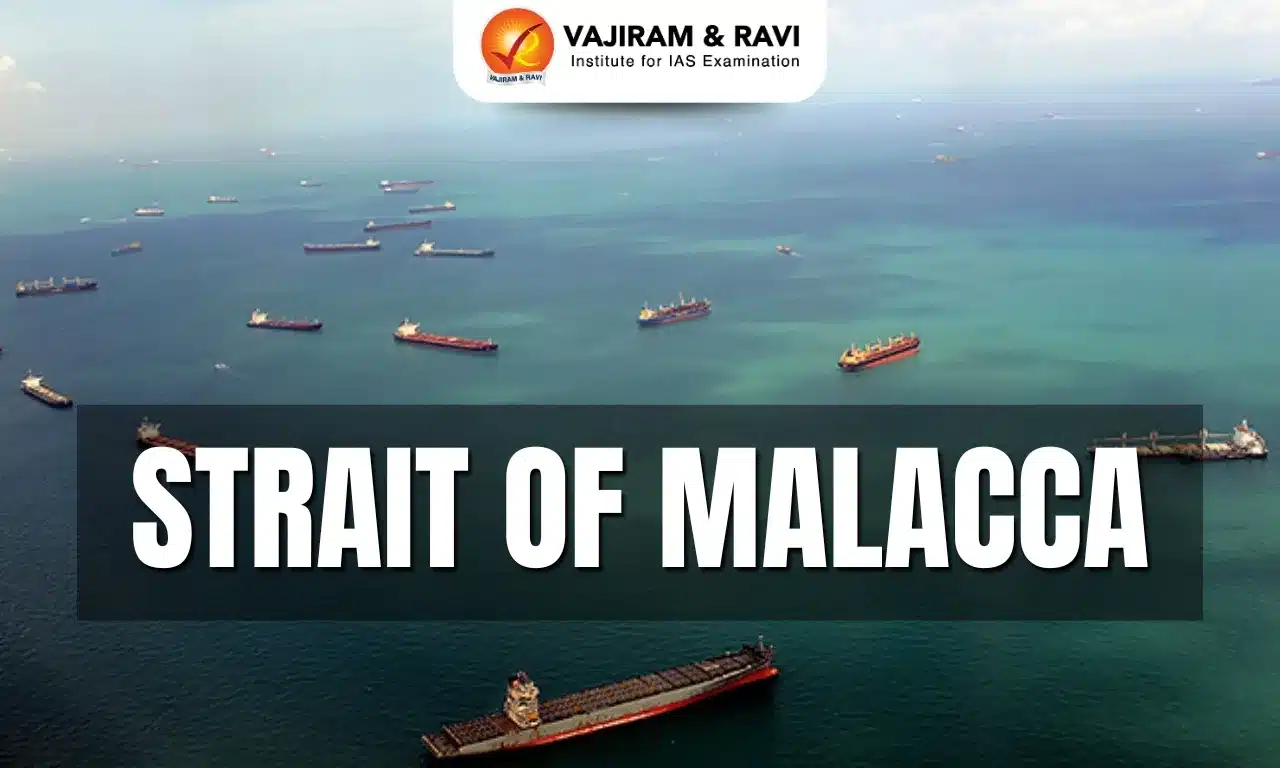
A new cyclonic circulation recently developed over the central region of the Strait of Malacca, reaching an altitude of 5.8 km.

About Strait of Malacca

  • It connects the Andaman Sea (Indian Ocean) and the South China Sea (Pacific Ocean).
  • It runs between the Indonesian island of Sumatra to the west and peninsular (West) Malaysia and extreme southern Thailand to the east. 
  • The Strait of Malacca’s name was derived from the Malacca Sultanate, who governed the archipelago from 1400 until 1511.
  • The strait has a width of about 890 kilometres and a depth of 25 meters. 
  • It has an area of about 25,000 square miles (65,000 sq.km.).
  • The climate of the strait is hot and humid and is characterized by the northeast monsoon during the (northern) winter and the southwest monsoon during the summer.
  • It links the Indian and Pacific oceans and is one of the busiest and most important shipping lanes in the world.
  • Singapore, Malaysia, and Indonesia control the joint patrolling of the Malacca Strait.
  • Significance:
    • Roughly 60% of India’s seaborne trade and almost all of its LNG imports pass through the Malacca Strait.
    • The route is also a choke point for Chinese shipping, which makes it strategically sensitive.

Source: ODTV

Strait of Malacca FAQs

Q1: The Strait of Malacca connects which two major water bodies?

Ans: It connects the Andaman Sea (Indian Ocean) and the South China Sea (Pacific Ocean).

Q2: Which countries are primarily involved in the joint patrolling of the Strait of Malacca?

Ans: Singapore, Malaysia, and Indonesia

Q3: Why is the Strait of Malacca significant for India’s maritime trade?

Ans: Roughly 60% of India’s seaborne trade and almost all of its LNG imports pass through the Malacca Strait.

Sangai Festival

Sangai Festival

Sangai Festival Latest News

Recently, the Sangai Festival in Manipur began amid a protest by internally displaced persons (IDPs) and members of NGOs, impacting attendance.

About Sangai Festival

  • It is celebrated in the state of Manipur.
  • It is an annual festival, started in the year 2010, which is named after the state animal, the Sangai.
  • It aims to showcase Manipur’s rich cultural heritage and indigenous tradition.
  • The festival promotes the cultural extravaganza of Manipur through music, dance and various native art forms that are part of the Manipuri tribes and people.
  • The state's classical dance form, 'Ras Leela,' renowned for its distinctiveness, takes centerstage during the festival. 
  • Theme of 2025: Where blossoms breathe harmony

Key Facts about Sangai

  • It is a subspecies of Eld’s deer endemic to Manipur.
  • It also has immense cultural relevance to Manipur.
  • Distribution: It is found only in Keibul Lamjao National Park – the largest single mass of phumdi is in the Loktak Lake – in Manipur’s Bishnupur district.
  • Appearance: It is a medium-sized deer, with uniquely distinctive antlers, with extremely long brow tine, which form the main beam.
  • Conservation status
    • IUCN: Critically Endangered
    • Wildlife Protection Act 1972: Schedule-1

Source: TH

Sangai Festival FAQs

Q1: Which animal is the Sangai Festival named after?

Ans: Sangai Deer

Q2: What is the theme of the Sangai Festival 2025?

Ans: Where blossoms breathe harmony

Mahi River

Mahi River

Mahi River Latest News

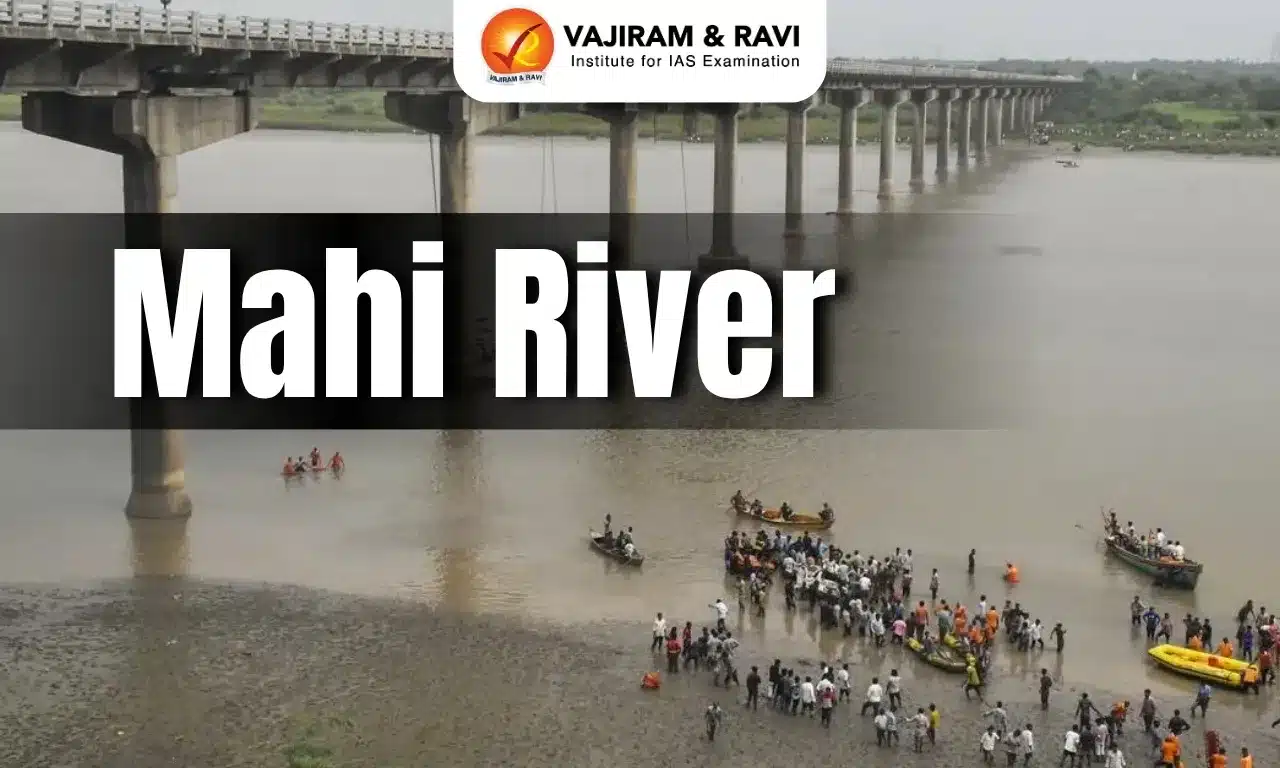
11 people were killed and several vehicles fell into the Mahisagar (Mahi) River after a section of the Gambhira-Mujpur bridge in Padra taluka of Gujarat's Vadodara collapsed recently.

About Mahi River

  • It is one of the major west-flowing interstate rivers of India.
  • It flows through the states of Madhya Pradesh, Rajasthan, and Gujarat.
  • The river is popularly described as "Mahisagar" due to its vastness.
  • Course:
    • It originates in the northern slope of the Vindhya Mountain Range in Madhya Pradesh, at an average altitude of about 500 m above mean sea level. 
    • After its birth, the river flows in the southerly direction of Madhya Pradesh for about 120 km. 
    • It enters the southeastern portion of Rajasthan, which is the Vagad region. The river flows through the Banswara district, which comes under the Vagad region. 
    • Before entering Gujarat, the river makes a `U` shaped loop in Rajasthan. 
    • Finally, the river surrenders itself to the Arabian Sea by a wide estuary near Khambat. 
  • The total length of Mahi is 583 km.
  • The total drainage area of the river is about 34,842 sq.km.
  • It is bounded by the Aravalli Hills on the north and the northwest, by the Malwa Plateau on the east, by the Vindhyas on the south, and by the Gulf of Khambhat on the west. 
  • The silt brought down by the Mahi River has contributed to the thinning of the Gulf of Khambat and the abandonment of its once-rich ports.
  • The riverbed lies considerably lower than the land level and is of little use for irrigation.
  • Tributaries: The main tributaries of the river are Eru, Nori, Chap, Som, Jakham, Moran, Anas, Panam, and Bhadar.
  • The Mahi River has a dam on it, namely, the Mahi Bajaj Sagar Dam.

Source: NDTV

Mahi River FAQs

Q1: The Mahi River flows into which water body

Ans: Arabian Sea

Q2: The Mahi River flows through which states?

Ans: Madhya Pradesh, Rajasthan, and Gujarat

Q3: The source of the Mahi River lies in which mountain range?

Ans: Vindhya Mountain Range

Q4: What is the approximate total length of the Mahi River?

Ans: 583 km

Leptospirosis

Leptospirosis

Leptospirosis Latest News

Recently, Jamaica has declared an outbreak of leptospirosis following the devastation from Hurricane Melissa. 

About Leptospirosis

  • It is a fatal bacterial disease.
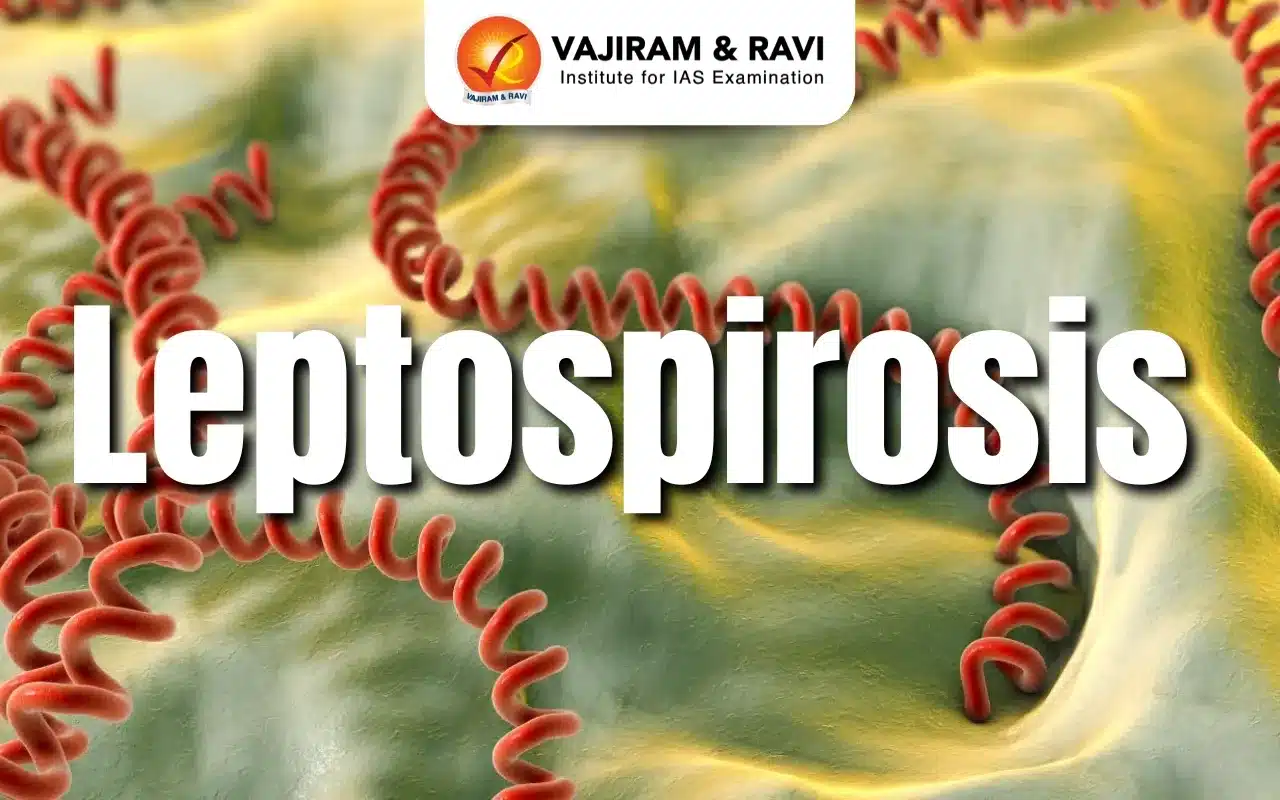
  • Cause: The disease is caused by a bacterium called Leptospira interrogans, or Leptospira.
  • The bacteria can infect humans by entering the body through tiny cracks and wounds in the soles of the feet. 
  • Prevalence: It is more prevalent in warm, humid countries and both urban and rural areas. 
  • Leptospirosis may occur in two phases
    • After the first phase (symptoms: fever, chills, headache, muscle aches, vomiting, or diarrhoea) the patient may recover for a time but become ill again.
    • If a second phase occurs, it is more severe; the person may have kidney or liver failure or meningitis.
  • Treatment: It can be treated with antibiotics.

Transmission of Leptospirosis

  • It is a contagious disease in animals but is occasionally transmitted to humans in certain environmental conditions.
  • The carriers of the disease can be either wild or domestic animals, including rodents, cattle, pigs, and dogs.
  • The cycle of disease transmission begins with the shedding of leptospira, usually in the urine of infected animals.
  • Infected animals can continue to excrete the bacteria into their surroundings for a few months, but sometimes up to several years.

Source: TH

Leptospirosis FAQs

Q1: What is Leptospirosis?

Ans: A bacterial disease

Q2: What are the common symptoms of Leptospirosis?

Ans: Fever, headache, and muscle pain

Food Safety and Standards Authority of India (FSSAI)

Food Safety and Standards Authority of India

Food Safety and Standards Authority of India Latest News

The Food Safety and Standards Authority of India (FSSAI) recently issued an order to all the States/UTs Commissioners of food safety asking them to remove all non-compliant ORS products from shops immediately.

About Food Safety and Standards Authority of India

  • It is an autonomous body established under the Ministry of Health and Family Welfare, Government of India.
  • It has been established under the Food Safety and Standards Act, 2006, which is a consolidating statute related to food safety and regulation in India.
  • FSSAI is responsible for setting food standards, regulating the manufacture, storage, distribution, sale, and import of food, and ensuring the availability of safe and wholesome food for human consumption. 
  • It lays down the science-based standards for food articles and regulates their manufacturing and distribution processes.
  • Functions:
    • Standards Development: FSSAI formulates standards for various food products, ensuring they are safe for consumption.
    • Food Safety Management Systems: It provides guidelines for businesses to implement effective food safety management practices.
    • Licensing and Registration: FSSAI manages the licensing process for food businesses, ensuring they comply with food safety regulations.
    • Surveillance and Monitoring: Regular inspections and audits are conducted to assess compliance with food safety standards.
    • Consumer Awareness: Initiatives to educate the public about food safety, hygiene, and nutrition are a key focus area.
  • Anyone selling or importing food in India needs a food licence issued by FSSAI.
  • FSSAI also directly monitors compliance of food regulations, especially in the area of food imports to India. 
  • FSSAI officers carry out food import controls and ensure that they contain no harmful ingredients. To do this, they send selected test products from the import to accredited laboratories for inspection.
  • The FSSAI is also responsible for the accreditation of food testing laboratories throughout India.
  • FSSAI has notified 14 referral labs, 72 State/UT labs across India, and 112 NABL approved commercial labs, all of which are situated throughout the country.

Source: IT

Food Safety and Standards Authority of India FAQs

Q1: The Food Safety and Standards Authority of India (FSSAI) was created under which Act?

Ans: Food Safety and Standards Act, 2006

Q2: What is the primary objective of Food Safety and Standards Authority of India (FSSAI)?

Ans: Ensure safe and wholesome food for human consumption.

Q3: What does Food Safety and Standards Authority of India (FSSAI) do to ensure safety of imported food items?

Ans: Sends selected samples to accredited laboratories for testing.

Microplastics

Microplastics

Microplastics Latest News

Weather conditions, especially continuous rainfall, drive microplastics into city lakes, a new study reports.

About Microplastics

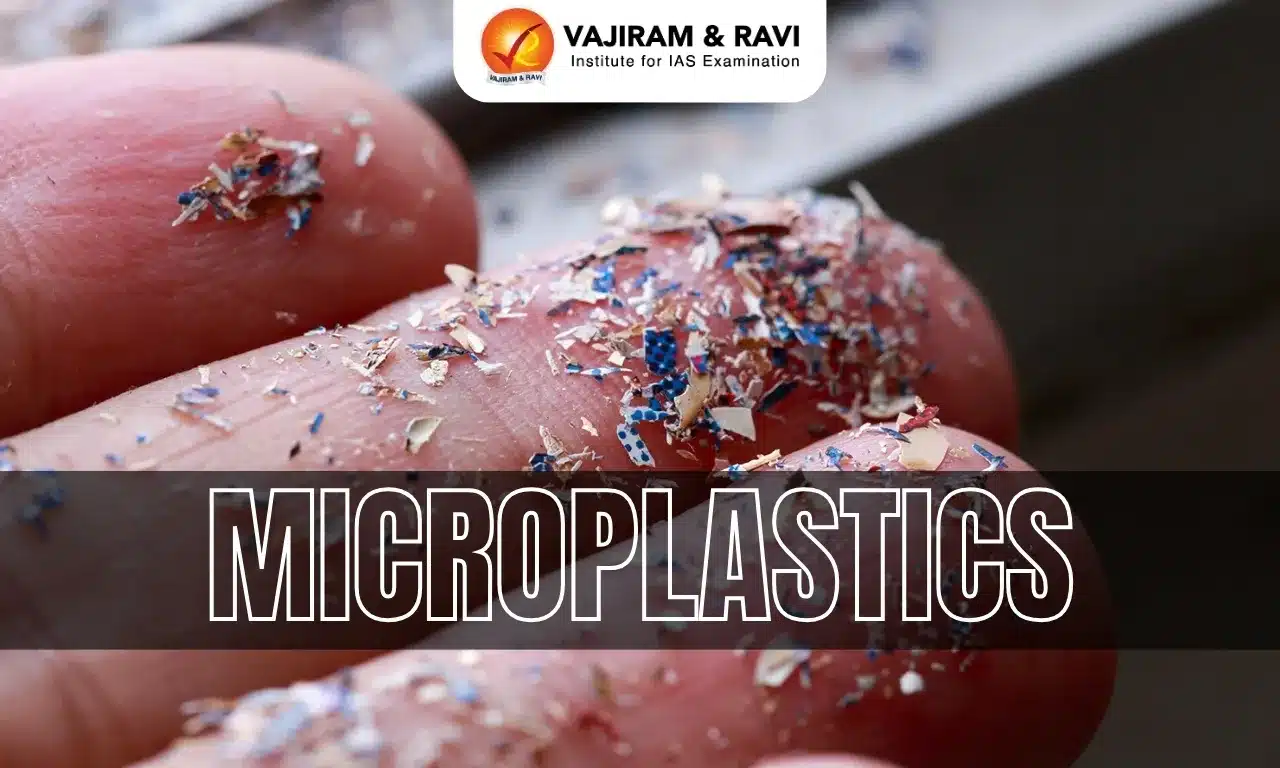
  • Microplastics are small pieces of plastics, usually smaller than 5 mm.
  • They are present in a variety of products, from cosmetics to synthetic clothing to plastic bags and bottles. Many of these products readily enter the environment as wastes.
  • Microplastics consist of carbon and hydrogen atoms bound together in polymer chains. 
  • Other chemicals, such as phthalates, polybrominated diphenyl ethers (PBDEs), and tetrabromobisphenol A (TBBPA), are typically also present in microplastics, and many of these chemical additives leach out of the plastics after entering the environment.
  • They are persistent, very mobile, and hard to remove from nature. 
  • There are two categories of microplastics: primary and secondary.
    • Primary microplastics are tiny particles designed for commercial use, such as cosmetics, as well as microfibers shed from clothing and other textiles, such as fishing nets. 
    • They enter the environment directly through any of various channels—for example, product use, unintentional loss from spills during manufacturing or transport, or abrasion during washing.
    • Secondary microplastics are particles that result from the breakdown of larger plastic items, such as water bottles. 
    • This breakdown is caused by exposure to environmental factors, mainly the sun’s radiation and ocean waves.
  • Impacts:
    • Once in the environment, microplastics do not biodegrade and tend to accumulate and persist.
    • They can be ingested by marine organisms, leading to potential harm to aquatic life and bioaccumulation along the food chain.
    • They can also carry toxic chemicals and pollutants, posing additional risks to organisms and ecosystems.

Source: TOI

Microplastics FAQs

Q1: What are microplastics?

Ans: Microplastics are small pieces of plastics, usually smaller than 5 mm.

Q2: What are primary microplastics?

Ans: Plastics intentionally produced at microscopic sizes are termed primary microplastics,

Q3: What are secondary microplastics?

Ans: Secondary microplastics are particles that result from the breakdown of larger plastic items, such as water bottles.

Enquire Now