
Methamphetamine Latest News
Recently, the joint team of Narcotics Control Bureau (NCB) and Delhi Police busted Mega Trans-National Methamphetamine Cartel under Operation “Crystal Fortress”.
About Methamphetamine
- Methamphetamine is a powerful, highly addictive stimulant that affects the central nervous system.
- It is also known as meth, chalk, ice, and crystal.
- It was developed early in the 20th century from its parent drug, amphetamine, and was used originally in nasal decongestants and bronchial inhalers.
Properties of Methamphetamine
- It is a member of the class of amphetamines.
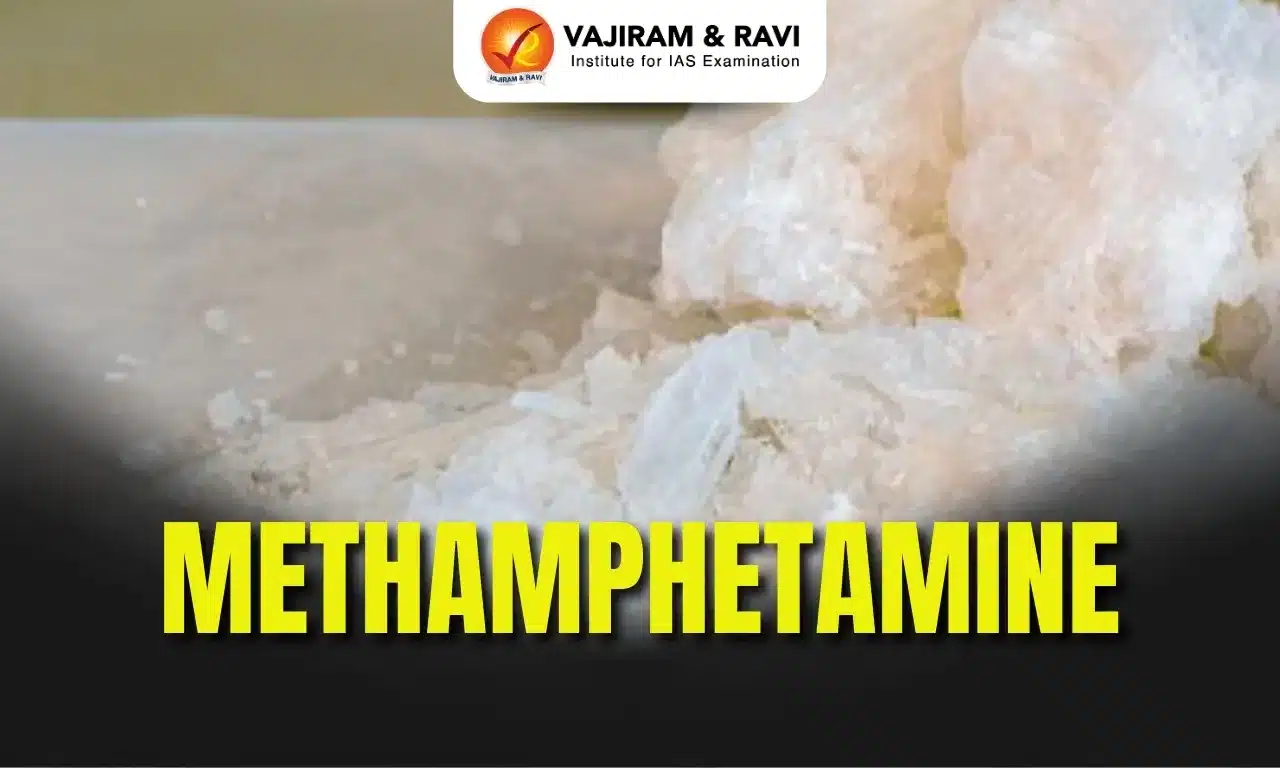
- It takes the form of a white, odorless, bitter-tasting crystalline powder that easily dissolves in water or alcohol.
- Methamphetamine is potent and easy to produce.
- It has a role as a neurotoxin, a psychotropic drug, a central nervous system stimulant, a xenobiotic and an environmental contaminant.
How does Methamphetamine Affect Humans?
- It causes increased activity and talkativeness, decreased appetite, and a pleasurable sense of well-being or euphoria.
- The use of methamphetamine in higher doses can induce psychosis, bleeding in the brain, skeletal muscle breakdown, and seizures.
- It can cause violent behavior, mood swings, and psychosis such as paranoia, delirium, auditory and visual hallucination, and delusions when used chronically.
- Chronic long-term methamphetamine use can be highly addictive, and if it is discontinued abruptly, it might lead to withdrawal symptoms.
Source: PIB
Methamphetamine FAQs
Q1: What is the chemical name of Methamphetamine?
Ans: N-methylamphetamine
Q2: What is the primary effect of Methamphetamine on the human brain?
Ans: It increases the levels of dopamine and norepinephrine.
