
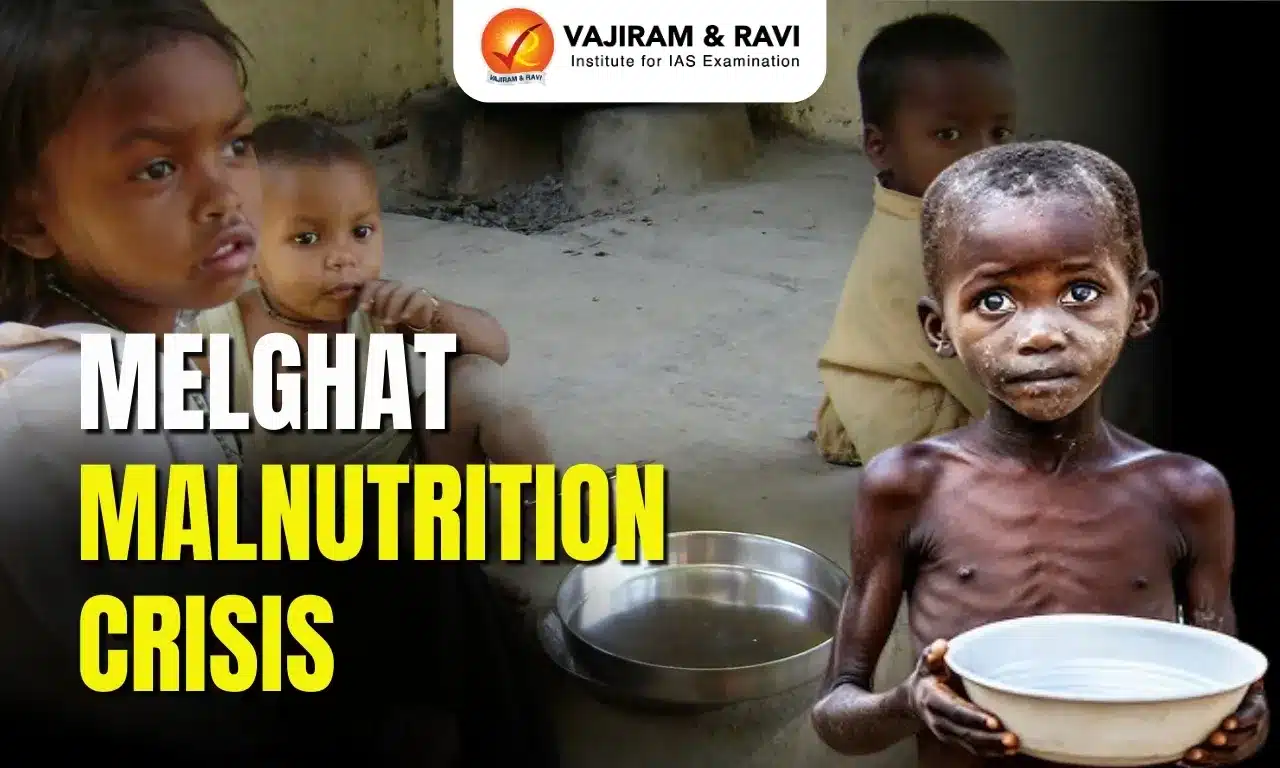
Melghat Malnutrition Crisis Latest News
- Recently, the Bombay High Court sharply criticised the Maharashtra and Union governments for their extremely casual handling of the alarming rise in malnutrition-related infant deaths in Melghat, a tribal-dominated region in Amravati district.
- A petitioner informed the court that 65 infants (0–6 months) had died due to malnutrition between June 2025 and now, and over 220 children were currently classified as Severe Acute Malnutrition (SAM) — with half at risk of dying without immediate intervention.
Melghat’s Persistent Malnutrition Crisis: Current Status
- For over three decades, Melghat, home to predominantly Korku tribal communities, has struggled with chronic infant and maternal deaths linked to malnutrition and poor healthcare access.
- Despite multiple government schemes, malnutrition remains widespread due to:
- Food insecurity
- High infection rates
- Poor access to healthcare
- Severe anaemia
Infant Deaths: Fluctuating but Persistently High
- Melghat comprises Dharni and Chikhaldara talukas with 324 villages. Infant deaths remain worryingly high.
- Officials argue deaths stem not only from malnutrition but also:
- Anaemia
- Sickle cell disease
- Pneumonia
- Delayed treatment due to poor connectivity
- However, the petitioner maintains that malnutrition exacerbates these illnesses, making them fatal without timely care.
Alarming Malnutrition Numbers
- An affidavit submitted to the High Court shows:
- 10,000 children identified with malnutrition (SAM) in November 2024
- Dharni: 1,290 children
- Chikhaldara: 788 children
- 10,000 children identified with malnutrition (SAM) in November 2024
- The district administration claims interventions like:
- Hot cooked food scheme (eggs & bananas 4 times a week)
- Village Child Development Centres (VCDC)
- But also acknowledges persistent “peripheral issues” like connectivity and healthcare delays.
Statewide Malnutrition Landscape
- According to Maharashtra's Women & Child Welfare Minister (Poshan Tracker data, Feb 2025):
- 1.82 lakh malnourished children in the state
- 30,800 Severe Acute Malnutrition (SAM)
- 1,51,643 Moderate Acute Malnutrition (MAM)
- IIPS Mumbai also reports Maharashtra’s poor nutrition indicators:
- 35% stunted
- 35% underweight
- 26% wasted
- These figures show systemic shortcomings beyond Melghat.
Persistent Challenges Fueling Melghat’s Malnutrition and Infant Mortality Crisis
- Melghat faces severe infrastructural deficits that delay urgent medical care:
- Poor road conditions make reaching hospitals on time difficult.
- Inadequate electricity supply affects homes and healthcare facilities.
- Shortage of fully functional PHCs, forcing dependence on distant hospitals.
- These gaps contribute directly to preventable infant and maternal deaths.
Fragmented Governance and Poor Coordination
- Experts note that various government departments work in silos, leading to:
- Irregular supply of nutrition supplements
- Weak monitoring of malnutrition cases
- Poor coordination in implementing policies
- This fragmentation undermines even well-designed interventions.
Severe Shortage of Doctors and High Absconding Rates
- Melghat continues to struggle with recruiting and retaining medical professionals - High absenteeism among doctors.
- Despite improved salaries and incentives, difficult working conditions deter medical staff.
Cultural Preference for Traditional Healing
- A large section of the tribal community still depends on bhoomkas (traditional healers).
- Methods like damma (burning skin with hot iron tongs) delay scientific treatment and worsen conditions, particularly in sick infants.
Intergenerational Malnutrition Cycle
- Health challenges often begin before birth:
- Many tribal women enter pregnancy underweight and anaemic
- They give birth to low-birth-weight babies with weak immunity
- Limited healthcare access means infections go untreated, raising mortality risks
- This perpetuates a cycle of malnutrition across generations.
Expert-Backed Solutions to Tackle Malnutrition in Melghat
- Experts emphasise that eliminating malnutrition requires far more than food distribution. It demands a holistic, coordinated, and systems-based approach.
- Strengthen the Healthcare Ecosystem
- Build a robust maternal and child healthcare system.
- Ensure timely care for infections, anaemia, and other co-morbidities.
- Upgrade civic and health infrastructure across Melghat.
- Empower ASHA Workers with Strong Training
- Create a well-trained cadre of ASHA workers skilled in early identification of malnutrition.
- Equip them to initiate timely referrals and follow-up interventions.
- Integrate Health and Nutrition Interventions
- Combine nutrition support with treatment of associated illnesses.
- Implement coordinated health–nutrition programmes rather than isolated initiatives.
- Promote Community-Centred Behaviour Change
- Engage communities to shift harmful practices and strengthen trust in modern healthcare.
- Encourage awareness on maternal health, child feeding, and hygiene.
- Ensure Interdepartmental Convergence
- Experts stress that lasting solutions require all departments to work together:
- Health, Women & Child Development, Rural Development, Tribal Welfare, Social Welfare, PWD
- Coordinated action prevents gaps and improves service delivery.
- Fix Doctor Recruitment and Retention
- Enforce due diligence during appointments.
- Ensure doctors serve full tenures, backed by improved working conditions and monitoring.
Conclusion
- Melghat’s crisis is not just about food scarcity but a complex mix of poor infrastructure, healthcare gaps, cultural practices, and administrative weaknesses.
- Without systemic, coordinated reforms, infant deaths and malnutrition will persist.
- Ending malnutrition in Melghat requires a synchronised, multi-sector effort — strong healthcare systems, empowered frontline workers, integrated programmes, community engagement, and strict accountability in staffing.
Melghat Malnutrition Crisis FAQs
Q1: Why is Melghat witnessing persistent infant deaths?
Ans: Melghat faces chronic malnutrition, weak healthcare access, infections, anaemia, and delays in treatment due to poor roads and inadequate medical infrastructure.
Q2: What did the Bombay High Court observe about Melghat’s situation?
Ans: The court criticised the Maharashtra and Union governments for a casual approach and demanded detailed action-taken reports on rising infant deaths and SAM cases.
Q3: What systemic challenges worsen Melghat’s malnutrition crisis?
Ans: Poor roads, weak electricity supply, shortage of doctors, fragmented departmental coordination, and continued reliance on traditional healers worsen the crisis.
Q4: How widespread is malnutrition in Maharashtra according to Poshan Tracker?
Ans: Maharashtra has over 1.82 lakh malnourished children, including 30,800 SAM and 1.5 lakh MAM cases, indicating deep structural nutrition issues beyond Melghat.
Q5: What expert-backed solutions can help reduce infant deaths in Melghat?
Ans: Experts recommend strengthening healthcare, training ASHA workers, integrating health-nutrition interventions, improving infrastructure, and ensuring interdepartmental convergence.
