
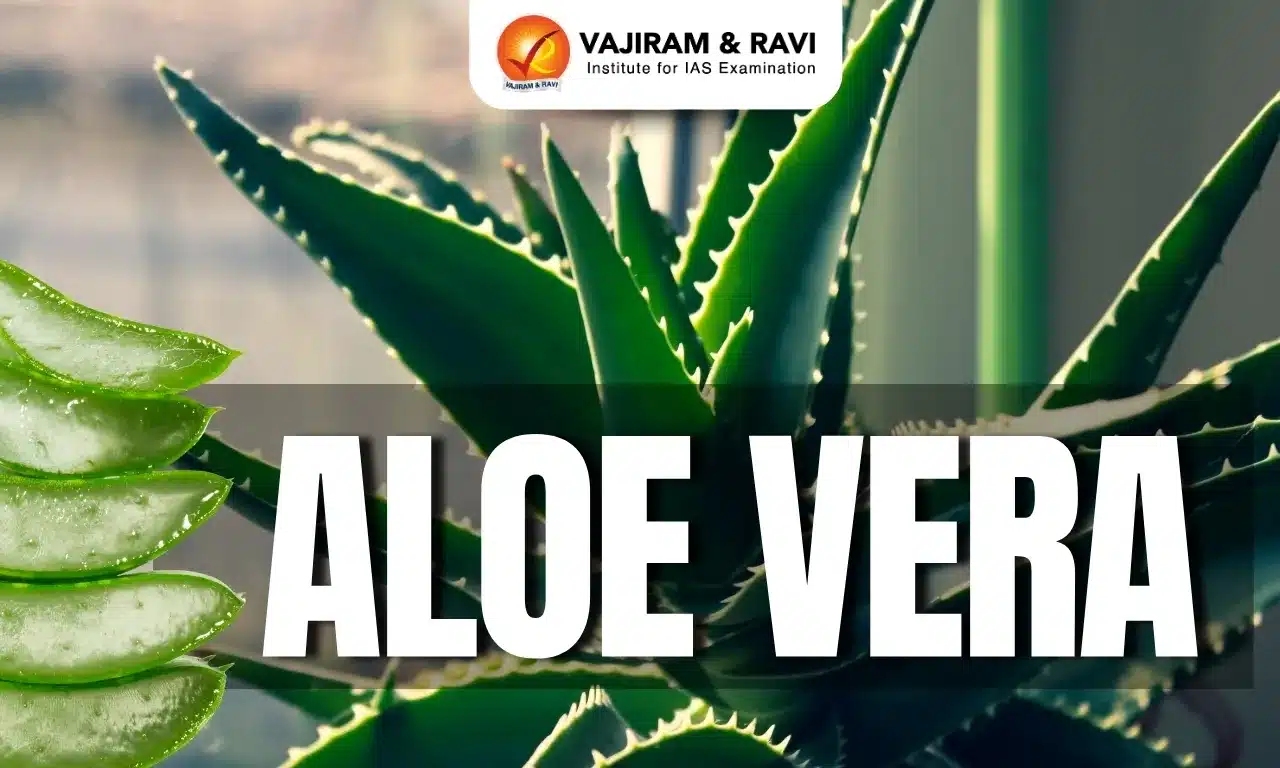
Aloe Vera Latest News
Computer simulations suggest that common plant molecules from Aloe vera might block enzymes tied to Alzheimer’s disease.
About Aloe Vera
- It is a succulent plant belonging to the Aloaceae family, known for its medicinal and therapeutic properties.
- Scientific Name: Aloe barbadensis Mill
- Distribution:
- It is native to the arid, desert regions of the Arabian Peninsula, particularly in Oman, Yemen, and Saudi Arabia.
- It thrives in hot, dry climates with well-drained, sandy, or rocky soils.
- Today, aloe vera is widely cultivated in various warm regions around the world, including parts of North Africa, the Canary Islands, India, and the southwestern United States.
- It is a thick, short-stemmed plant that stores water in its leaves.
- It is known for its thick, pointed, and fleshy green leaves.
- Each leaf contains a slimy tissue that stores water, making the leaves thick.
- This water-filled tissue is the “gel” that people associate with aloe vera products.
- The gel contains beneficial bioactive compounds, including vitamins, minerals, and antioxidants.
- Uses:
- Aloe vera is known for its antibacterial, antiviral, and antiseptic properties.
- It is best known for treating skin injuries.
- Aloe vera inhibits the growth of different types of bacteria, with the most studied being Staphlococcus aureus and Pseudomonas aeruginosa.
- Aloe vera is used in arid regions for erosion control due to its shallow root system and ability to stabilize soil.
Source: SCTD
Aloe vera FAQ's
Q1: Aloe vera is native to which geographical region?
Ans: Arabian Peninsula
Q2: Aloe vera thrives best in which type of environment?
Ans: Hot, dry climates with well-drained soils.
Q3: The “gel” used in Aloe vera products is found in which part of the plant?
Ans: Water-filled leaf tissue.
Q4: Aloe vera is best known for treating which problem?
Ans: It is best known for treating skin injuries.

