
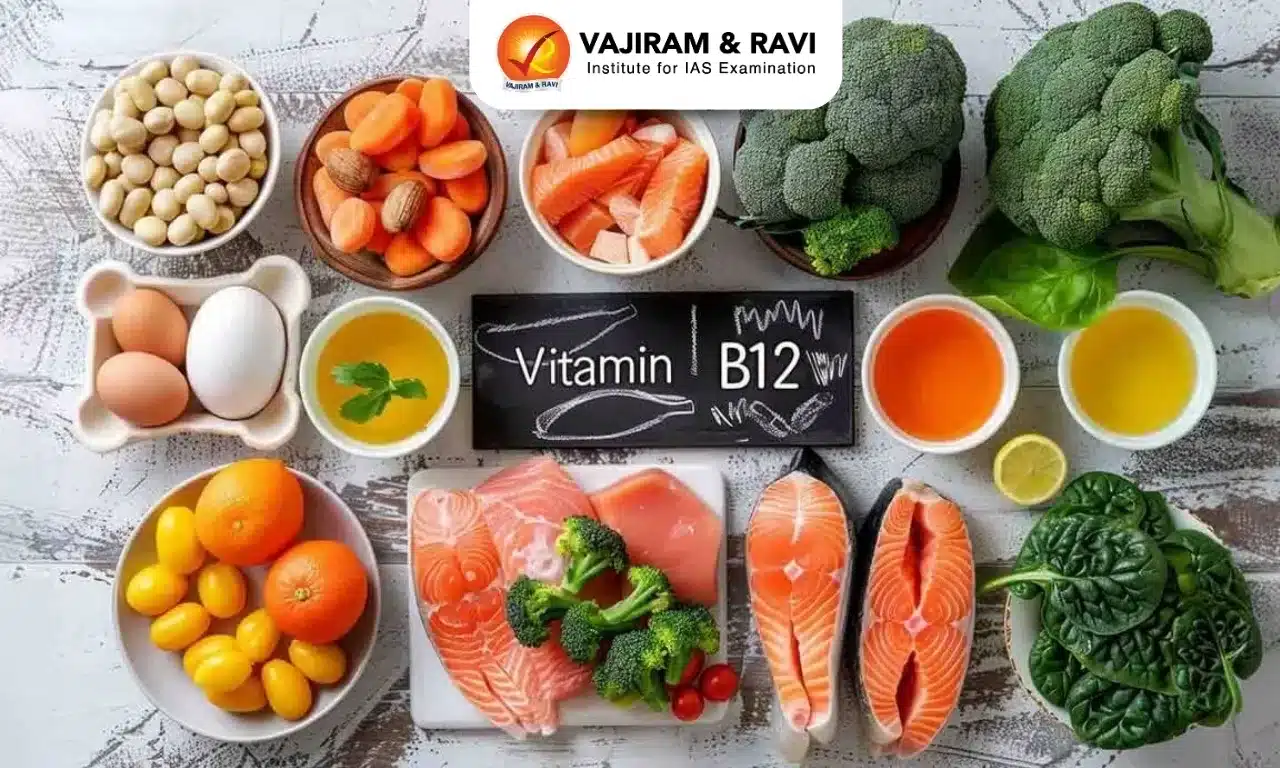
Vitamin B12 Latest News
Vitamin B12 deficiency often first appears as skin changes like hyperpigmentation, dryness, or paleness, indicating poor oxygen and nutrient delivery to skin cells.
About Vitamin B12
- It is a water-soluble vitamin.
- It is also called cobalamin.
- It is a vitamin the body uses to make and support healthy nerve cells.
- It's also used to make healthy red blood cells and the genetic material inside cells called DNA.
- Your body cannot produce B12 on its own, so it must be obtained through foods high in vitamin B12 or supplements.
- It is naturally found in animal foods such as fish, meat, poultry, eggs, milk, and milk products.
- It is not present in plant foods unless fortified.
- The body stores vitamin B12 in the liver.
- The body can store vitamin B12 for 2 to 5 years, and it can get rid of any excess or unwanted vitamin B12 in the urine.
- Vitamin B12 Deficiency:
- People who follow a vegetarian or vegan diet can sometimes have low levels of Vitamin B12. This is because plant foods don't have vitamin B-12.
- Older adults and people who have had stomach surgery also are at risk because they may not absorb the vitamin as well.
- People with digestive conditions such as celiac disease and Crohn's disease also are at risk of low vitamin B-12 levels.
- People with very low vitamin B-12 levels can have symptoms such as fatigue, muscle weakness, stomach problems, nerve damage, vision problems, and mood changes.
- They also may have low iron, called anemia, or low blood counts.
Source: TOI
Vitamin B12 FAQs
Q1: Is Vitamin B12 water-soluble?
Ans: Yes, Vitamin B12 is a water-soluble vitamin.
Q2: The body obtains Vitamin B12 primarily from which source?
Ans: It is naturally found in animal foods such as fish, meat, poultry, eggs, milk, and milk products.
Q3: Where is Vitamin B12 stored in the human body?
Ans: Vitamin B12 is primarily stored in the liver.
Q4: Vitamin B12 is essential for the formation of what?
Ans: Healthy nerve cells and red blood cells.

