Thalassemia

Thalassemia

Thalassemia Latest News

Scientists recently tested a gene-editing method called adenine base editing to fix two severe mutations that cause -thalassemia, a genetic blood disease.

About Thalassemia

  • It is an inherited blood disorder. 
  • It affects your body’s ability to produce normal hemoglobin. 
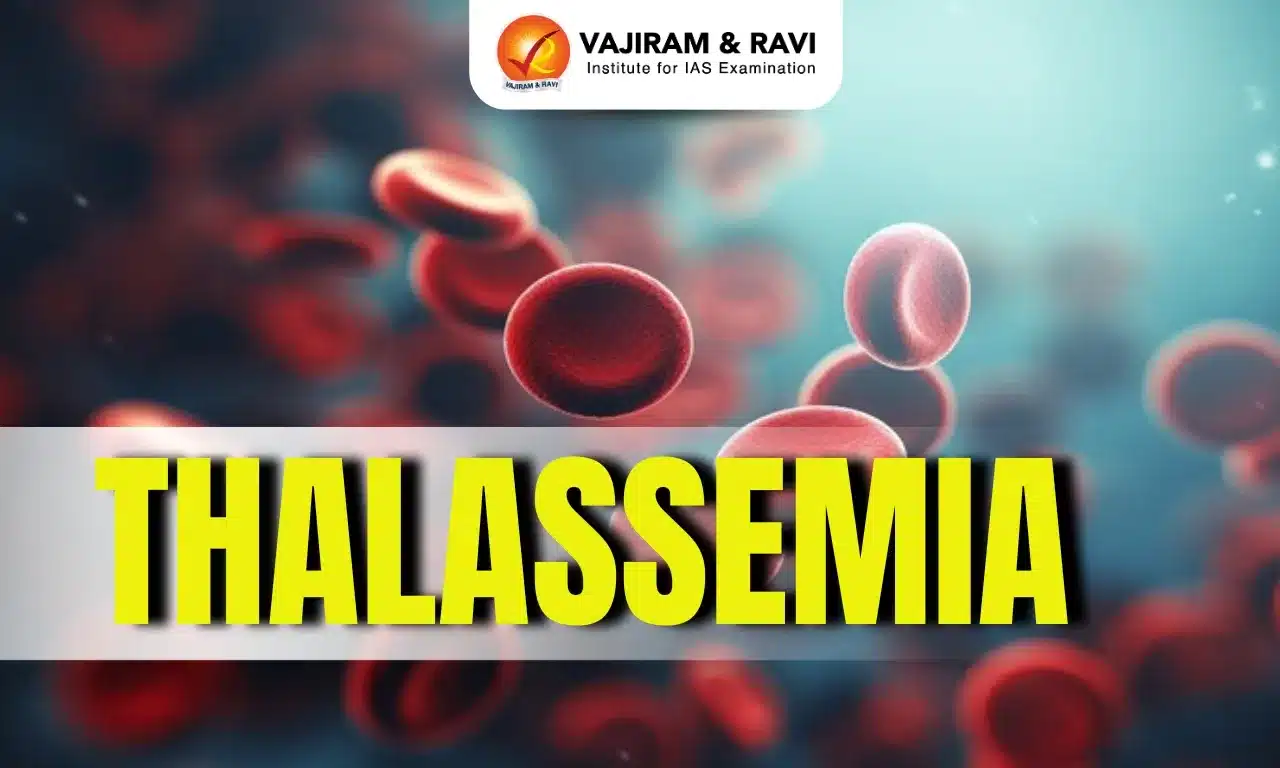
  • Hemoglobin is a protein in red blood cells (RBCs). It allows your RBCs to transport oxygen throughout your body.
  • If you have thalassemia, your body produces fewer healthy hemoglobin proteins, and your bone marrow produces fewer healthy RBCs. 
  • The condition of having fewer RBCs is called anemia. That can make you feel tired and weak.
  • As RBCs serve the vital role of delivering oxygen to tissues in your body, not having enough healthy RBCs can deprive your body’s cells of the oxygen they need to make energy and thrive.
  • Thalassaemia is caused by inheriting a gene mutation (change in the normal DNA) from one or both parents.

  • Traits for thalassemia are more common in people from Mediterranean countries, like Greece and Turkey, and in people from Asia, Africa, and the Middle East. 
  • There are different types of thalassemia. The type someone has depends on which gene mutation they inherit.
  • Symptoms: Thalassemia can cause mild or severe anemia and other complications over time (such as iron overload). 
    • Symptoms of Anemia Include:
      • Fatigue.
      • Trouble breathing.
      • Feeling cold.
      • Dizziness.
      • Pale skin.
    • Severe thalassemia may cause death.
  • Treatments:
    • Blood transfusions – regular blood transfusions treat and prevent anaemia; in severe cases these are needed around once a month.
    • Chelation therapytreatment with medicine to remove the excess iron from the body that builds up as a result of having regular blood transfusions.
    • The only possible cure for thalassemia is a stem cell or bone marrow transplant, but this is not done very often because of the risks involved.

Source: TH

Thalassemia FAQs

Q1: What is Thalassemia?

Ans: It is an inherited blood disorder.

Q2: Thalassemia is primarily affects which component of the blood?

Ans: Hemoglobin

Q3: What is the main function of hemoglobin?

Ans: Transporting oxygen in the blood.

Q4: What is the cause of Thalassemia?

Ans: Thalassaemia is caused by inheriting a gene mutation (change in the normal DNA) from one or both parents.

Hansa-3 (NG) Trainer Aircraft

Hansa-3 (NG) Trainer Aircraft

Hansa-3 (NG) Trainer Aircraft Latest News

Recently, the CSIR-National Aerospace Laboratories (NAL), Bengaluru, launched a “production version” of the indigenous Hansa-3(NG) trainer aircraft.

About Hansa-3 (NG) Trainer Aircraft

  • It is India’s first indigenous flying trainer aircraft.
  • It was designed and developed by CSIR-National Aerospace Laboratories, Bangalore, under the aegis of the Council of Scientific and Industrial Research (CSIR).

Features of Hansa-3 (NG) Trainer Aircraft

  • It is a two-seater, low-wing aircraft.
  • It is powered by a Rotax Digital Control Engine with unique features like Just-In-Time Prepreg (JIPREG) Composite lightweight Airframe, Glass Cockpit, Bubble Canopy with wide panoramic view, electrically operated flaps etc. 
  • It has an advanced electronic fuel injection system, which controls the fuel and air mixtures electronically and provides optimum fuel air mixture at every altitude.
  • It offers excellent aircraft performance with a higher range of 620 nautical miles, 7 hours endurance, and a maximum cruise speed of 98 knots calibrated airspeed (KCAS).
  • It is an ideal aircraft for Commercial Pilot Licensing (CPL) due to its low cost and low fuel consumption. 

Source: News on Air

Hansa-3 (NG) Trainer Aircraft FAQs

Q1: What is the Hansa-3 (NG) Trainer Aircraft?

Ans: India's first indigenous flying trainer aircraft

Q2: Who designed and developed the Hansa-3 (NG) Trainer Aircraft?

Ans: CSIR-National Aerospace Laboratories (NAL)

INS Taragiri

INS Taragiri

INS Taragiri Latest News

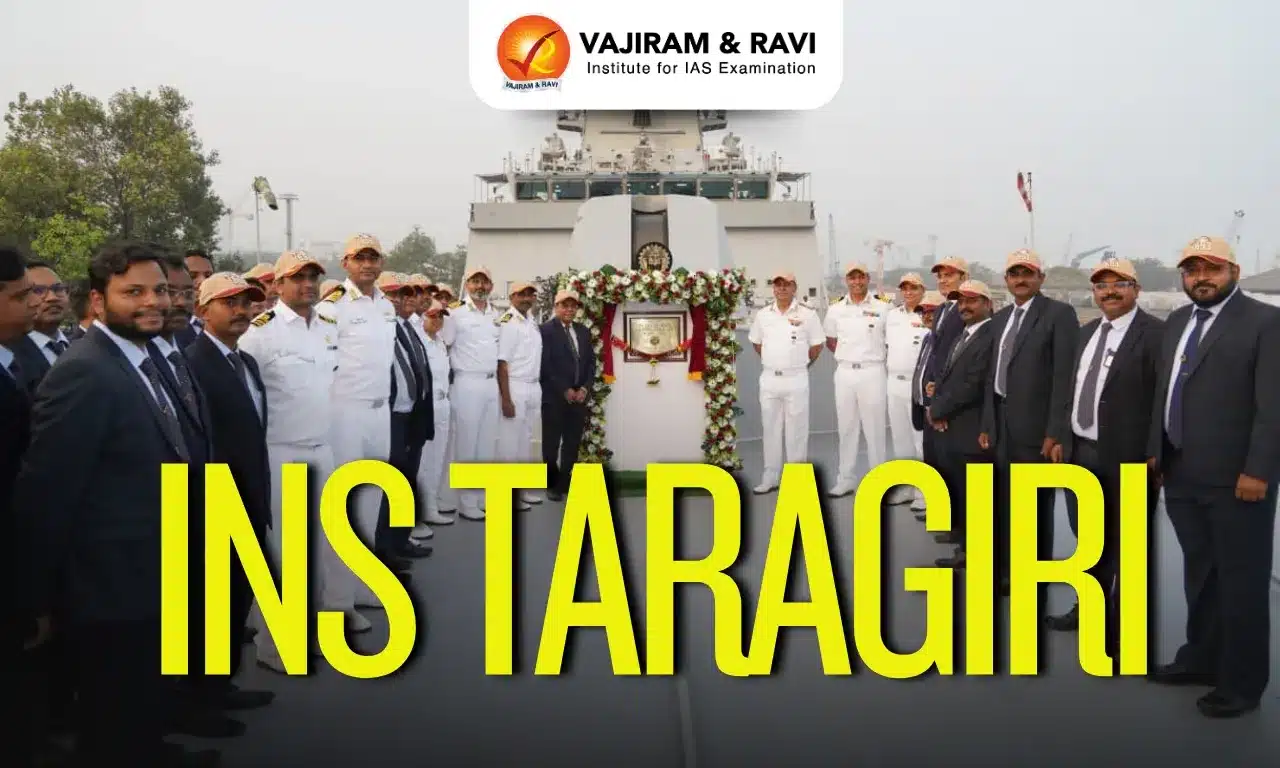
Recently, INS Taragiri was delivered to the Indian Navy at Mazagon Dock Shipbuilding Ltd (MDL), Mumbai.

About INS Taragiri

  • It is the fourth ship of Nilgiri Class (Project 17A) built by Mazagon Dock Shipbuilding Ltd (MDL).
  • It is a reincarnation of the erstwhile INS Taragiri, a Leander-class frigate that was part of the Indian Naval fleet.
  • It is designed by the Warship Design Bureau (WDB).

Features of INS Taragiri

  • P17A ships are fitted with an advanced weapon and sensor suite compared to the P17 (Shivalik) class.
  • Propulsion: It is configured with Combined Diesel or Gas (CODOG) propulsion plants, comprising a diesel engine and a gas turbine that drive a Controllable Pitch Propeller (CPP) on each shaft, and state-of-the-art Integrated Platform Management System (IPMS).
  • Weapon suit: The potent weapon and sensors suite comprises BrahMos SSM, MFSTAR and MRSAM complex, 76mm SRGM, and a combination of 30 mm and 12.7 mm close-in weapon systems, along with rockets and torpedoes for anti-submarine warfare.

What is Project 17A?

  • It was launched by the defence forces of India to construct a series of stealth guided-missile frigates.
  • Under the Project 17A programme, four ships by Mumbai-based Mazagon Dock Shipbuilders Limited (MDL) and three by Garden Reach Shipbuilders and Engineers Limited (GRSE) are being built.

Source: PIB

INS Taragiri FAQs

Q1: What is the name of the project under which INS Taragiri is being built?

Ans: Project 17A

Q2: Who is the builder of INS Taragiri?

Ans: Mazagon Dock Shipbuilders Limited (MDL)

International Treaty on Plant Genetic Resources for Food and Agriculture

International Treaty on Plant Genetic Resources for Food and Agriculture

International Treaty on Plant Genetic Resources for Food and Agriculture Latest News

Indian farmers and experts are urging the government to reject proposed expansions to the International Treaty on Plant Genetic Resources for Food and Agriculture.

About International Treaty on Plant Genetic Resources for Food and Agriculture 

  • It was adopted by the Thirty-First Session of the Conference of the Food and Agriculture Organization (FAO) of the United Nations on 3 November 2001.
  • Entering into force in June 2004, it is the only legally binding international agreement that specifically deals with the conservation and sustainable management of plant genetic resources for food and agriculture (PGRFA).
  • The countries which participate in the treaty exchange and share genetic material and information for most of the world’s most important food crops.
  • Objectives:
    • Conservation and sustainable use of PGRFA.
    • Fair and equitable sharing of the benefits arising out of their use, in harmony with the Convention on Biological Diversity, for sustainable agriculture and food security. 
  • The treaty ensures that farmers and plant breeders access, easily, the raw genetic material needed to develop new crop varieties, including those with higher yields and those that are resilient to climate change.
  • The International Treaty makes it possible to share plant genetic resources across borders through a unique Multilateral System of Access and Benefit-sharing (MLS).
    • MLS applies to 64 major crops and forages over which recipients cannot claim Intellectual Property Rights (IPR) or any other rights. 
  • The exchange of material from the MLS is operationalised through the standard material transfer agreement (SMTA), a legal document that governs the terms under which genetic material is shared.
  • Those who access genetic materials through the Multilateral System agree to share any benefits from their use.
    • Fair sharing of benefits from use can be achieved through information exchange, access to and transfer of technology, capacity building, and sharing of the financial and other benefits of marketing.
  • This treaty established and operates a special initiative operated for the benefit of developing countries–the Benefit-sharing Fund (BSF).
  • BSF supports agricultural projects for farmers, public institutions and others in developing countries to conserve and use PGRFA to improve food crop production, fight plant pests, and adapt to the effects of climate change.

Source: DTE


International Treaty on Plant Genetic Resources for Food and Agriculture (ITPGRFA) FAQs

Q1: The International Treaty on Plant Genetic Resources for Food and Agriculture (ITPGRFA) was adopted in which year?

Ans: 2001

Q2: The International Treaty on Plant Genetic Resources for Food and Agriculture (ITPGRFA) is administered under which UN body?

Ans: Food and Agriculture Organization (FAO)

Q3: Is International Treaty on Plant Genetic Resources for Food and Agriculture (ITPGRFA) legally binding?

Ans: Yes, the International Treaty on Plant Genetic Resources for Food and Agriculture (ITPGRFA) is a legally binding international agreement.

Q4: Which fund established under the ITPGRFA supports farmers and institutions in developing countries?

Ans: Benefit-sharing Fund (BSF)

SIM Binding

SIM Binding

SIM Binding Latest News

The Department of Telecommunications recently directed over the top (OTT) communication apps, such as WhatsApp, Telegram, Snapchat, Signal, Arattai and others, to ensure SIM binding.

About SIM Binding

  • SIM binding refers to a form of device binding in which a user's mobile device is securely linked to their SIM card. 
  • This approach enhances security by ensuring that authentication processes are tied not just to the device but specifically to the unique identity of the SIM card, reducing the risk of unauthorised access.

Why SIM Binding Is Becoming Essential?

  • Communication apps today verify your SIM only once when you first install them. 
  • After that, even if you remove the SIM or it gets deactivated, the app continues to work. 
  • Many cybercriminals outside India use Indian mobile numbers to cheat people. 
  • They log into Indian apps using old or inactive SIM-linked accounts. 
  • Because the SIM is not physically present in the phone, there is no record of where the phone actually is. 
  • This makes it hard to track criminals.
  • This makes it easy for hackers, spammers, and fraudsters to misuse numbers.

Recent Government Directions

  • The Department of Telecommunications (DoT) has asked all over-the-top communication platforms operating in India to complete the SIM-binding-to-device exercise within the next 90 days. 
  • The DoT has directed these apps to make sure their services work only when the correct SIM card is in the phone. 
  • If the app stops working the moment the SIM is removed, the government believes it will close one loophole that scammers use to stay untraceable.
  • Several financial applications, including banking and Unified Payment Interface (UPI) apps, already enforce strict active-SIM rules to prevent fraud.

Source: ET

SIM Binding FAQs

Q1: What does SIM binding primarily aim to secure?

Ans: The link between the mobile device and its SIM card.

Q2: Why is SIM binding considered essential in modern communication apps?

Ans: It prevents misuse of apps using old or inactive SIM-linked accounts.

Q3: What is a key security benefit of SIM binding?

Ans: Reduced risk of unauthorised access to apps.

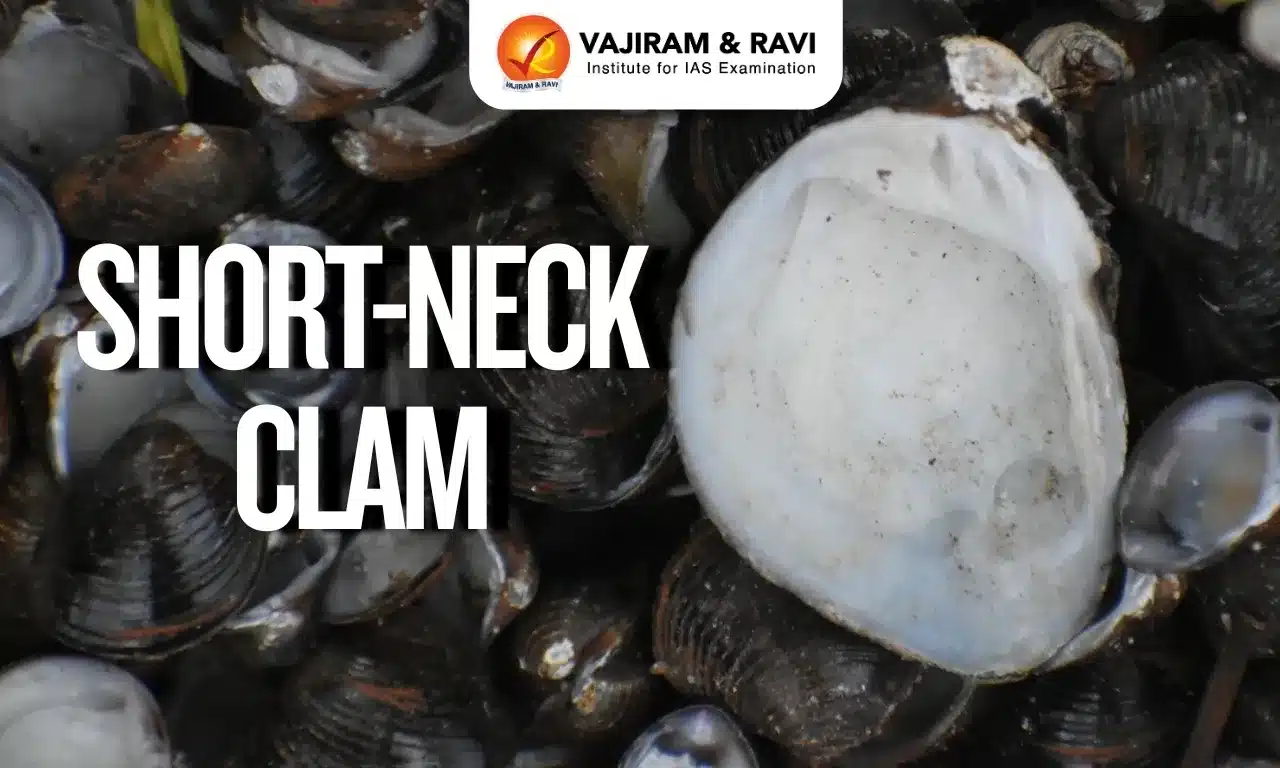
Short Neck Clam

Short Neck Clam

Short Neck Clam Latest News

An initiative of the ICAR–Central Marine Fisheries Research Institute’s (CMFRI) to enhance stock of short-neck clam (Paphia malabarica) programme in Ashtamudi Lake is showing early signs of recovery. 

About Short Neck Clam

  • It is a valuable bivalve mollusk.
  • It is India’s first Marine Stewardship Council (MSC) certified fisheries. 
  • It is the major fishery resource of the brackish water Ashtamudi Lake in Kerala, India.
  • Reasons for its decline: Environmental pollution, invasion of non-native species like the Charru mussel, climate change, including altered salinity and water temperature, have significantly reduced the clam population.

Features of Short Neck Clam

  • Growth: It is a fast-growing species with a peak spawning season of December to February and has a maximum lifespan of around 3 years.
  • Maturity: It attains sexual maturity in its first year at a shell length of 30 mm.

Economic Significance of Short Neck Clam

  • It is used in cement production and to make carbide for use in welding.
  • The clams are bought by a local factory, heat-treated, frozen and sold on to retailers and restaurants, with around 80% being exported to Vietnam, Malaysia and Thailand.
  • The clam shell is used as the raw material for the manufacture of cement, calcium carbide and sand lime bricks.
  • They are also used for lime burning for construction, in paddy fields and fish farms for neutralizing acid soil and as slaked lime.

Source: TH

Short Neck Clam FAQs

Q1: Where is the Short Neck Clam primarily found?

Ans: Ashtamudi Lake, Kerala

Q2: What is the peak spawning season of Short Neck Clam?

Ans: December to February

Ellora Caves

Ellora Caves

Ellora Caves Latest News

Scottish historian William Dalrymple wants the Maharashtra government to showcase the lesser-known sites at Ellora, including the last Ottoman Caliph’s empty tomb, Malik Ambar’s tomb, the first Peshwa’s tomb, and the Sufi and Naga traditions at the caves.

About Ellora Caves

  • They are located near the village of Ellora in northwest-central Maharashtra.
  • They are located 30 km northwest of Aurangabad and 80 km southwest of the Ajanta Caves. 
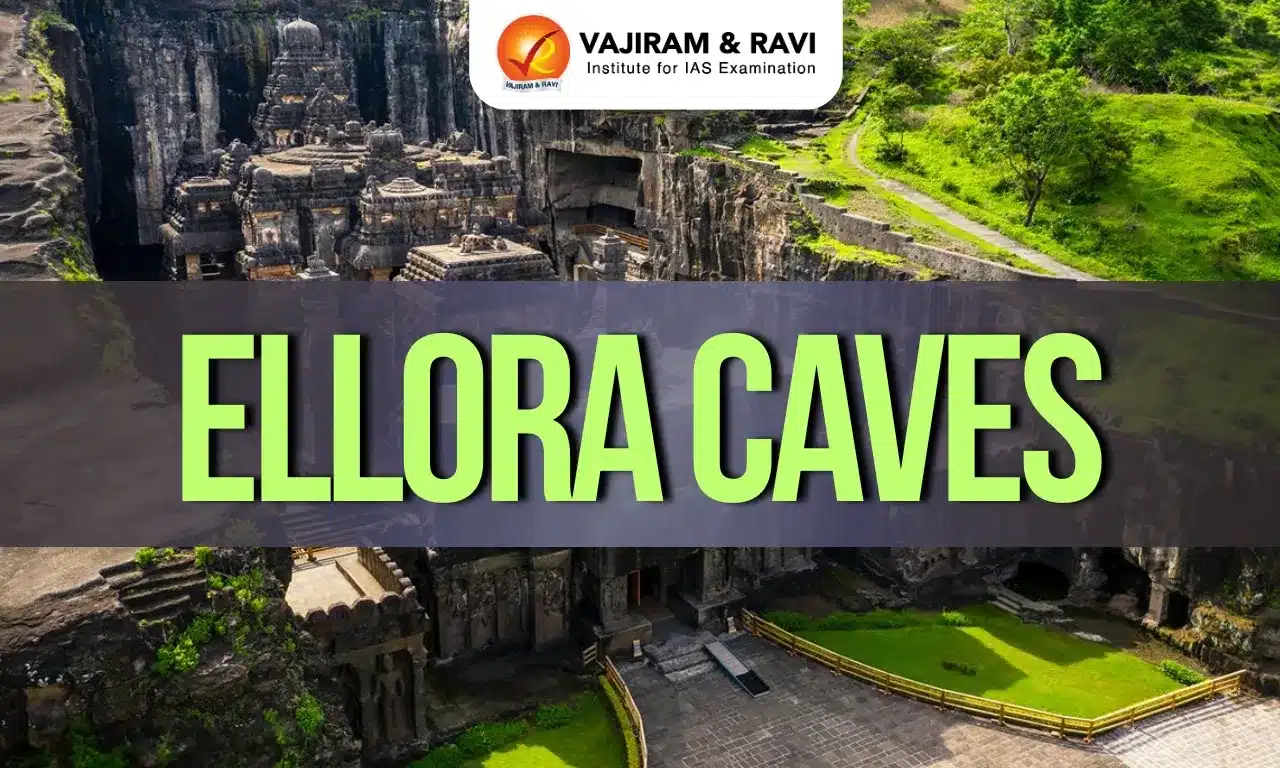
  • Inscribed as a UNESCO World Heritage Site in 1983, the Ellora Caves are an extraordinary complex of 34 rock-cut monasteries and temples carved into a high basalt cliff. 
  • Spanning over 2 km, these structures date from the 6th to the 10th century CE and represent three major religions—Buddhism, Hinduism, and Jainism. 
  • The caves are adorned with sculptures that reflect the spiritual beliefs of the time.
  • The sculptures range from depictions of deities, celestial beings, and mythological scenes to portraits of royalty and everyday life.
  • The architectural brilliance of Ellora is most evident in the Kailasanatha Temple (Cave 16), the site’s grandest and most breathtaking structure.
    • It is one of the largest monolithic structures in the world. 
    • The structure is carved vertically from a single rock. It took 18 years to carve out the temple.
    • The temple features ornate pillars, detailed sculptures, massive courtyards, and elaborate carvings that depict stories from Hindu epics like the Ramayana and Mahabharata.
  • The Buddhist caves include large chaityas (prayer halls) and viharas (monasteries), while the Jain caves are known for their intricate detailing and depictions of Jain Tirthankaras.

Source: TH

Ellora Caves FAQs

Q1: The Ellora Caves are located in which Indian state?

Ans: Maharashtra

Q2: The Ellora complex consists of how many rock-cut monasteries and temples?

Ans: 34

Q3: The Ellora Caves represent the art and architecture of which three major religions?

Ans: Buddhism, Hinduism, and Jainism.

Q4: The structures at Ellora date from which period?

Ans: 6th to the 10th century CE.

Q5: Which is the grandest structure within Ellora Caves?

Ans: The most grand structure within the Ellora Caves is the Kailasanatha Temple (Cave 16).

Asia Power Index

Asia Power Index

Asia Power Index Latest News

Recently, India has secured third ranking in the Asia Power Index 2025, while the U.S. and China occupy the first and second spots.

About Asia Power Index

  • It is published annually by the Australia-based think tank, Lowy Institute.
  • It assesses the ability of nations, particularly of those in the Asian continent, to influence their external environment.
  • It is the seventh edition which evaluates the power of 27 countries and territories across Asia, based on 131 indicators across eight thematic measures, including Military Capability and Defence Networks, Economic Capability and Relationships, Diplomatic and Cultural Influence and  Resilience and Future Resources.

Highlights of Asia Power Index 2025

  • India ranks third for two measures: economic capability and future resources.
  • India’s economic and military capability have both increased in the 2025 edition of the Asia Power Index. 
  • India's weakest measure is defence networks, where it sits at 11th.
  • India's economy has continued to grow strongly and made small gains in terms of its geopolitical relevance - defined in terms of international leverage, connectivity, and technology.

Source: News On Air

Asia Power Index FAQs

Q1: What is India's rank in the Asia Power Index 2025?

Ans: Third

Q2: Which think tank releases the Asia Power Index annually?

Ans: Lowy Institute

Perseverance Rover

Perseverance Rover

Perseverance Rover Latest News

In a significant breakthrough, NASA's Perseverance rover recently detected electrical activity in Mars' atmosphere for the first time.

About Perseverance Rover

  • Perseverance, nicknamed “Percy“, is a semi-autonomous rover the size of a small car designed to explore the surface of Mars.
  • It is part of NASA’s ongoing Mars 2020 Mission.
  • Launch: It was launched on July 30, 2020, from Cape Canaveral, Florida.
  • Landing: Successfully landed on the surface of Mar’s Jezero Crater on February 18, 2021.
    • It is the first rover to actually land in an ancient Martian river delta, located inside the Jezero crater.
  • Main Job: Seek signs of ancient life and collect samples of rock and regolith (broken rock and soil) for possible return to Earth.
    • The rover will be able to detect organic matter and minerals, map the chemical composition of rocks and sediments, and zoom in on distant rocks and rugged terrain for further inspection.
    • The rover will collect samples of rock and soil, encase them in tubes, and leave them on the planet’s surface to be returned to Earth at a future date.
  • It is the first rover to record sounds on Mars and broadcast them back to Earth. 
  • It is the first rover to create oxygen on Mars.  Perseverance carries an instrument called MOXIE, which can generate oxygen from Mars’ carbon dioxide atmosphere.

Perseverance Rover Features

  • Perseverance is built from the same basic design as Curiosity, which landed on Mars about a decade before Perseverance.
  • It is about 3 metres long, 2.7 metres wide and 2.2 metres tall and its robotic arm is about 2.1 metres long.
  • It is about the size of a car but weighs only about 1,025 kilograms with all instruments on board.
  • Power source: Multi-Mission Radioisotope Thermoelectric Generator (MMRTG). It converts heat from the radioactive decay of plutonium into electricity.
  • It has a rectangular body, six wheels, a robotic arm, a drill for sampling rocks, cameras and scientific instruments.

Key Facts about Ingenuity Helicopter

  • It is a small, autonomous aircraft. 
  • Main Job: Technology demonstration to test the first powered flight on Mars. 
  • The helicopter rode to Mars attached to the belly of the Perseverance rover.
  • It became the first aircraft in history to make a powered, controlled flight on another planet.
  • Ingenuity uses solar power to charge its batteries and can operate autonomously. 
  • It is about 0.5 metres tall and its rotor blades span 1.2 metres across. 
  • It weighs about 1.8 kg and is equipped with computers, navigation systems and two cameras.

Source: NIE

Perseverance Rover FAQs

Q1: Perseverance Rover is part of which NASA mission?

Ans: It is part of NASA’s ongoing Mars 2020 Mission.

Q2: Perseverance Rover landed in which Martian crater?

Ans: Jezero Crater

Q3: What is the main objective of the Perseverance Rover?

Ans: Search for signs of ancient life and collect rock samples.

Q4: Which instrument on Perseverance created oxygen on Mars for the first time?

Ans: MOXIE

Sahariya Tribe

Sahariya Tribe

Sahariya Tribe Latest News

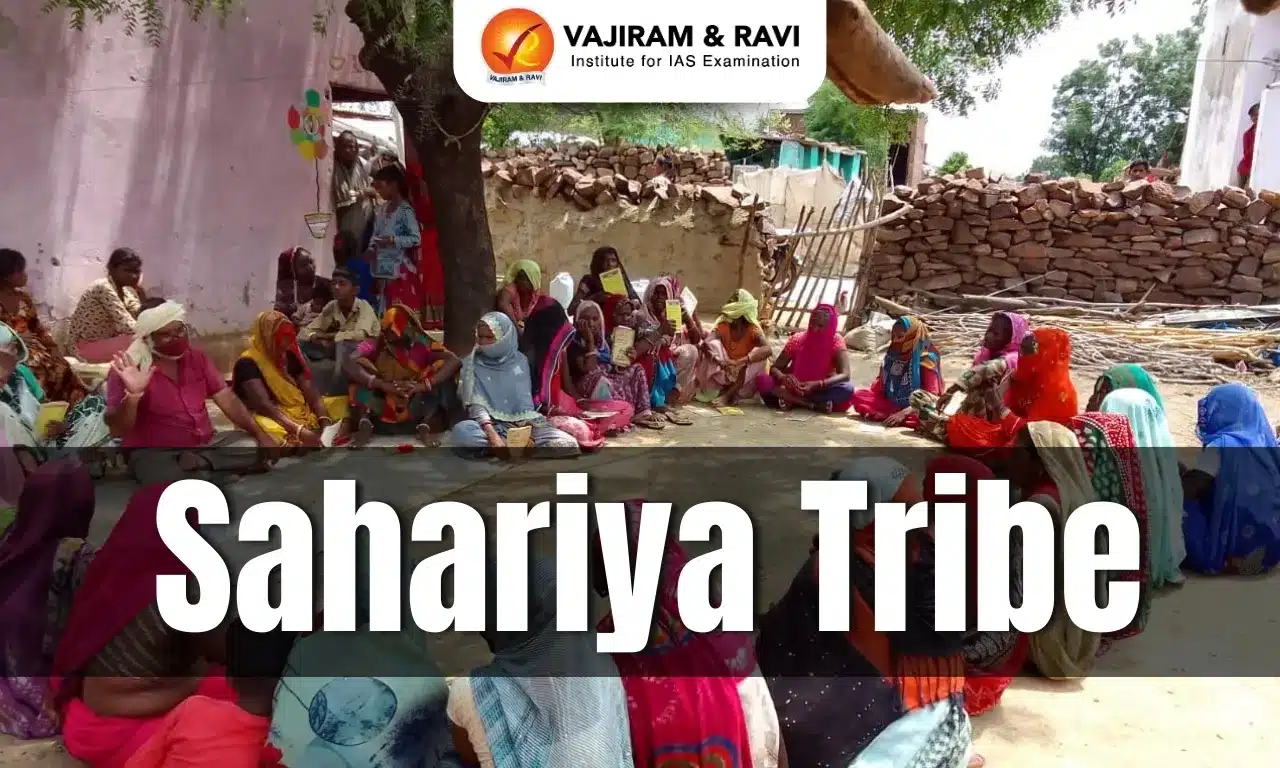
Recently, in Madhya Pradesh, a Sahariya tribal woman’s death puts spotlight on unending urea queues.

About Sahariya Tribe

  • It is one of the Particularly Vulnerable Tribal Groups (PVTG).
  • The Sahariya community is also called by the names Seher, Sair, Savar, Saonar, Sahra, etc.
  • They live on the margins — in the forests and villages of Madhya Pradesh and Rajasthan. 

Living condition and Social Structure of Sahariya Tribe

  • They mostly live in a distinct settlement called ‘Seharana’ which is generally a cluster of houses.
  • The houses are made of some stone boulders, and the roofing is also made of stone slabs – locally called Patore. In some villages, mud structures are also constructed.
  • Religion and Language
    • Language: While the Sahariyas have lost their original language, they speak the local dialects of the regions they inhabit.
    • The Sahariya practice their traditional ethnic religions. 
    • They are known for their dance, the Saharia Swang, which is performed during the month of Holi.
    • The dance is performed to the beats of the dhol, nagari, and matki.
    • It features a male dressed in female attire who dances around the male performers.
  • Livelihood: They are predominantly forest dwellers and make their living from forest produce, additionally cultivating small plots of land and work as landless labourers. 
  • They are particularly skilled in making catechu from khair trees.

Source: IE

Sahariya Tribe FAQs

Q1: What is the traditional dance of the Sahariya tribe?

Ans: Saharia Swang

Q2: What is the traditional occupation of the Sahariya tribe?

Ans: Forest dwellers and laborers

Enquire Now