
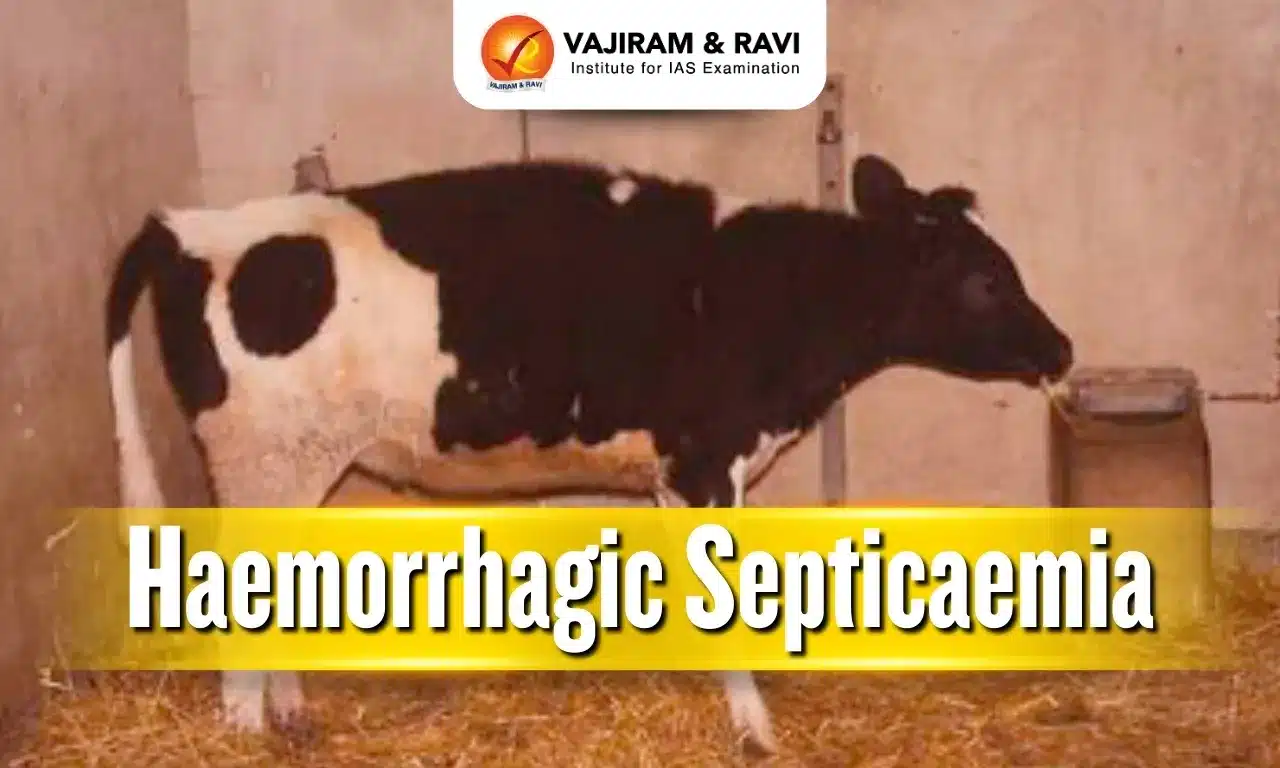
Haemorrhagic Septicaemia Latest News
Recently, ten blackbucks have died in Jharkhand's Jamshedpur in Zoological Park due to suspected Haemorrhagic Septicaemia.
About Haemorrhagic Septicaemia
- It is also known as Pasteurellosis.
- It is a bacterial disease caused by certain serotypes of Pasteurella multocida.
- The two common serotypes of P. multocida associated with the disease in these species are types B:2 (in Asia ) and E:2 (in Africa )
- These are geographically restricted to some areas of Asia, Africa, the Middle East and southern Europe.
- It is a major disease of cattle and buffaloes characterised by an acute, highly fatal septicaemia with high morbidity and mortality.
- In both species, young animals and young adults are more susceptible than older animals.
- Germs of this disease survive longer in humid and waterlogged conditions.
- Transmission: It can be transmitted by ingestion or inhalation, either during direct contact or via fomites such as contaminated feed and water.
- Symptoms of Haemorrhagic Septicaemia
- Animals become dull and have high fever. They refuse to eat and salivate more than normally.
- Swellings develop typically and quickly, especially around the throat, the brisket, the dewlap and sometimes around the head.
- Treatment: Vaccines are available; Antimicrobial treatment administered intravenously soon after the onset of disease can reduce mortality.
Source: TH
Haemorrhagic Septicaemia FAQs
Q1: What is Haemorrhagic Septicaemia?
Ans: A bacterial disease affecting cattle and buffaloes
Q2: Which bacterium causes Haemorrhagic Septicaemia?
Ans: Pasteurella multocida

