Sujalam Bharat App

Sujalam Bharat App

Sujalam Bharat App Latest News

Recently, the Union Minister of Jal Shakti launched the Sujalam Bharat App.

About Sujalam Bharat App

  • It is a key digital initiative designed to transform rural drinking water governance.
  • It has been developed with the support of Bhaskaracharya National Institute for Space Applications and Geo-informatics (BISAG-N) 

Features of Sujalam Bharat App

  • It enables advanced geo-referencing, monitoring and management of rural water supply infrastructure under Jal Jeevan Mission.
  • It integrates critical data including water sources, asset inventories, scheme designs, operational records, water quality reports, supply metrics, and community feedback into a single platform.
  • With the introduction of the Sujal Gaon ID, every habitation will have a clear digital profile showing:
    • Its source of drinking water (local or bulk supply)
    • The nature and condition of its infrastructure
    • Supply reliability
    • Water quality status
    • O&M arrangements
  • It is integrated with PM Gati Shakti GIS  which provides up-to-date geospatial mapping of rural water networks, supporting future planning, repair, and expansion with greater precision.
  • Significance: It will ensure transparency in the performance of Gram Panchayats, Village Water and Sanitation Committees (VWSCs) and service providers, thereby promoting community participation and oversight

Source: PIB

Sujalam Bharat App FAQs

Q1: Which ministry launched the Sujalam Bharat App?

Ans: Ministry of Jal Shakti

Q2: What is the primary objective of Sujalam Bharat App?

Ans: To monitor rural drinking water supply
Key Facts about Mexico

Key Facts about Mexico

Mexico Latest News

Recently, the Mexico’s Senate approved tariffs of up to 50% on imports from Asian countries, including India.

About Mexico

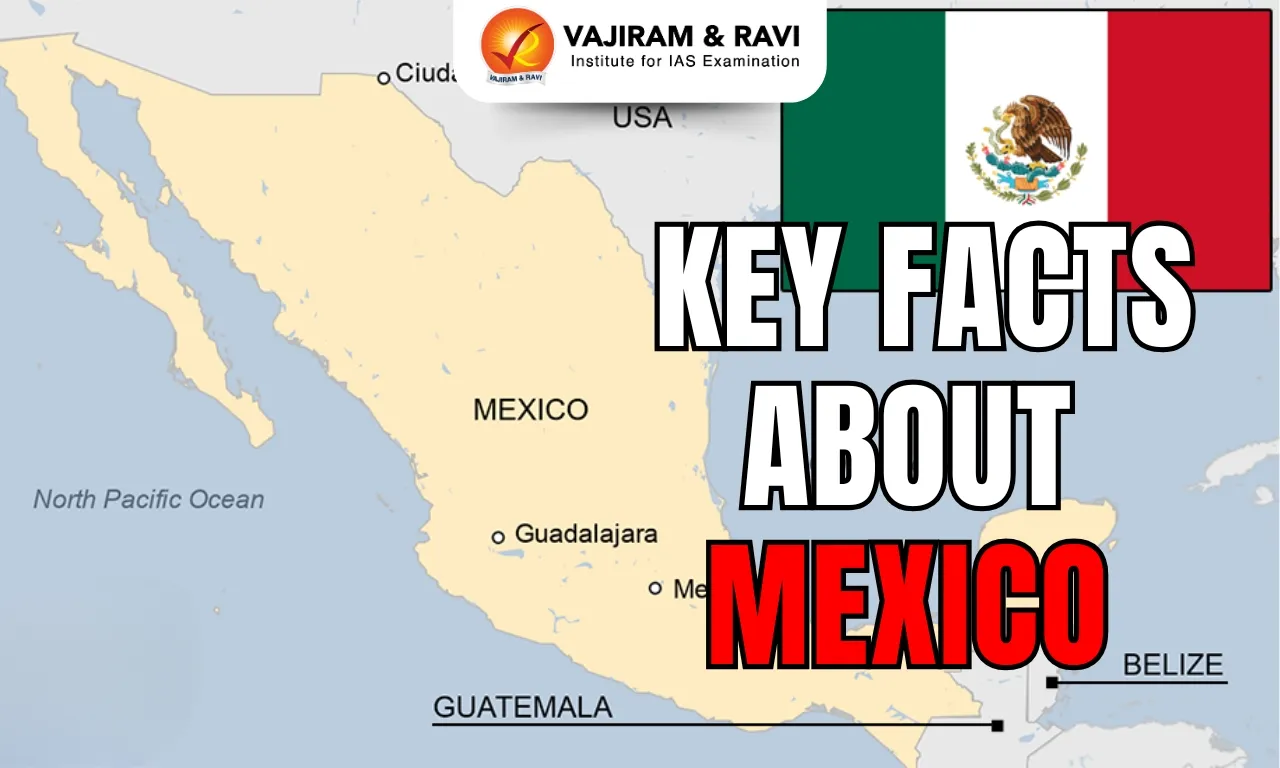
  • Location: It is located in the southern part of North America. 
  • Bordering Countries: It shares its land border with the United States of America to the north and with Guatemala and Belize to the southeast. 
  • Maritime boundaries: It is surrounded by the Pacific Ocean to the south and west; by the Gulf of Mexico and the Caribbean Sea to the east. 
  • Capital City: Mexico City

Geographical Features of Mexico

  • It is a part of the circum-Pacific “Ring of Fire”—a region of active volcanism and frequent seismic activity. 
  • Peninsulas: It consists of the Baja Peninsula and Yucatan Peninsula.
  • Major Rivers: Rio Grande river and Colorado river (which is shared with US)
  • Lakes: Lake Chapala and Lake Cuitzeo.
  • Major mountain range: Sierra Madre.
  • Natural Resources: Petroleum, silver, Antimony, Copper, Gold, Lead, zinc, natural gas.

Source: TH

Mexico FAQs

Q1: What is the capital of Mexico?

Ans: Mexico City

Q2: Which mountain range runs along the western coast of Mexico?

Ans: Sierra Madre Occidental

Uchi Pillaiyar Temple

Uchi Pillaiyar Temple

Uchi Pillaiyar Temple Latest News

The Tamil Nadu government recently informed the Madurai Bench of the Madras High Court that the deepam (lamp) was lit at the Uchipillaiyar temple mandapam in Thirupparankundram hill during Karthigai Deepam this year too as it was done for over the last 150 years.

About Uchi Pillaiyar Temple

  • The Uchi Pillaiyar Temple, also known as Rockfort Temple, is located at the top of Rockfort Hill, Trichy, in Tamil Nadu.
  • It is a 7th-century-CE Hindu temple, dedicated to Lord Ganesha.
  • The temple stands 83 metres (272 ft) tall, perched atop a rock. 
    • Trichy Rockfort hill is made of granite that is estimated to be over 3.8 billion years old. 
    • It is one of the oldest rock formations in the world. 
    • In comparison, the Himalayas are much younger—they began forming only about 50 million years ago when the Indian tectonic plate collided with the Eurasian plate.
  • The smooth rock was first cut by the Pallavas, but it was the Nayaks of Madurai who completed the temples under the Vijayanagara empire. 
  • There are three temples located closely on the rock fort:
    • Maanikka Vinayakar Temple situated at the foothill, dedicated to Lord Ganesha.
    • Uchchi Pillayar Temple at the top of the hill, dedicated to Lord Ganesha.
    • Thayumanaswamy Temple, dedicated to Lord Shiva, situated close to the base of the rockfort on the way to Uchchi
  • This Rockfort Temple gives an aerial view of the entire Trichy City along with Srirangam Temple, River Kaveri, and River Kollidam.

Source: TH

Uchi Pillaiyar Temple FAQs

Q1: The Uchi Pillaiyar Temple is located at which place?

Ans: It is located at the top of Rockfort Hill, Trichy, in Tamil Nadu.

Q2: The Uchi Pillaiyar Temple is dedicated to which Hindu deity?

Ans: Lord Ganesha

Q3: The Uchi Pillaiyar Temple dates back to which period?

Ans: 7th century CE

Q4: Why is Rockfort Hill considered geologically significant?

Ans: It is one of the oldest rock formations in the world.

Supernova

Supernova

Supernova Latest News

A distant gamma-ray burst has led astronomers to a rare supernova from the Universe’s early years, revealed recently by the James Webb Space Telescope (JWST).

About Supernova

  • A supernova is the name given to the cataclysmic explosion of a massive star.
  • They are the largest explosions that take place in space.
  • A star can go supernova in one of two ways:
    • Type I Supernova: A star accumulates matter from a nearby neighbor until a runaway nuclear reaction ignites.
    • Type II Supernova: A star runs out of nuclear fuel and collapses under its own gravity.
  • It can emit more energy in a few seconds than our sun will radiate in its lifetime of billions of years.
  • These spectacular events can be so bright that they outshine their entire galaxies for a few days or even months. 
  • They can be seen across the universe.
  • They’re also the primary source of heavy elements in the universe.
  • How Common are Supernovas?
    • Astronomers believe that about two or three supernovas occur each century in galaxies like our own Milky Way. 
    • Because the universe contains so many galaxies, astronomers observe a few hundred supernovas per year outside our galaxy.

Source: MC

Supernova FAQs

Q1: What is a supernova?

Ans: A supernova is the name given to the cataclysmic explosion of a massive star.

Q2: Why are supernovae considered the largest explosions in space?

Ans: Because they release enormous amounts of energy and matter in a very short time.

Q3: How can a star go supernova?

Ans: Either by accumulating matter from a companion star (Type I) or by collapsing after exhausting nuclear fuel (Type II).

Q4: How much energy can a supernova emit compared to the Sun?

Ans: More energy in a few seconds than the Sun will emit over its entire lifetime.

Kaimur Wildlife Sanctuary

Kaimur Wildlife Sanctuary

Kaimur Wildlife Sanctuary Latest News

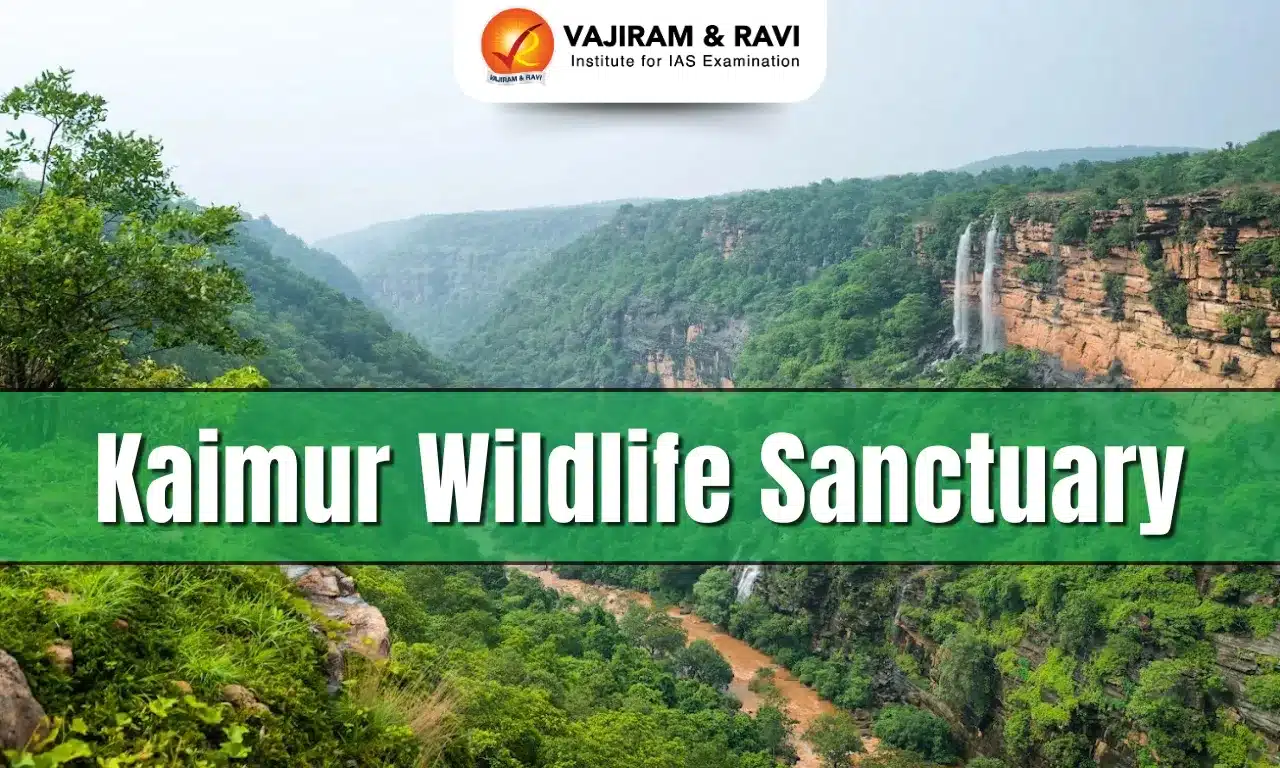
A forest department team seized a large number of deer heads, horns, and animal flesh and arrested a poacher during a raid in the Kaimur Wildlife Sanctuary recently.

About Kaimur Wildlife Sanctuary

  • It is located in the Kaimur District of Bihar.
  • It is located in the famous Kaimur Hills range. 
    • The Kaimur Hills, known for their invincibility, are home to two forts and the ancient Mundeshwari Temple, one of the oldest Hindu temples in India.
  • It is the largest sanctuary in the state and occupies an area of about 1342 sq.km.
  • It is bounded by the Son River to the north and the Karmanasa River to the south.
  • It is connected to the Bandhavgarh-Sanjay-Guru Ghasidas-Palamau tiger meta-population landscape through fragmented forest patches along the Son basin. 
  • The valley part is filled with many waterfalls such as Karkat and Telhar and various lakes such as Anupam Lake. 
  • Prehistoric rock paintings, stone inscriptions, and monuments have also been discovered here.
    • Prehistoric murals found in the "Lakhania" and other hilly regions and the prehistoric fossils of the Pre-Cambrian times in the "Salakhan" area bear testimony to the ancient origin and existence of this region.
  • The Oraon tribe is believed to have originated from this region.
  • Flora: A large variety of vegetation is found in the mixed, dry, deciduous forests that cover the area, the primary tree vegetation being Baakli, Mahua, Dhaak, and Bamboo. 
  • Fauna
    • The wildlife comprises of Black Bucks, Chinkaras, Four-Horned Deers, Blue-Bulls, Sambar, Cheetals, Bears, Leopards, etc.
    • Apart from these pythons, Gharials/Crocodiles and different species of snakes are also found.

Source: HT

Kaimur Wildlife Sanctuary FAQs

Q1: Kaimur Wildlife Sanctuary is located in which State?

Ans: Bihar

Q2: What is the total area of Kaimur Wildlife Sanctuary?

Ans: It occupies an area of about 1342 sq.km.

Q3: Anupam Lake is located in which wildlife sanctuary?

Ans: Kaimur Wildlife Sanctuary

Q4: What is the approximate area of Kaimur Wildlife Sanctuary?

Ans: About 1,342 sq.km.

Q5: Which rivers bound Kaimur Wildlife Sanctuary to the north and south?

Ans: The Son River to the north and the Karmanasa River to the south.

The Inequality–Education–Growth Nexus: Why Public Education Shapes Economic Growth

Inequality Education Growth Nexus

Inequality Education Growth Nexus Latest News

  • The World Inequality Report 2026 highlights stark and widening global disparities. It shows that the top 10% of income earners receive more than the remaining 90% combined, while the poorest half earns under 10% of global income. 
  • Wealth inequality is even sharper, with the top 10% owning about 75% of global wealth and the bottom 50% holding just 2%.

Deep Regional Divides in Income Levels

  • Global averages mask vast regional inequalities. The world is divided into income tiers:
    • High-income regions: North America & Oceania, Europe
    • Middle-income regions: Russia & Central Asia, East Asia, Middle East & North Africa
    • Low-income, populous regions: Latin America, South & Southeast Asia (including India), Sub-Saharan Africa
  • Even after adjusting for price differences, income gaps remain extreme. 
  • An average person in North America & Oceania earns about 13 times more than someone in Sub-Saharan Africa and three times the global average. 
  • Daily average income stands at around €125 in North America & Oceania versus €10 in Sub-Saharan Africa — and many earn far less than these averages.

Inequality Debates Miss the Core Issue

  • Discussions often get stuck on whether inequality exists or how severe it is, diverting attention from more critical questions — especially which policies can actually reduce inequality. 
  • This distraction prevents meaningful engagement with solutions.

Public Investment: The Strongest Equaliser

  • The report identifies public investment in education and health as the most powerful tool to reduce inequality. 
  • Free, high-quality schools, universal healthcare, childcare, and nutrition programs help narrow early-life gaps, promote lifelong learning, and ensure that opportunity depends on talent and effort rather than background.

Education Spending: A 1-to-41 Gap Across Regions

  • Public education expenditure varies dramatically by region. 
  • In 2025, average government spending per school-age individual (ages 0–24) ranged from €220 in Sub-Saharan Africa to €9,025 in North America & Oceania (PPP, 2025 prices). 
  • This represents an almost 1:41 gap, underlining how unequal public investment reinforces global inequality.

The Nexus between Inequality, Education and Growth

  • The Inequality–Education–Growth Nexus describes a critical relationship where these three factors reinforce one another.

High Economic Inequality Creates a Vicious Cycle

  • Poor families face credit constraints, limiting investment in quality education for their children. 
  • This leads to educational inequality and an inefficient allocation of human capital across the workforce. 
  • The result is lower aggregate productivity, slower innovation, and ultimately, dampened long-term economic growth.
  • Conversely, promoting educational equity for all fuels a virtuous cycle, raising the entire nation's skill level, boosting productivity, and generating inclusive, sustained economic growth that helps reduce inequality over time.

Education as a Pathway to Reducing Inequality

  • Education is widely recognised as a key tool for reducing economic, social, and environmental inequalities. 
  • SDG 4 reflects the global commitment to “leave no one behind.” While access to education has expanded, gains have largely benefited the least marginalised, leaving deep inequalities unresolved.
  • Instead of fostering social mobility and cohesion, many education systems are reinforcing existing fault lines. 
  • Marginalised communities remain underserved due to gaps in funding, weak data systems, and exclusionary practices, limiting their access to broader social and economic opportunities.

Conclusion

  • Inequality is not only about income and wealth distribution but also about who gets access to quality public services
  • Without substantial and equitable public investment — especially in education — global and national inequalities will continue to widen rather than narrow.

Source: IE | IE

Inequality Education Growth Nexus FAQs

Q1: What does the World Inequality Report 2026 reveal about global inequality?

Ans: The report shows extreme concentration of income and wealth, with the top 10% earning more than the bottom 90% combined and owning about 75% of global wealth.

Q2: How do regional income disparities shape global inequality?

Ans: Even after price adjustments, high-income regions earn many times more than low-income regions, masking deep inequalities behind misleading global averages.

Q3: Why are inequality debates often ineffective?

Ans: They focus on whether inequality exists rather than on policy solutions, diverting attention from actionable measures like public investment in education and health.

Q4: Why is public education spending called the strongest equaliser?

Ans: Quality public education reduces early-life disadvantages, expands opportunity, improves human capital allocation, and promotes long-term inclusive economic growth.

Q5: How does inequality affect long-term economic growth?

Ans: High inequality limits educational access, misallocates talent, lowers productivity, and slows innovation, creating a vicious cycle of weak growth and persistent inequality.

UNEA-7 Endorses India’s Wildfire Management Initiative: Key Outcomes Explained

UNEA-7

UNEA-7 Latest News

  • India’s resolution on “Strengthening the Global Management of Wildfires” was adopted at the 7th session of the United Nations Environment Assembly (UNEA-7) in Nairobi. 
  • Backed by broad support from Member States, the move underscores global acknowledgement of the growing wildfire threat and the need for coordinated international action.

UN Environment Assembly (UNEA): An Overview

  • The United Nations Environment Assembly (UNEA) is the world’s highest-level decision-making body on environmental matters. 
  • It provides a global platform for addressing pressing environmental challenges.
  • UNEA was established in 2012 following the UN Conference on Sustainable Development (Rio+20) held in Brazil, as part of efforts to strengthen global environmental governance.

Membership and Participation

  • UNEA has universal membership, comprising all 193 UN Member States, with active participation from major groups and stakeholders. 
  • It convenes every two years in Nairobi, Kenya, bringing together environment ministers from across the world.

Functions and Mandate

  • UNEA:
    • Sets the global environmental agenda
    • Provides overarching policy guidance and responses to emerging environmental issues
    • Reviews policies, facilitates dialogue, and promotes exchange of experiences
    • Defines the strategic direction of UNEP
    • Encourages partnerships and mobilises resources for environmental goals

UNEA-7 (2025) Session

  • The seventh session of UNEA (2025) is being held in Nairobi, Kenya, under the theme: “Advancing sustainable solutions for a resilient planet.”

Wildfires as a Growing Global Environmental Risk

  • India highlighted that wildfires have evolved from seasonal events into frequent and prolonged disasters worldwide. 
  • Climate change, rising temperatures, extended droughts, and human activities are driving increases in their scale and intensity, causing widespread ecological and economic damage.

Environmental and Socio-Economic Impacts

  • Each year, millions of hectares are affected by fires, leading to the loss of forests and biodiversity, degradation of water and soil health, deterioration of air quality, and disruption of livelihoods. 
  • Wildfires also emit large volumes of greenhouse gases, weaken carbon sinks, and severely impact forest-dependent communities and national economies.

Scientific Warnings and Need for Proactive Action

  • Citing UNEP’s Spreading Like Wildfire report, India noted projections that wildfires could increase by 14% by 2030, 30% by 2050, and 50% by 2100 if current trends persist. 
  • These findings underline wildfires as a long-term, climate-driven global risk requiring coordinated international action and a shift from reactive response to proactive prevention.

Towards Integrated Fire Management

  • India emphasised a global transition towards Integrated Fire Management, focusing on early-warning systems, risk mapping, satellite-based monitoring, and the involvement of local communities and frontline personnel. 
  • UNEP’s role in supporting adaptation, ecosystem restoration, and strategy development was underscored, along with the importance of the Global Fire Management Hub established by FAO and UNEP in 2023.

Key Provisions of the Resolution

  • The resolution calls for:
    • Stronger international cooperation on early-warning systems, risk assessment tools, ecosystem monitoring, and community-based alerts.
    • Enhanced regional and global collaboration for prevention, recovery, and ecosystem restoration.
    • Knowledge sharing and capacity building through best-practice platforms and training programmes.
    • Support for national and regional action plans on integrated fire management and wildfire resilience.
    • Improved access to international finance, including assistance in project preparation for multilateral and results-based funding mechanisms.

Other Highlights of UNEA-7

  • The seventh session of the United Nations Environment Assembly (UNEA-7) ended in Nairobi with the adoption of 11 resolutions.
  • This marked both strong multilateral environmental commitments and sharp political disagreements, most notably the United States’ withdrawal from all resolution negotiations.

Wide Range of Environmental Issues Addressed

  • Alongside the wildfire resolution, UNEA-7 adopted decisions on: 
    • coral reef protection, 
    • minerals and metals governance, 
    • sargassum management, 
    • chemicals and waste, 
    • antimicrobial resistance, 
    • AI sustainability, 
    • glacier and cryosphere protection, 
    • youth participation, and 
    • coordination among multilateral environmental agreements.
  • With Jamaica set to assume the presidency for UNEA-8, member states emphasised the need to rebuild trust, strengthen multilateral cooperation, and sustain momentum in the face of escalating global environmental crises.

US Withdrawal Casts a Shadow Over the Assembly

  • Despite broad consensus on several issues, UNEA-7 was overshadowed by the US decision to disengage from negotiations. 
  • Washington criticised resolutions for including contentious language and themes beyond UNEA’s environmental mandate, disassociated itself from all adopted outcomes, and signalled a review of its participation in global environmental bodies.
  • Diplomats described the US stance as a setback for collective environmental ambition. 
  • Several delegates warned that disengagement could undermine progress on chemicals management, biodiversity loss linked to climate change, and environmental finance.

Source: IE | PIB

UNEA-7 FAQs

Q1: What is UNEA and why is it important?

Ans: The UN Environment Assembly is the world’s highest environmental decision-making body, setting global agendas and guiding UNEP’s response to emerging challenges.

Q2: Why did India propose a resolution on wildfires at UNEA-7?

Ans: India highlighted that climate change has turned wildfires into frequent, intense global disasters, threatening ecosystems, livelihoods, carbon sinks, and economic stability.

Q3: What scientific warnings were cited to support the resolution?

Ans: UNEP projections warn wildfires could rise 14% by 2030, 30% by 2050, and 50% by 2100 without coordinated global preventive action.

Q4: What does Integrated Fire Management focus on?

Ans: It emphasises early-warning systems, risk mapping, satellite monitoring, community participation, ecosystem restoration, and preparedness rather than reactive firefighting.

Q5: What other major outcomes emerged from UNEA-7?

Ans: UNEA-7 adopted 11 resolutions covering coral reefs, chemicals, AI sustainability, glaciers, biodiversity, and youth participation, despite US withdrawal from negotiations.

Parliamentary Panel’s Key Recommendations on Delhi’s Air Pollution

Air Pollution

Air Pollution Latest News

  • A recent Delhi-NCR air pollution report tabled in Parliament has highlighted the urgent need to curb vehicular emissions, recommending a comprehensive review of India’s emission standards.

Delhi-NCR Air Pollution: Parliamentary Panel Calls for Stronger Standards and Systemic Reforms

  • Air pollution in Delhi-NCR continues to be one of India’s most complex environmental challenges, driven by vehicular emissions, industrial activities, stubble burning, and unfavourable meteorological conditions. 
  • A recent report by the Parliamentary Standing Committee on Science and Technology, Environment, Forests and Climate Change has made several policy recommendations aimed at strengthening India’s regulatory and technological response to deteriorating air quality. 
  • These recommendations are designed to guide government action, address existing gaps, and protect vulnerable populations.

Need to Strengthen Vehicular Emission Standards

  • Vehicular emissions remain a major contributor to Delhi-NCR’s particulate matter and ozone levels. 
  • The panel has emphasised that a comprehensive review of India’s vehicular emission standards is necessary to align with evolving scientific knowledge and global best practices.
  • While acknowledging the government’s push for ethanol blending to enhance energy security, the panel cautioned against unintended environmental impacts. 
  • Increased nitrogen oxide (NOx) emissions from ethanol-blended fuels and the problem of evaporative emissions, fuel vapours escaping from vehicles and generating ground-level ozone, require closer scrutiny.
  • To mitigate this, the panel recommended adopting more stringent evaporative emission standards, which would require automobile manufacturers to incorporate better emission control systems. 
  • This is crucial for India’s transition to cleaner fuels and sustainable mobility.

Encouraging Adoption of Electric Vehicles

  • The report highlights that while India aims to increase the adoption of EVs, several bottlenecks continue to hinder progress. 
  • To accelerate EV uptake, the committee suggested a combination of incentives and disincentives:
    • Cheaper or free public parking for EVs
    • Higher parking rates for petrol and diesel vehicles
    • Offering tax incentives on EV loans
    • Considering an annual ceiling on the registration of non-electric vehicles in Delhi-NCR
  • These measures aim to shift consumer behaviour while simultaneously easing the region’s pollution burden.

Air Purifiers in Schools, Hospitals, and Government Offices

  • Children and patients are among the most vulnerable to toxic air. The committee therefore recommended mandatory installation of air purifiers in:
    • All public schools in Delhi-NCR
    • All public hospitals, especially the critical wards
    • All government offices
  • It also pointed out that levying GST on air purifiers, devices essential for mitigating public health risks, effectively “monetises a public health failure.” 
  • The panel suggested abolishing or reducing GST on air purifiers and HEPA filters to increase accessibility.

Upgrading National Ambient Air Quality Standards

  • The panel called for the Centre to expedite the revision of National Ambient Air Quality Standards (NAAQS)
  • These standards, last updated in 2009, need to reflect new scientific research, health data, and WHO benchmarks.
  • The committee also recommended installing pollution-cutting devices in all thermal power plants within a 300-km radius of Delhi-NCR. 
  • This would ensure a significant reduction in SO₂, NOx, and particulate emissions from one of the region’s largest polluting sources.
  • Delhi’s PM2.5 levels, the report noted, must fall by 62% to meet India’s air quality norms and by 95% to meet WHO standards, indicating the magnitude of intervention required.

Monitoring Stubble Burning More Effectively

  • Stubble burning remains a recurrent seasonal crisis in North India. The panel expressed concern that some farmers are finding ways to evade satellite detection of crop fires.
  • To strengthen enforcement, the committee recommended:
    • Launch of a high-resolution ISRO satellite dedicated to monitoring farm fires 24×7
    • Integration of satellite data with digital farm records for real-time tracking
  • This would help the government respond more effectively while also supporting early warning systems and targeted assistance programmes.

Holistic Approach to Air Quality Management

  • The report stresses that no single policy can solve the region’s pollution crisis. Instead, a coordinated approach, combining emissions control, technological investment, regulatory reform, and behavioural incentives, is essential.
  • By addressing systemic issues in transportation, energy production, agriculture, and urban infrastructure, the recommendations aim to align Delhi-NCR’s air quality management with global best practices.

Source: IE

Air Pollution FAQs

Q1: What major reform did the panel recommend on vehicular emissions?

Ans: It called for a comprehensive review of India’s vehicular emission standards, including evaporative emission norms.

Q2: What did the panel suggest regarding air purifiers in Delhi-NCR?

Ans: Mandatory installation of air purifiers in public schools, hospitals, and government offices.

Q3: How did the committee propose boosting EV adoption?

Ans: Through parking incentives, tax benefits, and limiting non-electric vehicle registrations.

Q4: What solution was suggested for tracking stubble burning more accurately?

Ans: A dedicated high-resolution ISRO satellite for 24×7 monitoring of farm fires.

Q5: What did the panel highlight about Delhi’s PM2.5 levels?

Ans: They must fall by 62% to meet national norms and 95% to meet WHO standards.

Chenchu Tribe

Chenchu Tribe

Chenchu Tribe Latest News

The National Sanskrit University (NSU) organised a symposium, panel discussion, and exhibition recently highlighting the unique privilege the Chenchu tribal community has with the Ahobilam shrine and the deity of Lord Narasimha.

About Chenchu Tribe

  • The Chenchus are a food-gathering tribe primarily residing in the Nallamalai forests of Andhra Pradesh.
  • They are one of the Particularly Vulnerable Tribal Groups (PVTGs) in Andhra Pradesh.
  • They are also found in Telangana, Karnataka, and Odisha.
  • Language: They speak variants of Telugu, the Dravidian language of the region.
  • A Chenchu village is known as “Penta“. 
    • Each penta consists of a few huts that are spaced apart and are grouped together based on kinship patterns. 
  • Small conjugal families predominate, women taking equal rank with men and marrying only upon maturity.
  • Peddamanishi” or the village elder, is generally the authority to maintain social harmony in a family or a village. 
  • Their rituals are few and simple; religious and political specializations are slight. 
  • Livelihood
    • The Chenchu live life with exemplary simplicity.  Most of them still gather food from the forest and roam in it to find things to meet their needs.
    • The bow and arrow and a small knife are all the Chenchus possess to hunt and live.
    • The Chenchus collect forest products like roots, fruits, tubers, beedi leaf, mohua flower, honey, gum, tamarind, and green leaves and make a meagre income from it by selling these to traders and government cooperatives.
    • Though at times they work as forest labourers, they mostly prefer to fall back on their native skills to hunt and gather food.
    • The Chenchus do not care much for money or material wealth.
  • Religion:
    • Chenchus worship a number of deities. Chenchus have also adopted certain religious practices from Hindus.
    • For ages, the Chenchus have been associated with the famous Srisailam temple (dedicated to Lord Shiva and Devi Brahmaramba) in Andhra Pradesh, situated at the heart of Chenchu land.
    • The Chenchus enjoy special privileges at Srisailam temple.

Source: TH

Chenchu Tribe FAQs

Q1: The Chenchu tribe primarily resides in which region?

Ans: Nallamalai forests of Andhra Pradesh.

Q2: What language do the Chenchus primarily speak?

Ans: They speak variants of Telugu, the Dravidian language of the region.

Q3: What is the primary livelihood of the Chenchu tribe?

Ans: Hunting and food gathering.

Q4: With which famous temple are the Chenchus historically associated?

Ans: Srisailam temple (dedicated to Lord Shiva and Devi Brahmaramba) in Andhra Pradesh.

Bar-Headed Goose

Bar-Headed Goose

Bar-Headed Goose Latest News

In a first-of-its kind study in eastern India, a bar-headed goose fitted with a GSM-GPS transmitter has revealed its migration route and flying pattern.

About Bar-Headed Goose

  • It is a migratory bird species which is known to be one of the highest-flying birds in the world. 
  • It can fly at altitudes of 25,000 feet, while migrating over the Himalayas, where oxygen and temperature levels are extremely low.
  • Distribution:  It is native to central Asia, where the species breeds, Bar-headed Geese, are found in countries like India, Pakistan, Nepal, Kazakhstan, Bangladesh, Myanmar, Japan, and other nearby regions. 
    • In India, their geographical range extends from the northeast to the southern parts of the country.
  • Habitat: They reside near water bodies, preferring high-altitude lakes during the breeding season and freshwater lakes, rivers, and streams in their wintering habitats. 
  • Features of Bar-Headed Goose
    • This species is gray and white with two horseshoe-shaped, brownish-black bars on the back of its white head. 
    • Although male and female birds appear similar, the male bird is slightly larger than the female.
    • They usually form monogamous pairs and are seasonal breeders.
  • Conservation Status: It is classified as ‘Least Concern’ under the IUCN Red List.

Source: DTE

Bar-Headed Goose FAQs

Q1: What is the scientific name of the Bar-Headed Goose?

Ans: Anser indicus

Q2: What is the conservation status of the Bar-Headed Goose?

Ans: Least Concern

Death Valley National Park

Death Valley National Park

Death Valley National Park Latest News

After record-breaking rains, an ancient lake in Death Valley national park that had vanished has returned to view.

About Death Valley National Park

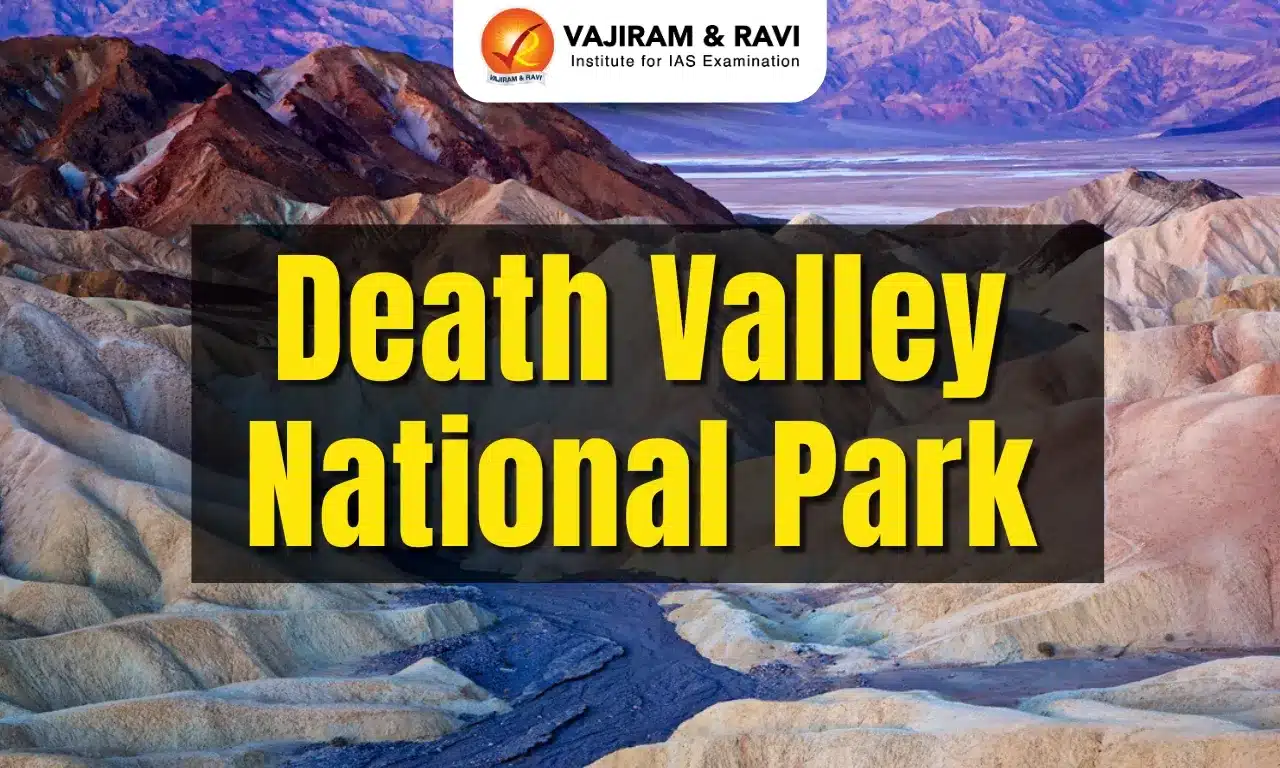
  • It is a desert valley located in the southeastern part of California, United States.
  • It is the hottest and driest place in North America, with summer temperatures peaking above 120 degrees and average rainfall a mere two inches per year.
  • It is the location of the highest temperature (134°F on July 10, 1913) ever recorded in the United States.
  • Also extreme are the park’s elevations: Badwater Basin rests at 282 feet below sea level (the lowest area in North America), while Telescope Peak soars to 11,049 feet. 
  • It is the largest national park in the continental United States.
  • It is a rift valley, or a graben, that has been formed due to the sinking of a huge expanse of rock located between major block-faulted mountains running parallelly in the east and west.
  • It lies in the Great Basin to the east of the Sierra Nevada Mountains, in the northern part of the Mojave Desert.
  • Death Valley hosts landscapes ranging from snow-covered mountains and dunes to wildflower-filled meadows and steep, rugged canyons.
  • Despite the low precipitation and extreme summer temperatures, Death Valley is home to many diverse species, several of which are endemic (found nowhere else in the world).

Source: TG

Death Valley National Park FAQs

Q1: Death Valley National Park is located in which country?

Ans: United States of America

Q2: Why is Death Valley National Park famous climatically?

Ans: It is the hottest and driest place in North America.

Q3: Which is the highest peak within Death Valley National Park?

Ans: Telescope Peak, with an elevation of 11,049 feet.

Q4: How was Death Valley formed geologically?

Ans: By the sinking of a block of land between parallel block-faulted mountain ranges.

Enquire Now