New Ramsar Sites

New Ramsar Sites

New Ramsar Sites

Recently, Siliserh Lake, in Alwar, Rajasthan and Kopra Jalashay near Bilaspur, Chhattisgarh have been designated as Ramsar Sites.

About New Ramsar Sites Latest News

Siliserh lake

  • Location: It is located in the state of Rajasthan.
  • It is a human-made lake within the buffer zone of Sariska Tiger Reserve.
  • It was built in 1845 by Maharaja Vinay Singh to supply drinking water to Alwar city.
  • It is in a semi-arid zone, and the Site serves as an important water source for diverse species of the region. 
  • Fauna
    • It supports 149 bird species and 17 mammal species including the vulnerable river tern and the endangered tiger
    • The site also supports more that 1% of the biogeographic population of black stork (Ciconia nigra). 

Kopra Jalashay

  • Location: It is located in the state of Chhattisgarh.
  • It is a reservoir located in the upper catchments of the River Mahanadi.
  • Its strong hydrological and ecological connectivity contributes to a wide variety of habitats across the area. 
  • It supports more than 60 migratory bird species which rely on it for nesting, feeding and as a stop-over site.
  • Fauna: Notable species include the vulnerable greater spotted eagle (Aquila clanga) and the endangered Egyptian vulture (Neophron percnopterus). 

Source: TOI

New Ramsar Sites FAQs

Q1: In which state is Kopra Jalashay located?

Ans: Chhattisgarh

Q2: Who constructed Siliserh Lake?

Ans: Maharaja Vinay Singh
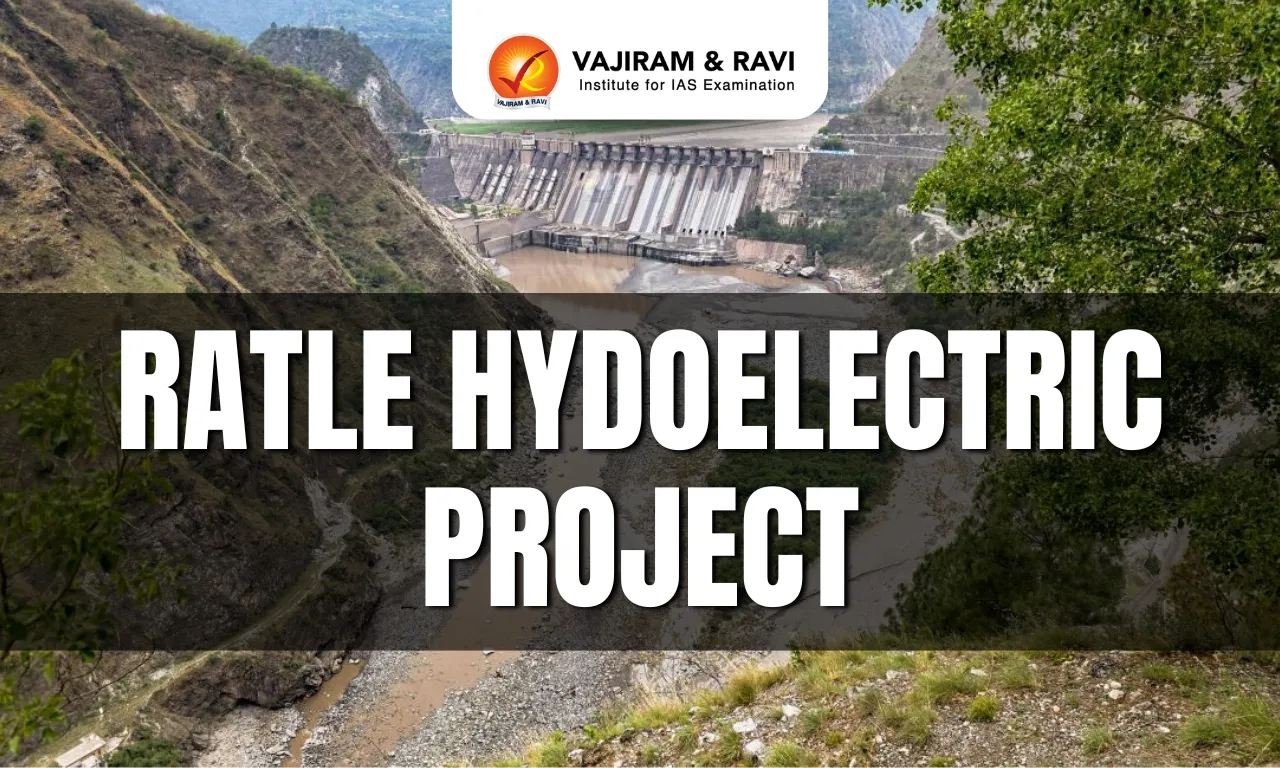
Ratle Hydroelectric Project

Ratle Hydroelectric Project

Ratle Hydroelectric Project Latest News

Megha Engineering and Infrastructures Ltd. (MEIL), which is constructing the Ratle Hydroelectric Project recently said it may pull out of the project if the administration failed to stop threats and interference from locals and politicians.

About Ratle Hydroelectric Project

  • It is an 850 MW run-of-river hydroelectric power project being built on the Chenab River in the Kishtwar District of Jammu & Kashmir.
  • The project is implemented by the Ratle Hydroelectric Power Corporation (RHPCL).
    • RHPCL was formed as a joint venture (JV) between Jammu & Kashmir State Power Development Corporation (JKSPDC) and India’s state-owned National Hydroelectric Power Corporation (NHPC).
    • NHPC and JKSPDC hold 51% and 49% equity ownership in RHPCL, respectively.
  • The construction work is being undertaken by Megha Engineering and Infrastructure Limited (MEIL).
  • The project includes a 133-meter-tall and 194.8-meter-long concrete gravity dam, a diversion dam, and an underground powerhouse on the right bank of the river.
  • The underground powerhouse measuring 168 m x 24.5 m x 49 m will house four 205 MW Francis turbine-generating units and a 30 MW auxiliary turbine-generating unit.
  • The project is expected to generate 3,137 GWh of electricity.
  • Pakistan has frequently alleged that the project violates the Indus Waters Treaty of 1960.

Source: TH

Ratle Hydro Electric Project FAQs

Q1: The Ratle Hydroelectric Project is located on which river?

Ans: It is being built on the Chenab River

Q2: What is the installed capacity of the Ratle Hydroelectric Project?

Ans: 850 MW

Q3: Where is Ratle Hydroelectric Project located?

Ans: Kishtwar District of Jammu & Kashmir.

Tapanuli Orangutan

Tapanuli Orangutan

Tapanuli Orangutan Latest News

Scientists fear that Cyclone Senyar may have swept away a significant number of Tapanuli orangutans.

About Tapanuli Orangutan

  • The Tapanuli orangutan (Pongo tapanuliensis) is a species of orangutan found in the island of Sumatra in Indonesia.
  • It is one of three known species of orangutan, alongside the Sumatran orangutan, found farther northwest on the island, and the Bornean orangutan.
  • It was described as a distinct species in 2017 and currently, it is on the critically endangered species list.
  • Appearance: These species resemble Sumatran orangutans more than Bornean orangutans in body build and fur color.
  • Distribution: It lives in tropical and subtropical moist broadleaf forests that are located south of Lake Toba in Sumatra.
  • Habitat: These are exclusively arboreal and spend most of their time high up in the trees. 
  • Conservation Status: IUCN: Critically endangered 

Characteristics of Tapanuli Orangutan

  • They lead a solitary life and can be seen in pairs only when a mother is raising her young.
  • Orangutans communicate with various sounds.
  • Both sexes will try to intimidate conspecifics with a series of low guttural noises known collectively as the "rolling call".
  • Diet: They are omnivores.
  • Reproduction: Tapanuli orangutans are one of the most slowly-maturing animals in the world.

Source: DTE

Tapanuli Orangutan FAQs

Q1: What is the scientific name of the Tapanuli Orangutan?

Ans: Pongo tapanuliensis

Q2: What is the conservation status of the Tapanuli Orangutan?

Ans: Critically Endangered

Gonorrhoea

Gonorrhoea

Gonorrhoea Latest News

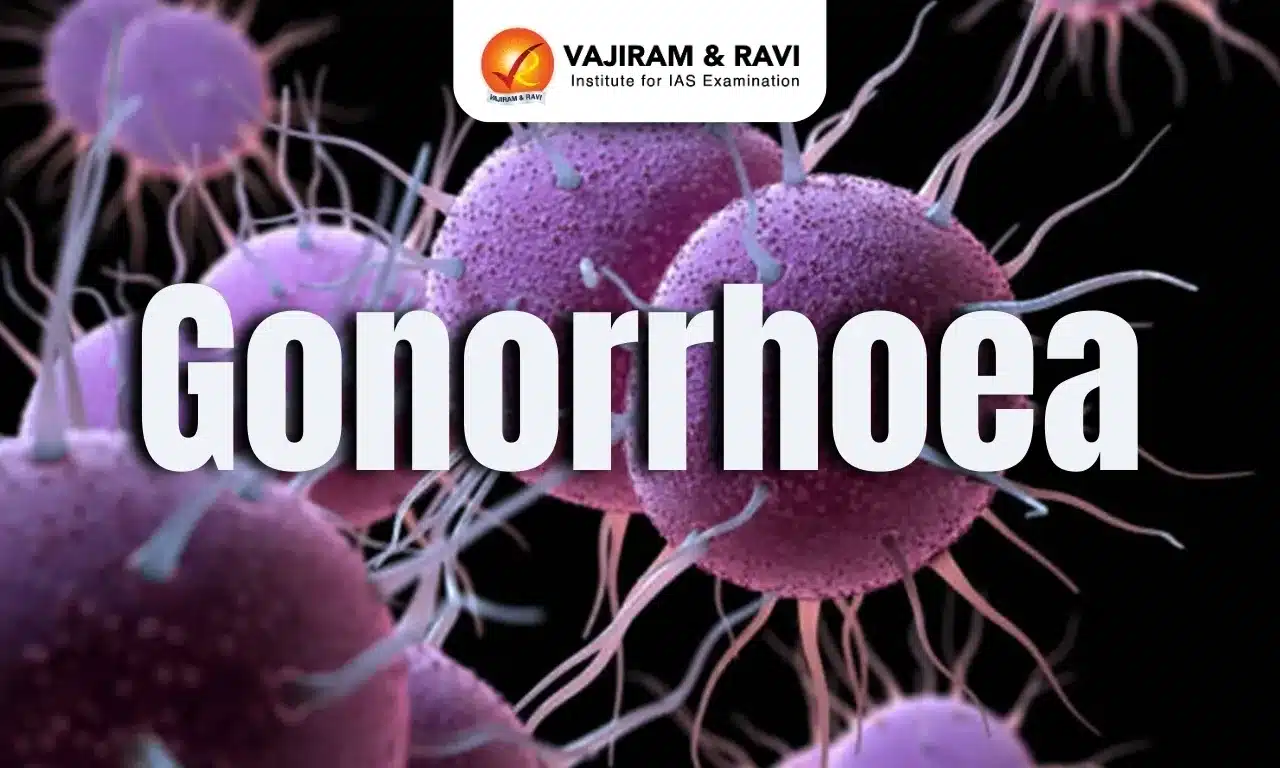
The U.S. Food and Drug Administration (FDA) recently granted approval for two new oral medicines, Nuzolvence (zoliflodacin) and Blujepa (gepotidacin), to treat gonorrhoea, a common sexually transmitted infection, prone to resistance against drugs.

About Gonorrhoea

  • It is a preventable and curable sexually transmitted infection (STI) caused by the bacteria Neisseria gonorrhea. 
  • It’s also sometimes called “the clap” or “drip.” 
  • Gonorrhea bacteria can infect the urethra, rectum, female reproductive tract, mouth, throat, or eyes.
  • Transmission
    • It is most commonly spread during vaginal, oral or anal sexual activity. 
    • But babies can get the infection during childbirth. 
  • In babies, gonorrhea most commonly affects the eyes.
  • Gonorrhea can affect people of any age, anatomy, or gender, but it’s particularly common among teens and young adults between the ages of 15 and 24.
  • Symptoms
    • Many people with gonorrhoea won’t notice any symptoms. If you do get symptoms, it’s usually between 1 to 14 days after getting the infection.
    • Men are more likely to experience symptoms. Up to 50% of women won’t experience symptoms. 
    • Gonorrhoea can cause a sore throat, conjunctivitis, unusual vaginal or penile discharge, and pelvic and genital pain.
  • Untreated gonorrhoea can cause:
    • infections affecting the skin, joints, heart (endocarditis), and brain (meningitis)
    • infertility in both females and males
    • pelvic inflammatory disease (PID)
    • epididymitis and prostatitis (inflammation of your prostate)
    • Some of these complications can cause permanent damage to your health.
  • Prevention: It can be prevented by practicing safe sex.
  • Treatment
  • Gonorrhoea is treatable and curable with antibiotics.
  • Antimicrobial resistance to gonorrhoea is a serious and growing problem, rendering many classes of antibiotics ineffective with the risk of becoming untreatable.

Source: TH

Gonorrhoea FAQs

Q1: What is Gonorrhoea?

Ans: It is a preventable and curable sexually transmitted infection (STI).

Q2: Gonorrhoea is caused by which organism?

Ans: It is caused by a bacteria called Neisseria gonorrhea.

Q3: How does gonorrhoea primarily spread?

Ans: It is most commonly spread during vaginal, oral or anal sexual activity.

Q4: Is gonorrhoea curable?

Ans: Gonorrhoea is treatable and curable with antibiotics.

Pax Silica Initiative

Pax Silica Initiative

Pax Silica Initiative Latest News

The Congress party recently targeted the Prime Minister over India’s exclusion from the United States-led strategic initiative, Pax Silica, citing the ‘sharp downturn’ in his relations with US President Donald Trump.

About Pax Silica Initiative

  • It is a U.S.-led strategic initiative to build a secure, prosperous, and innovation-driven silicon supply chain—from critical minerals and energy inputs to advanced manufacturing, semiconductors, artificial intelligence (AI) infrastructure, and logistics.
  • The term 'Pax Silica' comes from the Latin term ‘pax’ which means peace, stability, and long-term prosperity. 
  • Silica refers to the compound that is refined into silicon, one of the chemical elements foundational to the computer chips that enable AI.
  • It aims to reduce coercive dependencies, protect the materials and capabilities foundational to AI, and ensure aligned nations can develop and deploy transformative technologies at scale.
  • Which Countries Are Part of Pax Silica?
    • Japan
    • South Korea
    • Singapore
    • Netherlands
    • United Kingdom
    • Israel
    • United Arab Emirates
    • Australia
  • Countries Affirmed a Shared Commitment To:
    • Pursue projects to jointly address AI supply chain opportunities and vulnerabilities in priority critical minerals, semiconductor design, fabrication, and packaging, logistics and transportation, compute, and energy grids and power generation.
    • Pursue new joint ventures and strategic co-investment opportunities.
    • Protect sensitive technologies and critical infrastructure from undue access or control by countries of concern.
    • Build trusted technology ecosystems, including ICT systems, fiber-optic cables, data centers, foundational models and applications.

Source: IE

Pax Silica Initiative FAQs

Q1: What is the Pax Silica Initiative?

Ans: A U.S.-led strategic initiative for a secure silicon supply chain.

Q2: Is India a member of Pax Silica Initiative?

Ans: No, India is not a member of the Pax Silica Initiative.

Q3: Which Middle-Eastern countries are part of the Pax Silica Initiative?

Ans: Israel and United Arab Emirates

Q4: Which sector is central to Pax Silica’s strategy?

Ans: Semiconductor manufacturing and AI infrastructure.

Preah Vihear Temple

Preah Vihear Temple

Preah Vihear Temple Latest News

Recently, India called for the protection of Preah Vihear Temple in the midst of ongoing Thailand-Cambodia border clashes. 

About Preah Vihear Temple

  • Location: It is a Hindu temple located in the Preah Vihear Province, in the northern part of Cambodia.
  • It is situated atop a cliff on the Cambodia–Thailand border in the Dangrek Mountain range.
  • It is dedicated to Lord Shiva. 
  • It was built during the period of the Khmer Empire, in the eleventh and twelfth centuries.
  • It was built firstly by King Suryavarman I (1002-50) and then expanded upon by Suryavarman II (1113-50).
  • It is a UNESCO World Heritage Site

Architecture of Preah Vihear Temple

  • It is an outstanding masterpiece of Khmer architecture.
  • The temple is composed of a series of sanctuaries linked by a system of pavements and staircases over an 800-metre-long axis.
  • It features more than five successive gopuras. 
  • Unlike other structures of this kind, the gopuras here are connected by a long path and topped with multi-tiered platforms. 
  • Some of these gopuras have stone roofs, while others have wooden roofs.

Source: News On Air

Preah Vihear Temple FAQs

Q1: Where is Preah Vihear Temple located?

Ans: Cambodia

Q2: Which mountain range is Preah Vihear Temple situated in?

Ans: Dangkrek Mountains

Pyrite

Pyrite

Pyrite Latest News

Scientists recently discovered the oldest-known evidence of fire-making by prehistoric humans in England, which included a patch of heated clay, some heat-shattered flint handaxes, and two pieces of iron pyrite - a mineral that creates sparks when struck against flint to ignite tinder.

About Pyrite

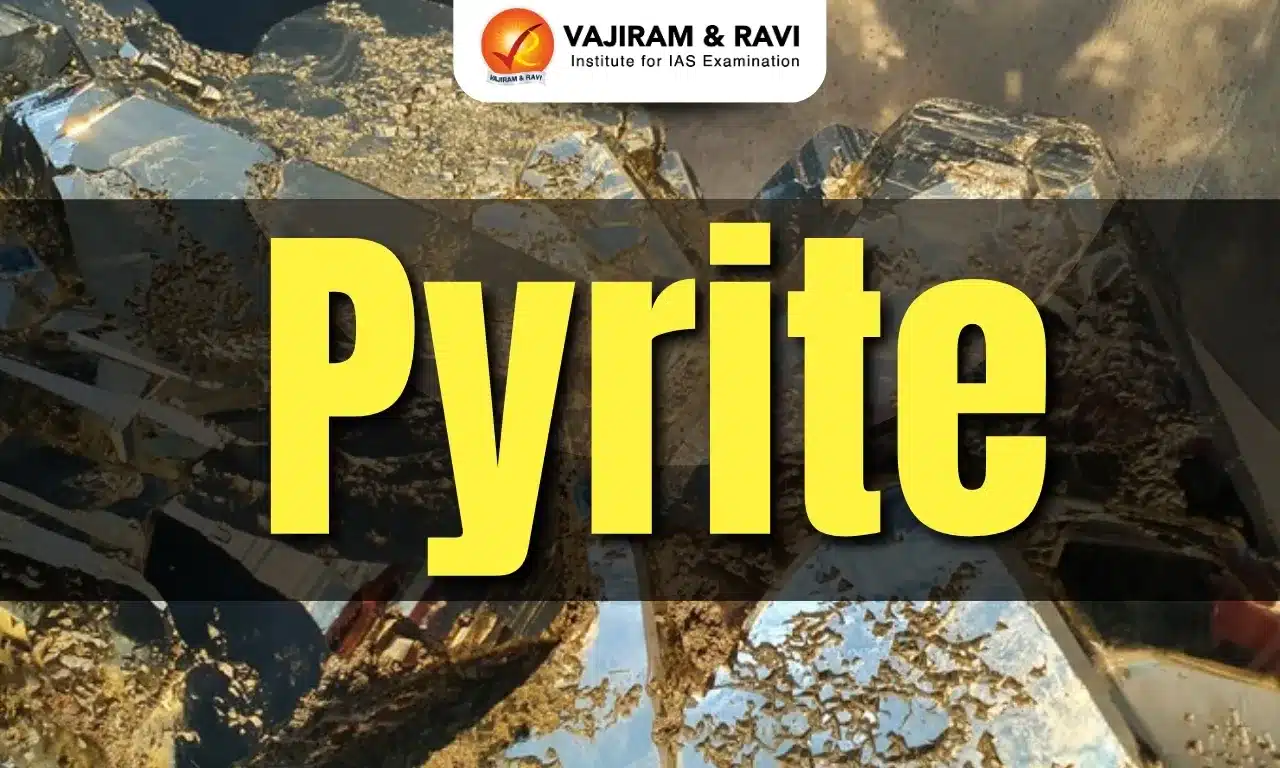
  • It is a brass-yellow mineral with a bright metallic luster. 
  • It has a chemical composition of iron sulfide (FeS2), and is the most common sulfide mineral. 
  • The name comes from the Greek word pyr, “fire,” because pyrite emits sparks when struck by metal.
  • Nodules of pyrite have been found in prehistoric burial mounds, which suggests their use as a means of producing fire. 
  • Pyrite is called “Fool’s Gold” because it resembles gold to the untrained eye.
    • However, pyrite is quite easy to distinguish from gold: pyrite is much lighter but harder than gold and cannot be scratched with a fingernail or pocket knife.
  • It is found in a wide variety of geological formations worldwide, from sedimentary deposits to hydrothermal veins and as a constituent of metamorphic rocks.

Pyrite Uses

  • It is a source of iron and sulfur and is used for the production of sulfuric acid. 
  • It is used to create iron sulfate that is used to make nutritional supplements, ink, lawn conditioner, water treatment and flocculation, moss killer, and many other chemical processes.  
  • Iron sulfate, which comes from pyrite, is used to treat iron-deficiency anemia.  
  • Some types of pyrite contain enough microscopic gold to warrant mining them as a gold ore.

Source: REUT

Pyrite FAQs

Q1: What is the chemical composition of pyrite?

Ans: FeS₂

Q2: Pyrite is best described as which type of mineral?

Ans: Sulfide mineral

Q3: What is the typical colour and appearance of pyrite?

Ans: It is a brass-yellow mineral with a bright metallic luster.

Q4: Why is pyrite commonly known as “Fool’s Gold”?

Ans: It resembles gold to the untrained eye.

APAAR ID

Automated Permanent Academic Account Registry (APAAR) ID

APAAR ID Latest News

The Orissa High Court recently directed education authorities at both the state and central levels to amend the consent form used for generating Automated Permanent Academic Account Registry (APAAR) IDs to include an explicit opt-out option.

About APAAR ID

  • APAAR stands for Automated Permanent Academic Account Registry. 
  • It was introduced by the Ministry of Education, Government of India, under the 'One Nation, One Student ID’ initiative, aligned with the National Education Policy 2020.
  • APAAR is a permanent academic identification system created for every student, from school to higher education. 
  • APAAR assigns a unique and permanent 12-digit ID to every student, offering a comprehensive record of their academic achievements, including degrees, scholarships, awards, and other credits.
  • The APAAR ID card allows students to access their academic credits, degrees, and other information online.
  • The APAAR ID will be unique and remain the same through one’s education journey.
  • It is linked to Aadhaar and stored in DigiLocker for easy access.
  • It serves as a lifelong academic passport, consolidating all achievements and credentials of a student in one place.
  • With a single digital ID, students can move between schools, apply for courses, submit documents for admissions or jobs, and track their credits without relying on multiple paper certificates.
  • Advantages of APAAR ID:
    • Unique Student Identification: Every student gets a unique APAAR ID, which remains with them throughout their academic journey. 
    • Lifelong Learning Record: Stores academic achievements, skills, and extracurricular activities from school to higher education. 
    • Integration with Digi Locker: APAAR ID is linked with Digi Locker, enabling students to securely store and access their academic certificates digitally. 
    • Credit Transfer & Mobility: Helps in seamless credit transfers between institutions under the Academic Bank of Credits (ABC) framework.

Source: HT

APAAR ID FAQs

Q1: What does APAAR stand for?

Ans: APAAR stands for Automated Permanent Academic Account Registry.

Q2: APAAR ID was introduced by which ministry?

Ans: Ministry of Education

Q3: APAAR primarily serves which purpose?

Ans: Permanent academic identification for students.

Q4: How many digits does an APAAR ID consist of?

Ans: 12 digits

Ponduru Khadi

Ponduru Khadi

Ponduru Khadi Latest News

Recently, Ponduru khadi has been granted the geographical indication (GI) tag by the Geographical Indications Registry under the Union ministry of commerce and industry.

About Ponduru Khadi

  • ​Ponduru Khadi, is a famous handspun and handwoven cotton fabric from Andhra Pradesh.
  • It is locally known as Patnulu and is produced in Ponduru village in Srikakulam district.
  • It has been nominated for the One District One Product (ODOP) scheme from the Srikakulam district. 
  • During the pre – independence era Mahatma Gandhi mentioned its virtues in his Young India (the national weekly that Gandhiji edited).

Key Characteristics of Ponduru Khadi

  • Production: It is produced from one of three types of cotton: hill cotton, punasa cotton, or red cotton.
  • Cotton Source: Cotton is indigenous to Srikakulam district and is grown in and around Ponduru.
  • Process: The entire process, from cotton to fabric, is carried out manually.

Unique to Ponduru Khadi

  • Cleaning: The process of cleaning the cotton with the jawbone of Valuga fish is unique to Ponduru khadi and is not practiced anywhere else in the world.
  • Spinning: Ponduru is the only place in India where spinners still use single-spindle charkhas with 24 spokes, also known as the "Gandhi Charkha".
  • Yarn Count: The final textile has a very high yarn count, around 100-120 counts.

Source: TH

Ponduru Khadi FAQs

Q1: Which state is famous for Ponduru Khadi?

Ans: Andhra Pradesh

Q2: What is the duration of a GI Tag?

Ans: 10 years

Geminid Meteor

Geminid Meteor

Geminid Meteor Latest News

The Geminid meteor shower - one of the most spectacular in the celestial calendar - is set to peak this weekend.

About Geminid Meteor

  • The Geminid meteor shower is named after the constellation from which the meteors appear to radiate, Gemini.
  • It peaks during mid-December each year and is considered to be one of the best and most reliable annual meteor showers.
  • Origin: Unlike most meteor showers that originate from comets, the Geminid stream appears to originate from an asteroid known as 3200 Phaethon
  • The Geminids are best viewed during the night and predawn hours. 

What are Meteors?

  • Meteors come from leftover comet particles and bits from asteroids.
  • As they enter the Earth’s atmosphere at high speed, they burn up, creating a spectacular “shower”.
  • When these objects come around the Sun, they leave a dusty trail behind them.
  • Every year Earth passes through these debris trails, which allows the bits to collide with our atmosphere where they disintegrate to create fiery and colorful streaks in the sky.

Source: HT

Geminid Meteor FAQs

Q1: What is the origin of the Geminid Meteor Shower?

Ans: Asteroid 3200 Phaethon

Q2: How often does the Geminid Meteor Shower occur?

Ans: Annually

The Atomic Energy Bill 2025 – Opening Up India’s Nuclear Power Sector

The Atomic Energy Bill 2025 - Opening Up India’s Nuclear Power Sector

The Atomic Energy Amendment Bill 2025 Latest News

  • Recently, the Indian government cleared the Atomic Energy Bill 2025 — rebadged as the Sustainable Harnessing and Advancement of Nuclear Energy for Transforming India (SHANTI) Bill. 
  • The proposed amendments aim to overhaul India’s highly closed atomic energy framework by modifying the Atomic Energy Act, 1962 and aligning it with global practices to enable private and foreign participation in civil nuclear power. 
  • This move is crucial for India’s long-term energy security, climate commitments, and grid stability.

Reforming India’s Nuclear Sector

  • Energy transition and baseload needs:
    • Rapid renewable expansion without adequate energy storage has increased grid instability.
    • Thermal capacity expansion is slowing, and coal is environmentally and politically constrained.
    • Nuclear energy offers reliable baseload power and a low-carbon alternative.
  • Capital constraints, not technology deficit:
    • India’s push for global nuclear collaboration is driven more by capital requirements than technology.
    • Interest from foreign sovereign wealth funds, especially from West Asia, has been expressed.
  • Leveraging the Indo-US Civil Nuclear Deal:
    • Nearly two decades after being signed, the deal’s commercial potential remains underutilised.
    • The reforms are being packaged as part of India–US trade and investment negotiations.

Key Provisions of the Atomic Energy Bill 2025 (SHANTI Bill)

  • Opening up to private and foreign players: Private companies allowed up to 49% minority equity in nuclear power projects. Potential entry of foreign companies in partnership with global sovereign funds.
  • Expanded scope of private participation:
    • Exploration of atomic minerals
    • Fuel fabrication
    • Equipment manufacturing
    • Select aspects of plant operations
    • Research & Development (R&D) of civil nuclear technologies, especially Small Modular Reactors (SMRs) - under 300 MW nuclear fission reactors built in factories and shipped to sites.

Scaling Up Nuclear Capacity - India’s Ambition

  • Target: 100 GWe nuclear capacity by 2047, up from about 8 GWe currently.
  • Global comparison: USA (approx. 100 GWe); France (~65 GWe); China (58 GWe).
  • Nuclear Energy Mission:
    • Outlay: ₹20,000 crore for R&D in Small Modular Reactors (SMRs).
    • Goal: At least 5 indigenously developed SMRs operational by 2033.

SMRs - The New Pillar of India’s Nuclear Strategy

  • Why SMRs:
    • Smaller size, modular construction, quicker deployment.
    • Suitable for industrial decarbonisation and captive power (e.g., data centres, steel, cement).
    • Provide carbon-neutral baseload power, complementing renewables.
  • Indian SMR designs under development: 
    • Developed by Bhabha Atomic Research Centre (BARC) - 
      • Bharat Small Reactor (BSR – 220 MWe) – Pressurised Heavy Water Reactor (PHWR)-based
      • Bharat Small Modular Reactor (BSMR – 200 MWe) – Light Water Reactor (LWR)
      • SMR-55 (55 MWe) – LWR-based
    • Designs are at an advanced stage; no foreign collaboration envisaged initially.

Private Sector Interest in SMRs

  • Companies expressing interest: Reliance Industries, Tata Power, Adani Power, Hindalco, JSW Energy, Jindal Steel & Power.
  • 16 potential sites: Across Gujarat, Madhya Pradesh, Odisha, Andhra Pradesh, Jharkhand, Chhattisgarh.
  • Operational model:
    • The  state-owned Nuclear Power Corp of India Ltd (NPCIL) retains ownership and operational control.
    • Private players will fund the entire project lifecycle (including decommissioning), and get assured long-term captive power.
    • Concerns raised over ownership structure, charges and cost recovery, long-term project viability.

Nuclear Liability Law - The Key Bottleneck

  • Civil Liability for Nuclear Damage Act, 2010 (CLNDA):
    • Includes “right of recourse”, allowing operators to seek compensation from suppliers.
    • Foreign vendors (Westinghouse, EDF/Areva) see this as a major investment deterrent.
  • Proposed workarounds:
    • Capping supplier liability beyond a threshold.
    • Creation of a state-backed insurance or fund pool.
    • Aligning Indian law with global nuclear liability conventions.

Challenges and Way Forward

  • Political and public concerns over nuclear safety: Strengthen independent nuclear safety oversight. Promote SMRs for industrial decarbonisation and grid stability.
  • Private sector worries: Commercial viability and risk-sharing. Leverage reforms to deepen strategic partnerships (US, France, Russia).
  • Scalability issues: India’s PHWR-dominated reactor fleet. Gradually move towards globally dominant LWR technologies while preserving indigenous capability.
  • Need to balance: Sovereignty, safety, and openness. Integrate nuclear energy within India’s climate and energy transition strategy.
  • Managing liability reforms: Without diluting victim compensation. Ensure clear regulatory frameworks and predictable liability regimes.

Conclusion

  • The Atomic Energy Bill 2025 marks a paradigm shift in India’s nuclear energy policy, transitioning from a state-dominated, closed model to a strategic, investment-friendly and climate-aligned framework. 
  • If implemented carefully, the SHANTI Bill could become a cornerstone of India’s energy security and net-zero pathway.

Source: IE

The Atomic Energy Bill 2025 FAQs

Q1: How does the Atomic Energy Bill, 2025 seek to reform India’s civil nuclear sector?

Ans: It amends the Atomic Energy Act, 1962 to allow up to 49% private participation, ease liability norms, etc.

Q2: Why is nuclear energy being emphasised as a baseload power source in India’s energy transition?

Ans: Nuclear provides reliable, low-carbon baseload power to stabilise the grid amid renewable intermittency and constrained thermal expansion.

Q3: What is the strategic significance of Small Modular Reactors (SMRs) in India’s nuclear policy?

Ans: SMRs enable scalable, cost-effective and carbon-neutral baseload power, especially for industrial decarbonisation and captive use.

Q4: How do the proposed nuclear reforms help leverage the Indo-US Civil Nuclear Deal?

Ans: By easing liability and opening equity participation, the reforms unlock foreign capital and revive stalled commercial nuclear cooperation.

Q5: Why is reform of the Civil Liability for Nuclear Damage Act, 2010 crucial for nuclear investment in India?

Ans: The “right of recourse” provision deters suppliers, and aligning liability norms with global standards can attract foreign and private investment.

The Netflix–Warner Alliance and the Future of Cinema Explained

The Netflix–Warner Alliance and the Future of Cinema

Netflix-Warner Alliance Latest News

  • Recently, Netflix announced that it will acquire Warner Bros. for about $82.7 billion, including its film and television studios and premium assets like HBO. 
  • The deal signals a major shift in the entertainment industry, with a streaming platform absorbing a traditional Hollywood studio to become a fully integrated production and distribution powerhouse.

What the Netflix–Warner Deal Means for Netflix

  • The deal gives Netflix unprecedented control over content creation, ownership, distribution, and exhibition. 
  • While it strengthens Netflix’s library, cuts costs, and delivers economies of scale through vertical integration, it also raises concerns for creative independence, consumer choice, and the future of the cinematic experience.

How Streaming Platforms Have Reshaped Viewing Habits

  • Streaming services have transformed how audiences discover and consume content by enabling on-demand, home-based viewing and global access to vast libraries. 
  • This shift has weakened theatrical dominance and favoured binge-worthy, serialised content suited to subscription models over standalone films. 
  • The Netflix–Warner merger is likely to deepen this transformation by consolidating control over what content is produced, promoted, and ultimately watched.

Streaming as a Medium That Redefines Cinema

  • Streaming is not just a new way to deliver films but a distinct medium that reshapes how stories are produced, distributed, and consumed. 
  • As Marshall McLuhan’s idea that “the medium is the message” suggests, streaming has altered the nature of cinema itself—shifting films from collective, immersive theatrical events to fragmented, individual viewing experiences. 
  • The Netflix–Warner merger intensifies this shift by centralising creative and distributive power, favouring high-volume, metric-driven content over bold, experimental filmmaking, and further homogenising what audiences see and how cinema is experienced.

Threats to Creative Freedom and Audience Choice

  • The Netflix–Warner deal risks tightening corporate and algorithmic control over creative decisions, favouring scale, predictability, and data-driven content over innovation. 
  • Independent and experimental filmmakers may be sidelined as slower-paced or niche projects lose priority. 
  • Consumer choice could narrow as recommendation algorithms push heavily promoted, formulaic content, while films are increasingly shaped for short attention spans, further weakening the immersive cinematic experience.

End of an Era for Legacy Cinema

  • Warner Bros., a studio that shaped Hollywood with classics like Casablanca and Gone with the Wind, symbolised the golden age of cinema. 
  • Its acquisition by Netflix is widely seen as confirmation that streaming has overtaken traditional cinema as the industry’s dominant force.

Fears Over the Future of Theatres

  • Although Netflix has pledged to continue theatrical releases, scepticism remains. 
  • Past statements by Netflix leadership calling movie-going “outdated” and the lack of clarity on theatrical release windows raise concerns that films may move quickly from cinemas to streaming, hurting theatre owners.

How Rivals May Rethink Their Strategies

  • The Netflix–Warner merger reshapes the competitive landscape, pressuring rivals like Disney+ and Amazon Prime Video to reconsider their strategies. 
  • Faced with a vertically integrated super-studio, competitors may pursue consolidation, alliances, or mergers, triggering a new wave of industry shake-ups. 
  • Others may turn to niche, regional, or art-house content to differentiate themselves, but such approaches could struggle against Netflix’s scale, reach, and marketing power.

Political and Regulatory Pushback

  • The proposed Netflix–Warner deal has drawn sharp reactions from U.S. lawmakers. 
  • President Donald Trump cautioned that the merger “could be a problem,” while Senator Elizabeth Warren called it an “anti-monopoly nightmare” that could raise prices and reduce content diversity. 
  • Senator Roger Marshall warned that excessive content concentration would harm consumers, workers, and competition.
  • Although the deal will not require Federal Communications Commission approval—since neither company owns broadcast stations—it is likely to face scrutiny from the U.S. Department of Justice, making antitrust review a key hurdle.

Source: TH | IE

Netflix-Warner Alliance FAQs

Q1: Why is the Netflix–Warner deal considered a turning point for cinema?

Ans: The merger marks the first time a streaming platform absorbs a major Hollywood studio, creating a vertically integrated content creation and distribution powerhouse.

Q2: How does the deal change Netflix’s control over content?

Ans: Netflix gains end-to-end control over production, ownership, distribution, and promotion, strengthening scale efficiencies but raising concerns over creative independence and diversity.

Q3: How has streaming already reshaped viewing habits?

Ans: Streaming has shifted audiences toward on-demand, home-based, binge viewing, weakening theatrical releases and favouring serialised, algorithm-friendly content over standalone films.

Q4: Why are filmmakers and regulators worried about the merger?

Ans: Critics fear reduced consumer choice, higher prices, sidelining of experimental cinema, and excessive market concentration that could harm competition and creative freedom.

Q5: How might competitors respond to the Netflix–Warner alliance?

Ans: Rivals may pursue mergers, alliances, or niche strategies such as regional or art-house content, though competing with Netflix’s scale and reach will be difficult.

How Airlines Are Countering the Surge in GPS Disruptions and GNSS Interference

How Airlines Are Countering the Surge in GPS Disruptions

GNSS Disruptions Latest News

  • Incidents of GPS/GNSS interference—mainly signal jamming and spoofing—have increased sharply in recent years, posing growing risks to safe and efficient flight operations worldwide. 
  • Once largely confined to conflict zones and tense borders, such disruptions are now being reported in a wider range of regions, raising serious aviation safety concerns.
  • GPS jamming and spoofing can disrupt navigation, cause aircraft misrouting, reduce separation between planes, and increase the workload of pilots and air traffic controllers, heightening operational risks.

GPS Interference Reported at Major Indian Airports

  • India has seen a rise in GPS/GNSS interference incidents near key airports. 
  • The Ministry of Civil Aviation informed Parliament that such events were reported around Delhi airport and other major hubs including Mumbai, Bengaluru, Hyderabad, Chennai, Kolkata, and Amritsar. 
  • Except for border-adjacent Amritsar, incidents at these airports are a growing concern, with Delhi emerging as a significant hotspot, especially in November.

Global Nature of the Threat

  • India is not alone. GNSS interference has become a key global aviation challenge. 
  • Europe’s aviation regulator, EASA, has flagged it as a significant safety risk, particularly around conflict zones and regions such as the eastern Mediterranean, West Asia, the Baltic Sea, and the Arctic.
  • According to IATA, GPS signal loss events surged by 220% between 2021 and 2024.
  • With ongoing geopolitical tensions, industry bodies warn that GNSS interference is unlikely to decline soon, underscoring the need for sustained vigilance, technological upgrades, and international coordination.

Role of GNSS in Modern Aviation

  • Aircraft rely heavily on Global Navigation Satellite Systems (GNSS) for position, navigation, and timing (PNT) information, which is essential for safe flight operations and air traffic management. 
  • American Global Positioning System (GPS) is the most widely used system, alongside Galileo, GLONASS, and BeiDou.
  • GNSS works through satellite constellations and ground infrastructure that transmit weak signals to onboard receivers in aircraft. 
  • Although highly accurate, these signals are susceptible to interference due to their low power.

Jamming: Disrupting Navigation Signals

  • GNSS jamming occurs when strong radio interference overwhelms satellite signals, temporarily disabling GNSS-based navigation. 
  • While sometimes accidental or natural, most aviation-related jamming incidents are deliberate.

Spoofing: A More Dangerous Threat

  • Spoofing involves transmitting fake GNSS signals to mislead aircraft systems about their actual position or time. 
  • This can trigger abnormal system behaviour and false cockpit warnings, creating serious operational confusion.

Safety Implications for Aircraft Systems

  • Critical avionics such as Flight Management Systems, Terrain Avoidance Warning Systems, and Ground Proximity Warning Systems depend on accurate GNSS data. 
  • As IATA notes, interference-free GNSS services are essential to ensure flight safety and prevent system malfunctions.

Pilots’ Preparedness Against GNSS Interference

  • Although GNSS jamming and spoofing can pose risks to flight safety, pilots are trained to recognise such interference and respond methodically. 
  • They cross-check GNSS data with independent aircraft systems, ground-based aids, and air traffic control inputs, switching to alternative navigation systems when needed.

Identifying Jamming and Spoofing

  • Common signs of spoofing include inconsistent aircraft positions, mismatches between ground speed and airspeed, sudden time shifts, and false terrain or altitude warnings. 
  • Jamming is easier to detect, as GPS signals are typically overwhelmed or lost entirely.

Use of Redundant Navigation Systems

  • Modern aircraft are equipped with multiple sensors and navigation tools, allowing pilots to verify position, speed, and altitude. 
  • When GNSS data is unreliable, crews can rely on systems like the Inertial Reference System (IRS), which independently calculates position using onboard gyroscopes, accelerometers, and pre-flight inputs.
  • In rare cases, severe interference has led to rerouting or flight diversions.
  • However, because aircraft systems continuously cross-reference data, even sophisticated spoofing requires significant effort to disrupt operations meaningfully.

Layered Navigation Safeguards

  • GNSS in commercial aviation is typically used alongside augmentation systems such as Wide Area Augmentation System (WAAS) for navigation and Ground Based Augmentation System (GBAS) for precision approaches. 
  • These layers, combined with inertial navigation, ensure that pilots can maintain safe operations despite GPS interference.

Ground-Based Navigation Systems as Critical Back-Up

  • With GNSS increasingly vulnerable to jamming and spoofing, airlines and aviation authorities are turning back to conventional ground-based navigation aids (GBNAs) as essential backups. 
  • These systems form part of Minimum Operating Networks (MONs) to ensure flight safety when satellite navigation becomes unreliable.

India’s Preparedness and Global Alignment

  • India has retained MONs in line with global best practices. 
  • The government has confirmed continued reliance on conventional navigation and surveillance infrastructure and active participation in international platforms to adopt emerging technologies and methodologies.
  • The DGCA has made GNSS interference reporting mandatory in 2023.
  • As a result, regular reports have been received from airports including Delhi, Kolkata, Amritsar, Mumbai, Hyderabad, Bengaluru, and Chennai, highlighting the expanding scope of the threat.

Source: IE

GNSS Disruptions FAQs

Q1: Why are GPS and GNSS disruptions a growing concern for aviation?

Ans: GPS jamming and spoofing disrupt navigation and timing, increase pilot workload, risk misrouting, and threaten safe separation between aircraft, making them a serious aviation safety challenge.

Q2: Which Indian airports have reported GPS interference incidents?

Ans: India has reported GNSS interference near major airports including Delhi, Mumbai, Bengaluru, Hyderabad, Chennai, Kolkata, and Amritsar, with Delhi emerging as a major hotspot.

Q3: How do pilots detect GPS jamming or spoofing during flight?

Ans: Pilots identify inconsistencies in position, airspeed and ground speed mismatches, sudden time shifts, and false terrain alerts, while jamming is detected through complete signal loss.

Q4: What backup systems do aircraft use when GNSS fails?

Ans: Aircraft rely on inertial reference systems, ground-based navigation aids, and augmentation systems like WAAS and GBAS to maintain accurate navigation without satellite signals.

Q5: Why are ground-based navigation systems gaining importance again?

Ans: As GNSS interference rises, Minimum Operating Networks using conventional navigation aids provide essential backups, ensuring flight safety when satellite navigation becomes unreliable.

ICMR Adopts Demow Model for National Snakebite Prevention Strategy

ICMR Adopts Demow Model for National Snakebite Prevention Strategy

Snakebite Prevention Latest News

  • The Indian Council of Medical Research (ICMR) has approved a Rs. 13.5 crore, four-year multi-state implementation research project to develop a comprehensive national model to reduce snakebite deaths. 
  • The initiative recognises the Assam-based Demow Model as a successful community-led framework and aims to scientifically validate and scale it nationwide. 

India’s High Burden of Snakebite Deaths

  • Snakebite envenoming (SBE) remains a major yet under-addressed public health issue in India. 
  • The country accounts for nearly 58,000 deaths annually, the highest in the world. 
  • Snakebites primarily affect rural communities, agricultural workers, and tribal populations, especially in states such as Assam, West Bengal, Odisha, Maharashtra, and Jharkhand.
  • Despite being a preventable cause of death, India faces persistent challenges:
    • Delayed access to treatment
    • Lack of community awareness
    • Inadequate referral systems
    • Limited use of digital monitoring tools
    • Insufficient pre-hospital care
  • ICMR’s latest national initiative seeks to bridge these systemic gaps.

Overview of the ICMR National Snakebite Research Project

  • The new ICMR-backed project, titled “Zero Snakebite Death Initiative: Community Empowerment & Engagement for Mitigation of Snakebite Envenoming,” aims to formulate a replicable community-based model for reducing mortality. 
  • It will be implemented across seven states: Assam, West Bengal, Odisha, Kerala, Himachal Pradesh, Maharashtra, and Jharkhand. 
  • The research will be coordinated under SARPA (Snakebite Awareness, Response, Prevention & Action).
  • Key aspects:
    • Multi-state implementation research
    • Community empowerment and education
    • Improvement of pre-hospital and hospital care
    • Creation of a real-time digital dashboard for surveillance
    • Standardised data collection by appointed researchers and technical staff in each state
    • Research is scheduled to begin in January 2026.

About Demow Model

  • The selection of Assam’s Demow Model marks a significant recognition of grassroots innovation. 
  • The model has shown notable success in Assam’s Sivasagar district through strong community mobilisation and rapid referral systems.
  • Core Features of the Demow Model
    • High community participation with local volunteers acting as first responders
    • A robust referral network to ensure that patients reach health centres within the “golden hour”
    • Awareness campaigns on preventing snakebites and first-aid dos and don’ts
    • Training of ASHA workers, schoolteachers, and village leaders
    • Collaboration with local hospitals such as Demow Hospital 
  • Because of its strong outcomes, the model will now undergo scientific evaluation and may be scaled across multiple states.

Integration of Other State Models

  • ICMR aims to create a composite national-level model by integrating successful practices from different regions. The research will evaluate and merge the strengths of:
  • Maharashtra Model - Use of Protective Equipment
    • Distribution of gumboots and protective gear to high-risk agricultural communities.
  • Himachal Pradesh Model - Pre-hospital Anti-Snake Venom (ASV)
    • Administration of ASV in ambulances during transport is a breakthrough in early treatment. 
  • Kerala Model - Digital Coordination Platforms
    • Use of real-time digital tools to track cases, guide referrals, and coordinate health services.
  • Together with the Demow Model, these elements form the backbone of a potential national strategy.

Project Objectives

  • Primary Objective
    • Develop, pilot, and implement a nationally replicable community engagement model to prevent and manage snakebite envenoming. 
  • Secondary Objectives
    • Increase awareness and capacity among community members, health workers, and doctors.
    • Improve early referral and treatment-seeking behaviour.
    • Establish a digital snakebite dashboard for high-quality surveillance.
    • Generate evidence to support national policies on snakebite management.

Public Health Significance

  • Snakebite was officially recognised by the WHO as a high-priority neglected tropical disease, and India carries the largest global burden. 
  • A national framework can help the country:
    • Reduce preventable deaths
    • Improve rural health systems
    • Strengthen emergency preparedness
    • Enhance community resilience
  • Given India's varied ecosystems and agricultural practices, a multi-state, adaptable model is essential for long-term mitigation.

Source : TH | NENOW

Snakebite Prevention FAQs

Q1: What is the ICMR’s new snakebite initiative?

Ans: It is a Rs. 13.5-crore, four-year multi-state project aimed at developing a national model to reduce snakebite deaths.

Q2: Why was the Demow Model selected for the project?

Ans: Because of its community-led success in rapid referrals and awareness, making it suitable for scientific evaluation and scaling.

Q3: Which states are included in the research?

Ans: Assam, West Bengal, Odisha, Kerala, Himachal Pradesh, Maharashtra, and Jharkhand.

Q4: What is SARPA?

Ans: SARPA stands for Snakebite Awareness, Response, Prevention & Action, ICMR’s framework for coordinated snakebite management.

Q5: When will the research begin?

Ans: State-level implementation and data collection will begin in January 2026.

Enquire Now