SHANTI Bill 2025, Objectives, Provisions, Concerns, Way Forward

SHANTI Bill 2025

Why SHANTI Bill 2025 in News?

The Sustainable Harnessing and Advancement of Nuclear Energy for Transforming India, SHANTI Bill 2025, officially called the Atomic Energy Bill 2025, is in the news because the Union Government has approved it to open India’s nuclear energy sector to private and foreign participation.

What is the SHANTI Bill 2025?

The SHANTI Bill 2025 is a proposed law to reform India’s civil nuclear energy sector and make it more open, modern, and investment-friendly. It replaces the Atomic Energy Act, 1962 and the Civil Liability for Nuclear Damage Act, 2010, which earlier kept the sector under strict government control. The Bill allows limited private and foreign participation in nuclear power while retaining state oversight.

SHANTI Bill 2025 Objectives

The SHANTI Bill 2025 aims to reform India’s civil nuclear energy sector to meet future power and climate needs. Its objectives are:

  • Expand nuclear power capacity to provide reliable, round-the-clock (baseload) electricity and reduce dependence on coal.
  • Support India’s climate commitments by promoting low-carbon and clean energy sources alongside renewables.
  • Open the nuclear sector to private and foreign participation in a controlled manner to attract long-term capital and investment.
  • Promote Small Modular Reactors (SMRs) for faster deployment, industrial decarbonisation, and captive power use.
  • Improve grid stability as renewable energy capacity increases across the country.
  • Strengthen India’s energy security by diversifying the power mix and reducing fuel import risks.
  • Leverage international nuclear cooperation, including the Indo-US civil nuclear deal, while maintaining strategic oversight.

Provisions of the SHANTI Bill 2025

  • Expanded role of the private sector in areas such as: Exploration and mining of atomic minerals, Nuclear fuel fabrication, Manufacturing of nuclear equipment and components, and Research and Development (R&D) in civil nuclear technologies
  • Minority equity participation: Private companies are permitted to hold up to 49% equity in nuclear power projects, with the government retaining majority control.
  • Promotion of Small Modular Reactors (SMRs) for industrial use, captive power, and quicker deployment of nuclear capacity.
  • Foreign investment framework through partnerships and sovereign wealth funds, aligned with global nuclear practices.
  • Nuclear Energy Mission support, including a ₹20,000 crore outlay for SMR research and development.
  • Long-term capacity target of achieving 100 GWe nuclear power by 2047.
  • Government oversight and safety control to remain with state agencies such as NPCIL, ensuring nuclear safety and security.
  • Framework for liability and risk-sharing mechanisms to make nuclear projects commercially viable while protecting public interest.

Atomic Energy Regulatory Board

The Atomic Energy Regulatory Board (AERB) is India’s premier authority responsible for ensuring nuclear and radiation safety. It was constituted in November 1983 by the President of India under the Atomic Energy Act, 1962. The AERB derives its regulatory powers from rules and notifications issued under the Atomic Energy Act, 1962 and the Environment (Protection) Act, 1986. Key functions include:

  • Regulates nuclear and radiation safety across civilian nuclear installations
  • Issues safety codes, standards, and licensing conditions
  • Enforces safety provisions under the Atomic Energy Act, 1962 and Environment (Protection) Act, 1986
  • Administers industrial safety provisions of the Factories Act, 1948 for units under the Department of Atomic Energy (DAE) as per Section 23 of the Atomic Energy Act
  • Conducts safety inspections and reviews to prevent radiation hazards
  • Plays a crucial role in strengthening regulatory oversight under the SHANTI Bill 2025 amid increased private sector participation

SHANTI Bill: Comparison with Existing Laws

The SHANTI Bill 2025 marks a significant shift from India’s earlier nuclear laws by reforming ownership, participation, and liability frameworks in the civil nuclear sector. The comparison of this bill and existing laws has been discussed below:

SHANTI Bill: Comparison with Existing Laws
Aspect Atomic Energy Act, 1962 & CLNDA, 2010 SHANTI Bill 2025

Sector Control

Complete government monopoly over nuclear energy

Government control retained, but limited private participation allowed

Private Participation

No role for private companies

Private firms allowed up to 49% minority equity

Foreign Involvement

Effectively restricted due to legal and policy barriers

Foreign participation permitted through partnerships

Liability Framework

Strict supplier liability under CLNDA

Risk-sharing and liability management mechanisms proposed

Technology Focus

Large, indigenous nuclear reactors

Emphasis on Small Modular Reactors (SMRs)

Investment Environment

Closed and risk-heavy for investors

More investment-friendly and aligned with global practices

Concerns and Challenges Related to the Bill

  • Nuclear safety concerns: Expanding private participation raises fears about safety standards, making strong and independent nuclear regulation essential.
  • Public trust and acceptance: Nuclear projects often face local opposition due to health, environmental, and displacement concerns.
  • Liability and compensation issues: Changes in nuclear liability rules may raise worries about whether victims will receive timely and adequate compensation in case of an accident.
  • Commercial viability for private players: High costs, long project timelines, and uncertainty in tariff recovery may discourage private investment.
  • Regulatory capacity: Existing regulatory institutions may face challenges in effectively supervising a larger and more complex nuclear sector.
  • Technology and scalability issues: India’s heavy reliance on indigenous reactor designs may limit rapid scaling and global integration.

Way Forward

  • Strengthen nuclear safety regulation by enhancing the autonomy, capacity, and transparency of the Atomic Energy Regulatory Board (AERB).
  • Ensure clear and fair liability mechanisms that protect victims while providing certainty to investors and suppliers.
  • Promote Small Modular Reactors (SMRs) for industrial decarbonisation, captive power, and improved grid stability.
  • Build public trust through stakeholder consultations, transparency, and awareness about nuclear safety.

  • Encourage phased private participation to test commercial viability before large-scale expansion.
  • Integrate nuclear energy into India’s climate strategy, aligning it with renewable energy growth and net-zero targets.

SHANTI Bill 2025 FAQs

Q1: What is the SHANTI Bill 2025?

Ans: The SHANTI Bill 2025 is a proposed law to reform India’s civil nuclear energy sector by replacing the Atomic Energy Act, 1962 and the Civil Liability for Nuclear Damage Act, 2010.

Q2: Why was the SHANTI Bill introduced?

Ans: It was introduced to expand nuclear power, attract private and foreign investment, ensure energy security, and support India’s climate and net-zero goals.

Q3: Does the SHANTI Bill allow privatisation of nuclear power?

Ans: No. The Bill allows only limited private participation, with private companies permitted up to 49% minority equity while the government retains control.

Q4: What role do Small Modular Reactors (SMRs) play in the Bill?

Ans: SMRs are promoted for faster deployment, industrial decarbonisation, captive power generation, and improved grid stability.

Q5: How does the Bill address nuclear liability issues?

Ans: It proposes risk-sharing and liability management mechanisms to align India’s laws with global practices while ensuring victim compensation.

National Party in India, List, Symbol, Significance, Key Details

National Party in India

India follows a vibrant multi-party democratic system where political parties act as the primary link between citizens and governance. To ensure fairness and uniformity in elections, the Election Commission of India regulates the registration and recognition of political parties. Based on electoral performance and geographical presence, parties are recognised as national parties or state parties. National parties play a decisive role in shaping national policies, forming governments, influencing federal relations, and representing India’s diverse political ideologies at the central level.

National Party in India

A National Party in India is a political party recognised by the Election Commission of India due to its significant electoral presence across multiple states or at the national level. Such recognition provides exclusive privileges, including a reserved election symbol throughout the country, free airtime on public broadcasters, and consultation rights on electoral reforms. As of March 2024, India has six recognised national parties, reflecting the competitive and plural nature of Indian democracy across regions and ideologies. Although in 1952, India had 14 National Political Parties, which later lost their status for several reasons.

National Party in India Criteria

A National Party in India is recognised by fulfilling at least one of the officially prescribed electoral conditions. The criteria for a party to be recognised as national party include:

  • Securing at least 6% valid votes in Lok Sabha or Assembly elections in four states and winning four Lok Sabha seats
  • Winning a minimum of 2% Lok Sabha seats from at least three different states
  • Being recognised as a state party in four or more states
  • Recognition is reviewed periodically after two consecutive elections, not after every election

National Party in India List

Currently there are six recognised National Party in India as per Election Commission notifications. Together, these parties represent diverse ideological positions ranging from left-wing socialism to right-wing nationalism. The recognised National Political Parties in India are:

  1. Aam Aadmi Party
  2. Bahujan Samaj Party
  3. Bharatiya Janata Party
  4. Communist Party of India (Marxist)
  5. Indian National Congress
  6. National People’s Party

Aam Aadmi Party

Aam Aadmi Party emerged as a reform-oriented political force focused on governance, transparency, and welfare delivery. The election symbol of the party is “broom”:

[my_image src="https://vajiramandravi.com/current-affairs/wp-content/uploads/2025/12/Aam.webp" size="full" align="none" width="auto" height="246px" alt="Aam Aadmi Party" title="Aam Aadmi Party"]

  • Founded on 26 November 2012 under the leadership of Arvind Kejriwal
  • Originated from the anti-corruption movement advocating institutional accountability
  • Recognised as a national party after electoral success in multiple states
  • The party currently governs the state of Punjab
  • Ideology combines welfare governance, Indian nationalism, populism, and secularism

Bahujan Samaj Party

Bahujan Samaj Party represents political mobilisation of historically marginalised communities. The election symbol of the party is “elephant”:

[my_image src="https://vajiramandravi.com/current-affairs/wp-content/uploads/2025/12/Bahujan.webp" size="full" align="none" width="auto" height="204px" alt="Bahujan Samaj Party" title="Bahujan Samaj Party"]

  • Founded on 14 April 1984 by Kanshi Ram, currently led by Mayawati
  • Ideology rooted in Ambedkarism, social justice, and self-respect movements
  • Played a major role in Uttar Pradesh politics, including forming state governments
  • Retains national party status despite limited recent electoral presence
  • Holds representation mainly in state legislatures with minimal parliamentary seats
  • Focuses on political empowerment of Scheduled Castes and backward communities

Bharatiya Janata Party

Bharatiya Janata Party is India’s largest political party in terms of representation and governance. The election symbol of the party is “Lotus”:

[my_image src="https://vajiramandravi.com/current-affairs/wp-content/uploads/2025/12/Bharatiya.webp" size="full" align="none" width="auto" height="233px" alt="Bharatiya Janata Party" title="Bharatiya Janata Party"]

  • Established on 6 April 1980, led by J. P. Nadda
  • Ideology includes Hindutva, conservatism, nationalism, and economic reforms
  • Currently leads the Union government and governs a majority of Indian states
  • Dominant force in coalition politics and policy formulation
  • Strong organisational structure with nationwide presence and cadre-based mobilization

Communist Party of India (Marxist)

Communist Party of India (Marxist) represents left-wing ideology within India’s parliamentary democracy. The election symbol of the party is “Hammer, Sickle and Star”: 

[my_image src="https://vajiramandravi.com/current-affairs/wp-content/uploads/2025/12/Communist.webp" size="full" align="none" width="auto" height="233px" alt="Communist Party of India" title="Communist Party of India"]

  • Formed on 7 November 1964 after a split in the Communist movement
  • Ideology based on Marxism-Leninism, socialism, and secularism
  • Strong historical presence in West Bengal and Tripura
  • Currently governs Kerala and Tamil Nadu, maintaining relevance through social welfare policies
  • Holds limited parliamentary representation
  • Focuses on labour rights, land reforms, and public sector expansion

Indian National Congress

Indian National Congress is the oldest political party in India and a foundational force in nation-building. The election symbol of the party is “Palm”:

[my_image src="https://vajiramandravi.com/current-affairs/wp-content/uploads/2025/12/Indian.webp" size="full" align="none" width="auto" height="230px" alt="Indian National Congress" title="Indian National Congress"]

  • Founded on 28 December 1885, currently led by Mallikarjun Kharge
  • Played a central role in India’s freedom struggle and constitutional development
  • Ideology includes secularism, social democracy, liberalism, and inclusive growth
  • Has governed India for several decades after independence
  • Continues to be a principal opposition party at the national level

National People's Party

National People’s Party is a regional-origin party with national recognition. The election symbol of the party is “Book”:

[my_image src="https://vajiramandravi.com/current-affairs/wp-content/uploads/2025/12/National.webp" size="full" align="none" width="auto" height="287px" alt="National People's Party" title="National People's Party"]

  • Founded on 6 January 2013 by P. A. Sangma, currently under Conrad Sangma
  • Ideology blends conservatism, regional aspirations, and decentralisation
  • Recognised as a national party due to state-level presence in multiple regions
  • Governs Meghalaya and participates in coalition governments
  • Holds representation in Rajya Sabha and several state assemblies
  • Reflects growing political assertion of the North-East in national politics

National Party in India Significance

National Party in India recognition gives political parties uniform symbols, wider visibility, official privileges, and stronger participation in election processes across India. The benefits and significance of the recognition of National Political Party Status are:

  • National parties get one permanently reserved election symbol usable across all states, even where they do not contest elections.
  • Recognised parties receive free broadcast time on state-run television and radio, helping them reach voters equally.
  • National parties can appoint up to 40 star campaigners, double the limit given to unrecognised political parties.
  • They get access to electoral rolls and are consulted while fixing election dates and framing electoral rules.

National Party in India FAQs

Q1: What is a National Party in India?

Ans: A National Party in India is a political party recognised by the Election Commission for significant electoral performance across multiple states.

Q2: How many National Parties are there in India currently?

Ans: As of 2025, India has six recognised National Parties as notified by the Election Commission of India.

Q3: Who grants the status of National Party in India?

Ans: The Election Commission of India grants, reviews, and withdraws National Party status based on prescribed electoral criteria.

Q4: What are the main benefits of being a National Party in India?

Ans: National Parties get a reserved symbol nationwide, free media time, and consultation rights on election-related decisions.

Q5: Can a National Party in India lose its status?

Ans: Yes, a National Party can lose its status if it fails to meet recognition criteria in two consecutive elections.

UPSC Daily Quiz 16 December 2025

UPSC Daily Quiz

[WpProQuiz 47]

UPSC Daily Quiz FAQs

Q1: What is the Daily UPSC Quiz?

Ans: The Daily UPSC Quiz is a set of practice questions based on current affairs, static subjects, and PYQs that help aspirants enhance retention and test conceptual clarity regularly.

Q2: How is the Daily Quiz useful for UPSC preparation?

Ans: Daily quizzes support learning, help in revision, improve time management, and boost accuracy for both UPSC Prelims and Mains through consistent practice.

Q3: Are the quiz questions based on the UPSC syllabus?

Ans: Yes, all questions are aligned with the UPSC Syllabus 2025, covering key areas like Polity, Economy, Environment, History, Geography, and Current Affairs.

Q4: Are solutions and explanations provided with the quiz?

Ans: Yes, each quiz includes detailed explanations and source references to enhance conceptual understanding and enable self-assessment.

Q5: Is the Daily UPSC Quiz suitable for both Prelims and Mains?

Ans: Primarily focused on Prelims (MCQ format), but it also indirectly helps in Mains by strengthening subject knowledge and factual clarity.

Child Marriage Restraint Act 1929, Objectives, Provisions, Amendments

Child Marriage Restraint Act 1929

The Child Marriage Restraint Act 1929, popularly referred as Sarda Act 1929, was enacted to curb the widespread social practice of child marriage in India. The Act aimed to discourage early marriages by prescribing punishments for adults involved in arranging or solemnizing such marriages. It represented one of the earliest legislative efforts to address social reform through law. The Act did not invalidate child marriages but sought gradual social change through penal deterrence.

Child Marriage Restraint Act 1929

The Child Marriage Restraint Act 1929 came into force on April 1st 1930. It is applied to the citizens of India who are even outside the nation. Although the act was not applicable in the region of Jammu and Kashmir. But after the replacement of this act with the Prohibition of Child Marriage Act 2006 (PCMA), prohibition of child marriage is now fully applied to Jammu and Kashmir after the abrogation of Article 370 in 2019. The act was guided by the recommendations of the Joshi Committee.

Child Marriage Restraint Act 1929 Objectives

The Child Marriage Restraint Act 1929 sought to discourage early marriages through legal restraint and criminal liability. The key objectives of the act has been listed below:

  • Prevent solemnization of marriages involving children
  • Protect minors from social and health harms
  • Create deterrence through penal provisions
  • Promote gradual social reform
  • Regulate conduct of adults and guardians

Child Marriage Restraint Act 1929 Provisions

The Child Marriage Restraint Act 1929 lays down definitions, punishments, procedures, and enforcement mechanisms to restrain child marriages. The major provisions of the act are highlighted below:

  • Definitions
      • Child: Male below 21 years, female below 18 years
      • Child marriage: Marriage where either party is a child
      • Contracting party: Either individual entering marriage
      • Minor: Any person below 18 years
  • Punishment for Male Below 21 Years
      • Applies to males above 18 and below 21 marrying a child
      • Imprisonment up to 15 days
      • Fine up to ₹1,000
      • Court may impose imprisonment, fine, or both
  • Punishment for Male Above 21 Years
      • Imprisonment up to three months
      • Mandatory fine in addition to imprisonment
      • Higher penalty reflects greater responsibility
  • Punishment for Solemnizing Child Marriage
      • Applies to priests, marriage conductors, or facilitators
      • Imprisonment up to three months with/ without fine
      • Defence available if lack of knowledge is proved
  • Liability of Parents and Guardians
      • Parents or guardians responsible for allowing marriage
      • Presumption of negligence unless proven otherwise
      • Simple imprisonment up to three months with fine
      • Women exempted from imprisonment
  • Nature of Offences
      • Certain offences treated as cognizable for investigation
      • Police can investigate without court permission
      • Arrest without warrant restricted by safeguards
  • Jurisdiction of Courts
      • Only Metropolitan Magistrate or Judicial Magistrate First Class
      • Other courts barred from taking cognizance
      • Special law overrides general criminal procedure
  • Limitation Period
      • Court cannot take cognizance after one year
      • Limitation weakens long-term enforcement
      • Many offences escape prosecution due to delay
  • Preliminary Inquiry by Court
      • Magistrate may conduct inquiry before issuing process
      • Purpose is to verify truth of complaint
      • Gujarat later removed this provision
    1. Power to Issue Injunction
      • Court can prohibit an arranged child marriage
      • Injunction issued after hearing concerned persons
      • Disobedience punishable with imprisonment or fine
      • Women exempted from imprisonment
  • Child Marriage Prevention Officer (State Amendment)
      • State governments may appoint officers
      • Duties include prevention, evidence collection, enforcement
      • Officer deemed public servant
      • Legal protection for actions taken in good faith
  • Rule-Making Power
    • State governments empowered to frame rules
    • Rules subject to legislative scrutiny
    • Enables administrative implementation

Child Marriage Restraint Act 1929 Amendments

The Child Marriage Restraint Act 1929 was periodically modified to strengthen enforcement and scope. The major changes brought through the amendments and implementation of other related acts has been discussed below:

  • Child Marriage Restraint (Amendment) Act 1938 introduced injunction powers
  • Child Marriage Restraint (Amendment) Act 1949 repealed security provision
  • The Part B States (Laws) Act 1951 exempts the applicability of this act to Jammu and Kashmir.
  • The Pondicherry (Extension of Laws) Act 1968 expanded applicability of this act
  • Child Marriage Restraint (Amendment) Act 1978 revised age criteria
  • State amendments created prevention officers
  • The Prohibition of Child Marriage Act 2006 replaced this act in 2006

Child Marriage Restraint Act 1929 Significance

Although the Child Marriage Restraint Act 1929 has limited in enforcement strength, it laid the legal and moral groundwork for stronger child protection laws in later decades, reflecting an early attempt to align social practices with emerging ideas of rights, health, and welfare of children. The act is important in the following ways:

  • First national law addressing child marriage
  • Raised marriage age standards
  • Created legal accountability for guardians
  • Provided basis for later reforms
  • Encouraged public awareness against child marriage

Child Marriage Restraint Act 1929 Criticism

Despite intent, the Child Marriage Restraint Act 1929 suffered from serious structural limitations. Major concerns for which the act faces backlashes have been listed here:

  • Did not declare child marriages void
  • Low penalties reduced deterrence
  • One-year limitation weakened prosecution
  • Strong social customs limited enforcement
  • Relied heavily on complaints and awareness

Child Marriage Restraint Act 1929 FAQs

Q1: What is the main purpose of the Child Marriage Restraint Act 1929?

Ans: The Act aims to restrain and discourage child marriages by punishing adults who arrange or solemnize such marriages.

Q2: Does the Child Marriage Restraint Act 1929 declare child marriages void?

Ans: No, the Act does not invalidate child marriages; it only imposes penalties on those responsible for conducting them.

Q3: What age limits are defined under the Child Marriage Restraint Act 1929?

Ans: A child is defined as a male below 21 years and a female below 18 years of age.

Q4: Who can be punished under the Child Marriage Restraint Act 1929?

Ans: Adult males, parents, guardians, and persons who perform or facilitate child marriages can be punished.

Q5: What is a major limitation of the Child Marriage Restraint Act 1929?

Ans: Courts cannot take cognizance of offences after one year, which significantly reduces effective enforcement.

Viksit Bharat Shiksha Adhikshan Bill 2025, Objectives, Provisions, Councils

Viksit Bharat Shiksha Adhikshan Bill

The Viksit Bharat Shiksha Adhikshan Bill 2025 (Earlier known as Higher Education Commission of India (HECI) Bill) is a major reform step approved by the Union Cabinet to improve India’s higher education system. The Bill proposes a single and unified regulatory body to replace multiple existing regulators like the University Grants Commission, All India Council for Technical Education and National Council for Teacher Education. It follows the National Education Policy 2020 vision to simplify governance, improve quality, and promote autonomy in higher education. The Bill aims to make universities more accountable, transparent and globally competitive while ensuring inclusive growth across regions and social groups.

Viksit Bharat Shiksha Adhikshan Bill Objectives

The Viksit Bharat Shiksha Adhikshan Bill seeks to create a simple, transparent and outcome-focused system to regulate and improve higher education in India.

  • Establish a single national regulator for higher education
  • Reduce regulatory overlap and duplication
  • Improve quality, accreditation and academic standards
  • Promote institutional autonomy and accountability
  • Strengthen global competitiveness of Indian institutions

Viksit Bharat Shiksha Adhikshan Bill Provisions

The Viksit Bharat Shiksha Adhikshan Bill introduces structural, regulatory and academic provisions to transform governance of higher education through a unified framework.

  • Unified Higher Education Regulator
      • Creation of Viksit Bharat Shiksha Adhishthan (HECI) as a statutory body
      • Replacement of UGC, AICTE and NCTE with a single authority
      • Covers universities, colleges and higher educational institutions
      • Excludes medical and law education from its scope
  • Core Regulatory Functions
      • Regulation to ensure compliance and governance norms
      • Accreditation to assess quality of institutions and programmes
      • Standards setting to define learning outcomes and benchmarks
  • Vertical Councils under VBSA
      • Viksit Bharat Shiksha Viniyaman Parishad for regulation
      • Viksit Bharat Shiksha Gunvatta Parishad for accreditation
      • Viksit Bharat Shiksha Manak Parishad for academic standards
  • Autonomy and Accountability Measures
      • Graded autonomy for accredited institutions
      • Mandatory public disclosure of finances, faculty and outcomes
      • Transparent grievance redressal for students
  • Funding and Administrative Control
      • VBSA will not control funding of institutions
      • Funding authority remains with the administrative ministry
  • Scope and Coverage
      • Applies to 1168 universities and university-level institutions
      • Covers 45473 colleges and 12002 standalone institutions
      • Includes open, distance, online and digital education
  • Exempted Professional Programmes
    • Medical, dental, nursing and allied health courses excluded
    • Law, pharmacy and veterinary education remain outside scope
    • Existing councils continue to regulate these fields

Viksit Bharat Shiksha Adhikshan Bill Features

The Viksit Bharat Shiksha Adhikshan Bill introduces key features to strengthen quality, equity and global standing of India’s higher education system.

  • Replaces three major regulators with one unified authority
  • Implements NEP 2020 recommendation for single regulation
  • Ensures separation of regulation, accreditation and standards
  • Covers more than 58000 higher education institutions nationwide
  • Keeps medical and legal education under separate councils
  • Focuses on outcome-based learning and quality assurance
  • Supports autonomy through graded accreditation systems
  • Strengthens transparency through mandatory public disclosures
  • Encourages global ranking improvement, noting 318% growth in global visibility over a decade
  • Promotes inclusion with rising enrolment of OBC, SC and ST students and a Gender Parity Index of 1.01

Viksit Bharat Shiksha Adhikshan Structure

The Viksit Bharat Shiksha Adhikshan Bill establishes a structured institutional framework to ensure clear division of roles and effective governance.

  • Viksit Bharat Shiksha Adhishthan as the apex statutory body
  • Commission headed by a Chairperson appointed by the President of India
  • Up to twelve members including academic experts and officials
  • Three independent councils under the Adhikshan
    • Regulatory Council
    • Accreditation Council
    • Standards Council
  • Each council comprises up to 14 members
  • Members include eminent academicians, experts and government nominees
  • Members selected through a search-cum-selection process with fixed tenure
  • Central Government oversight through policy direction
  • Bodies function as public authorities with statutory accountability

Viksit Bharat Shiksha Adhikshan Bill Specialised Councils

The Viksit Bharat Shiksha Adhikshan Bill introduces three specialised councils under the apex Viksit Bharat Shiksha Adhikshan (VBSA) as given below:

  1. Viksit Bharat Shiksha Viniyaman Parishad (Regulatory Council)
  • Acts as the common regulator for higher education
  • Ensures compliance with governance and disclosure norms
  • Prevents commercialisation of education
  • Facilitates graded autonomy and institutional expansion
  1. Viksit Bharat Shiksha Gunvatta Parishad (Accreditation Council)
  • Oversees outcome-based accreditation frameworks
  • Builds an independent and technology-driven accreditation ecosystem
  • Ensures transparency in quality assessment
  • Promotes continuous quality improvement
  1. Viksit Bharat Shiksha Manak Parishad (Standards Council)
  • Sets national academic and curricular standards
  • Defines learning outcomes and qualification frameworks
  • Facilitates credit transfer and student mobility
  • Encourages innovation while maintaining minimum standards

Viksit Bharat Shiksha Adhikshan Funding

Viksit Bharat Shiksha Adhikshan funding will come from Parliament approved central grants to run the Commission, Councils, staff, secretariats, and regulatory functions nationwide efficiently.

  • The Central Government will provide grants to VBSA after Parliamentary approval under Clause 38, ensuring lawful and accountable public funding.
  • A dedicated Viksit Bharat Shiksha Adhishthan Fund is created to manage salaries, allowances, administration, and operational expenses.
  • Budgetary support will not exceed existing funding levels of UGC, AICTE, and NCTE, ensuring fiscal continuity and stability.
  • All assets and staff of UGC, AICTE, and NCTE transfer to VBSA with unchanged pay, service conditions, and retirement benefits.
  • Funding of centrally funded institutions remains outside VBSA, protecting institutional autonomy and separating regulation from grant disbursal

Viksit Bharat Shiksha Adhikshan Bill Significance

The Viksit Bharat Shiksha Adhikshan Bill marks a structural shift in higher education governance by aligning regulation with quality, autonomy and global standards. 

  • It simplifies regulatory processes, strengthens accountability and supports inclusive growth. 
  • By separating regulation, accreditation and standards, it reduces institutional overlap and conflict. 
  • Its emphasis on transparency, outcome-based education and institutional autonomy positions India’s higher education system to respond effectively to expanding enrolments, rising global competition and evolving knowledge needs, while safeguarding equity and academic integrity.

Viksit Bharat Shiksha Adhikshan Bill FAQs

Q1: What is the Viksit Bharat Shiksha Adhikshan Bill?

Ans: It is a reform law proposing a single regulator to oversee higher education quality, standards and accreditation.

Q2: Which bodies will the Viksit Bharat Shiksha Adhikshan Bill replace?

Ans: It replaces multiple regulators like UGC, AICTE and NCTE with a unified regulatory framework.

Q3: How is the Viksit Bharat Shiksha Adhikshan funded?

Ans: VBSA is funded through Parliament-approved central grants, a dedicated fund, and existing budget support without increasing current higher education expenditure levels.

Q4: Which institutions are covered under the Viksit Bharat Shiksha Adhikshan Bill?

Ans: Most universities and colleges are covered, excluding medical, legal, nursing and veterinary institutions.

Q5: Why is the Viksit Bharat Shiksha Adhikshan Bill considered significant?

Ans: It simplifies regulation, improves transparency, promotes autonomy and aligns higher education with global standards.

Sahyog Portal, Features, Information Technology Act, Latest News

Sahyog Portal

Why Sahyog Portal in News?

The Karnataka High Court recently upheld the Union government’s Sahyog portal, dismissing X Corporation’s plea that had termed it as “extra-legal censorship.”

What is Sahyog Portal?

The Sahyog Portal is an online platform launched by the Union Home Ministry in October 2024 to help remove illegal content from the internet quickly. It allows government agencies to send takedown notices directly to social media platforms and other online intermediaries. The portal operates under Section 79(3)(b) of the IT Act, 2000, giving it legal backing. It ensures that intermediaries act fast while retaining safe harbour protections. Overall, it helps maintain a safe, secure, and lawful digital space in India.

Sahyog Portal Features

  • Centralised Communication: Connects government agencies, state/UT nodal officers, and 65 online intermediaries in a single platform.
  • Automated Takedown Notices: Sends quick, documented notices to intermediaries for prompt removal of unlawful content.
  • Legal Backing: Operates under Section 79(3)(b) of the IT Act, 2000, ensuring legal enforcement and consequences for non-compliance.
  • Separate from Section 69A: Focuses on intermediaries’ responsibility to disable unlawful content rather than government blocking powers.
  • Public Good Tool: Strengthens cyber law enforcement and helps maintain a safe, secure, and accountable online ecosystem.

Sahyog Portal & Sections of IT Act

The Sahyog Portal operates under the Information Technology Act, 2000, providing a legal framework for online content regulation in India. Its main connection is with:

1. Section 79(3)(b) of the IT Act, 2000

  • This section provides safe harbour protections to intermediaries like social media platforms and online services.
  • Under Sahyog, intermediaries must remove unlawful content promptly when notified by government authorities.
  • Non-compliance with these notices can result in loss of safe harbour immunity, making intermediaries legally accountable.

2. Section 69A of the IT Act, 2000

  • Section 69A gives the government the power to block public access to websites or content.
  • Sahyog is different from Section 69A, as it focuses on intermediaries’ responsibility rather than direct government blocking.
  • This ensures intermediaries take quick action on unlawful content while preserving legal safeguards.

Sahyog Portal FAQs

Q1: What is the Sahyog Portal?

Ans: Sahyog Portal is an online platform launched by the Union Home Ministry in October 2024 to help government agencies issue takedown notices to intermediaries for unlawful online content.

Q2: Which government body operates Sahyog Portal?

Ans: It is operated by the Indian Cyber Crime Coordination Centre (I4C) under the Union Home Ministry.

Q3: Under which law does Sahyog Portal function?

Ans: The portal works under Section 79(3)(b) of the IT Act, 2000, which provides legal backing to enforce takedown notices.

Q4: Is Sahyog Portal the same as Section 69A blocking?

Ans: No. Section 69A allows the government to block websites, whereas Sahyog focuses on intermediaries’ responsibility to remove unlawful content.

Q5: Who are connected through Sahyog Portal?

Ans: It connects 65 online intermediaries, state/UT nodal officers, and seven central government agencies, enabling faster communication.

Air Defence Systems in India, List, Range, Speed, Uses

Air Defence Systems in India

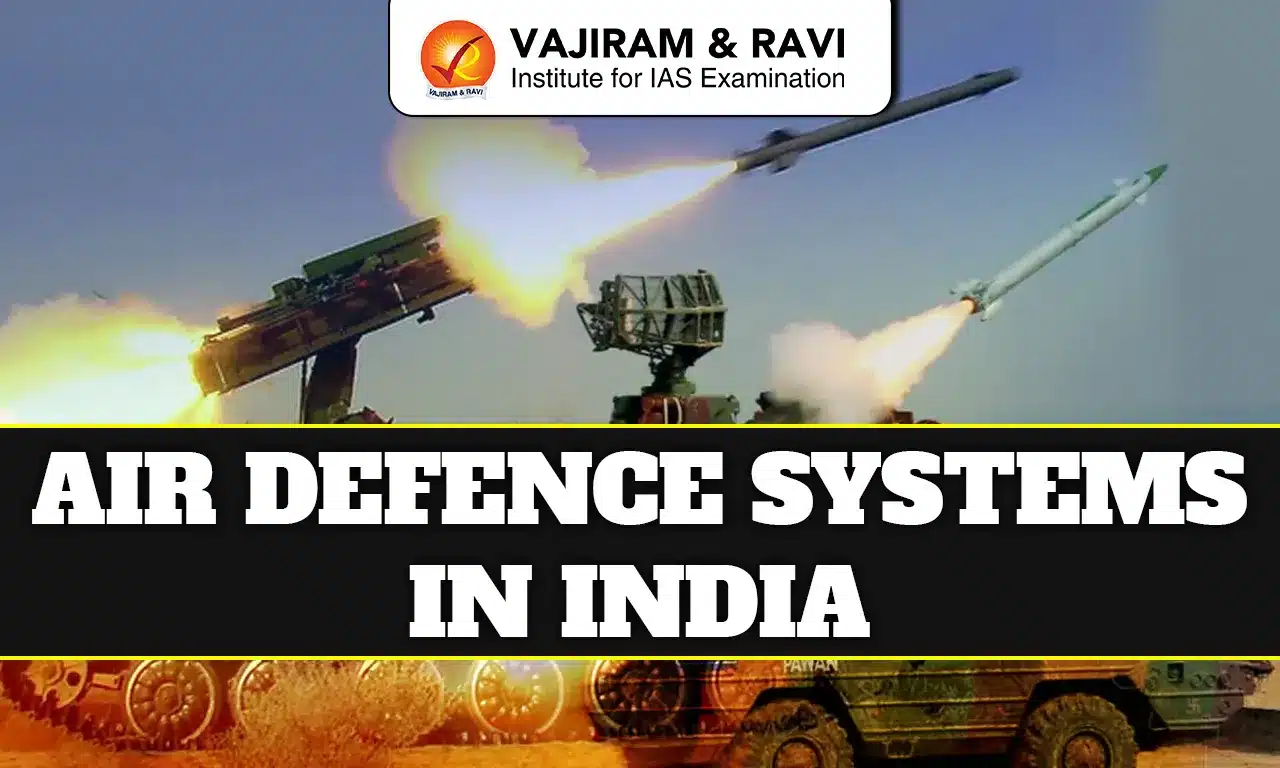
Air Defence Systems in India form a multi-layered security shield designed to protect national airspace from aircraft, missiles, drones, and emerging hypersonic threats. India operates one of the most complex air defence architectures in Asia, integrating indigenous missile systems, advanced radars, and foreign-origin platforms. With nearly 1750 military aircraft and close to 900 fighter jets, India ranks among the top five global air powers. The system ensures early detection, interception, and neutralisation of hostile aerial threats across varying ranges and altitudes.

Air Defence Systems in India

Air Defence Systems are defensive military technologies that detect, track, and destroy aerial threats such as fighter aircraft, ballistic missiles, cruise missiles, UAVs, and loitering munitions. India’s air defence framework combines surface-to-air missiles, ballistic missile defence interceptors, radar-guided guns, and integrated command-control networks. Operated jointly by the Indian Air Force, Indian Army, and Indian Navy, these systems follow a layered approach consisting of long-range, medium-range, short-range, and very short-range defences to provide comprehensive aerial security.

Air Defence Systems in India List

India follows a layered air defence doctrine combining imported and indigenous systems for redundancy and flexibility. The list of major Air Defence Systems in India are:

  • Long-range systems such as S-400 Triumph and Ballistic Missile Defence interceptors
  • Medium-range platforms like Akash and Barak-8
  • Short-range systems including QRSAM and SPYDER
  • Very short-range missile and gun-based systems for terminal defence

Prithvi Air Defence (PAD)

Prithvi Air Defence is the exo-atmospheric interceptor of India’s Ballistic Missile Defence Programme.

  • Developed by DRDO under BMD Phase-I
  • Interception altitude up to 80 km
  • Engagement range between 300 and 2,000 km
  • Designed to destroy incoming ballistic missiles outside the atmosphere
  • Uses inertial navigation with radar guidance
  • Successfully tested multiple times against simulated ballistic targets

S-400 Triumph

S-400 Triumph is India’s most advanced long-range air defence system, procured from Russia.

  • Maximum engagement range of 400 km
  • Can intercept aircraft, UAVs, cruise missiles, and ballistic missiles
  • India signed a USD 5.43 billion deal for five regiments
  • Known in India as “Sudarshan Chakra”
  • Tracks up to 300 targets simultaneously
  • Deployed along northern and western strategic sectors

Advanced Air Defence (AAD)

Advanced Air Defence is the endo-atmospheric interceptor of India’s BMD architecture.

  • Designed to intercept missiles within the atmosphere
  • Operational altitude up to 30 km
  • Speed approximately Mach 4.5
  • Complements PAD in two-layer missile interception
  • Provides terminal phase ballistic missile defence
  • Successfully tested against short and medium-range ballistic targets

Akash Surface-to-Air Missile System

Akash is an indigenously developed medium-range surface-to-air missile system.

  • Developed by DRDO, produced by BDL and BEL
  • Range up to 45 km, speed Mach 3.5
  • Uses Rajendra phased-array radar
  • Simultaneously tracks 64 targets
  • Deployed by Indian Air Force and Indian Army
  • Variants include Akash-1S and Akash-NG (70 km range)

SPYDER

SPYDER is a quick reaction air defence system acquired from Israel.

  • Uses Python-5 and Derby missiles
  • Engagement range between 20 and 50 km
  • Capable of all-weather operations
  • Highly mobile and rapidly deployable
  • Effective against low-flying aircraft and drones
  • Integrated into IAF’s low-level air defence network

QRSAM

Quick Reaction Surface-to-Air Missile (QRSAM) is a mobile indigenous air defence system.

  • Developed by DRDO for Indian Army
  • Operational range up to 30 km
  • Speed approximately Mach 4.7
  • Capable of firing on the move
  • Designed to counter aircraft and UAVs
  • Fully automated command and control system

2K12 Kub (Kvadrat)

2K12 Kub is a Soviet-era medium-range air defence system still in limited service.

  • Maximum range of about 24 km
  • Engagement altitude up to 14,000 metres
  • Radar-guided missile system
  • Used for point and area defence
  • Gradually being phased out
  • Replaced by modern indigenous platforms

S-125 Pechora

S-125 Pechora is a legacy short-range surface-to-air missile system.

  • Soviet-origin system
  • Maximum range around 30 km
  • Designed to counter low-altitude targets
  • Upgraded with digital radars in India
  • Used extensively during earlier decades
  • Now largely replaced by Akash and Barak-8

Barak-8

Barak-8 is a modern medium-range air defence system jointly developed by India and Israel.

  • Range up to 100 km
  • Used by Army, Navy, and Air Force
  • Equipped with active radar seeker
  • High resistance to electronic countermeasures
  • Deployed in sensitive border areas
  • Effective against missiles, aircraft, and UAVs

Also Read: Air Defence Systems in the World

9K33 Osa-AK

Osa-AK is a mobile short-range air defence missile system.

  • Soviet-origin all-weather system
  • Range approximately 15 km
  • Mounted on amphibious vehicles
  • Designed for frontline air defence
  • Rapid reaction capability
  • Gradually being replaced by newer systems

S-200 Angara

S-200 Angara was a long-range air defence system previously used by India.

  • Engagement range exceeding 250 km
  • Designed for high-altitude targets
  • Large radar signature and fixed deployment
  • Required extensive logistical support
  • Now retired from active service
  • Replaced by S-400 class systems

9K35 Strela-10

Strela-10 is a very short-range infrared-guided missile system.

  • Engagement range up to 5 km
  • Designed for low-flying aircraft
  • Mounted on tracked vehicles
  • Passive infrared guidance
  • Suitable for frontline troops
  • Part of India’s VSHORAD layer

2K22 Tunguska

Tunguska is a combined gun-missile air defence platform.

  • Integrates missiles and 30 mm cannons
  • Engagement range up to 10 km
  • Effective against helicopters and aircraft
  • Radar and optical tracking
  • Mounted on tracked chassis
  • Used for mobile battlefield air defence

ZSU-23-4 Shilka and ZU-23-2

These are gun-based air defence systems forming the last line of defence.

  • ZSU-23-4 has radar-guided 23 mm guns
  • ZU-23-2 is a towed twin-barrel system
  • Effective against low-altitude threats
  • Widely used for point defence
  • High rate of fire
  • Deployed near critical installations

Bofors 40 mm Gun & KPV HMG

Gun-based systems provide close-in air defence against low-flying threats.

Key facts:

  • Bofors 40 mm effective against aircraft and drones
  • High accuracy and proven reliability
  • KPV Heavy Machine Gun used for short-range defence
  • Effective against helicopters and UAVs
  • Deployed at airbases and forward areas
  • Complements missile-based systems

Air Defence Systems in India FAQs

Q1: What are Air Defence Systems in India?

Ans: Air Defence Systems in India are layered military mechanisms that detect, track, and intercept enemy aircraft, missiles, drones, and aerial threats.

Q2: Which is the longest-range Air Defence System in India?

Ans: The S-400 Triumph is the longest-range Air Defence System in India, capable of intercepting targets up to 400 km.

Q3: What is India’s indigenous Ballistic Missile Defence system?

Ans: India’s BMD system includes Prithvi Air Defence (PAD) for exo-atmospheric interception and Advanced Air Defence (AAD) for endo-atmospheric interception.

Q4: Which indigenous missile forms the backbone of medium-range Air Defence Systems in India?

Ans: The Akash Surface-to-Air Missile System is the primary indigenous medium-range air defence platform used by the Army and Air Force.

Q5: How does India ensure last-layer air defence?

Ans: India uses VSHORAD systems like Strela-10, Tunguska, Shilka, ZU-23-2 guns, and Bofors 40 mm guns for close-range air defence.

National Makhana Board, Objectives, Features, Impact, Challenges

National Makhana Board

The National Makhana Board marks a significant institutional step to strengthen India’s makhana sector, a traditional aquatic crop deeply rooted in eastern India. Makhana, botanically known as Euryale ferox, is grown in freshwater ponds and wetlands and is popularly called the “Black Diamond” in its raw form. Bihar produces nearly 90% of India’s makhana, with Mithila Makhana receiving a Geographical Indication tag in 2022. Makhana being nutritionally rich, culturally significant, and economically vital, supports thousands of small farmers, especially the Mallah Community, making it a strategic crop for inclusive rural development.

National Makhana Board

The National Makhana Board was inaugurated by Prime Minister Narendra Modi in Purnea, Bihar, on 15 September 2025, following the announcement in the Union Budget 2025-26. Headquartered in Purnea, the Board has been established with a government-approved development package of Rs 476.03 crore. Its core mandate is to strengthen production, processing, value addition, and exports of makhana across India, with special emphasis on Bihar, which cultivates makhana over nearly 15,000 hectares and produces about 10,000 tonnes of popped makhana annually. The Board aims to correct regional imbalances, as major exports currently occur from states with better processing and logistics infrastructure rather than from production hubs.

National Makhana Board Objectives

The National Makhana Board aims to modernize makhana cultivation, improve farmer incomes, and establish India as a global hub for premium fox nut production.

  • Raise production standards through improved cultivation practices
  • Promote adoption of high-yield varieties like Swarna Vaidehi and Sabour Makhana-1
  • Improve post-harvest management to reduce losses
  • Encourage value addition through processing and packaging
  • Build strong domestic and international marketing and export linkages
  • Support farmer-producer organizations and cooperatives
  • Facilitate access to government schemes and institutional credit

National Makhana Board Features

The National Makhana Board integrates agriculture, food processing, exports, and rural livelihoods through a focused institutional framework.

  • Rs 475 crore development package for sector-wide growth
  • Headquarters in Purnea, close to major production clusters
  • Emphasis on research, innovation, and technology transfer
  • Promotion of mechanization in harvesting and processing
  • Development of national branding for Indian and Mithila Makhana
  • Public-private partnerships in processing, logistics, and exports
  • Alignment with GI-tagged Mithila Makhana for quality assurance

National Makhana Board Impact

The National Makhana Board is expected to generate economic, social, and regional development benefits, especially for Bihar and eastern India. The establishment is expected to result in:

  • Enhanced farmer incomes through better pricing and reduced intermediaries
  • Socio-economic upliftment of the Mallah community traditionally engaged in makhana cultivation
  • Market expansion for GI-tagged Mithila Makhana as a premium global product
  • Improved productivity through better seeds and cultivation methods
  • Growth of food processing and agri-export infrastructure in Bihar
  • Reduction in regional disparity as exports shift closer to production zones
  • Employment generation across farming, processing, packaging, and logistics

National Makhana Board Challenges

Despite its potential, the National Makhana Board faces structural and operational challenges that must be addressed for long-term success.

  • Low productivity due to labor-intensive traditional farming practices
  • Slow adoption of high-yield and improved seed varieties
  • Limited local processing and grading units in Bihar
  • Inadequate cargo facilities and export hubs near production areas
  • Dependence on other states for large-scale processing and exports
  • Fragmented landholdings and small farmer capacity constraints
  • Need for sustainable wetland management amid climate pressures

National Makhana Board Recent Developments

National Makhana Board held its first meeting in New Delhi, starting nationwide plans for scientific, market-linked growth of the makhana sector. The key highlights of this meeting are:

  • Meeting chaired by Agriculture Secretary Dr Devesh Chaturvedi at Krishi Bhawan to operationalize the Board and central scheme.
  • States and research bodies presented annual plans; budgets were approved for research, training, infrastructure and market development.
  • Seed needs of states will be pooled and supplied by SAU Sabour and CAU Samastipur, Bihar for current and next seasons.
  • Focus areas include better farming techniques, grading, drying, popping, packaging, branding, value addition and export readiness.
  • The meeting created a clear roadmap for coordinated, science-based and income-focused expansion of makhana cultivation across India.

National Makhana Board FAQs

Q1: What is the National Makhana Board?

Ans: It is a government body established to promote makhana production, processing, value addition, and exports in India.

Q2: When and where was the National Makhana Board inaugurated?

Ans: It was inaugurated in 2025 in Purnea, Bihar, under the Union Budget 2025-26 initiative.

Q3: Why is Bihar central to the National Makhana Board?

Ans: Bihar produces about 90% of India’s makhana, mainly in the Mithilanchal region.

Q4: What financial support is provided to the Board?

Ans: The government has approved a development package of Rs 476.03 crore for the makhana sector.

Q5: How will the National Makhana Board benefit farmers?

Ans: It improves productivity, supports value addition, strengthens market access, and raises farmer incomes through better exports.

Centralised Public Grievance Redress and Monitoring System (CPGRAMS)

Centralised Public Grievance Redress and Monitoring System

Centralised Public Grievance Redress and Monitoring System (CPGRAMS) Latest News

India's Centralised Public Grievances Redressal and Monitoring System (CPGRAMS) has seen a 74% reduction in public grievance pendency since 2021.

About Centralised Public Grievance Redress and Monitoring System (CPGRAMS)

  • CPGRAMS is an online platform available to the citizens 24×7 to lodge their grievances to the public authorities on any subject related to service delivery.
  • It was developed and monitored by the Department of Administrative Reforms and Public Grievances (DARPG), Ministry of Personnel, Public Grievances, and Pensions.
  • It is a single portal connected to all the ministries/departments of the Government of India and States.
  • Every ministry and state have role-based access to this system.
  • CPGRAMS is also accessible to the citizens through a standalone mobile application downloadable through the Google Play store, and mobile application integrated with UMANG.
  • The status of the grievance filed in CPGRAMS can be tracked with the unique registration ID provided at the time of registration of the complainant.
  • The grievances received on the CPGRAMS shall be resolved promptly as soon as they are received but within a maximum period of 21 days.
  • CPGRAMS also provides an appeal facility to the citizens if they are not satisfied with the resolution by the Grievance Officer.
    • After closure of grievance, if the complainant is not satisfied with the resolution, he/she can provide feedback. 
    • If the rating is ‘Poor’ the option to file an appeal is enabled. 
    • The status of the appeal can also be tracked by the petitioner with the grievance registration number.
  • Issues which are not taken up for redressal:
    • Sub-judice cases or any matter concerning judgment given by any court.
    • Personal and family disputes.
    • RTI matters.
    • Religious matters.
    • Anything that impacts upon the territorial integrity of the country or friendly relations with other countries.

Source: DEVD

Centralised Public Grievance Redress and Monitoring System (CPGRAMS) FAQs

Q1: What is CPGRAMS?

Ans: An online 24×7 platform for citizens to lodge grievances related to service delivery with public authorities.

Q2: Which department developed and monitors CPGRAMS?

Ans: Department of Administrative Reforms and Public Grievances (DARPG).

Q3: Do States also have access to CPGRAMS?

Ans: Yes, all States have role-based access to the system.

Q4: What is the maximum time limit for resolution of grievances under CPGRAMS?

Ans: 21 days.

MSME, Definition, Classification, Features, Government Initiatives

MSME

Micro, Small, and Medium Enterprises (MSMEs) form the backbone of India’s economy, contributing significantly to employment, production, and exports. They play a key role in promoting entrepreneurship and supporting local industries across urban and rural areas. MSMEs foster innovation, create livelihood opportunities, and help in reducing regional economic disparities. Recognizing their importance, the government has introduced various initiatives to support and strengthen this sector.

What is MSME?

MSME stands for Micro, Small, and Medium Enterprises. In India, it is a formal classification of businesses based on their investment in plant, machinery or equipment and their annual turnover, as defined under the Micro, Small and Medium Enterprises Development (MSMED) Act, 2006

The objective of this classification is to provide targeted policy support, regulation, and incentives to smaller businesses so that they can grow in a structured and sustainable manner.

Classification of MSME Sector

To enable MSMEs to expand their operations and gain access to improved financial and institutional support, the classification limits for investment have been raised by 2.5 times, while turnover limits have been increased by 2 times.

Classification of MSME Sector
Rs. in Crore Investment (₹ in crore) Turnover (₹ in crore)
 

Current

Revised

Current

Revised

Micro Enterprises

1

2.5

5

10

Small Enterprises

10

25

50

100

Medium Enterprises

50

125

250

500

Micro, Small and Medium Enterprises (MSME) Objectives

  • To promote entrepreneurship and self-employment by enabling individuals to start and grow small businesses with limited capital.
  • To generate large-scale employment opportunities, especially in rural and semi-urban areas, at a lower cost of investment.
  • To ensure inclusive and balanced regional development by spreading industrial growth beyond major urban centres.
  • To strengthen the manufacturing and service sectors through diversified production and flexible business models.
  • To encourage innovation, skill development, and technology adoption among small enterprises.
  • To enhance contribution to GDP, exports, and value addition, improving overall economic growth.
  • To support women, youth, and marginalized entrepreneurs through financial assistance, training, and policy incentives.

Contribution of MSMEs to GDP and Exports

MSMEs play an important role in strengthening India’s economy by supporting production, services, and overall economic activity. They help maintain economic stability by encouraging entrepreneurship, innovation, and balanced regional development. 

Contribution of MSMEs to GDP

  • MSMEs contribute 30.1% to India’s GDP (2022-23), making them a key pillar of the economy.
  • They account for nearly 35.4% of the total manufacturing output, supporting large industries with raw materials and components.
  • MSMEs help maintain economic stability due to their wide spread across sectors and regions.
  • The sector has shown strong resilience during economic crises, such as the COVID-19 pandemic, by continuing production and employment.
  • MSMEs support inclusive growth by promoting industrial activity in rural and semi-urban areas.

Contribution of MSMEs to Export

  • MSMEs contribute to 45.79% (2024-25) of India’s total exports, including goods and services.
  • They export a wide range of products such as textiles, engineering goods, pharmaceuticals, leather items, handicrafts, and food products.
  • Medium enterprises, though fewer in number, contribute nearly 40% of MSME exports due to better technology and scale.
  • MSMEs help diversify India’s export basket and reduce dependence on a few large exporters.
  • Their participation in global markets strengthens foreign exchange earnings and trade competitiveness.

Government Initiatives to Boost MSME Sector

The Government of India has implemented multiple strategic initiatives to strengthen the Micro, Small, and Medium Enterprises (MSME) sector, recognizing its critical role in employment generation, entrepreneurship promotion, and economic growth. The initiatives led by government includes:

1. PM Vishwakarma Scheme

  • Objective: To enhance the quality, market reach, and socio-economic status of artisans and craftspeople (“Vishwakarmas”) by integrating them into domestic and international value chains.
  • Launch & Funding: Announced in the 2023-24 Union Budget and launched in  September 2023, fully funded by the Government of India with an initial allocation of ₹13,000 crore for 2023-24 to 2027-28.
  • Features:
    • Provides artisans with basic skill training through a 5-day program.
    • Offers collateral-free credit for those opting for financial support.
    • Focuses on empowering artisans economically and improving their standard of living.
  1. Udyam Registration Portal
  • Objective: To formalize enterprises across India, replacing the earlier Udyog Aadhaar Memorandum and Entrepreneurship Memorandum-II, thereby enabling easier access to government benefits.
  • Launch: July 2020.
  • Features:
    • Free, paperless, self-declaration-based registration process.
    • No document upload required, simplifying formalization for micro, small, and medium enterprises.
    • Integration with the Udyam Assist Platform (launched in November 2023) to bring informal micro-enterprises under the formal economy.
  • Impact:
    • Total MSMEs registered: 5,93,38,604 (majority micro-enterprises).
    • Employment generated: 25.18 crore individuals, highlighting the sector’s critical role in job creation.
  • Additional Benefits: Access to Priority Sector Lending and other government schemes.
  1. Prime Minister’s Employment Generation Programme (PMEGP)
  • Objective: A credit-linked subsidy scheme promoting employment through establishment of micro-enterprises in the non-farm sector.
  • Project Limits:
    • Manufacturing sector: Max project cost ₹50 lakh.
    • Service sector: Max project cost ₹20 lakh.
  • Subsidy Structure:
    • Special Categories (SC, ST, OBC, Women, Minorities, Ex-Servicemen, Transgenders, Differently-abled, NER, Aspirational Districts, Hill & Border areas):
      • 25% in urban areas, 35% in rural areas.
    • General Category:
      • 15% in urban areas, 25% in rural areas.
  • Additional Support:
    • Free 2-day Entrepreneurship Development Programme (EDP) for prospective entrepreneurs.
    • Geo-tagging of units to facilitate market linkages.
  • Achievements (2023-24):
    • 89,118 enterprises supported.
    • Margin money subsidy disbursed: ₹3,093.87 crore.
    • Employment generated: 7,12,944 opportunities.
  1. Scheme of Fund for Regeneration of Traditional Industries (SFURTI)
  • Objective: To organize traditional artisans into clusters for better product development, value addition, and market access, thereby increasing sustainable income.
  • Launch & Revamp: Introduced in 2005-06, revamped in 2014-15 to improve efficiency and outreach.
  • Features:
    • Formation of artisan clusters for collective growth.
    • Promotes product diversification and competitiveness.
    • Facilitates employment creation for artisans.
  • Achievements:
    • 513 clusters approved, 376 functional.
    • Grants extended: ₹1,336 crore.
    • Employment generated: 2,20,800 artisans.
  1. Public Procurement Policy for Micro and Small Enterprises
  • Objective: To ensure preferential access for MSEs in government procurement, boosting their market presence.
  • Launch: 2012 by the Ministry of MSME.
  • Policy Highlights:
    • 25% of annual procurement by Central Ministries, Departments, and CPSEs must be sourced from MSEs.
    • Reservation within 25%:
      • 4% for SC/ST-owned MSEs.
      • 3% for women-owned MSEs.
    • 358 items exclusively reserved for procurement from MSEs, promoting sector-specific growth.

MSME and Women Empowerment

The MSME sector is a cornerstone for women’s empowerment, enabling entrepreneurship, financial independence, and skill development. Various government initiatives actively support women-led enterprises.

PMEGP (Prime Minister’s Employment Generation Programme):

  • Women entrepreneurs under PMEGP are included in the Special Category, receiving higher margin money subsidies: 35% in rural areas and 25% in urban areas.
  • Supports women in establishing micro-enterprises in manufacturing and service sectors, promoting self-employment.

Public Procurement Policy for MSEs:

  • 3% of total government procurement is reserved for women-owned MSMEs.
  • Encourages participation of women entrepreneurs in supply chains of Central Ministries, Departments, and CPSEs.

PM Vishwakarma Scheme:

  • Provides skill development, basic training, and collateral-free credit to women artisans.
  • Aims to integrate women artisans into domestic and international markets, improving income and socio-economic status.

SFURTI (Scheme of Fund for Regeneration of Traditional Industries):

  • Promotes formation of clusters where women artisans gain access to resources, skill development, and collective market opportunities.
  • Supports income generation for women through traditional and handicraft industries.

Financial Inclusion & Credit Access:

  • Integration with Stand Up India, PMJDY, MUDRA loans, and other MSME finance schemes ensures women have easier access to collateral-free loans and credit support.

Skill Development & Entrepreneurship Training:

  • Government programs provide Entrepreneurship Development Programs (EDP), workshops, and training specifically targeting women to enhance managerial and technical skills.

Market Linkages & Expo Opportunities:

  • Women-led enterprises are supported through government-organized exhibitions, e-commerce platforms, and international trade fairs, increasing visibility and sales opportunities.

Employment Generation:

  • Women entrepreneurs in MSMEs create both self-employment and employment opportunities for others, contributing to rural and urban economic growth.

Challenges Faced by MSMEs in India

  • Limited access to finance due to inadequate collateral or insufficient credit history.
  • Delays in payments from clients, including government departments and large corporations, impacting cash flow.
  • Low adoption of modern technology and digital tools, affecting productivity and competitiveness.
  • Shortage of skilled manpower and limited access to vocational training programs.
  • Intense competition from large enterprises and imported goods, particularly in traditional sectors.
  • Restricted market access, making it difficult for MSMEs to reach national and international customers.
  • Limited awareness of government schemes and support programs designed to facilitate growth and development.

Way Forward

  • Improving Access to Finance: Strengthen collateral-free loans and credit guarantee schemes. For example, MUDRA loans and PMEGP subsidies help small enterprises secure funding.
  • Timely Payment Mechanisms: Implement stricter enforcement of payment timelines under the MSME Development Act to ensure prompt payments from buyers and government departments.
  • Technology Upgradation: Encourage adoption of modern machinery, digital tools, and e-commerce platforms. Schemes like Technology Upgradation Fund Scheme (TUFS) for MSMEs can enhance efficiency and competitiveness.
  • Skill Development and Training: Expand vocational training and entrepreneurship programs. For instance, PM Vishwakarma Scheme provides skill development and capacity-building for artisans.
  • Market Access and Promotion: Facilitate participation in trade fairs, exhibitions, and e-commerce portals. The SFURTI scheme clusters artisans, helping them access domestic and international markets.
  • Policy Awareness and Outreach: Increase awareness about government schemes and benefits through campaigns, workshops, and digital platforms like the Udyam Registration Portal.
  • Sustainability and Innovation Support: Promote eco-friendly practices and research-driven innovations. Incentives for green manufacturing units and grants for R&D under MSME innovation programs.

MSME FAQs

Q1: What does MSME stand for?

Ans: MSME stands for Micro, Small and Medium Enterprises.

Q2: Who can register as an MSME?

Ans: Any manufacturing or service enterprise within the prescribed investment and turnover limits can register.

Q3: Is MSME registration mandatory?

Ans: No, but registration is required to access government schemes and benefits.

Q4: Can service enterprises be classified as MSMEs?

Ans: Yes, both manufacturing and service enterprises are included.

Q5: How do MSMEs help the economy?

Ans: They generate employment, promote exports, support inclusive growth, and encourage entrepreneurship.

Fiscal Deficit, Definition, Causes, Calculation, Components

Fiscal Deficit

Fiscal deficit shows the gap when a government spends more than it earns in a year. It helps us understand how much the government needs to borrow to meet its expenses. Fiscal deficit includes different parts like revenue deficit, capital spending, interest payments, and primary deficit. Knowing the main causes, such as high spending or low revenue, and the ways it is financed, like borrowing, loans, or selling government assets, is important to see its effect on the economy.

What is Fiscal Deficit?

A Fiscal Deficit occurs when a government’s total spending on expenses like infrastructure and salaries exceeds its total revenue from taxes and fees in a financial year. This shortfall is financed through borrowing, adding to national debt, and is expressed as a percentage of GDP, with a higher deficit indicating greater reliance on borrowed funds.

Fiscal Deficit Calculation

Fiscal Deficit is calculated using the formula:

Fiscal Deficit = Total Expenditure - (Revenue Receipts + Non-Tax Revenue + Recoveries of Loans + Other Capital Receipts)

Fiscal Deficit Components

Fiscal deficit is made up of several components that together explain the government’s borrowing requirements.

  • Revenue Deficit: Occurs when revenue expenditure exceeds revenue receipts, indicating borrowing for regular government operations.
  • Capital Expenditure: Spending on long-term assets like infrastructure, machinery, and development projects.
  • Interest Payments: Obligations on past borrowings, which form a significant part of expenditure.
  • Primary Deficit: Fiscal deficit minus interest payments, showing borrowing required for current operations excluding interest.
  • Grants-in-Aid: Transfers to state governments or institutions to support development projects, often funded through borrowings.
  • Subsidy Payments: Spending on fuel, food, fertilizers, and other subsidies that can increase the deficit if not matched by revenue.
  • Public Sector Undertaking Losses: Financial losses of government-owned enterprises that require budgetary support.
  • Extraordinary or Contingent Expenditures: Unplanned spending for emergencies, natural disasters, or economic stimulus packages.

Fiscal Deficit Financing

Fiscal deficit financing is how the government meets the gap between expenditure and revenue, mainly through borrowing, but also via money creation, using reserves, or taking loans. It funds development, subsidies, and stimulus, but excessive reliance can lead to inflation and higher debt.

Methods of Fiscal Deficit Financing:

  • Market Borrowings: Raising funds by issuing government securities and bonds to the public and financial institutions.
  • Borrowing from the Reserve Bank of India (RBI): The central bank can finance the deficit through ways like ways and ways.
  • Printing Money (Monetization): The central bank creates new money, often risky as it fuels inflation.
  • External Borrowings: Loans and credits from foreign governments, multilateral institutions, and international markets.
  • Small Savings Schemes: Mobilizing funds from postal deposits, National Savings Certificates, and other small savings instruments.
  • Disinvestment Proceeds: Revenue raised by selling government stakes in public sector undertakings (PSUs).
  • Other Receipts: Includes deposits, provident funds, and miscellaneous receipts that supplement financing.

FRBM Act, 2006 and Fiscal Deficit Targets

Deficit Targets for Union and States under the FRBM Act

  • Fiscal deficit should be limited to 3% of GDP.
  • General government debt to be limited to 60% of GDP by FY2024-25.
  • Central government debt to remain below 40% of GDP.
  • Additional guarantees on loans against the Consolidated Fund of India should not exceed 0.5% of GDP in any fiscal year.

Borrowing Restrictions: Except in certain circumstances, the Central Government is not allowed to borrow from the RBI.

Review and Reporting: The Finance Minister must review receipts and expenditure trends every six months and present the findings to both Houses of Parliament.

Difference between Fiscal Deficit and Revenue Deficit

Fiscal deficit and revenue deficit are two key indicators of government finances, but they differ in scope. Fiscal deficit measures the total borrowing requirement of the government, while revenue deficit shows the shortfall in revenue receipts to meet regular expenditure. The difference between the two has been highlighted below:

Difference between Fiscal Deficit and Revenue Deficit
Feature Fiscal Deficit Revenue Deficit

Definition

Total borrowing required by the government after accounting for revenue and non-debt receipts

Shortfall of revenue receipts compared to revenue expenditure

Scope

Includes both revenue and capital expenditure

Only relates to revenue expenditure

Purpose

Indicates overall financing gap

Shows if day-to-day expenses are being funded by borrowing

Calculation

Fiscal Deficit = Total Expenditure – (Revenue Receipts + Non-Debt Capital Receipts)

Revenue Deficit = Revenue Expenditure – Revenue Receipts

Implication

Helps understand total government borrowing needs

Highlights dependence on borrowing for regular operations

Causes of Fiscal Deficit in India

  • High Government Spending: Large expenditures on welfare, subsidies, defense, and infrastructure increase borrowing needs.
  • Lower Revenue Collection: Insufficient tax and non-tax revenue compared to government spending.
  • Economic Stimulus Measures: Extra spending during crises, such as pandemics or natural disasters, widens the deficit.
  • Rising Interest Payments: Payments on past borrowings add to government expenditure.
  • Capital Expenditure Requirements: Spending on long-term projects like roads, railways, and infrastructure increases fiscal pressure.
  • Tax Policy Decisions: Reductions or exemptions in taxes can lower revenue and contribute to the deficit.
  • Revenue Transfers to States: Higher transfers to state governments increase the Centre’s borrowing needs.

Implications of Fiscal Deficit

  • Crowding Out Private Investment: Large government borrowing can raise interest rates, reducing funds available for private sector investment.
    Inflationary Pressure: Financing deficits by borrowing from the central bank can increase money supply, leading to inflation.
  • Higher Public Debt: Persistent deficits add to government debt, increasing future interest payment obligations.
  • Impact on Economic Growth: Borrowing for productive capital expenditure can boost growth, but borrowing mainly for consumption may not support long-term development.
  • Exchange Rate Pressure: High fiscal deficits may affect investor confidence and put pressure on the national currency.
  • Fiscal Vulnerability: Excessive deficit limits the government’s flexibility to respond to economic shocks or emergencies.

Recent Budget Measures to Control Fiscal Deficit

  • Gradual Reduction of Deficit: Fiscal deficit target set to decline from 6.4% of GDP in 2022‑23 to 5.9% in 2023‑24, and further to 4.5% by 2025‑26.
  • Increased Capital Expenditure: Planned to rise to 3.3% of GDP in 2023‑24 to boost infrastructure and long-term growth.
  • Interest-Free Loans to States: Provided ₹1.3 lakh crore for 50 years to states to support development without immediate fiscal burden.
  • Revenue Mobilization: Strengthening GST and income tax compliance, rationalizing exemptions, and widening the tax base.
  • Expenditure Rationalization: Prioritizing productive capital spending and reducing non-essential or unproductive expenditure.
  • Structured Borrowing: Efficient market borrowing strategy to maintain investor confidence and manage debt sustainability.
  • Disinvestment and Asset Monetization: Raising funds by selling stakes in public sector undertakings (PSUs) and monetizing government assets.
  • FRBM Compliance: Continuing adherence to Fiscal Responsibility and Budget Management Act targets to ensure fiscal discipline.

Fiscal Deficit FAQs

Q1: What is fiscal deficit?

Ans: Fiscal deficit is the gap between the government’s total expenditure and its total revenue receipts (excluding borrowings), indicating the government’s borrowing requirement.

Q2: How is fiscal deficit calculated?

Ans: Fiscal Deficit = Total Expenditure – (Revenue Receipts + Non-Debt Capital Receipts)

Q3: What is the difference between fiscal deficit and revenue deficit?

Ans: Fiscal deficit measures total borrowing needed, including both revenue and capital expenditure, while revenue deficit shows if regular expenditure is being financed through borrowing.

Q4: What is primary deficit?

Ans: Primary deficit = Fiscal deficit – Interest payments. It shows the borrowing requirement excluding interest obligations on past debt.

Q5: Why is controlling fiscal deficit important?

Ans: High fiscal deficit can lead to inflation, higher interest rates, increased public debt, and reduced fiscal flexibility. Controlling it ensures macroeconomic stability.

Gestational Diabetes Mellitus

Gestational Diabetes Mellitus

Gestational Diabetes Mellitus Latest News

A study conducted at seven antenatal clinics with over 3,000 women, found that early gestational diabetes mellitus (GDM) affects about one in five pregnant women.

About Gestational Diabetes Mellitus

  • Gestational Diabetes Mellitus (GDM) is glucose intolerance first diagnosed during pregnancy, and is typically diagnosed between 24-28 weeks gestation.
  • Causes 
    • It happens when the hormones from the placenta block your ability to use or make insulin.
    • The placenta supplies a growing fetus with nutrients and water, and also produces a variety of hormones to maintain the pregnancy
    • This is called contra-insulin effect, which usually begins about 20 to 24 weeks into the pregnancy.
  • Symptoms: Most of the time, gestational diabetes doesn't cause symptoms but it includes excessive thirst, urinating more often, fatigue, nausea.
  • Risk factors can increase the chances of developing GDM. These include:
    • Living with overweight or obesity
    • Being over the age of 45
    • Having a family history of diabetes or gestational diabetes in a previous pregnancy
    • Having polycystic ovary syndrome (PCOS)
  • Treatment: Gestational diabetes can be managed with a combination of lifestyle changes and medication.

Source: TH

Gestational Diabetes Mellitus FAQs

Q1: What is Gestational Diabetes Mellitus (GDM)?

Ans: Diabetes diagnosed during pregnancy

Q2: How is GDM typically diagnosed?

Ans: Oral glucose tolerance test (OGTT)

Vellode Bird Sanctuary

Vellode Bird Sanctuary

Vellode Bird Sanctuary Latest News

Migratory birds have begun arriving at the Vellode Bird Sanctuary at Vadamugam Vellode, located 12 km from Erode.

About Vellode Bird Sanctuary

  • It is one of the most famous bird sanctuaries located in the state of Tamil Nadu.
  • The sanctuary receives rainfall from the Northeast monsoon between September and December.
  • It is part of an important migratory bird flyway (central asia flyway).
  • It serves as a breeding ground for both resident and migratory birds.
  • It is built around the Periyakulam lake and has been designated a protected Ramsar site since 2022.
  • Source of water: Seepage from the Lower Bhavani Project (LBP) canal and rainwater are the main sources of water during the migration period.
  • Fauna: Migratory birds like Northern pintail, Northern Shoveler, Garganey, Blue tailed bee-eater, Wood Sandpiper, Common Sandpiper, Green Sandpiper, Chestnut tailed starling, Blyth’s warbler, Skyes warbler are seen here.
  • Flora: The Site is also an ideal habitat for notable plant species including Cayratia pedata, Tephrosia purpurea and Commelina tricolor. 

Source: TH

Vellode Bird Sanctuary FAQs

Q1: Where is Vellode Bird Sanctuary located?

Ans: Erode, Tamil Nadu

Q2: When was Vellode Bird Sanctuary established?

Ans: 1996

Artemisinin

Artemisinin

Artemisinin Latest News

A new study has found that any place with heavy artemisinin use and favourable conditions could become a new hotspot for resistance, and that in some parts of Africa, the frequency of resistance markers is gradually increasing.

About Artemisinin

  • It is an antimalarial drug derived from the sweet wormwood plant, Artemisia annua. 
    • The process involves drying the leaves and using a solvent to extract the active ingredient. 
  • Discovery of artemisinin's therapeutic benefits in the 1970s was a breakthrough in malaria treatment. 
  • It offered a new option when the malaria parasite was becoming resistant to older drugs like chloroquine and sulfadoxine-pyrimethamine.
  • Artemisinin is effective against all the malaria-causing protozoal organisms in the genus Plasmodium. 
  • It mainly targets the malaria parasite during the blood stage, disrupting the parasite’s ability to replicate within red blood cells.
  • It helps significantly reduce the parasites but doesn't stay in the body for a long time, being eliminated within hours.
  • It is usually partnered with another drug that eliminates the remaining parasites over a longer period of time.
  • The World Health Organization (WHO) recommends artemisinin-based combination therapies (ACTs) as the go-to treatment for Plasmodium falciparum malaria. 
  • Today, there are several derivatives of artemisinin, including artesunate and artemether, that are used in the treatment of malaria.
    • Artesunate is highly effective at treating severe malaria as it is the only artemisinin derivative that can be given via intravenous injection.

Source: TH

Artemisinin FAQs

Q1: What is artemisinin?

Ans: Artemisinin is an antimalarial drug.

Q2: From which plant is artemisinin obtained?

Ans: It is derived from the sweet wormwood plant, Artemisia annua.

Q3: How does artemisinin affect the malaria parasite?

Ans: It disrupts the parasite’s ability to replicate in red blood cells.

Q4: Why is artesunate preferred in severe malaria cases?

Ans: It is highly effective and is the only artemisinin derivative that can be given intravenously.

Project Mausam

Project Mausam

Project Mausam Latest News

The Archaeological Survey of India (ASI) recently organised a National Workshop on the Project Mausam titled as - “Islands at the Crossroads of Maritime Networks within Indian Ocean Region’’.

About Project Mausam

  • It is an Indian government-led cultural-diplomacy and maritime heritage initiative launched in 2014 by the Ministry of Culture.
  • It aims to explore the multi-faceted Indian Ocean 'world' - collating archaeological and historical research in order to document the diversity of cultural, commercial, and religious interactions in the Indian Ocean.
  • A total of 39 Indian Ocean countries have been identified under Project Mausam.
  • The main objective of the project is to inscribe places and sites identified under Project Mausam as trans-national nominations for inscription on UNESCO’s World Heritage List.
  • It also aims to promote research on themes related to the study of maritime routes through international scientific seminars and meetings and by adopting a multidisciplinary approach. 
  • It aims to encourage the production of specialized works, as well as publications for the general public, with an attempt at promoting a broader understanding of the concept of a common heritage and multiple identities.
  • The project will have two major units:
    • Project Research Unit
    • World Heritage Nomination Unit.
  • The project is implemented by the Archaeological Survey of India (ASI) as the nodal agency with research support of the Indira Gandhi National Centre for the Arts (IGNCA) and National Museum as associate bodies. 

What is Mission Mausam?

  • It was launched by the Ministry of Earth Sciences in 2024.
  • It is implemented by the India Meteorological Department (IMD), the National Centre for Medium-Range Weather Forecasting (NCMRWF), and the Indian Institute of Tropical Meteorology (IITM).
  • It aims to improve weather and climate services, ensuring timely and precise observation, modeling, and forecasting information for multiple sectors, including agriculture, disaster management, and rural development.
  • A key focus of the mission is cloud physics research, crucial for effective weather modification. 
  • To support this effort, India is setting up its first cloud chamber at the Indian Institute of Tropical Meteorology (IITM), Pune, to advance research in this field.

Source: PIB

Project Mausam FAQs

Q1: What is Project Mausam?

Ans: An Indian government–led cultural-diplomacy and maritime heritage initiative.

Q2: Which Union Ministry launched Project Mausam?

Ans: Ministry of Culture

Q3: In which year was Project Mausam launched?

Ans: 2014.

Q4: What is the primary aim of Project Mausam?

Ans: To document cultural, commercial, and religious interactions across the Indian Ocean region.

Q5: What is the main objective of Project Mausam with respect to UNESCO?

Ans: To inscribe identified sites as trans-national nominations on UNESCO’s World Heritage List.

Capacity Building for Service Providers (CBSP) Scheme

Capacity Building for Service Providers (CBSP) Scheme

Capacity Building for Service Providers (CBSP) Scheme Latest News

Since its inception in 2009-10, the Capacity Building for Service Providers (CBSP) Scheme has successfully trained a remarkable 643,000 individuals, resulting in over 84,000 participants securing placements within the industry.

About Capacity Building for Service Providers (CBSP) Scheme

  • It is a Central Government Scheme designed to develop the tourism potential of India. 
  • It was launched by the Ministry of Tourism (MoT).
  • It operates as a comprehensive skill development and certification framework targeting both the unorganised and organised sectors of India’s tourism and hospitality sector. 
  • Under the Scheme, the Ministry of Tourism conducts training programmes for the tourism stakeholders across the country, including urban, rural, and tribal areas. 
  • The outcome of these training includes placements by institutes, self-employment, and trainees opting for higher studies such as diploma and degree courses in the tourism and hospitality sector.
  • The MoT implements the scheme through a network of central, state, and private agencies, including the following:
    • India Tourism Offices
    • Institutes of Hotel Management (IHMs)
    • Food Craft Institutes (FCIs)
    • Indian Institute of Tourism & Travel Management (IITTM)
    • National Council for Hotel Management and Catering Technology (NCHMCT)
    • State Tourism Departments and Corporations
    • India Tourism Development Corporation (ITDC) and registered private training organisations
  • Under the scheme, MoT provides financial assistance to participating institutes.
  • Key Training Programmes under CBSP:
    • Hunar Se Rozgar Tak (HSRT): A programme focused on skill-based employment opportunities.
    • Entrepreneurship Programme (EP): Designed to equip individuals with the skills required to establish their own ventures in the tourism sector.
    • Skill Testing & Certification (ST&C): A re-skilling initiative that assesses and certifies existing tourism service providers.
    • Tourism Awareness Programme (TAP): Aimed at creating awareness and encouraging community participation in the tourism industry.
  • The beneficiaries range from organised sector workers, such as hotel and restaurant workers, to unorganised sector workers, such as dhaba staff, taxi/coach drivers, tourist police, monument staff, etc.
  • Courses are delivered either at institutional premises, such as Institutes of Hotel Management (IHMs), Food Craft Institutes (FCIs), etc., or on-site at workplaces, with practical and on-the-job components.

Source: OV

Capacity Building for Service Providers (CBSP) Scheme FAQs

Q1: What is the Capacity Building for Service Providers (CBSP) Scheme?

Ans: A Central Government scheme aimed at developing the tourism potential of India through skill development and certification.

Q2: The Capacity Building for Service Providers (CBSP) Scheme is launched by which Union Ministry?

Ans: Ministry of Tourism

Q3: What are the expected outcomes of Capacity Building for Service Providers (CBSP) Scheme training programmes?

Ans: The outcome of these training includes placements by institutes, self-employment, and trainees opting for higher studies.

Q4: How is the Capacity Building for Service Providers (CBSP) Scheme implemented by the Ministry of Tourism?

Ans: Through a network of central, state, and private agencies.

United Nations Alliance of Civilization

United Nations Alliance of Civilization

United Nations Alliance of Civilization Latest News

Recently, India reaffirmed its commitment to the ideals of Vasudhaiva Kutumbakam and religious harmony at the 11th United Nations Alliance of Civilizations, UNAOC, forum in Riyadh.

About United Nations Alliance of Civilization

  • It was established in 2005, as the political initiative of Mr. Kofi Annan, former UN Secretary-General.
  • It was co-sponsored by the Governments of Spain and Türkiye.
  • It was created to serve as a soft-power political tool of the United Nations Secretary-General for conflict prevention and conflict resolution.
  • Function: It maintains a global network of partners including states, international and regional organizations, civil society groups, foundations, and the private sector to improve cross-cultural relations between diverse nations and communities.
  • The Global Forum is the highest-profile event of the UNAOC which brings together prominent personalities, current and potential partners, and others from different sectors. 
  • Funds: The Secretary-General has established a voluntary Trust Fund for UNAOC.
    • This fund supports the UNAOC projects, activities and outreach, undertaken by the High Representative for the United Nations Alliance of Civilizations in his official capacity, and core operational and human resources needs.
    • The Trust Fund for UNAOC is administered by the United Nations Secretariat in accordance with the United Nations Financial Regulations and Rules.
  • UNAOC receives voluntary contributions from member states, international organizations, private sector and foundations.
  • Secretariat: It is based in New York, USA.

Source: News On Air

United Nations Alliance of Civilization FAQs

Q1: What is the primary objective of UNAOC?

Ans: Improve understanding and cooperation among nations and peoples across cultures

Q2: When was UNAOC established?

Ans: 2005

Black-Capped Capuchin Monkey

Black-Capped Capuchin Monkey

Black-Capped Capuchin Monkey Latest News

Recently, the Bannerghatta Biological Park (BBP) has imported eight black-capped capuchin monkeys (Sapajus apella) from South Africa under an animal exchange programme.

About Black-Capped Capuchin Monkey

  • Black-capped capuchin (Sapajus apella) is also known as tufted capuchins.
  • Distribution: It is native to South America, where they are ubiquitous throughout the Amazon River Basin.
  • Habitat: It is mainly found in tropical, subtropical, dry, submontane, savannah, mangrove forests.

Behavior and Lifestyle of Black-Capped Capuchin Monkey

  • Black-capped capuchins are predominantly arboreal and diurnal species.
  • Communication: Black-capped capuchin monkeys communicate with one another through vocalizations, body language, tactile methods, and olfactory cues.
  • Diet: It is classified as omnivores, their diet consists of fruit, seeds, nuts, insects, lizards, eggs and crustaceans.
  • Ecological Role: Feeding upon fruit, the capuchins become seed dispersers of certain forest plants.
  • Conservation Status: IUCN: Least Concern

Key Facts about the Bannerghatta Biological Park

  • It has been an integral part of Bannerghatta National Park and emerged out as an independent establishment in 2002.
  • It is located about 22kms south of Bengaluru city, Karnataka.
  • It has different units such as Zoo, Safari, Butterfly Park, and Rescue Centre (Conservation of Captive animals).
  • It is the first biological park in India to have a fenced, forested elephant sanctuary.

Source: TH

Black-capped Capuchin Monkey FAQs

Q1: Where is the Black-capped Capuchin Monkey primarily found?

Ans: South America and Caribbean islands

Q2: What is the diet of the Black-capped Capuchin Monkey?

Ans: Omnivorous

Daily Editorial Analysis 16 December 2025

Daily Editorial Analysis

Restoring the ‘Menace’ of Unfettered Discretion

Context

  • The issue of gubernatorial assent to State legislation has long strained India’s federal structure, particularly in States governed by parties opposed to the Union government.
  • In April 2025, the Supreme Court appeared to decisively correct this imbalance in State of Tamil Nadu vs Governor of Tamil Nadu by imposing definitive timelines on Governors and allowing courts to treat unexplained inaction as deemed assent.
  • This intervention reaffirmed democratic accountability and legislative supremacy.
  • However, the subsequent advisory opinion in Special Reference No. 1 of 2025 significantly diluted these safeguards, raising serious concerns about executive overreach and constitutional regression.

The April Verdict and Advisory Opinion

  • The April Verdict: Restoring Democratic Accountability

    • The April judgment was widely regarded as a democracy-affirming correction to the persistent misuse of gubernatorial powers.
    • Governors had routinely delayed assent to Bills, resulting in policy paralysis and procedural limbo.
    • By imposing clear timelines and recognising deemed assent as a judicial remedy, the Court transformed Article 200 into a mechanism of constitutional discipline.
    • Importantly, the judgment clarified that the Governor’s role is procedural rather than veto-like.
    • By limiting prolonged silence and obstruction, it ensured that unelected constitutional functionaries could not dominate elected legislatures, thereby restoring balance in Centre-State relations and reinforcing the primacy of democratic institutions.
  • The Advisory Opinion: A Course Reversal in Disguise

    • This clarity was short-lived. In Special Reference No. 1 of 2025, a Constitution Bench rejected judicially imposed timelines as lacking textual support and declared deemed assent incompatible with the constitutional scheme.
    • The Court endorsed a broad elasticity in the discretionary powers of Governors and the President, legitimising delays in assent.
    • Although advisory in nature, the opinion carries immense persuasive authority.
    • It effectively neutralises the April verdict by converting what was previously condemned as obstruction into constitutionally permissible discretion, once again exposing States to indefinite executive inaction.

The Illusion of Constitutional Dialogue

  • A central justification offered is the notion of constitutional dialogue under Article 200.
  • The Court presents assent and reconsideration as a communicative process between constitutional actors. However, dialogue without timely response is ineffective.
  • The primary grievance against Governors has been their strategic silence, which converts dialogue into deadlock.
  • The April judgment addressed this problem by foreclosing prolonged inaction.
  • In contrast, the Reference opinion affords leniency to motivated silence, limiting judicial relief to mere directions to decide.
  • By removing timelines and the threat of deemed assent, silence itself becomes a tool of political control.

The Troubling Aspect of Reference Opinion: Diluting the Binding Nature of Re-enacted Bills

  • The most troubling aspect of the Reference opinion lies in its interpretation of the first proviso to Article 200.
  • The constitutional text clearly provides that once a legislature re-enacts a Bill, the Governor must assent.
  • The April judgment reinforced this binding nature.
  • The Reference opinion undermines this safeguard by allowing Governors to refer even reconsidered and re-enacted Bills to the President in all circumstances.
  • This negates the finality of legislative reiteration and creates a constitutional black hole where Bills can be indefinitely stalled.
  • The principle that what cannot be done directly cannot be done indirectly is effectively abandoned.

Checks, Balances, and a False Equivalence

  • The Court invokes checks and balances to justify expanded gubernatorial discretion, citing concerns that legislatures may enact unconstitutional or repugnant laws.
  • This reasoning rests on a false equivalence. Legislative excesses are always subject to judicial review, whereas denial or delay of assent has no effective remedy.
  • Elevating the Governor’s procedural role into a quasi-judicial safeguard misconstrues constitutional design.
  • Assent is a formal step in law-making, not a preliminary judicial review.
  • Treating it as such transforms a procedural check into a substantive veto, distorting institutional balance.

Conclusion

  • Taken together, the two decisions reveal a retreat from principled constitutional restraint.
  • While State of Tamil Nadu imposed necessary limits on gubernatorial power, Special Reference No. 1 of 2025 dismantles those limits under the guise of textual fidelity and dialogue.
  • The outcome is a renewed empowerment of unelected Governors, a weakening of State legislative authority, and an unwanted tilt towards Union dominance.
  • Whether binding or not, the advisory opinion marks a moment of constitutional retrogression, normalising legislative paralysis and undermining the federal balance essential to India’s democracy.

Restoring the ‘Menace’ of Unfettered Discretion FAQs

 Q1. What was the key outcome of the April 2025 Supreme Court judgment on gubernatorial assent?
Ans. The judgment imposed definitive timelines on Governors and allowed unexplained inaction to be treated as deemed assent.

Q2. Why was the April verdict seen as democracy-affirming?
Ans. It protected legislative supremacy by preventing unelected Governors from indefinitely delaying Bills passed by elected legislatures.

Q3. How did Special Reference No. 1 of 2025 alter the earlier position?
Ans. It rejected judicial timelines and deemed assent, thereby restoring wide discretionary power to Governors.

Q4. What is problematic about the Court’s idea of “constitutional dialogue”?
Ans. It ignores that prolonged silence by Governors undermines dialogue and enables legislative obstruction.

Q5. Why is allowing Governors to refer re-enacted Bills to the President controversial?
Ans. It negates the binding nature of legislative reiteration and allows Bills to be stalled indefinitely.

Source: The Hindu


The Oman Visit is More Than a Routine Diplomatic Trip

Context

  • Prime Minister Narendra Modi’s visit to Oman, as part of a three-nation tour to Jordan and Ethiopia, comes at a critical moment marked by regional uncertainty, energy transitions, tariff tensions, and evolving connectivity corridors.
  • Taking place amid fragile peace following the Gaza ceasefire, the visit also commemorates 70 years of India–Oman diplomatic relations.
  • This is Mr. Modi’s second visit to Oman after 2018, following Sultan Haitham bin Tarik’s visit to India in December 2023, underscoring renewed momentum in bilateral ties.
  • This article highlights why PM Modi’s visit to Oman is strategically significant, as it deepens India’s oldest Gulf partnership amid regional instability, energy transitions, connectivity initiatives, and shifting geopolitical equations.

Oman as a Trusted and Balancing Partner

  • Oman’s importance to India goes beyond geography or history.
  • At a time when much of West Asia was ambivalent toward India, Oman consistently maintained open and friendly ties.
  • Its foreign policy, rooted in moderation, mediation, and deliberate neutrality, has made it a rare island of stability in a conflict-prone region.
  • A Strategic Pillar of India’s West Asia Policy

    • Oman is a key pillar of India’s West Asia engagement.
    • The relationship acquired a strategic dimension with the India–Oman Strategic Partnership Agreement in 2008, and Oman’s invitation as a guest nation during India’s G-20 Presidency in 2023 reflected this growing trust.
  • Deep Defence and Security Cooperation

    • Defence ties are central to the partnership and are guided by a 2005 MoU on military cooperation.
    • Oman is the first Gulf country with which India conducts joint exercises involving all three defence services.
    • Since 2012–13, Indian naval ships have operated in the Gulf of Oman for anti-piracy missions, supported by Omani overflight and transit facilities.
    • The Duqm Port logistics agreement (2018) provides critical operational support to the Indian Navy and enhances India’s maritime presence amid rising Chinese naval activity.
  • Growing Economic and Investment Links

    • Economic engagement has expanded steadily, with bilateral trade reaching $10.6 billion in FY 2024-25.
    • Omani FDI inflows into India total $605.57 million since 2000.
    • The Oman–India Joint Investment Fund (OIJIF) has invested about $600 million in India, reinforcing long-term economic cooperation.
  • Fintech and Digital Public Infrastructure Cooperation

    • Fintech has emerged as a new area of convergence.
    • In 2022, Oman and India linked their payment systems through an MoU between the Central Bank of Oman and NPCI, leading to the launch of the RuPay debit card in Oman.
    • This marks a significant extension of India’s Digital Public Infrastructure (DPI) globally.

Expanding the India–Oman Partnership

  • The visit provides an opportunity not only to review longstanding ties but also to set new benchmarks in bilateral cooperation across trade, defence, energy, connectivity, and technology.
  • Trade and Economic Integration

    • A key outcome could be the signing of the India–Oman Comprehensive Economic Partnership Agreement (CEPA), making Oman the second West Asian country after the UAE to conclude such an agreement with India.
    • CEPA would help India diversify trade amid rising global tariff pressures, particularly from the United States.
  • Connectivity and Strategic Corridors

    • Connectivity is central to discussions, with Oman expected to play a significant role in the India–Middle East–Europe Economic Corridor (IMEC) announced at the G-20 Summit in 2023, enhancing India’s access to regional and global markets.
  • Energy and Green Transition Cooperation

    • Energy cooperation is likely to expand beyond hydrocarbons to include green hydrogen, renewable energy, and critical minerals.
    • Talks may also explore Oman holding strategic petroleum reserves in India, similar to arrangements with the UAE.
  • Defence and Maritime Security

    • Defence ties may see a further boost through joint production facilities, potential supply of Tejas fighter aircraft, naval patrol vessels, radar systems, and Jaguar aircraft spare parts.
    • Counter-terrorism and anti-piracy cooperation are also expected to deepen.
  • Emerging Areas: Space and Technology

    • Strategic engagement could extend to space cooperation, building on an agreement signed during Prime Minister Modi’s 2018 visit, reflecting growing trust in advanced and high-technology domains.

Strengthening People-Centric and Strategic Ties

  • India and Oman are likely to deepen cooperation in education and health, with proposals to establish offshore campuses of leading Indian institutions such as IITs and IIMs in Oman.
  • More than a routine diplomatic engagement, the visit reaffirms India’s oldest strategic partnership in the Gulf at a time of regional transformation.
  • As India expands its economic and strategic presence in its extended neighbourhood, Oman remains a key partner, with potential breakthroughs across CEPA, green energy, connectivity, defence, education, and health, setting new benchmarks in bilateral relations.

The Oman Visit is More Than a Routine Diplomatic Trip FAQs

Q1. Why is Prime Minister Modi’s Oman visit strategically important?

Ans. The visit coincides with regional uncertainty, energy transitions, and connectivity initiatives, while marking 70 years of diplomatic ties and reinforcing Oman’s role in India’s West Asia strategy.

Q2. How does Oman act as a balancing partner for India in West Asia?

Ans. Oman’s policy of neutrality, mediation, and moderation has ensured stability in a conflict-prone region, making it a trusted and reliable partner for India.

Q3. What are the key pillars of India–Oman defence cooperation?

Ans. Defence ties include joint exercises across all services, naval cooperation, anti-piracy missions, and logistics access at Duqm Port, enhancing India’s maritime presence.

Q4. What economic initiatives may emerge from the visit?

Ans. The signing of an India–Oman CEPA could boost trade diversification, investment flows, and economic integration amid global tariff pressures and supply-chain shifts.

Q5. Which emerging areas can further strengthen bilateral ties?

Ans. Green energy, IMEC connectivity, space cooperation, fintech, education, and health—such as IIT and IIM offshore campuses—offer new avenues for deepening India–Oman relations.

Source: TH


From Universal Health Coverage to Universal Healthcare - Reclaiming the Primary Care Path

Context

  • December 12 is observed as Universal Health Coverage (UHC) Day, highlighting the global commitment to ensuring access to essential health services without financial hardship.
  • The 2025 theme — “Unaffordable health costs? We’re sick of it!” — underscores growing public frustration over rising healthcare expenses and persistent out-of-pocket expenditure (OOPE).

Universal Health Coverage (UHC) vs Universal Healthcare

  • UHC: Focuses primarily on financial risk protection, often through insurance schemes covering hospitalisation and select treatments.
  • Universal healthcare: A broader concept ensuring equitable access to comprehensive primary healthcare, including preventive, promotive, curative, rehabilitative, and palliative care. Thus, having ‘Right to Health’ at its core.

Global Normative Framework

  • Right to Health recognised in international covenants. For example, Alma-Ata Declaration, 1978 (WHO) emphasised Primary Healthcare (PHC) as the foundation of health systems.
  • WHO World Health Report, 2010 shifted focus towards financial reform and insurance-based risk protection.
  • UN Resolution on UHC and SDGs institutionalised UHC as a global development goal (SDG 3).

Insurance-Centric UHC - Emerging Concerns

  • Many countries, including India, have adopted public health insurance-led UHC.
  • These schemes focus on hospitalisation and disease-specific packages, but often exclude outpatient care, diagnostics, and medicines.
  • Evidence shows continued OOPE due to -
    • Services not covered or inadequately covered
    • Provider-induced demand and misuse of insurance packages
  • This means, financial protection without system strengthening is inadequate.

Comparative Experience - East and Southeast Asia

  • Countries like China and South Korea achieved near-universal insurance coverage.
  • However, fiscal burden on the exchequer became unsustainable, and ageing populations and chronic diseases increased costs.
  • China’s course correction (2015):
    • Cost containment
    • Strengthening primary and secondary care
    • Focus on prevention, early detection, follow-up
    • Investment in human resources and population outreach
  • Lesson: Insurance works best when anchored in a well-financed public health system with PHC as a gatekeeper.

Role of Public Health Systems

  • East and Southeast Asian countries maintain strong public provisioning, and a regulated private sector.
  • A robust public system must act as a bulwark against cost escalation, and help regulate quality and pricing.
  • Yet, private sector influence on health policy remains an unresolved concern.

India’s Historical Commitment and Policy Drift

  • Bhore Committee (1946): Advocated universal healthcare through a strong public PHC system. It explicitly cautioned against introducing insurance before PHC strengthening.
  • Post-Independence reality: Chronic underfinancing of primary healthcare, weak public provisioning, and growing dependence on private healthcare.
  • National Sample Survey (NSS): Increasing reliance of the poor on expensive private care. Rising household indebtedness due to health expenses.

Health Reforms in India

  • National Rural Health Mission (NRHM, now NHM): Improved access but systemic gaps persist.
  • Insurance-based interventions:
    • Rashtriya Swasthya Bima Yojana (2008)
    • Ayushman Bharat Pradhan Mantri Jan Arogya Yojana (AB–PMJAY)
  • These institutionalised UHC discourse, but largely retained a hospital-centric

Covid-19 as a Turning Point

  • Pandemic exposed inequities in insurance coverage, limitations of hospital-focused health systems.
  • Renewed calls globally and in India to move from UHC to Universal Healthcare, address social determinants of health.

Challenges and Way Forward

  • Overemphasis on financial protection over service provision: Integrate insurance schemes within a robust public health system. Focus on prevention and health promotion, early diagnosis and continuity of care.
  • Weak primary and secondary healthcare infrastructure: Strengthen comprehensive primary healthcare as the first point of care.
  • High out-of-pocket expenditure: Regulate private sector, reorient policy from coverage for illness to care for health. Regulatory reforms focussing on social determinants of health (nutrition, sanitation, housing).
  • Inadequate public health spending: Increase public investment in health (especially PHC).

Conclusion

  • Universal Health Coverage, when reduced to insurance-based financial protection, risks missing the core objective of health equity.
  • India’s experience — reinforced by global evidence and the Covid-19 pandemic — highlights the urgency of transitioning towards universal healthcare rooted in strong primary care systems.
  • Reclaiming the Alma-Ata vision through sustained public investment is essential to make healthcare truly affordable, accessible, and equitable.

From Universal Health Coverage to Universal Healthcare FAQs

Q1. What is the difference between UHC and Universal Healthcare?

Ans. UHC focuses on financial risk protection through insurance, whereas universal healthcare ensures equitable access to comprehensive primary care.

Q2. How has an insurance-centric approach to UHC failed to adequately protect households from health expenditure?

Ans. Insurance schemes often exclude outpatient care, diagnostics and medicines, leading to continued out-of-pocket expenditure and provider-induced costs.

Q3. What lessons can India draw from East Asian countries in implementing universal health coverage?

Ans. East Asian experiences show that UHC works best when embedded in a well-financed public health system with strong primary and secondary care acting as gatekeepers.

Q4. What is the relevance of the Bhore Committee’s recommendations?

Ans. The Bhore Committee emphasised on strengthening primary healthcare before introducing insurance.

Q5. Why did the Covid-19 pandemic strengthen the argument for shifting from UHC to universal healthcare?

Ans. Covid-19 exposed inequities and limitations of hospital-centric insurance models, highlighting the need for comprehensive primary healthcare.

Source: IE

Daily Editorial Analysis 16 December 2025 FAQs

Q1: What is editorial analysis?

Ans: Editorial analysis is the critical examination and interpretation of newspaper editorials to extract key insights, arguments, and perspectives relevant to UPSC preparation.

Q2: What is an editorial analyst?

Ans: An editorial analyst is someone who studies and breaks down editorials to highlight their relevance, structure, and usefulness for competitive exams like the UPSC.

Q3: What is an editorial for UPSC?

Ans: For UPSC, an editorial refers to opinion-based articles in reputed newspapers that provide analysis on current affairs, governance, policy, and socio-economic issues.

Q4: What are the sources of UPSC Editorial Analysis?

Ans: Key sources include editorials from The Hindu and Indian Express.

Q5: Can Editorial Analysis help in Mains Answer Writing?

Ans: Yes, editorial analysis enhances content quality, analytical depth, and structure in Mains answer writing.

Strengthening India’s Biosecurity Framework for Emerging Biothreats

Biosecurity

Biosecurity Latest News

  • India’s need to strengthen its biosecurity framework has gained renewed attention following expert assessments indicating rising biothreats due to new-age biotechnologies, increasing capabilities of non-state actors, and gaps in India’s current response systems.

Understanding Biosecurity

  • Biosecurity refers to practices and systems aimed at preventing the intentional misuse of biological agents, toxins, or technologies. It includes:
    • Securing laboratories handling dangerous pathogens
    • Preventing deliberate outbreaks
    • Protecting human, animal, and plant health
  • Biosecurity differs from biosafety, which deals with preventing accidental leakage of pathogens; however, strong biosafety protocols support effective biosecurity. 

Evolution of Global Biosecurity Norms

  • The Biological Weapons Convention (BWC), adopted in 1975, was the world’s first treaty prohibiting the development and use of biological weapons. It also mandated the destruction of existing stockpiles.
  • Since then, global usage of bioweapons has largely declined, but emerging technologies and geopolitical complexities have increased risks. 

Why India Needs a Stronger Biosecurity System

  • Geographic and Ecological Vulnerability
    • India’s vast borders, biodiversity, and high population density increase the risk of cross-border biological threats. Any outbreak, natural or engineered, could spread rapidly. 
  • High Dependence on Agriculture
    • Agriculture forms the backbone of rural livelihoods. A biological attack or pathogen outbreak affecting crops or livestock can severely harm food security and the economy.
  • Threat from Non-State Actors
    • The article highlights an incident involving the alleged preparation of Ricin toxin, a potent biotoxin, for possible terror use. This underscores that terror groups are exploring biological tools. 
  • Rapid Biotechnology Advancements
    • Modern biotechnologies provide unprecedented power to manipulate biological systems. While beneficial, these tools can also be exploited, raising the probability of engineered biothreats. 

India’s Existing Biosecurity Architecture

  • Department of Biotechnology - Oversees lab research governance, biosafety frameworks, and modern biotech oversight.
  • National Centre for Disease Control - Manages outbreak surveillance and public health response.
  • Department of Animal Husbandry & Dairying - Monitors livestock diseases and transboundary animal health threats.
  • Plant Quarantine Organisation of India - Regulates agricultural imports and protects crop ecosystems.
  • Legal and Policy Frameworks
    • Environment (Protection) Act, 1986 - regulates hazardous microorganisms and GMOs
    • WMD & Delivery Systems Act, 2005 - criminalises biological weapons
    • Biosafety Rules, 1989, and rDNA Guidelines, 2017 - govern lab containment and genetic research
    • NDMA Guidelines - cover management of biological disasters
  • International Participation

Gaps in India’s Biosecurity System

  • Despite multiple institutions, India lacks a unified national biosecurity framework. The system is fragmented, leading to gaps in coordination, surveillance, and emergency response.
  • India ranks 66th on the Global Health Security Index, with declining capability in threat response despite some improvement in detection systems. 
  • Key Weaknesses Identified
    • Outdated legal frameworks that have not kept pace with fast-evolving biotech
    • Limited coordination between human, animal, and environmental health sectors
    • Inadequate infrastructure for high-level lab containment
    • Insufficient national surveillance for engineered threats

Global Best Practices and Lessons for India

  • United States - National Biodefense Strategy (2022-2028) integrates health, defence, and biotech oversight.
    • Federal DNA Screening Guidelines (2024) require gene synthesis companies to screen DNA orders against pathogen databases.
  • European Union - The EU Health Security Framework (2022) emphasises One Health integration.
  • China - Biosecurity Law (2021) classifies biotech and genetic data as national security assets, imposing strict regulation on research and material transfers.
  • Australia - Biosecurity Act (2015) offers a unified approach across sectors, recently expanded to cover synthetic biology.
  • United Kingdom - Biological Security Strategy (2023) focuses on surveillance and rapid response capabilities.
  • These models highlight the importance of unified oversight, modern regulation, and proactive monitoring.

Way Forward

  • Establish a National Biosecurity Framework
    • A centralised structure coordinating health, agriculture, environment, defence, and biotech agencies.
  • Upgrade National Surveillance and Infrastructure
    • Invest in modern bio surveillance tools, genomic sequencing, and high-containment laboratories.
  • Modernise Legal and Regulatory Systems
    • Update outdated laws to incorporate synthetic biology, gene editing, and dual-use research.
  • Adopt New-Age Technologies
    • Microbial forensics, AI-driven pathogen detection, and social media surveillance can help identify threats early. 
  • Strengthen International Cooperation
    • Engage more deeply with global biosecurity norms, crisis simulations, and data-sharing platforms.

Source: TH

Biosecurity FAQs

Q1: What is biosecurity?

Ans: Biosecurity involves systems aimed at preventing intentional misuse of biological agents, toxins, or technologies.

Q2: Why is India vulnerable to biothreats?

Ans: India’s geography, population density, and agricultural dependence increase bio-risk exposure.

Q3: Which laws govern biosecurity in India?

Ans: Key laws include the Environment Protection Act (1986) and WMD Act (2005), along with biosafety rules.

Q4: What global treaties is India part of?

Ans: India participates in the Biological Weapons Convention and the Australia Group.

Q5: Why is a unified national biosecurity framework needed?

Ans: To coordinate multiple agencies, modernise responses, and address emerging biotechnological threats effectively.

VB–G RAM G Bill 2025 Explained: How It Replaces MGNREGA

VB–G RAM G Bill

VB–G RAM G Bill Latest News

  • The Viksit Bharat–Guarantee for Rozgar and Ajeevika Mission (Gramin) - VB-G Ram G- Bill, 2025 proposes a sweeping overhaul of India’s two-decade-old rural employment system by replacing MGNREGA, 2005
  • While positioned as a modernised framework for rural jobs and livelihoods, critics contend that the Bill could significantly increase the financial and administrative burden on state governments, raising concerns over its feasibility and federal implications.

Key Changes Proposed by the VB–G RAM G Bill

  • The Viksit Bharat–Guarantee for Rozgar and Ajeevika Mission (Gramin) Bill, 2025 proposes a fundamental restructuring of India’s rural employment guarantee by replacing the MGNREGA, 2005. 
  • The following are the five most consequential statutory changes, with relevant sections and clauses.

Expansion of Guaranteed Employment Days - [Section 3(1), VB–G RAM G Bill | Section 3(1), MGNREG Act]

  • The Bill guarantees 125 days of wage employment per rural household per financial year, up from “not less than 100 days” under MGNREGA.
  • Under MGNREGA, 100 days became a de facto ceiling due to NREGA software constraints, despite legal flexibility.
  • Existing provisions under Section 3(4) of MGNREGA allowed:
    • Additional 50 days in drought or disaster-notified areas.
    • 150 days for certain Scheduled Tribe households in forest areas.
  • VB–G RAM G makes 125 days the standard statutory entitlement, rather than an exception triggered by special circumstances.

Change in Centre–State Funding Pattern - [Section 22(2), VB–G RAM G Bill]

  • A major departure from MGNREGA, where the Centre paid 100% of unskilled wage costs.
  • Proposed cost-sharing under VB–G RAM G:
    • 90:10 (Centre:State) for Northeastern States, Himalayan States, and UTs with legislature (Uttarakhand, Himachal Pradesh, J&K).
    • 60:40 for all other States and UTs with legislature.
    • 100% Central funding for UTs without legislature.
  • This shifts direct wage liability to States, substantially increasing their fiscal responsibility.
  • Under MGNREGA, States were primarily responsible only for:
    • Unemployment allowance
    • ¼ of material costs
    • State-level administrative expenses

Normative Allocation Replaces Labour Budget - Sections 4(5) & 4(6), VB–G RAM G Bill

  • Section 4(5): Central Government shall determine State-wise normative allocation for each financial year based on prescribed objective parameters.
    • Normative allocation is a system where a central authority sets fixed, principled limits (norms) for funding or resource distribution to states/regions, shifting from demand-driven models.
  • Section 4(6): Any expenditure beyond this allocation shall be borne by the State Government.
  • Normative allocation” is defined as the Central fund allocation to a State.
  • This replaces the Labour Budget mechanism under MGNREGA, where:
    • States submitted annual work plans and labour budgets by January 31.
    • Funding was demand-driven and open-ended.
  • Effectively converts a rights-based, demand-led scheme into a budget-capped, supply-driven programme.

Statutory Pause During Peak Agricultural Seasons - Section 6(1) & Section 6(2), VB–G RAM G Bill

  • Section 6(1): No work shall be commenced or executed during notified peak agricultural seasons.
  • Section 6(2): States must notify, in advance, a period aggregating to 60 days per financial year covering sowing and harvesting.
  • Notifications may vary by:
    • Districts
    • Blocks
    • Gram Panchayats
    • Agro-climatic zones and local cropping patterns
  • All planning and execution authorities are legally bound to ensure works occur only outside these periods.
  • While addressing farm labour shortages, this reduces the effective window to realise the 125-day guarantee.

Viksit Gram Panchayat Plans & National Infrastructure Stack - Schedule I, VB–G RAM G Bill

  • All works must originate from Viksit Gram Panchayat Plans, consolidated upward:
    • Gram Panchayat → Block → District → State
  • These are aggregated into the Viksit Bharat National Rural Infrastructure Stack, aligned with national priorities.
  • The Stack covers four thematic domains:
    • Water security (water-related works)
    • Core rural infrastructure
    • Livelihood-related infrastructure
    • Extreme weather mitigation works
  • Plans will be integrated with the PM Gati Shakti National Master Plan, enabling spatial optimisation and inter-departmental convergence.

Rationale Behind the Proposed Overhaul of MGNREGA

  • The government argues that an overhaul was necessary as MGNREGA, enacted in 2005, no longer reflects current rural realities. 
  • With declining poverty levels and expanded digital access, the scheme has continued to face structural issues such as misuse of funds, weak monitoring, and creation of low-quality assets. 
  • In FY 2024–25, misappropriation amounted to ₹193.67 crore, while only 7.61% of households completed the full 100 days of work. 
  • The proposed VB–G RAM G framework seeks to replace this fragmented approach with a more focused, accountable, and technology-driven rural employment system.

Expected Impact of VB–G RAM G on the Rural Economy

  • The government argues that the new law will strengthen rural employment, incomes, and infrastructure. 
  • By prioritising water-related works, rural roads, markets, and climate-resilient assets, the scheme aims to raise agricultural productivity and reduce distress migration. 
  • Digitised planning, payments, and monitoring are expected to improve efficiency, transparency, and delivery.

What It Means for Farmers

  • Farmers are expected to benefit in multiple ways:
    • Improved labour availability during peak sowing and harvesting, as States can pause public works for up to 60 days.
    • Lower wage inflation during critical agricultural seasons.
    • Better water and irrigation infrastructure, enhancing farm resilience.
    • Improved rural connectivity and storage facilities, reducing post-harvest losses.

Gains for Rural Workers

  • For workers, the government highlights:
    • 25% increase in guaranteed employment days (125 days instead of 100).
    • Digital wage payments and Aadhaar-based verification, reducing delays and wage theft.
    • Mandatory unemployment allowance if work is not provided.
    • Creation of durable community assets such as roads and water systems.
    • Predictable job availability through panchayat-led planning.

Stronger Accountability and Monitoring

  • To address past weaknesses, the Bill introduces robust accountability mechanisms:
    • AI-based fraud detection systems
    • GPS and mobile-based monitoring of works
    • Weekly public disclosures of scheme data
    • Twice-yearly social audits at the gram panchayat level
    • Central and State-level steering committees for oversight

Source: IE | BT | MB

VB–G RAM G Bill FAQs

Q1: What is the VB–G RAM G Bill, 2025?

Ans: The VB–G RAM G Bill proposes replacing MGNREGA with a restructured rural employment framework featuring higher guaranteed days, funding caps, seasonal pauses, and digital governance.

Q2: How does the Bill change employment guarantees?

Ans: It raises guaranteed wage employment to 125 days per rural household annually, compared to 100 days under MGNREGA, making the higher limit a statutory entitlement.

Q3: How does funding under VB–G RAM G differ from MGNREGA?

Ans: Unlike MGNREGA’s fully Central wage funding, the new Bill introduces Centre–State cost sharing and normative allocations, shifting significant financial responsibility to States.

Q4: What is the provision for pausing work during agricultural seasons?

Ans: Sections 6(1) and 6(2) allow States to suspend work for up to 60 days during sowing and harvesting to ensure farm labour availability.

Q5: What accountability mechanisms are introduced?

Ans: The Bill mandates AI-based fraud detection, GPS monitoring, Aadhaar-linked payments, weekly disclosures, biannual social audits, and Central–State steering committees.

Google’s Project Suncatcher: Why AI Data Centres Are Moving to Space

Project Suncatcher

Project Suncatcher Latest News

  • Google has launched Project Suncatcher, a long-term research initiative to deploy solar-powered data centres in space starting in 2027, CEO Sundar Pichai announced. 
  • The plan involves initially testing small computing racks on satellites before scaling up. Pichai said that within a decade, extraterrestrial data centres could become commonplace, marking a radical shift in how and where digital infrastructure is built.

About Project Suncatcher

  • Project Suncatcher aims to deploy solar-powered satellite constellations equipped with Tensor Processing Units (TPUs) to perform large-scale machine learning computations in space. 
  • The system will use laser-based optical links to connect satellites, enabling data centre–level computational coordination. 
  • Google says its chips have been tested for radiation tolerance to withstand space conditions. 
  • As a first step, the company plans to launch two prototype satellites in partnership with Planet Labs by early 2027 to test and refine the technology.

Need for Data Centres in Space

  • The AI boom has led to a rapid expansion of terrestrial data centres, bringing significant environmental costs. 
  • These include heavy water consumption, rising dependence on fossil-fuel electricity, and a sharp increase in power demand—projected by Goldman Sachs to grow by up to 165% by 2030—intensifying climate concerns.

Energy, Stability, and Reliability Advantages

  • Space, particularly the lunar surface, offers predictable conditions and continuous solar radiation, reducing dependence on fragile terrestrial energy grids. 
  • Space-based systems are also insulated from risks like natural disasters and undersea cable disruptions that frequently affect Earth-based infrastructure.

Data Sovereignty and Legal Flexibility

  • Data localisation laws limit where companies can process and store data. 
  • Hosting data centres in outer space could bypass such constraints, as the 1967 Outer Space Treaty prohibits national sovereignty claims over space, potentially allowing multi-country data hosting from a single extraterrestrial facility.
  • Advances in rocket technology have significantly lowered the cost of space missions, making it increasingly viable to launch experimental payloads and test space-based data infrastructure.

Key Challenges and Limitations

  • Despite its promise, space-based data centres face major hurdles: 
    • high construction and maintenance costs, 
    • difficulty of repairs, 
    • potential need for on-site specialists, 
    • latency in data transmission due to distance from Earth, and 
    • unresolved cybersecurity risks.

How Other Tech Giants Are Exploring Space-Based Data Centres

  • Several technology leaders are exploring space as the future home for data centres. 
  • OpenAI CEO Sam Altman has envisioned Dyson sphere–like AI data centres harnessing solar energy, an idea aligned with his $500-billion Stargate project involving Nvidia, SoftBank, and Oracle. Practical experiments are already underway. 
  • Recently, the Starcloud satellite carrying Nvidia’s powerful H100 GPU was launched to test AI computation in space. 
  • Earlier, Lonestar Data Holdings sent a mini data centre with 8 TB storage to the Moon during an Intuitive Machines mission.
  • Other industry leaders share this vision. Jeff Bezos, through Blue Origin, has proposed moving polluting industries like data centres off Earth, while former Google CEO Eric Schmidt has also signalled plans to place data centres in orbit. 
  • Together, these initiatives indicate growing momentum toward extraterrestrial data infrastructure.

Source: IE | TH

Project Suncatcher FAQs

Q1: What is Google’s Project Suncatcher?

Ans: Project Suncatcher is Google’s long-term research initiative to deploy solar-powered, satellite-based AI data centres using TPUs to scale machine learning computation in space.

Q2: Why does Google want to build data centres in space?

Ans: Rising energy demand, water stress, climate impact, grid instability, and data localisation laws make space—especially solar-rich orbits—a viable alternative for scaling AI compute.

Q3: How will computation be carried out in space?

Ans: Google plans satellite constellations equipped with Tensor Processing Units linked through laser-based optical networks to enable data centre–level machine learning coordination.

Q4: What challenges does Project Suncatcher face?

Ans: Key challenges include high launch and maintenance costs, latency in data transmission, cybersecurity risks, thermal management, and achieving ultra-high-speed inter-satellite communication.

Q5: Are other tech companies pursuing similar ideas?

Ans: Yes. OpenAI, Nvidia, Amazon, Lonestar Data Holdings, and Blue Origin are experimenting with orbital AI computing, lunar data storage, and space-based data infrastructure.

Bharat Ranbhoomi Darshan

Bharat Ranbhoomi Darshan

Bharat Ranbhoomi Darshan Latest News

Recently, the Chief Minister of Sikkim officially declared Cho La & Dok La, two significant border destinations, open for tourists under the “Bharat Ranbhoomi Darshan” initiative.

About Bharat Ranbhoomi Darshan

  • It is a flagship initiative by the Ministry of Defence & Ministry of Tourism.
  • Aim: The initiative aims to promote border tourism while simultaneously strengthening infrastructure and improving the livelihoods of people living in remote border villages.
  • It helps in promoting connectivity, tourism, and socio-economic development in border regions.
  • The Army is collaborating with local civil authorities to facilitate these efforts while maintaining high operational preparedness.

Features of Bharat Ranbhoomi Darshan Initiative

  • Virtual Tour: It features details on various battlefields and border areas, offering virtual tours, historical narratives, and interactive content.
  • Historical Narratives: The Indian Army, in conjunction with the Ministry of Tourism, has shortlisted Galwan (the river valley in Ladakh) Doklam which is a tri-junction between India, Bhutan and China.
    • It even identified 77 other forward sites to raise awareness by opening historically significant locations linked to the valor and sacrifices of the Indian Armed Forces to tourists.
  • Most of these sites fall along India’s borders with China (Line of Actual Control) and Pakistan (Line of Control) that have had a history of wars after independence and other clashes in recent times.

Source: News On Air

Bharat Ranbhoomi Darshan FAQs

Q1: What is the primary focus of Bharat Ranbhoomi Darshan?

Ans: Battlefield tourism

Q2: When was Bharat Ranbhoomi Darshan launched?

Ans: 2025

Exercise Ekatha

Exercise Ekatha 2025

Exercise Ekatha 2025 Latest News

Deputy Chief of the Naval Staff (DCNS), Indian Navy, is on an official visit to Maldives to attend the closing ceremony of Ex Ekatha 2025.

About Exercise Ekatha 2025

  • Established in 2017, Exercise Ekatha is an annual bilateral maritime exercise between the Indian Navy and the Maldives National Defence Force (MNDF).
  • It aims to enhance bilateral maritime cooperation, and 2025 marks its eighth edition.
  • The exercise involved a series of professional interactions designed to boost interoperability and operational collaboration between the two navies. 
  • Activities included technical and combat diving, boarding operations, firing drills, demolition and explosive handling, asymmetric warfare tactics, and special heli-borne operation drills.

Key Facts about Maldives

  • It is an independent island country in the north-central Indian Ocean. 
  • It consists of a chain of about 1,200 small coral islands and sandbanks (some 200 of which are inhabited), grouped in clusters, or atolls.
  • It has a total land area of 298 sq.km. 
  • It is Asia's smallest country by area. 
  • However, the islands of the country are dispersed across about 90,000 sq.km. of the ocean.
  • The country has no rivers or streams and the average elevation is under 2 meters, making it highly vulnerable to sea-level rise.
  • Gan is the country's largest island.
  • Formerly a British colony, the Maldives became an independent nation in 1965. 
  • Capital: Male.
  • Official language: Dhivehi (an Indo-European language); Arabic, Hindi, and English are also spoken.
  • Religion: Islam is the state religion and plays a central role in national governance.
  • Economy: Heavily dependent on tourism, along with fisheries and foreign aid.
  • Form of Government: The 2008 Constitution defines a presidential system with direct elections for a maximum of two five-year terms.

Source: PIB

Exercise Ekatha 2025 FAQs

Q1: What is Exercise Ekatha?

Ans: An annual bilateral maritime exercise between the Indian Navy and the Maldives National Defence Force (MNDF).

Q2: When was Exercise Ekatha established?

Ans: In 2017.

Q3: Which edition of Exercise Ekatha was held in 2025?

Ans: The eighth edition.

Q4: What is the main objective of Exercise Ekatha?

Ans: To enhance bilateral maritime cooperation between India and Maldives.

Top 10 Intercontinental Ballistic Missiles, List, Range, Speed

Top 10 Intercontinental Ballistic Missiles

The Top 10 Intercontinental Ballistic Missiles represent the most advanced nuclear deterrence systems globally, combining extreme range, payload capacity, accuracy, survivability, and penetration capabilities. These missiles form the backbone of nuclear triads maintained by major powers such as Russia, the United States, China, France, and India. Technological advancements like MIRVs, hypersonic glide vehicles, canisterised launches, and satellite-aided navigation have significantly enhanced their effectiveness. Deployed on land, sea, and mobile platforms, these missiles ensure credible deterrence and strategic stability in an era of evolving missile defence systems.

Intercontinental Ballistic Missiles (ICBMs)

Intercontinental Ballistic Missiles (ICBMs) are the most powerful long-range nuclear delivery systems in modern warfare. These missiles can strike targets beyond 5,500 kilometres, travelling through space before re-entering Earth’s atmosphere at hypersonic speeds exceeding Mach 20. ICBMs can be launched from underground silos, mobile road launchers, or submarines, ensuring survivability and second-strike capability. Equipped with Multiple Independently Targetable Re-entry Vehicles (MIRVs), a single missile can hit multiple targets simultaneously. As of 2025, Russia possesses the world’s largest ICBM force, with around 306 strategic missiles capable of carrying nearly 1,185 nuclear warheads.

Top 10 Intercontinental Ballistic Missiles List

The list of Top 10 Intercontinental Ballistic Missiles has been given below: 

  1. RS-28 Sarmat (Russia)
  2. DF-41 (China)
  3. LGM-35 Sentinel (United States)
  4. Trident II D5 (United States / United Kingdom)
  5. RS-24 Yars (Russia)
  6. M51 (France)
  7. R-29RMU2.1 Layner (Russia)
  8. LGM-30G Minuteman III (United States)
  9. JL-2 (China)
  10. Agni-V (India)

1. RS-28 Sarmat (Russia)

RS-28 Sarmat, also called Satan II, is Russia’s heaviest and longest-range ICBM, designed to defeat all existing missile defence systems globally. Features:

  • Launch weight: ~208 tonnes; length: 35.3 metres
  • Maximum range: up to 18,000 kilometres
  • Liquid-fuelled, silo-based missile
  • Carries 10-15 MIRVs or 3 Avangard hypersonic glide vehicles
  • Individual warhead yield: up to 750 kilotons
  • Uses Fractional Orbital Bombardment System (FOBS)
  • Can approach targets via South Pole trajectory
  • Central pillar of Russia’s strategic deterrence

2. DF-41 (China)

DF-41 is China’s most advanced road-mobile ICBM, enhancing survivability and long-range nuclear strike capability. Features:

  • Range: 12,000-15,000 kilometres
  • Solid-fuel, three-stage missile
  • Speed: approximately Mach 25
  • Capable of carrying up to 10 MIRVs
  • Uses BeiDou satellite-aided guidance
  • Accuracy: ~100 metres CEP
  • Operated by PLA Rocket Force
  • Entered service around 2017

3. LGM-35 Sentinel (United States)

LGM-35 Sentinel is a next-generation silo-based ICBM replacing Minuteman III for long-term land deterrence.

  • Range: approximately 13,000 kilometres
  • Three-stage, solid-fuel missile
  • Warheads: W87 Mod 0 or Mod 1 (300-475 kt)
  • Managed by Northrop Grumman
  • Program cost: about USD 140.9 billion
  • Deployment planned around 2030
  • Designed to remain operational until 2075

4. Trident II D5 (United States)

Trident II D5 is a highly accurate submarine-launched missile forming the sea-based nuclear deterrent of NATO powers. It was developed by the United States, although used by both the United States as well as the United Kingdom. Features:

  • Range: about 12,000 kilometres
  • Speed: Mach 24
  • Carries up to 8 MIRVs
  • Accuracy: ~90 metres CEP
  • Deployed on Ohio-class and Vanguard submarines
  • Over 190 successful test launches
  • Operational since the 1990s

5. RS-24 Yars (Russia)

RS-24 Yars is a modern Russian solid-fuel ICBM designed for both silo and mobile deployment. Features:

  • Range: ~10,500 kilometres
  • Launch weight: ~49,000 kg
  • Carries up to 10 MIRVs
  • Warhead yield: 150-300 kilotons
  • Uses inertial plus GLONASS guidance
  • Accuracy: ~250 metres CEP
  • Equipped with advanced decoys and penetration aids

Also Read: Missiles of India

6. M51 (France)

M51 is France’s primary submarine-launched ballistic missile ensuring independent nuclear deterrence capability at sea.

  • Range: ~8,000 kilometres
  • Three-stage solid-fuel missile
  • Launch weight: ~53,000 kg
  • Carries 4-6 MIRVs
  • Warheads: TN-75 or TNO (up to 150 kt)
  • Deployed on Triomphant-class submarines
  • Operational since 2010

7. R-29RMU2.1 Layner (Russia)

R-29RMU2.1 Layner strengthens Russia’s naval nuclear forces with flexible warhead configurations and extended strike range.

  • Range: up to 12,000 kilometres
  • Submarine-launched from Delta IV class
  • Carries up to 12 low-yield MIRVs
  • Designed to overwhelm missile defences
  • Uses advanced countermeasures and decoys
  • Ensures credible second-strike capability

8. LGM-30G Minuteman III (United States)

Minuteman III remains the backbone of America’s land-based nuclear deterrent despite gradual replacement plans. Features:

  • Range: ~13,000 kilometres
  • In service since 1970
  • Three-stage solid-fuel missile
  • Current load: single W78 or W87 warhead
  • Yield: 300-475 kilotons
  • Accuracy: ~120 metres CEP
  • Deployed in hardened underground silos

9. JL-2 (China)

JL-2 provides China with its first credible sea-based nuclear deterrence capability through submarine deployment.Features:

  • Range: ~7,000-8,000 kilometres
  • Deployed on Type-094 Jin-class submarines
  • Solid-fuel propulsion
  • Carries 3-4 MIRVs
  • Warhead yield: ~90 kilotons each
  • Uses inertial and satellite-assisted guidance

10. Agni-V (India)

Agni-V is India’s longest-range missile, enabling credible minimum deterrence and strengthening strategic reach beyond Asia. Features:

  • Range: 7,000-8,000 kilometres
  • Three-stage solid-fuel missile
  • Road-mobile and canisterised launch system
  • Speed: up to Mach 24
  • Carries 3-6 MIRVs (future capability- 10-12)
  • Accuracy: less than 10 metres CEP
  • Uses inertial navigation with NavIC/ GPS support
  • Core component of India’s nuclear triad

Top 10 Intercontinental Ballistic Missiles FAQs

Q1: What are the Top 10 Intercontinental Ballistic Missiles?

Ans: The Top 10 Intercontinental Ballistic Missiles include RS-28 Sarmat, DF-41, LGM-35 Sentinel, Trident II D5, RS-24 Yars, M51, Layner, Minuteman III, JL-2, and Agni-V.

Q2: Which country has the most missiles in the Top 10 Intercontinental Ballistic Missiles list?

Ans: Russia leads the Top 10 Intercontinental Ballistic Missiles list with Sarmat, Yars, and Layner systems forming its strategic core.

Q3: Which is the most powerful among the Top 10 Intercontinental Ballistic Missiles?

Ans: RS-28 Sarmat (Russia) is the most powerful among the Top 10 Intercontinental Ballistic Missiles, with up to 18,000 km range and heavy MIRV payload.

Q4: Why are MIRVs important in the Top 10 Intercontinental Ballistic Missiles?

Ans: MIRVs allow Top 10 Intercontinental Ballistic Missiles to strike multiple targets simultaneously, overwhelming missile defence systems effectively.

Q5: Which missile represents India in the Top 10 Intercontinental Ballistic Missiles?

Ans: Agni-V represents India in the Top 10 Intercontinental Ballistic Missiles, with a 7,000-8,000 km range and canisterised road-mobile launch.

Vijay Diwas 2025, Indo-Pakistan War 1971, Formation of Bangladesh

Vijay Diwas 2025

Vijay Diwas 2025 will be observed on 16 December to commemorate India’s historic victory in the Indo-Pakistan War 1971, which led to the liberation of Bangladesh. The day honours the bravery, sacrifice, and strategic excellence of the Indian Armed Forces and the Mukti Bahini. In Vijay Diwas 2025, India marks 54 years of this decisive victory, remembering nearly 3,900 Indian soldiers martyred and over 9,800 injured during the short but intense war.

Indo-Pakistan War 1971

The Indo-Pakistan War 1971 was a 13 day high-intensity conflict fought on eastern and western fronts, ending with Pakistan’s largest military surrender.

  • War began after Pakistan’s pre-emptive airstrikes on 11 Indian airbases on 3 December 1971.
  • The Eastern Front focused on East Pakistan (now Bangladesh); Western Front saw battles along Punjab, Rajasthan, and Jammu borders.
  • Field Marshal Sam Manekshaw, Chief of Army Staff, led India’s integrated military strategy.
  • Operation Trident (4 December 1971) severely damaged Karachi port, destroying Pakistani naval assets.
  • Iconic battles included Longewala, Parbat Ali, and Chachro raid by 10 Para Commandos under Lt Col Bhawani Singh.
  • On 16 December 1971, about 93,000 Pakistani soldiers surrendered, the largest surrender since World War II.

Formation of Bangladesh

Bangladesh emerged as a sovereign nation after a brutal liberation struggle supported decisively by India.

  • Political crisis began after the 1970 elections, where East Pakistan’s mandate was ignored by West Pakistan.
  • Genocide under General Yahya Khan triggered mass killings, rape, and displacement of civilians.
  • Bangabandhu Sheikh Mujibur Rahman declared independence on 26 March 1971 before arrest.
  • Declaration broadcast by Major Ziaur Rahman from Kalurghat Radio Station on 27 March 1971.
  • Mujibnagar Government formed on 10 April 1971, with Tajuddin Ahmed as Prime Minister.
  • Joint operations of Indian Armed Forces and Mukti Bahini led to the fall of Dhaka on 16 December 1971.

Vijay Diwas 2025 Memorial

Vijay Diwas 2025 is marked by tributes, ceremonies, and public remembrance across India.

  • Victory War Memorial, Kamarajar Salai, Chennai, remains open on 16 December each year for public homage.
  • Citizens pay tribute by lighting candles and offering flowers to the 1971 war heroes.
  • Nationwide ceremonies honour military leadership, including Field Marshal Sam Manekshaw and fallen soldiers.

Vijay Diwas 2025 FAQs

Q1: What is Vijay Diwas 2025?

Ans: Vijay Diwas 2025 marks 54 years of India’s victory in the 1971 Indo-Pakistan War and the liberation of Bangladesh.

Q2: When is Vijay Diwas celebrated?

Ans: Vijay Diwas is celebrated every year on 16 December across India.

Q3: Why is Vijay Diwas historically important?

Ans: It commemorates the surrender of about 93,000 Pakistani soldiers, the largest since World War II, in the Indo-Pakistan War 1971.

Q4: Who led India during the Indo-Pakistan War 1971?

Ans: India’s military campaign was led by Field Marshal Sam Manekshaw, then Chief of the Army Staff.

Q5: Where are Vijay Diwas memorial events held?

Ans: Major events are held nationwide, including at the Victory War Memorial, Chennai, open to the public on 16 December.

Enquire Now