Gestational Diabetes Mellitus

Gestational Diabetes Mellitus

Gestational Diabetes Mellitus Latest News

A study conducted at seven antenatal clinics with over 3,000 women, found that early gestational diabetes mellitus (GDM) affects about one in five pregnant women.

About Gestational Diabetes Mellitus

  • Gestational Diabetes Mellitus (GDM) is glucose intolerance first diagnosed during pregnancy, and is typically diagnosed between 24-28 weeks gestation.
  • Causes 
    • It happens when the hormones from the placenta block your ability to use or make insulin.
    • The placenta supplies a growing fetus with nutrients and water, and also produces a variety of hormones to maintain the pregnancy
    • This is called contra-insulin effect, which usually begins about 20 to 24 weeks into the pregnancy.
  • Symptoms: Most of the time, gestational diabetes doesn't cause symptoms but it includes excessive thirst, urinating more often, fatigue, nausea.
  • Risk factors can increase the chances of developing GDM. These include:
    • Living with overweight or obesity
    • Being over the age of 45
    • Having a family history of diabetes or gestational diabetes in a previous pregnancy
    • Having polycystic ovary syndrome (PCOS)
  • Treatment: Gestational diabetes can be managed with a combination of lifestyle changes and medication.

Source: TH

Gestational Diabetes Mellitus FAQs

Q1: What is Gestational Diabetes Mellitus (GDM)?

Ans: Diabetes diagnosed during pregnancy

Q2: How is GDM typically diagnosed?

Ans: Oral glucose tolerance test (OGTT)

Vellode Bird Sanctuary

Vellode Bird Sanctuary

Vellode Bird Sanctuary Latest News

Migratory birds have begun arriving at the Vellode Bird Sanctuary at Vadamugam Vellode, located 12 km from Erode.

About Vellode Bird Sanctuary

  • It is one of the most famous bird sanctuaries located in the state of Tamil Nadu.
  • The sanctuary receives rainfall from the Northeast monsoon between September and December.
  • It is part of an important migratory bird flyway (central asia flyway).
  • It serves as a breeding ground for both resident and migratory birds.
  • It is built around the Periyakulam lake and has been designated a protected Ramsar site since 2022.
  • Source of water: Seepage from the Lower Bhavani Project (LBP) canal and rainwater are the main sources of water during the migration period.
  • Fauna: Migratory birds like Northern pintail, Northern Shoveler, Garganey, Blue tailed bee-eater, Wood Sandpiper, Common Sandpiper, Green Sandpiper, Chestnut tailed starling, Blyth’s warbler, Skyes warbler are seen here.
  • Flora: The Site is also an ideal habitat for notable plant species including Cayratia pedata, Tephrosia purpurea and Commelina tricolor. 

Source: TH

Vellode Bird Sanctuary FAQs

Q1: Where is Vellode Bird Sanctuary located?

Ans: Erode, Tamil Nadu

Q2: When was Vellode Bird Sanctuary established?

Ans: 1996

Artemisinin

Artemisinin

Artemisinin Latest News

A new study has found that any place with heavy artemisinin use and favourable conditions could become a new hotspot for resistance, and that in some parts of Africa, the frequency of resistance markers is gradually increasing.

About Artemisinin

  • It is an antimalarial drug derived from the sweet wormwood plant, Artemisia annua. 
    • The process involves drying the leaves and using a solvent to extract the active ingredient. 
  • Discovery of artemisinin's therapeutic benefits in the 1970s was a breakthrough in malaria treatment. 
  • It offered a new option when the malaria parasite was becoming resistant to older drugs like chloroquine and sulfadoxine-pyrimethamine.
  • Artemisinin is effective against all the malaria-causing protozoal organisms in the genus Plasmodium. 
  • It mainly targets the malaria parasite during the blood stage, disrupting the parasite’s ability to replicate within red blood cells.
  • It helps significantly reduce the parasites but doesn't stay in the body for a long time, being eliminated within hours.
  • It is usually partnered with another drug that eliminates the remaining parasites over a longer period of time.
  • The World Health Organization (WHO) recommends artemisinin-based combination therapies (ACTs) as the go-to treatment for Plasmodium falciparum malaria. 
  • Today, there are several derivatives of artemisinin, including artesunate and artemether, that are used in the treatment of malaria.
    • Artesunate is highly effective at treating severe malaria as it is the only artemisinin derivative that can be given via intravenous injection.

Source: TH

Artemisinin FAQs

Q1: What is artemisinin?

Ans: Artemisinin is an antimalarial drug.

Q2: From which plant is artemisinin obtained?

Ans: It is derived from the sweet wormwood plant, Artemisia annua.

Q3: How does artemisinin affect the malaria parasite?

Ans: It disrupts the parasite’s ability to replicate in red blood cells.

Q4: Why is artesunate preferred in severe malaria cases?

Ans: It is highly effective and is the only artemisinin derivative that can be given intravenously.

Project Mausam

Project Mausam

Project Mausam Latest News

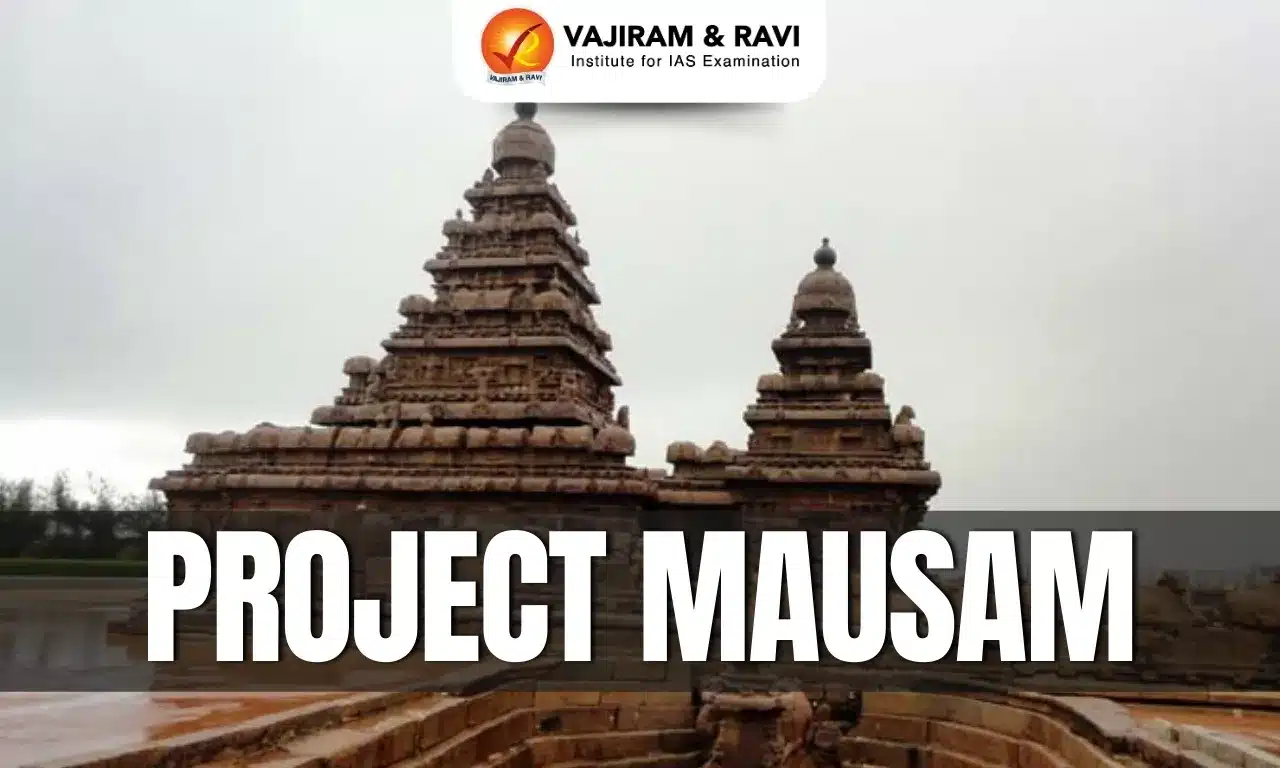
The Archaeological Survey of India (ASI) recently organised a National Workshop on the Project Mausam titled as - “Islands at the Crossroads of Maritime Networks within Indian Ocean Region’’.

About Project Mausam

  • It is an Indian government-led cultural-diplomacy and maritime heritage initiative launched in 2014 by the Ministry of Culture.
  • It aims to explore the multi-faceted Indian Ocean 'world' - collating archaeological and historical research in order to document the diversity of cultural, commercial, and religious interactions in the Indian Ocean.
  • A total of 39 Indian Ocean countries have been identified under Project Mausam.
  • The main objective of the project is to inscribe places and sites identified under Project Mausam as trans-national nominations for inscription on UNESCO’s World Heritage List.
  • It also aims to promote research on themes related to the study of maritime routes through international scientific seminars and meetings and by adopting a multidisciplinary approach. 
  • It aims to encourage the production of specialized works, as well as publications for the general public, with an attempt at promoting a broader understanding of the concept of a common heritage and multiple identities.
  • The project will have two major units:
    • Project Research Unit
    • World Heritage Nomination Unit.
  • The project is implemented by the Archaeological Survey of India (ASI) as the nodal agency with research support of the Indira Gandhi National Centre for the Arts (IGNCA) and National Museum as associate bodies. 

What is Mission Mausam?

  • It was launched by the Ministry of Earth Sciences in 2024.
  • It is implemented by the India Meteorological Department (IMD), the National Centre for Medium-Range Weather Forecasting (NCMRWF), and the Indian Institute of Tropical Meteorology (IITM).
  • It aims to improve weather and climate services, ensuring timely and precise observation, modeling, and forecasting information for multiple sectors, including agriculture, disaster management, and rural development.
  • A key focus of the mission is cloud physics research, crucial for effective weather modification. 
  • To support this effort, India is setting up its first cloud chamber at the Indian Institute of Tropical Meteorology (IITM), Pune, to advance research in this field.

Source: PIB

Project Mausam FAQs

Q1: What is Project Mausam?

Ans: An Indian government–led cultural-diplomacy and maritime heritage initiative.

Q2: Which Union Ministry launched Project Mausam?

Ans: Ministry of Culture

Q3: In which year was Project Mausam launched?

Ans: 2014.

Q4: What is the primary aim of Project Mausam?

Ans: To document cultural, commercial, and religious interactions across the Indian Ocean region.

Q5: What is the main objective of Project Mausam with respect to UNESCO?

Ans: To inscribe identified sites as trans-national nominations on UNESCO’s World Heritage List.

United Nations Alliance of Civilization

United Nations Alliance of Civilization

United Nations Alliance of Civilization Latest News

Recently, India reaffirmed its commitment to the ideals of Vasudhaiva Kutumbakam and religious harmony at the 11th United Nations Alliance of Civilizations, UNAOC, forum in Riyadh.

About United Nations Alliance of Civilization

  • It was established in 2005, as the political initiative of Mr. Kofi Annan, former UN Secretary-General.
  • It was co-sponsored by the Governments of Spain and Türkiye.
  • It was created to serve as a soft-power political tool of the United Nations Secretary-General for conflict prevention and conflict resolution.
  • Function: It maintains a global network of partners including states, international and regional organizations, civil society groups, foundations, and the private sector to improve cross-cultural relations between diverse nations and communities.
  • The Global Forum is the highest-profile event of the UNAOC which brings together prominent personalities, current and potential partners, and others from different sectors. 
  • Funds: The Secretary-General has established a voluntary Trust Fund for UNAOC.
    • This fund supports the UNAOC projects, activities and outreach, undertaken by the High Representative for the United Nations Alliance of Civilizations in his official capacity, and core operational and human resources needs.
    • The Trust Fund for UNAOC is administered by the United Nations Secretariat in accordance with the United Nations Financial Regulations and Rules.
  • UNAOC receives voluntary contributions from member states, international organizations, private sector and foundations.
  • Secretariat: It is based in New York, USA.

Source: News On Air

United Nations Alliance of Civilization FAQs

Q1: What is the primary objective of UNAOC?

Ans: Improve understanding and cooperation among nations and peoples across cultures

Q2: When was UNAOC established?

Ans: 2005

Black-Capped Capuchin Monkey

Black-Capped Capuchin Monkey

Black-Capped Capuchin Monkey Latest News

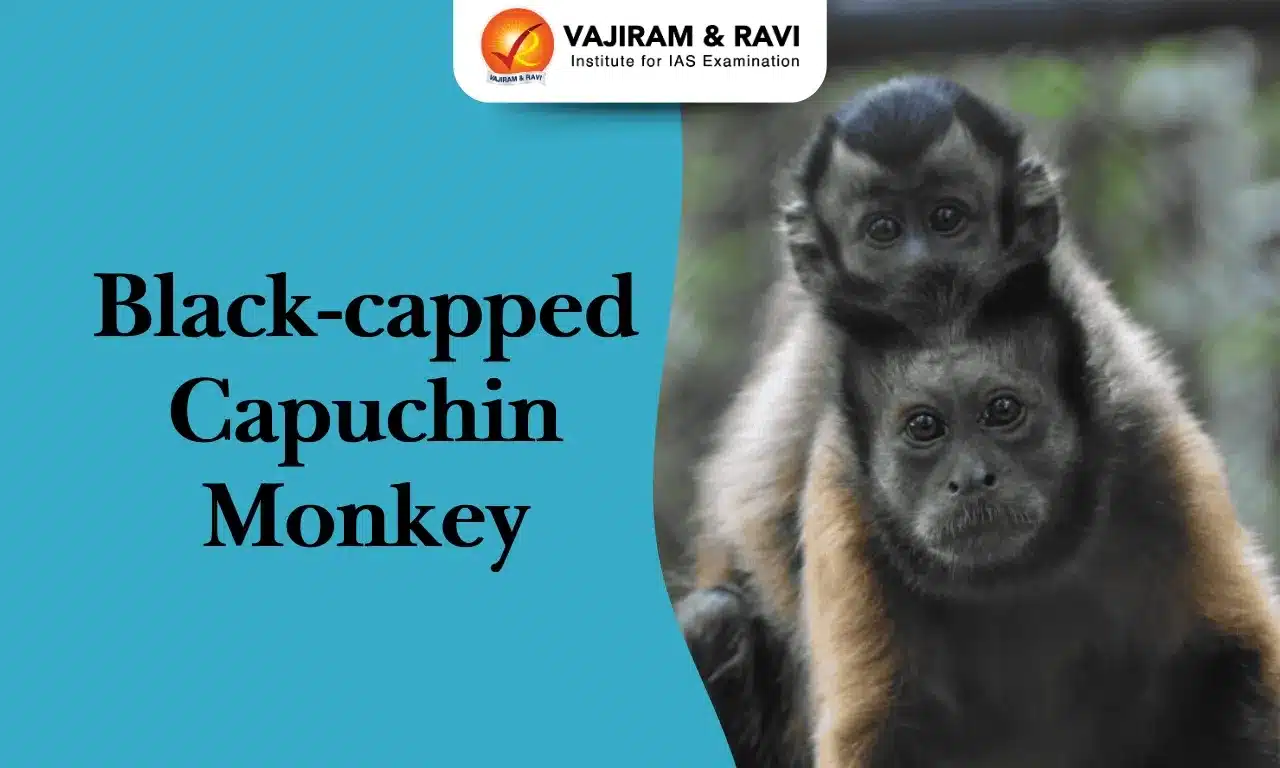
Recently, the Bannerghatta Biological Park (BBP) has imported eight black-capped capuchin monkeys (Sapajus apella) from South Africa under an animal exchange programme.

About Black-Capped Capuchin Monkey

  • Black-capped capuchin (Sapajus apella) is also known as tufted capuchins.
  • Distribution: It is native to South America, where they are ubiquitous throughout the Amazon River Basin.
  • Habitat: It is mainly found in tropical, subtropical, dry, submontane, savannah, mangrove forests.

Behavior and Lifestyle of Black-Capped Capuchin Monkey

  • Black-capped capuchins are predominantly arboreal and diurnal species.
  • Communication: Black-capped capuchin monkeys communicate with one another through vocalizations, body language, tactile methods, and olfactory cues.
  • Diet: It is classified as omnivores, their diet consists of fruit, seeds, nuts, insects, lizards, eggs and crustaceans.
  • Ecological Role: Feeding upon fruit, the capuchins become seed dispersers of certain forest plants.
  • Conservation Status: IUCN: Least Concern

Key Facts about the Bannerghatta Biological Park

  • It has been an integral part of Bannerghatta National Park and emerged out as an independent establishment in 2002.
  • It is located about 22kms south of Bengaluru city, Karnataka.
  • It has different units such as Zoo, Safari, Butterfly Park, and Rescue Centre (Conservation of Captive animals).
  • It is the first biological park in India to have a fenced, forested elephant sanctuary.

Source: TH

Black-capped Capuchin Monkey FAQs

Q1: Where is the Black-capped Capuchin Monkey primarily found?

Ans: South America and Caribbean islands

Q2: What is the diet of the Black-capped Capuchin Monkey?

Ans: Omnivorous

Strengthening India’s Biosecurity Framework for Emerging Biothreats

Biosecurity

Biosecurity Latest News

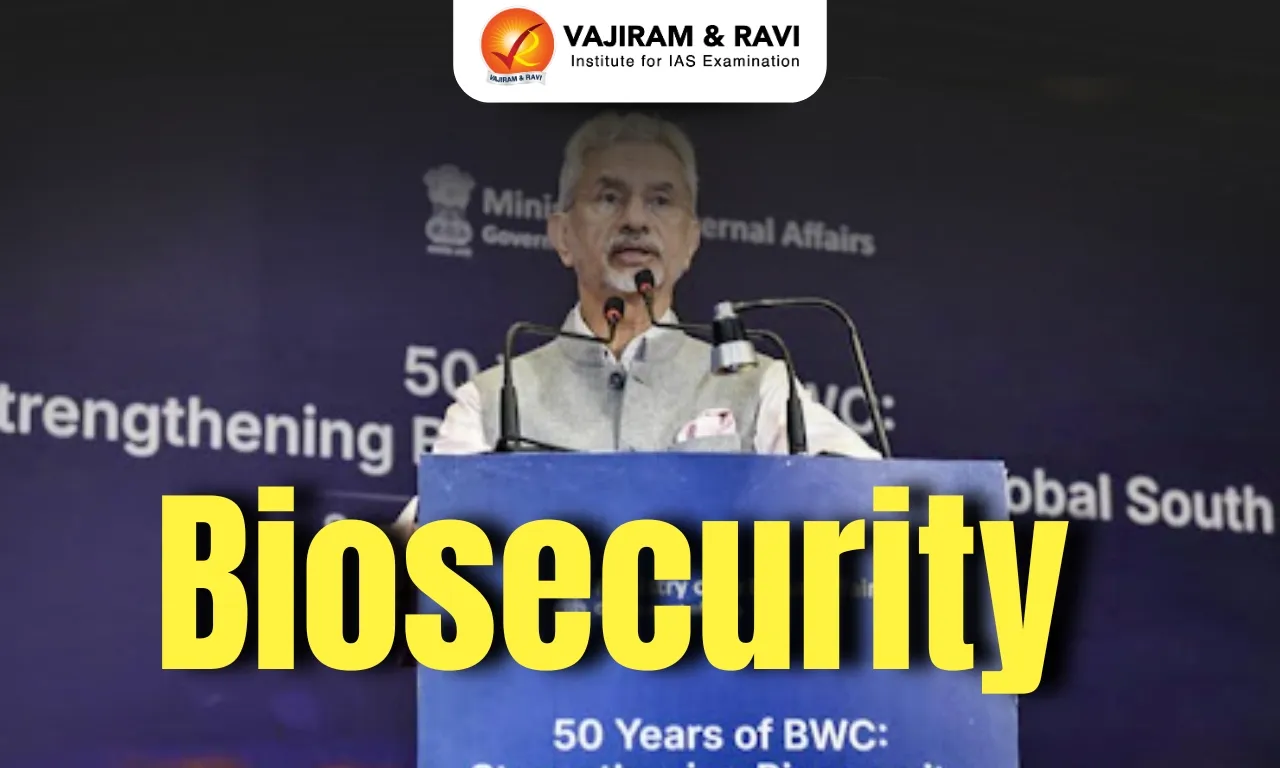
  • India’s need to strengthen its biosecurity framework has gained renewed attention following expert assessments indicating rising biothreats due to new-age biotechnologies, increasing capabilities of non-state actors, and gaps in India’s current response systems.

Understanding Biosecurity

  • Biosecurity refers to practices and systems aimed at preventing the intentional misuse of biological agents, toxins, or technologies. It includes:
    • Securing laboratories handling dangerous pathogens
    • Preventing deliberate outbreaks
    • Protecting human, animal, and plant health
  • Biosecurity differs from biosafety, which deals with preventing accidental leakage of pathogens; however, strong biosafety protocols support effective biosecurity. 

Evolution of Global Biosecurity Norms

  • The Biological Weapons Convention (BWC), adopted in 1975, was the world’s first treaty prohibiting the development and use of biological weapons. It also mandated the destruction of existing stockpiles.
  • Since then, global usage of bioweapons has largely declined, but emerging technologies and geopolitical complexities have increased risks. 

Why India Needs a Stronger Biosecurity System

  • Geographic and Ecological Vulnerability
    • India’s vast borders, biodiversity, and high population density increase the risk of cross-border biological threats. Any outbreak, natural or engineered, could spread rapidly. 
  • High Dependence on Agriculture
    • Agriculture forms the backbone of rural livelihoods. A biological attack or pathogen outbreak affecting crops or livestock can severely harm food security and the economy.
  • Threat from Non-State Actors
    • The article highlights an incident involving the alleged preparation of Ricin toxin, a potent biotoxin, for possible terror use. This underscores that terror groups are exploring biological tools. 
  • Rapid Biotechnology Advancements
    • Modern biotechnologies provide unprecedented power to manipulate biological systems. While beneficial, these tools can also be exploited, raising the probability of engineered biothreats. 

India’s Existing Biosecurity Architecture

  • Department of Biotechnology - Oversees lab research governance, biosafety frameworks, and modern biotech oversight.
  • National Centre for Disease Control - Manages outbreak surveillance and public health response.
  • Department of Animal Husbandry & Dairying - Monitors livestock diseases and transboundary animal health threats.
  • Plant Quarantine Organisation of India - Regulates agricultural imports and protects crop ecosystems.
  • Legal and Policy Frameworks
    • Environment (Protection) Act, 1986 - regulates hazardous microorganisms and GMOs
    • WMD & Delivery Systems Act, 2005 - criminalises biological weapons
    • Biosafety Rules, 1989, and rDNA Guidelines, 2017 - govern lab containment and genetic research
    • NDMA Guidelines - cover management of biological disasters
  • International Participation

Gaps in India’s Biosecurity System

  • Despite multiple institutions, India lacks a unified national biosecurity framework. The system is fragmented, leading to gaps in coordination, surveillance, and emergency response.
  • India ranks 66th on the Global Health Security Index, with declining capability in threat response despite some improvement in detection systems. 
  • Key Weaknesses Identified
    • Outdated legal frameworks that have not kept pace with fast-evolving biotech
    • Limited coordination between human, animal, and environmental health sectors
    • Inadequate infrastructure for high-level lab containment
    • Insufficient national surveillance for engineered threats

Global Best Practices and Lessons for India

  • United States - National Biodefense Strategy (2022-2028) integrates health, defence, and biotech oversight.
    • Federal DNA Screening Guidelines (2024) require gene synthesis companies to screen DNA orders against pathogen databases.
  • European Union - The EU Health Security Framework (2022) emphasises One Health integration.
  • China - Biosecurity Law (2021) classifies biotech and genetic data as national security assets, imposing strict regulation on research and material transfers.
  • Australia - Biosecurity Act (2015) offers a unified approach across sectors, recently expanded to cover synthetic biology.
  • United Kingdom - Biological Security Strategy (2023) focuses on surveillance and rapid response capabilities.
  • These models highlight the importance of unified oversight, modern regulation, and proactive monitoring.

Way Forward

  • Establish a National Biosecurity Framework
    • A centralised structure coordinating health, agriculture, environment, defence, and biotech agencies.
  • Upgrade National Surveillance and Infrastructure
    • Invest in modern bio surveillance tools, genomic sequencing, and high-containment laboratories.
  • Modernise Legal and Regulatory Systems
    • Update outdated laws to incorporate synthetic biology, gene editing, and dual-use research.
  • Adopt New-Age Technologies
    • Microbial forensics, AI-driven pathogen detection, and social media surveillance can help identify threats early. 
  • Strengthen International Cooperation
    • Engage more deeply with global biosecurity norms, crisis simulations, and data-sharing platforms.

Source: TH

Biosecurity FAQs

Q1: What is biosecurity?

Ans: Biosecurity involves systems aimed at preventing intentional misuse of biological agents, toxins, or technologies.

Q2: Why is India vulnerable to biothreats?

Ans: India’s geography, population density, and agricultural dependence increase bio-risk exposure.

Q3: Which laws govern biosecurity in India?

Ans: Key laws include the Environment Protection Act (1986) and WMD Act (2005), along with biosafety rules.

Q4: What global treaties is India part of?

Ans: India participates in the Biological Weapons Convention and the Australia Group.

Q5: Why is a unified national biosecurity framework needed?

Ans: To coordinate multiple agencies, modernise responses, and address emerging biotechnological threats effectively.

VB–G RAM G Bill 2025 Explained: How It Replaces MGNREGA

VB–G RAM G Bill

VB–G RAM G Bill Latest News

  • The Viksit Bharat–Guarantee for Rozgar and Ajeevika Mission (Gramin) - VB-G Ram G- Bill, 2025 proposes a sweeping overhaul of India’s two-decade-old rural employment system by replacing MGNREGA, 2005
  • While positioned as a modernised framework for rural jobs and livelihoods, critics contend that the Bill could significantly increase the financial and administrative burden on state governments, raising concerns over its feasibility and federal implications.

Key Changes Proposed by the VB–G RAM G Bill

  • The Viksit Bharat–Guarantee for Rozgar and Ajeevika Mission (Gramin) Bill, 2025 proposes a fundamental restructuring of India’s rural employment guarantee by replacing the MGNREGA, 2005. 
  • The following are the five most consequential statutory changes, with relevant sections and clauses.

Expansion of Guaranteed Employment Days - [Section 3(1), VB–G RAM G Bill | Section 3(1), MGNREG Act]

  • The Bill guarantees 125 days of wage employment per rural household per financial year, up from “not less than 100 days” under MGNREGA.
  • Under MGNREGA, 100 days became a de facto ceiling due to NREGA software constraints, despite legal flexibility.
  • Existing provisions under Section 3(4) of MGNREGA allowed:
    • Additional 50 days in drought or disaster-notified areas.
    • 150 days for certain Scheduled Tribe households in forest areas.
  • VB–G RAM G makes 125 days the standard statutory entitlement, rather than an exception triggered by special circumstances.

Change in Centre–State Funding Pattern - [Section 22(2), VB–G RAM G Bill]

  • A major departure from MGNREGA, where the Centre paid 100% of unskilled wage costs.
  • Proposed cost-sharing under VB–G RAM G:
    • 90:10 (Centre:State) for Northeastern States, Himalayan States, and UTs with legislature (Uttarakhand, Himachal Pradesh, J&K).
    • 60:40 for all other States and UTs with legislature.
    • 100% Central funding for UTs without legislature.
  • This shifts direct wage liability to States, substantially increasing their fiscal responsibility.
  • Under MGNREGA, States were primarily responsible only for:
    • Unemployment allowance
    • ¼ of material costs
    • State-level administrative expenses

Normative Allocation Replaces Labour Budget - Sections 4(5) & 4(6), VB–G RAM G Bill

  • Section 4(5): Central Government shall determine State-wise normative allocation for each financial year based on prescribed objective parameters.
    • Normative allocation is a system where a central authority sets fixed, principled limits (norms) for funding or resource distribution to states/regions, shifting from demand-driven models.
  • Section 4(6): Any expenditure beyond this allocation shall be borne by the State Government.
  • Normative allocation” is defined as the Central fund allocation to a State.
  • This replaces the Labour Budget mechanism under MGNREGA, where:
    • States submitted annual work plans and labour budgets by January 31.
    • Funding was demand-driven and open-ended.
  • Effectively converts a rights-based, demand-led scheme into a budget-capped, supply-driven programme.

Statutory Pause During Peak Agricultural Seasons - Section 6(1) & Section 6(2), VB–G RAM G Bill

  • Section 6(1): No work shall be commenced or executed during notified peak agricultural seasons.
  • Section 6(2): States must notify, in advance, a period aggregating to 60 days per financial year covering sowing and harvesting.
  • Notifications may vary by:
    • Districts
    • Blocks
    • Gram Panchayats
    • Agro-climatic zones and local cropping patterns
  • All planning and execution authorities are legally bound to ensure works occur only outside these periods.
  • While addressing farm labour shortages, this reduces the effective window to realise the 125-day guarantee.

Viksit Gram Panchayat Plans & National Infrastructure Stack - Schedule I, VB–G RAM G Bill

  • All works must originate from Viksit Gram Panchayat Plans, consolidated upward:
    • Gram Panchayat → Block → District → State
  • These are aggregated into the Viksit Bharat National Rural Infrastructure Stack, aligned with national priorities.
  • The Stack covers four thematic domains:
    • Water security (water-related works)
    • Core rural infrastructure
    • Livelihood-related infrastructure
    • Extreme weather mitigation works
  • Plans will be integrated with the PM Gati Shakti National Master Plan, enabling spatial optimisation and inter-departmental convergence.

Rationale Behind the Proposed Overhaul of MGNREGA

  • The government argues that an overhaul was necessary as MGNREGA, enacted in 2005, no longer reflects current rural realities. 
  • With declining poverty levels and expanded digital access, the scheme has continued to face structural issues such as misuse of funds, weak monitoring, and creation of low-quality assets. 
  • In FY 2024–25, misappropriation amounted to ₹193.67 crore, while only 7.61% of households completed the full 100 days of work. 
  • The proposed VB–G RAM G framework seeks to replace this fragmented approach with a more focused, accountable, and technology-driven rural employment system.

Expected Impact of VB–G RAM G on the Rural Economy

  • The government argues that the new law will strengthen rural employment, incomes, and infrastructure. 
  • By prioritising water-related works, rural roads, markets, and climate-resilient assets, the scheme aims to raise agricultural productivity and reduce distress migration. 
  • Digitised planning, payments, and monitoring are expected to improve efficiency, transparency, and delivery.

What It Means for Farmers

  • Farmers are expected to benefit in multiple ways:
    • Improved labour availability during peak sowing and harvesting, as States can pause public works for up to 60 days.
    • Lower wage inflation during critical agricultural seasons.
    • Better water and irrigation infrastructure, enhancing farm resilience.
    • Improved rural connectivity and storage facilities, reducing post-harvest losses.

Gains for Rural Workers

  • For workers, the government highlights:
    • 25% increase in guaranteed employment days (125 days instead of 100).
    • Digital wage payments and Aadhaar-based verification, reducing delays and wage theft.
    • Mandatory unemployment allowance if work is not provided.
    • Creation of durable community assets such as roads and water systems.
    • Predictable job availability through panchayat-led planning.

Stronger Accountability and Monitoring

  • To address past weaknesses, the Bill introduces robust accountability mechanisms:
    • AI-based fraud detection systems
    • GPS and mobile-based monitoring of works
    • Weekly public disclosures of scheme data
    • Twice-yearly social audits at the gram panchayat level
    • Central and State-level steering committees for oversight

Source: IE | BT | MB

VB–G RAM G Bill FAQs

Q1: What is the VB–G RAM G Bill, 2025?

Ans: The VB–G RAM G Bill proposes replacing MGNREGA with a restructured rural employment framework featuring higher guaranteed days, funding caps, seasonal pauses, and digital governance.

Q2: How does the Bill change employment guarantees?

Ans: It raises guaranteed wage employment to 125 days per rural household annually, compared to 100 days under MGNREGA, making the higher limit a statutory entitlement.

Q3: How does funding under VB–G RAM G differ from MGNREGA?

Ans: Unlike MGNREGA’s fully Central wage funding, the new Bill introduces Centre–State cost sharing and normative allocations, shifting significant financial responsibility to States.

Q4: What is the provision for pausing work during agricultural seasons?

Ans: Sections 6(1) and 6(2) allow States to suspend work for up to 60 days during sowing and harvesting to ensure farm labour availability.

Q5: What accountability mechanisms are introduced?

Ans: The Bill mandates AI-based fraud detection, GPS monitoring, Aadhaar-linked payments, weekly disclosures, biannual social audits, and Central–State steering committees.

Google’s Project Suncatcher: Why AI Data Centres Are Moving to Space

Project Suncatcher

Project Suncatcher Latest News

  • Google has launched Project Suncatcher, a long-term research initiative to deploy solar-powered data centres in space starting in 2027, CEO Sundar Pichai announced. 
  • The plan involves initially testing small computing racks on satellites before scaling up. Pichai said that within a decade, extraterrestrial data centres could become commonplace, marking a radical shift in how and where digital infrastructure is built.

About Project Suncatcher

  • Project Suncatcher aims to deploy solar-powered satellite constellations equipped with Tensor Processing Units (TPUs) to perform large-scale machine learning computations in space. 
  • The system will use laser-based optical links to connect satellites, enabling data centre–level computational coordination. 
  • Google says its chips have been tested for radiation tolerance to withstand space conditions. 
  • As a first step, the company plans to launch two prototype satellites in partnership with Planet Labs by early 2027 to test and refine the technology.

Need for Data Centres in Space

  • The AI boom has led to a rapid expansion of terrestrial data centres, bringing significant environmental costs. 
  • These include heavy water consumption, rising dependence on fossil-fuel electricity, and a sharp increase in power demand—projected by Goldman Sachs to grow by up to 165% by 2030—intensifying climate concerns.

Energy, Stability, and Reliability Advantages

  • Space, particularly the lunar surface, offers predictable conditions and continuous solar radiation, reducing dependence on fragile terrestrial energy grids. 
  • Space-based systems are also insulated from risks like natural disasters and undersea cable disruptions that frequently affect Earth-based infrastructure.

Data Sovereignty and Legal Flexibility

  • Data localisation laws limit where companies can process and store data. 
  • Hosting data centres in outer space could bypass such constraints, as the 1967 Outer Space Treaty prohibits national sovereignty claims over space, potentially allowing multi-country data hosting from a single extraterrestrial facility.
  • Advances in rocket technology have significantly lowered the cost of space missions, making it increasingly viable to launch experimental payloads and test space-based data infrastructure.

Key Challenges and Limitations

  • Despite its promise, space-based data centres face major hurdles: 
    • high construction and maintenance costs, 
    • difficulty of repairs, 
    • potential need for on-site specialists, 
    • latency in data transmission due to distance from Earth, and 
    • unresolved cybersecurity risks.

How Other Tech Giants Are Exploring Space-Based Data Centres

  • Several technology leaders are exploring space as the future home for data centres. 
  • OpenAI CEO Sam Altman has envisioned Dyson sphere–like AI data centres harnessing solar energy, an idea aligned with his $500-billion Stargate project involving Nvidia, SoftBank, and Oracle. Practical experiments are already underway. 
  • Recently, the Starcloud satellite carrying Nvidia’s powerful H100 GPU was launched to test AI computation in space. 
  • Earlier, Lonestar Data Holdings sent a mini data centre with 8 TB storage to the Moon during an Intuitive Machines mission.
  • Other industry leaders share this vision. Jeff Bezos, through Blue Origin, has proposed moving polluting industries like data centres off Earth, while former Google CEO Eric Schmidt has also signalled plans to place data centres in orbit. 
  • Together, these initiatives indicate growing momentum toward extraterrestrial data infrastructure.

Source: IE | TH

Project Suncatcher FAQs

Q1: What is Google’s Project Suncatcher?

Ans: Project Suncatcher is Google’s long-term research initiative to deploy solar-powered, satellite-based AI data centres using TPUs to scale machine learning computation in space.

Q2: Why does Google want to build data centres in space?

Ans: Rising energy demand, water stress, climate impact, grid instability, and data localisation laws make space—especially solar-rich orbits—a viable alternative for scaling AI compute.

Q3: How will computation be carried out in space?

Ans: Google plans satellite constellations equipped with Tensor Processing Units linked through laser-based optical networks to enable data centre–level machine learning coordination.

Q4: What challenges does Project Suncatcher face?

Ans: Key challenges include high launch and maintenance costs, latency in data transmission, cybersecurity risks, thermal management, and achieving ultra-high-speed inter-satellite communication.

Q5: Are other tech companies pursuing similar ideas?

Ans: Yes. OpenAI, Nvidia, Amazon, Lonestar Data Holdings, and Blue Origin are experimenting with orbital AI computing, lunar data storage, and space-based data infrastructure.


Bharat Ranbhoomi Darshan

Bharat Ranbhoomi Darshan

Bharat Ranbhoomi Darshan Latest News

Recently, the Chief Minister of Sikkim officially declared Cho La & Dok La, two significant border destinations, open for tourists under the “Bharat Ranbhoomi Darshan” initiative.

About Bharat Ranbhoomi Darshan

  • It is a flagship initiative by the Ministry of Defence & Ministry of Tourism.
  • Aim: The initiative aims to promote border tourism while simultaneously strengthening infrastructure and improving the livelihoods of people living in remote border villages.
  • It helps in promoting connectivity, tourism, and socio-economic development in border regions.
  • The Army is collaborating with local civil authorities to facilitate these efforts while maintaining high operational preparedness.

Features of Bharat Ranbhoomi Darshan Initiative

  • Virtual Tour: It features details on various battlefields and border areas, offering virtual tours, historical narratives, and interactive content.
  • Historical Narratives: The Indian Army, in conjunction with the Ministry of Tourism, has shortlisted Galwan (the river valley in Ladakh) Doklam which is a tri-junction between India, Bhutan and China.
    • It even identified 77 other forward sites to raise awareness by opening historically significant locations linked to the valor and sacrifices of the Indian Armed Forces to tourists.
  • Most of these sites fall along India’s borders with China (Line of Actual Control) and Pakistan (Line of Control) that have had a history of wars after independence and other clashes in recent times.

Source: News On Air

Bharat Ranbhoomi Darshan FAQs

Q1: What is the primary focus of Bharat Ranbhoomi Darshan?

Ans: Battlefield tourism

Q2: When was Bharat Ranbhoomi Darshan launched?

Ans: 2025

Exercise Ekatha

Exercise Ekatha 2025

Exercise Ekatha 2025 Latest News

Deputy Chief of the Naval Staff (DCNS), Indian Navy, is on an official visit to Maldives to attend the closing ceremony of Ex Ekatha 2025.

About Exercise Ekatha 2025

  • Established in 2017, Exercise Ekatha is an annual bilateral maritime exercise between the Indian Navy and the Maldives National Defence Force (MNDF).
  • It aims to enhance bilateral maritime cooperation, and 2025 marks its eighth edition.
  • The exercise involved a series of professional interactions designed to boost interoperability and operational collaboration between the two navies. 
  • Activities included technical and combat diving, boarding operations, firing drills, demolition and explosive handling, asymmetric warfare tactics, and special heli-borne operation drills.

Key Facts about Maldives

  • It is an independent island country in the north-central Indian Ocean. 
  • It consists of a chain of about 1,200 small coral islands and sandbanks (some 200 of which are inhabited), grouped in clusters, or atolls.
  • It has a total land area of 298 sq.km. 
  • It is Asia's smallest country by area. 
  • However, the islands of the country are dispersed across about 90,000 sq.km. of the ocean.
  • The country has no rivers or streams and the average elevation is under 2 meters, making it highly vulnerable to sea-level rise.
  • Gan is the country's largest island.
  • Formerly a British colony, the Maldives became an independent nation in 1965. 
  • Capital: Male.
  • Official language: Dhivehi (an Indo-European language); Arabic, Hindi, and English are also spoken.
  • Religion: Islam is the state religion and plays a central role in national governance.
  • Economy: Heavily dependent on tourism, along with fisheries and foreign aid.
  • Form of Government: The 2008 Constitution defines a presidential system with direct elections for a maximum of two five-year terms.

Source: PIB

Exercise Ekatha 2025 FAQs

Q1: What is Exercise Ekatha?

Ans: An annual bilateral maritime exercise between the Indian Navy and the Maldives National Defence Force (MNDF).

Q2: When was Exercise Ekatha established?

Ans: In 2017.

Q3: Which edition of Exercise Ekatha was held in 2025?

Ans: The eighth edition.

Q4: What is the main objective of Exercise Ekatha?

Ans: To enhance bilateral maritime cooperation between India and Maldives.

Enquire Now