
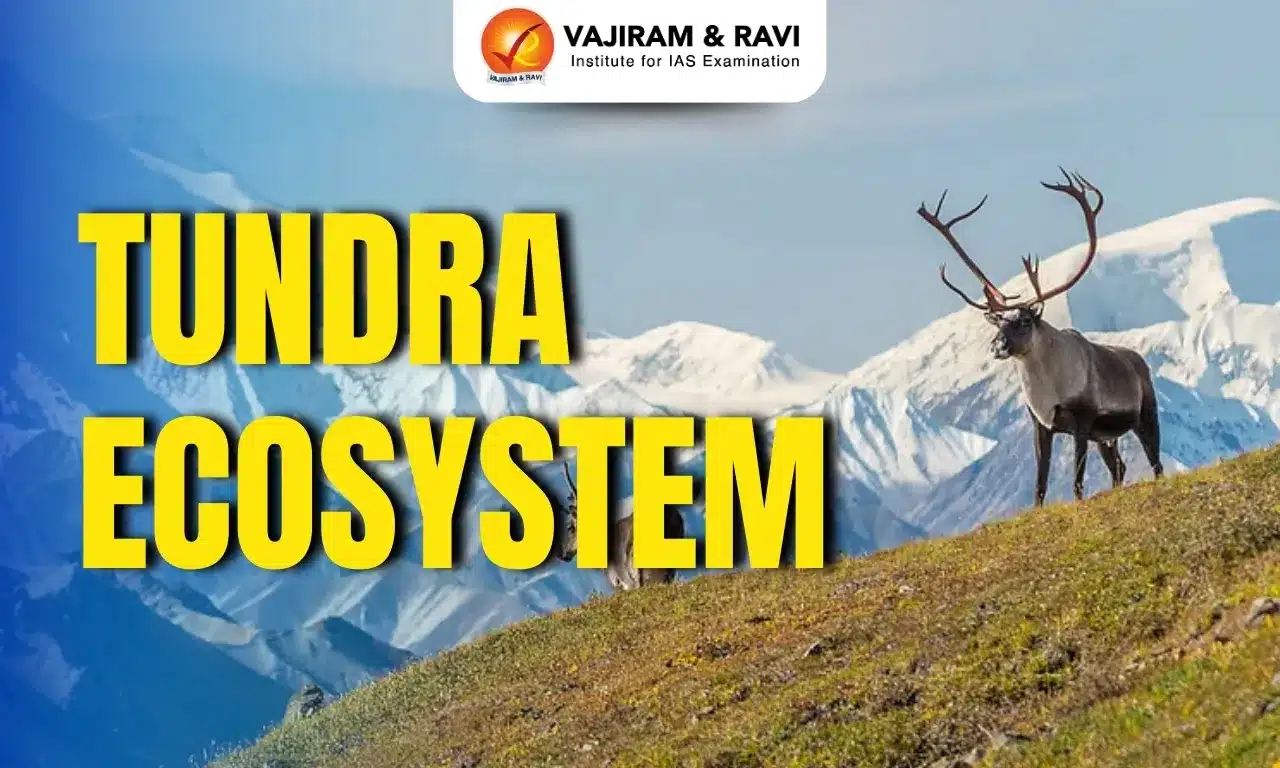
Tundra Ecosystem Latest News
According to a study conducted in Arctic Alaska, wildfires in the tundra have been more active this past century than at any time in the past 3,000 years.
About Tundra Ecosystem
Tundra Biome is a treeless region found in the Arctic and on the tops of mountains, where the climate is cold and windy, and rainfall is scant.
Characteristics of Tundra Ecosystem
- Low temperatures: The average temperature is -34 to -6 degrees Celsius (-30 to 20 degrees Fahrenheit) in the tundra region.
- Short growing seasons: The summer growing season is just 50 to 60 days, when the sun shines up to 24 hours a day.
- Permafrost: A layer of permanently frozen soil lies beneath the surface, which can be a few inches to several feet thick.
- Minimal precipitation: Despite often being compared to deserts in terms of moisture, the tundra receives low levels of precipitation, often as snow.
- Limited biodiversity: The harsh conditions of the tundra result in fewer plant and animal species compared to other biomes.
- Carbon sink: The tundra acts as a significant carbon storage area due to slow decomposition rates in the cold environment.
The World has Three Types of Tundra
- Arctic Tundra: It occurs north of the taiga belt in the far Northern Hemisphere (It encompasses the land between the North Pole and the boreal forest, including parts of Canada, Russia, Greenland, Iceland, Norway, Sweden, and Finland.)
- Alpine tundra: It prevails above the tree line in mountains worldwide (in various mountain ranges such as the Rockies, the Andes, the Himalayas, and the Alps).
- Antarctic tundra: It includes several sub-Antarctic islands and parts of the continent of Antarctica.
- Flora: Mosses, lichens, sedges, cotton grass, birches etc.
- Fauna: Arctic foxes, snow geese, polar bears etc.
Source: DTE
Tundra Ecosystem FAQs
Q1: What is the Tundra Biome characterized by?
Ans: Cold temperatures and low vegetation
Q2: Where is the Tundra Biome primarily located?
Ans: In Arctic and sub-Arctic regions
