Kolleru Lake

Kolleru Lake

Kolleru Lake Latest News

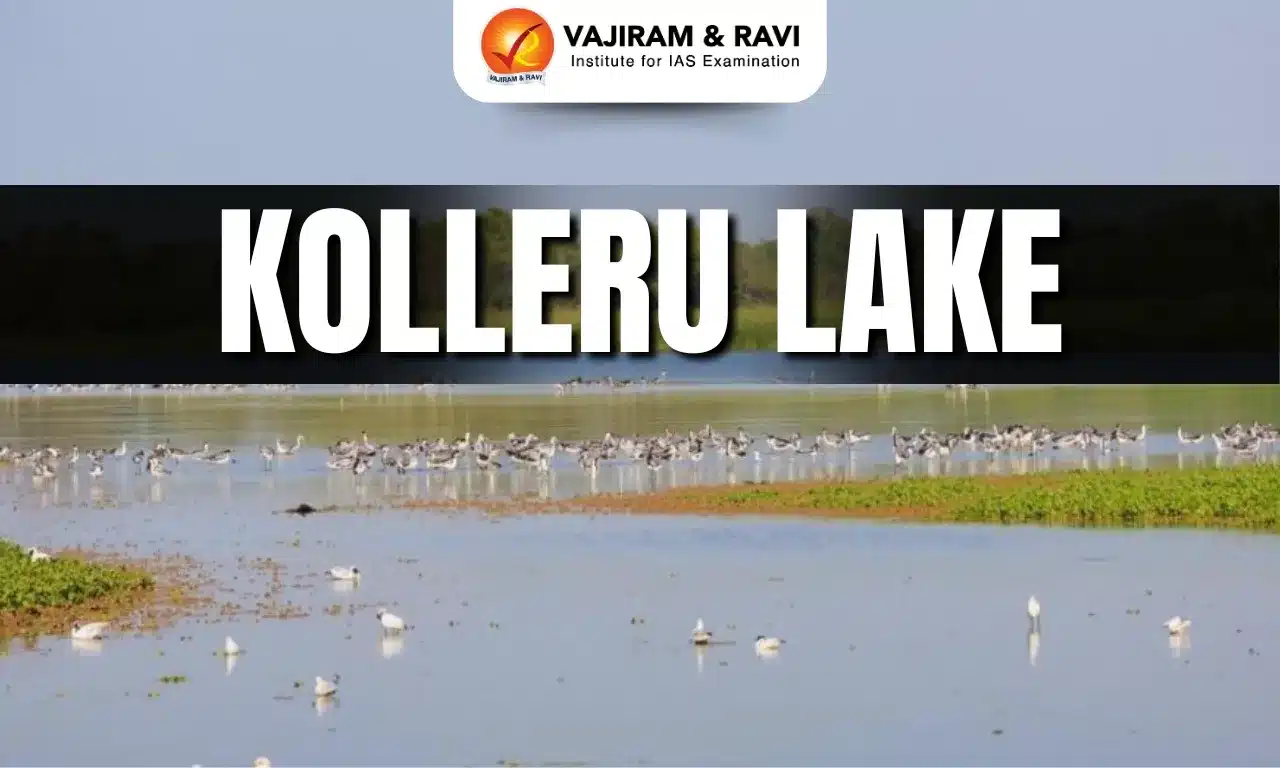
Kolleru Lake, which is known for its rich biodiversity, is now getting recognition for its delicious black dried fish that has carved a special place for itself in both domestic and international markets.

About Kolleru Lake

  • It is one of the largest freshwater lakes in India, located in the state of Andhra Pradesh.
  • It is located in the inter-deltaic plain of rivers Krishna and Godavari near the city of Eluru and serves as a natural flood-balancing reservoir for these two rivers. 
  • It spreads over an area of about 308 sq. km. and expands up to 954 sq.km. at the highest flood level. 
  • It is the largest freshwater lake in Andhra Pradesh. 
  • Characteristically, it is a shallow lake.
  • It receives water from four rivers, namely Budameru, Ramileru, Tammileru, and Errakalva, and 18 drains. 
  • This lake empties its water into the Bay of Bengal through an outlet called 'upputera'.
  • This lake is also known as the "Peerless Fisherman"s Paradise and Bird Heaven".
  • The lake was declared as a wildlife sanctuary in November 1999.
  • It was designated as a wetland of international importance in November 2002 under the International Ramsar Convention. 
  • It supports over 20 million migratory birds annually, including grey pelicans, painted storks, and open-billed storks. 
  • It is a haven for species migrating from Siberia, Central Asia, and the Himalayas, making it one of India’s richest avian habitats.
  • The lake is deeply intertwined with local livelihoods, sustaining thousands who depend on fishing, duck farming, and paddy cultivation. 

Source: ETVB

Kolleru Lake FAQs

Q1: What type of lake is Kolleru Lake?

Ans: It is a freshwater lake.

Q2: In which state is Kolleru Lake located?

Ans: Andhra Pradesh.

Q3: Between which two rivers is Kolleru Lake situated?

Ans: It lies in the inter-deltaic plain of the Krishna and Godavari rivers.

Q4: Which rivers feed Kolleru Lake?

Ans: Budameru, Ramileru, Tammileru, and Errakalva.

Q5: When was it designated as a Ramsar Wetland of International Importance?

Ans: In November 2002.
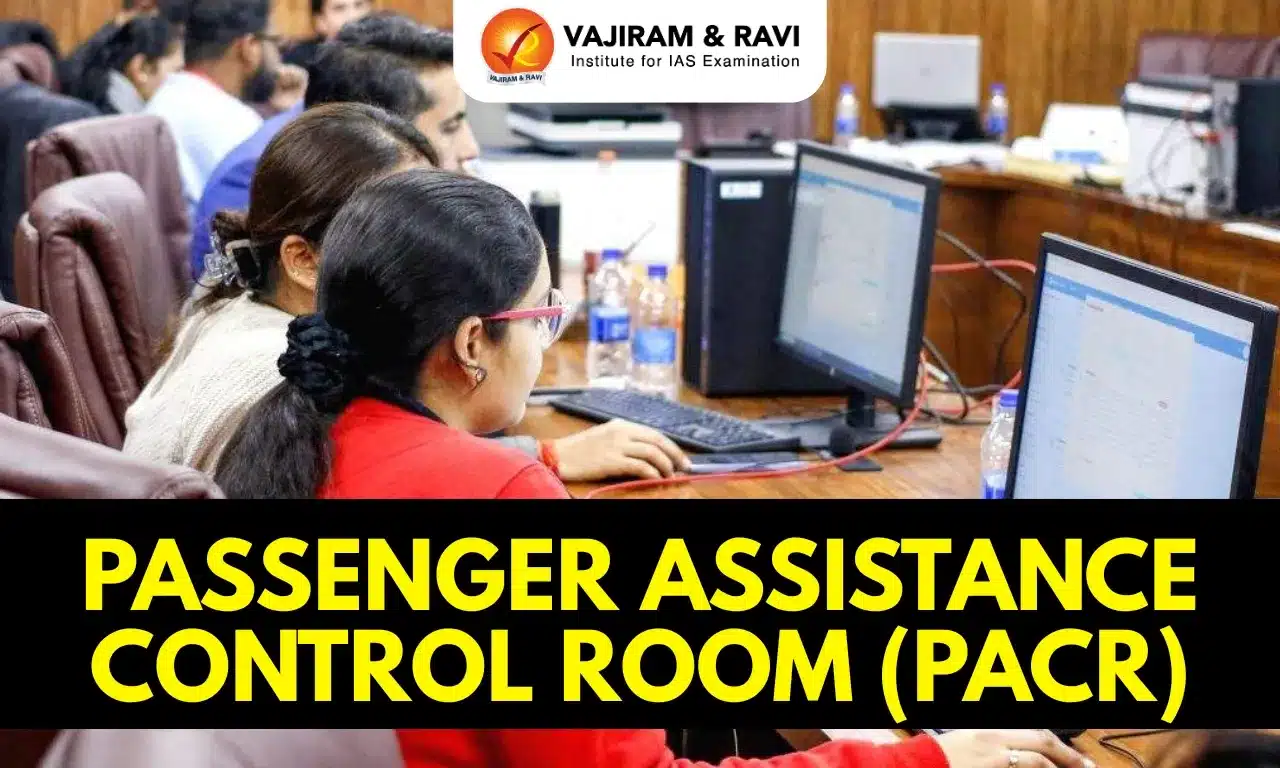
Passenger Assistance Control Room (PACR)

Passenger Assistance Control Room (PACR)

Passenger Assistance Control Room Latest News

To address air travellers' grievances more promptly, the civil aviation ministry recently set up the Passenger Assistance Control Room (PACR) that functions round-the-clock to resolve the issues.

About Passenger Assistance Control Room

  • It was launched by the Ministry of Civil Aviation, Government of India.
  • It is aimed at significantly improving the promptness and effectiveness of addressing air traveller grievances. 
  • The PACR functions as an integrated hub bringing together officials from the Ministry of Civil Aviation, Directorate General of Civil Aviation (DGCA), Airports Authority of India (AAI), airline operators, and other key stakeholders under one roof at Udaan Bhawan, in New Delhi. 
  • It operates 24x7, continuously monitoring aviation operations, attending to passenger calls, and coordinating real-time assistance and grievance resolution.
  • The AirSewa system has also been fully integrated into the PACR, enabling seamless handling of passenger grievances received through it. 
  • An omni-channel technology backbone converts passenger inputs into actionable cases, supported by data-driven dashboards that provide live visibility on grievance types, timelines, and stakeholder actions. 
  • The physical presence of airline representatives within the control room allows immediate coordination and on-the-spot resolution of issues.
  • Grievances related to flight delays, cancellations, refunds, and baggage issues are prioritised and addressed in accordance with the provisions of the Passenger Charter.

Source: ET

Passenger Assistance Control Room FAQs

Q1: Who launched the Passenger Assistance Control Room (PACR)?

Ans: The Ministry of Civil Aviation, Government of India.

Q2: What is the main purpose of the Passenger Assistance Control Room (PACR)?

Ans: To significantly improve the promptness and effectiveness of addressing air traveller grievances.

Q3: Where is the Passenger Assistance Control Room (PACR) located?

Ans: At Udaan Bhawan, New Delhi.

Q4: Which agencies and stakeholders work together in the Passenger Assistance Control Room (PACR)?

Ans: Officials from the Ministry of Civil Aviation, DGCA, AAI, airline operators, and other key stakeholders.

Industrial Hemp

Industrial Hemp

Industrial Hemp Latest News

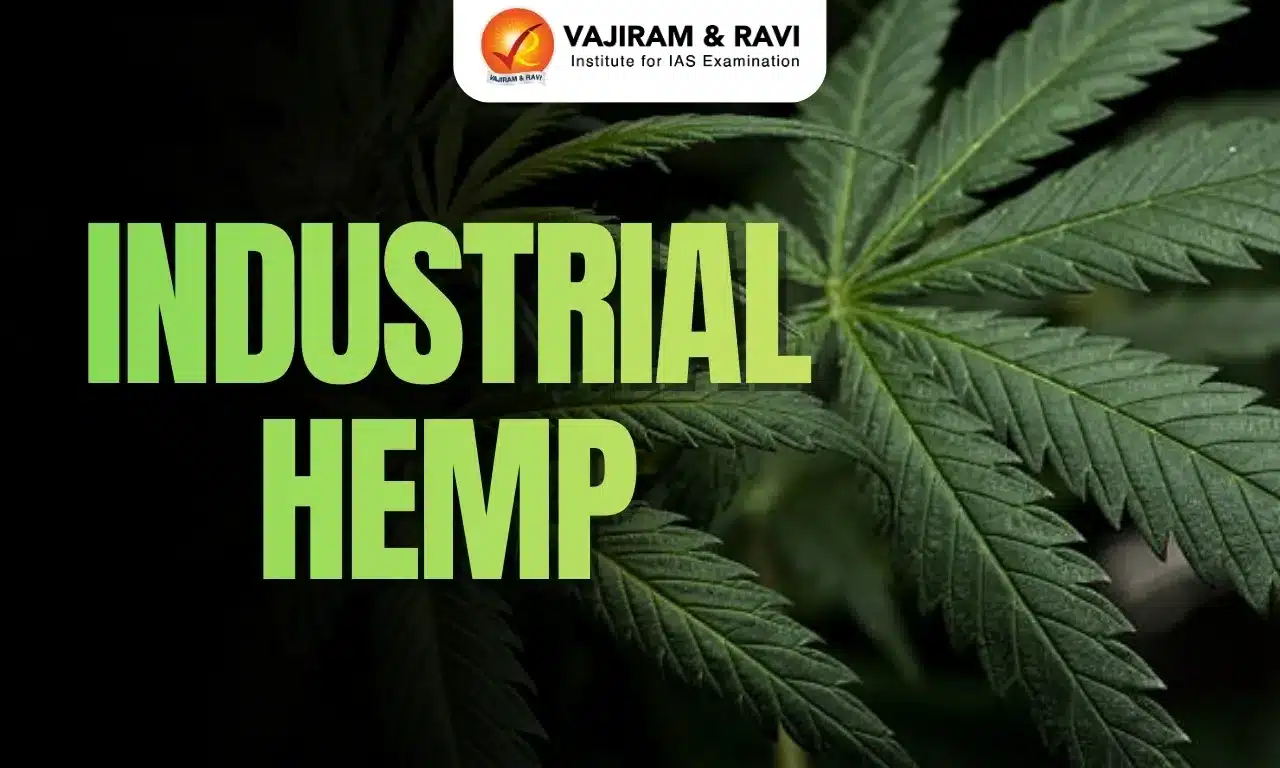
Recently, Himachal Pradesh Chief Minister has launched a policy push to legalise and regulate the cultivation of industrial hemp.

About Industrial Hemp

  • Industrial hemp (Cannabis sativa L.) is botanically related to marijuana, but with very different properties.
  • While marijuana is rich with tetrahydrocannabinol (THC), the psychoactive component that makes pot a drug of choice by many, hemp contains only the smallest traces of THC (<0.3%),
  • It is an herbaceous, dioecious plant belonging to the Cannabis genus within the Cannabaceae family.
  • It is high in fiber and low in active tetrahydrocannabinol (THC).

Applications of Industrial Hemp

  • It is used for varieties used for recreational, therapeutic, and industrial purposes, commonly referred to as marijuana and hemp, respectively.
  • It is a versatile crop that can be processed into different products with multiple uses.
  •  Its stalk can be used to produce biofuel, auto parts, paper, upholstery, and fiber for cloth and other textile items. T
  • Its stem can also be processed into building materials, industrial products and different kinds of papers.
  • Its seeds can be used to produce feed or food or the sources of oil that can be converted into a lotion or cosmetic products.

Source: IE

Industrial Hemp FAQs

Q1: What is Industrial Hemp primarily used for?

Ans: Textiles, construction, and CBD oil production

Q2: What is the primary difference between Industrial Hemp and Marijuana?

Ans: THC content

Frequency Comb

Frequency Comb

Frequency Comb Latest News

Frequency combs are an important modern tool which are used to calibrate atomic clocks and have various other applications.

About Frequency Comb

  • It is a special kind of laser light whose spectrum, or set of frequencies, resembles the teeth of a comb.
  • Frequency combs are simple and compact tools that phase coherently connect the radio frequency domain (say below 100GHz) with the optical domain (say above 200THz).

Characteristics of Frequency Comb

  • Instead of containing just one colour (one frequency), it emits a large number of evenly spaced frequencies. The spacing is extremely regular.
  • Frequency combs are widely-used, high-precision tools for measuring and detecting different frequencies colors — of light. 
  • It has high stability and precision.

Applications of Frequency comb

  • It helps scientists compare an unknown light frequency to a stable reference with extraordinary precision. 
  • Frequency combs are an important modern tool to calibrate atomic clocks and measure shifts in light caused by gravity.
  • It is used to detect exoplanets.
  • It is also used in high-speed spectroscopy

Source: TH

Frequency Comb FAQs

Q1: What is a Frequency Comb?

Ans: It is a spectrum of discrete, equally spaced frequencies

Q2: What is the primary application of Frequency Combs in metrology?

Ans: Calibrating atomic clocks

Parvati-Arga Bird Sanctuary

Parvati-Arga Bird Sanctuary

Parvati-Arga Bird Sanctuary Latest News

The Government has declared the Parvati-Arga Bird Sanctuary of Uttar Pradesh as an Eco sensitive zone.

About Parvati-Arga Bird Sanctuary

  • Location: It is situated in Gonda district of Uttar Pradesh.
  • It is a permanent freshwater environment consisting of two oxbow lakes namely Parvati and Arga.
  • It is designated as Ramsar site.
  • Fauna: It is the critically endangered white-rumped vulture (Gyps bengalensis) and Indian vulture (Gyps indicus), and the endangered Egyptian vulture (Neophron percnopterus) have all been recorded.
  • Invasive species such as the common water hyacinth (Eichhornia crassipes) is also found here.
  • Flora: The Vegetation of the Sanctuary is representative of that of the indo-gangetive ecosystem. 

What is an Eco-Sensitive Zone?

  • It is also known as Ecologically Fragile Areas (EFAs).
  • These are areas notified and regulated by the Union Ministry of Environment, Forest and Climate Change (MoEFCC) around Protected Areas, National Parks and Wildlife Sanctuaries
  • Purpose of declaring ESZs
    • To create some kind of shock absorbers to the protected areas by regulating and managing the activities around such areas
    • To act as a transition zone from areas of high protection to areas involving lesser protection.
  • Extent of ESZ: An ESZ could extend up to 10 km around a protected area.

Source: News On Air

Parvati-Arga Bird Sanctuary FAQs

Q1: Where is Parvati-Arga Bird Sanctuary located?

Ans: Gonda district, Uttar Pradesh

Q2: Which is the largest bird sanctuary in Uttar Pradesh?

Ans: Lakh Bahosi Sanctuary

Parasynnemellisia khasiana

Parasynnemellisia khasiana

Parasynnemellisia khasiana Latest News

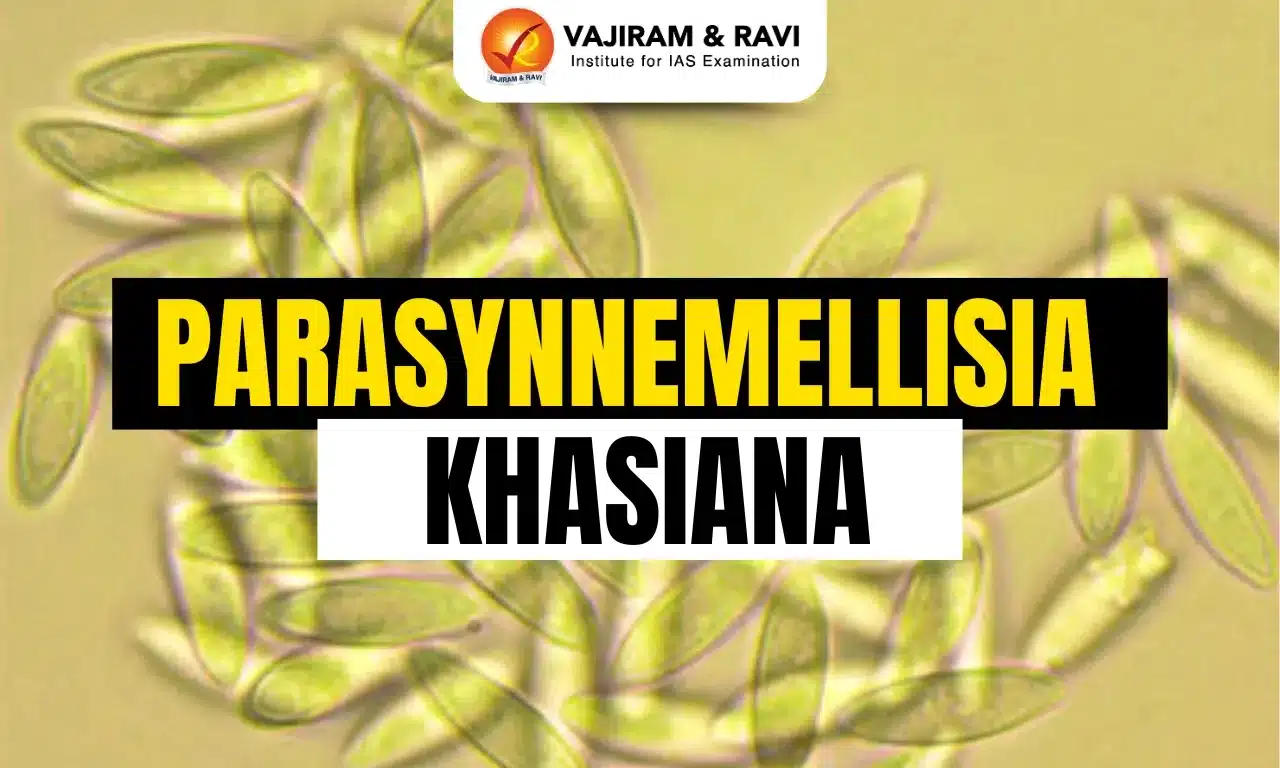
A previously unknown fungus named Parasynnemellisia khasiana has been discovered in the bamboo forests around Mawsynram, adding a new species — and even a new genus — to the scientific record from Meghalaya.

About Parasynnemellisia khasiana

  • It is a new species of fungus.
  • It was discovered in the bamboo forests around Mawsynram, Meghalaya.
  • It is named after the Khasi Hills.
  • The fungus was found on dead stems of a thorny bamboo species (Chimonocalamus griffithianus) while surveying bamboo litter in the Mawsynram area.
  • Laboratory analysis confirmed that the organism did not belong to any existing fungal genus. 
  • As a result, the researchers established a new genus, Parasynnemellisia, with P. khasiana as its first described species.
  • It forms a distinct evolutionary lineage within the fungal family Phaeosphaeriaceae, separating it from superficially similar bamboo-associated fungi found elsewhere in Asia.

What are Fungi?

  • A fungus (plural: fungi) is a type of eukaryotic organism belonging to the kingdom Fungi, alongside plants, animals, protozoa, and monera.
  • As eukaryotes, their cells contain a nucleus, mitochondria, and a complex system of internal membrane, including the endoplasmic reticulum and Golgi apparatus.
  • All fungi possess cell walls made of a tough polysaccharide called chitin; the cell wall provides structural strength to the fungal body. 
  • Fungi are incredibly diverse, with commonly encountered forms including yeast, molds, truffles, and mushrooms.
  • Fungi come in both unicellular and multicellular forms, with yeast representing the simplest unicellular type and molds like Rhizopus, Mucor, and Penicillium are examples of multicellular fungi.
  • They’re the most populous kingdom on the planet – an estimated 3.8 million fungi exist worldwide – and yet, more than 90% of them are currently unknown to science.
  • They are found in just about any habitat, but most live on the land, mainly in soil or plant material rather than sea or fresh water.  
  • They are more closely related to animals than to plants, as they do not photosynthesise. 
  • Different species of fungi can be mutualistic, parasitic, or serve as decomposers.
  • Most of the fungi are saprobes (live on dead organisms). They are important decomposers and recyclers of nutrients within the environment.

Source: HUB

Parasynnemellisia khasiana FAQs

Q1: What is Parasynnemellisia khasiana?

Ans: It is a newly discovered species of fungus.

Q2: Where was Parasynnemellisia khasiana discovered?

Ans: It was discovered in the bamboo forests around Mawsynram, Meghalaya.

Q3: After which region is Parasynnemellisia khasiana named?

Ans: It is named after the Khasi Hills.

Q4: On what type of plant material was this fungus found?

Ans: It was found on dead stems of the thorny bamboo species Chimonocalamus griffithianus.

INS Vagsheer

INS Vagsheer

INS Vagsheer Latest News

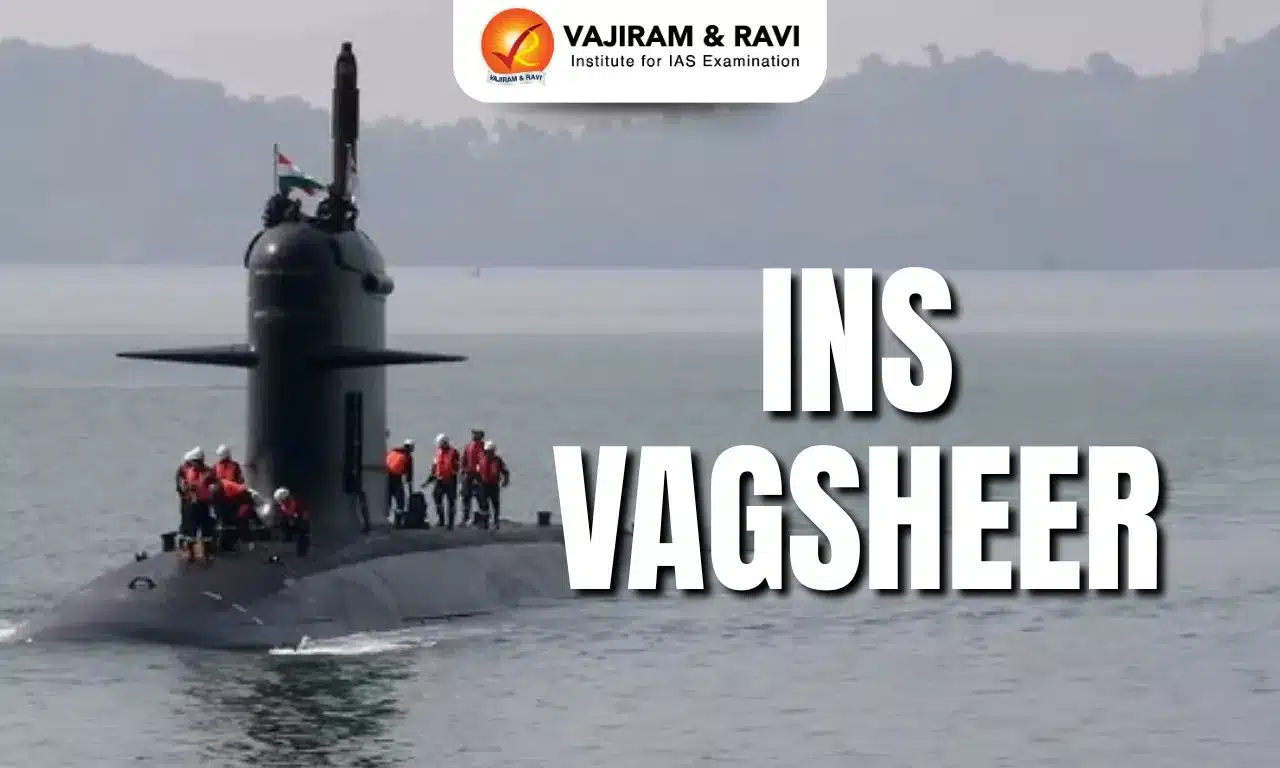
President Droupadi Murmu became the second Indian President to undertake a submarine sortie, embarking on INS Vaghsheer, a Kalvari-class submarine, from Karwar naval base recently.

About INS Vagsheer

  • It is the sixth submarine of the first batch of six Kalvari-class, or Scorpene-class, submarines ordered by the Indian Navy under Project-75.
  • It is named after the sandfish, a deadly deep-sea predator of the Indian Ocean. 
  • It was officially commissioned into the Indian Navy on 15 January 2025.
  • It now joins its sister vessels INS Kalvari, INS Khanderi, INS Karanj, INS Vela, and INS Vagir, which were commissioned, respectively, in December 2017, September 2019, March 2021, November 2021, and January 2023.
  • These submarines have been completely built by Mazagon Dock Shipbuilders Limited (MDL) through French technology transfer.

INS Vagsheer Features

  • It boasts advanced stealth technologies, including reduced radiated noise levels and sophisticated hydrodynamic design, making it one of the quietest submarines in the world.
  • The 67.5-metre vessel reaches speeds of 20 knots submerged, dives to over 350 metres, and endures up to 50 days at sea.
  • Armed with torpedoes, anti-ship missiles, and mine-laying capabilities, it excels in anti-surface and anti-submarine warfare, intelligence gathering, and surveillance.
  • It consists of indigenously developed systems like the air-conditioning plant, internal communication network, and the Ku-Band SATCOM system.
  • It can accommodate 8 officers and 35 sailors and is fitted with an anti-torpedo countermeasure system.

Source: ET

INS Vagsheer FAQs

Q1: What is INS Vagsheer?

Ans: It is the sixth submarine of the first batch of six Kalvari-class (Scorpene-class) submarines built under Project-75 for the Indian Navy.

Q2: When was INS Vagsheer commissioned into the Indian Navy?

Ans: It was commissioned on 15 January 2025.

Q3: Which shipyard built INS Vagsheer?

Ans: Mazagon Dock Shipbuilders Limited (MDL), Mumbai.

Q4: What is the endurance of INS Vagsheer at sea?

Ans: It can endure up to 50 days at sea.

Narsapuram Lace Craft

Narsapuram Lace Craft

Narsapuram Lace Craft Latest News

Recently, the Prime Minister of India praised the Narsapuram Lace Craft products made by self-help groups in Narsapur of Andhra Pradesh during his “Man-Ki-Baat” broadcast.

About Narsapuram Lace Craft

  • Narsapur is situated on the bank of Godavari River in the state of Andhra Pradesh.
  • History of Narsapuram Lace Craft
    • It is believed that the women of the farming community of this region started creating highly attractive artefacts from colourful lace, about 150 years ago.
    • The craft has survived the Indian famine (1899) and the Great Depression (1929). By the early 1900s, above 2,000 women were involved in the craft in the Godavari region. 
  • Raw Materials used: Primarily uses fine cotton threads in various thicknesses and colors.
    • Artisans also incorporate silk, rayon, or synthetic threads for decorative pieces, with beads and sequins added to enhance export-quality designs.
  • Tool used: The main tool is the crochet hook, available in different sizes to create diverse patterns and textures.
  • Design: This craft showcases intricate floral, geometric, and paisley patterns inspired by nature and traditional motifs.
  • Narsapur’s famed hand-made crochet industry produces doilies, pillow covers, cushion covers, bed spreads, table-runners, and table cloths etc.
  • It was recognized with the Geographical Indication tag.

Source: DC

Narsapuram Lace Craft FAQs

Q1: What is Narsapuram Lace Craft known for?

Ans: Crochet lace products

Q2: Who introduced lace craft to Narsapuram?

Ans: Macrae and his wife from Scotland

PM-YUVA 3.0 Scheme

PM-YUVA 3.0 Scheme

PM-YUVA 3.0 Scheme Latest News

The results of the Prime Minister’s Scheme for Mentoring Young Authors (PM-YUVA 3.0) have been declared, with 43 young authors selected through an All-India contest.

About PM-YUVA 3.0 Scheme

  • The Prime Minister’s Scheme for Mentoring Young Authors (PM-YUVA 3.0) aims to nurture young writers under 30 years of age, providing them with mentorship and exposure to hone their creative writing skills. 
  • The scheme will help to develop a stream of writers who can write on various facets of India, encompassing the past, present, and future. 
  • PM-YUVA 3.0 intends to bring to the fore the perspectives of the young generation of writers on the following themes:
    • Contribution of Indian Diaspora in Nation Building;
    • Indian Knowledge System; and
    • Makers of Modern India (1950-2025).
  • Besides, the scheme will also provide a window for the aspiring youth to articulate themselves and present a comprehensive outlook of the contribution of Indians across fields in ancient and present times.
  • The National Book Trust (NBT), India, under the Ministry of Education as the Implementing Agency, will ensure phase-wise execution of the scheme under well-defined stages of mentorship.
  • Selection Process:
    • The scheme invites applications from aspiring writers through MyGov India’s online portal. 
    • A competitive process shortlists 50 young authors based on a well­-defined evaluation criterion.
    • The number of authors to be selected as per the theme:
    • The NBT will constitute the selection committee.
    • Applicants are required to submit a book proposal of 10,000 words, which is then reviewed by a panel.
    • The shortlisted candidates undergo a multi-stage selection process before the final selection.
    • Applicants who had qualified for the PM-YUVA Scheme 1.0 and PM-YUVA Scheme 2.0 are not eligible for the PM-YUVA 3.0 scheme.
  • Mentorship and Support:
    • Selected authors receive a mentorship program spanning six months. 
    • The authors undergo workshops, interactions with mentors, and exposure to India’s literary ecosystem. 
    • At the end of mentorship, a consolidated scholarship of ₹50,000 per month for a period of 6 months (50,000 x 6 = ₹3 Lakh) per author will be paid under the Mentorship Scheme.
    • A book or a series of books written by the young authors will be published by NBT, India as the outcome of the mentorship programme.
    • A royalty of 10% will be payable to the authors on successful publications of their books at the end of the Mentorship Program.
    • The books thus published under the scheme may be translated into other Indian languages.
    • Under the mentorship, a National Camp will be held for the PM­YUVA 3.0 Authors during the New Delhi World Book Fair 2026.
    • Selected authors get the opportunity to present their work at literary festivals and international forums.

Source: NOA

PM-YUVA 3.0 Scheme FAQs

Q1: What is the main objective of the PM-YUVA 3.0 Scheme?

Ans: To nurture young writers under 30 years of age by providing mentorship and exposure to hone their creative writing skills.

Q2: Which organisation implements the PM-YUVA 3.0 Scheme?

Ans: The National Book Trust (NBT), India under the Ministry of Education.

Q3: How many young authors are shortlisted for the PM-YUVA 3.0 Scheme?

Ans: 50 authors.

Q4: How long is the mentorship programme under PM-YUVA 3.0?

Ans: Six months.

Enquire Now