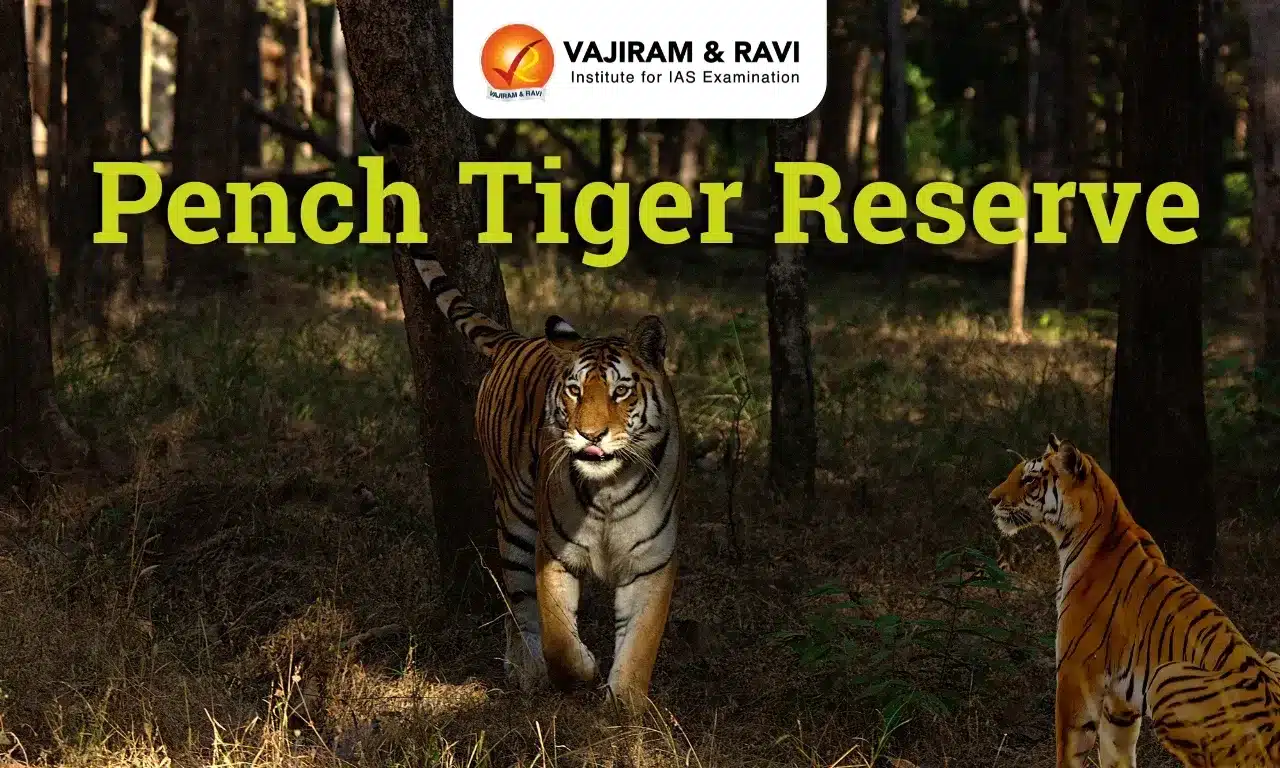
Pench Tiger Reserve

Pench Tiger Reserve (UPSC)

Pench Tiger Reserve Latest News

Recently, researchers released the long-billed vulture named J132 in the Pench Tiger Reserve in Maharashtra.

About Pench Tiger Reserve

  • Location: It is located in the southern reaches of the Satpura hills in the Seoni and Chhindwara districts in Madhya Pradesh and shares the southern boundary with Maharashtra.
  • In 1983, it was declared a National Park, and in 1992, a tiger reserve.
  • It derives its name from its life line-the River Pench which flows from North to South.
  • It comprises the Indira Priyadarshini Pench National Park, the Pench Mowgli Sanctuary, and a buffer.
  • Vegetation: The forests in Pench tiger reserve are classified into three types:
    • South Indian Tropical Moist Deciduous (slightly moist)
    • Southern Tropical Dry Deciduous Teak Forests and
    • Southern Dry Mixed Deciduous Forest
  • Flora: The reserve boasts a diverse range of flora, including teak, saag, mahua, and various grasses and shrubs.
  • Fauna: The area is especially famous for large herds of Chital, Sambar, Nilgai, Gaur (Indian Bison), and wild boar.

Source: IE

Pench Tiger Reserve FAQs

Q1: Pench Tiger Reserve is named after which river?

Ans: Pench River

Q2: Which famous fictional character is associated with Pench Tiger Reserve?

Ans: Mowgli

YJ-20 Hypersonic Missile

YJ-20 Hypersonic Missile

YJ-20 Hypersonic Missile Latest News

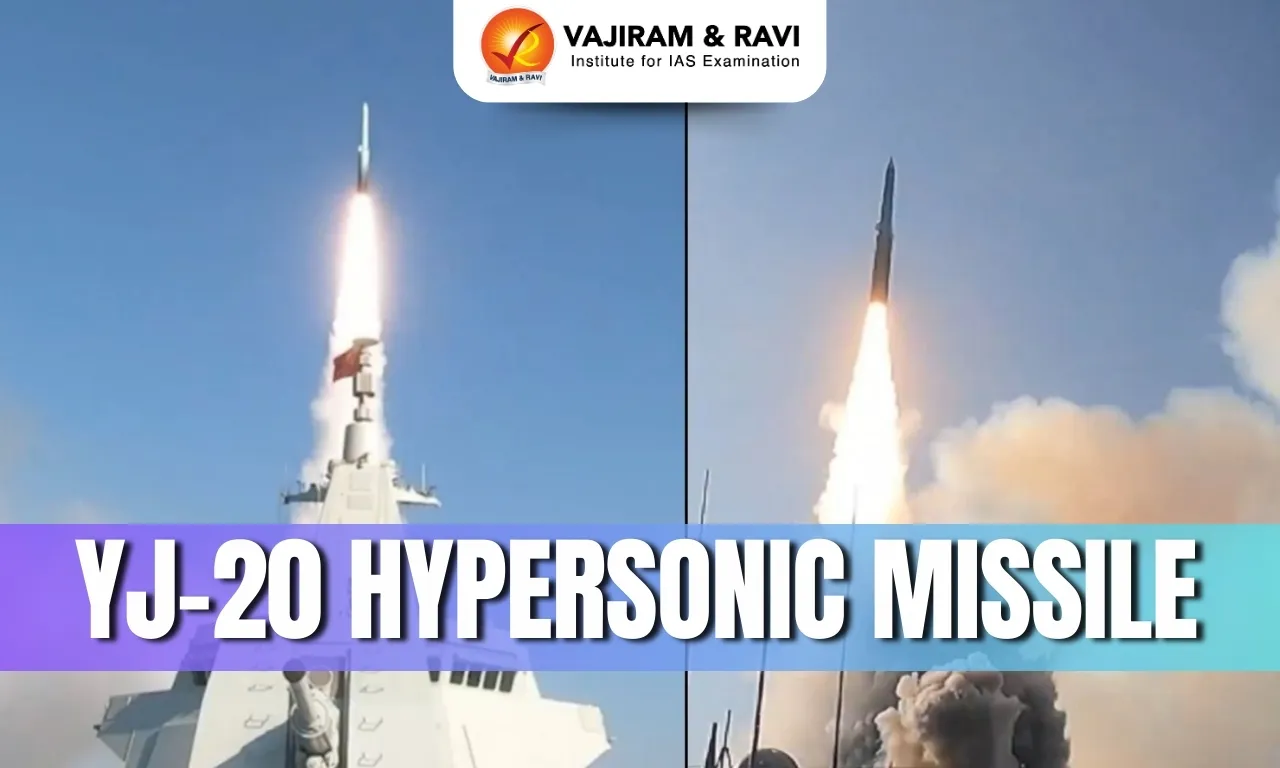
China recently released a rare footage of a YJ-20 hypersonic anti-ship missile fired from a Type 055 warship.

About YJ-20 Hypersonic Missile

  • The YJ-20, also known as the Eagle Strike-20, is a hypersonic anti-ship missile developed by China.
  • It was first publicly displayed during China’s Victory Day military parade on September 3, 2025.
  • It is designed to target high-value naval assets at extended ranges.

YJ-20 Hypersonic Missile Features

  • It has a distinctive biconic aerodynamic form, a configuration that supports controlled glide at sustained hypersonic speeds after the initial rocket boost. 
  • This shape is essential for generating protective shockwaves that shield the control surfaces from heat during high-velocity flight.
  • Regional military assessments place the missile’s range between 1,000 and 1,500 km with cruising speeds above Mach 6. 
  • The terminal flight path appears designed to allow a near-vertical descent combined with sharp lateral manoeuvres, a profile intended to compress defender reaction times and disrupt prediction models used by shipborne interceptors.
  • It is capable of being launched from multiple platforms, including the Type 055 Renhai-class destroyers and H-6K strategic bombers, offering operational flexibility across maritime and continental strike missions.

Source: TOI

YJ-20 Hypersonic Missile FAQs

Q1: Which country developed the YJ-20 hypersonic missile?

Ans: China

Q2: What is the primary role of the YJ-20 hypersonic missile?

Ans: It is designed as a hypersonic anti-ship missile targeting high-value naval assets.

Q3: What type of aerodynamic form does the YJ-20 hypersonic missile use?

Ans: A biconic aerodynamic form.

Q4: What is the estimated range of the YJ-20 hypersonic missile?

Ans: Between 1,000 and 1,500 km.

Rohtasgarh Fort

Rohtasgarh Fort

Rohtasgarh Fort Latest News

An under-construction ropeway being built to improve access to the historic Rohtasgarh Fort in Bihar’s Rohtas district collapsed during a trial run recently.

About Rohtasgarh Fort

  • The Rohtasgarh Fort, also known as Rohtas Fort, is located in the city of Rohtas on the banks of the Sone River in Bihar. 
  • It is one of the largest forts not only in India but in the whole world and is spread over a radius of 26 miles. 
  • It is situated on the top of a hill and is one of the most ancient forts in India, known for its large defensive walls and impressive architecture.
  • The hill on which the fort is situated has a height of 1500 m. 
  • The fort complex includes gates, palaces, temples, and reservoirs, showcasing Indo-Afghan architectural styles.

Rohtasgarh Fort History

  • The fort was built by the 36th ruler of the Solar dynasty, Raja Harishchandra. It was named after his son, Rohitashva.
  • Inscriptions at the fort suggest that the fort has passed through the hands of several empires, including the Hindu Shahis, the Ghurids, the Mughals, and eventually the British Raj.
  • Sher Shah Suri conquered the fort in 1539 after losing the Fort of Chunar to Humayun, a Mughal ruler. 
  • The fort, in its present form, was significantly strengthened by Sher Shah Suri. During his rule, the fort was guarded by 10,000 armed soldiers.
  • The Jama Masjid, built to the west of the fort by Haibat Khan (a close aide of Sher Shah), is made of white sandstone and completed in 1543.
  • Akbar acquired the fort in 1587 and gave it to Raja Maan Singh, who was appointed the Governor of Bihar. 
  • In the 16th century, Jahangir’s son, Prince Khurram, sought refuge at the fort. 
  • In the 17th century, Mir Kasim, the Nawab of Bengal, sought refuge at the fort after losing a battle against the British. 
  • However, the fort was handed over to British Captain Goddard by the Diwan of Rohtas, and the fort’s defenses were destroyed. 
  • The fort remained abandoned until 1857, during the First War of Independence, when Babu Kunwar Singh’s younger brother, Amar Singh, sought refuge there.
  • Finally, the British recaptured Rohtasgarh and soon abandoned it.

Source: IE

Rohtasgarh Fort FAQs

Q1: Where is the Rohtasgarh Fort located?

Ans: It is located in Rohtas district on the banks of the Sone River in Bihar.

Q2: After whom was the Rohtasgarh Fort named?

Ans: It was named after Rohitashva, the son of Raja Harishchandra.

Q3: Which architectural styles are reflected in the structures of Rohtasgarh Fort?

Ans: Indo-Afghan architectural styles.

Q4: Which ruler significantly strengthened the fort in its present form?

Ans: Sher Shah Suri.

Q5: Which Mughal prince sought refuge in Rohtasgarh Fort in the 16th century?

Ans: Prince Khurram (later Emperor Shah Jahan).

Legionnaire’s Disease

Legionnaire’s Disease

Legionnaires' Disease Latest News

A Legionnaires’ disease outbreak has prompted a health alert in Sydney’s central business district recently, with authorities urging people to remain vigilant for symptoms.

About Legionnaires' Disease

  • It is a severe form of a lung infection (pneumonia) caused by a bacterium known as legionella.
  • The disease got its name when a group of people at an American Legion convention became ill with this type of pneumonia in 1976.

Legionnaires' Disease Transmission

  • Legionella is found naturally in freshwater, such as lakes and rivers. It can also be found in soil. 
  • Most people who catch Legionnaires’ disease breathe in the bacteria from water or soil. 
  • You usually can’t get infected by drinking water that contains the bacteria unless you aspirate it (accidentally breathe the water into your lungs).
  • It is not contagious, meaning it is not spread from person to person.
  • Older adults, people with weakened immune systems, and people who smoke have a higher risk of getting Legionnaires’ disease.

Legionnaires' Disease Symptoms

  • Legionnaires’ disease causes pneumonia-like symptoms that start two to 14 days after exposure to Legionella. 
  • Patients usually present with fever, cough, shortness of breath, tiredness, headache, muscle pain, and may have gastrointestinal symptoms such as abdominal pain and diarrhoea. 
  • In severe cases, neurological symptoms (e.g., confusion) and respiratory failure may occur, and some cases may result in death.

Legionnaires' Disease Treatment

  • Treating right away with antibiotics most often cures Legionnaires’ disease.
  • But some people still have problems after treatment.
  • Currently, there is no vaccine available for LD.

Source: ET

Legionnaires' Disease FAQs

Q1: What is the Legionnaires' Disease?

Ans: It is a severe form of a lung infection (pneumonia).

Q2: What causes Legionnaires’ disease?

Ans: A bacterium called Legionella.

Q3: Where is Legionella commonly found in nature?

Ans: In freshwater sources such as lakes and rivers, and also in soil.

Q4: How do most people get infected with Legionnaires’ disease?

Ans: By breathing in Legionella-contaminated water droplets or soil particles.

Q5: Can Legionnaires’ disease spread from person to person?

Ans: No, it is not contagious.

Gas Hydrates

Gas Hydrates

Gas Hydrates Latest News

A reserve of natural gas bubbling from a cage of ice discovered on the ocean floor to the west of Greenland may be the deepest gas hydrate cold seep on record, and it happens to be teeming with animal life.

About Gas Hydrates

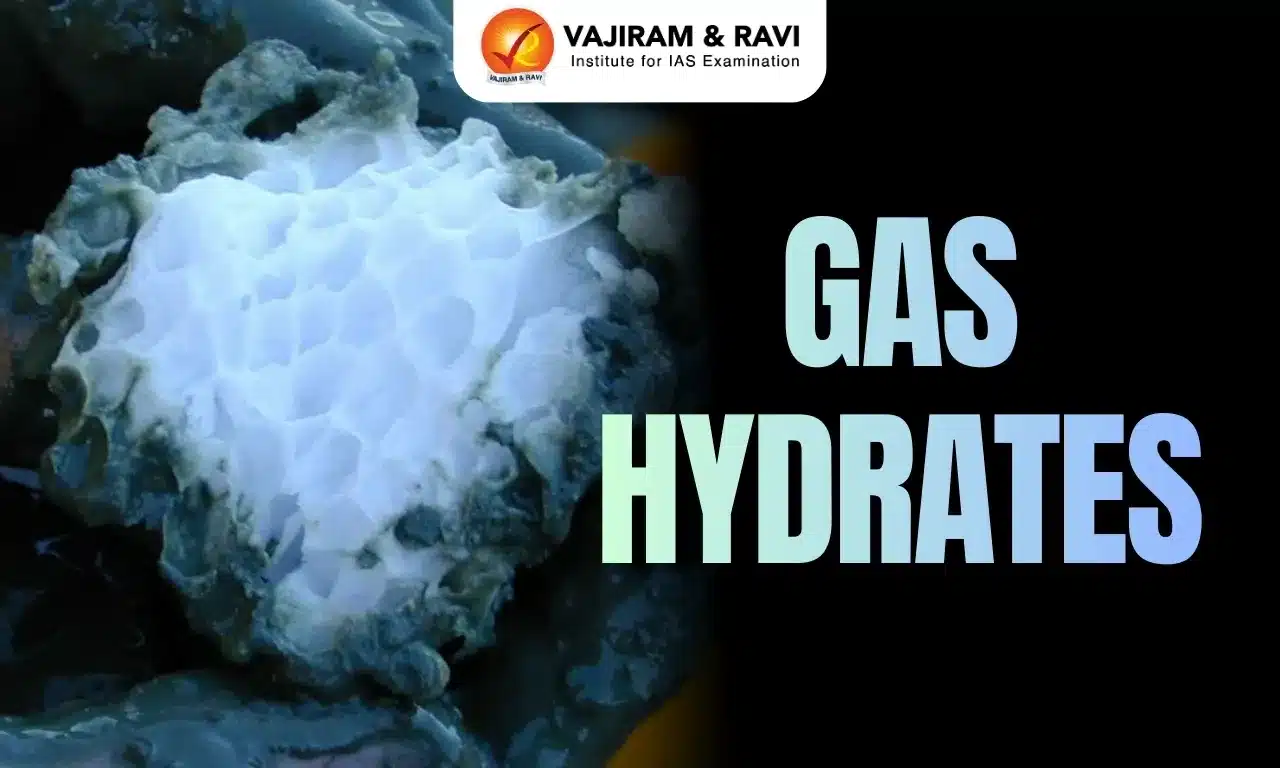
  • Gas hydrates are ice-like crystalline structures that form when a low-density gas, like methane, ethane, or carbon dioxide, combines but does not chemically bond with water and freezes into a solid under low temperature and moderate pressure conditions. 
  • Most gas hydrates are formed from methane (CH4), which has led to the terms “gas hydrate” and “methane hydrate” often being used interchangeably.
  • They are classified as clathrates, compounds formed by the inclusion of one molecule within cavities in the crystal lattice of another.  
    • A unique property of clathrates is the absence of chemical bonding, which makes it possible to separate them relatively easily. 
  • For example, when methane hydrates are warmed or depressurized, it will revert back to water and natural gas.
  • On Earth, gas hydrates occur naturally in some marine sediments and within and beneath permafrost. 
  • They are also speculated to form on other planets.
  • Gas Hydrates are important for a variety of reasons:
    • Gas hydrate deposits may contain roughly twice the carbon contained in all reserves of coal, oil, and conventional natural gas combined, making them a potentially valuable energy resource.
    • Their decomposition can release large amounts of methane, which is a greenhouse gas that could impact Earth’s climate.
    • Sudden release of pressurized methane gas may cause submarine landslides, which in turn can trigger tsunamis.
    • Gas hydrates in the ocean can be associated with unusual and possibly unique biological communities that use hydrocarbons or hydrogen sulfide for carbon and energy via a process known as chemosynthesis.

Source: SA

Gas Hydrates FAQs

Q1: What are gas hydrates?

Ans: Gas hydrate is a crystalline solid, its building blocks consist of a gas molecule surrounded by a cage of water molecules.

Q2: Which gas is most commonly involved in the formation of gas hydrates?

Ans: Methane is the most common gas involved in the formation of gas hydrates.

Q3: Where do gas hydrates occur naturally on Earth?

Ans: Gas hydrates occur naturally in some marine sediments and within or beneath permafrost regions.

Q4: Why are gas hydrates considered a potential energy resource?

Ans: Because gas hydrate deposits may contain roughly twice the carbon found in all reserves of coal, oil, and conventional natural gas combined.

Q5: How can gas hydrates influence Earth’s climate?

Ans: Gas hydrates can influence the climate because their decomposition releases methane, a potent greenhouse gas.

Daily Editorial Analysis 30 December 2025

Daily Editorial Analysis

The Quiet Foundations for India’s Next Growth Phase

Context

  • As 2025 draws to a close, India’s economic progress is often judged by headline indicators such as GDP rankings, export growth, and global partnerships.
  • Beneath these visible outcomes lies a sustained and less conspicuous reform effort that has reshaped governance, regulation, and institutional credibility.
  • Reform Express 2025 represents a cumulative process of removing bottlenecks, modernising laws, and creating predictable systems.
  • Rather than disruptive policy shocks, this phase has relied on consistency and trust-based governance to strengthen India’s long-term growth foundations.

Economic Credibility and the Case for Reform

  • India crossed $4.1 trillion in nominal GDP, becoming the world’s fourth-largest economy.
  • More telling was the sovereign credit rating upgrade to BBB after nearly two decades, signalling confidence in the durability of India’s macroeconomic framework.
  • In a global environment marked by political volatility, stable leadership has made reforms credible.
  • Credible reforms reduce uncertainty, align incentives, and encourage private investment.
  • When procedures are transparent and time-bound, discretion narrows, competition improves, and investment translates into jobs and productivity gains.

Key Foundational Reforms for India’s Next Growth Phase

  • Trade Expansion and Digital Facilitation

    • India’s exports reached $825.25 billion in 2024–25, growing over 6% annually.
    • This expansion has been supported by digital trade infrastructure that simplifies processes and improves access to information.
    • Platforms such as Trade Connect and Trade Intelligence and Analytics have reduced friction for exporters by integrating approvals, data, and market intelligence.
    • These initiatives reflect a shift from control-oriented regulation to facilitative governance that enhances competitiveness.
  • Strategic Trade Agreements and Global Integration

    • India’s trade diplomacy in 2025 focused on commercially meaningful agreements.
    • The Comprehensive Economic and Trade Agreement with the United Kingdom expanded duty-free access and clarified services and skilled mobility pathways.
    • Agreements with Oman and New Zealand strengthened India’s presence in strategic and high-value markets.
    • Together, these partnerships deepened integration into global value chains while maintaining policy discipline and reciprocity.
  • Entrepreneurship, Innovation, and Digital Public Infrastructure

    • India’s startup ecosystem expanded to over two lakh government-recognised startups, generating more than 21 lakh jobs.
    • Digital public infrastructure played a central role in this growth.
    • The Open Network for Digital Commerce processed hundreds of millions of orders, while the Government e-Marketplace enabled micro and small enterprises to access public procurement at scale.
    • India’s rise to 38th place in the Global Innovation Index reflected the impact of simplified regulations and digital systems on innovation outcomes.
  • Legislative Simplification and Regulatory Modernisation

    • Trust-based governance became a defining feature of Reform Express 2025. Parliament repealed 71 obsolete laws, reducing regulatory clutter.
    • The consolidation of 29 central labour laws into four labour codes simplified compliance while expanding social security coverage.
    • Capital market reform progressed through the introduction of the Securities Markets Code Bill, strengthening enforcement, investor protection, and grievance redress mechanisms at a time of growing retail participation and global capital flows.

Infrastructure and Energy Reform

  • Infrastructure, Logistics, and Industrial Policy

    • Logistics reform focused on reducing costs and improving reliability.
    • New maritime laws replaced outdated frameworks with modern governance tools, dispute resolution mechanisms, and safety norms.
    • Recognising shipping as a strategic sector, the government approved a ₹69,725 crore shipbuilding package, including a Maritime Development Fund.
    • This approach reflected industrial policy with ecosystem focus, encouraging private investment while building domestic capacity across shipyards, engineering, and services.
  • Energy Reform and Long-Term Investment

    • Energy reforms addressed long-cycle investment risks. Amendments to oil and gas legislation emphasised stability of terms, clearer approvals, and single-lease frameworks.
    • The Open Acreage Licensing Policy expanded exploration, particularly offshore, while the National Deep Water Exploration Mission strengthened domestic capabilities.
    • Simultaneously, the Nuclear Energy Mission and the SHANTI Bill advanced low-carbon baseload capacity, enabling regulated private participation in advanced nuclear technologies to support energy security and industrial growth.

Conclusion

  • Reform Express 2025 demonstrates a consistent reform logic: clean up outdated statutes, reduce compliance burdens, digitise governance, strengthen market institutions, and de-risk long-term investment.
  • Rather than relying on headline-driven interventions, India’s transformation has been built through cumulative, interconnected reforms.
  • By lowering the burden on entrepreneurs and improving institutional trust, productivity is allowed to compound.
  • The quiet persistence of these reforms has laid the foundation for sustained growth and enhanced resilience in an increasingly uncertain global economy.

The Quiet Foundations for India’s Next Growth Phase FAQs

Q1. What does Reform Express 2025 signify?
Ans. It signifies a steady, cumulative reform process focused on improving governance, reducing bottlenecks, and strengthening institutional credibility.

Q2. Why was India’s sovereign credit rating upgrade significant in 2025?
Ans. The upgrade signalled international confidence in the sustainability and stability of India’s economic reforms.

Q3. How did digital platforms support India’s trade growth?
Ans. Digital platforms simplified procedures, improved access to market information, and reduced transaction delays for exporters.

Q4. What role did legislative reforms play in economic transformation?
Ans. Legislative reforms reduced compliance burdens, simplified regulations, and improved trust between the state and businesses.

Q5. Why are energy reforms important for long-term growth?
Ans. Energy reforms reduce investment risk, improve energy security, and support sustainable industrial expansion.

Source: The Hindu


India’s Clean Energy Transition - Manufacturing Push, Market Paradoxes and Structural Bottlenecks

Context

  • India is accelerating its clean energy transition to meet climate commitments (NDCs), reduce import dependence, and position itself as a global renewable energy and green hydrogen hub.
  • Recent gains in domestic solar manufacturing and clean energy investments signal momentum, but deep structural challenges persist across manufacturing, finance, grid infrastructure, and emerging technologies.

Key Developments

  • Solar manufacturing - From import dependence to domestic capacity

    • For years, India relied heavily on Chinese solar imports. In 2024, domestic firms added 25.3 GW of module manufacturing capacity, nearly doubling national capacity.
    • The Production Linked Incentive (PLI) scheme catalysed private investment, and signalled India’s intent to move up the global value chain.
    • Adoption of TOPCon (Tunnel Oxide Passivated Contact) cells reflects a shift toward higher-efficiency, higher-value innovation.
  • Structural contradictions in solar supply chain

    • Despite capacity expansion, India imported about 66 GW of solar modules and cells in 2024, while exports marginally declined.
    • Upstream integration is weak - only 2 GW wafer capacity commissioned, compared to nearly 80 GW downstream module capacity.
    • Absence of polysilicon and wafer manufacturing risks dependency substitution, not elimination, highlighting the missing middle of manufacturing.
  • Clean energy investment boom with financial stress

    • $3.4 billion FDI attracted in the first nine months of FY2025 (over 80% of power sector inflows).
    • Competitive auctions pushed tariffs to record lows, making renewables among the cheapest electricity sources
    • However, DISCOM financial distress (unpaid dues), post-auction contract renegotiations in some states, undermine contractual sanctity and investor confidence.
  • Grid and transmission constraints

    • Nearly 60 GW of renewable capacity is stranded due to inadequate transmission infrastructure.
    • Issues include - Grid congestion, curtailment without compensation, etc.
    • Consequences:
      • Difficulty in financial modelling.
      • Higher risk premiums.
      • India’s renewable financing costs are about 80% higher than advanced economies.
    • National Green Hydrogen Mission (NGHM) - Strategic promise, economic hurdles:
      • India currently consumes about 5 million tonnes of grey hydrogen.
      • Target under NGHM: 5 million metric tonnes of green hydrogen annually by 2030. Pilot projects in steel, refining, transport (hard-to-abate sectors).
      • Challenges:
        • Current costs of $4.1–$5.0 per kg is projected to be around $2.4 per kg by 2030, which remains uncompetitive without subsidies, carbon pricing, and regulatory mandates.
        • Infrastructure gaps in storage, transport, and end-use.
        • Chicken-and-egg problem - No demand without supply certainty, no supply without assured demand.

Challenges and Way Ahead

  • Weak upstream solar manufacturing (polysilicon, wafers): Promote end-to-end solar value chain integration.
  • Regulatory uncertainty and contract renegotiation: Ensure contractual sanctity to protect investor confidence.
  • Transmission bottlenecks and uncompensated curtailment: Synchronise transmission expansion with renewable capacity addition. Establish clear curtailment compensation frameworks.
  • Green hydrogen’s cost and demand uncertainty: For green hydrogen -
    • Adopt realistic timelines.
    • Create demand through mandates, incentives, and carbon markets.
    • Invest in shared infrastructure for storage and transport.

Conclusion

  • India’s clean energy transition reflects both ambition and complexity.
  • While manufacturing gains, low tariffs, and green hydrogen vision signal leadership potential, unresolved structural bottlenecks threaten sustainability.
  • Addressing grid, financial, and supply-chain weaknesses—while safeguarding policy credibility—will determine whether India emerges merely as a large clean energy market or as a global model for energy transition in the developing world.

India’s Clean Energy Transition FAQs

Q1. How has the PLI scheme contributed to India’s solar manufacturing ecosystem?

Ans. It has catalysed private investment, doubled domestic module capacity in 2024, etc.

Q2. Why does India’s solar manufacturing expansion still risk continued import dependence?

Ans. The absence of upstream manufacturing in polysilicon and wafers has created a value-chain imbalance.

Q3. What are the major financial and regulatory risks affecting India’s renewable energy sector?

Ans. DISCOM payment delays, post-auction contract renegotiations, and regulatory uncertainty undermine contractual sanctity.

Q4. How do transmission constraints impact renewable energy deployment in India?

Ans. Inadequate transmission infrastructure leads to curtailment without compensation, stranded capacity, etc.

Q5. What are the key challenges to the commercial viability of green hydrogen under India’s National Green Hydrogen Mission?

Ans. High production costs, underdeveloped infrastructure, and a demand–supply coordination gap necessitate subsidies.

Source: IE

Daily Editorial Analysis 30 December 2025 FAQs

Q1: What is editorial analysis?

Ans: Editorial analysis is the critical examination and interpretation of newspaper editorials to extract key insights, arguments, and perspectives relevant to UPSC preparation.

Q2: What is an editorial analyst?

Ans: An editorial analyst is someone who studies and breaks down editorials to highlight their relevance, structure, and usefulness for competitive exams like the UPSC.

Q3: What is an editorial for UPSC?

Ans: For UPSC, an editorial refers to opinion-based articles in reputed newspapers that provide analysis on current affairs, governance, policy, and socio-economic issues.

Q4: What are the sources of UPSC Editorial Analysis?

Ans: Key sources include editorials from The Hindu and Indian Express.

Q5: Can Editorial Analysis help in Mains Answer Writing?

Ans: Yes, editorial analysis enhances content quality, analytical depth, and structure in Mains answer writing.

Alleged Fake Rabies Vaccines: A Test for India’s Health Governance

Fake Rabies Vaccine

Fake Rabies Vaccine Latest News

  • Health authorities in Australia have advised citizens vaccinated for rabies in India to check whether they require replacement doses, following concerns about counterfeit rabies vaccines.
  • Similar advisories have been issued by the United Kingdom and the United States.
  • This episode highlights critical issues of drug supply chain integrity, regulatory enforcement, and public confidence in vaccines—especially significant for India, which bears a high rabies burden and plays a key role in global vaccine supply.

Rabies: Transmission and Prevention

  • Rabies is a viral infection transmitted through the saliva of infected animals. 
  • Human infection can occur through bites, scratches, or saliva contact with open wounds, commonly involving dogs, cats, monkeys, and bats. 
  • Symptoms range from fever, headache, and nausea to excessive salivation, hydrophobia (fear of water), hallucinations, and partial paralysis.
  • Importantly, rabies is preventable through timely post-exposure vaccination, which is why prompt medical treatment after animal exposure is essential.

India’s Rabies Burden

  • According to India’s National Rabies Control Programme, 6,644 clinically suspected human rabies cases and deaths were reported between 2012 and 2022, though this is believed to be an under-estimate. 
  • The World Health Organisation estimates 18,000–20,000 rabies deaths annually worldwide, with one-third to two-thirds occurring in children under 15 years.
  • India alone accounts for nearly 36% of global rabies deaths, highlighting the public health significance of vaccine safety and regulatory oversight.

Background: Concerns Over Abhayrab Vaccine

  • Health authorities in Australia, the UK, and the US have issued advisories urging citizens who received rabies vaccinations in India to verify whether they require replacement doses. 
  • The alerts point to possible circulation of counterfeit rabies vaccines in India since 2023.
  • The advisories stem from concerns that fake batches of Abhayrab, a rabies vaccine manufactured by the Human Biologicals Institute (a key division of PSU Indian Immunologicals), may be in circulation. 
  • The issue has triggered international alarm because rabies is almost 100% fatal once symptoms appear, making vaccine efficacy critical.

Company’s Response and Identification of Counterfeit Batch

  • Indian Immunologicals Limited (IIL) stated that in January 2025, it detected one counterfeit batch (#KA24014) with altered packaging.
  • The company informed Indian regulators and law enforcement immediately.
  • It maintains that no other counterfeit batches have been found.

Nature of the Counterfeit: Packaging Diversion, Not Fake Vaccine

  • Investigations revealed that:
    • Counterfeit products were detected in Delhi, Mumbai, Agra, Lucknow, Kanpur, and Patna.
    • Raids were conducted in Delhi, Mumbai, and Agra.
    • Tests conducted at the Central Drug Testing Laboratory, Kasauli, found the seized vaccines to contain the genuine product.
  • Experts clarified that the issue involved tampered outer packaging, allegedly used to divert government-supplied vaccines into the open market, rather than fake or substandard vaccine contents.

Why Abhayrab Is Central to the Concern

  • Abhayrab is among the most widely used rabies vaccines in India, holding around 40% market share.
  • IIL is the largest rabies vaccine producer globally, supplying vaccines for over 25 years.
  • Company officials warned that international advisories could fuel vaccine hesitancy, particularly in rural areas where Abhayrab may be the only available option.

Expert Reassurance on Public Health Impact

  • Experts in India sought to allay fears:
    • In India, patients usually receive five doses of rabies vaccine after an animal bite.
    • Even if one dose were ineffective, protection is likely ensured through remaining doses and rabies immunoglobulin.

WHO-Recommended Vaccination Protocol

  • As per World Health Organisation guidelines:
  • Unimmunised persons: At least three intramuscular doses or Two intradermal doses, plus immunoglobulin on day zero.
  • Previously immunised persons: Only two booster doses are required.

Recent Rabies Cases and Vaccine Failure Concerns

  • In Kerala, a spike in rabies deaths was reported in 2022, raising public concern as several deceased individuals had reportedly received rabies vaccines. 
  • This led to suspicions of vaccine failure or ineffective vaccines.

Findings of the Union Health Ministry Committee

  • A committee constituted by the Union Health Ministry investigated the cases and ruled out vaccine failure as the primary cause. 
  • It concluded that deaths occurred due to:
    • Improper wound washing after animal bites
    • Non-administration of rabies immunoglobulin in Category 3 bites
      • Category 3 bites include multiple bites or scratches breaking the skin, or situations where broken skin is licked by an animal, which carry the highest risk of infection.
  • The committee highlighted limited availability of rabies immunoglobulin and vaccines as a major systemic challenge, which compromised timely and complete post-exposure prophylaxis.

Source: IE | NDTV | FP

Fake Rabies Vaccine FAQs

Q1: Why have countries issued alerts on rabies vaccines received in India?

Ans: Australia, the UK, and the US warned travelers due to concerns about counterfeit Abhayrab vaccines circulating in India since 2023, raising doubts about vaccine efficacy.

Q2: What is the issue related to the Abhayrab rabies vaccine?

Ans: Authorities flagged tampered packaging of one Abhayrab batch, allegedly diverting government supply to private markets, though vaccine contents were found genuine.

Q3: Why is rabies a major public health concern in India?

Ans: Rabies is nearly 100% fatal once symptoms appear. India accounts for about 36% of global rabies deaths, with children forming a large proportion.

Q4: Have recent rabies deaths been linked to vaccine failure?

Ans: Investigations into Kerala’s 2022 rabies deaths found causes linked to poor wound washing and lack of immunoglobulin, not vaccine failure.

Q5: Why does this controversy matter for India globally?

Ans: It tests India’s drug regulation credibility, supply-chain oversight, and vaccine confidence, crucial given India’s role as a major global vaccine producer.

INSV Kaundinya Sets Sail: Reviving India’s Ancient Maritime Heritage

INSV Kaundinya

INSV Kaundinya Latest News

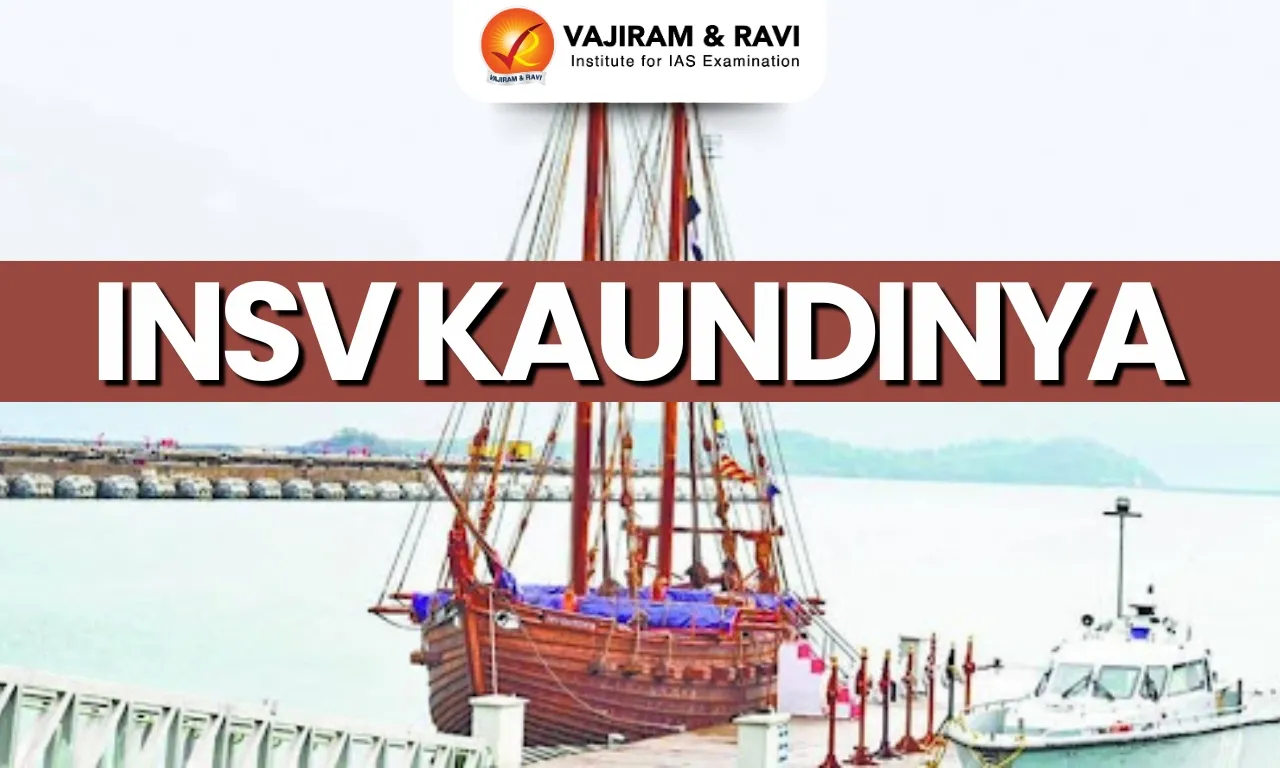
  • INSV Kaundinya, the Indian Navy’s stitched sailing vessel built using traditional shipbuilding techniques, has begun its maiden overseas voyage from Porbandar, Gujarat, to Muscat, Oman. 
  • The voyage symbolically retraces ancient maritime routes that once linked India with the wider Indian Ocean world.
  • Constructed with wooden planks stitched using coconut coir rope and sealed with natural resins, the vessel reflects an indigenous shipbuilding tradition prevalent along India’s coasts. 
  • This technology enabled Indian mariners to undertake long-distance voyages to West Asia, Africa, and Southeast Asia long before modern navigation methods.
  • The project was executed under a tripartite agreement between the Ministry of Culture, the Indian Navy, and Hodi Innovations, as part of India’s broader effort to revive and showcase its indigenous knowledge systems and maritime heritage.

INSV Kaundinya: Revival of an Ancient Indian Vessel

  • INSV Kaundinya is a stitched sail ship inspired by a 5th century CE vessel depicted in the paintings of the Ajanta Caves. 
  • It represents an effort to recreate India’s early maritime traditions using historically authentic methods.

Traditional Construction and Craftsmanship

  • After the keel laying in September 2023, the ship was built using the traditional stitching technique by a team of skilled artisans from Kerala, led by master shipwright Babu Sankaran
  • Wooden planks forming the hull were stitched together with coir rope, coconut fibre, and sealed using natural resin. 
  • The vessel was launched in February 2025 at Goa.
  • Navy formally inducted the naval sailing vessel in May 2025 at the Karwar Naval base, in Karnataka.

Indian Navy’s Role and Interdisciplinary Design

  • The Indian Navy played a central role by overseeing the vessel’s design, technical validation, and construction. 
  • With no surviving blueprints or physical remains, the design was extrapolated from two-dimensional artistic depictions. 
  • The project required an interdisciplinary approach, combining archaeological interpretation, naval architecture, hydrodynamic testing, and traditional craftsmanship.

Dimensions, Crew, and Tankai Method

  • INSV Kaundinya is about 19.6 metres long, 6.5 metres wide, with a draft of 3.33 metres. 
  • Powered solely by sails, it is operated by a crew of around 15 trained sailors. 
  • Construction follows the indigenous Tankai method, where the hull is stitched first and ribs are added later—completely avoiding the use of metal.

INSV Kaundinya: A Ship Built Without Engines or Metal

  • INSV Kaundinya is a non-combat sailing vessel constructed entirely using a stitched shipbuilding technique dating back to at least the 5th century CE.
  • Wooden planks are stitched together with coir rope made from coconut fibre and sealed with natural resins, cotton, and oils. 
  • This flexible hull design allows the vessel to absorb wave energy—an essential feature for ancient sailors navigating the Arabian Sea and Bay of Bengal.
  • Hydrodynamic testing and stability studies were carried out with assistance from academic institutions, including IIT Madras, to ensure seaworthiness for open-ocean voyages.

Symbolism Embedded in INSV Kaundinya’s Design

  • INSV Kaundinya’s structure incorporates culturally rich elements that reflect India’s ancient maritime heritage. 
  • Her sails carry motifs of the Gandabherunda and the Sun, symbolising power and continuity, while the bow features a sculpted Simha Yali, a mythical guardian figure associated with strength and protection. 
  • A symbolic Harappan-style stone anchor placed on the deck evokes the subcontinent’s early seafaring traditions.
  • Named after Kaundinya, the Indian mariner who sailed across the Indian Ocean to Southeast Asia, the vessel stands as a living representation of India’s long history of maritime exploration, trade networks, and cultural exchange, underscoring the civilisational depth of India’s engagement with the seas.

Reviving Ancient Maritime Highways

  • The Porbandar–Muscat route retraced by INSV Kaundinya was once a vital maritime corridor for trade in spices, textiles, and ideas across West Asia, Africa, and Southeast Asia. 
  • By sailing this route again, the vessel demonstrates the sophistication of ancient Indian shipbuilding and reaffirms India’s identity as a historic maritime civilisation.

Source: TH | ToI

INSV Kaundinya FAQs

Q1: What is INSV Kaundinya and why is it significant?

Ans: INSV Kaundinya is a stitched sailing vessel inspired by 5th-century designs, reviving ancient Indian shipbuilding techniques without engines or metal.

Q2: What route is INSV Kaundinya sailing and why?

Ans: The Porbandar–Muscat route retraces historic Indian Ocean trade corridors that once connected India with West Asia, Africa, and Southeast Asia.

Q3: How was INSV Kaundinya constructed?

Ans: The vessel was built using the Tankai method, stitching wooden planks with coir rope and natural resins, reflecting ancient indigenous craftsmanship.

Q4: What role did the Indian Navy play in the project?

Ans: The Indian Navy oversaw design validation, hydrodynamic testing, and construction, combining archaeology, naval architecture, and traditional craftsmanship.

Q5: Why is INSV Kaundinya important for India’s soft power?

Ans: The voyage highlights India’s maritime civilisation, indigenous knowledge systems, and historical cultural exchanges across the Indian Ocean region.

Pinaka Long Range Guided Rocket

Pinaka Long Range Guided Rocket

Pinaka Long Range Guided Rocket Latest News

Recently, the Defence Research and Development Organisation (DRDO)successfully conducted the maiden flight test of the Pinaka Long Range Guided Rocket (LRGR–120) at the Integrated Test Range (ITR), Chandipur. 

About Pinaka Long Range Guided Rocket

  • It is an extended-range, precision-guided rocket developed for the Indian Army’s Pinaka Multiple Launch Rocket System (MLRS).
  • It has been developed by the Armament Research and Development Establishment (ARDE) in association with the High Energy Materials Research Laboratory, Hyderabad-based Research Centre Imarat (RCI) and Defence Research and Development Laboratory (DRDL).

Features of Pinaka Long Range Guided Rocket

  • Range: Its maximum strike range of around 120 kilometres. 
  • Backward compatibility: The rockets are backward compatible, meaning they can fit into existing launch systems without any significant structural changes.
  • Guidance system for improved accuracy: It makes it highly effective in mountainous terrain, where precision is critical. 
    • In the Guided Pinaka system, launchers carry eight guided rockets due to additional electronic components.
  • It is equipped with a guidance system that significantly improves accuracy, enabling it to engage targets such as enemy artillery positions, command nodes and logistics installations at long distances.

Source: PIB

Pinaka Long Range Guided Rocket FAQs

Q1: What is the range of the Pinaka Long Range Guided Rocket (LRGR 120)?

Ans: 120 km

Q2: What guidance system does the Pinaka LRGR 120 use?

Ans: Combination of inertial navigation and GPS

Ol Chiki Script

Ol Chiki Script

Ol Chiki Script Latest News

Recently, the President of India attended the Centenary celebrations of the Ol Chiki script of the Santhali Language in Jamshedpur, Jharkhand.

About Ol Chiki Script

  • It was invented in 1925 by Pandit Raghunath Murmu, a writer and teacher from what is Mayurbhanj State (now part of Odisha) in India.
  • Other names: Ol Chiki is also known as Ol Cemet’, Ol Ciki, Ol or the Santali alphabet.
  • It was created as a way to promote Santali culture.
  • The Ol Chiki script itself is uniquely structured to suit the Santali language.
  • It consists of 30 letters and is fully phonetic, with each letter corresponding to a distinct sound.
  • The script was first publicized in 1939 at the Mayurbhanj State exhibition.
  • Murmu published over 150 books in Santali in the Ol Chiki script, including novels, poetry, drama, grammars, dictionaries and other information about the language and script.

Key Facts about Santali Language

  • It is a member of the Munda branch of the Austroasiatic language family, which is an ancient family of languages spoken across parts of South and Southeast Asia.
  • It is spoken mainly in Jharkhand and West Bengal states in northern India, and also in northwestern Bangladesh, eastern Nepal and Bhutan.
  • It was included in the Eighth Schedule of the Indian Constitution in 2003, with Ol Chiki recognised as its official script, giving the language constitutional status.

Source: News On Air

Ol Chiki Script FAQs

Q1: What is the Ol Chiki script associated with?

Ans: Santali language

Q2: In which year was the Ol Chiki script developed?

Ans: 1925

Aravalli Hills and Environmental Protection – Explained

Aravalli Hills

Aravalli Hills Latest News

  • The Supreme Court has paused its earlier judgment accepting a restrictive definition of the Aravalli Hills and has proposed a re-examination through a high-powered expert committee.

About the Aravalli Mountain Range

  • The Aravalli Mountain Range is one of the oldest surviving fold mountain systems in the world, with geological origins dating back nearly 1.5 billion years. 
  • Stretching over 690 km, the range runs from Gujarat through Rajasthan and Haryana to Delhi, forming a crucial natural barrier in north-western India.
  • Ecologically, the Aravallis play a vital role in:
    • Preventing the eastward expansion of the Thar Desert
    • Regulating regional climate and rainfall patterns
    • Recharging groundwater aquifers
    • Acting as a green buffer against air pollution, particularly for the Delhi-NCR region
  • The hills host tropical dry deciduous forests, support diverse flora and fauna, and sustain rural livelihoods. 
  • Despite their importance, the Aravallis have faced severe degradation due to mining, urbanisation, and infrastructure expansion, making legal and policy protection critical.
  • Over the years, multiple court orders and expert committees have attempted to define and protect the Aravallis, but ambiguities in their legal definition have remained a major challenge.

Legal Background to the Aravalli Definition Issue

  • Environmental protection of the Aravallis has largely evolved through judicial interventions rather than a single comprehensive statute. Courts have relied on:
  • However, the absence of a scientifically precise and uniform definition of what constitutes the Aravalli range has led to disputes over which areas qualify for environmental protection.
  • In November 2025, the Supreme Court upheld a government expert panel’s definition that restricted the Aravallis to:
    • Hills with an elevation of 100 metres or more
    • Hill clusters, slopes, and hillocks located within 500 metres of each other
    • This definition significantly narrowed the geographical scope of the protected area.

News Summary

  • In December 2025, the Supreme Court kept its own November judgment in abeyance, citing serious environmental and regulatory concerns. Key developments include:
    • The Court directed that no irreversible administrative or ecological actions should be taken based on the restrictive definition until further review.
    • Fresh or renewed mining leases in the Aravalli region were prohibited without prior approval of the apex court.
    • Widespread public concern was noted that the 100-metre elevation rule could exclude a large number of ecologically significant hills, particularly in Rajasthan, Haryana, Uttar Pradesh, and Delhi.
    • The Court observed that if lower hill ranges were excluded, it could create a “significant regulatory lacuna”, enabling unregulated mining and environmental degradation.
  • The Bench proposed constituting a high-powered expert committee to:
    • Reassess whether “regulated” or “sustainable” mining in newly excluded areas could still harm ecological integrity
    • Evaluate the short-term and long-term environmental impacts of the restrictive definition
    • Examine whether the 500-metre clustering rule creates a structural paradox, where ecologically contiguous hills remain unprotected due to technical gaps
  • The Court emphasised that any final definition must be based on exhaustive scientific and geological assessment, ensuring holistic protection of the entire mountain system rather than fragmented pockets.

Environmental and Policy Implications

  • Over-reliance on technical definitions can undermine ecological objectives
  • Mining regulation must balance economic activity with inter-generational environmental equity
  • Judicial oversight remains critical in the absence of comprehensive legislative clarity
  • For policymakers, the issue underscores the need for scientifically grounded, ecosystem-based approaches rather than narrow physical thresholds.

Source: TH | IE

Aravalli Hills FAQs

Q1: Why are the Aravalli Hills environmentally important?

Ans: They prevent desertification, recharge groundwater, and act as a pollution buffer for north-western India.

Q2: What was controversial about the 100-metre rule?

Ans: It excluded many ecologically significant hills from legal protection.

Q3: Why did the Supreme Court pause its own judgment?

Ans: Due to concerns that the definition could weaken environmental safeguards.

Q4: What is the role of the proposed expert committee?

Ans: To scientifically reassess the definition and ecological impact of mining in the Aravallis.

Q5: Why is this issue relevant for UPSC preparation?

Ans: It links geography, environment, judiciary, and governance—core GS topics.

Magnetic Levitation (Maglev) Technology

Maglev Technology

Magnetic Levitation Technology Latest News

Recently, Chinese scientists have achieved a milestone in magnetic levitation (Maglev) technology by successfully propelling a one-tonne vehicle to 700 kilometers per hour in just two seconds.

About Magnetic Levitation Technology

  • It is a transportation technology which uses electromagnets to lift, guide and propel trains without wheels, allowing the cars to levitate slightly above the tracks.
  • It is achieved through magnets in the guideway walls interacting with magnets on the train, move the train forward in an almost frictionless environment.

Working of Magnetic Levitation Technology

  • Maglev trains operate using two key electromagnetic principles: magnetic attraction and repulsion. 
  • The system typically consists of three main components:
    • Levitation: Magnets lift the train above the track, ensuring there is no physical contact. This minimizes wear and tear while providing a smooth ride.
    • Guidance: Electromagnets stabilize the train laterally, keeping it centered on the track.
    • Propulsion: Linear motors generate magnetic fields that push and pull the train along the track. This replaces the need for traditional engines or fuel.
  • The tracks, known as guideways, are embedded with powerful electromagnets, while the trains themselves contain superconducting magnets or electromagnets. 
  • By carefully controlling the magnetic fields, maglev trains achieve levitation and propulsion with minimal energy loss.

Benefits of Magnetic Levitation Technology

  • Reduced Friction: With no physical contact between train and track, maglev systems have significantly lower maintenance costs and higher energy efficiency.
  • Eco-Friendly: Maglev trains produce zero direct emissions and can be powered by renewable energy sources, making them a sustainable alternative to fossil fuel-based transport.

Source: TOI

Magnetic Levitation Technology FAQs

Q1: What is Magnetic Levitation (Maglev) Technology primarily used for?

Ans: Transportation systems

Q2: What is the first commercial high-speed maglev?

Ans: The Shanghai maglev

Banded Krait, Scientific Name, Distribution, Habitat, Conservation, Latest News

Banded Krait

Banded Krait Latest News

An Indian Forest Service officer has drawn widespread attention on social media after sharing a striking video of a highly venomous Banded Krait encountered during a night patrol.

About Banded Krait

  • It is a highly venomous snake native to South and Southeast Asia.
  • Scientific Name: Bungarus fasciatus
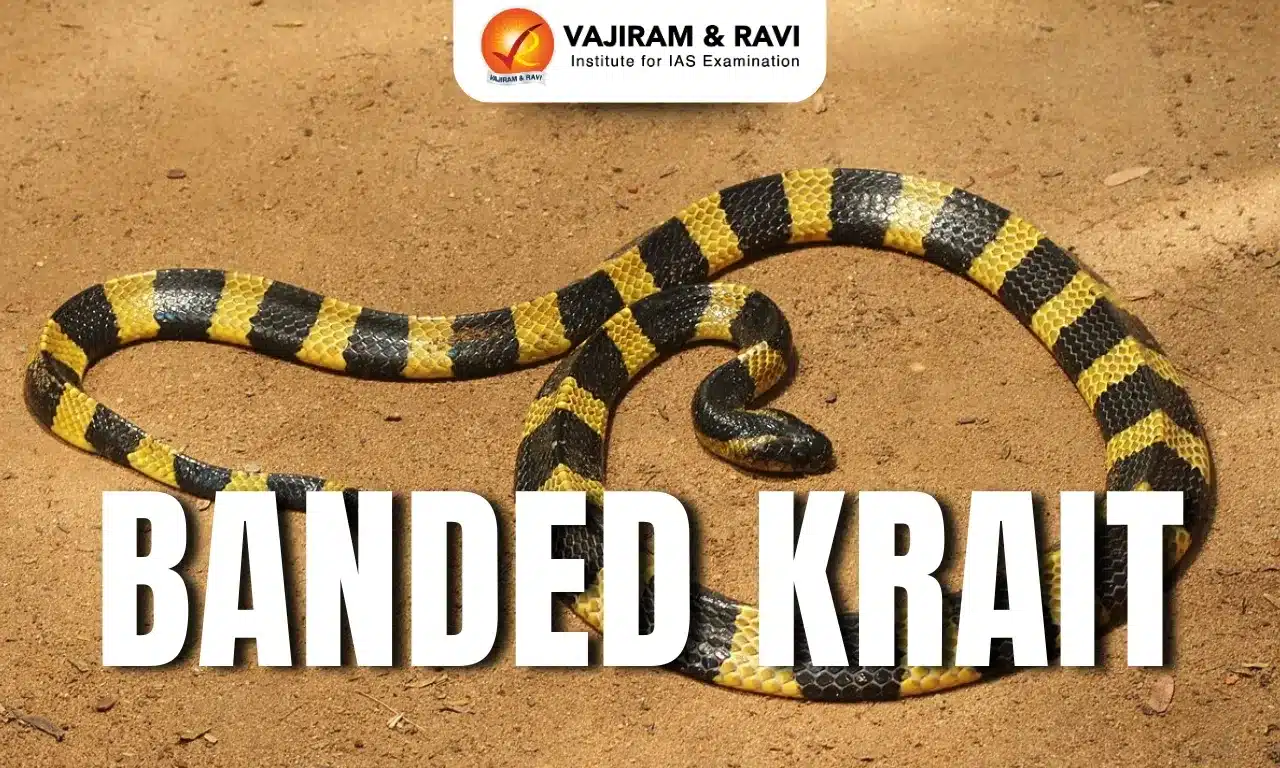
  • Part of the elapid family, which includes cobras and mambas, the Banded Krait is easily recognizable by its vibrant yellow and black crossbands, giving it a distinctive appearance.
  • Distribution: These snakes have been recorded eastwards from central India through Bangladesh, Myanmar, Cambodia, Thailand, Laos, Vietnam, and southern China (including Hong Kong) to Malaysia and the main Indonesian islands of Borneo (Java and Sumatra), as well as Singapore.

Banded Krait Habitat

  • It primarily inhabits wetlands, forests, and areas near water bodies.
  • They inhabit termite mounds and rodent holes close to water and often live near human settlements, especially villages, because of their supply of rodents and water.

Banded Krait Features

  • It is a large snake, typically growing between 5 to 7 feet.
  • It has a slender, cylindrical body with smooth scales. 
  • The alternating bands of yellow and black encircle its body entirely, making it one of the most visually striking snakes in the region.
  • The head is slightly broader than its neck, with a rounded snout and small eyes.
  • Though its venom is highly potent, it is known to be shy and nonaggressive, often avoiding human contact unless provoked.
  • Banded kraits are carnivores and feed mainly on other snakes.

Banded Krait Conservation Status

It is classified as 'Least Concern' under the IUCN Red List.

Source: HT

Banded Krait FAQs

Q1: To which family does the Banded Krait belong?

Ans: It belongs to the elapid family, which includes cobras and mambas.

Q2: How can the Banded Krait be visually identified?

Ans: By its alternating yellow and black crossbands encircling its entire body.

Q3: Is the banded krait venomous?

Ans: It is a highly venomous snake.

Q4: Banded Krait is native to which regions?

Ans: It is native to South and Southeast Asia.

Q5: What is the conservation status of the Banded Krait on the IUCN Red List?

Ans: Least Concern.

Spinal Muscular Atrophy

Spinal Muscular Atrophy

Spinal Muscular Atrophy Latest News

Recently, Abu Dhabi’s Sheikh Khalifa Medical City has become the first hospital globally to administer ITVISMA, a one-time gene therapy for spinal muscular atrophy (SMA).

About Spinal Muscular Atrophy

  • It is a rare and progressive neuromuscular disorder that leads to muscle weakness and can cause life-threatening complications. 
  • It is a debilitating genetic condition which affects motor neurons that control movement, and leads to progressive muscle weakening.
  • Cause: Most forms of SMA are caused by mutations of the survival motor neuron 1 gene (SMN1) on the fifth chromosome, resulting in insufficient expression levels of the SMN protein.
  • Types of SMA: There are five subtypes of SMA- type 0, 1, 2, 3, 4. Healthcare providers classify them based on the age of onset, as well as the severity and life expectancy.

Symptoms of Spinal Muscular Atrophy

  • Its symptoms vary and may be mild or disabling, but involve a weakness of the muscles that control movement.
  • The weakness in SMA tends to be more severe in the muscles that are close to the center of your body than in the muscles farther away from your body’s center.
  • Treatment: Unfortunately, there isn’t a cure for SMA. Treatment for SMA mainly seeks to manage symptoms and prevent complications. 

Source: DD News 

Spinal Muscular Atrophy FAQs

Q1: What is Spinal Muscular Atrophy (SMA)?

Ans: A genetic disorder affecting muscle movement

Q2: What causes SMA?

Ans: Mutation in SMN1 gene

Enquire Now