Aryabhata

Aryabhata

Aryabhata Latest News

50 Years Since the Launch of Aryabhata – India’s First Satellite

About Aryabhata

  • Aryabhata was India’s first indigenously-built satellite, named after the ancient Indian mathematician and astronomer Aryabhata, who lived in the 5th century CE.
  • It was launched on April 19, 1975, from Kapustin Yar, a Soviet launch site, with the help of the Soviet Union.
  • By launching Aryabhata, India joined an elite club of 11 countries capable of sending satellites into orbit, including the USA, USSR, UK, France, China, West Germany, Australia, Canada, Japan, and Italy.
  • Aryabhata was designed to conduct experiments in solar physics and X-ray astronomy.
  • Although the experiments faced a power failure after five days, Aryabhata successfully made initial X-ray observations and continued transmitting data for a few more days.
  • Aryabhata eventually re-entered Earth’s atmosphere on February 10, 1992, giving it an orbital lifespan of nearly 17 years.
  • The satellite was unnamed until shortly before the launch. Prime Minister Indira Gandhi selected ‘Aryabhata’ from a shortlist that included ‘Mitra’ and ‘Jawahar’, reflecting cultural and diplomatic values.
  • India’s Posts and Telegraphs Department issued a special commemorative postal stamp within hours of the launch.
  • The Soviet Union issued its own Aryabhata commemorative stamp in 1976, recognising the spirit of scientific cooperation.

Source: TH

Aryabhata FAQs

Q1: Who was Aryabhata?

Ans: Aryabhata was an ancient Indian mathematician and astronomer, best known for his work Aryabhatiya, which introduced concepts like the place value system and the approximation of π (pi).

Q2: When was Aryabhata’s satellite launched by India?

Ans: Aryabhata, India’s first satellite, was launched on April 19, 1975, from the Soviet Union’s Kapustin Yar launch site using a Kosmos-3M launch vehicle.

Q3: What is Aryabhata’s contribution to mathematics?

Ans: Aryabhata introduced the concept of zero, worked on trigonometry, algebra, and arithmetic, and calculated the value of π (pi) as 3.1416, remarkably close to the true value.

Pir Panjal Railway Tunnel

Pir Panjal Railway Tunnel

Pir Panjal Railway Tunnel Latest News

The Udhampur-Srinagar-Baramulla Rail Link (USBRL) is a historic infrastructure project enhancing Jammu & Kashmir’s connectivity with mainland India. Its completion, marked by the Katra–Sangaldan section, ensures year-round, faster rail access to the Kashmir Valley.

About Pir Panjal Railway Tunnel

  • The Pir Panjal Railway Tunnel, also known as the Banihal Railway Tunnel, is currently India’s longest transportation railway tunnel, measuring 11.2 kilometres in length.
  • It is part of the Udhampur–Srinagar–Baramulla Rail Link (USBRL) and connects Quazigund in the Kashmir Valley with Banihal in Jammu, passing under the Pir Panjal mountain range.
  • It is the only broad-gauge mountain railway tunnel in the country and part of the USBRL’s 202-km core segment.
  • The Pir Panjal Range, part of the Lesser Himalayas, spans across Himachal Pradesh and Jammu & Kashmir.
  • Key peaks: Notable peaks include Indrasan (6,221 m) and Deo Tibba (6,001 m).
  • Hydrological significance: It separates the Beas and Ravi Rivers from the Chenab River and is the origin zone for tributaries of the Jhelum and Indus Rivers.
  • Strategic passes:
    • The Mughal Road traverses the Pir Panjal Pass (3,490 m) to link Poonch and Rajouri with Srinagar.
    • The Jawahar Tunnel (2.5 km) under Banihal Pass connects Banihal to Qazigund.
  • Tourism and History: The region hosts famous destinations like Gulmarg, and was historically an ancient trade route connecting Kashmir with mainland India.

Source: IE

Pir Panjal Railway Tunnel FAQs

Q1: What is the Pir Panjal Railway Tunnel?

Ans: The Pir Panjal Railway Tunnel, also known as the Banihal Railway Tunnel, is India’s longest railway tunnel and is located in Jammu and Kashmir.

Q2: How long is the Pir Panjal Tunnel?

Ans: The Pir Panjal Tunnel is approximately 11.2 km long, connecting Quazigund to Banihal in the Himalayan region.

Q3: Why is the Pir Panjal Tunnel significant?

Ans: The tunnel ensures year-round connectivity between the Kashmir Valley and the rest of India, bypassing the snow-prone Jawahar Tunnel and reducing travel time.

Enzymes and Coenzymes

Enzymes and Coenzymes

Enzymes and Coenzymes Latest News

The recent issue of Nature highlighted biofortified rice varieties, a major breakthrough from CAS, Beijing, under the title ‘Gene-edited plants make the jump from farm to factory’.

About Enzymes

  • Enzymes are proteins that catalyse biochemical reactions, enhancing the efficiency of cellular metabolism.
  • Many enzymes require helper molecules for proper function. These are called cofactors, and when they are organic molecules, they are termed coenzymes.
  • Coenzymes bind to enzymes and support their activity, playing a crucial role in various metabolic pathways.

What is Coenzyme Q (Ubiquinone)?

  • Coenzyme Q (CoQ), also known as ubiquinone, is an organic antioxidant molecule with multiple isoprene units.
  • It exists in ten different forms, from CoQ1 to CoQ10, and is lipid-soluble but water-insoluble.
  • Coenzyme Q is vital for mitochondrial function and is found in every cell membrane, where it aids cellular energy production.

Significance of CoQ9 in Plants

  • CoQ9, containing nine isoprene units, is predominantly produced in cereal crops such as wheat, rice, oats, barley, corn, rye, and millet.
  • It is also found in bamboobarley, and flowering plants like cinnamon, avocado, and pepper.

Importance of CoQ10 in Human Health

  • CoQ10 is an essential part of the mitochondrial electron transport chain, generating the majority of the body’s cellular energy.
  • Organs like the heart, which have high energy demands, contain high levels of CoQ10.
  • Although CoQ9 is available in staple foods, humans require additional CoQ10 due to genetic factorsaging, and neurological disorders.

Source: TH

Enzymes and Coenzymes FAQs

Q1: What are enzymes?

Ans: Enzymes are biological catalysts that speed up chemical reactions in living organisms without being consumed in the process.

Q2: What are coenzymes?

Ans: Coenzymes are organic, non-protein molecules that bind to enzymes and assist them in catalysing reactions, often derived from vitamins.

Q3: How do enzymes and coenzymes differ?

Ans: Enzymes are proteins that directly catalyse reactions, while coenzymes assist enzymes by carrying chemical groups or electrons from one enzyme to another.

K2-18b

K2-18b

K2-18b Latest News

In 2025, scientists detected the presence of either dimethyl sulphide (DMS) or dimethyl disulphide (DMDS) in the atmosphere of K2-18b.

What is K2-18b?

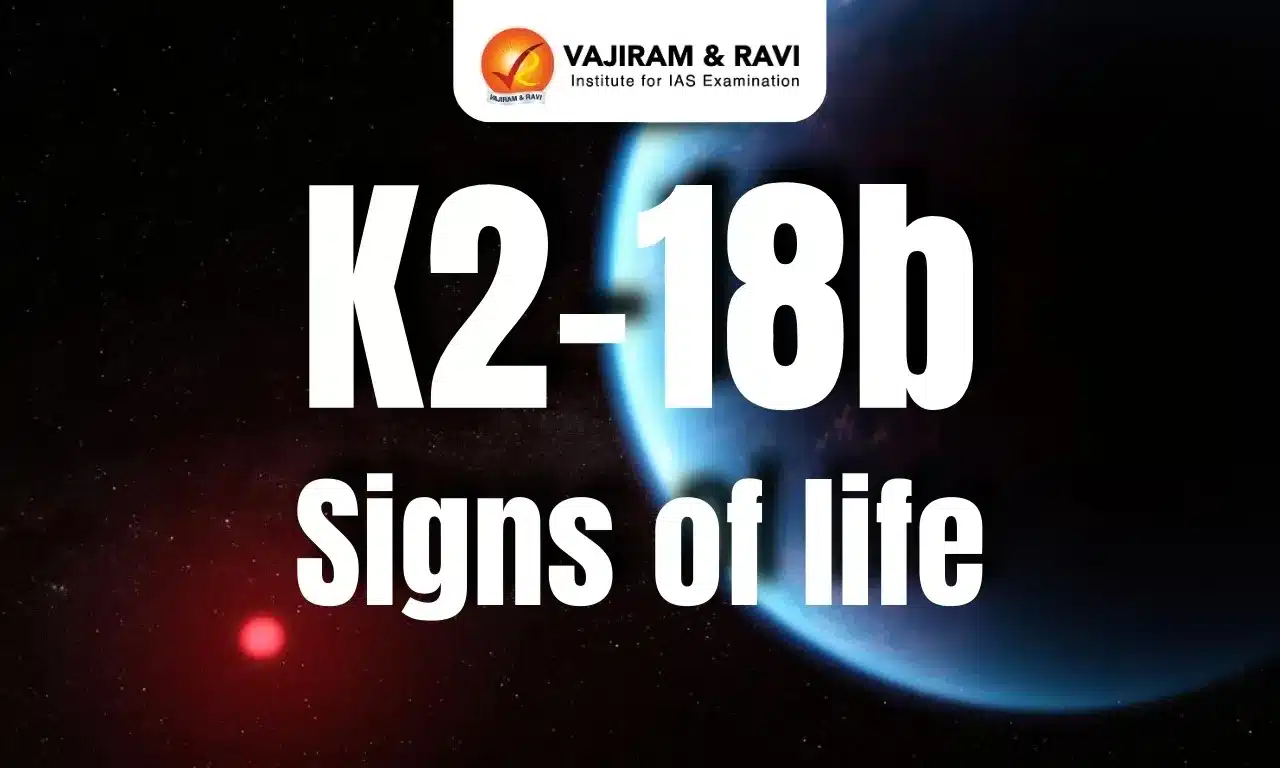
  • K2-18b is an exoplanet (a planet located outside our solar system) situated 124 light-years away from Earth in the constellation Leo, orbiting a star called K2-18.
  • It was discovered in 2015 by the Kepler Space Telescope.
  • K2-18b is 5.2 times wider and around 9 times more massive than Earth, suggesting it may possess a hydrogen-rich atmosphere.
  • The planet receives a similar level of stellar radiation from its star as Earth does from the Sun, hinting at the possibility of habitable surface conditions.

Atmospheric Discoveries

  • In 2019, the Hubble Space Telescope detected water vapour in the atmosphere of K2-18b.
  • Later, the James Webb Space Telescope (JWST) found the presence of carbon dioxide (CO₂) and methane (CH₄).
  • The absence of ammonia along with CO₂ and CH₄ in a hydrogen-rich atmosphere is significant because it may indicate the possible presence of a liquid water ocean.

About Dimethyl Sulphide (DMS)

  • DMS is considered a potential biomarker because, on Earth, it is mostly produced by phytoplankton in the oceans.
  • DMS is formed when phytoplankton die and enzymes break down dimethylsulphoniopropionate.
  • It is also released when soil bacteria decompose plant matter and in trace amounts during volcanic eruptions.
  • 2015 study found that 76% of soil bacteria on Earth contain a gene that produces DMS, reinforcing its biological origin.

Source: TH

K2-18b FAQs

Q1: What is K2-18b?

Ans: K2-18b is an exoplanet located about 120 light-years away from Earth in the Leo constellation, discovered by NASA's Kepler Space Telescope.

Q2: Why is K2-18b significant?

Ans: K2-18b lies in the habitable zone of its star and is one of the first exoplanets where water vapour was detected in its atmosphere, raising the possibility of supporting life.

Q3: What type of planet is K2-18b?

Ans: K2-18b is classified as a "super-Earth" or "mini-Neptune", meaning it is larger than Earth but smaller than Uranus or Neptune.

HEALD Initiative

HEALD Initiative

HEALD Initiative Latest News

The Union Home Minister recently unveiled the HEALD Initiative to combat liver diseases across India.

About HEALD Initiative

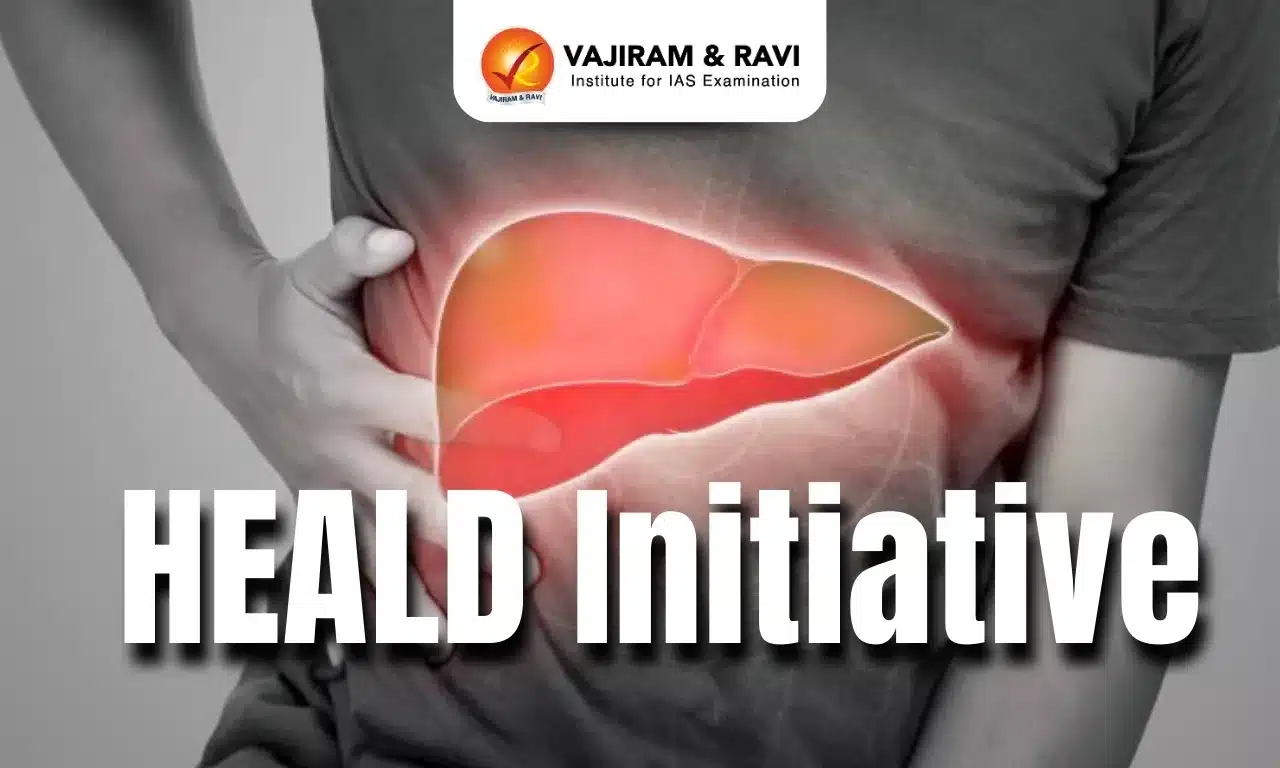
  • HEALD (Healthy Liver Education and Alcohol-associated Liver Disease Prevention) is a first-of-its-kind nationwide initiative aimed at tackling liver disease in India .
  • It was launched by the Institute of Liver and Biliary Sciences (ILBS). 
  • HEALD is envisioned as a multi-sectoral program combining public education, early screening, psychological and medical treatment of alcohol use disorder, and liver disease management.
  • The initiative helps to tackle the disease through awareness, prevention, rehabilitation, and policy integration.
  • It also aims to reduce the stigma surrounding alcohol dependence by integrating mental health support, community outreach, and policy reform into liver care.
  • The initiative is grounded in the principle that "behind every failed liver lies a missed opportunity" -- and HEALD seeks to ensure no such opportunity is lost again.

Key Facts about Institute of Liver and Biliary Sciences

  • It is a tertiary care, super-specialty hospital located in Vasant Kunj, New Delhi.
  • It was established in 2009 by the Government of the National Capital Territory of Delhi as an autonomous institute under the Societies Registration Act, 1860. 
  • The ILBS is a mono-super speciality hospital, which means that it provides primarily liver and biliary care.
  • This focus on a single organ system allows the institute to achieve a high degree of expertise in the diagnosis and treatment of liver and biliary diseases.
  • The hospital also has a dedicated research center.

SourceBS

HEALD Initiative FAQs

Q1: What is the HEALD Initiative?

Ans: HEALD (Healthy Liver Education and Alcohol-associated Liver Disease Prevention) is a first-of-its-kind nationwide initiative aimed at tackling liver disease in India.

Q2: Which institution launched the HEALD initiative?

Ans: Institute of Liver and Biliary Sciences (ILBS)

Q3: What is a key focus of the HEALD initiative?

Ans: Tackling liver disease through education, prevention, and policy integration.

Stem Cell Therapy for Parkinson’s Disease

Stem Cell Therapy for Parkinson’s Disease

Stem Cell Therapy for Parkinson’s Disease Latest News

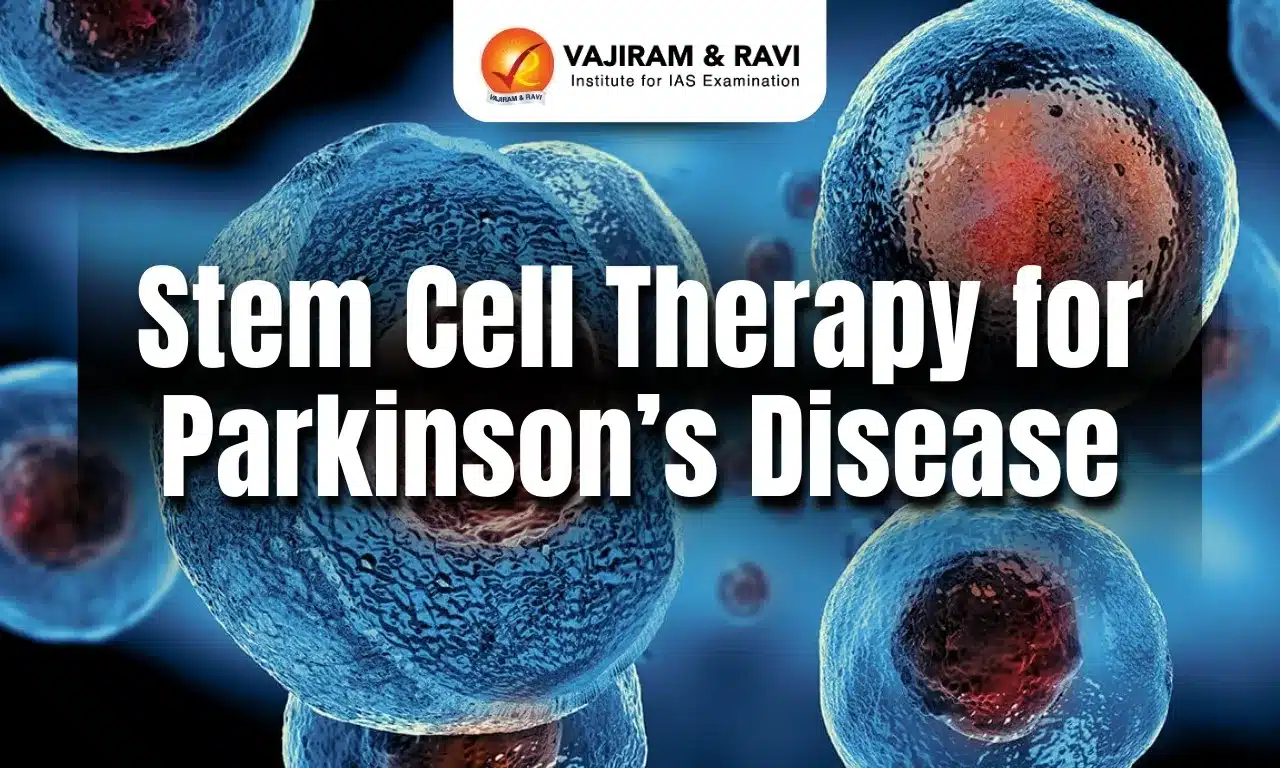
Researchers at Kyoto University conducted a Phase I/II clinical trial to assess the safety and side effects of stem cell therapy using dopaminergic progenitors derived from human induced pluripotent stem cells (iPSCs).

About Parkinson’s Disease

  • Parkinson’s disease is a neurodegenerative disorder that causes the progressive loss of dopamine-producing neurons in the brain.
  • Dopamine is a critical neurotransmitter responsible for regulating motor functions.
  • The conventional treatment mainly involves dopaminergic medications, but these do not restore lost neurons and may have long-term side effects.

Induced Pluripotent Stem Cells (iPSCs)

  • iPSCs are pluripotent stem cells generated from adult somatic cells (like skin or blood).
  • They are reprogrammed to an embryonic-like state, allowing them to develop into any human cell type.
  • Used in:
    • Diabetes (converted into beta cells),
    • Leukaemia (to generate new blood cells),
    • Neurological diseases.
  • iPSCs are valuable in drug testingdisease modelling, and transplantation medicine.

Stem Cells

  • Stem cells are undifferentiated primitive cells capable of developing into specialised cells like blood, muscle, or liver cells.
  • Their ability to self-renew and differentiate makes them vital for regeneration and repair.
  • Found in:
    • Bone marrow,
    • Gastrointestinal tract (divide regularly),
    • Less active in organs like the pancreas or the heart (divide under specific conditions).

Types of Stem Cells: Embryonic vs Adult Stem Cells

Feature

Embryonic Stem Cells

Adult Stem Cells

Potency

Pluripotent (any body cell)

Multipotent (limited types)

Source

Embryo (blastocyst stage)

Mature tissues (e.g., bone marrow)

Growth in lab

Can be easily cultured

Difficult to isolate & expand

Ethical concerns

High

Low

Source: TH

Stem Cell Therapy for Parkinson’s Disease FAQs

Q1: What is Parkinson’s Disease?

Ans: Parkinson’s Disease is a neurodegenerative disorder characterised by tremors, rigidity, slow movement, and balance problems, caused by the loss of dopamine-producing neurons in the brain.

Q2: How does stem cell therapy help in Parkinson’s Disease?

Ans: Stem cell therapy aims to replace lost dopamine-producing neurons by transplanting lab-grown cells derived from pluripotent stem cells into the patient's brain.

Q3: What type of stem cells are used for Parkinson's therapy?

Ans: Induced Pluripotent Stem Cells (iPSCs) and embryonic stem cells (ESCs) are commonly used for research and experimental therapies in Parkinson's Disease.

Davis Strait Proto-Microcontinent

Davis Strait Proto-Microcontinent

Davis Strait Proto-Microcontinent Latest News

A hidden landmass called the Davis Strait proto-microcontinent has been found beneath the icy waters of the Davis Strait, the body of water that separates Canada’s Baffin Island from Greenland.

About Davis Strait Proto-Microcontinent

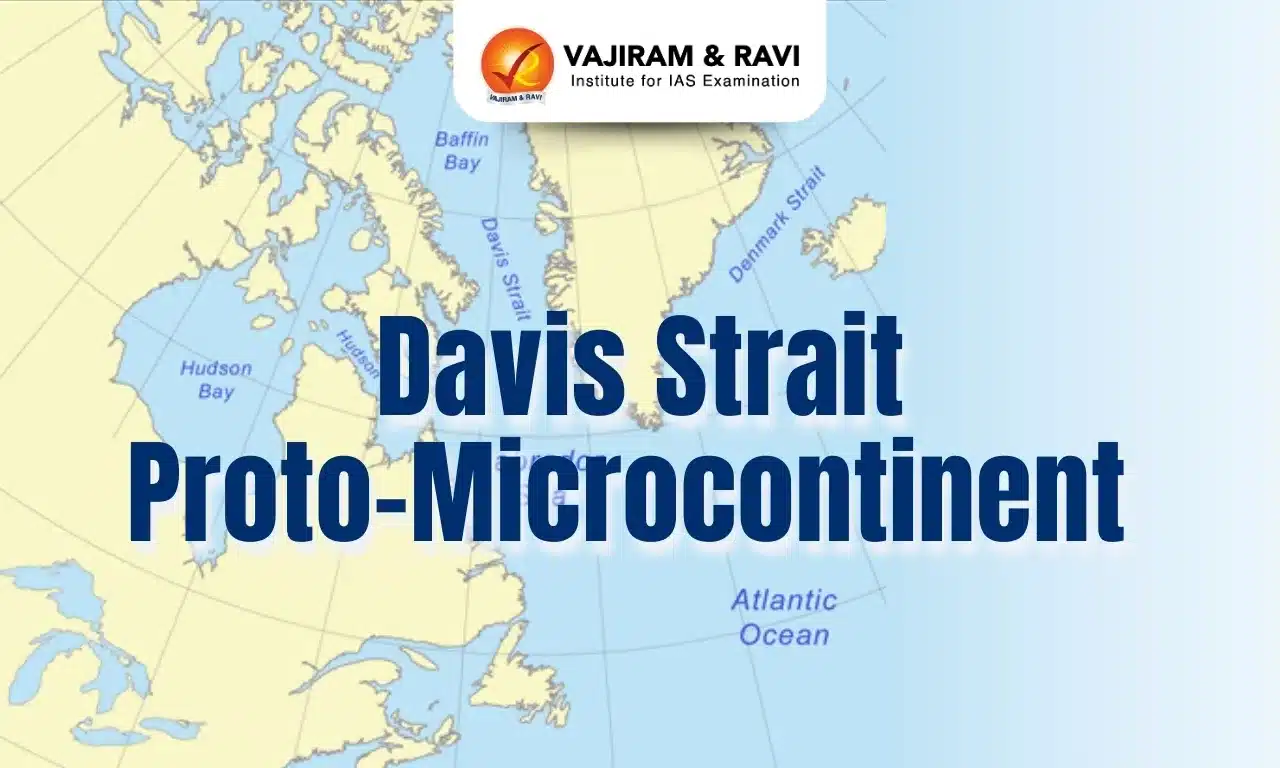
  • It is a newly discovered submerged microcontinent located around the Davis Strait, a large stretch of water located between Canada’s Baffin Island and Greenland.
  • It has been named the Davis Strait proto-microcontinent since it formed owing to the tectonic evolution of the Davis Strait.
    • The strait was formed millions of years ago when the tectonic plates between the two islands shifted, reconfiguring the Earth’s crust.
    • This resulted in the formation of a thick continental crust in the ocean, which has now been declared a newly discovered primitive microcontinent.
  • The microcontinent is 19–24 km thick thinned continental crust and is surrounded by two narrow bands of thin (15–17 km) continental crust. 
  • This crust separates it from mainland Greenland and Baffin Island.

Key Facts about Davis Strait

  • It is a bay of the northern Atlantic Ocean, lying between southeastern Baffin Island (Canada) and southwestern Greenland.
  • The strait separates the depths of Baffin Bay (north) from those of the Labrador Sea (south) and forms part of the Northwest Passage, a route through the Canadian Arctic Archipelago linking the Atlantic and Arctic oceans. 
  • It is approximately 400 miles (650 km) north to south and 200 to 400 miles wide. 
  • It is one of the broadest straits in the world.
  • The Davis Strait is home to complex geological formations such as underwater basins and ridges that were created due to the strike-slip faulting along the Ungava Fault Zone around 45 to 62 million years ago. 
  • It triggered plate tectonic movements in the Labrador Sea and the Baffin Bay, leading to the formation of the Strait.

SourceN18

Davis Strait Proto-Microcontinent FAQs

Q1: Where is the Davis Strait located?

Ans: The Davis Strait is located between Baffin Island in Canada and Greenland, connecting Baffin Bay to the Labrador Sea.

Q2: Which two oceans are connected by Davis Strait?

Ans: The Davis Strait connects the Arctic Ocean and the Atlantic Ocean

Q3: What geological process led to the formation of the Davis Strait proto-microcontinent?

Ans: Tectonic plate shifting

India Raises Concerns Over U.S. Visa Revocations Affecting Indian Students

India Raises Concerns Over U.S. Visa Revocations Affecting Indian Students

What’s in Today’s Article?

  • US Visa Revocations Affecting Indian Students Latest News
  • Background of the Issue
  • Implementation of ‘Catch and Revoke’
  • Indian Students Among the First Affected
  • Human Rights and Legal Concerns
  • Diplomatic Outlook and Upcoming Visit
  • US Visa Revocations Affecting Indian Students FAQs

US Visa Revocations Affecting Indian Students Latest News

  • India has formally expressed its concerns over the revocation of visas of Indian students studying in the United States, through diplomatic channels. 
  • This comes just days ahead of a high-level visit by the U.S. Vice President J.D. Vance and other senior U.S. officials to India on April 21, 2025.

Background of the Issue

  • Large-scale visa revocations:
    • A recent survey by the American Immigration Lawyers Association (AILA) found that 50% of the visa revocation notices sent in the past two months were received by Indian students.
    • Other affected nationalities include students from China (14%), South Korea, Nepal, and Bangladesh.
  • Denial of targeting by U.S. authorities:
    • U.S. officials denied any discriminatory targeting, stating that the “continuous vetting and visa revocation actions” apply to all nationalities equally.
    • The revocations are part of a new AI-assisted initiative called “Catch and Revoke”, aimed at identifying visa holders with views perceived as inimical to U.S. foreign policy, especially through social media monitoring.

Implementation of ‘Catch and Revoke’

  • AI-powered surveillance:
    • Initiated by U.S. Secretary of State Marco Rubio, the program uses AI to monitor social media and assess the political views of students.
    • It is linked to the Student and Exchange Visitor Information System (SEVIS), which records visa status.
  • Homeland security crackdown: The Department of Homeland Security (DHS) is also terminating the status of students whose names appear in police databases, even for minor infractions or as victims of crime.

Indian Students Among the First Affected

  • Two Indian students, Ranjani Srinivasan and Badar Khan Suri, were among the first to be asked to “self-deport”.
  • Many other Indian students have since approached courts for the restoration of SEVIS status.
  • The Ministry of External Affairs (MEA) initially cautioned Indian students to follow U.S. laws, but is now actively assisting affected students through Indian embassies and missions.

Human Rights and Legal Concerns

  • Unjust revocations:
    • The AILA report noted many revocations were based on minor offences such as traffic violations or campus infractions.
    • In some extreme cases, even victims of domestic abuse had their visas cancelled due to their names appearing in police reports.
    • Only 2 out of 327 cases involved any alleged political activity.
  • Expert criticism: AILA Executive Director Ben Johnson highlighted the economic and scientific contributions of international students, warning that such actions threaten U.S. national interest.

Diplomatic Outlook and Upcoming Visit

  • High-level meetings in India:
    • U.S. Vice President J.D. Vance, along with Assistant Secretary of State Ricky Gill, will be in Delhi for bilateral talks.
    • Prime Minister Narendra Modi is expected to host Mr. Vance.
    • Though MEA Spokesperson Randhir Jaiswal confirmed that all bilateral issues will be discussed, he did not specify whether the visa issue or U.S. tariffs will be directly raised.
  • Engagement beyond Delhi:
    • Mr. Vance is also scheduled to visit Jaipur and Agra.
    • U.S. State Department officials will participate in the India-U.S. Forum, organized by the Ananta Centre in collaboration with MEA.

US Visa Revocations Affecting Indian Students FAQs

Q1. What is the SEVIS system, and why has it been in the news recently?

Ans. The Student and Exchange Visitor Information System (SEVIS) is a U.S. government database tracking international students, and it has been in the news due to mass visa revocations, with a significant number affecting Indian students.

Q2. What is the 'Catch and Revoke' program launched by the U.S., and what are its implications?

Ans. The 'Catch and Revoke' program is an AI-assisted U.S. initiative to identify and cancel visas of students with views deemed hostile to U.S. foreign policy, raising concerns over civil liberties and racial profiling.

Q3. How has India responded to the recent visa revocations of its students in the U.S.?

Ans. India has raised concerns diplomatically, and the MEA is actively supporting affected students through embassies and missions.

Q4. Discuss the significance of the issue in the context of India-U.S. bilateral relations.

Ans. The visa revocation issue could strain India-U.S. ties, especially in areas of educational exchange, diaspora engagement, and soft power diplomacy.

Q5. What broader concerns have been highlighted by the AILA report regarding the visa revocations?

Ans. The AILA report highlights that many visa revocations were based on minor infractions or flawed police records, risking the academic future and legal rights of international students.

Source: TH

INS Sunayna

INS Sunayna

INS Sunayna Latest News

INS Sunayna, currently on deployment to Africa as Indian Ocean Ship IOS SAGAR arrived at Nacala Port, Mozambique, recently.

About INS Sunayna

  • It is the second Saryu-class offshore patrol vessel of the Indian Navy.
  • It was designed and constructed indigenously by the Goa Shipyard Limited.
  • It was commissioned at Kochi on 15th October 2013. 
  • It is based under Southern Naval Command.
  • It is designed to undertake fleet support operations, coastal and offshore patrolling, ocean surveillance and monitoring of sea lines of communications and offshore assets, and escort duties.

INS Sunayna Features

  • Two diesel engines propel INS Sunayna and enable it to achieve speeds in excess of 25 knots.
  • The ship also has an automatic power management system and is fitted with the latest navigation, communication, and electronic support systems.
  • The armament fit includes one 76 mm gun with an electro-optic fire control system, Close-in Weapon Systems (CIWS) and CHAFF launchers.
  • It can also carry a helicopter.

What is IOS SAGAR?

  • IOS SAGAR is a pioneering effort aimed at bringing together the navies and maritime agencies of the Southwest Indian Ocean Region (IOR) on an Indian Naval platform. 
  • The mission will serve as an opportunity to provide comprehensive training to sea-riders from the Friendly Foreign Nations (FFNs) and marks an unprecedented collaboration in maritime security.
  • It is a unique mission based on the Government of India’s regional initiative of maritime collaboration titled SAGAR, which stands for Security and Growth for All in the Region. 
  • IOS SAGAR also emphasises India's role as a "preferred security partner" and the "first responder" in the IOR.
  • The tagline of IOS SAGAR is 'One Ocean One Mission'.

SourcePIB

INS Sunayna FAQs

Q1: Which shipyard was responsible for the design and construction of INS Sunayna?

Ans: Goa Shipyard Limited

Q2: Under which Naval Command is INS Sunayna based?

Ans: Southern Naval Command

Q3: What does the acronym SAGAR stand for in the context of India’s maritime initiative?

Ans: Security and Growth for All in the Region

Criminalisation of Civil Disputes: Supreme Court’s Concern, Causes, and Solutions

Criminalisation of Civil Disputes: Supreme Court’s Concern, Causes, and Solutions

What’s in Today’s Article?

  • Criminalisation of Civil Disputes Latest News
  • CJI's Remarks on Converting Civil Disputes into Criminal Cases
  • Modus Operandi of Converting Civil Disputes into Criminal Cases
  • Reasons Behind the Shift to Criminal Cases
  • Courts' Stance on Civil vs. Criminal Disputes
  • Way Forward: Court's Recommendations to Curb Abuse of Criminal Law
  • Criminalisation of Civil Disputes FAQ’s

Criminalisation of Civil Disputes Latest News

  • Chief Justice of India Sanjiv Khanna recently criticized the Uttar Pradesh government for the increasing practice of converting routine civil disputes into criminal cases. 
  • His remarks came during a hearing on an appeal by two individuals involved in a cheque bounce case, who were additionally charged with serious criminal offenses such as breach of trust, intimidation, and criminal conspiracy. 
  • The Chief Justice expressed concern over the misuse of criminal law to pressurize parties in civil matters.

CJI's Remarks on Converting Civil Disputes into Criminal Cases

  • Chief Justice of India Sanjiv Khanna expressed strong disapproval of the growing trend of converting civil disputes into criminal cases, particularly in Uttar Pradesh. 
  • The Chief Justice emphasized that disputes over civil issues should not be treated as crimes and warned of a breakdown of the rule of law in the state.

Misuse of Criminal Law in Civil Matters

  • The Chief Justice highlighted the concerning trend where civil cases—such as cheque bounce, money recovery, contractual disagreements, inheritance issues, property partitions, and commercial transactions—are increasingly being framed as criminal cases. 
  • This shift often aims to apply pressure on the opposing party, undermining the fairness of the legal process.

Modus Operandi of Converting Civil Disputes into Criminal Cases

  • A common tactic in these cases is to accuse the opposing party of dishonest intentions from the outset of a civil arrangement, such as a loan, contract, or agreement. 
  • For example, if Mr. A lends money to Mr. B, and Mr. B fails to repay, the matter typically falls under civil law. 
  • However, Mr. A may claim that Mr. B never intended to repay the loan and obtained the money through deceit.
  • This leads to criminal charges under Section 420 (cheating) of the Indian Penal Code, now included under Section 318 of the Bharatiya Nyaya Sanhita (BNS).

Reasons Behind the Shift to Criminal Cases

  • Legal experts suggest that many individuals perceive civil law as an ineffective remedy due to the prolonged nature of civil litigation. 
  • This is particularly evident in family disputes, where extended legal battles often result in the breakdown of marriages or family relationships. 
  • There is also a belief that criminal cases can prompt quicker settlements. In some instances, people with influence or by incentivizing police officials get FIRs registered to pressure the opposing party.

Growing Backlog in Civil and Criminal Cases

  • As per the National Judicial Data Grid, there are currently over 1.08 crore civil cases pending in District Courts across India, with more than 68% of these cases being older than one year. 
  • Additionally, out of the 4.52 crore total pending cases, 76% (3.44 crore) are criminal cases.

Courts' Stance on Civil vs. Criminal Disputes

  • The Supreme Court has consistently cautioned against the misuse of criminal law for matters that are essentially civil in nature. 
  • In January 2000, in the case of G. Sagar Suri vs. State of UP, the Court warned that criminal proceedings should not be used as a shortcut for civil remedies. 
  • It emphasized that criminal courts must exercise great caution before issuing processes, as criminal charges carry serious consequences for the accused.

Court's Observations in C. Subbiah @ Kadambur Jayaraj vs. The Superintendent of Police (May 2024)

  • The Supreme Court remarked, "It cannot be doubted that a dispute which is purely civil in nature has been given a colour of criminal prosecution alleging fraud and criminal breach of trust by misusing the tool of criminal law."
  • This highlights the growing concern over the misuse of criminal law in civil matters.

Way Forward: Court's Recommendations to Curb Abuse of Criminal Law

  • In the Indian Oil Corpn. vs. NEPC India Ltd. (2006) case, the SC emphasized that while individuals with legitimate grievances should have access to criminal law remedies.
  • However, those who initiate or continue criminal proceedings knowing they are unwarranted should be held accountable. 
  • The Court suggested that such complainants should face legal consequences after the criminal proceedings are found to be baseless and civil remedies should be pursued instead.

Practical Solution: Use of Section 250 Cr.P.C.

  • To prevent the misuse of criminal law, the Court recommended a practical solution: frequent use of Section 250 of the Criminal Procedure Code (Cr.P.C.)
    • Section 395 of the Bharatiya Nagarik Suraksha Sanhita (BNSS), 2023, deals with orders to pay compensation to victims of crimes.
  • This section allows courts to grant compensation to innocent parties who are subjected to unwarranted accusations. 
  • The Court proposed that judges should exercise this power more often when they discern malice, frivolousness, or ulterior motives behind criminal complaints. 
  • This would help deter unnecessary prosecutions and prevent harassment of innocent individuals.

Criminalisation of Civil Disputes FAQ’s

Q1. What is Criminalisation of civil disputes?

Ans. It refers to using criminal law to settle civil issues like loans, contracts, or inheritance through pressure or intimidation.

Q2. What did the Chief Justice say about civil disputes?

Ans. CJI criticized converting civil issues into criminal cases, calling it a threat to rule of law, especially in Uttar Pradesh.

Q3. Why are civil disputes turned into criminal cases?

Ans. Due to delayed civil trials, people misuse criminal charges to pressure opponents into quicker settlements or compromises.

Q4. What has the Supreme Court ruled on this misuse?

Ans. The Court warned against criminal courts being used as shortcuts for civil remedies and stressed cautious process issuance.

Q5. What is the court's recommended solution?

Ans. Frequent application of BNSS Section 395 (formerly CrPC 250) to penalize false complainants and prevent legal harassment.

Source: TH | AL | B&B

India’s First Prototype Fast Breeder Reactor (PFBR)

India’s First Prototype Fast Breeder Reactor

India’s First Prototype Fast Breeder Reactor Latest News

India’s first Prototype Fast Breeder Reactor (PFBR) in Kalpakkam, Tamil Nadu is likely to be commissioned next year, marking the second stage of India's three-stage nuclear programme.

About India’s First Prototype Fast Breeder Reactor

  • It is a 500 MWe sodium-cooled reactor located in Kalpakkam, Tamil Nadu.
  • The PFBR was developed by BHAVINI (Bharatiya Nabhikiya Vidyut Nigam Limited), a government enterprise set up in 2003 under the Department of Atomic Energy (DAE) to focus on fast breeder reactors.
  • Construction began in 2004 and the reactor was originally expected to be completed in September 2010, but faced a series of delays.
  • Unlike traditional nuclear reactors, the PFBR uses fast neutrons for energy generation and employs liquid sodium as a coolant instead of water.
  • The innovative design enables the reactor to breed more fuel than it consumes, offering a sustainable solution to India’s growing energy demands.
  • The PFBR is powered by plutonium and uranium-based mixed oxide fuel (MOX), which ensures high efficiency in power generation.
  • Its advanced sodium cooling system allows operation at higher temperatures, enhancing overall efficiency.
  • Additionally, the reactor incorporates robust safety features, including a strong containment structure and passive cooling systems that prevent overheating.

India's Three-Stage Nuclear Programme

  • India has adopted a three-stage nuclear power programme, with the long-term goal of deploying a thorium-based closed nuclear fuel cycle. 
  • The first stage involves the use of pressurised heavy water reactors (PHWRs), fuelled by natural uranium, and light water reactors. 
  • The second stage involves reprocessing used fuel from the first stage to recover the plutonium to fuel FBRs. 
  • In stage 3, Advanced Heavy Water Reactors (AHWRs) will burn thorium-plutonium fuels and breed fissile uranium-233.

SourceTOI

India’s first Prototype Fast Breeder Reactor FAQs

Q1: Where is India’s first Prototype Fast Breeder Reactor (PFBR) located?

Ans: Kalpakkam, Tamil Nadu

Q2: Which organization developed the PFBR?

Ans: Bharatiya Nabhikiya Vidyut Nigam Limited (BHAVINI)

Q3: What type of coolant is used in the PFBR?

Ans: Liquid sodium

K2-18b: Tracing the Possibility of Life Beyond Earth

K2-18b: Tracing the Possibility of Life Beyond Earth

What’s in Today’s Article?

  • Exoplanet Latest News
  • Introduction
  • Understanding K2-18b and Its Discovery
  • Hycean World Hypothesis and Atmospheric Composition
  • The Significance of Dimethyl Sulphide (DMS)
  • Caution Against Premature Conclusions
  • Challenges in Confirming Life on Exoplanets
  • Conclusion
  • K2-18b Exoplanet FAQs

Exoplanet Latest News

  • On April 17, an international research team published a paper in which it reported that the distant exoplanet K2-18b may be habitable.

Introduction

  • In a significant development in space science, an international research team has reported signs that exoplanet K2-18b, located 124 light-years away from Earth in the Leo constellation, may exhibit characteristics of a habitable world. 
  • The recent findings, based on data from the James Webb Space Telescope (JWST), suggest the presence of potential biomarkers in its atmosphere, sparking cautious optimism within the scientific community.

Understanding K2-18b and Its Discovery

  • K2-18b is a distant exoplanet discovered in 2015 by the Kepler telescope. It is about 5.2 times wider and nine times more massive than Earth. 
  • Orbiting its host star K2-18, the planet receives a comparable amount of stellar radiation as Earth receives from the Sun, making it a strong candidate for further habitability studies.
  • In 2019, NASA’s Hubble Space Telescope detected signs of water vapour in K2-18b’s atmosphere. 
  • Later, in 2023 and 2024, the James Webb Space Telescope provided stronger evidence of carbon dioxide and methane, essential components in the quest to find life-supporting planets.

Hycean World Hypothesis and Atmospheric Composition

  • Researchers theorize that K2-18b could be a Hycean world, a type of planet enveloped by a hydrogen-rich atmosphere and potentially hosting a liquid water ocean beneath. 
  • Computer simulations suggest that such worlds may possess moderate greenhouse conditions and even a stratosphere, despite their exotic environment.
  • The JWST has indicated the presence of carbon-based molecules like carbon oxides and even dimethyl sulphide (DMS) or dimethyl disulphide (DMDS). 
  • On Earth, DMS is primarily produced by marine phytoplankton, indicating that its presence in extra-terrestrial atmospheres could point to biological activity.

The Significance of Dimethyl Sulphide (DMS)

  • The detection of DMS or DMDS is considered the most exciting outcome of the K2-18b analysis. 
  • On Earth, DMS is almost exclusively of biological origin, released when oceanic phytoplankton decompose
  • It is also produced when bacteria break down plant matter. The detection of DMS in large quantities, up to 1,000 times higher than on Earth, suggests there may be an active production source on K2-18b's surface.
  • However, distinguishing between DMS and DMDS is complex due to their overlapping spectral signals
  • Moreover, the possibility of non-biological sources, such as volcanic eruptions or cometary chemistry, complicates direct interpretation.

Caution Against Premature Conclusions

  • Despite these intriguing findings, the scientific community urges caution. 
  • The JWST data have limitations, including detection thresholds and reliance on computer models that may not perfectly simulate unknown atmospheric dynamics.
  • There have been prior instances of premature claims in exoplanet studies. 
  • For instance, in 2024, researchers discovered that comet 67P/Churyumov-Gerasimenko contained DMS of abiotic origin, raising the possibility that DMS may not always be a biosignature.
  • Additionally, a U.S.-based study suggested K2-18b could be a "mini-Neptune" with a gas-rich envelope, not necessarily requiring biological processes to explain its chemical composition. 
  • Another reanalysis published in early 2025 challenged earlier findings, claiming there is no statistically significant evidence of carbon dioxide or DMS.

Challenges in Confirming Life on Exoplanets

  • Detecting potential life-supporting conditions from vast distances relies heavily on indirect evidence. 
  • These include signs of specific molecules, thermal conditions, and radiation levels. 
  • However, confirmation of extraterrestrial life would require direct detection, something that current technologies like JWST cannot provide conclusively.
  • Hence, while K2-18b remains a promising candidate, claims of it being habitable must be tempered with scientific rigour and scepticism.

Conclusion

  • K2-18b presents a compelling case for habitability, with its hydrogen-rich atmosphere, the presence of water vapour, and signs of carbon-based molecules. 
  • The potential detection of dimethyl sulphide lends further intrigue to this distant world. 
  • However, with conflicting studies and technological limitations, scientists continue to investigate the data with caution. 
  • K2-18b may or may not host life, but its study will undoubtedly enrich our understanding of planetary atmospheres and the parameters for life beyond Earth.

K2-18b Exoplanet FAQs

Q1. Where is K2-18b located?

Ans. It is located 124 light-years away in the constellation Leo.

Q2. What makes K2-18b a potential candidate for life?

Ans. It has a hydrogen-rich atmosphere and signs of water vapour, carbon dioxide, and possibly dimethyl sulphide.

Q3. What is the significance of detecting DMS on K2-18b?

Ans. On Earth, DMS is primarily produced by marine life, making it a potential biomarker.

Q4. Has K2-18b been confirmed as habitable?

Ans. No, scientists have not confirmed it as habitable; current findings only suggest possible life-supporting conditions.

Q5. What challenges exist in confirming life on K2-18b?

Ans. Instrumental limits, model uncertainties, and alternative non-biological explanations make confirmation difficult.

Source : TH

Ride-Hailing in India: BluSmart Exit, Subscription Models, and Legal Challenges Reshape Market

Ride-Hailing in India: BluSmart Exit, Subscription Models, and Legal Challenges Reshape Market

What’s in Today’s Article?

  • Ride-Hailing Market in India Latest News
  • BluSmart's Uncertain Future: Key Developments
  • Winners from BluSmart’s Exit
  • Legal Hurdles Facing India’s Ride-Hailing Sector
  • Growth Potential Amid Legal Uncertainty
  • Ride-Hailing market in India FAQ’s

Ride-Hailing Market in India Latest News

  • India’s $1-billion ride-hailing market is undergoing major disruption. BluSmart, a leading electric cab service, has paused operations amid regulatory scrutiny of its associate firm, raising concerns about the future of its 8,000 EVs. 
  • Meanwhile, rivals like Rapido and Namma Yatri are challenging Uber and Ola by ditching commission-based models in favor of driver-friendly daily subscriptions. This shift is reshaping the industry but also raising legal questions, especially around GST applicability. 
  • Adding to the churn, the Karnataka High Court has ordered bike taxi services to shut down by mid-May, potentially influencing other states.

BluSmart's Uncertain Future: Key Developments

  • BluSmart has halted services in Delhi-NCR, Bengaluru, and Mumbai. 
  • Customers have been told it could take up to 90 days to refund their in-app wallet balances, raising concerns amid the company’s financial troubles.

Liquidity Crunch Deepens

  • Ratings agency ICRA flagged debt servicing delays and confirmed BluSmart is loss-making. 
  • The suspension of operations is expected to worsen its liquidity crisis.

Gensol’s Loan Defaults Impacting Fleet

  • Gensol Engineering, promoted by BluSmart’s founders, is in default on EV procurement loans from IREDA and PFC. 
  • Since the vehicles were kept as security for the loans, the lenders can now take back the vehicles and sell them to recover their money.

Complications in Vehicle Ownership

  • While some EVs were sourced via BluSmart’s “Assured” leasing programme, the majority are leased from Gensol. 
  • This creates ownership uncertainties, complicating any potential fleet partnerships with companies like Uber.

Deal with Refex Falls Through

  • A proposed sale of 3,000 EVs to Refex Green Mobility has not materialised. 
  • With SEBI now probing Gensol for financial misconduct, future transactions may also be stalled.

Bottom Line

  • BluSmart’s operational pause, combined with mounting financial and legal troubles, has cast serious doubt on its revival and potential asset monetisation.

Winners from BluSmart’s Exit

  • Uber and Ola Could Regain Market Share
    • With BluSmart out, giants like Uber and Ola may attract more users—but competition remains stiff.
  • New Players Enter the Scene
    • Startups like Shoffr, now active in Delhi, are gaining popularity, especially for airport transfers, thanks to better service and reliability.
  • Subscription-Based Models Gain Ground
    • Rapido and Namma Yatri, with their driver-friendly daily or weekly subscription fees, are attracting more auto and cab drivers, challenging the commission-heavy models of Uber and Ola.
  • Pressure Mounts on Uber and Ola
    • These challengers have already forced Uber and Ola to adopt subscription pricing for autos. 
    • A similar move for cabs may follow, though replacing commission revenue with flat fees poses a challenge.
  • BluSmart’s exit creates space for growth, but the winners will be those who adapt quickly to changing driver preferences and pricing models.

Legal Hurdles Facing India’s Ride-Hailing Sector

  • GST Confusion Over Subscription Model
    • Platforms using the subscription model don’t collect the 5% GST from passengers, as drivers receive payments directly. 
    • However, the legality of this remains uncertain, with conflicting rulings:
      • Karnataka AAR (Authority for Advance Rulings) (Nov 2024): Held Uber must collect GST under the subscription model.
      • Earlier Ruling (Sep 2023): Exempted Namma Yatri, stating it only connects drivers and riders.
    • The industry is now seeking clarity from tax authorities on GST rules for subscription-based ride aggregators.
  • Crackdown on Bike Taxis
    • The Karnataka High Court has ordered all bike taxi services in the state to stop by mid-May due to a lack of regulations. 
    • This has affected thousands, including women drivers who have petitioned the government to:
      • Provide temporary permits
      • Establish a clear regulatory framework
      • Hold consultations with stakeholders
  • Call for Policy Reform
    • The Internet and Mobile Association of India (IAMAI) has urged the government to form a joint committee to draft bike taxi guidelines.

Growth Potential Amid Legal Uncertainty

  • Despite regulatory issues, the ride-hailing market in India is expected to grow from $951 million in 2023–24 to nearly $4 billion by 2031–32, at a CAGR of over 18%.
  • India’s ride-hailing sector is growing fast, but tax ambiguity and lack of regulation—especially for subscription-based models and bike taxis—pose significant legal challenges that need urgent policy attention.

Ride-Hailing Market in India FAQ’s

Q1. Why did BluSmart halt operations in major cities?

Ans. BluSmart paused operations due to financial distress, loan defaults, and legal scrutiny of associate company Gensol's financial practices.

Q2. How are subscription models changing the ride-hailing market?

Ans. Subscription models allow drivers to pay daily fees, challenging commission-based platforms like Uber and Ola with better earnings.

Q3. What legal issues are threatening ride-hailing startups?

Ans. Confusion around GST on subscriptions and the Karnataka High Court’s bike taxi ban are key legal concerns for startups.

Q4. Who stands to gain from BluSmart’s market exit?

Ans. Uber, Ola, and new players like Shoffr could gain users, while subscription-based platforms attract more drivers.

Q5. What’s the market outlook for ride-hailing in India?

Ans. Despite challenges, India’s ride-hailing market could grow to $4 billion by 2031–32, driven by evolving business models.

Source: IE | FE

Enquire Now