Brazil

Brazil

Brazil Latest News

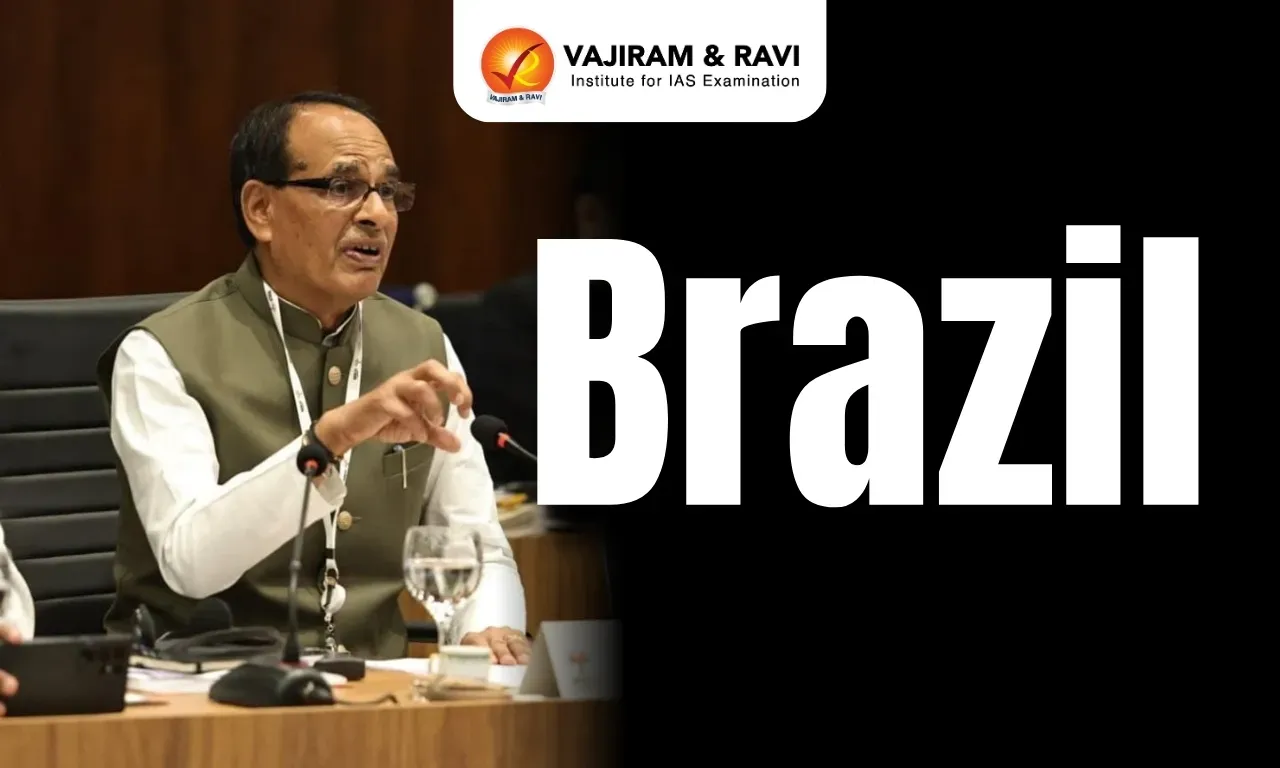
Recently, the Union Agriculture Minister led the Indian delegation to the 15th BRICS Agriculture Ministers’ Meeting in Brasília, Brazil.

About Brazil

  • Location: Brazil is located in eastern South America, spanning the Northern, Southern, and Western Hemispheres, and is the fifth-largest country in the world.
  • Borders: It shares borders with all South American nations except Chile and Ecuador.
  • Regions: Major physiographic zones include the Brazilian Highlands, the Amazon Rainforest, and the Pantanal Wetlands.
  • Water Bodies:
    • Amazon River: Originating in the Andes Mountains, is the Second-longest in the world, with the largest water discharge volume globally.
    • Sao Francisco River: Brazil’s longest river entirely within the country.
    • Iguacu River: Features the Itaipu Dam, a major hydroelectric power site.
  • Coastline: Brazil has a 7,491 km long Atlantic coastline with islands like Fernando de Noronha.
  • Highest Peak:Pico da Neblina (2,999 m) is Brazil’s tallest mountain.
  • Amazon Basin: It is the world’s largest river basin, spans across Brazil, Peru, Colombia, Ecuador, Venezuela, Bolivia, Guyana, and Suriname.
    • It is home to the Amazon Rainforest, the largest tropical forest in the world, and it plays a vital role in the global carbon cycle.

Major Highlights of the Visit

  • The theme of the meeting was “Promoting inclusive and sustainable agriculture through cooperation, innovation and equitable trade among BRICS countries.”
  • Senior officials from BRICSnations and newly invited members, such as Saudi Arabia, UAE, Egypt, Ethiopia,Indonesia, and Iran, attended the meeting.

Source: PIB

Brazil FAQs

Q1: Where is Brazil located geographically?

Ans: Brazil is located in South America, and it is the largest country on the continent, both in terms of area and population.

Q2: What is the capital city of Brazil?

Ans: The capital of Brazil is Brasília, which was inaugurated in 1960 to promote inland development and reduce coastal concentration.

Exercise Desert Flag 10

Exercise Desert Flag 10

Exercise Desert Flag 10 Latest News

Recently, the Indian Air Force (IAF) has joined the prestigious Exercise Desert Flag-10 (21 April to 08 May 2025), a multinational air combat exercise being hosted by the United Arab Emirates (UAE) at Al Dhafra Air Base.

About Exercise Desert Flag

  • Exercise Desert Flag is a premier multinational air exercise designed to simulate complex aerial combat scenarios, allowing diverse air forces to train together under realistic operational conditions.
  • IAF Aircraft Participation: The Indian Air Force is deploying two frontline aircraft types in the exercise:
    • MiG-29 – a versatile air superiority fighter, and
    • Jaguar – a ground attack aircraft known for deep strike capabilities.
  • Participating Nations: Along with the Indian Air Force, the exercise involves air forces from Australia, Bahrain, France, Germany, Qatar, Saudi Arabia, South Korea, Turkey, the United Kingdom, the United States, and the host nation UAE
  • Objective: The primary aim of Exercise Desert Flag is to conduct complex and diverse fighter engagements. It focuses on:
    • Operational exchange of knowledge,
    • Sharing best practices, and
    • Enhancing air combat tactics among some of the most advanced air forces in the world.

Source: PIB

Exercise Desert Flag FAQs

Q1: What is Exercise Desert Flag?

Ans: Exercise Desert Flag is a multilateral air-combat exercise hosted by the United Arab Emirates (UAE), aimed at enhancing interoperability, combat readiness, and tactical cooperation between participating air forces.

Q2: Name some countries that participated in Desert Flag-10 along with India.

Ans: Besides India and the UAE, countries like Australia, Bahrain, France, Germany, Qatar, Saudi Arabia, South Korea, Turkey, the United Kingdom, the United States were among the key participants in Exercise Desert Flag-10.

CROP (Comprehensive Remote Sensing Observation on Crop Progress)

CROP (Comprehensive Remote Sensing Observation on Crop Progress) FAQs

CROP (Comprehensive Remote Sensing Observation on Crop Progress) Latest News

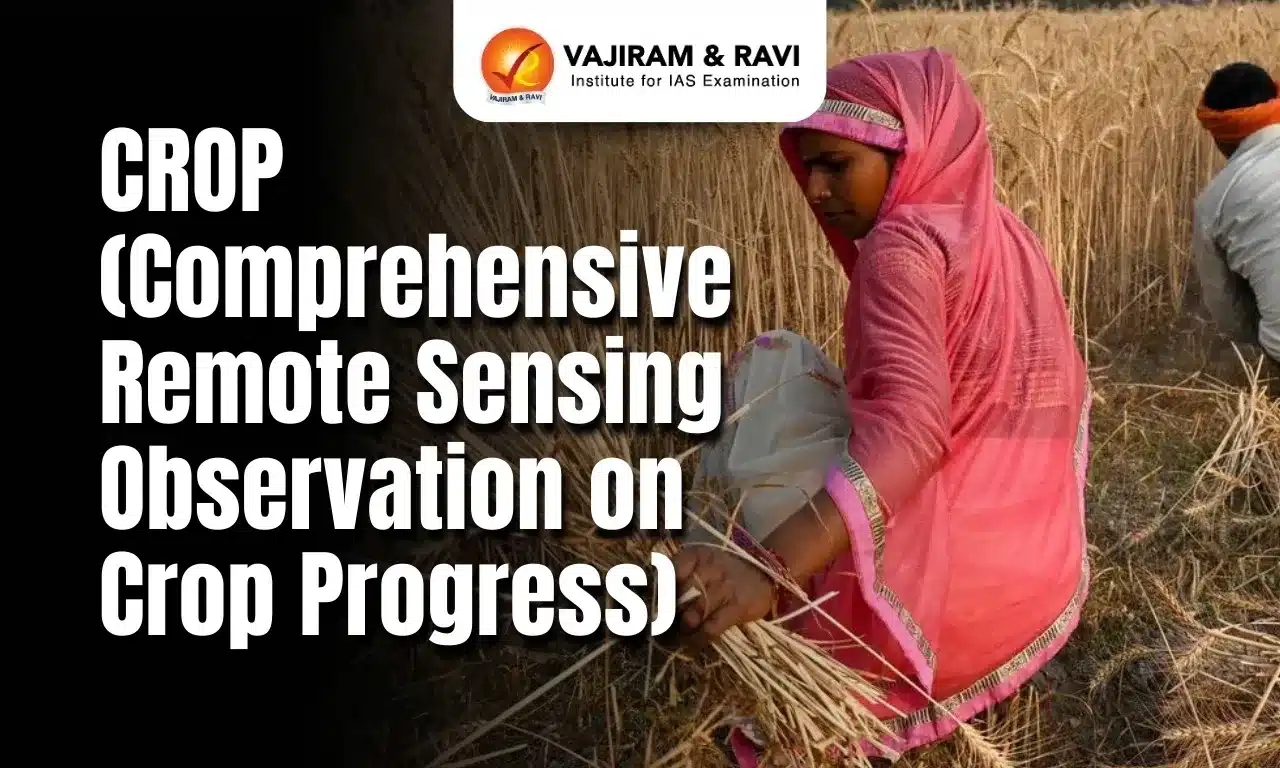
The Indian Space Research Organisation (ISRO) has estimated that India’s wheat production from eight major wheat-producing states will reach 122.724 million tonnes as of March 31, 2025, by using advanced satellite-based remote sensing technologies.

What is CROP?

  • CROP stands for Comprehensive Remote Sensing Observation on Crop Progress.
  • It is a semi-automated and scalable framework developed by the National Remote Sensing Centre (NRSC), a part of the Indian Space Research Organisation (ISRO).
  • The primary objective of CROP is to enable near real-time monitoring of crop sowing, growth, and harvesting across different seasons, especially during the Rabi season in India.

Technological Components

  • CROP integrates data from multi-source remote sensing satellites, including:
    • EOS-04 (RISAT-1A) – provides Synthetic Aperture Radar (SAR) data,
    • EOS-06 (Oceansat-3) – provides optical remote sensing data, and
    • Resourcesat-2A – used for high-resolution optical imaging of agricultural areas.
  • It uses both Optical and SAR datasets to accurately monitor crop progress under varying weather and light conditions.

Major Wheat-Producing States Identified

  • The eight primary wheat-growing states covered by the ISRO study are Uttar Pradesh, Madhya Pradesh, Rajasthan, Punjab, Haryana, Bihar, Gujarat, and Maharashtra.
  • These states are crucial for ensuring national food security and contribute to the bulk of India's Rabi wheat harvest.

Source: TH

CROP (Comprehensive Remote Sensing Observation on Crop Progress) FAQs

Q1: What is the full form of CROP?

Ans: CROP stands for Comprehensive Remote Sensing Observation on Crop Progress, a program designed for large-scale crop monitoring using satellite imagery and geospatial technologies.

Q2: What is the main objective of the CROP initiative?

Ans: The CROP program aims to assess crop health, acreage, and growth stages across agricultural landscapes to support policy making and ensure food security.

Q3: Which agencies are primarily involved in the CROP project?

Ans: The CROP program is coordinated by the Ministry of Agriculture in collaboration with the Indian Space Research Organisation (ISRO) and state agricultural departments.

Anti-Satellite (ASAT) Weapons

Anti-Satellite (ASAT) Weapons

Anti-Satellite (ASAT) Weapons Latest News

India is recognised as a key player in creating global norms for responsible space behaviour, said Marjolijn van Deelen, EU Special Envoy for Space. She highlighted India-EU collaboration at the Global Technology Summit.

About Anti-Satellite (ASAT) Weapons

  • ASAT weapons are specialised technologies designed to disable, destroy, or interfere with satellites in orbit for strategic or defensive purposes.
  • ASATs are a key component of space warfare capabilities and are used to neutralise enemy satellites for surveillance, communication, navigation, or early warning systems.
  • ASAT weapons are broadly classified into two categories:
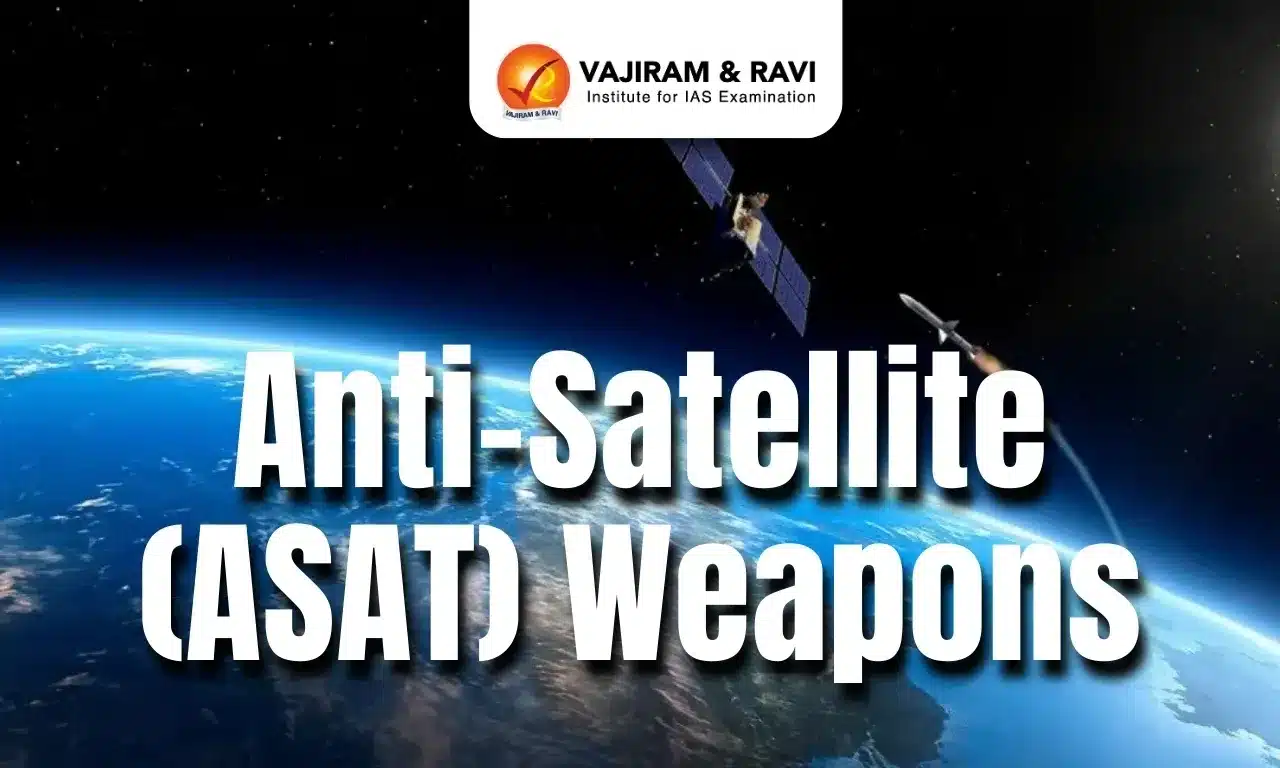
    • Kinetic Energy ASATs: These involve direct physical impact, usually through missiles that collide with satellites to destroy them. The impact generates orbital debris, which can pose a long-term hazard to other space assets.
    • Non-Kinetic ASATs: These use non-physical means such as cyber-attacksjammingspoofing, and directed energy weapons like lasers to disrupt or blind a satellite without physically destroying it.
  • ASAT weapons can be launched from ground stationsaircraft, or even other satellites, making them versatile and difficult to detect in some cases.
  • As of now, four countries — the United States, Russia, China, and India — have demonstrated operational ASAT capabilities through tests.
  • India’s ASAT Test (Mission Shakti) was conducted in March 2019, where a live satellite in Low Earth Orbit (LEO) was destroyed by a three-stage interceptor missile at an altitude of around 300 km in a "hit-to-kill" mode.
  • The global community, particularly the European Union (EU), has expressed concern about the space debris created by destructive ASAT tests and has called for a ban on such practices under the United Nations framework.

About Rendezvous and Proximity Operations (RPO)

  • RPO refers to the intentional manoeuvring of one spacecraft close to another in space, either for dockinginspection, or other mission objectives.
    • Rendezvous operations involve two space objects adjusting their orbital parameters, such as trajectory, plane, altitude, and phasing, to approach one another for docking or berthing.
    • Proximity operations involve maintaining a spacecraft in the vicinity of another object on a pre-planned relative path without necessarily making contact.
  • While RPOs are commonly used for scientificrepair, or refuelling missions, they can also be used for espionage, disruption, or disabling other satellites, especially if performed without prior notification or by unfriendly actors.

Source: TH

Anti-Satellite (ASAT) Weapons FAQs

Q1: What are Anti-Satellite (ASAT) Weapons?

Ans: Anti-Satellite (ASAT) Weapons are designed to disable, destroy, or interfere with satellites for strategic military purposes, including communication, surveillance, and navigation.

Q2: When did India successfully test its first ASAT weapon?

Ans: India conducted its first successful ASAT test, codenamed 'Mission Shakti,' on March 27, 2019, making it the fourth country after the USA, Russia, and China to demonstrate this capability.

Q3: What was the target of India’s Mission Shakti ASAT test?

Ans: The ASAT weapon targeted and destroyed an Indian live satellite in Low Earth Orbit (LEO) at an altitude of around 300 km.

Earth Day 2025

Earth Day 2025

Earth Day 2025 Latest News

Earth Day takes place every year on 22 April and is one of the biggest environmental protest movements on the planet.

About Earth Day

  • It is observed annually on April 22.
  • The official theme for Earth Day 2025 is “OUR POWER, OUR PLANET”.
  • This year's message focuses on the need to shift rapidly to renewable energy, urging individuals, businesses, and governments to triple clean energy production by 2030.

History of Earth Day

  • The first Earth Day was celebrated on April 22, 1970, initiated by U.S. Senator Gaylord Nelson as a national teach-in on environmental issues. 
  • The event witnessed more than 20 million Americans—10% of the U.S. population—taking to the streets, parks, and auditoriums to demand a healthy, sustainable environment.
  • Earth Day went global in 1990, mobilizing over 200 million people across 141 countries. 
  • Since then, it has become one of the largest civic observances in the world, promoting climate action and eco-conscious living.
  • Earth Day serves as a powerful reminder of our collective responsibility to protect the environment.

SourceWEF

Earth Day 2025 FAQs

Q1: On which date is Earth Day observed every year?

Ans: April 22

Q2: What is the theme for Earth Day 2025?

Ans: Our Power, Our Planet

Q3: Earth Day went global in which year?

Ans: 1990

Sapsan Missile

Sapsan Missile

Sapsan Missile Latest News

The Russian Ministry of Defence for the first time acknowledged the growing threat posed by Ukraine’s newly developed short-range ballistic missile, the Sapsan.

About Sapsan Missile

  • The Sapsan (or Hrim-2, Grom-2) is a Ukrainian tactical ballistic missile system.
  • It is designed to combine the features of a tactical missile system and a multiple rocket launcher.
  • In its export version, the Hrim-2 missile system is designed to target individual and group stationary targets within distances ranging from 50 to 280 km. 
  • However, for the needs of the Ukrainian armed forces, the system's range has now been extended to 700 km, significantly enhancing its previous known range of 450 to 500 km.
  • The Sapsan system comprises a 10-wheeled Transporter-Erector-Launcher (TEL) capable of carrying two containerized missiles simultaneously.
  • Its aero-ballistic capabilities allow evasion of modern air defenses like the S-300 and S-400, drawing parallels to the Russian 9K720 Iskander missile complex.
  • The Hrim-2's versatility is a key aspect, as it can launch both ballistic and cruise missiles, making it suitable for various applications, from air defense to coast guard duties. 
  • Its single-stage ballistic missile carries a warhead with a mass of 480 kilograms, and it offers options for both unitary and cluster configurations. 
  • The system's onboard control system is inertial and integrates various navigation and guidance systems, including radar-based and optoelectronic components.

Sapsan Missile FAQs

Q1. The Sapsan missile system is developed by which country?

Ans. Ukraine

Q2. What is the range of the export version of the Hrim-2 missile system?

Ans. 50 to 280 km

Q3. What feature helps the Sapsan evade advanced air defense systems like the S-300 and S-400?

Ans. Aero-ballistic flight capabilities

SourceET

INS Chennai and INS Kesari

INS Chennai and INS Kesari

INS Chennai and INS Kesari Latest News

Indian Navy ships INS Chennai and INS Kesari successfully carried out manoeuvring exercises and Visit, Board, Search & Seizure (VBSS) drills during the sea phase of Africa India Key Maritime Engagement (AIKEYME) 2025.

About INS Chennai

  • It is the third and last ship of the Kolkata-class stealth-guided missile destroyers (Project 15A) of the Indian Navy.
    • The first two ships to be manufactured under Project 15A were INS Kolkata and INS Kochi.
  • INS Chennai was constructed by the Mazagon Dock Limited (MDL) at Mumbai.
  • It was commissioned into the Indian Navy on November 21, 2016.
  • It is placed under the operational and administrative control of the Western Naval Command.

INS Chennai Features

  • It is 164 metres long and weighs over 7,500 tonnes. 
  • It sails at a top speed of over 30 knots (around 55 km) per hour.
  • It is powered by four reversible gas turbine engines.
  • It can carry 350 to 400 people.
  • It is armed with supersonic surface-to-surface BrahMos missiles and Barak-8Long Rang Surface-to-Air missiles.
  • It is fitted with the chaff decoy system ‘Kavach’ for defence against enemy missiles.
  • For protection from enemy torpedoes, the ship has been equipped with the torpedo decoy system ‘Mareech’. 
  • Both ‘Kavach’ and ‘Mareech’ have been developed in India.
  • The ship is designed to carry and operate up to two multi-role combat helicopters.
  • The multi-mission ship is highly suited for expeditionary and surface strikes.
  • The ship is equipped to fight under nuclear, biological and chemical (NBC) warfare conditions.
  • It is fitted with a modern Surveillance Radar, which provides target data to the gunnery weapon systems of the ship.

About INS Kesari

  • INS Kesari (L15) is a Shardul Class Landing Ship Tank (LST) of the Indian Navy.
  • The ship was built by Garden Reach Shipbuilders and Engineers (GRSE), Kolkata.
  • It was commissioned into the Indian Navy on 5 April 2008.
  • The ship is capable of carrying troops, tanks, armored vehicles, and other military equipment.
  • It is designed to support amphibious operations and humanitarian assistance and disaster relief (HADR) missions.

SourceTRIBUNE

INS Chennai and INS Kesari FAQs

Q1: Which shipyard constructed the INS Chennai?

Ans: Mazagon Dock Limited

Q2: When was INS Chennai commissioned into the Indian Navy?

Ans: November 21, 2016

Q3: Where was INS Kesari built?

Ans: Garden Reach Shipbuilders and Engineers (GRSE), Kolkata

Yellow Sea

Yellow Sea

Yellow Sea Latest News

After aggressive posturing in the South China Sea, China is upping the ante in the Yellow Sea, following the building of a gigantic steel rig.

About Yellow Sea

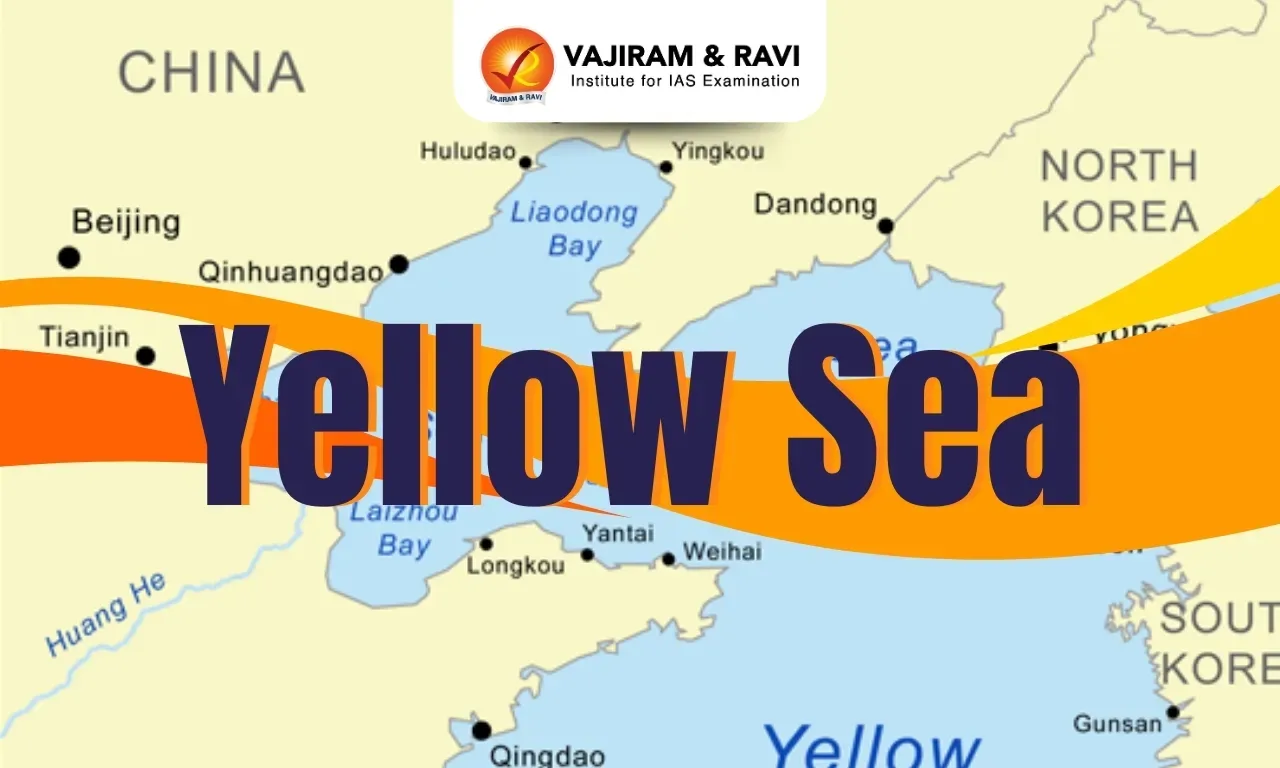
  • Also referred to in China as Huang Hai and in North and South Korea as the West Sea, Yellow Sea is a marginal sea of the Western Pacific Ocean.
  • It is positioned to the north of the East China Sea. 
  • It is bordered by mainland China in the north and west and by North Korea and South Korea in the east.
  • The sea was named for the yellowish sand particles originating from the Gobi Desert that descend on the surface of the sea, thereby giving it a golden yellow color.
  • It covers an area of approximately 400,000 sq.km.
  • It measures about 960 km from north to south and some 700 km from its east to west. 
  • It is relatively shallow with an average depth of 180 to 394 feet (55 to 120 meters). 
  • The sea is one of the world’s largest portions of continental shelf submerged in water. 
  • Climate: It is characterized by very cold, dry winters and wet, warm summers.
  • Major rivers discharging directly into the Yellow Sea include the Han, Yangtze, Datung, Yalu, Guang, and Sheyang.
  • Islands: The Yellow Sea is dotted with numerous islands, the largest of which include Jeju Island (South Korea)Shandong Peninsula islands (China), and Ganghwa Island (South Korea).
  • Leading port cities include Qingdao and Dalian in ChinaInch’ŏn in South Korea, and Namp’o in North Korea.

SourceET

Yellow Sea FAQs

Q1: What countries border the Yellow Sea?

Ans: China, South Korea, and North Korea border the Yellow Sea.

Q2: Which South Korean island is located in the Yellow Sea?

Ans: Jeju Island

Q3: Why is the Yellow Sea called so?

Ans: Due to yellow sand particles from the Gobi Desert

Jal Jeevan Mission: Progress, Funding Challenges and the Road Ahead

Jal Jeevan Mission: Progress, Funding Challenges and the Road Ahead

What’s in Today’s Article?

  • Jal Jeevan Mission Latest News
  • Introduction
  • Overview of Jal Jeevan Mission
  • Current Funding Status and Concerns
  • Role of States and Local Governance
  • Challenges in Last-Mile Delivery
  • Policy Outlook and Next Steps
  • Jal Jeevan Mission FAQs

Jal Jeevan Mission Latest News

  • The Jal Shakti Ministry has demanded Rs 2.79 lakh crore Central funds to complete the Jal Jeevan Mission Scheme.

Introduction

  • Launched in August 2019, the Jal Jeevan Mission (JJM) is the Government of India’s ambitious initiative to provide Functional Household Tap Connections (FHTCs) to every rural household
  • Spearheaded by the Ministry of Jal Shakti, the mission aims to ensure equitable access to safe and adequate drinking water to all rural households by 2024. 
  • In the years since its launch, JJM has made remarkable strides but now faces funding constraints as it nears its final implementation phase.

Overview of Jal Jeevan Mission

  • Vision and Objectives
    • The mission’s core objective is to ensure “Har Ghar Jal”, water to every household, by provisioning safe and adequate drinking water through individual tap connections by 2024. It aims to:
      • Provide 55 litres per capita per day (lpcd) of water
      • Promote sustainable water supply systems
      • Ensure community participation and transparency
      • Integrate source sustainability and greywater management
  • Progress and Achievements So Far
    • As of March 31, 2025, nearly 14.56 crore rural households (about 73%) have been provided with tap water connections under JJM.
    • 13 states and Union Territories, including Goa, Haryana, Gujarat, and Telangana, have achieved 100% coverage.
    • 2.12 lakh villages have been declared “Har Ghar Jal certified” where every household has a functional tap water connection.
    • 6.2 lakh village-level water and sanitation committees have been formed to ensure local involvement and monitoring.

Current Funding Status and Concerns

  • Demand for Additional Funds
    • According to media reports, the Ministry of Jal Shakti has sought an additional ₹2.79 lakh crore from the 16th Finance Commission to sustain and complete the Jal Jeevan Mission. 
    • However, the Finance Commission’s interim panel has only cleared a support of ₹1.42 lakh crore, roughly half the requested amount.
  • Breakdown of Financial Requirement
    • The original outlay for the mission was ₹3.60 lakh crore (Centre and State combined).
    • As of now, the Centre has allocated around ₹1.58 lakh crore and disbursed ₹1.12 lakh crore.
    • The demand for additional funds stems from increased costs due to inflation, coverage expansion, and the need for operation and maintenance systems.
  • Implications of Funding Gap
    • The reduced approval of funds could delay coverage in lagging states such as Uttar Pradesh, West Bengal, and Rajasthan, all of which are still under 60% coverage. 
    • It also raises concerns over sustainability, particularly for maintenance and source sustainability projects post-2024.

Role of States and Local Governance

  • A defining feature of JJM is its emphasis on community participation. 
  • Village Water and Sanitation Committees (VWSCs) are responsible for operation, maintenance, and regular monitoring. 
  • Capacity-building efforts include training over 4 lakh women in water quality testing using field test kits. 
  • States are also required to prepare village action plans (VAPs) to ensure decentralised planning and execution.

Challenges in Last-Mile Delivery

  • Geographical Diversity: Hilly and tribal regions such as those in the Northeast and Chhattisgarh pose logistical challenges.
  • Water Source Sustainability: In drought-prone areas, source depletion remains a critical issue.
  • Human Resource Gaps: The mission has faced shortfalls in trained manpower at the village and block levels for technical and managerial roles.
  • Water Quality Issues: Fluoride, arsenic, and iron contamination continue to affect the potability of water in certain states.

Policy Outlook and Next Steps

  • Focus Beyond 2024
    • Even though 2024 was the initial deadline, the government now appears focused on strengthening long-term water supply infrastructure. Key next steps include:
      • Setting up Water Quality Monitoring and Surveillance systems.
      • Implementing greywater reuse mechanisms.
      • Transitioning to lifecycle-based budgeting for O&M.
      • Encouraging convergence with MGNREGA and SBM 2.0 for integrated water security.
  • Strategic Recommendations
    • Increase central allocations through alternate routes such as multilateral aid or CSR partnerships.
    • Prioritise lagging states with targeted assistance.
    • Improve convergence with health and nutrition schemes to reinforce the water-health link.

Jal Jeevan Mission FAQs

Q1. What is the core goal of the Jal Jeevan Mission?

Ans. To provide tap water supply to every rural household by 2024.

Q2. How many households have been connected under JJM so far?

Ans. Over 14.5 crore rural households have functional tap connections as of March 2025.

Q3. Why did the Jal Shakti Ministry seek more funds recently?

Ans. Due to rising costs, wider coverage needs, and post-implementation sustainability efforts.

Q4. Which states have achieved 100% tap water connectivity?

Ans. Goa, Haryana, Gujarat, and Telangana are among the states with full coverage.

Q5. What is the role of Village Water and Sanitation Committees under JJM?

Ans. VWSCs handle local implementation, maintenance, and monitoring of water supply systems.


Source: IE | PIB

India’s Electronics Manufacturing: Boosting Local Value Addition & Cutting Imports

India's Electronics Manufacturing: Boosting Local Value Addition & Cutting Imports

What’s in Today’s Article?

  • Electronics Manufacturing India Latest News
  • India’s Progress in Electronics Manufacturing Value Addition
  • Performance and Future of PLI Schemes
  • Electronics Manufacturing India FAQs

Electronics Manufacturing India Latest News

  • Global smartphone giants like Apple and Samsung have set up production bases in India due to a large talent pool, government subsidies, and the need to diversify from China. 
  • While India has successfully localized smartphone assembly, the government is now focusing on increasing domestic value addition. 
  • To achieve this, it has launched targeted subsidy schemes, including the ₹76,000 crore India Semiconductor Mission and a ₹23,000 crore scheme for passive electronic components, alongside existing PLI schemes.
  • The goal is to reduce import dependence—especially on China—boost local manufacturing across all layers of electronics, and create high-quality jobs. 
  • Currently, India’s local value addition is 15–20%, with plans to double it in the coming years (China stands at 38%). However, India's trade deficit with China hit a record $100 billion in 2024–25, highlighting the urgency of these efforts.

India’s Progress in Electronics Manufacturing Value Addition

  • India is rapidly becoming a global manufacturing hub for electronics. 

Goal to Increase Domestic Value Addition

  • The government’s new components policy aims to raise local value addition from 15-16% to 40-50%, further boosting the sector's growth and reducing import dependence.

Mobile Phone Exports Growth

  • Mobile phone exports from India have surged 77 times over the past decade, showcasing the country's increasing role in global electronics manufacturing.

Growth in Electronics Exports

  • India’s electronics exports have been growing at a robust CAGR of 26% from FY16 to FY25, signaling a growing presence in the global market.

Domestic Production of Key Components

  • India has reduced its reliance on mobile PCBAs, with imports dropping from Rs 300 billion in FY18 to near zero by FY24.

India’s Position in Mobile Phone Manufacturing

  • India is now the world’s second-largest mobile phone producer, with nearly 99% of the phones sold domestically being manufactured locally.

Electronics Components Manufacturing Scheme

  • Recently, the IT Ministry has launched a ₹22,919 crore incentive scheme for electronics components aimed at deepening India’s electronics manufacturing capabilities. 
  • This builds on the earlier PLI schemes which primarily targeted smartphone and computer assembly.

Focus on Component-Level Manufacturing

  • The six-year scheme targets the domestic production of key components such as display modules, camera sub-assemblies, PCBs, lithium cell enclosures, resistors, capacitors, and ferrites. 
  • These are essential for smartphones, laptops, and household appliances.

Reducing Dependence on China

  • As local assembly of devices has grown, India’s reliance on China for internal components has increased. 
  • The new scheme aims to reduce this dependence by fostering domestic component manufacturing.

Job Creation and Investment Goals

  • The scheme is expected to:
    • Create at least 91,600 direct jobs
    • Generate ₹4.56 lakh crore worth of production
    • Attract ₹59,350 crore in incremental investment
  • Annual subsidies will be linked to the number of jobs created by participating companies.

Performance and Future of PLI Schemes

  • Success of the Smartphone PLI Scheme
    • The smartphone PLI scheme has been highly successful among the 14 programs launched in 2020. 
    • Key achievements as of February 2025 include:
      • Cumulative investment: ₹10,905 crore
      • Cumulative production: ₹7,15,823 crore
      • Cumulative exports: ₹3,90,387 crore
      • Direct jobs created: 1,39,670
  • Performance of the IT Hardware PLI Scheme
    • The IT hardware PLI scheme, initially slow, gained momentum in 2023 with an increased allocation of ₹17,000 crore. 
    • Key figures for laptops and computers under the scheme:
      • Cumulative production: ₹10,365 crore
      • Cumulative investment: ₹522 crore
      • Direct jobs created: 5,132
  • Government Support and Distribution of Funds
    • The government has disbursed nearly $1 billion (₹8,700 crore) between 2022-2025 under the smartphone PLI scheme, with major contract manufacturers like Foxconn, Tata Electronics, and Pegatron receiving over 75% of the funds.
  • Future Directions for PLI Schemes
    • With the current schemes nearing their sunset in 1-3 years, the government is considering extending incentives to include metrics beyond incremental sales, such as domestic value addition and incremental exports, to further strengthen the sector.

Electronics Manufacturing India FAQs

Q1. What is India’s current value addition in electronics manufacturing?

Ans. India’s value addition is around 15–20%, with efforts underway to double it in the coming years through new policies.

Q2. Why is India reducing electronics import dependence on China?

Ans. India’s electronics trade deficit with China hit $100 billion; cutting imports ensures economic security and job creation.

Q3. What does the new ₹23,000 crore scheme focus on?

Ans. It targets domestic production of electronic components like PCBs, resistors, display modules, and lithium cell enclosures.

Q4. How successful is the smartphone PLI scheme?

Ans. With ₹7.15 lakh crore in production and over 1.3 lakh jobs, the smartphone PLI scheme has exceeded expectations.

Q5. What’s next for India’s PLI schemes?

Ans. The government plans to shift incentives towards domestic value addition and exports to ensure long-term electronics growth.

Source: IE | ET

Enquire Now