Crimea

Crimea

Crimea Latest News

Recently, US President Donald Trump proposed formal recognition of Crimea as Russian territory, potentially reversing America’s long-standing opposition to the annexation.

About Crimea

  • Crimea is an autonomous republic situated in southern Ukraine, located between the Black Sea and the Sea of Azov.
  • The Crimean Peninsula is connected to mainland Ukraine through the Perekop Isthmus, a narrow 8 km land strip, and separated from the Sea of Azov by the Arabat Spit; Kerch Strait connects it to Russia via the Crimean Bridge.
  • Historically called the Tauric Peninsula, Crimea has witnessed multiple invasions and empires, including the Ottomans and Russians, vying for its control.
  • The Crimean Mountains, especially Ai-Petri, dominate the southern landscape, while small rivers like Salhir and Alma traverse the region.
  • The Kerch Peninsula in the east contains iron oremud volcanoes, and mineral springs, fostering a spa and mining industry; the Kerch Bridge connects it to Russia.
  • The city of Simferopol serves as the administrative capital, while Sevastopol, a deep-water port, is the base of Russia’s Black Sea Fleet.

Crimea FAQs

Q1. Where is Crimea located?
Ans. Crimea is a peninsula located in the Black Sea, formerly part of Ukraine, now controlled by Russia.

Q2. Why is Crimea geopolitically important?
Ans. Crimea holds strategic value due to its naval base at Sevastopol, providing access to the Black Sea and Mediterranean.

Source: IE

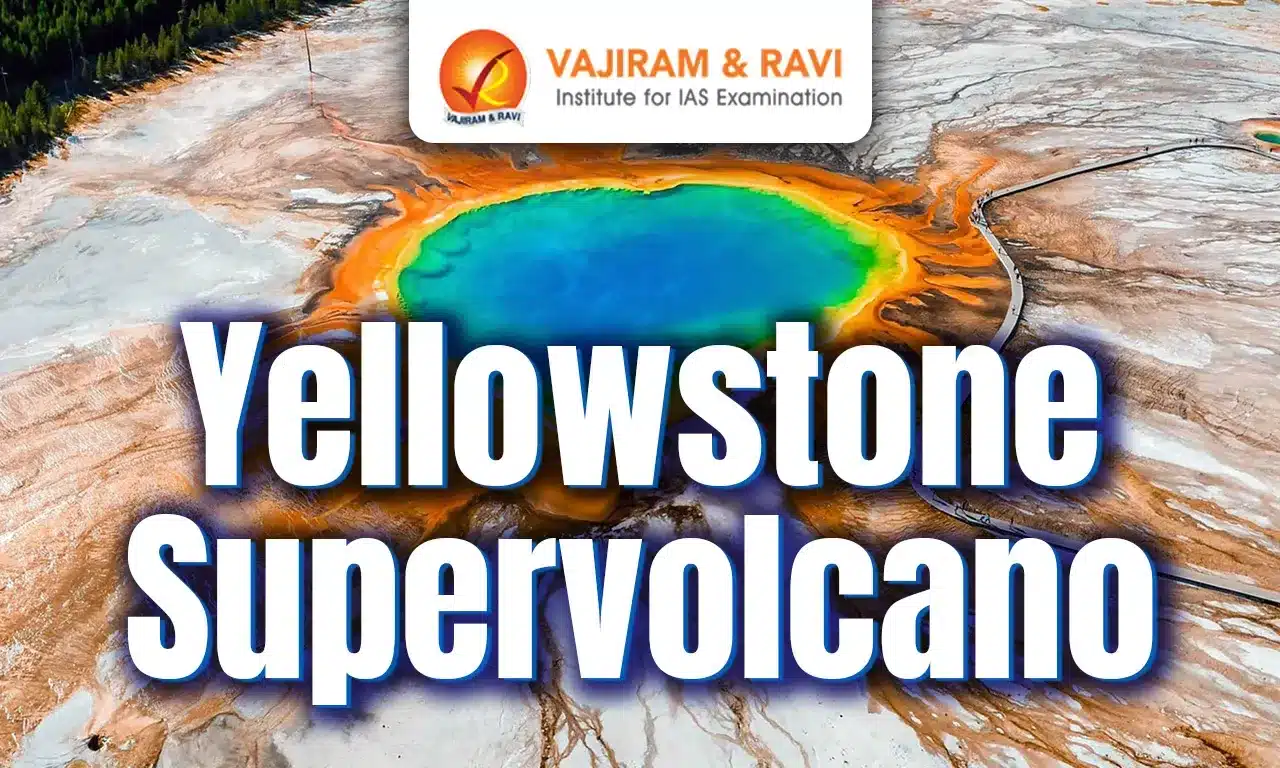
Yellowstone Supervolcano

Yellowstone Supervolcano

Yellowstone Supervolcano Latest News

A "breathing" cap of magma has been discovered inside the Yellowstone supervolcano, and it might help determine when the volcano will next erupt, a new study has found.

About Yellowstone Supervolcano

  • It lies beneath Yellowstone National Park, in the western United States.
  • It is one of the largest active volcanic systems in the world.
  • It's a caldera (a large crater formed by a major eruption) and an active supervolcanic system.
  • The caldera measures 55 x 72 km (34 x 45 miles) in size.
  • Formation:
    • The caldera formed when pyroclastic material exploded out of the volcano, partly emptying the magma chamber causing the roof to collapse. 
    • When the roof collapsed over the magma chamber, it created a bowl shaped depression in the ground.
  • Three enormous eruptionsoccurred at the Yellowstone hotspot 2.1 million, 1.3 million, and 640,000 years ago. 
  • Two of thesereleased so much material that the area is often referred to as a supervolcano.
  • A supervolcano is a volcano that at one point in time erupted more than 1,000 cubic kilometers of deposits.
  • One recent study estimates that another supervolcanic eruption at Yellowstone would blanket North America in ash, and some areas close to the hotspot could be covered by more than a meter of debris.
  • Supervolcanoes can also have pronounced cooling effects on the climate for several years after an eruption because of the sulfur dioxide that is released to the atmosphere. 
    • The sulfur dioxide forms aerosols that block incoming sunlight. 
    • Eventually, the sulfur dioxide from the eruption will wash out of the atmosphere, and the climate cooling effect will subside.

Yellowstone Supervolcano FAQs

Q1. Has the Yellowstone supervolcano ever erupted?

Ans. Three extremely large explosive eruptions have occurred at Yellowstone in the past 2.1 million years.

Q2. How was the Yellowstone Caldera formed?

Ans. Collapse after a massive eruption emptied the magma chamber

Q3. What qualifies a volcano to be classified as a “supervolcano”?

Ans. Eruption of more than 1,000 cubic kilometers of deposits

Source: LS

Dhubri-Phulbari Bridge

Default Image

Dhubri-Phulbari Bridge Latest News

59 percent work completed on 19.28 Km Dhubri-Phulbari Brahmaputra Bridge, according to reports.

About Dhubri-Phulbari Bridge

  • It is an under-construction 4-lane bridge project over the Brahmaputra River connecting Dhubri in Assam and Phulbari in Meghalaya on NH 127 B. 
  • The length of the bridge is 19.3 km, which would make it the longest river bridge in the country. 
    • It comprises a navigation bridge stretching approximately 12.625 kilometers, complemented by approach viaducts on both sides, with 3.5 kilometers on the Dhubri end and 2.2 kilometers on the Phulbari side.
    • It will have 199 pillars supporting the massive structure.
  • The project’s civil construction work is being done by Larsen & Toubro (L&T) for the National Highways & Infrastructure Development Corp Ltd. (NHIDCL) and funded by the Japan International Cooperation Agency (JICA).
  • The project is estimated to cost Rs 3165.99 crore.
  • The bridge will significantly reduce travel distances, especially between Phulbari in Meghalaya and Dhubri in Assam. 
  • It will shorten travel by more than 200 km, improving the connectivity of India’s northeastern states with the rest of the country.

Dhubri-Phulbari Bridge FAQs

Q1. Which bridge is between Assam and Meghalaya?

Ans. Dhubri-Phulbari bridge

Q2. The Dhubri-Phulbari Bridge is being constructed over which river?

Ans. Brahmaputra

Q3. What is the total length of the Dhubri-Phulbari Bridge?

Ans. 19.3 km

Source: SRMG

Mycetoma

Mycetoma

Mycetoma Latest News

The world's only research centre on mycetoma, a neglected tropical disease common among farmers, has been destroyed in Sudan's two-year war, its director and another expert say.

About Mycetoma

  • It is a chronicprogressively destructive infectious disease of the subcutaneous tissues, that spreads to affect the skin, deep tissues and bone.
  • It was first reported in the mid-19th century in Madurai, India, and hence was initially called Madura foot.
  • It is a unique neglected tropical diseasecaused by a substantial number of microorganisms of fungal or bacterial origins. 
  • The disease commonly affects young adults, mostly males aged between 15 and 30 years in developing countries. 

Mycetoma Distribution 

  • Mycetoma occurs in tropical and subtropical environments characterized by short rainy seasons and prolonged dry seasons that favour the growth of thorny bushes.
  • The causative organisms of mycetoma are distributed worldwide but are endemic in tropical and subtropical areas in the so called 'Mycetoma belt', which includes, among others, the Bolivarian Republic of VenezuelaChad, Ethiopia, India, Mauritania, Mexico, Senegal, Somalia, Sudan, Thailand, and Yemen.

Mycetoma Transmission 

  • Transmission occurs when the causative organism enters the body through minor trauma or a penetrating injury, commonly thorn pricks. 
  • There is a clear association between mycetoma and individuals who walk barefooted and are manual workers.

Mycetoma Symptoms

  • Symptoms are similar for bacterial and fungal mycetoma. 
  • Both appear as firm, painless masses under the skin. These masses usually appear on a person’s foot but can form anywhere on the body.
  • Mycetoma masses start small, but over time they can grow larger and develop oozing sores. 
  • The affected limb can become deformed or unusable.
  • The discharge from the oozing sores can contain sand-like particles called "grains," that can be white, yellow, red, brown, or black.
  • If left untreated or treatment fails, it can spread to other areas of the body and even result in blood infections. 
  • Long-term mycetoma can eventually destroy the underlying muscle and bone.

Mycetoma Treatment

For bacterial mycetoma, treatment consists of a combination of antibiotics, whereas for fungal mycetoma, treatment consists of a combination of antifungal drugs and surgery.

Mycetoma FAQs

Q1. What causes mycetoma?

Ans. Mycetoma is a disease caused by certain types of bacteria and fungi found in soil, plant matter, and water.

Q2. How does Mycetoma usually enter the human body?

Ans. Penetrating injuries like thorn pricks

Q3. In which part of the body does Mycetoma most commonly begin?

Ans. Foot

Source: ET

Pakistan Airspace Closure: Impact on Indian Airlines and Operational Challenges

Pakistan Airspace Closure: Impact on Indian Airlines and Operational Challenges

What’s in Today’s Article?

  • Pakistan Airspace Closure Impact Latest News
  • Impact of Pakistan Airspace Closure on Indian Flights
  • Pakistan’s Last Airspace Closure
  • Pakistan Airspace Closure Impact FAQs

Pakistan Airspace Closure Impact Latest News

  • Pakistan's closure of its airspace to Indian airlines is set to impact over 800 weekly flights, leading to longer travel times, higher fuel consumption, and complications in crew and flight scheduling. 
  • Flights from North India to destinations in West Asia, Europe, the UK, and North America's eastern region are already taking longer alternate routes, increasing operational costs.

Impact of Pakistan Airspace Closure on Indian Flights

  • Scope of the Ban:
    • Pakistan has banned all aircraft registered in India or operated by Indian carriers from using its airspace.
  • Affected Routes
    • The closure impacts all west-bound flights from northern Indian cities, especially Delhi, to Central Asia, the Caucasus, West Asia, Europe, the UK, and North America.
  • Longer Flight Paths
    • Flights will need to reroute over the Arabian Sea, increasing journey times and leading to higher fuel consumption.
  • Operational Challenges
    • Airlines will face difficulties with fuel management and payload, potentially needing to reduce the number of passengers or baggage to maintain safe weight limits.
  • Increased Costs and Airfares
    • Operational costs will rise due to longer routes and higher fuel burn. 
    • Airfares on international routes operated by Indian carriers may increase by 8–12%, with a possibility of further hikes if the situation persists.
  • Competitive Disadvantage
    • Foreign airlines that can still use Pakistani airspace will gain a cost advantage over Indian carriers on shared routes.
  • Most Affected Airline
    • Air India, which operates several direct flights to Europe, the US, and Canada from Delhi, is expected to be hit the hardest.
  • Uncertainty in Flight Plans
    • Airlines are still evaluating routing options, and more clarity will come once final flight plans are submitted.
  • IndiGo’s Growing Exposure
    • Since 2019, IndiGo has expanded significantly into Central Asia, Turkey, and the Caucasus, becoming the only Indian carrier operating in those regions. 
    • Its operations are notably impacted under the new restrictions.

Pakistan’s Last Airspace Closure

  • Pakistan last closed its airspace in February 2019 after the Indian Air Force conducted air strikes in Balakot in response to the Pulwama terror attack.
  • Duration and Impact
    • The closure lasted for several months, causing significant operational disruptions for Indian airlines due to the need for longer alternate routes.

Financial Losses

  • Indian airlines collectively incurred losses of around Rs 700 crore, mainly due to increased fuel expenses and logistical challenges.

Most Affected Airline

  • Air India suffered the most, as it operated the highest number of west-bound international flights during the closure period.

Pakistan Airspace Closure Impact FAQs

Q1. How does Pakistan’s airspace closure affect Indian flights?

Ans. Indian flights to Central Asia, Europe, and the US face longer routes, increased fuel consumption, and higher costs.

Q2. Which airline is most affected by the airspace closure?

Ans. Air India, operating numerous west-bound flights, faces the highest impact due to rerouting and operational challenges.

Q3. How will the airspace closure increase airfare costs?

Ans. Increased fuel consumption and longer routes are expected to raise airfares by 8-12% for Indian carriers.

Q4. What happened during Pakistan’s last airspace closure in 2019?

Ans. Pakistan closed its airspace after the Balakot airstrike, disrupting flights and causing Indian airlines to incur significant financial losses.

Q5. What could be the long-term effects of the closure?

Ans. Airlines may suspend routes, foreign carriers gain a competitive edge, and airfares could rise further due to operational costs.


Source: IE | FP | HT | IT

Russia’s Strategic Interests in Crimea: Importance, Context & Trump’s Proposal

Russia’s Strategic Interests in Crimea: Importance, Context & Trump’s Proposal

What’s in Today’s Article?

  • Strategic importance of Crimea Latest News
  • The Strategic Importance of Crimea
  • Context of Crimea in the Current War
  • Donald Trump’s Proposal on Crimea
  • Strategic importance of Crimea FAQs

Strategic importance of Crimea Latest News

  • U.S. President Donald Trump, in an interview with Time, stated that Crimea will stay with Russia and suggested that the region had effectively been handed to Putin during Obama’s presidency. He reportedly urged Ukraine to accept a peace deal recognizing Russia’s 2014 annexation of Crimea. 
  • Experts caution that while tolerating a long-term occupation might be pragmatic, formally accepting a border change enforced by military force would mark a significant and troubling shift in U.S. foreign policy.

The Strategic Importance of Crimea

  • Geographic Significance
    • Crimea holds immense strategic value due to its location, benefiting both from its own geography and that of Russia.
  • Russia’s Historical Quest for Warm Water Ports
    • Most of Russia’s coastline lies in the Arctic region, making many ports unusable during winter. 
    • Hence, gaining access to warm water ports has been a long-standing goal of Russian foreign policy.
  • Black Sea – Russia’s Gateway to the Mediterranean
    • The Black Sea provides Russia with its warmest waters and the only direct maritime access to the Mediterranean via the Turkish-controlled Bosphorus and Dardanelles straits. 
    • Control of these straits has historically been viewed as critical to Russia’s economic and military interests.
  • Sevastopol – The Naval Stronghold
    • Unlike other shallow Black Sea ports, Sevastopol in Crimea is a deep-water port ideal for hosting the Black Sea Fleet. 
    • It has been central to Russia’s maritime strategy since the 18th century and became a focal point in post-Soviet tensions with Ukraine.
  • Post-Soviet Disputes and Agreements
    • After the Soviet Union's collapse, the 1997 Kharkiv Pact allowed Russia to retain its naval base in Sevastopol, even though Crimea was part of Ukraine. 
    • This lease was extended until 2042, but Russia unilaterally ended the agreement during its 2014 annexation of Crimea.

Context of Crimea in the Current War

  • 2014 Political Upheaval and Russian Annexation
    • After the ousting of pro-Russian President Viktor Yanukovych in February 2014 by a pro-Western movement in Ukraine, Russian forces swiftly occupied strategic locations in Crimea. 
    • By mid-March, Crimea was formally annexed by Russia following a declaration of independence and a request to join the Russian Federation.
  • Russia’s Strategic Motives for Annexation:
    • Securing Sevastopol
      • The renewed lease in 2010 was opposed by the new Ukrainian leadership. 
      • Russia feared losing access to the naval base in Sevastopol if Ukraine consolidated power.
    • NATO Expansion Fears
      • The Kremlin was alarmed by the prospect of Ukraine joining NATO, which would place the alliance on Russia’s Black Sea border, undermining Russian security interests in what was once a "Soviet lake."
  • Crimea as a Launchpad for Invasion
    • Control over Crimea was seen as essential for any future military action in Ukraine. 
    • The 2022 invasion was partly enabled by Russia’s fortified presence in the peninsula.
  • Current Status
    • While Ukraine controls the city of Kherson, Russia holds much of the surrounding oblast and thus maintains effective control over the canal’s operations.

Donald Trump’s Proposal on Crimea

  • Crimea was part of Russia for centuries before being transferred to Ukraine in 1954 by Soviet leader Nikita Khrushchev. 
  • Putin does not accept this transfer and considers it a historical mistake. Trump’s proposal aligns with this and legitimizes Russia’s claim over the peninsula.
  • By freezing Ukraine’s political map as it stands today, the US will secure Crimea — and the canal — for Moscow for the long term.

Ukraine’s Rejection

  • Ukrainian President Volodymyr Zelenskyy firmly rejected any deal that involves ceding Ukrainian territory, emphasizing that such an agreement would violate Ukraine’s constitution.

Geopolitical Risks and Consequences

  • Commentators argue that accepting Trump’s proposal would be disastrous for Ukraine, as it could embolden Russia to eventually conquer all of Ukraine. 
  • Furthermore, such a concession might set a dangerous precedent for other authoritarian regimes, notably China, regarding territorial ambitions, such as over Taiwan.

Strategic importance of Crimea FAQs

Q1. Why is Crimea strategically important to Russia?

Ans. Crimea offers Russia critical naval access, including Sevastopol, and control over the Black Sea and Mediterranean gateway.

Q2. What is Russia's historical quest related to Crimea?

Ans. Russia seeks warm water ports for year-round access, especially to the Mediterranean, vital for economic and military interests.

Q3. What happened in 2014 regarding Crimea?

Ans. In 2014, Russia annexed Crimea following political upheaval in Ukraine, securing Sevastopol and countering NATO expansion fears.

Q4. What is Trump’s stance on Crimea?

Ans. Trump supports Russia's claim to Crimea, suggesting the U.S. should recognize it as Russian territory to end the war.

Q5. Why does Ukraine reject Trump’s proposal on Crimea?

Ans. Ukraine refuses any territorial concessions, citing constitutional violation and the danger of future Russian territorial expansions.


Source: IE | IE | IT

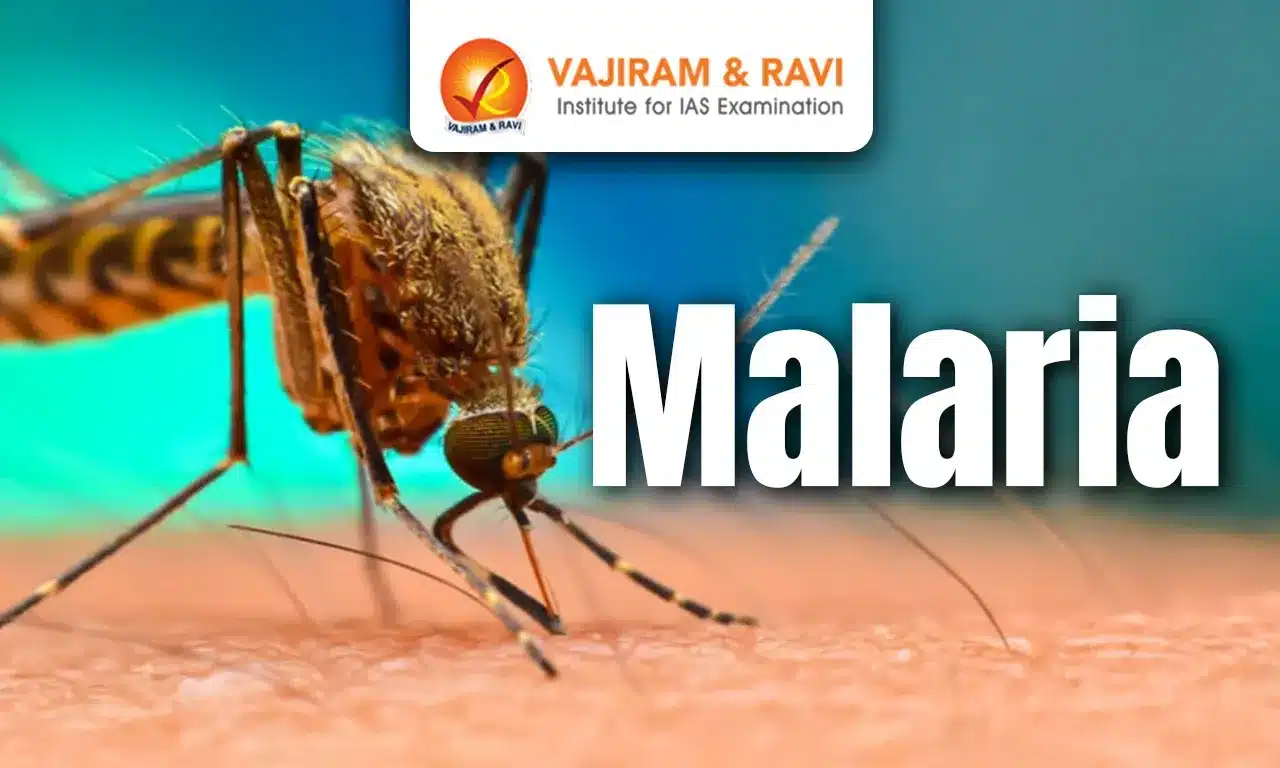
Malaria

Malaria

Malaria Latest News

World Malaria Day is observed every year on April 25, as endorsed by WHO member states in 2007.

  • The theme for 2025 is “Malaria Ends With Us: Reinvest, Reimagine, Reignite”, which urges renewed global action against malaria through innovation, collaboration, and sustained commitment.

About Malaria

  • Malaria is a life-threatening febrile illness caused by Plasmodium parasites, transmitted through the bites of infected female Anopheles mosquitoes.
  • The disease is not contagious, but can be spread through infected blood or contaminated needles.
  • The most dangerous species are Plasmodium falciparum and Plasmodium vivax.

Symptoms and Risks

  • Symptoms appear 10–15 days after infection and include fever, chills, and headache.
  • Severe symptoms can include seizures, difficulty breathing, jaundice, dark urine, and death if untreated.
  • Partial immunity can develop in endemic regions, making diagnosis difficult in some patients.

Prevention and Treatment

  • Prevention includes vector control, use of mosquito netsrepellents (DEET, IR3535, Icaridin), long clothing, and chemoprophylaxis for travellers.
  • Early diagnosis and treatment using microscopy or rapid diagnostic tests (RDTs) are critical.
  • Treatments include:
    • ACTs (Artemisinin-based Combination Therapies) for P. falciparum.
    • Chloroquine for P. vivax where effective.
    • Primaquine to prevent relapses in P. vivax and P. ovale infections.
  • Severe malaria cases require injectable treatments in clinical settings.

Malaria FAQs

Q1. What causes malaria?
Ans. Malaria is caused by Plasmodium parasites, transmitted through the bite of infected female Anopheles mosquitoes.

Q2. Which Plasmodium species is the deadliest?
Ans. Plasmodium falciparum is the most severe and deadly species causing malaria.

Source: PIB

Telecom Regulatory Authority of India (TRAI)

Telecom Regulatory Authority of India

Telecom Regulatory Authority of India (TRAI) Latest News

The JCoR meeting, held at TRAI headquarters, New Delhi, emphasised the need for a unified and collaborative approach to combat spam and fraudulent calls, especially targeting senior citizens.

About Telecom Regulatory Authority of India (TRAI)

  • Established under the Telecom Regulatory Authority of India Act, 1997, passed by Parliament.
  • Primary mandate: To regulate telecom services in India, including tariff fixation/revision, which was earlier the domain of the Central Government.
  • Scope of regulation: Covers areas like tariffsquality of serviceinterconnectionspectrum management, and consumer protection in the telecom sector.
  • Policy role: Issues regulations, recommendations, and orders that guide telecom policy-making and market practices.

Composition of TRAI

  • Consists of a Chairperson, a maximum of two full-time members, and two part-time members.
  • Appointments are made by the Central Government.
  • Tenure: Members serve for three years or until the age of 65 years, whichever is earlier.

Extent of Government Control over TRAI

  • Not a fully independent body – operates under certain executive constraints:
    • Under Section 25 of the TRAI Act, the Central Government can issue binding directions to TRAI.
    • TRAI’s funding is provided by the Central Government.
    • TRAI's recommendations are advisory, not binding; however, the Government must consult TRAI for licensing of service providers and related matters.
    • TRAI can notify telecom service rates in the Official Gazette for services within and outside India.

Joint Committee of Regulators (JCoR)

  • Objective of JCoR: TRAI-led platform for fostering cross-sectoral collaboration between regulatory bodies across telecomITconsumer affairsbankinginsurance, and financial markets.
    • Created to address regulatory challenges in the digital ecosystem, especially in areas like fraud preventionspam control, and digital consumer protection.
  • Members: Includes representatives from RBISEBIIRDAIPFRDAMoCAMeitY, with DoT and MHA as special invitees.

Telecom Regulatory Authority of India (TRAI) FAQs

Q1. When was TRAI established?
Ans. TRAI was established on February 20, 1997 under the Telecom Regulatory Authority of India Act, 1997.

Q2. Is TRAI a statutory body?
Ans. Yes, TRAI is a statutory body created by an Act of Parliament — the TRAI Act, 1997.

Source: PIB

Zero Shadow Day (ZSD)

Zero Shadow Day

Zero Shadow Day Latest News

The Cosmology Education and Research Training Center (COSMOS), Mysuru, of the Indian Institute of Astrophysics recently observed ‘Zero Shadow Day’.

About Zero Shadow Day

  • It is an interesting celestial phenomenon that occurs twice in a year when the sun is directly overhead and thus no shadow of any vertical object can be seen.
  • This event happens for locations situated between the Tropic of Cancer and the Tropic of Capricorn.
  • The ZSD phenomenon transpires when the Sun's declination becomes equal to the latitude of the location. 
  • On this day, as the sun crosses the local meridian, its rays fall exactly vertically relative to an object on the ground, making it impossible to observe any shadow of that object.
  • This is due to the tilt of the Earth's axis and its rotation around the sun, causing the angle of the sun's rays to change throughout the year, which in turn affects the lengths and directions of shadows.
  • When does it occur?
    • There are two zero shadow days every year, observed in placesthat lie between the Tropic of Cancer and the Tropic of Capricorn.
    • One falls during the Uttarayan (when the Sun moves northwards), and the other is during Dakshinayan (when the Sun moves southwards).
    • It will clearly be different for different places on earth.
    • It lasts for a small part of a second, but the effect can be seen for a minute to a minute-and-a-half.
  • The southern part of India, roughly below the latitude of Bhopal, will experience the ZSD. 
  • The states that can see this event are Andaman and Nicobar Islands, Kerala, Tamil Nadu, Puducherry, Karnataka, Andhra Pradesh, Telangana, Goa, Maharashtra, Odisha, Daman & Diu, Dadra & Nagar Haveli, most of Gujarat and Chhattisgarh, and the southern parts of Madhya Pradesh, Jharkhand, West Bengal, Tripura, and Mizoram. 

Zero Shadow Day FAQs

Q1. What is Zero Shadow Day?

Ans. A day when the sun is directly overhead and vertical objects cast no shadow.

Q2. Zero Shadow Day occurs in regions located between which two latitudes?

Ans. Tropic of Cancer and Tropic of Capricorn

Q3. How many times does Zero Shadow Day occur at a given location in a year?

Ans. Twice

Source: TH

Scramjet Engine Test

Scramjet Engine Test

Scramjet Engine Test Latest News

Recently, the Defence Research and Development Laboratory (DRDL), under DRDO, successfully conducted a ground test of a Scramjet Engine for over 1,000 seconds at Hyderabad.

About Scramjet Engine

  • Scramjet (Supersonic Combustion Ramjet) is an air-breathing engine designed to operate efficiently at hypersonic speeds (Mach 5 and above).
  • Unlike traditional jet engines, it does not use rotating compressors, relying instead on the vehicle's high speed to compress air.
  • Scramjets enable supersonic combustion, making them suitable for Hypersonic Cruise Missiles (HCMs).
  • Scramjet Engine Working Principle:
    • Air intake: Vehicle must already be flying at supersonic speeds (Mach 3+).
    • Compression: High-speed movement compresses the incoming air.
    • CombustionHydrogen fuel is injected and ignited while air remains supersonic.
    • Thrust Generation: Expanding gases create thrust (based on Newton’s Third Law).
  • Scramjets need rocket-assisted takeoff as they can't generate thrust at zero speed.

Jet Engine vs Ramjet vs Scramjet

Engine Type

Speed Range

Key Feature

Jet Engine

Subsonic to Transonic

Uses rotating compressor, works in atmosphere

Ramjet

Supersonic (Mach 3-6)

Needs forward motion to compress air

Scramjet

Hypersonic (Mach 5+)

Allows supersonic combustion

Dual Mode Ramjet

Mach 4–8

Shifts between ramjet & scramjet modes

About Hypersonic Missiles

  • Hypersonic Missile travels at speeds greater than Mach 5, offering high speed and manoeuvrability, unlike traditional ballistic missiles.
  • There are two types of hypersonic weapons systems:
    • Hypersonic Glide Vehicles (HGVs): launched by rockets and glide towards the target.
    • Hypersonic Cruise Missiles (HCMs): powered by scramjet engines and capable of maintaining hypersonic speed throughout the flight.
  • Hypersonic Cruise Missiles typically fly at lower altitudes and are more difficult to detect and intercept due to their speed and manoeuvrability.

Scramjet Engine Test FAQs

Q1. What is a scramjet engine?
Ans. A scramjet (supersonic combustion ramjet) is an air-breathing engine that operates at hypersonic speeds (Mach 5 or more) using atmospheric oxygen for combustion.

Q2. How is a scramjet different from a ramjet?
Ans. Unlike ramjets, scramjets allow supersonic airflow throughout the engine, enabling higher-speed operations.

Source: PIB

Cabinet Committee on Security (CCS)

Cabinet Committee on Security

Cabinet Committee on Security Latest News

Noting the cross-border linkages of the terrorist attack in Pahalgam recently, the Cabinet Committee on Security (CCS) announced a series of extraordinary retaliatory measures against Pakistan.

About Cabinet Committee on Security

  • The CCS, headed by the PM, is responsible for important discussions and decisions on defence policy, expenditure, and matters related to national security.
  • It is also the apex body when it comes to the appointments of the officials in the national security bodies.
  • History:
    • A committee comparable to the current CCS structure was first formed in independent India in 1947 by then-Prime Minister Jawaharlal Nehru.
    • Formed against the background of a newly independent nation facing national security challenges, the committee was constituted with the primary aim of assessing and addressing the political, economic, and military situations in India's border areas.
    • The first emergency meeting of this committee was reportedly called during the Indo-Pak War of 1947–48. 
    • It was reportedly chaired by Prime Minister Jawaharlal Nehru, with Home Minister Sardar Patel and Defence Minister Baldev Singh as its members.
    • It was after the 1999 Kargil War that the committee evolved to adopt the present formal structure of the CCS and became a high-powered committee for defence and national security.
    • Over time, the CCS has evolved into the apex decision-making body concerning internal and external security matters of the Government of India.
  • Composition:
    • With the Prime Minister as its chairperson, the committee typically comprises the Home Minister, Defence Minister, Finance Minister, and External Affairs Minister as members. 
    • The National Security Advisor (NSA) acts as secretary-level coordinator on matters within its purview.
    • While the defence minister is a permanent invitee to the panel, other members may be included as per requirements. 
    • The Cabinet Secretariat is responsible for maintaining records of all the meetings and proceedings of the CCS.
    • The CCS concerns itself with all matters related to defence, foreign affairs, intelligence, nuclear issues, space policy, and major appointments related to national security.

What are Cabinet Committees?

  • Cabinet Committees are extra-constitutional, meaning they are not mentioned in the Indian Constitution.
  • They are partly designed to reduce the burden on the Union Cabinet by allowing smaller groups of ministers to make decisions on specific policy areas.
  • They are constituted or reconstituted when a new government takes over or the Cabinet undergoes a reshuffle.
  • How are Cabinet Committees formed?
    • The prime minister sets up the cabinet committees with selected members of the Cabinet and assigns specific functions to them. 
    • The prime minister may change the numbers of committees, and modify the functions assigned to them.
    • The membership of each committee can vary from three to eight
    • Usually, only Cabinet ministers are members of these committees. However, it is not unheard of for non-Cabinet ministers to be members or special invitees to committees.
  • There are a total of 8 cabinet committees:
    • Cabinet Committee on Economic Affairs.
    • Cabinet Committee on Political Affairs.
    • Cabinet Committee on Investment and Growth.
    • Cabinet Committee on Security.
    • Cabinet Committee on Parliamentary Affairs.
    • Cabinet Committee on Employment and Skill Development.
    • Cabinet Committee on Accommodation.
    • Appointments Committee of the Cabinet.
  • All committees except the Cabinet Committee on Accommodation and Cabinet Committee on Parliamentary Affairs are headed by the PM.

Cabinet Committee on Security FAQs

Q1. Who heads the Cabinet Committee on Security (CCS)?

Ans. Prime Minister

Q2. Who acts as the secretary-level coordinator for Cabinet Committee on Security (CCS) matters?

Ans. National Security Advisor (NSA)

Q3. Which body maintains the records of Cabinet Committee on Security (CCS) meetings and proceedings?

Ans. Cabinet Secretariat

Source: IE

Enquire Now