Cholistan Desert

Cholistan Desert

Cholistan Desert Latest News

Recently, Pakistan's Government decided to halt its ambitious canals project after widespread protests in Sindh.

Why in the News?

  • The Green Pakistan Initiative (GPI), launched in 2023, aims to modernise Pakistan’s agriculture sector by providing irrigation infrastructure, introducing advanced technologies, and improving agricultural productivity.
  • The Cholistan Canal, a major component of this initiative, was supposed to irrigate about 1.2 million acres of land in southern Punjab, particularly in the Cholistan Desert, a water-scarce region.

About Cholistan Desert

  • It is also known locally as Rohi, and is located in the southern part of Pakistani Punjab.
  • It forms part of the Greater Thar Desert, which extends into Sindh province of Pakistan and the Indian state of Rajasthan.
  • The name "Cholistan" comes from the Turkic word "chol", meaning "sands" and the Persian suffix "istan", meaning "land".
  • Historically, Cholistan was a centre for caravan trade, leading to the construction of numerous forts during the medieval period.
  • The Derawar Fort is the best-preserved example of these medieval structures.
  • Cholistan covers an area of 25,800 km² (10,000 sq mi) across the Bahawalpur, Bahawalnagar, and Rahim Yar Khan districts.
  • About 81% of the region is sandy, while 19% comprises alluvial flats and small sandy dunes.
  • The Cholistan Desert has an arid and semi-arid tropical desert climate with very low annual humidity.
  • Water resources include natural pools called Toba and manmade pools called Kund.

Cholistan Desert FAQs

Q1. Where is the Cholistan Desert located?
Ans. The Cholistan Desert is located in the southern part of Punjab province in Pakistan, near the India-Pakistan border.

Q2. Which major river once supported the Cholistan Desert?
Ans. The now-dried-up Hakra River (believed to be part of the ancient Saraswati-Ghaggar river system) once supported human settlements in the Cholistan region.

Source: IE

Exercise Balikatan 2025

Exercise Balikatan 2025

Exercise Balikatan Latest News

As many as 17,000 personnel are participating in the annual “Balikatan” exercises, which this year will simulate a “full-scale battle scenario” as the treaty allies seek to deter China’s ambitions in the waterway.

About Balikatan Exercise

  • It is the largest bilateral exercise conducted between the Armed Forces of the Philippines and the United States.
  • “Balikatan,” a Tagalog phrase that means “shoulder-to-shoulder,”  characterizes the spirit of the exercise and represents the alliance between the Philippines and the United States.
  • Held annually, Exercise Balikatan is designed to enhance military interoperability and readiness in support of the Mutual Defense Treaty between the United States and the Philippines.
  • The 2025 edition is the 40th iteration of the exercise.
  • Distinguishing itself from past iterations, Balikatan 25 will feature a Full Battle Test that incorporates real-world forces and events into a virtual and constructive exercise scenario. 
  • The exercise will span all domains—air, land, sea, space, and cyber—testing the interoperability between U.S. and Philippine forces to simulate the defense of Philippine sovereignty.
  • The exercise will consist of four primary components: a Combined Joint Logistics Over-the-Shore (CJLOTS) operation, humanitarian civic assistance (HCA) activities, a command-and-control exercise (C2X), and a Multilateral Maritime Exercise (MME). 
  • Each component will encompass several training events and engagement throughout the Philippines.

Exercise Balikatan FAQs

Q1. What is Balikatan Exercise?

Ans. It is the largest bilateral exercise conducted between the Armed Forces of the Philippines and the United States.

Q2. The Balikatan Exercise is held in support of which treaty?

Ans. It is in support of the Mutual Defense Treaty between the United States and the Philippines.

Q3. Which new feature will distinguish Balikatan 25 from previous exercises?

Ans. Full Battle Test with real-world forces and virtual scenarios

SourceTH

Extant Hyena Species

Extant Hyena Species

Extant Hyena Species Latest News

International Hyena Day 2025 (27th April): The four extant species of hyena or hyaenids found on the African continent are facing increasing threats, leading to population declines, according to conservation organisation, Wild Africa.

About Hyenas

  • Hyenas are dog-like carnivores belonging to the family Hyaenidae, native to Asia and Africa, noted for their scavenging habits.
  • There are four extant hyena species:
    • Spotted Hyena (Crocuta crocuta)
    • Striped Hyena (Hyaena hyaena)
    • Brown Hyena (Parahyaena brunnea)
    • Aardwolf (Proteles cristatus)
  • Habitat: Forest edges, grasslands, savannas, sub-deserts, and mountains up to 13,000 feet elevation.
  • Distribution: Across Africa, parts of the Middle East, and Asia.

Physical Features

  • Hyenas are four-legged animals with scraggly fur and large ears.
  • They have long forelegs, a powerful neck, and strong shoulders, allowing them to dismember and carry prey.
  • Excellent sight, hearing, and sense of smell make them proficient scavengers and hunters.
  • Hyenas are predominantly nocturnal, being most active during the night.
  • Their lifespan averages 12 years, although they can live up to 25 yearsBrown hyenas typically have a shorter lifespan.

Conservation Status (IUCN)

  • Spotted HyenaLeast Concern but declining, with fewer than 50,000 individuals remaining.
  • Striped HyenaNear Threatened, with less than 10,000 mature individuals.
  • Brown HyenaNear Threatened, with just over 10,000 in the wild.
  • AardwolfLeast Concern, though exact numbers are unknown due to their elusive nature.

Extant Hyena Species FAQs

Q1. How many extant species of hyenas are there?
Ans. There are four extant species of hyenas: the spotted hyena, brown hyena, striped hyena, and aardwolf.

Q2. Which hyena species is most common in India?
Ans. The striped hyena (Hyaena hyaena) is the most common species found in India.

Q3. Are hyenas more closely related to dogs or cats?
Ans. Despite appearances, hyenas are more closely related to cats (Feliformia suborder) than to dogs.

Source: DTE

Cucumber Mosaic Virus (CMV)

Cucumber Mosaic Virus (CMV)

Cucumber Mosaic Virus Latest News

A team of researchers recently reported developing an RNA-based antiviral agent that confers strong protection against cucumber mosaic virus (CMV), a widespread and destructive plant virus.

About Cucumber Mosaic Virus 

  • It is one of the most common plant viruses.
  • CMV was first identified in 1916 as the causal agent of cucumber and muskmelon disease in the United States. 
  • CMV infects more than 1,200 plant species, including critical food crops like cucumbers, squash, and cereals, and medicinal plants. 
  • It spreads through small sap-sucking insects called aphids. 
  • With nearly 90 aphid species capable of transmitting CMV, outbreaks are often difficult to contain.
  • In India, CMV is responsible for 25-30% yield losses in banana plantations. In pumpkins, cucumbers, and melons, infection rates can soar up to 70%. 
  • Symptoms: Affected plants develop a mosaic discolouration, stunted growth, and commercially unviable fruits.
  • Management
    • Cultural practices and the heavy use of agrochemicals are the most common control measures for CMV. 
    • There is no known cure for cucumber mosaic.
    • Infected plants should be removed and destroyed to eliminate the plants as potential reservoirs for the virus (which can subsequently be spread to other nearby healthy plants).

Cucumber Mosaic Virus FAQs

Q1. What are the symptoms of mosaic virus?

Ans. Affected plants develop a mosaic discolouration, stunted growth, and commercially unviable fruits.

Q2. Can mosaic virus live in soil?

Ans. Mosaic viruses are challenging to control and can remain active in the soil for years.

Q3. How to treat mosaic virus on cucumbers?

Ans. Early plant removal is the best action as this reduces the level of virus in, and slows spread into, the crop. 

Source: TH

RNA-Based Antiviral for Agricultural Virus

RNA-Based Antiviral for Agricultural Virus

RNA-Based Antiviral for Agricultural Virus Latest News

Plant pests and diseases destroy nearly 40% of the world’s annual crop production, according to the U.N. Food and Agriculture Organisation (FAO). Plant viruses alone cause over $30 billion in annual losses globally.

What is the Mosaic Virus?

  • The Mosaic virus is a parasite that destroys plants at the molecular level.
  • Infected plants spread the virus to other plants, potentially devastating an entire harvest.
  • It affects a wide variety of crops, including roses, beans, tobacco, tomatoes, potatoes, cucumbers, pumpkins, squash, melons, and peppers.

About Cucumber Mosaic Virus (CMV)

  • CMV is a plant virus affecting a wide range of crops such as cucumber, melon, eggplant, tomato, carrot, and lettuce.
  • CMV was first identified in cucumbers in 1934, giving the virus its name.
  • The virus is spread mainly through sap-sucking insects called aphids, with nearly 90 aphid species capable of transmitting CMV.
  • CMV can also spread through human touch, but the likelihood is extremely low.
  • Weather conditions with high temperatures and intermittent rain promote the multiplication of aphids, thereby facilitating the spread of CMV.
  • CMV is a major threat, infecting more than 1,200 plant species, including cucumbers, cereals, and medicinal plants.
  • In India, CMV causes 25-30% yield losses in banana plantations and up to 70% infection rates in crops like pumpkins, cucumbers, and melons.

RNA-Based Defence Mechanism

  • RNA Silencing: A natural defence system in plants against viral attacks.
    • Double-stranded RNA (dsRNA) from the virus triggers the plant’s immune response.
    • Dicer-like enzymes (DCLs) slice the dsRNA into small interfering RNAs (siRNAs).
    • siRNAs then guide the system to destroy viral RNA, stopping virus replication.

Types of RNA-Based Techniques

  • Host-Induced Gene Silencing (HIGS): Plants are genetically modified to produce virus-targeting dsRNA internally for continuous protection. However, high costsregulatory hurdles, and risk of viral resistance limit its use.
  • Spray-Induced Gene Silencing (SIGS)RNA sprays are applied to plant leaves, activating natural immunity without altering plant DNA. Cost-effective and environmentally friendly, but traditional dsRNA often generates a random mix of siRNAs, reducing efficiency.

RNA-Based Antiviral for Agricultural Virus FAQs

Q1. What is a Mosaic Virus?
Ans. A Mosaic Virus is a plant virus that causes a mottled appearance with light and dark green or yellow patches on leaves, severely affecting crop growth and yield.

Q2. Which crops are commonly affected by Mosaic Virus?
Ans. Tobacco, tomato, cucumber, sugarcane, papaya, and legumes are among the crops commonly affected by different types of Mosaic Viruses.

Q3. What are the major types of Mosaic Viruses?
Ans. The major types include Tobacco Mosaic Virus (TMV), Cucumber Mosaic Virus (CMV), and Papaya Ringspot Virus (PRSV).

Source: TH

Bond Markets

Bond Markets

Bond Markets Latest News

U.S. President Donald Trump has not only disrupted international trade rules but has also sought to challenge the independence of the U.S. Central Bank (Federal Reserve).

About Bond Market

  • The bond market is a financial marketplace where investors buy and sell debt securitiesprimarily bonds, issued by governments, corporations, or institutions.

About Bonds and Inflation Impact

  • bond is a financial instrument that promises a fixed return (face value) at the end of a specific period, unlike equity, which has no fixed term or guaranteed returns.
  • Bonds are generally safer investments used to hedge against risks or act as a store of value.
  • Bond yields are inversely proportional to their market price: when prices fallyields rise.
  • Inflation erodes the real returns from bonds. If inflation exceeds bond yield, investors lose purchasing power.
  • When inflation expectations rise, the Central Bank typically raises interest rates, causing bond prices to fall and yields to rise, impacting investment decisions across the economy.
  • Currency depreciation also impacts foreign bondholders negatively, reducing their real returns when converting back to their home currency.

About the Indian Bond Market

  • The Indian Bond Market is a vital segment of the financial system where government entities, corporations, and financial institutions raise funds by issuing bonds.
  • Investors provide loans to the issuers and, in return, receive periodic interest payments and principal repayment upon maturity.

Structure of the Indian Bond Market

  • Primary Bond Market: In the Primary Marketnew bonds are issued by the governmentcorporations, or financial institutions to raise capital.
    • Government Securities (G-Secs): Bonds issued by Central and State Governments, including Treasury Bills (short-term) and Government Bonds (long-term).
    • Corporate Bonds: Bonds issued by private or public companies, credit-rated based on their creditworthiness.
    • Municipal Bonds: Issued by local governing bodies for funding public infrastructure projects.
    • Public Sector Undertaking (PSU) Bonds: Bonds issued by government-owned corporations.
    • Green Bonds: Dedicated bonds for financing environmentally sustainable projects.
    • Masala BondsRupee-denominated bonds issued in foreign markets.
  • Secondary Bond Market: In the Secondary Marketpreviously issued bonds are traded among investors.
    • Examples include instruments like Treasury Bills (T-Bills)Commercial Papers (CPs), and Certificates of Deposit (CDs).

Bond Markets FAQs

Q1. What is a bond market?
Ans. The bond market is a financial marketplace where investors buy and sell debt securities, primarily bonds, issued by governments, corporations, or institutions.

Q2. What are government securities (G-Secs)?
Ans. Government securities (G-Secs) are bonds issued by a government to borrow money from the public, considered among the safest investments due to sovereign backing.

Q3. What is the difference between primary and secondary bond markets?
Ans. In the primary market, bonds are issued and sold for the first time; in the secondary market, investors trade existing bonds among themselves.

Q4. Who regulates the bond market in India?
Ans. The Reserve Bank of India (RBI) regulates the government bond market, while the Securities and Exchange Board of India (SEBI) regulates corporate bond markets.

Source: TH

Indian Cybercrime Coordination Centre (I4C)

Indian Cybercrime Coordination Centre (I4C)

Indian Cybercrime Coordination Centre Latest News

The government recently authorised Indian Cyber Crime Coordination Centre (I4C) to share and receive information from the Enforcement Directorate under the anti-money laundering law, a move aimed at detecting money trails and combating cyber frauds.

About Indian Cybercrime Coordination Centre

  • I4C has been established under the Ministry of Home Affairs (MHA) to act as a nodal point at the National level in the fight against cybercrime. 
  • It is designed to provide a framework and ecosystem for law enforcement agencies (LEAs) to deal with cybercrime in a coordinated and comprehensive manner.
  • I4C brings together academia, industry, public, and government in the prevention, detection, investigation, and prosecution of cybercrimes.
  • Headquarters: New Delhi

Indian Cybercrime Coordination Centre Objectives

  • To act as a nodal point to curb Cybercrime in the country.
  • To strengthen the fight against Cybercrime committed against women and children.
  • Facilitate easy filing of cybercrime related complaints and identifying cybercrime trends and patterns.
  • To act as an early warning system for LEAs for proactive cybercrime prevention and detection.
  • Awareness creation among the public about preventing cybercrime.
  • Assist States/UTs in capacity building of Police Officers, Public Prosecutors and Judicial Officers in the area of cyber forensic, investigation, cyber hygiene, cyber-criminology, etc.
  • Identify the research problems and needs of LEAs and take up R&D activities in developing new technologies and forensic tools in collaboration with academia/research institutes within India and abroad.
  • Suggest amendments, if required, in cyber laws to keep pace with fast-changing technologies and international cooperation.
  • To coordinate all activities related to the implementation of Mutual Legal Assistance Treaties (MLAT) with other countries related to cybercrimes in consultation with the concerned nodal authority in MHA.

Indian Cybercrime Coordination Centre Components 

  • National Cybercrime Threat Analytics Unit (TAU): For reporting threats pertaining to cybercrimes at regular intervals.
  • National Cybercrime Reporting Portal (NCRP): To report various cybercrime complaints by citizens at all India levels on a common platform on a 24x7 basis from “anywhere, anytime”.
  • National Cybercrime Training Centre (NCTC): To impart training to government officials, especially state law enforcement agencies.
  • National Cybercrime Research and Innovation Centre: To carry out research for the development of indigenous tools for the prevention of cybercrimes.
  • Platform for Joint Cyber Crime Coordination Team: For coordination, sharing of modus operandi of cybercrimes, data/information among states/UTs LEAs.
  • Cybercrime Ecosystem Management Unit: For creating mass awareness in cyber hygiene for prevention of cybercrimes.
  • National Cybercrime Forensic Laboratory (Investigation) Ecosystem: For helping LEAs in cyber forensics investigation.

Other Initiatives

  • Citizen Financial Cyber Fraud Reporting and Management System: For immediate reporting of financial cyber frauds and preventing the siphoning of funds by cyber criminals on a near-real-time basis.
  • National Toll-Free Helpline number ‘1930’ has been operationalized to provide citizen assistance in lodging online cyber complaints.
  • The social media handle “CyberDost”, which provides cyber safety tips at regular intervals.
  • I4C has envisaged the Cyber Crime Volunteers Program to bring together citizens with a passion to serve the nation on a single platform and contribute to the fight against cybercrime in the country.

Indian Cybercrime Coordination Centre FAQs

Q1. Where is the Indian Cyber Crime Coordination Centre?

Ans. New Delhi

Q2. Is the I4C a statutory body?

Ans. No, the Indian Cyber Crime Coordination Centre (I4C) is not a statutory body.

Q3. Under which ministry has the Indian Cybercrime Coordination Centre (I4C) been established?

Ans. Ministry of Home Affairs

SourceTH

CSR Spending in India Grows 16% in FY24: Key Trends and Leading Contributors

CSR Spending in India Grows 16% in FY24: Key Trends and Leading Contributors

What’s in Today’s Article?

  • Corporate Social Responsibility Latest News
  • About Corporate Social Responsibility:
  • Rise in CSR Spending in FY24
  • Leading CSR Contributors
  • Sectoral Allocation of CSR Funds
  • Trends in Compliance and Governance
  • Call for Revising CSR Thresholds
  • Future Outlook
  • CSR Spending India FY24 FAQs

Corporate Social Responsibility Latest News

  • Funds spent by listed companies on Corporate Social Responsibility (CSR) rose by 16 per cent to Rs 17,967 crore in 2023-24, in comparison to 2022-23.

About Corporate Social Responsibility:

  • Corporate Social Responsibility (CSR) has become a central pillar of India's corporate governance framework. 
  • Enacted through the Companies Act, 2013 and enforced from April 2014, CSR mandates eligible companies to spend at least 2% of their average net profits over the preceding three years on socially impactful initiatives. 
  • Companies with a net worth of ₹500 crore, turnover of ₹1,000 crore, or net profit of ₹5 crore are obligated to undertake CSR activities.
  • The intent behind the CSR mandate is twofold: to ensure that businesses contribute meaningfully to society, and to embed social responsibility as an integral part of corporate strategy. 
  • Over the years, CSR in India has expanded to include areas like education, healthcare, rural development, environmental sustainability, and cultural heritage.
  • While compliance levels have consistently improved, recent trends suggest an evolving landscape where corporates are increasingly aligning their CSR strategies with sustainable development goals and national priorities.

Rise in CSR Spending in FY24

  • In the financial year 2023-24, India witnessed a 16% surge in CSR spending, with listed companies investing a total of ₹17,967 crore, up from ₹15,524 crore in FY23. 
  • This significant rise mirrors the 18% increase in average three-year net profits, which grew to ₹9.62 lakh crore from ₹8.14 lakh crore.
  • As per the CSR mandate, companies were required to spend ₹18,309 crore. 
  • The slight shortfall between required and actual spending was due to ₹2,329 crore being transferred to Unspent CSR Accounts for future utilization.
  • This increase in spending came after three years of relatively flat growth, signalling a strong corporate commitment towards social welfare, driven by regulatory push and profit expansion.

Leading CSR Contributors

  • The top CSR spenders in FY24 were among India’s largest and most influential corporates:
    • HDFC Bank: ₹945.31 crore
    • Reliance Industries: ₹900 crore
    • Tata Consultancy Services (TCS): ₹827 crore
    • Oil and Natural Gas Corporation (ONGC): ₹634.57 crore
    • Tata Steel: ₹580.02 crore
    • ICICI Bank: ₹518.87 crore
    • Indian Oil Corporation (IOC): ₹457.71 crore
    • Infosys Ltd: ₹455.67 crore
    • ITC Ltd: ₹404.05 crore
    • Power Grid Corporation of India: ₹330.48 crore
  • These ten companies together contributed a significant portion of the total CSR expenditure, reinforcing the trend that large corporates are the key drivers of CSR activities in India.

Sectoral Allocation of CSR Funds

  • CSR funds were predominantly directed towards key societal needs:
    • Education remained the top priority, attracting ₹1,104 crore.
    • Healthcare followed closely, receiving ₹720 crore.
  • Notably, spending on environmental sustainability saw the steepest increase, with a 54% growth compared to the previous year. 
  • Meanwhile, areas like slum development (-72%), rural development (-59%), and armed forces veterans’ welfare (-52%) witnessed significant declines.
  • This sectoral shift indicates a growing awareness and responsiveness among corporates towards environmental challenges and the sustainable development agenda.

Trends in Compliance and Governance

  • Corporate compliance with CSR norms continued to remain robust:
    • 98% of the 1,394 eligible companies fulfilled their CSR obligations.
    • Around 49% of the companies exceeded their mandated spending, reflecting a proactive approach.
    • Only 259 companies fell short of the spending requirement, mainly due to multi-year project planning.
    • Public Sector Undertakings (PSUs) also enhanced their contribution, with 66 PSUs spending ₹3,717 crore, marking a 19% increase from the previous year.
  • Governance around CSR has also improved. Companies spending over ₹50 lakh must form a CSR Committee comprising at least three directors, including one independent director. 
  • Among the 1,028 companies mandated to set up committees, 990 had fully compliant structures.

Call for Revising CSR Thresholds

  • Given the significant rise in average corporate profits over the past decade, experts have called for a revision of CSR eligibility thresholds
  • The original thresholds were set when the average three-year net profit was ₹4.18 lakh crore; now it has more than doubled to ₹9.62 lakh crore. 
  • Revising these limits would help focus CSR mandates on larger entities and ease regulatory burdens on smaller companies.

Future Outlook

  • As India's economy grows, CSR is expected to evolve from being a compliance obligation to a strategic pillar for brand building, social impact, and stakeholder trust. 
  • Emerging focus areas are likely to include:
    • Climate change mitigation
    • Digital inclusion
    • Skilling for the future workforce
    • Healthcare innovations
  • Greater integration of CSR initiatives with corporate business strategies and national development programs will further enhance their effectiveness and impact.

CSR Spending India FY24 FAQs

Q1. How much did Indian companies spend on CSR activities in FY24?

Ans. Indian listed companies spent ₹17,967 crore on CSR activities in FY24.

Q2. Which companies led CSR spending in FY24?

Ans. HDFC Bank, Reliance Industries, and TCS were the top three CSR spenders.

Q3. Which sectors received the highest CSR funding?

Ans. Education and healthcare were the leading sectors in CSR funding.

Q4. What was the compliance rate for CSR obligations in FY24?

Ans. 98% of eligible companies met their CSR spending obligations.

Q5. Why is there a demand to revise CSR thresholds?

Ans. Rising corporate profits suggest that revising thresholds could ease the burden on smaller companies.


Source: IE | FE

Medium Range-Surface to Air Missile (MR-SAM)

Medium Range-Surface to Air Missile (MR-SAM)

Medium Range-Surface to Air Missile Latest News

The Indian Navy has successfully test-fired a Medium range surface-to-air missile (MR-SAM) air defence missile system aboard the INS Surat warship in the Arabian Sea recently.

About Medium Range-Surface to Air Missile

  • It is a high-response, quick-reactionvertically launched supersonic missile designed to neutralize enemy aerial threats – missiles, aircraft, guided bombs, helicopters, etc.
  • It is developed jointly by Defence Research and Development Organisation (DRDO) and Israel Aerospace Industries, and is produced at Bharat Dynamics Limited (BDL).
  • Features:
    • Each MRSAM weapon system comprises one command and control system, one tracking radar, missiles, and mobile launcher systems.
    • The mobile launcher is used to transport, emplace, and launch up to eight canisterised missiles in two stacks. 
    • It can fire the missiles in single or ripple firing modes from the vertical firing position.
    • The weapon is 4.5 m-long, weighs approximately 276kg, and is equipped with canards and fins for control and manoeuvrability.
    • It is equipped with an advanced active radar radio frequency (RF) seeker, advanced rotating phased array radar, and a bidirectional data link. 
    • It is powered by a dual-pulse solid propulsion system developed by DRDO.
    • The propulsion system, coupled with a thrust vector control system, allows the missile to move at a maximum speed of Mach 2. 
    • The weapon has the ability to engage multiple targets simultaneously at ranges of 70 km.

Medium Range-Surface to Air Missile FAQs

Q1. The Medium Range Surface-to-Air Missile (MRSAM) is developed jointly by DRDO and which foreign organization?

Ans. Israel Aerospace Industries

Q2. What is the primary purpose of the MRSAM system?

Ans. Neutralize aerial threats like missiles, aircraft, and helicopters

Q3. What is the maximum engagement range of the MRSAM system?

Ans. 70 km

Source: HT

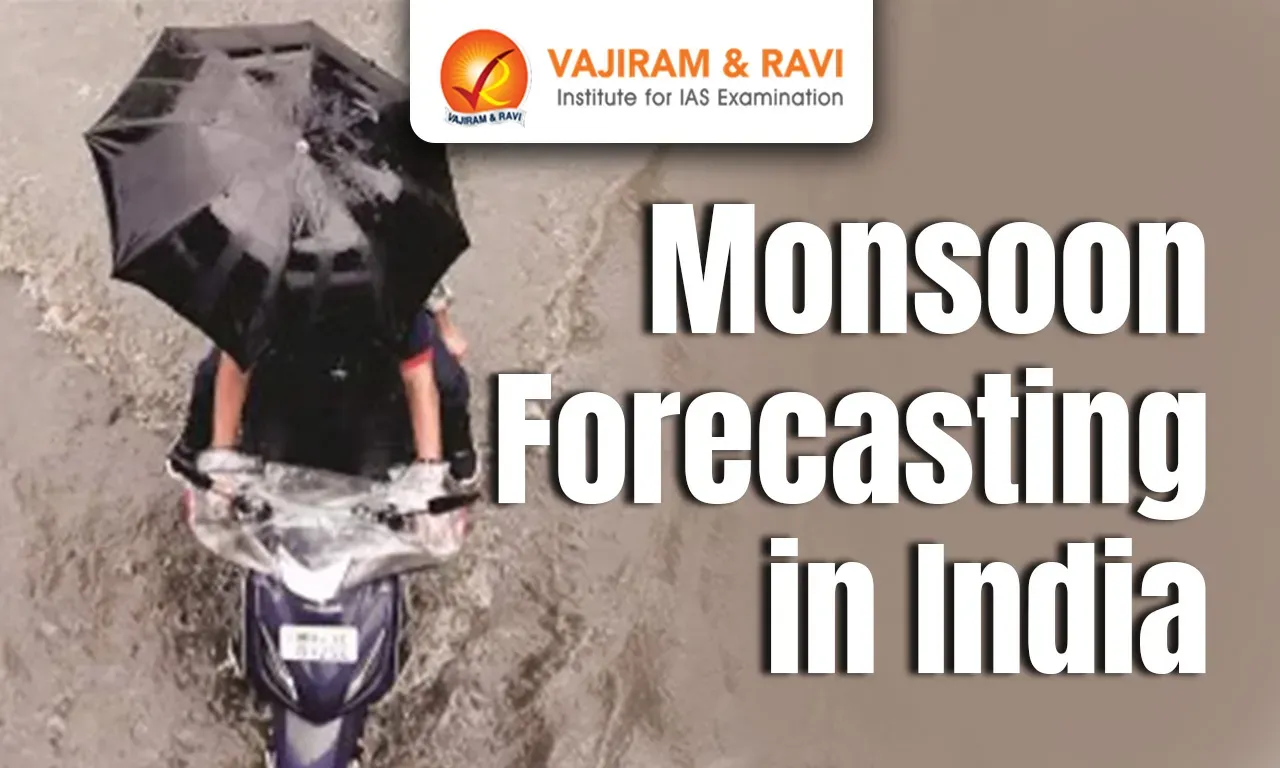
History and Evolution of Monsoon Forecasting in India | IMD Advances Explained

History and Evolution of Monsoon Forecasting in India | IMD Advances Explained

What’s in Today’s Article?

  • Monsoon Forecasting in India Latest News
  • Early Efforts in Monsoon Forecasting
  • Post-Independence Challenges and the IMD’s Early Forecasting Models
  • Recent Improvements in Monsoon Forecasting
  • Monsoon Forecasting in India FAQs

Monsoon Forecasting in India Latest News

  • The India Meteorological Department (IMD) has predicted above-normal rainfall of 105% of the long-period average (LPA) for the June-September southwest monsoon season. 
  • Key drivers like the El Niño-Southern Oscillation (ENSO) and the Indian Ocean Dipole (IOD) are favorable for the monsoon.
  •  The April 15 forecast is the first of the year, with an updated forecast expected in the last week of May. Long-range forecasts can extend from 30 days to two years.

Early Efforts in Monsoon Forecasting

  • A systematic effort to forecast monsoon rainfall began in 1877, following the establishment of the India Meteorological Department (IMD) in 1875. 
  • The impetus for this was the Great Famine of 1876-78, which highlighted the critical need to understand monsoon patterns for agriculture, revenue, and public health. 
  • British colonial interests, including agricultural production and shipping, relied heavily on the monsoon.

Blanford's Contribution (1882-1885)

  • The first tentative forecasts were made by Henry Francis Blanford, who analyzed the relationship between Himalayan snow cover and monsoon rainfall. 
  • Blanford’s theory suggested that the extent and thickness of snow in the Himalayas influenced rainfall patterns over India, particularly in northwest regions. 

Eliot's Advances (1889)

  • Sir John Eliot succeeded Blanford as the first Director General of Indian Observatories in 1889. 
  • Eliot expanded on Blanford's work by incorporating data on Himalayan snow, local weather conditions, and factors from the Indian Ocean and Australia. 
  • Despite these advancements, Eliot’s forecasts were still unable to predict droughts or famines, such as the devastating Indian Famine of 1899-1900.

Sir Gilbert Walker and Global Influences (1904)

  • In 1904, Sir Gilbert Walker succeeded Eliot and made significant advancements by incorporating global atmospheric, land, and ocean parameters. 
  • Walker identified 28 predictors with stable historical correlations to the Indian monsoon and identified the Southern Oscillation (SO) as a key global pressure pattern influencing India's climate. 
  • SO was later linked to El Niño, which was identified by Jacob Bjerknes in the 1960s. 
  • Walker also divided India into three subregions—Peninsula, Northeast, and Northwest—for more accurate forecasts.

Post-Independence Challenges and the IMD’s Early Forecasting Models

  • After India’s independence, the IMD continued using Walker’s monsoon forecasting model until 1987, but the forecasts were not very accurate. 
  • From 1932 to 1987, the average error in predictions was significant, with errors of 12.33 cm for the peninsula and 9.9 cm for Northwest India. 
  • The primary issue was that many of Walker’s parameters had lost their relevance over time, leading to poor accuracy despite attempts to improve the model.

Introduction of the Gowariker Model (1988)

  • In 1988, the IMD adopted a new model based on power regression, developed by Vasant R Gowariker and his team. 
  • This model used 16 atmospheric variables as predictors in statistical relationships with total rainfall. 
  • Forecasts for the entire country replaced regional forecasts, though regional predictions were reintroduced in 1999 with modified geographical boundaries. 
  • However, the new model still faced issues, and by 2000, four of the 16 parameters had lost their correlation with the monsoon, requiring adjustments.

Failures and Re-evaluation (2000s)

  • The Gowariker model faced significant challenges, including its failure to predict the drought of 2002, which followed 14 years of good monsoons. 
  • This failure led to a re-evaluation of the model. 
  • In 2003, the IMD introduced two new models based on 8 and 10 parameters, along with a two-stage forecast strategy. 
  • While the 2003 forecast was accurate, the models again failed to predict the 2004 drought, prompting further refinement.

Development of the Statistical Forecasting System (2007)

  • In 2007, the IMD introduced a Statistical Ensemble Forecasting System (SEFS) to support its two-stage forecasting strategy. 
  • This new system reduced the number of parameters in the models, replacing the eight-parameter model with a five-parameter model for the first forecast and the ten-parameter model with a six-parameter model for the update. 
  • The aim was to avoid "overfitting," ensuring the models could accurately predict new data.
  • The IMD also implemented ensemble forecasting, which combined all possible forecasting models based on different predictor combinations to generate a more robust prediction. 
  • This new approach significantly improved the accuracy of monsoon forecasts, with the average error decreasing from 7.94% of the long-period average (LPA) between 1995 and 2006 to 5.95% of LPA between 2007 and 2018.

Recent Improvements in Monsoon Forecasting

  • Launch of the Monsoon Mission Coupled Forecasting System (MMCFS) - 2012
    • The introduction of the MMCFS in 2012 marked a significant advancement in monsoon prediction. 
    • This coupled dynamic model combined data from the ocean, atmosphere, and land to provide more accurate forecasts. 
    • The IMD used MMCFS alongside the SEFS for improved predictions.
  • Multi-Model Ensemble (MME) Approach - 2021
    • In 2021, the IMD further enhanced its forecasting accuracy with the introduction of an MME system. 
    • This approach incorporated coupled global climate models (CGCMs) from various global climate prediction and research centers, including India’s own MMCFS. 
    • The MME system has significantly improved the accuracy of monsoon predictions.
  • Notable Improvements in Forecast Accuracy
    • Since the introduction of SEFS in 2007 and MME in 2021, the IMD's operational forecasts have shown marked improvement. 
    • The absolute forecast error in India's seasonal rainfall has decreased by about 21% between 2007 and 2024 compared to 1989-2006. 
    • IMD's April forecasts have also become more precise, with deviations of only 2.27 percentage points in the actual rainfall from 2021-2024, well within the forecast range of 4%.
  • Scope for Further Improvement
    • Despite these advancements, there is still room for further refinement. 
    • Experts have suggested that the IMD should improve its dynamical models by addressing systematic errors and biases, as well as enhancing teleconnectivity with global climate modes such as the ENSO. 
    • This could further enhance the precision of the IMD's monsoon forecasts.

Monsoon Forecasting in India FAQs

Q1. When did systematic monsoon forecasting begin in India?

Ans. Systematic monsoon forecasting began in 1877 after the establishment of the India Meteorological Department (IMD) in 1875.

Q2. Who introduced global atmospheric parameters into India's monsoon forecasts?

Ans. Sir Gilbert Walker introduced global atmospheric, land, and ocean parameters into India's monsoon forecasting in 1904.

Q3. What was the purpose of the Gowariker model introduced in 1988?

Ans. The Gowariker model aimed to improve forecast accuracy using 16 atmospheric variables through power regression techniques.

Q4. What is the Monsoon Mission Coupled Forecasting System (MMCFS)?

Ans. MMCFS is a dynamic model introduced in 2012 combining ocean, atmosphere, and land data for improved monsoon prediction.

Q5. How has forecast accuracy improved since 2007?

Ans. Forecast error reduced by about 21% between 2007-2024, aided by SEFS and the Multi-Model Ensemble (MME) approach.


Source: IE | IE

Supreme Court Suggests Minimum Vote Requirement for Unopposed Election Wins

Supreme Court Suggests Minimum Vote Requirement for Unopposed Election Wins

What’s in Today’s Article?

  • Supreme Court on Unopposed Elections Latest News
  • Background - Petition and Argument
  • Uncontested Elections in Lok Sabha
  • Response of the Election Commission of India (ECI)
  • View of the Supreme Court
  • Supreme Court on Unopposed Elections FAQs

Supreme Court on Unopposed Elections Latest News

  • The Supreme Court recently suggested that if there is only one candidate in an election, they should be required to secure a minimum prescribed vote share to be declared elected, rather than winning automatically without a poll. 
  • The Court was hearing a petition filed by the Vidhi Centre for Legal Policy, which challenged the constitutionality of Section 53(2) of the Representation of the People Act, 1951. This section currently allows a sole candidate to be declared elected without an election. 

Background - Petition and Argument

  • The petition was filed in August 2024. 
  • It argues that if an election is not held when there is only one candidate, voters lose the chance to choose the "None of the Above" (NOTA) option. 
  • This, the petition says, violates the fundamental rights of voters.

Reference to Supreme Court Judgment

  • The petition cites the Supreme Court’s 2013 judgment in People’s Union for Civil Liberties vs Union of India.
  • In this judgment, the Court recognized the right to cast a negative vote (NOTA) as protected under Article 19(1)(a) of the Constitution.

Core Argument

  • It argues that the right to express disapproval through NOTA should be available regardless of the number of candidates contesting the election.

Uncontested Elections in Lok Sabha

  • The petition states that between 1951 and 2024, candidates were elected uncontested in 26 Lok Sabha constituencies, based on Election Commission of India reports. 
  • As a result, over 82 lakh voters were deprived of their right to vote.

Breakup of Uncontested Elections

  • According to the petition, uncontested elections occurred as follows: seven in 1957, five each in 1951 and 1967, three in 1962, two in 1977, and one each in 1971, 1980, 1989, and 2024.

Recent Example

  • In 2024, BJP candidate Mukeshkumar Dalal was declared elected unopposed from Surat after all other candidates withdrew or had their nominations rejected.

Uncontested Elections in State Assemblies

  • The petition also points out that uncontested elections are more frequent in state Assembly elections.

Response of the Election Commission of India (ECI)

  • The ECI, in its counter affidavit, noted that uncontested elections occurred in only nine out of 20 Lok Sabha elections held between 1951 and 2024. 
  • Since 1989, only one MP has been elected uncontested, highlighting that such instances have become extremely rare with the growth of political participation and voter awareness.

Argument Against the Petition

  • The Commission argued that with democracy evolving and more parties contesting, the likelihood of uncontested elections is now minimal. 
  • Therefore, the Supreme Court should not entertain the petition.

Position on NOTA

  • The ECI emphasized that the "None of the Above" (NOTA) option is available only when polling takes place. 
  • NOTA is not to be treated as a competing candidate in uncontested elections.

Need for Legislative Change

  • The Commission stated that recognizing NOTA as a mandatory contesting option would require amendments to the RPA, 1951, and the Conduct of Elections Rules, 1961, as the current law does not provide for this.

View of the Supreme Court

  • Suggestion for Minimum Vote Requirement
    • SC suggested that when only one candidate remains, they should be required to secure a minimum percentage of votes — such as 10% or 15% — to be declared elected, rather than winning automatically.
  • Democracy and Majority Principle
    • It emphasized that democracy is founded on majority support, and even in uncontested situations, a candidate should have at least some voters’ approval to uphold democratic principles.
  • Advice to the Government
    • SC urged the government to consider introducing a provision to address such scenarios in the future, stressing that Parliament could decide the specifics. 
    • It questioned the idea of allowing someone to enter Parliament "by default" without even minimal voter support.

Supreme Court on Unopposed Elections FAQs

Q1. What did the Supreme Court suggest for unopposed elections?

Ans. It suggested candidates must secure a minimum vote percentage to be declared elected.

Q2. Which law allows automatic wins in uncontested elections?

Ans. Section 53(2) of the Representation of the People Act, 1951.

Q3. Why was the petition filed against uncontested elections?

Ans. It argued voters lose their right to express disapproval through NOTA.

Q4. What is the Election Commission’s stand on uncontested elections?

Ans. The ECI said uncontested elections are now extremely rare.

Q5. What did the Supreme Court emphasize about democracy?

Ans. Democracy requires majority support, even when only one candidate contests.


Source: IE | B&B | IE

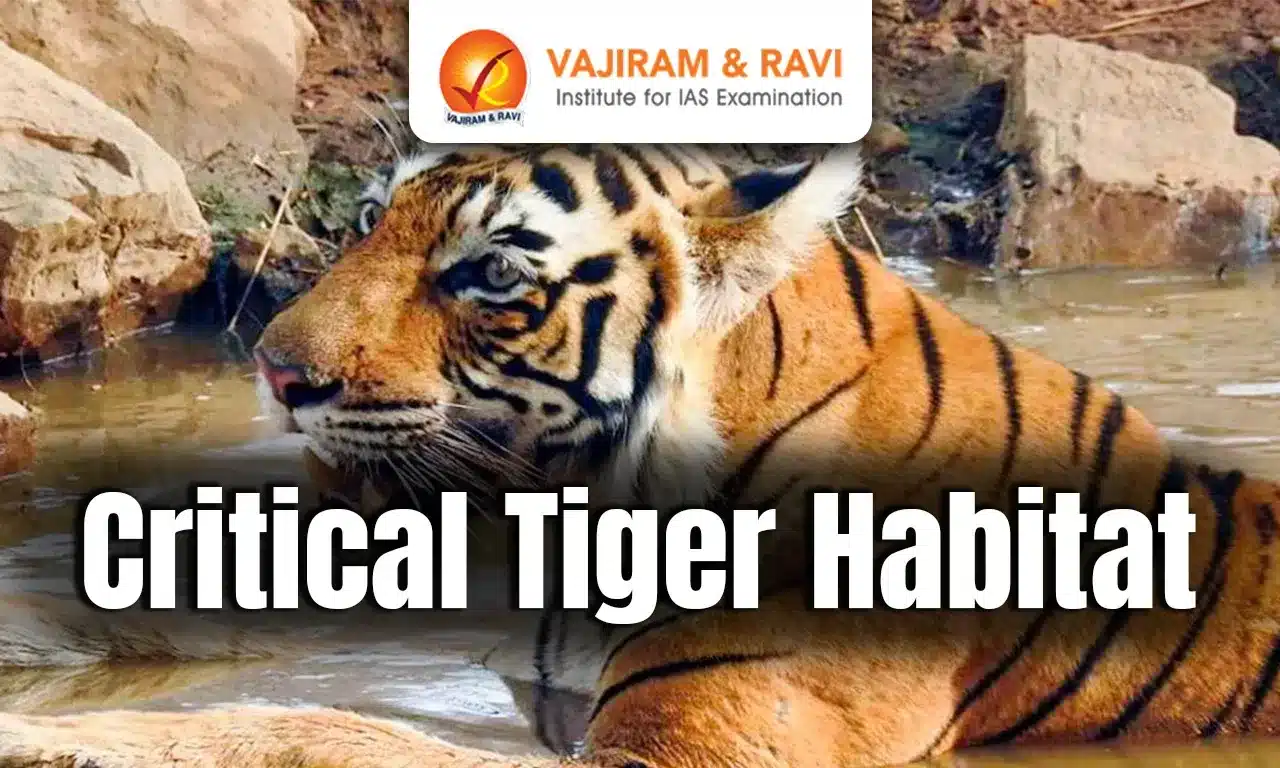
Critical Tiger Habitat (CTH)

Critical Tiger Habitat (CTH)

Critical Tiger Habitat Latest News

The Critical Tiger Habitat (CTH) of Sariska Tiger Reserve (STR) is likely to expand by approximately 4,500 hectares following a rationalisation exercise mandated by the Supreme Court of India's Central Empowered Committee (CEC).

About Critical Tiger Habitat

  • Critical Tiger Habitat (CTH), also known as core areas of tiger reserves, are identified under the Wild Life Protection Act (WLPA), 1972.
  • These are based on scientific evidence that "such areas are required to be kept as inviolate for the purpose of tiger conservation, without affecting the rights of the Scheduled Tribes or such other forest dwellers".
  • The notification of CTH is done by the state government in consultation with the expert committee constituted for the purpose.
  • Inviolate Status: These areas are kept inviolate (free from human activities) for the purpose of tiger conservation.
  • The forests peripheral to CTH are notified as buffer areas, which act as a transition between CTH and non-tiger reserves.

Key Facts about Central Empowered Committee

  • It was set up in 2002 (reconstituted in 2008) by the Supreme Court.
  • It served as a watchdog for issues pertaining to environmental conservation and compliance.
  • In 2023, the Supreme Court transferredthe CEC, to the Ministry of Environment, Forest, and Climate Change. 
  • According to the Union Environment Ministry’s notification, the central empowered committee will now be institutionalised as a permanent statutory body, moving away from its earlier ad hoc status. 
  • Composition of the new CEC
    • It will have a chairman with experience of 25 years in the field of environment, forests and wildlife or proven administrative experience of not less than 25 years in the central or state governments.
    • He will be nominated by the central government for a tenure of three years.
    • The age limit for the Chairperson is set at 66 years, and the rank must not be below that of an Additional Secretary.
    • The member secretary will be a full-time serving officer of the government not below the rank of Deputy Inspector General of forests or director in the Government of India.
    • This person is required to have special knowledge in the field of environment, forests, or wildlife, and experience of at least 12 years.
    • The member secretary too, will be appointed by the Centre.
    • The three expert members will be one each from the fields of the environment, forests, and wildlife with experience of at least 20 years.
    • They will also be nominated by the Centre for a tenure of three years.
    • One notable change in the new central empowered committee structure is the exclusion of Non-Governmental Organisations (NGOs), which were previously part of the committee.
  • The primary responsibilities of the CEC include:
    • Monitoring compliance with environmental laws and regulations.
    • Providing expert recommendationsto the government and judiciary on environmental issues.
    • Investigating complaints and grievances related to environmental violations.
    • Conducting site visits and inspections to assess environmental damage and suggest remedial measures.
    • Reporting to the Supreme Court and other relevant authorities on matters related to environmental conservation.

Critical Tiger Habitat FAQs

Q1. Under which Act are Critical Tiger Habitats (CTH) identified?

Ans. Wild Life Protection Act, 1972

Q2. Who declares critical tiger habitats?

Ans. The notification of CTH is done by the state government in consultation with the expert committee constituted for the purpose.

Q3. What is meant by the "inviolate" status of a Critical Tiger Habitat?

Ans. It is kept free from human activities for tiger conservation.

Source: TOI

Enquire Now