New Zealand

New Zealand

New Zealand Latest News

The first round of negotiations for the India–New Zealand Free Trade Agreement (FTA) concluded successfully in New Delhi recently.

Key Facts about New Zealand

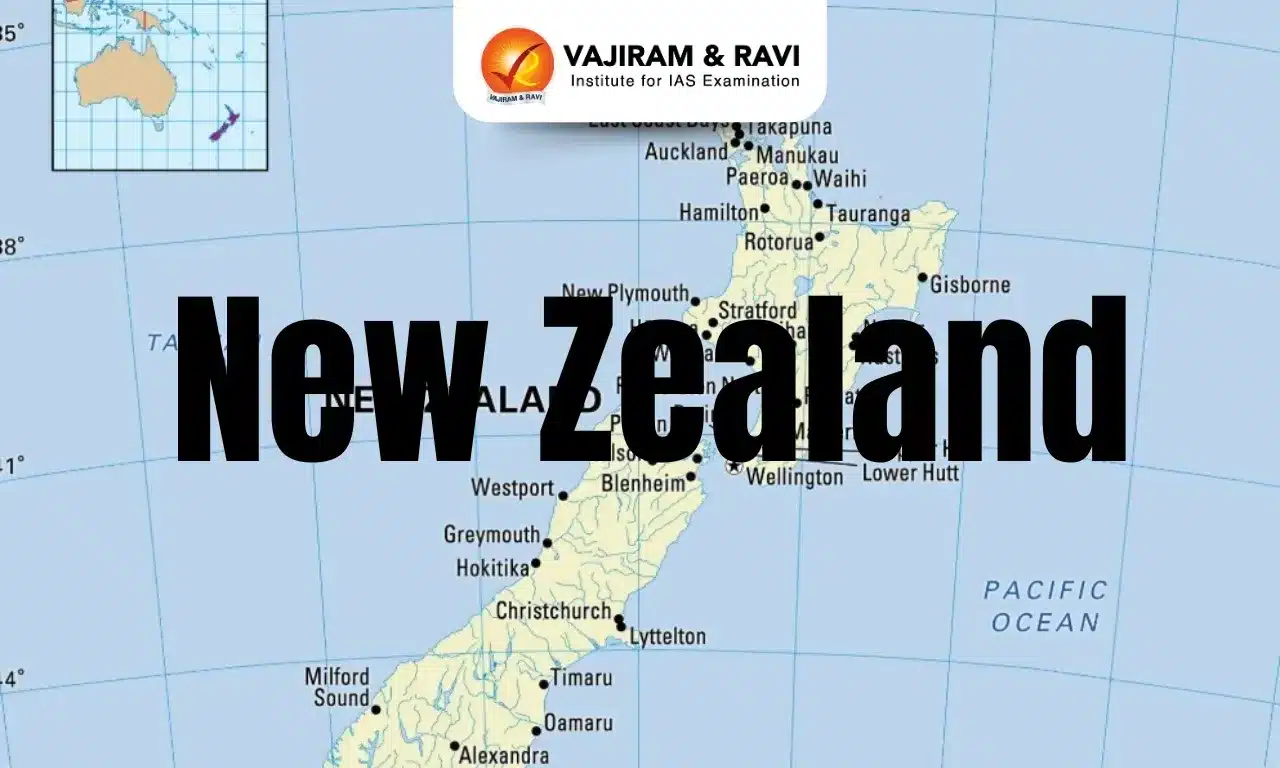
  • New Zealand is an island country located in the Southwestern Pacific Ocean, situated between the Tropic of Capricorn and the Antarctic Circle.
  • It comprises two major islands—the North Island and the South Island, separated by the Cook Strait, along with over 700 smaller islands.
  • Geologically, New Zealand is part of the Pacific Ring of Fire, making it prone to earthquakes and volcanic activity.
  • The country features diverse relief, including the Canterbury Plains, a high central plateau in Central Otago, and active volcanoes such as Mount Ruapehu and White Island.
  • The highest peak is Mount Cook (Aoraki), and the largest glacier is the Tasman Glacier.
  • Lake Taupō is the largest natural lake in New Zealand and lies in a volcanic caldera, contributing to the country’s hydroelectric energy and tourism.

New Zealand FAQs

Q1: Does India have a Free Trade Agreement (FTA) with New Zealand?
Ans: No, India and New Zealand are currently negotiating an FTA, but it has not yet been finalised.

Q2: What are the key exports from India to New Zealand?
Ans: India exports pharmaceuticals, textiles, machinery, and agricultural products such as spices and rice to New Zealand.

Source: PIB

Pakal Dul Hydropower Project

Pakal Dul Hydropower Project

Pakal Dul Hydropower Project Latest News

The Indian government has fast-tracked approval for the electricity transmission line of the 1,000 MW Pakal Dul hydropower project in Jammu and Kashmir’s Kishtwar district.

About Pakal Dul Hydropower Project

  • It is a 1 GW run-of-the-river scheme hydroelectric project (HEP) under construction on the Marusudar River, a tributary of the Chenab River in the Kishtwar district of Jammu and Kashmir.
  • It comprises a 167 m-high concrete-face rockfill dam, a 157 m-long, 20.2 m-wide, and 49 m-high underground powerhouse, a 123.6 m-long, 16 m-wide, and 13.1 m-high transformer cabin, and a rockfill impervious core cofferdam.
  • The underground powerhouse will be equipped with four 250 MW Francis turbine units operating at a net head of 397.3m.
  • It is anticipated to produce around 3,330 million units of energy a year.
  • It is being constructed by Chenab Valley Power Projects [P] Ltd. (CVPPL), a joint venture company of National Hydroelectric Power Corporation (NHPC Limited) and Jammu & Kashmir State Power Development Corporation Ltd (JKSPDC).
  • JKSPDC holds a 49% stake in CVPPL while NHPC and PTC India hold 49% and 2%, respectively.
  • During the first ten years of operation, the state of J&K will receive 12% free power from the project, in addition to waiving water usage charges. The state will also have the first right to purchase the power allotted to NHPC and PTC.

Pakal Dul Hydropower Project FAQs

Q1: Where is the Pakal Dul Hydropower Project located?

Ans: Jammu and Kashmir

Q2: The Pakal Dul Hydropower Project is being constructed on which river?

Ans: It is on the Marusudar River, a tributary of the Chenab River

Q3: What is the total planned capacity of the Pakal Dul Hydropower Project?

Ans: 1000 MW (1 GW )

Source: SWA

Pradhan Mantri Formalisation of Micro Food Processing Enterprises Scheme

Pradhan Mantri Formalisation of Micro Food Processing Enterprises Scheme

Pradhan Mantri Formalisation of Micro Food Processing Enterprises (PMFME) Scheme Latest News

Bihar secured first position in the country for successfully implementing the Pradhan Mantri Formalisation of Micro Food Processing Enterprises(PMFME) scheme in the financial year 2024-25, said the industries minister recently.

About Pradhan Mantri Formalisation of Micro Food Processing Enterprises (PMFME) Scheme

  • Launched on June 29, 2020, PMFMPE is a Centrally Sponsored Scheme by the Ministry of Food Processing Industries.
  • It is designed to address the challenges faced by micro-enterprises and to tap the potential of groups and cooperatives to support the upgradation and formalization of these enterprises.
  • Objectives: To build the capability of microenterprises to enable:
    • Increased access to credit by existing micro food processing entrepreneurs, FPOs, self-help groups, and co-operatives.
    • Integration with an organized supply chain by strengthening branding & marketing.
    • Support for the transition of existing 200,000 enterprises into a formal framework.
    • Increased access to common services like common processing facilities, laboratories, storage, packaging, marketing, and incubation services.
    • Strengthening of institutions, research, and training in the food processing sector; and
    • Increased access for enterprises to professional and technical support.
  • Outlay:
    • The scheme envisages an outlay of ₹ 10,000 crores over a period of five years from 2020-21 to 2024-25.
    • The expenditure under the scheme would be shared in a 60:40 ratio between Central and State Governments, in a 90:10 ratio with the Northeastern and the Himalayan States, a 60:40 ratio with UTs with the legislature, and 100% by the Center for other UTs.
  • Coverage:
    • Under the scheme, 2,00,000 micro food processing units will be directly assisted with credit-linked subsidies.
    • Adequate, supportive common infrastructure and institutional architecture will be supported to accelerate the growth of the sector.
  • Benefits: The program has four broad components addressing the needs of the sector:
    • Support to individuals and groups of micro-enterprises.
    • Branding and Marketing support.
    • Support the strengthening of institutions.
    • Setting up a robust project management framework.
  • Financial Support:
    • Support to Individual micro units:
      • Micro enterprises will get credit-linked subsidy @ 35% of the eligible project cost with a ceiling of Rs.10 lakh.
      • Beneficiary contribution will be a minimum 10% and balance from the loan.
      • On-site skill training & Handholding for DPR and technical upgradation.
    • Support to FPOs/SHGs/Cooperatives:
      • Seed capital will be given to SHGs (@Rs. 4 lakh per SHG) for loans to members for working capital and small tools.
      • Credit linked capital subsidy @35% subject to a maximum of Rs. 3 crore, to support FPOs, SHGs, Cooperatives, and any Government agency for setting up common infrastructure. 
      • Grant upto 50% for Branding and Marketing to groups of FPOs/ SHGs/ Cooperatives or an SPV of micro food processing enterprises.
      • Skill training & Handholding support.
      • Credit linked capital subsidy
  • The Eligible Borrowers for PMFMPE can be:
    • Farmer Producer Organization (FPO)
    • Self-Help Groups
    • Co-operatives
    • Existing Micro Food Processing Entrepreneurs
    • New Units, whether for individuals or groups, would only be supported for One District One Product (ODOP).

Pradhan Mantri Formalisation of Micro Food Processing Enterprises (PMFME) Scheme FAQs

Q1: What is Pradhan Mantri Formalisation of Micro food enterprises Scheme?

Ans: It is a Centrally Sponsored Scheme by the Ministry of Food Processing Industries, designed to address the challenges faced by the micro-enterprises.

Q2: What is the financial support provided to individual micro food processing units under PMFME?

Ans: Credit-linked subsidy of 35% of the project cost

Q3: What is the maximum subsidy limit for individual micro food processing units under the PMFME Scheme?

Ans: ₹ 10 lakh

SourceTOI

MADMAX

MADMAX

MADMAX Latest News

The MADMAX collaboration has published the first results of its search for dark photons using a prototype detector.

What is MADMAX?

  • MADMAX stands for Magnetised Disk and Mirror Axion Experiment.
  • It is a research initiative designed to detect dark matter candidates such as axions and dark photons.
  • The detector consists of a stack of dielectric (sapphire) disks and a reflective mirror, forming a resonator system.

What are Dark Photons?

  • Dark photons are hypothetical particles similar to photons (light particles) but with mass.
  • They are proposed components of galactic dark matter halos.
  • Under specific conditions, dark photons can convert into ordinary photons, with the frequency of conversion depending on the mass of the dark photon.

How does the MADMAX Detector Work?

  • The core detection mechanism involves boosting the conversion of dark photons to microwave photons.
  • This is achieved using a resonator composed of parallel dielectric disks that enhance conversion probabilities.
  • curved mirror focuses the resulting microwave signals into a horn antenna that connects to a microwave receiver.

Key Features of the MADMAX Setup

  • Resonators larger than the wavelength of expected dark photon signals, enabling detection at higher frequencies (~20 GHz).
  • Ability to tune resonance frequencies by adjusting disk positions, thereby expanding the mass range coverage.
  • Signal identification relies on detecting a narrow peak in Fourier space that stands out from thermal noise.

Experimental Findings

  • The first prototype run did not detect dark photon signals.
  • However, the instrument functioned successfully, detecting signals with a sensitivity three orders of magnitude better than prior methods.
  • This run covered a previously unexplored range of parameters in just one experiment.

MADMAX FAQs

Q1: What are axions?
Ans: Axions are hypothetical elementary particles proposed to solve the strong CP problem in quantum chromodynamics (QCD).

Q2: Why are axions significant in physics?
Ans: They are strong candidates for cold dark matter, which is believed to make up most of the universe’s mass.

Q3: What are dark photons?
Ans: Dark photons are theoretical particles that may mediate interactions in the dark matter sector, similar to how regular photons mediate electromagnetic interactions.

Source: PHY

Songar Drones

Songar Drones

Songar Drones Latest News

Recently, Pakistan attempted a mass drone incursion at 36 locations from Leh to Sir Creek, deploying an estimated 300–400 Songar drones.

About Songar Drones

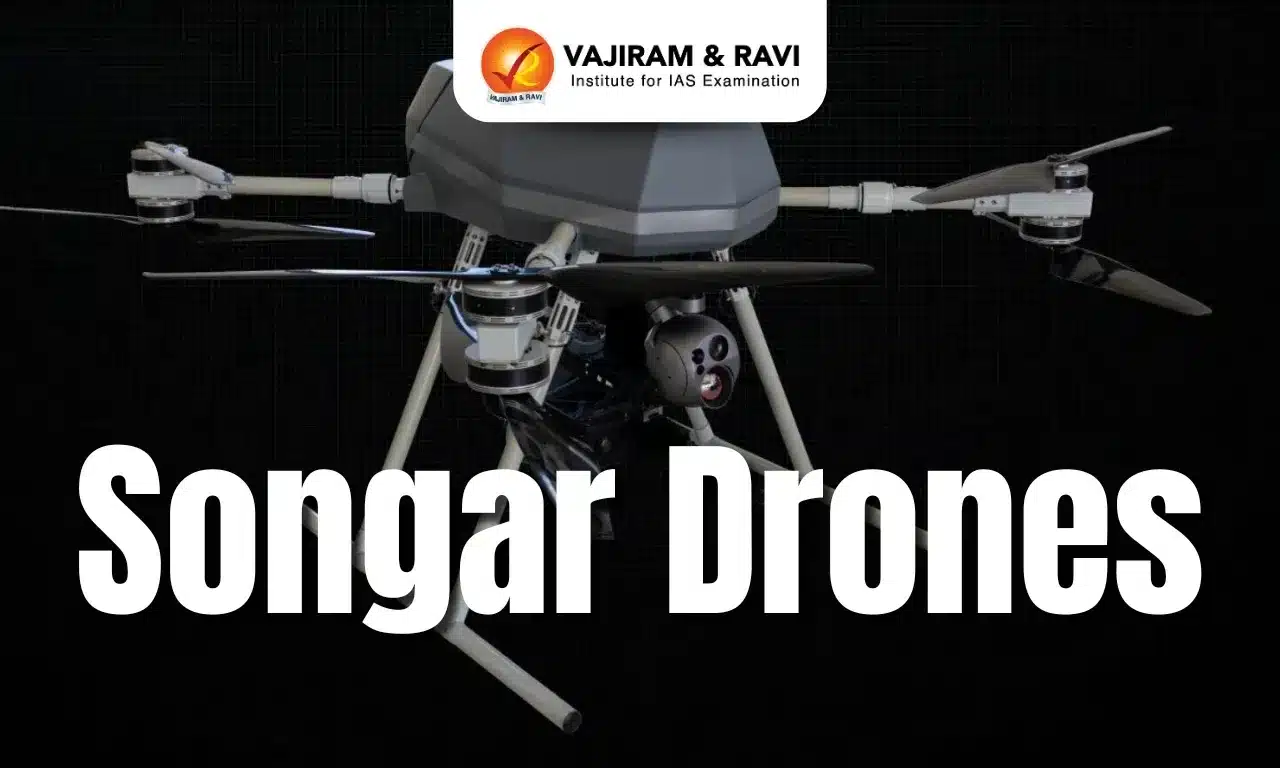
  • Songar drones are armed unmanned aerial systems (UAS) developed by Turkey-based defence company Asisguard and are considered Turkey’s first indigenously developed armed drones.
  • First launched in April 2019, these drones were officially inducted into the Turkish Armed Forces (TAF) in February 2020 after completing successful trials.

Key Technical Features of Songar Drones

  • The drone's rotor-to-rotor width is 140 cm, with a maximum take-off weight of 45 kg.
  • It can perform operations for 35 minutes without payload, and has autonomous and manual flight control modes.
  • Operational range is approximately 10 km, with a maximum altitude of 3,000 m above mean sea level and 300 m above ground level.
  • Equipped with real-time video transmission and dual cameras – a pilot camera for navigation and a gun-mounted camera for targeting.
  • Includes GPS and GLONASS-based navigation, with autonomous return-to-base function in case of communication loss.

Weapon Configurations and Variants

  • There are five primary weaponised variants of Songar drones:
    • Songar 5.56×45 mm Assault Rifle – uses standard NATO rounds with a recoil-dampening mechanism.
    • Songar 2×40 mm Grenade Launcher – fires two grenades up to 400–450 metres.
    • Songar 6×40 mm Drum-type Grenade Launcher – fires six grenades in rapid succession.
    • Songar 3×81 mm Mortar Gripper – suited for launching mortar shells.
    • Songar 8×Tear/Smoke Grenade Launcher – delivers grenades via controlled free-fall, ideal for riot control or non-lethal missions.
  • All variants are equipped with multi-layered safety protocols, requiring operator authorisation before firing.

Songar Drones FAQs

Q1: What is the Songar drone?
Ans: Songar is an armed drone developed by Turkey’s Asisguard, capable of carrying assault rifles and grenade launchers.

Q2: Which country manufactures Songar drones?
Ans: Turkey manufactures Songar drones through a company called Asisguard.

Q3: What are the capabilities of Songar drones?
Ans: Songar drones are capable of autonomous or remote-controlled firing, real-time surveillance, and night vision operations.

Source: IE

Methane

Methane

Methane Latest News

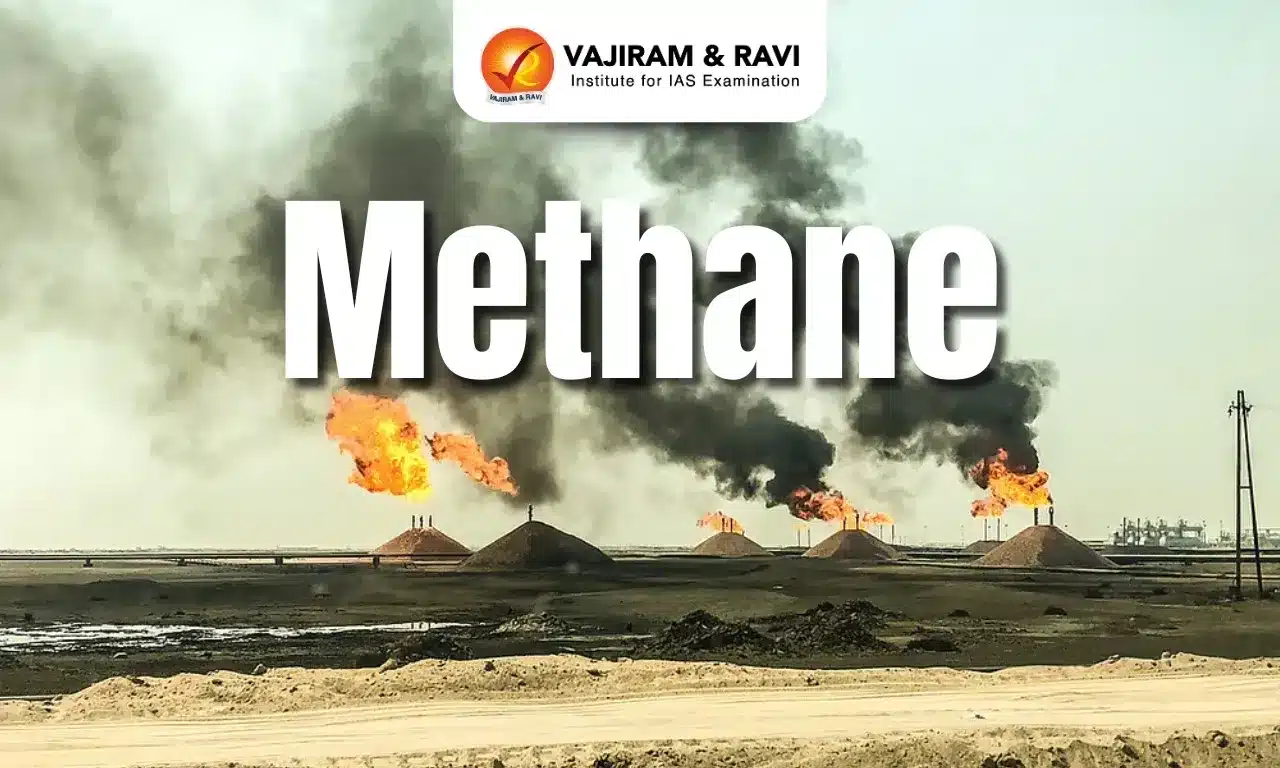
According to the International Energy Agency’s (IEA) Global Methane Tracker 2025, the energy sector contributed approximately 145 million tonnes (Mt) of methane emissions in 2024, with oil and gas facilities alone accounting for over 80 Mt.

About Methane

  • Methane is a potent greenhouse gas, responsible for about 30% of the global temperature rise since the Industrial Revolution. Its atmospheric concentration is now 2.5 times higher than in the preindustrial era and is rising faster than other greenhouse gases.
  • The three major anthropogenic sources of methane emissions are agricultureenergy, and waste sectors.
  • The energy sector — comprising oilnatural gascoal, and bioenergy — accounts for over 35% of human-induced methane emissions.
  • Within the energy sector:
    • Oil operations contributed around 45 Mt.
    • Natural gas operations released nearly 35 Mt.
    • Abandoned oil and gas wells emitted approximately 3 Mt.
    • Coal activities added more than 40 Mt, including 4 Mt from abandoned mines.
    • Bioenergy combustion, especially in developing countries, contributed 18 Mt, mostly from traditional biomass like wood, dung, and charcoal.
  • Methane Characteristics:
    • It is a colourless, odourless, and highly flammable gas, also known as marsh gas.
    • It has a short atmospheric lifespan of ~10 years but a Global Warming Potential (GWP) of ~80 times that of CO₂ over 20 years.
  • Around 60% of atmospheric methane comes from human activities; the rest is from natural sources like wetlands and permafrost thawing, which release methane and CO₂ as temperatures rise.
  • End-use equipment in energy systems also leaks methane — contributing an additional 2 Mt.
  • Modern bioenergy sources contributed ~2 Mt of methane. These include biogasbiomethane, and biofuels derived from plant residues and waste.
  • The IEA highlighted that ~70% of fossil fuel methane emissions can be mitigated using existing technologies, and in oil & gas~75% of emissions can be reduced by fixing leaks and plugging abandoned wells.
  • China, followed by the USARussiaIranTurkmenistan, and India, are the top emitters from fossil fuel operations.

Methane FAQs

Q1: What is methane, and why is it significant in climate discussions?
Ans: Methane (CH₄) is a potent greenhouse gas, with a global warming potential about 80 times greater than CO₂ over 20 years.

Q2: What are the major sources of methane emissions?
Ans: Major sources include livestock digestion (enteric fermentation), rice paddies, landfills, and oil and gas operations.

Q3: Which global initiative targets methane reduction?
Ans: The Global Methane Pledge, launched at COP26, aims to reduce global methane emissions by at least 30% by 2030.

Source: DTE

Lupus

Lupus

Lupus Latest News

World Lupus Day is celebrated every year on May 10 to raise awareness about this rare but severe disease. 

About Lupus

  • It is a disease that occurs when your body's immune system attacks your own tissues and organs (autoimmune disease). 
  • Inflammation caused by lupus can affect many different body systems — including your joints, skin, kidneys, blood cells, brain, heart, and lungs.
  • Causes: The cause of lupus is unknown. It’s thought to be the result of a mix of genetic, hormonal, and environmental factors.
  • Lupus is much more common among women than men.
  • There are several kinds of lupus:
    • Systemic lupus erythematosus (SLE) is the most common type. It can be mild or severe and can affect many parts of the body. SLE accounts for 70% of lupus cases.
    • Discoid lupus causes a red rash that doesn't go away.
    • Subacute cutaneous lupus causes sores after being out in the sun.
    • Drug-induced lupus is caused by certain medicines. It usually goes away when you stop taking the medicine.
    • Neonatal lupus, which is rare, affects newborns. It is probably caused by certain antibodies from the mother.
  • Symptoms
    • Lupus causes symptoms throughout your body, depending on which organs or systems it affects. 
    • Everyone experiences a different combination and severity of symptoms.
    • The symptoms of lupus occur in times of flare-ups. Between flare-ups, people usually experience times of remission, when there are few or no symptoms.
    • The wide range of symptoms in the body includes joint pain, headache, rashesfever, fatigue, mouth sores, confusion, swollen glands, and blood clots, among others.
  • Treatment: There is no cure for lupus, but medicines and lifestyle changes can help control it.

Lupus FAQs

Q1: What type of disease is lupus?

Ans: Autoimmune disease

Q2: What is the main cause of lupus?

Ans: Lupus is caused by a complex interplay of genes, hormones, and environmental factors.

Q3: Is lupus curable or treatable?

Ans: There is no cure for lupus, but medicines and lifestyle changes can help control it.

SourceETVB

Manas National Park

Manas National Park

Manas National Park Latest News

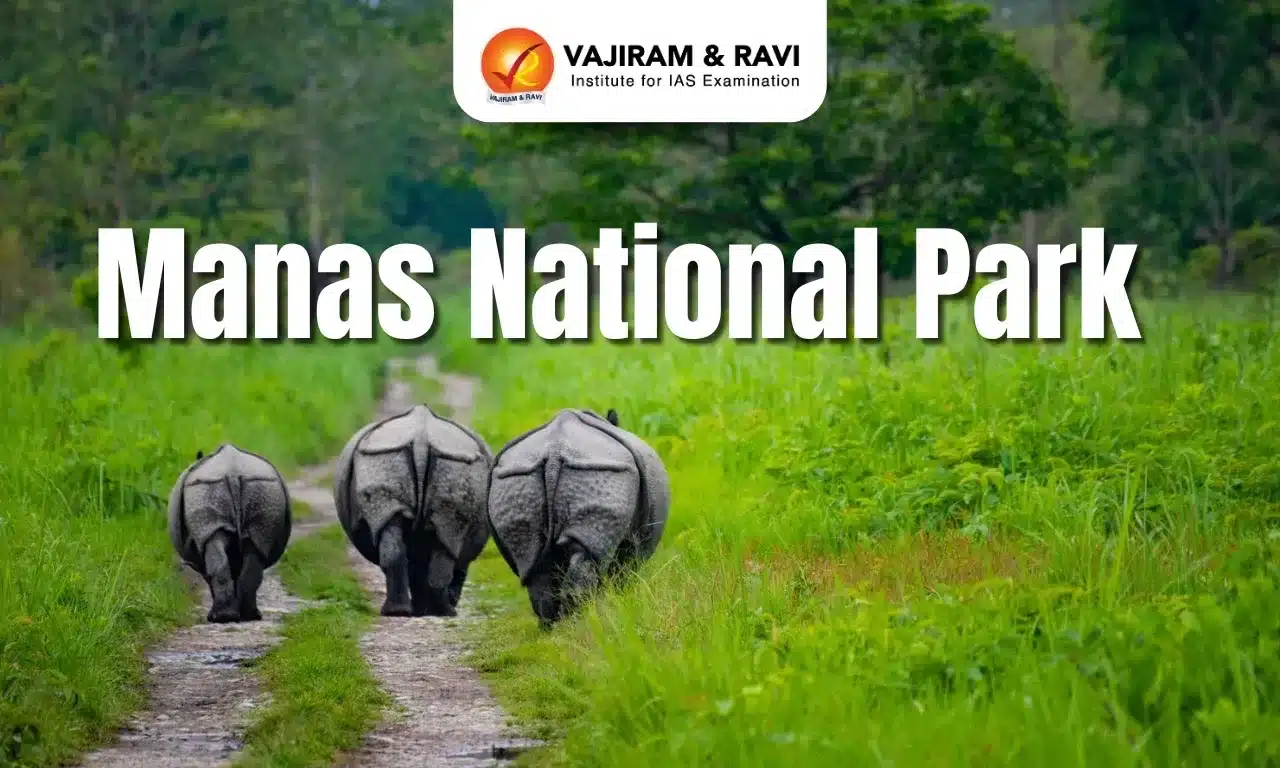
Three persons have been arrested for their alleged involvement in the killing of three wild elephants in Assam’s Manas National Park recently.

About Manas National Park

  • It is located in the foothills of Himalayas in Assam. 
  • Sprawling in a large area of 950 sq.km, the national park shares a border with Bhutan's Royal Manas National Park.
  • The Manas River, from which its name has been derived, flows through the west of the park and is the main river within it. 
    • The river also acts as an international border between India and Bhutan. 
    • Manas River is a major tributary of the Brahmaputra River and divides into two separate rivers, the Beki and Bholkaduba, as it reaches the plains.
  • The park’s elevation ranges from 60 to 1,500 meters (200 to 4,900 feet) above sea level, contributing to its rich biodiversity.
  • The area has the unique distinction of being a Natural World Heritage Site, a Tiger Reserve, an Elephant Reserve, a Biosphere Reserve, and an Important Bird Area.
  • It is one of the first reserves included in the tiger reserve network under Project Tiger in 1973.
  • It forms part of a large tiger conservation landscape which includes Buxa-Nameri-Pakke-Namdapha tiger reserves and protected areas of Bhutan and Myanmar.
  • The park is inhabited by several indigenous communities, including the Bodo, who have a deep connection with the land and its wildlife.
  • Flora
    • In general, the vegetation comprises Sal (Shorea robusta)scrub forests, old plantations (in buffer areas), semi-evergreen and mixed deciduous forests, interspersed with grasslands and riparian vegetation (in core area).
    • The most presiding plant species found here are hoolong trees. Some other prominent species available here are Amari, Dewa Sam, Himolu, Garjan, etc.
  • Fauna: The Park is known for its rare and endangered endemic wildlife, such as the Hispid Hare, Pygmy Hog, Golden Langur, Indian Rhinoceros, Asiatic Buffalo, etc.

Manas National Park FAQs

Q1: In which district is Manas National Park located?

Ans: It is located in Chirang and Baksa districts of Bodoland Territorial Region in the State of Assam.

Q2: Which river flows in Manas National Park?

Ans: The Manas River (major tributary of the Brahmaputra River), from which its name has been derived, flows through the west of the park.

Q3: Manas National Park shares its northern boundary with which country?

Ans: Bhutan

SourcePRINT

Turkey-Pakistan Military Nexus Raises Alarms for India Amid Drone Attacks

Turkey-Pakistan Military Nexus Raises Alarms for India Amid Drone Attacks

What’s in Today’s Article?

  • Turkey Pakistan Military Cooperation Latest News
  • Turkey’s Interests in Pakistan
  • Pakistan’s Interests in Turkey
  • Turkey–Pakistan Relationship and India
  • Turkey Pakistan Military Cooperation FAQs

Turkey Pakistan Military Cooperation Latest News

  • India thwarted a large-scale drone attack by Pakistan, targeting 36 sites along the western border. Over 300 drones, likely Turkish-made Asisguard Songar models, were used. 
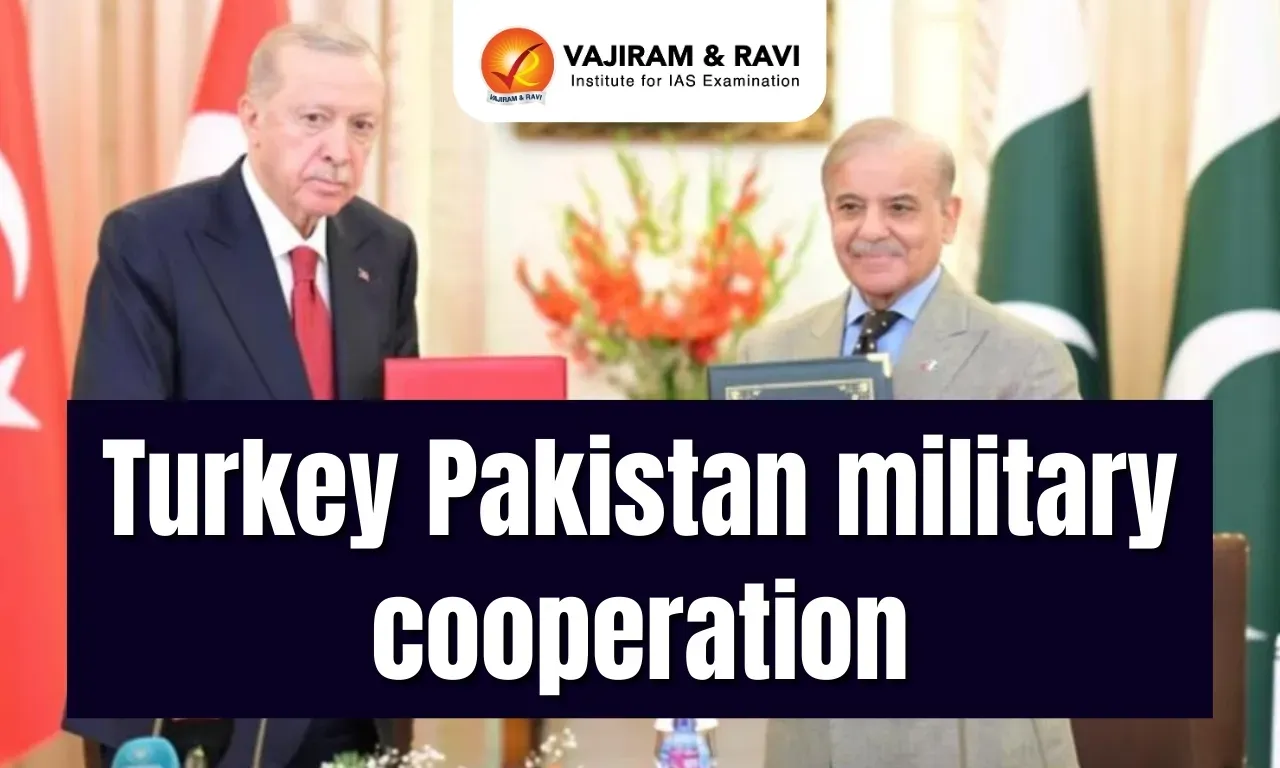
  • The attack raises concerns about Turkey’s growing military support for Pakistan, evidenced by recent Turkish military activity in Karachi. While Turkey denies sending arms, it remains Pakistan’s staunchest ally in West Asia and the only country to condemn India’s Operation Sindoor. 
  • In contrast, India has developed strong relations with Saudi Arabia and the UAE, who have shown neutrality and greater alignment with India on regional issues, including Kashmir.

Turkey’s Interests in Pakistan

  • Historical and Ideological Bond
    • Shared Islamic identity has historically underpinned the Turkey–Pakistan relationship.
    • During the Cold War, both were part of Central Treaty Organization (CENTO) and the Regional Cooperation Development (RCD).
    • Pakistan supported Turkey in the Cyprus conflicts (1964, 1971) and pledged early recognition of Turkish Cyprus in 1983.
    • The rise of Recep Tayyip Erdoğan and his political Islamism deepened the ideological alignment with Pakistan post-2000.
  • High-Level Political Engagement
    • Erdoğan has visited Pakistan at least 10 times since 2003.
    • He co-chaired the 7th Pakistan-Türkiye High-Level Strategic Cooperation Council in February 2025, reflecting close bilateral ties.
  • Strategic Balancing Against Gulf Powers
    • Turkey, alongside Qatar, competes with Saudi Arabia and the UAE for influence in the Muslim world.
    • It seeks alternative alliances with non-Gulf states like Pakistan and Malaysia.
    • The 2019 Kuala Lumpur Summit, supported by Pakistan and Turkey, was viewed as an attempt to challenge Saudi leadership.
  • Indian Ocean Region (IOR) Engagement
    • Turkey is expanding its presence in the IOR:
      • Established its largest overseas military base in Somalia (2017).
      • Sold Baykar TB2 drones to Maldives (2024).
    • Turkey has held numerous naval exercises with Pakistan’s Navy, the second-largest in the IOR, while avoiding similar engagement with India.

Pakistan’s Interests in Turkey

  • Diplomatic Support on Kashmir
    • Turkey has consistently supported Pakistan’s stance on Kashmir.
    • In February 2025, President Erdoğan reiterated solidarity with “Kashmiri brothers,” prompting a diplomatic protest from India.
    • Pakistan acknowledges Turkey, along with China and Azerbaijan, as its key international supporters during crises.
  • Deepening Defence Cooperation
    • Turkey has become Pakistan’s second-largest arms supplier (after China) as of 2020.
    • Defence ties trace back to 1988 via the Military Consultative Group framework.
    • Recent acquisitions from Turkey include:
      • Bayraktar drones
      • Kemankes cruise missiles
      • Asisguard Songar drones
  • Naval Modernisation and Strategic Collaboration
    • Turkey plays a critical role in modernizing Pakistan’s naval capabilities, in line with Ankara’s Indian Ocean strategy.
      • $1 billion deal in 2018 for four advanced corvettes by STM Defence Technologies.
      • Mid-life upgrades of Agosta 90B submarines by Turkey’s STM — replacing French firm DCNS.

Turkey–Pakistan Relationship and India

  • Turkey’s Consistent Support to Pakistan on Kashmir
    • Turkey’s repeated support for Pakistan on the Kashmir issue has long strained India-Turkey ties.
    • In 2013, the then Indian Foreign Minister criticized Turkey’s actions, urging it not to forge friendships “at India’s expense.”
    • Turkey’s pro-Pakistan stance continues despite India’s gestures, such as humanitarian aid after the 2023 earthquake.
  • India’s Strategic Counters to the Turkey-Pakistan Nexus
    • Eastern Europe: Support to Cyprus and Greece
      • India backs the Greece-supported Republic of Cyprus, in opposition to Turkey and Pakistan’s support for the Turkish Republic of Northern Cyprus.
      • Greece reciprocates by supporting India’s stance on Kashmir.
    • South Caucasus: Military Alliance with Armenia
      • India has become Armenia’s top arms supplier, surpassing even Russia by 2024.
      • This aligns India against Azerbaijan, which is militarily backed by Turkey and Pakistan.
      • In 2024, Pakistan signed a $1.6 billion arms deal with Azerbaijan, and held a trilateral summit with Turkey and Azerbaijan.
  • Divergence in Global Strategic Alignments
    • Pakistan is increasingly isolated in US foreign policy, with no mention in the 2022 Indo-Pacific Strategy, while India featured prominently.
    • India's growing ties with the US reflect its rise as a strategic Indo-Pacific partner, further distancing Islamabad.
  • Competing Infrastructure Visions
    • India’s IMEC (India-Middle East-Europe Economic Corridor) bypasses Turkey, weakening Ankara’s historical role as a bridge between Asia and Europe.
    • Turkey has criticized IMEC and is now pushing its own “Iraq Development Road” project as a rival.

Turkey Pakistan Military Cooperation FAQs

Q1. Why is Turkey important to Pakistan’s military strategy?

Ans. Turkey supplies advanced drones and naval assets, helping Pakistan modernize defence and counterbalance India’s regional influence.

Q2. How has India responded to the Turkey-Pakistan nexus?

Ans. India counters via strategic ties with Greece, Armenia, and Gulf nations, while isolating Turkey from key regional projects.

Q3. What is Turkey’s stance on Kashmir?

Ans. Turkey consistently supports Pakistan’s position on Kashmir, drawing strong diplomatic protests from India.

Q4. What drones were used in the recent Pakistan drone attack?

Ans. Over 300 Turkish-made Asisguard Songar drones were deployed by Pakistan to target Indian border posts.

Q5. Why does Turkey support Pakistan geopolitically?

Ans. Shared Islamic identity, ideological alignment, and competition with Gulf powers drive Turkey’s strategic support for Pakistan.

Source: IE | IE

A New Normal in India-Pakistan Ties

A New Normal in India-Pakistan Ties

What’s in Today’s Article?

  • A Doctrinal Shift in India’s Security Strategy Latest News
  • Background - Genesis of the ‘Thousand Cuts’ Doctrine
  • Implementation of the Doctrine
  • Recent Flashpoint - Pahalgam Massacre (2025)
  • India’s Strategic Posture Before 2016
  • Doctrinal Shift - Post-Uri and Beyond
  • Operation Sindoon (2025), Pakistan’s Response and Escalation Risks
  • Strategic Implications and the ‘New Normal’
  • Key Challenges and Outlook
  • Conclusion
  • A Doctrinal Shift in India’s Security Strategy FAQs

A Doctrinal Shift in India’s Security Strategy Latest News

  • India and Pakistan have shared a history of conflict since partition, with Pakistan adopting a strategy of proxy warfare to challenge India’s territorial integrity, particularly in Jammu and Kashmir. 
  • The evolution of Pakistan’s 'Thousand Cuts' doctrine and India’s calibrated responses have shaped a volatile and high-stakes security environment in South Asia.
  • However, a doctrinal shift in India's security strategy (after 2016) has established a new normal, one where it directly targets terrorist infrastructure within Pakistan in response to attacks. 

Background - Genesis of the ‘Thousand Cuts’ Doctrine

  • Bhutto’s 1965 UN speech and legacy:
    • Zulfikar Ali Bhutto’s declaration at the UN Security Council in 1965: "Will wage war for 1,000 years".
    • This sentiment laid the ideological foundation for Pakistan’s long-term hostile posture toward India.
  • Zia-ul-Haq and the strategic shift:
    • General Zia-ul-Haq institutionalized Bhutto’s rhetoric into the ‘Bleed India Through a Thousand Cuts’ doctrine.
    • Focus shifted to sub-conventional and proxy warfare, especially through militancy and infiltration.

Implementation of the Doctrine

  • Lessons from Afghanistan:
    • Post-Soviet withdrawal from Afghanistan (1989) inspired Pakistan.
    • US and Saudi-backed mujahideen became a template for low-cost insurgency warfare.
  • Escalation in Kashmir and beyond:
    • 1989: Surge in Kashmir militancy.
    • Expansion to other Indian cities: 2001 Parliament attack, 2008 Mumbai attacks.
  • Institutional support: Rise of terror groups like Jaish-e-Mohammed (JeM) and Lashkar-e-Taiba (LeT), with alleged support from Pakistan’s security establishment.

Recent Flashpoint - Pahalgam Massacre (2025)

  • April 22, 2025: 26 civilians brutally gunned down by terrorists in Pahalgam (J&K). 
  • This was the latest sign that the ‘Thousand Cuts’ doctrine remains alive in Rawalpindi’s strategic thinking. 
  • The attack came days after Pakistan’s military chief Gen. Asim Munir said “Kashmir is our jugular vein”.
  • The Resistance Front (a front of LeT), initially claimed responsibility for the attack, but later denied any role.

India’s Strategic Posture Before 2016

  • Traditional Indian response:
    • Diplomatic isolation of Pakistan.
    • Economic pressure (e.g., Financial Action Task Force (FATF) grey-listing).
    • Reluctance for military retaliation due to:
      • Nuclear deterrence
      • International pressure
  • Limited impact: Pakistan continued proxy war with low cost and high strategic gain.

Doctrinal Shift - Post-Uri and Beyond

  • Surgical strikes (2016):
    • Following the JeM attack at the Indian Army Brigade headquarters in Uri (J&K), which killed 19 soldiers, India conducted a cross-border operation targeting terror launchpads and safe houses in PoK.
    • This was India’s first direct cross-border operation in PoK targeting terror infrastructure across the Line of Control in response to attacks.
  • Balakot airstrike (2019):
    • Retaliation for the deadly suicide bombing in Pulwama. 
    • Strikes extended into Khyber Pakhtunkhwa, Pakistan (not limited to PoK).
  • Impact:
    • This strategic shift did not immediately establish a strong deterrent
    • For example, the Uri response did not prevent the deadly suicide bombing in Pulwama. 
    • Similarly, the Balakot airstrike that followed Pulwama did not deter the attack on civilians in Pahalgam.

Operation Sindoon (2025), Pakistan’s Response and Escalation Risks

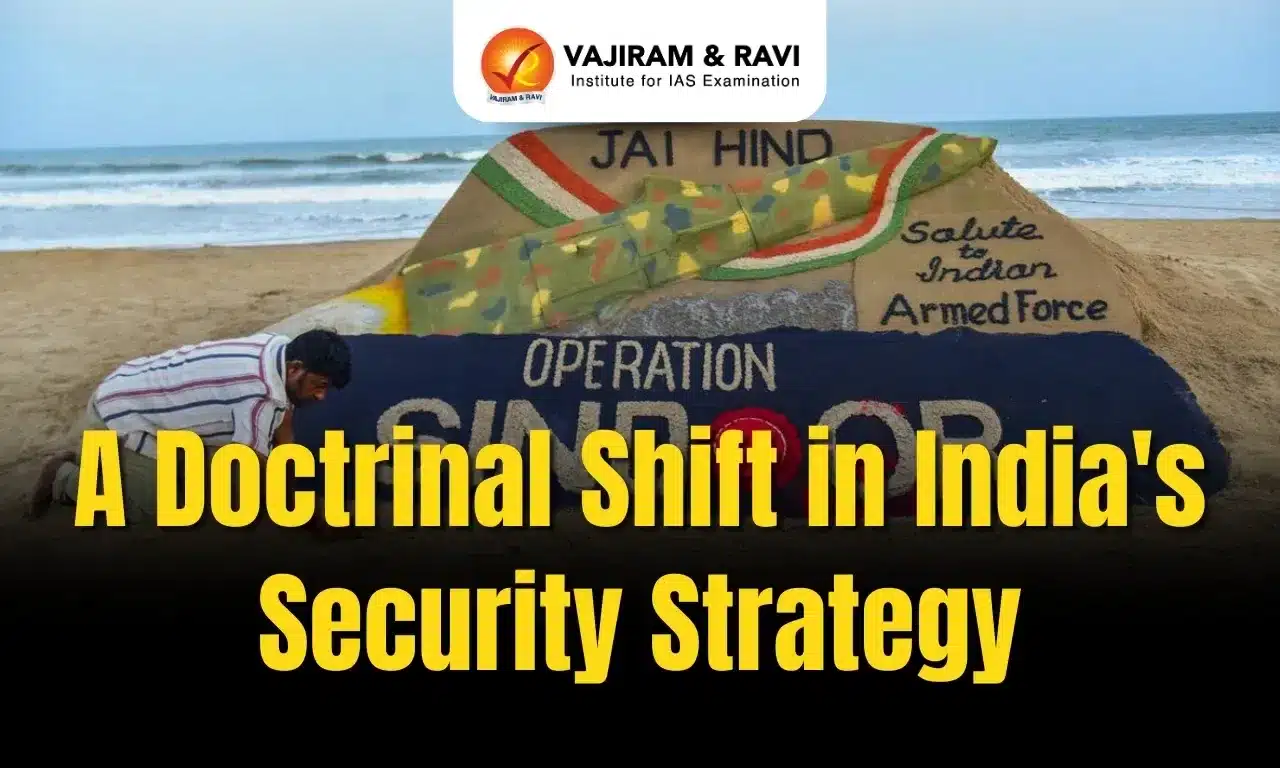
  • Operation Sindoor (2025): In a response to the Pahalgam massacre, India struck 9 locations, including Pakistan’s heartland Bahawalpur and Muridke in Punjab, marking its largest aerial operation on Pakistani soil since 1971.
  • Escalation post-Balakot:
    • Pakistan responded with aerial dogfight.
    • An Indian pilot was captured and later returned.
  • Operation Sindoor fallout:
    • Pakistan chose to escalate by targeting military stations at Jammu, Pathankot and Udhampur with drones and missiles, which were “swiftly neutralised”. 
    • India launched its counterattacks in the same domain and same intensity as Pakistan.
    • In essence, the killing of 26 Indians in Pahalgam by terrorists has brought India and Pakistan dangerously close to the brink of an all-out war.

Strategic Implications and the ‘New Normal’

  • India’s new posture:
    • Emphasis on military retaliation alongside diplomatic and economic tools.
    • Sends a clear signal that sub-conventional war under nuclear cover is no longer tolerable.
  • Changing rules of engagement:
    • India’s doctrine now includes cross-border operations.
    • Raised costs for Pakistan’s continued proxy war.

Key Challenges and Outlook

  • Risks of escalation:
    • Every terror attack may now demand a military response from India, raising stakes.
    • Future governments may face domestic pressure to retaliate forcefully.
  • Pakistan’s strategic dilemma:
    • Domestic instability:
      • Islamist militancy,
      • Baloch insurgency,
      • Political crisis,
      • Economic dependence on the IMF.
      • Raises doubts about Pakistan's capacity to sustain long-term hostility.

Conclusion

  • India’s post-2016 doctrinal shift signals its resolve to respond militarily to terrorism emanating from Pakistani soil, redefining the terms of engagement between the two nuclear-armed neighbors
  • While this strategic assertiveness aims to deter proxy war, it also increases the risks of escalation, demanding careful long-term calibration and diplomatic balancing.

A Doctrinal Shift in India’s Security Strategy FAQs

Q1. What is the 'Thousand Cuts' doctrine and how has it influenced Pakistan's strategic approach toward India?

Ans. The ‘Thousand Cuts’ doctrine is Pakistan’s strategy of using low-intensity, proxy warfare—including cross-border terrorism—to weaken India without engaging in full-scale war.

Q2. How did the 2016 Uri attack mark a doctrinal shift in India's counter-terrorism strategy?

Ans. Post-Uri, India shifted from a defensive diplomatic stance to a proactive strategy involving direct military retaliation through cross-border surgical strikes.

Q3. Explain the significance of the 2019 Balakot airstrike in the context of India-Pakistan relations.

Ans. The Balakot strike marked India’s expansion of military response beyond PoK into mainland Pakistan, signaling a new normal in India’s counter-terror doctrine.

Q4. What are the risks associated with India’s evolving military response to Pakistan-based terrorism?

Ans. The new strategy increases the risk of rapid escalation into conventional war, especially given the nuclear capabilities of both nations.

Q5. Why is Pakistan’s capacity to continue its long-term proxy war against India being questioned in recent years?

Ans. Pakistan faces internal instability, economic crisis, and multiple insurgencies, making it increasingly difficult to sustain its 'Thousand Cuts' campaign.

Source: TH

India Abstains from IMF Vote on $2.3 Billion Aid to Pakistan

India Abstains from IMF Vote on $2.3 Billion Aid to Pakistan

What’s in Today’s Article?

  • India IMF Abstention Pakistan Latest News
  • Extended Fund Facility (EFF)
  • Resilience and Sustainability Facility (RSF)
  • India’s Abstention at IMF Executive Board
  • India’s Key Objections to IMF Assistance for Pakistan
  • India IMF Abstention Pakistan FAQs

India IMF Abstention Pakistan Latest News

  • India raised concerns at the International Monetary Fund (IMF) over the effectiveness of its financial support to Pakistan, citing the latter’s poor track record. 
  • India abstained from voting on the IMF’s decision to disburse $1 billion under a $7 billion Extended Fund Facility and an additional $1.3 billion under the Resilience and Sustainability Facility, emphasizing that the IMF must adhere to procedural and technical norms.

Extended Fund Facility (EFF)

  • EEF provides financial assistance to countries facing serious medium-term balance of payments problems because of structural impediments or slow growth.
  • It helps countries implement medium-term structural reforms and offers longer program engagement and a longer repayment period.

Eligibility

  • Available to all IMF member countries facing actual or potential external financing needs.
  • Typically used by advanced and emerging economies; low-income countries may use EFF alongside the Extended Credit Facility (ECF).
    • ECF is a loan program offered by the IMF to low-income countries facing persistent balance of payments difficulties.

Conditionality

  • Countries must commit to structural reforms and policies that maintain macroeconomic stability.
  • Disbursements depend on meeting quantitative performance criteria and structural benchmarks assessed holistically.

Disbursement Process

  • Timing
  • Disbursement can begin immediately after IMF Executive Board approval.
  • Phasing
  • Funds are not disbursed in full at once; released in phases (tranches).

Resilience and Sustainability Facility (RSF)

  • RSF provides affordable, longer-term financing to low-income and vulnerable middle-income countries.
  • It aims to strengthen macroeconomic resilience and sustainability by:
    • Supporting reforms that address balance of payments (BoP) risks from climate change and pandemic preparedness.
    • Enhancing policy space and building financial buffers against long-term structural challenges.

Eligibility

  • Eligible countries include:
    • PRGT-eligible low-income countries (PRGT-eligible low-income countries (LICs) are those that qualify for concessional financing from the IMF's Poverty Reduction and Growth Trust (PRGT)).
    • Small states (population < 1.5 million) with GNI per capita < 25x 2021 IDA cutoff.
    • Middle-income countries with GNI per capita < 10x 2021 IDA cutoff.

Conditionality

  • Each disbursement is tied to a specific reform measure.
  • A measure may include one or more closely related policy actions.
  • All parts of a reform must be completed to trigger disbursement.

India’s Abstention at IMF Executive Board

  • India abstained from voting on the IMF loan package for Pakistan during a recent Executive Board meeting.
    • The abstention was not due to lack of opposition but because the IMF does not allow formal “no” votes—only “yes” or abstention are permitted.
  • Abstaining allowed India to register strong dissent within IMF rules.

IMF Voting System Explained

  • The IMF Executive Board has 25 directors, representing countries or groups of countries.
  • Voting power is based on economic size, not one country–one vote as in the UN.
  • The IMF typically makes decisions by consensus.
  • In rare formal votes, members can only vote in favor or abstain—no vote against is allowed.

India’s Key Objections to IMF Assistance for Pakistan

  • Prolonged Dependency and Poor Track Record
    • Pakistan has been a frequent IMF borrower, with assistance provided in 28 of the past 35 years, including four programs in the last five years.
    • India noted Pakistan’s poor implementation of IMF conditions and lack of lasting reform.
  • Debt Sustainability Concerns
    • Continued bailouts have led to unsustainable debt, making Pakistan a "too big to fail" debtor and creating long-term risks for the IMF.
  • Military Dominance and Economic Mismanagement
    • India criticized the Pakistani military’s role in economic affairs, citing lack of transparency and accountability that undermines reforms.
  • Use of Funds and Terrorism
    • India strongly objected to funding a country that sponsors cross-border terrorism, warning it poses reputational risks to global institutions and violates international norms.

India IMF Abstention Pakistan FAQs

Q1. Why did India abstain from the IMF vote on Pakistan?

Ans. India cited concerns over Pakistan’s poor reform record, misuse of funds, and support for cross-border terrorism.

Q2. What is the IMF Extended Fund Facility (EFF)?

Ans. EFF offers medium-term financial aid to countries needing structural reforms and balance of payments support.

Q3. What does the IMF Resilience and Sustainability Facility (RSF) do?

Ans. RSF provides long-term affordable financing to countries facing macroeconomic risks from climate or pandemics.

Q4. How did India register its dissent at the IMF?

Ans. India abstained, as “no” votes aren’t allowed at IMF; abstention signals disagreement under IMF rules.

Q5. What are India’s objections to IMF aid for Pakistan?

Ans. India cited Pakistan’s economic mismanagement, terrorism links, unsustainable debt, and military’s opaque control over finances.


Source: TH | ToI | IMF | IMF

Balochistan

Balochistan

Balochistan Latest News

The Balochistan Liberation Army (BLA) has claimed that it has captured several strategic army posts across Balochistan that include the provincial capital, Quetta.

About Balochistan

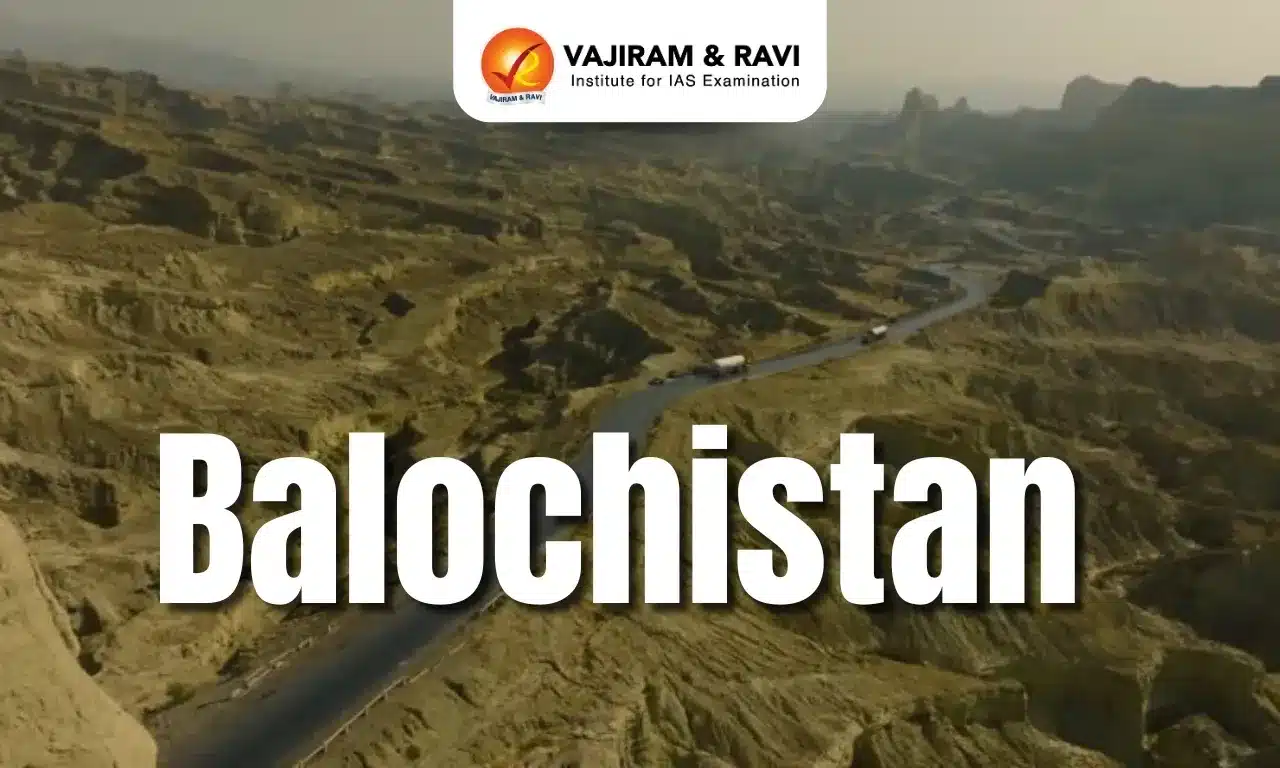
  • Balochistan lies mostly in western Pakistan but also extends into southeastern Iran.
  • It is the traditional homeland of the Baloch people, after whom it is named. 
  • Balochistan (also spelled Baluchistan) is bounded on the north by Afghanistan and on the south by the Arabian Sea. 
  • The Pakistani province named Balochistan covers an area of 347,190 sq.km. 
    • It is the country’s largest but least populated province.
    • Its capital is Quetta.
  • The Baloch and Pashtun people make up the two major and more distinct ethnic groups. The third major group consists of people who are of mixed ethnicity but mainly of Sindhi origin.
  • Most of the people practice Islam, and most speak languages of the Iranian branch of the Indo-Iranian language family. 
  • The main languages are Balochi, Brahui, Pashto, and Sindhi.
  • The largest towns and main trade centers in Balochistan are Quetta, in Pakistan, and Zahedan, in Iran.
  • History
    • It was ruled by the Greeks after being conquered by Alexander the Great in 330 bc. 
    • Arabs held most of the region from the 7th to the 10th century.
    • The British annexed most of Balochistan to India in the late 19th century. 
    • When British rule ended in India in 1947 and the colony was divided, much of Balochistan became part of Pakistan.

Balochistan FAQs

Q1: Balochistan lies primarily in which country?

Ans: Pakistan

Q2: What is the capital of the Pakistani province of Balochistan?

Ans: Quetta

Q3: Which sea borders Balochistan to the south?

Ans: Arabian Sea

Source: ZEE

South Asia’s Declining Press Freedom: India’s Alarming Position

South Asia’s Declining Press Freedom: India’s Alarming Position

What’s in Today’s Article?

  • South Asia Press Freedom Latest News
  • Introduction
  • India’s Declining Press Freedom
  • Press Freedom in Neighbouring Countries
  • Economic and Structural Challenges for Media
  • Reform Efforts and The Road Ahead
  • South Asia Press Freedom FAQs

South Asia Press Freedom Latest News

  • Indian media “has been shackled and subjected to a systemic strategy to cripple it”, according to the 23rd Annual South Asia Press Freedom Report 2024-25.

Introduction

  • The state of press freedom in South Asia has witnessed a significant erosion over the past year. 
  • The Annual South Asia Press Freedom Report 2024-25, titled Frontline Democracy: Media and Political Churn,” paints a troubling picture of increasing restrictions, state-sponsored suppression, and growing dangers faced by journalists. 
  • India, once hailed for its vibrant democracy, is now grappling with unprecedented challenges that threaten the independence of its media landscape.

India’s Declining Press Freedom

  • The report devotes a specific section to India, titled India: Propaganda and the Press,” highlighting the systematic efforts to control media narratives. Key factors include:
  • Legal Suppression of Media Freedom:
    • Increasing use of sedition laws, the Unlawful Activities (Prevention) Act (UAPA), and the Prevention of Money Laundering Act (PMLA) against media organizations and journalists.
    • Frequent defamation lawsuits and state-sponsored raids on media houses using the Income Tax Department and Enforcement Directorate.
  • Rise in Self-Censorship:
    • A “chilling effect” has led many media outlets to avoid reporting critically on the government.
    • Government advertisements are routinely withheld from critical media outlets as a method of financial coercion.
  • Manipulation of Information:
    • Political IT cells actively spread misinformation and hate speech, making it difficult for independent journalism to thrive.
    • According to the Global Risks Report 2024, India is identified as the country with the highest global risk of misinformation and disinformation.

Press Freedom in Neighbouring Countries

  • Pakistan:
    • Marked as “the most violent year for journalists in two decades,” with eight journalists killed.
    • The government continues to operate under an authoritarian framework, severely curbing media rights.
  • Bangladesh:
    • Transitioned from the ICT Act to the Cyber Security Act, but concerns remain over its transparency and misuse.
    • The Bangladesh Federal Union of Journalists reported nearly 300 attacks on journalists during political protests.
  • Afghanistan:
    • At least 172 media rights violations were recorded, highlighting the continued assault on press freedom under Taliban rule.
  • Bhutan and Maldives:
    • Bhutan fell from the 33rd position in press freedom rankings in 2021 to 152nd in 2025.
    • Maldives faces regulatory challenges with its Information Commissioner’s Office, undermining press freedom.

Economic and Structural Challenges for Media

  • Shrinking Job Market and Rising Precarity:
    • Across South Asia, media organizations are grappling with layoffs, job insecurity, and a decline in advertisement revenue.
    • Gig and freelance journalists face worsening working conditions and limited legal protections.
  • Impact of AI and Digital Media:
    • Increased reliance on AI for content creation has led to a decline in professional journalism standards.
    • Digital platforms such as YouTube and podcasts are rising but lack adequate regulation to maintain journalistic ethics.

Reform Efforts and The Road Ahead

  • Despite the bleak scenario, some efforts toward reform have begun:
    • India’s Proposed Media Transparency Bill 2024 aims to regulate media monopolies and promote fair editorial practices.
    • Bangladesh’s Interim Government has committed to improving access to public information.
    • Nepal’s Media Consolidation Efforts under the National Broadcasting Corporation are seen as steps toward accountable public media.
  • However, the report cautions that without stronger institutional protections and reduced government interference, the downward spiral in press freedom will likely continue.

South Asia Press Freedom FAQs

Q1. What is the key finding of the South Asia Press Freedom Report 2024-25?
Ans. The report highlights a steep decline in press freedom across South Asia, particularly in India, Pakistan, and Afghanistan.

Q2. Why is India’s press freedom under threat?
Ans. India faces rising government interference, legal crackdowns, and a high prevalence of misinformation, severely affecting media independence.

Q3. What legal tools are being misused to curb media freedom in India?
Ans. Sedition laws, UAPA, PMLA, and defamation lawsuits are frequently used against journalists and media houses.

Q4. Which country reported the highest number of journalist deaths in 2024-25?

Ans. Pakistan witnessed the highest journalist casualties, marking the most violent year for journalists in two decades.

Q5. Are there any ongoing reforms to improve press freedom in India?
Ans. India has proposed the Media Transparency Bill 2024 to address media monopolies and improve editorial independence.

Source: TH | AN

Enquire Now