Chenchu Tribe

Chenchu Tribe

Chenchu Tribe Latest News

The Telangana government recently decided to sanction 10,000 Indiramma houses to Chenchu tribal families.

About Chenchu Tribe

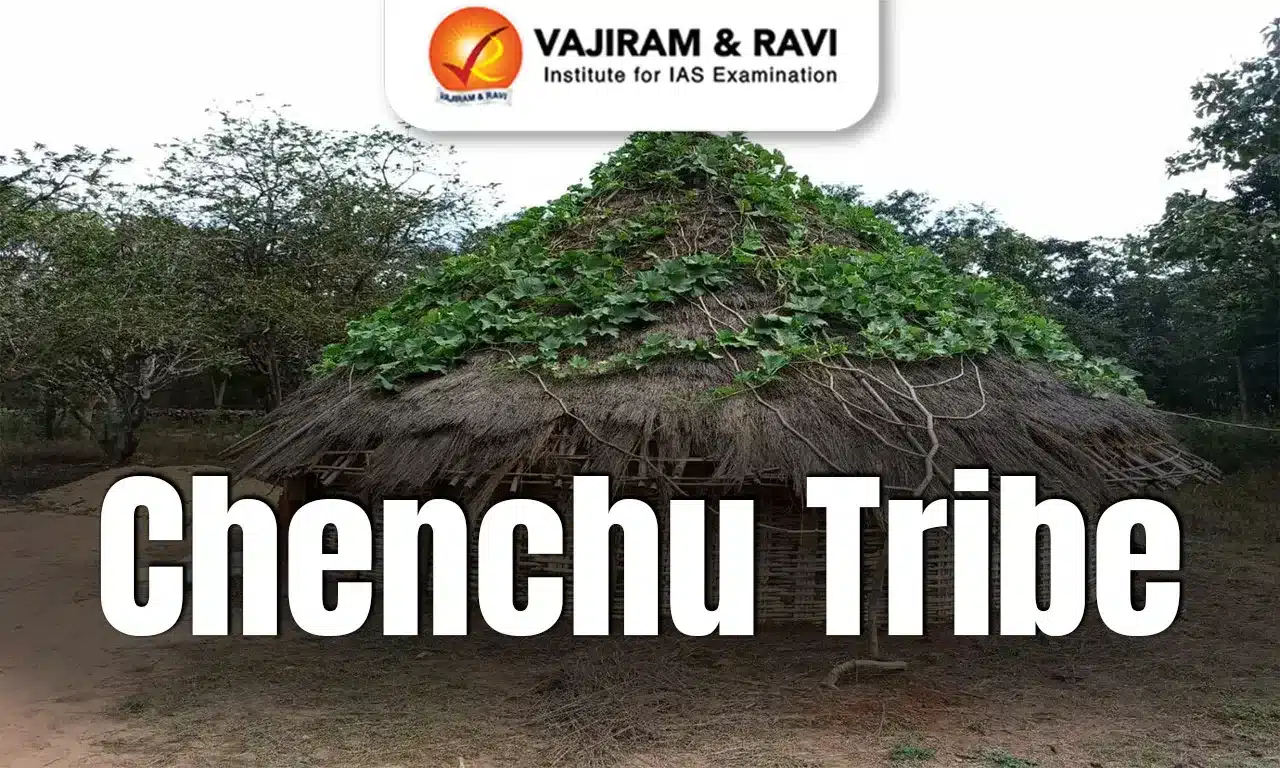
  • The Chenchus are a food-gathering tribe primarily residing in the Nallamalai forests of Andhra Pradesh.
  • They are one of the Particularly Vulnerable Tribal Groups (PVTGs) in Andhra Pradesh.
  • They are also found in Telangana, Karnataka, and Odisha.
  • Language: Their native language (also called Chenchu) belongs to the Dravidian language family.Many also speak Telugu
  • Chenchu village is known as "Penta". Each penta consists of a few huts that are spaced apart and are grouped together based on kinship patterns. 
    • The close relatives live nearby and the distant ones farther away. 
    • Their homes consist of few belongings and are generally sparse and spartan in appearance.
  • Small conjugal families predominatewomen taking equal rank with men and marrying only upon maturity.
  • "Peddamanishi" or the village elder, is generally the authority to maintain social harmony in a family or a village. 
  • Their rituals are few and simple; religious and political specializations are slight. 
  • Livelihood: 
    • The Chenchu live life with exemplary simplicityMost of them still gather food from the forest and roam in it to find things to meet their needs.
    • The bow and arrow and a small knife are all the Chenchus possess to hunt and live.
    • The Chenchus collect forest products like roots, fruits, tubers, beedi leaf, mohua flower, honey, gum, tamarind and green leaves and make a meagre income from it by selling these to traders and government cooperatives.
    • Though at times they work as forest labourers, they mostly prefer to fall back on their native skills to hunt and gather food.
  • Religion: Chenchus worship a number of deities. Chenchus have also adopted certain religious practices from Hindus.
  • For ages, the Chenchus have been associated with the famous Srisailam temple (dedicated to Lord Shiva and Devi Brahmaramba) in Andhra Pradesh, situated at the heart of Chenchu land. 
    • The Chenchus enjoy special privileges at Srisailam temple.

Chenchu Tribe FAQs

Q1: Which state Chenchu tribe belongs to?

Ans: They primarily reside in the Nallamalai forests of Andhra Pradesh.

Q2: The Chenchus primarily reside in which forest region?

Ans: Nallamalai Forests

Q3: The Chenchus are historically associated with which famous temple?

Ans: Srisailam Temple

SourceTOI

Tsarap Chu Conservation Reserve

Tsarap Chu Conservation Reserve

Tsarap Chu Conservation Reserve Latest News

The Himachal Pradesh government recently notified the Tsarap Chu Conservation Reserve.

About Tsarap Chu Conservation Reserve

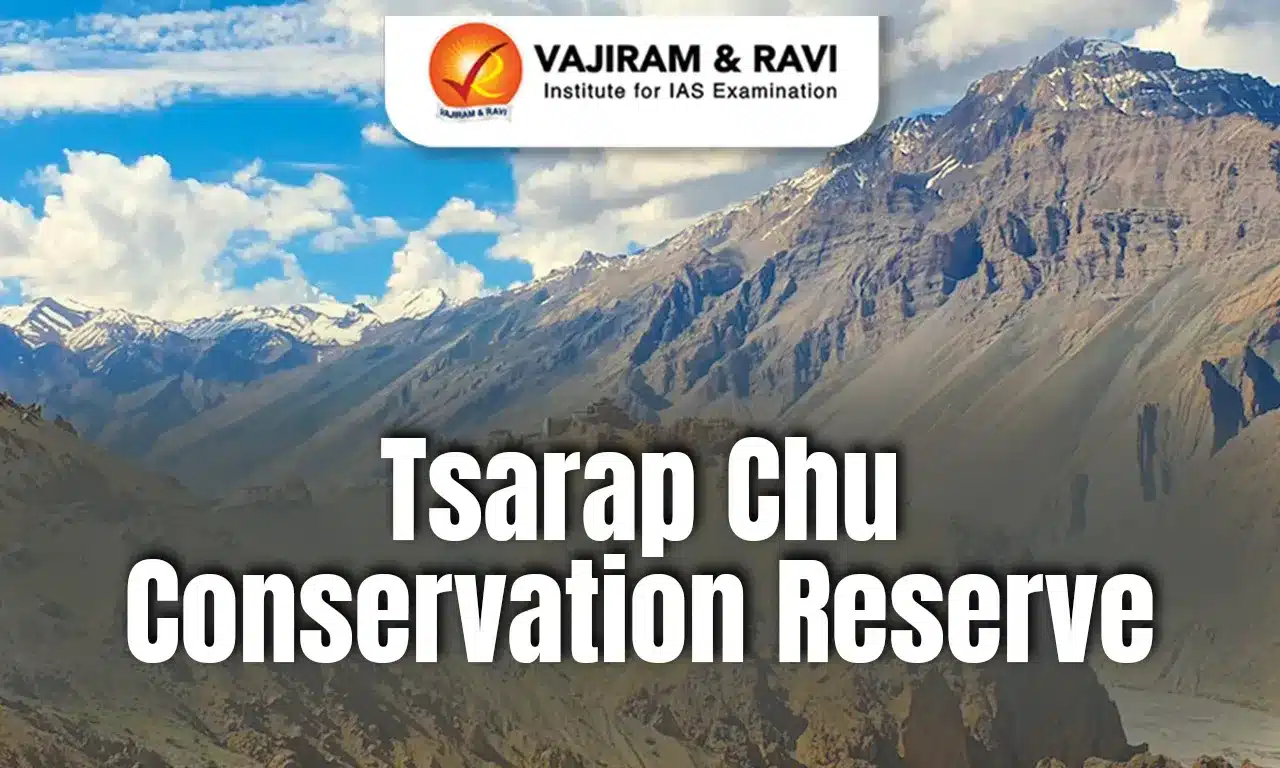
  • It is located in the Lahaul-Spiti region of Himachal Pradesh.
  • The total area of this conservation reserve is 1585 sq.km. It is India’s largest conservation reserve. 
  • It is bounded by the Union Territory of Ladakh to the north, the Kibber Wildlife Sanctuary extending up to Malang Nala and Lungar Lungpa to the east, Kabjima Nala to the south, and Chandratal Wildlife Sanctuary to the west. 
  • It is also the location for the confluence of the Unam River and Charap Nala.
  • It is the catchment area of the Charap Nallah and serves as a critical wildlife corridor, linking the Kibber and Chandra Taal wildlife sanctuaries. 
  • It will be managed through Conservation Reserve Management Committee, which will also include representatives from local Panchayats. 
    • The committee will manage the area while balancing the needs of local communities and wildlife conservation priorities.
  • Biodiversity:
    • It falls among the high-density habitats of snow leopards within Himachal Pradesh.
    • Tibetan wolf, bharal (blue sheep), Himalayan ibex, kiang (wild ass), and the Tibetan argali are also found in the region. 
    • Rare bird species such as Rose Finch, Tibetan Raven, and Yellow-billed Chough enrich the ecology of the region. 

Tsarap Chu Conservation Reserve FAQs

Q1: Where is the Tsarap Chu Conservation Reserve located?

Ans: Himachal Pradesh

Q2: Tsarap Chu Reserve serves as a corridor between which two wildlife sanctuaries?

Ans: Kibber and Chandra Taal

Q3: Which Union Territory lies to the north of the Tsarap Chu Conservation Reserve?

Ans: Ladakh

SourceDTE

Union Public Service Commission (UPSC)

Union Public Service Commission (UPSC)

Union Public Service Commission (UPSC) Latest News

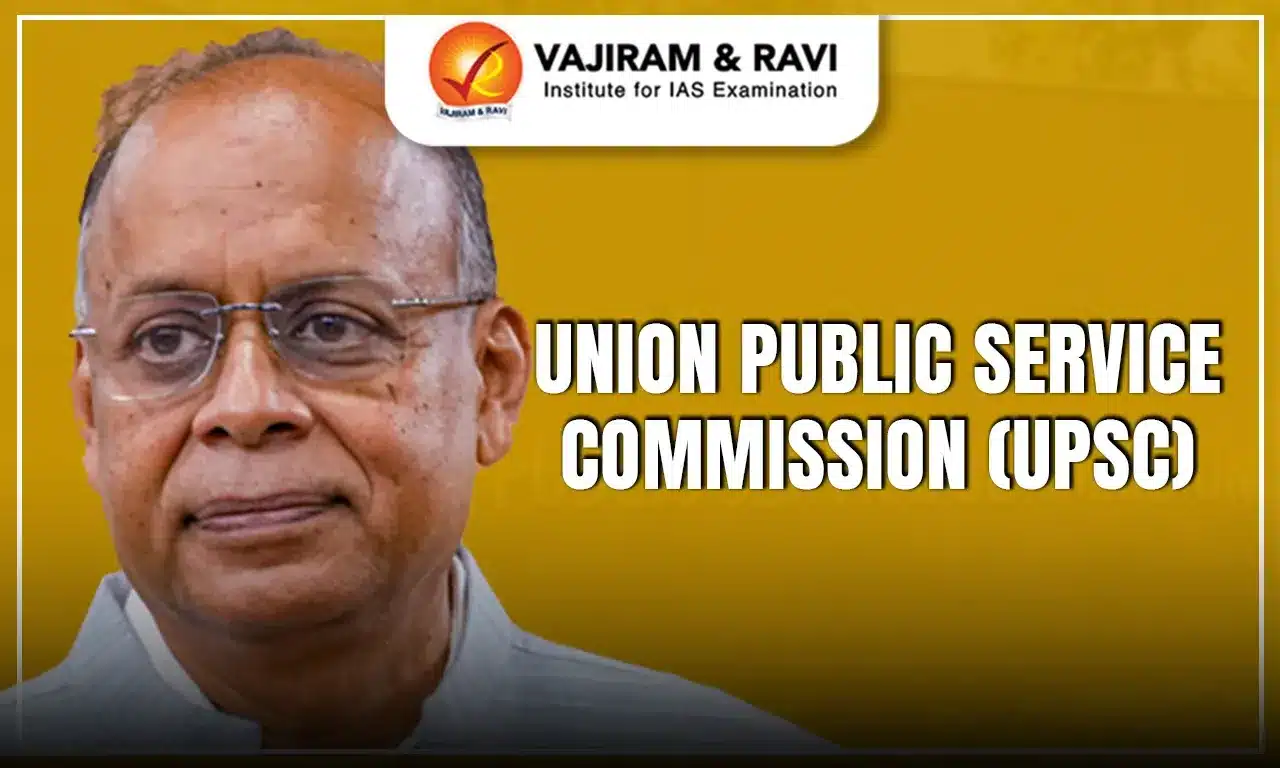
Recently, Dr. Ajay Kumar, former Defence Secretary, has been appointed as the new Chairman of the Union Public Service Commission (UPSC).

About Union Public Service Commission (UPSC)

  • The UPSC is a constitutional body established under Articles 315 to 323 of the Indian Constitution.
  • It was initially formed on October 1, 1926, and acquired constitutional status on January 26, 1950.
  • Article 315 provides for the establishment of a Public Service Commission for the Union and for each State.

Composition and Appointment

  • The UPSC comprises a Chairman and other members, whose number is determined by the President of India.
  • Members are appointed by the President, and at least half of them must have held office under the Government for at least 10 years.
  • The Chairman and members hold office for a term of 6 years or until they attain the age of 65 yearswhichever is earlier.

Resignation and Removal Provisions

  • A UPSC member or Chairman may resign by writing to the President of India.
  • They may be removed by the President on specific grounds mentioned in the Constitution.
  • In case of ‘misbehavior’, the President must refer the matter to the Supreme Court for inquiry.
    • If the Supreme Court upholds the charges, the President can remove the individual based on its advice.

Post-Tenure Employment Restrictions

  • The UPSC Chairman is not eligible for any further employment in the Government of India or any State.
  • Members (excluding Chairman) may be appointed as:
    • Chairman of the UPSC, or
    • Chairman of a State Public Service Commission,
    • But they are not eligible for any other office of profit under the Government.
  • The Chairman or any member cannot be reappointed for a second term.

Duties and Powers of UPSC

  • The UPSC is India’s central recruitment agency, responsible for conducting:
    • Civil Services Examination (CSE),
    • Engineering Services Examination (ESE),
    • Combined Medical Services (CMS), and others.
  • It advises the President and Governors on matters related to: Appointmentstransfersdisciplinary actions, and Framing recruitment rules and procedures.

Union Public Service Commission (UPSC) FAQs

Q1: Under which article of the Indian Constitution is UPSC constituted?
Ans: UPSC is constituted under Article 315 of the Indian Constitution.

Q2: What is the main function of UPSC?
Ans: UPSC conducts examinations for recruitment to All India Services, Central Services, and Group A & B posts under the Government of India.

Q3: Who appoints the Chairman and members of the UPSC?
Ans: They are appointed by the President of India.

Source: HT

Blyde Rondavel Flat Gecko

Blyde Rondavel Flat Gecko

Blyde Rondavel Flat Gecko Latest News

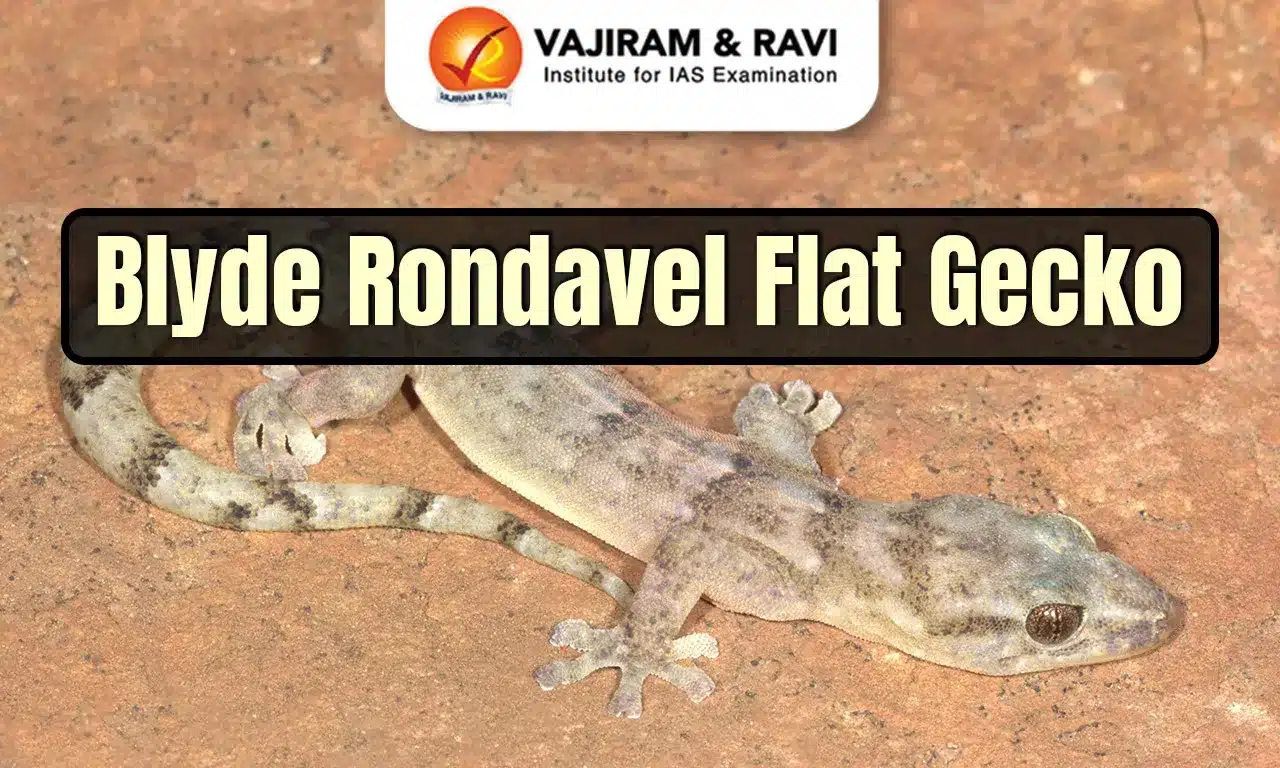
The Blyde Rondavel Flat Gecko, a flat-bodied lizard species, was rediscovered in April 2025 in the Blyde River Canyon, Mpumalanga Province, South Africa, after being unrecorded for 34 years.

About Blyde Rondavel Flat Gecko

  • The Blyde Rondavel Flat Gecko is 8–9 cm long when fully grown.
  • It is likely rock-dwelling, with adaptations suited to cliffs and isolated habitats, explaining its elusiveness.
  • It was originally discovered in 1991, but has not been sighted again, leading to speculation about its extinction or doubts regarding its distinct species status.
  • The gecko was previously listed as a "Data Deficient" species by the International Union for Conservation of Nature (IUCN) due to a lack of sufficient sightings or information.
  • The Endangered Wildlife Trust (EWT) confirmed the rediscovery through a research expedition to an inaccessible rocky outcrop of the canyon where the gecko was first found.
  • This gecko is the fifth animal rediscovered in recent years by the Endangered Wildlife Trust, following:
    • dune mole (rediscovered after 80 years),
    • butterfly, a lizard, and a frog species, all previously thought to be lost.

Blyde Rondavel Flat Gecko FAQs

Q1: What is the Blyde Rondavel Flat Gecko?
Ans: The Blyde Rondavel Flat Gecko is a small 8–9 cm long lizard species, likely adapted to rocky cliff habitats.

Q2: Where was it rediscovered?

Ans: It was rediscovered by the Endangered Wildlife Trust (EWT) on an inaccessible rocky outcrop in Blyde River Canyon, South Africa.

Source: PHY

Jute Corporation of India (JCI)

Jute Corporation of India (JCI)

Jute Corporation of India Latest News

The Jute Corporation of India (JCI) recently increased the minimum selling price (MSP) of jute from ₹5,335 to ₹5,650 per quintal for crop year 2025-26 to discourage distress sales by farmers. 

About Jute Corporation of India

  • It is a central public sector undertaking under the Ministry of Textiles, Government of India. 
  • It was incorporated in 1971 as a price support agency with a clear mandate for the procurement of raw jute/mesta without any quantitative limit from the growers at the minimum support price (MSP) declared in each year by the Government of India based on the recommendations made by the Commission for Agricultural Cost & Prices (CACP). 
  • This protects the jute growers from exploitations at the hands of the middlemen. 
  • JCI provides stability in the raw jute prices.
  • The JCI was first started as a small official agency at the beginning, but then slowly it expanded its networking and now spread in 7 states successfully for jute growing in India including West Bengal, Bihar, Assam, Meghalaya, Tripura, Orissa, and Andhra Pradesh. 
  • Few activities of the JCI are as follows:
    • Organizing leverage operations to secure the minimum support price (MSP) to the jute sector
    • Obtain a stock of fiber that also might include the imported fibers
    • Conducting commercialized operations in a prudent way
    • Importing fiber in order to supplement endemic accessibility
    • Exporting fiber
    • Processing and exporting goods made of jute
    • Undertaking measures for the promotion of jute goods while exporting

Jute Corporation of India FAQs

Q1: Is Jute Corporation of India a statutory body?

Ans: No, the Jute Corporation of India (JCI) is not a statutory body.

Q2: 2. Under which ministry does the Jute Corporation of India operate?

Ans: Ministry of Textiles

Q3: What is the primary mandate of the JCI?

Ans: Procure raw jute at MSP from growers

SourceTH

EOS-09 & Chandrayaan-5

EOS-09 & Chandrayaan-5

EOS-09 & Chandrayaan-5 Latest News

The Indian Space Research Organisation (ISRO) is preparing for its 101st mission with the launch of PSLV-C61 carrying the EOS-09 satellite on May 18 from the Satish Dhawan Space Centre (SDSC) in Sriharikota, Andhra Pradesh.

About EOS-09

  • EOS-09 is an Earth Observation Satellite (EOS), designed to enhance India’s surveillance and imaging capabilities, especially under all-weather and day-night conditions.

Technical Features of EOS-09

  • EOS-09 is equipped with a C-band Synthetic Aperture Radar (SAR).
  • The SAR technology enables the satellite to capture high-resolution images of Earth’s surface, regardless of weather conditions or time of day.
  • This makes the satellite crucial for disaster monitoringflood mappingagriculture assessmentborder surveillance, and urban planning.
  • The satellite adds to India’s remote sensing infrastructure, critical for environmental monitoringnational security, and climate resilience.

Chandrayaan-5 / LUPEX Mission Collaboration

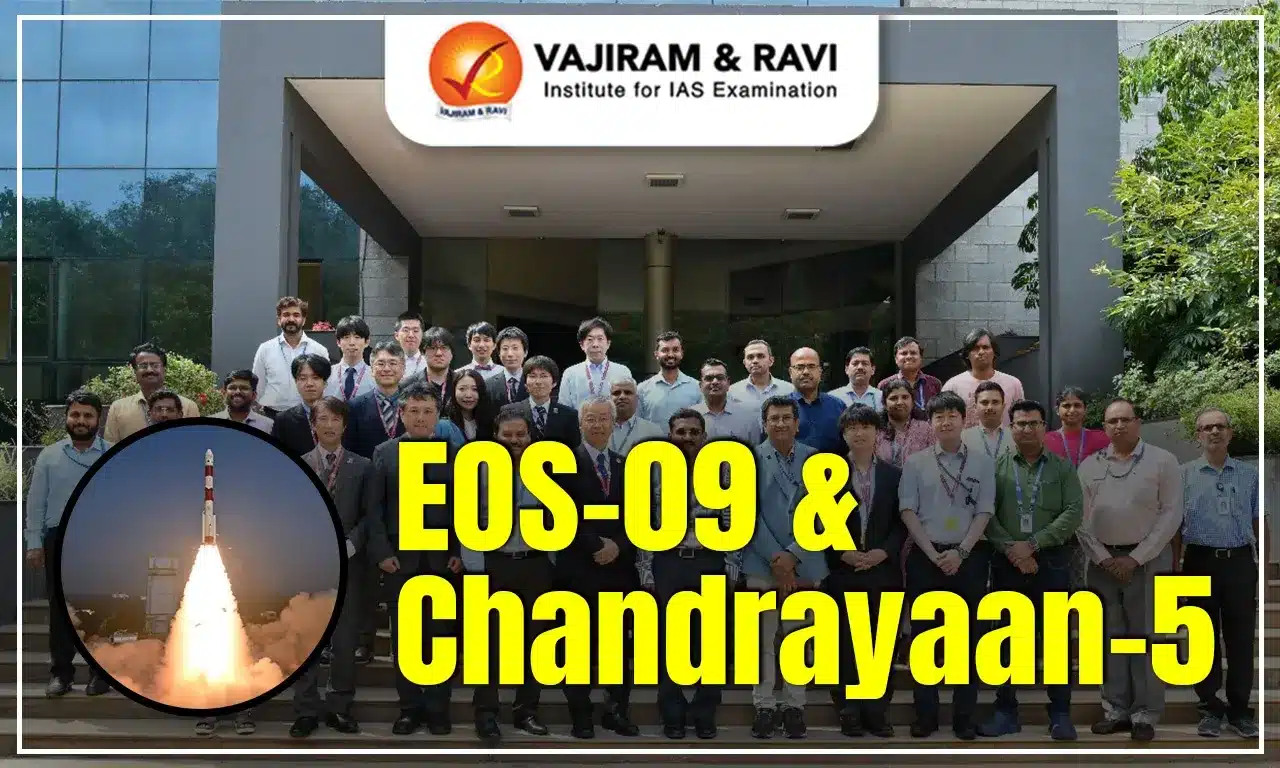
  • ISRO and Japan Aerospace Exploration Agency (JAXA) conducted the 3rd Technical Interface Meeting (TIM-3) on May 13–14 in Bengaluru, for the upcoming Chandrayaan-5 / LUPEX mission (Lunar Polar Exploration).

Overview of Chandrayaan Series

  • The Chandrayaan series represents India’s progressive lunar exploration:
    • Chandrayaan-1: Orbital lunar mapping and discovery of water molecules.
    • Chandrayaan-2: Orbiter and attempted a lander-rover mission.
    • Chandrayaan-3: Successful soft landing and rover deployment.
    • Chandrayaan-4(upcoming): Aimed at lunar sample return.
    • Chandrayaan-5 / LUPEX: Joint India-Japan mission targeting lunar volatile analysis at the South Pole.

Mission Details of Chandrayaan-5 / LUPEX

  • The mission will focus on studying lunar volatile materials, especially lunar water ice in the Permanently Shadowed Regions (PSRs) near the lunar south pole.
  • It will be launched by JAXA’s H3-24L launch vehicle.
  • The lunar lander will be developed by ISRO, while the rover will be developed by MHI, Japan.
  • Scientific payloads will be contributed by ISROJAXAEuropean Space Agency (ESA), and NASA.
  • The instruments will focus on in-situ analysis of volatiles, enhancing our understanding of lunar resource potential and future human habitation feasibility.

EOS-09 & Chandrayaan-5 FAQs

Q1: What is EOS-09?

Ans: EOS-09 is an Earth Observation Satellite (EOS) developed by ISRO to enhance India’s all-weather, day-night imaging capabilities.

Q2: What is the Chandrayaan-5 / LUPEX mission?

Ans: The Chandrayaan-5 / LUPEX (Lunar Polar Exploration) Mission is a collaborative lunar mission between ISRO and JAXA (Japan Aerospace Exploration Agency). 

Source: ET

Key Presidential References in India: From Cauvery Dispute to 2G Spectrum Case

Key Presidential References in India: From Cauvery Dispute to 2G Spectrum Case

What’s in Today’s Article?

  • Presidential Reference India Latest News
  • Cauvery Water Row, 1991: Presidential Reference
  • Gujarat Gas Transmission Act, 2001: Presidential Reference
  • Gujarat Elections, 2002: Presidential Reference on Poll Timing Post-Riots
  • 2G Telecom Licences, 2012: Presidential Reference on Auction as a Mandate
  • Presidential Reference India FAQs

Presidential Reference India Latest News

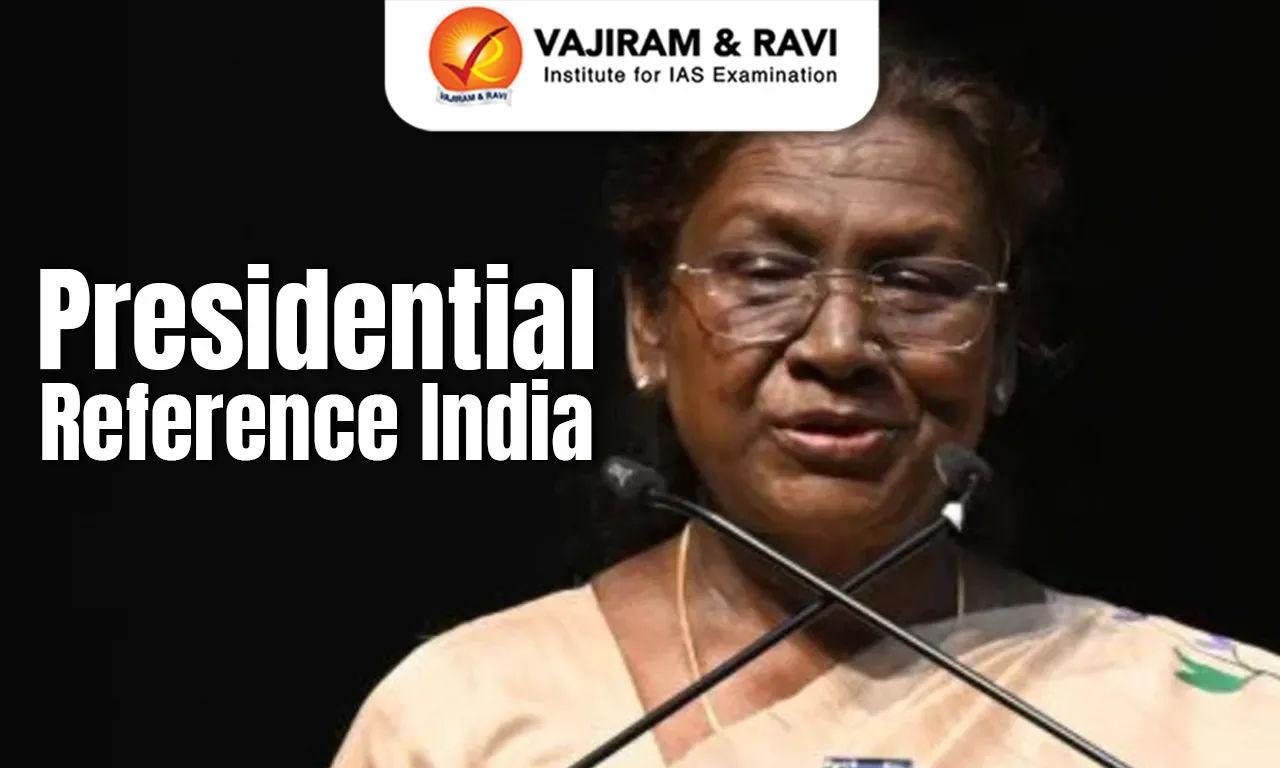
  • President Droupadi Murmu has sought the Supreme Court’s opinion—through a Presidential Reference—on whether the Court can use its Article 142 powers to set deadlines for the President and Governors to act on state Bills. 
  • Historically, various governments have used the Presidential Reference mechanism to seek legal clarity on complex issues with political implications. 
  • Notable examples include the Babri Masjid-Ram Janmabhoomi dispute, the Cauvery water issue, election timing after the 2002 Gujarat riots, and the 2G spectrum case.

Cauvery Water Row, 1991: Presidential Reference

  • In June 1991, the Cauvery Water Disputes Tribunal ordered Karnataka to release 205 tmcft of water to Tamil Nadu. 

Karnataka’s Response

  • In defiance of the Tribunal’s order, the then Karnataka government issued the Karnataka-Cauvery Basin Irrigation Protection Ordinance to override the directive.

Presidential Reference

  • The President sought the Supreme Court’s opinion on three questions:
    • Whether Karnataka’s Ordinance was constitutionally valid.
    • Whether the Tribunal’s order qualified as a "report and decision" under Section 5(2) of the Inter-State River Water Disputes Act, 1956.
    • Whether the Tribunal had the authority to grant interim relief.

Supreme Court’s Verdict

  • The Ordinance (later an Act) was ultra vires the Constitution and beyond Karnataka’s legislative competence.
  • The Tribunal’s order was a valid report and decision under Section 5(2).
  • The Tribunal could grant interim relief, but only upon reference by the Central Government.

Gujarat Gas Transmission Act, 2001: Presidential Reference

  • In 2001, the Gujarat government enacted the Gujarat Gas (Regulation of Transmission, Supply and Distribution) Act. 
  • This led to a Presidential Reference questioning the constitutional validity of the Act, as oil and gas fall under the Union List.

Key Questions Referred to the Supreme Court

  • Is natural gas (including LNG) a Union subject under Entry 53 of List I, giving the Union exclusive legislative power?
  • Do states have competence to legislate on natural gas under Entry 25 of List II (State List)?
  • Did Gujarat have the authority to enact this law?

Supreme Court’s Verdict

  • The Court ruled that natural gas and LNG fall exclusively under Union jurisdiction.
  • States do not have legislative competence to make laws on these subjects.
  • Therefore, the Gujarat Act, in relation to natural gas and LNG, was ultra vires the Constitution.

Gujarat Elections, 2002: Presidential Reference on Poll Timing Post-Riots

  • After the 2002 Gujarat riots, the then state government recommended early elections. 
  • The Assembly, though due for polls in March 2003, was dissolved in July 2002 by Governor S. S. Bhandari on the advice of the Narendra Modi Cabinet.
  • The last sitting of the Assembly had been held on April 3, 2002, triggering a six-month window under Article 174 to reconvene the House.

Election Commission’s Stand

  • The Election Commission (EC) stated that elections could not be held before October 3, 2002, due to logistical and security constraints.

Presidential Reference

  • Then President A. P. J. Abdul Kalam referred three questions to the Supreme Court:
    • Does Article 174 depend on the EC’s authority under Article 324 regarding election scheduling?
    • Can the EC assume Article 356 (President’s Rule) will be invoked if Article 174’s timeline is breached?
    • Is the EC obliged to fulfill Article 174 by utilizing all Union and State resources to conduct elections?

Supreme Court’s Ruling

  • Article 174 applies only to existing (“live”) Assemblies, not dissolved ones.
  • Article 324 and 174 operate in different spheres—the former governs elections, the latter concerns Assembly sessions.
  • The EC’s discretion to schedule polls was upheld, and there was no constitutional requirement to hold elections within six months of the last sitting in case of premature dissolution.

Outcome

  • Within an hour of the verdict, the EC announced elections for December 12, 2002, validating its authority to independently manage the electoral schedule even amid political pressure.

2G Telecom Licences, 2012: Presidential Reference on Auction as a Mandate

  • In the wake of the Supreme Court’s February 2012 verdict cancelling 122 2G telecom licences, the then government led by Manmohan Singh sought clarification through a Presidential Reference. 

Key Issue in the Reference

  • The central question was: Whether the only permissible method for disposal of all natural resources across all sectors and in all circumstances is by the conduct of auctions?
    • The concern stemmed from the Court’s earlier observations that natural resources should be allocated through auctions.

Supreme Court's Ruling

  • A Constitution Bench ruled that auctions are not the only constitutionally valid method for allocating natural resources.
  • Auction is an economic policy, not a constitutional requirement.
  • The Court deferred to the Executive’s wisdom, stating it was not competent to evaluate economic methods like auctions versus other modes of allocation.

Observations

  • The Court refused to prescribe a single method for all sectors and situations.
  • Economic decisions involve complex trade-offs, and judicial overreach in such matters is not appropriate.
  • The judgment underscored that policy-making lies within the domain of the Executive, not the Judiciary.

Presidential Reference India FAQs

Q1. What was the 1991 Cauvery water dispute about?

Ans. It questioned Karnataka's defiance of the tribunal order; SC declared its ordinance unconstitutional.

Q2. Why was Gujarat's Gas Act challenged in 2001?

Ans. Because natural gas regulation falls under the Union List, not State List.

Q3. What did the 2002 Gujarat election reference clarify?

Ans. SC ruled EC has discretion; elections need not be held within six months of dissolution.

Q4. Was auction mandated in the 2G telecom case?

Ans. No, SC said auction is a policy choice, not a constitutional mandate.

Q5. Why are Presidential References important?

Ans. They help clarify constitutional grey areas and guide governance through SC’s opinion.

Source: IE

Supreme Court Declares Right to Digital Access as a Fundamental Right Under Article 21

Supreme Court Declares Right to Digital Access as a Fundamental Right Under Article 21

What’s in Today’s Article?

  • Right to Digital Access Latest News
  • Introduction
  • Legal Framework Supporting Digital Rights
  • The KYC Framework and Its Challenges
  • Barriers Faced by Persons with Disabilities
  • Supreme Court’s Intervention and Verdict
  • Broader Impact and Future Implications
  • Conclusion
  • Right to Digital Access FAQs

Right to Digital Access Latest News

  • Recently, the Supreme Court directed revisions to Know-Your-Customer (KYC) digital norms.

Introduction

  • On April 30, 2025, the Supreme Court of India made a landmark interpretation of Article 21 by affirming the Right to Digital Access as a component of the fundamental Right to Life and Personal Liberty
  • This decision came in response to growing concerns over digital exclusion faced by persons with disabilities (PwDs), particularly in relation to the mandatory Know Your Customer (KYC) processes.

Legal Framework Supporting Digital Rights

  • India’s Constitution, through its Preamble, Fundamental Rights, and Directive Principles, emphasizes equality and dignity. 
  • Strengthening these guarantees, the Rights of Persons with Disabilities (RPwD) Act, 2016, adopts a ‘social barrier’ approach, viewing disability not only as impairment but also as exclusion due to societal and infrastructural challenges.
  • Section 42 of the RPwD Act obligates the government to ensure accessibility in all electronic media, including through sign language, captions, and universal design principles.

The KYC Framework and Its Challenges

  • Under the Prevention of Money Laundering Act (PMLA), 2002, KYC is compulsory for financial transactions. 
  • The RBI’s Master Direction on KYC (2016) introduced digital verification methods like the Video-based Customer Identification Process (V-CIP).
  • This process requires users to:
    • Take selfies
    • Write and scan physical forms
    • Verify OTPs
    • Read codes on screen
  • While convenient for most users, these steps exclude visually impaired individuals and acid attack survivors, who struggle to complete visual-based authentication.

Barriers Faced by Persons with Disabilities

  • Despite accessibility standards in the 2021 and 2022 ICT Accessibility Guidelines, most KYC systems are non-compliant:
    • No screen reader support
    • No audio cues for camera focus
    • No alternative for selfie-based verification
    • Thumb impressions often not accepted
    • Aadhaar-based biometric systems lack accessibility features
  • Blind or low-vision users are frequently forced to appear physically or are rejected on vague technical grounds. 
  • Furthermore, RBI’s directions disallow any “prompting” during video KYC, compounding the issue.

Supreme Court’s Intervention and Verdict

  • In its recent ruling, the Supreme Court emphasized that accessibility is a constitutional imperative
  • Citing its 2024 verdict in Rajive Raturi vs Union of India, the Court reiterated that lack of digital accessibility violates Article 21, which guarantees life with dignity.
  • The Court anchored its judgment in:
    • Article 14 (Equality before Law)
    • Article 15 (Prohibition of Discrimination)
    • Article 21 (Right to Life and Liberty)
    • Article 38 (Promoting Welfare of People)
  • It directed the RBI, SEBI, and DoT to revise their KYC norms and digital infrastructures to align with principles of accessibility and substantive equality
  • The judgment also highlighted that the digital divide affects not only PwDs but also rural populations, elderly citizens, economically weaker sections, and linguistic minorities.

Broader Impact and Future Implications

  • The verdict expands the scope of Article 21, setting a precedent that digital access is not a privilege but a right
  • This could influence a broad range of sectors, from e-governance and education to healthcare and banking, to re-engineer digital platforms for universal accessibility.
  • The judgment also aligns India more closely with international obligations under the United Nations Convention on the Rights of Persons with Disabilities (UNCRPD).

Conclusion

  • The Supreme Court’s affirmation of the Right to Digital Access under Article 21 is a transformative step in India’s legal and digital journey. 
  • It redefines digital inclusion as a constitutional necessity, urging policymakers, regulators, and tech developers to build systems that leave no one behind.

Right to Digital Access FAQs

Q1. What did the Supreme Court say about digital access?

Ans. The SC held that digital access is part of the fundamental Right to Life under Article 21.

Q2. Why was the ruling on digital KYC significant?

Ans. It addressed the exclusion of visually impaired persons from essential digital verification services.

Q3. Which law mandates accessibility for digital services in India?

Ans. The Rights of Persons with Disabilities (RPwD) Act, 2016 mandates accessible design in digital systems.

Q4. What issues do PwDs face in current KYC systems?

Ans. Lack of screen reader support, biometric alternatives, and prompting restrictions make it inaccessible.

Q5. What constitutional articles did the SC rely on in its verdict?

Ans. Articles 14, 15, 21, and 38 were cited to affirm the Right to Digital Access.

Source: TH

NOTA (None of the Above)

NOTA (None of the Above)

NOTA (None of the Above) Latest News

The Vidhi Centre for Legal Policy recently filed a PIL seeking mandatory inclusion of NOTA in all elections, including constituencies with only one candidate.

About NOTA

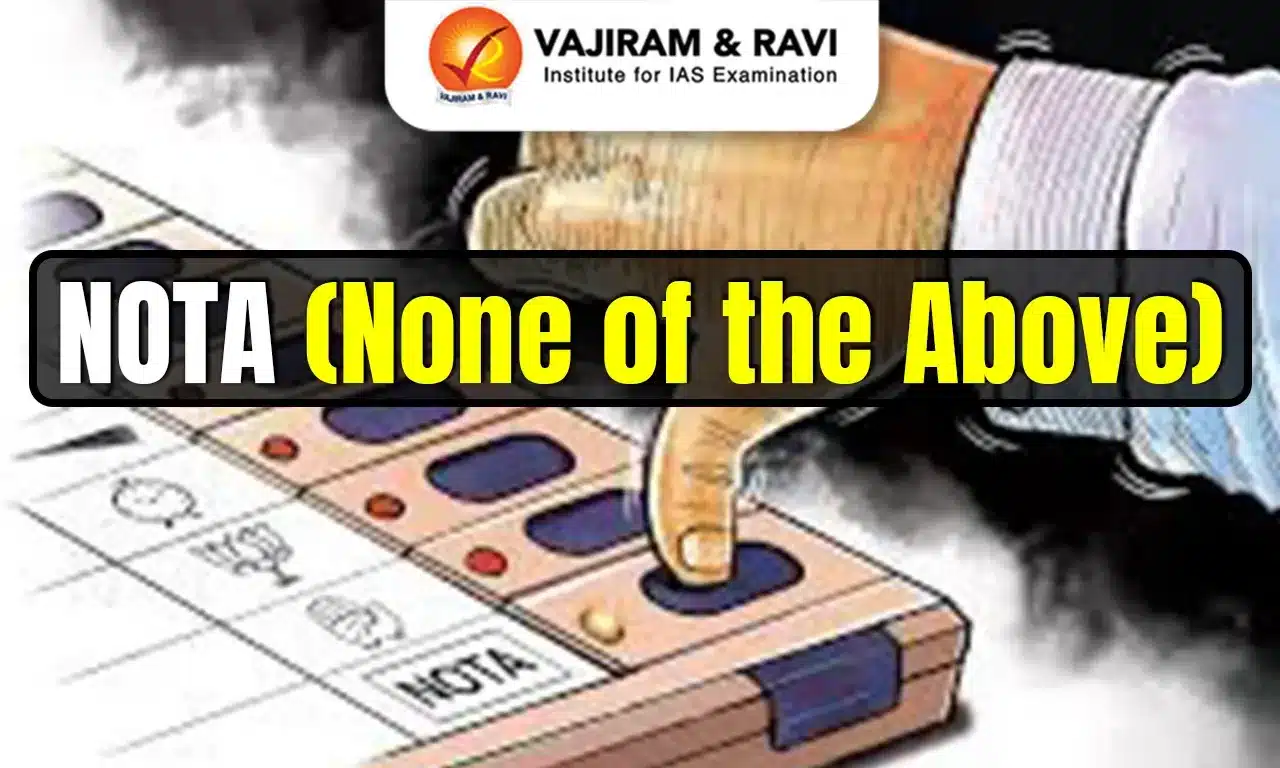
  • NOTA (None of the Above) is a voting option that allows voters to reject all contesting candidates in an election while still maintaining the secrecy of their choice.
  • It was introduced as a result of the 2013 Supreme Court judgment in the PUCL vs Union of India case, establishing it as a symbol of voter discontent.
  • First implemented in the 2013 Assembly elections in Chhattisgarh, Mizoram, Rajasthan, Delhi, and Madhya Pradesh, and later in the 2014 General Elections.

Current Legal Status and Function of NOTA

  • Votes cast under NOTA are counted, but they are treated as invalid votes.
  • Even if NOTA receives the highest number of votes, the candidate with the second-highest valid votes is declared elected.
  • Thus, NOTA does not impact the election outcome, but serves as a tool for democratic expression.

Election Commission’s Position on NOTA

  • The Election Commission (EC) opposed making NOTA mandatory in all elections.
  • It cited that uncontested elections are infrequent:
    • Only 6 such cases since 1971 in Lok Sabha elections.
    • Only 9 cases since 1952 where candidates were elected unopposed.
  • The EC argued that making NOTA compulsory would require legislative amendments to the:
    • Representation of the People Act, 1951, and
    • Conduct of Election Rules, 1961.

NOTA (None of the Above) FAQs

Q1: What does NOTA stand for in Indian elections?
Ans: NOTA stands for "None of the Above," allowing voters to reject all candidates on the ballot.

Q2: When was NOTA introduced in Indian elections?
Ans: NOTA was introduced in India in 2013 following a Supreme Court directive for better voter choice.

Q3: Does NOTA affect the outcome of an election in India?
Ans: No, even if NOTA receives the majority, the candidate with the highest votes still wins.

Source: TH

Enquire Now