Operation Olivia

Operation Olivia

Operation Olivia Latest News

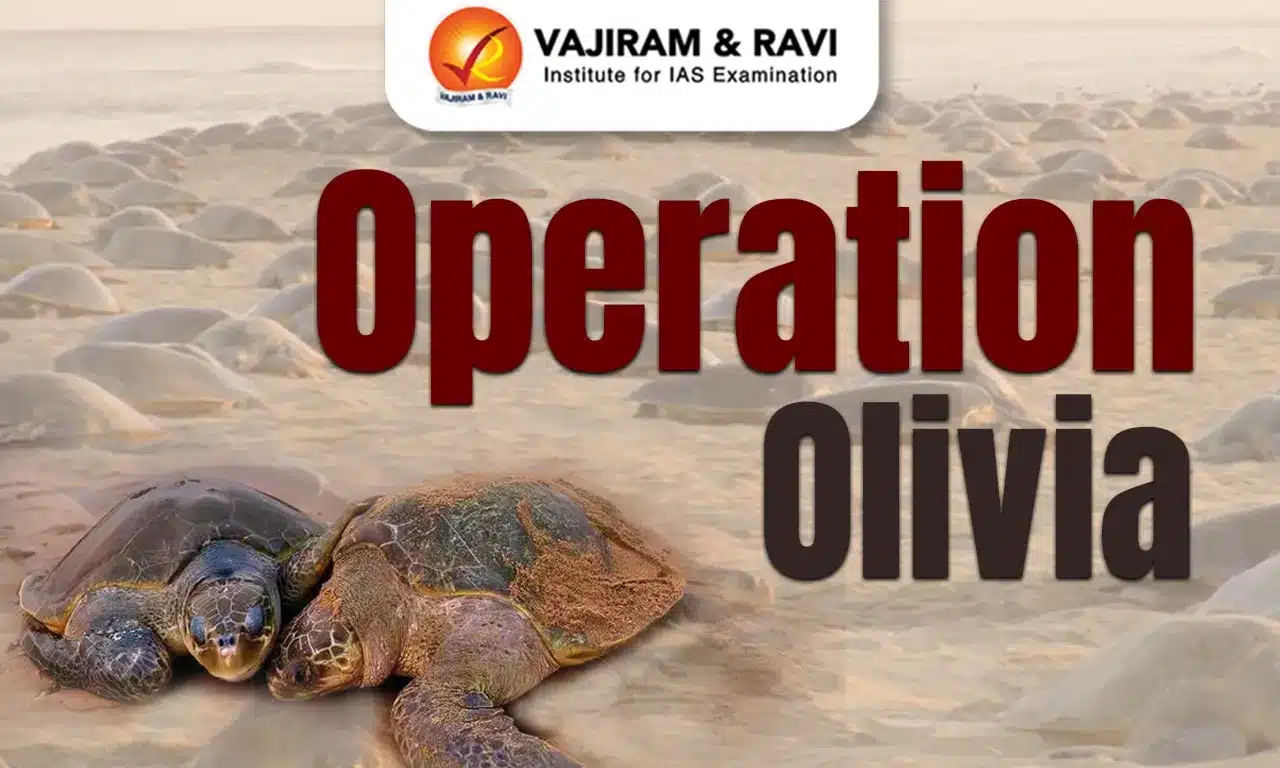
The Indian Coast Guard's (ICG) annual mission, 'Operation Olivia', helped protect a record of over 6.98 lakh Olive Ridley turtles nested at the Rushikulya river mouth in Odisha recently.

About Operation Olivia

  • It is an important initiative of the Indian Coast Guard (ICG) conducted annually from November to May.
  • It is aimed at ensuring safe nesting grounds for Olive Ridley turtles, particularly at Gahirmatha Beach and surrounding coastal areas of Odisha.
  • The operation involves round-the-clock patrolling, aerial surveillance, and close coordination with local stakeholders to protect the turtles during their breeding season.
  • Since the inception of the operation, the ICG has conducted over 5,387 surface patrol sorties and 1,768 aerial surveillance missions. 
  • These measures have led to a significant decline in threats such as illegal fishing and habitat disruption. 
  • In addition to enforcement, the Coast Guard has actively collaborated with coastal communities, promoting the use of Turtle Excluder Devices (TEDs) in fishing nets and signing Memorandums of Understanding (MoUs) with NGOs to support conservation education and sustainable fishing practices.
  • This integrated approach has played a pivotal role in creating a safer and more sustainable environment for Olive Ridley turtles, whose conservation is key to maintaining marine biodiversity along India’s eastern coast.

Key Facts about Olive Ridley Turtles

  • This species is among the smallest, but the most widespread and abundant of the world’s sea turtles.
  • It gets its name from the olive green color of its heart-shaped shell. .
  • These turtles, along with their cousin the Kemp's ridley turtle, are best known for their unique mass nesting called Arribada, where thousands of females come together on the same beach to lay eggs. 

Olive Ridley Turtles Distribution

  • They are found throughout the world, primarily in the tropical regions of the Pacific, Indian, and Atlantic oceans.
  • Odisha’s Gahirmatha Marine Sanctuary is known as the world’s largest rookery (a colony of breeding animals) of sea turtles.

Olive Ridley Turtles Features

  • They grow to about 2 feet in length, and 50 kg in weight.
  • They are omnivorous, meaning they feed on both plants and animals.
  • They are solitary, preferring the open ocean.
  • These turtles spend their entire lives in the ocean, and migrate thousands of kilometers between feeding and mating grounds in the course of a year.

Olive Ridley Turtles Conservation Status

  • IUCN Red List: Vulnerable
  • Wildlife Protection Act, 1972: Schedule 1
  • CITES: Appendix I

Operation Olivia FAQs

Q1: What is Operation Olivia?

Ans: Operation Olivia is an important initiative of the Indian Coast Guard (ICG) aimed at ensuring safe nesting grounds for Olive Ridley turtles.

Q2: What is the IUCN status of Olive Ridley turtle?

Ans: Vulnerable

Q3: What do you mean by arribada?

Ans: It specifically refers to the mass nesting of sea turtles, especially olive ridley turtles, on specific beaches at the same time.

SourceNDTV

NASA–Webb–Keck Observation of Titan

NASA–Webb–Keck Observation of Titan

NASA–Webb–Keck Observation of Titan Latest News

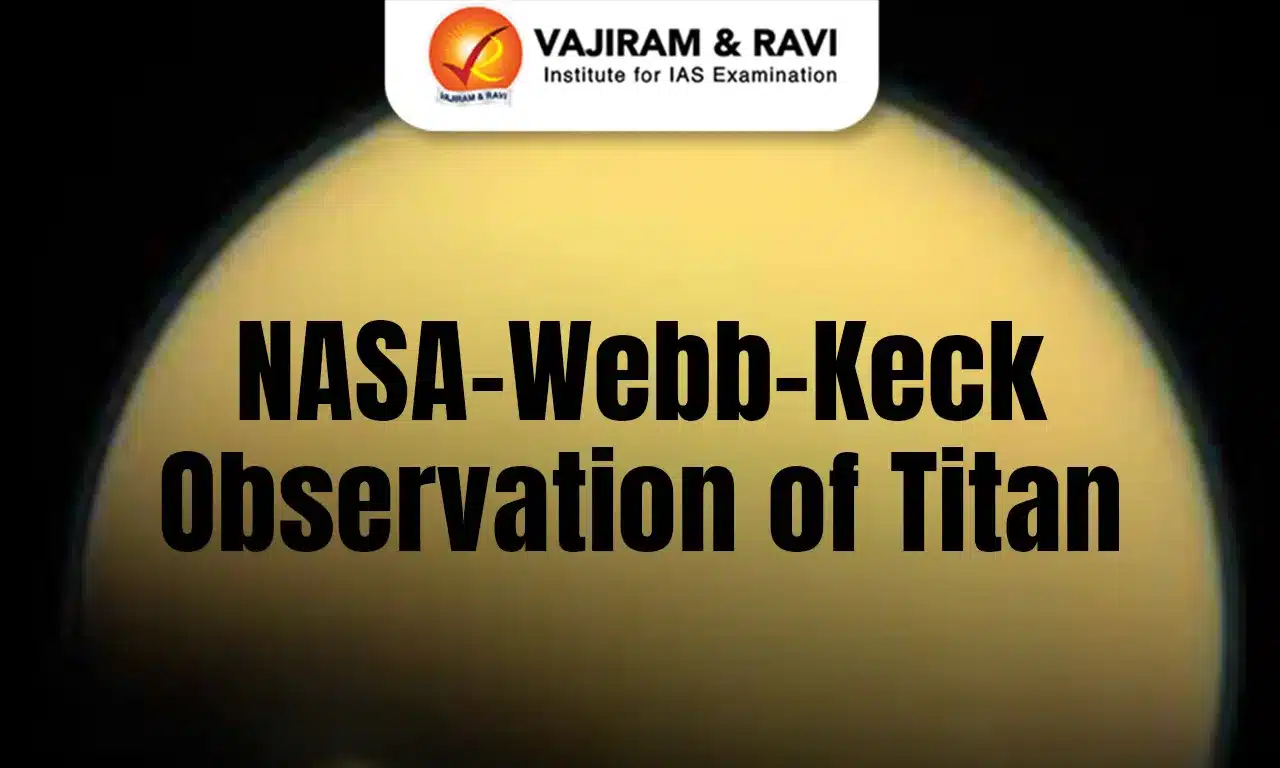
In November 2022 and July 2023, NASA scientists observed Saturn’s largest moon, Titan, using both the James Webb Space Telescope (JWST) and the Keck Observatory.

About Titan

  • Titan is the largest moon of Saturn and the second-largest moon in the solar system, after Jupiter's Ganymede.
  • It is the only known moon with a thick atmosphere and surface liquid bodies, including lakes and seas of methane and ethane.
  • Titan exhibits Earth-like weather patterns, including cloudsrainfall, and seasonal variations.

Key Findings

  • These observations revealed the presence of clouds in the mid- and high northern latitudes of Titan that rose to higher altitudes over time, indicating convection-driven weather patterns.
  • This marks the first-ever confirmed evidence of convective cloud activity in Titan’s northern hemisphere, where most of Titan’s hydrocarbon seas (like Kraken Mare and Ligeia Mare) are located.
  • The findings offer fresh insights into Titan's active methane cycle, which is analogous in complexity to Earth’s hydrological cycle, but with methane and ethane instead of water.
  • Understanding Titan's weather helps scientists better comprehend prebiotic chemistry and climate dynamics on icy moons with thick atmospheres.

About Keck Observatory

  • The W. M. Keck Observatory is located near the summit of Mauna Kea, a dormant volcano in Hawaii, at an altitude of 4,200 metres. This high elevation provides evident atmospheric conditions for astronomical observations.
  • The observatory consists of two 10-metre telescopesKeck I (operational since 1992) and Keck II (since 1996), making it the largest optical/infrared telescope system in the world.
  • Each telescope has a 10-metre primary mirror composed of 36 hexagonal segments made of zero-expansion glass ceramic, which ensures thermal stability and precision imaging.
  • These segments are adjusted in real-time by computer-controlled actuators to maintain the mirror's hyperboloid shape, enabling ultra-precise focus and light collection.
  • A technique called stressed mirror polishing was used to shape the asymmetric off-axis segments, a breakthrough innovation in modern telescope engineering.

NASA–Webb–Keck Observation of Titan FAQs

Q1: What is Titan, and why is it scientifically significant?
Ans: Titan is the largest moon of Saturn and is notable for having a dense atmosphere and liquid methane-ethane lakes, making it a candidate for astrobiological study.

Q2: What is the scientific importance of observing methane clouds on Titan?
Ans: Methane clouds suggest hydrocarbon-based weather cycles, analogous to Earth’s water cycle, providing insight into non-Earth-like habitability.

Source: SPA

PBAT Plastic

PBAT

PBAT Plastic Latest News

Kamalpur Nagar Panchayat in Tripura has introduced compostable bags made from PBAT as a sustainable alternative to single-use plastic (SUP).

What is PBAT Plastic?

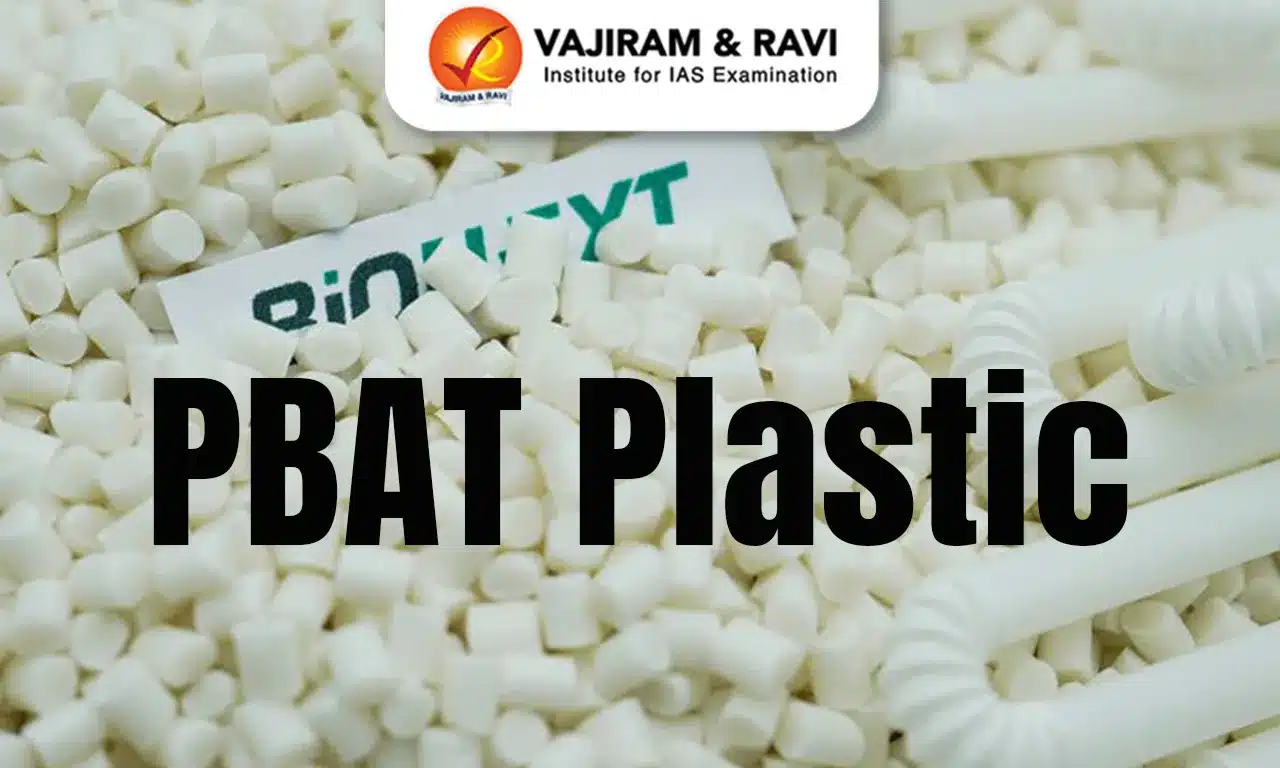
  • PBAT (Polybutylene Adipate Terephthalate) is a biodegradable thermoplastic polymer used as an eco-friendly substitute for traditional plastics.
  • It is a copolymer of adipic acid, 1,4-butanediol, and terephthalic acid and can be processed using conventional plastic manufacturing methods.
  • PBAT is often blended with other biopolymers to enhance its mechanical and barrier properties.

Properties of PBAT

  • 100% compostable – breaks down into water, CO₂, and biomass under industrial composting conditions within 180 days.
  • Flexible and tough, making it ideal for bags, films, and packaging.
  • It is moisture-resistantchemically inert, and offers good barrier properties.

PBAT vs PLA

Feature

PBAT

PLA (Polylactic Acid)

Composition

Copolymer of adipate + terephthalate

Made from lactic acid (corn/sugarcane)

Flexibility

Flexible and tough

Rigid and brittle

Applications

Bags, packaging

Cutlery, electronics packaging

Degradation Rate

Faster composting

Slower degradation

Cost

Lower than PLA, but higher than conventional plastics

Higher than PBAT

PBAT Plastic FAQs

Q1: What is PBAT plastic?
Ans: PBAT (Polybutylene Adipate Terephthalate) is a biodegradable and compostable plastic that behaves like conventional plastic but decomposes in the environment under industrial composting conditions.

Q2: Is PBAT plastic eco-friendly?
Ans: Yes, PBAT is considered eco-friendly as it breaks down into carbon dioxide, water, and biomass, reducing plastic pollution.

Q3: What is PBAT made from?
Ans: PBAT is a fossil fuel-derived polymer synthesised from butanediol, adipic acid, and terephthalic acid. Though biodegradable, it is not bio-based.

Source: PIB

Doctrine of Presumption of Constitutionality

Doctrine of Presumption of Constitutionality

Doctrine of Presumption of Constitutionality Latest News

Countering the Supreme Court’s observation that a parliamentary statute enjoys a presumption of constitutionality, petitioners recently termed the new Waqf (Amendment) Act, 2025, a “creeping acquisition” of Waqf properties owned by the Muslim community.

About Doctrine of Presumption of Constitutionality

  • It is a fundamental principle in Indian constitutional law, rooted in the respect for legislative authority and the democratic process. 
  • This doctrine posits that legislation enacted by the parliament or state legislatures is presumed to be constitutional, and the burden of proving otherwise lies on the challenger. 
  • This principle assumes that laws enacted by the legislature are inherently valid and constitutional until proven otherwise. 
  • The doctrine finds its roots in the broader jurisprudential tradition that respects the separation of powers, a foundational element of democratic governance, ensuring that each branch of government operates within its constitutionally prescribed limits.
  • The Supreme Court of India, as the apex judicial body, has consistently underscored this doctrine in its rulings, emphasizing that courts should strive to uphold the constitutionality of statutes unless there is a clear and unequivocal breach of constitutional provisions.
  • It serves multiple purposes in the legal system.
    • It ensures that the legislative process is respectedrecognizing that elected representatives, accountable to the public, are best positioned to understand and address societal needs through legislation. 
    • This presumption also fosters stability and predictability in the legal system, as laws remain effective and enforceable until they are conclusively declared unconstitutional by the judiciary. 
    • Moreover, it upholds the democratic ethos by preventing undue judicial interference in legislative matters, thereby maintaining a delicate balance between the powers of the legislature and the judiciary.

Doctrine of Presumption of Constitutionality FAQs

Q1: What does the Doctrine of Presumption of Constitutionality primarily imply?

Ans: All laws are presumed to be constitutional until proven otherwise

Q2: Who bears the burden of proving that a law is unconstitutional under this Doctrine of Presumption of Constitutionality?

Ans: The person or party challenging the law.

Q3: What does the Doctrine of Presumption of Constitutionality help maintain between the organs of government?

Ans: Delicate balance of powers.

SourceTH

Irula Tribe

Irula tribe

Irula Tribe Latest News

In Tamil Nadu’s Kunnapattu, Irula families who have lived on the land for generations face eviction and denial of rights, as nearly half remain without legal ownership or recognition.

About Irula Tribe

  • The Irula, a Dravidian ethnic group, reside in the Nilgiri Mountains of the Western Ghats, spread across Tamil Nadu and Kerala.
  • They are one of India’s oldest indigenous communities.
  • They are Tamil Nadu’s second largest Adivasi community. 
  • They are classified under the “Particularly Vulnerable Tribal Groups” category in Tamil Nadu.
  • They also call themselves Erlar or Poosari, while their neighbours refer to them as Eralollu, Irulas, Shikari and Pujari.
  • Language: They speak Irula, which is related to Dravidian languages like Tamil and Kannada.
  • Religious Beliefs:
    • The Irula people don’t have a definite god for them. They are pantheists who make provision for the presence of spirits in humans and objects.
    • Their main deity is a virgin goddess called Kanniamma, who is deeply associated with the cobra. 
  • Irula houses are built together in small settlements or villages called mottas. The mottas are usually situated on the edges of steep hills and are surrounded by a few dry fields, gardens, and forests or plantations.
  • The Irula community is traditionally associated with healing, traditional medicine, and catching poisonous snakes. 
  • Cattle production is another source of income. In the forests they collect wild resources like honey, frankincense, firewood and the like. 
  • Irulas’ knowledge of snakes and snake venom is legendary. They can even locate snakes based on their tracks, smell, and droppings.
    • They use traditional knowledge and skills to catch snakes, extract venom, and release the snakes back into the wild without harming them.
    • The Irula Snake Catchers’ Industrial Cooperative Society is a major producer of anti-snake venom (ASV) in the country. It supplies almost 80 percent of the venom that goes into making anti-venom in India.

Irula Tribe FAQs

Q1: What is the Irula tribe famous for?

Ans: They are known for their ancient and intimate knowledge of snakes

Q2: What is the religion of the Irular tribe?

Ans: They practice both traditional Hinduism and pantheism.

Q3: Where do the Irula tribe primarily reside?

Ans: Nilgiri Mountains of the Western Ghats

SourceNEWM

German Chancellor

German Chancellor

German Chancellor Latest News

Recently, the Prime Minister held a telephonic conversation with Chancellor Friedrich Merz of Germany, congratulating him on assuming office.

Germany's Electoral System – Key Features

  • Germany follows a Mixed-Member Proportional Representation system, combining both majoritarian and proportional representation models.
  • Every voter casts two votes:
    • First vote (Erststimme): For an individual candidate under the first-past-the-post system in 299 constituencies.
    • Second vote (Zweitstimme): For a political party list in each Länder (state) under proportional representation.
  • Bundestag (Lower House) members are elected based on these two votes; 299 by first vote and the rest by second vote.
  • Overhang seats arise when a party wins more seats through first votes than it deserves by proportional representation.
  • To ensure fairness, balance seats are allocated to other parties so that the final distribution reflects proportional vote share nationally.

Selection of the Chancellor in Germany

  • German citizens do not directly elect the Chancellor; they vote for representatives who then form the Bundestag, which elects the Chancellor.
  • Post-election, the Federal President nominates a candidate for the Chancellorship.
  • The Bundestag votes in a secret ballot; an absolute majority is required to elect the Chancellor in the first round.
  • If no candidate secures a majority in the first attempt:
    • second round is held.
    • If still unresolved, a third round takes place, and the candidate with the highest number of votes is elected.

Political Geography of Germany

  • Germany is located in Central Europe, sharing borders with nine countriesDenmark (north)Poland and Czech Republic (east)Austria and Switzerland (south), and France, Luxembourg, Belgium, and the Netherlands (west).
  • Bordering water bodies include the North Sea and the Baltic Sea in the north.

German Chancellor FAQs

Q1: How is the German Chancellor elected?
Ans: The Chancellor is elected by the Bundestag (Federal Parliament) upon nomination by the President.

Q2: What is the term length for a Chancellor in Germany?
Ans: There is no fixed term limit, but the Chancellor’s term is tied to the parliamentary term of four years, and they may be re-elected.

Source: TH

Jayant Narlikar

Jayant Narlikar

Jayant Narlikar Latest News

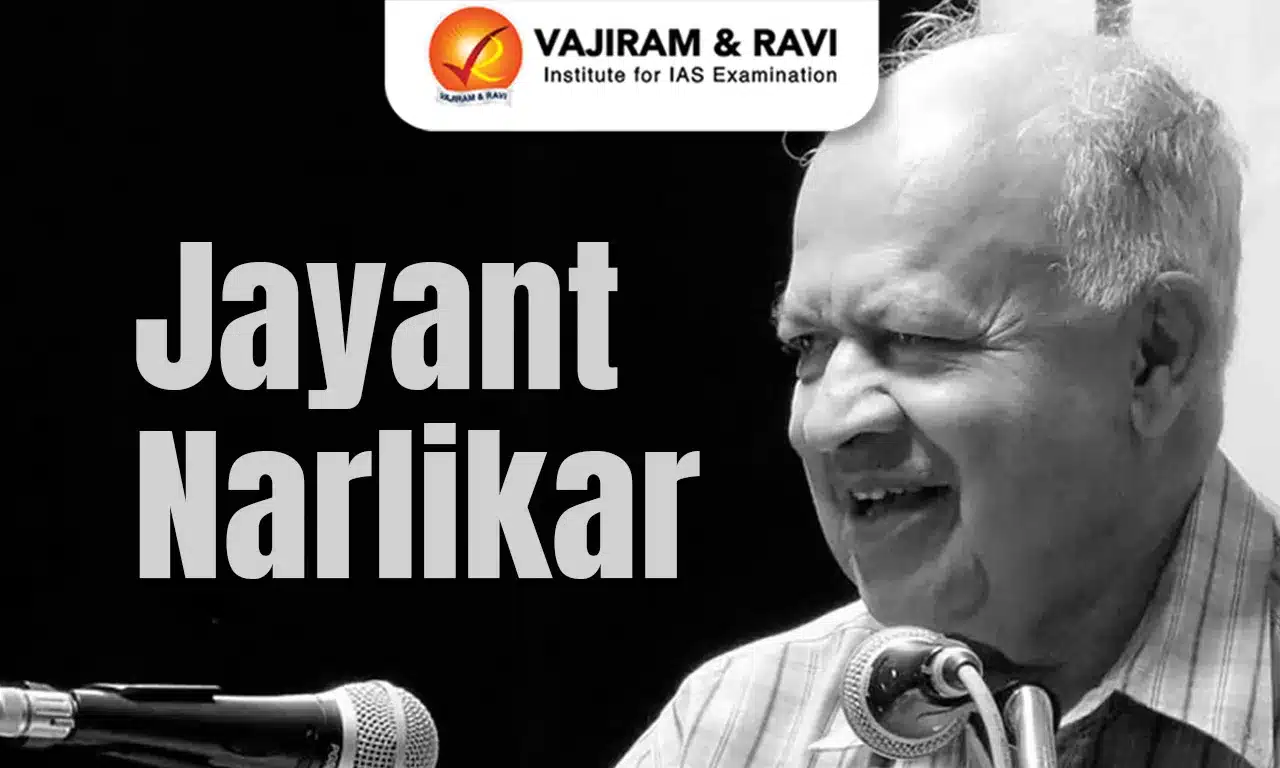
Eminent astrophysicist, science communicator, and Padma Vibhushan awardee Dr. Jayant Vishnu Narlikar passed away in Pune recently.

About Jayant Narlikar

  • He is one of India’s most distinguished astrophysicists and a global name in theoretical cosmology.
  • He was born on July 19, 1938, in Kolhapur, Maharashtra
  • He earned his B.Sc degree from the Banaras Hindu University (BHU) in 1957.
  • He later went on to Cambridge University for higher studies, becoming a Wrangler and earning the Tyson Medal in the Mathematical Tripos — a mark of top academic distinction.
  • After returning to India, Narlikar joined the Tata Institute of Fundamental Research (TIFR) in 1972 and led the Theoretical Astrophysics Group until 1989, during which time the group gained international recognition.
  • In 1988, the University Grants Commission (UGC) entrusted him with the task of establishing the Inter-University Centre for Astronomy and Astrophysics (IUCAA) inside the Savitribai Phule Pune University campus. As its founding director, he led IUCAA until his retirement in 2003.
  • He served as President of the Cosmology Commission of the International Astronomical Union from 1994 to 1997.
  • He is best known for co-developing the Hoyle–Narlikar theory of gravity.
  • From 1999 to 2003, he led a space research experiment to collect microorganisms from the upper atmosphere (up to 41 km). 
  • He authored numerous popular science books and articles, and appeared frequently on radio and television to explain complex scientific ideas in simple terms.
  • In 1996, UNESCO honoured him with the Kalinga Award for science popularisation.
  • In 2004, he received the Padma Vibhushan, India's second-highest civilian award.
  •  In 2014, the Sahitya Akademi honoured his Marathi autobiography with its highest prize for regional literature.
  • He was a Fellow of all three national science academies of India, the Royal Astronomical Society of London, and the Third World Academy of Sciences.

Hoyle-Narlikar Theory of Gravity

  • Dr. Jayant Narlikar is best known for co-developing the Hoyle–Narlikar theory of gravity—an alternative to Einstein’s general relativity—and for championing the steady-state theory of the universe, a bold counterpoint to the widely accepted Big Bang model.
  • The Hoyle–Narlikar theory offered a formulation of gravitation that synthesised Einstein’s general relativity with Mach’s principle, proposing that the inertial mass of a particle depends on the distribution of mass across the universe—an idea that challenged conventional big bang cosmology and continues to stimulate scientific debate.
  • The theory produced evidence to support what is known as the steady-state theory of the universe. 
    • Unlike the Big Bang theory that suggests a definite beginning, and possibly an end, to the universe, the steady-state theory maintains that the universe has always been, and would continue to be, the way it is — infinite in extent, without a beginning or an end. 
    • It acknowledged an expanding universe, which was experimentally verifiable, but proposed that the universe was able to maintain a constant density by continuously creating new matter.
    • The theory was first put forward in 1948 by British scientists Sir Hermann Bondi, Thomas Gold, and Sir Fred Hoyle. 
    • It was further developed by Hoyle to deal with problems that had arisen in connection with the alternative big-bang hypothesis.

Jayant Narlikar FAQs

Q1: Jayant Narlikar is best known for co-developing which theory?

Ans: Hoyle–Narlikar Theory of Gravity

Q2: What is the name of the research institution Jayant Narlikar helped found in Pune?

Ans: Inter-University Centre for Astronomy and Astrophysics (IUCAA)

Q3: Which Indian civilian award was conferred on Jayant Narlikar in 2004?

Ans: Padma Vibhushan

SourceTH

Supreme Court Reinstates Three-Year Practice Rule for Judicial Services

Three-Year Rule for Judicial Services

Judicial Services Latest News

  • The Supreme Court has reinstated the three-year minimum practice requirement for law graduates to apply for positions in the judicial services.

Introduction

  • In a significant shift in judicial recruitment policy, the Supreme Court of India has reinstated the requirement of three years of minimum legal practice for aspirants seeking entry into the subordinate judiciary
  • The May 20, 2025 verdict, delivered by a bench led by Chief Justice B.R. Gavai, aims to enhance the efficiency and competence of judicial officers through practical legal exposure before assuming judicial responsibilities.

Background and History of the Rule

  • The idea of requiring prior legal practice for judicial services dates back to the 14th Law Commission Report (1958), which proposed 3-5 years of courtroom experience for civil judge aspirants. 
  • However, in 2002, this rule was scrapped following the recommendations of the Justice Shetty Commission
  • The rationale was that the best talent was not joining the judiciary, as fresh graduates preferred more lucrative private sector roles after gaining experience. 
  • The court had then endorsed that a robust training mechanism could make up for the lack of courtroom experience.

Supreme Court’s Rationale for Reinstating the Rule

  • In its latest verdict, the Supreme Court emphasized that neither academic knowledge nor pre-service training could be a substitute for first-hand exposure to the court system
  • The judgment stated that young judges, from their first day in office, handle issues of life, liberty, and property, matters requiring maturity and an understanding of courtroom dynamics. 
  • The court said that past recruitment of fresh graduates had “not been a successful experience,” and many High Courts also supported reinstating the rule.
  • Key directives included:
    • three-year minimum practice to be certified by a senior advocate (10+ years).
    • Law clerk experience will also be considered valid.
    • Mandatory one-yeartraining before posting.

Criticisms and Concerns Raised

  • Despite the court's emphasis on experiential learning, critics argue that the move could restrict access to judicial careers, especially for students from economically disadvantaged backgrounds and women.
  • Key Concerns:
    • Economic Barrier: Junior lawyers in India are often underpaid. With stipends ranging from Rs. 15,000 to Rs. 20,000/month, many law graduates, especially from rural or marginalised communities, may not be able to afford three years of low-income work.
    • Gender Impact: The India Justice Report 2022 noted that women comprise 38% of district judiciary judges. The new rule could deter female aspirants, especially those taking career breaks due to maternity.
    • Lack of Exam Regularity: Judicial exams are not held at regular intervals in many states. Even after fulfilling the practice requirement, aspirants may have to wait years for the next vacancy notification.
    • Deterrent to Top Talent: Students from premier law schools often pursue corporate law due to better pay and career prospects. A lengthy, uncertain pathway may further dissuade top performers from considering judicial careers.

A Case for Reform Instead of Restriction

  • Legal scholars argue that a more effective solution would be to strengthen judicial training rather than bar fresh graduates. Proposals include:
    • Extended Training Period: Enhancing pre-service training to two years, involving mentorship under senior judges and courtroom simulation.
    • Exam Reform: Moving away from rote memorization toward scenario-based questions and judgment writing.
    • Staggered Entry Pathways: Introducing a dual-track system, one for experienced advocates and another for young graduates with intensive training components.

The Way Forward

  • While the SC’s decision is rooted in the intent to raise the quality of judicial service, it raises serious questions about inclusivity and talent retention. 
  • A better approach may involve a balance, preserving the court’s need for experience while creating training-heavy entry routes for exceptional fresh graduates. 
  • India’s judicial recruitment system, in its current form, must be reformed to attract and prepare the best talent rather than filter them out.

Judicial Services FAQs

Q1. What change has the Supreme Court made to judicial service eligibility?

Ans. The Supreme Court reinstated the requirement of three years of legal practice for applying to judicial services.

Q2. Why was the three-year practice rule reintroduced?

Ans. The court cited the lack of courtroom experience among fresh graduates and the need for practical exposure to ensure judicial competence.

Q3. Who will certify the three years of legal practice?

Ans. A senior advocate with at least ten years of practice will have to endorse the candidate's experience.

Q4. How might this rule affect economically weaker candidates?

Ans. It could deter them due to low stipends and delayed job entry, making the path financially unsustainable.

Q5. What are experts recommending as an alternative to this rule?

Ans. Suggestions include extending training for fresh graduates, reforming judicial exams, and offering structured mentorships.

Source: TH | IE

India Opens 6GHz Spectrum: Boost for WiFi, Tech Giants Rejoice

India Opens 6GHz Spectrum

6GHz Spectrum India Latest News

  • The Indian government has proposed licence-free use of a part of the 6GHz spectrum, enabling faster WiFi and better connectivity. 
  • This move benefits tech giants like Sony, Apple, and Meta by supporting high-speed performance for devices like PlayStation Pro and VR gear.

Wireless Connectivity

  • Wireless devices exchange data via radio waves, which are defined by wavelength and frequency. 
  • Frequency impacts: Data capacity; Speed of transmission; Range.

Understanding the Frequency Bands: 2.4 GHz, 5 GHz, and 6 GHz

  • These bands represent specific parts of the radio frequency (RF) spectrum allocated for unlicensed wireless use.
  • 2.4 GHz: Longer range, slower speed, more interference
  • 5 GHz: Faster speed, shorter range, more congestion
  • 6 GHz: Fastest speed, least congestion, shorter range, exclusive to latest devices

The 6 GHz Spectrum: The New Frontier for Wi-Fi

  • Offers 1200 MHz of spectrum—more than double that of 2.4 GHz and 5 GHz combined.
  • Supports seven 160 MHz channels for high-speed data transmission.
  • Accessible only via Wi-Fi 6E devices.

Use Cases of 6 GHz Band

  • Ideal for real-time applications like gaming, 4K/8K streaming, video conferencing, and cloud computing
  • Reduces network clutter by avoiding interference from older devices
  • Enables multi-device homes with smooth performance

India Opens Part of 6GHz Spectrum for Licence-Free WiFi Use

  • The Indian government has proposed making a portion of the 6GHz spectrum (5925–6425 MHz) licence-free, enabling faster WiFi.

Spectrum Dispute: Telcos vs Tech Giants

  • Telecom companies (Reliance Jio, Bharti Airtel, Vodafone Idea) wanted the full 6GHz band reserved for licensed 5G/6G services. 
  • In contrast, tech companies advocated for de-licensing to boost WiFi performance.

India’s Middle Path

  • Unlike the U.S., which has made the entire 1200 MHz of the 6GHz band unlicensed, India has chosen a balanced approach by opening only the lower 500 MHz (5925–6425 MHz) for unlicensed use.

ITU Guidelines Influence Decision

  • The International Telecommunication Union (ITU) in December 2023 had allocated the upper band (6425–7125 MHz) for licensed mobile operations, which India has adhered to in its draft policy.

Impact

  • This move is expected to improve WiFi speeds across homes and enterprises, benefiting tech ecosystems while preserving space for future mobile technologies.

India’s 6GHz WiFi Move – A Boost for Tech, But Not Without Concerns

  • Licence-Free WiFi Access in 6GHz Band
    • As per the proposal, no authorisation or frequency assignment will be needed for operating low-power indoor and very low-power outdoor wireless systems, such as WiFi networks, in the 5925–6425 MHz frequency band.
  • A Boost for Next-Gen WiFi and IoT
    • Tech companies believe the move will support the adoption of next-generation WiFi technologies like WiFi 6E and WiFi 7.
    • These technologies offer significantly faster speeds and are crucial for the expansion of the Internet of Things (IoT).
  • Sony May Reconsider PS5 Pro Launch in India
    • Due to earlier regulatory uncertainty over the 6GHz band, Sony had excluded India from the PS5 Pro launch. 
    • With the new draft rules, the company may now include India in its launch plans.
  • Industry Says Partial Spectrum Not Enough
    • Despite welcoming the move, industry experts emphasized that just a fraction of the 6GHz band is insufficient to unlock the full potential of WiFi 6E and 7. 
    • The Forum urges the government to free up more of the band to fully support India’s digital infrastructure goals.
  • The Bigger Picture
    • While the draft policy marks a major step for tech firms and connectivity, stakeholders stress that broader de-licensing is necessary for long-term digital growth and innovation.

Global Approach to 6GHz Spectrum: A Mixed Landscape

  • Full Delicensing: U.S. and Canada Lead
    • In April 2020, the U.S. Federal Communications Commission (FCC) opened the entire 6GHz band (1200 MHz) for license-exempt uses. 
    • Canada has adopted a similar policy, fully supporting next-gen WiFi technologies.
  • Partial Delicensing: Cautious Optimism
    • Countries like Japan, Australia, and Singapore have only delicensed a portion of the 6GHz spectrum for WiFi use, aiming to strike a balance between telecom and unlicensed wireless applications.
  • Revisions and Debates: Chile and Mexico
    • Chile initially opted to open the full band for WiFi but later reversed its decision. 
    • Meanwhile, Mexico is currently evaluating the possibility of broader harmonisation of the 6GHz spectrum for unlicensed use.
  • Conclusion: Diverse Regulatory Paths
    • While the global trend supports expanding WiFi access through the 6GHz band, approaches vary significantly, reflecting different national priorities and technological strategies.

6GHz Spectrum India FAQs

Q1. What is the 6GHz spectrum?

Ans. It's a high-frequency wireless band enabling faster, less congested WiFi connections with modern devices.

Q2. Why is 6GHz important for tech companies?

Ans. It supports WiFi 6E/7 devices like PlayStation Pro and VR gear with high-speed, low-latency performance.

Q3. Which band is now licence-free in India?

Ans. The 5925–6425 MHz portion of the 6GHz band is now proposed for unlicensed use.

Q4. How does 6GHz compare to 2.4GHz and 5GHz?

Ans. 6GHz offers faster speeds and more channels but with shorter range than lower bands.

Q5. What’s the global stance on 6GHz use?

Ans. The U.S. and Canada allow full delicensing; India follows a partial delicensing model..

Source: IE | Intel

Shirui Lily Festival

Shirui Lily Festival,

Shirui Lily Festival Latest News

The 2025 edition of the festival was held after a two-year gap, caused by ethnic violence between the Meitei and Kuki-Zo communities in Manipur.

About Shirui Lily Festival

  • The Shirui Lily Festival is a five-day cultural and ecological festival held in the Ukhrul district of Manipur, which is dominated by the Tangkhul Naga tribe.
  • The festival celebrates the endemic Shirui Lily (Lilium mackliniae), a rare, bluish-pink bell-shaped flower found only in the Shirui Hills, about 18 km from Ukhrul town.
  • The flower was discovered in 1946 by English botanist Frank Kingdon-Ward and won a merit prize at the 1948 Royal Horticultural Society (RHS) show in London.
  • In 1989, the Manipur government declared Shirui Lily as the State Flower, but it is now endangered due to tourism pressures and the invasion of an exotic bamboo species.
  • The festival aims to raise awareness about the ecological importance of the flower and promote conservation efforts.

Shirui Lily Festival FAQs

Q1: What is the Shirui Lily Festival celebrated for?
Ans: It is celebrated to promote the conservation of the endangered Shirui Lily (Lilium mackliniae), a flower found only in the Shirui Hills of Manipur.

Q2: In which Indian state is the Shirui Lily Festival held?
Ans: It is held in the Ukhrul district of Manipur, Northeast India.

Q3: What is the unique feature of the Shirui Lily (Lilium mackliniae)?
Ans: Shirui Lily is endemic to Manipur and blooms only during the summer, generally between May and June.

Source: TH

Enquire Now