Vajiram & Ravi provides Daily articles for 2 June 2025, tailored for aspirants. We cover all relevant news and events crucial for the exam, ensuring you stay updated & well-prepared.
The Department of Land Resources (DoLR), Ministry of Rural Development, Government of India, is going to conduct the second phase of capacity-building under the NAKSHA programme from 2nd June 2025, across five Centres of Excellence (CoEs) in the country.
About NAKSHA Programme
The NAtional geospatial Knowledge-based land Survey of urban Habitations (NAKSHA) programme is a city survey initiative under the existing Digital India Land Records Modernization Programme (DILRMP).
It is spearheaded by the Department of Land Resources (DoLR), under the Ministry of Rural Development.
Under the new initiative, maps of towns and cities will be prepared. The programme has been launched as a pilot across 152 urban local bodies in 26 states.
The cities selected meet two criteria: area less than 35 sq km, and population less than 2 lakhs. The pilot will be completed in a year.
The Survey of India is the technical partner for NAKSHA programme which is responsible for conducting aerial surveys and providing orthorectified imagery, through third party vendors, to state and Union Territory governments.
Objectives of NAKSHA Programme
Creates a comprehensive geospatial database for urban land records.
Uses aerial and field surveys integrated with GIS technology.
Enhances land governance, streamlines property records, and supports urban planning.
Improves decision-making, ensures efficient land use, and facilitates smoother property transactions.
NAKSHA Programme FAQs
Q1: Who launched the Naksha program?
Ans: Department of Land Resources, Ministry of Rural Development
Q2: What is the Digital India Land Record Modernization Scheme (DILRMP)?
Ans: DILRMP is a government initiative to digitize land records, improve transparency, and integrate property data with GIS technology.
The Bar Council of India (BCI) has formally notified a set of rules permitting foreign law firms and lawyers to practice in India.
Introduction
India’s legal services sector is undergoing a historic transformation with the Bar Council of India (BCI) formally notifying rules in May 2025 that allow foreign law firms and lawyers to operate in the country.
The move represents a decisive policy shift from decades of resistance and judicial barriers.
However, this liberalization is circumscribed by key limitations and has triggered fresh legal and constitutional debates about its legitimacy, implementation, and impact on Indian legal professionals.
Regulatory Framework for Foreign Law Firms in India
Scope of Entry and Practice
The 2025 BCI notification permits foreign law firms and foreign lawyers to operate in India under strict conditions.
They are allowed to engage only in non-litigious practice, meaning they cannot appear before Indian courts, and are limited to advising on foreign law, international legal matters, and arbitration proceedings involving foreign parties.
Their entry is conditional upon reciprocity, i.e., Indian lawyers should be allowed similar access in their jurisdictions.
Historical Context of Resistance
The liberalization comes 25 years after massive protests by Indian lawyers.
In 2000, over 40,000 advocates marched to Parliament against proposals to amend the Advocates Act, 1961, fearing dilution of India's legal sovereignty.
In 2018, the Supreme Court upheld these concerns, ruling that foreign lawyers and law firms cannot practice Indian or foreign law in India unless the Act is amended.
BCI’s Gradual Shift in Position
The first formal attempt to allow foreign lawyers came in 2023, but it was challenged in the Delhi High Court and remains under consideration.
The May 2025 notification effectively revisits the same proposal, sparking criticism that it's merely "old wine in a new bottle", a reissue without addressing fundamental legal conflicts.
Benefits of Allowing Foreign Law Firms
Global Collaboration and Knowledge Sharing
Proponents see the move as a catalyst for modernization.
With foreign law firms entering the Indian market, domestic firms could benefit from knowledge exchange, innovation, and adoption of global best practices.
Opportunities for Indian Lawyers
The new rules include a dual registration provision, allowing Indian lawyers to register for practicing international law without giving up their right to practice Indian law. This is expected to create global career pathways for young Indian lawyers.
Boost to India’s Legal Services Exports
By integrating into the global legal services framework, India aims to position itself as a hub for international arbitration and cross-border legal consultancy.
This would align well with India's broader ambitions under initiatives like Make in India and Ease of Doing Business.
Concerns and Legal Ambiguities
Violation of Supreme Court Rulings
Critics argue that the BCI's move violates the 2018 Supreme Court judgment and bypasses the requirement for legislative amendment to the Advocates Act.
They assert that regulatory notifications cannot override judicial decisions or foundational statutes.
Illusion of Reciprocity
While the BCI claims that foreign entry is reciprocal, many Indian lawyers disagree.
Indian law degrees and bar enrollments are not automatically recognized in countries like the U.S., U.K., or Australia.
Experts warn that this asymmetric access could disadvantage Indian lawyers in the long run.
Unclear Arbitration Provisions
The rules remain ambiguos on whether foreign lawyers can appear in international arbitrations involving Indian parties and Indian laws.
This legal grey area could trigger jurisdictional disputes and further litigation.
Conclusion
India’s decision to allow foreign law firms marks a significant milestone in the evolution of its legal sector.
While the initiative offers numerous benefitsm from global exposure to increased competitiveness, it is equally burdened with legal contradictions and practical uncertainties.
For a smooth transition, a holistic legislative framework and detailed implementation roadmap will be essential. Only then can India ensure that the legal profession evolves without compromising its constitutional and professional integrity.
Foreign Law Firms in India FAQs
Q1. What is the scope of work permitted to foreign law firms in India?
Ans. Foreign law firms can operate only in non-litigious areas like foreign law, international law, and arbitration under the new BCI rules.
Q2. Is foreign legal practice in India allowed by the Supreme Court?
Ans. The 2018 Supreme Court judgment prohibited it, and critics argue that the BCI's 2025 notification violates this ruling without amending the law.
Q3. What is the condition of reciprocity in the new regulation?
Ans. Entry of foreign law firms is conditional on Indian lawyers receiving similar access abroad, though many believe this reciprocity does not truly exist.
Q4. How does the new rule benefit Indian lawyers?
Ans. Indian lawyers can now register to practice foreign law without giving up their right to practice Indian law, enhancing global career opportunities.
Q5. What are the legal concerns surrounding the BCI’s decision?
Ans. Experts fear the move lacks legislative backing and may lead to legal disputes due to contradictions with existing laws and court judgments.
Seventeen women cadets graduated in the 148th NDA batch, marking a historic moment that paves the way for women to potentially reach top leadership positions in the Indian armed forces in the future.
Long Journey to NDA: A Milestone in Women’s Military Inclusion
Women’s entry into the Indian military began with the British-era Military Nursing Service in 1888.
In 1958, the Indian Army Medical Corps started granting regular commissions to women doctors.
Opening Non-Medical Roles (1992–2008)
The Women Special Entry Scheme (WSES) was introduced in 1992, allowing women to join select non-combat branches as Short Service Commission (SSC) officers.
In 2008, women SSC officers in the Judge Advocate General department and Army Education Corps (AEC) became eligible for Permanent Commission (PC).
Expanding Opportunities (2019–2020)
In 2019, women were allowed PC in eight additional non-combat streams, though command roles were still denied.
Legal challenges culminated in a landmark 2020 Supreme Court verdict affirming women’s right to PC and command roles in ten streams, rejecting gender-based discrimination.
Breaking Barriers (2021–2024)
Following a Supreme Court directive in 2021, the NDA opened its doors to women.
The 17 women cadets who graduated in 2025 were the first batch admitted after this historic ruling, symbolizing a transformative shift in India's military landscape.
Integration into Squadrons: A New Era at NDA
Growing Presence of Women Cadets
Since 2022, the NDA has admitted 126 women cadets up to its 153rd batch, starting a new chapter in gender-inclusive military training.
Gender-Neutral Training Approach
The NDA adopted a gender-neutral training model with minimal changes to its existing curriculum.
Training is largely joint, with male and female cadets undergoing the same regimen to prepare for future command roles.
Learning from Other Academies
To structure its women’s training, the NDA borrowed methods from established academies like the Officers Training Academy (Chennai), Indian Naval Academy (Ezhimala), and Air Force Academy (Dundigal), where women SSC officers have been trained since 1992.
From Separate Housing to Full Integration
Initially housed separately, women cadets were fully integrated into the NDA’s 18 squadrons during their final term — a major milestone that reflects deeper inclusion.
Squadrons serve as core living and training units, fostering camaraderie and discipline.
Equality in Action
Today, women cadets live, train, and march alongside their male counterparts, indistinguishable in uniform and routine — symbolizing true equality in one of India’s most prestigious military institutions.
A Momentous Occasion: Paving the Way for Women Leaders in the Armed Forces
Historically, women entered the military through SSC or direct entry into limited branches, without command roles or long-term career paths.
The NDA now offers women foundational leadership training, giving them the same career-building opportunities previously reserved for men.
Path to Becoming Service Chiefs
Women NDA graduates can now start their careers young, making it feasible to serve for 35–40 years — a key requirement for rising to the rank of service chief.
Their training also prepares them for combat command roles, such as in infantry, artillery, naval warships, or fighter squadrons, essential for advancement.
Need for Cultural and Structural Reforms
While recent changes are promising, senior military leaders emphasize the need for a cultural shift within the forces.
Challenges remain — some combat roles are still closed to women, and systemic reforms are needed in areas like maternity policy, childcare, spousal postings, promotion criteria, and infrastructure support.
Women in NDA FAQs
Q1. What milestone did NDA achieve recently?
Ans. Seventeen women cadets graduated, symbolizing progress toward gender equality and leadership opportunities in India’s armed forces.
Q2. When did NDA first admit women?
Ans. NDA began admitting women cadets in 2022, following a Supreme Court directive aimed at promoting equal military opportunities.
Q3. How are women trained at NDA?
Ans. Women receive gender-neutral training and live in integrated squadrons, ensuring equal preparation for future command roles.
Q4. Can NDA women reach top military roles?
Ans. Yes, NDA now provides women a long-term military career path, making service chief positions realistically achievable.
Q5. What challenges do women still face?
Ans. Despite progress, cultural shifts and structural reforms are needed in maternity policy, postings, and command eligibility.
Aero India 2025 starting on 10th February 2025 at the Air Force Station, Yelahanka Bengaluru, Karnataka. Beginning on 10th February 2025, the event will go on for five days and go on till 14th February 2025. The show will showcase various aerial displays, cutting-edge technologies and host webinars and discussions about the aviation and defense future. In this article, we are going to cover Aero India 2025, its theme and objectives.
Aero India 2025 Overview
Aero India 2025 is a defence and aerospace exhibition being held in India in February 2025. The show is going to present the latest technology, advancement in aviation, defense equipment and aerospace technology. This show is conducted every two years in Bengaluru.
Aero India 2025
Edition
15th Edition
First Edition
1996
Dates
February 10 to 14, 2025
Location
Air Force Station, Yelahanka, Bengaluru
Organizers
Defence Exhibition Organisation, Ministry of Defence
Theme
The Runway to a Billion Opportunities
Key Events
Conference of Defence Ministers, CEO Roundtable, Manthan Start-up event, Air Show and Exhibition
Conference Theme
BRIDGE -Building Resilience through International Defence and Global Engagement
Notable Features
iDEX pavilion showcasing start-up innovations
Website
www.aeroindia.gov.in
Aero India 2025 Dates
Aero India 2024 Event will be held in Bangalore from 10 February to 14 February, 2025. The show will be held at the Air Force Station Yelahanka in Bengaluru, Karnataka.
From 10th to 12th February the show will be open exclusively for Business Visitors.
13th to 14th February, the show will open up for the general public.
Aero India 2025 Venue
The 15th Aero India event is set to take place at the Air Force Station Yelahanka in Bengaluru, Karnataka. Renowned as one of Asia's largest airshows, this venue has traditionally hosted the event since its inception. Participants and exhibitors can register online to secure their entry passes.
Aero India 2025 Registration
Aero India 2025 Registrations are open for registrations for both business class visitors as well as the general public. The people attending the event can buy their tickets from the Aero India Official Website. The registration steps include:
Visit the Website: Go to aeroindia.gov.in.
Access Visitor Registration: Click on the "Visitor Registration" section on the homepage.
Select Pass Type: Choose the appropriate pass—Business Visitor Pass, General Pass, or Air Display Viewing Area Pass—based on your purpose.
Fill in Details: Enter the required information, such as name, contact number, and nationality.
Upload Documents: Attach the necessary documents based on the pass type.
Make Payment: Pay the applicable fee.
Submit the Form: Complete the registration by submitting the form.
Aero India Theme 2025
The Aero India 2025 Theme is “The Runway to a Billion Opportunities.” The theme highlights the role of India in growing in aerospace and defense manufacturing, motivating partnerships between International and Indian companies. The show will showcase and present military and civilian aircrafts, and technologies promoting innovation and collaborations with the global aerospace industry.
Aero India 2025 Conclave Theme
The Defence Ministers’ Conclave at Aero India 2025 is going to be conducted on the theme “Bridge- Building Resilience through International Defence and Global Engagement.” This conclave will be focusing on strengthening strategic partnerships between nations. The meeting will also host top officials and ministers from many countries, conducting discussions on joint defense initiatives and improving global security.
Events in Aero India 2025 Show
The Aero India 2025 is going to host a number of events. Some of the events include:
Aerial Displays: Thrilling flyovers, aerobatics, and performances featuring military aircraft, helicopters, and drones.
Exhibitions: Showcase of cutting-edge aerospace and defense technologies.
Defence Ministers' Conclave: High-level discussions to strengthen international defense partnerships.
CEO Roundtable: Industry leaders sharing insights on trends and opportunities in the defense sector.
iDEX/Manthan Start-up Event: Platform for start-ups to present innovative solutions to potential investors.
India Pavilion: Exclusive exhibition of indigenous defense manufacturing prowess.
International Seminar: February 8–9, 2025, focusing on "Futuristic Aerospace Technologies" and addressing design challenges.
Aero India 2025 Objective
The Aero India 2025 Objective is to present the latest advancement in technologies in aerospace as well as defense technologies. It will also promote international collaboration and present India as a key player in global aviation and defense sectors. This show will offer a platform for both military and civil aviation sectors across the world to show their production and new partnerships.
Aero India 2025 FAQs
Q1: Where will Aero India 2025 be held?
Ans: Aero India 2025 will be held at Air Force Station Yelahanka in Bengaluru, Karnataka.
Q2: How much is Aero India 2025 ticket?
Ans: Ticket prices for Aero India 2025 depend on the pass type, starting at around ₹500 for General Passes and higher for Business or Premium passes.
Q3: Where can I watch Aero India 2025?
Ans: You can watch Aero India 2025 in person at the Yelahanka Air Force Station or via live streams on official channels.
Q4: Where is the Defence Expo 2025 in India?
Ans: The venue for Defence Expo 2025 in India has not been officially announced yet.
Q5: Where is the Aero India Show 2024?
Ans: The Aero India Show 2024 was held at Air Force Station Yelahanka in Bengaluru, Karnataka.
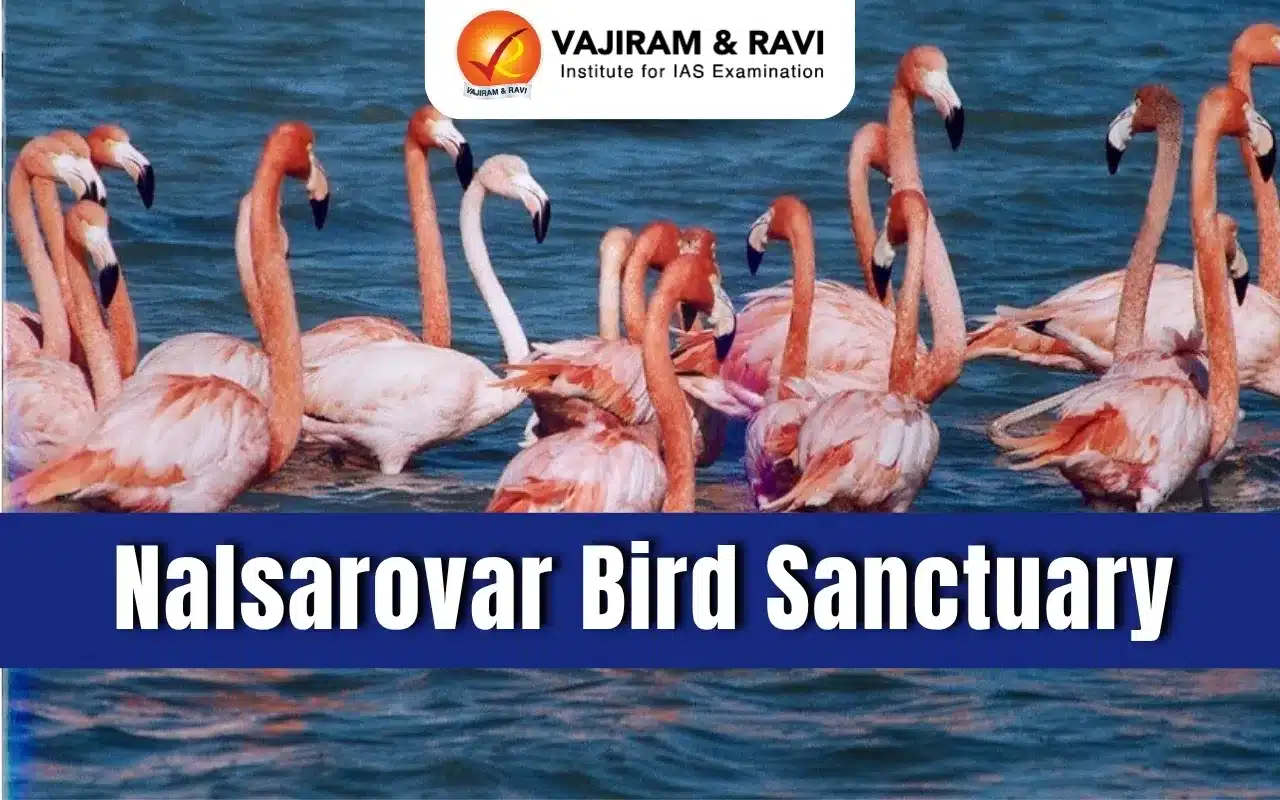
A rare Arctic seabird, the Sabine’s Gull, was spotted at Gujarat’s Nalsarovar Wildlife Sanctuary recently — its first recorded sighting in India since 2013, when it was seen in Kerala.
About Nalsarovar Bird Sanctuary
It is located approximately 64 km west of Ahmedabad in Gujarat.
It is a natural lake with shallow waters and muddy lagoons, dotted by 360 islets.
Spread over an area of 120.82 sq km, this sanctuary is a paradise for bird watchers and nature enthusiasts.
The history of Nalsarovar dates back to the 15th century, when the lake was created as a result of the construction of a check dam across the Sabarmati River.
The lake was initially used for irrigation and as a source of drinking water for nearby villages.
Over time, the lake became an important habitat for a variety of bird species, and local communities recognized its ecological significance.
In the early 20th century, the British colonial administration recognized the importance of Nalsarovar as a wetland ecosystem and established it as a protected area.
In 1969, the Gujarat government declared Nalsarovar a bird sanctuary to primarily protect its bird population.
The Ramsar Conventiondesignation of Nalsarovar Bird Sanctuary in 2012 recognized its ecological importance as a wetland habitat for birds and other wildlife.
Flora:
The sanctuary area has 48 species of algae and 72 species of flowering plants.
The common aquatic plants are Cyperus sp., Scirpus sp., Typha ungustata, Eleocharis palustris, Ruppia, Potamogeton, Vallisnaria, Naias, Chara, etc.
Fauna:
The sanctuary has about 250 bird species, which include greater and lesser flamingoes, pelicans, ducks & geese, rails, coots, cranes, cormorants, herons, egrets, storks, ibises, spoonbills, teals, sarus cranes, moorhens, and waders, etc.
Other animals: On southern or southwestern fringes, small herds of wild ass can be seen. Mongoose, jungle cat, Indian fox, jackal, wolf, and hyena are also there.
Key Facts about Sabine’s Gull
Sabine's gull (Xema sabini), also known as the fork-tailed gull or xeme, is a small gull.
It breeds in the subarctic and high arctic regions of North America and Russia, as well as on Greenland and in Svalbard.
This species is easy to identify through its striking wing pattern.
The adult has a pale grey back and wing coverts, black primary flight feathers, and white secondaries. The white tail is forked.
IUCN Red List Status: Least Concern
Nalsarovar Bird Sanctuary FAQs
Q1: Where is Nalsarovar Bird Sanctuary located?
Ans: Gujarat
Q2: Which major river was dammed, resulting in the formation of the Nalsarovar lake?
Ans: Sabarmati
Q3: Is Nalsarovar a Ramsar site?
Ans: Yes, Nalsarovar Bird Sanctuary is designated as a Ramsar Site.
The Indian Air Force (IAF) successfully rescued 14 individuals, including 13 from Assam, stranded on a riverine island in Arunachal Pradesh due to Dibang River flooding.
About Dibang River
It is an important tributary of the Brahmaputra.
It flows through the northeast Indian states of Arunachal Pradesh and Assam.
The Dibang Valley, a district of Arunachal Pradesh, is named after this river.
Course:
Origin: The Dibang originates near Keya pass on the Indo-Chinese border in the Upper Dibang Valley district of Arunachal Pradesh.
The region all along the upper course of the river is located in the Great Himalayan Mountain Range, with its northern and eastern reaches bordering Tibet.
The Mishmi Hills is found along the upper courses of the Dibang River.
The Mishmi Hills is the southward expansion of the Himalayas; compose most of the northern part of the region.
They have an average elevation of 15,000 feet (4,500 m) and are dotted with passes such as Yonggyap at 13,000 feet (3,950 m) and Kaya at 15,600 feet (4,750 m).
After traversing through Arunachal Pradesh, Dibang River enters the plains of Assam.
Eventually, it joins the Lohit and Siang rivers, which together form the Brahmaputra River in Assam.
The major tributaries of the Dibang River are the Dri, Mathun, Talon, Eme, Ahi, Emra, and Awa.
Dibang Multipurpose Project
It is a flood control cum hydroelectric power project planned to be developed on the Dibang River, a tributary of the Brahmaputra River, in Arunachal Pradesh.
At 2,880 MW installed capacity, it will be the country’s biggest hydropower facility.
It is being developed by India’s state-run National Hydroelectric Power Corporation (NHPC).
The Project is designed as an energy storage project, with flood moderation as one of the key objectives, besides power generation.
The project envisages the construction of a 278 m-high and 375 m-long concrete gravity dam, which will be the highest concrete gravity dam of India.
Dibang River FAQs
Q1: What is the origin of Dibang River?
Ans: It originates near Keya pass on the Indo-Chinese border in the Upper Dibang Valley district of Arunachal Pradesh.
Q2: Is Dibang left or right tributary of Brahmaputra?
Ans: The Dibang River is a right-bank tributary of the Brahmaputra River.
Q3: Through which two Indian states does the Dibang River flow?
Turkey’s much-hyped Bayraktar TB2 drones have suffered a devastating reputational blow after Pakistan’s Turkish-origin drone fleet failed spectacularly during Operation Sindoor.
About Bayraktar TB2
It is a Turkish-made Medium Altitude Long Endurance (MALE) tactical unmanned aerial vehicle (UAV) designed for intelligence, surveillance, reconnaissance (ISR), and precision strike missions.
It is Turkey’s first domestically developed armed UAV.
It is an effective, low-cost platform that can be produced with commercial, off-the-shelf parts, which drives down cost and makes maintenance affordable for many countries.
Bayraktar TB2 Features
It features a high-wing monoplane design, which provides increased stability and efficiency for extended missions.
The drone is equipped with a tailplane, further improving its aerodynamic characteristics.
Its wingspan is 12 meters, while its length is 6.5 meters, and its height is 2.2 meters.
Range: Flies up to 300 km from its base.
Endurance: Can stay in the air for up to 27 hours.
Payload Capacity: Can carry 150 kg, including laser-guided MAM-L missiles — powerful enough to take out armored vehicles.
Top Speed: The UAV achieves a maximum speed of 130 km/h (80 mph), with a cruising speed of around 100 km/h (62 mph).
Sensors: Equipped with high-tech cameras (day/night vision), laser designators, and target finders — ideal for tracking and destroying targets.
Bayraktar TB2 FAQs
Q1: What type of UAV is the Bayraktar TB2?
Ans: Medium Altitude Long Endurance (MALE)
Q2: Which country developed the Bayraktar TB2 UAV?
Ans: Turkey
Q3: How much does Bayraktar TB2 cost?
Ans: At $2 million to $5 million each, the Bayraktar TB2 costs about a quarter the price of other military-grade drones
Recently, World Preeclampsia Day (May 22) was observed, to increase awareness about preeclampsia.
About Preeclampsia
It is a serious condition that develops during pregnancy, usually after 20 weeks or so,
It is often marked by high blood pressure and protein in the urine and this condition can also affect other organs of the body including the kidneys, liver and brain.
Untreated preeclampsia can have serious, even fatal consequences for the mother and baby.
In some women, preeclampsia may develop after the delivery of the baby; this is known as postpartum preeclampsia.
What causes preeclampsia? The exact cause of preeclampsia remains unknown, but researchers believe it may have come from a problem with the health of the placenta (the organ that develops in the uterus during pregnancy and is responsible for providing oxygen and nutrients to the fetus).
Symptoms of Preeclampsia
Many people with preeclampsia do not have any symptoms.
For those that do, some of the first signs of preeclampsia are high blood pressure, protein in the urine, and retaining water (this can cause weight gain and swelling).
Other signs of preeclampsia include Headaches, Blurry vision or light sensitivity, Dark spots appearing in your vision, Right side abdominal pain, Swelling in your hands and face (edema), and Shortness of breath.
Treatment for Preeclampsia
The only cure for preeclampsia is to give birth.
Even after delivery, symptoms of preeclampsia can last 6 weeks or more.
Treatment, if necessary, is based on how far along the pregnancy is, and may include induced labor or a Caesarean section (C-section).
Prevalence of Preeclampsia
According to the World Health Organization (WHO), preeclampsia affects 2–8% of pregnancies worldwide.
There are around 46,000 maternal deaths due to pre-eclampsia per year and around 5,00,000 foetal or newborn deaths. Preeclampsia and eclampsia (a complication of preeclampsia) are responsible for approximately 10% of maternal deaths in Asia and Africa.
Preeclampsia FAQs
Q1: When do preeclampsia symptoms start?
Ans: Pre-eclampsia rarely happens before the 20th week of pregnancy.
Q2: Who is at high risk for preeclampsia?
Ans: Maternal age of 35 or older.
Q3: What causes preeclampsia?
Ans: Pre-eclampsia is thought to be caused by the placenta not developing properly due to a problem with the blood vessels supplying it.
ULLAS - Nav Bharat Saaksharta Karyakram Latest News
Recently, the State of Goa became fully literate under the ULLAS - Nav Bharat Saaksharta Karyakram (New India Literacy Programme), marking a significant milestone in India’s journey towards achieving full literacy by 2030.
About ULLAS - Nav Bharat Saaksharta Karyakram
Understanding Lifelong Learning for All in Society (ULLAS) is a centrally sponsored scheme implemented from 2022-2027.
The scheme, aligned with NEP 2020, targets adults (aged 15 years and above) who can’t go to school.
Aim: It aims to empower those adults aged 15 years and above from all backgrounds who could not get due schooling and mainstream them with society to be able to contribute more to the growth story of the country.
The scheme has five components - Foundational Literacy and Numeracy, Critical Life Skills, Basic Education, Vocational Skills and Continuing Education.
The vision of the ULLAS Scheme is to make India Jan Jan Saakshar and is based on the spirit of Kartavya Bodh and is being implemented on volunteerism.
The ULLAS app can be used for registration of learners and volunteers either through self-registration or by surveyors.
It will serve as a digital gateway for learners to engage in diverse learning resources through the DIKSHA portal of NCERT.
ULLAS - Nav Bharat Saaksharta Karyakram FAQs
Q1: What is Ullas Nav Bharat Saksharta Karyakram?
Ans: It is a centrally sponsored initiative that aligns with the National Education Policy (NEP) 2020.
In a bid to boost and expedite investments in the agriculture sector, the government is working to integrate schemes from various ministries and state governments under a unified digital platform — the Krishi Nivesh portal
About Krishi Nivesh Portal
It is an initiative by the Ministry of Agriculture & Farmers Welfare to facilitate farmers and investors.
The portal will cater to diverse stakeholders, including farmers, entrepreneurs, and industries, by providing easy access to information regarding various Central and State Government schemes.
There are many government schemes for farmers’ welfare through which the investors can avail the subsidized benefits provided by various departments, divisions, and ministries.
This portal is a one-stop place for availing the benefits promulgated by different Government departments and ministries in the agriculture sector.
It is a comprehensive platform designed to enhance agribusinesses, attract investments, and improve farmers' income.
It serves as a centralized interface to track investment opportunities, monitor the status of applications, and access information on schemes — all from a single source.
It is designed to streamline the investment process, making it more transparent and efficient.
The portal features a user-friendly interface, real-time assistance through chatbot, and interactive dashboards for data-driven decision-making.
It currently provides information on 17 flagship agri-sector schemes, including the Agriculture Infrastructure Fund, Animal Husbandry Infrastructure Development Fund, PM Kisan Sampada Yojana, and PM-KUSUM (Pradhan Mantri Kisan Urja Suraksha evam Utthaan Mahabhiyan), covering initiatives from seven ministries on a single platform.
Currently, the portal is being utilised by multiple ministries, including those of agriculture, food processing, rural development, jal shakti, new and renewable energy, and fertilisers.
Krishi Nivesh Portal FAQs
Q1: What is the Krishi Nivesh portal?
Ans: It is an initiative by the Ministry of Agriculture & Farmers Welfare to facilitate investments and provide access to agriculture-related schemes.
Q2: What feature does the portal offer for real-time user assistance?
Ans: Integrated chatbot
Q3: What role does the Krishi Nivesh Portal play in the context of agri-investment?
Ans: It acts as a one-stop investment facilitation platform in agriculture.
India’s External Affairs Minister S recently extended greetings to the Government and people of Samoa on their Independence Day–observed on 1 June every year.
About Samoa
It is a Polynesian island nation located in the central South Pacific Ocean.
Samoa sits about halfway between New Zealand and Hawaii.
It is made up of an archipelago of nine islands, four of which are inhabited.
It covers an area of 2,842 sq.km.
The two largest islands are Savai’i and Upolu. About three-quarters of the population lives on the island of Upolu.
The country originated from volcanic activity.
It is mountainous, with many lakes and rivers.
The islands are ringed by coral reefs and shallow lagoons.
Its capital and main commercial centre is Apia, on the island of Upolu.
Samoa gained its independence from New Zealand in 1962. It is the first Pacific island country to achieve independence.
It is a parliamentary democracy.
Languages:
Samoan is the country’s official language.
Legislative activity is conducted in both Samoan and English as required by the constitution.
The economy revolves around fishing and agriculture, which is vulnerable to cyclones and disease.
Samoa FAQs
Q1. Samoa is located in which part of the Pacific Ocean?
Ans. Central South Pacific Ocean
Q2. What is the capital of Samoa?
Ans. Its capital and main commercial centre is Apia, on the island of Upolu.
Q3. Samoa gained independence from which country in 1962?
Recently, a large chunk of the Birch Glacier largely destroyed an Alpine village in Switzerland.
About Birch Glacier
It is located in the Lötschental valley in northern Switzerland.
The collapse of the glacier blocked the flow of the Lonza River, which runs through the valley.
The Birch glacier was a special case: the only Swiss glacier that was advancing rather than shrinking. However, this was not because of extra snowfall.
Its advance "was quite likely due to the pre-loading with rockfalls from this mountain, which has finally collapsed.
Glaciologists have repeatedly expressed concerns about a thaw in recent years, attributed in large part to global warming, that has accelerated the retreat of glaciers in Switzerland.
Switzerland, a landlocked Alpine country has the most glaciers of any country in Europe, and saw 4% of its total glacier volume disappear in 2023. That was the second-biggest decline in a single year after a 6% drop in 2022.
Birch Glacier FAQs
Q1: Which is the biggest glacier in the world?
Ans: Lambert Glacier
Q2: What is called a glacier?
Ans: A glacier is a large, perennial accumulation of crystalline ice, snow, rock, sediment, and often liquid water that originates on land and moves down slope under the influence of its own weight and gravity.
World Meteorological Day is observed on 23 March every year as a celebration of establishing the World Meteorological Organisation in 1950. This day also highlights the important role of National Meteorological and Hydrological Services in providing public safety, economic well-being and protection of the environment.
World Meteorological Day 2025 Overview
World Meteorological Day 2025 is celebrated on 23rd March every year to highlight the importance of meteorology and its role in weather forecasting, climate monitoring and disaster preparedness. The day is organised by the World Meteorological Organisation to emphasise the significance of atmospheric science and the global cooperation in understanding and mitigating climate-related issues. Every year, this day is celebrated with a different theme that centres around current meteorological and environmental concerns that includes climate change, extreme weather events, and sustainable development. Governments, research institutions, and meteorological agencies worldwide use this occasion to raise awareness through events, discussions, and educational programs.
World Meteorological Day 2025 Overview
Aspect
Details
Event Name
World Meteorological Day 2025
Date
March 23, 2025
Organizing Body
World Meteorological Organization (WMO)
Theme for 2025
Closing the early warning gap together
Purpose
To highlight the importance of meteorology in weather forecasting, climate change monitoring, and disaster preparedness
First Observed
March 23, 1961
Significance
Marks the anniversary of the establishment of the World Meteorological Organization (WMO) in 1950
Global Activities
Conferences, educational workshops, awareness campaigns, meteorological exhibitions, and climate-related discussions
Major Participants
Meteorologists, scientists, government agencies, environmentalists, students, and the general public
United Nations Affiliation
Recognized by the United Nations as an important day for global climate awareness
Impact
Encourages policy-making for climate resilience, enhances public knowledge about weather phenomena, and promotes international meteorological cooperation
World Meteorological Day 2025 History
World Meteorological Day 2025 was established for the first time in 1961 to introduce the creation of the World Meteorological Organisation on 23 March, 1950. The World Meteorological Organisation is a specialised agency of the United Nations, formed to promote international cooperation in meteorology, hydrology and climate science.
Meteorology as a science had gained a lot of prominence in the 19th and 20th century, with advancements in observational technology, satellite imaging and climate modelling. After its establishment, World Meteorological Day has become a platform of addressing important environmental issues like global warming, disaster risk reduction and the role of technology in improving weather forecasting accuracy.
World Meteorological Day 2025 Theme
World Meteorological Day 2025 is celebrating the theme “Closing the Early Warning Gap Together.” The theme highlights the importance of early warning systems to mitigate the consequences of climate change and extreme weather events. Over the years, climate change is becoming intense with natural disasters like tropical cyclones, droughts, heavy rainfall and heat waves. The initiatives conducted under the World Meteorological Day have shown progress with 108 countries developing multi-hazard early warning capabilities.
Why is Early Warning Important?
Protecting Lives and Livelihoods – Advanced warning systems help people evacuate in time, reducing casualties and economic losses.
Disaster Preparedness – Effective forecasting enables governments and communities to prepare for adverse weather conditions.
Climate Resilience – Early warnings support long-term adaptation strategies against climate change.
World Meteorological Day Celebration
World Meteorological Day is celebrated every year on 23rd March all over the world. On World Meteorological Day 2025, people can celebrate WMD 2025 or directly contribute by:
Following weather updates and alerts.
Understanding disaster preparedness strategies.
Educating communities about climate risks.
Supporting eco-friendly practices to reduce climate change impacts.
World Meteorological Day 2025 Significance
The 2025 celebration will celebrate the 75th Anniversary of the World Meteorological Organization. The theme highlights the need for collaboration among governments, private sectors, and scientific communities to strengthen early warning systems and build resilient communities. World Meteorological Day 2025 is important due to the following reasons:
Raising awareness about the importance of weather, climate, and water resources in daily life.
Highlighting the advancements in meteorology and climate science that help mitigate natural disasters.
Encouraging global cooperation in monitoring and predicting extreme weather events.
Promoting initiatives like the Early Warnings for All campaign, which aims to enhance global preparedness for climate hazards.
Indian Meteorology Department Responsibilities
The India Meteorological Department (IMD) is the national agency responsible for weather forecasting, climate monitoring, and disaster preparedness. Established in 1875, it is one of the world's oldest meteorological organizations.
Weather Forecasting: Provides daily, weekly, and seasonal forecasts crucial for agriculture, aviation, and maritime industries, helping farmers plan crop cycles and irrigation.
Cyclone Warnings & Disaster Management: Issues alerts on tropical cyclones, heatwaves, cold waves, and extreme weather to save lives and protect infrastructure.
Seismic Monitoring & Earthquake Alerts: Maintains a seismic network to detect and report earthquakes promptly.
Climate Research & Data Analysis: Collects meteorological data to study climate change and assist policymakers in planning climate adaptation strategies.
Aviation & Maritime Support: Provides critical weather updates for safe navigation and efficient flight planning.
Public Awareness: Educates citizens on weather patterns, climate change, and disaster preparedness to enhance community resilience.
Impact of Climate Change on Meteorology
Climate change is significantly altering global weather patterns, making meteorology more important than ever. Some of the major effects include:
Increased frequency of heatwaves and droughts leading to water scarcity.
More intense hurricanes and cyclones affect coastal regions.
Rising sea levels threaten low-lying cities and islands.
Meteorologists and climate scientists worldwide are working to improve prediction models and develop strategies to combat these challenges.
Role of Technology in Modern Meteorology
The rapid advancement in technology has significantly improved weather forecasting and climate monitoring. Some of the key technological innovations include:
Satellites and Radar Systems – Provide real-time data for accurate weather predictions.
Artificial Intelligence and Machine Learning – Enhance forecasting models for better accuracy.
Supercomputers – Process vast amounts of meteorological data for better climate predictions.
IoT and Sensor Networks – Help in monitoring environmental changes in real-time.
How Can We Contribute to World Meteorological Day 2025?
On World Meteorological Day 2025, individuals and communities can take action to mitigate climate change by:
Reducing carbon footprints through energy conservation and sustainable transportation.
Planting trees to combat deforestation and improve air quality.
Supporting climate-friendly policies and advocating for renewable energy.
Spreading awareness about climate change and disaster preparedness.
World Meteorological Day 2025 FAQs
Q1: What is the theme for World Meteorological Day 2025?
Ans: The official theme for World Meteorological Day 2025 has not been announced yet.
Q2: Where is the headquarters of the World Meteorological Organization (WMO)?
Ans: The headquarters of the WMO is located in Geneva, Switzerland.
Q3: What is observed as World Meteorological Day?
Ans: World Meteorological Day is observed annually on March 23 to commemorate the establishment of the World Meteorological Organization in 1950.
Q4: Why is World Metrology Day celebrated?
Ans: World Metrology Day, celebrated on May 20, marks the signing of the Metre Convention in 1875, which established a global system for uniform measurements.
Q5: Who established the first meteorological observation in India?
Ans: Systematic meteorological observations in India were initiated by the British East India Company in the 18th century, leading to the establishment of the Indian Meteorological Department in 1875.
World Oral Health Day 2025 is celebrated on 20th March every year to raise awareness about the significance of oral health, hygiene and the overall-well being. All the healthcare professionals, policymakers and individuals come together to share dental care practices worldwide. While oral diseases are usually preventable, a huge number of people still seem to be impacted by them due to ignorance and negligence. This ignorance can lead to diabetes and cardiovascular diseases. In this article, we are going to discuss the importance of World Oral Health day, its objectives and oral hygiene day in India.
World Oral Health Day 2025 Overview
World Oral Health Day is celebrated on 20 March 2025 every year and motivates people to take up good oral health practices all over the world. The day aims to encourage people to pay regular dental visits, and spread awareness about the importance of oral health.
Organised by the FDI World Dental Federation, all the government, educational and healthcare organisations are encouraged to conduct events and organise free dental check-ups to celebrate this occasion.
World Oral Health Day 2025 Overview
Date
March 20, 2025
Purpose
To raise awareness about the importance of oral health and promote good oral hygiene practices globally.
Organizer
FDI World Dental Federation
Campaign
Oral Health Campaign 2024-2026 #BrushAndBoogie
Campaign Mascot
Toothie Beaver, a cartoon dentist
Theme
A Happy Mouth is A Happy Mind
Activities
Educational campaigns, Free dental check-up, Community events promoting better oral care practices
Global Impact
90% of the global population is affected by oral diseases in their lifetime
WHO's Role in Oral Health
WHO supports universal health coverage for oral health by 2030 through its Global Oral Health Action Plan (2023–2030)
Global Participation
Observed in over 130 countries with campaigns and activities by national dental associations.
World Oral Health Day Theme 2025
Every year, World Oral Health day is celebrated with a particular theme to highlight the importance of Oral Health. The World Oral Health Day 2025 celebrates the theme “A Happy Mouth is a Happy Mind.” The theme highlights the connection between mental well-being and oral health. The theme aims to:
Spread awareness about the importance of mental and oral health.
Motivate people to go for regular dental check-ups.
Promote oral hygiene habits like flossing, consuming a healthy diet and brush twice a day.
Busting common myths about oral diseases.
World Oral Health Day History
The FDI World Dental Federation established World Oral Health Day in 2007 to raise awareness about oral hygiene worldwide. Initially observed on September 12th—the birth anniversary of FDI founder Dr. Charles Godon—the date was later changed to March 20th (3/20) in 2013 to encourage greater global participation.
The significance of March 20 (3/20) lies in:
Children having 20 baby teeth.
Adults having 32 teeth with 0 cavities.
Promoting the goal of retaining 20 healthy teeth in old age.
Since its inception, World Oral Health Day has received widespread support from governments, dental associations, and health organizations. Each year, millions participate in oral health campaigns, free dental check-ups, and awareness programs to promote better oral hygiene worldwide.
Why Oral Health Matters?
Oral Health is not only related to having white teeth but also about maintaining overall good health. Having a poor oral health can lead to various diseases like:
Tooth Decay and cavities built due to poor diet and plaque.
Gum diseases like gingivitis and periodontitis that can cause tooth loss.
Use of alcohol and tobacco can cause oral cancer.
Bad breath can be a sign of underlying medical conditions.
How to Maintain Good Oral Health?
Maintaining good oral health is essential for overall well-being. Here are some key practices to help keep your teeth and gums healthy:
Brush twice a day with fluoride toothpaste
Floss daily to remove food particles between teeth
Eat a balanced diet rich in fruits, vegetables, and dairy products
Avoid excessive sugar and acidic foods
Stay hydrated and rinse your mouth after meals
Visit a dentist every six months for regular check-ups
Oral Hygiene Day in India
India celebrates Oral Hygiene Day on 1st August as an honor to Dr. G.B. Shankwalkar, the founder of the Indian Society of Periodontology. The goal is to spread awareness about:
Importance of dental hygiene
Oral health seriousness
Preventions that can be taken to avoid oral diseases
Free dental check-ups, awareness campaigns are held on this day to promote oral hygiene and its importance.
World Oral Health Day 2025 Significance
The World Oral Health Day 2025 campaign emphasizes the vital link between oral health and overall physical, mental, and social well-being. It aims to:
Promote Preventive Care – Encouraging healthy oral hygiene habits.
Reduce Healthcare Costs – Preventing oral diseases to lower medical expenses.
Boost Confidence and Self-Esteem – A healthy smile enhances mental well-being.
Increase Awareness – Educating schools and communities about dental care from an early age.
Ultimately, World Oral Health Day 2025 serves as a strong reminder that maintaining good oral hygiene is key to a healthier and happier life. By adopting simple daily practices, we can prevent dental issues and improve overall well-being.
World Oral Health Day FAQs
Q1: Why is World Oral Health Day celebrated?
Ans: To raise awareness about the importance of oral health and its impact on overall well-being.
Q2: What is the theme for World Oral Health Day 2025?
Ans: "A Happy Mouth is a Happy Mind."
Q3: What are the 5 basics of oral health?
Ans: Brush twice daily, floss regularly, maintain a balanced diet, limit sugary snacks, and visit the dentist routinely.
Q4: Who is the father of oral health?
Ans: Greene Vardiman Black is renowned as the "Father of Operative Dentistry."
Q5: Who is the father of dentistry in India?
Ans: Dr. Rafiuddin Ahmed is known as the father of modern dentistry in India.
World Pulses Day 2025 is celebrated every year on 10th February. The day is celebrated as a day of recognition of pulses and their role in human nutrition, environmental well-being and sustainable agriculture. The day was declared as world pulses day under the United Nations General Assembly in 2016. The year was also marked as the International Year of Pulses. Due to the huge success of this celebration, the potential of the crops were recognised and added as a goal to be achieved under the 2030 Agenda for sustainable development.
World Pulses Day 2025 Theme
The theme for World Pulses Day 2025 is yet to be announced. The day focuses on raising awareness about the importance of pulses and their nutritional benefits. For farmers, pulses serve a dual purpose—they can be consumed to ensure household food security or sold to create economic stability. Additionally, the nitrogen-fixing properties of pulses enhance soil fertility, boosting the productivity and longevity of farmland. By incorporating pulses into intercropping and cover cropping practices, farmers can promote biodiversity in both farms and soils
World Pulses Day 2025 Significance
Highlighting the Importance of Pulses: World Pulses Day serves as a platform to raise awareness about the nutritional value of pulse crops and their critical role in ensuring food security and offering environmental benefits.
Encouraging Pulses Cultivation: The day emphasizes promoting the cultivation of pulses for their contributions to improving human health and enhancing soil fertility.
All About Pulses
Pulses are a sub-group of legume crops and include chickpeas, peas, beans and lentils. Pulses have multiple uses including livestock forage, human consumption and soi-enhancing green manure.
Peas, lentils and dried beans are some of the most consumed pulses.
Pulse Cultivation in India
India produces the largest pulses(25%), followed by Canada(9%), China(6%) and European Union(5%).
India has the largest production(25%), consumption (27%) and importer(14%) of pulses in the world.
75% of pulses are produced in the states of Madhya Pradesh(29.67%), Maharashtra(14.66%) and Rajasthan(13.75%).
The maximum pulses produced in India are Chickpeas(48%), Pigeon Pea(14%) Black Gram (12%) and Green Gram (8%) and lentil(7%).
Significance of Pulses
Health Benefits: Pulses are rich in essential vitamins and minerals, making them a vital part of a healthy diet. They promote heart health, aid in weight management, and help prevent chronic diseases.
Reducing Food Wastage: Unlike meat, which has a short shelf life, pulses have a long shelf life and enhance dietary diversity.
Soil Fertility: Pulses naturally fix atmospheric nitrogen into the soil, improving soil biodiversity and fertility.
Crop Rotation: Pulses are widely used in crop rotation, enhancing the efficiency of chemical fertilizers and supporting sustainable farming.
Rural Employment: Pulses cultivation creates employment and entrepreneurial opportunities, especially for rural women and youth.
Genetic Diversity: Pulses exhibit broad genetic diversity, enabling the development of climate-resilient varieties.
Agroforestry: Growing pulses alongside other crops improves food security and boosts farmers' income.
Animal Husbandry: Pulse crop residues serve as high-quality feed for livestock.
Environmental Benefits: Pulses have a low carbon footprint and require minimal water, making them an environmentally sustainable protein source.
World Pulses Day FAQs
Q1: What is the theme of World Pulses Day 2025?
Ans: The theme for World Pulses Day 2025 has not been announced yet.
Q2: What is the slogan of World Pulses Day?
Ans: The slogan for World Pulses Day 2024 is "Pulses: Nourishing Soils and People."
Q3: Why is Pulses Day celebrated?
Ans: World Pulses Day is celebrated to raise awareness about the nutritional benefits of pulses and their importance in sustainable agriculture and food security.
Q4: How many pulses are there in the world?
Ans: There are approximately 20 different kinds of pulse crops cultivated globally.
Q5: Which country is number one in pulses production?
Ans: India is the leading producer of pulses, accounting for about 27% of global production.
The Atal Innovation Mission led by the NITI Aayog was established in 2016 as an opportunity to improve the entrepreneurial and innovative culture of Indian administration. Atal Innovation Mission has been taken up as a multi-pronged strategy that targets problem solving, initiating inventive attitude and developing entrepreneurial ecosystem in universities, research institutes and MSME business. The goal is to create new programmes that would motivate innovation across educational institutes.
Atal Innovation Mission Overview
The Atal Innovation Mission is a program designed to promote innovation and entrepreneurship, recognizing their vital role in shaping a nation's economy. It drives the creation of employment, products, and innovative processes by fostering collaboration, vision, and passion. With India’s large population, the government initiated this mission to nurture a culture of innovation and entrepreneurship nationwide.
Objectives of the Atal Innovation Mission
Atal Innovation Mission has the following Objectives:
Encourage creativity as the foundation for strategic planning across various sectors.
Facilitating collaboration by providing a platform for diverse stakeholders.
Serving as a central body to oversee and integrate the nation’s technological infrastructure.
Atal Innovation Mission Initiatives
The NITI Aayog’s Atal Innovation Mission (AIM) has launched several key initiatives to foster innovation and entrepreneurship:
Atal Tinkering Laboratories (ATL)
Designed to spark creativity and innovation among young minds.
Provides access to advanced technology for students who are 12 years and above.
Focus is on teaching concepts of science, technology, engineering, and mathematics (STEM) using modern tools and equipments.
Atal Incubation Centres (AIC)
Actively supports innovative entrepreneurs to enhance accessibility, sustainability, and scalability.
Aims to establish world-class startups and long-term businesses in 110 smart cities and the top five institutions in each state.
Provides infrastructure, mentorship, and access to funding to help innovators thrive in their fields.
Atal Research and Innovation for Small Businesses (ARISE)
Aims to enhance the performance of Indian startups and MSMEs by fostering research and technology-driven initiatives.
Focuses on creating a steady pipeline of innovative products, with initial clients being Central Government Ministries/Departments.
Spearheaded by ISRO and supported by four key departments:
Ministry of Food Processing Industries
Department of Housing and Urban Affairs
Ministry of Health & Family Welfare
Ministry of Defence
Encourages startups to become scalable, sustainable, and stable.
Strives to establish long-term businesses and world-class startups in 110 smart cities and top 5 universities in each state.
Provides infrastructure, startup capital, and mentorship from industry experts to support innovators.
Atal Innovation Mission Achievements
Atal Innovation Mission has attained the following achievements:
To strengthen the country’s technology infrastructure, over 350 partnerships have been established.
Atal Tinkering Labs now operate in nearly 5,000 locations across India, serving over 2.5 million students in 660 districts.
More than 10,000 mentors have joined the initiative, with at least half possessing hands-on experience in ATLs and startups.
The National Association of Software and Services Companies (NASSCOM), in collaboration with AIM, has introduced an Artificial Intelligence-based learning module for school students.
AIM has also played a key role in founding Tutor India, one of the nation’s largest training organisations.
India’s vast human resource potential can be effectively harnessed with the right tools, training, and focus on engineering and innovation. This paves the way for groundbreaking advancements in innovation promotion.
By ensuring the optimal utilisation of its resources, AIM supports India in transforming into a global hub for technology and innovation.
Atal Innovation Mission FAQs
Q1: What is the purpose of Atal Innovation Mission?
Ans: To foster a culture of innovation and entrepreneurship across India.
Q2: Which ministry is Atal Innovation Mission under?
Ans: It is under the NITI Aayog, Government of India.
Q3: What are the objectives of ATL?
Ans: To nurture curiosity, creativity, and innovation in students by introducing STEM concepts and hands-on learning.
Q4: What is the Atal Innovation Mission?
Ans: It is a government initiative to promote innovation, entrepreneurship, and technological advancements in India.
Q5: What is the aim of ATL?
Ans: To inspire students to innovate using STEM tools and develop problem-solving skills.
World Water Day was declared by the United Nation to be celebrated on 22nd March every year with the goal of highlighting the significance of freshwater and supporting sustainable management of water resources. Celebrated for the first time in 1993, the day spreads awareness about the need to address water issues around the world and the problems associated with drinking water. World Water Day 2025 focuses on the theme “Glacier Preservation”.
World Water Day 2025 Overview
World Water Day observed on 22nd March discusses the importance of freshwater and sustainable management of water resources. The day aims to spread awareness about global water challenges, access to clean drinking water, water scarcity and sanitation. Government organisations, NGOs and individuals take part in campaigns, activities and discussions to promote water conservation and critical issues related to water.
World Water Day 2025 Overview
Event
Details
Name
World Water Day 2025
Date
March 22, 2025
Established By
United Nations (UN)
First Observed
1993
Theme
Glacier Preservation
Objective
Raise awareness about water conservation and global water issues
Significance
Advocates for sustainable water management and access to clean water
Global Activities
Seminars, awareness campaigns, community clean-ups, policy discussions
UN’s Role
Leads initiatives, reports, and global advocacy for water sustainability
World Water Day 2025 Theme
The theme of World Water Day 2025 is “Glacier Preservation” highlighting the need of saving the world's glaciers as they play a very important role in balancing the water cycle of the planet.
With climate change accelerating glacial melting, the availability of freshwater is becoming increasingly uncertain.
70% of Earth’s freshwater is stored in the glaciers, which becomes a source of drinking water, industry, and clean energy production. Due to rising global temperatures, glaciers in areas like the Himalayas, Andes, Alps and Arctic are shrinking at an alarming rate, human settlements and endangering ecosystems. This makes glacier preservation an important survival strategy to take immediate action. The focus of World Water Day 2025 is to reduce greenhouse gas emissions, implement sustainable water management practices, and promote international cooperation to safeguard glaciers and the freshwater reserves they provide.
World Water Day Celebration
Water is a fundamental right for humans and yet around 2.2 billion people around the world lack access to drinking water. Due to the impact of climate change, urbanisations and excessive demand, lack of water access has become a huge problem for the 21st century. World Water Day aims to promote sustainable water management and use. The objectives of World Water Day includes:
Raise awareness about the importance of freshwater.
Encourage actions to tackle the global water crisis.
Promote water conservation and sustainable management.
Support global initiatives like SDG 6 for universal access to clean water.
World Water Day Importance
Water is fundamental to life, sustaining human health, agriculture, industries, and ecosystems. However, water scarcity, pollution, and mismanagement pose serious threats to global stability. The Sustainable Development Goal (SDG) 6 aims to ensure water and sanitation for all by 2030, but rapid urbanization, climate change, and excessive consumption make achieving this goal increasingly challenging.
On World Water Day 2025, organizations, governments, and communities come together to promote water conservation, improve water governance, and encourage policies that support equitable access to water.
Water Status in India
India, home to 1.4 billion people, faces a severe water crisis. According to reports, around 35 million people lack access to safe drinking water, while 678 million people lack access to proper sanitation. The country’s growing population, urban expansion, and erratic rainfall patterns contribute to worsening water scarcity.
Despite having 18% of the world’s population, India has only 4% of global freshwater resources. The water status in India is alarming due to:
Severe groundwater depletion in several regions.
Pollution of surface and groundwater sources.
Unequal water distribution, with some areas facing floods while others experience droughts.
Key Water Challenges in India
Groundwater depletion is worsening, especially in states like Punjab, Haryana, and Rajasthan.
Poor water quality, with 70% of India’s water being contaminated.
Inefficient irrigation methods lead to excessive water wastage.
Climate change impacts, causing erratic monsoons and prolonged droughts.
Groundwater Depletion in India
India is the highest consumer of groundwater, extracting more than the United States and China both. The overuse of groundwater for industrial and domestic reasons leads to water-shortage, in agricultural states like Rajasthan, Haryana and Punjab. As per of Central Groundwater Board:
17% of groundwater blocks in India are overexploited.
5% are critical, meaning they are on the verge of depletion.
14% are semi-critical, requiring immediate conservation measures.
The Indo-Gangetic basin, an important agricultural region, is a reason for groundwater depletion, threatening food security as well.
Government Initiatives for Groundwater Regulation in India
To address groundwater depletion, the government of India has introduced several initiatives:
Atal Bhujal Yojana – Focuses on sustainable groundwater management through community participation.
Jal Shakti Abhiyan – A nationwide campaign promoting water conservation and rainwater harvesting.
National Water Policy – Provides guidelines for efficient water use and regulates groundwater extraction.
Jal Jeevan Mission – Aims to ensure tap water connections for every rural household by 2024.
While these initiatives mark significant progress, reversing groundwater depletion requires stronger enforcement, active community involvement, and sustainable agricultural practices.
World Water Day 2025 FAQs
Q1: Why is World Water Day celebrated?
Ans: World Water Day is celebrated annually on March 22 to highlight the importance of freshwater and advocate for sustainable water management.
Q2: What is the theme of World Water Day 2025?
Ans: The theme for World Water Day 2025 is "Glacier Preservation," emphasizing the critical role glaciers play in sustaining life and the water cycle.
Q3: Who declared National Water Day?
Ans: The United Nations General Assembly declared March 22 as World Water Day in 1993.
Q4: What is the motto of World Water Day?
Ans: The motto of World Water Day changes annually based on its theme. In 2025, it focuses on "Glacier Preservation."
Q5: What is water?
Ans: Water is a transparent, tasteless, odorless, and nearly colorless chemical substance that is essential for all known forms of life.
World Wildlife Day, celebrated on 3rd March every year, is an international event that focuses on the conservation of wildlife and all the species found on our planet. Our environment has been under constant threat for a long period of time due to malpractices like poaching, hunting and trading of species. In this article, we are going to cover the importance of celebrating world wildlife day 2025, its importance, objectives, history and theme of the year 2025.
World Wildlife Day 2025 Overview
It is celebrated to promote sustainable practices that can help conserve biodiversity and raise public awareness of the need to protect and care for animals. It aims to raise awareness of the interconnectedness of all living things on our planet and to promote peaceful coexistence between humans and animals through activism, campaigning and education.
World Wildlife Day 2025 Theme
The theme of World Wildlife Day 2025 is “Wildlife Conservation Finance- Investing in People and Planet” focusing on the linking between community well-being and sustainable conservation.
The theme will highlight the importance of creation of a cleaner shared space for wildlife as well as humans, encouraging youth participation in conservation and promoting the responsibility of shared environmental responsibility within a community. Small efforts community engagement in plantation of trees can help in building a cleaner and healthier ecosystem for flora and fauna to thrive. Here is a list of World Wildlife Day Theme over the years:
Year
Theme
2025
Wildlife Conservation Finance- Investing in People and Planet
2024
Connecting People and Earth: Discovering Innovations for Wildlife
2023
“Partnerships for Wildlife Conservation”
2022
“Recovering key species for ecosystem restoration”
2021
“Forests and Livelihoods: sustaining people and planet”
2020
“Sustaining all life on earth”
2019
“Life below water: for people and planet”
World Wildlife Day History
World Wildlife Day was proposed to the United Nations General Assembly by Thailand in 2013.
The General Assembly adopted the resolution in the same year and 3rd March was declared as World Wildlife Day coinciding with the signing of the Convention on International Trade in Endangered Species of Wild Fauna and Flora in 1973. The goal has been to promote wild animals and plants and awareness about their functioning and importance worldwide.
World Wildlife Day 2025 Objectives
The World Wildlife Day reminds us about the importance of wildlife and the urgent requirement of protecting it from threats like habitat destruction, poaching, illegal wildlife trade and climate change. The goal is to spread awareness about sustainable practices and saving biodiversity to protect wildlife habitats. Following are the objectives of World Wildlife Day:
Preserving Biodiversity and Protecting Wildlife Habitats
World Wildlife Day serves as a global call to action, urging individuals and organizations to adopt sustainable practices that safeguard biodiversity and protect wildlife habitats for future generations.
Digital Innovation in Conservation
Advancements in digital technology have transformed conservation efforts, allowing for more precise and real-time monitoring of wildlife and ecosystems:
Geographic Information Systems (GIS) help map critical habitats and migration routes, enabling targeted conservation strategies.
Social media platforms play a crucial role in raising awareness and mobilizing global support for wildlife protection.
Collaborative Conservation Efforts
Conserving biodiversity requires joint efforts from governments, NGOs, local communities, and individuals:
Digital platforms facilitate collaboration and knowledge-sharing among diverse stakeholders.
Innovative solutions to conservation challenges emerge through collective action and shared expertise.
Promoting Sustainable Practices
At its core, World Wildlife Day advocates for sustainability to protect our natural world:
Individuals can contribute by reducing plastic waste, supporting sustainable agriculture, and engaging in eco-tourism.
Making conscious consumer choices and endorsing ethical brands help minimize ecological footprints and preserve biodiversity.
World Wildlife Day Celebrations
World Wildlife Day is celebrated by organising activities and events by the NGOs, Government and conservation groups. The celebrations include:
Educational Workshops & Seminars – Spreading knowledge on wildlife protection.
Film Screenings & Art Exhibitions – Showcasing the beauty and struggles of nature.
Nature Walks & Tree Planting – Encouraging direct engagement with the environment.
Wildlife Photography Contests – Highlighting biodiversity through visual storytelling.
Individuals can contribute to wildlife conservation by:
Reducing plastic waste and choosing eco-friendly products.
Conserving water and energy in daily life.
Participating in wildlife conservation projects.
Advocating for policies that protect ecosystems and endangered species.
World Wildlife Day is both a celebration of nature’s beauty and a reminder of the challenges many species face. By raising awareness, supporting conservation efforts, and embracing sustainable practices, we can all play a role in protecting wildlife and ensuring a thriving planet for future generations.
World Wildlife Day 2025 FAQs
Q1: What is the theme for World Wildlife Day 2025?
Ans: The theme for World Wildlife Day 2025 is "Wildlife Conservation Finance: Investing in People and Planet."
Q2: Why celebrate World Wildlife Day?
Ans: World Wildlife Day is celebrated to raise awareness about the importance of protecting the world's wild animals and plants.
Q3: What is the slogan of World Wildlife Day?
Ans: The slogan for World Wildlife Day 2025 is "Wildlife Conservation Finance: Investing in People and Planet."
Q4: When was World Wildlife Conservation Day?
Ans: World Wildlife Conservation Day is observed annually on December 4th.
Q5: When was National Wildlife Day?
Ans: National Wildlife Day is celebrated on September 4th.
Zero Discrimination Day observed on 1st March every year aims to promote equality and rights of individuals to live a dignified life without any discrimination. The day is led by UNAIDS, whose responsibility is to spread awareness about discriminatory practices based on sexual orientation, socioeconomic status, race and gender. Zero Discrimination Day 2025 reminds us that diversity is something to be acknowledged and practised and people should make conscious efforts towards eliminating prejudice, injustice and stigma. In this article, we are going to cover the importance, features and objectives of Zero Discrimination Day 2025.
Zero Discrimination Day 2025 Overview
Zero Discrimination Day 2025 is celebrated with the goal of highlighting the need of spreading awareness about discrimination and its impact on the lives of people. Led by UNAIDS and celebrated for the first time on 1st March 2014, the day highlights the importance of making policies that ensure fairness, respect and dignity, irrespective of their race, caste and background.
Zero Discrimination Day 2025 Overview
Aspect
Details
Event Name
Zero Discrimination Day 2025
Date
March 1, 2025
First Observed
2014
Organized By
UNAIDS (Joint United Nations Programme on HIV/AIDS)
Theme for 2025
“We Stand Together”
Purpose
Promote equality, eliminate discrimination, and support marginalized communities
Key Focus Areas
Ending HIV/AIDS stigma
Gender equality and women’s rights
Workplace discrimination
Equal access to education & healthcare
Legal protections against discrimination
Significance
Raises awareness about discrimination based on race, gender, disability, HIV status, and other factors
How to Participate
Raise awareness on social media
Support anti-discrimination policies
Engage in community activities
Educate others about inclusivity
Zero Discrimination Day Objectives
Observed on 1st March every year, Zero Discrimination Day encourages everyone around the globe to take action against the discrimination practices happening worldwide. Several campaigns and events are organised in order to spread awareness about the day and plan the course of action for the same. The objectives of Zero Discrimination Day 2025 are:
The day makes sure to remind everyone about the importance of equal access to opportunities and treating everyone equally and fairly.
The goal is to eliminate any stigma related to HIV/AIDS, disability, gender identity etc.
Emphasises on the need for inclusive policies and the consequences of discrimination.
Pushing the countries that still have discrimination laws to get rid of them and save the vulnerable groups.
Call for better and stronger support systems while highlighting the struggles of underprivileged groups.
Zero Discrimination Day 2025 Theme
The theme for Zero Discrimination Day 2025 is “We Stand Together” highlighting a particular aspect of discrimination. The day aims to promote the significance of collective action towards fighting discrimination. UNAIDS, takes up the responsibility of organising events and focuses on issues like social justice and sustainable health.
HIV/AIDS has been a significant discriminatory factor in society for over 40 years. Organisations have been taking up various initiatives and conducting seminars/ discussions to reach out to the marginalised populations, monitoring policies and spreading awareness about solving these existing problems.
Zero Discrimination Day 2025 Focus Areas
Zero Discrimination Day 2025 plays an important reminder for the ongoing fight against bias and inequality. Discrimination happens in many ways, affecting people’s rights, opportunities, and access to essential services. To address these problems, Zero Discrimination Day 2025 calls for action in several key areas:
Ending HIV/AIDS Discrimination
Despite medical advancements, people living with HIV still face legal and social barriers that hinder their access to adequate care. The UNAIDS campaign emphasizes legal protection for people impacted by HIV, providing equality in healthcare opportunities with a focus on overcoming discrimination especially in the healthcare sector around the world.
Promote Gender Equality
Gender discrimination is one of the most common discriminatory practices around the world and Zero Discrimination Day 2025 suggests to frame stronger legal frameworks, spread social awareness and awareness campaigns to overcome these problems.
Tackling Workplace Discrimination
The Equal Employment Opportunity Commission 2024 report states that workplace discrimination has increased by 9% in 2024. Organisations need to implement stronger hiring policies and lay down strict guidelines towards anti-discrimination measures.
Ensuring Equal Access to Education and Healthcare
The SDG goals focus on providing affordable and inclusive healthcare services to all and universal access to education and it makes it extremely important for all countries to address these problems like ethnicity, economic status, disability and work towards creating an equitable society.
Strengthening Legal Protections Against Discrimination
Outdated laws led marginalised groups to face systematic discrimination and hence it became essential to adopt updated legal safeguard to end discrimination of all forms.
Challenges in Achieving Zero Discrimination
Discrimination happens to remain a significant persisting issue around the world and while some progress has been made, there is definitely more than that can be done. Challenges associated with zero discrimination are:
Gender Discrimination
Despite progress, gender inequality remains a significant challenge all over the world:
Only 10% of Head positions are held by women.
Women have access to just two-thirds of the legal rights available to men.
The global gender pay gap persists at 20%.
One in three women experiences gender-based violence.
Every 11 minutes, a woman or girl is killed by a family member.
Stronger legal protections, policy changes, and awareness campaigns are important to overcome these gender gaps and ensure equal rights for all.
Workplace Discrimination
Employment bias continues to impact diversity and inclusion in the workplace. Companies must implement fair hiring practices, diversity training, and anti-discrimination policies to promote workplace equality.
Health Disparities
Women’s healthcare continues to be restricted by legal and economic barriers:
800 women die daily from pregnancy-related complications.
270 million women worldwide lack access to modern contraception.
40% of women live in countries with restrictive abortion laws.
Universal access to reproductive healthcare and policy reforms are essential to improving women's health outcomes.
Discrimination in Education and Employment
Barriers to education and employment opportunities persist for marginalized groups:
Women in many countries still face legal restrictions on education and career choices.
People with disabilities struggle to find inclusive workplaces and accessibility accommodations.
Racial and ethnic minorities experience wage disparities and limited career opportunities.
Governments and organizations must work towards inclusive policies, equal pay initiatives, and accessible education and employment for all.
Zero Discrimination Day 2025 is an opportunity to reaffirm our commitment to a fair and just society. Discrimination remains a significant challenge worldwide, but by working together under the theme “We Stand Together,” individuals, communities, and governments can take meaningful steps toward eliminating all forms of discrimination.
Zero Discrimination Day 2025 FAQs
Q1: What is the theme of Zero Discrimination Day 2025?
Ans: The theme for Zero Discrimination Day 2025 is "We stand together."
Q2: What is the butterfly in Zero Discrimination Day?
Ans: The butterfly symbolizes transformation and serves as the emblem for Zero Discrimination Day.
Q3: Where is Zero Discrimination Day?
Ans: Zero Discrimination Day is observed globally on March 1st each year.
Q4: Why do we celebrate Zero Discrimination Day?
Ans: We celebrate Zero Discrimination Day to promote inclusion, compassion, and a movement for change, ensuring everyone can live a life with dignity.
Q5: What is the symbol of Zero Discrimination Day?
Ans: The symbol of Zero Discrimination Day is the butterfly, representing transformation and change.
Veer Savarkar’s Death Anniversary 2025 will be observed on February 26, 2025 to honor the legacy of Vinayak Damodar Savarkar, a prominent freedom fighter, writer, poet, and social reformer. He was known for his nationalist ideology and revolutionary spirit, who also played an important role in India’s independence movement, inspiring countless young patriots. His contributions to the freedom struggle and his advocacy of Hindutva are still discussed and hold historical significance.
Veer Savarkar's Death Anniversary 2025
Veer Savarkar passed away on February 26, 1966, at the age of 82, at his residence, Savarkar Sadan, in Bombay (now Mumbai). His death was due to natural causes, but he was fasting till his death from February 1, 1966. Before his passing, he wrote an article titled Atmahatya Nahi Atmaarpan (Not Suicide, but Self-Surrender), where he discussed that once a person’s life mission is fulfilled and they can no longer contribute to society, they should leave life on their own terms. He requested a simple funeral with no elaborate rituals, and his last rites were performed by his son.
Veer Savarkar’s Biography
Veer Savarkar was born on May 28, 1883, in Bhagur, Maharashtra, and while growing he displayed a strong passion for India's freedom from an early age. He completed his education from Fergusson College, Pune. Later, he moved to London to study law, where he became an active member of India House.
In 1909, Savarkar was arrested for his involvement in revolutionary activities against British rule. He was sentenced to two life terms of imprisonment and sent to the Cellular Jail in the Andaman and Nicobar Islands. Despite his imprisonment, he continued to write extensively on history, politics, and culture, leaving behind a significant intellectual legacy.
Vinayak Damodar Savarkar Key Life Events
Below in the table is shared are the Vinayak Damodar Savarkar Key Life Events to know more about him and his contribution towards the nation:
Vinayak Damodar Savarkar Key Life Events
Year
Event
1883
Born on May 28 in Bhagur, Maharashtra, to Damodar and Radhabai Savarkar.
1902
Joined the Fergusson College in Pune, where he became involved in nationalist activities.
1904
Abhinav Bharat Society
1909
Assassination of Curzon Wyllie by Madanlal Dhingra; Savarkar allegedly supplied the gun.
1909
Published his first book, The History of the First War of Indian Independence (1857).
1910
Sentenced to life imprisonment for his involvement in the conspiracy to assassinate a British official, William Hutt Curzon Wyllie.
1911
Arrived at the Andaman Cellular Jail to serve his life sentence.
1911
Submitted first clemency petition on 30 August; rejected on 3 September 1911.
1921
Transferred to mainland India from Andaman; Savarkar was sent to Ratnagiri Jail, where his brother Ganesh was sent to Bijapur Jail.
1924
Released from prison on 6 January 1924, with restrictions to Ratnagiri district.
1937
Became the President of the Hindu Mahasabha.
1942
Criticized the Quit India Movement led by Gandhi.
1947
Criticized the transfer of power and expressed opposition to the partition of India.
1948
Arrested on charges related to the assassination of Gandhi after Nathuram Godse, the assassin, was arrested.
1948
Acquitted of involvement in Gandhi’s assassination due to lack of evidence and insufficient proof of conspiracy.
1964
Kapur Commission re-investigated the conspiracy to murder Gandhi, citing testimonies from Savarkar’s close aides, but Savarkar was not found guilty.
1956
Opposed B. R. Ambedkar’s conversion to Buddhism, calling it a “useless act”. Ambedkar publicly criticized Savarkar’s use of the epithet “Veer”.
1966
Died on February 26 in Mumbai at the age of 82.
Veer Savarkar’s Contributions
Veer Savarkar was not just a freedom fighter but also a writer, thinker, and social reformer, whose contributed in various domains:
Freedom Struggle
He played an important role in inspiring revolutionary movements against British rule. He founded organizations like Mitra Mela, Abhinav Bharat Society (Young India Society), and the Free India Society, which aimed to promote nationalist ideologies and provide training to young Indians for resistance.
Abolition of Caste System
Veer Savarkar believed the caste system "deserves to be thrown into the dustbins of history." He actively promoted social reforms such as inter-caste dining and temple entry for all Hindus.
Literary Contributions
His works include "The Indian War of Independence," which redefined the 1857 Revolt as India's first organized fight for independence, challenging British narratives. His book "Hindutva: Who is a Hindu?" laid the foundation for Hindutva ideology.
Promotion of Vedic Literature
Veer Savarkar saw Vedic texts as India’s unique contribution to civilization and worked to make them accessible to all, breaking away from the Brahmanical monopoly.
Scientific Temper & Industrialization
Veer Savarkar emphasized science and modern industrial development, believing India was "200 years behind Europe." He promoted scientific progress as a key driver of national growth.
Hindutva Philosophy
Veer Savarkar is best known for Hindutva, which he defined as India's cultural and national identity, shaping modern political thought.
Veer Savarkar’s Legacy
Veer Savarkar's legacy continued to shape modern India as his contributions to Hindutva ideology and nationalism remain subjects of discussion and debate. Many political parties and organizations get their inspiration from his vision of a self-reliant and united India.
His influence is reflected in multiple institutions and landmarks named in his honor, such as Savarkar Sadan in Mumbai and Veer Savarkar International Airport in Port Blair. His books and speeches continue to be studied by scholars and historians, offering insights into his thoughts on nationalism, social reform, and self-governance.
Veer Savarkar’s Role in the Narmada Bachao Andolan
While Veer Savarkar was not directly associated with the Narmada Bachao Andolan, his ideology of self-reliance and development resonated with various post-independence movements.
The Narmada Bachao Andolan, which began in the 1980s, aimed at environmental conservation and protecting the rights of displaced communities due to large dam projects. Although Savarkar majorly focused on technological advancement and national progress, his ideas find relevance in modern movements advocating for sustainable development, balancing growth with environmental and social concerns.
Veer Savarkar’s Interesting Facts
Veer Savarkar’s role in India’s history remains a subject of debate, but his contributions to the freedom struggle are undeniable. Below mentioned are the lesser known facts about Veer Savarkar:
He was among the first revolutionaries to redefine the 1857 uprising as the First War of Independence, challenging the British narrative.
A writer and poet, he wrote books on nationalism and Hindu philosophy, even while imprisoned.
Savarkar was the first political leader to advocate for a military approach to Indian independence.
He strongly opposed the Partition of India, warning of its long-term consequences well before it occurred.
Despite his significant role, he refused any pension or financial aid from the government after independence, choosing to live a life of self-reliance.
Veer Savarkar's Death Anniversary 2025 FAQs
Q1: Why did Veer Savarkar fast unto death?
Ans: In February 1966, Veer Savarkar undertook a fast unto death, renouncing food, water, and medicines. He firmly believed that when one’s ability to contribute to society ends, voluntarily embracing death is a noble and justified act.
Q2: How many years is Savarkar?
Ans: On returning to India, Savarkar was sentenced to 50 years in the Cellular Jail. He was released in 1924 after submitting multiple mercy petitions to the British.
Q3: What was Veer Savarkar's famous quote?
Ans: "Independence is never given, it is always taken."
Q4: Why is Savarkar not famous?
Ans: Despite his contributions, Savarkar’s legacy remains controversial. He was accused but later acquitted in Mahatma Gandhi’s assassination case and criticized for opposing the Quit India Movement.
Q5: Which was the first fast unto death by Gandhi?
Ans: Ahmedabad Mill Strike marks Mahatma Gandhi's first fast unto death.
The Vienna convention on diplomatic relations outlines the complexities of international laws and these complexities were highlighted recently by the Ministry of External Affairs that had to step in to save a victim involved in the case of diplomatic immunity. The convention was adopted in 1961 and establishes the rules and privileges of diplomatic missions, legal action and their protection in host countries. In this article, we are going to cover all about the Vienna Convention and its significance, functions and powers.
Vienna Convention on Diplomatic Relations
The Vienna Convention on Diplomatic Relations (VCDR) is an international treaty that establishes rules for diplomatic relations between nations, ensuring diplomats can perform their duties without interference. Adopted on 18 April 1961 and enforced from 24 April 1964, it defines diplomatic immunity, privileges, and responsibilities of embassies and consulates. With 193 ratified countries, including India, this treaty is crucial for peaceful international relations.
Why is the Vienna Convention in News?
The Vienna Convention on Diplomatic Relations recently made headlines due to a case involving a Kenyan diplomat’s son. India's Ministry of External Affairs (MEA) requested Kenya to revoke the diplomatic immunity of the accused in a sexual assault case, highlighting the legal complexities of diplomatic immunity.
Vienna Convention 1961 Key Provisions
The Vienna Convention key provisions include:
Diplomatic Immunity: Diplomats are protected from arrest, detention, and prosecution, except for actions outside official duties (Articles 29, 31). Immunity can be waived by the home country.
Protection of Family Members: Family members of diplomats enjoy similar protections as the diplomats.
Inviolability of Embassies: Diplomatic premises, including residences, are protected from intrusion or damage by the host country.
Freedom of Communication: Diplomatic communication remains confidential, and diplomatic pouches cannot be opened.
Non-Interference in Internal Affairs: Diplomats cannot meddle in the host country's internal matters.
Persona Non Grata: Host nations can declare a diplomat persona non grata, requiring them to leave.
These provisions ensure smooth diplomatic functions but also raise concerns about misuse of diplomatic immunity.
Vienna Convention on Diplomatic Relations Purpose
The primary aim of the convention is to promote peaceful international relations by protecting diplomats and defining clear diplomatic norms. It safeguards diplomats, allowing them to represent their nations without legal threats, reducing conflicts and misunderstandings.
What is Diplomatic Immunity?
Diplomatic immunity, under the Vienna Convention, shields foreign officials and their families from prosecution in a host country. This ensures diplomats can operate without fear of legal consequences, even in times of tension.
Key Aspects of Diplomatic Immunity:
Diplomats cannot be arrested or prosecuted in the host country.
Their residences and offices cannot be searched.
Diplomatic pouches cannot be opened or detained.
Family members enjoy similar protections.
Host nations must provide security to diplomats.
While diplomatic immunity ensures smooth international relations, its misuse has raised concerns. Countries can waive immunity in serious cases, enabling prosecution.
Diplomatic Relations (Vienna Convention) Act 1972
India enacted the Diplomatic Relations (Vienna Convention) Act 1972 to incorporate the convention into national law. This act:
Legally recognizes diplomatic privileges.
Establishes procedures for resolving diplomatic disputes.
Defines cases where diplomatic immunity can be waived.
This act plays a key role in India's foreign relations and legal framework for diplomatic engagements.
Vienna Convention on Consular Relations 1963
The Vienna Convention on Consular Relations 1963 governs consular relations between countries, focusing on consular officials rather than diplomats.
Key features include:
Consular Immunity: Consular officers have limited immunity, mainly for official duties.
Protection of Citizens: Consulates assist nationals in foreign countries.
Consular Access: Host authorities must inform consulates if they detain a foreign national.
This treaty ensures smooth consular functions and protects citizens abroad.
The Vienna Convention on Diplomatic Relations is a cornerstone of international diplomacy, protecting diplomats and ensuring efficient diplomatic operations. However, recent controversies underscore the need to revisit certain provisions to prevent misuse.
Vienna Convention on Diplomatic Relations FAQs
Q1: What is the Vienna Convention on Diplomatic Relations?
Ans: The Vienna Convention on Diplomatic Relations (1961) is an international treaty that defines diplomatic immunity, privileges, and responsibilities to ensure smooth diplomatic interactions.
Q2: What were the main points of the Vienna Convention?
Ans: The main points include diplomatic immunity, inviolability of embassies, non-interference in internal affairs, protection of family members, and freedom of diplomatic communication.
Q3: Is India part of the Vienna Convention on Diplomatic Relations?
Ans: Yes, India is a signatory to the Vienna Convention on Diplomatic Relations and has ratified it.
Q4: What is the difference between the Vienna Convention on Diplomatic Relations and Consular Relations?
Ans: The Vienna Convention on Diplomatic Relations (1961) deals with the immunity and privileges of diplomats, while the Vienna Convention on Consular Relations (1963) governs consular officers with limited immunity.
Q5: What is the Vienna Convention explained?
Ans: The Vienna Convention is a set of international treaties that establish legal frameworks for diplomatic and consular relations between nations.
World Consumer Rights Day 2025 observed on 15 March, 2025 every year is a global event, conducted by the Consumers International. The theme this year is ‘ A just transition to sustainable lifestyles.’ which is celebrated to spread the awareness of protecting buyers from unfair market policies, misleading advertisements and unsafe products. The day is celebrated by activists, organisations and governments through organising discussions, workshops and campaigns on World Consumer Rights Day 2025 to educate people about their rights. In this article, we are going to cover the objectives, features and importance of World Consumer Rights Day 2025.
World Consumer Rights Day 2025 Overview
World Consumer Rights Day is celebrated on 15 March every year, to highlight the importance of consumer rights and adopting fair trade practices. The aim is to educate people about fair trade practices, consumer protection laws and business operations. The day ensures that consumers are getting access to safe products and services.
World Consumer Rights Day 2025 Overview
Date
March 15, 2025
Theme
A Just Transition to Sustainable Lifestyles
History
Officially observed since 1983.
Significance
Raises awareness about consumer rights, promotes fair and sustainable marketplace practices, and empowers consumers globally.
Activities
Educational programs, social media campaigns, and advocacy for consumer rights and sustainable lifestyles.
Organizers
Consumers International and its partners worldwide, such as the Ministry of Consumer Affairs, Food and Public Distribution in India.
Goals
Ensure consumer rights are respected, promote sustainable lifestyles, and advocate for stronger consumer protection.
World Consumer Rights Day 2025 Theme
The theme of World Consumer Rights Day 2025 is “ A Just Transition to Sustainable Lifestyles.” The theme reminds consumers about the importance of making sustainable and healthy lifestyle choices accessible, available and affordable for everyone. The goal is to help people and fulfill the fundamental rights and needs while making the transitioning of choices smoothly.
History of World Consumer Rights Day
World Consumer Rights Day was celebrated for the first time in 1983 as a mark of anniversary of the former U.S. President John F. Kennedy’s speech was delivered in 1962. During his speech, Kennedy addressed consumer rights issues in the U.S. Congress and covered four important consumer rights:
Right to Safety
Right to Information
Right to Choose
Right to Be Heard
In 1985, the United Nations adopted the UN Guidelines for Consumer Protection, strengthening the global efforts of prioritising consumer welfare. After 1985, all countries around the world have been celebrating this day to show a collective effort to fight against fraud, unfair trade practices and exploitation.
Consumer Rights Day in India
India celebrates National Consumer Rights Day on 24 December every year. India adopted the Consumer Protection Act, 1986 on this day and hence laid the foundation of consumer rights in the country. The day aims to spread awareness about the importance of consumer laws and their enforcement with the involvement of legal bodies and consumer forums. The government adopts many initiatives and campaigns to educate citizens and their rights.
List of Consumer Rights in India
The Consumer Protection Act of India grants consumers several rights to promote fair trade practices and safeguard them from exploitation. Here are the key consumer rights in India:
Right to Safety – Protection from hazardous goods and services.
Right to Information – Access to accurate and transparent details about products and services.
Right to Choice – Freedom to select from a variety of goods at competitive prices.
Right to Be Heard – Consumers can voice grievances and seek resolution.
Right to Seek Redressal – Legal remedies against unfair trade practices and defective products.
Right to Consumer Education – Awareness of rights and responsibilities for informed decision-making.
These rights empower consumers to stand against fraudulent practices and defective products, ensuring their interests are well protected.
Consumer Rights Protection Initiatives in India
The Indian government has launched several initiatives to empower consumers and enhance grievance redressal mechanisms. Here are some key measures aimed at strengthening consumer rights in India:
Consumer Protection Act, 2019 – Strengthens consumer rights and imposes penalties for misleading advertisements.
E-Daakhil Portal – A digital platform for consumers to file complaints online for faster resolution.
Central Consumer Protection Authority (CCPA) – Regulates and addresses unfair trade practices.
National Consumer Helpline (NCH) – A toll-free helpline (1800-11-4000) for consumer complaints and assistance.
Jago Grahak Jago Campaign – A long-running awareness program educating consumers about their rights.
Bureau of Indian Standards (BIS) Certification – Ensures the quality and safety of consumer goods.
E-Commerce Guidelines for Consumer Protection, 2019 – Mandate fair pricing, return policies, and efficient grievance redressal for online shoppers.
These initiatives ensure that consumers in India are well-informed, protected, and equipped to fight fraudulent practices.
As World Consumer Rights Day 2025 approaches, it serves as a reminder of the importance of consumer awareness and fair market practices. With the rapid growth of digital transactions and e-commerce, safeguarding consumer rights has become more crucial than ever.
World Consumer Rights Day FAQs
Q1: hat is World Consumer Rights Day?
Ans: World Consumer Rights Day is observed annually on March 15 to raise global awareness about consumer rights and protection.
Q2: Who is the father of World Consumer Rights Day?
Ans: President John F. Kennedy is considered the father of World Consumer Rights Day, as he formally addressed consumer rights in 1962.
Q3: Why is National Consumer Day celebrated?
Ans: National Consumer Day is celebrated to emphasize the importance of consumer rights and ensure protection against unfair trade practices and market exploitation.
Q4: What is the theme of World Consumer Rights Day 2025?
Ans: The theme for World Consumer Rights Day 2025 is "A Just Transition to Sustainable Lifestyles."
Q5: What is the slogan of Consumer Day?
Ans: Common slogans for Consumer Day include "Your products, your rights" and "Know your right to consume."
World Down Syndrome 2025 is observed on 21 March every year to spread awareness and support for people with Down Syndrome. The day highlights the importance of rights, inclusion and equality of people with down syndrome. This day is recognised by the United Nations and celebrated around the world in the form of campaigns, activities and discussions. In this article, we are going to learn about the World Down Syndrome 2025, its importance and objectives and symptoms.
World Down Syndrome Day 2025 Overview
World Down Syndrome Day is celebrated every year to educate the society about embracing the diversity and empowering people suffering from down syndrome to live fulfilling lives. Different organisations, NGOs, and the government take part in this cause.
World Down Syndrome Day 2025 Overview
Date
March 21, 2025
Theme
Improve Our Support Systems
Objective
To raise awareness and advocate for better support systems for individuals with Down syndrome and their families
Events
14th World Down Syndrome Day Conference at the United Nations in New York
Events at the United Nations in Geneva from March 20-22, including discussions and celebrations.
Activities
Self-advocates and experts speaking about support systems.
Discussions on improving support systems and rights of persons with disabilities
Awareness Campaigns
Lots Of Socks campaign to start conversations about Down syndrome.
World Down Syndrome Day 2025 Theme
The World Down Syndrome 2025 is being celebrated with the theme “Improve Our Support Systems” with a focus on providing support to individuals with Down Syndrome and their families. The theme urges everyone to realise that each and every individual has unique different needs for support at different stages of life. The aim is to ensure that people with Down syndrome can live meaningful lives with autonomy, dignity, and choice.
World Down Syndrome Day History
World Down Syndrome Day was recognised by the United Nations General Assembly in 2011. The date symbolises Trisomy 21, the genetic condition causing Down Syndrome. The day was observed for the first time in 2012, by conducting various activities all around the world. Every since, the day is celebrated in the form of major events, bringing people together from all backgrounds to advocate equal rights, healthcare, and education for people suffering with down syndrome.
What is Down Syndrome?
Down syndrome is a genetic condition caused by an extra copy of chromosome 21, affecting physical growth, cognitive development, and overall well-being. It is not a disease but a natural chromosomal variation.
Individuals with Down syndrome may have distinct physical traits, mild to moderate intellectual disability, and certain health concerns. However, with the right care, education, and support, they can lead fulfilling lives.
According to the UN, Down syndrome occurs in approximately 1 in 1,000 to 1,100 live births worldwide. It can be detected during pregnancy or at birth through medical tests. Early intervention, therapy, and inclusive education play a crucial role in improving their quality of life.
Down Syndrome Symptoms
Individuals with Down syndrome may show certain physical, cognitive, and developmental characteristics. Some common symptoms include:
Physical Features:
Almond-shaped eyes with an upward slant
Small nose and ears
Short neck and small hands
Flattened facial profile
Cognitive and Developmental Symptoms:
Delayed speech and motor skills
Learning difficulties
Short attention span
Mild to moderate intellectual disability
Despite these challenges, early medical care, therapy, and an inclusive environment help individuals with Down syndrome develop essential skills and lead independent lives.
World Down Syndrome Day 2025 Significance
World Down Syndrome is significant due to the following reasons:
Raising Awareness: Educates people about Down syndrome, dispelling myths and stereotypes.
Promoting Inclusion: Encourages schools, workplaces, and communities to embrace diversity.
Advocating for Rights: Ensures individuals with Down syndrome have equal opportunities in education, healthcare, and employment.
Encouraging Support Systems: Highlights the need for medical care, therapy, and social support programs.
Global Participation: Countries worldwide host events, campaigns, and discussions to foster understanding and acceptance.
World Down Syndrome Day 2025 serves as a powerful reminder of the importance of inclusion, equal rights, and support for individuals with Down syndrome, ensuring they lead empowered and fulfilling lives.
World Down Syndrome Day 2025 FAQs
Q1: What is the theme of World Down Syndrome Day 2025?
Ans: "Improve Our Support Systems" is the theme of World Down Syndrome Day 2025.
Q2: When is Rock Your Socks Day 2025?
Ans: Rock Your Socks Day is celebrated on March 21, 2025
Q3: Why is 3.21 Down Syndrome Day?
Ans: The date symbolizes the triplication of the 21st chromosome (trisomy 21) that causes Down syndrome.
Q4: What is the color for World Down Syndrome Day?
Ans: Blue and yellow are commonly associated with Down syndrome awareness.
Q5: What is the symbol for Down syndrome?
Ans: The "Lots of Socks" campaign, featuring brightly colored or mismatched socks, is a popular symbol to raise awareness.
Utkal Divas 2025 is also known as Odisha Foundation Day 2025 will be celebrated on April 1st to mark the 88th anniversary of Odisha becoming a separate state in 1936. The day is observed with vibrant celebrations across the state, including cultural performances, parades, and public speeches. Keep reading the article to know the history, significance and the rich heritage of the state.
Utkal Divas 2025
Odisha was a part of Bengal Presidency before gaining statehood in 1936, along with Bihar and Jharkhand. Prominent leaders like Madhusudan Das, Utkalmani Gopabandhu Das, and Fakir Mohan Senapati raised the demand of a separate state in early 20s.
Their efforts led to the formation of Odisha as India’s first state established on a linguistic basis. On April 1, 1936, the British Government officially separated Odisha from Bihar and Orissa Province, granting it independent administrative status. This remarkable achievement is celebrated every year as Odisha Statehood Day or Utkal Divas.
Odisha Foundation Day 2025 Overview
Utkal Divas, also known as Odisha Foundation Day or Statehood Day, is celebrated annually on 1st April to mark the formation of Odisha as a separate state in 1936 during British rule. This day holds great significance for the people of Odisha, honoring their struggle for statehood and celebrating their cultural identity. Check out the table below to know the insights of the Odisha Foundation Day 2025 Overview:
Utkal Diwas 2025 Overview
Also Known As
Odisha Foundation Day
Date
April 1, 2025 (Tuesday)
Significance
Commemorates the formation of Odisha as a separate province on April 1, 1936.
Celebration Venue
Satyabhamapur, Salepur, Cuttack district (birthplace of Utkal Gaurab Madhusudan Das)
Other Locations
Bhubaneswar and various districts across Odisha.
Chief Guest
Chief Minister Shri Mohan Charan Majhi
Activities Planned
Photo exhibitions, Public meetings, Felicitation ceremonies, Cultural programs, Floral tributes to eminent personalities’ statues
Historical Context
Utkala Sammilani initiated the struggle for statehood in the early 20th century.
Odisha Foundation Day 2025 Date
Odisha Foundation Day 2025 is celebrated on 1st April, 2025, Tuesday which marks the public celebration in Odisha by official ceremonies, speeches, and cultural performance celebrating the rich heritage and achievements of Odisha. It also celebrates the efforts of the prominent leaders who played a major role in securing the statehood of Odisha. On this occasion, social and political organizations often organize discussions and events to reflect on the state’s progress and future aspirations. The celebration unites people in remembering Odisha’s proud history and honoring the contributions of its leaders.
Utkal Divas 2025 History
Before forming as a separate state in 1936, Odisha was part of the Bengal Presidency, Bihar, and the Central Provinces under British rule. The demand for a separate state was initiated from the desire to safeguard Odisha’s linguistic and cultural identity.
In the early 20th century, prominent leaders like Madhusudan Das, Utkalmani Gopabandhu Das, and Krushna Chandra Gajapati led the movement for statehood. Their efforts gained strong support, leading to discussions with the British government.
Finally, on April 1, 1936, Odisha was officially separated from Bihar and Bengal, becoming an independent province. Sir John Austen Hubback was appointed as the First Governor of Odisha.
Odisha State History
Odisha has a rich and vibrant history that dates back to the times of the Mahabharata. It was home to powerful kingdoms, including the renowned Kalinga Empire, which played a significant role in shaping Indian history.
Ancient Period
The name Odisha originates from the Sanskrit term 'Odra Vishaya' or 'Odra Desa'. During ancient times, the region was ruled by the Kalinga dynasty, known for its resistance against the Mauryan invasion. The famous Kalinga War in 261 BCE deeply impacted Emperor Ashoka, leading him to embrace Buddhism.
Medieval Period
Odisha flourished under the Eastern Ganga and Gajapati dynasties. Iconic monuments like the Konark Sun Temple is now a UNESCO World Heritage Site, were constructed during this era, reflecting the state’s architectural brilliance.
Colonial Era
In the early 19th century, Odisha came under British rule and was divided among different administrative presidencies.
Modern Era
After gaining statehood in 1936, Odisha made remarkable progress in culture, economy, and development, preserving its rich heritage while embracing modernization.
About Odisha State
Odisha is known for the landscapes, rich cultural heritage, and colorful festivals. Check out the table know some key facts About Odisha State:
About Odisha State
Name
Odisha (formerly Orissa until 2011)
Location
Eastern India; bordered by Jharkhand, West Bengal, Chhattisgarh, Andhra Pradesh, and Bay of Bengal
30 districts across three revenue divisions: North (Sambalpur), Central (Cuttack), South (Berhampur)
Tribal Culture
Largest number of tribes (as many as 62).
Economy
Largest manufacturer of Steel, Stainless Steel, and Aluminium
Coastline Length
485 kilometers (301 miles) along the Bay of Bengal
Eminent Personalities
The Great Revolutionary Leader Jayee Rajguru, Chandra Sekhar Behera, Raja Artatran Deo, Buxi Jagabandhu
Culture Highlights
Classical dance (Odissi), traditional crafts, temples like Konark Sun Temple and Jagannath Temple
Website
https://odisha.gov.in/
Utkal Divas 2025 Significance
Odisha Statehood Day, celebrated on April 1st every year, also known as Utkal Divas 2025, an occasion that showcases the state’s cultural and historical significance. It is a day of pride and reflection for the people of Odisha.
Visionary leaders like Madhusudan Das and Gopabandhu Das played a major role in Odisha’s formation. Their contributions are celebrated with tributes and remembrance ceremonies.
The rich traditions of the state in dance, music, and art are showcased through events featuring Odissi dance, Pattachitra paintings, and tribal crafts.
Odisha has achieved significant milestones in education, industry, and infrastructure. Utkal Divas serve as a time for citizens to reflect on the state’s growth and set aspirations for the future.
Schools, colleges, and government institutions organize debates, quizzes, and exhibitions to promote the legacy of the state.
The Odisha Day encourages people to honour the historical journey of the state.
Utkal Divas 2025 FAQs
Q1: Who was the hero of Utkal Divas?
Ans: Madhusudan Das is considered the hero of Utkal Divas for his pivotal role in Odisha’s statehood movement, advocating for Odia identity and unity.
Q2: How to observe utkal divas?
Ans: Utkal Divas is observed with cultural programs, parades, flag hoisting, competitions, tributes to leaders, and discussions on Odisha's heritage, progress, and future goals.
Q3: On which date is the foundation day observed in Odisha?
Ans: Odisha Foundation Day, also known as Utkal Divas, is observed on April 1st every year to commemorate the state's formation in 1936.
Q4: What is the old name of Odisha?
Ans: The old name of Odisha was Kalinga. It was historically known for the Kalinga War fought between Emperor Ashoka and the Kalinga kingdom in 261 BCE.
Q5: Who is the founder of Utkal?
Ans: The legendary King Mahameghavahana Kharavela is often regarded as the founder of Utkal, known for his leadership and contributions to Odisha's prosperity.
SMILE Scheme stands for Support for Maginalised Individuals for Livelihood and Enterprise. The scheme was launched by the Ministry of Social Justice and Empowerment on 12 February 2022. The scheme has been divided into two sub schemes for transgenders and for the ones engaged in begging.
The SMILE Scheme has been launched with the goal of providing support and rehabilitation to marginalised people through welfare support, medical help, educational support, skill development and financial support.
SMILE Scheme Overview
SMILE Scheme focus is on helping the people who categorise in the marginalised group of individuals. This group includes scheduled castes, scheduled tribes, Persons with Disabilities. The SMILE Scheme will support these groups to set up their own enterprises in the following sectors:
Agriculture and allied activities
Handicrafts and handlooms
Micro and small enterprises
Tourism and hospitality
Information and communication technology (ICT)
Individuals will be provided with skill training and support. The training will be provided by NSFDC and other training centres. The training would include entrepreneurship developments, marketing and planning.
SMILE Scheme Objectives
The SMILE Scheme has the following objectives:
Provide vocational education and skill improvement to marginalised people.
Provide financial support for setting up of businesses
Sell sustainable options feasible for marginalized groups.
Ensure society is more inclusive towards marginalised group businesses.
Features of SMILE Scheme
The features of SMILE Scheme are:
Providing training to marginalised groups to help them develop their skills to run their businesses.
Providing financial support through grants, loans subsidies for running the businesses.
By providing skills and proper business planning, the SMILE scheme can help build a more inclusive society.
Capacity building can be ensured through proper training, regular workshops, running of awareness camps etc. for the marginalised community.
SMILE Scheme Eligibility
Eligibility criteria for the SMILE Scheme includes:
Scheduled Castes Community: The applicant must belong to the Scheduled Castes.
Income Limit: The family's annual income should not exceed ₹3.00 lakh.
Primary Breadwinner’s Demise Due to COVID-19: The applicant must be an immediate relative of the deceased, who was the family’s primary breadwinner and passed away due to COVID-19.
Required Documentation:
A death certificate issued by the Registrar of Births & Deaths, local municipal body, or a receipt from the cremation ground or graveyard.
For deaths in villages, a letter from the Block Development Officer (BDO) may also be considered valid.
Benefits of Smile Scheme
The SMILE Scheme is a government initiative aimed at uplifting marginalized individuals by providing a range of benefits to improve their lives:
Improved Employability: Training programs will be offered to provide marginalized individuals with skills to improve their employability and access better job opportunities.
Financial Support: The scheme will provide financial assistance through loans, grants, and subsidies, allowing individuals to start or expand their businesses.
Entrepreneurship Promotion: It encourages entrepreneurship by offering training, mentoring, and business planning support, helping marginalized communities establish and manage their ventures effectively.
Market Linkages: The SMILE scheme will interconnect entrepreneurs with potential customers, suppliers, and vendors, which would enable access to larger markets and build valuable networks for their products and services.
Social Inclusion: By providing support, the scheme will foster social inclusion and restore dignity, breaking the cycle of marginalization and enabling individuals to actively contribute to society.
Reduction in Beggary: As part of the Scheme for Comprehensive Rehabilitation of Beggars , the initiative addresses root causes of beggary, providing sustainable alternatives and helping individuals transition to stable livelihoods.
The SMILE Scheme aims to transform lives by promoting empowerment, self-reliance, and a sense of belonging among marginalized communities.
SMILE Scheme FAQs
Q1: Which ministry has SMILE Scheme?
Ans: Ministry of Social Justice and Empowerment.
Q2: What is the aim of SMILE Scheme?
Ans: To support marginalized individuals, including beggars and the transgender community, through rehabilitation, skill development, and social inclusion.
Q3: Which ministry launched SMILE-75?
Ans: The Ministry of Social Justice and Empowerment has launched SMILE.
Treaties in Indian History play an important role in framing Indian history, marking the transitions in power, diplomatic strategies and territorial changes. These treaties accounting from ancient history to colonial struggles have been influencing political landscapes, alliances and conflicts. While some treaties promoted peace, a few of them also led to further wars and foreign dominance. In this article, we are going to cover about the different treaties in Indian History and the agreements from the medieval to modern times.
Treaty in Indian History
A treaty in the History of India refers to a formal agreement between political organisations that includes empires, kingdoms and colonial powers, to solve the fights, structure the territorial boundaries and set up alliances. These treaties are signed after a war is over or as a diplomatic measure to maintain peace. Treaties in India have played an important role in shaping political landscapes, medieval agreements between regional rulers and colonial era treaties set by the british. Some treaties helped in maintaining sovereignty, while others led to territorial losses and foreign dominance.
List of All Treaties in Indian History
Treaties have contributed significantly in shaping the course of Indian History, marking alliance, territorial changes and conflicts. These diplomatic documents have played an important role in determining the political landscape, from medieval times to colonial era. Here is a table covering all the important treaties in the History of India, according to historical periods and conflicts.
List of Treaties in Indian History
Name of the Treaty
Year
Significance
Treaty of Asurar Ali
1639
Defined Mughal-Ahom boundaries
Treaty of Purandar
1665
Shivaji cedes forts to the Mughals
Treaty of Alinagar
1757
Strengthened British trade in Bengal
Treaty of Allahabad
1765
British gained revenue rights in Bengal, Bihar, Orissa
Treaty of Madras
1769
Ended the First Anglo-Mysore War
Treaty of Purandar
1776
British recognition of Maratha leaders
Treaty of Wadgaon
1779
Halted British campaigns in Maratha territories
Treaty of Salbai
1782
Restored peace after the First Anglo-Maratha War
Treaty of Seringapatam
1792
Divided Tipu Sultan’s territories
Treaty of Lahore
1846
Ended the First Anglo-Sikh War
Treaty of Amritsar
1846
Sold Kashmir to Maharaja Gulab Singh
Treaty of Sugauli
1816
Marked the end of the Anglo-Nepal War
Treaty of Gandamak
1879
British control over Afghanistan's foreign policy
Treaties in Medieval India
Medieval India witnessed several treaties between powerful dynasties, often as a result of wars or to establish political control. These treaties helped in defining boundaries and securing temporary peace among conflicting states.
1. Treaty of Asurar Ali (1639)
The Treaty of Asurar Ali was signed between the Mughal Empire and the Ahom Kingdom. It ended the Mughal attempt to conquer Assam and established a clear boundary between the two territories. The Ahoms successfully resisted Mughal expansion, retaining their sovereignty over Assam.
2. Treaty of Purandar (1665)
This treaty was signed between Chhatrapati Shivaji Maharaj and Mirza Raja Jai Singh, a commander of the Mughal Emperor Aurangzeb. As per the agreement:
Shivaji had to surrender 23 forts to the Mughals.
He was allowed to retain 12 forts and became an orderly of the Mughals.
Despite this temporary setback, Shivaji later regained his power and continued his struggle for Swaraj.
Treaties of Carnatic Wars
The Carnatic Wars (1746–1763) were fought between the British and the French for dominance in South India. Several treaties ended different phases of the war.
3. Treaty of Aix-la-Chapelle (1748)
Ended the First Carnatic War.
Restored Madras to the British, which had been captured by the French.
4. Treaty of Pondicherry (1755)
Ended hostilities between the British and the French in India.
Did not completely resolve tensions, leading to further conflicts.
5. Treaty of Paris (1763)
Ended the Third Carnatic War.
The French lost most of their Indian territories, except for a few trading posts.
Confirmed British dominance in South India.
Treaties in Indian Modern History
The modern period, especially during the 18th and 19th centuries, saw frequent treaties due to British expansion in India. These treaties led to the rise of British supremacy and the decline of native rulers.
6. Treaty of Alinagar (1757)
Signed between Nawab Siraj-ud-Daula of Bengal and Robert Clive of the British East India Company, this treaty allowed the British to fortify Calcutta and ensured their commercial privileges. It created the way for British dominance in Bengal, leading to the Battle of Plassey later that year.
7. Treaty of Allahabad (1765)
This treaty was signed between the British (Robert Clive) and Mughal Emperor Shah Alam II. As per the agreement:
The British gained Diwani Rights (tax collection rights) in Bengal, Bihar, and Orissa.
It marked the beginning of British political control in India.
This treaty solidified British influence over the Mughal Empire.
All Treaties of the Anglo-Maratha War
The British fought three major wars against the Marathas, leading to several treaties that weakened the Maratha Empire.
8. Treaty of Purandar (1776)
This treaty ended the first phase of the First Anglo-Maratha War between the British and the Marathas.
It was a result of British interference in Maratha politics.
The treaty allowed the British to maintain control over Salsette and Bassein.
It later led to further conflicts between the British and the Marathas.
9. Treaty of Wadgaon (1779)
Signed during the First Anglo-Maratha War, the Treaty of Wadgaon was a major victory for the Marathas.
The British were forced to surrender their territories and retreat from Pune.
However, this was a temporary victory, as British reinforcements later turned the tide in their favour.
10. Treaty of Salbai (1782)
The Treaty of Salbai was signed between the British and the Marathas to officially end the First Anglo-Maratha War.
The British recognized Madhavrao II as the Peshwa.
The Marathas agreed not to support Hyder Ali of Mysore.
This treaty ensured 20 years of peace between the British and the Marathas.
11. Treaty of Bassein (1802)
Signed between the British and Peshwa Baji Rao II.
This led to the Second Anglo-Maratha War, as it invited British intervention.
All Treaties of the Anglo-Mysore War
The Anglo-Mysore Wars were a series of conflicts between the British and the Kingdom of Mysore. Mysore, under Hyder Ali and Tipu Sultan, fought four wars against the British, resulting in key treaties.
12. Treaty of Madras (1769)
The Treaty of Madras was signed between the British East India Company and Hyder Ali of Mysore after the First Anglo-Mysore War.
Both parties agreed to return captured territories.
They promised to help each other against third-party invasions.
However, the treaty failed as the British later betrayed Hyder Ali in the Second Anglo-Mysore War.
13. Treaty of Mangalore (1784)
Signed between Tipu Sultan and the British, ending the Second Anglo-Mysore War.
Both parties returned conquered territories.
14. Treaty of Seringapatam (1792)
Signed after the Third Anglo-Mysore War.
Tipu Sultan lost half his territory to the British, Marathas, and Nizam of Hyderabad.
15. Treaty of Seringapatam (1799)
This treaty ended the Third Anglo-Mysore War, signed between Tipu Sultan and the British.
Tipu Sultan had to cede half of his territory to the British, the Marathas, and the Nizam of Hyderabad.
He also had to pay a large war indemnity.
This treaty weakened Mysore and set the stage for Tipu’s downfall in the Fourth Anglo-Mysore War.
Treaties of the Anglo-Sikh War
The Anglo-Sikh Wars led to British control over Punjab. The Anglo-Sikh Wars (1845–1849) resulted in British annexation of Punjab.
16. Treaty of Lahore (1846)
This treaty marked the end of the First Anglo-Sikh War.
The Sikhs had to cede Kashmir, Jalandhar Doab, and other territories.
They had to reduce their army and accept British dominance.
17. Treaty of Amritsar (1846)
This treaty followed the Treaty of Lahore.
The British sold Kashmir to Maharaja Gulab Singh for ₹75 lakh.
This treaty created the princely state of Jammu and Kashmir.
Treaty of Anglo-Nepal War
The Anglo-Nepal War (1814-1816) was fought between the British East India Company and the Kingdom of Nepal. It ended with the Treaty of Sugauli, which significantly reduced Nepal’s territorial holdings and established British dominance in the region.
18. Treaty of Sugauli (1815-1816)
This treaty ended the Anglo-Nepal War between the British and Nepal.
Nepal lost significant territories, including Sikkim, Kumaon, and Garhwal.
The British recognized Nepal’s sovereignty but kept a resident in Kathmandu.
Treaty of Anglo-Afghan War
The Anglo-Afghan Wars (1839–1919) were fought between the British and Afghanistan.
19. Treaty of Gandamak (1879)
Signed after the Second Anglo-Afghan War.
Afghanistan became a British protectorate, losing control over foreign policy.
20. Treaty of Rawalpindi (1919)
Signed after the Third Anglo-Afghan War.
Restored Afghanistan’s independence in foreign affairs.
Importance of Treaties in Indian History
Treaties in Indian History have helped in resolving conflicts, reshaping territories and determining sovereignty by acting as a diplomatic tool. These treaties became a tool of shaping alliances and conflicts and have been signed by colonial powers, native rulers and neighbouring stations mostly under military pressure. While some Indian rulers helped consolidate the power and avoid war, a lot of treaties also led to conflicts.
The Treaties in Indian History played an important role in shaping the country's political framework. Each agreement influenced territorial boundaries, colonial control, and power dynamics. By understanding these treaties, one can gain deeper insights into India's evolving history, from medieval conquests to modern colonial struggles.
Treaties in Indian History FAQs
Q1: What are treaties in history?
Ans: Treaties are formal agreements between two or more nations or entities, often related to peace, alliances, trade, or territorial settlements.
Q2: What are the most important events in Indian history?
Ans: Key events include the Maurya and Gupta empires, Delhi Sultanate, Mughal rule, British colonization, the Revolt of 1857, India's independence in 1947, and economic liberalization in 1991.
Q3: What are the most important treaties of the 20th century?
Ans: Major treaties include the Treaty of Versailles (1919), UN Charter (1945), NATO Treaty (1949), Indo-Soviet Treaty (1971), and Camp David Accords (1978).
Q4: What are the important battles in Indian history?
Ans: Key battles include the Battle of Hydaspes (326 BCE), Panipat battles (1526, 1556, 1761), Battle of Plassey (1757), and Battle of Buxar (1764).
Q5: What is the bloodiest war in Indian history?
Ans: The Kalinga War (261 BCE), fought by Emperor Ashoka, is considered one of the bloodiest wars in Indian history, leading to massive casualties.
The Union Budget 2025 is an Annual Financial Statement which was presented in the Lok Sabha on February 1, 2025. Union Finance Minister Nirmala Sitharaman is presenting her eighth consecutive Budget which includes the government’s fiscal policies, tax structures, spending plans, and reforms across various sectors.
Union Budget 2025
The Union Budget 2025-26 is presented by the Finance Minister Nirmala Sitharaman in the Lok Sabha. She has presented six full budgets and two interim ones, setting the economic roadmap for the coming fiscal year. The Union Budget is a mandate by Article 112 of constitution which is a legally binding proposal that requires parliamentary approvals.
As the Annual Financial Statement of the government, the Union Budget 2025-26 proposes the estimated revenue and expenditure which helps the government in allocating resources, managing the fiscal deficit, and implementing economic policies.
Budget 2025 Live Updates
We are providing live updates on Budget 2025, along with a brief overview of the key discussions held during the session.
Budget 2025 Live Updates: Union Cabinet meeting begins
The Union Cabinet meeting has began in Lok Sabha, with Finance Minister Nirmala Sitharaman preparing to present the Union Budget 2025 speech at 11:00 AM.
Budget 2025 Live Updates: Senior citizens will receive tax benefits for NPS and pension plans in Budget 2025
With most senior citizens depending on the National Pension System (NPS), pension products, and annuities for post-retirement financial security, there is a rising call for making withdrawals from these products fully tax-free, offering a more stable financial future for them.
Budget 2025 Live Updates: Focus on Startups and Innovation
The Union Budget 2025-26 is anticipated to feature provisions supporting the startup ecosystem, including tax breaks, better funding access, and improved regulations for scaling businesses. Enhanced funding for R&D, particularly in tech and green industries, is expected to position India as a global innovation hub.
Budget 2025 Live Updates: Pralhad Joshi on Budget 2025
Union Minister Pralhad Joshi, upon arriving at Parliament for the Budget presentation, highlighted that under Prime Minister Narendra Modi's leadership, the government consistently presents budgets that are pro-people, pro-poor, and pro-middle class, and assured that this year's budget would follow the same approach.
Budget 2025 Live Updates: Amit Shah Arrives Parliament
Union Home Minister Amit Shah has arrived for the Union Budget 2025 presentation by Finance Minister Nirmala Sitharaman. The budget includes policies and budget allocations for the upcoming year, focusing on promoting economic growth and stability across various sectors.
Budget 2025 Live Updates: Why Union Budget 2025 Matters
The Union Budget 2025-26 discusses the important issues such as tax policies, expenditure allocations, and subsidies which are crucial for citizens to understand how taxes are structured, how essential services like education and healthcare are funded. Fiscal policies have a significant impact on national financial stability, with well-managed strategies promoting the growth and poor handling leading to economic challenges.
Budget 2025 Live Updates: Budget Approved by Union Cabinet
The Union Cabinet has given its approvals to Budget 2025. Finance Minister Nirmala Sitharaman will present the Budget speech shortly. Stay tuned for further updates.
Budget 2025 Live Updates: For Middle Class
PM Modi has arrived, Finance Minister Nirmala Sitharaman will present the Union Budget shortly, with the financial expenditure and revenue expected for the upcoming fiscal year.
Budget 2025 Live Updates: Transition to a paperless 'bahi-khata'
Transition to a paperless 'bahi-khata' continues as Finance Minister Nirmala Sitharaman presents the Budget in digital format on tablet, a practice followed since 2021.
Budget 2025 Live Updates: Union Budget 2025 Key Points
The government has estimated the capital expenditure of ₹11.1 lakh crore in FY25, but election-related delays could impact actual spending.
Budget 2025 Live Updates: FM Nirmala Sitharaman Budget 2025 Highlights
Government plans to provide ease to the middle class and promote local business by introducing the income tax cuts and economic reliefs.
Budget 2025 Live Updates: PHDCCI President Hemant Jain emphasis
PHDCCI President Hemant Jain emphasises the need to revive growth by increasing the disposable income and improving ease of doing business. He is hoping for favorable income tax policies and higher investments in infrastructure and manufacturing.
Budget 2025 Live Updates:
Finance Minister Nirmala Sitharaman has beginned the discussion of the Budget 2025 speech in middle of protests and disturbance by the Opposition in Parliament.
FM mentioned that the budget builds on ongoing efforts to sustain India's position as the fastest-growing major economy. The focus remains on inclusive development, strengthening household sentiment, and empowering the middle class.
Budget 2025 Highlights Live:
The Union Budget 2025 focuses on key sectors, including taxation, power, urban development, mining, finance, and regulatory reforms, aiming to drive economic growth, strengthen infrastructure, and promote sustainable development.
Budget 2025 Highlights Live: Sitharaman emphasizes on agriculture
FM launched the Prime Minister Krishi Yojana, targeting 100 low-productivity districts to promote output through crop diversification, sustainable farming, improved irrigation, and better credit access, benefiting 1.7 crore farmers.
Budget 2025 Live Updates: Union Budget 2025 Agricultural Initiatives
The Dhan Dhanya Krishi Yojana will enhance agricultural productivity in 100 districts, benefiting 1.7 crore farmers.
A National Mission for Edible Oils and Seeds aims for self-reliance, while a six-year mission targets Aatmanirbharta in pulses.
Central agencies will procure tur, urad, and masur over the next four years.
A Makhana Board will be set up in Bihar to increase the processing and value addition.
The new Kisan Credit Loan Scheme will raise loan income to 5 lakh, further strengthening the agricultural sector.
Budget 2025 Live Updates: Loan Limit Increased under Kisan Credit Loan Scheme
The Finance Minister announced that the loan limit under the Kisan Credit Card (KCC) scheme will be increased from Rs 3,000 to Rs 5,000 aiming to provide enhanced financial assistance to 7.7 crore farmers, fishermen, and dairy farmers, promoting agricultural production and supporting the farming community.
Budget 2025 Live Updates: MSMEs Recognized as Key Growth Engine
FM Nirmala Sitharaman highlighted that MSMEs are the second engine of India’s growth, contributing 45% to exports. To further support micro enterprises, customized credit cards will be introduced to streamline their access to financial resources.
Budget 2025 Live Updates: New Urea Plant in Assam
FM Nirmala Sitharaman announced the new urea plant in Namrup, Assam, with an annual capacity of 12.7 lakh metric tons to improve urea supply. Other than this, she has introduced three dormant urea plants in the Eastern region which will be reopened, strengthening India’s urea production capabilities.
Budget 2025 Live Updates: New Scheme for Women Entrepreneurs
A new scheme is introduced to provide term loans to 5 lakh women and first-time entrepreneurs over the next five years to support their business ventures. Also, the Credit Guarantee Scheme for Startups has been enhanced, raising the limit to ₹20 crore.
Budget 2025 Live Updates: Food Processing Institute in Bihar
FM Nirmala Sitharaman will launch a food processing institute in Bihar to promote the sector's growth. She also introduced a National Manufacturing Mission aimed at furthering the ‘Make in India’ initiative, boosting local manufacturing capabilities.
Budget 2025 Live Updates: Expansion of Infrastructure at IITs and New Initiatives
Finance Minister Nirmala Sitharaman announced that infrastructure will be expanded at five IITs established after 2014, increasing capacity by 6,500 students. The Bharatiya Bhasha Pustak Scheme will promote mother tongue languages through books and educational resources. The National Manufacturing Mission will focus on clean tech manufacturing, including the domestic production of electric vehicle batteries and solar panels.
Budget 2025 Live Updates: Investment as the Third Engine of Growth
The Budget 2025 focuses on investment as the third engine of growth, playing an important role in driving economic progress. Saksham Anganwadi and Poshan 2.0 programs, which will provide support to 8 crore children, focusing on improving nutrition and early childhood development.
Budget 2025 Live Updates:: FM on Footwear, Leather, and Toy Industry
Finance Minister Nirmala Sitharaman announced plans to enhance India's footwear and leather sector by improving productivity and global competitiveness. A new scheme will be introduced to support non-leather footwear production, creating 22 lakh jobs and increasing exports.
Budget 2025 Live Updates: Expanding Medical Education in India
Finance Minister Nirmala Sitharaman highlighted the government's commitment to expanding medical education, noting a 130% increase with 1.1 lakh additional undergraduate and postgraduate medical seats over the past decade. As part of enhancing healthcare infrastructure, 10,000 more medical seats will be added next year, contributing to a larger plan to increase seats by 75,000 over the next five years.
Budget 2025 Live Updates: Daycare Cancer Centres in Bihar
Finance Minister Nirmala Sitharaman announced plans to establish daycare cancer centers in district hospitals across India over the next three years, with 200 centers slated to open in FY 2025-26. This initiative aims to enhance access to cancer care.
Budget 2025 Live Updates: FM Announces Rs 1 Lakh Crore Urban Challenge Fund
FM Nirmala Sitharaman announced the creation of a Rs 1 lakh crore Urban Challenge Fund to transform cities into growth hubs by supporting redevelopment and enhancing water and sanitation infrastructure. The fund will cover up to 25% of costs for bankable projects, requiring at least 50% of funding to come from bonds, bank loans, or public-private partnerships (PPPs).
Budget 2025 Live Updates: FM discusses the Power Sector Reforms
Finance Minister Nirmala Sitharaman discusses key reforms in the power sector, focusing on strengthening electricity distribution and transmission. The government will incentivize states to implement reforms in electricity distribution and expand intrastate transmission capacity. States will receive a 0.5% increase in their borrowing allowance based on their progress in these reforms.
Budget 2025 Live Updates: UDAN, Shipbuilding, and Maritime Initiatives
The UDAN scheme has successfully connected 1.5 crore middle-class passengers across 88 airports via 619 routes, with plans to expand to 120 new destinations. The government will also restart the shipbuilding financial assistance scheme and establish shipbuilding clusters. A Maritime Development Fund with a ₹25,000 crore corpus will be set up to strengthen the maritime industry and enhance infrastructure. These initiatives are designed to improve both air and maritime connectivity, fostering economic growth.
Budget 2025 Live Updates: Sitharaman on Gati Shakti and Tourism for Growth and Employment
The PM GatiShakti initiative will provide the private sector with access to crucial data and maps, infrastructure development and planning. The government also plans to promote tourism by developing the top 22 destinations in collaboration with state governments, aiming to drive economic growth and create job opportunities in these sectors.
Budget 2025 Live Updates: FM Announces National Geospatial Mission
India will launch a National Geospatial Mission to develop spatial data and modernize land records across the country, enhancing the management and accessibility of land-related information.
Budget 2025 Live Updates: Push for Domestic Electronic Equipment Industry
The government is committed to strengthening the domestic electronic equipment industry while creating youth employment opportunities. A national framework will be developed to guide states in promoting Global Capability Centers (GCCs) in emerging Tier-2 cities, focusing on talent, infrastructure, and industry collaboration.
Budget 2025 Live Updates: Increase in FDI Limit
Finance Minister Nirmala Sitharaman announced that the Foreign Direct Investment (FDI) limit in the insurance sector will be increased from 74% to 100%. This move is expected to bring in more foreign capital and strengthen the sector.
Budget 2025 Live Updates: Roadmap for the Next Six Years
Finance Minister Nirmala Sitharaman outlined the government's plan to manage the fiscal deficit and ensure a consistent reduction in central government debt as a percentage of GDP. The roadmap for the next six years was provided in the FRBM statement.
For FY 2024-25, the revised estimate for total receipts (excluding borrowings) is ₹31.47 lakh crore, with net tax receipts at ₹25.57 lakh crore.
The revised total expenditure stands at ₹47.16 lakh crore, including ₹10.1 lakh crore allocated for capital expenditure. The fiscal deficit for the year is projected at 4.8% of GDP.
Budget 2025 Live Updates: Sitharaman on Tariff Rates
7 additional tariff rates will be eliminated, following the seven removed in the 2023-24 Budget
This reduction will result in only 8 remaining tariff rates, including one set to zero.
Duty rates will largely remain unchanged, with only slight reductions for a select few items.
Budget 2025 Live Updates: Cess and surcharge modifications
The government will impose a maximum of one cess or surcharge and exempt the social welfare surcharge on 82 tariff lines.
Budget 2025 Live Updates: BCD Exemption for Pharma Patient Assistance Programs
Pharmaceutical companies' patient assistance programs will be exempt from Basic Customs Duty (BCD) if the medicines are provided free to patients. 37 new medicines and 13 patient assistance programs will be added to the exemption list.
Budget 2025 Live Updates: PIT Reforms and Rationalization of TDS & TCS
The government is introducing reforms to streamline the tax system and reduce the burden for taxpayers.
Changes are being made to simplify the Tax Deducted at Source (TDS) and Tax Collected at Source (TCS) processes.
Exemptions from Basic Customs Duty (BCD) will be provided on cobalt powder, lithium-ion battery waste and scrap, lead, zinc, and 12 other essential minerals.
35 items related to EV battery manufacturing and 28 items for mobile phone battery production will also be exempt from customs duties to promote domestic manufacturing.
Budget 2025 Live Updates: Proposals on Removing TCS
The Finance Minister proposed the removal of Tax Collected at Source (TCS) on remittances for education expenses, provided the funds are sourced from loans taken from designated financial institutions.
TCS will also be omitted on sales transactions of goods, aiming to ease compliance burdens for businesses. This is expected to simplify processes and reduce financial hurdles for businesses and individuals.
Budget 2025 Live Updates: No Income Tax on Income up to Rs 12 Lakh
Finance Minister Nirmala Sitharaman declares no income tax will be payable for individuals earning up to Rs 12 lakh. This major relief benefits the middle class, providing them with more disposable income.
Budget 2025 Live Updates: Sitharaman's Budget Speech Comes to an End
The Finance Minister, Nirmala Sitharaman, has concluded her speech for the Union Budget 2025-26. The Budget 2025-26 contained various important proposals across multiple sectors, aimed at promote economic growth, supporting agriculture, enhancing infrastructure, and introducing various reforms.
Major benefits included tax reliefs, incentives for MSMEs, measures for healthcare and education, and a strong focus on improving manufacturing and export sectors of India.
Budget 2025 Highlights
The government will introduce a single cess or surcharge, removing the social welfare surcharge on 82 tariff lines.
Patient assistance programs by pharmaceutical companies offering free medicines will be exempt from Basic Customs Duty (BCD), with 37 new medicines and 13 programs added to the list.
Union Budget 2025 Date
The Union Budget 2025 is presented in lok sabha by the Finance Minister Nirmala Sitharaman on 1st February 2025 as per the tradition. This Union Budget 2025-26 is prepared by the Department of Economic Affairs (DEA), Ministry of Finance, and will have two components: Revenue Budget and Capital Budget. The budget will be highlighting the government’s financial plans, revenue sources, and expenditure allocations for the upcoming fiscal year.
Union Budget 2025 Key Terms
Understanding Union Budget 2025 Key Terms is crucial for exams, especially UPSC. Here are key terms that every aspirant must know:
Revenue Receipts: Government income from taxes, fines, and services, without affecting assets or liabilities.
Capital Receipts: Funds received from selling government assets or borrowing, impacting assets or liabilities.
Revenue Expenditure: Regular government spending like salaries and subsidies, with no asset creation.
Capital Expenditure: Spending on infrastructure and long-term assets, leading to economic growth.
Deficit Budget: When expenditure exceeds income, leading to borrowing or fiscal imbalance.
Surplus Budget: When income surpasses expenditure, creating excess funds.
Direct Taxes: Taxes like income tax, paid directly by individuals or entities.
Indirect Taxes: Taxes like GST, passed on from consumers to businesses and then to the government.
Disinvestment: Selling PSUs or government stakes to generate capital receipts.
Borrowing: Government loans create a liability to repay in the future.
Recovery of Loans: When the government recovers money from past loans, it reduces assets but receives funds.
Union Budget 2025 vs Economic Survey 2025
The Economic Survey 2025 is released a day before the Union Budget 2025. They are different from each other as they provide insights into India's economic health and policy-making framework.
Union Budget 2025 VS Economic Survey 2025
Aspect
Economic Survey
Union Budget
Purpose
Analysis of past year’s economic performance and policy recommendations
Detailed financial statement of revenue and expenditure for the upcoming fiscal year
Preparation
Ministry of Finance (Chief Economic Adviser)
Budget Division under the Department of Economic Affairs
Directly implements policies and financial decisions
Public Availability
Available to the public
Available to the public
Duration
One year, providing a review of the past fiscal year
One year, outlining plans for the upcoming fiscal year
Union Budget 2025 FAQs
Q1: What is the date of budget 2025?
Ans: FM Sitharaman presented the Union Budget for 2025 in Parliament on February 1, 2025.
Q2: What is the new tax regime in 2025?
Ans: Under the new tax regime, income up to ₹3 lakh is tax-free, while income between ₹3–7 lakh is taxed at 5%, and ₹7–10 lakh at 10%. Higher slabs are taxed at 15%, 20%, and 30% for income above ₹10 lakh.
Q3: What is the total budget of Union Budget 2024-25?
Ans: Total Expenditure: The government is estimated to spend Rs 48,20,512 crore in 2024-25. This is an increase of 8.5% over the actuals of 2023-24. Revenue expenditure is estimated to grow at 6.2% and capital expenditure at 17.1%.
Q4: Is budget 2024 released?
Ans: The Union Budget 2024 of India was presented by Finance Minister, Nirmala Sitharaman on 23 July 2024.
Q5: What is budget deficit 2025?
Ans: In CBO's projections, the federal budget deficit in fiscal year 2025 is $1.9 trillion.
The Aspirational District Programme launched by the NITI Aayog in January 2018 aims to transform 112 aspirationals districts across 27 states in India. These districts will be identified on the basis of impact of socio-economic indicators. In this article, we are going to discuss the aspirational districts, their objectives, significance and implications on the Indian Economy.
Aspirational District Programme Overview
The Aspirational District Programme launched in 2018 is a flagship programme launched by the government of India, initiated by the NITI Aayog in collaboration with the state governments. The scheme has the goal to transform 112 most under-developed districts across the country.
Aspirational District Programme Highlights
Launch Date
Jan 2018
Under the Ministry of
NITI Ayog
Total number of Districts in ADP
112
Total Number of Key Performance Indicators
5
Best District in the year 2024
Narayanpur district of Chhattisgarh
Ranking Method
Delta Ranking Method
What are Aspirational Districts?
Aspirational Districts are the ones that have low socio economics indicators. With an improvement in these districts, the human development of these districts will also improve. The NITI Aayog is supporting this initiative along with state ministries taking on the responsibility of progressing the aspirational districts.
On January 7, 2023, Prime Minister Narendra Modi launched the 'Sankalp Saptaah' initiative, a week-long program focused on enhancing governance in 500 Aspirational Blocks across 329 districts nationwide.
This initiative builds on the success of the Aspirational Districts Programme, which, according to the Prime Minister on October 22, 2022, has positively impacted the lives of over 25 crore people in 112 districts. Earlier, on October 17, 2022, NITI Aayog released a baseline ranking for 115 aspirational districts based on a composite performance index across five key areas, laying the foundation for the Aspirational Blocks Programme.
Aspirational District Programme Objectives
The Aspirational District Programme scheme has the following objectives:
This scheme will raise the living standards of people and ensure Sabka Saath Sabka Vikas i.e. inclusive growth for all.
Promotes the idea of cooperative federalism by promoting a healthy competition between the districts within the states and then within India to become the best district.
Districts are provided with all the support that would help them develop and replicate the best practices that would promote progress across socioeconomic themes.
The performance indicators for Aspirational District Programme are divided in 49 categories under 5 major theme heads-
Health & Nutrition (30%)
Education (30%)
Agriculture & Water Resources (20%)
Financial Inclusion & Skill Development (10%)
Basic Infrastructure (10%)
Aspirational Districts Programme Significance
The Aspirational District Programme has the following importance:
Inclusive Growth Focus: The program ensures inclusive development under the motto "Sabka Sath, Sabka Vikas," aiming to achieve Sustainable Development Goals (SDGs) for national progress.
Decentralized Governance: It empowers states and districts to identify unique local challenges and design tailored policy interventions, leveraging their proximity and understanding of the issues.
Efficient Resource Utilization: Instead of dedicated financial allocations, the program emphasizes better governance, optimized use of existing resources, and improved outcomes without additional funding.
Replication of Best Practices: Successful initiatives, such as the smart classroom program in Banka, Bihar, have been replicated across aspirational districts in Bihar, Arunachal Pradesh, Odisha, and Jharkhand to improve educational outcomes.
Collaborative Approach: Partnerships with private sector players, philanthropic organizations, and technical experts infuse innovation into the program and expand its impact, challenging the idea that development is solely the government's responsibility.
Healthy Competition: Regular performance assessments among districts encourage competition, allowing aspirational districts to compare and improve against top-performing districts in the country.
Aspirational District Programme Focus Areas
The Aspirational District Programme has the following areas in focus:
The government has embraced the Sabka Sath, Sabka Vikas, and Sabka Vishwas strategy to foster inclusive growth and enhance living standards.
The programme promotes active participation in the economy, aiming to unlock the full potential of individuals.
The Aspirational District Programme prioritizes critical areas such as infrastructure, education, agriculture, water resources, financial inclusion, and health.
Districts are assessed based on key performance indicators, developed in consultation with diverse stakeholders.
Leveraging competitive and cooperative federalism, districts work to excel within their states and aspire to rank among the best nationwide.
Aspirational District Programme Challenges
Limited Variable Coverage: Despite its inclusive intent, the program does not adequately address critical variables such as environmental sustainability and gender equity.
Sectoral Imbalance: While districts prioritize health, nutrition, education, agriculture, and water resources, there is comparatively less emphasis on skill development and financial inclusion, reflecting an imbalance in program implementation.
Resource Constraints: Insufficient budgetary resources have led to persistent shortages of human and technical capacity at the district and block levels, impacting effective execution.
Coordination Challenges: NITI Aayog mentors 27 districts across eight states, while 12 Central Government Ministries oversee others. The involvement of multiple ministries creates coordination difficulties in implementation.
Focus on Quantity Over Quality: The program emphasizes quantitative metrics, such as access and coverage, over qualitative outcomes. For instance, timely delivery of textbooks is prioritized in the ranking index, but the quality of education receives less attention.
Aspirational District Programme FAQs
Q1: Which ministry launched the Aspirational District Programme?
Ans: The Aspirational District Programme was launched by the Ministry of Rural Development in collaboration with NITI Aayog.
Q2: What is the Aspirational District Programme?
Ans: It is an initiative aimed at transforming underdeveloped districts by improving key development indicators across sectors like health, education, and infrastructure.
Q3: What is ADP in NITI Aayog?
Ans: ADP, or Aspirational Districts Programme, is a flagship initiative of NITI Aayog to drive rapid development in India's most backward districts.
Q4: How many aspirational districts are there in India in 2024?
Ans: As of 2024, there are 112 aspirational districts in India.
Q5: How many aspirational districts have been identified by NITI Aayog?
Ans: NITI Aayog has identified 112 aspirational districts under the programme.
Arunachal Pradesh Foundation Day also known as Arunachal Pradesh Statehood Day, is an important occasion in the state’s history. Celebrated annually on 20th February, this day marks the formation of Arunachal Pradesh as the 24th state of India. The state is referred to as the “Land of the Rising Sun,” Arunachal Pradesh is the first region in India to receive sunlight. Located in the northeastern part of the country, it shares international borders with Bhutan, China, and Myanmar, making it a strategically significant state.
Arunachal Pradesh Foundation Day 2025
Arunachal Pradesh Foundation Day 2025 is being celebrated on February 20th with great enthusiasm across the state. This special occasion honors the rich cultural heritage, breathtaking natural beauty, and strategic significance of Arunachal Pradesh in India. The celebration of Arunachal Pradesh Foundation Day 2025 also highlights the state’s progress and development over the years.
Arunachal Pradesh Foundation Day 2025 Overview
Arunachal Pradesh Foundation Day, celebrated annually on occasion of the state’s transition from a Union Territory to a full-fledged state in 1987. This day stands as a tribute to the struggles and achievements of the people in their journey toward statehood. Below in the table we have shared the Arunachal Pradesh Foundation Day 2025 Overview:
Arunachal Pradesh Foundation Day 2025 Overview
Also known as
Arunachal Pradesh Statehood Day
Date
February 20, 2025
Significance
Marks Arunachal Pradesh’s statehood
Formerly known as
North-East Frontier Agency (NEFA) until 1972
Capital
Itanagar
Districts
26
Population
13,83,727 (2011 Census)
State Bird
Great Pied Hornbill (Buceros Bicornis)
State Animal
Hoolock Gibbon (Hylobatidae Hoolock)
Celebrations
Official events, cultural performances, and public gatherings
Website
arunachalpradesh.gov.in
Arunachal Pradesh Foundation Day 2025 History
Arunachal Pradesh officially obtained the title of state in 1987. The journey toward statehood was shaped by several key events:
1826: The Treaty of Yandaboo brought the region under British control after the First Anglo-Burmese War.
1838: The North East Frontier Agency (NEFA) was established for administrative purposes.
1914: The Shimla Treaty defined the boundary between Tibet and NEFA, with recognition from China, Tibet, and British rulers.
1947: After India’s independence, NEFA was placed under the administration of Assam.
1972: NEFA was officially renamed Arunachal Pradesh and granted the status of a Union Territory.
1987: Arunachal Pradesh became the 24th state of India under the State of Arunachal Pradesh Act, enacted through the 55th Constitutional Amendment.
Arunachal Pradesh Foundation Day 2025 Significance
Arunachal Pradesh Foundation Day is an occasion for the people of the state to reflect on its growth and progress since attaining statehood. It is also an opportunity to honor the sacrifices made by those who played a crucial role in the state’s struggle for autonomy.
The celebrations include a variety of cultural performances, parades, speeches, and community gatherings, all of which highlight Arunachal Pradesh’s rich traditions, heritage, and achievements. These events not only showcase the state's diversity but also strengthen the sense of unity and pride among its people.
Arunachal Pradesh Foundation Day 2025 Interesting Facts
Arunachal Pradesh is a land of diverse cultures, breathtaking landscapes, and rich historical significance. Below mentioned are the Arunachal Pradesh Foundation Day 2025 Interesting Facts:
Largest State in the Northeast: Arunachal Pradesh is the largest northeastern state, covering an area of 83,743 square kilometers.
Lowest Population Density: With just 13 persons per square kilometer, Arunachal Pradesh has the thinnest population density in India.
Rich Biodiversity: Over 82% of the state is covered with evergreen forests, home to numerous national parks, including Namdapha National Park and Mouling National Park.
First Sunrise in India: Dong village in Arunachal Pradesh is the first place in India to receive sunlight, earning it the title "Land of Dawn-lit Mountains."
Home to 26 Major Tribes: The state has a vibrant tribal culture, with over 100 sub-tribes, each having its own distinct traditions and customs.
Tawang Monastery: It is India’s largest monastery and the second-largest in the world, serving as a significant center of Buddhist heritage.
Highest Peak: Kangto, standing at 7,090 meters (23,261 feet), is the tallest peak in Arunachal Pradesh.
Arunachal Pradesh Foundation Day 2025 FAQs
Q1: What is the foundation day of Arunachal Pradesh?
Ans: Arunachal Pradesh became a full-fledged state on February 20, 1987.
Q2: What significance does 20 February 1987 hold for Arunachal Pradesh?
Ans: The erstwhile NEFA was declared as the 24th state of the Republic of India.
Q3: Which is the formation date of Arunachal Pradesh State?
Ans: Arunachal Pradesh was transitioned from the North-East Frontier Agency (NEFA) to a state on February 20, 1987.
Q4: Who is the first CM Arunachal Pradesh?
Ans: Prem Khandu Thungan was the first CM of Arunachal Pradesh.
Q5: What is the state tree of Arunachal Pradesh?
Ans: The tall Hollong tree is Arunachal Pradesh's state tree.
The Armed Forces Flag Day is observed on December 7 every year in honor of our soldiers, veterans and martyrs of the Indian Armed Forces. This day is celebrated as a mark of respect and support for armed forces personnels who serve the nation selflessly. The day also involves raising funds for the welfare of armed forces personnel and their families.
Armed Forces Flag Day 2024
Armed Forces Flag Day 2024 is a tribute to the unwavering dedication and sacrifices of the Indian Armed Forces, encompassing the Army, Navy, and Air Force. Established in 1949, this day provides an opportunity for citizens to honor the courage and service of our military personnel and express solidarity with their families. It also serves as a platform to raise funds to support:
Rehabilitation of battle casualties.
Welfare of ex-servicemen and their families.
Education for the children of armed forces personnel.
Armed Forces Flag Day reinforces the nation's gratitude and commitment to those who safeguard its sovereignty and security.
Armed Forces Flag Day in India
Armed Forces Day in India is celebrated nationwide with events aimed at instilling patriotism and expressing gratitude toward the nation’s soldiers. Citizens contribute to the Armed Forces Flag Day Fund through the purchase of small flags, stickers, and tokens, which help finance welfare initiatives for soldiers and their families. The day’s observances also include:
Flag-selling campaigns in schools and offices.
Cultural programs showcasing the sacrifices of soldiers.
Distribution of informational brochures and pamphlets about the armed forces.
This day serves as a reminder of the immense dedication of the armed forces and provides an opportunity for citizens to show their support and appreciation.
Why is Armed Forces Flag Day Celebrated?
Armed Forces Flag Day is an annual observance that honors the sacrifices made by soldiers to safeguard the nation’s security and peace. The key objectives of this day are to:
Recognize the dedication and sacrifices of Indian Armed Forces personnel.
Raise funds for the welfare of martyrs’ families, ex-servicemen, and disabled soldiers.
Inspire citizens to take responsibility in supporting those who defend the nation.
The significance of Armed Forces Flag Day lies in its ability to bridge the gap between citizens and the military, reinforcing the spirit of patriotism and gratitude throughout the nation.
Armed Forces Flag Day Fund
The Armed Forces Flag Day Fund (AFFDF) was established to oversee and distribute the funds raised during the observance. The fund is dedicated to:
Rehabilitation: Offering support to soldiers injured in action.
Education: Assisting with the education of children of armed forces personnel.
Financial Aid: Providing financial help to the families of martyrs and retired personnel.
Citizens can contribute to this fund either through online channels or by participating in local collection drives organized by state governments.
Significance of Armed Forces Flag Day
Armed Forces Flag Day holds greater significance than just financial support; it stands as a symbol of unity, respect, and national pride. This day provides a platform for citizens to actively contribute to the welfare of soldiers and their families, while also reflecting on the immense sacrifices made by the armed forces to ensure the nation’s safety and prosperity. By recognizing the importance of Armed Forces Flag Day, citizens can actively engage in supporting the heroes who protect the nation.
Armed Forces Flag Day FAQs
Q1: What is Armed Forces National Flag Day?
Ans: Armed Forces National Flag Day is observed to honor the sacrifices and contributions of the Indian Armed Forces and raise funds for their welfare.
Q2: What do you know about the present day Indian Armed Forces?
Ans: The present-day Indian Armed Forces are a robust, modern, and technologically advanced defense force comprising the Army, Navy, and Air Force.
Q3: What is the Armed Forces Flag Day fund?
Ans: The Armed Forces Flag Day Fund is a national fund raised through public contributions to support the welfare of soldiers, veterans, and their families.
Q4: What is the military flag of India?
Ans: The military flag of India is the "Indian National Flag," which is used by the Indian Armed Forces during official events and ceremonies.
Q5: Why do we celebrate Flag Day in India?
Ans: Flag Day in India is celebrated to honor the sacrifices made by the armed forces and to raise funds for the welfare of their families, veterans, and martyrs.