National Action Plan for Drug Demand Reduction

National Action Plan for Drug Demand Reduction

National Action Plan for Drug Demand Reduction Latest News

The Union government has invited proposals to set up District De-Addiction Centres (DDACs) in 291 “gap” districts across 30 States and Union Territories in the country as part of its National Action Plan for Drug Demand Reduction.

About National Action Plan for Drug Demand Reduction

  • It is a centrally sponsored scheme.
  • Aim: Reduction of adverse consequences of drug abuse through a multi-pronged strategy: education, de-addiction, and rehabilitation of affected individuals and families.
  • Under this scheme financial assistance is provided to
    • State Governments/ Union Territory (UT) Administrations for Preventive Education and Awareness Generation, Capacity Building, Programmes for Drug Demand Reduction by States/UTs etc.
    • NGOs/VOs for running and maintenance of Integrated Rehabilitation Centres for Addicts (IRCAs), Integrated Rehabilitation Centres (IRCAs), Community Peer-led Interventions (CPLI) Outreach and Drop-in Centres (ODIC) and District De-Addiction Centres (DDACs); and
    • Government Hospitals for Addiction Treatment Facilities (ATFs)
    • Target Period: 2018-2025

Objectives of National Action Plan for Drug Demand Reduction

  • Create awareness and educate people on the ill-effects of drug abuse, reduce stigmatization, and facilitate social reintegration.
  • Develop human resources and build capacity.
  • Facilitate research, training, documentation, innovation, and information collection.
  • Provide community-based services for identification, motivation, counseling, de-addiction, after-care, and rehabilitation for Whole Person Recovery (WPR).
  • Formulate and implement comprehensive guidelines, schemes, and programs using a multi-agency approach.
  • Address all forms of drug abuse.
  • Alleviate the consequences of drug dependence.

National Action Plan for Drug Demand Reduction FAQs

Q1: Which is the nodal ministry for drug demand reduction in India?

Ans: The Ministry of Social Justice & Empowerment

Q2: What is the Action Plan for Nasha Mukt Bharat Abhiyan?

Ans: Nasha Mukt Bharat Campaign is a three-pronged attack combining the supply curb by Narcotics Control Bureau, Outreach and Awareness and Demand Reduction effort by Social Justice and Empowerment and treatment through Health Department.

Source: TH

Kheer Bhawani Temple

Kheer Bhawani Temple

Kheer Bhawani Temple Latest News

Prominent Jammu and Kashmir leaders recently joined hundreds of Kashmiri Pandits in paying obeisance at the Mata Kheer Bhawani temple on the occasion of Jyeshta Ashtami.

About Kheer Bhawani Temple

  • It is a Hindu temple situated at Tulla Mulla village near Srinagar, Jammu and Kashmir.
  • It is dedicated to Hindu Goddess Ragnya Devi, an incarnation of Goddess Durga.
  • Maharaja Pratap Singh built this temple in 1912, which was later renovated by Maharaja Hari Singh. 
  • The temple was originally named Bhawani Mandir but eventually came to be known as Kheer Bhawani due to the famous Indian dessert Kheer, which is the main offering to the goddess. 
  • Goddess Ragnya Devi is prominently worshipped as Kuldevi or the patron deity by the Kashmiri Pandits.
  • The most significant event connected with the temple is the annual festival of Mela Kheer Bhawani, celebrated on the Zyeshta Ashtami during May or June. 

Kheer Bhawani Temple Architecture

  • The architecture of the temple is simple yet beautifully created using smooth grey stones. 
  • The main altar of the temple is built amidst a pond. This structure hosts a marble platform on which the idol of the goddess is placed in the sanctum sanctorum. 
  • It is bracketed by four stone pillar-like structures that roof the statue. 
  • There is also a holy spring flowing from the western end of the temple, which is known to change its colors.Rumour has it that the waters turn black as a warning for any looming calamity.

Kheer Bhawani Temple FAQs

Q1: Where is Kheer Bhawani Temple located?

Ans: It is situated at Tulla Mulla village near Srinagar, Jammu and Kashmir.

Q2: Which ruler constructed the Kheer Bhawani Temple in 1912?

Ans: Maharaja Pratap Singh

Q3: What unique feature is associated with the pond water surrounding the temple?

Ans: It changes color and is believed to warn of calamities.

SourceTH

MSC Irina

msc irina

MSC Irina Latest News

The world’s largest container ship, MSC Irina, is set to make its maiden call at the Vizhinjam port, Kerala.

Why in the News?

  • This is the first time MSC Irina, the lead ship of the MSC Irina-class, a series of six identical ultra-large container vessels (ULCVs), is sailing into the coast of a south Asian port.

About MSC Irina

  • It is a container ship built in 2023 and currently sailing under the flag of Liberia.
  • It is the world’s largest container ship.
  • It is operated by the Swiss-based container shipping giant, Mediterranean Shipping Company (MSC).
  • It is 399.9 meters long and 61.3 meters wide.
  • The Irina-class ships have a capacity of 24,346 TEUs (Twenty-foot Equivalent Units). It exceeds the previous record-holder, OOCL Spain, by over 150 TEU.
  • The vessel could carry more than 24,300 standard 20-foot shipping containers stacked up to 22 decks.
  • Beyond its size, MSC Irina is a pioneer in green shipping. The vessel incorporates cutting-edge innovations. 
    • With air lubrication technology, energy-efficient propellers, and advanced hull design, the ship significantly reduces fuel consumption and lowers its carbon footprint. 
    • These features make it one of the most eco-friendly mega container ships ever built. 

MSC Irina FAQs

Q1: Is MSC Irina the largest container ship in the world?

Ans: Yes, as of 2025, MSC Irina holds the title of the world's largest container ship by capacity.

Q2: Under which country’s flag is MSC Irina currently sailing?

Ans: Liberia

Q3: Which company operates the MSC Irina?

Ans: It is operated by the Swiss-based container shipping giant, Mediterranean Shipping Company (MSC).

SourceNIE

Mt Etna

Mt Etna

Mt Etna Latest News

Recently, Mount Etna produced an explosive eruption and sent a huge cloud of ash, smoke and rock fragments several kilometres into the sky.

About Mt Etna

  • Location: Mount Etna, sometimes referred to simply as Etna, is an active volcano on the east coast of Sicily, the largest island in the Mediterranean Sea.
  • Etna’s peak is the highest in Italy south of the Alps, and it is the largest of Europe’s active volcanoes.
  • Etna’s summit has five craters, which are responsible for most of the volcano’s eruptions. “Flank” eruptions also occur at the 300-odd vents of varying sizes along the slopes of the mountain.
  • The volcano was witnessing a “Strombolian” eruption.
  • This type of eruption is usually characterised as discreet moderately explosive bursts which can eject chunks of rock and cinders that can travel hundreds of metres into the air. It occurs due to the presence of gas in the magma chamber within the volcano.
  • The Strombolian eruption is named after another Italian volcano called Stromboli, which produces minor eruptions every 10 to 20 minutes.
  • Etna has been a World Heritage Site since 2013, and according to UNESCO, the volcano’s eruptive history can be traced back 500,000 years. At least 2,700 years of this activity have been documented.

Mt Etna FAQs

Q1: Is Mount Etna active, dormant, or extinct?

Ans: Active volcano

Q2: What are Volcanoes?

Ans: These are openings, or vents where lava, tephra (small rocks), and steam erupt onto the Earth's surface. Volcanoes can be on land and in the ocean. They are, in part, a result of their own eruptions but also the general formation of our planet, as tectonic plates move.

Source: IE

FGD Units Not Mandatory in Coal Plants, Says Expert Panel

Flue Gas

Flue Gas Desulphurisation India Latest News

  • A high-powered committee led by Principal Scientific Advisor Ajay Sood has recommended scrapping the decade-old policy requiring Flue Gas Desulphurisation (FGD) units in all coal-fired thermal power plants. 
  • The panel concluded that FGDs may no longer be necessary, marking a potential shift in India’s pollution control strategy.
  • The Environment Ministry is currently reviewing the committee’s recommendation. A final decision will be made by the Power and Environment Ministries.

Flue Gas Desulphurisation (FGD)

  • FGD is a technology used to remove sulphur dioxide (SO₂) from the exhaust (flue) gases emitted by coal-fired power plants, industrial boilers, and other combustion sources.

Working

  • When coal is burned, it releases sulphur dioxide (SO₂), which is harmful to human health and contributes to acid rain.
  • FGD systems scrub these gases, typically using a slurry of limestone (calcium carbonate) or lime (calcium oxide).
  • The SO₂ reacts with the slurry to form gypsum (calcium sulphate), a by-product that can be used in construction.

Current Compliance 

  • FGD units are required to be retro-fitted in TPPs to cut harmful sulphur dioxide (SO2) emissions. 
    • India has 180 coal-fired thermal power plants, each of them with multiple units. 
    • The 600 TPPs, depending on their size, age, proximity to densely populous cities, and background pollution levels, were given different timelines by the Environment Ministry to comply with the FGD installation requirements. 
    • Deadlines have been shifted three times, with the most recent extension coming on Dec 31, 2024.
  • 92% of India's 600 thermal power plants (TPPs) units have not installed FGDs.
  • In theory, the costs of non-compliance could run to crores of rupees in fines, though these have not materialised thanks to deadline extensions.

Reasons for Historical Non-Compliance

  • High costs and limited vendor availability.
  • Potential rise in electricity tariffs.
  • COVID-19 delays.
  • Despite missing deadlines, penalties were avoided due to repeated deadline extensions.

Committee Recommends Scrapping FGD Mandate

  • A high-powered expert committee led by Principal Scientific Advisor Ajay Sood has advised ending the mandatory installation of Flue Gas Desulphurisation (FGD) units in coal-fired thermal power plants (TPPs). 

Basis of Recommendation

  • SO₂ Levels Already Low
    • The committee cited findings from CSIR-NEERI, IIT Delhi, and NIAS, supported by:
      • Low ambient SO₂ levels (10–20 µg/m³ vs. the permissible 80 µg/m³).
      • Low sulphur content in Indian coal.
      • Negligible difference in SO₂ levels near TPPs with or without FGDs.
      • Low sulphur content in PM samples across India.
  • FGDs Could Increase CO₂ Emissions
    • Installing FGDs in all TPPs by 2030 could lead to:
      • An additional 69 million tonnes of CO₂ emissions, while only reducing SO₂ by 17 million tonnes.
      • The committee argued that removing short-lived SO₂ while adding long-lived CO₂ could worsen global warming.
  • Public Health Not at Risk
    • The committee concluded:
      • FGDs not essential for meeting National Ambient Air Quality (NAAQ) standards.
      • TPPs should still comply with 2015 norms on particulate matter and water use.
      • Relaxing SO₂ norms would not compromise public health if ambient standards are met.

Concerns

  • Experts pointed out that burning coal is India’s primary source of electricity. 
  • As a result, India’s annual SO2 emissions has risen from 4,000 kilotonnes in 2010 to 6,000 kilotonnes in 2022.
    • In contrast, Indonesia averaged only 2,000 kt over the same period, even though India imports coal from there.
  • This is despite India’s strict SO₂ emission standard of 100 µg/m³ (compared to Indonesia’s 800 µg/m³).

Proposed Plant Classification and Compliance

  • The committee recommends a tiered approach:
    • Category A: TPPs within 10 km of NCR or million-plus cities (66 plants) must install FGDs; only 14 have done so.
      • Currently, all these plants are required to comply by 2027.
    • Category B: Plants near critically polluted or non-attainment cities (72 plants) may get case-by-case exemptions.
      • These plants currently have a deadline of 2028.
    • Category C: The remaining 462 plants should be completely exempted.
      • These plants were given a 2029 deadline.
      • The committee has now recommended that Category C plants be exempted completely, along with some units in Categories A and B which were set up at least 20 years ago.

Flue Gas Desulphurisation India FAQs

Q1. What is Flue Gas Desulphurisation (FGD)?

Ans. FGD is a technology to remove SO₂ from coal plant emissions using limestone slurry, producing gypsum as by-product.

Q2. Why is FGD no longer considered necessary?

Ans. Experts found India’s SO₂ levels are already below air quality limits; FGDs add CO₂ and increase costs.

Q3. How many thermal plants currently have FGDs?

Ans. Only about 8% of 600 coal plant units have installed FGDs despite long-standing mandates and shifting deadlines.

Q4. What classification has been proposed for plants?

Ans. Plants are categorized (A, B, C); only Category A (urban proximity) must comply, others may be exempt.

Q5. Will dropping FGD affect public health?

Ans. No, studies show ambient SO₂ levels are within limits; SO₂ stack norms may be relaxed without harming health.

Source: TH | ET

India Plans Gradual Phase-Out of National Polio Surveillance Network

National Polio Surveillance Network Transition

National Polio Surveillance Network Transition Latest News

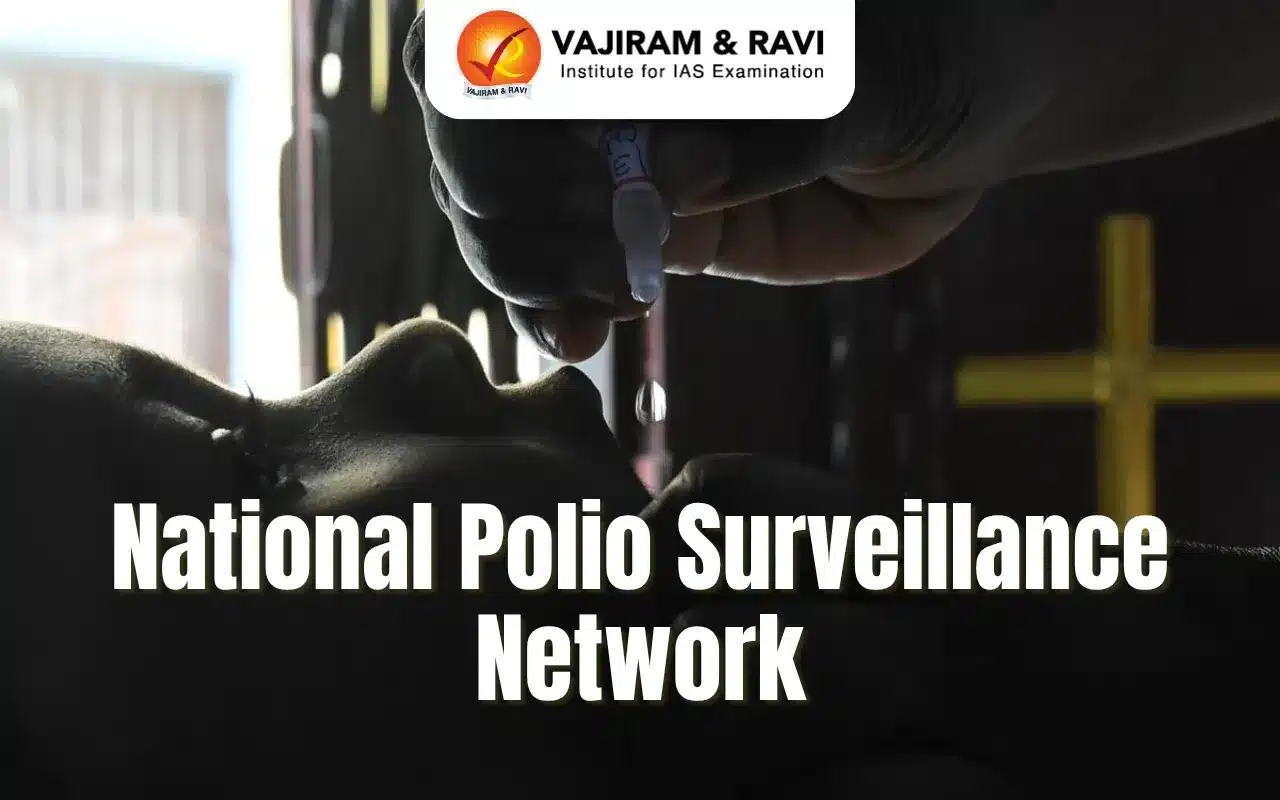
  • The government has proposed to wind down, in phases, the World Health Organization (WHO)-established National Polio Surveillance Network (NPSN), currently a countrywide network of over 200 units.

Introduction

  • India, having achieved polio-free status in 2014, is now moving to gradually scale down the National Polio Surveillance Network (NPSN), a vast network of field units that played a pivotal role in this milestone. 
  • The plan, led by the Government of India in collaboration with the World Health Organization (WHO), aims to phase out the network and integrate polio surveillance into broader public health surveillance mechanisms.
  • However, public health experts and field staff have raised alarm over the decision, citing continuing polio cases in neighbouring countries, risk of vaccine-derived poliovirus (VDPV) transmission, and the importance of maintaining robust disease surveillance systems.

About the National Polio Surveillance Network (NPSN)

  • Established in collaboration with WHO, the NPSN began functioning in the late 1990s to detect, monitor, and eliminate polio from India. 
  • It includes over 280 surveillance units nationwide and works closely with public health departments, immunization campaigns, and global partners.
  • Achievements of NPSN:
    • Played a vital role in India being declared polio-free in 2014.
    • Detected and responded to poliovirus transmission rapidly, preventing outbreaks.
    • Expanded to support surveillance for other vaccine-preventable diseases such as measles, rubella, and DPT.

Phased Drawdown and Transition

  • According to a communication from WHO’s representative in India, the NPSN will begin its transition from June 2025. 
  • The number of functioning units is expected to reduce from:
    • 280 in FY 2024-25
    • To 190 in FY 2025-26
    • And finally 140 by FY 2026-27
  • This reduction coincides with a proportional cut in financial support. While the WHO and government officials have clarified that surveillance will not be compromised, the responsibility is expected to shift to the Integrated Disease Surveillance Programme (IDSP).

Expert Concerns on Premature Transition

  • Prominent virologists and immunisation experts have warned against such a move at this stage, describing the decision as “horrifying” and "too early" given the global context.
  • Key Concerns Raised:
    • Proximity to Polio-Endemic Countries: Afghanistan and Pakistan continue to report cases of wild poliovirus.
    • Risk of Vaccine-Derived Poliovirus (VDPV): Since India stopped immunisation against type 2 poliovirus in 2016, an importation of VDPV could lead to rapid community transmission.
    • Need for Injectable Polio Vaccine (IPV): Experts recommend a phased withdrawal of Oral Polio Vaccine (OPV) after replacing it with IPV for a year to prevent future outbreaks.

Impact on Public Health Workforce

  • The surveillance network employs thousands of health workers. Staff members working under Special Services Agreements have expressed apprehension regarding job security.
  • Each centre employs around four workers, and with over 200 units scheduled for closure, the drawdown could impact hundreds of livelihoods.
  • Additionally, since 2014, the NPSN units have expanded roles beyond polio to include:
    • Monitoring measles and rubella outbreaks
    • Supporting DPT vaccination campaigns
    • Conducting field training for new vaccine rollouts
  • Experts fear the dismantling of these units could undermine years of progress in broader immunisation and disease surveillance programs.

Balancing Transition with Vigilance

  • The WHO has clarified that the transition will not be abrupt. Units will be retired in phases, allowing government systems to absorb the surveillance duties progressively. 
  • However, stakeholders insist that India must ensure no gaps emerge in surveillance during this restructuring.
  • As India prepares to subsume polio surveillance within IDSP, the effectiveness of this integration remains to be seen. The situation calls for:
    • Continued international collaboration and risk assessment.
    • Adequate financial and logistical support to the IDSP.
    • Transparent roadmap for IPV integration and OPV phase-out.

Conclusion

  • The Government’s decision to gradually phase out the National Polio Surveillance Network, though part of a long-term vision to integrate public health monitoring systems, has stirred concern among public health experts. 
  • Given ongoing polio transmission in nearby countries and the threat of vaccine-derived strains, India must tread cautiously. 
  • Robust surveillance must continue to prevent any reversal of its hard-earned polio-free status.

National Polio Surveillance Network Transition FAQs

Q1. What is the National Polio Surveillance Network (NPSN)?

Ans. The NPSN is a WHO-established network of over 280 surveillance units across India that helped achieve polio-free status.

Q2. Why is the government planning to wind down the NPSN?

Ans. The government aims to integrate polio surveillance into broader health systems like the Integrated Disease Surveillance Programme.

Q3. What concerns have experts raised about this move?

Ans. Experts warn of premature dismantling due to polio cases in neighboring countries and the risk of vaccine-derived poliovirus outbreaks.

Q4. What roles do NPSN units perform beyond polio monitoring?

Ans. They support surveillance of measles, rubella, DPT, child vaccination, and training of health workers for new vaccine rollouts.

Q5. When will the transition of NPSN units begin?

Ans. The phased transition will start from June 2025 and continue through 2026–27.

Source: TH

Centre Notifies New Job & Domicile Rules for Ladakh Residents

Ladakh Domicile Regulations

Ladakh Domicile Regulations Latest News

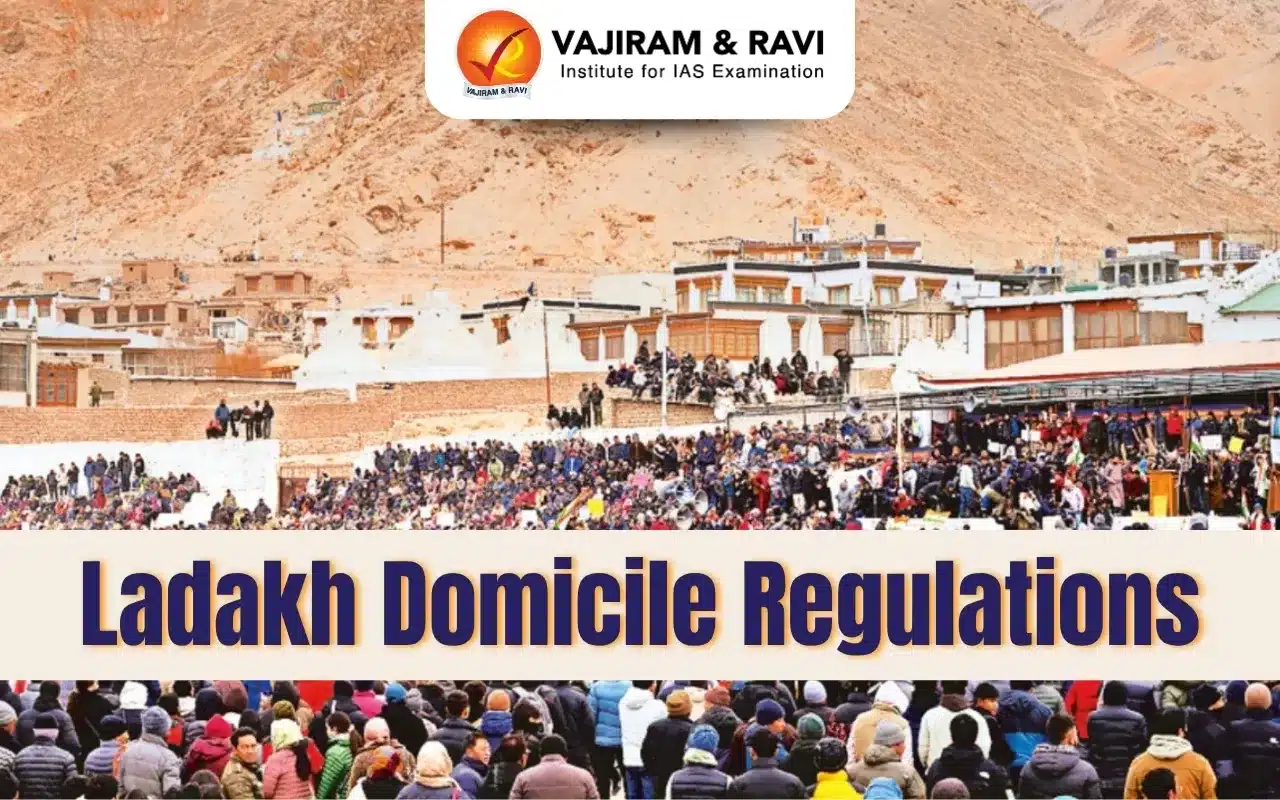
  • The Centre has introduced new regulations for Ladakh to address long-standing concerns of its civil society. The key measures include:
    • Domicile-based job reservation to safeguard employment opportunities for locals.
    • Recognition of local languages to preserve Ladakh’s cultural identity.
    • Clear procedures for civil service recruitment, ensuring transparency and fairness.
  • These steps aim to protect Ladakh's land, jobs, and cultural heritage.

Five Newly Notified Regulations for Ladakh

  • Earlier, Ladakh was governed by adapted J&K laws, such as the J&K Reservation Act, 2004 and Civil Services Decentralization and Recruitment Act, 2010.
  • The 2025 regulations mark a clear departure, creating a legal framework tailored specifically for Ladakh.

Domicile-Based Government Job Reservation

  • RegulationLadakh Civil Services Decentralization and Recruitment (Amendment) Regulation, 2025
  • Introduces domicile requirement for government jobs in Ladakh.
  • A domicile is defined as:
    • Resident of Ladakh for 15 years; or
    • Studied for 7 years and appeared in Class 10 or 12 in Ladakh; or
    • Children of Central Government employees serving in Ladakh for 10 years; or
    • Spouses and children of Ladakh domiciles.

Procedure for Domicile Certification

  • RegulationLadakh Civil Services Domicile Certificate Rules, 2025
  • Specifies application process and documents for obtaining domicile certificates.
  • Tehsildar will issue the certificate; Deputy Commissioner is the appellate authority.
  • Applications can be submitted online or offline.

Expanded Reservation in Jobs and Education

  • RegulationUnion Territory of Ladakh Reservation (Amendment) Regulation, 2025
  • Total reservation for SC, ST, OBC, and other backward groups capped at 85%, excluding 10% EWS quota.
  • Reservation extended to professional institutions (e.g., engineering and medical colleges).
  • Earlier quota in education was capped at 50%, now raised to 85%.

Recognition and Promotion of Local Languages

  • RegulationLadakh Official Languages Regulation, 2025
  • Recognizes English, Hindi, Urdu, Bhoti, and Purgi as official languages.
  • Mandates support for Shina, Brokskat, Balti, and Ladakhi for cultural preservation.

Women’s Reservation in Local Governance

  • RegulationLadakh Autonomous Hill Development Councils (Amendment) Regulation, 2025
  • Reserves one-third of seats for women in the Leh and Kargil Hill Development Councils, through rotation.

Significance of the New Regulations for Ladakh

  • First Tailored Governance Framework Post-Bifurcation
    • These regulations represent the Centre’s first comprehensive legal and administrative effort specifically designed for Ladakh since its separation from Jammu & Kashmir in 2019.
  • Alternative to Sixth Schedule Autonomy
    • Instead of granting Sixth Schedule status, which offers constitutional autonomy, the Centre has chosen to address Ladakh’s demands through executive regulations.
    • This approach allows targeted administrative reforms without amending the Constitution.
  • Legal Safeguards for Local Jobs
    • By defining domicile criteria and regulating recruitment, the government has institutionalized job reservation for locals, fulfilling a core demand of Ladakhi civil society and protest movements.
  • Recognition of Linguistic Identity
    • Official recognition of Bhoti and Purgi validates the cultural identity of large population groups.
    • Support for Ladakhi, Balti, Shina, and Brokskat signals inclusive cultural preservation beyond dominant languages.
  • Cultural Sensitivity in Governance
    • The regulations reflect a sensitive and strategic response to the region’s ethnic, cultural, and political aspirations—acknowledging that governance in Ladakh must be rooted in local identity and inclusion.

Key Demands and Concerns in Ladakh

  • Loss of Legislative Autonomy After 2019
    • Post-abrogation of Article 370 and implementation of the Jammu and Kashmir Reorganisation Act, 2019, Ladakh was made a Union Territory without a legislature, unlike Jammu & Kashmir.
    • This shift placed Ladakh under direct central control, raising concerns about self-governance.
  • Fear of Cultural and Ecological Erosion
    • Residents feared that, without constitutional safeguards, Ladakh’s tribal identity, fragile environment, and limited resources could be exploited by external economic and demographic forces.
  • Demand for Sixth Schedule Status
    • Ladakhi groups strongly demanded inclusion under the Sixth Schedule of the Constitution, which grants tribal-majority regions legislative and financial autonomy via autonomous district councils.
    • The demand is justified by the fact that over 90% of Ladakh’s population belongs to Scheduled Tribes.

Limitations of the New Regulations for Ladakh

  • Lack of Constitutional Safeguards
    • The regulations are issued under Article 240, meaning they are executive decisions, not constitutional provisions.
    • Unlike the Sixth Schedule, they do not guarantee permanence and can be amended or revoked unilaterally by the Centre.
  • No Protection for Land Ownership
    • There are no restrictions on land purchase by non-domiciles.
    • This omission is critical given Ladakh’s ecological sensitivity and the risks posed by unchecked tourism and infrastructure development.
  • Absence of a Legislative Body
    • The Ladakh Autonomous Hill Development Councils (LAHDCs) remain administrative entities, lacking legislative powers.
    • In contrast, the Sixth Schedule provides Autonomous District Councils with authority over land, forests, education, and local customs.
  • Cultural Recognition Lacks Implementation Plan
    • Though local languages are officially recognized, there is no roadmap for their use in education, governance, or the judiciary.
    • The move remains symbolic, without tangible cultural or institutional integration.

Ladakh Domicile Regulations FAQs

Q1. What is the new job rule for Ladakh?

Ans. Jobs in Ladakh’s government sector now require domicile status, ensuring employment preference for local residents.

Q2. How is domicile defined in Ladakh?

Ans. A person must reside for 15 years, study for 7 years, or have parental links to Ladakh to qualify.

Q3. Which languages gained official status in Ladakh?

Ans. Bhoti, Purgi, Hindi, Urdu, and English are official; support is mandated for Ladakhi, Shina, Balti, Brokskat.

Q4. What educational reservations have changed?

Ans. Reservation in professional colleges is increased to 85% for SC/ST/OBC groups, excluding the 10% EWS quota.

Q5. Do these rules meet Ladakhi demands?

Ans. Partially—they lack land safeguards, legislative power, and constitutional permanence sought through Sixth Schedule inclusion.

Source: IE | TH | IE

Nanozymes

Nanozymes

Nanozymes Latest News

Researchers at the Indian Institute of Science (IISc.) recently developed an artificial metal-based nanozyme that can potentially be used to clamp down on abnormal blood clotting caused by conditions like pulmonary thromboembolism (PTE).

What are Enzymes?

  • Enzymes are proteins that help speed up metabolism, or the chemical reactions in our bodies. 
  • They build some substances and break others down.
  • All living things have enzymes.
  • Our bodies naturally produce enzymes. But enzymes are also in manufactured products and food.

About Nanozymes

  • Nanozymes are nanomaterials that display enzyme-like characteristics. 
  • They may be metallic, metal oxide-based, carbon-based, or of other types.

Nanozymes Advantages

  • They are less expensive and recyclable
  • Nanozymes can also be easily manufactured and stored for long periods of time, further reducing their cost.
  • Typical inorganic enzymes require high temperature, high pressure, and extreme pH conditions. In contrast, nanozymes are able to work in environments closer to physiological conditions and respond to a range of external stimuli.
  • The most important advantage is the display of size/composition-dependent activity, meaning that nanozymes can be designed with range of catalytic activity by simply varying shape, structure, and composition.
  • Nanozymes also have unique properties compared to other artificial enzymes, including integrated multi-functions not related to catalysis. 
  • Nanoscale materials provide large surface areas, allowing greater ease in further modifications and bioconjugation. 
  • The ability to self-assemble also mimics an important strategy in biology, meaning that biological components can be easily incorporated.

Nanozymes Applications

  • Nanozymes have a large range of applications for diagnostic medicine, targeted therapy, and biosensing.
  • In recent years, it has been found that various nanozymes have antioxidant activity, allowing them to simulate the endogenous antioxidant system and play an important role in cell protection.
  • Therefore, nanozymes can be applied in the treatment of reactive oxygen species (ROS)-related neurological diseases. 

Nanozymes FAQs

Q1: What are nano enzymes?

Ans: Nanozymes are nanomaterials that display enzyme-like characteristics. 

Q2: What makes nanozymes cost-effective?

Ans: They are recyclable and easy to manufacture.

Q3: Why do nanozymes offer better control over enzyme activity compared to natural enzymes?

Ans: Their activity can be tuned by modifying size, shape, and composition.

SourceTH

Economic Community of West African States (ECOWAS)

Economic Community of West African States

Economic Community of West African States (ECOWAS) Latest News

Recently, the Economic Community of West African States celebrated its 50th anniversary.

About Economic Community of West African States (ECOWAS)

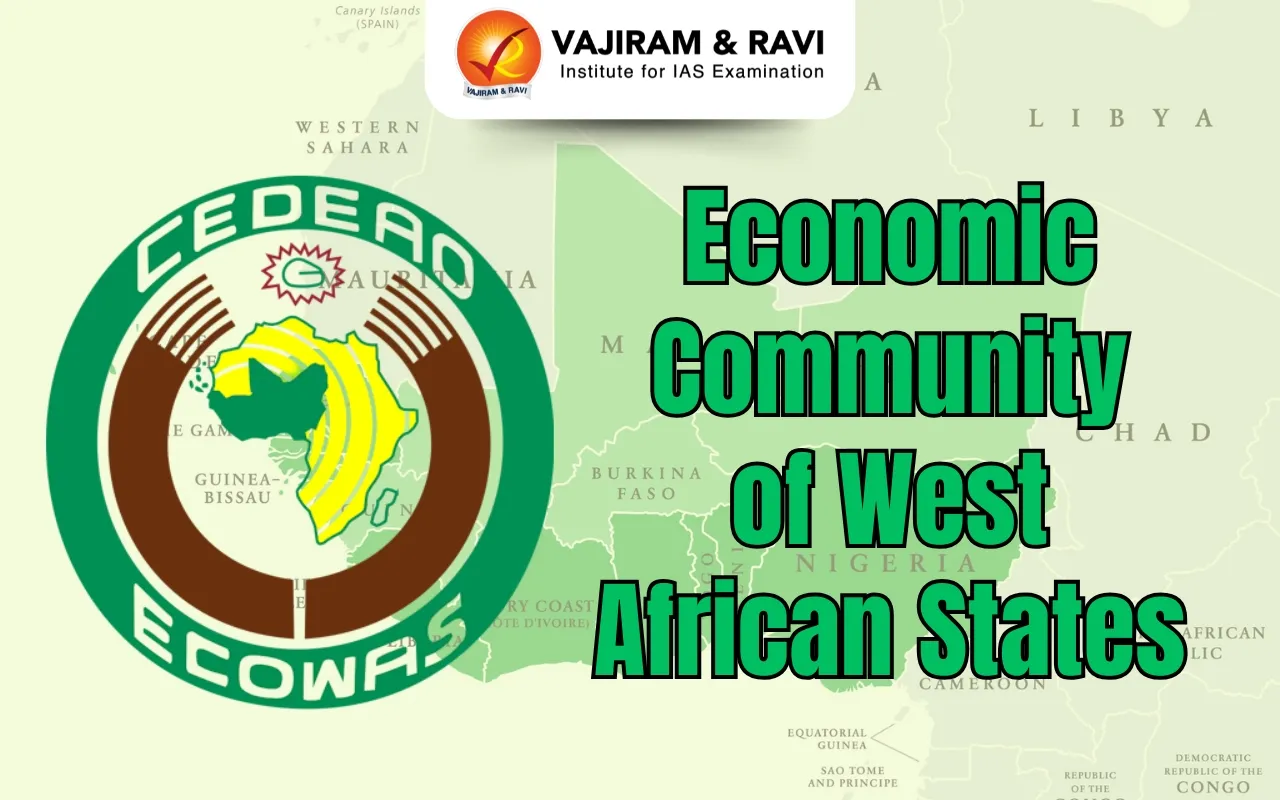
  • It is the regional group established by signing the Lagos Treaty on the 28th of May 1975 in Lagos, Nigeria.
  • Aim
    • To promote cooperation and integration, leading to the establishment of an economic union in West Africa in order to raise the living standards of its peoples, and to maintain and enhance economic stability, foster relations-among Member States and contribute to the progress and development of the African continent.
    • To have a single common currency and create a single, large trading bloc in areas of industry, transport, telecommunications, energy, financial issues, and social and cultural matters.
  • Member countries: The current Member States of ECOWAS are Benin, Cabo Verde, Côte d’Ivoire, The Gambia, Ghana, Guinea, Guinea Bissau, Liberia, Nigeria, Sierra Leone, Sénégal and Togo.
  • On January 29, 2025, Burkina Faso, Mali and Niger officially withdrew from ECOWAS.
  • Along with the goals of economic cooperation, it has attempted to quell military conflicts in the region. 
  • It also operated a regional peacekeeping operation known as ECOMOG, led by Nigeria in the 1990s and early 2000s.
  • Headquarter: Abuja, Nigeria. 

Economic Community of West African States (ECOWAS) FAQs

Q1: What is the main purpose of ECOWAS?

Ans: The main goal of ECOWAS is to promote economic cooperation among member states in order to raise living standards and promote economic development

Q2: Is India a member of ECOWAS?

Ans: India has had an Observer Status in ECOWAS since 2004.

Source: ecowas

Enquire Now