Vajiram & Ravi provides Daily articles for 8 June 2025, tailored for aspirants. We cover all relevant news and events crucial for the exam, ensuring you stay updated & well-prepared.
Due to antimicrobial resistance (AMR) the world is now rediscovering bacteriophages and much relevant research is ongoing in many countries.
About Bacteriophages
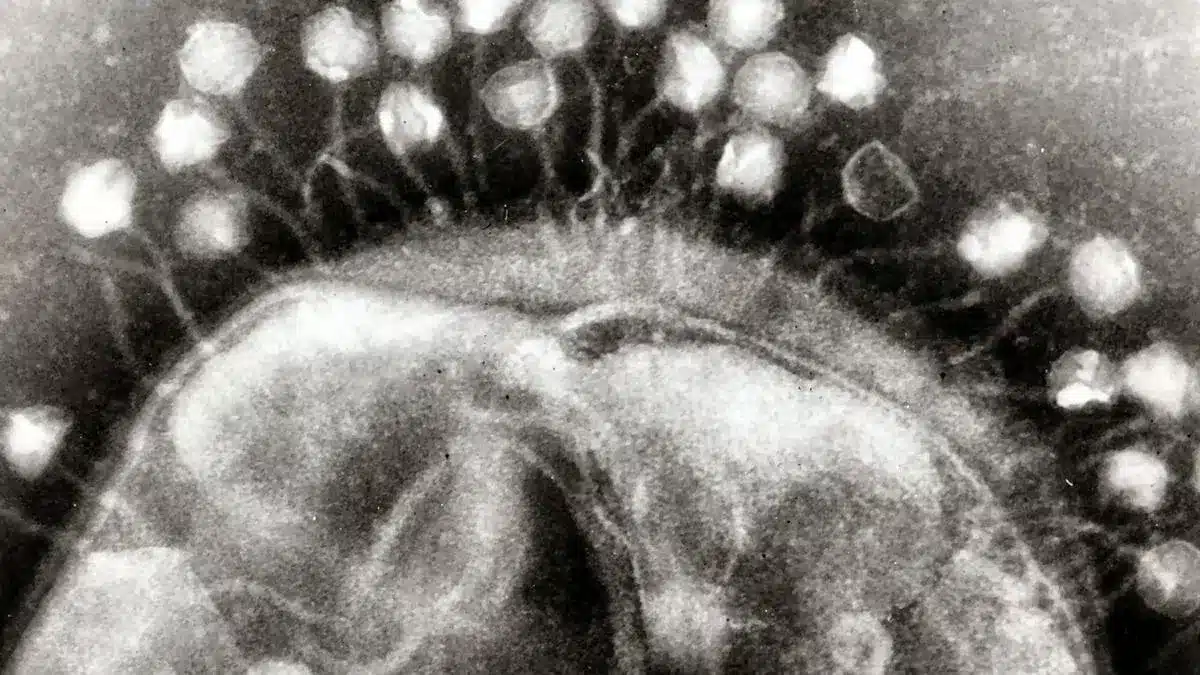
Bacteriophages are ‘good viruses’ that naturally prey on bacteria.
They are all around us, in the water, in the soil, in our gut, on our skin, etc. There are believed to be 10-times as many phages as bacteria on the earth.
Unlike an antibiotic, which may be able to kill many species of bacteria, phages may only kill a few strains of a particular bacterium.
All bacteriophages are composed of a nucleic acid molecule that is surrounded by a protein structure.
The nucleic acid may be either DNA or RNA, and it may be double-stranded or single-stranded.
There are two main strategies that have been used in treating patients by using Bacteriophages
One, isolate the bacteria from the infected tissue, check which phage works against it in the lab, grow more of that phage and administer it to the patient.
These phages may come from a phage bank of one’s own or in very serious cases one may even ask phage banks elsewhere in the world for help. These are natural phages.
Second. genetically engineered phages, which have been modified in the lab to expand the variety of bacteria they can kill.
Uses: Phages have been used for burns, foot ulcers, gut infections, respiratory infections, urinary tract infections, etc.
Bacteriophages FAQs
Q1: What are bacteriophages known for?
Ans: Bacteriophages, also known as phages, are viruses that infect and replicate only in bacterial cells.
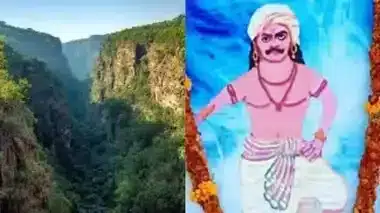
Recently, the Madhya Pradesh government held a special Cabinet meeting to honour 19th-century tribal icon Raja Bhabhut Singh, renaming the Pachmarhi Wildlife Sanctuary after him.
About Raja Bhabhut Singh
Raja Bhabhut Singh was born in the Jagirdar family of Harrakot Raikheri branch in the lineage of Thakur Ajit Singh ji, the owner of Pachmarhi Jagir.
His grandfather Thakur Mohan Singh had supported the mighty Peshwa Appa Saheb Bhonsle of Nagpur shoulder to shoulder against the British in 1819-20.
He was a significant king of the Gond tribe, with his realm encompassing Jabalpur and the Satpura hills.
During the 1857 revolt, Raja Bhabhut Singh was a formidable opponent of the British, leveraging his intimate knowledge of the Satpura forests and mountain paths to lead a series of successful guerrilla attacks.
He was also a close ally of freedom fighter Tatya Tope.
Raja Bhabhut Singh’s guerrilla warfare tactics in the Satpura ranges demonstrated a sophisticated military strategy that kept the British at bay till 1860, when they deployed the Madras Infantry specifically to capture him.
Due to his guerilla warfare policy, Bhabhut Singh is called Shivaji of Narmadachal
The British later executed him, making him a martyr whose memory has been preserved through Korku folk traditions.
Raja Bhabhut Singh FAQs
Q1: Where is the Gond tribe located?
Ans: Gond, group of aboriginal peoples of central and south-central India, about two million in number.
Q2: Which rivers flow through Pachmarhi Biosphere Reserve?
Residents of Milam village in Uttarakhand are grappling with severe accessibility challenges after an avalanche damaged the Bailey bridge over the Gaokha River recently.
About Bailey Bridge
It is a type of modular bridge whose parts are pre-built, so they can be put together quickly as needed.
An English civil engineer named Donald Coleman Bailey is credited with inventing it in 1941.
The first Bailey bridges were used in 1942 by the British Army in the North African campaign. These bridges were extensively used during the Second World War.
The key characteristics include their modularity, portability, strength, and versatility.
Bailey bridges are designed for rapid construction in difficult conditions without the need for heavy equipment or sophisticated construction methods.
The bridges are made of modular steel panels, which can be easily transported and assembled using manpower alone.
The construction of a Bailey bridge involves assembling prefabricated panels into sections, which are then connected to form the bridge's span.
The panels are connected using pins and bolts, creating a truss structure that distributes the load evenly.
The design supports heavy loads, including tanks and other military vehicles, and they can be used in various configurations to span different types of gaps and obstacles.
Bailey bridge assembly covers a small area, which can avoid the situation that large hoisting equipment cannot enter the construction site.
It is generally used in terrains that span rivers, valleys, and spans that are not very large.
Bailey Bridge FAQs
Q1. Who is credited with the invention of the Bailey Bridge?
Ans. An English civil engineer named Donald Coleman Bailey is credited with inventing it in 1941.
Q2. What feature makes Bailey bridges suitable for quick deployment in remote areas?
Ans. Prefabricated and modular design
Q3. Bailey bridges were extensively used during which major global conflict?
For the first time, a girl from the tribal community in the Kalvarayan Hills recently secured admission to an IIT.
About Kalvarayan Hills
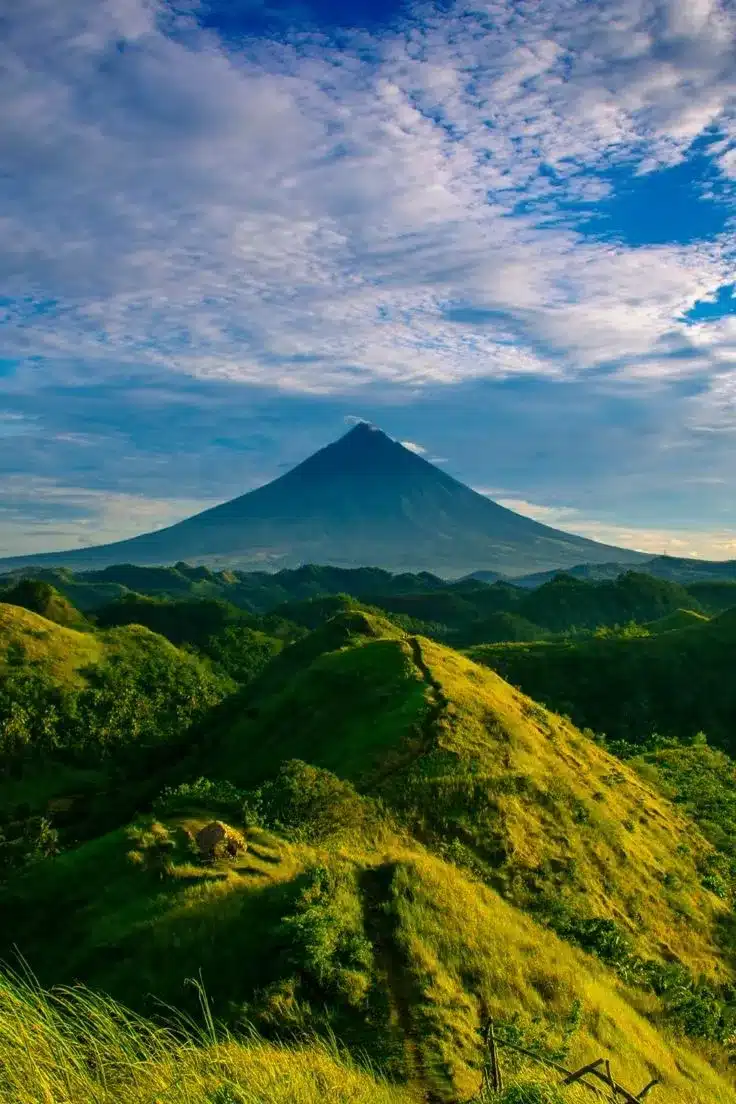
The Kalrayan Hills are a major range of hills situated in the Eastern Ghats of Tamil Nadu.
Along with the Pachaimalai, Javadi, and Shevaroy hills, they separate the Kaveri River basin to the south from the Palar River basin to the north.
The hills range in height from 2000 feet to 3000 feet and extend over an area of 1095 sq.km.
The hills straddle a number of Tamil Nadu districts, extending northeast from the Salem District.
The Kalrayans are divided into two sections — the northern section, referred to as the Chinna (“little”) Kalrayans, and the southern section, called the Periya (“big”) Kalrayans.
The Chinna Kalrayans average 2700 feet in height, while the Periya Kalrayans average 4000 feet.
Vegetation: Grassy jungles, deciduous forests, and Sholas cover the hills.
The hills contain two waterfalls (Megam and Periyar Falls), a stunning botanical park, numerous temples, and woodlands.
Gomukhi Dam is located at the foothills of the Kalvarayan Hills.
The Kalrayan Hills are inhabited by indigenous peoples such as the Malayan tribes.
Kalvarayan Hills FAQs
Q1. The Kalvarayan Hills are part of which larger geographical feature?
Ans. Eastern Ghats
Q2. Which two river basins are separated by the Kalvarayan Hills?
Ans. Kaveri and Palar
Q3. Which dam is located at the foothills of the Kalvarayan Hills?
Recently, the 11th BRICS Parliamentary Forum concluded in Brasilia, Brazil.
About BRICS Parliamentary Forum
It is a vital platform for dialogue among parliaments of BRICS member countries.
The expanded BRICS parliamentary forum now includes India, Brazil, Russia, China, South Africa, Iran, the UAE, Egypt, Ethiopia, and Indonesia.
The 1st BRICS Parliamentary Forum was held during Russia’s Chairship on 8 June 2015 in Moscow.
India hosted the BRICS Parliamentary Forum in October 2016 on the sidelines of the 135th Assembly of the Inter-Parliamentary Union in Geneva, Switzerland.
Chairmanship: This forum’s Chairmanship rotates among its members annually.
India was officially handed over the chairmanship of the 12th BRICS Parliamentary Forum, scheduled to be held in 2026.
Key Facts About BRICS
BRICS is an acronym for Brazil, Russia, India, China, and South Africa, a bloc of countries that formed a partnership following the creation of the term in 2001 by Goldman Sachs economist Jim O'Neill (but it didn't include South Africa at the time).
South Africa joined in 2010, making it "BRICS".
The group was designed to bring together the world's most important developing countries to challenge the political and economic power of the wealthier nations of North America and Western Europe.
BRICS Grouping New Members: Saudi Arabia, Iran, Ethiopia, the United Arab Emirates, and Egypt joined BRICS in 2024.Indonesia joined the bloc as a full member on January 6, 2025.
BRICS Parliamentary Forum FAQs
Q1: Which countries are in the BRICS forum?
Ans: The BRICS is a group formed by eleven countries: Brasil, Russia, India, China, South Africa, Saudi Arabia, Egypt, United Arab Emirates, Ethiopia, Indonesia, and Iran.
Q2: What is the goal of BRICS?
Ans: The primary goals of BRICS are to promote economic growth, development, and cooperation among its member countries.
The Reserve Bank of India's latest Urban Consumer Confidence Survey (UCCS) shows that urban consumers maintain stable sentiments about the current economic situation.
Background
The Reserve Bank of India’s (RBI) latest Urban Consumer Confidence Survey (UCCS), conducted in May 2025, highlights a steady if cautious optimism among urban households.
While sentiments about the present remain subdued, expectations for the future are notably upbeat, particularly in terms of income, employment, and inflation control.
Overview of the Urban Consumer Confidence Survey
The UCCS is a bi-monthly exercise conducted by the RBI to capture household perceptions across major urban centres regarding economic conditions, employment, income, inflation, and spending.
As of May 2025, the survey collected insights from 6,090 respondents across 19 cities.
This round marks the first time the RBI formally renamed its Consumer Confidence Survey to the Urban Consumer Confidence Survey, separating it from the newly introduced Rural Consumer Confidence Survey.
Understanding the Indices: CSI and FEI
The two key metrics derived from the UCCS are:
Current Situation Index (CSI): Measures how households perceive their present economic condition.
Future Expectations Index (FEI): Gauges the optimism about the next 12 months in areas like income, employment, and price levels.
In May 2025, the CSI slightly declined from 95.5 in March to 95.4, staying below the benchmark of 100, indicating continued pessimism about current conditions.
However, the FEI increased from 122.4 in March to 123.4 in May, reflecting growing hope among consumers about future improvements.
Cooling Inflation and Rising Consumer Optimism
One of the survey’s most noteworthy findings is the decline in inflation concerns. Urban households reported a perceptible easing in the perception of current price levels and inflation.
A separate RBI inflation expectations survey supported this, revealing that urban households’ perceived current inflation dropped by 10 basis points to 7.7% in May. Expectations for inflation one year ahead also declined by 20 basis points to 9.5%.
This shift is significant as persistent inflation has long been a pain point for household budgets.
The RBI’s findings suggest that two consecutive rounds of reduced inflation concern may indicate a meaningful change in consumer perception and could support demand-side recovery in the near term.
Income, Employment, and Spending Trends
While current perceptions about income and employment remained largely unchanged from the March 2025 levels, optimism about future income remained high.
Urban consumers are looking forward to improved earnings, which in turn is expected to influence future spending behaviour.
There was a slight dip in current spending on both essential and non-essential goods.
However, this is counterbalanced by expectations of increased spending in the near future, reflecting a typical consumer behaviour pattern where positive economic expectations stimulate deferred purchases.
Comparison with Rural Sentiment
The newly launched Rural Consumer Confidence Survey conducted in April and May 2025 provides a comparative backdrop.
The rural CSI declined marginally from 100.1 to 100.0 but remains more optimistic than its urban counterpart. The rural FEI was even more upbeat at 126.2, reflecting growing optimism in rural India, buoyed by a favourable monsoon and easing food inflation.
This divergence in sentiment reveals a promising trend of broader-based recovery across both urban and rural sectors, albeit with nuanced variations driven by regional inflation sensitivity and employment contexts.
Policy Relevance and Economic Outlook
From a policy perspective, these findings provide useful insights for the RBI and the government.
Anchoring inflation expectations is crucial to ensuring macroeconomic stability, and the current trend indicates that the RBI’s monetary policy actions may be achieving their desired effect.
RBI Governor Sanjay Malhotra recently emphasized that “urban demand is improving while rural demand remains steady,” aligning well with the UCCS and rural survey outcomes.
The data underscores the importance of maintaining momentum on inflation control, employment generation, and income growth to reinforce consumer confidence across both demographics.
Urban Consumer Confidence Survey FAQs
Q1. What does the Urban Consumer Confidence Survey measure?
Ans. It measures urban households' perceptions about the current and future economic situation, including inflation, employment, and income.
Q2. What were the key findings of the May 2025 Urban Consumer Confidence Survey?
Ans. The survey showed stable present sentiment (CSI at 95.4) and improved future optimism (FEI at 123.4), with easing concerns over inflation.
Q3. How have inflation expectations changed in urban India?
Ans. Perceived current inflation dropped to 7.7% and one-year-ahead expectations fell to 9.5%, showing reduced inflationary pessimism.
Q4. What does a CSI or FEI value below or above 100 indicate?
Ans. A value below 100 reflects pessimism, while a value above 100 indicates optimism about the economic situation.
Q5. How does rural sentiment compare to urban sentiment?
Ans. Rural households are slightly more optimistic, with a CSI of 100.0 and a higher FEI of 126.2 in May 2025.
Recently, IIT Kharagpur associate professor and students created the Dynamic Route Planning for Urban Green Mobility (or DRUM) web app.
About DRUM Web App
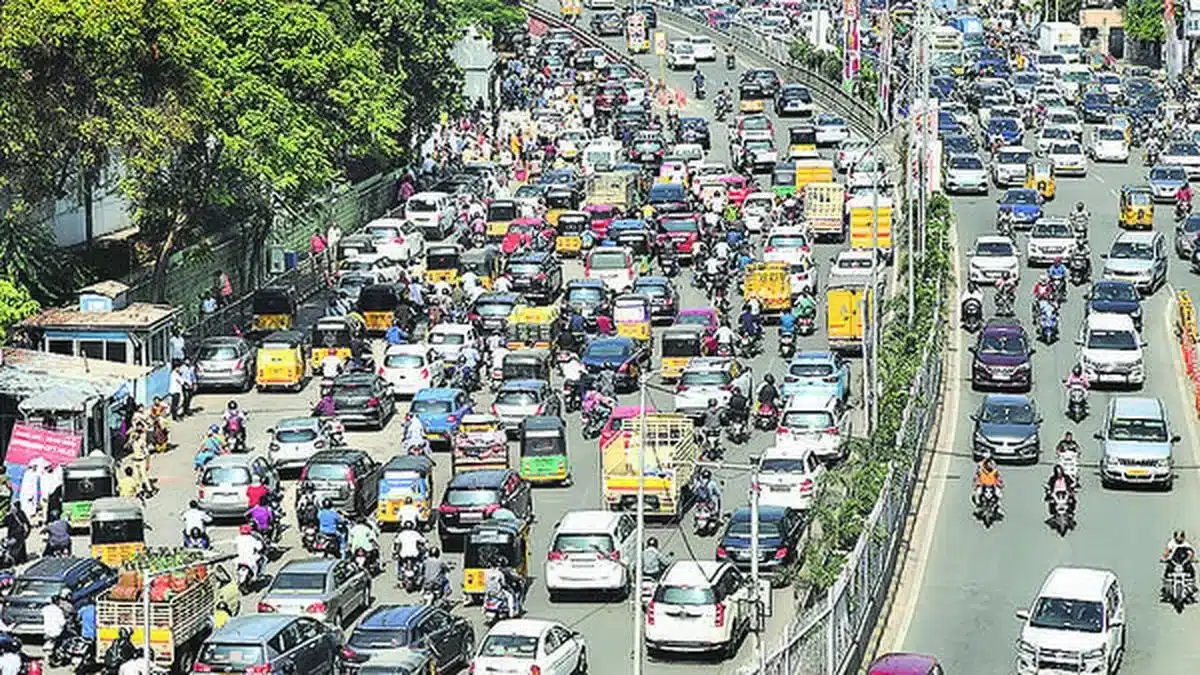
It’s like Google Maps but with the added feature of allowing users pick routes based on air quality and energy efficiency.
It gives users five route options: shortest, fastest, least exposure to air pollution (LEAP), least energy consumption route (LECR), and a combination of all four factors called the suggested route.
It was designed to fetch live pollution and traffic data the moment a user entered a route instead of pulling data at intervals.
It determines routes using GraphHopper, a Java-based routing library that generates multiple options, while fetching real-time traffic updates from Mapbox.
The team relied on data from the CPCB and the World Air Quality Index.
They implemented a segment-wise interpolation strategy to estimate pollution levels in areas without direct sensor coverage, divided routes into segments, and used nearby sensor data to estimate pollution where coverage was missing.
To test the system, the team simulated Delhi’s East, South, North, and Central corridors, accounting for different traffic, road quality, and pollution patterns.
The results showed that shorter or faster routes often passed through polluted zones, offsetting time or distance gains.
DRUM Web App FAQs
Q1: What is the meaning of green mobility?
Ans: Green transportation or green mobility is the movement of people and goods in any energy-efficient transportation mode with a low environmental effect.
Q2: What does the Central Pollution Control Board do?
Ans: It is responsible for maintaining national standards under a variety of environmental laws, in consultation with regional directorates, tribal, and local governments.
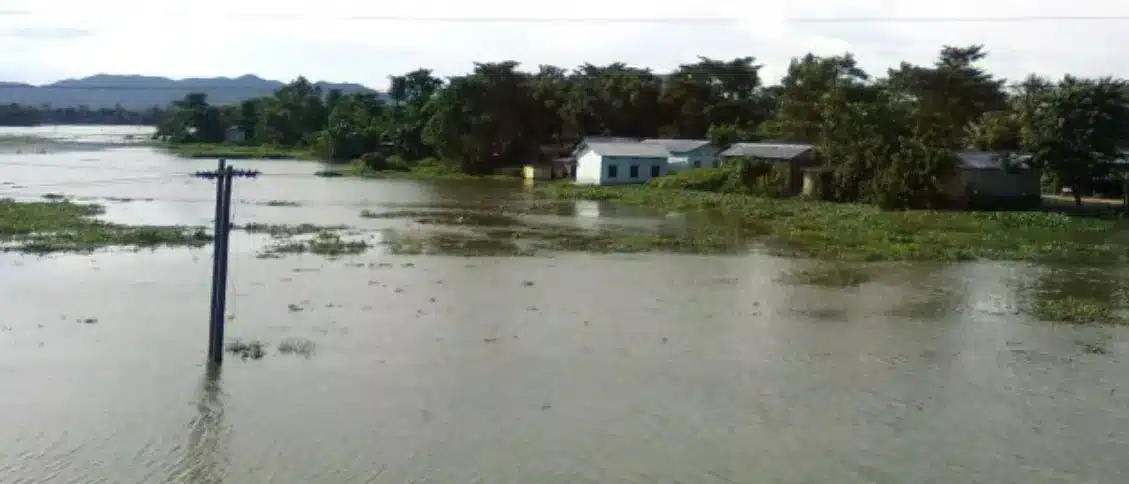
Recently, Assam Chief Minister downplayed concerns over Chinese dams on the Brahmaputra, stating that 65–70% of the river’s flow originates within India. He added that any reduction in flow from China might even help control Assam’s annual floods.
Originating as the Yarlung Tsangpo in Tibet, the Brahmaputra enters India in Arunachal Pradesh as the Siang, flows through Assam, and becomes the Jamuna in Bangladesh
Proposed Chinese Interventions on the Brahmaputra
India continues to monitor China’s infrastructure projects along the Brahmaputra, most of which are hydropower-based with minimal water storage.
These are located far upstream and currently pose no significant impact on Arunachal Pradesh or Assam.
The Medog Hydropower Project: A Potential Game-Changer
The proposed 60,000-MW Medog project near the ‘Great Bend’ in Medog County is of major concern.
If built, it would be the world’s largest hydropower facility—three times the capacity of China’s Three Gorges Dam.
While specific details are scarce, it is believed to have limited water storage, reducing its potential downstream impact.
South-North Water Diversion (SNWD): Long-Term Speculations
China’s long-term SNWD plan, especially its Western Route, is rumored to include diversion of water from the Yarlung Tsangpo to arid northern regions.
However, there is no official confirmation or detailed study available on these diversion plans.
Water Yield of the Brahmaputra: India’s Dominant Contribution
Despite covering only 34.2% of the Brahmaputra basin, India contributes over 80% of its total water yield.
This disproves the perception that China’s Tibetan Plateau is the river’s primary source.
Climatic Differences Drive Yield Disparity
The Tibetan Plateau receives scant rainfall (around 300 mm annually), while India’s portion of the basin receives an average of 2,371 mm, with very few areas getting less than 1,200 mm.
Tributaries and Monsoon Boost Indian Contribution
The Brahmaputra gains volume through numerous tributaries in India, especially during the monsoon (June–September).
Snowmelt from the Indian Himalayas also adds significantly to the river’s yield.
Impact of Upstream Interventions on the Brahmaputra’s Flow
Due to substantial rainfall, monsoon-fed tributaries, and snowmelt in Indian territory, upstream interventions by China are unlikely to significantly reduce the Brahmaputra’s total flow in India.
Seasonal Flow Variations Pose Challenges
Changes in flow patterns may impact hydropower projects on the Siang, especially during the dry season or peak power demand periods.
Strategic Mitigation through Storage Projects
India can manage flow variability by building storage infrastructure.
Projects like the Upper Siang Hydropower Project can serve dual purposes—energy generation and flow regulation.
Risk of Sudden Flooding Events
Unexpected floods may result from reservoir mismanagement, dam failure, landslides, or seismic activity in Tibet, posing downstream risks.
Ecological Implications
Alterations in natural flow can affect river morphology, impacting aquatic ecosystems and biodiversity along the Brahmaputra.
India’s Utilisation of the Brahmaputra’s Water Potential
The Brahmaputra and its tributaries hold over 30% of India’s total water resources and 41% of its hydropower potential, according to the CWC-ISRO Brahmaputra Basin Atlas.
Hydropower Development Focused in Arunachal Pradesh
Arunachal Pradesh remains the primary site for hydropower development.
However, progress has been slow due to land acquisition issues and concerns over forest submergence.
Inter-Basin Water Transfer Proposals
India has proposed two major river-linking projects to transfer Brahmaputra basin water to water-scarce regions of the Ganga basin:
Manas-Sankosh-Teesta-Ganga Link
Jogighopa-Teesta-Farakka Link
No Major Threat from Upstream Chinese Projects
These proposed water transfer links are unlikely to be significantly affected by China’s upstream interventions in Tibet.
Impact of Chinese Dams on the Indus and Sutlej Rivers
China has constructed and planned hydropower projects on the Sutlej and Indus, both of which originate in Tibet.
Limited Impact on Sutlej Due to Indian Storage Capacity
The Bhakra Dam (Gobind Sagar reservoir) in Himachal Pradesh provides a buffer, absorbing flow variations in the Sutlej.
However, generation patterns at projects like Nathpa Jhakri may still be affected.
Minimal Consumptive Use on the Indus
India's use of the Indus is largely non-consumptive.
While there may be minor impacts on run-of-the-river plants like Nimoo Bazgo in Ladakh, overall risks remain limited.
India’s Strategic Approach on the Brahmaputra Issue
Strengthen Scientific Assessment and Monitoring
India must invest in detailed, multi-disciplinary studies to evaluate the impact of upstream interventions and develop adaptive, evidence-based strategies.
Enhance Diplomatic Engagement
Continuous diplomatic efforts are needed to secure hydrological and project-specific data from China for informed downstream impact assessments.
Establish Robust Data-Sharing Mechanisms
India should push for formal data-sharing protocols with China to ensure early warnings, improve disaster preparedness, and reduce flood-related risks.
Chinese Dams on Brahmaputra FAQ’s
Q1. Where do Chinese dams affect Brahmaputra?
Ans. China’s dams are upstream in Tibet with limited storage; most pose minimal direct impact on Indian territory for now.
Q2. What is the Medog Dam project?
Ans. It’s a proposed 60,000-MW project near the Great Bend, potentially the world’s largest hydropower dam.
Q3. How much of Brahmaputra’s flow comes from India?
Ans. Over 80% of the river’s yield comes from Indian territory, despite only 34.2% of basin area lying in India.
Q4. What risks do Chinese dams pose to India?
Ans. They could affect flow patterns, flood risks, and ecology; dam failure or mismanagement may cause sudden flooding downstream.
Q5. How is India responding?
Ans. India plans strategic storage projects, like Upper Siang, and seeks data-sharing agreements with China for better preparedness.
An international collaboration of researchers recently detected and measured the half-life of the heaviest proton emitter, the 188At (astatine) isotope, which decayed by emitting a proton.
About Proton Emission
Proton emission (also known as proton radioactivity) is a rare form of radioactive decay in which a proton is ejected from a nucleus.
Radioactive decay is the process of an unstable atom transitioning to a more stable form.
It may do so by releasing subatomic particles and energy or by capturing an orbital electron into the nucleus and releasing energy.
Proton emission can occur from high-lying excited states in a nucleus following a beta decay, in which case the process is known as beta-delayed proton emission, or can occur from the ground state (or a low-lying isomer) of very proton-rich nuclei, in which case the process is very similar to alpha decay.
Alpha decay is a type of radioactive decay in which an unstable nucleus emits an alpha particle. An alpha particle consists of 2 protons and 2 neutrons, which is the same as a helium nucleus (⁴₂He).
Beta decay occurs when a nucleus emits a beta particle, which can be an electron (β⁻) or a positron (β⁺).
For a proton to escape a nucleus, the proton separation energy must be negative - the proton is therefore unbound, and tunnels out of the nucleus in a finite time.
Proton emission is not seen in naturally-occurring isotopes; proton emitters can be produced via nuclear reactions, usually utilising some kind of particle accelerator.
The rate of proton emission is governed by the nuclear, Coulomb, and centrifugal potentials of the nucleus, where centrifugal potential affects a large part of the rate of proton emission.
The half-life of a nucleus with respect to proton emission is affected by the proton energy and its orbital angular momentum.
Half-life is the time that it takes for half of the original value of some amount of a radioactive element to decay.
Proton Emission FAQs
Q1. What is proton emission?
Ans. It is a rare form of radioactive decay in which a proton is ejected from a nucleus.
Q2. In which condition does proton emission typically occur?
Ans. In proton-rich nuclei.
Q3. What is required for a proton to be emitted from the nucleus?
Important Days in March 2025 consist of many national and international days that celebrate many historical, environmental and social events. These days highlight the importance and awareness about the important causes that are observed on these specific days. The goal is to create an impact and encourage people to take action towards the same. In this article, we are going to cover the important days of March 2025 and their importance around the world.
Important Days in March 2025
Here is a list of important national and international events in March 2025:
Date
Important Days
1 March
Zero Discrimination Day, World Civil Defence Day, Self-Injury Awareness Day
3 March
World Wildlife Day, World Hearing Day
4 March
National Safety Day, Employee Appreciation Day
4 March
Ramakrishna Jayanti
8 March
International Women’s Day
9 March
No Smoking Day (Second Wednesday of March)
10 March
CISF Raising Day
12 March
Mauritius Day
14 March
Pi Day, International Day of Action for Rivers
15 March
World Consumer Rights Day
16 March
National Vaccination Day
18 March
Ordnance Factories Day (India)
20 March
International Day of Happiness, World Sparrow Day, Hindi New Year
21 March
World Forestry Day, World Down Syndrome Day, World Poetry Day
22 March
World Water Day
23 March
World Meteorological Day
24 March
World Tuberculosis (TB) Day, Holika Dahan
25 March
International Day of the Unborn Child, Holi, International Day of Solidarity with Detained and Missing Staff Members
26 March
Purple Day of Epilepsy
27 March
World Theatre Day
29 March
Good Friday
Important Days in March 2025 Importance
There are many important days in March 2025 for both National and International events that include celebrations, humanitarian efforts and critical issues. Here is a description of some of the most significant days in March 2025:
1 March – Zero Discrimination Day
Zero Discrimination Day is celebrated to promote equality and inclusion around the world irrespective of ethnicity, gender, health status and nationality. The day supports anti-discrimination movements and HIV/AIDS all over the world.
3 March – World Wildlife Day
The goal is to protect endangered species and biodiversity and the importance of conserving wildlife and natural habitats.
8 March – International Women’s Day
Highlights and recognises the efforts and achievements of women across political, cultural, social and economic spheres. Advocates gender equality.
14 March – Pi Day
Celebrated to honor the mathematical constant π (pi), this day promotes enthusiasm for math and science through engaging activities.
15 March – World Consumer Rights Day
A day to raise awareness about consumer rights and responsibilities, ensuring fair treatment and protection in the marketplace.
20 March – International Day of Happiness
Recognizing happiness as a fundamental human goal, this day encourages actions that foster well-being and global harmony.
21 March – World Poetry Day
A tribute to poetry’s role in cultural expression and linguistic diversity, honoring poets and their contributions worldwide.
22 March – World Water Day
Focused on water conservation and sustainable management, this day highlights the need to combat water scarcity and pollution.
24 March – World Tuberculosis (TB) Day
A day to spread awareness about tuberculosis, its impact, and the global efforts toward prevention and eradication.
29 March – Good Friday
Observed by Christians worldwide, Good Friday marks the crucifixion of Jesus Christ—a day of reflection, prayer, and fasting.
Important Days in March 2025 FAQs
Q1: What national days are in March 2025?
Ans: International Women’s Day (March 8), St. Patrick’s Day (March 17), and World Meteorological Day (March 23).
Q2: What important day is in March 2025?
Ans: International Women’s Day on March 8 is widely recognized.
Q3: What is special on 15 March 2025?
Ans: There are no major global observances on this day.
Q4: What are the important days in the year 2025?
Ans: Notable days include New Year’s Day (Jan 1), International Women’s Day (Mar 8), and Christmas (Dec 25).
Q5: What is special about 2025?
Ans: 2025 marks the 80th anniversary of the end of World War II.
Battles in modern history of India play an important role in shaping the political, economic and social landscape of the nation. These battles are what define the fate and history of India, the impact of Mughal and British Rule and the consequences. In this article, we are going to cover the important battles fought in India during the modern history period.
Important Battles in Modern Indian History
Modern Indian History has witnessed many battles that have drastically influenced the territorial control, governance and India's transition into British Rule. These battles also express the resistance by Indian rulers against colonial expansion. Here is a list of all the important battles of modern Indian History:
Carnatic Wars (1746-1763)
Fought between the French and the British for the power struggle in south India. The wars ended with the British emerging victorious over the French, establishing their control over southern India. The important battles include:
War
Year
Outcome
First Carnatic War
1746-1748
Treaty of Aix-la-Chapelle (status quo maintained)
Second Carnatic War
1749-1754
British victory; Dupleix removed from India
Third Carnatic War
1756-1763
British defeated the French; Treaty of Paris (1763)
Battle of Plassey (1757)
Combatants: British East India Company vs. Nawab of Bengal (Siraj-ud-Daulah) and French allies
Outcome: British victory; beginning of British dominance in India
Significance:
Marked the start of British rule in India.
Allowed the British to control Bengal's revenue system, leading to economic exploitation.
Exposed the role of betrayal (Mir Jafar sided with the British), highlighting internal political weaknesses.
Battle of Buxar (1764)
Combatants: British East India Company vs. Mughal Emperor Shah Alam II, Nawab of Oudh, and Nawab of Bengal
Outcome: British victory; Treaty of Allahabad (1765) signed
Significance:
Established British control over Bengal, Bihar, and Odisha.
The Mughal Emperor became a puppet under British influence.
British acquired the right to collect revenue (Diwani Rights), making them the dominant power in India.
Third Battle of Panipat (1761)
Combatants: Maratha Empire vs. Durrani Empire (Ahmad Shah Abdali)
Outcome: Durrani victory; Maratha power weakened
Significance:
One of the bloodiest battles in Indian history.
Severely weakened Maratha influence in North India.
Opened the door for British expansion, as Indian powers weakened.
Anglo-Mysore Wars (1767-1799)
The Anglo-Mysore Wars were fought in between the Mysore Kingdom and the British East India Company. Tipu Sultan is remembered to fiercely fight against the British expansion. Here is the list of the important Anglo-Mysore wars:
War
Year
Rulers Involved
Outcome
First Anglo-Mysore War
1767-1769
Hyder Ali vs. British
Treaty of Madras
Second Anglo-Mysore War
1780-1784
Hyder Ali and Tipu Sultan vs. British
Treaty of Mangalore
Third Anglo-Mysore War
1790-1792
Tipu Sultan vs. British
Treaty of Seringapatam (British victory)
Fourth Anglo-Mysore War
1799
Tipu Sultan vs. British
Tipu Sultan was killed; British annexed Mysore
Anglo-Maratha Wars (1775-1818)
The Anglo-Maratha Wars were fought between the British and the Marathas in three different phases. The Marathas are remembered as the last major hurdle for the British expansion. The Anglo-Maratha wars were:
War
Year
Outcome
First Anglo-Maratha War
1775-1782
Treaty of Salbai (peace between British and Marathas)
Second Anglo-Maratha War
1803-1805
British gained control over Delhi, Agra, and parts of central India
Third Anglo-Maratha War
1817-1818
Maratha Confederacy was dissolved; British gained full control over India
Anglo-Burma Wars (1824-1885)
The Anglo-Burma wars were fought in the 19th Century in between the Kingdom of Burma and the British Empire. The wars were fought due to the British ambition to influence southwest Asia and secure strategic territories. The wars included:
War
Year
Outcome
First Anglo-Burma War
1824-1826
British annexed Assam, Manipur, and Arakan
Second Anglo-Burma War
1852
British annexed Lower Burma
Third Anglo-Burma War
1885
British annexed Upper Burma, making it a part of British India
Anglo-Afghan Wars (1839-1919)
The Anglo-Afghan wars were fought between the Kingdom of Afghanistan and the British Empire three times in between the 20th and the 19th century, in order to control Afghanistan as a buffer state.
War
Year
Outcome
First Anglo-Afghan War
1839-1842
British defeat, withdrawal from Afghanistan
Second Anglo-Afghan War
1878-1880
British gained influence but later withdrew
Third Anglo-Afghan War
1919
Afghanistan gained full independence
Anglo-Sikh Wars (1845-1849)
The Anglo-Sikh Wars were fought between the Sikh empire and the british East India Company in the 19th century with the aim of annexing the sikh empire and expanding British rule in northern India.
War
Year
Outcome
First Anglo-Sikh War
1845-46
British won; Treaty of Lahore signed
Second Anglo-Sikh War
1848-49
End of Sikh Rule; British annexed Punjab
Revolt of 1857 (First War of Independence)
The Revolt of 1857 (First War of Independence) was the first resistance movement the Indian people fought against the British East India Company. The war was fought in various parts of the country but was eventually suppressed by the British.
The British East India Company was dissolved after this movement.
The Government of India Act, 1858 was introduced.
Battle of Kohima and Imphal (1944)
The battle was fought between the British Indian Army and the Japanese Army, along with the INA (Azad Hind Fauj). It resulted in a British victory, effectively halting the Japanese advance into India. This battle is considered one of the most significant of World War II, as it ended Japanese ambitions of invading India. While it strengthened British control, it also played a crucial role in fueling Indian nationalist movements.
Role of Famous Battles in Modern History
The history of modern India is shaped by significant battles fought for territorial defense, independence, and political ideologies. These battles played a crucial role in shaping the nation’s future:
Colonial Power Struggles: Battles like Plassey and Buxar paved the way for British dominance in India for nearly two centuries.
British Expansion: The British defeated major Indian powers, including the Mughals, Marathas, Mysore, and Sikhs, to establish their control.
Economic Exploitation: British victories in battles like Plassey and Buxar led to financial dominance, revenue manipulation, and economic drain.
Cultural and Ideological Shifts: British rule imposed Western governance, education, and religious policies, reshaping Indian traditions.
Nationalist Awakening: The First War of Independence (1857) ignited a spirit of unity and resistance, laying the foundation for India’s freedom movement.
Important Battles in Modern India FAQs
Q1: What was the greatest battle in Indian history?
Ans: The Battle of Panipat (1761) is the greatest battle in Indian history.
Q2: What was the most famous battle in history?
Ans: The Battle of Kurukshetra (Mahabharata) is the most famous battle in history.
Q3: Which battle changed the course of Indian history?
Ans: The Battle of Plassey (1757) changed the course of Indian history.
Q4: What was the last war fought by India?
Ans: The Kargil War (1999) was last fought by India.
H1B Visa is a non-immigrant Visa that allows US based companies to provide employment to foreign workers in speciality occupations that also requires theoretical and technical expertise for specified period. In this article, we are going to look at the features, eligibility and benefits of the H1B Visa and its impact on India.
H1B Visa Overview
The H1B Visa is given to help employers obtain required business skills and abilities from the US workforce by authorizing temporary employment of qualified individuals who are not otherwise authorized to work in the United States.
Occupations that qualify for the H-1B visa are typically in fields such as technology, finance, engineering, architecture, or more.
A specialty occupation is one that requires the application of a body of highly specialized knowledge and the attainment of at least a bachelor’s degree or its equivalent.
H1B Visa Eligibility Criteria
In order to be eligible for the H1B visa, you will need:
A valid job offer from a U.S. employer for a role that requires specialty knowledge
Proof of a bachelor’s degree or equivalent experience in that field
The US employer must show that there is a lack of qualified U.S. applicants for the role.
H1B Visa Features
The features of H1B Visa includes:
The annual H-1B visa limit is 85,000. There are 65,000 regular H-1B visas each year, and an additional 20,000 visas are reserved for applicants with advanced degrees.
Some exceptions to the H-1B visa cap include people entering the U.S. to work in higher education or affiliated research/non-profit organizations.
Applicants are selected for adjudication via lottery system.
The H-1B visa is valid for three years and can be extended one time for an additional three years. In general, the H-1B is valid for a maximum of six years.
There is no limit to the number of H1-B Visas that an individual can have in his or her lifetime.
H1-B holders can seek Green Card or Lawful Permanent Residency for themselves and their family.
If the H1-B holder is changing jobs, he or she must reapply for a new visa.
Recent Changes in H1B Visa
Former President Donald Trump highlighted the importance of striking a balance in the H-1B visa program, emphasizing its role in attracting global talent while supporting American workers.
Key Points:
Balanced Approach: Trump recognized the need to bring in skilled professionals while also investing in training domestic talent, addressing concerns from both sides of the debate.
Beyond Engineering: He advocated for broadening the program’s scope to include skilled roles beyond engineers, such as maître d’s, wine experts, and high-caliber waitstaff, focusing on excellence across industries.
Support from Industry Leaders: Influential figures like Oracle’s Larry Ellison, Softbank’s Masayoshi Son, and OpenAI’s Sam Altman joined Trump in emphasizing the demand for skilled workers in tech and other fields.
Tech Sector's Demand: Trump acknowledged the critical need for skilled professionals, particularly in the technology industry, aligning with business leaders' priorities.
Quality-Driven Immigration: He stressed the importance of maintaining high standards in immigration to fuel economic growth and meet the evolving needs of diverse sectors.
This balanced perspective reflects a vision for immigration that fosters both innovation and domestic workforce development.
H1B Visa FAQs
Q1: Who is eligible for H1B visa?
Ans: Individuals with a job offer in the U.S. requiring specialized skills and at least a bachelor's degree or equivalent experience.
Q2: What does an H1B visa mean?
Ans: It is a non-immigrant visa allowing U.S. companies to employ foreign workers in specialized occupations.
Q3: How long is an H1B visa valid for?
Ans: Initially for 3 years, extendable up to a maximum of 6 years.
Q4: Does an H1B visa lead to a green card?
Ans: Yes, H1B visa holders can transition to a green card through employer sponsorship.
Q5: What happens after 6 years of H-1B visa?
Ans: Holders must leave the U.S. for at least one year or transition to another visa/status unless applying for a green card.
The Supreme Court recently ordered the Rajasthan government to impose an immediate ban on all mining activities within the core area of the Ranthambhore Tiger Reserve.
About Ranthambore Tiger Reserve
It is located in the Sawai Madhopur district of southeastern Rajasthan.
It derives its name from the Ranthambore Fort (a World Heritage Site) situated within its precincts.
The reserve is surrounded by the Vindhyas and Aravalis hill range.
The area was once a royal hunting ground for the Maharajas of Jaipur.
It is one of the largest tiger reserves in northern India. It spans an area of roughly 1,411 sq.km.
It boasts a spectacular landscape filled with boulder-strewn highland plateaus, lakes, and rivers dotted with old forts and abandoned mosques.
Rivers: It is bounded to the north by the Banas River and to the south by the Chambal River.
There are several lakes in the park known as Padam Talab, Raj Bagh Talab, and Malik Talab.
Vegetation: It is dry deciduous forests and open grassy meadow.
Flora: Pure sands of Dhok tree (Anogeissus pendula) interspersed with grasslands at the plateaus, and other species like Acacia, Capparis, Zizyphus, and Prosopis, etc are found here.
Fauna: It consists of leopard, caracal, jungle cat, sambar, chital, chinkara, and wild boar.
Ranthambore Tiger Reserve FAQs
Q1. Ranthambore Tiger Reserve is located in which state of India?
Ans. Rajasthan
Q2. Which two mountain ranges surround the Ranthambore Tiger Reserve?
Ans. Vindhyas and Aravalis
Q3. Which rivers form the boundaries of Ranthambore Tiger Reserve?
In a significant policy shift to promote ease of doing research in India, the Government has amended the General Financial Rules (GFR) to increase procurement limits for scientific institutions.
This reform is aimed at reducing procedural delays, enhancing autonomy, and accelerating innovation.
Key Amendments in GFR Related to Research Procurement
Increased procurement limits without quotation:
Earlier limit: ₹1 lakh
Revised limit: ₹2 lakh
Applicability: Scientific instruments and consumables used for research.
Benefit: Faster and simpler procurement for smaller purchases.
Purchase committee empowered further:
Earlier limit for procuring goods: ₹10 lakh
Revised limit: ₹25 lakh
Significance: Greater flexibility and quicker decision-making at institutional level.
Enhancement in limited tender enquiry (LTE) and advertised tender enquiry:
The financial limits for procuring goods using the LTE and advertised tender enquiry have been increased to ₹1 crore from the existing ₹50 lakh.
Vice Chancellors and directors have been designated as competent authorities to approve the issuance of a global tender enquiry up to ₹200 crore.
Condition: Procurement must be exclusively for scientific research purposes.
Other Key Reform Measures Announced
Exemption from Government e-Marketplace (GEM):
Previous rule: Mandatory procurement through GEM, prioritising the cheapest available Made-in-India options.
Problem: Scientists reported quality issues and delays due to lack of customisation and limited high-grade scientific vendors on GEM.
Revised rule: Directors, Vice-Chancellors, and Chancellors now permitted non-GEM procurement for scientific equipment and consumables.
Enhanced procurement autonomy for research heads: Institute heads regain pre-GEM level autonomy in selecting vendors and managing purchases. Seen as a restoration of trust in institutional judgment.
Strategic Objective Behind the Amendments
Promote ease of doing research: By simplifying research procedures.
Reduce bureaucratic delays: Simplified GFR norms reduce red tape and administrative delays in the procurement process.
Encourage autonomy and innovation: Institutions gain more financial freedom to prioritize research goals without being hindered by restrictive financial ceilings.
Supports objectives of Atmanirbhar Bharat: By enabling domestic institutions to access world-class tools.
Wider Applicability Across Scientific Sectors
Departments benefiting from revised GFR:
Department of Science and Technology (DST)
Department of Biotechnology (DBT)
Council of Scientific and Industrial Research (CSIR)
Department of Atomic Energy (DAE)
Department of Space, etc.
Institutions benefited:
Defence Research and Development Organisation (DRDO)
Indian Council of Medical Research (ICMR)
Indian Council of Agricultural Research (ICAR)
Universities and Educational Institutions conducting PG and doctoral research
Conclusion
The revised General Financial Rules (GFR) mark a progressive policy move to empower India's scientific community, streamline procurement processes, and catalyze indigenous innovation across strategic sectors like defence, space, health, and education.
These steps are aligned with India’s broader vision of becoming a global leader in science and technology.
Boosting Scientific Research in India FAQs
Q1. What is the primary objective behind the recent amendments to the General Financial Rules (GFR) concerning research procurement?
Ans. The amendments aim to promote ease of doing research by reducing delays, enhancing institutional autonomy, and accelerating innovation in scientific institutions.
Q2. What are the revised financial limits for procurement without quotation and through the Purchase Committee under the new GFR norms?
Ans. The limit without quotation has been increased from ₹1 lakh to ₹2 lakh, and the Purchase Committee limit has been raised from ₹10 lakh to ₹25 lakh.
Q3. Which authorities have been empowered to approve global tender enquiries up to ₹200 crore, and for what purpose?
Ans. Vice Chancellors and Directors of research institutions can now approve global tender enquiries up to ₹200 crore exclusively for procuring scientific equipment and consumables for research.
Q4. Name at least three scientific or research institutions that will benefit from the revised GFR provisions.
Ans. DRDO, ICMR, and ICAR, along with universities conducting postgraduate and doctoral research, will benefit from the revised norms.
Q5. How do the amended GFR rules align with India’s broader goals in science and technology policy?
Ans. The reforms support India’s aim to become a global scientific leader by fostering an ecosystem of innovation, autonomy, and efficient resource utilization.
The Census, scheduled in two phases during 2026 and 2027, will enable delimitation, implementation of the Women’s Reservation Bill.
It will also facilitate updates to the National Population Register (NPR), potentially laying the groundwork for a nationwide National Register of Citizens (NRC) exercise.
Census 2026–27: Implications Beyond Population Count
Census to Enable Key Constitutional Exercises
The upcoming Census, scheduled in two phases across 2026 and 2027, is expected to facilitate the delimitation of constituencies and the implementation of the Women’s Reservation Bill.
NPR Update Likely During House Listing Phase
Sources indicate that the National Population Register (NPR) will likely be updated during the house listing phase, but a decision on advancing to a nationwide National Register of Citizens (NRC) is pending.
NPR-NRC: Politically Sensitive Terrain
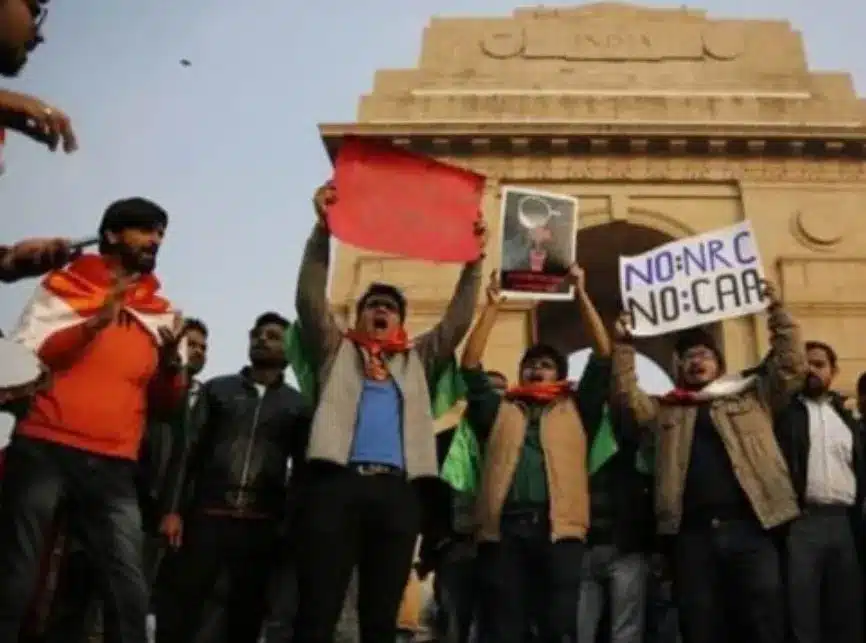
The NPR-NRC issue triggered nationwide protests following the Citizenship Amendment Act (CAA) in 2019.
In 2020, 10 states and two Union Territories passed Assembly resolutions opposing the NPR and NRC.
No Official Mention in Latest Announcement
While the government’s latest Census announcement is silent on NPR and NRC, both were approved by the Cabinet in 2019 with an allocated budget of nearly ₹4,000 crore.
The exercise was deferred due to the pandemic.
Legal Framework Governing NPR and NRC
NPR as a Legal Precursor to NRC
The National Population Register (NPR) is governed by the Citizenship (Registration of Citizens and Issue of National Identity Cards) Rules, 2003, framed under Section 18 of the Citizenship Act, 1955.
NPR serves as the foundation for preparing the National Register of Citizens (NRC).
Rules Define Process and Authority
Rule 3(4): The Centre can order the preparation of the Population Register.
Rule 3(5): NRC will be based on verified NPR data.
Rule 4(4): People with doubtful citizenship are to be flagged and informed during verification.
Rule 7 & 17: Heads of families must provide accurate data or face a fine of up to ₹1,000.
NPR and NRC History
NPR data was first collected in 2010 and updated in 2015.
Though the Modi government later prioritised Aadhaar for welfare delivery, NPR was revived in 2019 by the Registrar General of India (RGI), who also digitised the 2015 data.
Political Backdrop and Public Anxiety
The NPR revival coincided with nationwide protests against the Citizenship Amendment Act (CAA) and fears of a nationwide NRC, especially after the exclusion of 19 lakh people in Assam's NRC.
Statements by Union Home Minister Amit Shah linking CAA and NRC increased public concern.
Later, PM Modi and the MHA clarified that no decision on NRC had been taken.
Legal Basis for NRC in the Citizenship Act
The 2003 amendment to the Citizenship Act inserted Section 14A, empowering the Central Government to compulsorily register every Indian citizen and issue a national identity card.
It also designated the Registrar General of India as the National Registration Authority.
National Population Register (NPR) FAQs
Q1. What is the NPR?
Ans. NPR is a registry of usual residents, forming the foundation for NRC under the Citizenship Rules, 2003.
Q2. How is the NRC related to NPR?
Ans. The NRC is built from NPR data after verification and marks individuals with doubtful citizenship for further scrutiny.
Q3. Why is the NPR controversial?
Ans. It gained attention post-CAA 2019, sparking protests over fears of exclusion and concerns about citizenship verification.
Q4. When was NPR last updated?
Ans. NPR was last updated in 2015; its revival began in 2019 but was postponed due to the COVID-19 pandemic.
Q5. Is NRC currently being implemented?
Ans. No, the government has not officially decided on a nationwide NRC, despite prior statements suggesting future implementation.