One Nation One Election Bill, Key Takeaways, Latest Updates

One Nation One Election Bill

The One Nation, One Election Bill has been passed in the Lok Sabha with a ratio of 269 votes in favour and 198 votes against the passing of the bill. The bill proposes to hold simultaneous elections for the Lok Sabha, State Legislative assemblies and local body elections across the whole country. This proposal aims to align the election process leading to cost cutting and better governance by eliminating election related disruptions. This bill was analysed by a high-level committee chaired by President Ram Nath Kovind. While the opposition is still against this bill, a major number of leaders are looking at the benefits and consistently this bill could bring. In this article, we will look at this bill and the benefits and significance of this proposal. 

One Nation One Election Bill Latest Updates

The One Nation One Election Bill has been passed in the Lok Sabha with 269 votes being in favour of the bill and 198 votes against passing the motion. The bill was approved by the Union Cabinet with an aim to align the election processes of states and Union Territories including Jammu and Kashmir, Puducherry and New Delhi. The bill has been proposed to be deliberated through a Joint Parliamentary Committee(JPC). The report issued by the JPC will have to get approval by the Cabinet in order to be discussed in the parliament again. 

One Nation One Election Bill Overview 

Also known as simultaneous elections, one nation one election bill aims to hold all the elections including that of Lok Sabha, State Elections and panchayat that is the local body electrons all at once. In this manner, voters will be able to cast their votes for both the Lok Sabha and State elections all on the same day. 

The initiative will be conducted in two phases. In the first phase the Lok Sabha and State elections will be held together and in the second phase the local body elections that includes panchayats and municipalities elections will be conducted within 100 days of general elections. 

One Nation One Election Bill History 

The years 1951-52, 1962 and 1967 witnessed simultaneous elections dating back the concept of one nation one election to the early years of Indian Independence. This process was only discontinued after the 1967 elections due to the premature dissolution of a few state assemblies and Lok Sabha in 1970. Since then the elections are being conducted separately which is only leading to increased costs. The concept of one nation one election has been revived recently with the aim of aligning India’s electoral process.

One Nation One Election Advantages and Disadvantages

A bill can only be taken forward with analyzing its positives and negatives. Let's have a look at the advantages and disadvantages of One Nation One Election Bill: 

One Nation One Election Bill Advantages

  • Cost Reduction: It could save money by eliminating the need for separate election cycles.
  • Focus on Long-Term Governance: It encourages politicians to prioritize long-term governance over short-term gains.
  • Increased Voter Turnout: Voters are less fatigued, as they only participate once every few years, potentially boosting voter turnout.
  • Level Playing Field: Smaller parties can compete more effectively with larger ones due to reduced overall election expenses.
  • Efficient Use of Security Forces: It allows security forces to be deployed more efficiently for other purposes.

One Nation One Election Bill Disadvantages

  • Synchronization Challenges: Synchronizing elections in a diverse democracy like India can be difficult, particularly if governments lose confidence in their assemblies.
  • Constitutional and Federalism Issues: Its implementation may require constitutional changes and could potentially challenge the federal nature of the Indian political system.
  • Impact on Voter Behavior: Voters may confuse national and state issues in simultaneous elections, blurring the distinctiveness of state-level politics.
  • Impact on Regional Parties: It may favour larger national parties, potentially disadvantaging regional parties.
  • Accountability Concerns: Fixed terms without the threat of election could reduce government accountability and encourage autocratic tendencies.

One Nation One Election Bill Implementations

The implementation of the One Nation, One Election policy is not feasible within the current constitutional framework. To enable this policy, certain essential amendments to the Constitution are necessary, including:

  1. Article 83: Concerning the duration of the Houses of Parliament, amendments are required to fix the tenure and timing for the dissolution of the Lok Sabha.
  2. Article 85: Pertaining to sessions, prorogation, and dissolution of Parliament, clear guidelines must be established to prevent arbitrary or ambiguous dissolution of sessions.
  3. Article 172: Governing the duration of State Legislatures, amendments are needed to synchronize their tenure with that of the Lok Sabha.
  4. Article 174: Similar to Article 85, this article deals with sessions, prorogation, and dissolution of State Legislatures. Amendments are required to standardize procedures and timelines.

These amendments are critical to harmonize the electoral processes at both the central and state levels, ensuring the successful implementation of the policy.

Challenges in Implementing One Nation One Election Bill

While the One Nation One Election implementation could significantly bring down the costs of conducting the elections and align the administrative practices, there are a few challenges that cannot be ignored: 

  •  Overshadowing Regional Issues: Holding simultaneous elections for the Lok Sabha and all State Assemblies could lead to national issues dominating the discourse, sidelining important regional and state-specific concerns.
  • Impact on Regional Parties: Simultaneous elections may disproportionately benefit national political parties, putting regional parties at a disadvantage and potentially diluting their influence.
  • Political Accountability: Frequent elections foster greater accountability among lawmakers by subjecting them to regular public scrutiny. Fixed terms, on the other hand, could provide stability at the cost of reduced performance evaluation, challenging democratic ideals.
  • Federalism Concerns: Amendments to the Constitution regarding the term of State Legislative Assemblies under Article 172 can be enacted without requiring ratification by the states, potentially limiting their role and undermining the federal structure.
  • Logistical Challenges: Implementing the One Nation, One Election policy would demand substantial resources, including a vast number of electronic voting machines and trained personnel to manage the extensive process efficiently.

One Nation One Election Bill FAQs

Q1: What is "One Nation One Election"?

Ans: A policy proposal to conduct elections for the Lok Sabha and all State Assemblies simultaneously to streamline the electoral process.

Q2: Why are simultaneous elections in India considered beneficial?

Ans: They reduce the cost, time, and disruption caused by frequent elections while ensuring administrative efficiency.

Q3: What constitutional amendments are needed for One Nation One Election in India?

Ans: Amendments to Articles 83, 85, 172, and 174 are required to synchronize the terms of the Lok Sabha and State Assemblies.

Q4: Are there any challenges to implementing One Nation One Election in India?

Ans: Yes, challenges include logistical complexity, constitutional hurdles, and potential marginalization of regional issues.

Q5: How have other countries implemented One Nation One Election?

Ans: Countries like South Africa conduct simultaneous elections for national and provincial legislatures to streamline governance.

National Mission for Manuscripts, Objective, Significance, Achievements

National Mission for Manuscripts

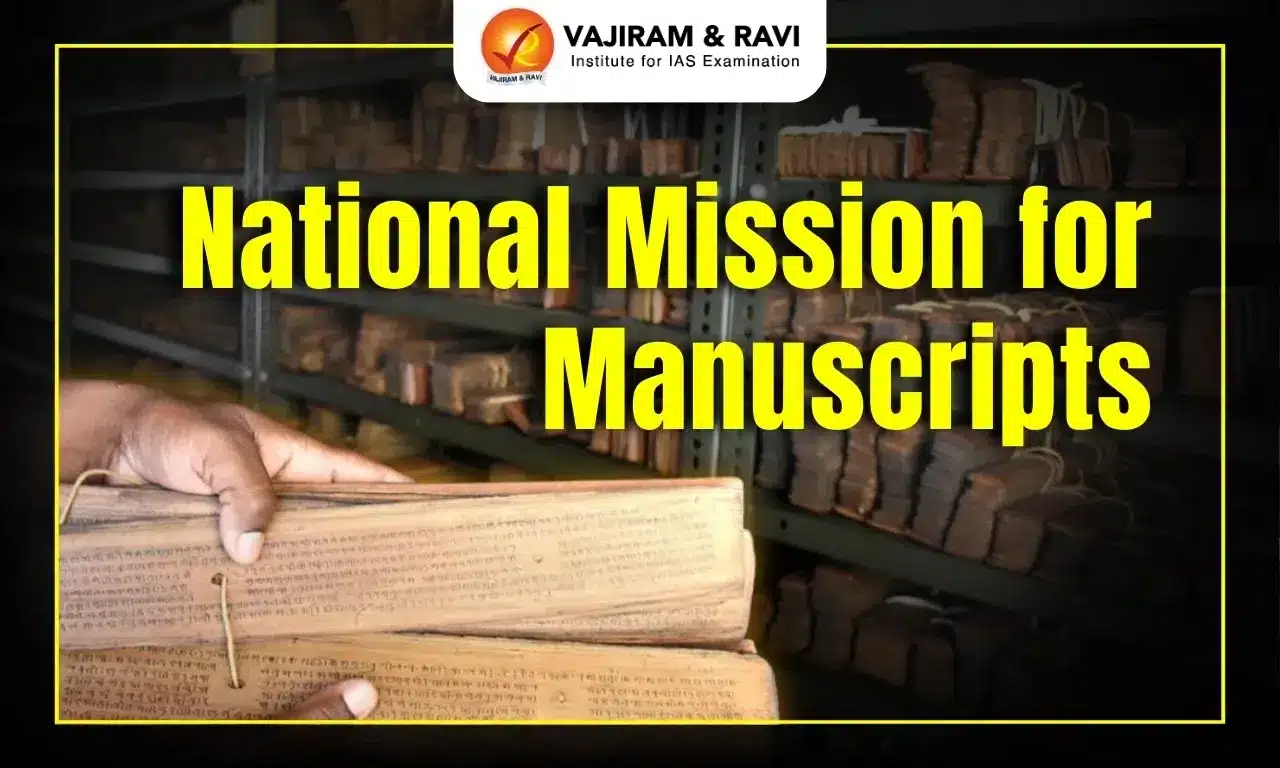
National Mission for Manuscripts is a union government initiative which is renamed as Gyan Bharatam Mission for the period 2024-2031 with a total budget of ₹482.85 crores. The mission is dedicated to the documentation, digitization, and promotion of Indian manuscripts, ensuring their preservation and accessibility. Keep reading the article to know the objectives, key features, significance, and achievements in safeguarding India's rich cultural heritage.

National Mission for Manuscripts Overview

To preserve the manuscript heritage in India as they hold cultural heritage, the Government of India has introduced the National Mission for Manuscripts (NMM). The initiative was launched to safeguard the textual tradition in India by documenting and digitizing manuscripts across India. Check out the table below, National Mission for Manuscripts Overview to get the insights regarding the initiative:

National Mission for Manuscripts Overview

Restructured As

Gyan Bharatam Mission

Established

2003 (Restructured in 2025)

Ministry

Ministry of Culture, Government of India

Nodal Agency

Indira Gandhi National Centre for the Arts (IGNCA)

Objectives

Survey and Documentation, Conservation and Preservation, Digitization, Publication and Research, Capacity Building, Outreach and Awareness

Period

2024-31

Budget 

₹482.85 crores

Manuscript Estimates

Approximately 10 million manuscripts in India, covering various themes, languages, and scripts

Conservation Centers

49 Manuscript Conservation Centers (MCCs) across the country

Resource Centers

54 Manuscript Resource Centers (MRCs)

Significance

Aims to connect India's past with its future by preserving its rich manuscript heritage

National Mission for Manuscripts Features

The National Mission for Manuscripts (NMM) was established in February 2003, has been restructured as the "Gyan Bharatam Mission" for the period 2024-2031. 

  1. For the period decided, the mission has a budget of ₹482.85 crore aiming to enhance its efforts in manuscript digitization, conservation, and public outreach.
  2. Key focus areas include the digitization of rare and fragile manuscripts ensuring their preservation. 
  3. Significant contributions are planned in states like Uttar Pradesh through documentation, conservation workshops, and research collaborations.
  4. The mission also emphasizes collaboration with educational institutions, libraries, and researchers.

National Mission for Manuscripts Objectives

The National Mission for Manuscripts (NMM) is introduced to preserve rich manuscript heritage of India through its key objectives:

  1. Conducting nationwide surveys to identify and register manuscripts, ensuring better conservation and public access.
  2. Using scientific preservation techniques to preserve manuscripts for future generations.
  3. Developing a National Digital Manuscripts Library to provide online access for scholars and the public.
  4. Promoting research and publication of unpublished manuscripts, encouraging advanced studies in manuscriptology.
  5. Offering training programs in manuscriptology and conservation to nurture a new generation of experts.
  6. Organizing exhibitions and outreach initiatives to enhance public interest and appreciation of India’s manuscript heritage.

Indian Manuscripts Significance

Indian Manuscripts offer valuable insights of the country’s cultural, historical, and scholarly heritage. They reflect ancient traditions, document key historical events, and serve as primary sources for research in fields like literature, religion, and art. Other than preservation of the languages, these manuscripts also support interdisciplinary studies, contributing to a deeper understanding of India’s civilization and its enriching legacy.

National Mission for Manuscripts Achievements

The National Mission for Manuscripts (NMM) has made remarkable progress in preserving the manuscript heritage of India. Key National Mission for Manuscripts Achievements include:

  1. Over 5.2 million manuscripts have been documented across the country.
  2. Collaboration with institutions has led to the establishment of Manuscript Resource Centers (MRCs) and Manuscript Conservation Centers (MCCs) in various states.
  3. Approximately 3.5 lakh manuscripts have been digitized, with ongoing efforts to expand digital access.
  4. Specialized training programs have equipped scholars and archivists with expertise in manuscript conservation.
  5. More than 1,35,000 manuscripts are now available online, offering free access to researchers and the public.

National Mission for Manuscripts FAQs

Q1: What is the role of the National Mission for Manuscripts?

Ans: The National Mission for Manuscripts (NMM) identifies, conserves, digitizes, and makes manuscripts accessible for research, promoting India's cultural heritage and traditional knowledge.

Q2: Which ministry has the National Mission for Manuscripts?

Ans: The National Mission for Manuscripts (NMM) operates under the Ministry of Culture, Government of India, for the preservation and digitization of manuscripts.

Q3: What are manuscripts in UPSC?

Ans: In UPSC, manuscripts refer to ancient handwritten documents on materials like palm leaves, birch bark, or paper, providing insights into historical, cultural, and literary heritage.

Q4: What is the mission of manuscript conservation?

Ans: The mission of manuscript conservation is to preserve, restore, and protect historical and cultural manuscripts, ensuring their longevity for future generations and research.

Q5: What is the purpose of a manuscript?

Ans: A manuscript serves as the original, unpublished version of a writer's work, typically submitted for editing, publishing, or academic review.

India’s First E-Waste Recycling Park in Delhi

First E-Waste Recycling Park

First E-Waste Recycling Park Latest News

In a major step towards sustainable development and circular economy, the Delhi government has announced plans to develop India’s first integrated E-Waste Eco Park at Holambi Kalan in north-west Delhi.

About First E-Waste Recycling Park

  • This state-of-the-art facility will be  India’s first integrated E-Waste Eco Park and will be built under a Public-Private Partnership (PPP) model, at Holambi Kalan in north-west Delhi.
  • It will be covering 11.4 acres, and is expected to process up to 51,000 metric tonnes of e-waste annually.
  • The project will be developed by the Delhi State Industrial and Infrastructure Development Corporation (DSIIDC) on a Design, Build, Finance, Operate, and Transfer (DBFOT) basis, with a 15-year concession period.
  • Zones: Dedicated areas for dismantling, refurbishing, component testing, plastic recovery, and a second-hand electronics market.
  • Employment: Creation of over 1,000 green jobs and skilling/training centres for informal recyclers.
  • Significance: Aims to manage nearly 25% of Delhi’s e-waste, set a national benchmark for smart waste processing, and promote sustainable urban infrastructure.
  • Environmental Impact: Reduces dependency on landfills, minimises hazardous waste, and promotes resource recovery and reuse.

First E-Waste Recycling Park FAQs

Q1. Where is India’s first e-waste recycling park being set up?

Ans. Holambi Kalan, North-West Delhi.

Q2. What is the processing capacity of the e-waste eco park?

Ans. Up to 51,000 metric tonnes of e-waste annually.

Q3. Which government agency is developing the e-waste eco park?

Ans. Delhi State Industrial and Infrastructure Development Corporation (DSIIDC).

Source: NIE

National Safety Day 2025, Theme, History, Significance

National Safety Day 2025

National Safety Day 2025, celebrated on 4 March every year aims to spread awareness about the importance of safety measures and accident prevention. Managed by the National Safety Council of India, the day highlights the need for a safe working environment. This year India is celebrating the 54th National Safety Day, showing five decades of commitment to occupational health and safety. 

54th National Safety Day 

Observed on 4th March every year, 2025 marks the 54th National Safety Day. Considered to be the foundation day of National Safety Council of India. The aim is to spread awareness about the need and importance of safety measures in public spaces and workplaces. This acts as a reminder to promote safety culture across different sectors of the society. 

National Safety Day 2025 Overview

The National Safety Day is celebrated from March 4 to March 10, 2025 in India to draw attention towards safety measures in India. The week-long celebration includes conducting various workshops, competitions and seminars to create awareness about the safety protocols and practices. 

National Safety Day 2025 Overview

Date

March 4, 2025 (Tuesday)

Campaign Duration

March 4 - March 10, 2025 (Week-long)

Organizing Body

National Safety Council of India (NSC)

Theme

Safety & Well-being Crucial for Viksit Bharat

Purpose

Promote awareness and adoption of safety practices in all sectors

Significance

54th Anniversary of the National Safety Day

Activities

Workshops, seminars, competitions, safety drills

National Safety Day 2025 Theme 

The National Safety Day 2025 theme is “Safety & Well-being Crucial for Viksit Bharat.” The theme aligns with the vision of Viksit Bharat 2047 that aims to present India as a developed nation by its centennial year of independence. The theme also highlights the role of achieving sustainable and equitable growth at the workplace as well as at national level. 

History of National Safety Day 

In 1972, the National Safety Council of India was set up to spread awareness about workplace safety. Due to the rising industrial accidents and occupational hazards, the need of setting up this council arrived. The focus was on promoting safety awareness in industrial sectors initially which later expanded to National Safety Week in 1986. Over the period, the significance has expanded to community safety, environmental concerns and public life. 

National Safety Day 2025 Significance

National Safety Day 2025 highlights the importance of occupational health and safety, reinforcing the shared responsibility of creating a secure environment. Key focus areas include: 

  • Making sure that safety knowledge is accessible for everyone and promotes OSH practises. 
  • Integrate safety measures into work culture and encourage the workspaces to go beyond compliance. 
  • Strengthen safety regulations for both the public and the employees by influencing policymakers. 
  • Motivate the community to take up safety measures. 
  • Build a safer developed India while also aligning with the national goals of Viksit Bharat 2047. 

Amidst India’s rapid industrial growth, National Safety Day 2025 will continue to stress the need for safe workplaces.

National Safety Council of India

The National Safety Council of India is responsible for promoting safety culture in India. Set up by the Ministry of Labour and Employment, Government of India in 1966, the body is responsible for promoting safety awareness across all work sectors. It plays an important role in formulation of safety policies and promotion of safety practices in workplaces.

National Safety Day FAQs

Q1: Why is National Safety Day celebrated?

Ans: National Safety Day is celebrated to promote awareness about occupational health and safety.

Q2: What is the theme of National Safety Day in 2024?

Ans: The theme for National Safety Day 2025 is " Safety & Well-being Crucial for Viksit Bharat."

Q3: Why do we celebrate World Safety Day?

Ans: World Safety Day is observed to highlight the prevention of occupational accidents and diseases globally.

Q4: Is there a safety awareness month?

Ans: Yes, March is recognized as National Safety Month.

Q5: What awareness month is June?

Ans: March (4-10th) is recognized as National Safety Month.

National Science Day 2025, Overview, Theme, Day

National Science Day

National Science Day 2025 is celebrated on 28 February 2025 every year. This year the theme is “Empowering Indian Youth for Global Leadership in Science and Innovation for Viksit Bharat.” The day aims to honour scientific achievements like “Raman Effect” and inspire innovation among young minds. In this article, we are looking into the significance, objectives and contributions of this day. 

National Science Day 2025 Overview 

National Science Day 2025 is the day when the Raman Effect was discovered by Sir C.V. Raman in 1928. The goal is to promote science and technology, scientific thinking skills through conducting various events like debates, exhibitions, quizzes, and seminars. The day highlights the scientific advancements and inspires future generations to take up careers in science. 

National Science Day 2025 Overview

Date

Friday, 28th February 2025

History

In 1986, NCSTC proposed the designation of February 28 as National Science Day

Purpose

Promotes scientific temper, awareness, and the importance of science in everyday life.

Theme

Empowering Indian Youth for Global Leadership in Science and Innovation for Viksit Bharat.

Organizers

Ministry of Science & Technology

Activities

Lectures, seminars, workshops, exhibitions, discussions.

National Science Day 2025 Theme 

National Science Day is celebrated every year with a new unique theme. The theme for the year 2025 is “Empowering Indian Youth for Global Leadership in Science and Innovation for VIKSIT Bharat.” The theme provides the outline of course of action for seminars and discussions to be held at the Vigyan Bhawan.

History of National Science Day 

The National Science Day was observed for the first time in 1987, proposed by the National Council for Science and Technology and Communications. The proposal was accepted by the government and 28th February was declared National Science Day to highlight the discovery of Raman Effect. 

India celebrates the day annually to honor the importance of science in progressing the society and serving a reminder of Indian scientific heritage and the contributions of scientists in global knowledge.

What is the Raman Effect?

Founded by C.V Raman and K.S. Krishnan in 1928, under the Raman Effect, the light underwent a shift in wavelength when interacting the molecules of substances. In this discovery, the effect demonstrated that light can be scattered, carrying valuable information about molecular vibrations. Ever since the discovery, this discovery has become an important tool in medicine, chemistry, physics and material composition and properties. This discovery helped him win the Nobel Prize in Physics in 1930.

Who Was C.V. Raman? 

Sir Chandrasekhara Venkata Raman, also remembered as C.V. Raman was an Indian physicist who made big contributions to spectroscopy and optics. He won a Nobel prize in 1930 for the discovery of the Raman Effect. He happened to be the first Indian scientist to receive a Nobel Prize in Physics and laid the foundation of modern spectroscopy. The Raman Research Institute was founded in 1948 and he also served as the Director of the Indian Institute of Science, Bangalore.

C.V. Raman’s Contributions 

Sir C.V. Raman made groundbreaking contributions to physics and scientific research, leaving a lasting impact across multiple domains:

  • Raman Effect (1928): Explained the scattering of light and its interaction with molecules, earning him the Nobel Prize in Physics (1930).
  • Acoustics: Conducted in-depth studies on musical instruments and wave propagation.
  • Molecular Structure: Advanced the understanding of crystals and liquid structures.
  • Diamonds & Iridescent Substances: Researched the structure of diamonds and the optical properties of iridescent materials.
  • Literary Contributions: Authored key works, including Molecular Diffraction of Light, Acoustical Memoirs, and Why the Sky is Blue (co-authored).
  • Institution Building: Founded the Raman Research Institute to foster scientific progress in India.

Significance of National Science Day 2025

National Science Day 2025 is a key event in fostering scientific awareness and innovation in India. Here's why it matters:

  • Honoring Scientific Excellence: Celebrates the contributions of Indian scientists, especially C.V. Raman.
  • Inspiring Scientific Curiosity: Encourages students to explore science and research.
  • Advancing Science & Technology: Showcases breakthroughs across various fields.
  • Connecting Science & Society: Enhances public understanding of scientific progress.
  • Strengthening Research & Education: Motivates young minds to pursue STEM careers.

This year’s celebration will highlight India’s scientific achievements and the lasting impact of the Raman Effect. By observing National Science Day, India reaffirms its commitment to scientific thinking and innovation.

National Science Day FAQs

Q1: Why was 28 February declared as National Science Day?

Ans: To commemorate C.V. Raman’s discovery of the Raman Effect on 28th February 1928.

Q2: What is the theme for National Science Day 2024?

Ans: Indigenous Technologies for Viksit Bharat.

Q3: Why is World Science Day celebrated?

Ans: To highlight the importance of science in society and promote public engagement in scientific advancements.

Q4: Who launched National Science Day?

Ans: The National Council for Science and Technology Communication (NCSTC) in 1986.

Q5: Who is the father of National Science Day?

Ans: C.V. Raman, as the day honors his discovery of the Raman Effect.

National Tribal Festival 2025, Date, Venue, Theme, Objective

National Tribal Festival

On February 16, 2025, the President of India, Smt. Droupadi Murmu has inaugurated the National Tribal Festival, ‘Aadi Mahotsav,’ in New Delhi. She highlighted festivals that create opportunities for tribal entrepreneurs, artisans, and artists to access larger markets and gain recognition.

Discussing government initiatives for tribal welfare, the President stated that over the past decade, significant measures have been implemented to support the development of tribal communities. The budget allocated for tribal welfare is nearly about ₹15,000 crore. Aadi Mahotsav 2025 will be organized by the Ministry of Tribal Affairs, and will be held from February 16, 2025 to February 24, 2025 at Major Dhyan Chand National Stadium, New Delhi. National Tribal Festival 2025 offers a vibrant showcase of India's diverse tribal traditions, providing visitors with an immersive experience of our culture.

National Tribal Festival 2025

The National Tribal Festival 2025 is a premier event celebrating India's tribal heritage, traditions, and economic contributions. Organized by TRIFED under the Ministry of Tribal Affairs, it takes place at Major Dhyan Chand National Stadium, New Delhi, from February 16 to 24, 2025. Inaugurated by President Smt. Droupadi Murmu, the festival features over 600 tribal artisans, 500 performing artists, and 25 tribal food stalls, offering an immersive experience of indigenous culture and craftsmanship.

Aadi Mahotsav 2025

Aadi Mahotsav 2025 is organised to showcase the rich cultural heritage of India’s tribal communities. Featuring over 600 tribal artisans and 500 performing artists, the festival showcases traditional crafts, cuisine, attire, jewelry, and cultural performances, offering an immersive experience of indigenous traditions and craftsmanship.

National Tribal Festival 2025 Highlights

The National Tribal Festival 2025 aims to empower tribal communities by providing a platform to showcase their heritage and connect with broader markets. This event enables tribal entrepreneurs to sell their products directly to consumers, ensuring fair earnings. Below in the table shared is the National Tribal Festival 2025 Highlights to have the details of the event on tips:

National Tribal Festival 2025 Highlights

Also Known As

Aadi Mahotsav

Event Dates

February 16 to February 24, 2025

Location

Major Dhyan Chand National Stadium, New Delhi

Hosting Body

Ministry of Tribal Affairs

Objective

To highlight and promote tribal heritage

Inauguration

Inaugurated by the President of India

Participants

Over 600 tribal artisans and 500 performing artists.

Showcase

Tribal art, music, dance, handlooms, handicrafts, and organic products

Key Features

Tribal handlooms & handicrafts, tribal art exhibition (Aadi Chitra), authentic tribal cuisines, cultural performances, live craft demonstrations, organic & natural tribal products

PM JAN MAN Pavilion

Showcase of Particularly Vulnerable Tribal Groups (PVTGs) and Van Dhan products highlighting cultural heritage and sustainable livelihoods

Additional Activities

Skill development training to artisans, workshops on social media utilization, and live demonstrations of crafting

National Tribal Festival 2025 Dates 

The National Tribal Festival (Aadi Mahotsav 2025) is being held from February 16 to 24, 2025, celebrating the rich cultural heritage and economic contributions of India’s tribal communities.

Aadi Mahotsav 2025 Features

  1. Live Demonstrations by tribal artisans from various states.
  2. Collaboration with 20 PSUs and 35 training institutes to promote tribal entrepreneurship.
  3. 25+ MoUs Signed with design institutes and corporates to uplift tribal crafts.
  4. State & International Pavilions showcasing indigenous crafts and traditions.
  5. Brand Integration on 8 major e-commerce platforms for market expansion.
  6. IFCA Partnership for digital onboarding of tribal foods, promoting online sales.

National Tribal Festival 2025 Venue

The National Tribal Festival 2025 (Aadi Mahotsav) is being held at Major Dhyan Chand National Stadium, New Delhi, with free entry for all visitors. This event aims to promote sustainable livelihood opportunities for India’s tribal communities by showcasing their rich cultural heritage, including traditional crafts, art, music, and cuisine.

National Tribal Festival 2025 Theme

The official theme for Aadi Mahotsav 2025 has yet to be formally announced. However, the festival revolves around “Empowering Tribal Communities through Culture and Commerce.” By focusing on tribal artisans and entrepreneurs, Aadi Mahotsav 2025 aims to promote traditional crafts, cultural expressions, and indigenous knowledge, ensuring their integration into mainstream markets while preserving the authenticity of tribal heritage.

National Tribal Festival 2025 Objectives

The National Tribal Festival 2025 (Aadi Mahotsav) is dedicated to empowering tribal communities by celebrating their entrepreneurship, culture, and heritage. Below Mentioned are the National Tribal Festival 2025 Objectives:

  1. The festival serves as a platform to nurture tribal enterprises through initiatives like the Venture Capital Fund for Scheduled Tribes, promoting a startup culture among indigenous entrepreneurs. 
  2. It highlights the preservation of tribal traditions, offering a glimpse into their rich heritage and way of life. 
  3. Aadi Mahotsav 2025 promotes economic advancement by providing artisans direct market access to sell their crafts. 
  4. Through strategic collaborations with government bodies and organizations, the event ensures holistic support for tribal communities. 
  5. The National Tribal Festival 2025 aims at global promotion of tribal rights, strengthening their collective identity and purpose while advocating for inclusivity in global markets.

National Tribal Festival 2025 FAQs

Q1: Where is National Tribal Dance Festival held?

Ans: The National Tribal Dance Festival 2022 was held in Raipur, Chhattisgarh.

Q2: Which is the national tribal festival of India?

Ans: The President of India, Smt Droupadi Murmu inaugurated the National Tribal Festival 'Aadi Mahotsav' in New Delhi today (February 16, 2025).

Q3: What is the tribal event in Delhi?

Ans: Aadi Mahotsav is being organised by the Ministry of Tribal Affairs from February 16 to 24, 2025 at Major Dhyan Chand National Stadium, New Delhi.

Q4: Which is the famous festival of tribals?

Ans: Puttari is again a rice harvest festival that is celebrated by the Kodava community in the months of November, and December.

Q5: Which dance is national dance?

Ans: Bharatanatyam of Tamil Nadu in southern India has grown out of the art of dancers dedicated to temples, and was earlier known as Sadir or Dasi Attam.

National Vaccination Day 2025 India, Theme

National Vaccination Day 2025

National Vaccination Day 2025 is celebrated in India on 16th March to spread awareness about the importance of vaccines in preventing diseases and managing public health. The day focuses on the eradication of vaccine-preventable illness and committing to improving the healthcare system of India and appreciating the contributions made by healthcare professionals in providing widespread immunisation. 

National Vaccination Day 2025 Overview 

National Vaccination Day emphasises the importance of vaccination and their role in protecting individuals and societal health. 

National Vaccination Day 2025 Overview

Date

March 16, 2025

History

Celebrated since 1995 to commemorate the first dose of oral polio vaccine administered in India on March 16, 1995.

Significance

Recognizes the importance of vaccination in public health, particularly in India's Pulse Polio Campaign, which led to India becoming polio-free in 2014.

Theme

Yet to be announced.

Objective

Raise awareness about the role of vaccines in preventing infectious diseases and appreciate healthcare workers' efforts.

Global Context

Part of broader global vaccination efforts, with World Immunization Week observed from April 24 to 30, 2025.

National Vaccination Day 2025 Theme

The Theme of National Vaccination Day 2025 has not been announced yet. Every year, the day is celebrated around a unique theme that educates people about the benefits of vaccines. This year, it is expected that the National Vaccination Day theme will focus on the collective responsibility of people and the healthcare system to achieve immunisation coverage and encourage public participation on vaccination drives.

History of National Vaccination Day

National Vaccination Day was celebrated for the first time on 16 March, 1995. The first dose of oral polio vaccine was administered for the first time on this day under the Pulse Polio Immunization Programme. The aim was to eradicate polio from the country and eventually declare India to be a polio-free country by the World Health Organisation by 2014. 

After the success of Pulse Polio Programme, more immunisation campaigns were started targeting the preventable diseases. Since 1995, National Vaccination Day has become an important part of India’s Public health initiatives, spreading the awareness about the vaccines for diseases like hepatitis, tuberculosis and measles. 

Universal Immunization Programme (UIP)

The Universal Immunisation Programme was launched in 1985 and became the largest public health initiative in India. Under the programme, the goal is to provide free vaccines for life-threatening diseases to all pregnant women as well children up to the age of two years. Every year the targets for Universal Immunisation Programs are to cover at least 2.67 newborns as well as 2.9 crore pregnant women. The scheme covers 12 diseases including

  • Tuberculosis
  • Diphtheria 
  • Pertussis
  • Tetanus 
  • Poliomyelitis 
  • Measles 
  • Hepatitis B
  • Rotavirus Gastroenteritis 
  • Japanese encephalitis 
  • Rubella 
  • Pneumococcal diseases 

Intensified Mission Indradhanush

The Government of India launched Mission Indradhanush in 2014 to accelerate the immunisation coverage followed by Intensified Mission Indradhanush in 2017. The scheme covers pregnant women, unvaccinated and partially vaccinated children with low immunisation rates. In 2023, IMI 5.0 was launched covering 34 lakh children and 6 lakh pregnant women, increasing full immunisation coverage. 

World Immunization Week 2025

World Immunisation Week 2025 will be celebrated from 24 April to 30 April, highlighting the importance of vaccines in preventing diseases. Managed by WHO, the week encourages global action and support towards effective immunisation programs. The goal is to save communities from vaccine preventable diseases and this year the theme is “Immunisation for All is Humanly Possible.”

National Vaccination Day 2025 Significance

National Vaccination Day underscores the vital role of vaccines in safeguarding public health by preventing life-threatening diseases. It celebrates the success of immunization programs in curbing infectious diseases and honors the dedication of healthcare workers who ensure vaccine accessibility across the nation.

The 2025 celebration will focus on:

  • Raising awareness about the importance of vaccines.
  • Promoting vaccination adherence among all age groups.
  • Addressing myths and misconceptions surrounding immunization.
  • Strengthening support for government vaccination initiatives.
  • Appreciating the contributions of healthcare professionals and frontline workers.

Ultimately, National Vaccination Day 2025 reaffirms India's commitment to eliminating vaccine-preventable diseases through robust immunization efforts.

National Vaccination Day FAQs

Q1: What is the theme of World Immunization Day 2025?

Ans: The theme is "Immunization for All is Humanly Possible.

Q2: What is the Universal Immunization Programme (UIP)?

Ans: The UIP is a government initiative providing free vaccines against 12 preventable diseases to all children and pregnant women in India.

Q3: What is National Immunization Day?

Ans: It's a designated day to administer vaccines, particularly for polio eradication, aiming to immunize all children under five years old.

Q4: What is the difference between vaccination and immunization?

Ans: Vaccination is the act of administering a vaccine; immunization is the process of becoming immune to a disease.

Q5: What are the four types of vaccines?

Ans: The primary types are live-attenuated, inactivated, subunit, and mRNA vaccines.

Keeladi Excavation Findings

Keeladi Findings

Keeladi Findings Latest News

Union Culture Minister Gajendra Singh Shekhawat has stated that the report on the Keeladi excavations, submitted by archaeologist Amarnath Ramakrishna, is not yet “technically well-supported” and requires further scientific studies

About Keeladi Findings

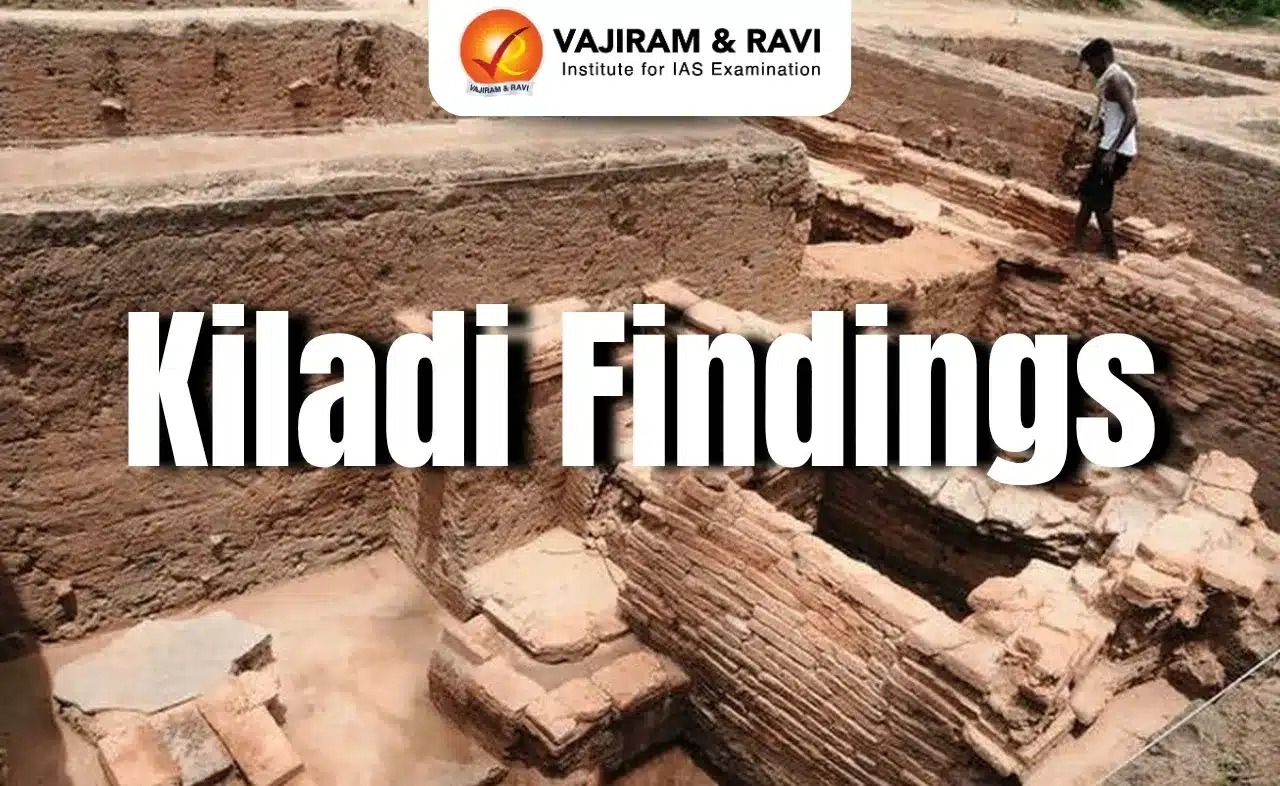
  • Location: Keeladi is a village in Sivaganga district, Tamil Nadu, situated along the Vaigai River, about 12 km southeast of Madurai.
  • Excavation History: Excavations began in 2015, initially led by the ASI and later by the Tamil Nadu State Department of Archaeology after a period of administrative dispute.
  • Artefacts Unearthed: Over 18,000 artefacts have been discovered, including pottery, inscribed potsherds, gold ornaments, copper articles, semi-precious stones, shell and ivory bangles, glass beads, spindle whorls, terracotta seals, and weaving tools.
  • Pottery and Inscriptions: The site has yielded heaps of pottery and over 120 potsherds with Tamil Brahmi inscriptions, indicating the long survival of the script and literacy in the region.
  • Urban Settlement: Findings suggest Keeladi was a well-planned urban settlement with evidence of industries such as pottery, weaving, dyeing, and bead-making.
  • Trade and Lifestyle: Artefacts like agate and carnelian beads indicate trade networks, while items such as dice and hopscotch pieces reveal leisure activities.
  • Chronology: The findings have pushed the Sangam Age in Tamil Nadu back to around 800 BCE, suggesting a much older and advanced civilization than previously thought.
  • Link to Other Civilisations: Some symbols on Keeladi artefacts resemble those of the Indus Valley Civilization, though a cultural gap of about 1,000 years remains. Scholars hope further studies will clarify these connections.

Sangam Age

  • The Sangam Age, often referred to as the Tamil Sangam period, marks an important chapter in South Indian history.
  • Named after the assembly of Tamil poets and scholars known as the Sangam, this era witnessed a rich cultural and literary flourishing in the southern regions of India.
  • It is broadly estimated to have spanned from around 300 BCE to 300 CE.

Keeladi Findings FAQs

Q1. What did they find in Keezhadi?

Ans: Ancient urban settlement remains, including pottery, ornaments, tools, and Tamil-Brahmi inscribed potsherds.

Q2. What are the things found in Keezhadi?

Ans: Artefacts like pottery, gold and copper ornaments, beads, tools, figurines, coins, gamesmen, and inscribed potsherds.

Q3. What is the importance of the findings in Keezhadi?

Ans: They prove an advanced urban civilization with literacy, industry, and trade existed in Tamil Nadu during the Sangam age.

Q4. What names were found in Keezhadi?

Ans: Names in Tamil-Brahmi script, such as ‘Sathan Esiri Kathiran Ilabu’, were found inscribed on potsherds.

Source: TH

Poson Poya

Poson Poya

Poson Poya Latest News

Sri Lanka celebrated Poson Poya on June 10–11, 2025, marking over 2,000 years since the arrival of Buddhism on the island.

About Poson Poya

  • Poson Poya is an annual Buddhist festival celebrated on the full moon day of June, second only in importance to Vesak in Sri Lanka.
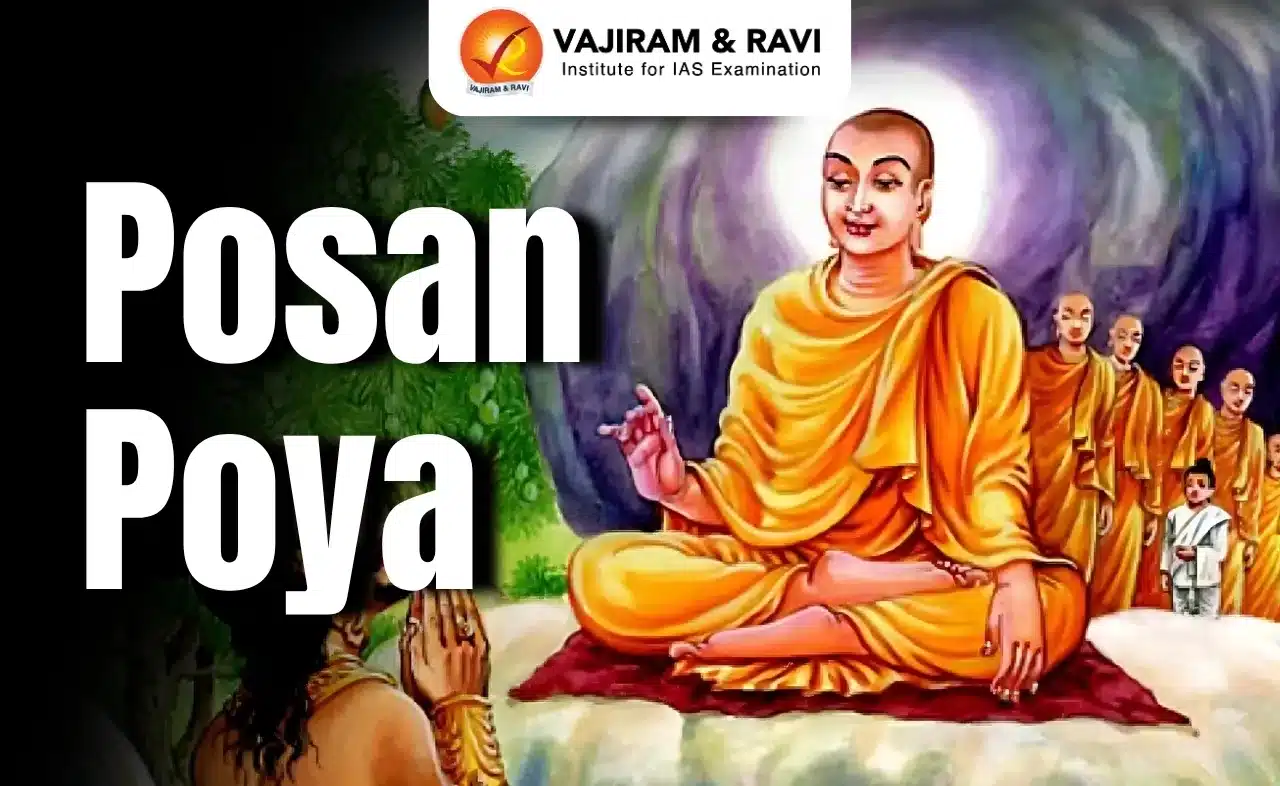
  • It marks the introduction of Buddhism to Sri Lanka in the 3rd century BCE by Arahat Mahinda, son of Emperor Ashoka of India, who preached to King Devanampiyatissa at Mihintale.
  • This event is considered a turning point in Sri Lankan history, leading to significant religious, cultural, and social transformations.
  • The festival is celebrated throughout Sri Lanka, but the main ceremonies are held at Mihintale and Anuradhapura, attracting thousands of pilgrims. 
  • Devotees dress in white, make offerings at temples, meditate, and participate in community activities such as dansals (free food stalls), lantern displays, and religious pageants. 
  • The festival promotes values such as non-violence (ahimsa), kindness, and unity.

Buddhism in Sri Lanka

  • Buddhism is a spiritual tradition founded by Siddhartha Gautama (the Buddha) in the 6th century BCE in India.
  • It emphasizes the path to enlightenment (nirvana) through ethical living, meditation, and wisdom. 
  • Core teachings include the Four Noble Truths and the Eightfold Path, guiding individuals to overcome suffering (dukkha).
  • Buddhism arrived in Sri Lanka over 2,300 years ago during the reign of King Devanampiyatissa, marking a profound spiritual and cultural transformation.
  • It was introduced by Arahat Mahinda, the son of Indian Emperor Ashoka, in 236 BCE on Poson Poya day at Mihintale.
  • The king embraced Buddhism, leading to its widespread acceptance across the island. Temples, stupas, and monastic traditions flourished, making Sri Lanka a major center of Theravāda Buddhism.

Poson Poya FAQs

Q1. What is special about Poson Poya Day?

Ans: It marks the arrival of Buddhism in Sri Lanka, celebrated with temple visits, lanterns, and acts of kindness.

Q2. What is the date of Poson?

Ans: Poson Poya falls on the June full moon; in 2025, it was on June 10.

Q3. What is the history of Poson?

Ans: It commemorates Arahat Mahinda bringing Buddhism to Sri Lanka and converting King Devanampiyatissa in 236 BC.

Q4. Is Vesak Poya an international holiday?

Ans: Yes, Vesak is recognised as an international holiday by the United Nations.

Source: News on AIR

Shahed Drones

Shahed Drones

About Shahed Drones

  • Shahed drones are Iranian-made unmanned combat aerial vehicles (UCAVs) and loitering munitions, primarily developed by Shahed Aviation Industries. Russia refers to the Shahed-136 as "Geran-2".
  • Design and Capabilities: These drones are designed for one-way attack missions, carrying explosive warheads that detonate upon impact.
    • The Shahed-136, the most widely used variant, features a delta-wing design, weighs around 200 kg, and has a wingspan of 2.5–3 meters.
  • Range and Speed: The Shahed-136 can travel between 1,000 and 2,500 km at speeds up to 185 km/h. It is launched via disposable rocket boosters and then powered by a piston engine, giving it a distinctive "moped-like" sound.
  • Guidance: The drones use pre-programmed GPS or GLONASS coordinates, making them resistant to electronic warfare and jamming.
    • Recent variants reportedly use advanced algorithms and AI for improved navigation and targeting.
  • Warhead Types: Shahed drones can be equipped with various warheads, including high-explosive fragmentation, thermobaric, and shrapnel-filled munitions, maximising damage to both personnel and equipment.

Shahed Drones FAQs

Q1. What is a Shahed drone?

Ans: A Shahed drone is an Iranian-made kamikaze or suicide drone used for one-way explosive attacks.

Q2. What is the difference between Shahed 136 and 131?

Ans: Shahed 136 is larger, has longer range and bigger warhead; Shahed 131 is smaller with shorter range and warhead.

Q3. What engine is in the Shahed drone?

Ans: Shahed 136 uses an MD-550 piston engine; Shahed 131 uses a smaller MDR-208 Wankel engine.

Source: REUTERS

United Nations Population Fund

United Nations Population Fund

United Nations Population Fund Latest News

Recently, the United Nations Population Fund (UNFPA)’s 2025 State of World Population (SOWP) Report, titled, ‘The Real Fertility Crisis’, states that one in three adult Indians face unintended pregnancies, while 30% experience unfulfilled desire for having either more or fewer children.

 About United Nations Population Fund

  • It is an international development agency created in 1968 to support the execution of projects and programmes in the area of population and sexual and reproductive health.
  • Its mission is to deliver a world where every pregnancy is wanted, everychildbirth is safe and every young person's potential is fulfilled.
  • In 1987, it was officially renamed as the United Nations Population Fund but the original abbreviation UNFPA (United Nations Fund for Population Activities) was retained.
  • It is not directly responsible for the collection of primary statistics; it plays an important role in the technical and financial support of statistical activities in countries, such as population censuses and thematic surveys etc.
  • Funding: It is entirely supported by voluntary contributions of donor governments, intergovernmental organizations, the private sector and foundations and individuals, not by the United Nations regular budget.
  • It funds assistance, research, and advocacy programs in three major areas:
  • Reproductive health, including family planning, safe motherhood, and the prevention and treatment of sexually transmitted diseases,
  • The population problems of developed and developingcountries and possible strategies for addressing them.
  • Issues related to the status of women, including the gender gap in education.
  • UNFPA assistance programs are undertaken only in response to government requests.
  • Headquarters: New York

United Nations Population Fund FAQs

Q1: What is the responsibility of UNFPA?

Ans: The goal of UNFPA is to ensure every pregnancy is wanted, every childbirth is safe, every young person's potential is fulfilled.

Q2: What is the state of the world population report?

Ans: The State of World Population Report is UNFPA's annual flagship publication, published since 1978.

Source: TH

Nickel

Nickel

Nickel Latest News

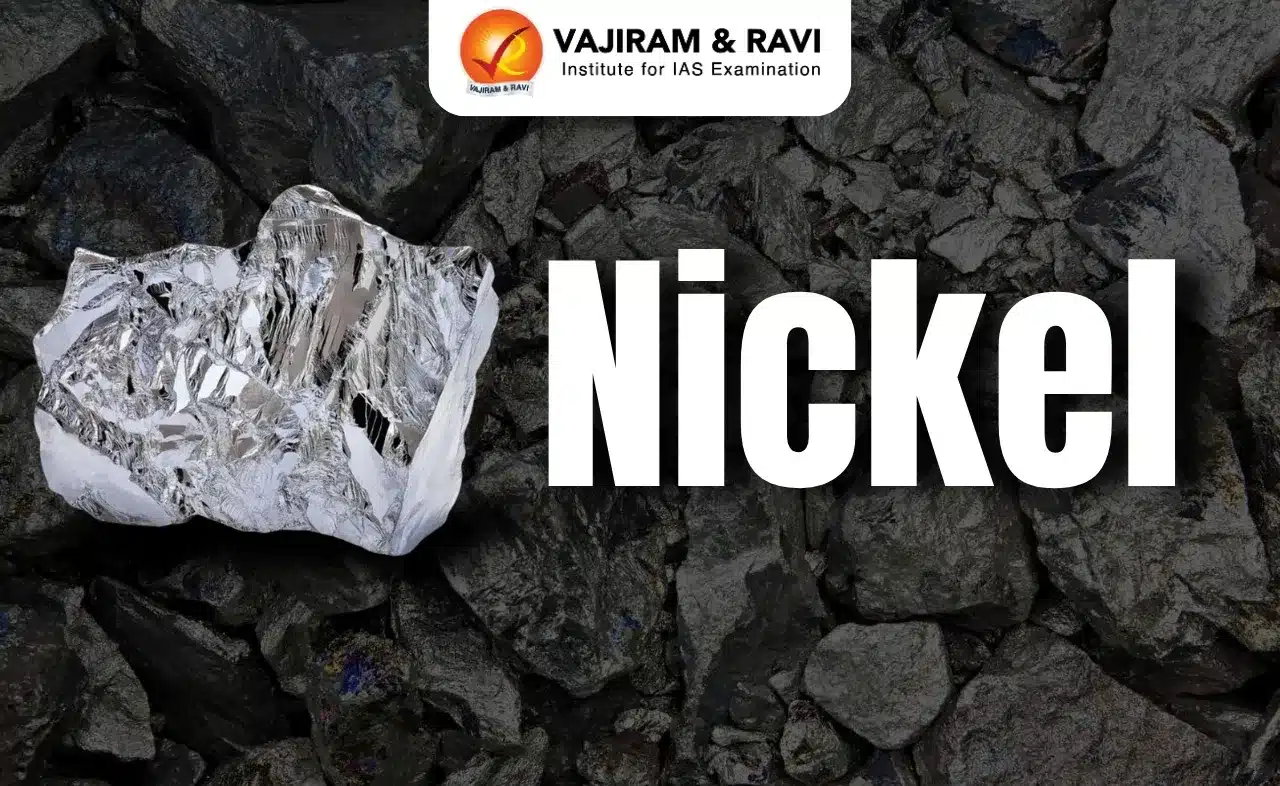
Recent study has revealed that nickel can be extracted from low-grade ores using hydrogen plasma instead of carbon.

About Nickel

  • It is a metallic element with a silvery-white, shiny appearance.
  • It is the fifth-most common element on earth and occurs extensively in the earth’s crust and core.
  • Nickel, along with iron, is also a common element in meteorites.
  • It occurs naturally in soil and water. It is also an essential nutrient for plants. 
  • It has outstanding physical and chemical properties, which make it essential in hundreds of thousands of products.
  • Nickel occurs principally as oxides, sulphides and silicates in India.
  • India has substantial nickel laterite reserves, particularly in Odisha’s Sukinda region.
  • World Distribution: Indonesia (22%), Australia (21%), Brazil (17%), Russia (7%), Cuba (6%) and Philippines (5%) are the major countries having reserves of Nickel.

Applications of Nickel 

  • Its biggest use is in alloying - particularly with chromium and other metals to produce stainless and heat-resisting steels.
  • Nickel is an important metal used in several clean energy technologies, especially Electric Vehicles (EVs).
  • It is used in batteries, including rechargeable nickel-cadmium batteries and nickel-metal hydride batteries used in hybrid vehicles.

Nickel FAQs

Q1: What is the formula for nickel?

Ans: Nickel is a chemical element with symbol Ni and atomic number 28.

Q2: What is nickel used for?

Ans: Primarily used in stainless steel production, it supports a wide range of industries and everyday products. 

Source: TH

Blue Nationally Determined Contributions Challenge

Blue Nationally Determined Contributions Challenge

Blue Nationally Determined Contributions Challenge Latest News

Recently, on the first day of the third UN Ocean Conference (UNOC3) Blue NDC Challenge initiative was launched to dramatically scale up ocean-focused climate action.

About Blue NDC Challenge

  • It is a landmark international initiative launched by France and Brazil.
  • It urges countries to incorporate ocean-focused climate measures into their Nationally Determined Contributions (NDCs) ahead of the 30th Conference of Parties (COP30) to the United Nations Framework Convention on Climate Change (UNFCCC) in Belem, Brazil. 
  • Six other countries—Australia, Fiji, Kenya, Mexico, Palau, and the Republic of Seychelles—have joined this initiative.
  • It is supported by Ocean Conservancy, the Ocean and Climate Platform and the World Resources Institute through the Ocean Resilience and Climate Alliance (ORCA) and has been endorsed by WWF-Brazil.

 What are NDCs?

  • NDCs are national climate plans that outline a country’s efforts to reduce emissions and adapt to climate change under the Paris Agreement adopted by 195 Parties at UNFCCC COP21 in Paris, France, on December 12, 2015,
  • To hold “the increase in the global average temperature to well below 2°C above pre-industrial levels” and pursue efforts “to limit the temperature increase to 1.5°C above pre-industrial levels.

Blue Nationally Determined Contributions Challenge FAQs

Q1: What is the Blue Economy?

Ans: It is the "sustainable use of ocean resources for economic growth, improved livelihoods, and jobs while preserving the health of the ocean ecosystem.

Q2: What is the United Nations Framework Convention on Climate Change (UNFCCC)?

Ans: The United Nations Framework Convention on Climate Change (UNFCCC) is a treaty that establishes the legal framework for international cooperation on climate change. The UNFCCC's goal is to stabilize greenhouse gas concentrations in the atmosphere to prevent dangerous human interference with the climate system.

Source: DTE

Axiom-4 Mission (Ax-4)

Axiom-4 Mission (Ax-4)

Axiom Mission 4 Latest News

Just days after anticipation built around Indian astronaut Group Captain Shubhanshu Shukla’s participation in Axiom Mission 4, the launch has been postponed again.

About Axiom Mission 4

  • Axiom Mission 4 (Ax-4) is the fourth private astronaut mission to the International Space Station (ISS), organized by Axiom Space in collaboration with NASA, SpaceX, and ISRO.
    • Objectives:
      • Enable commercial activities in low Earth orbit, including space tourism and private research.
      • Demonstrate the feasibility of commercial space stations as platforms for business and science.
      • Strengthen international collaboration in space exploration.
      • Conduct scientific experiments in microgravity, focusing on materials science, biology, Earth observation, and life sciences.
    • Launch Vehicle & Capsule: First flight of Crew Dragon C213—the fifth and final new Dragon capsule—to be launched atop a Falcon‑9 Block 5 from LC‑39A, Kennedy Space Centre.
    • Mission Timeline: Originally set for early June 2025, the mission was moved multiple times— then again postponed on June 11, due to the LOx leak, which caused further delay.
  • Crew (4 total):
    • Peggy Whitson (USA)
    • Shubhanshu Shukla (India)
    • Sławosz Uznański‑Wiśniewski (Poland)
    • Mission Specialist: Tibor Kapu (Hungary)
  • Significance:
    • Marks India’s return to human spaceflight after 41 years, since Rakesh Sharma’s 1984 mission.
    • First government-sponsored flights to the ISS for India, Poland, and Hungary in over four decades.

Source: MINT

Axiom Mission 4 FAQs

Q1: What is the Axiom-4 mission?

Ans: Axiom-4 is a private spaceflight sending astronauts, including an Indian, to the International Space Station for research and collaboration.

Q2: Who are the Indian astronauts in Axiom 4?

Ans: Group Captain Shubhanshu Shukla is the only Indian astronaut on Axiom 4.

Q3: What is the meaning of Axiom 4?

Ans: Axiom 4 means the fourth private astronaut mission to the ISS by Axiom Space.

Q4: Who has been named as the pilot for Axiom Mission 4?

Ans: Shubhanshu Shukla from India has been named the pilot for Axiom Mission 4.

BBX32 Protein

BBX32 Protein

BBX32 Protein Latest News

Researchers from the Indian Institute of Science Education and Research (IISER), Bhopal, have found that a single protein BBX32 helps plants time their first step from darkness into light.

About BBX32 Protein

  • It is a B-box (BBX) protein (B-box play an important role in plant growth and development).
  • It helps provide leads to control the timing of seedling emergence and help maximise proper seedling establishment.

How does it work?

  • When a seed sprouts in darkness under the soil, its stem curves into a small hook shape that protects the delicate shoot tip as it pushes upward.
  • The hook needs to stay ‘closed’ until the seedling breaks through the soil and meets light.
  • Ethylene is a plant hormone that builds up underground and light work together to decide exactly when the hook opens.
  • ‘BBX32’ helps in plant growth regulation by keeping its first leaves folded until they emerge from the soil and thus provide crucial aid in the seedling establishment process.
  • BBX32 was found to work by raising the activity of the PIF3 protein, which switched on HLS1, which kept the hook closed. If PIF3 was missing, BBX32 couldn’t prevent the hook from opening.

BBX32 Protein FAQs

Q1: What is called a protein?

Ans: Proteins are made up of hundreds or thousands of smaller units called amino acids, which are attached to one another in long chains

Q2: What is protein function?

Ans: Proteins serve as structural support, biochemical catalysts, hormones, enzymes, building blocks, and initiators of cellular death. 

Source: TH

Gangotri National Park

Gangotri National Park

Gangotri National Park Latest News

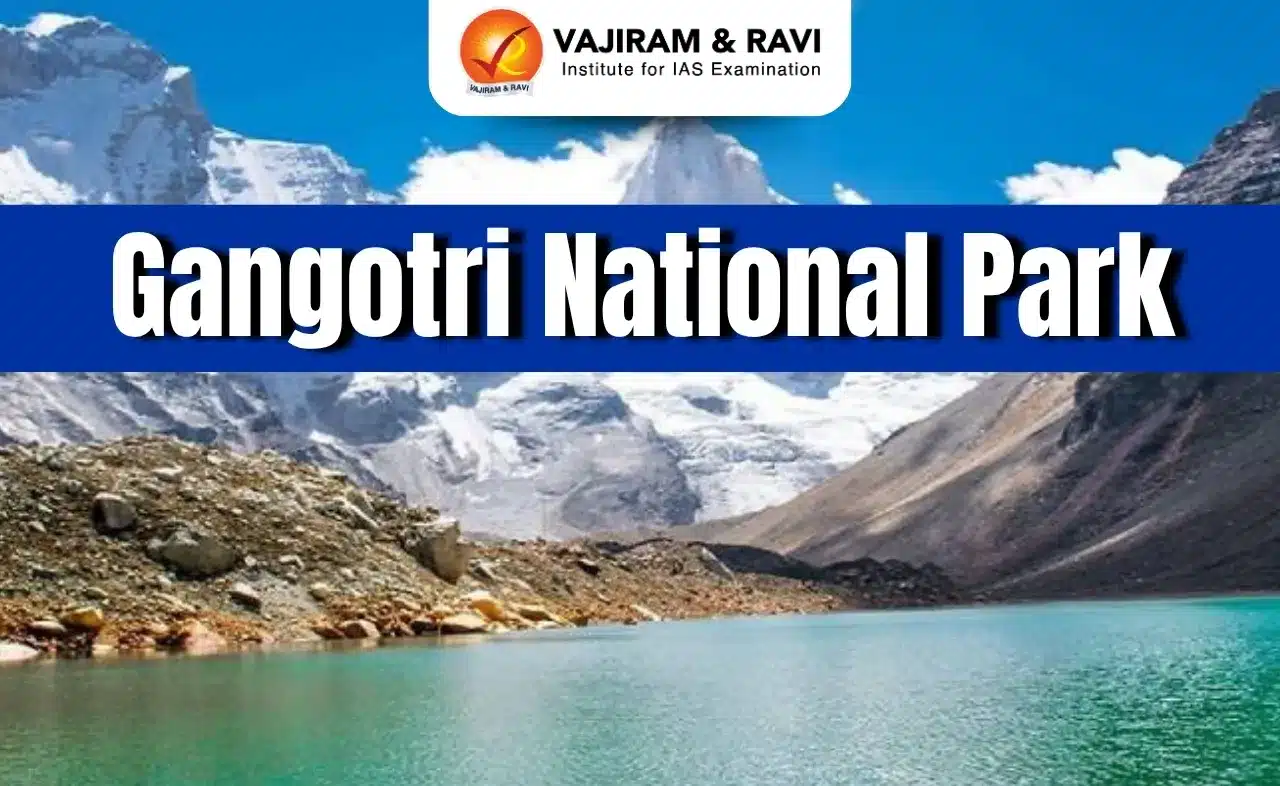
Residents of Uttarkashi district in Uttarakhand have written to the Union government expressing concern over a new waste incinerator in the Gangotri National Park and within the Bhagirathi Eco-Sensitive Zone. 

 About Gangotri National Park

  • It is located in the Uttarkashi District region of the state of Uttarakhand.
  • It sits along the upper catchment of the Bhagirathi River. 
  • International boundary: The northeastern section of the park forms the international boundary of India and Tibet (China). 
  • The area enclosed by the park also borders Kedarnath Wildlife Sanctuary and Govind National Park.
  • The mountains in the park are part of the Gangotri Group of the Garhwal Himalayas, which are a subrange of the eastern Himalayas.
  • Important Peaks: Major peaks within the park include Chaukhamba I, Satopanth, Chaukhamba II, Chaukhamba III, and Kedarnath Main.
  • The famous Gangotri Glacier is located in the park boundaries and is known for being one of the primary sources of the Ganges.

Flora and Fauna of Gangotri National Park

  • It is home to high-altitude ecosystems that are common in the Himalayas.
  • Western Himalayan subalpine conifer forests dominate the lower elevation landscapes. These forests are filled with fir trees intermixed with deodar, oak, spruce, and rhododendrons trees.
  • Higher elevations in the park are home to Western Himalayan alpine shrubs. Alpine meadows are also common beneath the massive glaciers.
  • Snow leopard, brown bear, blue sheep, musk deer, Asian black bear, and the Himalayan tahr etc.

Gangotri National Park FAQs

Q1: Which river passes through Gangotri National Park?

Ans: Bhagirathi River

Q2: Which national park is famous for musk deer?

Ans: Gangotri National Park:

Source: HT

India’s Declining Fertility Rate and Its Demographic Implications: UNFPA Report 2025

India Fertility Rate 2025

India Fertility Rate Latest News

  • India’s population is estimated to have reached 146.39 crore by April, says a new UN demographic report.

India’s Fertility Rate Falls Below Replacement Level

  • India’s fertility rate has declined to 1.9, falling below the replacement level of 2.1, according to the United Nations Population Fund (UNFPA) report State of World Population 2025
  • This demographic transition, while not unique to India, signals a long-term shift in population trends driven by a complex mix of economic, social, and health-related factors.
  • Despite this decline, India remains the world’s most populous country, with an estimated population of 146.39 crore as of April 2025. 
  • The population is projected to peak around 170 crore over the next four decades before beginning to shrink.

From High Fertility to Demographic Transition

  • In 1960, Indian women had an average of six children. Since then, India has achieved a dramatic reduction in fertility rates, largely through enhanced access to reproductive healthcare, greater educational outreach, and sustained efforts at women’s empowerment.
  • The UNFPA attributes this demographic shift not to coercive policies but to an organic transition supported by awareness campaigns and policy interventions. 
  • The decline aligns with India’s own projections, such as those published in the National Family Health Survey (NFHS-5), which pegged the 2022 fertility rate at 2.0 nationally, with urban fertility at 1.6 and rural fertility at 2.1.
  • Some states, however, still have above-average fertility rates, including Bihar (2.98), Meghalaya (2.9), Uttar Pradesh (2.35), Jharkhand (2.26), and Manipur (2.2).

Financial Constraints and Changing Aspirations

  • The report reveals that financial strain is a leading factor in decisions to have fewer children. 
  • Around 38% of Indian respondents cited economic challenges, while 21% pointed to job insecurity or unemployment.
  • Globally, similar concerns are evident, with an average of 39% across 14 countries expressing financial limitations as the primary reason for having fewer children than desired.
  • There is also a growing disconnect between the ideal number of children and the number couples expect to have. 
  • While 41% of women surveyed in India considered two children as ideal, 7% of respondents below 50 stated they expected fewer than the ideal due to economic and social pressures.

Social and Familial Dynamics

  • Family dynamics play a pivotal role in fertility decisions. Around 19% of respondents said their partner preferred fewer children, and 15% said lack of support in household responsibilities affected their reproductive choices.
  • Additionally, healthcare professionals were also cited as influencing decisions, 14% of Indian respondents said pressure from doctors or health workers led them to have fewer children than they desired. This highlights a concerning gap between reproductive rights and institutional practices.

India’s Demographic Dividend and Ageing Population

  • With 68% of India’s population in the working-age group (15-64 years), the country still enjoys a significant demographic dividend. 
  • However, this window is not infinite. As life expectancy increases, projected at 71 years for men and 74 for women, India’s elderly population (currently 7%) is expected to rise steadily in the coming decades.
  • This shift necessitates strategic investments in health, social security, and workforce policies to sustain economic growth even as fertility declines.

Beyond Population Numbers: The Real Fertility Crisis

  • The UNFPA report emphasizes that the real crisis is not overpopulation or underpopulation but rather the inability of individuals to realize their fertility intentions
  • It calls for safeguarding reproductive agency, the right to make informed choices about sex, contraception, and family planning, especially in rapidly changing socio-economic contexts.
  • This shift in framing from a numbers-based discourse to a rights-based approach underscores the need to go beyond demographic targets and prioritize empowerment, choice, and health access.

Policy Considerations and Future Outlook

  • India must adapt its health and welfare policies to reflect this demographic reality. Key focus areas should include:
    • Enhancing women’s participation in the workforce.
    • Expanding social support for childcare and elderly care.
    • Reforming workplace norms to reduce the economic burden of parenting.
    • Investing in universal access to contraception and fertility counselling.
  • The upcoming 2027 Census, delayed from 2021, will offer updated insights critical to informing policy. 
  • In the meantime, India’s demographic strategy must pivot from population control to inclusive, rights-based population governance.

India Fertility Rate 2025 FAQs

Q1. What is India’s current fertility rate according to the 2025 UN report?

Ans. India’s fertility rate has dropped to 1.9, below the replacement level of 2.1.

Q2. Which states still have fertility rates above the national average?

Ans. Bihar, Meghalaya, Uttar Pradesh, Jharkhand, and Manipur have higher-than-average fertility rates.

Q3. What factors are influencing Indians to have fewer children?

Ans. Financial strain, job insecurity, lack of partner support, and healthcare pressure are major factors.

Q4. What is India’s current population and when is it expected to decline?

Ans. India’s population is 146.39 crore and is expected to peak at 170 crore before starting to decline in about 40 years.

Q5. What does the UN report identify as the “real fertility crisis”?

Ans. The real crisis is individuals being unable to achieve their desired number of children, not overpopulation.

Source: TH

India Needs Policy Push for Green Fuel Mining Equipment: FIMI-Deloitte Study

Green Mining Vehicles in India

Green Mining Vehicles in India Latest News

  • A study highlights the need for targeted and well-defined policy interventions to promote the adoption of alternative fuel Heavy Earth Moving Machinery (HEMM) in India’s mining sector. 
  • The report emphasizes cleaner vehicle adoption as key to sustainable mining practices.
  • The study was undertaken by the Sustainable Mining Initiative (SMI), a division of the Federation of Indian Mineral Industries (FIMI) in association with Deloitte which has prepared the detailed report.

India’s Expanding Mining Sector

  • India mines 95 minerals and holds significant reserves. Its mining equipment market, worth USD 6.4 billion in 2024, is projected to grow to USD 11.34 billion by 2033. 
  • Surface mining dominates, but underground mining is gaining traction.

Green Mining: A Step Toward Sustainability

  • Green mining involves eco-friendly technologies and practices to reduce the environmental impact of mining. 
  • It includes using renewable energy, recycling waste, conserving water, and adopting sustainable extraction methods. 
  • The aim is to lower the industry’s carbon footprint and encourage responsible mining.

OEMs Responding to the Shift

  • Indian Original Equipment Manufacturers (OEMs) are developing electric, LNG-powered, hydrogen-based, and biofuel-compatible HEMMs. 
  • While electric and LNG tech are in use, hydrogen models are still under trial.

Case Study: Surjagarh Iron Ore Mine

  • Pioneering Green Mining in India
    • Lloyds Metals and Energy Ltd (LMEL) is transforming the Surjagarh Iron Ore Mine (SIOM) in Maharashtra into India's first green mine.
    • It is doing so by adopting sustainable technologies and practices across all mining operations.
  • Significant CO₂ Emission Reductions
    • SIOM has already reduced carbon emissions by 32,000 tonnes annually. 
    • With a planned transition to renewable energy, this reduction is expected to reach 50,000 tonnes per year.
  • End-to-End Decarbonisation Efforts
    • LMEL’s green initiatives span the entire mining process—drilling, loading, hauling, and logistics—guided by a philosophy of innovation, efficiency, and sustainability, aiming for green steel production aligned with India’s Net Zero goals.
  • Rapid Electrification of Mining Fleet
    • The mine’s fleet of Bharat Electric Vehicles has grown from 34 to 56, cutting air pollution and reducing dependence on fuel imports. 
    • LMEL aims to deploy over 100 electric vehicles by 2025–26.

Cleaner Fuel in Mining: Key Findings from the SMI-FIMI-Deloitte Study

  • India must adopt a coherent and targeted policy framework to promote the use of alternative fuel-based Heavy Earth Moving Machinery (HEMM) in the mining sector. 
  • This includes incentives, regulatory enablers, infrastructure support, and demand-side measures.

High Upfront Costs a Major Barrier

  • Despite lower lifecycle costs for Battery Electric Vehicles (BEVs) and hybrids, high initial capital remains a deterrent. 
  • The report suggests capital subsidies, premium rebates, and relaxed payment terms to encourage early adoption.

Infrastructure & Financing Support Critical

  • Recommendations include power subsidies for charging stations, reduced financing costs, and operational incentives to boost early deployment of green HEMMs.

Policy Roadmap: Short, Medium & Long Term

  • Short-Term (0–2 years): Pilot BEV-based HEMMs, upfront subsidies, operational cost cuts, and safety standards.
  • Medium-Term (2–5 years): Mandate zero-emission HEMMs in new fields, introduce tax benefits, PLI schemes, and skill development programs.
  • Long-Term (Beyond 5 years): Structural shift through mandates, green bonds, R&D investment, battery recycling, and innovation ecosystems.

Environmental Imperative

  • With rising deployment of HEMMs expected by 2035, associated fuel consumption and CO₂ emissions will increase. 
  • Transitioning to electric, hybrid, and hydrogen-powered machines is vital to align mining growth with India’s net-zero goals.

Challenges in Adoption

  • Adoption is hindered by high costs, lack of charging/refueling infrastructure, limited availability of technology models, and policy gaps. 
  • Cleaner fuel solutions must be supported by robust infrastructure and financial mechanisms.

Green Mining Vehicles in India FAQs

Q1. What does the FIMI-Deloitte study recommend?

Ans. It urges targeted policies to promote alternate fuel-based HEMMs in the mining sector.

Q2. Why are green HEMMs not widely adopted yet?

Ans. High upfront costs and lack of charging/refueling infrastructure hinder adoption.

Q3. What support mechanisms are proposed?

Ans. Capital subsidies, premium rebates, power subsidies, and low-interest financing are recommended.

Q4. What is the Surjagarh Mine’s role in green mining?

Ans. It’s India’s first green mine, with electric fleets and decarbonized operations.

Q5. What is the projected market growth for mining equipment?

Ans. India's mining equipment market is set to grow from $6.4B (2024) to $11.34B by 2033.

Source: TH | ET | PIB

Enquire Now