Tourette Syndrome

Tourette syndrome

Tourette Syndrome Latest News

Tourette syndrome affects an estimated 0.3% to 1% of the global population.

About Tourette Syndrome

  • It is a neurological disorder that causes sudden, involuntary movements or vocal sounds known as tics.
  • It typically emerges between ages 2 and 15, with the average onset around six.
  • It affects an estimated 0.3% to 1% of the global population, with a higher prevalence among boys than girls.
  • Tics can range from mild to severe. In severe cases, they can significantly impact communication, daily functioning, and quality of life.
  • Tics are broadly classified as simple or complex.
  • Simple motor tics involve a single muscle group and include eye blinking, facial grimacing, shoulder shrugging, and head jerking.
  • Simple vocal tics include throat-clearing, sniffing, barking, or grunting.
  • Complex motor tics involve coordinated patterns and may include touching objects, hopping, or bending.
  • Complex vocal tics may involve repeating one’s own or others’ words (echolalia), or, in rare cases, using obscene language (coprolalia).
  • Tics often worsen with stress or excitement and may improve when the person is calm and focused. They typically reduce during light sleep and disappear in deep sleep.
  • Tourette’s rarely occurs in isolation. It commonly coexists with ADHD, OCD, anxiety, depression, learning disabilities, and autism spectrum disorders.

Treatment for Tourette Syndrome

  • Currently, there is no cure for this syndrome but treatments are available to help manage some symptoms. 
  • Cognitive Behavioural Therapy (CBT) has shown very promising outcomes.


Source: TH  

Tourette Syndrome FAQs

Q1: What gender is more likely to have Tourette's?

Ans: Boys were about three times more likely to have TS than girls.

Q2: What is the scientific name for Tourette's syndrome?

Ans: Gilles de la Tourette syndrome.

Khankhuuluu Mongoliensis

Khankhuuluu mongoliensis

Khankhuuluu Mongoliensis Latest News

Scientists have confirmed that Khankhuuluu mongoliensis, dubbed the “Dragon Prince”, lived around 86 million years ago—approximately 20 million years before T. rex.

About Khankhuuluu Mongoliensis

  • Khankhuuluu mongoliensis, whose name translates to "Dragon Prince of Mongolia," roamed the Earth approximately 86 million years ago during the Cretaceous period.
  • The fossils of this new species were actually found in the 1970s in Mongolia’s Gobi Desert but were only recently recognized as belonging to a distinct species after advanced analysis and reexamination.
    • This medium-sized, fleet-footed predator weighed about 750 kilograms (roughly the size of a horse) and measured up to 4 meters in length, making it two to three times smaller than its massive descendants like Tyrannosaurus rex.
  • The species is characterised by a long, shallow skull, tiny rudimentary horns, and a lighter, more agile build compared to later tyrannosaurs.
    • Unlike the bone-crushing T. rex, Khankhuuluu was a mesopredator, relying on speed and agility to hunt smaller prey.
  • Significance of Discovery
    • This prehistoric predator is now considered the closest-known ancestor to the infamous Tyrannosaurus rex and played a pivotal role in setting tyrannosaurs on the evolutionary path to ruling Earth as apex predators.
    • Khankhuuluu marks a crucial evolutionary transition from smaller, agile hunters to the colossal apex predators that dominated the late Cretaceous.
    • Its discovery has bridged a significant gap in the fossil record, revealing that tyrannosaurs originated in Asia and migrated to North America, where they evolved into the iconic T. rex.

Source: LS

Khankhuuluu Mongoliensis FAQs

Q1: What is Khankhuuluu mongoliensis?

Ans: Khankhuuluu mongoliensis is a newly identified species of tyrannosauroid dinosaur, nicknamed the "Dragon Prince," and is the closest-known ancestor to Tyrannosaurus rex.

Q2: Where and when did Khankhuuluu mongoliensis live?

Ans: It lived in what is now Mongolia about 86 million years ago during the Cretaceous period.

Q3: How big was Khankhuuluu mongoliensis compared to T. rex?

Ans: Khankhuuluu was about the size of a horse (750 kg, 4 meters long), while T. rex could reach up to 10,000 kg and 12 meters in length.

Q4: What does the name Khankhuuluu mongoliensis mean?

Ans: The name translates to "Dragon Prince of Mongolia," reflecting its place in the tyrannosaur lineage as an ancestor to the "tyrant lizard king," T. rex.

TOI-6894b

TOI-6894b

TOI-6894b Latest News

Scientists have made a groundbreaking discovery: a giant planet, TOI-6894b, orbiting a tiny red dwarf star—something previously believed to be impossible.

About TOI-6894b

  • TOI-6894b, a gas giant planet, roughly the size of Saturn, has been found orbiting an unusually small red dwarf star.
  • This rare pairing defies current models, which say small stars don’t have enough material in their surrounding disks to form such large planets.
  • The planet was found about 241 light-years from Earth in the constellation Leo.
  • TOI-6894b is about 1.07 times the diameter of Saturn but has just over half its mass.
  • This makes the planet very low in density, similar to that of a beach ball. Despite its large size, the planet orbits extremely close to its host star, completing a full revolution in just under three Earth days.
  • The star it orbits, TOI-6894, is a red dwarf with only about 21% the mass of the Sun and roughly 250 times dimmer.
  • In terms of physical size, the star is just 2.5 times wider than the planet itself, a remarkable size ratio rarely seen in planetary systems.

Significance of the Discovery

  • Challenges Core Accretion Theory: The core accretion model, which explains how gas giants form around stars, struggles to account for the formation of a giant planet around such a low-mass star due to insufficient material in the protoplanetary disk.
  • Implications for Exoplanet Science: Since small stars like TOI-6894 are the most common in the galaxy, this discovery suggests there may be many more giant planets than previously thought.
  • Future Studies: TOI-6894b is scheduled for atmospheric observation by the James Webb Space Telescope (JWST), which could provide unprecedented insights into its composition and formation.

Source: SD

TOI-6894b FAQs

Q1: What makes the discovery of TOI-6894b so significant?

Ans: TOI-6894b is a giant planet orbiting a star much smaller than previously thought possible, challenging current theories of planet formation and suggesting giant planets may be more common than expected.

Q2: Why is TOI-6894b’s atmosphere special?

Ans: The planet’s cool temperature means its atmosphere could be dominated by methane and possibly ammonia, making it a unique target for atmospheric studies.

Q3: What is the core accretion theory, and why is it challenged by TOI-6894b?

Ans: The core accretion theory states that gas giants form from a solid core that accumulates gas from the surrounding disk. TOI-6894b’s existence around a low-mass star challenges this because such stars have less material for core formation.

World Day Against Child Labour 2025

World Day Against Child Labour

World Day Against Child Labour Latest News

World Day Against Child Labour is observed every year on June 12. The day serves as a reminder of the urgent need to protect children from exploitation and uphold their rights.

About World Day Against Child Labour

  • World Day Against Child Labour is a global observance marked on June 12 every year, serving as a crucial reminder to build a world free of child labour, where children worldwide are not forced into work at the expense of their education and well-being.
  • History: The International Labour Organization (ILO) first observed World Day Against Child Labour on June 12, 2002, at its Geneva headquarters.
    • Since then, it has been marked globally to shine a light on this ongoing crisis. The year 2025 marks the 21st anniversary of this important observance.
  • Theme: The theme for this year is ‘Progress is clear, but there’s more to do: let’s speed up efforts!’ It reflects the progress made so far in reducing child labour, while also emphasizing the need to intensify global efforts to meet international goals.
  • In India, the government has implemented a National Policy on Child Labour since 1987. This policy emphasises both the rehabilitation of affected children and the need to tackle the root cause — poverty — by improving the economic well-being of their families.

Child Labour Latest Data and Trends

  • Global Child Labour: In 2024, nearly 138 million children were engaged in child labour worldwide, with 54 million in hazardous work. Africa has the highest child labour rates (72 million children), followed by Asia and the Pacific (62 million children).
  • India: In 2011, India's Census data showed that 10.1 million children, or 3.9% of the total child population aged 5-14, were working, either as "main workers" or "marginal workers".
    • This data represents a decrease from the 1.26 crore working children in 2001, but the issue persists, with poverty, lack of education, and economic distress identified as key drivers.
  • Sustainable Development Goals (SDGs): SDG Target 8.7 aims to end child labour in all its forms by 2025, but this target is unlikely to be met due to persistent challenges.

Source: IE

World Day Against Child Labour FAQs

Q1: What is the meaning of World Day Against Child Labour?

Ans: World Day Against Child Labour is observed to raise awareness and promote action to end child labour globally.

Q2: What is the theme of World Day Against Child Labour 2025?

Ans: The 2025 theme is “Progress is clear, but there’s more to do: let’s speed up efforts!”.

Q3: What are the quotes for World Day Against Child Labour?

Ans: “Every child deserves a childhood, not child labour.” “Stop child labour — let children learn and grow.”

Ohler’s Spiny Frog

Ohler's spiny frog

Ohler's Spiny Frog Latest News

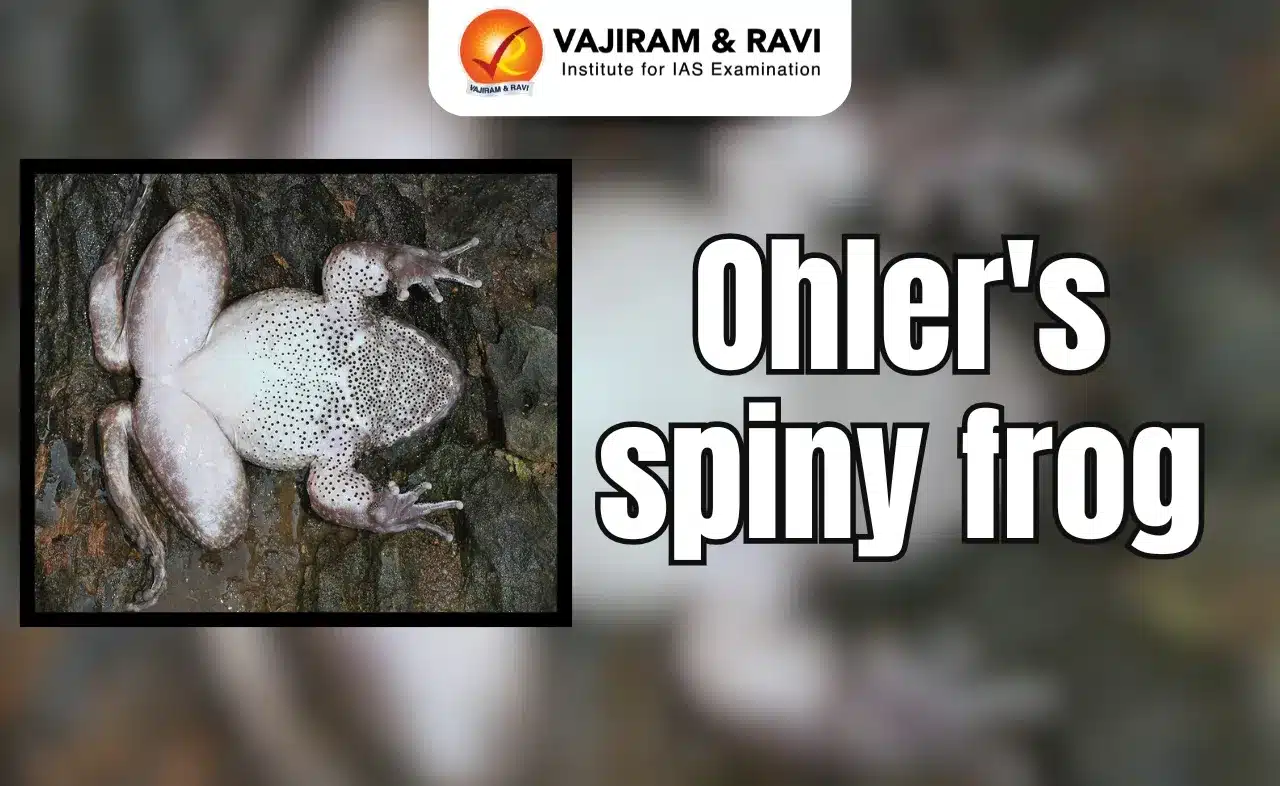
Ohler’s Spiny Frog, a newly discovered large stout frog with spiny chest, was found at a waterfall in Vietnam—over 4 inches long, challenges conservation norms.

About Ohler's Spiny Frog

  • Ohler’s Spiny Frog refers to large, robust frogs within the Quasipaa or related genera, which are known for their spiny chests and large size.
  • These frogs are primarily found in fast-flowing streams of evergreen forests in Southeast Asia and the Himalayan foothills.
  • Habitat: Rocky streams in evergreen forests, particularly in northern Vietnam, southern China, and the Himalayan region.
  • Key Features:
    • Stout body with rough, spiny tubercles on chest (in males), toes are partially webbed
    • Males develop throat and chest spines during breeding, a characteristic linked to spiny frog identification
    • Skin colouration is dark brown with yellowish mottling; eyes are dark greenish.
    • Size reaches a snout-vent length exceeding 10 cm (typically 7–8 cm).
  • Significance
    • Ecological Value: Adds to biodiversity and underlines the ecological uniqueness of waterfall ecosystems
    • Conservation Insight: Highlights the need for habitat protection in Vietnam, especially for stream-dwelling amphibians
    • Research Contribution: Supports regional biogeography studies of Dicroglossidae frogs across Indo-Asia.

Source: NT

Ohler's Spiny Frog FAQs

Q1: What is the significance of the latest discovery of a new large spiny frog species?

Ans: The discovery highlights the still-underexplored biodiversity of Asia’s forests and streams and underscores the need for conservation efforts to protect these unique amphibians.

Q2: Where are Ohler’s Spiny Frogs typically found?

Ans: They are found in rocky streams of evergreen forests in northern Vietnam, southern China, and the Himalayan foothills.

SEBI Launches Verified UPI IDs to Curb Market Frauds and Enhance Investor Protection

SEBI Verified UPI ID

UPI Reforms Latest News

  • The Securities and Exchange Board of India (SEBI) is set to introduce a validated UPI handle for the investor-facing intermediaries to ensure secure payments and combat fraud.

Introduction

  • In a major move to enhance investor safety and build trust in digital financial transactions, the Securities and Exchange Board of India (SEBI) has announced the mandatory use of verified UPI handles by all registered intermediaries in the securities market. 
  • Effective from October 1, 2025, this new framework seeks to counter rising concerns over impersonation and payment fraud, particularly in online investment platforms.
  • This step, alongside the introduction of a digital verification tool named “SEBI Check,” marks a significant regulatory intervention to strengthen the integrity and transparency of India’s market payment systems.

The New UPI Verification Framework

  • As per SEBI’s guidelines, all market-facing intermediaries, including brokers, investment advisors, merchant bankers, and syndicate banks, must use a newly designated UPI handle format, ending in “@valid”, for collecting investor payments. For example, a broker's UPI might look like abc.bkr@validhdfc.
  • The new UPI addresses will be verified and allocated by the National Payments Corporation of India (NPCI), ensuring a secure and uniform identity structure for payment recipients. 
  • According to SEBI, around 8,000 to 9,000 intermediaries are expected to transition to the new system by the rollout date.
  • Key Features of the New Framework:
    • Mandatory Use: Only verified handles ending in “@valid” will be permitted for investor-facing transactions.
    • Transitional Period: Existing UPI IDs can continue until December 11, 2026, after which they will be deactivated.
    • Visual Confirmation: A green triangle with a thumbs-up icon will appear during transactions with verified handles, ensuring clarity for users, including those less fluent in English.

Introducing SEBI Check: A Digital Verification Tool

  • Complementing the new UPI system is the SEBI Check tool, a mobile application that allows investors to verify the legitimacy of UPI IDs used by market intermediaries. 
  • By either scanning a QR code or manually entering the UPI ID, users can confirm critical account details such as:
    • Account holder name
    • Linked bank account number
    • IFSC code
  • This initiative aims to empower investors to independently verify transaction endpoints before initiating payments, especially in an increasingly digital-first financial environment.
  • The SEBI Check app is expected to be made available on trusted platforms like Google Play, with SEBI collaborating to ensure that only authentic versions are hosted to avoid confusion or duplication by fraudulent developers.

Rationale Behind the Reform

  • The decision follows a January 2025 consultation paper and growing concerns about digital fraud in financial services. 
  • With impersonation scams targeting retail investors via phishing UPI IDs or fake advisory firms, SEBI’s step seeks to:
    • Eliminate ambiguity in digital payment systems.
    • Reduce chances of investors transferring funds to unauthorized parties.
    • Strengthen the digital infrastructure for market transactions.
  • By implementing an easily recognizable and standardized UPI format, SEBI aims to reduce the dependence on name-based verification, a method vulnerable to impersonation.

Awareness, Enforcement, and Oversight

  • The success of this initiative hinges on strong compliance and investor awareness. 
  • SEBI Chairperson confirmed that intermediaries would be required to display the verified UPI details prominently on their platforms and communications. In addition:
    • Awareness campaigns will run over the next two years.
    • Intermediaries are required to educate users on secure payment practices.
    • Investors must take individual responsibility to verify recipient credentials using SEBI’s tools.
  • Importantly, existing Systematic Investment Plans (SIPs) and standing instructions will not be affected immediately. 
  • They will continue to function with current UPI details until the final cut-off in December 2026.

Future Outlook for Secure Digital Transactions

  • SEBI’s new mechanism could set a benchmark for secure digital financial transactions not only within capital markets but potentially across the broader fintech and mutual fund ecosystem. 
  • By introducing structured payment identifiers and equipping retail users with real-time verification tools, the regulator seeks to future-proof India’s capital markets from fraud risks.
  • As digital adoption in investments accelerates, this reform aligns with global best practices of "Know Your Payee" and real-time account verification systems used by regulators in advanced economies.

Source: TH | TOI

SEBI Verified UPI ID Reform FAQs

Q1: What is SEBI’s new verified UPI ID initiative?

Ans: SEBI has mandated the use of verified UPI handles ending in “@valid” for registered intermediaries to prevent fraud.

Q2: When will the new UPI ID system become mandatory?

Ans: The verified UPI ID framework will be enforced starting October 1, 2025.

Q3: What is the SEBI Check app used for?

Ans: The SEBI Check tool helps investors verify UPI IDs and associated bank details before making payments.

Q4: Will my existing SIP payments be affected immediately?

Ans: No, existing SIPs will continue using old UPI IDs until December 11, 2026.

Q5: Who allocates the new verified UPI handles?

Ans: The National Payments Corporation of India (NPCI) is responsible for issuing the “@valid” UPI handles to intermediaries.

Cathepsin B

Cathepsin B

Cathepsin B Latest News

Researchers at the National Institute of Animal Biotechnology (NIAB) found that reducing the activity of a cellular protein called ‘Cathepsin B’ (Cat B) helps preserve the ovarian reserve.

About Cathepsin B

  • It is a lysosomal cysteine protease.
  • It is primarily localized within subcellular endosomal and lysosomal compartments. It is involved in the turnover of intracellular and extracellular proteins.
  • It is integrated into almost all lysosome-related processes, including protein turnover, degradation,  lysosome-mediated cell death, antigen processing, and apoptosis
  • It degrades extracellular matrix proteins like collagen and fibronectin.
  • Role in Disease: It is involved in neuropathological and neurodegenerative diseases such as dementia, Alzheimer's disease, and traumatic brain injury.

What is Ovarian Reserve?

  • This ovarian reserve is the finite pool of egg cells (oocytes) that female mammals are born with. Unlike sperm, these crucial egg cells cannot be regenerated.
  • Over time, the quantity and quality of these eggs naturally decline due to factors like oxidative stress, inflammation and general cellular wear.
  • This process accelerates with age. ‘Cat B,’ a protein-degrading enzyme, seems to be a key driver of this decline.
  • By lowering its levels, we may be able to delay egg loss, effectively extending fertility naturally.

Source: TH

Cathepsin B FAQs

Q1: What is the function of cathepsin B?

Ans: It functions in intracellular protein catabolism and in certain situations may also be involved in other physiological processes.

Q2: What is the deficiency of cathepsin B?

Ans: Cathepsin B deficiency ameliorates liver lipid deposition, inflammatory cell infiltration, and fibrosis after diet-induced nonalcoholic steatohepatitis.

CROPIC Initiative

CROPIC Initiative

CROPIC Initiative Latest News

The Ministry of Agriculture and Farmers Welfare plans to launch CROPIC, a study to gather crop information using field photographs and AI-based models.

About CROPIC Initiative

  • CROPIC stands for Collection of Real Time Observations & Photo of Crops.
  • It is an initiative under the Pradhan Mantri Fasal Bima Yojana (PMFBY) with a dual purpose of monitoring crop health and stress and automation of crop loss assessment and payment of claims to affected farmers using computer vision technology and photo-analytic models.
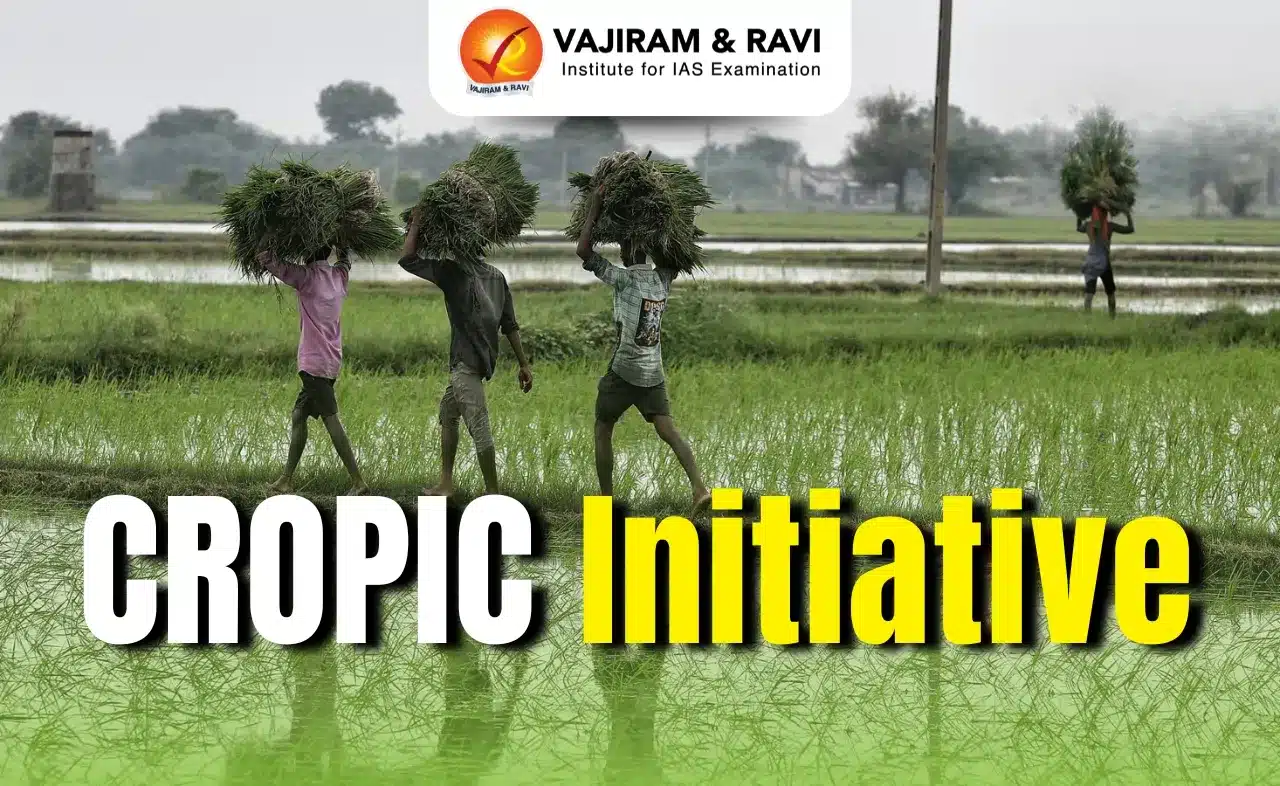
  • Under this initiative, crops will be photographed four-five times during their cycle, and the pictures will be analysed to assess their health and potential mid-season losses.
  • The study will be carried out for two seasons initially, kharif 2025 and rabi 2025-26.
  • The study envisages collection of field photographs during the crop season using CROPIC mobile application which has been developed by the Union Ministry of Agriculture and Farmers’ Welfare......

Working of CROPIC

  • The photographs from the field will be crowd-sourced directly from farmers. Then, they will be analysed for information including crop type, crop stage, crop damage and its extent.
  • This model will use an AI-based cloud platform for photo analysis and information extraction, and a web-based dashboard for visualisation.
  • Also, when compensation or insurance is to be paid to farmers, officials will collect the photographs using the CROPIC Mobile App.
  • It will be rolled out initially in at least 50 districts per season. These districts will be well distributed in different agro-climatic zones covering the three major notified crops (notified crops are those covered under insurance schemes like PMFBY) in each district for each season, initially.
  • Funding: The Fund for Innovation and Technology (FIAT) under PMFBY will be used for funding CROPIC.

Source: IE 

CROPIC Initiative  FAQs

Q1: What is PM Fasal Bima Yojana UPSC?

Ans: The Pradhan Mantri Fasal Bima Yojana offers insurance coverage specifically designed for certain crops and the risks associated with their yield. 

Q2: What is the difference between Rabi, Kharif and Zaid crops?

Ans: Rabi crops are sown in winter and harvested in spring, Kharif crops are sown during the monsoon and harvested in autumn, while Zaid crops are grown in summer between Rabi and Kharif seasons.

UN High Seas Treaty

High Seas Treaty

UN High Seas Treaty Latest News

Experts and officials have reported that India is unlikely to ratify the High Seas Treaty during the ongoing U.N. Ocean Conference in France, despite pressure from host nation France and other global stakeholders.

About UN High Seas Treaty

  • The UN High Seas Treaty was formally known as the Agreement on the Conservation and Sustainable Use of Marine Biological Diversity of Areas Beyond National Jurisdiction (BBNJ).
  • It is the first legally binding international instrument aimed at protecting marine biodiversity in international waters—areas that lie beyond the jurisdiction of any single country.
  • The treaty is built on the legacy of the UN Convention on the Law of the Sea (UNCLOS), which is the last international agreement on ocean protection, signed 40 years ago in 1982. UNCLOS established an area called the high seas.
  • Scope: The treaty addresses the high seas, which cover about two-thirds of the world’s oceans and nearly half of the planet’s surface.
  • Objective: To establish a legal framework for the conservation and sustainable use of marine biodiversity in international waters, addressing regulatory gaps and promoting global cooperation.

UN High Seas Treaty Key Provisions:

  • Marine Protected Areas (MPAs): Empowers the creation and management of MPAs in the high seas to conserve marine ecosystems.
  • Environmental Impact Assessments (EIAs): Mandates EIAs for activities that could harm the marine environment, even if the impact is anticipated in international waters.
  • Marine Genetic Resources (MGRs): Ensures fair and equitable sharing of benefits from marine genetic resources, including digital sequence information.
  • Capacity Building and Technology Transfer: Supports developing countries in building capacity and accessing marine technology for conservation and sustainable use.

Source: TH

UN High Seas Treaty FAQs

Q1: Is India part of the UN High Seas Treaty?

Ans: Yes, India has signed the treaty and is in the process of ratifying it.

Q2: What are the 4 pillars of the High Seas Treaty?

Ans: Marine protected areas, marine genetic resources, capacity building and technology transfer, and environmental impact assessments.

Q3: How many countries signed the High Seas Treaty?

Ans: As of June 2025, 134 countries have signed the treaty.

Q4: What is the WTO High Seas Treaty?

Ans: There is no WTO High Seas Treaty; the High Seas Treaty is a UN agreement on marine biodiversity.

Exercise Khaan Quest

Exercise Khaan Quest

Exercise Khaan Quest Latest News

The Indian Army contingent reached Ulaanbaatar, Mongolia for the Multinational Military Exercise KHAAN QUEST, which is scheduled to be conducted from 14th to 28th June 2025.

About Exercise Khaan Quest

  • It is a multinational military Exercise.
  • The exercise will bring together military forces from around the world to collaborate and enhance their peacekeeping capabilities.
  • The last edition of Exercise KHAAN QUEST was conducted in Mongolia in 2024.
  • Background : The exercise first started as a bilateral event between USA and Mongolian Armed Forces in the year 2003.
  • Subsequently, from the year 2006 onwards the exercise graduated to a Multinational Peacekeeping Exercise with the current year being the 22nd iteration.
  • The Indian Army contingent comprising 40 personnel is being represented mainly by troops from a Battalion of the KUMAON REGIMENT along with personnel from other Arms and Services. One Woman Officer and two Women Soldiers will also form part of the contingent.
  • Aim of Exercise to prepare Indian Armed Forces for peacekeeping missions while operating in a multinational environment, thereby increasing interoperability and military readiness in peace support operations under Chapter VII of United Nations Charter.
  • The exercise will focus on high degree of physical fitness, joint planning and joint tactical drills.
  • It will enable the participating countries to share their best practices in Tactics, Techniques and Procedures for conduct of joint operations. The exercise will facilitate developing inter-operability, bonhomie and camaraderie between soldiers of the participating countries.

 Source: PIB

Exercise Khaan Quest FAQs

Q1: What is the khaan quest exercise?

Ans: The exercise will bring together military forces from around the world to collaborate and enhance their peacekeeping capabilities.

Q2: What is the United Nations Charter?

Ans: The UN Charter is the founding document of the United Nations. Based on the powers conferred through it, the UN can take action on a wide variety of issues. The Charter is considered an international treaty, meaning UN Member States are bound by it.

Eurasian Otter

Eurasian otter

Eurasian Otter Latest News

Recently, the Eurasian otter which was thought to be extinct in the Kashmir Valley sighted almost after three decades. 

About Eurasian Otter

  • It is also known as the European otter, common otter, and Old-World otter.
  • It is a semiaquatic carnivorous mammal native to Eurasia. 

Distribution of Eurasian Otter

  • It has one of the widest distributions of all palearctic mammals, spanning countries in the Middle-East, Europe, Northern Africa, across to Eastern Russia, China, and other Asian countries.
  • In India, it occurs in northern, northeast and southern India. In Kashmir, it is known as Vuder, was an integral part of Kashmir’s aquatic ecosystem and was abundantly found in the water bodies.

Habitat Eurasian Otter

  • It lives in a wide variety of aquatic habitats, including highland and lowland lakes, rivers, streams, marshes, swamp forests, and coastal areas, independent of their size, origin, or latitude.
  • In the Indian subcontinent, it is found in cold hills and mountain streams.

Features of Eurasian Otter

  • It is an elusive, solitary otter.
  • It has sleek brown fur, which is often paler on the underside, and a long, lithe body with a thick tail and short legs. 
  • Adaptations for an aquatic lifestyle include webbed feet, the ability to close the small ears and the nose when under water, and very dense, short fur that traps a layer of air to insulate the animal.
  • It has an acute sense of sight, smell, and hearing.
  • Threats: Water pollution and hunting of the mammal for its fur.

Conservation Status

  • IUCN: Near threatened
  • Wildlife Protection Act, 1972: Schedule II
  • CITES: Appendix I

Source: IE

Eurasian Otter FAQs

Q1: What is a fact about the Eurasian otter?

Ans: The Eurasian Otter is an incredibly elusive otter that has brown fur with a paler underside and a wide face.

Q2: What are the 3 species of otter in India?

Ans: Smooth Coated otter, Asian Small Clawed otter and the Eurasian otter.

India’s Drone Defence Strategy: Swarms, Threats & Future Warfare

Drone Warfare in India

Drone Warfare in India Latest News

  • Former Army Chief General M M Naravane’s 2021 warning about the dangers of low-tech warfare remains highly relevant today.
  • Two recent incidents highlight this:
    • Recently, Ukraine used cheap First Person View (FPV) drones to bomb five Russian airbases, showcasing how low-cost drones can bypass traditional air defences.
    • In May, during the post-Operation Sindoor hostilities, Pakistan launched relentless drone swarm attacks across India’s western front. 
  • These events underscore the urgent need to rethink air defence strategies in an era of asymmetric and low-cost drone warfare.

The Rise of Drone Warfare: A Strategic Shift

  • Drones, or Unmanned Aerial Vehicles (UAVs), trace back to World War II and the Korean War, mainly used for training and limited offensives. 

Drone Swarms: The Future of Combat

  • Swarms are groups of drones that operate together, adapt in real time, and continue missions despite losses. 
  • Their advantages include saturation attacks, real-time intel gathering, and coordinated strikes on high-value targets.
  • Future drone swarms, powered by artificial intelligence, will make autonomous decisions, adapt tactics, and integrate with ground and cyber warfare units.

Market Outlook

  • The global military drone market is booming — from $14.14 billion in 2023 to a projected $47.16 billion by 2032 — reflecting their growing role in modern warfare.

The Growing Threat of Drone Swarms

  • Chief of Defence Staff General Anil Chauhan warned about the increasing use of small, swarm-capable drones that are nearly undetectable and untargetable, posing a serious security challenge.

Asymmetric Advantage and Strategic Challenge

  • Swarm drones are cheap but deadly — capable of inflicting massive damage on high-value targets. 
  • For example, a $1,000 drone can potentially destroy a $200 million aircraft. 
  • Launching them from mobile platforms near sensitive sites makes defence difficult.

India’s Unique Vulnerabilities

  • With porous borders and diverse populations, India faces a high risk of such surprise attacks. 
  • The ability to move drones covertly, as Ukraine did across Russian territory, illustrates the scale of the threat.

Need for Comprehensive Security Integration

  • Defending against swarm drones requires coordination across military, intelligence, and civil policing — even a local traffic constable could play a role in early detection.

Countering Drone Threats: Multi-Layered Defence Strategies

  • Detection is the First Line of Defence
    • Modern anti-drone systems begin with detection using: AESA radars; Electro-optical & infrared sensors; Acoustic detectors; AI-powered sensor fusion systems.
  • Kinetic Neutralisation: Traditional but Costly
    • Drones can be destroyed by missiles or anti-aircraft guns, but this method is expensive and inefficient against swarms. 
    • Automated systems like - C-RAM; Phalanx gun systems - are more effective for rapid engagement.
  • Emerging Cost-Effective Technologies
    • To reduce defence costs, militaries are shifting toward:
      • Directed Energy Weapons (DEWs): Lasers & microwaves disable drones electronically.
      • Electronic Warfare (EW): Jams GPS/communication signals.
      • Spoofing: Misdirects drone navigation and commands.
      • Cyber Attacks: Hacks drones and crashes them remotely.
      • Interceptor Drones & Nets: Physically capture or disable hostile drones at close range.
  • The Challenge of Cost Asymmetry
    • A drone swarm costing $100,000 may require millions to neutralise with missiles — making low-cost defensive options a priority.
  • The Layered Defence Model
    • Optimal protection combines multiple technologies in layers for redundancy and cost-efficiency.
    • Examples: Israel’s Iron Dome; US’s DE M-SHORAD
    • India is also developing such integrated systems.

India’s Capabilities Against Drone Threats

  • Akashteer Air Defence Control System
    • Developed by Bharat Electronics Ltd, it links with the Indian Air Force’s integrated command network for real-time airspace tracking and threat response.
  • Bhargavastra
    • Created by Solar Defence and Aerospace Ltd, this system launches 64 micro-rockets in rapid salvos to destroy incoming drone swarms.
  • DRDO’s Anti-Drone System: Offers 360-degree radar coverage and dual-action neutralisation:
    • Soft kill: Jamming communication and GPS signals
    • Hard kill: Laser targeting
    • Detects drones up to 4 km away and neutralises threats within a 1 km radius.
  • Indrajaal
    • Developed by a Hyderabad-based startup, this AI-powered defensive grid uses a combination of jammers, spoofers, and real-time intelligence to secure up to 4,000 sq km. 
    • It is operational at Indian naval installations in Gujarat and Karnataka.

Looking Ahead: The Future of Drone Warfare and India’s Preparedness

  • Global Drone Arms Race
    • There is an ongoing global race to enhance both drone and anti-drone technologies. For example:
      • Iran is producing 20+ Shahed drones daily, showcasing rapid scalability.
      • India has established a growing drone ecosystem, supported by 550+ startups, combining indigenous development and acquired technologies.
  • The New Face of War
    • Future conflicts are expected to be:
      • Unmanned: With drones taking over many battlefield roles
      • AI-Driven: Enabling autonomous decision-making
      • Asymmetric: Where low-cost tech can target high-value assets
    • CDS General Anil Chauhan emphasizes a paradigm shift:
      • “We are at a cusp where war may be between humans and machines — and tomorrow, between machines themselves.”
    • This underscores the urgent need for resilient, AI-integrated defence systems to counter increasingly sophisticated threats. 

Source: IE

Drone Warfare in India FAQs

Q1: What is drone warfare?

Ans: Drone warfare uses unmanned aerial vehicles (UAVs) for surveillance, attack, and strategic operations in modern conflicts.

Q2: Why are drone swarms dangerous?

Ans: Swarms are hard to detect, saturate defences, and can destroy high-value targets at very low costs.

Q3: How is India countering drone threats?

Ans: India uses a layered defence system combining radars, lasers, jammers, AI grids, and interceptor drones.

Q4: What is Operation Spider’s Web?

Ans: A Ukrainian drone operation using FPV drones to destroy Russian airbases and bombers deep inside Russia.

Q5: What’s the future of drone warfare?

Ans: AI-powered, autonomous swarms capable of complex coordination are reshaping global military doctrines and defence priorities.

Why India’s 2027 Census Matters: Economy, Governance & Policy Impact

Significance of Census in India

Significance of Census in India Latest News

  • The Government of India will conduct the next Census in two phases during 2026 and 2027, with March 1, 2027, as the reference date. 
  • This breaks the country’s uninterrupted decadal Census tradition since 1881, as the 2021 Census was delayed due to the Covid pandemic. The six-year delay is notably longer than in neighbouring countries (such as Pakistan, Bangladesh and Sri Lanka). 
  • According to the Ministry of Home Affairs, the postponement was due to the pandemic’s impact on education, as about 30 lakh Census enumerators—mostly primary school teachers—could not be spared without disrupting schooling.

Census: A Cornerstone for Economy and Policymaking

  • The Census remains vital for India's economic planning and governance, far beyond the immediate political debates.

Foundation for All Data Collection

  • The national Census serves as the statistical bedrock for all other surveys and analyses in India, enabling accurate sampling and representation.

Comprehensive Snapshot of the Nation

  • Beyond counting individuals, the Census captures detailed data on demographics, economic status, education, migration, disability, language, and more—creating a holistic picture of India.

Reality Check and Historical Record

  • It acts as a mirror for the country, showing how India has evolved over time—in this case, over 16 years—and offering insights into likely future trends.

Critical for Informed Policymaking

  • Census data directly influences policies, welfare schemes, and developmental planning across sectors, ensuring that decisions are grounded in actual population needs.

Role of Census in Inflation Control and Interest Rate Policy

  • Guiding Monetary Policy Decisions
    • The Reserve Bank of India’s Monetary Policy Committee relies on the retail inflation rate, based on the Consumer Price Index (CPI), to decide interest rates.
    • CPI reflects how prices of goods and services change, with weights assigned based on consumption patterns—like food items comprising 46% of the index.
    • These consumption patterns are derived from surveys, which in turn rely on Census data to ensure accuracy. 
    • The Census offers a baseline of “reality” about income, location, family structure, and migration.
  • Impact on Inflation Measurement
    • Outdated Census data can skew inflation calculations. 
    • For instance, if food expenditure has fallen but CPI still uses older weights, it may overstate inflation, leading to unnecessarily high interest rates and slower economic growth.
  • Essential for Broader Economic Indicators
    • Beyond food inflation, accurate Census data is vital for understanding migration, urbanisation, and demand trends, informing both public policy and private sector decisions.

Migration, Urbanisation, and the Role of Census in Governance

  • Internal Migration: A Key but Overlooked Factor
    • Migration significantly affects population dynamics, yet is often ignored in projections which mainly rely on birth and death rates. 
    • Internal migration—mostly local—is a crucial third variable.
  • Nature of Internal Migration in India
    • Contrary to popular belief, only 12% of internal migration is inter-state. 
    • Most migration is intra-district (62%) or inter-district (26%). Rural-to-rural migration is the largest category (48%), while urban-to-urban is the fastest growing.
  • Data Gaps and Changing Realities
    • Current migration data is outdated, based on the 2011 Census. The actual patterns may have shifted significantly, requiring fresh Census data to reveal present realities.
  • Policy Implications of Migration Trends
    • Accurate migration data informs Budget allocations, social welfare, employment, education planning, and helps address emerging issues like language-based social divides.
  • Urbanisation: Unclear and Under mapped
    • India’s urbanisation rate is uncertain—estimates range from 30% to 70%, depending on definitions. This lack of clarity hampers targeted urban planning.
    • As cities contribute 60% of India’s GDP while covering only 3% of land, understanding urban population trends is critical for reforming taxation, service delivery, and infrastructure development in urban areas.

Why There Is No Substitute for the Census

  • Surveys Depend on Census as a Base
    • Public and private surveys require accurate, updated Census data for modelling. 
    • Without it, even the best-designed surveys risk becoming disconnected from reality.
  • Rising Cost of Accuracy
    • With time, the absence of updated Census data makes it increasingly expensive and difficult to obtain a reliable picture of India’s ground realities.
  • Limitations of Administrative Data
    • Although administrative data is growing in volume, it is often inconsistent, incomplete, and not comparable across departments or states due to differing definitions and collection methods.
  • Reliability Concerns and Bias
    • Data gathered by government departments may be biased to avoid showing poor performance. 
    • For example, NFHS 2020–21 contradicted official claims of India being Open Defecation Free, showing 30% of surveyed households lacked toilets.
  • Census as the Gold Standard
    • Only the Census offers a consistent, objective, and comprehensive snapshot of the country, forming the foundation for all credible data-based policymaking and governance.

Source: IE

Significance of Census in India FAQs

Q1: Why is the Census crucial for India?

Ans: It provides the statistical foundation for surveys, policy, welfare planning, and demographic analysis.

Q2: How does Census affect inflation policy?

Ans: Census data underpins consumption surveys that determine CPI weights and guide interest rate decisions.

Q3: What role does Census play in migration tracking?

Ans: It reveals true migration patterns, vital for budgeting, education, employment, and infrastructure planning.

Q4: Is there an alternative to the Census?

Ans: No. Administrative and survey data are inconsistent, biased, and unreliable without Census validation.

Q5: What happens without updated Census data?

Ans: Policies may be based on outdated assumptions, distorting economic priorities and social planning.

Enquire Now