Indian State Animals, State Wise Full List

Indian State Animals

Each state in India has a unique state animal that represents its culture and natural heritage. India’s national animal, the tiger (Panthera tigris), symbolizes grace, strength, and power. Many animals live across India’s varied landscapes, adapting to different climates.  In many states, strict laws prohibit the killing of these protected animals. Violations, such as harming or hunting state or endangered animals, can lead to severe penalties, including fines and legal action by the Indian Government.

Indian State Animals

India is renowned for its biodiversity through unique state and Union Territory animals, representing the rich ecological heritage across its 28 states and 8 Union Territories. Andhra Pradesh, for example, honors the Blackbuck as its state animal, while Ladakh recently designated the elusive Snow Leopard as its UT animal, symbolizing the region's high-altitude landscapes. Each chosen species reflects the cultural and environmental identity of its region.

Also Read: Indian State Flowers

List of Indian State Animals

Each Indian state and Union Territory has designated a state animal, typically representing the wildlife that is either commonly found or holds cultural significance within the region. Knowing these animals not only helps in exams but also deepens one's understanding of India's diverse wildlife heritage. Here’s an elaborated List of Indian State Animals to assist in exam preparation.

List of Indian State Animals

States Names

State Animal Name

Andhra Pradesh

Blackbuck

Arunachal Pradesh

Mithun

Assam

Indian One-horned Rhino

Bihar

Gaur

Chhattisgarh

Wild Buffalo

Goa

Gaur

Gujarat

Asiatic Lion

Haryana

Blackbuck

Himachal Pradesh

Snow Leopard

Jharkhand

Elephant

Karnataka

Elephant

Kerala

Elephant

Madhya Pradesh

Swamp Deer (Barasingha)

Maharashtra

Giant Squirrel

Manipur

Sangai

Meghalaya

Clouded Leopard

Mizoram

Serow

Nagaland

Mithun

Odisha

Sambhar deer

Punjab

Blackbuck

Rajasthan

Chinkara

Sikkim

Red Panda

Tamil Nadu

Nilgiri Tahr

Telangana

Spotted Deer (Jinka)

Tripura

Phayre’sLangur

Uttarakhand

Musk Deer

Uttar Pradesh

Swamp Deer (Barasingha)

West Bengal

Fishing cat

List of Indian Union Territory Animals

India’s Union Territories each have unique state animals that symbolize their ecological diversity and cultural heritage. Knowing the state animals of these territories can be valuable for general knowledge, competitive exams. Below is a List of Indian Union Territory Animals.

List of Indian Union Territory Animals

Union Territories Names 

State Animal Name

Andaman and Nicobar Islands

Dugong

Chandigarh

Indian grey mongoose

Dadra and Nagar Haveli and Daman and Diu

--

Delhi

Nilgai

Jammu and Kashmir

Kashmir stag

Ladakh

Snow Leopard

Lakshadweep

Butterfly Fish

Puducherry 

Indian palm squirrel

List of Indian State Animals FAQs

Q1: Which state has the most animals?

Ans: Assam has the largest number of animals.

Q2: What is Karnataka’s state animal?

Ans: The Indian elephant is the State animal of Karnataka.

Q3: What is the state animal of Himachal Pradesh?

Ans: Snow Leopard is the state animal of Himachal Pradesh.

Q4: What is the state animal of Rajasthan?

Ans: Chinkara is the state animal of Rajasthan.

Q5: What is the state animal of Uttarakhand?

Ans: Musk Deer is the state animal of Uttarakhand.

Sharavathi Lion-Tailed Macaque Wildlife Sanctuary

Sharavathy Lion-Tailed Macaque Sanctuary

Sharavathi Lion-Tailed Macaque Wildlife Sanctuary Latest News

Following the arrest and subsequent bail of farmers accused of entering the Sharavati Lion Tailed Macaque Wildlife Sanctuary in Sagar taluk with country-made weapons, the situation has become increasingly tense.

About Sharavathi Lion-Tailed Macaque Wildlife Sanctuary

  • It is located in the Sharavathi River Valley of Sagar taluk in Shivamogga District, Karnataka.
  • The sanctuary is part of the Western Ghats, a UNESCO World Heritage Site.
  • The area of the sanctuary is around 431.23 sq. km.,  with the Linganamakki reservoir covering 124 sq.km.
  • It was formed by combining the existing Sharavathi Valley Wildlife Sanctuary, Aghanashini Lion-Tailed Macaque Conservation Reserve, and the adjoining reserve forest blocks. 
  • The sanctuary shares its southwestern boundary with the Mookambika Wildlife Sanctuary.
  • The overall terrain of the sanctuary is highly undulating, with altitude ranging from 94 m to 1102 m.
  • Vegetation: It mainly consists of tropical evergreen to semi-evergreen types of forests, moist deciduous forests, and grasslands and savanna.
  • Flora: The sanctuary is immensely rich in species like Dhoopa, Gulmavu, Surahonne, Mavu, Nandi, etc.
  • Fauna:
    • It is considered a key habitat for protecting the endangered lion-tailed macaque (Macaca silenus), considered endemic to the Western Ghats.
    • Other mammals include the tiger, leopard, wild dog, jackal, sloth bear, spotted deer, sambar,barking deer, mouse deer, wild pig, common langur, bonnet macaque, Malabar giant squirrel, etc.

Source: TOI

Sharavathi Lion-Tailed Macaque Wildlife Sanctuary FAQs

Q1: Where is the Sharavathi Lion Tailed Macaque Wildlife Sanctuary located?

Ans: Sagar taluk, Shivamogga district, Karnataka

Q2: Which river valley is associated with the Sharavathi Lion Tailed Macaque Wildlife Sanctuary?

Ans: Sharavathi River

Q3: What is the area of Sharavathi Valley lion-tailed macaque Sanctuary?

Ans: 431 sq. km.

Q4: The Sharavathi Sanctuary is a key habitat for which endangered primate species?

Ans: Lion-Tailed Macaque

Agarwood

Agarwood

Agarwood Latest News

The soaring market demand has led to widespread overharvesting, pushing wild populations of agarwood to the brink of extinction.

About Agarwood

  • Aquilaria malaccensis, commonly known as agarwood, is a species of tree belonging to the Thymelaeaceae family. 
  • It is well-known for producing a fragrant resinous wood, which is highly valued for its distinct aroma. 
  • The resin is produced as a defence mechanism due to the intense stress suffered by the trees when they are infected by a type of mold belonging to the Phaeoacremonium species (Phialophora parasitica).
  • Agarwood, known as Oud, Gaharu or Agar is prized as the world’s most valuable incense. 
  • In the wild, it takes nearly a decade for a tree to mature. 
  • It grows in the wild in the Northeast, especially in Assam, Tripura, Arunachal Pradesh, Nagaland, Mizoram and Manipur. The name of Tripura’s capital, ‘Agartala’ is derived from agarwood trees that were abundant in the past. 
  • There are references to its therapeutic properties in ancient Ayurvedic texts, including the Charaka Samhita. 
  • The Government of India submitted a Non-Discretionary Finding (NDF) to prevent inclusion of agarwood in the Review of Significant Trade (RST) of the CITES. 

Conservation Status of Agarwood 

  • IUCN: Critically Endangered 
  • CITES: Appendix II
  • Wildlife (Protection) Act, 1972: Schedule IV 

Source: : DTE

Agarwood FAQ's

Q1: What is Convention on International Trade in Endangered Species of Wild Fauna and Flora?

Ans: It is an international agreement between governments that aims to ensure that international trade in wild animals and plants does not threaten their survival.

Q2: What is resin used for?

Ans: Resins are used in varnishes, adhesives, food additives, incenses and perfumes.

Q3: Why is oud so expensive?

Ans: One major factor underlying oud's high costs is the limited availability of Agarwood trees originating in Southeast Asia

Global Drought Outlook Report

Global Drought Outlook Report

Global Drought Outlook Report Latest News

Recently, the Organisation for Economic Co-operation and Development released the Global Drought Outlook Report.       

About Global Drought Outlook Report

  • It assesses how countries can strengthen drought management to adapt to a changing climate.
  • It provides new insights into the rising human, environmental, and economic impacts of droughts and offers practical policy solutions to minimise losses, build long-term resilience, and support adaptation to a drier future.

Key Findings

  • Droughts across the world: 40% of the world’s land area faces increasingly frequent and severe droughts.
  • Economic impact: 3% - 7.5% annual increase in the economic cost of an average drought episode.
  • 35% minimum projected increase in drought-related economic losses by 2035
  • Since 1980, 37% of global land has experienced significant soil moisture loss, while water levels in many rivers and aquifers globally are in decline.
  • The majority of monitored groundwater table levels have also shown widespread declines in recent decades.
  • Despite accounting for only 6% of natural disasters, droughts cause 34% of all disaster-related deaths and exacerbate displacement and migration, especially in SubSaharan Africa.

Source: OECD

Global Drought Outlook Report FAQs

Q1: Which organization publishes Global Drought Outlook Report?

Ans: Organisation for Economic Co-operation and Development

Q2: What is the organization for economic cooperation and development?

Ans: It is a unique forum where the governments of 37 democracies with market-based economies collaborate to develop policy standards to promote sustainable economic growth.

FASTag Annual Pass Scheme

FASTag Annual Pass Scheme

FASTag Annual Pass Scheme Latest News

Recently, the union Minister of Road Transport and Highways announced a FASTag-based annual pass of Rs 3,000 for “hassle-free-highway travel”.

About FASTag Annual Pass Scheme

  • FASTag is an electronic toll collection system managed by the National Payments Corporation of India (NPCI) and the National Highways Authority of India (NHAI).
  • A FASTag was launched in 2014 as a pilot project and made mandatory at every toll plaza in the country in 2021.
  • The new annual pass scheme, activated on the FASTag, will allow free passage of private car, jeep or van at National Highway (NH) and National Expressway (NE) fee plazas for the given duration, without per-trip user fee charges.
  • Once the Annual Pass completes either 200 trips or one year from the date of activation, it will automatically revert to a regular FASTag.
  • However, the user may re-purchase the Annual Pass once the 200-trip limit is exhausted, even if the one-year validity period has not yet ended.
  • The pass is non-transferable and is valid only for the vehicle on which the FASTag is affixed and registered.
  • For the point-based fee plazas, each crossing of the fee plaza will be counted as one trip. A round trip (to and fro) will be counted as two trips. For closed tolling fee plazas, one pair of entry and exit will be counted as one trip.
  • The Annual Pass is applicable only for private non-commercial cars, jeeps and vans.
  • It is valid only at National Highway and National Expressway fee plazas. 
  • It will be activated after verifying the eligibility of the vehicle and the associated FASTag. Upon successful verification, the user will have to make a payment of Rs. 3,000 for the base year 2025–26 through the Rajmargyatra mobile application or the NHAI website. 

Source: IE

FASTag Annual Pass Scheme FAQs

Q1: What is National Highways Authority of India?

Ans: It is a statutory body under the administrative control of the Ministry of Road Transport and Highways.

Q2: What is the National Payments Corporation of India?

Ans: National Payments Corporation of India (NPCI), an umbrella organisation for operating retail payments and settlement systems in India,

Extreme Helium Star

Extreme Helium Star

Extreme Helium Star Latest News

Researchers have uncovered a cosmic twist in a star named A980 that belongs to a rare class called Extreme Helium (EHe) stars, carrying a surprisingly high amount of germanium—a metallic element never before observed in this type of star.

About Extreme Helium Star

  • It is a low-mass supergiant that is almost devoid of hydrogen.
  • These rare and enigmatic stars seem to consist primarily of helium, rather than the ubiquitous hydrogen that makes up the bulk of typical stars such as the sun.
  • EHe stars are thought to originate from the merger of a carbon-oxygen white dwarf with a less massive helium white dwarf.
  • There are 21 of them detected so far in our galaxy.
  • These have effective temperatures in the range of 8000-35000 K.
  • The first extreme-helium star, HD 124448, was discovered at McDonald Observatory in Austin in 1942 by Daniel M. Popper of the University of Chicago.

Key Facts about Germanium

  • It is a chemical element between silicon and tin in Group 14 (IVa) of the periodic table.
  • It has the chemical symbol Ge and the atomic number 32.
  • It is a silvery-gray metalloid, intermediate in properties between the metals and the nonmetals. 
  • It has a diamondlike crystalline structure, and it is similar in chemical and physical properties to silicon. 
  • Germanium is stable in air and water and is unaffected by alkalis and acids, except nitric acid.

Major Producers of Germanium

  • The major worldwide producer of germanium is China, responsible for around 60% of total production. 
  • The remaining production of germanium comes from Canada, Finland, Russia, and the United States.

Source: PIB

Extreme Helium Star FAQs

Q1: What is a helium star?

Ans: A helium star is a class O or B star (blue), which has extraordinarily strong helium lines and weaker than normal hydrogen lines, indicating strong stellar winds and a mass loss of the outer envelope.

Q2: What is called atomic number?

Ans: The number of protons in a nucleus is called the atomic number and always equals the number of electrons in orbit about that nucleus.

Q3: What is the heaviest element in a star?

Ans: Iron is the heaviest element that can be created through standard nuclear fusion in stars,

Daily Editorial Analysis 20 June 2025

Daily Editorial Analysis

The Critical Minerals Age - Strategic Imperatives for India and the World

Context:

  • The article explores the rising significance of critical minerals in shaping global geopolitics, economic strategies, climate action, and technological advancement.
  • It draws historical parallels with earlier ages named after metals and emphasizes the urgent need for India to explore and secure its own mineral resources to support economic and strategic goals in the 21st century.

Historical Evolution of Metal Use in Civilisation - From the Chalcolithic to the Critical Minerals Age:

  • Around 7,000 years ago, the human transition from Neolithic to Chalcolithic age marked the beginning of metal usage.
  • Subsequent epochs: Bronze age and Iron age defined by increasing metal use.
  • 19th-20th centuries: Coal and oil drove the first and second Industrial Revolutions
  • 21st century: Defined as the critical minerals age, due to the central role of rare minerals in modern technology.

Strategic Importance of Critical Minerals in Global Politics:

  • Geopolitical drivers:
    • US foreign policy under Donald Trump prioritized control over mineral-rich regions like Canada, Greenland, and Ukraine.
    • China wields influence via rare earth mineral dominance, using it as a geoeconomic weapon in trade conflicts.
  • Domestic policy shifts in the US:
    • Vast federal lands opened for mineral exploration.
    • Fast-track clearance mechanisms introduced (reduction in approvals time from one year to less than a month).

Climate Change and the Technological Shift:

  • Climate-driven demand:
    • Green technologies (EVs, solar, wind) are highly mineral-intensive.
    • EVs use six times more minerals than conventional vehicles.
    • Offshore wind plants consume nine times more minerals than fossil fuel plants.
  • 4th Industrial Revolution technologies: AI, robotics, big data, digital infrastructure require minerals like -
    • Copper (for conductivity and data centres).
    • Lithium, cobalt, nickel (for batteries).

Supply Chain Concentration and Strategic Risks:

  • High dependency and geographic concentration:
    • Cobalt – mostly from the Democratic Republic of Congo.
    • Nickel – Indonesia controls ~50% of global mining.
    • Rare earths – China has a 66% share in mining, over 90% in processing.
    • Lithium – dominated by Australia, Chile, and China.
  • Processing bottlenecks:
    • China dominates processing of copper, aluminium, rare earths, and other critical minerals.
    • This monopoly can halt global industries, especially EV and clean energy sectors.

India’s Position and Strategic Imperatives:

  • India’s challenges
    • Under-exploration of mineral reserves.
    • Dependence on imports for key minerals.
    • Lack of domestic processing infrastructure.
  • Strategic solutions:
    • Emulate US-style fast-track policies for exploration and processing.
    • Prioritize domestic exploration to ensure self-reliance in manufacturing.
    • Leverage India’s geological wealth for mineral independence and industrial competitiveness.

Conclusion:

  • The 21st century is unequivocally the age of critical minerals, which lie at the intersection of climate change, geopolitics, and technology.
  • For India to emerge as a manufacturing and strategic power, securing a reliable and indigenous supply of these minerals is not optional but essential.

The Critical Minerals Age - Strategic Imperatives for India and the World FAQs

Q1. Discuss the role of critical minerals in the context of the Fourth Industrial Revolution (4IR) and climate change mitigation.

Ans. Critical minerals such as lithium, cobalt, nickel, and copper are essential for green technologies and digital infrastructure, making them central to both climate action and the 4IR.

Q2. How is the global supply of critical minerals concentrated, and what are its strategic implications?

Ans. The supply of critical minerals is heavily concentrated in a few countries—especially China, Congo, Indonesia, and Chile—posing strategic risks of supply disruptions and geopolitical manipulation.

Q3. Why has the 21st century been termed the "Critical Minerals Age"?

Ans. Due to their indispensable role in electric vehicles, renewable energy, AI, and digital infrastructure, critical minerals are now driving global technological, economic, and strategic shifts, akin to how coal and oil defined earlier eras.

Q4. What are the key challenges India faces in securing critical mineral supply chains?

Ans. India faces challenges such as under-exploration of its mineral-rich geology, overdependence on imports, and lack of processing capabilities, hindering its manufacturing and strategic autonomy.

Q5. What lessons can India draw from the U.S. approach to critical mineral exploration?

Ans. India can emulate the U.S. by expediting exploration clearances, opening up more land for mineral development, and building domestic capacity to reduce foreign dependency.


Exiting Refugee Status, Getting Back Dignity

Context

  • Two recent developments, one in India and another in Sri Lanka, have rekindled debate around the long-standing presence of Sri Lankan refugees in Tamil Nadu.
  • While appearing unrelated, these incidents sharply illustrate the core dilemma that continues to shadow refugee policy in India: whether to repatriate or integrate those displaced by past conflicts.
  • These cases not only highlight legal and humanitarian tensions but also expose inconsistencies in India’s approach to refugee management.

The Legal and Moral Crossroads: Supreme Court's Remark and Judicial Attitudes

  • The first development involves the Indian Supreme Court's refusal to intervene in the Madras High Court's decision that reduced the sentence of a Sri Lankan refugee convicted under the Unlawful Activities (Prevention) Act.
  • The convict, having completed his sentence, sought to remain in India, citing personal grounds.
  • However, the Supreme Court dismissed his appeal, reinforcing the High Court’s directive that he must leave the country.
  • What shocked many was the oral observation made by the Bench, that India is not a Dharamshala (free shelter) for refugees worldwide.
  • This comment appeared to deviate from India's historically empathetic stance toward displaced communities.
  • Indian courts have often leaned toward humanistic interpretations in refugee cases.
  • This shift in tone raises questions about whether security concerns and political expediency are now overriding humanitarian considerations.

Sri Lanka’s Detainment of a Returnee: A Cautionary Tale

  • In a parallel incident, a septuagenarian Sri Lankan refugee who voluntarily returned from Tamil Nadu was detained by Sri Lankan authorities on arrival, allegedly for leaving the country without valid documents.
  • This occurred despite the involvement of the UN High Commissioner for Refugees in facilitating his return.
  • Though he was eventually released after public outcry, the episode exposes the risks faced by refugees considering repatriation, even under official supervision.
  • The Sri Lankan government’s response, specifically that of Transport Minister Bimal Rathnayake, revealed that such detentions are the result of outdated legal frameworks that treat voluntary repatriates as criminals.
  • His assurance of immediate policy change offers hope, but it also underscores the need for systemic reform in both host and origin countries.

India’s Contrasting Policies: Tibetan vs. Sri Lankan Refugees

  • A deeper issue lies in the stark policy disparity between the treatment of Tibetan and Sri Lankan refugees.
  • While Tibetans, numbering around 63,000, have enjoyed relative freedom and formalised government support through the 2014 Tibetan Rehabilitation Policy (TRP).
  • No such framework exists for the nearly 90,000 Sri Lankan refugees, the majority of whom reside in Tamil Nadu.
  • Tibetans are spread across several Indian states and enjoy access to government schemes, education, and employment in both public and private sectors.
  • In contrast, Sri Lankan refugees, most of whom live in rehabilitation camps, face barriers to integration.
  • Despite hundreds obtaining professional degrees, employment opportunities remain scarce due to the absence of legal recognition and corporate hesitancy.
  • This situation underscores the urgent need for a parallel policy that enables Sri Lankan refugees to pursue dignified livelihoods.

Policy Recommendations: The Case for Durable Solutions

  • India’s longstanding default position has been repatriation, the belief that Sri Lankan refugees should eventually return home.
  • However, with over 40 years having passed since the first arrivals in 1983, this stance appears increasingly untenable.
  • Many refugees have spent their entire lives in India; for them, Sri Lanka is a distant and unfamiliar land.
  • At the same time, Sri Lanka’s own legal framework continues to penalise those who left during the civil war, making repatriation risky and, in some cases, inhumane.
  • comprehensive and inclusive policy, modelled perhaps on the Tibetan example, would offer a more durable solution.
  • It could allow refugees to participate meaningfully in Indian society, access employment, and pursue education without the perpetual uncertainty of forced return.
  • This does not preclude repatriation for those who choose it; rather, it enables choice, agency, and dignity.

Conclusion

  • As the world observes World Refugee Day (June 20) under the banner of solidarity with refugees, India must confront the contradictions in its refugee policy.
  • The continuation of refugee camps for decades, no matter how well-managed, erodes the human dignity of those forced to live within them.
  • A balance between repatriation and local integration negotiated in consultation with all stakeholders including Sri Lanka, offers the only humane and realistic path forward.
  • India has the opportunity to reaffirm its humanitarian legacy, not by turning away those who seek refuge, but by ensuring they can live with honour while they are here.

Exiting Refugee Status, Getting Back Dignity FAQs

Q1. Why was a Sri Lankan refugee’s return to India denied by the Supreme Court?
Ans. The Supreme Court denied the refugee’s request to stay in India because he had been convicted under the Unlawful Activities (Prevention) Act and had previously agreed to leave the country after completing his sentence.

Q2. What happened to the elderly refugee who returned to Sri Lanka?
Ans. The elderly refugee was detained by Sri Lankan authorities upon arrival for having left the country without valid documents, even though his return was facilitated by the UNHCR.

Q3. How are Sri Lankan and Tibetan refugees treated differently in India?
Ans. Tibetan refugees benefit from a formal rehabilitation policy that allows integration and access to government schemes, whereas Sri Lankan refugees lack such a policy and remain largely confined to camps in Tamil Nadu.

Q4. What challenge do Sri Lankan refugee graduates face in India?
Ans, Sri Lankan refugee graduates, especially in engineering, find it difficult to secure employment because many private companies are reluctant to hire refugees.

Q5. What is suggested as a durable solution for Sri Lankan refugees?
Ans. A durable solution involves formulating a balanced policy that allows both voluntary repatriation and local integration, ensuring refugees can live with dignity and security.


Blame Not the Messenger in India’s Diplomacy

Context

  • History often cautions against blaming the bearer of bad news, a lesson as old as Shakespeare’s Antony and Cleopatra.
  • Yet in contemporary India, following the four-day military engagement termed Operation Sindoor (May 7–10, 2025), Indian diplomats, the state’s messengers, have found themselves criticised not for the content of their message but for its perceived diplomatic ineffectiveness.
  • Therefore, it is important to evaluate the criticisms levelled at Indian diplomacy post-Operation Sindoor, exploring the deeper geopolitical and perceptual shifts affecting India’s international standing

Critical Appraisal of India’s Diplomatic Messaging

  • Eroding International Support
    • Despite a legacy of global solidarity following similar events in 2008 (Mumbai attacks), 2016 (Uri), and 2019 (Pulwama), the international response to India’s recent strikes was relatively muted.
    • While condolences for the Pahalgam attack were abundant, India did not receive the same breadth of unequivocal endorsement, particularly from neighbouring South Asian states.
    • In contrast, Pakistan garnered support from countries like China, Türkiye, Malaysia, and organisations such as the Organisation of Islamic Cooperation (OIC).
    • This asymmetry is perceived as a diplomatic failure to galvanise regional and global consensus against terrorism, especially in light of India’s past successes.
  • Diplomatic Gains for Pakistan
    • Pakistan’s ability to manipulate multilateral forums, even as a country widely known to support terrorist proxies, underscores New Delhi’s frustration.
    • In April, Islamabad successfully altered the UNSC resolution on the Pahalgam attack to remove references to The Resistance Front (TRF).
    • More symbolic victories followed: Pakistan secured leadership roles in key UNSC counter-terror bodies, accessed international loans despite Indian objections, and maintained engagement with the U.S., exemplified by the White House hosting General Asim Munir.
    • These developments not only signify Pakistan’s persistent diplomatic resilience but also raise questions about the traction of India's global narrative.
  • The United States’ Hyphenated Narrative
    • Perhaps most disconcerting for India has been the repeated equivalence drawn between India and Pakistan by U.S. President Donald Trump.
    • His statements have suggested a moral parity between the two nations, offering unsolicited mediation on Kashmir and avoiding strong condemnations of terrorism.
    • Such remarks, even in the wake of ceasefire negotiations and in close proximity to engagements with both Modi and Munir, reveal a fundamental dissonance in strategic alignment between New Delhi and Washington.

The Problem of the Message, Not the Messenger

  • As the Shakespearean messenger in Antony and Cleopatra asserted, "I that do bring the news made not the match."
  • Likewise, Indian diplomats can only convey what the government chooses to communicate.
  • In this light, criticism must also be directed at the content and tone of India’s post-Sindoor messaging.
  • Modi’s New Normal Doctrine
    • The government’s evolving military doctrine, articulated as a New Normal, has alarmed some international observers. This doctrine comprises three key assertions:
      • Terror equals war: This formulation lowers the threshold for military retaliation, transferring control over escalation to individual terror actors.
      • Rejection of nuclear blackmail: While asserting strategic autonomy, it introduces a rhetoric of nuclear brinkmanship into the subcontinent's discourse.
      • No distinction between state and non-state actors: This blurs conventional boundaries in conflict, suggesting that future attacks may provoke disproportionate responses.
    • While these positions may signal strength domestically, they risk being interpreted internationally as destabilising postures, particularly in a geopolitical climate already sensitive to territorial aggression.
  • Shifting Global Attitudes Post-2020
    • Recent global events, from Russia’s invasion of Ukraine to Israel’s war in Gaza, have led to increased scrutiny of military responses justified under the banner of counter-terrorism or self-defence.
    • India’s failure to condemn Russia’s actions, increased oil trade with Moscow, and silence on Gaza have caused reputational shifts, particularly in Europe and the Global South.
    • As a result, India’s appeals for support in its conflict with Pakistan appear to some as selectively consistent, undermining its moral credibility.

Image, Democracy, and the Credibility Gap

  • Beyond policy and rhetoric, India’s image under the Modi government has also undergone transformation, posing challenges for diplomatic engagement.
  • International concerns regarding India’s democratic backsliding have grown louder.
  • Controversial legislative changes like the Citizenship (Amendment) Act, the abrogation of Article 370, internet blackouts, arrests of dissenters, and credible allegations of extraterritorial killings linked to Indian agents have all contributed to a narrative of shrinking democratic space.
  • During their Operation Sindoor outreach, Indian diplomats were forced to address not just terrorism, but also human rights and civil liberties.
  • Such issues undercut India’s key comparative advantage over Pakistan: its status as the world's largest democracy, with a pluralistic, secular ethos.
  • When India appears to blur that distinction, its diplomatic leverage weakens correspondingly.

The Way Forward: Reimagining India’s Diplomatic Playbook

  • To restore its diplomatic edge, New Delhi must rethink the substance and tone of its communication.
  • This means reinforcing its image as a democratic, stable, and constructive global actor.
  • It means balancing strategic autonomy with principled diplomacy.
  • And it means remembering that in the arena of international relations, power without perception is often power squandered.

Conclusion:

  • India’s right to defend itself from cross-border terrorism is indisputable, and its frustration at international equivocation is understandable.
  • However, effective diplomacy requires more than strategic assertion, it demands narrative clarity, moral consistency, and alignment with global values.
  • The current criticisms do not reflect failures of India’s diplomats per se, but of a broader misalignment between India’s actions, messages, and the world’s expectations.

Blame Not the Messenger in India’s Diplomacy FAQs

Q1. What event triggered the recent diplomatic tensions for India?
Ans. The diplomatic tensions were triggered by the Pahalgam terror attack and India’s military response through Operation Sindoor.

Q2. Why has Indian diplomacy been criticised post-Operation Sindoor?
Ans. Indian diplomacy has been criticised for failing to secure strong international support and for allowing Pakistan to gain diplomatic advantages in global forums.

Q3. What is Modi’s “New Normal” doctrine?
Ans. Modi’s “New Normal” doctrine declares that any act of terror will be treated as an act of war, rejects nuclear blackmail, and states that India will no longer differentiate between state and non-state actors.

Q4. How has India’s global image impacted its diplomacy?
Ans. India’s global image has been affected by concerns over democratic decline, making it harder for diplomats to promote India as a rule-abiding and pluralistic democracy.

Q5. What key shift is needed in India’s diplomatic strategy?
Ans. India needs to realign its diplomatic strategy by framing its global message with greater consistency, moral credibility, and adherence to democratic principles.

Daily Editorial Analysis 20 June 2025 FAQs

Q1: What is editorial analysis?

Ans: Editorial analysis is the critical examination and interpretation of newspaper editorials to extract key insights, arguments, and perspectives relevant to UPSC preparation.

Q2: What is an editorial analyst?

Ans: An editorial analyst is someone who studies and breaks down editorials to highlight their relevance, structure, and usefulness for competitive exams like the UPSC.

Q3: What is an editorial for UPSC?

Ans: For UPSC, an editorial refers to opinion-based articles in reputed newspapers that provide analysis on current affairs, governance, policy, and socio-economic issues.

Q4: What are the sources of UPSC Editorial Analysis?

Ans: Key sources include editorials from The Hindu and Indian Express.

Q5: Can Editorial Analysis help in Mains Answer Writing?

Ans: Yes, editorial analysis enhances content quality, analytical depth, and structure in Mains answer writing.


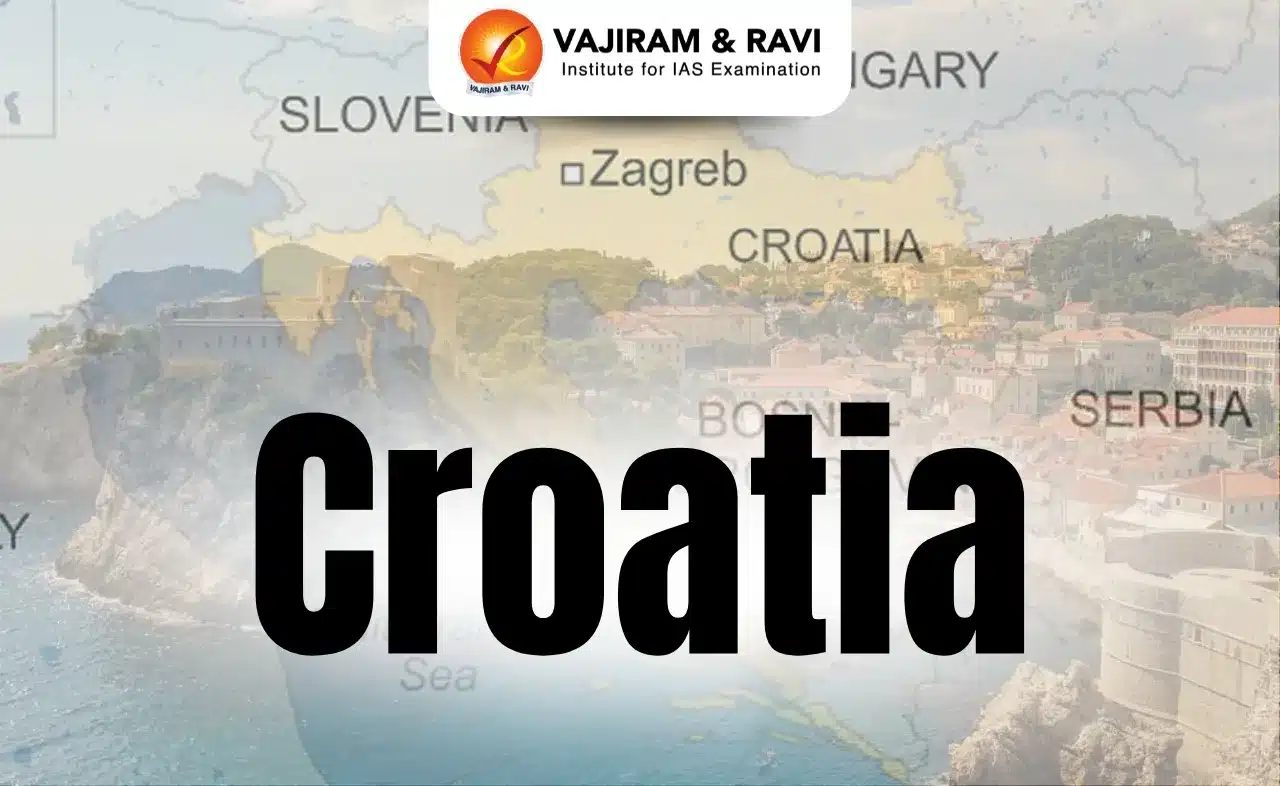
Croatia

Croatia

Croatia Latest News

Recently, the Prime Minister of India visited Croatia and appreciated Croatia for expressing solidarity with India in the aftermath of the Pahalgam terror attack.

About Croatia

  • Croatia is located in the south eastern region of the European Continent, on the north western part of the Balkan Peninsula.
  • Bordering countries: It is border by Slovenia in the northwest, Hungary in the northeast; Serbia in the east; Bosnia and Herzegovina and Montenegro in the southeast.
  • It is also bounded by the Adriatic Sea in the west. Croatia shares a maritime border with Italy.
  • Its strategic location on the eastern coast of the Adriatic Sea positions it as a crucial maritime gateway to Europe.
  • It is made up of fertile and mostly flat plains in the north, and low mountains and highlands along the coast. 
  • It is a member of both the European Union and NATO.
  • The country's major ports—Rijeka, Split, and Ploce—are integral components of the European Union's core TEN-T network, supporting trans-European transport infrastructure.
  • Mountain ranges: The Dinaric Alps and a few smaller mountain ranges (Velebit and Velika Kapela) slice through the country.
  • Climate: Mediterranean climate.
  • Rivers: Rivers like Drava, Krka and Save drains in Crotia.
  • Capital:  Zagreb – the capital and the largest city of Croatia. Zagreb is the country’s main administrative, cultural, industrial, economic and transport hub.
  • Population: 38.6 lakhs (2023) World Bank

Source: TH

Croatia FAQs

Q1: What is the currency in Croatia?

Ans: Euro

Q2: What is NATO?

Ans: It is a military alliance for collective defence among North American and European countries.

Q3: What is the main religion in Croatia?

Ans: Catholic

Gender Budgeting Knowledge Hub

Gender Budgeting Knowledge Hub

Gender Budgeting Knowledge Hub Latest News

The Central government recently launched the Gender Budgeting Knowledge Hub, a dedicated digital platform aimed at strengthening gender-responsive planning across India.

About Gender Budgeting Knowledge Hub

  • It is a dedicated digital platform designed to promote gender-responsive planning nationwide.
  • It was launched by the Ministry of Women and Child Development.
  • The portal's primary aim is to empower policymakers, researchers, and other stakeholders with a centralised repository of tools -- ”including policy briefs, best practices, and gender-‘disaggregated data -- ”to support the integration of a gender lens into all stages of planning and budgeting, both at the Central and state levels.
  • The portal will equip stakeholders with evidence-based tools to better integrate gender perspectives into planning and budgeting.

Gender Budgeting in India

  • Gender budgeting is a tool for gender mainstreaming, applying a gender lens to the entire policy process. 
  • It involves gender-sensitive formulation, resource allocation, and continuous monitoring to address vulnerabilities faced by women throughout their life cycle.
  • India adopted its first gender budget in 2005-06, marking a significant step towards addressing gender disparities in resource allocation.
  • Over the past 11 years, gender budget allocations have increased by four and a half times–from Rs. 0.98 lakh crore in 2014-15 to Rs. 4.49 lakh crore in 2025-26.
  • How is gender budgeting implemented?
    • Nodal authorities, including the Ministry of Women and Child Development at the central level, spearhead gender budgeting implementation. 
    • Departments of Women and Child Development/Social Welfare, Finance, or Planning Department are also responsible for gender budget implementation in states and Union territories. 
    • District subs for Empowerment of Women are also active in states and Union territories to coordinate and fulfil the objectives of schemes.
    • These hubs are also required to have at least one gender specialist.

Source: PTI

Gender Budgeting Knowledge Hub FAQ's

Q1: What is the primary objective of the Gender Budgeting Knowledge Hub?

Ans: To serve as a digital platform promoting gender-responsive planning and budgeting.

Q2: Which ministry launched the Gender Budgeting Knowledge Hub?

Ans: Ministry of Women and Child Development

Q3: When did India adopt its first Gender Budget?

Ans: 2005–06

Q4: What was the allocation for Gender Budgeting in India in 2025–26?

Ans: ₹4.49 lakh crore

MCA21 Portal

MCA21 Portal

MCA21 Portal Latest News

The Ministry of Corporate Affairs (MCA) has waived additional filing fees for 13 key e-forms after announcing a three-week shutdown of its MCA21 portal to complete the nationwide migration from Version 2 (V2) to the new MCA21 V3 platform.

About MCA21 Portal

  • The Ministry of Corporate Affairs (MCA) launched the MCA 21 portal in 2006.
  • The portal enables secure and easy access to MCA services in an assisted manner for professionals, corporate entities, and the general public.
  • Objective: The MCA21 application is designed to fully automate all processes related to the proactive enforcement and compliance of the legal requirements under the Companies Act, 1956, Companies Act, 2013, and Limited Liability Partnership Act, 2008. This will help the business community to meet their statutory obligations.
  • The MCA 21 portal aims at interoperability with the National e-Governance Services Delivery Gateway (NSDG).

Benefits of MCA21 Portal

  • Enables the business community to register a company and file statutory documents quickly and easily.
  • Provides easy access to public documents
  • Helps faster and effective resolution of public grievances
  • Helps registration and verification of charges easily
  • Ensures proactive and effective compliance with relevant laws and corporate governance
  • Enables the MCA employees to deliver best-of-breed services

Services Offered by MCA21 Portal

  • Obtain Digital Signature Certificate
  • Apply for Director Identification Number (DIN)
  • View master details of any company/LLP registered with Registrar of Companies
  • e-Filing for limited liability partnership (LLP)
  • LLP Services for Business Users
  • Registration of a new company
  • Raise complaints or concerns with respect to MCA services
  • Document-Related Services
  • Fee and Payment Services
  • Investor Services

Source: TAXS

  •  

MCA21 Portal FAQs

Q1: What is the MCA21 portal?

Ans: The MCA21 portal is an online e-Governance initiative of the Ministry of Corporate Affairs (MCA), Government of India.

Q2: When was the MCA21 portal launched?

Ans: 2006

Q3: Which Acts does the MCA21 portal help implement and enforce?

Ans: Companies Act, 1956, Companies Act, 2013, and Limited Liability Partnership Act, 2008.

Merchant Banking in India

Merchant Bank

Merchant Banking Latest News

The Securities and Exchange Board of India (SEBI) recently said merchant bankers (MB) can now engage in unregulated activities such as advisory and consultancies without needing a separate legal entity.

About Merchant Banking

  • Merchant Banking refers to financial services designed especially for businesses and corporate clients. 
  • These services help business owners raise funds, manage investments, and expand operations. 
  • Banks registered as merchant bankers provide expert advice on mergers, acquisitions, and other business activities requiring capital. 
  • They act as intermediaries between companies and investors to ensure smooth financial growth. 
  • The role of a merchant banker is similar to that of a financial advisor. 
  • They help make critical decisions and also help businesses expand by arranging private equity investments or strategic partnerships. 
  • One of the primary services merchant bankers provide is issue management. It involves helping companies raise capital from the public by managing the process of issuing shares, debentures, or other securities.  
  • Merchant banks do not provide regular banking services to the general public. 
  • The regulatory framework governing merchant banks in India is primarily overseen by the Securities and Exchange Board of India (SEBI).
  • One of the key regulations involves the maintenance of minimum net worth requirements, which ensures that merchant banks have sufficient financial resources to undertake their activities and absorb potential losses. 
  • Additionally, SEBI mandates that merchant banks adhere to a strict code of conduct, which includes provisions related to fair dealing, conflict of interest, and transparency.
  • Merchant banks are also subject to periodic inspections and audits by SEBI to ensure ongoing compliance. 
  • Any violations can result in penalties, including suspension or cancellation of the registration certificate.

Services Offered by Merchant Banks

  • Corporate advisory services: Offering guidance on mergers, acquisitions, and restructuring 
  • Capital raising: Helping businesses raise funds through debt or equity.
  • Investment management: Managing large-scale investments and portfolios. 
  • Underwriting: Assisting in public offerings by guaranteeing the sale of securities.
  • Risk management: Reducing financial risks by offering expert advice.

Source: TH

Merchant Banking FAQs

Q1: What distinguishes a merchant bank from a commercial bank?

Ans: Merchant banks deal with corporate finance and advisory services.

Q2: Which regulatory body governs merchant banking activities in India?

Ans: Securities and Exchange Board of India (SEBI)

Q3: What role do merchant banks play in Initial Public Offerings (IPOs)?

Ans: Manage and underwrite the entire IPO process.

World Investment Report 2025 by UNCTAD

World Investment Report 2025

World Investment Report 2025 Latest News

India rose a position to rank 15 among top global destinations for foreign direct investment (FDI) in 2024, despite a marginal dip in inflows at $27.6 billion, according to the UN Trade and Development (UNCTAD)’s World Investment Report 2025.

About World Investment Report 2025

  • It is an annual report published by the UN Conference on Trade and Development (UNCTAD).
  • It focuses on trends in foreign direct investment (FDI) worldwide, at the regional and country levels, and emerging measures to improve its contribution to development.

Highlights of World Investment Report 2025 

  • Overall, global FDI fell by 11 percent in 2024, marking the second consecutive year of decline and confirming a deepening slowdown in productive capital flows.
  • Although global FDI rose by 4 percent in 2024 to $1.5 trillion, the increase is the result of, among other factors, volatile financial conduit flows through several European economies, which often serve as transfer points for investments. When these are excluded, global FDI registered an 11% decline.
  • The report also found that investment in sectors related to the Sustainable Development Goals (SDGs) in developing countries fell by 25–33% across infrastructure, renewable energy, water and sanitation, and agrifood systems. Only the health sector saw growth, though from a small base.
  • FDI flows to the digital economy grew 14%. But 80% of greenfield projects in digital sectors in the Global South went to just 10 countries, leaving most developing nations excluded from the digital transformation.
  • The United States retained its position as the top FDI destination globally, with inflows rising to $279 billion in 2024 from $233 billion in the previous year.
  • China fell to fourth place with a 29 percent decline in FDI inflows, dropping from the second position it held in 2023.
  • FDI in Africa surged 75%, South-East Asia saw record greenfield levels, and momentum was seen in India, the Gulf, and parts of Latin America.
  • In 2024, developing economies of Asia attracted $605 billion in FDI.
  • Despite a 3% dip in value from the year before, developing Asia remained the world’s leading destination for inward foreign investment; overall in 2024, Asia received 40% of the world’s total FDI and 70% of inflows to developing economies.
  • Within the South Asian region, India was the top FDI recipient.
  • Despite a marginal dip in inflows at $27.6 billion, India climbed up to 15th place globally in 2024, from 16th position in 2023 when it received $28.1 billion in FDI.
  • There was a notable increase in greenfield project announcements, where India ranked fourth with 1,080 greenfield projects announced in 2024.
  • The country was also among the top five economies in terms of international project finance deals, securing 97 such transactions.
  • India also climbed in the global ranking of FDI outflows, moving to the 18th slot with $24 billion in outward investments — up from 23rd in 2023, when outflows totalled $14 billion.

Source: MC

World Investment Report FAQs

Q1: Who publishes the annual World Investment Report?

Ans: UN Conference on Trade and Development (UNCTAD)

Q2: What was the overall trend in global FDI in 2024, according to the 2025 World Investment Report?

Ans: Fell by 11%

Q3: Which country retained its position as the top global FDI destination in 2024?

Ans: United States

Q4: Which country was the top FDI recipient in South Asia in 2024?

Ans: India

Q5: What is India’s global rank in FDI inflows in 2024?

Ans: 15th

India’s Import Burden: Rising Costs of Pulses and Edible Oils

Pulse and Oil Imports

Pulse and Oil Imports Latest News

  • Pulses and oilseed farmers across India face a persistent crisis due to the lack of systematic government procurement at Minimum Support Prices (MSP)
  • Unlike rice and wheat, which benefit from robust public procurement, crops like moong, chana, masoor, and soyabean are often sold in open markets at rates well below their MSPs.
  • This disparity leaves farmers vulnerable to market fluctuations, forcing them to sell at loss-making prices, despite using high-yielding, recommended crop varieties. 
  • In regions with black cotton soil, where pulses and oilseeds are naturally suited, farmers have limited cropping options, making them heavily dependent on these undervalued crops.
  • Despite poor returns, many continue planting these crops due to the absence of viable alternatives, reflecting a systemic policy gap in supporting India’s pulse and oilseed producers.

Record Pulses Imports: A Setback for Domestic Growers

  • All-Time High Imports in 2024-25
    • India imported 7.3 million tonnes (mt) of pulses worth $5.5 billion in 2024–25, surpassing the previous record of 6.6 mt ($4.2 billion) in 2016–17. 
    • This marks a significant jump from the average 2.6 mt ($1.7 billion) imported annually between 2017–18 and 2022–23.
  • Past Gains in Self-Sufficiency Reversed
    • India had achieved relative self-sufficiency in pulses with output rising to 27.3 mt in 2021–22 and 26.1 mt in 2022–23, thanks to high-yield, short-duration varieties of chana and moong. 
    • These gains were undone by an El Niño-induced drought in 2023–24, which reduced production to 24.2 mt, recovering only slightly to 25.2 mt in 2024–25.
  • Duty Cuts Trigger Import Surge
    • With retail inflation in pulses hitting double digits by mid-2023, the government slashed import duties, prompting a surge in imports.
  • Inflation Falls, Farmers Hit
    • The import surge cooled CPI inflation in pulses, which dropped from 3.8% in Dec 2024 to -8.2% by May 2025. 
    • However, this led to market prices falling below MSPs.

India’s Vegetable Oil Crisis: Rising Imports and Farmer Distress

  • Soaring Import Dependence
    • Over the past 11 years, India’s vegetable oil imports have doubled—from 7.9 million tonnes (mt) in 2013–14 to 16.4 mt in 2024–25. 
    • In value terms, imports rose from $7.2 billion to $20.8 billion, driven partly by the Russia-Ukraine war's supply disruptions.
  • Heavy Reliance on Imported Oils
    • In 2024–25, India imported:
      • 7.9 mt of palm oil (Indonesia, Malaysia)
      • 4.8 mt of soyabean oil (Argentina, Brazil)
      • 3.5 mt of sunflower oil (Russia, Ukraine, Argentina)
    • Meanwhile, domestic oil production (including cottonseed, rice bran, maize) remains stagnant at ~10 mt, resulting in an import dependency of over 60%.
  • Inflation and Duty Cuts
    • With vegetable oil inflation at 17.9% in May 2025, the government slashed basic customs duty on crude palm, soyabean, and sunflower oil from 20% to 10%, reducing the total import tariff from 27.5% to 16.5%.
  • Global Projections and Market Flooding
    • The USDA expects global vegetable oil production to hit 235 mt in 2025–26, led by palm (80.7 mt) and soyabean (70.8 mt). 
    • Lower Indian tariffs may lead to even higher imports, including from the U.S., per a USDA report.
  • Impact on Indian Farmers
    • The Soyabean Processors Association of India has warned that the duty cut will flood Indian markets with cheaper oils, hurting local prices. 
    • This may discourage farmers from sowing oilseeds, especially soyabean, in the upcoming kharif season, affecting domestic production further.

Source: IE

Pulse and Oil Imports FAQs

Q1: Why are Indian pulse and oilseed farmers struggling?

Ans: Lack of MSP procurement forces them to sell below cost, despite using high-yield varieties and facing market instability.

Q2: How high were India’s pulse imports in 2024–25?

Ans: India imported 7.3 million tonnes of pulses worth $5.5 billion, the highest in its trade history so far.

Q3: What triggered the surge in pulse imports?

Ans: El Niño-induced drought and high retail inflation led to duty cuts, prompting a spike in cheaper foreign imports.

Q4: What is India’s vegetable oil import dependency?

Ans: India imports over 60% of its edible oil needs, with 16.4 million tonnes brought in during 2024–25 alone.

Q5: How are duty cuts affecting Indian oilseed farmers?

Ans: Lower duties may flood markets with cheap oils, discouraging domestic cultivation and reducing incentives to sow oilseeds.

India’s Green India Mission Revised: Forest Revival and Climate Goals Aligned

Revised Green India Mission

Revised Green India Mission Latest News

  • The Centre released a revised roadmap for the National Mission for Green India (GIM).
  • The updated plan emphasizes not just increasing and restoring forest and green cover, but also focuses on ecological restoration in critical regions such as the Aravalli ranges, Western Ghats, Himalayas, and mangroves.
  • As a key part of India’s climate action strategy, the revised GIM will also address land degradation and desertification, expanding its role in building environmental resilience.

Achievements of the Green India Mission (GIM)

  • Background
    • Launched in 2014 under the National Action Plan on Climate Change (NAPCC), the Green India Mission aims to:
      • Increase forest and tree cover on 5 million hectares
      • Improve the quality of forest cover on another 5 million hectares
      • Restore degraded ecosystems and enhance livelihoods of forest-dependent communities
  • Afforestation Progress
    • From 2015-16 to 2020-21, the mission supported tree plantation and afforestation across 11.22 million hectares through various central and state schemes.
  • Funding and Utilisation
    • Between 2019-20 and 2023-24, the Centre allocated ₹624.71 crore to 18 states for GIM-related interventions, of which ₹575.55 crore has been utilised.
  • Targeted Implementation
    • GIM activities are prioritized in states based on:
      • Ecological vulnerability
      • Carbon sequestration potential
      • Forest and land degradation levels
      • Restoration potential

Revised Green India Mission: Key Highlights

  • Need for Revision
    • The Green India Mission (GIM) roadmap has been revised based on:
      • Ground-level climate impacts
      • Feedback from implementing partner states
      • Recommendations from scientific institutions
      • The updated plan adopts a region-specific, ecologically tailored approach.
  • Focus on Vulnerable Landscapes
    • The revised mission prioritizes restoration and saturation of vulnerable landscapes, including:
      • Aravalli ranges
      • Western Ghats
      • Indian Himalayas
      • Mangrove ecosystems
    • Best practices will be adapted to local ecological conditions for effective restoration.
  • Integration with Aravalli Green Wall Project
    • GIM will align with the Centre’s Aravalli Green Wall Project to:
      • Combat degradation and desertification
      • Close 12 ecological gaps contributing to dust storms in Delhi-NCR and Punjab
      • Initially restore 8 lakh hectares across 29 districts and 4 states
      • Use native plant species, restore grasslands, forests, and water systems
    • Estimated cost: ₹16,053 crore
    • Aim: Create a 5-km buffer zone covering 6.45 million hectares
  • Action in the Western Ghats
    • In the Western Ghats, GIM will focus on: Afforestation efforts; Groundwater recharge; Eco-restoration of abandoned mining zones.
    • This is in response to threats from deforestation, degradation, and illegal mining.
  • The revised roadmap reflects a strategic, region-sensitive approach to ecological restoration and climate resilience.

Revised Green India Mission: Strategy to Combat Land Degradation and Desertification

  • Scale of the Challenge
    • According to ISRO’s Desertification and Land Degradation Atlas, about 97.85 million hectares (one-third of India’s land) faced degradation in 2018–19.
  • National Climate Commitment
    • India has pledged to:
      • Create an additional carbon sink of 2.5–3 billion tonnes of CO₂ by 2030 through increased forest and tree cover
      • Restore 26 million hectares of degraded land by 2030 under its international climate commitments (UNFCCC)
  • Role of Natural Ecosystems
    • Natural carbon sinks—forests, wetlands, grasslands, and mountain ecologies—will help:
      • Absorb greenhouse gas emissions
      • Act as natural buffers against the impacts of climate change
  • Contributions So Far
    • Between 2005 and 2021, India created an additional carbon sink of 2.29 billion tonnes of CO₂ equivalent, as per a statement in the Lok Sabha.
  • Focus on Restoring Open Forests
    • The revised GIM identifies impaired open forests as key areas for restoration:
      • Cost-effective and high-impact for carbon sequestration
      • Forest Survey of India (FSI) estimates this strategy alone could sequester 1.89 billion tonnes of CO₂ across 15 million hectares.
  • Target for Expanded Tree Cover
    • By integrating ongoing schemes and boosting afforestation:
      • GIM could expand forest and tree cover to 24.7 million hectares
      • This could generate a carbon sink of 3.39 billion tonnes CO₂ by 2030, exceeding India’s climate targets
  • In essence, the revised GIM aligns ecological restoration with India’s climate goals, making forests a cornerstone in the fight against land degradation and global warming.

Source: IE | IE

Revised Green India Mission FAQs

Q1: What is the Revised Green India Mission?

Ans: A climate initiative to restore forests, fight land degradation, and build resilience in ecologically vulnerable areas like the Aravallis and Himalayas.

Q2: Why was the Green India Mission updated?

Ans: To reflect ground-level climate impacts and integrate region-specific restoration based on ecological vulnerabilities and feedback from states and experts.

Q3: What is the Aravalli Green Wall Project?

Ans: A ₹16,053 crore project under GIM to restore 8 lakh hectares and prevent desertification across the Aravalli landscape.

Q4: How much forest area has GIM covered so far?

Ans: Between 2015–21, GIM supported afforestation over 11.22 million hectares through central and state programs.

Q5: What are India’s 2030 restoration goals under GIM?

Ans: Restore 26 million hectares of degraded land and create 2.5–3 billion tonnes CO₂ sink via expanded tree and forest cover.

India’s Green Hydrogen Mission: Domestic Push Gains Momentum Amidst Weak Export Outlook

India Green Hydrogen Mission

Green Hydrogen Sector Latest News

  • Stakeholders in India’s emerging green hydrogen sector remain optimistic that the alternative fuel is poised to play a significant role in the country’s future energy landscape.

Domestic Push to Green Hydrogen Development

  • India's green hydrogen sector is at a pivotal juncture. With global demand faltering due to geopolitical tensions and uncertain international policy environments, India has turned its attention inward, focusing on domestic demand creation, infrastructure, and policy support. 
  • The government and industry remain confident in the long-term prospects of green hydrogen, recognising its potential role in decarbonising key sectors like fertilisers, steel, and shipping.

National Green Hydrogen Mission and Strategic Interventions

  • Launched in 2023, the National Green Hydrogen Mission is India’s flagship initiative to position the country as a global hub for green hydrogen production, usage, and export. 
  • Backed by an outlay of Rs 19,744 crore, the mission aims to develop 5 million metric tonnes (MMT) of green hydrogen production capacity by 2030. 
    • It also includes provisions for the domestic manufacture of electrolysers under the SIGHT (Strategic Interventions for Green Hydrogen Transition) programme.
  • To ensure integrity and transparency, the Ministry of New and Renewable Energy (MNRE) introduced a measurement and certification framework in April 2025, establishing standards to verify green hydrogen at production sites.

Global Headwinds Affect Export Demand

  • Despite significant investments and plans for export-oriented projects like ReNew’s green ammonia facility in Odisha, India's export aspirations face severe constraints. 
  • At the heart of the slowdown is the weakening of global demand, a consequence of both geopolitical instability and policy uncertainty in key markets like the US and EU.
  • MNRE highlighted that lack of market visibility and setbacks to US policies such as the Inflation Reduction Act (IRA), now threatened by a rollback proposal called the “Big Beautiful Bill” under consideration by the US Senate, have undermined investor confidence and planning in global clean fuel transitions.
  • Additionally, tenders floated by European agencies such as Germany’s Hintco (under the H2Global Foundation) failed to attract sufficient industry participation, compounding the export sluggishness.

Efforts to Secure Global Access

  • To address logistical and trade-related barriers, India is engaging with major European ports, including Rotterdam and Antwerp, to streamline future green hydrogen shipments. 
  • At the policy level, free trade agreement (FTA) discussions with Europe now include proposals to reduce import duties on Indian green hydrogen and derivatives.
  • Nonetheless, the short-term outlook for exports remains bleak, pushing stakeholders to explore alternative paths for sectoral growth.

Domestic Demand as a Growth Driver

  • In response, the Indian government is aggressively working to build a robust domestic market for green hydrogen. 
  • A recent tender for the supply of 8 lakh tonnes of green hydrogen received full bids, demonstrating rising interest among Indian enterprises. 
  • Additionally, the Solar Energy Corporation of India (SECI) is managing another tender for 7 lakh tonnes, particularly aimed at the fertiliser industry.
  • To further ensure offtake, pilot initiatives are being rolled out in sectors like transportation, steel, and shipping. Hydrogen fuel cell buses are currently being tested in five cities, including Ladakh, to examine real-world performance.
  • Industry voices have argued that domestic mandates may be necessary to truly scale adoption, for example, making it mandatory for fertiliser manufacturers to source a portion of their ammonia from green hydrogen sources.

Cost Competitiveness and Commercial Viability

  • The greatest hurdle to mainstream adoption remains cost competitiveness
  • Currently, green hydrogen costs $4-$5 per kg, compared to $2.3-$2.5 per kg for grey hydrogen, which is produced using fossil fuels. 
  • These cost dynamics mean that, unlike renewables today, green hydrogen is not yet commercially viable without policy mandates or incentives.
  • A new report by CII, Bain & Company, and RMI attributes this high cost to immature supply chains, high financing costs, and lack of scale. It recommends incremental strategies to boost demand, including:
    • Blending green hydrogen into grey hydrogen or piped natural gas networks.
    • Encouraging its use in niche sectors such as ceramics, chemicals, and glass.
    • Leveraging public procurement, particularly for green steel, to boost scale and lower costs.

Future Outlook: Balancing Export Aspirations and Domestic Realities

  • India’s long-term vision for green hydrogen remains ambitious and well-supported. 
  • However, present challenges suggest a need to rebalance expectations, shifting emphasis from export-oriented growth to domestic market creation and infrastructure building
  • If successful, India could replicate its renewables success story in this domain too, gradually achieving cost parity and becoming a leader in global green hydrogen trade.

Green Hydrogen Sector FAQs

Q1: What is the National Green Hydrogen Mission?

Ans: It is India’s flagship scheme launched in 2023 to promote domestic production, usage, and export of green hydrogen with a target of 5 MMT capacity by 2030.

Q2: Why is India facing challenges in green hydrogen exports?

Ans: Export demand has weakened due to geopolitical instability and policy uncertainty in key markets like the US and EU.

Q3: What measures is the Indian government taking to boost domestic demand?

Ans: India is issuing large-scale tenders, running pilot projects, and considering domestic mandates for green hydrogen adoption.

Q4: Why is green hydrogen not yet commercially viable?

Ans: It is significantly more expensive than grey hydrogen due to high production and infrastructure costs.

Q5: How is green hydrogen used across sectors?

Ans: Green hydrogen is used to produce green ammonia, which serves as fertilizer and fuel, and has applications in shipping, steel, and energy sectors.

Enquire Now