Iran Israel Conflict 2025, Reason, Broader Implications

Iran Israel Conflict

Israel launched a full-scale military strike on Iran named “Operation Rising Lion” targeting missile and nuclear infrastructure. This strike has taken place after IAEA declared Iran in violation of its nuclear safeguard agreement. 

Iran Israel Conflict

The historical background of the Israel Iran conflict can be traced back to the Islamic Revolution that took place in Iran 1979. This revolution adopted an anti-Israel, theocratic posture. Iran has been exerting pressure on Israel with the help of allies, like Hezbollah, Hamas, Houthis and Iraqi militias, avoiding a direct war with Israel. Israel has a history of striking nuclear sites in Iraq and Syria, but Iran poses a tougher and more sensitive challenge. Its growing threat has also pushed many Sunni Arab countries to improve ties with Israel through the Abraham Accords, putting the Palestine issue on the back burner.

Iran-Israel Current War Escalation 

According to the IAEA Resolution, Iran can be declared non-compliant with the 1974 safeguards Agreement. This was due to the enriched uranium that was found at undeclared sites. There are various trigger factors that have led to the present escalations in between Iran and Israel: 

  • Nuclear Talks Break Down: The breakdown of US-Iran negotiations, led Israel to view this as Tehran exploiting diplomatic gaps. 
  • Direct Action: Considering indirect attacks to be ineffective, Israel opted for striking Iranian targets directly instead of going with proxies. 
  • Israel Internal Politics: PM Netanyahu, misused the security tensions to delay elections and consolidate power. 

IAEA’s Latest Assessment on Iran's Nuclear Activities

  • Evidence of Non-Compliance:The IAEA has detected unexplained traces of uranium and continued lack of transparency at key Iranian sites—Lavisan-Shian, Varamin, and Turquzabad.
  • Significant Legal Breach: This marks the seventh recorded violation under Article XII.C of the IAEA Statute, potentially triggering further scrutiny and referral to the UN Security Council.
  • Implications for Sanctions: European parties to the JCPOA may consider activating the snapback mechanism, reinstating previous UN sanctions against Iran.
  • Iran’s Rebuttal and Escalation:In response, Iran has rejected the IAEA’s conclusions, threatened withdrawal from the Non-Proliferation Treaty (NPT), and initiated new underground uranium enrichment projects.
  • Critical Upcoming Report: The next IAEA report, expected in August, will be pivotal. Continued non-cooperation by Iran could significantly heighten diplomatic strain and escalate regional security concerns.

U.S. Joins Israel-Iran Conflict Direct Strikes on Iranian Nuclear Facilities 

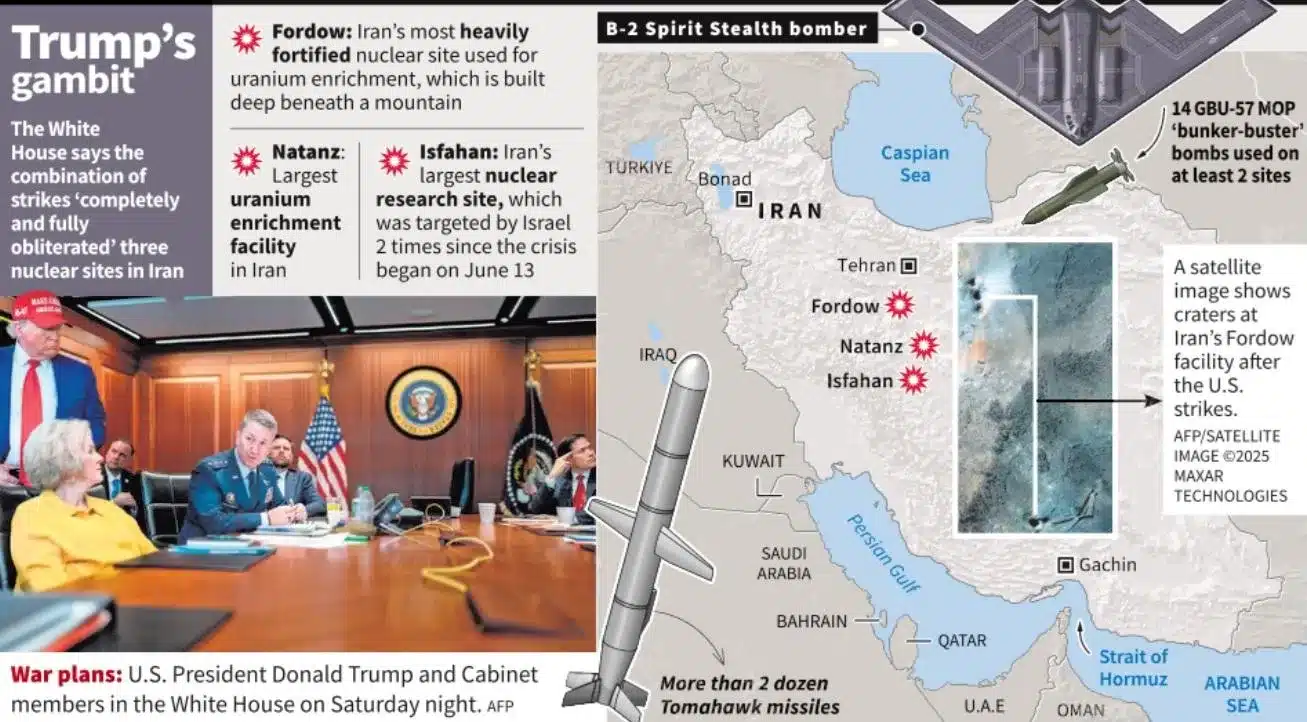
The United States has formally entered the Israel-Iran conflict with precision airstrikes targeting three of Iran’s key nuclear sites—Fordow, Natanz, and Isfahan. Conducted using B-2 stealth bombers equipped with bunker-busting bombs, the attack included a successful hit on the heavily fortified Fordow Uranium Enrichment Plant, a facility previously beyond Israel’s operational reach.

Key Developments include:

  • Strategic Escalation: This marks the first direct U.S. military action in the ongoing conflict, signaling a significant shift from prior support roles to active engagement.
  • Strengthening the U.S.-Israel Alliance: The strikes underscore an "iron-clad" U.S. commitment to Israel’s security, reinforcing its stance that Iran's nuclear program poses an existential threat.
  • Policy Reversal: The operation reflects a departure from former President Trump's stated doctrine of avoiding foreign military entanglements, contradicting his past promises of restraint and swift conflict resolution.
  • Operational Impact: The U.S. successfully targeted deeply buried nuclear infrastructure, providing Israel with a tactical edge it previously lacked, and advancing its long-standing goal of curbing Iran's nuclear ambitions.

Broader Implications of the Iran-Israel War

Following are the global as well as regional implications of the Iran-Israel War:

Iran-Israel War Global Ramifications

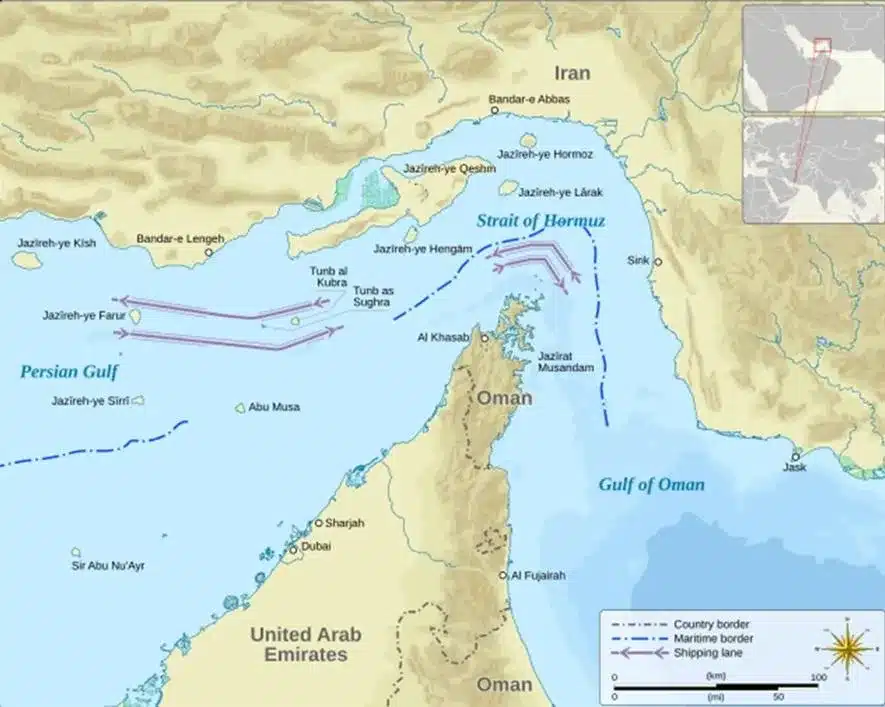
  • Energy Market Volatility: Rising tensions in the Strait of Hormuz—through which approximately 20% of the world’s oil supply transits—pose a serious threat of global oil price escalation and market instability.
  • Strategic Dilemma for the United States: Washington faces the challenge of supporting Israel while avoiding direct military entanglement and safeguarding its regional bases and assets.
  • Nuclear Proliferation Risks: Iran’s possible withdrawal from the Nuclear Non-Proliferation Treaty (NPT) could trigger a regional arms race, undermining global non-proliferation norms.

Iran-Israel War Regional Dynamics

  • Escalation Across the Middle East: Conflict spillovers may intensify drone warfare and proxy engagements in countries such as Iraq, Syria, and Lebanon, destabilizing an already fragile region.
  • Setbacks to Diplomacy: Ongoing diplomatic initiatives—including the revival of the US-Iran nuclear deal and efforts toward a two-state solution—risk collapse amidst heightened hostilities.
  • Militant Mobilisation: Iran-aligned groups such as the Popular Mobilization Forces (PMF) and the Houthis could escalate strikes on Israeli and American targets, increasing the threat of a wider regional war.

Iran-Israel War Implications for India

  • Diaspora Vulnerability: With nearly 8 million Indian nationals residing in West Asia, their safety becomes a critical concern, especially if evacuation becomes necessary.
  • Energy Security Risks: Over 60% of India’s crude oil imports transit through the Strait of Hormuz; any disruption may lead to significant supply shocks and inflationary pressure.

Diplomatic Balancing Act: India must tread carefully, preserving its strategic partnerships with both Israel and Iran, while navigating a complex landscape of rising sanctions and geopolitical alignments.

Iran Israel Conflict FAQs

Q1: Why are Iran and Israel fighting?

Ans: Iran and Israel are engaged in a long-standing shadow conflict due to Iran's support for anti-Israel militant groups and its nuclear ambitions, which Israel sees as a direct threat.

Q2: Which army is stronger, Israel or Iran?

Ans: Israel has a more advanced and technologically superior military, while Iran relies on regional proxies and asymmetric warfare capabilities.

Q3: Does India support Iran or Israel?

Ans: India maintains strategic partnerships with both Iran and Israel, balancing its diplomatic, energy, and defense interests without taking sides.

Q4: Which Iran Site Did the US Bomb?

Ans: The U.S. bombed Iran’s nuclear facilities at Fordow, Natanz, and Isfahan.

Q5: Why is the Iran-Israel War happening?

Ans: The conflict stems from Iran’s nuclear program and its backing of anti-Israel groups, which Israel views as existential threats, prompting preemptive military action.

UPSC Daily Quiz 23 June 2025

UPSC Daily Quiz

The Daily UPSC Quiz by Vajiram & Ravi is a thoughtfully curated initiative designed to support UPSC aspirants in strengthening their current affairs knowledge and core conceptual understanding. Aligned with the UPSC Syllabus 2025, this daily quiz serves as a revision resource, helping candidates assess their preparation, revise key topics, and stay updated with relevant issues. Whether you are preparing for Prelims or sharpening your revision for Mains, consistent practice with these Daily UPSC Quiz can significantly enhance accuracy, speed, and confidence in solving exam-level questions.

[WpProQuiz 7]

UPSC Daily Quiz FAQs

Q1: What is the Daily UPSC Quiz?

Ans: The Daily UPSC Quiz is a set of practice questions based on current affairs, static subjects, and PYQs that help aspirants enhance retention and test conceptual clarity regularly.

Q2: How is the Daily Quiz useful for UPSC preparation?

Ans: Daily quizzes support learning, help in revision, improve time management, and boost accuracy for both UPSC Prelims and Mains through consistent practice.

Q3: Are the quiz questions based on the UPSC syllabus?

Ans: Yes, all questions are aligned with the UPSC Syllabus 2025, covering key areas like Polity, Economy, Environment, History, Geography, and Current Affairs.

Q4: Are solutions and explanations provided with the quiz?

Ans: Yes, each quiz includes detailed explanations and source references to enhance conceptual understanding and enable self-assessment.

Q5: Is the Daily UPSC Quiz suitable for both Prelims and Mains?

Ans: Primarily focused on Prelims (MCQ format), but it also indirectly helps in Mains by strengthening subject knowledge and factual clarity.

Daily Editorial Analysis 23 June 2025

Daily Editorial Analysis

Tracing a Decade of India’s Growth – Achievements, Equity Concerns, and Policy Outlook

Context:

  • As Prime Minister Narendra Modi completes 11 years in office, this article undertakes a macroeconomic stocktaking.
  • It compares the performance with the previous decade (2004–2014), and outlines key achievements, gaps in inclusivity, and policy imperatives for the future, especially in agriculture and subsidies.

Macroeconomic Growth Trajectory:

  • GDP growth – Nominal and PPP:
    • In 2014, India’s nominal GDP was $2.04 trillion, rising from $709 billion in 2004 under UPA.
    • In 2025, GDP is projected at $4.19 trillion, nearing Germany to become the 4th largest economy.
    • In purchasing power parity (PPP terms), GDP grew from $2.75 trillion (2004) to $6.45 trillion (2014) to $17.65 trillion (2025) becoming the 3rd largest globally [behind China ($40.72 trillion) and the US ($30.51 trillion)].
  • Per capita income – PPP indicator:
    • Per capita income (PPP): Rose from $2,424.2 in 2004 to $4,935.5 in 2014 and now stands at $12,131.8 in 2025.
    • Global rank improved:
      • If we compare India’s per capita income (PPP) globally, its rank improved from 181st in 2004, to 166th in 2014, and 149th in 2025.
      • Still lowest in G20, behind China ($28,978), Sri Lanka, and Bhutan, but ahead of Pakistan and Bangladesh. 

Inclusivity and Income Inequality:

  • The Gini coefficient, which is a statistical measure used to quantify the degree of inequality in the distribution of income or wealth within a population, has shown only modest shifts over the past two decades.
  • It ranges from 0 to 1 (or 0% to 100%), where 0 represents perfect equality (everyone has the same income/wealth) and 1 (or 100%) represents perfect inequality (one person has all the income/wealth).
  • In 2004, it was 0.34 in India, in 2014 it edged up slightly to 0.35 and dropped to 0.33 in 2021, indicating moderate inequality in India, according to the World Bank.

Agricultural Growth and Welfare Measures:

  • Agricultural performance: Agriculture GDP grew at an average annual rate of 4% (FY15–FY25) despite consecutive droughts in 2014–15 and 2015–16, surpassing the 3.5% (FY05–FY14) growth, which also witnessed a major drought in 2009–10.
  • Key welfare initiatives:
    • PM-KISAN (direct income support)
    • Almost-free staple grains (rice or wheat, 5kg/person/month) to 800 million
    • Subsidised rural housing
    • Near freeze on urea prices

Poverty Reduction Milestone:

  • All these efforts have led to a sharp reduction in extreme poverty (head count ratio) at $3 per day (2021 PPP) - from 27.1% in 2011 to just 5.3% in 2022.
  • The 80% drop marks one of the fastest and most significant falls in poverty that India has achieved in any period since 1977.
  • Even when measured against the higher poverty line threshold of $4.20/day for low middle-income countries, poverty had dropped from 57.7% in 2011 to 23.9% by 2022, representing a steep 60% decline in just a decade.

Reforming Subsidies for Sustainable Inclusion:

  • Food subsidy reform:
    • The food subsidy budget for FY26 is slated to be Rs 2.03 lakh crore. Almost-free food to 800 million people despite low poverty levels.
    • Rationalise this food subsidy by giving beneficiaries food coupons (digital wallet) to buy nutritious food — pulses, milk, eggs — from designated stores.
    • The value of food coupons for the bottom, say 15% of the population, could be Rs 700/family/month.
    • This will help plug leakages, diversify diets, promote nutrition, and diversify the production basket.
  • Fertiliser subsidy reform:
    • Similar rationalisation is needed for fertiliser subsidy, which is slated to claim another Rs 1.56 lakh crore in FY26.
    • This can be done by giving fertiliser coupons to farmers and deregulating the prices of fertiliser products.
    • Farmers can use these coupons to buy chemical fertilisers or bio-fertilisers or do natural farming.
    • The imbalanced use of N, P, and K can be corrected, leakages plugged and innovations in products and practices promoted, only if the government deregulates this sector.

Challenges Ahead:

  • The government would need to identify tenant farmers.
  • The task also requires triangulation of several sets of data.
  • Communicating with farmers in advance and earning their trust. This is a political exercise, which must precede policy change.

Conclusion:

  • The current government’s 11-year record shows strong macroeconomic performance, remarkable poverty reduction, and improved welfare delivery.
  • However, challenges of inclusivity, sustainable subsidy structures, and agri-sector reform remain critical.
  • Tackling these with targeted, tech-enabled, and politically communicative solutions can transform economic gains into equitable development.

Tracing a Decade of India’s Growth – Achievements, Equity Concerns, and Policy Outlook FAQs

Q1. Examine the changes in India’s GDP and its global ranking in both nominal and PPP terms since 2004.

Ans. India's nominal GDP grew from $709 billion in 2004 to a projected $4.19 trillion in 2025, making it the fourth-largest economy, while in PPP terms, it rose to $17.65 trillion, ranking third globally.

Q2. How has India's per capita income evolved in PPP terms, and what does it indicate about inclusive growth?

Ans. India’s per capita income in PPP terms rose from $2,424.2 in 2004 to $12,131.8 in 2025, reflecting improvement but still lagging behind most G20 and neighbouring countries, indicating limited inclusivity.

Q3. Highlight the role of the Modi government's welfare policies in poverty alleviation between 2014 and 2022.

Ans. Welfare initiatives like PM-KISAN, food grain distribution, and housing support contributed to reducing extreme poverty from 27.1% in 2011 to 5.3% in 2022 — one of the fastest drops since 1977.

Q4. Discuss the significance of rationalising food and fertiliser subsidies in the context of fiscal efficiency and environmental sustainability.

Ans. Rationalising subsidies through digital coupons can enhance targeting, reduce leakages, diversify diets, promote natural farming, and improve environmental outcomes by reducing soil and water degradation.

Q5. What challenges must be addressed for implementing targeted reforms in India’s agri-food subsidy system?

Ans. Reform implementation requires accurate identification of tenant farmers, data integration, stakeholder communication, and political will — areas where strong leadership and trust-building are essential


Lessons from Operation Sindoor’s Global Outreach

Context

  • The April 22, 2025, Pahalgam terror attack marked a pivotal moment in India’s contemporary security and foreign policy history.
  • The nation’s resolute military reaction, dubbed Operation Sindoor, was swift, calibrated, and precise.
  • However, what truly solidified India’s international standing in the aftermath of the attack was its proactive and coherent diplomatic campaign.
  • A coordinated outreach involving seven all-party parliamentary delegations to strategic countries in the Western Hemisphere reinforced India's global narrative and reaffirmed its moral and political authority on the world stage.

The Multifaceted Nature of Indian Diplomacy Post Operation Sindoor

  • To Showcase Unity
    • One of the central strengths of India’s diplomatic campaign was the remarkable unity of purpose across political lines.
    • The composition of the delegations, featuring Members of Parliament from various states, faiths, and political ideologies, presented a striking image of national cohesion.
    • In a world where domestic divisions often erode foreign credibility, India's ability to present a unified front projected gravitas and maturity.
    • This consensus lent legitimacy and strength to India's narrative in discussions with leaders such as the President of Guyana and the Vice-President of the United States.
    • When speaking as one, India’s message of self-defence, justice, and peace resonated far more effectively with international interlocutors.
  • The Legitimacy and Restraint Shown During Operation Sindoor
    • A central goal of the outreach was to explain the rationale and proportionality behind Operation Sindoor.
    • The operation was framed not as a retaliatory strike but as a lawful and calibrated exercise in self-defence aimed specifically at terrorist infrastructure.
    • The Indian delegations underscored the avoidance of civilian and military Pakistani casualties, highlighting moral restraint in the face of provocation.
    • The effectiveness of this framing became evident when Colombia, after initially expressing concern about alleged civilian casualties, retracted its statement and reiterated support for India’s sovereign right to self-defence.
    • This episode exemplifies the power of persistent, fact-based diplomacy in correcting misperceptions and combating misinformation.
  • Calling Out Terrorism and Building Consensus
    • Another pillar of India’s diplomacy was exposing Pakistan’s continued sponsorship of terrorism.
    • Delegations made it a point to present verifiable evidence of cross-border terrorist activity and the involvement of groups like Lashkar-e-Taiba and Jaish-e-Mohammed.
    • Particularly in Washington D.C., these assertions gained traction even among U.S. officials who simultaneously met with Pakistani representatives.
    • The alignment of perspectives in such crucial global capitals reflects the persuasive power of India's evidence-driven advocacy and consistent messaging.
  • Diplomacy Beyond Crisis: Sustained Public Engagement
    • The delegation’s experience also revealed a deep international appetite for Indian perspectives.
    • The effectiveness of this engagement, particularly with lawmakers, think tanks, and the media, highlighted the potential of parliamentary diplomacy as an enduring tool of soft influence.
    • Countries like Panama, Guyana, and Colombia, some of which are current or future non-permanent members of the UN Security Council, welcomed the Indian delegations with enthusiasm, and in some cases, like Panama, offered explicit support for India’s permanent membership in the UNSC.
    • This shows that consistent engagement, even with smaller or less-publicised nations, can yield significant strategic dividends.
    • Moreover, the importance of engaging with global media was underlined.
    • In the absence of India’s narrative, misinformation and hostile narratives can dominate the discourse.
    • Ensuring Indian voices are heard across major global media platforms is no longer optional, it is essential for safeguarding national interests.

The Power of Soft Power: Culture and Connectivity

  • Beyond the geopolitical and security dimensions, the operation’s name Sindoor symbolised cultural significance and emotional depth, especially for Indian audiences.
  • Yet it also piqued international curiosity, providing a platform to introduce India’s cultural narratives.
  • From yoga to Bollywood, India’s soft power assets were strategically employed to develop empathy and understanding.
  • These cultural connectors proved instrumental in contextualising India’s responses and in humanising its geopolitical imperatives.

Actionable Pathways for the Future

  • Focus on The Three T’s: Tech, Trade, and Tradition
    • India’s future global positioning rests on a triad: technology, trade, and tradition.
    • While its IT services have gained global recognition, the next step involves promoting innovation in emerging fields such as Artificial Intelligence.
    • This requires targeted diplomatic efforts that highlight India’s potential as a technological collaborator.
    • Simultaneously, trade diplomacy must be intensified, particularly in light of global economic competition with nations like China.
    • India must expand its trade portfolio and emphasise its reliability as a democratic and rules-based economic partner.
    • The strategic convergence of these three elements, tech, trade, and tradition, offers a holistic framework for India’s external engagements.
  • Need to Heed Delegation’s Recommendations
    • The delegation’s tour inspired a number of practical recommendations for India’s diplomatic future.
    • First, diplomatic capacity must be expanded in South and Central America through increased language proficiency, stronger missions, and reciprocal high-level visits.
    • Second, the issue of terrorism must be persistently raised in global multilateral forums, including through direct engagement with the UN Secretary-General and the UN General Assembly President.
    • Third, India should cultivate stronger bilateral ties with nations like Brazil, Panama, and Guyana, not only for political support but also for strategic economic partnerships in sectors like energy and infrastructure.

Conclusion

  • The aftermath of the Pahalgam attack and the success of the Operation Sindoor diplomatic campaign showcased India at its best, resolute, united, articulate, and culturally grounded.
  • This episode offers a blueprint for future diplomatic engagements: unity in action, clarity in communication, cultural resonance, and sustained outreach.
  • As India navigates an increasingly fragmented and competitive global order, its foreign policy must continue to harness the synergy of its democratic values, economic aspirations, technological innovation, and timeless traditions.
  • The three T’s are not just tools, they are strategic imperatives and with consistent effort and a coherent vision, India is well-positioned to shape a more just, secure, and prosperous world.

Lessons from Operation Sindoor’s Global Outreach FAQs

Q1. What was India's military response to the Pahalgam terror attack called?

Ans.India's military response to the Pahalgam terror attack was called Operation Sindoor.

Q2. What message did the all-party delegation convey abroad?

Ans. The all-party delegation conveyed a message of national unity and emphasized India’s legitimate right to self-defence.

Q3. What are the three “T’s” of India’s global strategy?

Ans. The three “T’s” of India’s global strategy are Tech, Trade, and Tradition.

Q4. How did Colombia respond after India’s diplomatic outreach?

Ans. After India’s diplomatic outreach, Colombia retracted its initial statement and reaffirmed support for India’s sovereign right to self-defence.

Q5. Why is soft power important in India’s diplomacy?

Ans. Soft power is important in India’s diplomacy because it helps create cultural connections and enhances global understanding of India's values and intention.

Source: The Hindu


Steering the Indian Economy Amidst Global Troubles

Context

  • The global economic landscape is undergoing a profound transformation driven by shifting trade policies, geopolitical tensions, and rising protectionism.
  • The resurgence of trade wars, reassessment of tariff structures, and intensified bilateral trade negotiations have ushered in a new era of uncertainty.
  • These developments have implications not only for trade flows but also for global financial markets and long-term economic growth.
  • In this rapidly evolving context, India finds itself at a critical crossroads, facing challenges but also standing before a window of opportunity to strategically reposition itself within the global economic order.

The Current Global Trade Climate: Risks and Challenges

  • Rising Trade Protectionism and Tariff Uncertainty
    • At the forefront of this shift is the United States, which, under successive administrations, has adopted a more protectionist approach to trade.
    • The review of existing trade agreements, imposition of reciprocal tariffs, and pursuit of bilateral rather than multilateral deals have introduced significant uncertainty for trading partners.
    • For India, this is particularly concerning as the U.S. remains its largest merchandise export destination, accounting for nearly one-fifth of total exports.
  • Legal and Diplomatic Ambiguity
    • Further complicating the scenario is the unpredictability in U.S. trade policy itself.
    • Though tariffs have been threatened, their imposition is mired in ongoing bilateral negotiations and court decisions.
    • notable example is the U.S. Court of International Trade’s recent intervention, which casts doubt over the legality of certain tariff measures.
    • As a result, Indian policymakers and exporters find themselves navigating a constantly shifting terrain with little clarity on long-term scenarios.
  • Intensifying Global Competition and Dumping Risks
    • While India grapples with external uncertainty, it also faces increased competition from other exporting nations.
    • Countries such as China, Bangladesh, and Vietnam, traditional rivals in textile, electronics, and manufacturing sectors, may benefit from more favourable trade terms with the U.S. or the European Union, leaving Indian exports relatively disadvantaged. 

Strategic Opportunities for India

  • Proactive Trade Engagements
    • India’s early initiation of Bilateral Trade Agreement (BTA) negotiations with the U.S. signals a proactive approach.
    • Concluding such agreements swiftly can provide India a first-mover advantage.
    • The BTA must be designed to secure zero-tariff access in key export sectors while cautiously liberalising sensitive domestic industries.
    • It is also vital to protect India’s robust services exports and address non-tariff barriers (NTBs) through mutual recognition agreements.
  • Diversifying Trade Partnerships
    • The successful finalisation of the Free Trade Agreement (FTA) with the United Kingdom is a promising development.
    • India must now pursue other strategic FTAs, especially with the European Union and Australia, through Comprehensive Economic Cooperation Agreements.
    • These partnerships will broaden market access and reduce overdependence on any single export destination.

The Way Ahead

  • Safeguarding Against Dumping
    • Given the elevated risk of product dumping, India must enhance its import monitoring systems.
    • Swift application of trade remedial measures, including anti-dumping duties, is essential to protect vulnerable domestic sectors from unfair competition.
  • Boosting Public Investment
    • Maintaining a robust pipeline of public capital expenditure is critical to sustaining economic momentum.
    • Such investments not only buffer against external shocks but also stimulate private sector participation, laying the groundwork for long-term growth.
  • Accommodative Monetary Policy
    • With inflationary pressures easing, India’s central bank should continue an accommodative monetary stance.
    • Lower interest rates would support industrial output and encourage both domestic and foreign investment.
  • Attracting Foreign Investment
    • India must position itself as a viable alternative for global companies seeking to diversify away from China and other East Asian economies.
    • A targeted approach, focusing on strategic sectors like electronics, electric mobility, and green energy, could attract large-scale foreign direct investment (FDI).
  • Structural Reforms: The Long-Term Imperative
    • Finally, structural reforms must proceed without delay.
    • The Production-Linked Incentive (PLI) schemes, while commendable, should be expanded to include emerging sectors such as Internet of Things (IoT) devices, hearables, wearables, and battery-related materials.
    • These reforms will help boost domestic manufacturing, reduce import dependence, and enhance India’s competitiveness.

Conclusion

  • India is navigating a turbulent phase in global trade, characterised by volatility and unpredictability.
  • However, this disruption also offers a rare opportunity for strategic repositioning.
  • By proactively negotiating trade agreements, diversifying markets, etc, India can not only mitigate current risks but also emerge as a pivotal player in the global supply chain ecosystem.
  • With a calibrated approach and visionary policy execution, India stands poised to convert global headwinds into a catalyst for long-term economic ascendance.

Steering the Indian Economy Amidst Global Troubles FAQs

Q1. Why is the U.S. market important for India’s exports?

Ans. The U.S. market is important because it accounts for nearly 20% of India's total merchandise exports, making it India’s largest export destination.

Q2. Which sectors in India are most affected by U.S. tariff uncertainties?

Ans. Sectors such as marine products, apparel, carpets, gems and jewellery, pharmaceuticals, auto components, and electronics are most affected by U.S. tariff uncertainties.

Q3. What global trend is disrupting trade stability?

Ans. The global trend of rising protectionism, including trade wars and shifting tariff policies, is disrupting trade stability.

Q4. How can India reduce dependence on the U.S. market?

Ans. India can reduce its dependence on the U.S. market by actively pursuing free trade agreements with the European Union, Australia, and other key trading partners.

Q5. What strategy can help India strengthen its trade position?

Ans. India can strengthen its trade position by managing external shocks, enhancing domestic economic resilience, and leveraging shifts in global supply chains to increase exports.

Source: The Hindu

Daily Editorial Analysis 23 June 2025 FAQs

Q1: What is editorial analysis?

Ans: Editorial analysis is the critical examination and interpretation of newspaper editorials to extract key insights, arguments, and perspectives relevant to UPSC preparation.

Q2: What is an editorial analyst?

Ans: An editorial analyst is someone who studies and breaks down editorials to highlight their relevance, structure, and usefulness for competitive exams like the UPSC.

Q3: What is an editorial for UPSC?

Ans: For UPSC, an editorial refers to opinion-based articles in reputed newspapers that provide analysis on current affairs, governance, policy, and socio-economic issues.

Q4: What are the sources of UPSC Editorial Analysis?

Ans: Key sources include editorials from The Hindu and Indian Express.

Q5: Can Editorial Analysis help in Mains Answer Writing?

Ans: Yes, editorial analysis enhances content quality, analytical depth, and structure in Mains answer writing.

Kounis Syndrome

Kounis Syndrome

Kounis Syndrome Latest News

Recently, a prominent Indian industrialist died due to bee sting which raised questions about rare allergic reactions named Kounis Syndrome and sudden heart attacks in healthy adults. 

About Kounis Syndrome

  • It is a rare medical condition where an allergic reaction triggers a heart problem.
  • It is classified as a form of acute coronary syndrome (ACS)–a term typically used for conditions like heart attacks–brought on by an allergic or hypersensitivity response.
  • It is sometimes referred to as allergic angina or allergic myocardial infarction.
  • It occurs when a person is exposed to a trigger–such as an insect sting, drug, or food–the body’s immune system activates mast cells, which release chemicals including histamine and cytokines.
  • These substances cause sudden spasm or tightening of coronary arteries, may rupture or erode existing plaque, worsening any blockages and reduce blood flow to the heart, leading to ischemia (lack of oxygen) or infarction (tissue death).
  • Symptoms: Chest pain, Rash, hives, or swelling (angioedema), shortness of breath or wheezing, low blood pressure, ECG changes such as ST-segment elevation or depression

Types of Kounis Syndrome

  • Type I: Occurs in individuals with normal coronary arteries. The allergic reaction causes spasms, reducing blood flow and potentially leading to a heart attack.
  • Type II: Affects those with existing coronary disease. The allergic reaction destabilises plaques, causing rupture and a full heart attack.
  • Type III: Seen in patients with coronary stents. The allergic response may lead to clot formation within the stent.

What can Trigger it?

  • Insect stings or bites (such as bees and wasps)
  • Certain medications, particularly antibiotics and NSAIDs (painkillers)
  • Foods, such as shellfish, nuts, or kiwi
  • Environmental allergens such as latex or contrast dyes
  • Underlying health conditions like mastocytosis (a disorder involving excess mast cells)

Treatment for Kounis Syndrome

  • For the allergic reaction: antihistamines, corticosteroids, and sometimes epinephrine is given
  • For the heart: standard cardiac care like oxygen, nitrates, and blood thinners

Source: FE

Kounis Syndrome FAQs

Q1: What drugs cause Kounis syndrome?

Ans: Analgesics, Antibiotics, Glucocorticoids, nonsteroidal anti-inflammatory drugs, and anticancer drugs may cause Kounis syndrome.

Q2: What is the pathology of Kounis syndrome?

Ans: Kounis syndrome is described as acute coronary syndrome in the presence of an allergic reaction.

Q3: What is histamine and its function?

Ans: Histamine is a signaling molecule, sending messages between cells. It tells stomach cells to make stomach acid. And it helps our brain stay awake.

Gwada Negative

Gwada negative

Gwada Negative Latest News

Recently, France’s national blood agency, the French Blood Establishment (EFS) has identified a completely new blood group system dubbed as “Gwada negative” which is officially recognised by the International Society of Blood Transfusion (ISBT).   

About Gwada Negative

  • It is named EMM-negative and colloquially dubbed “Gwada negative” in reference to the Guadeloupean origin of the woman who carries it.
  • It is the informal name given to the newly classified EMM-negative blood group system, officially registered by ISBT as ISBT042.
  • It is defined by the absence of the EMM antigen, which is normally found on red blood cells and is considered a high-incidence antigen.
  • High-incidence antigens are present in nearly all humans but lacking in this new system which is extremely rare and medically significant.
  • Criteria to consider a new blood group a new system: It should be genetically determined, inherited, identifiable via serological or molecular techniques, and have an associated antibody -- criteria that EMM-negative meets.
  • The identification of the EMM-negative blood type adds to the previously known 47 blood group systems, making it the 48th globally recognised system in transfusion science.
  • As of now, the woman from Guadeloupe is the only known person in the world to possess this blood type.
  • Her case is especially unique because she inherited the mutated gene from both her mother and her father, each of whom likely carried a single copy of the rare gene variant. This dual inheritance led to a complete lack of the EMM antigen in her red blood cells.

Key Facts about International Society of Blood Transfusion

  • It was founded in 1935 in Paris.
  • Headquarter: Amsterdam
  • Functions: It aids in the solution of scientific and practical problems in blood transfusion and also facilitates the development of closer ties among those concerned with such problems, and to promote standardization of methods, equipment, and norms for its field.

Source: TH

Gwada negative FAQs

Q1: What is m-antigen?

Ans: The M antigen is located on the red blood cell surface glycoprotein known as glycophorin A.

Q2: What is Blood Transfusion?

Ans: A blood transfusion is a generally very safe procedure where blood from someone else (a donor) goes into a vein in your arm through a narrow tube.

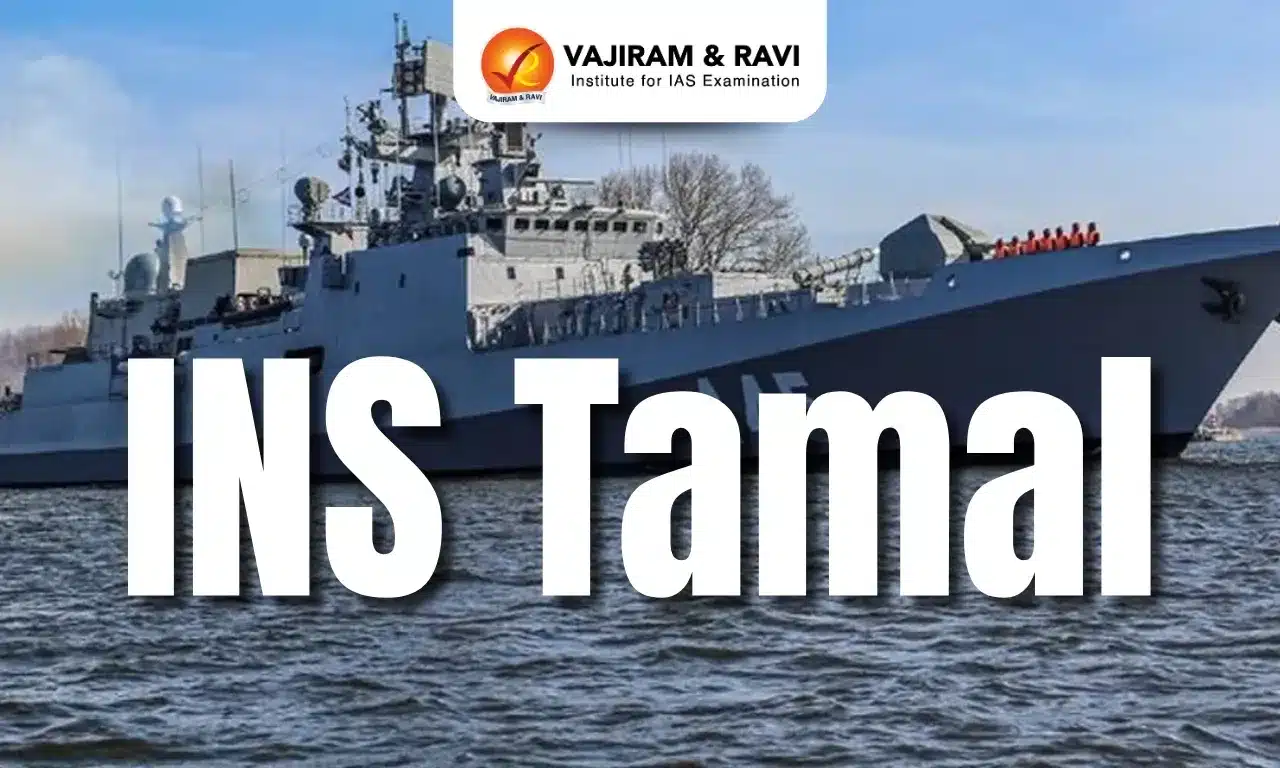
INS Tamal

INS Tamal

INS Tamal Latest News

The Indian Navy is all set to commission its latest stealth multi-role frigate Tamal on 01 Jul 2025 at Kaliningrad, Russia. 

About INS Tamal

  • It is the stealth multi-role frigate belonging to the series of Krivak class frigates inducted from Russia over the past two decades. 
  • The ship’s name, Tamal, symbolises the mythical sword used for combat by Indra - the King of the gods.
  • It is the second ship of the Tushil Class, which are the upgraded versions of their predecessors, Talwar and Teg classes having three ships each. 
  • It was built at Yantar Shipyard in Kaliningrad, Russia, and is the last warship to be inducted from a foreign source, in line with the Government of India’s impetus on Aatmanirbhar Bharat and Make in India initiatives.

Features of INS Tamal

  • It has 26% indigenous components, including the BrahMos long-range cruise missile for targeting both at sea and land.
  • It has significant upgrades in its arsenal in comparison to its predecessors, such as vertically launched surface-to-air missiles, improved 100 MM gun, new age EO/IR system in addition to the standard 30 MM CIWS, heavyweight torpedoes, urgent-attack anti-submarine rockets, and a host of surveillance and fire control radars and systems.
  • Force multipliers include Air Early Warning and Multi Role helicopters, which can operate from the deck of Tamal.
  • The combat capability of the ship is augmented by a host of Network Centric Warfare capabilities and advanced Electronic Warfare suite
  • Tamal punches well above its weight with a very high tonnage to firepower ratio, extended endurance, and a top speed in excess of 30 knots.
  • It has successively completed extensive sea trials undertaken over three months, proving its systems, weapons and sensors. 
  • Its mascot is inspired by the congruence of the ‘Jambavant’ the Immortal Bear King of Indian Mythology and the Russian National Animal - the Eurasian Brown Bear. 

Source: PIB

INS Tamal FAQs

Q1: What class of warship is INS Tamal?

Ans: It is Krivak-III class stealth guided missile frigate

Q2: What is BrahMos?

Ans: BrahMos is a long-range supersonic cruise missile system capable of being launched from land, sea, or air.

Lake Tahoe

Lake Tahoe

Lake Tahoe Latest News

Tragedy struck on Lake Tahoe recently when a boat capsized, leaving six people dead and two others missing.

About Lake Tahoe

  • It is a cobalt blue freshwater lake located in the Sierra Nevada Mountains, on the border of California and Nevada, United States.
  • It is the largest freshwater lake in the Sierra Nevada and the largest alpine lake in North America. 
  • It is situated at an elevation of 1,897 m above sea level and is the highest lake in the United States.
  • It is 22 miles long and 12 miles wide with 75 miles of shoreline. The surface area covers 191 square miles. 
  • Lake Tahoe’s deepest point is 1,645 feet, making it the second-deepest in the United States after Crater Lake in Oregon.
  • Lake Tahoe, with a water volume of 150 km3, is the largest lake by volume in the United States after the Great Lakes.
  • There are 63 streams that flow into Lake Tahoe and only one, the Truckee River, that flows out and into Pyramid Lake. Unlike most bodies of water in North America, Tahoe’s water never reaches the ocean.
  • Lake Tahoe is one of the purest bodies of water in the world, with 99.994% of the water pure.
  • The lake and the surrounding area of national forests have been developed as tourist resorts.

Source: HT

Lake Tahoe FAQs

Q1: Where is Lake Tahoe located?

Ans: Sierra Nevada Mountains, on the border of California and Nevada, United States.

Q2: What is the maximum depth of Lake Tahoe?

Ans: Lake Tahoe’s deepest point is 1,645 feet, making it the second-deepest in the United States after Crater Lake in Oregon.

Q3: Which river is the only outlet of Lake Tahoe?

Ans: Truckee River

Q4: What makes Lake Tahoe unique in terms of its water purity?

Ans: It contains 99.994% pure water.

Palm Tree

Palm Tree

Palm Tree Latest News

The National Green Tribunal (NGT) has sought a response from the Central Pollution Control Board (CPCB) and others in a matter related to the large-scale felling of palm trees in Bihar which is reportedly causing an increase in lightning-related deaths.

About Palm Tree

  • Palm is a member of the Arecaceae, or Palmae, a single family of monocotyledonous flowering plants of the order Arecales.
  • It is an evergreen plant which can grow in the form of shrubs, trees, or long, woody vines called lianas.
  • Distribution: It is distributed in America and in Asia, from India to Japan and south to Australia and the islands of the Pacific and Indian oceans, with Africa and Madagascar as a third but much less important palm region. 

Characteristics of Palm Tree

  • They are characterized by a tall, unbranched stem or, rarely, by a dichotomous branching stem (Hyphaene), and of the same diameter all along from base to top;
  • Palmate leaves, like hands, grow in a bunch at the end of a stem. Pinnate leaves are like feathers, growing all along either side of a stem.
  • Though many species of palms are sturdy and plentiful, as many as 100 species are endangered due to deforestation and unsustainable cultivation practices.
  • The palms with the greatest importance in world commerce are the coconut and the African oil palm (Elaeis guineensis); both are prime sources of vegetable oil and fat. 

Source: TH

Palm Tree FAQs

Q1: What are the uses of palm trees?

Ans: In addition to the fruit, other parts of the palm are used: the fermented sap (palm wine and alcohol), the heart (palm cabbage), the stem (furniture making), the fronds (roofing).

Q2: What is Palm Oil?

Ans: Palm oil is an edible oil that comes from the fruit of the oil palm tree (Elaeis guineensis). Crude palm oil, or “red palm oil,” is high in beta-carotene.

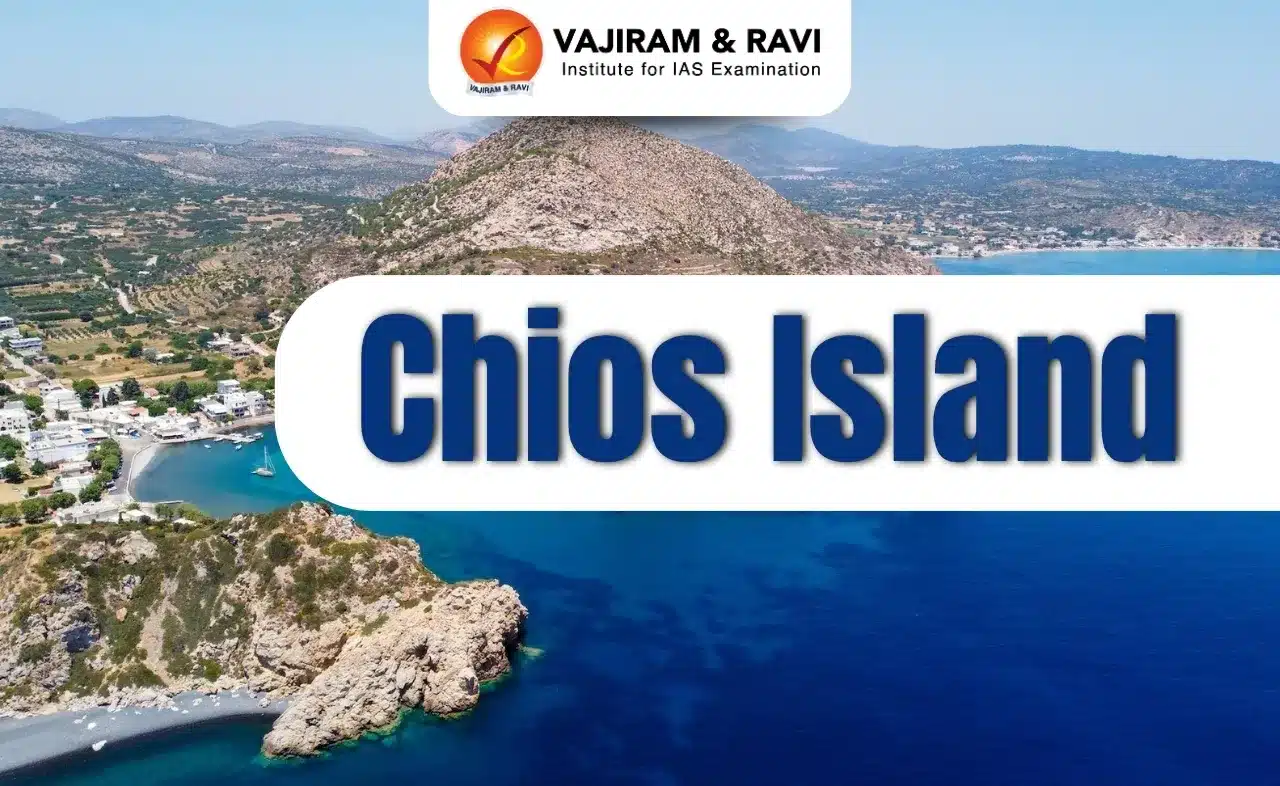
Chios Island

Chios Island

Chios Island Latest News

More than 100 firefighters assisted by water-dropping helicopters and planes were battling a large wildfire burning near the main town of the eastern Aegean island of Chios recently.

About Chios Island

  • It is a Greek island situated in the Aegean Sea.
  • It is the fifth-largest island in Greece, with a surface area of 842.29 sq.km. 
  • It is situated 5 miles (8 km) off the western coast of Turkey.
  • It is about 30 miles (50 km) long north-south and from 8 to 15 miles (13 to 24 km) wide.
  • It is traversed north-south by mountains culminating in Mount Pelinaíon (1,297 meters). 
  • The principal town of the island and seat of the municipality is Chios town.
  • Chios is notable for its exports of mastic gum, and the island is also known as "the Mastic Island." 
  • It is a very attractive island because of its lush vegetation, fine beaches, and unique  medieval  villages,  which  are kept in very good condition.
  • It is also famously rich in history, said to be the birthplace of Homer as well as several Greek writers and politicians, and historic records date back to the Neolithic Age, and examples of Byzantine architecture can be found across the island.

Source: TH

Chios Island FAQs

Q1: Is Chios in Greece or Turkey?

Ans: Chios is a Greek island.

Q2: Chios is located in which sea?

Ans: Aegean Sea

Q3: How far is Chios from the western coast of Turkey?

Ans: 5 miles (8 km)

Q4: What is the name of the highest mountain on Chios Island?

Ans: Mount Pelinaíon

Q5: What is Chios famously known for exporting?

Ans: Mastic gum

INS Nilgiri

INS Nilgiri

INS Nilgiri Latest News

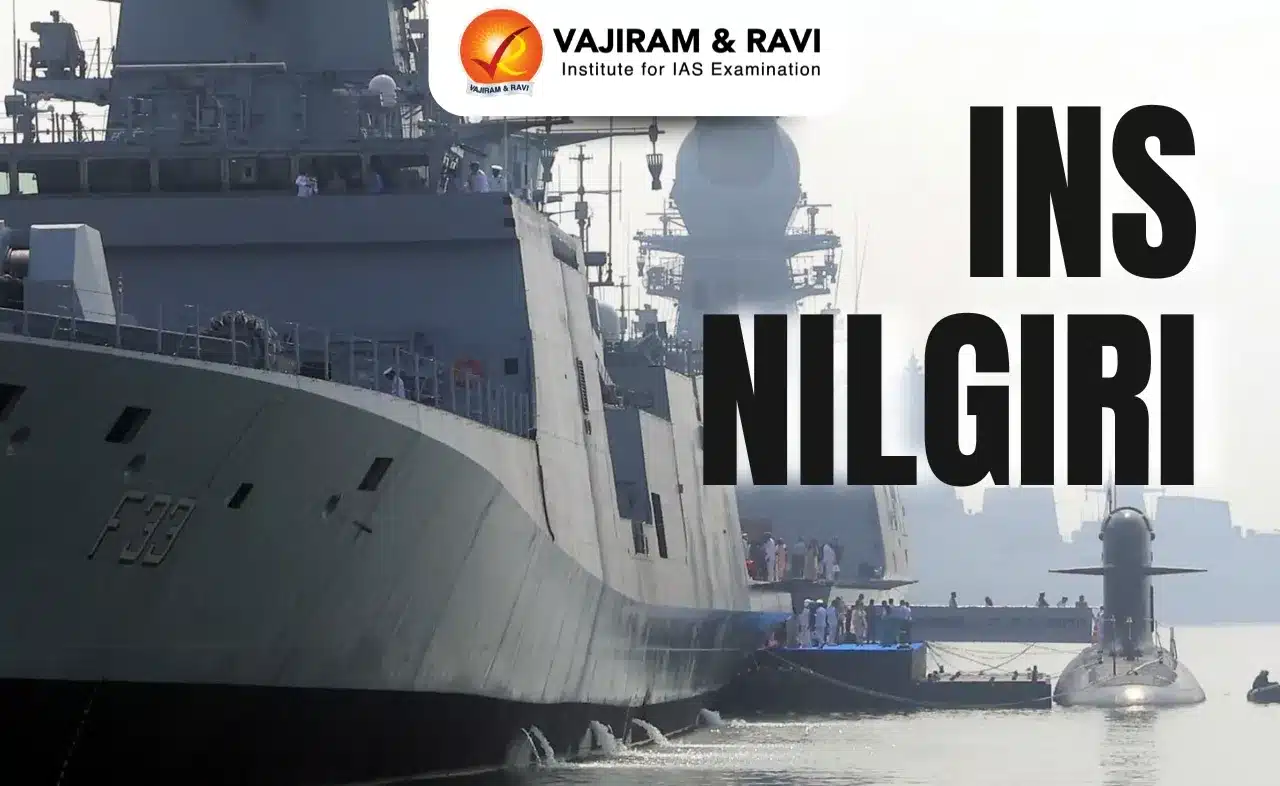
INS Nilgiri recently joined the Eastern Naval Command and would be an integral part of the Eastern Sword-Sunrise Fleet.

About INS Nilgiri

  • It is the first of the indigenously built Project 17A stealth frigates of the Indian Navy.
  • It is designed by the Indian Navy’s Warship Design Bureau and built at the Mazagon Dock Shipbuilders Limited (MDL), Mumbai.
  • The Nilgiri class is a design derivative of the indigenous Shivalik class stealth frigates (Project 17).
  • Other Ships in the Class: The remaining six frigates — Himgiri, Taragiri, Udaygiri, Dunagiri, Vindhyagiri, and Mahendragiri— are under construction at Mazagon Dock Shipbuilders Limited (MDL), Mumbai, and Garden Reach Shipbuilders and Engineers (GRSE), Kolkata.
  • INS Nilgiri would be an integral part of the Eastern Naval Command.

INS Nilgiri Features

  • INS Nilgiri is 149 meters long, with a displacement of approximately 6,670 tonnes.
  • It is powered by a sophisticated combined diesel and gas (CODAG) propulsion system.
  • It can achieve speeds of up to 28 knots.
  • The warship is enabled to operate independently without supporting vessels and to function as the flagship of the Naval task force.
  • Armed with 16 Barak-8 Surface-to-Air Missiles, INS Nilgiri offers strong anti-aircraft protection. 
  • Additionally, it includes 8 BrahMos missiles for anti-ship and surface-to-surface combat. 
  • The radar systems on board include MF-STAR for 360-degree cover, 3D AESA radar for the tracking of multi-targets, and Nishant radar for targeting. 
  • The Combat Management System (CMS) integrates all systems, which enables the smooth execution of network-centric warfare and cooperative operations with other platforms.

Source: TH

INS Nilgiri FAQs

Q1: What is INS Nilgiri?

Ans: It is a stealth frigates of the Indian Navy.

Q2: INS Nilgiri belongs to which project of the Indian Navy?

Ans: Project 17A

Q3: INS Nilgiri was built at which shipyard?

Ans: Mazagon Dock Shipbuilders Limited (MDL), Mumbai

Q4: What type of propulsion system is used in INS Nilgiri?

Ans: Combined Diesel and Gas (CODAG)

US Joins Israel in Iran Strikes: First Use of Bunker-Busting Bombs on Nuclear Sites

US Entry in Iran - Israel Conflict

US Entry in Iran - Israel Conflict Latest News

  • The United States entered the Israel-Iran conflict by bombing three Iranian nuclear facilities using advanced B-2 stealth bombers and bunker-busting bombs, including a strike on the heavily fortified Fordow Uranium Enrichment Plant. 

Key Takeaways From the US Strikes on Iran’s Nuclear Facilities

  • US President announced a major military strike on three Iranian nuclear sites—Fordow, Natanz, and Isfahan. 
  • The strikes, conducted using a full payload of bombs, mark the US’s entry into the ongoing Israel-Iran conflict.

US-Israel Alliance Reaches New Heights

  • The US has transitioned from support to direct military involvement in Israel’s offensive against Iran. 
  • Previously offering intelligence and defense assistance, the US now demonstrates "iron-clad" support through direct strikes, reinforcing Israel’s claims that Iran poses an existential nuclear threat.

A Shift from Trump’s ‘No Endless Wars’ Doctrine

  • President Trump, who campaigned against US involvement in foreign wars and promised military restraint, has taken a stark turn by ordering strikes on Iran. 
  • This contradicts his longstanding position, including his pledge to end the Ukraine conflict within 24 hours and avoid entanglement in the Middle East.

Strategic Victory for Israel

  • The US strike on Fordow has handed Israel a critical win, as it lacked the capability to destroy the deeply buried nuclear facility. 
  • This fulfills Israel’s long-standing objective of degrading Iran’s nuclear program and marks its strongest position against Iran since the 1979 Islamic Revolution.

A Humiliated and Weakened Iran

  • Iran is reeling under the impact of continuous Israeli assaults. 
  • With over 600 casualties in just over a week and the degradation of Iran-backed groups like Hamas and Hezbollah, the Islamic Republic is facing its weakest strategic moment in over four decades.

Erosion of the 'Axis of Resistance'

  • Israel’s sustained offensive has significantly weakened Iran’s regional proxies. 
  • The decline of Hamas and Hezbollah has not only isolated Iran but also paved the way for direct strikes on Iranian soil, with little resistance—a symbolic and strategic low for Tehran.

Echoes of Iraq: Legitimacy of US Strikes Questioned

  • Iran has condemned the US strikes as violations of its sovereignty and international law. 
  • Critics draw parallels to the 2003 Iraq invasion, where the US falsely claimed Iraq had Weapons of Mass Destruction. 
  • The move raises questions about Washington’s credibility and motives in the region, especially as nuclear-armed nations target a non-nuclear state.

Iran’s Nuclear Future in Question

  • Despite decades of resilience against sanctions and attacks, Iran’s scientific community now faces its toughest test. 
  • The world is watching to see if Iran will rebuild its nuclear program—and whether it will finally take the step toward developing nuclear weapons in response to escalating threats.

Escalating Middle East Turmoil

  • Iran’s potential retaliation through ballistic missile and rocket attacks in the Persian Gulf and Red Sea could disrupt shipping lanes, raise oil prices, and destabilize the region. 
  • The partial blockade of the Strait of Hormuz on Sunday marks a significant escalation.

Risk of Wider Regional Conflict

  • If Iran targets US bases or troops, the conflict could expand, drawing in Gulf nations like Saudi Arabia, UAE, Oman, and Qatar. 
  • Such a scenario would strain diplomatic and economic stability across the Middle East.

High Stakes for India

  • India has deep strategic and economic ties to the region. 
  • With over 8 million Indians residing in the Middle East and heavy dependence on regional oil supplies (60% of total needs), escalating tensions directly threaten Indian citizens, energy security, and inflation control.

Impact on India's Regional Initiatives

  • The India-Middle East-Europe Economic Corridor (IMEEC), a key geopolitical and trade initiative, depends on regional peace. 
  • Continued conflict could derail India’s long-term strategic interests and partnerships in the region.

Bunker-Buster MOP and B-2 Spirit Stealth Bomber

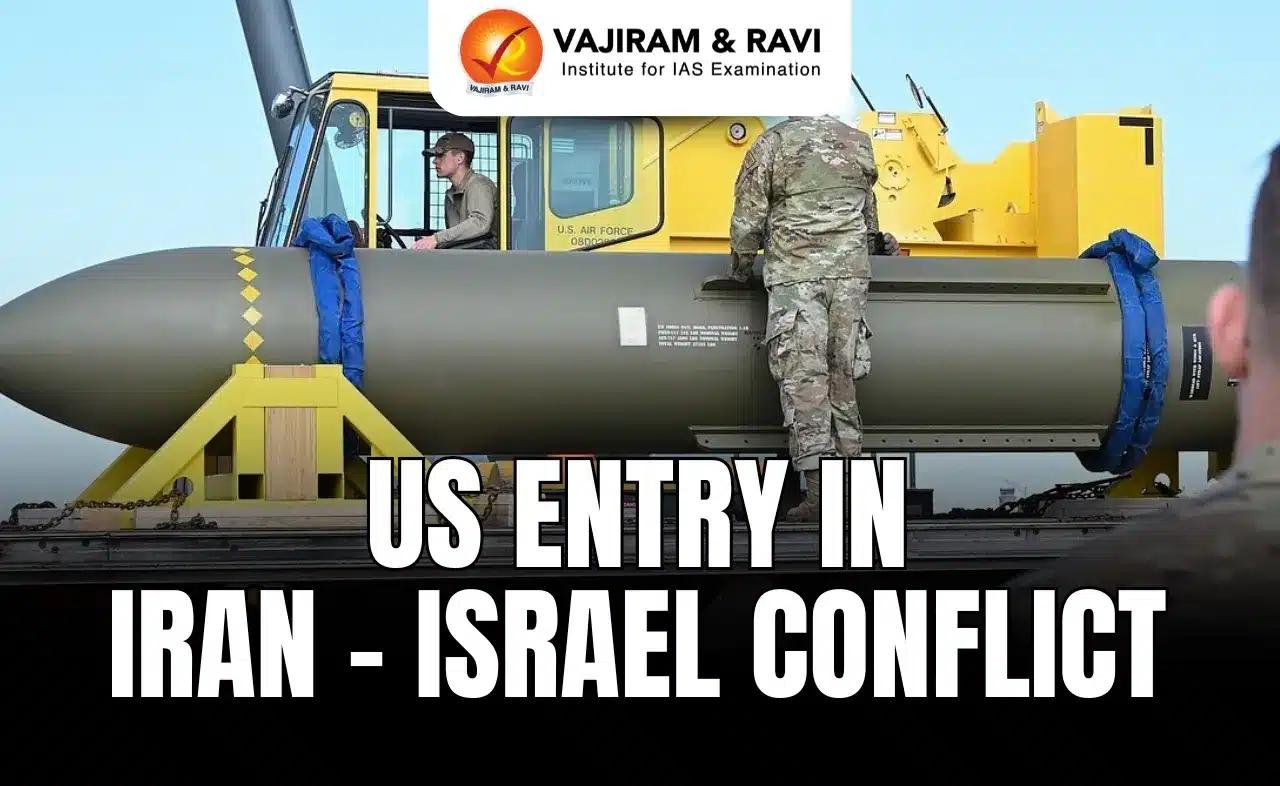
  • US used the GBU-57 Massive Ordnance Penetrator (MOP) to target Iran's deeply buried Fordow nuclear facility. 
  • The bomb, deployable only by the B-2 Spirit stealth bomber, was used for the first time.

Bunker-Buster MOP

  • The GBU-57 MOP is the US Air Force's most powerful non-nuclear bomb, capable of penetrating 60 meters of earth. 
  • It measures about 20.5 feet in length and 31.5 inches in diameter and weighs about 13,000 kgs
  • Developed post-Iraq invasion by Boeing, it targets fortified underground sites. 
  • Its first known combat use was in the recent US airstrikes on Iran’s Fordow nuclear facility.

B-2 Spirit Stealth Bomber

  • The B-2 Spirit is a long-range, stealth strategic bomber designed to evade advanced air defenses and deliver heavy payloads, including the GBU-57 MOP. 
  • Operated by the US Air Force, it combines cutting-edge stealth technology with global strike capability, making it a key asset in high-value, deep-penetration missions.

Source: IE | IE | CNN

US Entry in Iran-Israel Conflict FAQs

Q1: Which nuclear sites did the US bomb in Iran?

Ans: The US targeted Fordow, Natanz, and Isfahan—key sites in Iran’s nuclear program—using B-2 bombers and advanced munitions.

Q2: What bomb was used by the US in Iran strikes?

Ans: The US used the GBU-57 MOP, a powerful bunker-buster designed to destroy deeply buried fortified underground nuclear facilities.

Q3: Why is this strike significant for Israel?

Ans: Israel lacked capacity to destroy Fordow alone. US strikes fulfilled Israel's long-standing goal to cripple Iran’s nuclear program.

Q4: How does this affect regional stability?

Ans: The strike increases tensions in the Middle East, risks wider conflict, disrupts oil flow, and impacts global economic stability.

Q5: What is India's concern amid this escalation?

Ans: With 8 million citizens in the region and oil reliance, India fears instability, inflation, and risks to strategic interests.

Iran Moves to Block Strait of Hormuz: Global Oil Trade at Risk

Strait of Hormuz

Strait of Hormuz Blockade Latest News

  • Iran’s Parliament has approved a proposal to close the Strait of Hormuz, pending a final decision by the Supreme National Security Council, following US strikes on Iranian military sites. 
  • While previously seen as unlikely, the threat now appears serious.

Strait of Hormuz

  • The Strait of Hormuz is a narrow waterway that connects the Persian Gulf with the Gulf of Oman, eventually leading to the Arabian Sea. 
  • It serves as a crucial maritime passage for oil-exporting countries like Iran, Saudi Arabia, and the UAE. It handles a significant portion of the world’s oil trade.
  • Its location in the territorial waters of Iran and Oman adds to its geopolitical sensitivity.

Geographic Vulnerability

  • At its narrowest, the strait is just 33 km wide, with a 3 km wide shipping lane in each direction. 
  • This limited space makes it highly vulnerable to blockades or attacks on passing vessels.

Significance of the Strait of Hormuz

  • The Strait of Hormuz is the world’s most important oil and LNG transit route.
  • In 2024–25, over 25% of global seaborne oil trade and 20% of global oil and petroleum consumption passed through it.
  • Additionally, 20% of global LNG trade, mainly from Qatar, also transited the strait.

No Sea Route Alternatives

  • Geographically, there is no direct sea route alternative to bypass the Strait. 
  • Any disruption would severely affect global oil and gas flows, causing sharp price hikes and broader inflationary impacts.

Limited Overland Alternatives

  • Saudi Arabia and the UAE have overland pipelines—the 5 million bpd East-West pipeline and the 1.8 million bpd Fujairah pipeline, respectively.
  • However, these are insufficient compared to the 20 million bpd flow through Hormuz.

Higher Shipping Costs

Perceived risks in the region increase insurance premiums and security costs, making global shipping more expensive and further impacting global trade.

Iran to Block the Strait of Hormuz

Blocking or disrupting the Strait of Hormuz could involve laying sea mines, missile or bomb attacks on passing ships, detaining vessels, or launching cyberattacks on maritime systems.

Strategic and Diplomatic Constraints for Iran

  • Despite repeated threats, Iran has never actually closed the Strait, even during wartime
  • Experts say such action would harm Iran itself, especially its oil exports to China—its main customer—and strain recent diplomatic gains with Saudi Arabia and the UAE.

Global Consequences of a Blockade

A blockade would not only disrupt global energy markets, especially affecting China (which sources 47% of its seaborne crude from the Gulf), but would also provoke a strong military response, likely from the US Fifth Fleet.

Impact on India

  • India, the third-largest crude oil consumer, relies on imports for over 85% of its oil and about 50% of its natural gas. 
  • Nearly 47% of India’s May crude imports transited through the Strait, making it a lifeline for supplies from West Asian countries like Iraq, Saudi Arabia, UAE, Qatar, and Oman.

Price Volatility Is the Main Risk

  • While India has diversified oil sources—including Russia, the US, Africa, and Latin America—a blockade of Hormuz would disrupt global supply chains.
  • This, in turn, will cause oil and gas prices to spike, even if availability is not immediately compromised.
  • A price surge would impact trade deficit, forex reserves, rupee value, and inflation, stressing the overall economy.

China’s Shift Could Intensify Demand Pressure

If Iran’s exports to China are blocked, Beijing may turn to other suppliers, increasing competition and further inflating prices, impacting India’s energy costs and broader economic stability.

Ripple Effects on Freight and Refining Margins

Disruptions would lead to higher freight rates and tanker insurance premiums, shrinking refinery margins across Asia, according to S&P Global’s analysis.

India’s Preparedness Amid Strait of Hormuz Tensions

Due to rising tensions in the Middle East, oil prices could temporarily rise to USD 80 per barrel, according to analysts.

India’s Key Energy Routes Remain Largely Unaffected

  • Russian oil reaches India via the Suez Canal, Cape of Good Hope, or Pacific routes, bypassing the Strait of Hormuz.
  • Qatar’s LNG supplies to India also do not rely on the Strait.
  • Other LNG sources like Australia, Russia, and the US remain unaffected.

Diversification and Strategic Reserves Offer Cushion

  • India can:
    • Tap into its strategic oil reserves (9–10 days' worth of imports)
    • Increase imports from alternate suppliers like the US, Nigeria, Angola, and Brazil—though at higher freight costs

Potential Government Measures to Control Inflation

To offset rising domestic prices, the government may consider price subsidies, especially for diesel and LPG, to curb inflationary pressure.

Source IE | IT | HT

Strait of Hormuz Blockade FAQs

Q1: What is the Strait of Hormuz?

Ans: It’s a narrow waterway connecting the Persian Gulf to global markets, handling one-fifth of global oil and LNG trade.

Q2: Why is Iran threatening to block it?

Ans: In retaliation to US strikes, Iran’s parliament approved closure, raising fears of a serious disruption in global oil trade.

Q3: How will a blockade affect oil prices?

Ans: Analysts warn oil prices could shoot to $120–$150 per barrel, leading to inflation and economic shocks worldwide.

Q4: How is India vulnerable to this?

Ans: Nearly 47% of India’s crude flows through the strait. A blockade could hike prices, widen trade deficit, and fuel inflation.

Q5: Can Iran afford to block the strait?

Ans: Experts doubt it. Iran relies on the strait for oil exports to China and regional ties with UAE, Saudi Arabia.

India Opens Doors to Foreign Universities: Challenges and Opportunities

Foreign Universities in India

Foreign Universities in India Latest News

  • Several foreign universities are setting up branch campuses in India. 
  • So far, seven universities from the U.K., five from Australia, and one each from the U.S., Italy and Canada are in the process of obtaining necessary approvals or have done so already.

Introduction

  • India is witnessing a landmark shift in its higher education landscape as several globally renowned foreign universities gear up to establish campuses in the country. 
  • Facilitated by the UGC (Setting up and Operation of Campuses of Foreign Higher Educational Institutions in India) Regulations, 2023, and reinvigorated by the National Education Policy (NEP) 2020, this development is set to diversify academic opportunities for Indian students. 
  • With campuses likely in GIFT City (Gujarat International Finance Tec-City) and Navi Mumbai, this move aligns with India's ambition to become a global education hub.

Drivers Behind Foreign University Expansion into India

  • Global Decline in Domestic Enrolments
    • Post-World War II, countries in the Global North expanded their higher education systems significantly. 
    • However, in recent decades, declining birth rates have led to stagnation or a fall in domestic student enrolments. Consequently, many institutions became increasingly dependent on international students to sustain revenues and infrastructure.
    • In 2023, international students comprised 22% of total enrolments in U.K. universities, 24% in Australia, and 30% in Canada.
    • U.S. universities had 6% international enrolments, but elite institutions like the Ivy League saw nearly 27%.
  • Recent Policy Constraints in Traditional Host Countries
    • Host nations like Australia, Canada, and the U.K. have introduced visa restrictions and capped international student admissions. 
    • These policies have adversely impacted university revenues, leading to faculty layoffs and resource cuts. 
    • In response, foreign universities are now exploring direct in-country presence in emerging markets like India.

Opportunities in the Indian Higher Education Market

  • Expansive Student Demographics
    • India’s higher education sector hosts over 40 million students. With a gross enrolment ratio of under 30% (as per AISHE 2021-22), there is vast room for growth. 
    • The increasing aspirations of a young, urban, and economically advancing population make India an attractive destination for foreign universities.
  • Lack of Quality Institutions
    • While India boasts some globally ranked institutions such as IITs and IIMs, the overall quality of its higher education landscape is uneven. 
    • Most public and private universities remain mediocre in teaching standards, infrastructure, and research output. Branch campuses from reputed foreign universities could address this quality gap by offering globally benchmarked curricula and learning environments.
  • Local Access to Global Degrees
    • Many Indian students aspire to study abroad not only for academic excellence but also to secure migration pathways. 
    • However, a growing segment prefers to stay in India due to personal or financial constraints. 
    • Foreign university campuses in India offer a valuable alternative: obtaining a foreign degree without leaving the country.

Structural and Market-Level Challenges

  • Affordability Concerns
    • Although India has a large student population, affordability remains a critical issue. 
    • The cost of foreign university education, even if offered within India, may still exceed what an average Indian household can bear. 
    • Ensuring cost-effective fee structures and scholarships will be essential for the success of these ventures.
  • Precedents of Mixed Success
    • Experiences of foreign branch campuses in regions such as China, Southeast Asia, and Central Asia have been mixed. 
    • While some ventures succeeded, others faced regulatory, financial, or student enrolment challenges and exited. India presents its own complex regulatory, cultural, and economic dynamics.
  • Limited Initial Impact
    • In the near to medium term, the actual number of branch campuses and their total enrolment figures are expected to remain modest. 
    • The initial response from Indian students will play a crucial role in determining long-term viability and scaling of such campuses.

Regulatory Framework and Policy Evolution

  • The University Grants Commission (UGC) notified the Foreign Higher Educational Institutions (FHEI) Regulations, 2023, which provide a legal and regulatory foundation for foreign universities to operate in India. Key features include:
    • Autonomy in curriculum, admission policies, and faculty recruitment.
    • Provisions for repatriation of surplus funds.
    • Requirements to be among the world’s top 500 universities in global rankings or demonstrate exceptional expertise in niche disciplines.
  • This policy marks a significant liberalization of India’s higher education governance and reflects its global ambitions outlined in the NEP 2020.

Future Outlook

  • If implemented successfully, foreign university campuses in India could:
    • Enhance student choices and academic quality.
    • Encourage Indian institutions to raise standards through competitive pressure.
    • Attract students from neighbouring South Asian and African nations.
  • However, long-term success will depend on a supportive policy environment, pricing strategies, student perception, and the ability to adapt to Indian realities without compromising academic standards.

Source: TH

Foreign Universities in India FAQs

Q1: Why are foreign universities setting up campuses in India?

Ans: Declining enrolments and policy constraints in their home countries have prompted foreign universities to explore India as a promising education market.

Q2: Where will most foreign university campuses be located in India?

Ans: The majority of planned campuses will be situated in GIFT City, Gujarat, and Navi Mumbai.

Q3: What regulations govern the entry of foreign universities into India?

Ans: The UGC’s 2023 FHEI Regulations allow top-ranked foreign universities to establish autonomous campuses in India.

Q4: What advantages do foreign university campuses offer Indian students?

Ans: They provide access to globally recognized degrees and quality education without the need to study abroad.

Q5: What are the main challenges for foreign universities entering India?

Ans: Key challenges include affordability for Indian students, regulatory compliance, and uncertain initial student demand.

Enquire Now