Harvest Festivals in India, List, Significance

Harvest Festivals in India

Harvest Festivals in India are an important celebration in the agricultural community as a mark of onset or end of harvest festival. The festivals signify the traditional roots of our country and its cultural diversity. The harvest festivals are celebrated across 28 states and 8 union territories, representing the celebrations and unique traditions. In this article, we are going to look at the list of harvest festivals in India and their importance. 

Harvest Festivals in India

The harvest festivals in India mark the celebrations of the agricultural yield of the season. Farmers show their gratitude to nature, god and deities for the abundance of their crops for the harvest. The festivals of India are aligned with the agricultural calendar and vary depending on the crop cycles, state and local customs. Every festival is of spiritual and cultural importance representing the cultures of the region.

List of Harvest Festivals in India

Here is the list of the most important harvest festivals in India along with their states: 

List of Harvest Festivals in India

Festival Name

States Celebrated

Date/Time

Makar Sankranti

Pan India (especially in Gujarat, Punjab, Tamil Nadu, etc.)

January 14

Baisakhi

Punjab, Haryana, Delhi

April 13/14

Lohri

Punjab, Haryana, Delhi

January 13

Bhogali Bihu

Assam

January (around mid-January)

Onam

Kerala

August/September

Vishu

Kerala

Mid-April

Pongal

Tamil Nadu

January (typically over four days)

Puthandu

Tamil Nadu

Mid-April

Nuakhai

Odisha

September (Panchami Tithi)

Gudi Padwa

Maharashtra, Karnataka, Andhra Pradesh

March/April

Ugadi

Andhra Pradesh, Telangana and Karnataka

March/April

Nabanna

West Bengal

November/December

Vaisakha

Bihar

April/May

Chhath Puja

Bihar, Jharkhand, Uttar Pradesh

October/November

Wangala

Meghalaya, Assam

November

Ka Pomblang Nongkrem

Meghalaya

November

Dree Festival

Arunachal Pradesh

July 5

Hornbill Festival

Nagaland

December (first week)

Hemis Festival

Ladakh

July

Indian Harvest Festivals

Over 20 harvest festivals celebrate the completion of crop cycles across states. The Festivals are: 

  • Makar Sankranti (Jan 14, 2025): Marks the sun’s transition into Capricorn; celebrated with bonfires, kite flying, and festivities across Gujarat, Punjab, Himachal Pradesh, West Bengal, and Tamil Nadu.
  • Baisakhi (Apr 13/14): Celebrated in Punjab and Haryana, marking the rabi harvest with Bhangra, Gidda, fairs, and folk performances.
  • Pongal (Jan, Tamil Nadu): A four-day festival thanking nature for the rice harvest, featuring rituals for the Sun God, cows, and Lord Indra, along with sweet rice dishes and rangoli decorations.
  • Onam (Aug–Sep, Kerala): A 10-day festival celebrating King Mahabali’s return, known for Onam Sadhya feasts, floral decorations, and snake boat races.
  • Bihu (Assam): Celebrated thrice yearly—Bohag Bihu (April) marks the Assamese New Year, Kati Bihu (October) is for harvest prayers, and Magh Bihu (January) celebrates the harvest’s completion.
  • Nabanna (Nov–Dec, West Bengal): Celebrates the new rice harvest with offerings to Goddess Lakshmi, festive foods, and fairs featuring Payesh (kheer).
  • Lohri (Jan 13, Punjab): Marks winter’s end with bonfires, singing, and dancing, especially significant for newlyweds and newborns.

Harvest Festivals of India Significance

Harvest Festivals in India hold more importance than just agricultural significance. Agricultural Festivals in India hold economic, spiritual and social economic values:

  • Harvest festivals are a way to express gratitude to nature and deities. 
  • The traditional manner of celebrating this festival shows the cultural and regional heritage of India. 
  • The festivities help promote the local art and the artisans and tourism. 
  • The celebration of these cultural events fostering unity. 
  • Nature and divinity is reinforced through prayers and rituals. 

Harvest Festivals of India FAQs

Q1: What are the five major harvest festivals of India?

Ans: The five major harvest festivals of India are Makar Sankranti, Baisakhi, Pongal, Onam, and Bihu.

Q2: Is Chhath a harvest festival?

Ans: No, Chhath is a sun-worship festival dedicated to Lord Surya rather than a traditional harvest festival.

Q3: Which three states of India celebrate a harvest festival on the same day?

Ans: unjab (Lohri), Tamil Nadu (Pongal), and Assam (Magh Bihu) celebrate harvest festivals around January 13-15.

Q4: Is Basant Panchami a harvest festival?

Ans: No, Basant Panchami marks the arrival of spring and is dedicated to Goddess Saraswati, not the harvest.

Q5: Is Makar Sankranti a harvest festival?

Ans: Yes, Makar Sankranti is a major harvest festival that marks the beginning of the harvest season and the sun’s transition into Capricorn.

Daily Editorial Analysis 26 June 2025

Daily Editorial Analysis

Enabling Voting Rights for Migrants

Context

  • Bihar, with one of the highest out-migration rates in India, is set for elections later this year.
  • In the 2024 Lok Sabha polls, the state's voter turnout was only 56%, well below the national average of 66%.
  • A key reason for this low turnout is the large migrant population, many of whom could not return home to cast their votes.
  • In this context, the present article analyses various options to enable migrants—both inter- and intra-State—to exercise their voting rights, highlighting the need for a multi-pronged approach.

Migration Trends and Risk of Voter Disenfranchisement

  • As of 2021, India's migration rate stood at 28.9%, with most migrations occurring for marriage, especially among women.
  • However, about 10% of migrants relocate for work, a figure notably higher in States like Bihar.
  • With rising labour migration from poorer to richer regions, many citizens risk being disenfranchised unless voting mechanisms for migrants are implemented.
  • Although public discussions have taken place and the Election Commission of India proposed a concrete solution in 2024, no unified system to ensure voting access for migrants has yet been adopted.
  • Distinct strategies are required for different categories of migrants.

Proposed Measures for Intra-State Migrants

  • Intra-State migrants—who make up around 85% of the migrant population—could potentially return home to vote if supported adequately.
  • Enforce statutory holidays on polling days to allow workers to vote without wage loss.
  • Arrange special bus services before and on polling days to facilitate travel to home constituencies.

Mechanisms to Enable Voting Rights for Inter-State Migrants

  • Need for Tailored Mechanisms
    • Inter-State migrants, especially those in informal, low-paying jobs, face unique challenges in exercising their voting rights.
    • A one-size-fits-all approach is inadequate; multiple mechanisms must be explored and implemented.
  • Remote Electronic Voting Machines (RVMs)
    • Pilot Initiative: In 2023, the ECI introduced Remote Electronic Voting Machines (RVMs), each capable of catering to 72 constituencies.
      • RVMs, developed by BEL and ECIL, enable safe, non-networked remote voting for migrants.
      • It used dynamic ballot displays and barcode-based constituency identification for up to 72 constituencies.
    • Challenges: Political parties raised concerns about lack of transparency, identification issues, and the model code of conduct.
    • Administrative Hurdles: The need to pre-register migrants, assess constituency-wise presence, and deploy RVMs across cities makes scaling difficult—especially in Lok Sabha elections.
    • Despite flaws, RVMs represent a significant first step. With improvements and consultations, they could eventually benefit many migrants.
  • Postal Ballots
    • Existing Model: Used for armed forces personnel.
    • Extension to Migrants: Would require pre-registration, ballot issuance, and return mechanisms.
    • Feasibility: Easier to implement than RVMs but still requires major logistical coordination by the ECI.
  • Changing Voting Constituency
    • Target Group: Long-term migrants with at least six months of residence.
    • Advantages: Empowers migrants to influence local governance and push for inclusive policies.
    • Concerns: May face resistance from local residents but offers long-term democratic integration of migrants.
  • Enrolment of Women Migrants
    • Key Demographic: A large number of women migrate post-marriage.
    • Recommendation: Targeted voter registration drives should be launched to include them in electoral rolls at their new residences.
  • A combination of RVMs, postal ballots, constituency-switching, and focused enrolment drives—especially for women—can ensure greater electoral inclusion of India’s vast migrant population.

Conclusion

  • Given the diversity among migrants, enabling their voting rights is complex.
  • A mixed approach combining multiple mechanisms is essential to ensure broader participation of both inter- and intra-State migrants.

A Lofty Concept, a Governor, and Unwanted Controversy

Context

  • The recent controversy in Kerala surrounding the placement of a Bharat Mata picture by the Governor at official functions has ignited a significant debate about constitutional propriety, symbolism, and the role of historical imagery in public institutions.
  • At the heart of this issue lies a broader question: can unofficial, emotionally charged symbols be given official status in a constitutional democracy?
  • This incident, seemingly minor, raises critical concerns about constitutional decorum, the limits of gubernatorial authority, and the dangers of political symbolism being conflated with national identity.

An Overview of the Controversy

  • The controversy began when the Governor of Kerala displayed a painting of Bharat Mata, a female figure clads in a saffron sari, holding a spear, and accompanied by a lion, at official events held in Raj Bhavan.
  • The room, adorned with this image and a brass lamp placed before it, has become the site of official functions.
  • The Governor regularly bows before the picture, offers floral tributes, and lights the lamp, treating it as an integral ceremonial part of the function.
  • The Kerala government, however, has raised objections on constitutional grounds, arguing that such a representation of Bharat Mata is not a nationally recognised symbol, unlike the national flag, anthem, or emblem.
  • In protest, the Kerala government has opted out of official events held under the visual presence of this picture.

Symbolism, The Freedom Struggle, The Constitutional and Legal Standpoint

  • Symbolism and The Freedom Struggle
    • Historically, the slogan ‘Bharat Mata ki Jai’ was a potent emotional cry during the Indian freedom struggle.
    • Chanted at the height of anti-colonial resistance, it stirred patriotism among freedom fighters.
    • However, this powerful slogan operated largely without a consistent or official visual representation of Bharat Mata.
    • The emotional resonance was tied more to the abstract idea of the nation than to a standardised image.
    • While the personification of India as a mother gained traction in the 19th century, the modern, saffron-clad depiction of Bharat Mata has clear ideological roots.
    • Bankim Chandra Chattopadhyay first introduced the idea of a motherland in Anandamath, though his symbol was Banga Mata, not Bharat Mata.
    • Abanindranath Tagore later painted a goddess-like image that Sister Nivedita popularised as Bharat Mata.
    • Yet, even during the peak of the national movement, no particular image of Bharat Mata was ever adopted officially.
  • The Constitutional and Legal Standpoint
    • The Indian Constitution provides no legal or symbolic status to any image of Bharat Mata.
    • While emotional and cultural expressions are part of the democratic ethos, they cannot override constitutional principles or official protocol.
    • The picture used by the Governor, although historically grounded, has never been formally adopted by the nation.
    • Furthermore, it has become prominently associated with ideological organisations like the Rashtriya Swayamsevak Sangh (RSS) and the Bharatiya Janata Party (BJP).
    • This association politicises the symbol, making its presence in official state functions problematic and potentially exclusionary in a secular and pluralistic nation.
    • B.R. Ambedkar’s emphatic declaration in the Constituent Assembly that a Governor has no functions which he can discharge by himself underlines the constitutional limits on the gubernatorial office.
    • The Governor is bound by the advice of the elected government, especially in matters concerning the conduct and setting of official functions.
    • Displaying a symbol that is neither nationally endorsed nor inclusive in its appeal breaches the principles of impartiality and secularism that govern constitutional offices.

The Nehruvian Ideal of Bharat Mata, Nationalism, Imagery, and Modern Governance

  • The Nehruvian Ideal of Bharat Mata
    • Pandit Jawaharlal Nehru’s interpretation of Bharat Mata in The Discovery of India is particularly instructive.
    • For Nehru, Bharat Mata was not a deity or a goddess-like figure but a symbol of the people of India, their hopes, struggles, and collective destiny.
    • When asked to explain the cry ‘Bharat Mata ki Jai’, Nehru described Bharat Mata as ‘these millions of people,’ emphasising the humanistic and democratic core of the nation.
    • This view resonates more closely with the secular and inclusive ideals enshrined in the Constitution, as opposed to mythologized or sectarian visual symbols.
  • Nationalism, Imagery, and Modern Governance
    • The debate reflects a deeper tension in Indian nationalism: the contrast between inclusive civic nationalism and symbolic ethno-religious nationalism.
    • Gandhi’s nationalism was rooted in moral principles, pluralism, and unity in diversity.
    • In contrast, the use of anthropomorphic images with religious or sectarian connotations tends to exclude rather than unite, reinforcing ideological boundaries rather than dissolving them.
    • The resurgence of such imagery in contemporary political discourse risks regressing to a form of 19th-century nationalism, which no longer fits the complex social and cultural fabric of 21st-century India.
    • India's vast diversity cannot be adequately represented by a single image, particularly one that resembles a specific religious archetype.

Governor vs. Government: A Pattern of Conflict

  • The Kerala episode is not an isolated incident. Conflicts between Governors and State governments have been a recurring theme in Indian federal politics.
  • While the Supreme Court has laid down clear guidelines limiting gubernatorial discretion, tensions persist, often due to political differences between the central and state governments.
  • Raj Bhavan, like Rashtrapati Bhavan, is not merely a personal residence; it is an institution that hosts constitutional functions.
  • Any symbol used in such a space must carry the legitimacy of national endorsement and the neutrality of state institutions.
  • Allowing personal or ideological symbolism to seep into these spaces weakens institutional neutrality and provokes avoidable political confrontations.

Conclusion

  • The Raj Bhavan controversy in Kerala is not just about a picture; it is about constitutional fidelity, democratic symbolism, and institutional responsibility.
  • The Governor, as a constitutional head, must uphold the values of neutrality, inclusiveness, and legality.
  • Symbols matter, especially in a country as diverse and sensitive as India.
  • When personal or ideological symbols are given official sanction without legal basis, it challenges the very spirit of democratic governance.

A Lofty Concept, a Governor, and Unwanted Controversy FAQs

Q1. Why did the Kerala government oppose the Bharat Mata picture?
Ans. The Kerala government opposed the Bharat Mata picture because it is not a constitutionally recognized national symbol.

Q2. What was the Governor’s action at official functions?
Ans. The Governor placed a picture of Bharat Mata at official functions, bowed before it, offered flowers, and lit a lamp as part of the ceremony.

Q3. How did Nehru define Bharat Mata?
Ans. Nehru defined Bharat Mata as the people of India themselves, not as a divine or anthropomorphic image.

Q4. Is the Governor allowed to act independently in such matters?
Ans. No, the Governor is constitutionally required to act on the advice of the elected state government in such matters.

Q5. What does this controversy highlight?
Ans. This controversy highlights the conflict between ideological symbolism and the constitutional norms that govern public institutions.

Source: The Hindu


Trump’s Geopolitical Disruption and the Reordering of Eurasia

Context:

  • The article explores how US President Donald Trump's foreign policy interventions—ranging from military action in Iran to his controversial stance on NATO (questioning its relevance)—are reshaping geopolitical dynamics across Eurasia.
  • It underscores the emergence of Germany as a strategic leader in Europe, the shifting power structures in the Middle East, and the reverberations of US disengagement in the Indo-Pacific.
  • These transformations signal the birth of a new geopolitical order with major implications for global and regional actors, including India.

NATO in Flux - Trump and Transatlantic Tensions:

  • NATO under pressure: The 32-member NATO summit (in The Hague) is marked by growing uncertainty about the alliance’s future.
  • Trump’s challenge: His repeated questioning of NATO’s relevance and demands for increased European defence spending are pushing Europe to reassess its security dependencies.
  • Shift in leadership focus: With US reliability under question, Germany is emerging as a new strategic anchor within Europe. 

Germany’s Strategic Reorientation - From Reluctance to Leadership:

  • Historical backdrop: From a constrained post-WWII role to a reunified “economic giant, geopolitical dwarf.”
  • Turning point (2022):
    • Chancellor (former) Olaf Scholz’s declaration of a Zeitenwende — a historic turning point — marked the beginning of Germany’s strategic reorientation.
    • Russia’s Ukraine invasion compelled Germany to allocate €100 billion to modernise the Bundeswehr (German armed forces) and embrace NATO’s 2% GDP defence spending goal.
  • Leadership under Merz: Chancellor Friedrich Merz is consolidating this transformation by actively leading NATO’s initiatives and deploying combat-ready troops in Lithuania. 

US Middle East Strategy - Disruption and Normalisation:

  • Military and diplomatic shocks: Trump bombed Iranian nuclear sites while facilitating temporary ceasefires and exploring the “Cyrus Accords” to normalise Israel-Iran ties.
  • Abraham Accords legacy: His earlier term saw Arab-Israel normalisation; and current strategies aim to deepen these changes, potentially involving Saudi Arabia and Iran.
  • Regional implications: The weakening of Iran and shifting alliances are recalibrating the security dynamics of the Middle East.

Indo-Pacific Resonance - Anxiety Amid US Disengagement:

  • Absence at NATO summit: No representatives from Japan, South Korea, Australia, or New Zealand were present—signalling drift in Asia-Europe security linkages.
  • US commitment in doubt: Trump’s reluctance to label Russia as a threat and his non-affirmation of Article 5 of Washington Treaty (collective defence) has unsettled US allies in Asia.
  • Need for strategic autonomy: US allies in Asia may pursue more independent and regional security arrangements.

Rethinking Eurasian Security - A Structural Transformation:

  • Security needs political recalibration: More defence spending is not enough; countries must reimagine their regional partnerships.
  • Signs of systemic change: From the Ukraine war to strained NATO cohesion and Iran’s internal turmoil, the geopolitical landscape of Eurasia is shifting dramatically.
  • Emergence of new regional poles: A more assertive Germany, Middle East realignments, and Indo-Pacific autonomy represent a tripartite reordering of Eurasia.

India’s Strategic Positioning in a Reordered Eurasia:

  • Multi-regional engagement: India straddles the Indo-Pacific, Middle East, and Europe, giving it a unique strategic advantage.
  • Policy diversification: New Delhi is deepening ties with Europe, engaging with the Middle East across divides, stabilizing ties with China and strengthening relationships with ASEAN, Japan, Australia, and South Korea.
  • Balancing act with Trump’s America: Even as India partners with the US, it is building the capacity to navigate an uncertain world order marked by power transitions.

Conclusion:

  • The global order is witnessing a tectonic shift as Trump’s disruptive strategies force Eurasia into a structural recalibration.
  • With Germany asserting leadership in Europe, the Middle East moving toward regional balancing, and the Indo-Pacific exploring strategic autonomy, the era of US-led security guarantees is being fundamentally questioned.
  • For India, this moment offers both challenge and opportunity—requiring nimble diplomacy and robust strategic foresight.

Trump’s Geopolitical Disruption and the Reordering of Eurasia FAQs

Q1. How is Germany repositioning itself within NATO amidst evolving European security dynamics?

Ans. Germany is transitioning from a “reluctant power” to a “security provider” by modernising its military, increasing defence spending, and taking frontline leadership roles within NATO.

Q2. What strategic implications does Trump's Middle East policy have for regional balance and alliances?

Ans. Trump's policy, marked by bombing Iran and expanding the Abraham Accords, is shifting regional power balances by weakening Iran and encouraging Arab-Israel rapprochement.

Q3. Why is the notion of “strategic autonomy” gaining prominence in Europe and the Indo-Pacific?

Ans. Doubts over US commitment under Trump are compelling allies in Europe and Asia to enhance defence capabilities and consider independent security strategies.

Q4. In what ways is the Indo-Pacific affected by shifting US foreign policy priorities?

Ans. The absence of key Indo-Pacific allies from the NATO summit and declining US engagement are prompting regional actors to rethink security cooperation frameworks.

Q5. How is India adapting to the emerging geopolitical order in Eurasia?

Ans. India is diversifying strategic partnerships across Europe, the Middle East, and the Indo-Pacific while maintaining balanced engagement with the US to safeguard its interests

Source: IE

Daily Editorial Analysis 26 June 2025 FAQs

Q1: What is editorial analysis?

Ans: Editorial analysis is the critical examination and interpretation of newspaper editorials to extract key insights, arguments, and perspectives relevant to UPSC preparation.

Q2: What is an editorial analyst?

Ans: An editorial analyst is someone who studies and breaks down editorials to highlight their relevance, structure, and usefulness for competitive exams like the UPSC.

Q3: What is an editorial for UPSC?

Ans: For UPSC, an editorial refers to opinion-based articles in reputed newspapers that provide analysis on current affairs, governance, policy, and socio-economic issues.

Q4: What are the sources of UPSC Editorial Analysis?

Ans: Key sources include editorials from The Hindu and Indian Express.

Q5: Can Editorial Analysis help in Mains Answer Writing?

Ans: Yes, editorial analysis enhances content quality, analytical depth, and structure in Mains answer writing.

Integrated Biodiversity Assessment Tool Alliance

Integrated Biodiversity Assessment Tool Alliance

Integrated Biodiversity Assessment Tool Alliance Latest News

Recently, the integrated biodiversity assessment tool (IBAT) Alliance announced that its 2024 investment in biodiversity data reached a record level of $2.5 million — an increase from $1.2 million in 2023.

About Integrated Biodiversity Assessment Tool Alliance

  • It was founded in 2008 as collaboration between four of the world’s largest and most influential conservation organizations.
  • The four organisations that form part of the Alliance are
  • BirdLife International, Conservation International, the International Union for Conservation of Nature and the United Nations Environment Programme World Conservation Monitoring Centre.
  • IBAT has been a trusted resource for organizations worldwide, supporting the private sector, governments, not-for-profits, and research institutions in making informed biodiversity decisions for nearly two decades.
  • It licences commercial access to the IBAT platform - the world’s most authoritative biodiversity data platform, providing trusted data to assess biodiversity risks and align with global frameworks to support nature-positive goals.
  • It provides datasets which are the World Database of Protected Areas (WDPAs), World database of Key Biodiversity Areas (WDKBA) and the IUCN Red list of Threatened Species.
  • It also provides derived datasets - the Rarity-Weighted Richness layer and Species Threat Abatement and Restoration or STAR metric.
  • The IBAT platform provides unique access to these datasets and layers helping to inform your world-leading biodiversity decisions.
  • It is supported by a network of conservation and scientific expertise. This collaboration ensures IBAT provides the gold standard in biodiversity data, helping organizations navigate sustainability challenges with confidence.
  • It is headquartered in Cambridge, UK.

Source: DTE

Integrated Biodiversity Assessment Tool Alliance FAQs

Q1: What is a biodiversity sensitive area?

Ans: A biodiversity-sensitive area can be defined as a location that has a high concentration of biodiversity, unique species, or rare ecosystems that are particularly vulnerable to human impacts.

Q2: What is biodiversity assessment?

Ans: Assessment of biodiversity determines the richness, evenness and heterogeneity of living organisms in an area.

National Tree of India, Banyan Tree, Scientific Name, Importance

National Tree of India

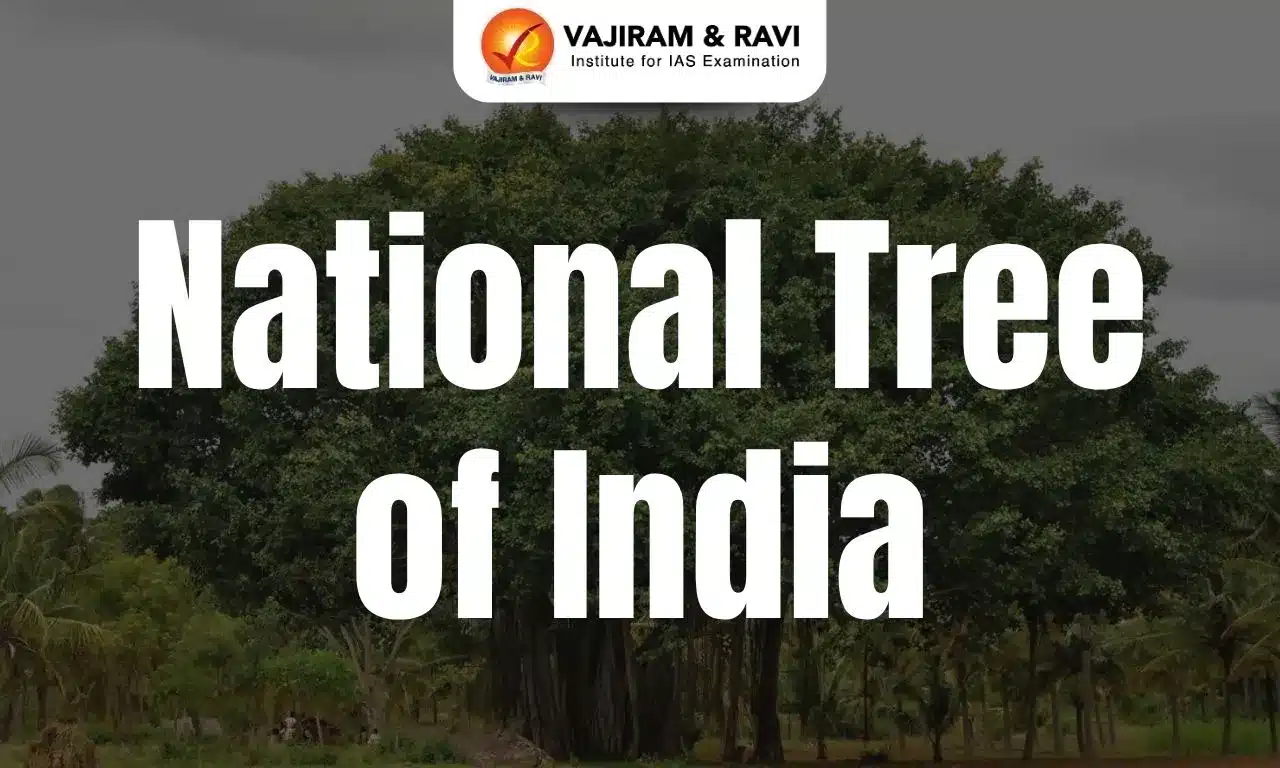
National Tree of India: The Banyan Tree, scientifically known as Ficus benghalensis, holds the prestigious title of National Tree of India, a recognition bestowed by the government in 1950. This iconic tree is found across India, adapting to a variety of climates and terrains, making it a symbol of the country’s diverse geography. Known as the "Kalpavriksha" or "wish-fulfilling tree," the Banyan is revered not only for its physical presence but also for its cultural and spiritual significance. In Hinduism, it is regarded as sacred, often associated with longevity and prosperity.

National Tree of India

The Banyan tree (Ficus bengalensis), National Tree of India, symbolizes the nation's pride and cultural identity. Known for its unique growth, the tree’s branches extend and root themselves, forming new trunks. This process gives the tree an immortal character, symbolizing longevity in Hindu philosophy and often associated with the 'Kalpa Vriksha' or 'Tree of Wish Fulfillment.' Revered in Indian myths, the Banyan tree also serves as a vital part of village life, offering shade for councils and gatherings. Native to India, its medicinal properties and role in village communities reinforce its status as a national symbol, deeply embedded in the country's traditions and natural heritage.

National Tree of India Overview

Below in the table is the National Tree of India Overview to learn on tips the keywords that can be useful during the exams in general awareness section:

National Tree of India Overview

Kingdom

Plantae

Name 

Banyan Tree

Family

Moraceae

Adopted in

1950

Genus

Ficus

Order

Urticales

Found in

Indian Subcontinent 

Type

Figs

Dimensions

Height: 10-25 m; Spread: as far as 100 m

Division

Magnoliophyta

Class

Magnoliopsida

Found in

Native to Indian Subcontinent

Habitat

Terrestrial

Conservation Status

Not-threatened

Scientific Name

Ficus benghalensis

National Tree of India Importance

  1. The banyan tree is revered in Hinduism as a symbol of eternal life. Lord Krishna refers to it as "I am the banyan tree among trees" in the Bhagavad Gita.
  2. Known as Ashwath Vriksha, the banyan tree represents the concept of ever-expanding life, symbolizing growth and continuity.
  3. The banyan is also called Kalpavriksha, meaning "wish-fulfilling divine tree," signifying its power to grant blessings and desires.
  4. The banyan tree appears in the national coat of arms of Indonesia, symbolizing unity with its extensive roots connecting the country's many islands.
  5. In Brian Aldiss' novel Hothouse, the banyan tree is imagined to cover half of Earth in the future, where trees merge and grow together with adventitious roots.
  6. Famous for the banyan trees growing around and through the walls, Ta Prohm at the Angkor Wat temple complex in Cambodia is an iconic example of nature merging with ancient architecture.
  7. Older banyan trees are recognized for their aerial prop roots, which grow downward and develop into woody trunks, creating a vast, interconnected structure.
  8. With age, the banyan’s roots spread laterally, covering wide areas, making it one of the largest trees in terms of coverage.
  9. The largest banyan tree, located in Kolkata, India, has an expansive canopy and is a major tourist attraction.
  10. A famous banyan tree in Lahaina, Hawaii, planted in 1873, has grown to cover nearly two-thirds of an acre, highlighting the tree's immense size and growth potential.

National Tree of India FAQs

Q1: Which is the national tree of India?

Ans: The Banyan Tree (Ficus benghalensis) is the National Tree of India.

Q2: What is the scientific name of the National Tree of India?

Ans: Ficus Bengalensis is the scientific name of the National Tree of India.

Q3: Where is the National Tree of India found?

Ans: The Banyan Tree is found all over the country.

Q4: What is the family of Banyan Tree?

Ans: Moraceae is the family of Banyan Tree.

Q5: What is the class of Banyan Tree?

Ans: Magnoliopsida is the class of Banyan Tree.

Kappatagudda Wildlife Sanctuary

Kappatagudda Wildlife Sanctuary

Kappatagudda Wildlife Sanctuary Latest News

The Union government recently issued the final notification declaring the Eco Sensitive Zone (ESZ) around the Kappatagudda Wildlife Sanctuary, marking the culmination of a decade-long movement to protect the ecologically rich region in arid north Karnataka.

About Kappatagudda Wildlife Sanctuary

  • It is located in the Gadag district of Karnataka.
  • It spans over 244.15 sq.km.
  • The sanctuary features diverse habitats—dry deciduous forests, grasslands, scrublands, and riverine zones—earning it the nickname “Western Ghats of North Karnataka”.
  • The sanctuary’s historical significance traces back centuries, evident in the remnants of ancient temples and ruins that dot the hillsides.
  • These structures are adorned with intricate carvings and tell tales of dynasties that once ruled the land, such as the Chalukyas and Rashtrakutas.
  • Moreover, the architectural marvels strewn across Kappatagudda, such as the Kappatagudda Jain Basadi, Brahma Jinalaya, Trikuteshwara Temple, and the Dambala Temple, stand testament to the craftsmanship and religious diversity of the region. 
  • Flora
    • The sanctuary supports diverse vegetation typical of dry-scrub and deciduous ecosystems.
    • The forest has about 400 medicinal plant species.
  • Fauna
    • Carnivores such as gray wolves, striped hyenas, leopards, and golden jackals are in good numbers.
    • Small carnivores such as jungle cats, rusty-spotted cats, small Indian civets, common palm civets, ruddy mongooses, and Indian gray mongooses also exist.

Source: DH

Kappatagudda Wildlife Sanctuary FAQs

Q1: Kappatagudda Wildlife Sanctuary is located in which Indian state?

Ans: Karnataka

Q2: What is the approximate area covered by Kappatagudda Wildlife Sanctuary?

Ans: 244.15 sq.km

Q3: The Kappatagudda region is associated with which historic dynasties?

Ans: Chalukyas and Rashtrakutas

Q4: Which ecosystem types are represented in the Kappatagudda Wildlife Sanctuary?

Ans: Dry deciduous, grasslands, scrublands, and riverine zones.

Iliamna Volcano

Iliamna Volcano

Iliamna Volcano Latest News

A recent satellite image showing Alaska’s Iliamna Volcano “ready to rumble" has sparked renewed interest in the snow-covered peak, just as scientists recorded a spike in earthquakes on its slopes.

About Iliamna Volcano

  • It is located in southwest Alaska, United States.
  • It sits in the Chigmit Mountains within Lake Clark National Park and Preserve.
  • It soars to 10,016 feet (3,053 m) tall from nearby Cook Inlet. 
  • Iliamna is a stratovolcano, characterised by its steep, conical shape and periodic explosive eruptions. 
  • It comprises andesite lava flows and pyroclastic rocks on a base of Jurassic-era granite. 
  • The volcano is not a symmetric cone but is made of a summit peak and four other peaks that make a 5-km-long ridge.
  • Most of the volcano is covered by perennial snow and ice, and numerous glaciers radiate from the summit area. 
  • Large avalanche deposits occur on the flanks of the volcano, particularly down the Umbrella Glacier on the southwest side of the volcano.
  • The volcano is currently considered dormant, as the most recent reported eruption occurred in 1876.

What is a Stratovolcano?

  • It is a tall, steep, and cone-shaped type of volcano.
  • Unlike flat shield volcanoes, they have higher peaks.
  • They are typically found above subduction zones, and they are often part of large volcanically active regions, such as the Ring of Fire that frames much of the Pacific Ocean.
  • Stratovolcanoes comprise the largest percentage (~60%) of the Earth’s individual volcanoes, and most are characterized by eruptions of andesite and dacite, lavas that are cooler and more viscous than basalt.
  • These more viscous lavas allow gas pressures to build up to high levels. Therefore, these volcanoes often suffer explosive eruptions. 
  • They are usually about half-half lava and pyroclastic material, and the layering of these products gives them their other common name of composite volcanoes.
  • At the peak, stratovolcanoes usually have a small crater. The crater may be filled with water or ice, or it may contain a volcanic dome during a period of relative inactivity.

Source: NEWS18

Iliamna Volcano FAQs

Q1: Where is the Iliamna volcano?

Ans: It is located in southwest Alaska, United States.

Q2: How tall is Mount Iliamna?

Ans: It soars to 10,016 feet (3,053 m) tall from nearby Cook Inlet.

Q3: When did Iliamna last erupt?

Ans: 1867

Q4: What type of volcano is Iliamna?

Ans: Stratovolcano

Chemotherapy

Chemotherapy

Chemotherapy Latest News

A landmark study published recently has reported that about a fifth of chemotherapy drugs tested failed quality tests; 16 of the 17 implicated manufacturers are India-based.

About Chemotherapy

  • Chemotherapy is a treatment that uses medicines to destroy cancer cells. 
  • There are many different types of chemo. They don’t all work exactly the same way, so different types of chemo might be used for different types of cancer. 
  • Most are given as an infusion into a vein (IV), but some are given as an injection, taken as pills, or applied to the skin.

How is Chemo Different from Other Cancer treatments?

  • Chemo is a systemic treatment. 
  • It travels through the bloodstream to reach all parts of your body. 
  • It can kill cancer cells that have spread (metastasized) to parts of the body far away from the original (primary) tumor or cancer cells in blood cancers, such as leukemia, that have spread throughout the body. 
  • This makes chemo different from local treatments like surgery and radiation, which only affect one part of the body.

How Does Chemotherapy Work?

  • Chemotherapy works by affecting cells when they are growing and dividing to make new cells. During this process (called the cell cycle), cells:
    • Grow in size.
    • Make copies of their genetic material (DNA).
    • Divide to form new cells.
  • Some cells, such as skin cells, are fast-growing, meaning they move through this process quickly. Other cells, such as muscle cells, complete it more slowly. 
  • Cancer cells tend to be faster growing, moving through the cell cycle very quickly.
  • Different types of chemo target cells at different phases of the cell cycle. This is why certain chemo drugs work better for different types of cancer cells, and sometimes different combinations of chemo work better together. 
  • Understanding how chemo works also helps doctors plan how often each chemo should be given, and how those doses should be timed.

Chemotherapy Side Effects

  • Chemo interrupts the cell cycles of normal cells, tooespecially cells that grow faster.
  • Blood cells and the cells in your skin, hair follicles, and digestive tract are examples of cells that grow and multiply quickly. 
  • That’s why some common side effects of chemotherapy occur in these areas, including:
    • Anemia.
    • Bleeding.
    • Constipation.
    • Diarrhea.
    • Fatigue.
    • Hair loss.
    • Infection.
    • Loss of appetite.
    • Nausea and vomiting.

Source: TH

Chemotherapy FAQs

Q1: What is the main purpose of chemotherapy in cancer treatment?

Ans: To destroy cancer cells

Q2: How is chemotherapy typically administered?

Ans: As an infusion, injection, pills, or skin application.

Q3: Why is chemotherapy effective in treating blood cancers like leukemia?

Ans: Because it travels throughout the body and targets widespread cancer cells.

Passport Seva Portal

Passport Seva Portal

Passport Seva Portal Latest News

The Passport Seva Portal experienced widespread server issues recently, disrupting operations at Passport Seva Kendras (PSKs) across India.

About Passport Seva Portal

  • Established by the Ministry of External Affairs (MEA) in partnership with Tata Consultancy Services, the Passport Seva portal is an excellent example of a Public-Private Partnership. 
  • It simplifies the passport application and renewal process in India. 
  • Through this portal, individuals can quickly apply for a passport or its renewal from the convenience of their homes. 
  • It is a user-friendly portal providing access to various passport services online.  
  • The MEA has retained sovereign functions like verification, granting, and issuance of a passport as well as ownership of core assets, including data and information of the applicants. 
  • Users can perform the following functions on the Passport Seva Online Portal:
    • Apply for a new passport.
    • Apply for renewal of a passport.
    • Apply for re-issue of lost or damaged passport.
    • Download the application form for the Police Clearance Certificate.
    • Download the application form for the Surrender Certificate.
    • Download the application form for the Identity Certificate.
  • The portal offers complete information regarding the documents required and the process to be followed for obtaining any of the documents mentioned above. You can complete these steps online. 
  • But in some instances, you will be required to take a printout of the application form, book an appointment, and then visit your nearest Passport Seva Kendra. 
  • To be able to use the facilities made available under Passport Seva, it is mandatory to register for Passport Seva Online first.

What is the Passport Seva Project (PSP)?

  • The Ministry of External Affairs (MEA) is responsible for the issuance of passports to Indian citizens through a network of 37 passport offices across the country and 190 Indian missions and posts abroad.
  • The PSP was launched by the MEA in May 2010, with the objective of delivering Passport Services to the citizens in a comfortable environment with wider accessibility and reliability. 
  • The project envisages setting up Passport Seva Kendras (PSKs) across the country, a Data Centre and Disaster Recovery Centre, a Call centre operating in multiple Indian languages, and a centralized nationwide computerized system for the issuance of passports.
  • With the implementation of the PSP, PSKs are working as extended arms of Regional Passport Offices. 
  • An applicant may ascertain the jurisdiction of the Regional Passport Office and PSK before submitting an application.
  • It enables simple, efficient, and transparent processes for delivery of passports and related services.
  • Apart from creating a countrywide networked environment for Government staff, it integrates with the Indian missions and posts abroad, and with a few external stakeholders, such as State Police for physical verification of applicant's credentials with India Post for delivery of passports, and UIDAI for applicant’s demographics and biometrics validation.

Source: ET

Passport Seva Portal FAQs

Q1: The Passport Seva Portal is operated under a Public-Private Partnership between the Ministry of External Affairs (MEA) and which company?

Ans: Tata Consultancy Services (TCS)

Q2: What is the main purpose of the Passport Seva Portal?

Ans: To simplify the process of passport application and renewal.

Q3: Who retains the sovereign functions such as verification, granting, and issuance of passports?

Ans: Ministry of External Affairs

Q4: What must users do in certain cases after completing the online application process?

Ans: Print the form, book an appointment, and visit a Passport Seva Kendra.

Black Mass Recovery Technology

Black Mass Recovery Technology

Black Mass Recovery Technology Latest News

The Technology Development Board (TDB), Department of Science & Technology (DST), Government of India, has extended financial support for commercialisation of Indigenous Battery Recycling Technology.

About Black Mass Recovery Technology

  • It is designed to extract battery-grade lithium, cobalt, nickel, and manganese from end-of-life lithium-ion batteries.
  • Its dual-mode (wet and dry) black mass recovery technology ensures high separation efficiency and recovery rates of up to 97–99%.
  • The end-to-end process, including collection, shredding, metal leaching, and downstream purification, is indigenously developed and patented, significantly reducing reliance on imported recycling equipment.
  • Significance: It seeks to minimize import of critical minerals by recycling already available one within the country.       
  • The recovered battery-grade compounds—such as lithium carbonate and cobalt sulphate—meet global specifications and will cater to both domestic consumption and exports.

What is Black Mass?

  • It is the term used to describe the dark, granular material that remains after lithium-ion batteries are shredded during recycling.
  • It contains a valuable mix of metals, including: Lithium, Cobalt, Nickel, Manganese and Graphite
  • These materials are essential to the production of new batteries, especially for electric vehicles, energy storage systems, and electronics. 

Source: PIB

Black Mass Recovery Technology FAQs

Q1: What are the components of black mass?

Ans: Cobalt, Nickel, Lithium,carbon and various inactive materials.

Q2: Is black mass toxic?

Ans: Black mass is a highly toxic powder.

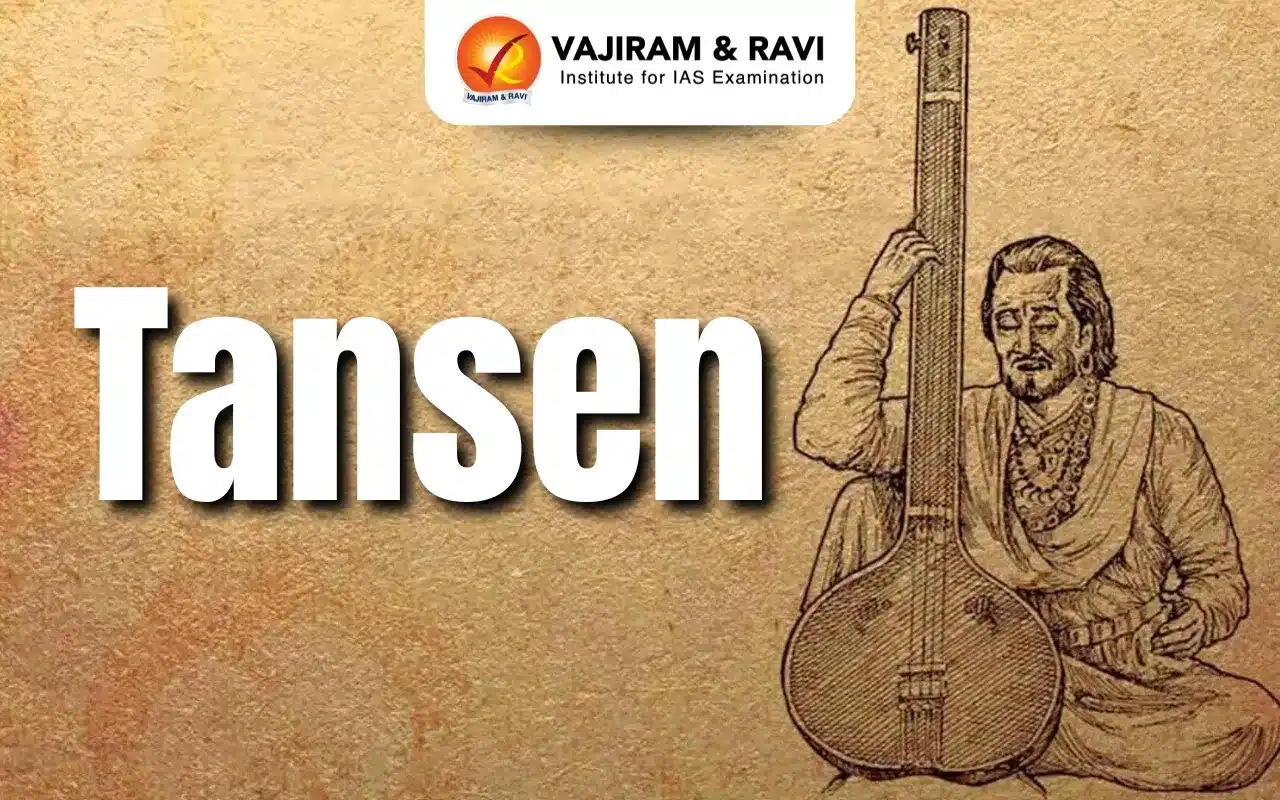
Tansen

Tansen

Tansen Latest News

Recently, the Madhya Pradesh High Court dismissed an appeal seeking permission to perform religious and cultural activities at the tomb of Hazrat Sheikh Muhammad Ghaus and also this premise houses the grave of musical maestro Tansen in Gwalior. 

About Tansen

  • Tansen was a prominent Indian classical music composer, musician and vocalist, known for a large number of compositions.
  • He was also an instrumentalist who popularised and improved the plucked rabab (of Central Asian origin).
  • He first stayed under the shelter of Daulat Khan, son of Sher Shah Suri and then was appointed as the court singer of King Ramchandra of Bandhavgarh. 
  • He was among the Navaratnas (nine jewels) at the court of the Mughal Emperor Jalal ud-din Akbar.
  • Akbar gave him the title Mian, an honorific, meaning learned man.
  • Tansen as a historical personality is difficult to extract from the extensive legend that surrounds him.

Cultural contribution of Tansen

  • He is given credit for introducing some famous ragas viz., Miyan ki Malhar, Miyan ki Todi and Darbari.
  • Tansen was remembered for his classical Dhrupad compositions

Source: IE

Tansen FAQs

Q1: Which gharana is related to Tansen?

Ans: Gwalior Gharana

Q2: Who gave Tansen the title of Mian?

Ans: Emperor Akbar

Q3: Who is the father of Indian classical music?

Ans: Purandara Dasa

International Potato Centre

International Potato Centre

International Potato Centre Latest News

Recently, the Union Cabinet has approved a proposal from the Department of Agriculture & Farmers Welfare to establish the International Potato Centre (CIP)’s South Asia Regional Centre (CSARC) at Agra, Uttar Pradesh.

About International Potato Centre

  • It was founded in 1971 as a research-for-development organization with a focus on potato, sweetpotato and Andean roots and tubers.
  • It delivers innovative science-based solutions to enhance access to affordable nutritious food, foster inclusive sustainable business and employment growth, and drive the climate resilience of root and tuber agri-food systems.
  • CIP is a CGIAR research center, a global research partnership for a food-secure future. CGIAR science is dedicated to transforming food, land and water systems in a climate crisis.
  • Its research is carried out by 13 CGIAR Centers/Alliances in close collaboration with hundreds of partners, including national and regional research institutes, civil society organizations, academia, development organizations and the private sector. 
  • Headquarter: It is in Lima, Peru and it has a research presence in more than 20 countries in Africa, Asia and Latin America.

Potato Production in India

  • India is the world’s second top producer and consumer of potato
  • Major potato growing states: Uttar Pradesh, West Bengal, Bihar, Gujarat, Madhya Pradesh and Punjab.
  • As of now, at least two different centres of Indian Council of Agricultural Research (ICAR) work on tuber crops.
  • While the Shimla-based ICAR-CPRI (Central Potato Research Institute) is working on potato, the Thiruvananthapuram-based ICAR-CTCRI (Central Tuber Crops Research Institute is working on sweetpotato.

Source: PIB

International Potato Centre

Q1: Where is the International Potato Center?

Ans: Lima, Peru

Q2: What is the International Potato Center needed for?

Ans: It is for achieving food security, well-being, and gender equity for poor people in root and tuber farming systems in the developing world.

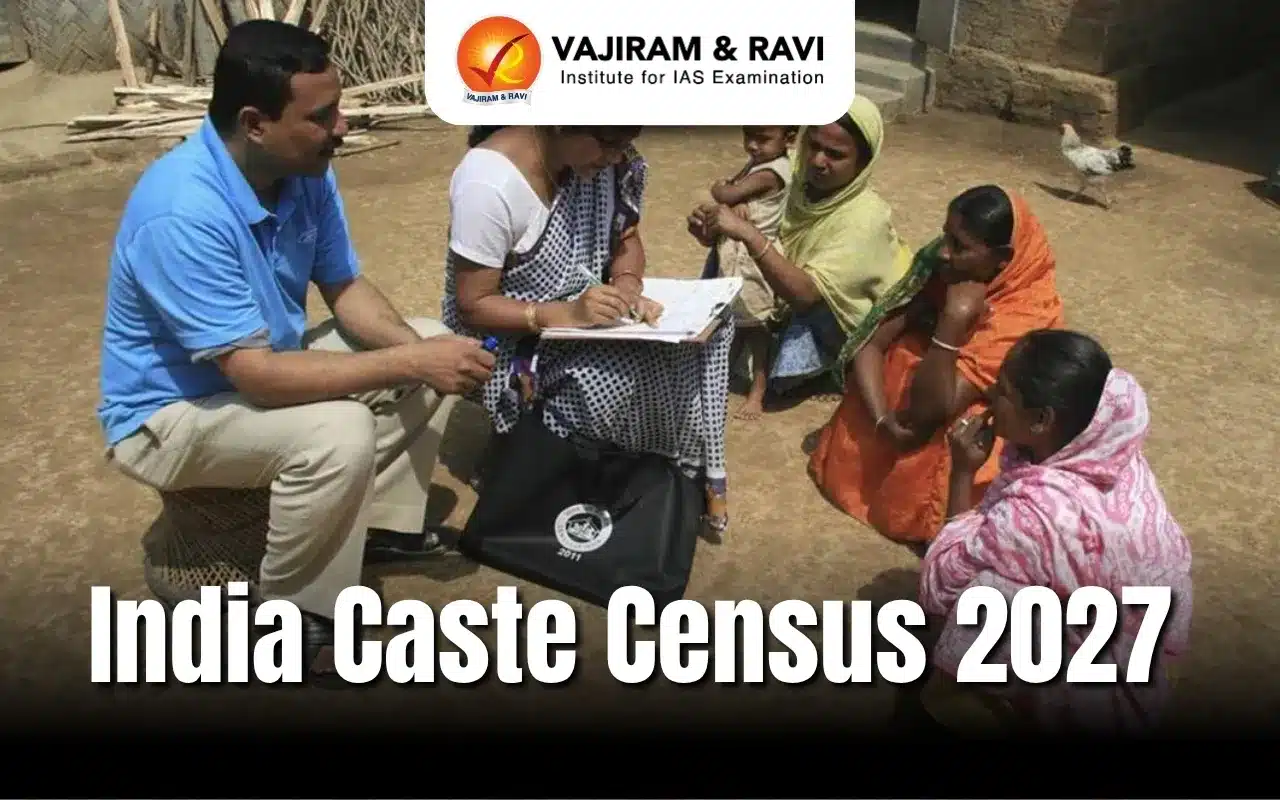
Caste Enumeration in India’s 2027 Census: Rethinking Data Collection for Inclusive Policy

India Caste Census 2027

Caste Census Latest News

The Central Government has announced that the next Census would take place in 2027 and that it would collect information on castes.

Introduction

  • India is preparing to conduct its next decennial Census in 2027, with a significant change: the inclusion of caste enumeration. 
  • This marks the first such effort since 1941 and aims to provide data that could help bring marginalised communities into the policy mainstream. 
  • However, experts and statisticians argue that to fulfil this ambitious goal, a fundamental restructuring of the current Census design and methodology is essential.

Timeline and Process of the Upcoming Census

  • The Census will be conducted in two key phases:
    • House-listing Phase (2026): Scheduled between April and September 2026, this phase will record data about dwelling units and household amenities.
    • Population Enumeration Phase (2027): This phase will collect demographic, social, and economic data, including caste-related information.
  • Caste enumeration will occur during the second phase, which represents a marked departure from earlier Censuses that did not record comprehensive caste data, except for Scheduled Castes (SCs).

Significance of Caste Enumeration

  • India last attempted caste enumeration in the 1941 Census, but the data was never processed due to the outbreak of World War II. 
  • The last usable caste data, therefore, dates back to 1931, making it grossly outdated for modern policy use.
  • The Union government, led by Prime Minister Narendra Modi, has justified this inclusion as a measure to integrate marginalised communities and enhance targeted policymaking. 
  • However, questions remain whether the current Census framework can deliver on this promise without substantive changes.

Limitations of the Existing Census Framework

  • The current format of the Census questionnaire, based on the 2021 draft, only gathers caste data for SCs
  • To make caste enumeration meaningful, experts argue the need to collect data for all castes (excluding Scheduled Tribes), accompanied by adjustments in enumerator training, software tools, and data processing protocols.
  • Moreover, key socio-economic indicators like employment, education, age at marriage, and place of birth are currently not cross-tabulated effectively with caste information. 
  • Existing questions on unemployment, migration, and childbirth suffer from conceptual ambiguity and low data quality, reducing their usefulness for caste-based policy analysis.

Suggested Reforms for Enhanced Data Collection

  • Linking Household Data with Demographic Information
      • One major reform proposed is the integration of housing and asset-related questions from the house-listing phase into the population enumeration phase. This change would:
      • Reduce data linkage errors arising from a 6-9 month time gap between phases.
      • Enable accurate correlation between caste and access to housing, electricity, and sanitation.
      • Improve coverage in urban areas, which often suffer from higher omission rates.
  • Making the Questionnaire Leaner
      • Several questions have become outdated or redundant due to rapid social and technological change. These include:
      • Ownership of mobile phones or computers.
      • Household access to bank accounts.
      • Streamlining the questionnaire would allow enumerators to focus on collecting accurate responses to more impactful variables.
  • Ensuring the Utility of Collected Data
    • Despite the Census providing caste-wise data for socio-economic variables for decades, such data has rarely informed the identification of Most Backward Castes (MBCs) or shaped welfare schemes beyond reservation frameworks. 
    • For caste enumeration to be genuinely transformative, the data must be analysed and integrated into broader public policy processes.

Challenges in Collecting Caste Data

  • While Census data can be a vital tool, it also faces logistical and methodological hurdles, such as:
    • Self-identification inconsistencies across castes and sub-castes.
    • Lack of standardised caste lists.
    • Enumerator biases and recording errors.
  • Nevertheless, in the absence of any other large-scale, uniform data source, the Census remains the most feasible mechanism to gather caste-wise socio-economic data across India.

Way Forward

  • To ensure the 2027 Census lives up to its potential, policymakers must:
    • Redesign the questionnaire to capture more granular and relevant data.
    • Improve enumerator training and digital tools for data collection.
    • Integrate caste data with other critical indicators such as literacy, employment, housing, and migration.
    • Commit to using the data beyond reservation quotas for broader social and economic reforms.
  • If executed thoughtfully, this exercise could provide India with a rich dataset for evidence-based policymaking aimed at inclusive development.

Source : TH

India Caste Census 2027

Q1: When will the next Census in India be conducted?

Ans: The Census is scheduled to take place in 2027, with the house-listing phase beginning in 2026.

Q2: Why is caste being recorded in the 2027 Census?

Ans: The government aims to collect caste data to better integrate marginalised communities into mainstream development.

Q3: What are the main criticisms of the current Census method?

Ans: The existing questionnaire structure lacks the capacity to generate meaningful, caste-disaggregated socio-economic data.

Q4: What reforms are suggested for better caste-based data collection?

Ans: Experts recommend redesigning the questionnaire, integrating household data with demographic information, and dropping outdated questions.

Q5: How can caste data from the Census be used effectively?

Ans: If properly analysed, caste data can inform policies beyond reservations, targeting education, employment, housing, and welfare.

Supreme Court Upholds Attorney-Client Privilege, Bars Summons to Lawyers for Client Advice

Attorney-Client Privilege

Attorney-Client Privilege Latest News

The Supreme Court stated that summoning lawyers for advising clients violates their rights and undermines the autonomy of the legal profession, which is protected by statutory provisions.

Background of the Case

  • The Supreme Court made its remarks while hearing a case involving a Gujarat-based lawyer summoned by police for helping his client secure bail in a loan dispute.
  • The observation followed the Supreme Court Bar Association's criticism of the Enforcement Directorate's summons to senior advocates Arvind Datar and Pratap Venugopal. 
  • They were called in connection with an Employee Stock Option Plans (ESOPs) probe involving Care Health Insurance and former Religare Enterprises chairperson Rashmi Saluja.

Privileges Associated with the Attorney-Client Communication

The Bharatiya Sakshya Adhiniyam, 2023 (replacing the Indian Evidence Act, 1872), grants privileged status to communications between lawyers and their clients, protecting them from third-party disclosure.

Conditions for Disclosure

  • Section 132 of the BSA prohibits advocates from disclosing client communication, even post-employment, except when:
    • The client consents,
    • The communication involves illegal activity,
    • The lawyer observes criminal conduct during employment.

Exemption from Testifying

Lawyers are exempt from testifying or disclosing client communications in any form—oral, written, or electronic.

Exclusive Protection for Legal Professionals

This privilege is exclusive to legal professionals; other experts like chartered accountants, company secretaries, and cost accountants do not enjoy such protection.

Judicial Stand on Summoning Lawyers

Indian courts have consistently held that police or prosecution agencies cannot summon lawyers merely for advising their clients.

A.V. Pavithran v. CBI (2024) – Bombay High Court Ruling

  • The Bombay High Court quashed a CBI summons to Advocate Pavithran, asserting that legal advice is privileged under Section 126 of the Indian Evidence Act (now Section 132 of the BSA). 
  • The court reiterated the principle: “once privileged, always privileged.”

Praram Infra v. State of M.P. (2025) – Madhya Pradesh High Court Decision

  • The Madhya Pradesh High Court also quashed summons issued to Advocate Rahul Maheshwari, emphasizing that an advocate who is neither an accused nor a witness should not be summoned. 
  • The court again cited the protection under Section 126 of the Evidence Act.

The Significance of Attorney-Client Privilege for Legal Sanctity

  • Attorney-client privilege, as upheld by Section 132 of the BSA, 2023 and reinforced by the Advocates Act, 1961, is central to maintaining the integrity of the legal profession and the rule of law. 
  • This privilege ensures lawyers can provide impartial and fearless advice without fear of coercion or reprisal.
  • Summoning legal professionals without any evidence of wrongdoing not only violates this protection but threatens the institutional balance between the Bar, Bench, and Executive. 
  • Such actions create a chilling effect—discouraging legal advocacy, fostering self-censorship, and undermining public interest litigation and constitutional advocacy.

Source: IE | B&B | LT

Attorney-Client Privilege FAQs

Q1: What did the Supreme Court rule regarding lawyer summons?

Ans: The Court ruled that summoning lawyers for client advice violates professional rights and judicial independence.

Q2: What law protects attorney-client communication in India?

Ans: Section 132 of the Bharatiya Sakshya Adhiniyam, 2023, ensures privileged lawyer-client communication remains confidential.

Q3: Are there any exceptions to attorney-client privilege?

Ans: Yes—if the client consents, the advice is illegal, or the lawyer observes criminal conduct during representation.

Q4: Can lawyers be compelled to testify about client conversations?

Ans: No, lawyers are exempt from testifying about client communications in oral, written, or electronic form.

Q5: What risks arise from violating attorney-client privilege?

Ans: It weakens legal independence, causes fear among lawyers, and undermines public interest and constitutional advocacy.

India’s Shubhanshu Shukla Joins Axiom-4 Mission, Marks New Era in Human Spaceflight

Shubhanshu Shukla Axiom-4

Shubhanshu Shukla Axiom-4 Latest News

  • In a historic moment, India's Group Captain Shubhanshu Shukla piloted the Axiom-4 mission aboard SpaceX’s Dragon capsule, which lifted off from Florida’s Kennedy Space Center. 
  • Shukla became the first Indian in 41 years to cross the Karman line after Rakesh Sharma in 1984.
    • The Kármán line is an imaginary boundary at an altitude of 100 kilometers (62 miles) above sea level, which is widely recognized as the boundary between Earth's atmosphere and outer space. 
  • PM Modi congratulated Shukla, calling him the first Indian en route to the International Space Station.

India’s Human Spaceflight Milestone and the Road Ahead

  • Shukla’s mission marks the beginning of human spaceflight becoming routine for India, similar to its satellite launches.

Gaganyaan and Strategic Shifts

  • Though ISRO missed its 2022 deadline for human spaceflight, the Gaganyaan program has injected urgency and focus into the agency, positioning India for strategic advantages in space exploration.

Human Spaceflight as a Strategic Capability

  • Human spaceflight is now a key tool for scientific, commercial, and geopolitical leverage. 
  • As global space travel risks becoming exclusionary, India’s capabilities ensure it stays in the race.

Equal Partnership in Axiom-4

  • ISRO played an active role in Axiom-4, not merely as a passenger partner. 
  • A large ISRO team, including Chairman V. Narayanan, was deeply involved in planning and troubleshooting the mission.

Preparing for Future Missions

  • The knowledge gained from Axiom-4 will strengthen the Gaganyaan program, with India’s first indigenous crewed mission expected by 2027. 
  • ISRO also plans to establish its own space station and send astronauts to the Moon by 2040.

Leveraging Space as a Strategic and Economic Frontier

  • Space is poised to be one of the most impactful technologies of the future, alongside AI, quantum computing, and clean energy, with vast economic and strategic implications.

India Among Global Front-Runners

  • Unlike other tech domains where India lags, space is an area where India holds a leading position. 
  • However, maintaining this edge will require competing with space giants like the U.S. and China.

Private Sector and Economic Potential

  • India’s space capabilities offer significant business opportunities. 
  • While India is a top space power, it contributes only about 2% to the global space economy—leaving immense room for growth.

Inspiring Youth and Driving Innovation

  • Human spaceflight can inspire young Indians, attract talent to the space sector, and boost innovation, employment, and economic development.

Capitalising on Shukla’s Mission

  • Shubhanshu Shukla’s journey must be leveraged not just as a symbolic milestone but as a springboard to accelerate India’s space ambitions and build a thriving space ecosystem.

Shubhanshu Shukla Axiom-4 FAQs

Q1: Who is Shubhanshu Shukla?

Ans: Shubhanshu Shukla is an Indian Air Force Group Captain piloting the Axiom-4 mission to the International Space Station.

Q2: What is the significance of Axiom-4 for India?

Ans: Axiom-4 marks India’s return to space after 41 years and advances its human spaceflight ambitions like Gaganyaan.

Q3: How is ISRO involved in the Axiom-4 mission?

Ans: ISRO played an equal partner role, aiding planning and troubleshooting alongside U.S. counterparts during Axiom-4’s preparation.

Q4: What future plans does ISRO have for space exploration?

Ans: ISRO plans to launch its own space station by 2035 and conduct a crewed Moon landing mission by 2040.

Q5: Why is space tech important for India’s future?

Ans: Space technology drives innovation, strategic advantage, private sector growth, and inspires youth towards science and engineering careers.

Enquire Now