UPSC Daily Quiz 5 July 2025

UPSC Daily Quiz

The Daily UPSC Quiz by Vajiram & Ravi is a thoughtfully curated initiative designed to support UPSC aspirants in strengthening their current affairs knowledge and core conceptual understanding. Aligned with the UPSC Syllabus 2025, this daily quiz serves as a revision resource, helping candidates assess their preparation, revise key topics, and stay updated with relevant issues. Whether you are preparing for Prelims or sharpening your revision for Mains, consistent practice with these Daily UPSC Quiz can significantly enhance accuracy, speed, and confidence in solving exam-level questions.

[WpProQuiz 15]  

UPSC Daily Quiz FAQs

Q1: What is the Daily UPSC Quiz?

Ans: The Daily UPSC Quiz is a set of practice questions based on current affairs, static subjects, and PYQs that help aspirants enhance retention and test conceptual clarity regularly.

Q2: How is the Daily Quiz useful for UPSC preparation?

Ans: Daily quizzes support learning, help in revision, improve time management, and boost accuracy for both UPSC Prelims and Mains through consistent practice.

Q3: Are the quiz questions based on the UPSC syllabus?

Ans: Yes, all questions are aligned with the UPSC Syllabus 2025, covering key areas like Polity, Economy, Environment, History, Geography, and Current Affairs.

Q4: Are solutions and explanations provided with the quiz?

Ans: Yes, each quiz includes detailed explanations and source references to enhance conceptual understanding and enable self-assessment.

Q5: Is the Daily UPSC Quiz suitable for both Prelims and Mains?

Ans: Primarily focused on Prelims (MCQ format), but it also indirectly helps in Mains by strengthening subject knowledge and factual clarity.

Alakananda River

Alaknanda River

Alaknanda River Latest News

Heavy rains in Rudraprayag, Uttarakhand have triggered a surge in the water level of the Alaknanda River, creating a flood-like situation in the region.

About Alaknanda River

  • It is a Himalayan river in the state of Uttarakhand.
  • It is one of the two main headstreams of the Ganges River, the other being the Bhagirathi River.
  • It originates from the meltwaters of the Satopanth and Bhagirath Kharak glaciers in the Garhwal Himalayas of Uttarakhand.
  • The river is joined by many tributaries in Uttarakhand.
  • Five of the tributaries are considered major, and their points of confluence are also worshipped. The five holy confluences in the Garhwal Himalayas are also known as Panch Prayag. They are listed below:
    • Vishnuprayag: Alaknanda meets Dhauliganga River
    • Nandprayag: Alaknanda meets Nandakini River
    • Karnaprayag: Alaknanda meets Pindar River
    • Rudraprayag: Alaknanda meets Mandakini River
    • Devprayag: Alaknanda meets Bhagirathi. This is the most revered confluence, as it is here when the surging water coming from the mountains is finally called the Ganga.
  • At the time of the formation of Ganga, Alaknanda’s contribution to the flow is much larger than that of Bhagirathi.
  • From its source till its union with Bhagirathi, Alaknanda travels for 190 km (approx.).
  • Along the banks of the Alaknanda are numerous important pilgrimage sites such as Badrinath, Hemkund Sahib, and Joshimath.
  • The Alaknanda River valley is a significant part of the Char Dham Yatra, a pilgrimage circuit that encompasses four sacred sites—Badrinath, Kedarnath, Gangotri, and Yamunotri.
  • There are several hydel projects in the basin, which include the Alaknanda (Badrinath), Lata Tapovan, Devsari Dam, Nandprayag Langasu, and Vishnugad Pipalkoti, to name a few.

Source: MSN

Alaknanda River FAQs

Q1: Where does the Alaknanda River originate from?

Ans: It originates from the meltwaters of the Satopanth and Bhagirath Kharak glaciers in the Garhwal Himalayas of Uttarakhand.

Q2: At which confluence does the Alaknanda River meet the Bhagirathi River?

Ans: Devprayag

Q3: Which river meets Alaknanda at Vishnuprayag?

Ans: Dhauliganga

Q4: What is the approximate length of the Alaknanda River before it meets the Bhagirathi?

Ans: 190 km

Daily Editorial Analysis 5 July 2025

Daily Editorial Analysis

Urban Renaissance: Unlocking the Potential of India's Top 15 Cities for a $30 Trillion Economy by 2047

Context:

  • As India aspires to become an over $30 trillion economy by 2047, its urban centres must drive innovation, job creation, and economic growth.
  • However, the country’s top 15 cities face systemic issues — pollution, poor planning, weak governance, and infrastructure deficits.
  • This article discusses key reforms to unlock their full potential in the coming “urban decade.”

The Engine of India's Future Growth:

  • 15 cities — including Mumbai, Delhi, Bengaluru, Chennai, and Hyderabad — contribute 30% of India’s GDP.
  • These cities can add 1.5% additional annual GDP growth and play a key role in achieving India’s long-term economic vision.
  • Despite their importance, they remain plagued by pollution, traffic, slums, water stress, and inadequate digital infrastructure.

Environmental and Health Challenges in Urban Spaces:

  • Air pollution crisis:
    • India hosts 42 of the world’s 50 most polluted
    • Key pollutants are vehicular emissions, construction dust, and biomass burning.
    • Solutions proposed includes -
      • Electrify public transport.
      • Strict enforcement of construction dust norms.
      • The Union Budget 2025-26 announced the ₹1 lakh crore Urban Challenge Fund to rank cities and disburse financial incentives based on performance.
  • Solid waste management - A missed opportunity:
    • According to the Ministry of Housing and Urban Affairs (MoHUA), Indian cities generate 1.5 lakh tonnes of solid waste per day, but only 25% is processed.
    • At the national level, India is estimated to generate about 62 million tonnes of municipal solid waste yearly, of which only 30% is processed.
    • Reform steps:
      • Municipalities must procure equipment and train sanitation staff.
      • Encourage performance-based accountability and regulations.
      • Transition to a circular waste economy could unlock $73.5 trillion by 2030.
      • Best practice: Indore's bio-CNG and segregated waste model.

Urban Water Crisis and Solutions:

  • Rising water stress:
    • As water stress is an urgent challenge, nearly half of our rivers are polluted.
    • In 2018, NITI Aayog predicted that 40% of India’s population would face water scarcity by 2030.
    • Cities lose 40-50% of piped water due to leakages.
  • Water-sensitive urban planning - Indore’s innovations:
    • Sewage leakages into water bodies were plugged, leveraging GIS technology.
    • Rainwater harvesting and reuse of treated water have turned Indore into India’s first water-plus city.

Housing Deficit and Informal Settlements:

  • Affordable housing gap:
    • Estimated shortfall: 10 million homes now, 31 million by 2030 (CII).
    • Rise of informal settlements and illegal colonies lacking sanitation and infrastructure.
  • Vertical expansion and policy tools:
    • Increasing floor space index (FSI) and floor area ratio (FAR) growth will promote vertical growth.
    • As the G20 India and OECD report on "Financing Cities of Tomorrow" points out, density-related incentives are another possible remedy.

Urban Mobility and Congestion:

  • Congestion crisis:
    • The average urban commuter loses 1.5–2 hours daily in traffic.
    • This is mainly due to overpopulation, weak public transport, poor enforcement.
  • Smart urban mobility solutions:
    • Prioritise investment in public transport.
    • Use AI and IoT for real-time traffic management.
    • Introduce congestion pricing models.
    • Encourage citizen discipline and smart driving habits.

Digital Infrastructure Gaps:

  • Slow internet speed:
    • Average speed: ~100 Mbps in India vs more than 1 Gbps in Seoul, Singapore.
    • To attract top MNCs, and for setting up innovation centres, global capability centres (GCCs), and R&D hubs, India needs to dramatically upgrade its digital infrastructure.
  • Strengthening digital connectivity:
    • India needs to expand high-speed broadband, 4G and 5G across cities and rural areas.
    • This requires cutting spectrum prices to attract investment, building extensive fibre-optic networks, and deploying 5G nationally.

Governance and Financing Reforms:

  • Weak urban planning capacity: India has 1 planner per 1,00,000 people, as against the global norm of 1 per 5,000–10,000. Most cities lack robust master plans.
  • Strengthening decentralised governance:
    • Full implementation of the 74th Constitutional Amendment.
    • Increasing property tax collection, which is currently less than 0.2% of GDP.
    • Use digitised land records, land value capture (LVC), and municipal bonds post governance reform.

Reimagining Cities as Cultural-Economic Hubs:

  • Promote walkable heritage zones and integrated urban experiences.
  • Partnership between government (policy/infrastructure) and private sector (innovation/delivery).
  • Cities must evolve into global magnets for business and culture, like Dubai or Singapore.

Conclusion - India’s Decade of Urban Transformation:

  • India's top 15 cities must be empowered to lead the country's economic, cultural, and technological transformation by 2047.
  • With focused investments in infrastructure, governance, environment, and digital access, these urban centres can spearhead India's journey toward becoming a $30 trillion economy and global powerhouse.

Urban Renaissance: Unlocking the Potential of India's Top 15 Cities for a $30 Trillion Economy by 2047 FAQs

Q1. Discuss the role of India’s top 15 urban centres in achieving the $30 trillion economic vision by 2047. 

Ans. India's top 15 cities contribute 30% to the GDP and are critical to the $30 trillion vision, but suffer from poor planning, pollution, traffic congestion, and infrastructural bottlenecks.

Q2. How can solid waste management be transformed into a sustainable and circular economy in Indian cities?

Ans. Indore's successful waste-to-bio-CNG initiative demonstrates that through regulation, community participation, infrastructure investment, and capacity building, solid waste management can be turned into a circular economy model.

Q3. Analyze the urban water stress scenario in India and suggest sustainable water management strategies that cities can adopt.

Ans. With nearly 40% of rivers polluted and high water loss in transmission, cities need strategies like GIS-based leak detection, rainwater harvesting, and treated water reuse.

Q4. Examine the challenges and opportunities in making Indian cities digitally robust to support innovation and economic competitiveness.

Ans. Low internet speeds and high spectrum costs hamper digital infrastructure, which can be improved through 5G rollout, fibre-optic expansion, and investment in broadband.

Q5. What structural reforms are needed in urban governance to improve planning, revenue generation, and service delivery in Indian cities?

Ans. Effective implementation of the 74th Amendment, improved urban planning capacity, digitised land records, increased property tax collection, and adoption of municipal bonds.

Source: IE


Two Democracies and The Echoes of Tyranny

Context

  • On July 4, Americans commemorate their nation's declaration of independence, a revolution sparked by a defiant belief in government by laws, not monarchs.
  • Yet this celebration masks a deeper truth: the ideals of 1776 are not self-sustaining. As Judge J. Michael Luttig warns, democracy does not survive by virtue of its founding documents alone.
  • It must be renewed daily, by vigilance, courage, and a refusal to surrender to authoritarian impulses and this message is not mere rhetoric.

The American Warning: Tyranny from Within

  • Judge Luttig, a conservative legal figure, offers a sobering reflection: tyranny is no longer an external threat but an internal one.
  • His 27 truths emphasise that the constitutional order is not upheld merely by words written on parchment but by people’s willingness to act when it is threatened.
  • His concern is rooted in the rise of figures who seek personal power rather than public service, leaders who claim to act within the Constitution while undermining its core principles.
  • The spectre of a self-crowned leader haunts the American political landscape, where President Donald Trump’s actions reflect a disdain for the very accountability that defines a republic.
  • With control over the legislature and a sympathetic judiciary, his power goes largely unchecked, echoing not the aspirations of the Founders, but the habits of monarchs.

A Historical Mirror

  • India’s Emergency
    • If Americans seek a cautionary tale, they need only look to India’s Emergency of 1975.
    • When Prime Minister Indira Gandhi faced political vulnerability after being convicted of electoral fraud, she invoked constitutional mechanisms to declare an internal disturbance under Article 352.
    • This legal veneer masked a de facto dictatorship: civil liberties were suspended, the press muzzled, and over 100,000 citizens imprisoned.
    • Parliament and the judiciary were reduced to rubber stamps.
  • Mechanics of Authoritarianism
    • As historian Gyan Prakash reveals in Emergency Chronicles, India’s descent into authoritarianism happened with chilling ease.
    • There were no tanks on the streets and there was no dramatic overthrow. Instead, the judiciary surrendered, journalists complied, and civil servants bowed.
    • Only Justice H.R. Khanna stood firm, and he was punished for his integrity.
    • H.V. Kamath, a member of the Constituent Assembly, had foreseen this danger in 1949, comparing India’s constitutional framework to that of Weimar Germany.
    • His warnings were ignored and when the Emergency finally arrived, it followed the very path he feared.

The Dangerous Legality of Authoritarianism

  • The Indian Emergency reveals a key insight: tyranny often wears legal clothes.
  • Every brutal action, preventive detentions, censorship, sterilisation drives, and slum demolitions, was technically legal.
  • But legality is not the same as justice and democracies can implode not only through violence but through compliance, through the slow, legal erosion of institutional checks.
  • The tragedy of the Emergency was not merely what Indira Gandhi did, but how easily others allowed her to do it.
  • This dynamic is echoed in contemporary America. President Trump has not declared an Emergency, but he has deployed many tools of autocracy: targeting opponents through legal institutions, undermining public trust in elections, and threatening constitutional norms.

History’s Cycles and the Call to Vigilance

  • Echoes and Ironies: History’s Cycles
    • There is profound historical irony in the present moment.
    • The Leader of Opposition, the grandson of Indira Gandhi, now champions the Constitution his grandmother once twisted.
    • He invokes Ambedkar’s legacy, brandishing the same document used decades ago to silence dissent.
    • This inversion illustrates that the Constitution is not a fixed relic, but a battlefield, one that each generation must fight to reclaim.
    • The stories of both nations underline a universal truth: democratic decay is not inevitable, but it is always possible.
  • The Call to Vigilance
    • Fireworks and flags cannot preserve a republic. Only daily acts of vigilance can. Democracy is not just a system of laws and procedures; it is a culture, one that values restraint, humility, and accountability.
    • The Founders of the United States declared that the law must be king but that ideal only lives if citizens demand it.
    • Constitutions do not protect liberty on their own and they must be guarded by people with the courage to say no.
    • If courts yield to political pressure, if legislatures serve partisanship over principle, if media becomes a mouthpiece, and if law enforcement protects the powerful over the public, then the Constitution becomes a hollow symbol.

Conclusion

  • In 1975, India failed the test of democratic resilience but the people eventually reclaimed their rights and in 2024 and beyond, both India and the United States stand at a similar crossroads.
  • Their futures hinge not on the strength of their constitutions, but on the courage of their citizens. History does not repeat, but it does echo.
  • The Emergency was not an anomaly; it was a warning and it warns us still: that tyranny, when it comes, will seem familiar and it will be legal.

Two Democracies and The Echoes of Tyranny FAQs

Q1.What does Judge Luttig warn about in the United States?
Ans. Judge Luttig warns that tyranny now threatens the United States from within, and that constitutional ideals must be actively defended to survive.

Q2. How did Indira Gandhi impose authoritarian rule during the Emergency?
Ans. Indira Gandhi imposed authoritarian rule by legally declaring an internal emergency, suspending civil liberties, censoring the press, and detaining opponents without trial.

Q3. What key institution failed during India’s Emergency?
Ans. The judiciary failed during India’s Emergency, with most judges complying with the regime, except for Justice H.R. Khanna who courageously dissented.

Q4. What is the main parallel between India and the United States today?
Ans. The main parallel is the erosion of democratic institutions through legal means and the failure of key actors to check authoritarian tendencies.

Q5. What is needed to preserve democracy?
Ans. To preserve democracy, citizens and institutions must remain vigilant, uphold the rule of law, and resist the normalisation of unchecked power.

Source: The Hindu


A Deliberate Strategy to Usher in a Communal Order

Context

  • On the eve of the 75th anniversary of the Indian Constitution, the Supreme Court of India reaffirmed a critical element of the country’s democratic framework by upholding the inclusion of the words secular and socialist in the Constitution’s Preamble.
  • These terms, introduced during the Emergency through the 42nd Amendment in 1976, have faced persistent political and legal challenge.
  • The Court’s decision, however, underscored a foundational truth: the essence of India’s constitutional vision transcends the circumstances of its wording.
  • Even if the original Preamble of 1949 did not include these specific terms, the principles they represent were already embedded in the spirit and structure of the Constitution.

Supreme Court’s Ruling on Words Secular and Socialism: A Reaffirmation Amidst a Rising Offensive

  • While the judiciary’s ruling offered a vital legal defence of secularism and socialism, it also prompted a renewed ideological offensive stance.
  • Some prominent right-wing organisations publicly demanded the removal of secular and socialist from the Preamble, calling them alien to Dr. B.R. Ambedkar’s vision.
  • Further amplifying this sentiment, the Vice President of India, Jagdeep Dhankhar, termed their insertion a sacrilege to the spirit of Sanatan.
  • These statements emanating not from fringe actors but from the apex of national authority.

The Historical Consensus on Secularism and Socialism

  • Historical Consensus on Secularism
    • The idea of India as a secular nation was not a post-independence innovation but an integral part of its foundational consensus.
    • The Constituent Assembly debates leave no ambiguity on this matter and there was unanimous agreement that India should be a secular state.
    • No member advocated a theocratic state. Leaders such as Govind Ballabh Pant posed fundamental questions about the dangers of a religious state.
    • Jaspat Roy Kapoor cited Mahatma Gandhi’s assertion that religion should be a private affair. Begum Aizaz Rasul described secularism as the most outstanding feature of the Constitution.
    • Sardar Patel, in a moment of profound reassurance, vowed that the new Constitution would not be disfigured by any provision on a communal basis.
    • These voices collectively charted a vision of a modern, pluralistic India, one that would reject colonial tactics of division and ensure dignity and equality for all citizens.
  • The Socialism in the Constitution: A Vision for Justice
    • The campaign to erase the word socialist from the Preamble is similarly aimed at dismantling the Constitution’s egalitarian framework.
    • Socialism, as envisioned in the Indian context, is not a foreign doctrine but a moral and political commitment to social and economic justice.
    • Ambedkar himself emphasised that the Directive Principles of State Policy reflected these socialist ideals.
    • They aimed to create a welfare state committed to eradicating inequality, ending caste-based exploitation, and ensuring land reform and labour rights.
    • The Supreme Court, in its latest ruling, echoed this interpretation by equating socialist with the vision of a welfare state, a state that exists not for the market or the majority alone, but for all its citizens.

The Way Forward: The Responsibility of Resistance

  • The Constitution is more than a legal document it is a moral covenant forged in the crucible of India’s long and diverse freedom struggle.
  • It represents the dreams of millions who fought not just for independence from colonial rule, but for justice, equality, and freedom at home.
  • Defending the secular and socialist character of the Constitution is synonymous with defending the very idea of India, a democracy in which every citizen, regardless of religion, caste, class, or gender, has the right to live with dignity and freedom.
  • This defence must be multifaceted: through public education, legal challenges, political mobilisation, and sustained democratic struggle.
  • It must involve not just lawyers and politicians, but students, workers, thinkers, and every citizen who believes in the idea of a modern, plural, and just republic.

Conclusion

  • As India marks the 75th year of its Constitution, the battle to preserve its soul has never been more urgent.
  • The words secular and socialist are not accidental insertions or ideological imports and they are deeply rooted in the Indian experience of colonialism, communal violence, and social inequality.
  • To erase them is to erase the legacy of Gandhi, Ambedkar, Patel, and countless others who dreamed of a free and fair India.
  • The challenge today is clear: either we uphold and strengthen the democratic edifice built over decades, or we allow it to be dismantled in favour of a narrower, more exclusionary order.

A Deliberate Strategy to Usher in a Communal Order FAQs

Q1. What did the Supreme Court recently uphold in the Constitution’s Preamble?
Ans. The Supreme Court recently upheld the inclusion of the words secular and socialist in the Constitution’s Preamble.

Q2. Who is demanding the removal of these terms from the Preamble?
Ans. Some prominent right wing organisations are demanding the removal of these terms.

Q3. What does secularism in India mean?
Ans. Secularism in India means that the state remains neutral in matters of religion and treats all religions equally.

Q4. What does socialism in the Preamble signify?
Ans. Socialism in the Preamble signifies the state's commitment to building a welfare society based on justice, equality, and the removal of socio-economic inequalities.

Q5. Why is defending the Constitution important today?
Ans. Defending the Constitution is important today to protect the democratic, inclusive, and pluralistic values on which modern India was founded.

Source: The Hindu
Daily Editorial Analysis 5 July 2025 FAQs

Q1: What is editorial analysis?

Ans: Editorial analysis is the critical examination and interpretation of newspaper editorials to extract key insights, arguments, and perspectives relevant to UPSC preparation.

Q2: What is an editorial analyst?

Ans: An editorial analyst is someone who studies and breaks down editorials to highlight their relevance, structure, and usefulness for competitive exams like the UPSC.

Q3: What is an editorial for UPSC?

Ans: For UPSC, an editorial refers to opinion-based articles in reputed newspapers that provide analysis on current affairs, governance, policy, and socio-economic issues.

Q4: What are the sources of UPSC Editorial Analysis?

Ans: Key sources include editorials from The Hindu and Indian Express.

Q5: Can Editorial Analysis help in Mains Answer Writing?

Ans: Yes, editorial analysis enhances content quality, analytical depth, and structure in Mains answer writing.

Bukkapatna Chinkara Wildlife Sanctuary

Bukkapatna Chinkara Wildlife Sanctuary

Bukkapatna Chinkara Wildlife Sanctuary Latest News

Recently, 300 acres of encroached forest land was cleared in Bukkapatna Chinkara Wildlife Sanctuary.

About Bukkapatna Chinkara Wildlife Sanctuary

  • Location: It is located in Tumakuru district of Karnataka.
  • This protected area was declared as a sanctuary in 2019 and is dedicated for protection and conservation of the Indian Gazelle which are also known as Chinkaras.
  • It is the second Chinkara (Gazelle bennetti) sanctuary in Karnataka after notifying a similar sanctuary at Yadahalli in Bagalkot district of North Karnataka in 2016.
  • Vegetation: This is a rich habitat for various species inhabiting the wood savannahs – where lot of grasses grow and are sparsely interspersed with native tree species.
  • Fauna: Other than Chinkaras, four horned antelopes, black bucks, sloth bears, leopards and other species inhabit this sanctuary.
  • Flora: The main trees found in the area are Hardwickia binata (Anjan), P. emblica of Phyllanthaceae family (Amla), Boswellia Serrata (Shallaki), Tamarindus Indica (Imli), Pterocarpus Marsupium (Bijaka), Anogeissus latifolia (Dhaura), Shoerea talura and Terminalia tementose. 

Source: NIE

Bukkapatna Chinkara Wildlife Sanctuary FAQs

Q1: In which state is bukkapatna chinkara wildlife sanctuary?

Ans: Karnataka

Q2: Where are chinkara found in India?

Ans: It is found in western India, Rann of Kutch, Kathiawar, Saurastra region and as far east of Ahmedabad district in Gujarat.

Sarcoma

Sarcoma

Sarcoma Latest News

Every year in July, Sarcoma Awareness Month brings attention to a group of rare and often misunderstood cancers.

About Sarcoma

  • Sarcoma is not just one disease: it is a family of cancers that originate in the bones and soft tissues such as fat, muscles, blood vessels, nerves, and deep skin tissues.
  • A sarcoma typically appears as a painless lump or swelling that may increase in size over time.
  • Since these signs can be confused with non-cancerous conditions such as cysts or injuries, diagnosis is often postponed, permitting the cancer to advance.
  • It can affect anyone, certain risk factors increase susceptibility.
  • Prevalence: Sarcomas account for only about 1% of all adult cancers and 15% of paediatric cancers, their impact is profound, especially due to limited awareness and late diagnosis.

Types of Sarcomas

  • Sarcomas are primarily divided into two main categories: soft tissue sarcomas and bone sarcomas.
  • There are more than 70 subtypes, and this complicates both diagnosis and treatment.
  • Examples of common soft tissue sarcomas include liposarcoma (originating from fat tissue), leiomyosarcoma (arising from smooth muscle), and angiosarcoma (developing from blood vessels). Bone sarcomas consist of osteosarcoma (frequently seen in children and young adults), Ewing sarcoma, and chondrosarcoma.

Risk Factors of Sarcoma Includes

  • Genetic conditions such as Li-Fraumeni syndrome or neurofibromatosis; previous radiation therapy, especially in areas later affected by sarcoma;
  • Chemical exposure to agents like vinyl chloride or dioxins; chronic swelling (lymphedema) or certain inherited syndromes.
  • Children and young adults are more frequently diagnosed with bone sarcomas, while soft tissue sarcomas are more common in older adults.

Source: TH

Sarcoma FAQs

Q1: What is the deadliest type of leukemia?

Ans: Acute Myeloid Leukemia (AML)

Q2: What is the sarcoma?

Ans: A sarcoma is a rare type of malignant (cancerous) tumor that develops in bone and connective tissue, such as fat, muscle, blood vessels, nerves and the tissue that surrounds bones and joints.

Girmitiyas

Girmitiyas

Girmitiyas Latest News

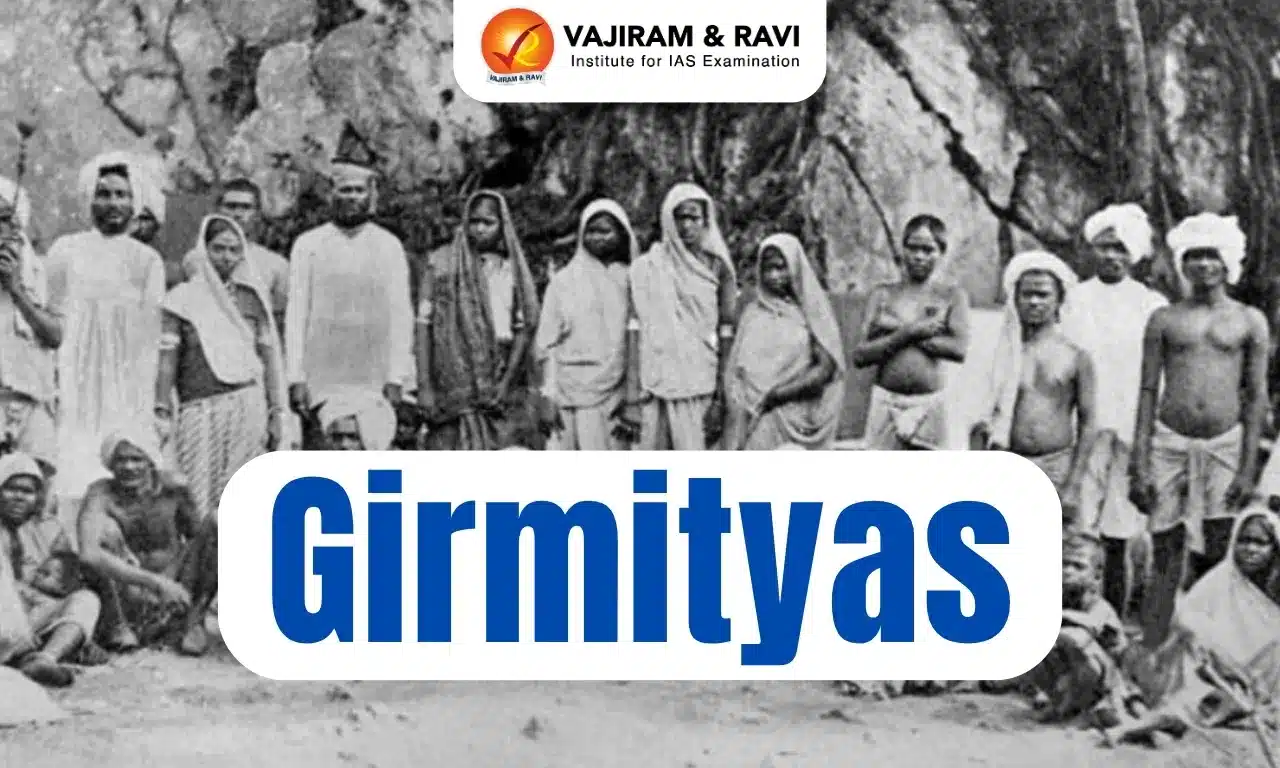
The Prime Minister recently said the descendants of Girmitiyas are no longer defined by struggle but by their "success, service, and values".

About Girmitiyas

  • “Girmitiyas” were Indian indentured labourers who left India in the mid to late 19th century to work in British colonies, where many eventually settled.
  • The word ‘girmitiya’ is etymologically derived from ‘girmit’, meaning ‘agreement’. 
    • Indians then pronounced ‘agreement’ as ‘girmit’, so indentured labourers who were transported to work in places like Fiji and Mauritius, became known as ‘girmitiyas’. 
    • However, the agreements weren’t all that fair.
  • Indian labourers signed indentureship contracts with the British in hopes of higher wages and better employment opportunities. 
  • However, they made long treacherous journeys on old slave ships and upon reaching foreign lands, were made to live in slave barracks, were paid very little, and did not have access to proper legal frameworks under which they could get grievances redressed.
  • Though girmitiyas were not technically slaves in the eyes of the law, they were subjected to a practice known as “blackbirding”, which involved deceiving or tricking people to work as slaves or poorly paid labourers in countries far away from their native land.
  • Despite the unfortunate history of girmitiyas, their descendants have prospered in their respective countries, some having held “high-level” government positions and others having achieved success in business and arts.

Source: DH

Girmitiyas FAQs

Q1: What is meant by girmitiya?

Ans: “Girmitiyas” were Indian indentured labourers who left India in the mid to late 19th century to work in British colonies, where many eventually settled.

Q2: What was a key reason Indian labourers agreed to become Girmitiyas?

Ans: In hope of higher wages and better employment.

Q3: The term "Girmitiyas" is derived from which word?

Ans: The word ‘girmitiya’ is etymologically derived from ‘girmit’, meaning ‘agreement’.

Mount Shinmoedake

Mount Shinmoedake

Mount Shinmoedake Latest News

Japan's Mount Shinmoedake, a volcano in the Kirishima mountain range on Kyushu Island, erupted recently, sending a towering ash plume into the sky.

About Mount Shinmoedake

  • It is an active stratovolcano located on Kyushu Island, Japan, within the Kirishima mountain range. 
  • It rises 1420.8 meters above sea level as part of the volcanic complex in Kagoshima Prefecture, displaying frequent eruption patterns and geological formations.
  • Recorded eruptions of Shinmoedake started in 1716. Since then there have been eruptions scattered across all the years to the present day. 
  • It gained international fame as one of the filming locations for the 1967 James Bond movie "You Only Live Twice".

What is a Stratovolcano? 

  • It is a tall, steep, and cone-shaped type of volcano.
  • Unlike flat shield volcanoes, they have higher peaks.
  • They are typically found above subduction zones, and they are often part of large volcanically active regions, such as the Ring of Fire that frames much of the Pacific Ocean.
  • They are usually about half-half lava and pyroclastic material, and the layering of these products gives them their other common name of composite volcanoes.
  • At the peak, stratovolcanoes usually have a small crater. The crater may be filled with water or ice, or it may contain a volcanic dome during a period of relative inactivity.
  • Stratovolcanoes comprise the largest percentage (~60%) of the Earth’s individual volcanoes, and most are characterized by eruptions of andesite and dacite, lavas that are cooler and more viscous than basalt.
  • These more viscous lavas allow gas pressures to build up to high levels. Therefore, these volcanoes often suffer explosive eruptions.

Source: TIMES

Mount Shinmoedake FAQs

Q1: Mount Shinmoedake is located on which island of Japan?

Ans: Kyushu

Q2: Mount Shinmoedake is part of which mountain range?

Ans: Kirishima Mountain Range

Q3: What type of volcano is Mount Shinmoedake?

Ans: Stratovolcano

Q4: What is the approximate height of Mount Shinmoedake above sea level?

Ans: 1420.8 meters

Asteroid Terrestrial-impact Last Alert System (ATLAS)

Asteroid Terrestrial-impact Last Alert System (ATLAS)

Asteroid Terrestrial-impact Last Alert System Latest News

A comet, officially designated 3I/ATLAS, originating from outside our solar system has been recently spotted by the Asteroid Terrestrial-impact Last Alert System (ATLAS) in Chile.

About Asteroid Terrestrial-impact Last Alert System

  • It is an asteroid impact early warning system developed by the University of Hawaii and funded by NASA. 
  • It consists of four telescopes (2 in Hawaii, 1 in Chile, 1 in South Africa), which automatically scan the whole sky several times every night looking for moving objects.  
  • Although the ATLAS system is also used to identify dwarf planets, supernova explosions, and life exposure remanence from a star being absorbed by a supermassive black hole in a distant galaxy, the main purpose of this project is to search for large “killer asteroids” that may have a tremendous impact on life on earth. 
  • ATLAS will provide a warning time depending on the size of the asteroid -- larger asteroids can be detected further from Earth. 
  • ATLAS will see a small (~20 meter) asteroid several days out, and a 100 meter asteroid several weeks out.
  • The system is specially designed to detect objects that approach very close to Earth – closer than the distance to the Moon, about 240,000 miles or 384,000 kilometers away.

Source: FP

Asteroid Terrestrial-impact Last Alert System FAQs

Q1: What is the main objective of the ATLAS system?

Ans: To provide early warnings of asteroid impacts on Earth.

Q2: Which organization funds the ATLAS system?

Ans: NASA (National Aeronautics and Space Administration)

Q3: How many telescopes are currently part of the ATLAS system?

Ans: 4

Q4: The ATLAS telescopes are located in which countries?

Ans: 2 in Hawaii, 1 in Chile, 1 in South Africa

Polar Anticyclone

Polar Anticyclone

Polar Anticyclone  Latest News

Recently, Chile and Argentina ranked among the coldest places on Earth, outside the polar regions as polar anticyclone grips.

About Polar Anticyclone

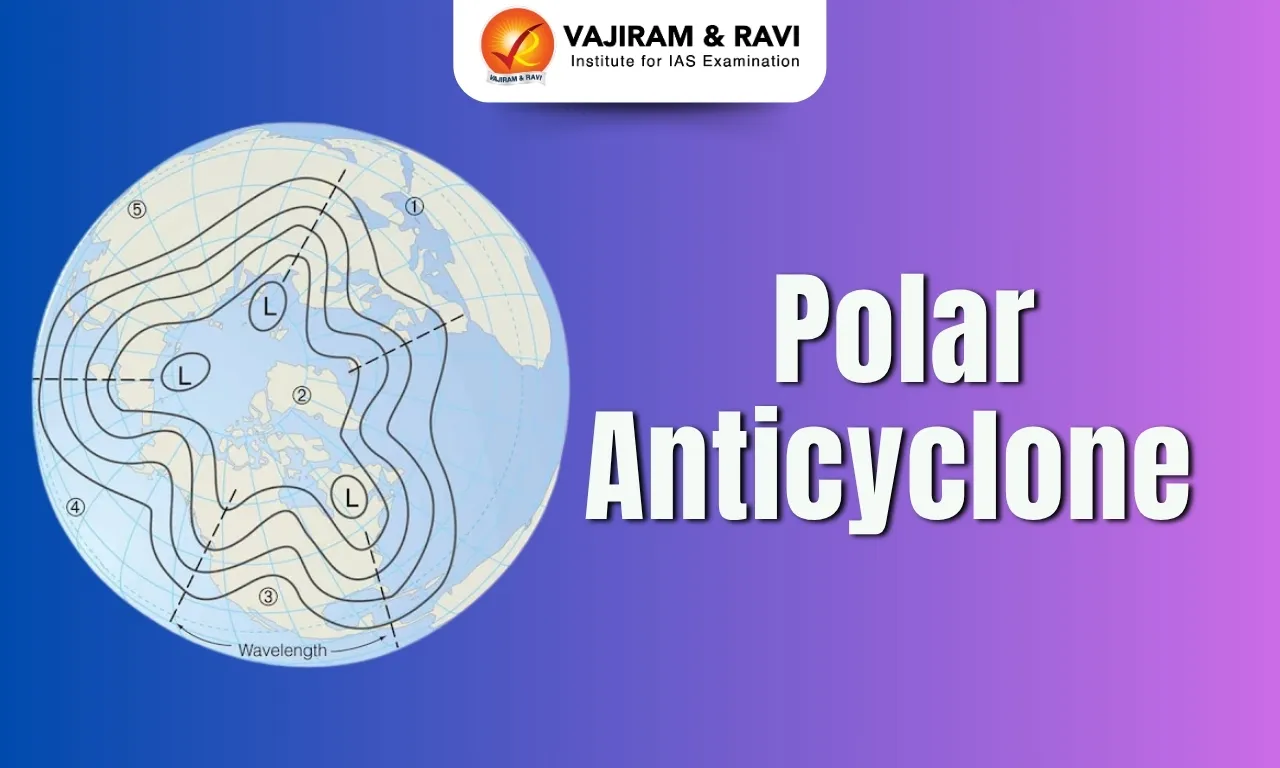
  • It is a wind system associated with a region in which high atmospheric pressure develops over or in the vicinity of the poles.
  • The polar anticyclone is strongest in the cold season of the year.
  • Examples: The Siberian anticyclone is an example of a polar anticyclone, as is the high-pressure area that forms over Canada and Alaska during the winter.

Formation of Polar anticyclones

  • Polar anticyclones are created by the cooling of surface layers of air.
  • This cooling causes the air near the surface to become denser and, at the same time, causes an inflow of air at high levels to replace the denser, sinking air.
  • These processes increase the mass of air above the surface, thus creating the anticyclone. The weather within the central regions of these anticyclones is typically clear and quite cold. The strength of polar anticyclones is greatest near the Earth’s surface.
  • It frequently migrate eastward and equatorward in the winter season, bringing cold waves to warmer latitudes. In the summer they provide cool, dry weather as they move toward the Equator.
  • The boundary separating the cold polar air from the warmer air is called the polar front, and along this frontal surface the extratropical cyclones, or wave cyclones, form. 

Source: UN

Polar Anticyclone FAQs

Q1: What is the polar anticyclone region?

Ans: Polar anticyclone, wind system associated with a region in which high atmospheric pressure develops over or in the vicinity of the poles. The polar anticyclone is strongest in the cold season of the year.

Q2: What are the three types of anticyclones?

Ans: The different types of anticyclones are surface-based systems, mid-tropospheric systems, and upper tropospheric systems.

Ham Radio

Ham Radio

Ham Radio Latest News

Indian astronaut Shubhanshu Shukla interacted with the country’s students using a ham radio from the International Space Station (ISS).

About Ham Radio

  • Amateur radio, popularly known as ham radio, is a licensed radio service that relies on radio waves for establishing communication.
  • Ham radio service is largely deployed for educational and knowledge purposes, for emergency or SOS communication.
  • Using a dedicated frequency, a transceiver and an antenna, communication can be set up between two licensed hams by trained ham operators.
  • The communication can be hyper-local, global, and in space. In India, any individual above the age of 12 is permitted to operate a ham radio.
  • In India, the Ministry of Electronics and Information Technology issues these licences.
  • Even though the technology to establish communications has advanced, the radio remains one of the most reliable and stable modes of communication.
  • It is effective and an alternate medium of establishing communication.
  • Previously, there have been instances when ham radio came to the rescue when traditional communication lines broke down, either due to man-made scenarios (like wars) or natural disasters such as earthquakes, cyclones, and floods.
  • In India, ham radio was used for making emergency contacts during the Bhuj earthquake (2001), the Indian Ocean tsunami (2004), the floods of Uttarakhand (2013) and more such calamities.

Source: IE

Ham Radio FAQs

Q1: What is the purpose of a ham radio?

Ans: Ham radio is a multifaceted hobby and service facilitating communication over diverse radio frequencies. Designed primarily for enjoyment, operators can transmit, receive, or explore different frequencies based on their preferences.

Q2: Why did they call it ham radio?

Ans: The word “HAM” as applied to 1908 was the station CALL of the first amateur wireless station operated by some amateurs of the Harvard Radio Club. They were Albert S. Hyman, Bob Almy, and Poogie Murray.

Reserve Bank of India (Pre-payment Charges on Loans) Directions, 2025

Reserve Bank of India (Pre-payment Charges on Loans) Directions, 2025

Reserve Bank of India (Pre-payment Charges on Loans) Directions, 2025 Latest News

The RBI recently announced Reserve Bank of India (Pre-payment Charges on Loans) Directions, 2025, prohibiting banks and other regulated lenders from charging prepayment penalties on floating-rate loans availed by individuals for non-business purposes.

About Reserve Bank of India (Pre-payment Charges on Loans) Directions, 2025

  • It prohibited banks and other regulated lenders from charging prepayment penalties on floating-rate loans availed by individuals for non-business purposes. 
  • It benefits borrowers of home loans and other floating-rate loans, allowing them to repay loans ahead of schedule without additional fees. 
  • These new rules will be enforced on all loans which are sanctioned or renewed on or after January 1, 2026.
  • The directive will apply to commercial banks and regulated entities (REs) such as NBFCs, excluding specific banks like Small Finance Banks and Regional Rural Banks unless they issue loans up to Rs 50 lakh.
  • The exemption applies regardless of whether the loan is repaid fully or partially, the source of funds, or the presence of co-obligants. 
  • It also includes dual and special rate loans if they are on a floating rate at the time of repayment. 
  • No minimum lock-in period is required. 
  • For loans not covered under this rule, lenders must disclose any prepayment charges in the sanction letter, loan agreement, and Key Facts Statement. 
    • Should a bank fail to include this information, it cannot levy any prepayment charge.

Source: LMINT

Reserve Bank of India (Pre-payment Charges on Loans) Directions, 2025 FAQs

Q1: The RBI's 2025 (Pre-payment Charges on Loans) Directions, 2025, prohibit prepayment penalties on which type of loans?

Ans: Floating-rate loans for non-business purposes.

Q2: From which date will the new RBI directions on prepayment charges be enforced?

Ans: January 1, 2026

Q3: What happens if a lender does not disclose prepayment charges in the sanction letter or loan documents?

Ans: They cannot levy any prepayment charge.

UPSC Daily Quiz 4 July 2025

UPSC Daily Quiz

The Daily UPSC Quiz by Vajiram & Ravi is a thoughtfully curated initiative designed to support UPSC aspirants in strengthening their current affairs knowledge and core conceptual understanding. Aligned with the UPSC Syllabus 2025, this daily quiz serves as a revision resource, helping candidates assess their preparation, revise key topics, and stay updated with relevant issues. Whether you are preparing for Prelims or sharpening your revision for Mains, consistent practice with these Daily UPSC Quiz can significantly enhance accuracy, speed, and confidence in solving exam-level questions.

[WpProQuiz 14]

UPSC Daily Quiz FAQs

Q1: What is the Daily UPSC Quiz?

Ans: The Daily UPSC Quiz is a set of practice questions based on current affairs, static subjects, and PYQs that help aspirants enhance retention and test conceptual clarity regularly.

Q2: How is the Daily Quiz useful for UPSC preparation?

Ans: Daily quizzes support learning, help in revision, improve time management, and boost accuracy for both UPSC Prelims and Mains through consistent practice.

Q3: Are the quiz questions based on the UPSC syllabus?

Ans: Yes, all questions are aligned with the UPSC Syllabus 2025, covering key areas like Polity, Economy, Environment, History, Geography, and Current Affairs.

Q4: Are solutions and explanations provided with the quiz?

Ans: Yes, each quiz includes detailed explanations and source references to enhance conceptual understanding and enable self-assessment.

Q5: Is the Daily UPSC Quiz suitable for both Prelims and Mains?

Ans: Primarily focused on Prelims (MCQ format), but it also indirectly helps in Mains by strengthening subject knowledge and factual clarity.

US Remittance Tax Impact on India: Limited Losses but Higher Costs

US Remittance Tax Impact on India

US Remittance Tax Impact on India Latest News

The United States has enacted a 1% tax on certain outbound remittances under the One Big Beautiful Bill Act, raising concerns about its impact on India’s remittance inflows.

Introduction to the New US Remittance Tax

  • A newly passed US legislation, the One Big Beautiful Bill Act (OBBBA), has introduced a 1% tax on certain outbound remittances, sparking concern among countries that rely heavily on money sent back by expatriates. 
  • The tax, effective from January 1, 2026, is expected to marginally affect India, the world’s largest recipient of remittances, primarily through higher costs rather than a significant decline in remittance volumes.

Key Features and Exemptions

  • Originally proposed as a 5% tax, the remittance levy was later reduced to 1% after bipartisan negotiations. However, key exemptions in the Senate-passed version limit its reach:
    • Applies only to physical modes of transfer like cash, money orders, and cashier’s checks.
    • Bank account transfers or payments through US-issued debit/credit cards are exempt.
    • Transfers under $15 are not taxed.
  • US citizens sending remittances are not subject to the tax.
  • These exclusions will mitigate the adverse impact for a large portion of Indian-origin remitters using digital channels.

Implications for India’s Remittance Economy

  • According to the Centre for Global Development, India may lose just under $500 million in formal remittance inflows, second only to Mexico, which could lose over $1.5 billion.
  • Although this is a small portion of the $124.31 billion India received in net remittances during 2024-25, the tax is a symbolic reminder of increasing policy barriers to international money flows.
  • Moreover, remittances from the US account for nearly 27.7% of India’s total, approximately $32 billion in 2023-24. 
  • While the proportion of cash-based transfers is low, even a slight disruption can impact rural households relying on such inflows.
  • Distributional and Timing Effects
    • According to economists, the impact will be frontloaded into the first three quarters of FY2025-26, as senders might advance transfers to avoid the tax. 
    • However, the lower-than-expected rate (1%) means that the overall long-term impact will remain limited and primarily felt in transaction costs rather than volume reductions.

Broader Trends in Remittance Flows

  • India’s remittance receipts have been growing steadily:
    • Net remittances in FY2024-25: $124.31 billion (up 16%)
    • Gross inflows: $132.07 billion (up 14%)
    • US share of remittances: Grew from 22.9% in 2016-17 to 27.7% in 2023-24
  • Notably, in FY2024-25, net remittances not only covered India’s entire trade deficit of $98.39 billion but also left a $26 billion surplus, underlining their macroeconomic significance.

Growing Costs of Cross-Border Transfers

  • Even before this new tax, sending money to India has involved significant transaction costs. As per World Bank data, the average cost of sending $200 to India in Q4 2024 was 5.3%, compared to the global average of 6.6%
  • The tax could push these costs further up, particularly in channels involving multiple intermediaries or non-bank methods.
  • Moreover, delays and fees from correspondent banking chains are an ongoing concern, making remittance infrastructure innovation all the more essential.

India’s Payment Infrastructure as a Cushion

  • India has proactively worked on reducing frictions in cross-border payments:
    • UPI-PayNow Link: Seamless money transfer between India and Singapore
    • RBI participation in Project Nexus (by BIS): Aims to enable “cheaper, faster, more transparent” global transfers
  • Such efforts will be critical in mitigating the impact of policy changes abroad and improving the ease of formal remittance channels for the Indian diaspora.

Source: IE | TH

US Remittance Tax FAQs

Q1: What is the US remittance tax that will impact India?

Ans: The US has introduced a 1% tax on outbound remittances made using physical instruments under the One Big Beautiful Bill Act.

Q2: When will the US remittance tax come into effect?

Ans: The tax will be implemented from January 1, 2026.

Q3: How much could India lose due to this remittance tax?

Ans: India may see a decline of under $500 million in formal remittances, according to the Center for Global Development.

Q4: Are all types of remittances from the US to India affected by this tax?

Ans: No, the tax excludes bank transfers and payments made through US-issued debit or credit cards.

Q5: Why are remittances from the US important to India?

Ans: The US accounts for nearly 28% of India’s total remittance inflows, amounting to around $32 billion annually.

BHARAT Initiative

Bharat initiative

BHARAT Initiative Latest News

The Indian Institute of Science (IISc), Bengaluru, launched a large-scale study called BHARAT.

About BHARAT Initiative

  • BHARAT is a short for ‘Biomarkers of Healthy Aging, Resilience, Adversity, and Transitions’, as part of its Longevity India Program.
  • The study aims to map the physiological, molecular, and environmental indicators that drive ageing in the Indian population.
  • Under this initiative researchers are building India's first comprehensive aging database through:
    • Multiparametric analysis
    • Advanced clinical assessment
    • Lifestyle and environmental factors
    • Comprehensive biomarker discovery
  • It is identifying biomarkers for healthy ageing and also building the Bharat Baseline — a reliable reference for what is normal in the Indian population.
  • Its database will include genomic biomarkers (like mutations linked to disease susceptibility), proteomic and metabolic indicators (reflecting biological pathways and metabolic health), and environmental and lifestyle factors.
  • It will challenge the western values for cholesterol, vitamin D, or B12 may label many Indians as deficient.

What are Biomarkers?

  • Biomarkers, short for ‘Biological Markers’ are a physical, chemical, or biological characteristic that is present in the human body, and measurable too.
  • The WHO defines a biomarker as “any measurement reflecting an interaction between a biological system and a potential hazard, which may be chemical, physical, or biological. The measured response may be functional and physiological, biochemical at the cellular level, or a molecular interaction”.
  • They are indispensable in diagnosing disease, prescribing the right medication, right dosage, and even while designing new drugs.
  • Biomarkers include biomolecules like carbohydrates, proteins, lipids, genes, DNA, RNA, platelets, enzymes, hormones, etc.

Source: TH

BHARAT Initiative FAQs

Q1: What are the biomarkers of aging?

Ans: The main mechanisms identified as potential biomarkers of aging are DNA methylation, loss of histones, and histone modification.

Q2: Who discovered biomolecules?

Ans: Richard Henderson

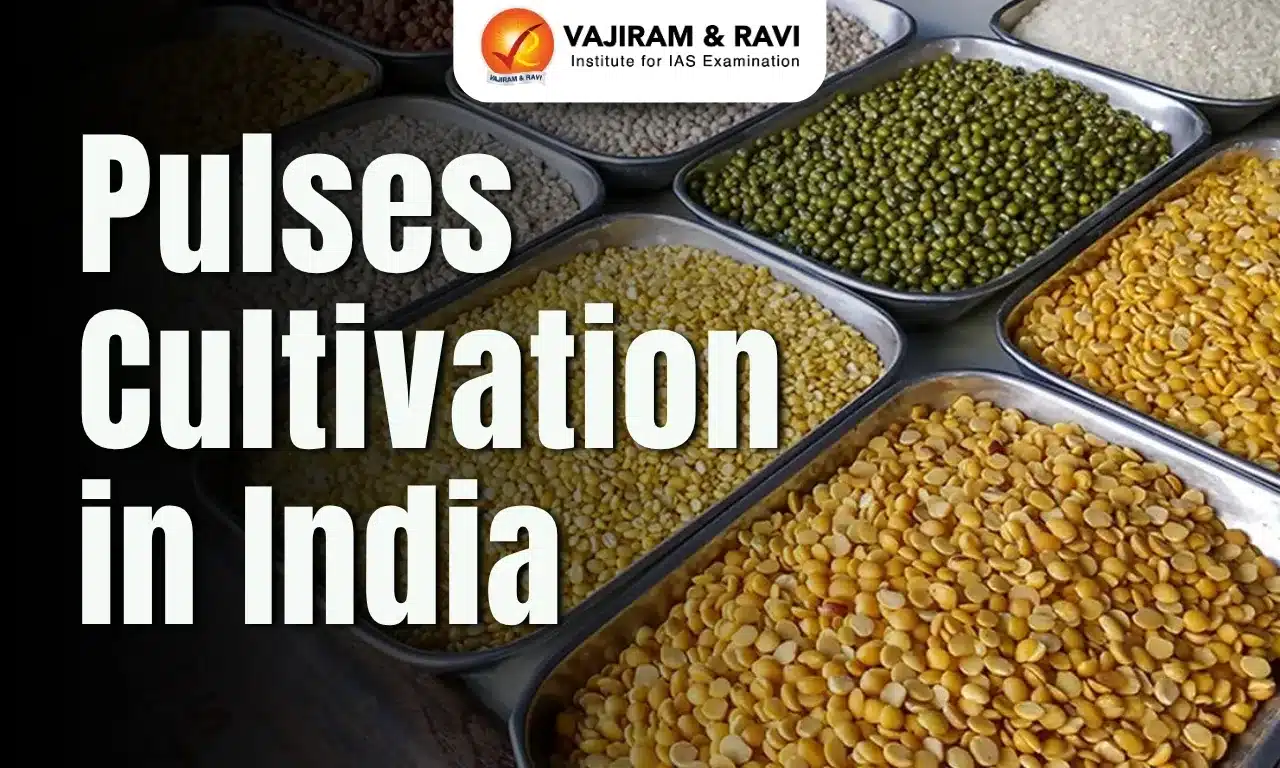
Government’s Strategic Push for Pulses Cultivation in India

Pulses Cultivation in India

Pulses Cultivation in India Latest News

  • In response to surging pulse imports and rising domestic demand, the Department of Consumer Affairs, under the Ministry of Consumer Affairs, Food and Public Distribution, has initiated a targeted programme.
  • This programme aims to promote pulses (like arhar (tur) and urad) cultivation in India during the Kharif season 2025. 
  • This is part of a broader food security and import reduction strategy.

Key Highlights and Government Initiatives

  • Launch of pulse cultivation campaign:
    • Aim: The Department of Consumer Affairs will promote arhar and urad cultivation through seed distribution campaigns.
    • Implementation: By the National Cooperative Consumer’s Federation of India Ltd. (NCCF).
    • Extent: The campaign is extended from a successful pilot in two Jharkhand districts to 12 districts across seven states - 
      • Jharkhand: Palamu, Latehar, Garhwa
      • Uttar Pradesh: Mirzapur, Lalitpur
      • Bihar: Gaya, Jehanabad
      • Karnataka: Vijaypura
      • Others: Manipur and Tripura (districts not specified)
  • Criteria for district selection: Rainfed areas, presence of Aspirational Blocks as identified by NITI Aayog.
  • Financial and procurement support:
    • ₹1 crore allocated for seed distribution.
    • 100% procurement guarantee at Minimum Support Price (MSP) if market price falls.
    • MSP for Kharif Marketing Season 2025-26 - 
      • Arhar: ₹8,000/quintal
      • Urad: ₹7,800/quintal

Pulse Production and Trade Trends

  • Overview:
    • Pulses are rich in protein (20–25% by weight); crucial for a carbohydrate-rich Indian diet.
    • India is the largest producer of pulses globally.
    • Major pulses produced in India are Arhar (Tur), Urad, Moong, Masur, Gram, etc.
  • Domestic production trends:
    • Increased from 163.23 lakh tonnes in 2015–16 to 244.93 lakh tonnes in 2023–24.
    • Key producing states: MP, Maharashtra, Rajasthan, UP, Karnataka, Tamil Nadu, Kerala, West Bengal, etc.
  • Import-export data (in lakh tonnes):
    • In 2021-22, imports are 26.99 and exports are 3.87.
    • In 2022-23, imports are 24.96 and exports are 7.62.
    • In 2023-24, imports are 47.38 (~$5 billion) and exports are 5.94 ($ 686.9 million) Imports doubled in 2023–24 compared to previous year, highlighting dependency risks.
    • Major export destinations: Bangladesh, China, UAE, USA, Sri Lanka.
    • India's major destinations for pulse imports: Canada, Australia, Myanmar, Mozambique, and Tanzania.

Policy Support for Pulse Cultivation

  • Pradhan Mantri Annadata Aay Sanrakshan Abhiyan (PM-AASHA): Under the Price Support Scheme (PSS), the government procures pulses at MSP. Procurement limit of 25% lifted for Tur, Masoor, and Urad during 2023–24 and 2024–25.
  • National Food Security Mission (NFSM): Implemented in 28 States and 2 UTs (J&K and Ladakh), it aims to enhance foodgrain production including pulses.
  • Crop Diversification Programme (CDP): Implemented in Green Revolution States - Haryana, Punjab, Western UP, it encourages shift from water-intensive paddy to pulses and oilseeds.
  • Rashtriya Krishi Vikas Yojana (RKVY): It offers states flexibility to address regional agricultural needs, including pulse promotion.

Source: IEPIB | APEDA

Pulses Cultivation in India FAQs

Q1: Discuss the significance of the Government’s recent initiative to promote arhar and urad cultivation in the context of India’s pulse import dependency.

Ans: The initiative addresses growing pulse import dependence—highlighted by a record 47.38 lakh tonnes in 2023–24—by incentivizing domestic production through seed distribution and MSP-based procurement.

Q2: Examine the role of central government schemes such as PM-AASHA, NFSM, and CDP in promoting sustainable pulse cultivation in India.

Ans: PM-AASHA ensures price assurance, NFSM enhances productivity across states, and CDP facilitates diversification from paddy to pulses in water-stressed Green Revolution regions.

Q3: How does the use of institutions like the National Cooperative Consumer’s Federation (NCCF) reflect a cooperative approach in implementing agricultural policy?

Ans: Involving NCCF in seed distribution underlines a cooperative governance model where central institutions support localized, farmer-centric interventions in agriculture.

Q4: Critically analyze how targeting 'Aspirational Blocks' and rainfed areas under the pulse cultivation campaign supports inclusive agricultural development.

Ans: By focusing on underdeveloped rainfed districts and Aspirational Blocks, the policy promotes equitable growth, improves livelihood security, and bridges regional disparities in agricultural productivity.

Q5: Evaluate the role of pulse promotion in enhancing nutritional security in India.

Ans: Promoting protein-rich pulses like tur and urad, especially among low-income groups, helps combat malnutrition and ensures dietary balance in carbohydrate-heavy Indian meals.

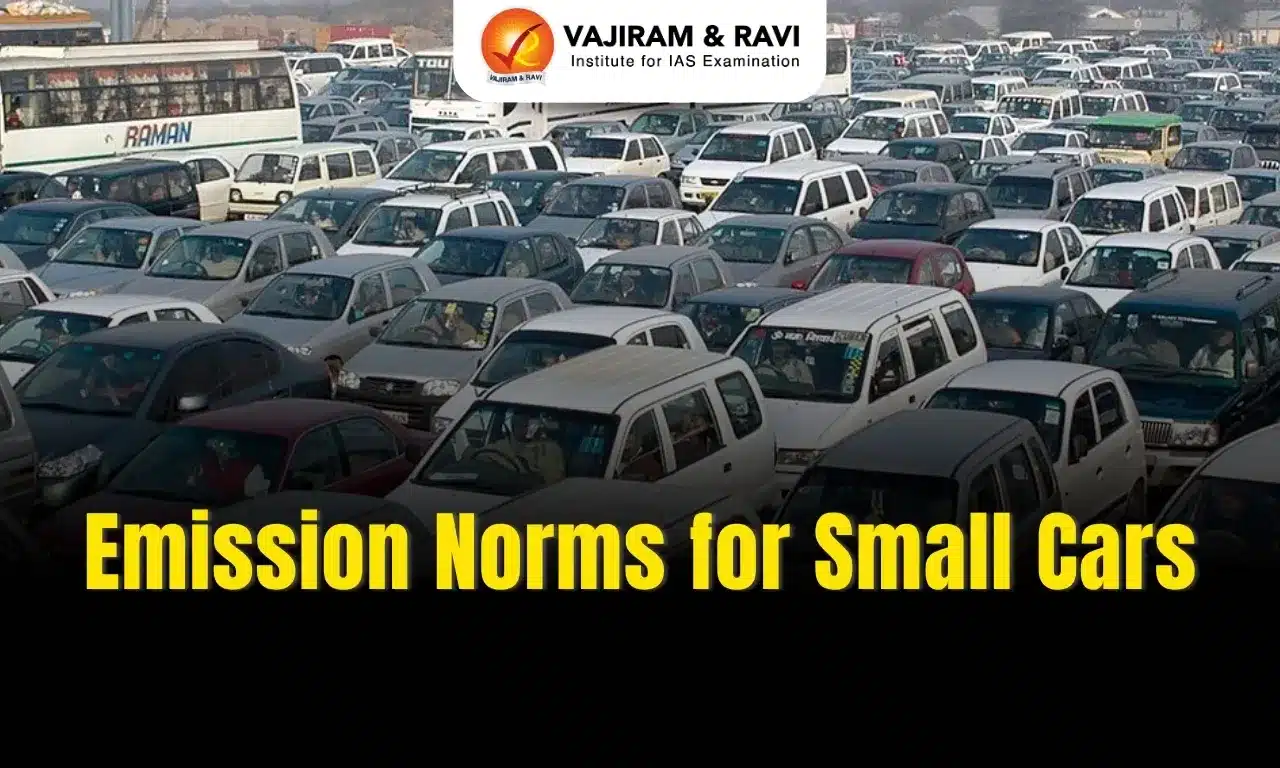
India Urged to Relax Emission Norms for Small Cars in Line with Global Practices

Emission Norms for Small Cars

Emission Norms for Small Cars Latest News

new study by researchers at Nomura suggests that India should reform its Corporate Average Fuel Efficiency (CAFE) norms to align with global best practices by including protection measures for small cars.

India’s CAFE Norms

  • Corporate Average Fuel Efficiency (CAFE) norms are government-mandated standards that require auto manufacturers to meet a fleet-wide average fuel economy target.
  • India’s CAFE norms, introduced by the Bureau of Energy Efficiency (BEE) in 2017, aim to regulate fuel consumption and CO₂ emissions from passenger vehicles under 3,500 kg. 
    •  In India, CAFE norms were introduced in two phases, with the first stage effective from 2017-18 and the second from 2022-23. 
  • These norms apply to vehicles powered by petrol, diesel, LPG, CNG, hybrids, and electric power.

Objective: Lower Emissions and Oil Dependence

  • CAFE norms were designed to:
    • Reduce oil imports
    • Cut air pollution
    • Promote cleaner vehicles like EVs, CNG cars, and hybrids
  • Tighter norms were enforced in 2022–23, with penalties for non-compliance. Manufacturers were required to achieve:
    • Fuel consumption ≤ 4.78 litres/100 km
    • CO₂ emissions ≤ 113 g/km

Heavier Cars Get Relaxed Targets

  • Under India’s CAFE system, heavier vehicles are allowed higher absolute CO₂ emissions, making it easier for large SUVs and premium cars to comply. 
  • Meanwhile, smaller, lighter cars face stricter targets, even if their emissions are already low.

Call to Reform India’s Emission Norms for Small Cars

  • A recent study by Nomura researchers has urged India to reform its CAFE framework to align with global best practices. 
  • The study recommends incorporating protection mechanisms for small, lightweight cars, similar to what is done in major automobile markets like the US, EU, China, Japan, and Korea.

Current Linear Weight-Based Approach Flawed

  • India’s current CAFE norms follow a linear weight-based system, where lighter vehicles are subject to more stringent CO₂ targets. 
  • The study highlights a contradiction: a heavy SUV emitting 130g/km CO₂ (Model A) is compliant, while a small car emitting just 100g/km (Model B) is non-compliant. T
  • This creates a structural bias—penalising small cars with lower emissions, while allowing heavier, more polluting vehicles to meet norms more easily.

Impact on Small Car Market and Decarbonisation

  • Manufacturers try to reduce emissions by lightweighting, but the CAFE framework assigns even stricter targets to lighter vehicles. 
  • Thus, entry-level small cars—already efficient—struggle to meet their moving goalposts, discouraging further innovation in this segment.
  • The lack of regulatory protection has discouraged lightweighting, a critical strategy for decarbonisation. 
  • Manufacturers like Maruti Suzuki have been lobbying for a relaxation in norms for this category.

Global Practices: Relaxed Emission Norms for Small Cars

Researchers highlight how major auto markets adopt flexible emissions frameworks to protect small, fuel-efficient vehicles, unlike India’s linear approach.

United States: Fixed Targets for Smaller Cars

  • The US uses a piecewise linear approach based on vehicle footprint.
  • For cars below a specific size, fuel economy targets remain fixed.
  • This prevents disproportionately stricter norms as cars get smaller.

China: Constant Targets Below Weight Threshold

  • China follows a similar strategy:
  • For cars below a certain curb weight, fuel consumption targets become constant.
  • This avoids punishing lighter cars with tighter norms.

South Korea: Constant Targets and Bonus Credits

  • For small cars under a defined curb weight, targets stay constant.
  • Manufacturers also receive a 5–7g/km bonus on CAFE scores based on small car sales share.

Japan: Non-Linear Norms to Protect Small Cars

  • Japan adopts a non-linear emissions approach by ensuring light cars aren’t disproportionately penalised, encouraging efficient, small vehicle production.

European Union: Inverted Slope Benefits Small Cars

  • Europe has a negative slope (-0.0144) in its CAFE framework.
  • Larger cars face tighter CO₂ limits, while smaller cars enjoy relaxed targets, promoting their use.

Source: IE | FE

Emission Norms for Small Cars FAQs

Q1: What are India’s CAFE norms?

Ans: CAFE norms regulate average fuel efficiency and CO₂ emissions for all passenger vehicles under 3,500 kg across manufacturers’ fleets.

Q2: Why are small cars disadvantaged under current norms?

Ans: India’s linear weight-based targets penalize small, efficient cars while allowing heavier, more polluting vehicles to meet relaxed targets.

Q3: How do other countries handle emissions for small cars?

Ans: Countries like the US, China, and EU offer relaxed or fixed emission targets to support small, lightweight vehicles.

Q4: What impact does this have on the market?

Ans: It discourages small car innovation and lightweighting, negatively affecting sales and decarbonisation efforts in India.

Q5: What reforms are being suggested?

Ans: Experts recommend aligning India’s CAFE norms with global practices by introducing protection mechanisms for small, efficient vehicles.

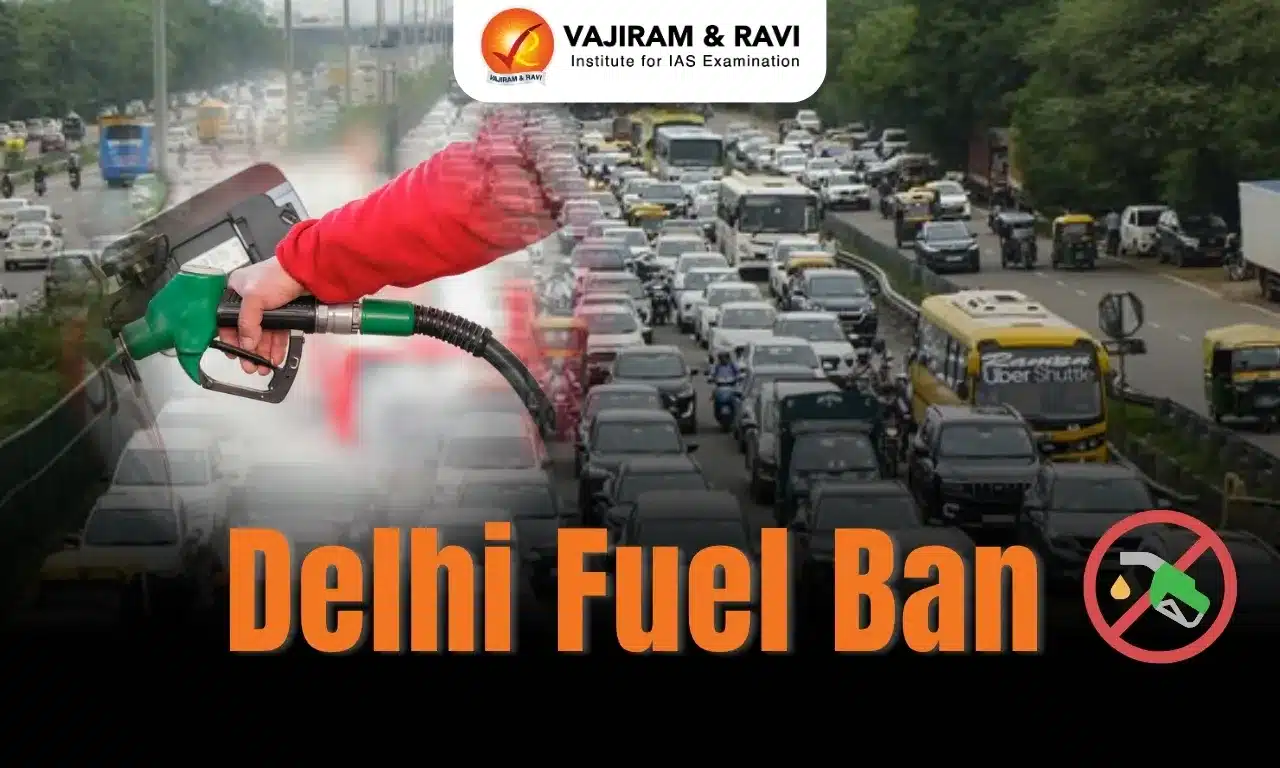
Delhi’s Fuel Ban for Old Vehicles: Legal Rules, Challenges, and Pollution Impact

Delhi Fuel Ban

Delhi Fuel Ban Latest News

  • Facing backlash over the fuel ban for old vehicles, the Delhi Government announced that end-of-life vehicles will not be impounded. 
  • Environment Minister of Delhi said a new system for handling old vehicles is being planned. 
  • The Commission for Air Quality Management (CAQM) directive to remove end-of-life vehicles from roads is based on long-standing court orders and serious environmental concerns.

Delhi’s Fuel Ban for Old Vehicles

  • Starting July 1, diesel vehicles over 10 years old and petrol vehicles over 15 years old are denied fuel at Delhi’s fuel stations under the CAQM directive.
    • In April 2025, the CAQM directed a phased denial of fuel to ELVs at fuel stations in the NCR:
      • in Delhi from July 1, 
      • in high-density NCR districts from November 1, and 
      • in the rest of the NCR from April 1, 2026.

Real-Time Enforcement with ANPR Technology

  • 498 fuel stations and 3 ISBTs now have Automatic Number Plate Recognition (ANPR) cameras.
  • These scan vehicle plates and cross-check with the VAHAN database.
  • If identified as an End-of-Life Vehicle (ELV), an audio alert is triggered, and fuel is denied.

Enforcement and Penalties

  • ELVs may be impounded and scrapped unless valid exemptions or documents are shown.
  • Enforcement teams include the Transport Department, Traffic Police, and civic bodies.

Delhi Government Flags Premature Implementation

  • Delhi Environment Minister, in a letter to CAQM, called the immediate enforcement of the fuel ban “premature and potentially counterproductive”.
  • The Automatic Number Plate Recognition (ANPR) system is facing multiple issues:
    • Camera misplacement
    • Non-functional sensors and speakers
    • Inability to detect ELVs due to HSRP-related issues
  • The system lacks integration with vehicle databases of adjoining NCR districts, making it easy for vehicle owners to bypass the ban by refueling in nearby areas.
  • Due to these technological and operational issues, the public is facing inconvenience, leading to widespread discontent and backlash.

Why Older Vehicles Are a Concern

  • Authorities say pre-BS-VI vehicles significantly contribute to air pollution, even if maintained well.
    • BS-IV vehicles emit 4.5 to 5.5 times more particulate matter than BS-VI vehicles.
    • BS-VI norms became mandatory from April 1, 2020, setting stricter emission standards.
  • Transport sector accounts for: 28% of PM2.5; 41% of SO₂; 78% of NOx emissions. CAQM highlights transport as a key driver of Delhi’s air pollution.
  • While legal mandates for banning overage vehicles existed since 2015, lack of technology delayed enforcement.

NGT’s 2015 Ban on Old Vehicles

  • In 2015, the National Green Tribunal (NGT) banned - Diesel vehicles older than 10 years; Petrol vehicles older than 15 years - from operating or being registered in Delhi-NCR.
  • In 2018, the Supreme Court upheld the NGT’s directive and ordered that violating vehicles must be impounded.

New Scrapping Rules Reinforce Mandate

  • In 2023, Delhi framed guidelines under the Motor Vehicles Act and Registered Vehicle Scrapping Facility (RVSF) Rules.
  • The Environment Protection (End-of-Life Vehicles) Rules, 2025, effective April 1, mandate scrapping within 180 days of a vehicle’s registration expiry.

Legal Basis Under Motor Vehicles Act

  • Motor Vehicles Act, 1988: Registration for non-transport vehicles valid for 15 years, renewable thereafter.
  • Central Motor Vehicles Rules, 1999: After expiry, a vehicle is no longer considered validly registered.

Effectiveness of Such Measures in Dealing with Delhi’s Bad Air Problem

  • Experts agree that no single measure, including the fuel ban for old vehicles, can fully resolve Delhi’s severe air quality crisis.
  • The Centre for Science and Environment (CSE) cautions that age caps aren’t scalable nationwide and older vehicles aren’t the only polluters. 
  • Poor maintenance can make even newer vehicles highly polluting.

Multi-Pronged Approach Needed

  • CSE advocates a comprehensive strategy, including:
    • Upgrading fuel and emission standards
    • Strict Pollution-Under-Control (PUC) enforcement
    • Major expansion of public transport

Source: IE | TH | IT

Delhi Fuel Ban FAQs

Q1: What is Delhi’s fuel ban for old vehicles?

Ans: As of July 1, old petrol/diesel vehicles are denied fuel under CAQM orders to reduce vehicular pollution.

Q2: Why are older vehicles targeted in Delhi?

Ans: Older vehicles, especially pre-BS-VI ones, emit significantly more pollutants, worsening Delhi’s already severe air quality.

Q3: What legal backing supports Delhi’s fuel ban?

Ans: The National Green Tribunal’s 2015 order, upheld by the Supreme Court in 2018, mandates removal of old vehicles.

Q4: What issues hamper enforcement of the ban?

Ans: Faulty ANPR tech, poor integration with NCR databases, and public backlash challenge implementation of the fuel ban.

Q5: Can this ban alone solve Delhi’s pollution?

Ans: Experts say no single measure works; coordinated action including stricter norms and public transport is essential.

Enquire Now