Tokara Islands

Tokara Islands

Tokara Islands Latest News

In an unprecedented seismic event, more than 1,000 earthquakes have rattled the Tokara Islands in southern Japan over the past two weeks.

About Tokara Islands

  • The Tokara Islands are a small archipelago in Japan, south of Kyushu and north of the Amami Islands. 
  • They are also sometimes known as the Toshima Islands, and the name is preserved in the name of the administrative division, Toshima-mura, that covers them.
  • It consists of seven inhabited islands (from north to south: Kuchinoshima, Nakanoshima, Suwanosejima, Tairajima, Akusekijima, Kodakarajima, and Takarajima) and five uninhabited islands (Gajajima, Kogajajima, Kojima, Kaminonejima, and Yokoatejima). 
  • As a permanently inhabited municipality stretching over an area of about 160 kilometers, Toshima is “Japan’s longest village.”
  • Nakanoshima is the largest island of Toshima Village in both area and population.
    • Mount Otake dominates the northern section of Nakanoshima. At 979 meters, it is the highest mountain in the island group.
  • Climate
    • It lies between the subtropical and temperate zones, with an average annual temperature of 20ºC. 
    • The weather is warm, and nearly all areas are frostless. The annual rainfall is about 2,700 millimeters.
  • The islands are situated in one of the most seismically active regions of the world.

Source: BS

Tokara Islands FAQs

Q1: Where are the Tokara Islands located?

Ans: The Tokara Islands are a small archipelago in Japan, south of Kyushu and north of the Amami Islands.

Q2: What is another name for the Tokara Islands?

Ans: Toshima Islands

Q3: Which island is the largest in Toshima Village in terms of both area and population?

Ans: Nakanoshima

Gini Index

Gini Index

Gini Index Latest News

India has emerged as the world’s fourth most equal society, with a Gini Index of 25.5, outpacing all G7 and G20 nations, according to the World Bank.

About Gini Index

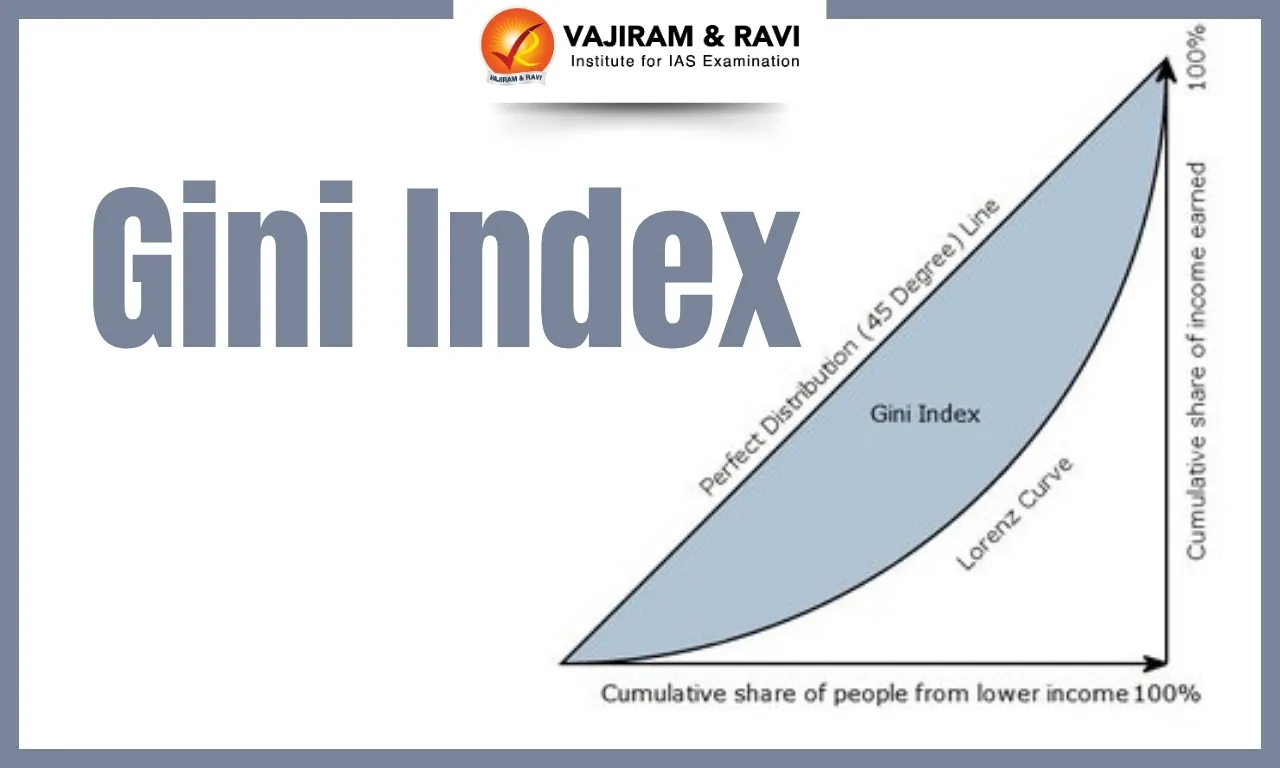
  • The Gini index, also called the Gini coefficient or Gini ratio, determines a nation's level of income inequality by measuring the income distribution or wealth distribution across its population. 
  • The Gini index was developed in 1912 by Italian statistician Corrado Gini.
  • The coefficient of the Gini index ranges from 0 (or 0%) to 1 (or 100%), with 0 representing perfect equality and 1 representing perfect inequality.
    • To offer two hypothetical examples, if a nation were to have absolute income equality, with every person earning the same amount, its Gini score would be 0 (0%). 
    • On the other hand, if one person earned all the income in a nation and the rest earned zero, the Gini coefficient would be 1 (100%). 
  • Mathematically, the Gini coefficient is defined based on the Lorenz curve. 
    • The Lorenz curve plots the percentiles of the population on the graph’s horizontal axis according to income or wealth, whichever is being measured. 
    • The cumulative income or wealth of the population is plotted on the vertical axis.
  • The Gini index is not an absolute measure of a country’s income or wealth. The coefficient only measures the dispersion of income or wealth within a population.
  • India’s Gini Index:
    • According to the recent World Bank report, India’s Gini Index stands at 25.5, placing it as the fourth most equal country globally, behind only the Slovak Republic, Slovenia, and Belarus. 
    • This performance not only surpasses regional peers like China, which holds a Gini score of 35.7, but also positions India ahead of every G7 and G20 nation in terms of income equality.
    • It marks a steady improvement from a Gini score of 28.8 in 2011 to 25.5 in 2022, signalling meaningful gains in bridging income gaps over the past decade.

Source: BT

Gini Index FAQs

Q1: What does the Gini Index measure?

Ans: Income or wealth inequality within a population.

Q2: What does a Gini coefficient of 0 represent?

Ans: Perfect income equality

Q3: What is India’s Gini Index as per the recent World Bank report?

Ans: 25.5

Q4: Which countries are ranked more equal than India in the recent Gini Index report?

Ans: Slovak Republic, Slovenia, and Belarus

Onge Tribe

Onge Tribe

Onge Tribe Latest News

The Andaman and Nicobar Islands administration recently set up a Van Dhan Vikas Kendra for the Onge tribe at Dugong Creek under Pradhan Mantri Janjati Adivasi Nyay Maha Abhiyan to make them self-sustainable through coconut-based products.

About Onge Tribe

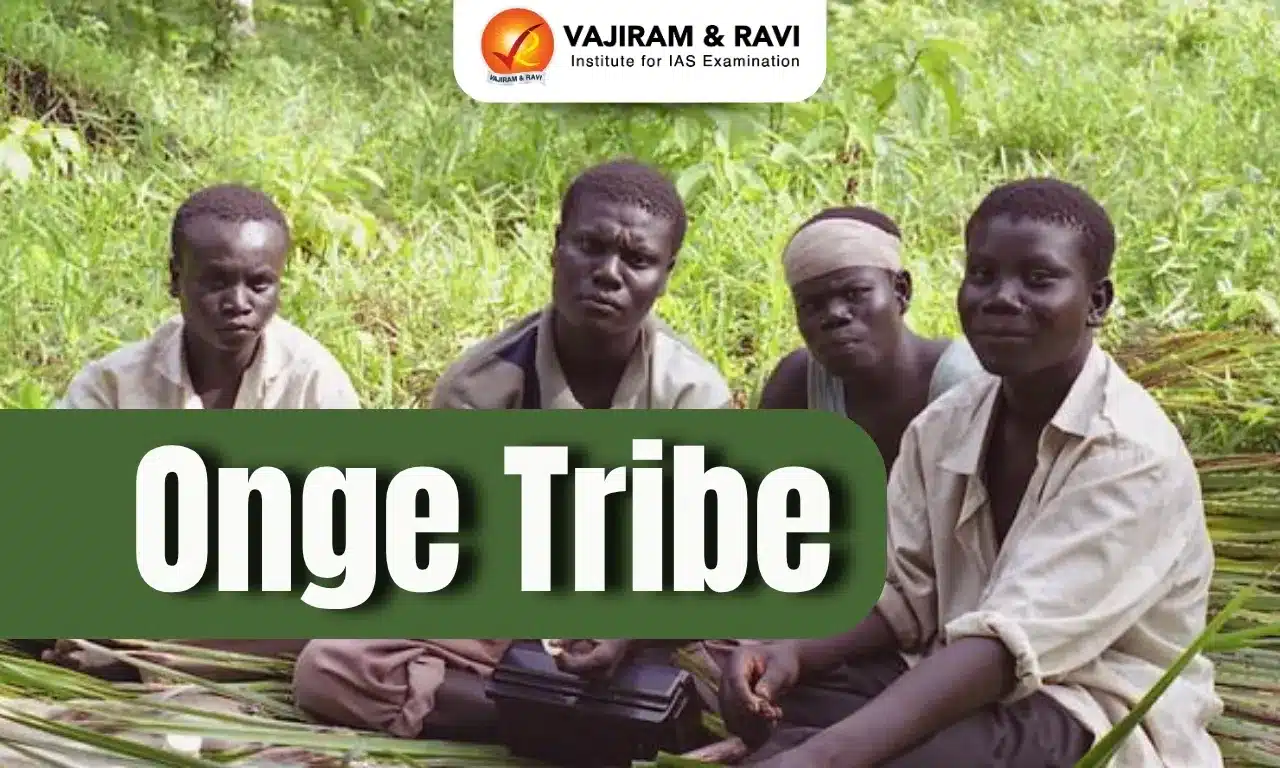
  • Onges are one of the most primitive tribes in India. They belong to the Negrito racial stock.
  • They are inhabiting Little Andaman Island, the most southerly island in the Andaman archipelago.
  • They are semi-nomadic tribes and fully dependent on the food provided by nature. 
  • The religion of the Onges is simple animism. Neither ceremonial worship nor any kind of propitiation is practiced by them. They believe in different classes of spirits-spirits of the wood, the sea, disease, storm, and ancestors. 
  • The Onge speak their own language, which has no script. 
  • The colour of the teeth has a unique interpretation among Onges, who consider pearly white teeth a symbol of death. They continue to chew the bark to impart a red colour to their teeth.
  • They decorate their bodies and their faces with white and ochre clay. On special occasions, they place a greater emphasis on body ornamentation.
  • Until the 1940s, the Onge were the sole permanent inhabitants of Goubalambabey (the Onge name for Little Andaman).
  • They now share the 732 sq km island with around 17,000 settlers from India, Bangladesh, and the Nicobar Islands.
  • The Onge population was also decimated following contact with British colonists and Indian settlers; it fell from 670 in 1900 to only 96 members by the early 2000s.
  • In 1976, the Onge were settled in order to have ‘the basic facilities for hygienic living and protection against elements of nature’.
  • They now live in a reserve in Dugong Creek (Little Andaman) that is a fraction of the size of their original territory.
  • The Onge tribe is also one of the world’s least prolific and infertile communities. Infertility affects somewhat more than 40% of married couples.

Source: HT

Onge Tribe FAQs

Q1: Where do the Onge tribe primarily reside?

Ans: Little Andaman Island

Q2: The Onge tribe belongs to which racial stock?

Ans: Negrito

Q3: In which area were the Onges settled in 1976 for better facilities?

Ans: Dugong Creek

Q4: What is the religious belief system of the Onges?

Ans: Animism

Nipah Virus

Nipah Virus

Nipah Virus Latest News

The Kerala Health Minister recently confirmed that 425 individuals have been placed on the Nipah virus contact list across the state.

About Nipah Virus

  • Nipah virus (NiV) is an emerging zoonotic virus that can be transmitted to humans from animals (both wild and domestic). 
  • It can also be transmitted through contaminated food or directly from person-to-person.
  • Fruit bats of the Pteropodidae family are the natural hosts of Nipah virus. 
  • NiV infection can be asymptomatic or mild (subclinical), but it also causes acute respiratory illness and fatal encephalitis. 
  • Symptoms
    • Initial symptoms of NiV infection may include fever, headache, myalgia (muscle pain), nausea, vomiting, sore throat, cough, and/or respiratory discomfort.
    • Acute encephalitis might develop with the following symptoms: dizziness, drowsiness, altered state of consciousness, and any other indicative neurological signs. 
    • In severe cases, encephalitis and seizures occur and may lead to coma within 24–48 hours. 
    • Progression to encephalitis indicates a poor prognosis, with death within a median of six days after the onset of symptoms.
  • The case fatality rate is estimated between 40–75% or higher, and it varies depending on the specific NiV strain, access to and quality of healthcare, or the severity of illness. 
  • Treatment: There are no specifically approved treatments or vaccines available for NiV infection, either for people or animals.  
  • So far, NiV outbreaks have only been described in Asia. 
    • The first reported outbreak occurred in 1998–1999 and involved pig farmers in the village of Sungai Nipah (Malaysia). 
    • Since then, sporadic outbreaks have been documented in Bangladesh, India, the Philippines, and Singapore.
  • NiV infection is one of the priority diseases on the World Health Organization (WHO) R&D Blueprint because of its epidemic or pandemic potential.

Source: NDTV

Nipah Virus FAQs

Q1: Which animals are the natural hosts of Nipah Virus?

Ans: Fruit bats of the Pteropodidae family.

Q2: What is the estimated case fatality rate of Nipah Virus infection?

Ans: 40–75%

Q3: What is the current status of treatment or vaccine for Nipah Virus?

Ans: No approved treatments or vaccines exist.

3 by 35 Initiative

3 by 35 Initiative

3 by 35 Initiative Latest News

Recently, the World Health Organization (WHO) has launched a”3 by 35” initiative.

About 3 by 35 Initiative

  • It is an initiative urging countries to raise real prices on tobacco, alcohol, and sugary drinks by at least 50 per cent by 2035.
  • The initiative has an ambitious goal of raising US $1 trillion over the next 10 years. 
  • It aims to revitalize health taxes as a powerful tool to reduce harmful consumption, save lives, and generate vital public revenue.
  • By implementing well-designed and effectively enforced taxes on these products, countries can mobilize significant domestic resources while advancing public health.
  • The 3 by 35 Initiative has three key actions
    • Mobilizing countries – WHO and partners will engage heads of state, finance and health ministries, and civil society to build political momentum. Countries participating in the Initiative will benefit from peer learning, strategic support, and global recognition.
    • Supporting country-led policies – Countries requesting assistance will receive direct support to develop tailored, evidence-based health tax policies. Others will benefit from a shared knowledge platform offering guidance, tools, and best practices.
    • Building commitment and partnerships – Through inclusive dialogue and collaboration, the Initiative seeks to shift public and political perceptions, foster cross-sector alliances, and strengthen the role of civil society in advocating for sustainable health financing.

Source: IE

3 by 35 Initiative FAQs

Q1: What is the role of the World Health Organization?

Ans: WHO works worldwide to promote health, keep the world safe, and serve the vulnerable.

Q2: What is sustainable healthcare?

Ans: Sustainable healthcare meets the needs of our populations, without damaging the health or ability to meet the healthcare needs of vulnerable people now or in the future.

Alluri Sitaram Raju

Alluri Sitaram Raju

Alluri Sitaram Raju Latest News

The defence Minister recently said that the government has emulated legendary revolutionary Alluri Sitarama Raju’s ideals in making a tribal woman, Draupadi Murmu, as the President of India.

About Alluri Sitaram Raju

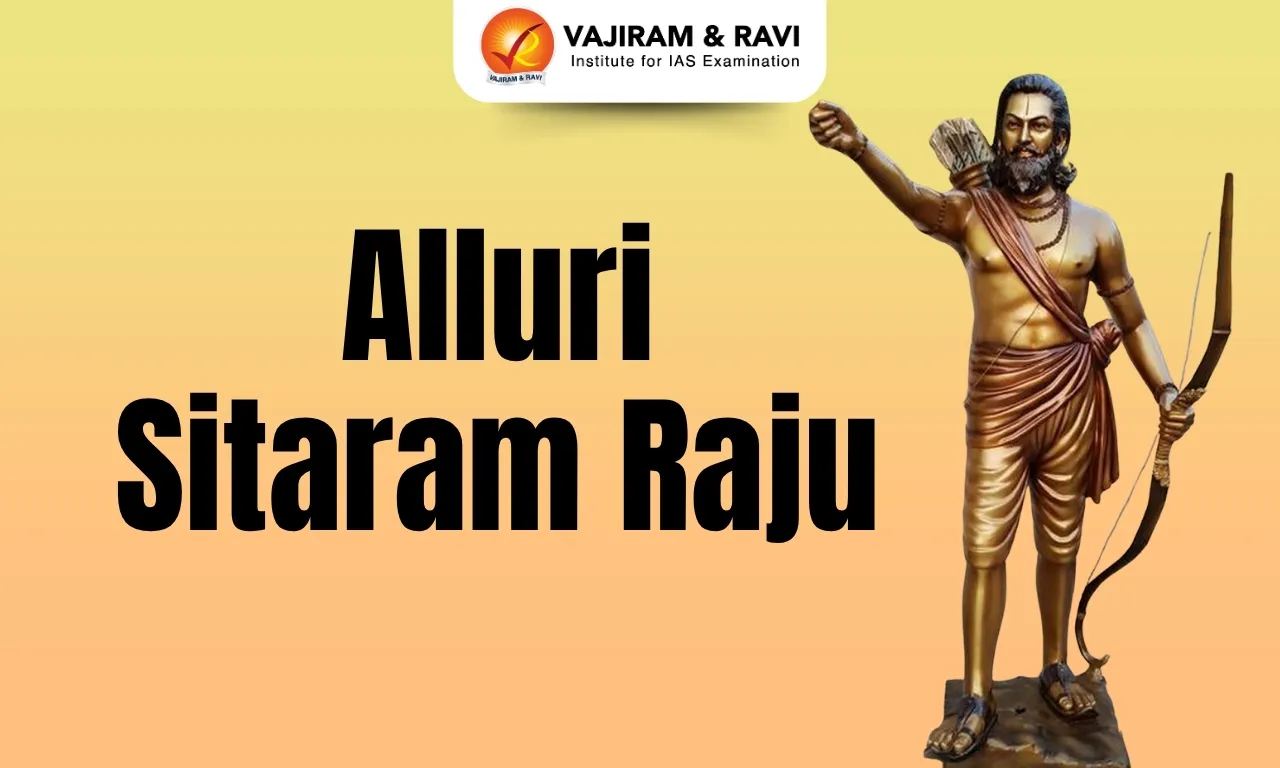
  • He was an Indian revolutionary who waged an armed campaign against British colonial rule in India. 
  • Born to a Telugu-speaking family on 4th July 1897 at Bhimavaram in present-day Andhra Pradesh, he became involved in opposing the British in response to the 1882 Madras Forest Act, which effectively restricted the free movement of Adivasis (tribal communities) in their forest habitats and prevented them from practicing a traditional form of agriculture known as ‘Podu’. 
  • Rising discontent towards the British led to the Rampa Rebellion of 1922, in which he played a major part as a leader. 
  • Mustering a force combined of Adivasis, farmers and sympathizers to their cause, he engaged in guerilla campaigns against the British colonial authorities in the border regions of the Madras Presidency part of the districts of East Godavari and Visakhapatnam (now part of Alluri Sitharama Raju district). 
  • He was nicknamed "Manyam Veerudu" (Hero of the Jungle) by local villagers for his heroic exploits. 
  • Alluri adopted aspects from the Non-cooperation movement, such as promoting temperance, and the boycott of colonial courts in favour of local justice, administered by panchayat courts, to attract people's support. 
  • Although the movement died out in early 1922, it had reached the plains area by then, as he was involved in the propagation of some of its methods among the hill people, to raise their political consciousness, and desire for change. 
  • These actions caused him to be put under the surveillance of police from around February of that year, although the fact that he was using them as a camouflage to foment armed uprising seems to have not been recognized by either the movement or the political leadership of the British.
  • After putting up a massive effort for nearly two years, the British finally managed to capture Alluri in the forests of Chintapalle; he was then tied to a tree and executed by shooting on 7 May 1924 in the village of Koyyuru. 
  • A tomb of him currently lies in the village of Krishnadevipeta, near Visakhapatnam. 
  • The heroic efforts of young Alluri in fighting an all-out war without any state powers, against one of the most powerful empires have been recognised by all.
  • The British Government grudgingly acknowledged him as a powerful tactician of the Guerrilla warfare which lasted for nearly two years, the fact that they had to spend over 40 lakhs in those days to defeat him.

Source: TH

Alluri Sitaram Raju FAQs

Q1: Who was Alluri Sitaram Raju?

Ans: He was an Indian revolutionary who waged an armed campaign against British colonial rule in India.

Q2: Alluri Sitaram Raju was primarily associated with which rebellion?

Ans: Rampa Rebellion

Q3: Which nickname was given to Alluri Sitaram Raju by the local villagers?

Ans: Manyam Veerudu (Hero of the Jungle)

Q4: What tactic was mainly used by Alluri in his fight against British forces?

Ans: Guerrilla warfare

Equine Disease-Free Compartment

Equine Disease-Free Compartment

Equine Disease-Free Compartment Latest News

Recently, India has established and secured global recognition for its first Equine Disease-Free Compartment (EDFC).  

About Equine Disease-Free Compartment

  • It is a scientifically managed, globally recognized area that guarantees horses are free from certain equine diseases, enabling them to engage in international trade and competitions.
  • The EDFC operates under comprehensive Standard Operating Procedures (SOPs) encompassing disease exclusion protocols, pest control, physical security, hygiene, sanitation, animal health monitoring, waste management, and continuous surveillance, all aligned with international best practices.
  • It is recognised by the World Organisation for Animal Health (WOAH).
  • The facility is approved at the Remount Veterinary Corps (RVC) Centre & College, Meerut Cantonment, Uttar Pradesh.
  • It is established under the Ministry of Fisheries, Animal Husbandry and Dairying.
  • The EDFC has been officially declared free from Equine Infectious Anemia, Equine Influenza, Equine Piroplasmosis, Glanders, and Surra.
  • Additionally, India has historically remained free from African Horse Sickness since 2014.

Significance of Equine Disease-Free Compartment to India

  • It marks a major step towards enabling the international movement of Indian sport horses in compliance with global biosecurity and animal health standards.
  • With the implementation of robust biosecurity protocols, stringent veterinary surveillance, and adherence to international norms, Indian sport horses from this facility can now be eligible to travel and compete abroad.
  • This significantly enhances the prospects of Indian riders and horses in global equestrian competitions and raises India’s profile in the international equestrian arena.
  • The compartment also supports the broader development of horse-related activities in the country — including sports, breeding, and high-value equine trade — while strengthening India’s biosecurity and disease preparedness framework.

Source: PIB

Equine Disease-Free Compartment FAQs

Q1: What is sad horse disease?

Ans: Borna disease, also known as sad horse disease, is an infectious neurological syndrome of warm-blooded animals, caused by Borna disease viruses 1 and 2 (BoDV-1/2).

Q2: Which animal is equine?

Ans: Equine, one of the mammal family of Equidae (order Perissodactyla) that includes the modern horses, zebras, and asses, as well as more than 60 species known only from fossils.

Very Massive Stars

Very Massive Stars

Very Massive Stars Latest News

 A new study suggests that ‘Very massive stars’ or ‘very luminous stars’ may be emitting a significantly higher amount of material during their lifespan and the immensity of these materials could be much higher than previously thought.

About Very Massive Stars

  • These are those stars that have over 100 times the mass of the Sun.
  • They have a much higher mass than the Sun, they use their nuclear fuel at a much higher rate, making their average lifespan only a few million years.
  • Once their nuclear fuel is exhausted, very luminous stars collapse to form black holes.
  • These stars produce stellar wind that is powerful enough to blow their own outer layer into space. 

Importance of Very Massive Stars

  • These stars, despite their short lifespan, still influence the region around them.
  • Their powerful stellar winds can push newly formed elements into their surroundings. While most form new stars, elements key to life, such as carbon and oxygen, are also emitted.
  • In spite of their distance from our Earth, they still bear an influence on it.
  • These stars can be considered the predecessor to black holes. This occasionally leads to black hole binaries, where two black holes orbit around each other. These cause gravitational waves, which we then detect on Earth.

Source: IE

Very Massive Stars FAQs

Q1: What are the very large stars called?

Ans: Supergiants

Q2: What is a very massive star?

Ans: A massive star can be defined as a star with a mass above about 10 times that of our Sun,

Chautal

Chautal

Chautal Latest News

Recently, the Prime Minister of India’s welcoming ceremony in Trinidad and Tobago included a performance of the traditional Bhojpuri Chautal.

About Chautal

  • Chautaal, also called Chartaal or Chowtaal, is a rhythmic framework composed of 12 beats.
  • It is traditionally used to accompany Dhrupad and Dhamar styles of singing and instrumental performances.
  • It is a rhythmic cycle used in North Indian classical music, particularly in Hindustani classical music.
  • The name “Chautal” means “four claps,” referring to its vibhag or division structure.
  • One school of thought contends that it consists of four vibhags of 4, 4, 2, and 2 matras respectively.
  • There is another school which suggests that the structure of Chautal is the same as Ektal.  Therefore, it would be viewed as six vibhags of two matras each.
  • It is strongly linked to the pakhawaj tradition; this has profound practical and theoretical implications. 
  • It is performed in a very heavy, powerful manner which is in sharp contrast to the more delicate style of the tabla. 

Source: ITV

Chautal FAQs

Q1: What is pakhawaj used for?

Ans: It is the percussion instrument most commonly used in the dhrupad style of Indian classical music and less often used as a rhythm accompaniment for various other sub-forms of music and dance performances

Q2: What does Drupad mean in music?

Ans: Dhrupad is one of the oldest and most traditional genres of Hindustani classical music. It originated in North India and was traditionally performed in temples and royal courts.

Green Climate Fund

Green Climate Fund

Green Climate Fund Latest News

The Green Climate Fund (GCF) has approved over USD 120 million in new funding to strengthen climate resilience in Ghana, the Maldives, and Mauritania.

About Green Climate Fund

  • It is the world’s largest dedicated climate fund which was set up at COP 16 held in Cancun in 2010.
  • It is an operating entity of the financial mechanism of the United Nations Framework Convention on Climate Change (UNFCCC).
  • It is mandated to support developing countries raise and realize their Nationally Determined Contributions ambitions towards low-emissions, climate-resilient pathways.
  • It accelerates transformative climate action in developing countries through a country-owned partnership approach and use of flexible financing solutions and climate investment expertise.
  • A core GCF principle is to follow a country-driven approach, which means that developing countries lead GCF programming and implementation. 
  • GCF is mandated to invest 50% of its resources to mitigation and 50% to adaptation in grant equivalent. At least half of its adaptation resources must be invested in the most climate vulnerable countries (SIDS, LDCs, and African States).
  • The GCF is a legally independent institution with a fully independent secretariat headed by an Executive Secretary.
  • The Secretariat, located in Songdo South Korea, began its work in December 2013.

Source: UNEP

Green Climate Fund FAQs

Q1: What is the United Nations Framework Convention on Climate Change?

Ans: The United Nations Framework Convention on Climate Change (UNFCCC) was adopted in 1992 with the ultimate aim of preventing dangerous human interference with the climate system.

Q2: What is climate change change?

Ans: Climate change is a long-term change in the average weather patterns that have come to define Earth's local, regional and global climates.

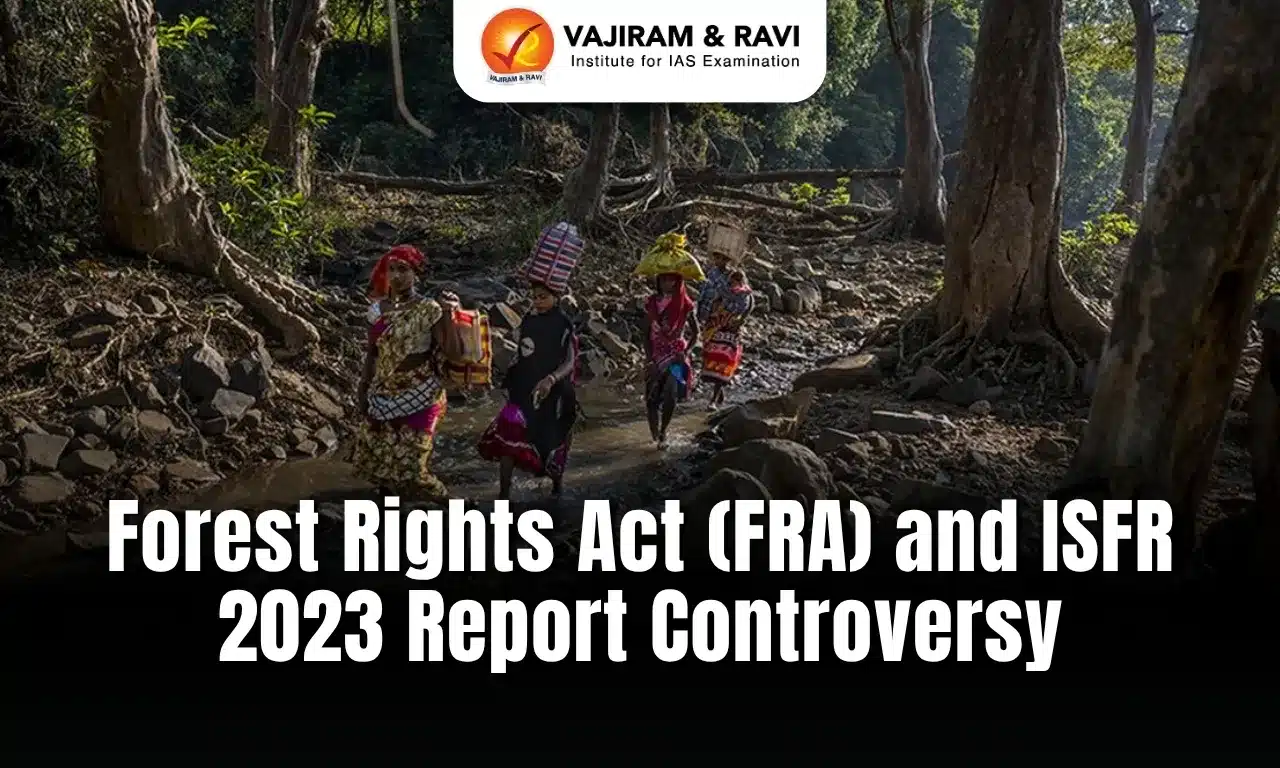
Controversy Over ISFR 2023 – Forest Rights Act (FRA) Blamed for Forest Cover Loss

Forest Rights Act

Forest Rights Act (FRA) and ISFR 2023 Report Controversy Latest News

  • The India State of Forest Report (ISFR) 2023 attributed the “negativechange in forest and tree cover partly to the implementation of the Forest Rights Act (FRA), 2006. 
  • This has sparked a strong rebuttal from the Ministry of Tribal Affairs, which has questioned the scientific validity of this claim and expressed concerns about its implications for the implementation of FRA.

Findings of the ISFR 2023

  • The 18th biennial assessment of India’s forests, ISFR 2023, by the Forest Survey of India, reveals a major drop in the country’s dense natural forests
  • Within the Recorded Forest Area (RFA), the country lost over 1,200 sq km of Mid-Dense Forest (MDF) and an equal area of Open Forest (OF). However, it has added over 2,400 sq km of Very Dense Forest. 
  • Outside the recorded forest area, India lost around 64 sq km of Dense Forest and over 416 sq km of Mid-Dense Forest. 
  • The report attributes the negative changes in forest coverage in RFA and non-RFA areas to -
    • Human encroachments, 
    • Natural calamities like storms, floods and landslides, 
    • Harvesting of short rotation plantations or other forms of logging, and 
    • Finally, titles given to beneficiaries under the Forest Rights Act 2006

The Forest Rights Act (FRA), 2006

  • Official title: The Scheduled Tribes and Other Traditional Forest Dwellers (Recognition Of Forest Rights) Act, 2006.
  • Objective: 
    • The act acknowledges and grants forest Dwelling Scheduled Tribes (FDST) and Other Traditional Forest Dwellers (OTFD), who have lived in these forests for generations, the right to occupy and use the forest.
    • This is to undo historical injustice that occurred to forest dwelling communities, ensuring their livelihood. 
  • Eligibility: Rights can be claimed by any member or community that has for at least three generations (75 years) before the 13th day of December 2005 lived in the forest.
  • Critical wildlife habitats: It provides that critical wildlife habitats of national parks and sanctuaries must remain inviolate for wildlife conservation.
  • Authorities for vesting forest rights:
    • Gram sabha: Initiate process for determining nature and extent of individual or community forest rights.
    • Sub-divisional level committee: Constituted by state government for examining resolutions passed by gram sabha.  
    • District level committee: Final approval of forest rights.

Major Points of Contention

  • FRA blamed for forest cover loss: This is the first time FRA has been explicitly cited in this context in any ISFR.
  • Tribal Affairs Ministry’s rebuttal: The charge was contested by the Ministry, which said that - 
    • The ISFR 2023 lacks scientific evidence and “ground truthing.”
    • Such claims may reinforce administrative bias against FRA implementation.
    • FRA acknowledges pre-existing rights of forest dwellers; it does not legalise encroachments.
    • It does not introduce new rights that may damage ecological balance.

Reaction from Civil Society and Official Clarifications

  • Activist and civil society mobilisation:
    • Over 150 organisations wrote to the Union government condemning the claim.
    • They criticised the Ministry of Environment, Forest and Climate Change (MoEFCC) for delegitimising FRA through unverified conclusions.
  • Environment Ministry’s clarification: ISFR 2023 showed substantial increase in forest cover, indicating community-led conservation. It called civil society’s inferences “devoid of merit.”

Conclusion

  • The controversy reflects the delicate balance between environmental conservation and tribal rights. 
  • The demand for scientific backing before policy implications is crucial to protect the credibility of forest governance mechanisms and the integrity of tribal rights under FRA. 
  • This debate underlines the importance of evidence-based policymaking and inter-ministerial coordination in managing India’s forests sustainably.

Source: TH

Forest Rights Act (FRA) and ISFR 2023 Report Controversy FAQs

Q1: Critically examine the implications of attributing forest cover loss to the implementation of the Forest Rights Act (FRA), 2006.

Ans: Attributing forest degradation to FRA without scientific evidence risks delegitimising constitutionally guaranteed tribal rights and may reinforce administrative bias against community-led forest governance.

Q2: Discuss the role of inter-ministerial coordination in ensuring the balanced implementation of developmental and environmental policies in India.

Ans: The conflict between the Environment and Tribal Affairs Ministries over ISFR 2023 highlights the need for scientific consensus and collaborative governance in reconciling conservation goals with socio-economic justice.

Q3: Analyze how narratives around forest degradation can impact the implementation of the Forest Rights Act and the rights of forest-dwelling communities.

Ans: Unsubstantiated narratives linking FRA to forest loss may erode administrative trust in community forest management and hinder the effective realisation of forest-dweller rights.

Q4: Evaluate the role of civil society in safeguarding environmental justice and tribal rights in India.

Ans: The intervention by civil society groups illustrates how public discourse and political advocacy can serve as checks on policy misinterpretation and defend marginalised communities.

Q5: Explain the significance of scientific evidence and ground truthing in environmental policymaking, especially in the context of the India State of Forest Report.

Ans: The Tribal Affairs Ministry's demand for scientific validation underscores the necessity of evidence-based analysis to ensure objective and credible environmental policy formulation.

Promise and Pitfalls of India’s ₹99,446 Crore Employment-Linked Incentive Scheme

Employment-Linked Incentive Scheme

Employment-Linked Incentive Scheme Latest News

  • The Union Cabinet has approved an Employment-Linked Incentive (ELI) scheme with a budget of ₹99,446 crore, as announced in the 2024–25 Union Budget. 
  • Aimed at boosting job creation, especially in the manufacturing sector, the ELI scheme is part of the Prime Minister’s broader five-scheme employment package, which also includes internships with major companies and youth skill development initiatives.

Key Provisions of the Employment-Linked Incentive (ELI) Scheme

  • Implementation duration: August 1, 2025 – July 31, 2027
  • Implementing Agency: Employees Provident Fund Organisation (EPFO)
  • Goal: Create over 3.5 crore jobs in two years
  • Expected Beneficiaries: 1.92 crore newly employed individuals

Employee Benefits

  • Eligibility: Salaries up to ₹1 lakh/month
  • Incentive: One-month EPF wage (up to ₹15,000)
  • Disbursal:
    • 1st instalment after 6 months of service
    • 2nd instalment after 12 months
  • Mode: Direct bank transfer
  • Savings Component: Part of the benefit will go into a fixed deposit account, withdrawable later

Employer Incentives

  • Eligibility: Establishments registered with EPFO
  • Support: Up to ₹3,000/month for each new employee retained for at least 6 months, for two years
  • For manufacturing firms, the incentives extend to the 3rd and 4th years as well

Employers’ Response to the Employment-Linked Incentive (ELI) Scheme

  • Employers have called the ELI scheme a “laudable initiative” that encourages first-time employment and sustained job creation, especially in manufacturing.
  • They highlighted the scheme’s potential to boost labour-intensive sectors and transform India’s employment ecosystem.
  • Industry experts stressed the need to include micro and small manufacturing units, especially those with fewer than 20 employees, under the scheme’s benefits.
    • They proposed shifting the scheme to the Ministry of MSME and using a structured reimbursement model based on payroll growth.
  • Experts suggested a direct monthly subsidy to both employer and employee, tied to continued employment, for simpler and wider adoption.

Trade Union Response and Concerns on the ELI Scheme

  • The Bharatiya Mazdoor Sangh (BMS) has welcomed the scheme but called for expanding social security and improving job quality.
  • The other 10 central trade unions have criticised the scheme, citing risks and past experiences.

Fear of Misuse of Funds

  • Unions fear that the ELI scheme could divert workers' savings to subsidise employers.
  • They referenced the 2020 Production-Linked Incentive (PLI) scheme, where benefits reportedly went to large firms without meaningful job creation.

Concerns Over EPFO’s Role

  • EPFO is a custodian of employee savings, not a job-creating body.
  • Unions question how it can implement an incentive scheme without dedicated government funding.

Call for a Separate Implementation Body

There is growing demand for the creation of a specialised agency to administer the scheme, instead of placing the responsibility on EPFO, which lacks the mandate and mechanism for employment generation.

Other Concerns

  • Quality vs Quantity Trade-off - Firms may focus on hiring more rather than hiring skilled or productive workers.
  • Short-Term Gains - Risk of firms inflating hiring temporarily to gain benefits, without long-term employment commitment.
  • Implementation Challenges - Requires robust verification mechanisms to prevent misuse and false reporting of employment data.
  • Skewed Sectoral Impact - May benefit larger firms with better compliance systems, leaving out MSMEs that employ a majority.

Source: TH | ET

Employment-Linked Incentive Scheme FAQs

Q1: What is the ELI scheme?

Ans: A government initiative to boost jobs by offering EPF-linked incentives to employers hiring new workers till 2027.

Q2: How do employees benefit from the ELI scheme?

Ans: Eligible new hires get up to ₹15,000 in EPF benefits, split across 6- and 12-month milestones.

Q3: What are employers saying about the scheme?

Ans: Industry leaders welcome the initiative but seek more inclusion for MSMEs and simplified, direct subsidy models.

Q4: Why are trade unions critical of the scheme?

Ans: They fear workers’ savings may subsidise firms and question EPFO’s role as a job-creation authority.

Q5: What are the risks in implementing the ELI scheme?

Ans: Concerns include possible misuse, temporary hiring spikes, and limited MSME coverage without stronger verification systems.

Lessons from the Telangana Blast: Safety, Regulation, and Environmental Impact

Telangana Blast

Telangana Blast Latest News

  • Recently, a powerful explosion at Sigachi Industries, a pharmaceutical factory in Pashamylaram near Hyderabad, flattened a three-storey building. Of the 143 workers present, 39 lost their lives.
  • Sigachi Industries denied initial claims of a reactor explosion, asserting the blast did not originate from reactor failure.
  • A four-member expert committee, led by CSIR-IICT emeritus scientist B. Venkateshwar Rao, is probing the cause of the explosion.

Part of a Larger Pattern

  • The incident follows a series of deadly accidents in pharmaceutical units:
    • SB Organics, Sangareddy (2024): 6 dead
    • Anakapalli, Andhra Pradesh (Aug 2024): 17 dead
    • Parawada, Andhra Pradesh (June 2025): 2 dead

Telangana Sigachi Industries Blast: Likely Cause

  • The blast was initially thought to be a Boiling Liquid Expanding Vapour Explosion (BLEVE), but this theory was dismissed by the company and forensic experts.
  • Experts now suspect a dust explosion, likely triggered by airborne microcrystalline cellulose—a fine wood pulp powder used in pharmaceutical manufacturing.
  • Dust explosions have a well-documented history in industries like flour milling, mining, and grain storage, dating back to 1785 in Turin, Italy.
  • The factory processed wood slurry into microcrystalline cellulose using spray dryers. The powder is highly combustible when suspended in air, making it prone to ignition.

Regulatory Lapses in the Telangana Factory Blast

  • Emergency responders arrived at the site without knowing the materials involved, as mandatory environmental display boards were incomplete or missing.
  • Both the State and Central Pollution Control Boards require factories to display environmental and operational details to guide fire and disaster teams. Sigachi Industries failed to comply.
  • The lack of environmental data delayed and complicated rescue and firefighting efforts, putting lives at greater risk.
  • A robust regulatory framework with periodic audits could have ensured compliance and faster emergency response.

Implications of Telangana Blast for the Pharmaceutical Sector

Safety is integral to brand trust in the pharma sector. Any compromise in manufacturing practices can cause ripple effects across the industry’s global reputation.

Telangana’s Strategic Role in Pharma

  • Telangana accounts for:
    • One-third of India’s pharmaceutical production
    • One-fifth of pharmaceutical exports
    • One-third of global vaccine output
  • It has attracted over $1.49 billion in life sciences investments in four years and hosts India’s largest concentration of biotech incubators in Hyderabad.
  • Despite global success, smaller pharma firms in India face ongoing safety and quality issues. Lapses like the Sigachi blast undermine industry credibility.

U.S. Market and Regulatory Scrutiny

  • India’s pharma exports heavily rely on the U.S. FDA-regulated market. 
  • To maintain access, firms must adhere to stringent quality and safety standards under the United States Pharmacopeia-National Formulary.
  • It is a well documented fact that regulatory gaps and cost-cutting measures have led to unsafe drug production practices in Indian firms.

Pollution Control Failures in Telangana’s Pharma Hub

  • The growth of the pharmaceutical sector in Telangana, especially around Hyderabad, has been driven by permissive zoning and weak regulatory enforcement. 
  • Industrial zones like IDA Pashamylaram, once isolated, are now encroached by residential settlements, increasing health risks for nearby communities.

Alarming Environmental Impact

  • Environmental studies show that toxic chemicals and untreated effluents from pharma units have been leaching into soil and local water bodies, degrading both ecosystem and public health.
  • The Musi River ranks 22nd globally in terms of active pharmaceutical ingredient concentration.
  • This highlights severe water contamination linked to ineffective wastewater management and poorly regulated discharge from pharma factories.
  • Pollutants in the river and groundwater have been associated with a rise in antimicrobial resistance, posing a global health threat and demanding urgent regulatory intervention.

The Way Forward for India’s Pharmaceutical Sector

  • Recent explosions and accidents are critical warning signs. A strong, transparent, and enforceable regulatory framework is essential to ensure safety and sustainability.
  • To remain a trusted global pharma supplier, India must align growth with stringent safety, environmental, and quality standards.
  • Reforming regulations is not just an industrial need—it’s a national imperative to protect lives, preserve global reputation, and build long-term economic resilience.

Source: TH | ToI

Telangana Blast FAQs

Q1: What caused the Telangana blast?

Ans: Experts suspect a dust explosion from microcrystalline cellulose powder, not a reactor blast as initially believed.

Q2: Were there regulatory failures in the Telangana blast?

Ans: Yes, missing environmental display boards hampered emergency response and revealed major compliance gaps in factory safety norms.

Q3: What are the environmental concerns from pharma industries?

Ans: Toxic waste and poor wastewater management have severely polluted local ecosystems, including the Musi River.

Q4: How does this affect India’s pharmaceutical reputation?

Ans: Safety lapses hurt India's global credibility, especially with export markets like the U.S. demanding strict quality standards.

Q5: What reforms are needed in the pharma sector?

Ans: India needs stronger enforcement of safety, zoning, and pollution norms to balance growth with public and environmental health.

India Ranks 4th in Global Income Equality – World Bank Report

Global Income Equality

Global Income Equality Latest News

According to a World Bank report, inequality in India has come down significantly between 2011-12 and 2022-23, making it the fourth-most equal country globally.

India Emerges as the Fourth Most Equal Country in the World

  • According to the World Bank’s latest estimates, India has achieved a remarkable position as the fourth most income-equal country globally, with a Gini Index score of 25.5. Only the Slovak Republic, Slovenia, and Belarus have recorded better equality indicators.
  • This development comes alongside a significant reduction in extreme poverty, falling from 16.2% in 2011-12 to just 2.3% in 2022-23
  • Over 171 million Indians have been lifted out of extreme poverty in the last decade, signalling the success of India’s welfare-oriented policy architecture.

Understanding the Gini Index and India's Score

  • The Gini Index is a statistical measure used to gauge inequality in income, wealth, or consumption. A score of 0 represents perfect equality, while 100 denotes maximum inequality.
  • India’s Gini Index (2022-23) is 25.5. In comparison, China: 35.7, United States: 41.8, G7/G20 Averages: Significantly higher than India
  • India’s placement within the “moderately low inequality” category (Gini score of 25-30) positions it far ahead of many advanced economies and closer to the “low inequality” threshold.

Decline in Extreme Poverty as a Key Driver

  • A major contributor to India’s improved income equality is the substantial decline in poverty rates. Based on the global poverty line of USD 2.15/day, India’s extreme poverty rate dropped from 16.2% in 2011 to just 2.3% in 2022-23.
  • This progress has resulted in 171 million Indians exiting the poverty trap in a decade, making it one of the most significant anti-poverty achievements globally in recent years.

Government Schemes and Inclusive Policy Interventions

  • The World Bank attributes this achievement not only to economic growth but to India’s focused, inclusive welfare policies. Key initiatives include:
  • Financial Inclusion and Direct Transfers
    • PM Jan Dhan Yojana: Over 55 crore bank accounts have expanded financial access, especially for rural and underbanked citizens.
    • Aadhaar-linked Direct Benefit Transfers (DBT): Enabled efficient and leak-proof delivery of government benefits, saving over ₹3.48 lakh crore by March 2023.
  • Health and Social Security
    • Ayushman Bharat: Offers ₹5 lakh in health insurance, with over 41 crore cards issued to date.
    • PMGKAY: Provided free food grains to over 80 crore beneficiaries, contributing to food security and nutrition.
  • Livelihood and Entrepreneurship
    • Stand-Up India: Supports SC/ST and women entrepreneurs with loans and financial assistance.
    • PM Vishwakarma Yojana: Aims to uplift traditional artisans with training, credit, and market support.

Balancing Growth with Equity

  • India’s journey reflects a rare convergence of economic reform with social protection
  • According to the Social Welfare Department’s statement, “India’s path to income equality has been steady and focused… The Gini Index of 25.5 reflects real change in people’s lives, better access to food, jobs, healthcare, and banking.”
  • The country’s progress in this domain is being seen as a model for developing economies that aim to pursue growth with fairness.

Global Context and India’s Distinct Approach

  • India’s achievement stands out among 167 countries surveyed. Other nations in the “moderately low inequality” category include Scandinavian welfare states like Norway, Finland, and Belgium, as well as rapidly growing economies like Poland and the UAE.
  • While many of these nations have relied on long-standing welfare systems, India’s success has come through digital inclusion, targeted cash transfers, and integrated rural support, making it a unique example of equity in a large, diverse democracy.

Source: TH | TOI

Global Income Equality FAQs

Q1: What is India’s current Gini Index score according to the World Bank?

Ans: India’s Gini Index score is 25.5, ranking it fourth globally in income equality.

Q2: How many Indians have been lifted out of extreme poverty in the past decade?

Ans: 171 million Indians have exited extreme poverty between 2011 and 2023.

Q3: What is the significance of the Gini Index in assessing equality?

Ans: The Gini Index measures income inequality, where 0 denotes perfect equality and 100 indicates maximum inequality.

Q4: Which government schemes contributed to India’s rise in income equality?

Ans: Schemes like Jan Dhan Yojana, DBT, Ayushman Bharat, Stand-Up India, and PM Vishwakarma Yojana played key roles.

Q5: How does India compare with the US and China in terms of income inequality?

Ans: India fares better, with a Gini score of 25.5 compared to China’s 35.7 and the US’s 41.8.

Enquire Now