Daily Editorial Analysis 15 July 2025

Daily Editorial Analysis

Women, STEM Careers and a More Receptive Industry

Context:

  • On World Youth Skills Day 2025, India faces a key challenge: despite women making up 43% of STEM graduates—the highest globally—only 27% work in STEM roles.
  • While female labour force participation has risen to 41.7% (PLFS 2023–24), rural women show higher engagement than urban women due to formal employment barriers.
  • Globally, only 31.5% of researchers are women (UNESCO 2021), highlighting the education-employment gap.
  • Closing this gap could add up to $700 billion to India’s GDP by 2025 (McKinsey), with the World Bank noting a potential 1% GDP growth boost if female participation reaches 50%.

Government Vision for STEM Skilling and Women’s Empowerment

  • The New Education Policy (NEP) 2020 has laid a foundation for improving STEM education access and retention in India, integrating academic learning with skills development and life skills training.
  • The Ministry of Education is focusing on revitalising Industrial Training Institutes (ITIs) and expanding vocational skilling, especially in rural areas, making quality technical education more accessible to youth across India.
  • Viksit Bharat and Gender Budgeting
    • This effort aligns with the Prime Minister’s vision of Viksit Bharat, where women’s economic participation is seen as essential for inclusive growth.
    • Reflecting this, the share of the gender budget has increased from 6.8% in 2024–25 to 8.8% in 2025–26, with ₹4.49 lakh crore allocated toward gender-focused programmes.
  • Union Budget 2025–26 Initiatives
    • The Union Budget 2025–26 introduced term loans for women entrepreneurs, new National Skill Training Institutes, and investments in technology-driven skilling.
    • Together with policies like Skill India, Digital India, Beti Bachao Beti Padhao, and PM Vishwakarma Yojana, the framework is geared toward empowering women through skills and opportunities.
  • The Role of Industry
    • Despite government efforts, policy alone cannot fully bridge the education-to-employment gap for women in STEM.
    • Industry must take an active role, not just as recruiters but as partners in enabling women’s career transitions through mentorship, reskilling, and workplace inclusivity.

Industry as the Missing Link in Women’s STEM Careers

  • While government policies focus on skilling, industry plays a crucial role in ensuring women transition from education to employment.
  • Persistent social norms—such as viewing technical trades as masculine—create invisible barriers that discourage women from entering or staying in STEM fields.
  • Studies by the World Bank and UNESCO show women leave these fields not due to a lack of ability, but because of unwelcoming workplaces, lack of family support, and deeply gendered roles.

Addressing Workplace and Social Barriers

  • To truly unlock women’s potential, issues like workplace safety, equitable pay, and support for career breaks related to marriage or caregiving must be addressed.
  • Changing perceptions within families and communities is as important as providing skills.

Private Sector Initiatives and Community Engagement

  • India’s private sector is beginning to take responsibility through mentoring programmes, industry-linked training, and partnerships with educational institutions.
  • A notable example is UN Women’s WeSTEM programme, run in collaboration with the Governments of Madhya Pradesh and Gujarat, with support from the Micron Foundation.
  • WeSTEM not only provides skills but also engages families, promotes workplace safety, and introduces women role models, recognising that mindsets must evolve for skilling efforts to succeed.

A Blueprint for Industry Leadership in Women’s STEM Careers

  • To bridge the gap between education and employment for women in STEM, industry must take proactive leadership.
  • This includes partnerships with educational institutions, structured mentorship networks connecting professionals with students, and workplace policies that support life transitions such as marriage, childbirth, and caregiving, while ensuring safety and inclusivity.

Conclusion

  • The real question is not whether India can afford to invest in women’s STEM careers, but whether industry can afford not to.
  • Equipping women with skills and opportunities strengthens not just individual careers but the fabric of society itself.
  • When women earn, their influence extends from homes to industries and policy decisions. Their empowerment is central to building a future-ready, inclusive, and economically strong India.

    The India Inequality Debate - Misinterpretation of Gini Index and the Clash of Data Credibility

    Context:

    • The article critically analyses the ongoing debate on inequality in India, especially in light of the claim that India is among the most equal societies in the world based on the Gini index of consumption.
    • The controversy highlights significant misinterpretations and inconsistencies among the Government of India, World Bank, media, and independent researchers regarding how inequality is measured.
    • This discussion on measuring inequality in India (whether through consumption, income, or synthetic data), is particularly relevant due to its implications on data integrity, policymaking, and socio-economic analysis.

    Understanding the Gini Index:

    • The Gini Index is a simple yet powerful way to understand how equally income, wealth or consumption is distributed across households or individuals in a country.
    • It ranges in value from 0 to 100. A score of 0 means perfect equality. A score of 100 means one person has all the income, wealth or consumption and others have none, hence absolute inequality.
    • The higher the Gini Index the more unequal the country.

    Misinterpretation of India's Inequality Ranking - Claim vs Reality:

    • According to the Observer Research Foundation (ORF), India is the world’s “4th most equal society.”
    • In fact, India had the lowest consumption Gini (25.5) in 2022–23, making it the most equal in terms of consumption, not fourth.
    • India has no official data on income inequality, hence no global ranking in that category.
    • Distinction between income Gini and consumption Gini is critical in socio-economic analysis.

    Government and Media Missteps - Faulty Endorsement:

    • Government agencies and political parties endorsed the false claim of India being the 4th most equal, confusing social equality with consumption equality.
    • Critics rightly pointed out this misinterpretation, but many fell into similar traps.

    Flawed Data Sources and Comparisons:

    • The critics question the government for flawed comparisons based on WID (World Inequality Database) synthetic data, which is based on assumptions, not official surveys.
    • WID data is widely questioned in top academic circles for its reliability, as survey data (like those used in Poverty Inequality Platform – PIP) are considered more credible.

    Role of the World Bank and PIP Database:

    • Credible data via PIP:
      • The World Bank’s Poverty Inequality Platform (PIP) compiles verified official survey-based consumption and income data across 167 countries.
      • India’s consumption Gini (25.5 in 2022-23) is the lowest globally, while South Africa’s (63.0) is the highest.
    • No official income data: India and South Africa lack official income surveys, hence no income Gini is reported by PIP.

    Contradiction and Credibility Crisis:

    • World Bank’s paradox: Despite publishing official consumption Gini data, the World Bank quotes WID's synthetic income Gini (62 for India in 2023), leading to a paradoxical portrayal of India as both highly equal (consumption) and highly unequal (income).
    • Credibility questioned: This contradiction raises serious questions about data interpretation, credibility of global institutions, and their methodological consistency.
    • Historical benchmark: Earlier World Bank research indicated that income Ginis are typically 6 points higher than consumption Ginis, yet the current 36-point gap for India (62 vs 26) defies this precedent.

     Conclusion - A Lesson in Data Discipline:

    • There is an urgent requirement for India to conduct official income surveys to ensure meaningful comparisons.
    • The episode reflects the significance of data transparency, methodological rigour, and accurate socio-economic assessment.

    The Importance of India and Europe Walking in Step

    Context

    • In an era increasingly defined by geopolitical uncertainty and fractured alliances, the India-Europe relationship emerges as a beacon of strategic potential and diplomatic renewal.
    • Rooted in deep civilisational ties but infused with contemporary significance, this partnership reflects both the turbulence of global power dynamics and the opportunities such flux affords.
    • As traditional alliances face erosion and new constellations of power take shape, India and Europe are uniquely positioned to forge a purposeful and multifaceted engagement grounded in shared values, mutual interests, and complementary strengths.

    The Evolution of India-Europe Partnership

    • From Passive Observers to Active Partners
      • Historically, India and Europe have often occupied peripheral roles in each other’s strategic imagination.
      • However, shifting global paradigms now demand a recalibration of this aloofness.
      • The diplomatic engagements of Prime Minister Narendra Modi and External Affairs Minister S. Jaishankar signify India’s deliberate pivot towards Europe, not out of nostalgia for European influence, but as a pragmatic response to a world in disarray.
      • Simultaneously, European states, themselves reassessing their foreign policy bearings in the wake of diminishing American predictability under President Donald Trump’s administration, are looking eastward with renewed seriousness.
      • Europe's quest for strategic autonomy, once a rhetorical flourish of French policy, is now echoed across capitals from Berlin to Warsaw.
    • Converging Visions for a Multipolar Order
      • At the heart of the India-Europe engagement lies a mutual desire to champion a multipolar global order rooted in international law, inclusive institutions, and pluralistic values.
      • This convergence manifests across multiple fronts. Institutionally, the EU and India have expanded dialogue beyond conventional trade and diplomacy, into domains such as climate change, digital governance, and security.
      • Bilaterally, India has cultivated deeper strategic ties with key European states, France, Germany, Italy and is making notable inroads into the Nordic and Eastern European spheres.
    • Economic Synergies and the Promise of Trade
      • Economically, the India-Europe corridor is witnessing a moment of significant promise.
      • With EU foreign direct investment in India increasing by 70% between 2015 and 2022, and France’s contribution soaring by 373%, the numbers tell a compelling story of trust and opportunity.
      • The doubling of EU imports from India over the past three years highlights New Delhi’s growing appeal as an economic partner.

    New Frontiers in India-Europe Partnerships

    • Digital and Technological Cooperation:
      • India’s prowess in software, digital public goods, and scalable innovation platforms aligns naturally with Europe’s strengths in deep tech, digital manufacturing, and semiconductors.
      • Both view digital infrastructure as a public good rather than the private preserve of Big Tech monopolies.
      • This shared philosophy can drive global leadership in areas such as clean energy, biotechnology, ocean sustainability, and resilient healthcare.
    • Defence, Security, and Shared Strategic Imperatives
      • Defence cooperation, particularly through co-development and technology transfer, holds enormous promise in an era where both regions seek self-reliance, India under its Atmanirbhar Bharat initiative, and Europe through its ReArm 2025 strategy.
      • Joint efforts in maritime security, cyber resilience, space exploration, and counter-terrorism can lay the foundation for a durable strategic trust.
      • Europe must also exhibit greater political resolve in confronting Islamist extremism, including Pakistan’s enabling role, which has impacted both regions.
      • Security cooperation cannot remain a technical discourse; it requires political will and normative clarity.

    Future Potential of India-Europe Partnership and The Way Ahead

    • Shared Responsibility of Global Governance
      • Beyond bilateral concerns, India and Europe have a shared responsibility to safeguard the global rules-based order.
      • This is not a nostalgic yearning for a liberal utopia, but a realist strategy to ensure stability through multilateralism, not coercion.
      • Their joint leadership in institutions like the United Nations, WTO, and emerging governance platforms for technologies like Artificial Intelligence (AI) can offer inclusive, human-centric alternatives to authoritarian models.
      • Both regions are also uniquely positioned to act as bridges to the Global South, advocating for frameworks that are not only rule-bound but also equitable and development-friendly.
    • Need for a Cultural and Perceptual Shift
      • However, strategy alone cannot sustain a relationship. Public sentiment, media narratives, and political discourse must evolve in tandem with policy intent.
      • Europe must discard outdated stereotypes of India as a hesitant or parochial actor, while India must approach Europe’s internal transformations with greater nuance and empathy.
      • Recent initiatives such as the Raisina Dialogue in Marseille and high-level diplomatic visits reflect this renewed cultural diplomacy and signal a maturing relationship that values sustained engagement over episodic encounters.

    Conclusion

    • The India-Europe relationship is no longer an option but a necessity, not just for the prosperity of the two regions but for the stability of the world order at large.
    • Their shared democratic ethos, pragmatic realism, and economic and technological complementarities form the bedrock of a partnership based not on convenience, but on conviction.
    • By stepping beyond the limitations of historical inertia and embracing a future-oriented vision, India and Europe can together offer a compelling model of cooperation.

Daily Editorial Analysis 15 July 2025 FAQs

Q1: What is editorial analysis?

Ans: Editorial analysis is the critical examination and interpretation of newspaper editorials to extract key insights, arguments, and perspectives relevant to UPSC preparation.

Q2: What is an editorial analyst?

Ans: An editorial analyst is someone who studies and breaks down editorials to highlight their relevance, structure, and usefulness for competitive exams like the UPSC.

Q3: What is an editorial for UPSC?

Ans: For UPSC, an editorial refers to opinion-based articles in reputed newspapers that provide analysis on current affairs, governance, policy, and socio-economic issues.

Q4: What are the sources of UPSC Editorial Analysis?

Ans: Key sources include editorials from The Hindu and Indian Express.

Q5: Can Editorial Analysis help in Mains Answer Writing?

Ans: Yes, editorial analysis enhances content quality, analytical depth, and structure in Mains answer writing.
Pradhan Mantri Divyasha Kendra

Pradhan Mantri Divyasha Kendra

Pradhan Mantri Divyasha Kendra Latest News

The Union Ministry of Social Justice & Empowerment, Government of India, is set to inaugurate the 75th Pradhan Mantri Divyasha Kendra (PMDK) at Government Medical College, Badaun, Uttar Pradesh.

About Pradhan Mantri Divyasha Kendra

  • It is a unique initiative aimed at providing integrated services under one roof—including assessment, evaluation, counselling, distribution, and post-distribution care—for eligible Divyangjan (persons with disabilities) and elderly beneficiaries.
  • These centres are being established through ALIMCO (Artificial Limbs Manufacturing Corporation of India), a Central Public Sector Undertaking under the Department of Empowerment of Persons with Disabilities (DEPwD).
  • The newly established PMDK at Badaun would provide assistive aids and appliances under the ADIP Scheme for Divyangjan and the Rashtriya Vayoshri Yojana (RVY) for senior citizens.
  • Devices such as tricycles, wheelchairs, hearing aids, walkers, artificial limbs, and mobility support accessories would be offered free of cost to eligible beneficiaries.
  • The initiative has already benefited over 1.40 lakh individuals with assistive devices worth more than ₹179.15 lakh. 
  • Significance: It significantly reduces the travel and logistical challenges faced by local beneficiaries, offering them accessible, dignified, and timely services at the regional level.

Source: PIB

Pradhan Mantri Divyasha Kendra FAQs

Q1: Is ALIMCO a government company?

Ans: Artificial Limbs Manufacturing Corporation of India (ALIMCO) is a Schedule 'C', Mini-Ratna Category II Central Public Sector Enterprise working under the aegis of Department of Empowerment of Persons with Disabilities, Ministry of Social Justice & Empowerment, Government of India.

Q2: What is Pradhan Mantri Divyasha Kendra?

Ans: Pradhan Mantri Divyasha Kendra (PMDK) are Centers established to provide assistive devices and services to Persons with Disabilities (Divyangjan) and senior citizens.

RhoDIS India Programme

RhoDIS India Programme

RhoDIS India Programme Latest News

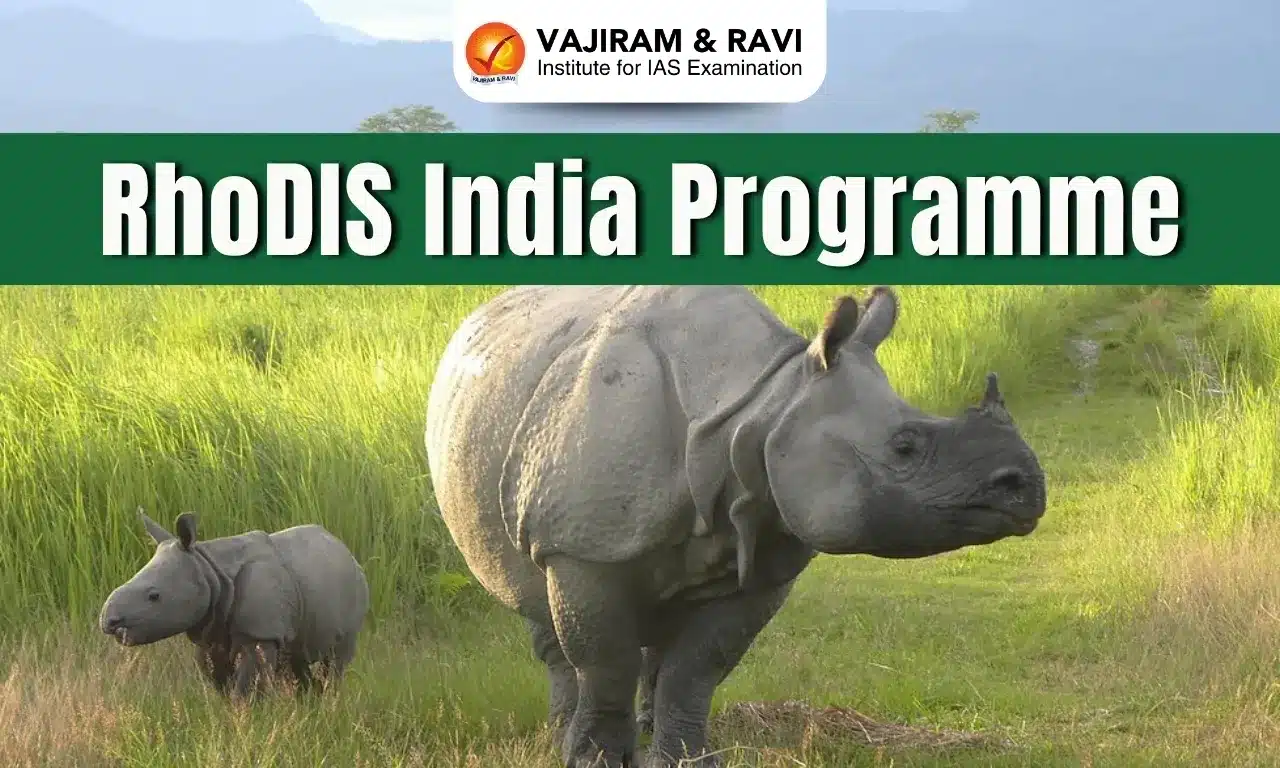
A specialised team has initiated the genetic analysis of samples collected from 2,573 rhino horns and will add them to the RhoDIS India DNA data library.

About RhoDIS India Programme

  • In 2016, the Ministry of Environment, Forests and Climate Change (MoEFCC), Government of India in partnership with Wildlife Institute of India (WII), the forest departments of Assam, West Bengal and Uttar Pradesh, and WWF India launched this programme.
  • The Rhino DNA Index (RhoDIS) System is a wildlife forensics tool that was specially developed for investigating wildlife crime cases.
  • The programme seeks to improve the crime investigations scientifically and provide technical support for the scientific management of India’s rhino population.
  • The protocol standardised for the RhoDIS India analysis, approved by the Ministry of Environment, Forest, and Climate Change, will be followed for creating the DNA profiles from these samples.
  • RhODIS uses a DNA indexing system whereby genetic sequences are created to get a signature unique to each individual rhino.
  • Significance: It has proven to be a successful tool in aiding crime investigation and strengthening legal presentations.

What is a Rhino horn?

  • It is made of keratin.
  • It is chemically complex and contains large quantities of sulphur-containing amino acids, particularly cysteine, as well as tyrosine, histidine, lysine, and arginine, and the salts calcium carbonate and calcium phosphate.
  • Rhino horns are similar in structure to horses’ hooves, turtle beaks, and cockatoo bills.
  • Three of the five rhino species have two horns, whilst the others – Greater one-horned rhinos and Javan rhinos – have only one horn.

Source: TH

RhoDIS India Programme FAQs

Q1: Is one horned rhino only found in India?

Ans: The Great one horned rhino is commonly found in Nepal, Bhutan, Pakistan and in Assam, India.

Q2: What is Wildlife Institute of India?

Ans: It is an autonomous institution established in 1982 under the Ministry of Environment, Forests, and Climate Change, Government of India, for nurturing the growth of wildlife science in the country.

Sigandur Bridge

Sigandur Bridge

Sigandur Bridge Latest News

The Union Minister for Road Transport and Highways recently dedicated the cable-stayed Sigandur Bridge constructed across Sharavati River backwaters in Sagar taluk of Shivamogga district in Karnataka.

About Sigandur Bridge

  • The Sigandur Bridge, also known as the Ambaragodlu-Kalasavalli Bridge, is constructed across Sharavati River backwaters in Sagar taluk of Shivamogga district in Karnataka.
  • It is India's second-longest cable-stayed bridge. It is 2.44 km long and16 metre wide.
  • It was built at a cost of Rs 473 crore.
  • This bridge will reduce the distance from Sagara town to Sigandur where the famous Chowdeshwari temple is situated. 
  • The new bridge restores a critical link disrupted since the construction of the Linganamakki Dam in the 1970s, which submerged key land corridors and left many communities isolated. 
    • With no proper bridge over the backwaters, villagers often relied on boats or had to make long road detours to reach taluk centres.

Key Facts about Sharavati River

  • It is an important west-flowing river in the state of Karnataka
  • A major part of the Sharavati river basin lies in the Western Ghats.
  • Course:
    • Rising in the Western Ghats, it flows in a northwesterly direction to the Arabian Sea at Honavar in Uttara Kannada District. 
    • The length of the river is 128 km, and the river basin covers 2,985 sq km.
    • On its way, the Sharavathi forms the Jog Falls, one of the highest waterfalls in India, where the river falls from a height of 253 m. 
  • Diverse geological features mark the river’s course, including rocky outcrops, fertile plains, and deep gorges.
  • Major Tributaries: Nandihole, Haridravathi, Mavinahole, Hilkunji, Yennehole, Hurlihole, and Nagodihole.

Source: TH

Sigandur Bridge FAQs

Q1: Where is the Sigandur Bridge located?

Ans: Shivamogga district, Karnataka

Q2: The Sigandur Bridge is constructed across which river or its backwaters?

Ans: Sharavati River

Q3: What is the total length of the Sigandur Bridge?

Ans: 2.44 km

Q4: What type of bridge is the Sigandur Bridge?

Ans: Cable-stayed bridge

Zographetus Mathewi

Zographetus mathewi

Zographetus mathewi Latest News

A team of lepidopterists have identified a new butterfly species in the Western Ghats and named it as Zographetus mathewi.

About Zographetus mathewi

  •  It is a newly described skipper butterfly belonging to the family Hesperiidae and adds a new entry to the genus ZographetusWatson.
  • It is the 15th species in this oriental group and the fifth to be recorded from India.
  • Its proposed common name is Sahyadri Spotted Flitter in reference to the Western Ghats, locally known as Sahyadri.
  • Habitat: The species is endemic to the low-elevation forests of Kerala.

Features of Zographetus mathewi

  • It is part of the Zographetus satwa species-group, characterised by unique features such as wing venation patterns and secondary sexual traits, including swollen forewing veins in males.
  • It can be further distinguished by a basal hair tuft on the underside of the forewing, yellow-ochre scaling on the hindwing underside, and distinct genitalia structures in both males and females.
  • Butterflies maintain the ecosystem by acting as pollinators, prey, biological pest control, induce genetic variation in plants, and enhance environmental beauty.
  • These are valuable indicators of the environment, whose health can influence their presence, abundance, and diversity.

Source: TH

Zographetus mathewi FAQs

Q1: What is the meaning of lepidopterists?

Ans: A lepidopterist is an entomologist who specialises in studying butterflies and moths.

Q2: What does Hesperiidae mean?

Ans: It is a large family of skipper butterflies (superfamily Hesperioidea) comprising the typical skippers see hesperia compare megathymidae.

Cysteine

Cysteine

Cysteine Latest News

The researchers recently found that removing just one amino acid, cysteine, from the diet of mice led to a dramatic and rapid loss of 30% of the body weight in a week.

About Cysteine

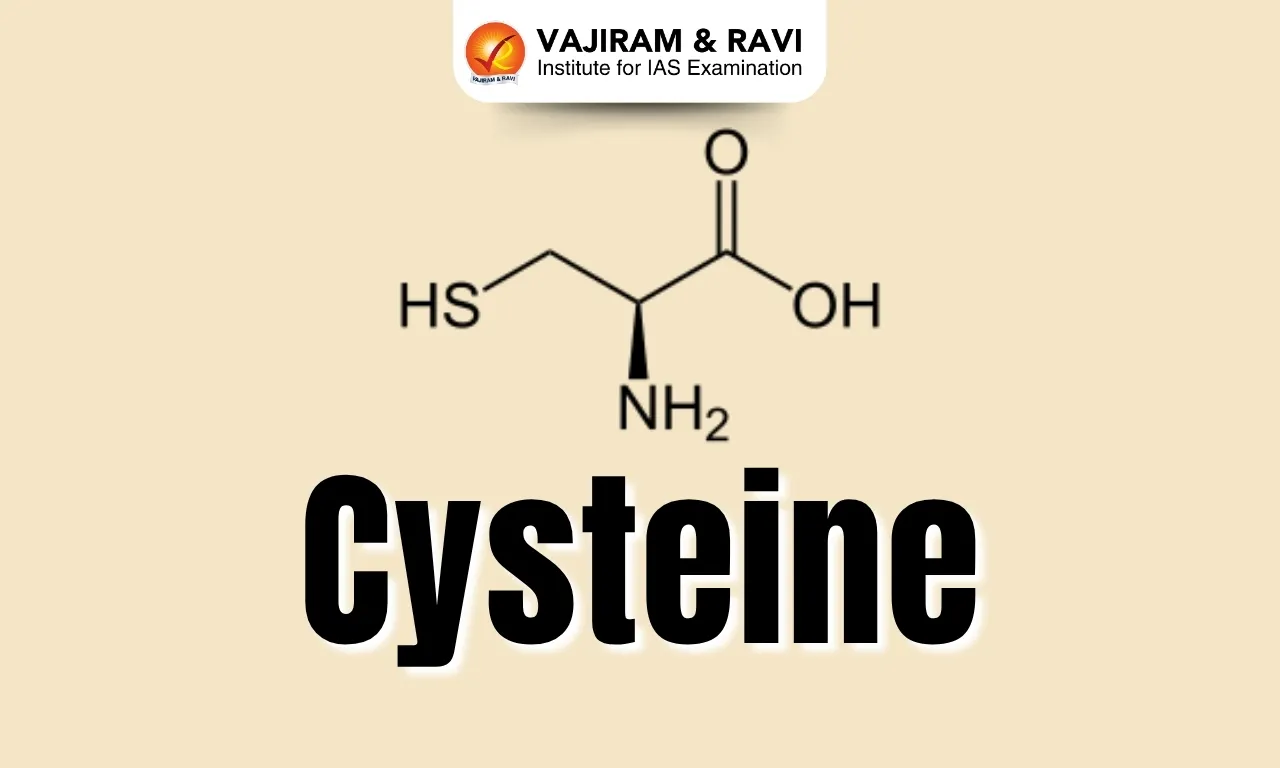
  • It is a sulfur containing amino acid with diverse roles in protein function and oxidative metabolism.
  • It is a non-essential amino acid.
  • It is one of the least abundant amino acids, yet it is frequently found as a highly conserved residue within functional (regulatory, catalytic, or binding) sites in proteins.
  • It is abundant in beta-keratin, a key structural protein in nails, skin, and hair.
  • Importance:
    • Cysteine is important for making collagen. It affects skin elasticity and texture. 
    • It helps make antioxidants like glutathione, which protect our cells from harm. 
    • It also plays a role in creating taurine, a substance that helps with things like digestion and keeping our heart healthy. 
    • Cysteine is also involved in helping our body get rid of harmful substances through a process called detoxification.
  • Low cysteine levels might mean that your body isn't making enough of this semi-essential amino acid, or you're not getting enough from foods like meat, dairy, and eggs.
  • Symptoms of low levels of Cysteine may include fatigue, weakness, slow growth in children, and a weakened immune system.

What are Amino Acids?

  • An amino acid is the fundamental molecule that serves as the building block for proteins.
  • There are 20 different amino acids.
  • A protein consists of one or more chains of amino acids (called polypeptides) whose sequence is encoded in a gene.
  • Essential amino acids:
    • Essential amino acids cannot be made by the body. As a result, they must come from food.
    • The 9 essential amino acids are histidine, isoleucine, leucine, lysine, methionine, phenylalanine, threonine, tryptophan, and valine.
  • Non-Essential amino acids:
    • Nonessential means that our bodies can produce the amino acid, even if we do not get it from the food we eat. 
    • Nonessential amino acids include alanine, arginine, asparagine, aspartic acid, cysteine, glutamic acid, glutamine, glycine, proline, serine, and tyrosine.

Source: TH

Cysteine FAQ's

Q1: What type of amino acid is cysteine classified as?

Ans: Non-essential amino acid

Q2: Which element makes cysteine distinct among many other amino acids?

Ans: Sulfur

Q3: What food is high in cysteine?

Ans: Rich food sources of cysteine are poultry, egg, beef, and whole grains.

Q4: Which powerful antioxidant is synthesized with the help of cysteine?

Ans: Glutathione

Noctilucent Clouds

noctilucent clouds

Noctilucent Clouds Latest News

Rare noctilucent clouds that form in summer high up in the Earth's atmosphere have been recently seen from parts of Scotland.

About Noctilucent Clouds

  • They are thin, wispy clouds that glow with a blue or silvery hue at night when illuminated by sunlight from below the horizon. 
    • Horizon refers to the apparent line that separates the Earth from the sky—specifically, the point below which the Sun appears to set.
  • The name ‘noctilucent’ is derived from the Latin words "nocto" and "lucent" which translates to "night" and "shining" respectively.
  • They are sometimes referred to as polar mesospheric clouds.
  • Most of our planet's clouds form in the Earth's troposphere. Noctilucent clouds are located in the third layer of Earth's atmosphere, the mesosphere, making them Earth's highest clouds. 
  • They only appear during the summer months, and only at latitudes between about 45 and 80 degrees north or south of the equator.
  • In the Northern Hemisphere, they can appear from the end of May to the beginning of August, with sightings more likely during June and July. 
  • In the Southern Hemisphere, noctilucent cloud sightings are much rarer, but they can be visible from the end of November to the beginning of February, with sightings most likely during December and January.
  • In these months and at the right latitudes, the Sun only just sets below the horizon at nighttime. 
    • That means these very high clouds can still be lit by bright sunlight from below, even though the rest of the surface is in darkness – making the clouds appear to glow. 
    • The Sun sets increasingly less below the horizon the further north you go, which means northern latitudes will experience noctilucent clouds for longer during the night.

How are Noctilucent Clouds Formed? 

  • They are formed of ice crystals; in the summer the mesosphere becomes cold enough to allow ice to form on suspended dust particles floating in the atmosphere. 
  • The dust particles may originate from micrometeorites falling to Earth from space, or the dust left over from volcanic eruptions. 
  • Humans have also accidentally seeded our own noctilucent clouds through the exhausts of rockets propelled into space.

The ice crystals that form reflect the sunlight when the Sun hits them from below, causing the clouds' characteristic shimmer.

Source: BBC

Noctilucent Clouds FAQs

Q1: n which layer of the Earth's atmosphere do noctilucent clouds form?

Ans: Mesosphere

Q2: What causes noctilucent clouds to glow at night?

Ans: Illumination by sunlight from below the horizon.

Q3: During which months are noctilucent clouds typically visible in the Northern Hemisphere?

Ans: May to August

Q4: What is the range of latitudes where noctilucent clouds are typically observed?

Ans: Between 45° and 80°

International Organisations and Their Headquarters, Established Date

International Organisations And Their Headquarters

An International Organization refers to an entity that consists of member nations from multiple countries. Many of these organizations, such as the United Nations, function as inter-governmental bodies. They are established to promote global cooperation in various fields, including security, law, economics, social issues, and diplomacy.

International Organizations and their Headquarters

Several International Organizations and their Headquarters serve as pillars of global governance which play a crucial role across various sectors, including health, trade, finance, and human rights, influencing the lives of billions worldwide. The following is a List of International Organisations And Their Headquarters and their contributions in promoting global cooperation and development.

International Organizations and their Headquarters
Organization Headquarters Established

United Nations Development Programme (UNDP)

New York City, USA

1965

United Nations Environment Programme (UNEP)

Nairobi, Kenya

1972

United Nations Population Fund (UNPF)

New York City, USA

1969

United Nations Human Settlement Programme (UN-Habitat)

Nairobi, Kenya

1978

United Nations Children's Fund (UNICEF)

New York City, USA

1946

World Food Programme (WFP)

Rome, Italy

1961

Food and Agriculture Organization (FAO)

Rome, Italy

1945

International Civil Aviation Organization (ICAO)

Montreal, Canada

1947

International Fund for Agricultural Development (IFAD)

Rome, Italy

1977

International Labour Organization (ILO)

Geneva, Switzerland

1919

International Monetary Fund (IMF)

Washington, DC, USA

1944

International Maritime Organization (IMO)

London, United Kingdom

1948

International Telecommunication Union (ITU)

Geneva, Switzerland

1865

United Nations Educational, Scientific and Cultural Organization (UNESCO)

Paris, France

1945

United Nations Industrial Development Organization (UNIDO)

Vienna, Austria

1966

World Tourism Organization (UNWTO)

Madrid, Spain

1974

Universal Postal Union (UPU)

Bern, Switzerland

1874

World Health Organization (WHO)

Geneva, Switzerland

1948

World Intellectual Property Organization (WIPO)

Geneva, Switzerland

1967

World Meteorological Organization (WMO)

Geneva, Switzerland

1950

World Bank

Washington, DC, USA

1944

Joint United Nations Programme on HIV/AIDS (UNAIDS)

Geneva, Switzerland

1994

United Nations High Commissioner for Refugees (UNHCR)

Geneva, Switzerland

1950

United Nations Institute for Disarmament Research (UNIDIR)

Geneva, Switzerland

1980

United Nations Institute for Training and Research (UNITAR)

Geneva, Switzerland

1963

United Nations Office for Project Services (UNOPS)

Copenhagen, Denmark

1973

United Nations Relief and Works Agency for Palestine Refugees (UNRWA)

Amman, Jordan

1949

United Nations System Staff College (UNSSC)

Turin, Italy

2002

United Nations University (UNU)

Tokyo, Japan

1973

UN Women

New York City, USA

2010

International Atomic Energy Agency (IAEA)

Vienna, Austria

1957

International Organization for Migration (IOM)

Geneva, Switzerland

1951

Organization for the Prohibition of Chemical Weapons (OPCW)

The Hague, Netherlands

1997

United Nations Framework Convention on Climate Change (UNFCCC)

Bonn, Germany

1994 (Signed in 1993)

World Trade Organization (WTO)

Geneva, Switzerland

1995

International Trade Centre (ITC)

Geneva, Switzerland

1964

African Development Bank Group

Abidjan, Cote d'Ivoire

1964

African Union (AU)

Addis Abab, Ethiopia

2002

Amnesty International (AI)

London, United Kingdom

1961

Andean Community 

Lima, Peru

1969

Arctic Council

Tromso, Norway

1996

Asia-Pacific Economic Cooperation (APEC)

Queenstown, Singapore

1989

Asian Development Bank (ADB)

Mandaluyong, Philippines

1966

Association of Caribbean States (ACS)

Port of Spain, Trinidad, Tobago

1994

Association of Southeast Asian Nations (ASEAN)

Jakarta, Indonesia

1967

Bank for International Settlements (BIS)

Basel, Switzerland

1930

Black Sea Economic Cooperation (BSEC)

Istanbul, Turkey

1992

Caribbean Community (CARICOM)

Georgetown, Guyana

1973

Central American Bank for Economic Integration 

Tegucigalpa, Honduras

1960

Common Market for Eastern and Southern Africa (COMESA)

Lusaka, Zambia

1994

Commonwealth Secretariat

London, United Kingdom

1965

Council of Europe

Strasbourg, France

1949

Council of Europian Municipalities and Regions (CEMR)

Geneva, Switzerland

1951

Council of the Baltic Sea States (CBSS)

Stockholm, Switzerland

1992

Economic Community of West African States (ECOWAS)

Federal Capital Territory, Nigeria

1975

European Bank for Reconstruction and Development (EBRD)

London, United Kingdom

1991

European Central Bank (ECB)

Frankfurt, Germany

1998

European Free Trade Association (EFTA)

Geneva, Switzerland

1960

Association of European Parliamentarians with Africa (AWEPA)

Amsterdam, Netherlands

1984

European Space Agency (ESA)

Paris, France

1975

European Union (EU)

Brussels, Belgium

1993

Group of Eight (G8)

New York, USA

1975

G-15 Summit

Geneva, Switzerland

1990

Inter-American Development Bank (IDB)

Washington, DC, USA

1959

Intergovernmental Authority on Development (IGAD)

Djibouti, Djibouti

1986

International Atomic Energy Agency (IAEA)

Vienna, Austria

1957

International Civil Aviation Organization (ICAO)

Montreal, Canada

1947

International Chamber of Commerce (ICC)

Paris, France

1919

International Committee of the Red Cross (ICRC)

Geneva, Switzerland

1863

International Court of Justice (ICJ)

The hague, Netherlands

1945

International Development Association (IDA)

Washington, DC, USA

1960

International Federation of Red Cross and Red Crescent Socities (IFRC)

Geneva, Switzerland

1919

International Finance Corporation (IFC)

Washington, DC, USA

1956

International Labour Organization (ILO)

Geneva, Switzerland

1919

International Olympic Committee (IOC)

Lausanne, Switzerland

1894

International Organization for Standardization (ISO)

Geneva, Switzerland

1947

International Peace Bureau (IPB)

Geneva, Switzerland

1891

International Seabed Authority (ISA)

Kingston, Jamaica

1994

International Service for Human Rights (ISHR)

Geneva, Switzerland

1984

Inter-Parliamentary Union

Geneva, Switzerland

1889

League of Arab States

Cairo, Egypt

1945

Multilateral Investment Guarantee Agency (MIGA)

Washington, DC, USA

1988

The Non-Aligned Movement (NAM)

Central Jakarta, Indonesia

1961

Nordic Council of Ministers

Copenhagen, Denmark

1971

North Atlantic Treaty Organization (NATO)

Washington, DC, USA

1949

Organisation for Economic Co-operation and Development (OECD)

Paris, France

1961

Organization for Security and Co-operation in Europe (OSCE)

Vienna, Austria

1975

Organization of Arab Petroleum Exporting Countries (OAPEC)

Kuwait, Middle East

1968

Organization of the Islamic Conference (OIC)

Jeddah, Saudi Arabia

1969

Organization of the Petroleum Exporting Countries (OPEC)

Vienna, Austria

1960

Secretariat of the Pacific Community (SPC)

Noumea, New Caledonia

1947

South Asian Association for Regional Cooperation (SAARC)

Kathmandu, Nepal

1985

Unión Latina

Paris, France

1954

United Cities & Local Governments (UCLG)

Barcelona, Spain

2004

United Nations Economic and Social Commission for Asia and the Pacific (ESCAP)

Bangkok, Thailand

1947

United Nations Economic and Social Commission for Western Asia (ESCWA)

Beirut, Lebanon

1973

United Nations Environmental Program (UNEP)

Nairobi, Kenya

1972

United Nations Food and Agriculture Organization (FAO)

Rome, Italy

1945

United Nations High Commissioner for Human Rights (UNHCHR)

Geneva, Switzerland and New York City, USA

1993

United Nations Office on Drugs and Crime (UNODC)

Vienna, Austria

1997

United Nations International Research and Training Institute for the Advancement of Women (INSTRAW)

Santo Domingo, Dominican Republic

1975

United Nations Office for the Coordination of Humanitarian Affairs (OCHA)

Geneva, Switzerland and New York City, USA

1991

United Nations Relief and Works Agency for Palestine Refugees in the Near East (UNRWA)

Amman, Jordan

1949

Western European Union (WEU)

Paris, France

1954

World Federation of United Nations Associations (WFUNA)

Geneva, Switzerland and New York City, USA

1946

World Organization Against Torture (OMCT)

Geneva, Switzerland

1985

World Wide Fund for Nature (WWF)

Gland, Switzerland

1961

List of International Organizations of which India Is Member

India holds a significant position in global affairs and is actively involved in several major International Organizations. Through its contribution in these organizations, India promotes global cooperation, diplomacy, and addressing critical challenges such as peace, security, trade, and public health. Below is a List of International Organizations of which India Is Member.

List of International Organizations of which India Is Member
International Organization Headquarters Year of Foundation

AALCO - Asian-African Legal Consultative Organization

New Delhi

1956

ADB - Asian Development Bank

Manila, Philippines 

1956

AfDB - African Development Bank (non-regional members)

Tunis, Tunisia

1964

AG - Australia Group

Brussels, Belgium

1985

ASEAN Regional Forum - The Association of Southeast Asian Nations

Jakarta, Indonesia

1967

BIMSTEC - Bay of Bengal Initiative for Multi-Sectoral Technical and Economic Cooperation

Dhaka, Bangladesh

1997

BIS - Bank for International Settlements

Basel, Switzerland

1930

BRICS - Brazil, Russia, India, China, and South Africa

Shanghai, China

2006

CoN - Commonwealth of Nations

London, UK

1931

CERN - European Organization for Nuclear Research 

Geneva, Switzerland

1954

CP - Colombo Plan

Colombo, Srilanka

1950

EAS - East Asia Summit

Colombo, Sri Lanka

1950

FAO - Food and Agriculture Organization of the United Nations

Rome, Itlay

1945

G-15 - Group of 15

Geneva, Switzerland

1989

G-20 - Group of 20

Cancun, Mexico

1999

G-77 - Group of 77

New York

1964

IAEA - International Atomic Energy Agency

Vienna, Austria

1957

IBRD - International Bank for Reconstruction and Development (World Bank)

Washington DC, US

1944

ICAO - International Civil Aviation Organization

Montreal, Canada

1944

ICC - International Chamber of Commerce

Paris, France

1919

IDA - International Development Association

Washington DC

1950

IEA - International Energy Agency

Paris, France

1974

IFAD - International Fund for Agricultural Development

Rome, Italy

1977

IFC - International Finance Corporation

Washington DC, US

1956

ILO - International Labour Organization

Geneva, Switzerland

1919

IMF - International Monetary Fund

Washington DC, US

1945

IMO - International Maritime Organization

London, UK

1948

IMSO - International Mobile Satellite Organization

London, UK

1999

Interpol - International Criminal Police Organization

Lyon, France

1923

IOC - International Olympic Committee

Lausanne, Switzerland

1894

IPEEC - International Partnership for Energy Efficiency Cooperation

Paris, France

2009

ISO - International Organization for Standardization

Geneva, Switzerland

1947

ITSO - International Telecommunications Satellite Organization

Washington DC

1964

ITU - International Telecommunication Union

Geneva, Switzerland

1864

ITUC - International Trade Union Confederation (the successor to ICFTU (International Confederation of Free Trade Unions) and the WCL (World Confederation of Labour))

Brussels, Belgium

2006

MTCR Missile Technology Control Regime

Japan

1987

NAM - Non-Aligned Movement

Jakarta, Indonesia

1961

OPCW - Organisation for the Prohibition of Chemical Weapons

Hague, Netherland

1997

PCA - Permanent Court of Arbitration

Hague, Netherland

1899

PIF - Pacific Islands Forum (partner)

Suva, Fiji

1971

SAARC - South Asian Association for Regional Cooperation

Kathmandu, Nepal

1985

SACEP  - South Asia Co-operative Environment Programme

Colombo, Sri Lanka

1982

SCO - Shanghai Cooperation Organisation (member)

Beijing, China

1996

UN - United Nations

New York

1945

UNAIDS  - United Nations Programme on HIV/AIDS

New York

1994

UNESCO - United Nations Educational, Scientific and Cultural Organisation

London, Uk

1946

WHO- World Health Organization

Geneva, Switzerland

1948

UN Agencies and Their Headquarters

The United Nations is a global organization comprising specialized agencies that resolve a wide range of global challenges. These agencies, headquartered in different cities worldwide, focusing on critical areas such as health, education, the environment, and human rights. Below are some key UN Agencies and Their Headquarters:

  1. United Nations Development Programme (UNDP) - Based in New York City, USA, UNDP works towards poverty alleviation, sustainable development, and good governance.
  2. United Nations Environment Programme (UNEP) - Headquartered in Nairobi, Kenya, UNEP focuses on environmental conservation and sustainable development.
  3. United Nations High Commissioner for Refugees (UNHCR) - Located in Geneva, Switzerland, UNHCR provides protection and assistance to refugees and displaced populations worldwide.
  4. International Civil Aviation Organization (ICAO) - Based in Montreal, Canada, ICAO establishes global aviation safety and regulatory standards.

Tricks to Remember the List of International Organisations And Their Headquarters

Recalling the names ofList of International Organisations And Their Headquarters can be challenging. To make it easier, we have devised simple memory tricks to help you remember these important names effortlessly. 

Tricks to Remember the List of International Organisations And Their Headquarters
Headquarters Organizations

Geneva- Starting with the world and ending with organization

World Health Organisation

World Meteorological Organization

World Intellectual Property Organization

Washington DC – Organization associated with money

International Monetary Fund (IMF)

World Bank

Vienna – Organization related to Industrial development, Petroleum, atomic research

United Nations Industrial Development Organization (UNIDO)

International Atomic Energy Agency

Organization of Petroleum Exporting Countries (OPEC)

Paris - Organizations associated with Education and economy

International Council on Monuments and Sites (ICOMOS)

United Nations Educational Scientific and Cultural Organisation (UNESCO)

Organization for Economic Cooperation and Development (OECD)


International Organizations and their Headquarters FAQs

Q1: What are the 4 international organizations?

Ans: The list  includes the United Nations (UN) and its specialized agencies, the World Health Organization, the International Telecommunication Union (ITU), the World Bank, and the International Monetary Fund (IMF).

Q2: What is the meaning of international Organisations?

Ans: An International Organization refers to an entity that consists of member nations from multiple countries.

Q3: Is NATO an IGO?

Ans: Yes, NATO is an IGO.

Q4: What is the world's largest organization?

Ans: The United Nation is the world's largest organisation with 193 member countries.

Q5: Which is the first international organization?

Ans: the League of Nations started its activities on 10 January 1920, when the Treaty of Versailles came into force.

Mhadei Wildlife Sanctuary

Mhadei Wildlife Sanctuary,

Mhadei Wildlife Sanctuary Latest News

Environmentalists recently expressed serious concern over the approval of an eco-tourism resort project on the Surla plateau, stating that the project area falls within a critical tiger habitat within the Mhadei Wildlife Sanctuary.

About Mhadei Wildlife Sanctuary

  • It is located in the northern part of Goa in the Western Ghats.
  • It spreads over an area of 208 sq.km. and derives its name from the Mhadei river, which flows across this Sanctuary. 
  • There are a number of picturesque waterfalls within the sanctuary boundaries. The most prominent are the Vazra Sakla Falls and the Virdi Falls.
  • The three highest peaks of Goa, Sonsogod (1027 m), Talvche Sada (812 m), and Vagheri (725 m), are located within this Sanctuary.
  • Flora
    • The sanctuary’s dense forests are predominantly semi-evergreen and moist deciduous, hosting trees like teak, sal, and bamboo along with medicinal plants and orchids
    • The sanctuary is particularly well-known for its sacred groves that protect rare and indigenous trees.
  • Fauna
    • Its fauna includes Bengal tigers, black panthers, leopards, sloth bears, gaur (Indian bison), and a variety of deer.
    • The sanctuary is a huge attraction for herpetologists since it contains a large variety of snakes, including all of the ‘big four’ of Indian venomous snakes, which are the Indian krait, Russell’s viper, Saw-scaled viper, and Spectacled cobra.
    • It boasts over 250 bird species, including the Malabar trogon, great pied hornbill, and Nilgiri wood pigeon, many of which are endemic to the Western Ghats.
    • The cliff face near the Vazra Falls is notable for being the nesting grounds of the critically endangered Long-billed vultures.

Source: TOI

Pheromone

Pheromone

Pheromone Latest News

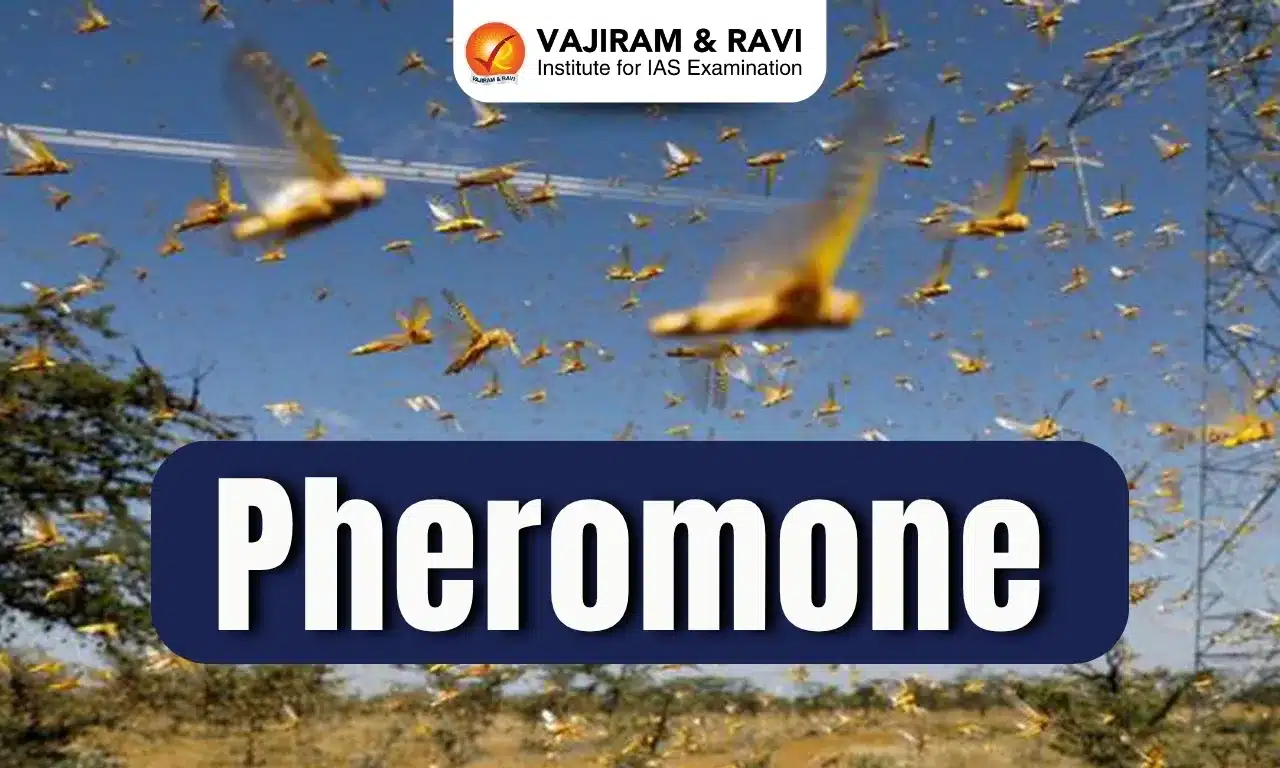
Researchers have shown that it’s possible to manipulate pheromones released by locusts to prevent them from swarming or engaging in group behaviour that leads to the feeding frenzy.

About Pheromone

  • Pheromones are chemical substances which are secreted on the outside by an individual, and received by another individual of the same species. 
  • These are present in all bodily secretions, and especially in the axillary sweat — can be detected by the olfactory system.
  • Pheromones are ecto-hormones, meaning they are secreted outside the body.
  • Types of Pheromones
    • Releaser pheromones: They work right away and elicit a specific response from the other person.
    • Signaler pheromones: They give information about the person who releases them. For example, they help a mother tell her own baby apart from other babies.
    • Modulator pheromones: They affect mood and emotions. 
    • Primer pheromones affect hormones, for example during pregnancy or menstrual cycles.
  • Animals, with their heightened senses and vomeronasal organ are known to secrete pheromones to trigger many kinds of behaviours like raising an alarm, signalling a food trail, warning another animal to back off, and bonding with an offspring.
  • Pheromones are also used by some fungi, slime molds, and algae as attractants in reproduction; organisms of complementary reproductive cell types grow or move toward each other.

Source: TH

Pheromone FAQs

Q1: What do pheromones do for humans?

Ans: Pheromones are chemicals that animals and humans use to communicate. Our bodies release pheromones through sweat, urine, semen, breast milk, and vaginal fluid.

Q2: What is another name for a locust?

Ans: Acridid

Longest Bridges in India, Top 10 List, Location, Length

Longest Bridges in India

Bridges are essential infrastructure that accommodate transportation by providing routes over the physical obstacles like rivers, valleys, or roads. India, known as the land of rivers, has constructed multiple bridges, including road bridges, rail-cum-road bridges. These bridges not only enhance connectivity but also contribute to economic growth by linking regions that complement each other commercially. The Longest Bridge in India showcases  the engineering expertise of the human capital available. Bridges play a crucial role in trade, travel, and regional development, making them an unimportant resource towards the nation's progress.

Longest Bridges in India

The Dhola Sadiya Bridge in Assam, spanning 9.15 km over the Lohit River, is the Longest Bridge in India. The Dibang River Bridge in Arunachal Pradesh follows at 6.2 km, built for the purpose of connectivity in the Northeast. These bridges reflect India’s progress in transportation and infrastructure development.

List of Longest Bridges in India

Dr. Bhupen Hazarika Bridge, also known as the Dhola Sadiya Bridge, is the Longest Bridge in India, spanning 9.15 km over the Brahmaputra River in Assam. It was inaugurated by Prime Minister Narendra Modi in 2017, not 2020. This bridge plays a crucial role in improving connectivity between Assam and Arunachal Pradesh. Here is the List of Longest Bridges in India:

List of Longest Bridges in India
S.No. Name and Place Distance Place Opened Connecting

1

Dhola Sadiya Bridge, Tinsukia, Assam

9.15 Km

Lohit River,

2017

Assam and Arunachal Pradesh

2

Dibang River Bridge

6.2 Km

Dibang River

2018

Arunachal Pradesh

3

Mahatma Gandhi Setu, Patna, Bihar

5.75 Km

Ganga

1982

South Patna to Hajipur

4

Bandra-Worli Sea Link (BWSL), Mumbai

5.57 Km

Mahim Bay

2009

Bandra to Worli (South Mumbai)

5

Bogibeel Bridge, Assam

4.94 Km

Brahmaputra River

2018

Dhemaji to Dibrugarh

6

Vikramshila Setu, Bhagalpur, Bihar

4.70 Km

Ganga

2001

Bhagalpur to Naugachia

7

Vembanad Rail Bridge, Kochi, Kerala

4.62 Km

Vembanad Lake

2011

Edappally to Vallarpadam

8

Digha–Sonpur Bridge, Patna, Bihar

4.55 Km

Ganga river

2016

Digha, Patna to Sonpur, Saran

9

Arrah–Chhapra Bridge, Saran, Bihar

4.35 Km

Ganga

2017

Arrah to Chhapra

10

Godavari Bridge, Rajahmundry, Andhra Pradesh

4.13 Km

Godavari river

2015

Kovvur to Rajahmundry

11.

Munger Ganga Bridge, Bihar

3.75 Km

Ganges river

2020

Munger to Jamalpur

12.

Chahlari Ghat Bridge, Uttar Pradesh

3.25 Km

Ghagra river

2017

Bahraich to Sitapur

13.

Jawahar Setu, Bihar

3.06 Km

Son river

1965

Dehri – Son nagar

14.

Nehru Setu, Bihar

3.05 Km

Son river

1900

Dehri – Son Nagar

15.

Koila Bhomora Setu, Assam

3.01 Km

Brahmaputra river

1987

Tezpur to Kaliabor

Top 10 Longest Bridges in India

Bridges in India span across major rivers and seas, playing a crucial role in infrastructure development. Below is a detailed overview of the Top 10 Longest Bridges in India:

Dhola Sadiya Bridge (Bhupen Hazarika Setu) – 9.15 km, Assam

  • India’s longest bridge, spanning the Brahmaputra River in Assam.
  • It was inaugurated by Prime Minister Narendra Modi in 2017.
  • The bridge connects Assam and Arunachal Pradesh, significantly reducing travel time by five hours and covering a distance of 165 km.
  • Named after Dr. Bhupen Hazarika, a legendary Assamese musician and filmmaker.
  • Strategically important for national security, as it allows faster military movement to the Indo-China border.

Dibang River Bridge – 6.2 km, Arunachal Pradesh

  • Also known as Sikang Bridge, it is the second-longest bridge in India.
  • It spans the Dibang River in Arunachal Pradesh, providing crucial connectivity for the Indian Army.
  • The bridge helps in improving access to remote areas near the Indo-China border.
  • It was built to strengthen India’s defense network and ensure better infrastructure for local communities.

Mahatma Gandhi Setu – 5.6 km, Bihar

  • Constructed over the Ganges River, this bridge connects Patna (capital of Bihar) to Hajipur.
  • It was inaugurated in 1982 by Indira Gandhi and remained the longest bridge in India until the Dhola Sadiya Bridge was built.
  • The bridge serves as a vital link for transportation and commerce in Bihar.
  • Due to heavy traffic and structural concerns, renovation and reconstruction efforts are ongoing to improve its lifespan.

Bandra-Worli Sea Link – 5.57 km, Maharashtra

  • One of India’s most iconic bridges, officially named Rajiv Gandhi Sea Link.
  • A cable-stayed bridge connecting Bandra and Worli in Mumbai, reducing travel time significantly.
  • Built to ease traffic congestion and improve connectivity in Mumbai’s coastal region.
  • It is a key part of Mumbai’s Western Freeway, enhancing road infrastructure.

Bogibeel Bridge – 4.94 km, Assam

  • India’s longest rail-road bridge, built over the Brahmaputra River.
  • Connects Dhemaji and Dibrugarh districts in Assam.
  • Constructed with fully welded steel concrete beams, it can withstand earthquakes of up to 7.0 on the Richter scale.
  • The bridge reduces travel time between Assam and Arunachal Pradesh while supporting defense logistics.

Vikramshila Setu – 4.7 km, Bihar

  • Named after the ancient Vikramshila Mahavihara, a Buddhist learning center.
  • Built over the Ganges River in Bhagalpur, Bihar.
  • A two-lane bridge that helps in easing traffic congestion and improving connectivity.
  • Plans for an additional parallel bridge are under consideration due to increasing traffic demand.

Vembanad Rail Bridge – 4.62 km, Kerala

  • The longest railway bridge in India, connecting Edappally and Vallarpadam in Kochi, Kerala.
  • Only freight trains operate on this bridge, primarily serving the Vallarpadam Container Terminal.
  • Built over Vembanad Lake, which is the largest lake in Kerala.
  • Kerala’s most beautiful railway bridge, offering stunning scenic views.

Digha-Sonpur Bridge (J.P. Setu) – 4.55 km, Bihar

  • A rail-road bridge over the Ganges River, linking Digha (Patna) to Sonpur.
  • Opened in 2016, this bridge provides both railway and roadway connectivity between North and South Bihar.
  • Named after Jayaprakash Narayan, an Indian independence activist.
  • Helps in reducing congestion on Mahatma Gandhi Setu by offering an alternative route.

Arrah-Chhapra Bridge (Veer Kunwar Singh Setu) – 4.35 km, Bihar

  • A multi-span bridge over the Ganges River, connecting Arrah and Chhapra.
  • Opened to the public in 2017, reducing the travel distance between Arrah and Chhapra from 130 km to 40 km.
  • Named after Veer Kunwar Singh, a freedom fighter from Bihar.
  • Plays a crucial role in boosting trade and commerce in the region.

Godavari Bridge – 4.13 km, Andhra Pradesh

  • Also known as the Kovvur-Rajahmundry Fourth Bridge, built over the Godavari River.
  • Located in Andhra Pradesh, it connects Kovvur and Rajahmundry.
  • It was constructed to reduce travel time between Chennai and Kolkata by at least 150 km.
  • The bridge is part of a larger effort to improve transportation and trade in South India.

Longest Bridges in India FAQs

Q1: Which bridge is the longest in India?

Ans: Dhola Sadiya Bridge (Bhupen Hazarika Setu) is the longest bridge in India.

Q2: Is Atal Setu the longest bridge in India?

Ans: India's longest bridge, Atal Bihari Vajpayee Sewri-Nhava Sheva Atal Setu, was inaugurated by Prime Minister Shri Narendra Modi in Navi Mumbai.

Q3: Which is the longest flyover in India?

Ans: Visweswaraiah flyover is our country's longest flyover and was inaugurated in the year 2009.

Q4: Which state has the longest bridge?

Ans: The Bhupen Hazarika Setu or Dhola – Sadiya Bridge is a beam bridge in India, connecting the northeast states of Assam and Arunachal Pradesh.

Q5: What is the old name of Atal Setu?

Ans: The Mumbai Trans Harbour Link (MTHL), also known as the Atal Bihari Vajpayee Sewri Nhava Sheva Atal Setu.

Kanwar Yatra

Kanwar Yathra

Kanwar Yathra Latest News

Delhi Chief Minister recently said no nuisance will be tolerated during Kanwar Yatra, days after glass shards were found scattered along a stretch of the yatra route in Shahdara.

About Kanwar Yathra

  • It's an annual pilgrimage, held in the Hindu month of Shravan (typically July–August), where Shiva devotees (known as Kanwariyas), primarily in North India, fetch holy water from the Ganges River and carry it back to their local Shiva temples (often barefoot and walking distances of hundreds of kilometers).
  • They visit the temples to offer holy water to Lord Shiva, especially on the auspicious day of Shivratri during the month of Shravan.

What happens at Kanwar Yatra? 

  • The term “Kanwar” refers to a special carrying apparatus, typically a bamboo pole, with two equal loads (usually pots filled with Ganga water) suspended from either end. 
  • This pole is balanced on the pilgrim’s shoulder. “Yatra” simply means a journey or procession.
  • Thus, the Kanwar Yatra literally means the “journey with the Kanwar.”
  • The core ritual of this pilgrimage is to collect sacred water, known as “Gangajal,” from River Ganga, particularly from places like Haridwar, Gaumukh (the source of the Ganges glacier), Gangotri in Uttarakhand, and Ajgaibinath Temple in Sultanganj, Bhagalpur (Bihar). 
  • The devotees then return by carrying Ganga water in kanwars to seek the blessings of Shiva.
  • The water is offered to Shiva temples, including the 12 Jyotirlingas across India and other shrines like the Pura Mahadev Mandir and Augharnath in Uttar Pradesh, the famous Kashi Vishwanath temple, and the Baba Baidyanath Temple in Deoghar, Jharkhand. The ritual is known as Jal Abhishek.
  • Devotees often carry the holy water to offer at temples in their towns and villages.
  • Many pilgrims believe that once the pot is filled with holy water, it should not touch the ground.
  • While carrying the water, devotees walk barefoot; some complete the pilgrimage by lying flat on the ground. Modern times have seen some adaptations, with some using cycles, motorbikes, or even vehicle convoys for parts of the journey, though the purists still prefer walking.
  • Kanwariyas typically dress in saffron-colored robes, a color associated with renunciation and spirituality in Hinduism. 
  • Many observe fasts during the pilgrimage, and the consumption of food, water, and salt is restricted.

Source: PRINT

Kanwar Yathra FAQs

Q1: The Kanwar Yatra is primarily associated with the worship of which Hindu deity?

Ans: Shiva

Q2: In which Hindu month is the Kanwar Yatra typically observed?

Ans: Shravan

Q3: What is the primary object carried by Kanwariyas during the Yatra?

Ans: Kanwar (bamboo pole with water pots)

Q4: From which river do Kanwariyas collect water during the Yatra?

Ans: Ganga

Famous Temples in India, State Wise List, Important Details

Famous Temples in India

India is known for the world's oldest civilizations and a land rich in history, diverse traditions, and deep-rooted religious beliefs. As the birthplace of major religions like Hinduism, Jainism, Buddhism, and Sikhism, India is known for its cultural heritage and religious harmony. The country embraces a secular position in the world, where people of various faiths coexist in unity.

Famous Temples in India

Famous Temples in India serve as more than just places of worship, they are architectural and historical landmarks that reflect the country’s rich heritage. Since different historical eras, these temples provide insights into religious traditions, societal values, and artistic styles, depicting the evolution of faith and craftsmanship over centuries.

List of Famous Temples in India

Below is a List of Famous Temples in India, showcasing their historical and spiritual significance. These temples, spread across various states, were built during different eras by ancient dynasties, rulers, and devotees, reflecting the rich cultural and architectural heritage of India. The following table provides details about these renowned temples, including their location.

List of Famous Temples in India
Temple Name Location

Kedarnath Temple

Rudraprayag, Uttarakhand

Somnath Temple

Somnath Gujarat

Vaishno Devi Temple

Katra, Jammu and Kashmir

Ramanathaswamy Temple

Rameshwaram, Tamil Nadu

Kashi Vishwanath Temple

Varanasi, Uttar Pradesh

Konarak Sun Temple

Konark, Odisha

Shri Jagannath Temple

Puri, Odisha

Yamunotri Temple

Uttarkashi, Uttarakhand

Meenakshi Temple

Madurai, Tamil Nadu

Amarnath Cave Temple

Jammu and Kashmir

Lingaraja Temple

Bhubaneswar, Odisha

Tirupati Balaji Temple

Tirumala, Andhra Pradesh

Kanchipuram Temples

Kanchipuram, Tamil Nadu

Ranakpur Temple

Pali, Rajasthan

Shirdi Sai Baba Temple

Shirdi, Maharashtra

Shri Padmanabhaswamy Temple

Trivandrum, Kerala

Dwarkadhish Temple

Dwarka, Gujarat

Laxminarayan Temple

Delhi

Siddhivinayak Temple

Mumbai, Maharashtra

Gangotri Temple

Uttarkashi, Uttarakhand

Iskcon Temple

Vrindavan, Uttar Pradesh

Mahabodhi Temple

Gaya, Bihar

Kamakhya Temple

Guwahati, Assam

Khajuraho Temple

Khajuraho, Madhya Pradesh

Virupaksha Temple

Hampi, Karnataka

Akshardham Temple

Delhi

Shri Digambar Jain Lal Mandir

Delhi

Sanchi Stupa

Sanchi, Madhya Pradesh

Golden Temple

Amritsar, Punjab

Top Famous Temples in India

India, known as the "Land of Temples," is home to some of the most sacred temples in the world. These Famous Temples in India are not just places of worship but also hold historical significance reflecting India’s rich heritage.

Khajuraho Temple, Madhya Pradesh

  • Built between the 9th and 12th centuries by the Chandela dynasty.
  • Famous for erotic sculptures and intricate carvings, depicting human emotions and celestial beings.
  • Originally, 85 temples existed, but only 25 remain today, classified into Hindu and Jain temples.
  • Recognized as a UNESCO World Heritage Site.

Siddhivinayak Temple, Maharashtra

  • Dedicated to Lord Ganesha, Siddhivinayak Temple was built in 1801 by Laxman Vithu and Dubai Patil.
  • One of the richest Temples in India, receiving donations from Bollywood celebrities and business tycoons.
  • The idol of Lord Ganesha is self-manifested (Swayambhu).

Lord Venkateswara Temple, Andhra Pradesh

  • Lord Venkateswara Temple is located in Tirumala Hills, also called Tirupati Balaji Temple.
  • One of the most visited pilgrimage sites in the world, attracting 50,000+ devotees daily.
  • Features Dravidian architecture with intricately carved gopurams (tower gateways).
  • The temple receives donations worth millions daily.

Kashi Vishwanath Temple, Uttar Pradesh

  • Kashi Vishwanath Temple is located in Varanasi and is dedicated to Lord Shiva.
  • One of the 12 Jyotirlingas, considered the most sacred Shiva shrines.
  • Originally built in ancient times, rebuilt in 1780 by Ahilyabai Holkar after being destroyed multiple times.
  • A golden dome donated by Maharaja Ranjit Singh covers the temple's sanctum.

Mahabodhi Temple, Bihar

  • A UNESCO World Heritage Site, marking the spot where Gautama Buddha attained enlightenment.
  • One of the oldest brick structures in the world, built in the 3rd century BCE by Emperor Ashoka.
  • Mahabodhi Temple features a 50-meter-tall tower and a sacred Bodhi tree under which Buddha meditated.

Konark Sun Temple, Odisha

  • Konark Sun Temple was built in the 13th century by King Narasimhadeva I.
  • Shaped like a gigantic chariot of Lord Surya (Sun God), featuring 12 wheels and 7 horses.
  • Known for its Kalinga-style architecture and detailed stone carvings.

Jagannath Temple, Odisha

  • Jagannath Temple is located in Puri, one of the Char Dham pilgrimage sites.
  • Famous for the Rath Yatra (Chariot Festival), where massive chariots carry deities namely Jagannath, Balabhadra, and Subhadra.
  • The idols of Lord Jagannath, Balabhadra, and Subhadra are made of wood and replaced every 12 years.

Padmanabhaswamy Temple, Kerala

  • One of the wealthiest temples in the world, holding a treasure worth over $22 billion.
  • Built in the Dravidian and Chera architectural style.
  • The main deity, Lord Padmanabhaswamy, is depicted in a reclining position on the serpent Ananta.

Vaishno Devi Temple, Jammu & Kashmir

  • A cave temple, situated at an altitude of 5200 feet in the Trikuta Hills.
  • Dedicated to Mata Vaishno Devi, an embodiment of Goddess Durga.
  • Devotees undertake a 13 km trek to reach the Vaishno Devi Temple.

Amarnath Temple, Jammu & Kashmir

  • Amarnath Temple is located at 3,888 meters above sea level, dedicated to Lord Shiva.
  • Home to the naturally occurring ice Shiva Lingam, which grows and shrinks according to the lunar cycle.
  • Amarnath Temple trek is open only during July-August which requires a challenging pilgrimage trek.

Ramanathaswamy Temple, Tamil Nadu

  • Ramanathaswamy Temple is one of the 12 Jyotirlinga shrines which features the longest corridor among Hindu temples, stretching 1,200 meters.

Brihadeeswara Temple, Tamil Nadu

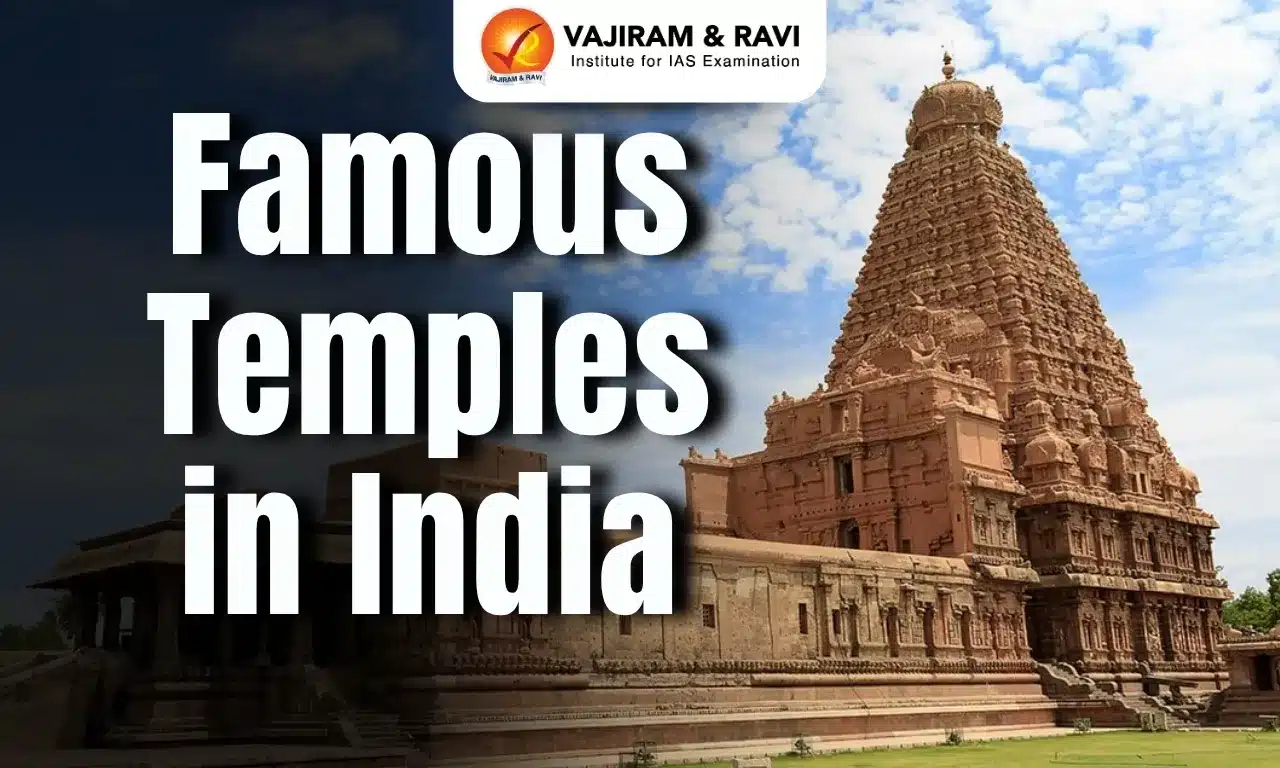
  • Brihadeeswara Temple was built in 1010 AD by Raja Raja Chola I which was made entirely of granite, featuring a 216-feet-tall vimana (tower).
  • It is also recognised as a UNESCO World Heritage Site.

Meenakshi Temple, Tamil Nadu

  • Meenakshi Temple is dedicated to Goddess Meenakshi (Parvati) and Lord Sundareswarar (Shiva), featuring 985 intricately carved pillars in the Hall of Thousand Pillars.

Ranganathaswamy Temple, Tamil Nadu

  • Ranganathaswamy Temple is one of the largest functioning Hindu temples, covering 156 acres and serving as a home to Asia’s largest Gopuram (temple tower).

Somnath Temple, Gujarat

  • Somnath Temple is one of the 12 Jyotirlingas which was rebuilt multiple times due to invasions, last restored by Sardar Vallabhbhai Patel in 1951.

Dwarkadhish Temple, Gujarat

  • Dwarkadhish Temple is located in Dwarka, one of the Char Dham pilgrimage sites which is dedicated to Lord Krishna, featuring five-storied architecture.

Virupaksha Temple, Karnataka

  • The Virupaksha Temple is located in Hampi, Karnataka, is one of the oldest and most significant Hindu temples in India. 
  • Dedicated to Lord Shiva, it is a part of the Group of Monuments at Hampi, which has been designated as a UNESCO World Heritage Site. 
  • The temple was originally built in the 7th century, but it gained prominence under the Vijayanagara Empire, especially during the reign of Deva Raya II, when Lakkana Dandesha, a chieftain, after expansion.

Gomateshwara Temple, Karnataka

  • The Gomateshwara Temple, also known as the Bahubali Temple, is a renowned Jain pilgrimage site located in Shravanabelagola, Karnataka. 
  • The temple is most famous for its 57-foot-tall monolithic statue of Lord Bahubali (Gomateshwara), which is considered one of the largest free-standing statues in the world. 
  • The Bahubali statue represents the profound meditation of Lord Bahubali, the son of the first Jain Tirthankara, Rishabhanatha (Adinatha).

Badrinath Temple, Uttarakhand

  • The Badrinath Temple is dedicated to Lord Vishnu, situated on the banks of the Alaknanda River at an altitude of 3,133 meters
  • It is one of the Char Dham pilgrimage sites in India. 
  • The temple, believed to have been established by Adi Shankaracharya in the 8th century.
  • The idol of Badrinarayan, made of black stone, is worshipped in a meditative posture.
  • Open only for six months due to heavy winters, it attracts millions of devotees seeking moksha (liberation). 
  • The temple is deeply linked to Hindu mythology, including Vishnu’s meditation, Goddess Lakshmi’s Badri tree, and the Pandavas’ journey to heaven.

Yamunotri Temple, Uttarakhand

  • The Yamunotri Temple located in Uttarkashi, Uttarakhand, is dedicated to Goddess Yamuna. 
  • Situated at an altitude of 3,291 meters in the Bandarpunch mountain range, it marks the origin of the Yamuna River. 
  • The temple, built by Maharaja Pratap Shah of Tehri Garhwal, is an essential part of the Char Dham Yatra. Nearby, the Surya Kund, is believed to have healing properties.

Gangotri Temple, Uttarakhand

  • The Gangotri Temple, located in Uttarkashi, Uttarakhand, is dedicated to Goddess Ganga. 
  • Situated at an altitude of 3,415 meters, it stands on the banks of the Bhagirathi River, the primary source of the Ganges. 
  • According to legend, Goddess Ganga descended to Earth at Gangotri Temple to cleanse humanity’s sins. 
  • Built by Amar Singh Thapa, a Gorkha general, the temple is a significant part of the Char Dham Yatra, attracting thousands of devotees annually.

Kamakhya Temple

  • The Kamakhya Temple is located on Nilachal Hills in Guwahati, Assam, is one of the oldest and most revered centers of Tantric practices in India. 
  • Dedicated to Goddess Kamakhya, a form of Shakti, the temple symbolizes female power and fertility. 
  • According to legend, it marks the spot where Sati’s yoni (womb) fell after Lord Shiva’s tandava (dance of destruction). 
  • The temple is famous for the Ambubachi Mela, an annual festival celebrating the goddess's menstruation cycle, drawing thousands of devotees and Tantric practitioners.

Famous Temples in India FAQs

Q1: What are the four main temples of India?

Ans: Jagannath Temple, Golden Temple, Ramanathaswamy Temple are the main temples of India.

Q2: What is the biggest temple in India?

Ans: Thiru Ranganathaswamy Temple is the biggest temple in India.

Q3: Which is the richest temple in India?

Ans: Padmanabhaswamy Temple is widely considered the world's richest temple.

Q4: Which is the oldest temple of India?

Ans: Mundeshwari Temple is the oldest temple of India.

Q5: Which is the 1st tallest temple in India?

Ans: Ranganathaswamy Temple, Raja Gopuram is the 1st tallest temple in India.

Wular Lake

Wular Lake

Wular Lake Latest News

A carpet of pink and green lotus beds resurfaces in Jammu & Kashmir's Wular lake after nearly 25 years since the catastrophic 1992 floods.

About Wular Lake

  • It is the largest freshwater lake in India and the second largest freshwater lake in Asia.
  • Location: It is located in the Bandipore district of Jammu and Kashmir.
  • It is fed by the Jhelum River.
  • The lake lies at an altitude of 1,580 m on the foothills of Haramuk Mountain.
  • It is spread over a total area of 200 sq.km., covering almost 24 km in length and 10 km in breadth.
  • The lake basin was formed as a result of tectonic activity.
  • It is also said to be a remnant of Satisar Lake that existed in ancient times. 
  • This lake also has a small is land in its centre called the ‘Zaina Lank’. This island was constructed by King Zainul-Abi-Din.
  • In 1990, it was designated as a Wetland of International Importance under the Ramsar Convention.

Ecological Significance of Wular Lake

  • The area is important for wintering, staging and breeding birds.
  • Fauna: Terrestrial birds observed around the lake include the black-eared kite, Eurasian sparrow hawk, short-toed eagle, Himalayan golden eagle, Himalayan monal, etc.
  • It is an important habitat for fish, accounting for 60 percent of the total fish production within the state.

Source: IE

Wular Lake FAQs

Q1: Which river passes through Wular Lake?

Ans: Jhelum River

Q2: What is the largest saltwater lake in India?

Ans: Sambhar Lake

Indians Lose ₹1,000 Crore Monthly to Southeast Asia Cyber Frauds: Key Scam Types Explained

Southeast Asia Cyber Scams India

Southeast Asia Cyber Scams India Latest News

  • The Ministry of Home Affairs (MHA) estimates that over half of the ₹7,000 crore lost to cyber scams in India from January to May 2025 originated from Southeast Asia. 
  • Countries like Myanmar, Cambodia, Vietnam, Laos, and Thailand are key sources, with scams often operated from high-security centres controlled by Chinese networks. 
  • These centres reportedly use trafficked individuals, including Indians, as forced labour in running these fraud operations, according to the Indian Cyber Crime Coordination Centre (I4C).

Stock Trading and Investment Scams

  • These scams promise high returns on stock market investments, cryptocurrency, or other financial products. 
  • Victims are contacted through social media, WhatsApp, or fake investment apps.
  • Scammers pose as financial advisors or representatives from trading firms. They convince people to deposit money in fake accounts or platforms showing fake profits. 
  • Once a large amount is invested, the scammer disappears.

Digital Arrest Scams

  • In these scams, people are tricked into believing they are under investigation by government agencies like the CBI, Income Tax Department, or Police.
  • Victims receive fake calls or video calls where scammers, often wearing uniforms, say the person’s identity or bank account is linked to crimes like money laundering or drugs. 
  • They are threatened with arrest unless they pay a fine or security deposit immediately.

Task-Based and Investment-Based Scams

  • These scams involve fake job offers or freelance work, where the victim is asked to complete small tasks and gets paid at first, building trust.
  • The scam starts with simple tasks like liking YouTube videos or rating apps. Victims are paid small amounts at first. 
  • Later, they are asked to invest money to get larger commissions. Once a big investment is made, the scammer vanishes.

Southeast Asia-Based Cyber Scams

  • MHA has estimated that over half of ₹7,000 crore lost to cyber scams from January to May 2025 originated from networks based in Myanmar, Cambodia, Vietnam, Laos, and Thailand. 
  • India faces an average monthly loss of ₹1,000 crore due to such scams, according to the I4C.
  • Chinese-Controlled Scam Centres and Trafficked Workers
    • The scams are reportedly operated from high-security compounds controlled by Chinese operators, where trafficked individuals, including over 5,000 Indians, are forced to work. 
    • People from Africa, East and Southeast Asia, Central Asia, West Asia, Europe, and the Americas have also been identified in these centres.
  • Scam Hotspots
    • Through intelligence inputs and survivor testimonies, the Indian government has identified at least:
      • 45 scam centres in Cambodia
      • 5 in Laos
      • 1 in Myanmar
  • Major Types of Cyber Frauds Identified
    • Investigations revealed three primary scam categories:
      • Stock trading and investment scams
      • Digital arrest scams
      • Task-based and investment-based scams
  • Agents Recruiting Indians for Cyber Scam Work
    • The Indian government has tracked down several agents hiring Indians for these operations. 
    • These agents are from Maharashtra; Tamil Nadu; Jammu & Kashmir; Uttar Pradesh; Delhi.
  • Human Trafficking Routes Traced
    • Rescued victims revealed various international travel routes used to traffic Indians to scam centres, including:
      • Dubai → China → Cambodia
      • Tamil Nadu → Cambodia
      • Maharashtra → Thailand → Cambodia
      • Delhi → Bangkok → Cambodia
      • Kerala → Singapore/Vietnam → Cambodia
      • Kolkata → Vietnam → Cambodia (by road)
  • Government Response
    • The Centre formed an inter-ministerial panel, identifying loopholes in banking, immigration, and telecom systems. 
    • The CBI has registered FIRs against PoS agents for issuing ghost SIM cards linked to these scams.

Source: IE

Southeast Asia Cyber Scams India FAQs

Q1: How much does India lose monthly to Southeast Asia cyber scams?

Ans: Around ₹1,000 crore per month, according to the Ministry of Home Affairs and I4C data.

Q2: What are stock trading and investment scams?

Ans: Fake investment platforms promise high returns, tricking victims into depositing large sums before disappearing.

Q3: How do digital arrest scams work?

Ans: Victims are threatened with fake police or agency calls demanding payment to avoid arrest for fake crimes.

Q4: What are task-based and investment-based scams?

Ans: Scammers offer small online jobs, pay initially, then ask for large investments which they disappear with later.

Q5: How is the Indian government responding to these scams?

Ans: By tracking scam centres, arresting agents, investigating banking loopholes, and cooperating with Southeast Asian governments.

India’s Revised SO₂ Emission Norms: Why the Government Eased Rules for Power Plants

Revised SO₂ Emission Norms India

Revised SO₂ Emission Norms India Latest News

  • The Union Environment Ministry has defended its recent order revising SO₂ emission norms for thermal power plants. 
  • It clarified that exempting many coal- and lignite-based plants from mandatory flue gas desulphurization retrofits was based on evidence, emission trends, and sustainability needs. 
  • The ministry stated there was no significant difference in ambient SO₂ levels between cities with or without such technology, countering claims of regulatory dilution.

Sulphur dioxide: A Significant Air Pollutant

  • Sulphur dioxide (SO₂) is a major air pollutant primarily released from coal-fired power plants and other fossil fuel combustion. 
  • It poses serious health and environmental risks. As a respiratory irritant, SO₂ can trigger asthma, bronchitis, and other lung diseases. 
  • It is also a precursor to PM2.5, fine particulate matter linked to heart attacks, strokes, and premature death.
  • Beyond human health, SO₂ contributes to acid rain, harming soil quality, aquatic ecosystems, and plant life. 
  • Its combined direct and indirect effects make SO₂ control vital for public health, environmental protection, and climate resilience.

India and Sulphur Dioxide Emission

  • India is the world's largest emitter of sulfur dioxide (SO2), primarily due to its heavy reliance on coal for power generation. 
    • In 2022, India was the world’s largest emitter of sulphur dioxide (SO₂), contributing over 20% of global anthropogenic emissions due to its coal-heavy power sector. 
    • India topped SO₂ emissions from electricity generation at 6,807 kilotonnes, far ahead of countries like Turkey, Indonesia, South Africa, and Saudi Arabia.
  • While SO2 levels have shown a declining trend, they remain high in certain regions like the Indo-Gangetic Plain, central and eastern India.

The Revised SO₂ Norms

  • The Union Environment Ministry has defended its order revising sulphur dioxide (SO₂) emission norms for thermal power plants, countering claims of regulatory dilution.
  • The ministry cited research from IIT Delhi, NEERI, and others, noting no major public health concern from current ambient SO₂ levels and highlighting that sulfate aerosols from SO₂ contribute minimally to PM2.5 pollution.
  • FGD systems, which cut sulphur dioxide (SO₂) emissions from coal plants, were made mandatory in 2015
  • Yet, only 8% of India’s 180 coal plants have installed them so far, with delays attributed to high costs and limited availability.

Rationale Behind the Policy Shift

  • According to the Ministry, India’s ambient SO₂ levels have been declining, with 2023 measurements across 492 cities showing compliance in all but two. 
  • Indian coal naturally has low sulphur content, leading to relatively lower SO₂ emissions. 
  • Studies have found no major difference in SO₂ concentrations between cities with and without FGD-fitted plants. 
  • The Ministry noted that eliminating all SO₂ emissions would only marginally improve particulate matter (PM2.5) levels, while retrofitting all plants would cost around ₹2.54 lakh crore — a disproportionately high investment for limited environmental benefit.

Key Highlights of the Revised SO₂ Norms

  • Category A Plants (11% of Total Units): Located within 10 km of Delhi-NCR or cities with over 1 million population. Must comply with SO₂ norms by end-2027.
  • Category B Plants (11% of Total Units): Located within 10 km of critically polluted areas or non-compliant cities. Norms apply case-by-case based on expert committee recommendations.
  • Category C Plants (78% of Total Units): Located outside A and B zones. Fully exempted from SO₂ norms but must meet stack height criteria.
  • Plants Retiring Before 2030: Exempt from SO₂ norms if they submit an undertaking. Those operating beyond 2030 must pay ₹0.40 per unit as compensation.
  • Scientific Basis: Revision backed by studies from IIT Delhi, NEERI, and CPCB, showing no significant difference in SO₂ levels between areas with and without FGD retrofits.
  • Cost Consideration: Estimated ₹2.54 lakh crore required for FGD retrofitting across India, prompting focus on high-impact areas only.

Global Standards Context

  • The Ministry also highlighted that India’s annual SO₂ standard (50 micrograms/cubic metre) is stricter than those of countries like Japan and Australia. 
  • Given these factors, the revised norms aim to balance public health priorities with economic and operational realities, focusing regulatory efforts where they are most needed.

Source: TH | IE | CERA

Revised SO₂ Emission Norms India FAQs

Q1: What are India’s revised SO₂ emission norms?

Ans: Thermal plants now have tiered compliance rules, with most rural plants exempted from installing flue gas desulphurization systems.

Q2: Why did India ease SO₂ norms for power plants?

Ans: Due to declining SO₂ levels, high retrofitting costs, and scientific studies showing minimal public health impact.

Q3: Which thermal plants must still install FGD systems?

Ans: Only plants near Delhi-NCR and large cities must comply by December 2027 as per Category A rules.

Q4: How much would nationwide FGD retrofitting cost India?

Ans: An estimated ₹2.54 lakh crore, deemed disproportionate for the limited environmental benefit it would offer.

Q5: Is India’s SO₂ emission standard globally competitive?

Ans: Yes, India’s limit (50 micrograms/m³) is stricter than Japan and Australia’s standards according to the Ministry.

Corporate Investment Slowdown – Causes and Consequences

Corporate Investment Slowdown

Corporate Investment Slowdown Latest News

Despite policy efforts, India is witnessing a prolonged slowdown in corporate investment, with recent data showing industrial growth at a nine-month low and private sector capital formation remaining sluggish.

Persistent Investment Slump

  • India’s industrial recovery remains tepid, with corporate investment failing to pick up momentum post-pandemic. 
  • The Index of Industrial Production (IIP) recently registered a nine-month low growth of just 1.2%. This slowdown persists despite the government’s multi-pronged efforts, corporate tax cuts, increased capital expenditure (capex), and accommodative monetary policy.
  • Yet, these measures have not translated into significant investment on the ground. The reason lies not in insufficient profits or financing options, but in a fundamental mismatch between investment incentives and aggregate demand in the economy.

The Demand-Investment Nexus

  • Investment, by nature, is driven by the demand for goods and services. When demand falters, producers hesitate to expand capacity. 
  • The Indian corporate sector, despite experiencing strong profits, remains hesitant to invest due to weak consumer demand.
  • The 2024-25 Economic Survey noted that while corporate balance sheets are strong, hiring and wage growth have not kept pace, resulting in subdued consumption. 
  • Between FY20 and FY23, private sector gross fixed capital formation (GFCF) in machinery, equipment, and intellectual property grew by only 35%, a modest figure given India’s ambitious manufacturing targets.

Theoretical Perspectives on Investment Decisions

  • The debate between economists provides useful insights into investment behaviour.  
  • While one school of thought argued that investment can drive profits independently of consumption, another contended that investment is ultimately constrained by demand.
  • Under capitalism, individual firms make investment decisions based on their assessment of market conditions. 
  • In a slow-growth environment, firms are unlikely to invest unless they anticipate demand recovery. Thus, investment becomes reactive rather than proactive, a key reason for the current stagnation.

Limits of Government-Induced Investment

  • The Indian government’s strategy has been to stimulate private investment through tax cuts and public infrastructure spending. The assumption is that improved infrastructure will “crowd in” private investment by reducing operational costs and improving market access. However, this approach faces multiple limitations:
  • Time Lags: Infrastructure projects have long gestation periods, delaying any investment stimulus.
  • Import Leakage: Some capex spending leaks into imports, offering limited domestic demand stimulus.
  • Low Labour Intensity: Many infrastructure projects are capital-intensive and generate limited employment, hence reducing their consumption-boosting potential.
  • Even the Reserve Bank of India’s interest rate cuts and liquidity measures have not significantly influenced private investment. As Keynes argued, recovery depends on both investor confidence and financial conditions; reducing interest rates alone is insufficient when demand remains weak.

The Path to Recovery: Demand-Led Revival

  • Reviving corporate investment in India requires an external stimulus, either robust government spending or export-led growth. 
  • However, with global demand facing headwinds due to geopolitical tensions and trade wars, the domestic route appears more viable.
  • Boosting consumption through increased government expenditure, targeted income support, and employment generation could kickstart the demand-investment cycle. 
  • This would give businesses the confidence to expand capacity, hire more, and invest in long-term growth.

Conclusion

  • India’s corporate investment slowdown cannot be reversed through tax cuts or interest rate adjustments alone. 
  • The fundamental issue is weak demand, which deters firms from investing even when profits are high and credit is cheap. 
  • A sustained revival will require bold fiscal measures to stimulate demand, alongside long-term structural reforms that address supply chain inefficiencies and ease of doing business.
  • Recognising the interdependence of demand, profits, and investment is crucial to designing effective policy responses. Without a demand-led push, India’s manufacturing ambitions and job creation goals may continue to face delays.

Source : TH

Corporate Investment FAQs

Q1: Why is corporate investment slowing down in India?

Ans: The slowdown is largely due to weak demand, which discourages businesses from expanding capacity.

Q2: What steps has the Indian government taken to boost investment?

Ans: The government has cut corporate tax rates, increased capital expenditure, and encouraged lower interest rates.

Q3: Why have these measures not worked as expected?

Ans: Low demand, import leakage, and capital-intensive projects have limited the impact of these measures.

Q4: How does demand affect investment decisions in a capitalist economy?

Ans: Investment is primarily driven by demand for products; without demand, businesses hesitate to invest.

Q5: What is needed to revive corporate investment in India?

Ans: A demand-led revival through higher government spending and employment generation is essential.

Enquire Now