UPSC Daily Quiz 16 July 2025

UPSC Daily Quiz

The Daily UPSC Quiz by Vajiram & Ravi is a thoughtfully curated initiative designed to support UPSC aspirants in strengthening their current affairs knowledge and core conceptual understanding. Aligned with the UPSC Syllabus 2025, this daily quiz serves as a revision resource, helping candidates assess their preparation, revise key topics, and stay updated with relevant issues. Whether you are preparing for Prelims or sharpening your revision for Mains, consistent practice with these Daily UPSC Quiz can significantly enhance accuracy, speed, and confidence in solving exam-level questions.

[WpProQuiz 21]  

UPSC Daily Quiz FAQs

Q1: What is the Daily UPSC Quiz?

Ans: The Daily UPSC Quiz is a set of practice questions based on current affairs, static subjects, and PYQs that help aspirants enhance retention and test conceptual clarity regularly.

Q2: How is the Daily Quiz useful for UPSC preparation?

Ans: Daily quizzes support learning, help in revision, improve time management, and boost accuracy for both UPSC Prelims and Mains through consistent practice.

Q3: Are the quiz questions based on the UPSC syllabus?

Ans: Yes, all questions are aligned with the UPSC Syllabus 2025, covering key areas like Polity, Economy, Environment, History, Geography, and Current Affairs.

Q4: Are solutions and explanations provided with the quiz?

Ans: Yes, each quiz includes detailed explanations and source references to enhance conceptual understanding and enable self-assessment.

Q5: Is the Daily UPSC Quiz suitable for both Prelims and Mains?

Ans: Primarily focused on Prelims (MCQ format), but it also indirectly helps in Mains by strengthening subject knowledge and factual clarity.

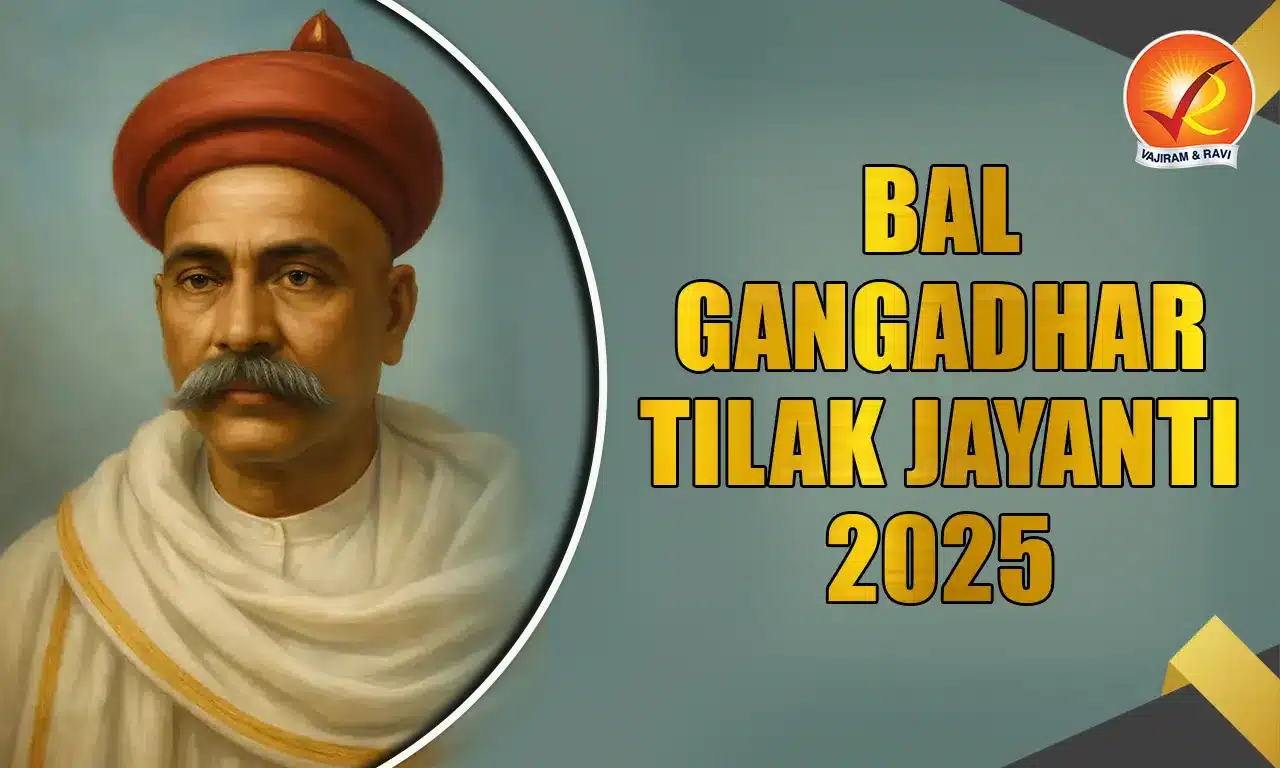
Bal Gangadhar Tilak Jayanti 2025, Date, Significance, Contribution

Bal Gangadhar Tilak Jayanti 2025

Bal Gangadhar Tilak was born on 23rd July 1856 who is one of India's most influential freedom fighters. He joined the National Congress (INC) Party in 1890 but was not only known as a political leader but also a philosopher, scholar, and a nationalist. His birth anniversary, celebrated as Tilak Jayanti, serves as a tribute to his immense contribution to India’s struggle for independence. Bal Gangadhar Tilak, along with Bipin Chandra Pal and Lala Lajpat Rai, followed the ideology of Extremism during the freedom struggle.

Bal Gangadhar Tilak Jayanti 2025 Date

Bal Gangadhar Tilak was born on 23 July 1856. In 2025, his 169th birth anniversary will be observed on Wednesday, 23rd July 2025. Bal Gangadhar Tilak Jayanti 2025 is celebrated across India, especially in Maharashtra, where people remember his role and contribution in awakening political consciousness during colonial rule.

About Bal Gangadhar Tilak

Bal Gangadhar Tilak was one of the leaders to advocate for Swaraj (self-rule). He was a believer of Indian culture, tradition, and nationalism. He earned the title "Lokmanya", meaning "accepted by the people," signifying the respect he received from the masses.

He used education, journalism, and politics as tools to inspire Indians to oppose British rule. His fearless attitude and uncompromising stand against colonial oppression made him an inspirational figure in Indian political history.

Bal Gangadhar Tilak Biography

Bal Gangadhar Tilak was born in Ratnagiri, Maharashtra, in a Chitpavan Brahmin family. A brilliant student, he earned degrees in Mathematics and Law from the University of Bombay. Initially, he worked as a teacher and then turned towards journalism and politics.

He co-founded the Deccan Education Society in 1884, aiming to impart nationalistic education to Indian youth. His newspapers, Kesari (in Marathi) and The Mahratta (in English) became powerful platforms to voice nationalist thoughts and criticize British policies.

Bal Gangadhar Tilak Political Journey

Bal Gangadhar Tilak entered politics in the late 19th century and quickly emerged as a radical voice within the Indian National Congress. He believed that passive resistance was ineffective and instead called for active opposition to British rule. In the early years of Congress, he aligned with the Extremist who believed in constitutional reforms and dialogue with the British. He famously declared, “Swaraj is my birthright, and I shall have it,” which became a rallying cry for the Indian independence movement.

He also participated in several movements and was imprisoned multiple times by the British, most notably in 1908, when he was sent to Mandalay (Burma) for six years on charges of sedition.

Role in Lal-Bal-Pal Trio

Bal Gangadhar Tilak formed a powerful alliance with Lala Lajpat Rai and Bipin Chandra Pal, together referred to as the Lal-Bal-Pal trio. They represented the assertive nationalists of the early 20th century and aimed to energise Indian masses against British rule.

The trio promoted the Swadeshi Movement, boycotting British goods and promoting Indian-made products. Their speeches, writings, and activities played a key role in laying the foundation for mass-based nationalism.

Role in the Indian Freedom Movement

Bal Gangadhar Tilak's contribution to freedom began his ability to mobilize public opinion. He emphasized mass participation and cultural revival as tools for political awakening. His reorganization of Ganesh Utsav and Shivaji Jayanti transformed cultural celebrations into forums for political discourse. He was among the first leaders to link nationalism with Hindu identity and ancient Indian pride, though his focus remained on uniting Indians beyond regional and religious divides. Through his writings in Kesari and public speeches, he constantly challenged unjust colonial policies and demanded autonomy.

Bal Gangadhar Tilak Jayanti Celebrations

Bal Gangadhar Tilak Jayanti 2025 will be celebrated through a variety of programs across the country, especially in educational institutions and public forums. Activities include:

  • Essay competitions, quizzes, and speeches on Tilak’s life and ideologies.
  • Cultural programs showcasing his contributions through drama, art, and poetry.
  • Public gatherings and seminars by historians and political thinkers.
  • Tributes and floral offerings at statues and memorials of Tilak, especially in Pune, Mumbai, and Ratnagiri.

Bal Gangadhar Tilak Jayanti 2025 FAQs

Q1: When is Bal Gangadhar Tilak Jayanti celebrated in 2025?

Ans: Tilak Jayanti 2025 will be celebrated on Wednesday, 23rd July 2025.

Q2: Why is Bal Gangadhar Tilak called Lokmanya?

Ans: He was given the title "Lokmanya" because he was widely respected and admired by the common people for his bold leadership and fight for self-rule.

Q3: What was Tilak’s most famous slogan?

Ans: “Swaraj is my birthright, and I shall have it.”

Q4: What was his role in the Home Rule Movement?

Ans: He co-founded the Home Rule League and expanded the movement in western and southern India, demanding self-governance from the British.

Q5: What is Tilak’s contribution to journalism?

Ans: He used his newspapers Kesari (Marathi) and The Mahratta (English) to spread nationalist ideas and expose British exploitation.


Future of Solar Technologies, Advancement, Impacts, Challenges

Future of Solar Technologies

International Solar Alliance released the ISA Solar Tech Report 2023 which includes a detailed analysis about the progress and obstacles in solar technology. The report presents an elaborated review of significant innovations, their environmental and economic implications, and the critical challenges facing the industry.

Solar Technologies Advancement

  1. The report highlights advancements in PV cell technology, with a special focus on multi-junction designs. This innovation enables PV cells to absorb a wider range of sunlight, significantly boosting their efficiency and power generation capacity.
  2. One of the key insights from the report is the growing potential of perovskite materials. With their impressive efficiency and low manufacturing costs, perovskite solar cells are emerging as a game-changing alternative to conventional silicon-based cells.
  3. The increasing adoption of bifacial solar panels is another major trend. These panels harness sunlight from both surfaces, making them particularly effective in highly reflective environments such as deserts and snow-covered regions. This advancement is expected to improve the overall performance of solar power installations.
  4. The report also explores the role of floating solar farms in addressing land constraints. By utilizing water bodies, these installations not only conserve land but also benefit from cooler temperatures, which enhance the efficiency and longevity of solar panels.

Future of Solar Technologies

The Government of India is working on expanding the renewable energy capacity with solar power playing a major role. The Ministry of New and Renewable Energy (MNRE) has set a target of achieving 500 GW of renewable energy capacity by 2030 focusing on large scale solar projects, rooftop installations, and rural electrification initiatives.

By 2040, renewables are expected to contribute nearly half of India’s electricity supply. Advancements in battery storage technology will ensure a steady power supply, both during the day and at night, reducing dependence on coal. This transition is projected to save approximately USD 8.5 billion annually, which will represent solar energy as a cornerstone of India’s sustainable development strategy.

Solar Technologies Impact

  1. The extensive use of solar technology plays a crucial role in cutting down the global carbon footprint. By decreasing reliance on fossil fuels and minimizing greenhouse gas emissions, solar energy emerges as a key solution in combating climate change.
  2. The solar sector serves as a catalyst for economic expansion, generating employment across manufacturing, installation, and maintenance industries. The report underscores how solar advancements contribute to energy security by diversifying power sources and reducing dependence on energy imports.

Solar Technologies Challenges

  1. The intermittent nature of solar power, influenced by weather conditions and day-night cycles, remains a major challenge. Improving battery technology and enhancing grid integration are crucial steps toward ensuring a stable and reliable energy supply.
  2. The significant upfront investment required for solar installations continues to affect widespread adoption. The report emphasizes that ongoing technological progress and economies of scale are expected to drive costs down, making solar energy more affordable over time.
  3. Airborne particles, particularly in regions like India, can scatter solar radiation and reduce the efficiency of solar panels. While aerosols create a temporary cooling effect, they also highlight the need for cleaner technologies and better air quality management to maximize solar energy output.

Future of Solar Technologies FAQs

Q1: What is the future of solar technology?

Ans: India set a target to achieve 500 GW of renewable energy capacity by 2030.

Q2: What is the future of the solar system?

Ans: In about 5 billion years, the Sun will exhaust all its fuel and collapse in on itself.

Q3: What is the next step in solar panel technology?

Ans: Emerging solar panel technology trends for 2025 include advancements in tandem and perovskite cells.

Q4: Will solar technology improve?

Ans: Solar panel efficiency rates are expected to improve extremely slowly.

Q5: Does solar have a good future?

Ans: In 2028, renewable energy sources will account for over 42% of global electricity generation, with the share of wind and solar PV doubling to 25%.

Daily Editorial Analysis 16 July 2025

Daily Editorial Analysis

The U.S. Established and Extinguished Multilateralism

Context:

  • The United States, under Donald Trump, is seen as a symbol of a global transformation where unilateralism is replacing multilateralism.
  • The U.S. has sidelined the United Nations and weakened the collective power of the Global South by focusing on strategic, commerce-driven bilateral deals that fragment the global system.
  • This power imbalance has become so significant that even the July 2025 BRICS Summit did not oppose it.
  • The 31-page BRICS Declaration with 126 outcomes failed to address the erosion of multilateralism or emphasize South-South cooperation.
  • Unilateral tariffs are now used as tools to force individual countries into making concessions, rather than fostering global consensus.

The U.S. Shift and Global Power Flux

  • The United States under Donald Trump recognizes it can no longer define global frameworks like it did in the mid-20th century.
  • Its priority now is national self-sufficiency and containing China's economic influence.
  • Over the past 25 years, interconnected trade, financial sanctions, and spheres of influence have become the main tools of global power, replacing multilateral institutions.
  • This has left many nations, including India, unsure of how to adapt.

India’s Opportunity Amid the End of Multilateralism

  • India, with its growing population and economic potential, must accept that multilateralism is fading.
  • To assert its global influence, especially in leading the Global South, India must focus on national prosperity and South-South cooperation rather than relying on UN voting blocs.
  • Recent setbacks like losing the UNESCO post to Pakistan highlight the need for India to exercise ‘strategic autonomy’ — balancing between global powers while clearly standing up for its own core interests.

Looking East: Trade and Infrastructure Priorities

  • For a self-reliant India (Atmanirbhar Bharat), the focus should shift from the West to the East. Aligning trade agreements with ASEAN countries is key.
  • Any loss of exports to the U.S., such as in the steel sector, can be counterbalanced through large-scale domestic infrastructure development — expressways, high-speed rail, data centres, and world-class universities.
  • India must aim for growth similar in scale to China’s 2013 infrastructure investments, which fueled its rapid development.

India and the Fourth Industrial Revolution

  • India’s true strength lies in its emerging leadership in the fourth industrial revolution.
  • India has surpassed the U.K. and Germany in the number of generative AI patents, demonstrating its capacity for innovation and self-driven growth.

Modern Military and Global Leadership

  • Military strategies worldwide now emphasize air defence, satellites, drones, and cyber capabilities rather than traditional ground forces.
  • India is now positioned to lead globally in all these domains, allowing it to reduce reliance on expensive military imports while gaining flexibility in foreign policy and economic growth through defence technology spin-offs.

Reframing Borders and Building Trust

  • India is also rethinking its historical border disputes. Defence Minister Rajnath Singh’s call for India and China to move past old conflicts has been positively noted by China.
  • Diplomatic engagement, as seen with Pakistan over the Indus Waters Treaty, could extend to resolving border issues in eastern Ladakh and Jammu & Kashmir.
  • India’s strategic wisdom lies in realizing that these issues won’t be resolved militarily, and long-term growth depends on diplomatic settlement.

Revitalising the Global South Through BRICS 2026

  • The BRICS Summit in India in 2026 offers a key moment to realign the Global South’s priorities.
  • Instead of relying on outdated multilateral bargaining through groups like G-77 to extract concessions from the G-7, the focus should now shift to mutual growth within the South.
  • This can be achieved by redesigning tariffs and value chains to channel exports towards rising consumption in developing countries—ensuring affordability while supporting local industries.
  • Though it represents a major shift, it mirrors the scale of change multilateralism brought in the 1950s.

Gurugram’s Urban Crisis - Flooded Streets and the Collapse of Publicness

Context:

  • The article highlights the deeper socio-psychological and governance failures that underlie urban crises in Indian cities like Gurugram.
  • Repeated flooding and poor civic infrastructure in cities like Gurugram reveal not just technical gaps but a deep-rooted neglect of public welfare and inclusive urban planning.
  • The article moves beyond blaming privatisation to examine the persistence of caste-based rural mindsets, even in elite urban spaces.

The Visible Crisis - Flooded Dreams of an “International City”:

  • Recurring urban flooding: Gurugram, known as the “Millennium City” and host to Fortune 500 companies, faces annual urban flooding, power outages, and infrastructural failure during the monsoons.
  • Contradiction in urban aspirations: Despite high real estate prices and expectations of global standards, basic civic amenities fail to keep pace.

Root Cause - Not Infrastructure, but Mental Attitudes:

  • Persistence of ruralism in urban spaces: Gurugram’s planning reflects the continuation of village-level caste-centric attitudes where public good is secondary to private benefit.
  • Lack of publicness: There's a deep absence of the concept of shared public spaces or responsibilities, leading to rampant individualism, encroachments, and misuse of resources.

Historical Continuity of Privatisation and Exclusion:

  • DLF and origins of private urbanism: The first “licence” for private development was issued to the Delhi Land and Finance (DLF) corporation in 1981, under the Haryana Development & Regulation of Urban Areas Act of 1975 in the village of Chakkarpur in Gurgaon district.
  • Village attitudes, urban forms: The transition from rural to urban did not change social dynamics; instead, modernity was layered over regressive structures, masking the exclusionary basis of public life.

Planning without Public Welfare:

  • Land rationalisation and appropriation: Tools like chakbandi and kilabandi are often misused to consolidate land for private gain, including illegal appropriation of panchayat land.
  • Digital technology as a facilitator of misuse: GIS-based mapping and digitisation, meant for transparency, are subverted with the help of officials to benefit private interests.

The Myth of “Smart” Cities:

  • Technological fixes vs. civic values: CCTV cameras and command centres cannot replace the missing value of publicness in urban planning.
  • False modernity: Gated communities and luxury enclaves thrive at the cost of civic life beyond their walls. These are urban manifestations of rural exclusivity.

Way Forward - Rebuilding the Idea of the Public:

  • Public consciousness as the foundation: True urban development demands a mental shift towards collective responsibility, not just new roads or tech solutions.
  • Urban citizenship over rural attitudes: The mindset must evolve from “looking after your own” to civic participation and accountability in shared urban life.

Gurugram’s Urban Crisis - Flooded Streets and the Collapse of Publicness FAQs

Q1. How does the absence of ‘publicness’ affect urban planning and infrastructure in Indian cities like Gurugram?

Ans. The lack of a sense of public good leads to unplanned development, encroachments, and infrastructural failures such as flooding and power outages.

Q2. In what ways do traditional rural caste-based mentalities shape modern urban governance and public life?

Ans. Urban spaces continue to reflect exclusionary caste-based behaviours, prioritising private and community interests over inclusive civic planning and shared infrastructure.

Q3. What is the role of land rationalisation practices like chakbandi and kilabandi in urban expansion?

Ans. Though meant to streamline land use, these processes are often manipulated to convert public or panchayat lands into private assets, undermining equitable urban development.

Q4. Why is the Smart Cities Mission inadequate without addressing underlying socio-psychological issues in city planning?

Ans. Technological interventions like surveillance and digital mapping are ineffective unless accompanied by a civic culture that values public welfare and collective responsibility.

Q5. How does the historical trajectory of private urban development in Gurugram reflect deeper issues of governance and public accountability?

Ans. The city’s development, rooted in early privatisation without strong regulatory oversight, reveals a systemic neglect of public interest in favour of elite-driven spatial growth.

Source: IE


The Issue with Criminalising All Adolescent Relationships

Context

  • The Supreme Court of India’s 2025 sentencing judgment in Re: Right to Privacy of Adolescents represents a rare and nuanced moment in Indian jurisprudence, where the judiciary confronts the limitations of a well-intentioned but rigid legal framework.
  • This case, involving a 14-year-old girl and her 25-year-old partner from rural West Bengal, underscores the tension between the letter of the law under the Protection of Children from Sexual Offences (POCSO) Act and the complex social realities of adolescent sexuality, consent, and agency.
  • Through its extraordinary use of Article 142 of the Constitution, the Court sought not only to deliver justice in a singular case but also to initiate a broader conversation about systemic failures, adolescent rights, and the need for legal reform.

The Case at Hand and Supreme Court’s Evolving Stance

  • The Case at Hand
    • The criminal case was initially set into motion by the girl’s mother, and it followed a familiar trajectory: the young girl was institutionalised, rescued, and restored to her family, only to flee again due to surveillance and stigma.
    • The couple married and had a child before the girl turned 18, after which the man was arrested and convicted under POCSO’s stringent provisions, receiving a 20-year sentence.
    • Calcutta High Court reversed the conviction in 2022, citing the socio-economic context and the absence of exploitative intent.
    • However, judgement’s problematic language, particularly in framing adolescent female sexuality as something to be controlled, revealed deeply entrenched societal biases.
  • The Supreme Court’s Evolving Stance
    • Following public outcry over the High Court's language, the Supreme Court intervened Suo-Motu, reflecting both the seriousness of the case and the national attention it garnered.
    • While the Court restored the man's conviction, it ultimately refrained from imposing a sentence.
    • In an unprecedented move, it constituted an expert committee to assess the desires and well-being of the woman, now an adult.
    • The Court concluded that true justice lay in not sentencing the man, as the burden of punishment would fall most heavily on the young woman, the very person the law sought to protect.
    • Her trauma, as documented by the expert panel, stemmed not from the relationship, but from the cascade of institutional actions taken in its aftermath: the police investigation, court proceedings, and years-long effort to reunite with her partner.

Broader Implications of the Case

  • Questioning the Blanket Criminalisation under POCSO
    • This case has amplified a crucial but long-suppressed debate: Does the POCSO Act, in its current form, do justice to the complexities of adolescent agency and sexuality?
    • Empirical studies reveal that a significant percentage of POCSO cases, over 24% in Assam, Maharashtra, and West Bengal, involve consensual romantic relationships, with the majority of victims refusing to testify against the accused.
    • In such cases, the law inadvertently criminalises normative adolescent behaviour, undermining the very objective of protection.
    • The age of consent, which was raised from 16 to 18 in 2012, plays a pivotal role in this dynamic.
    • While intended to protect minors from exploitation, it creates a legal vacuum where all sexual acts involving individuals below 18 are deemed exploitative, regardless of the nature of the relationship or consent.
  • Agency, Consent, and Structural Injustice
    • A critical theme that emerges from this case is the tension between legal definitions of consent and lived experiences of agency.
    • The law, as currently framed, is unable to recognise the possibility that adolescents might engage in sexual relationships as a form of limited agency, especially in patriarchal, resource-constrained environments.
    • The Supreme Court’s rejection of the Calcutta High Court’s claim that the law renders girls voiceless reveals a paternalistic blind spot, where young people are denied the capacity to articulate and assert their own interests.
    • That said, it is equally important to acknowledge the contextual limitations of consent in such cases.
    • The girl’s consent may have been flawed, shaped by poverty, limited opportunities, and entrenched social norms like child marriage.
    • However, criminalising such relationships fails to address these underlying conditions.
    • Instead, it leads to further marginalisation and trauma, especially for adolescent girls who are already navigating precarious personal and social circumstances.

Conclusion

  • The Re: Right to Privacy of Adolescents case stands as a landmark, not because it offered a perfect solution, but because it exposed the fault lines between law and lived experience.
  • It reminds us that laws meant to protect can also harm when they fail to engage with the complexity of human relationships and adolescent development.
  • As India grapples with questions of consent, protection, and justice, this judgment may well be remembered as the spark that pushed the nation toward a more compassionate, evidence-based, and rights-respecting legal system for its youth.

The Issue with Criminalising All Adolescent Relationships FAQs

Q1. What was the central issue in Re: Right to Privacy of Adolescents?
Ans. The central issue was whether a consensual relationship between a 14-year-old girl and a 25-year-old man should be criminalised under the POCSO Act.

Q2. Why did the Supreme Court refrain from sentencing the accused?
Ans. The Supreme Court refrained from sentencing the accused because it found that punishing him would further harm the young woman, who had already suffered emotionally and financially while fighting for his release.

Q3. What flaw in the POCSO Act does the case highlight?
Ans. The case highlights the flaw in the POCSO Act that criminalises all sexual activity involving minors, without considering consent, context, or the evolving capacities of adolescents.

Q4. How did the legal system fail the girl in this case?
Ans. The legal system failed the girl by subjecting her to institutionalisation, social stigma, abandonment by her family, and a prolonged legal battle that took a severe toll on her well-being.

Q5. What reforms did the Supreme Court recommend?
Ans. The Supreme Court recommended reforms such as comprehensive sexuality education, life-skills training, emergency assistance, counselling services, and improved data collection on adolescent relationships and interventions

Source: The Hindu

Daily Editorial Analysis 16 July 2025 FAQs

Q1: What is editorial analysis?

Ans: Editorial analysis is the critical examination and interpretation of newspaper editorials to extract key insights, arguments, and perspectives relevant to UPSC preparation.

Q2: What is an editorial analyst?

Ans: An editorial analyst is someone who studies and breaks down editorials to highlight their relevance, structure, and usefulness for competitive exams like the UPSC.

Q3: What is an editorial for UPSC?

Ans: For UPSC, an editorial refers to opinion-based articles in reputed newspapers that provide analysis on current affairs, governance, policy, and socio-economic issues.

Q4: What are the sources of UPSC Editorial Analysis?

Ans: Key sources include editorials from The Hindu and Indian Express.

Q5: Can Editorial Analysis help in Mains Answer Writing?

Ans: Yes, editorial analysis enhances content quality, analytical depth, and structure in Mains answer writing.

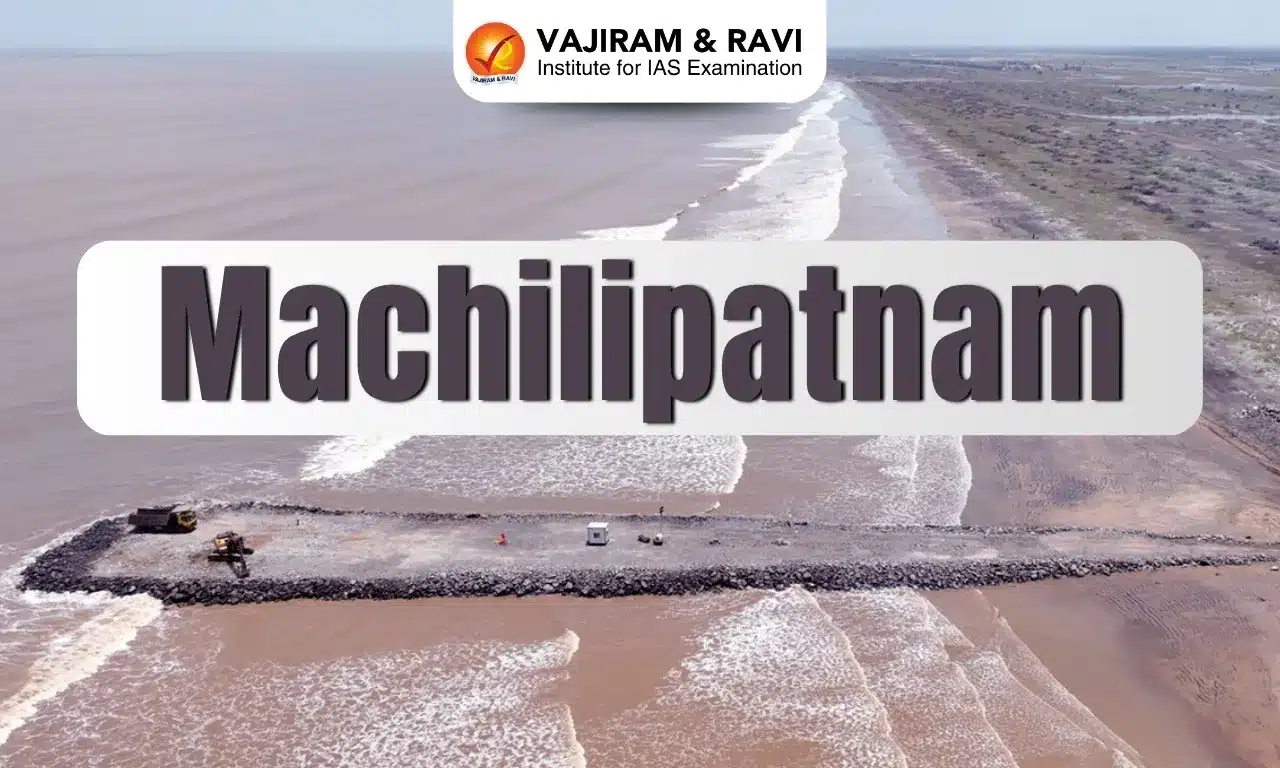
Machilipatnam

Machilipatnam

Machilipatnam Latest News

After being a dead dock town for ages, Machilipatnam is witnessing a revival with nearly 48% of the new Greenfield port at Manginapudi already completed.

About Machilipatnam

  • Machilipatnam, also known as Masulipatnam, is a coastal city in the Krishna district of Andhra Pradesh.
  • The city is nestled on the southeastern or Coromandel Coast of India.
  • It was a flourishing port and a prominent trading centre during the medieval period, attracting traders from various parts of the world. 
  • The city is also famous for its handloom industry, particularly for its Kalamkari art. 
    • Kalamkari is a traditional hand-painted or block-printed textile art showcasing intricate designs and motifs.

Machilipatnam History

  • The city of Machilipatnam came into existence in the era of the Satavahana Kings in the 3rd century B.C.  
  • During that period, the city was known as Maisolos and Masalia. 
  • They used this port as the gateway for their sea trade. 
  • It was famous for Muslin, a thin, plain-weave cotton cloth. Perhaps, this was the reason why it was referred to as Masalia or Masulipatnam.
  • During the year 1478, the place of Machilipatnam came under Muhammad Shah Bahamani II. 
  • Later in 1515, Sri Krishna Devaraya defeated the king, after which the city was captured by Orissa kings like Golconda King and Quli Qutb Shah
  • But at the same time, European traders, particularly Portuguese and Dutch, established their trade centers near the port. 
  • Thereafter, the British came to the port by locating their factory in 1611. 
  • Masulipatam was the first British trading settlement on the Bay of Bengal. 
  • The Masulipatnam Fort was built by the Dutch in the 17th century.
  • From 1686 to 1759, the city was held by the French and Dutch, until it was finally ceded to the British, who captured the city and fort from the French in 1759. 
  • With the entrance of foreign traders and frequent wars and disasters, Machilipatnam could not grow further.
  • In the year 1779, the city had to confront a major cyclone in which almost 20,000 people were killed and the Dutch factory got damaged.

Source: THBL

Machilipatnam FAQs

Q1: Machilipatnam is located in which Indian state?

Ans: Andhra Pradesh

Q2: What traditional art form is Machilipatnam particularly famous for?

Ans: Kalamkari

Q3: Which early dynasty is credited with establishing Machilipatnam as a port city in the 3rd century B.C.?

Ans: Satavahanas

Q4: When did the British establish their first factory at Machilipatnam?

Ans: 1611

Magnetic Levitation (Maglev) Technology

Maglev Technology

Magnetic Levitation (Maglev) Technology Latest News

China has successfully tested Magnetic Levitation (Maglev) technology, with the potential to make trains even faster than jets.

About Maglev Technology

  • Magnetic levitation, or maglev, is an advanced transportation technology that uses the principles of electromagnetism to enable vehicles to float above tracks, eliminating physical contact and significantly reducing friction. 
  • Maglevs were conceptualized during the early 1900s by American professor and inventor Robert Goddard and French-born American engineer Emile Bachelet and have been in commercial use since 1984.

How Maglev Technology Works?

  • Maglev trains operate using two key electromagnetic principles: magnetic attraction and repulsion
  • The system typically consists of three main components:
    • Levitation: Magnets lift the train above the track, ensuring there is no physical contact. This minimizes wear and tear while providing a smooth ride.
    • Guidance: Electromagnets stabilize the train laterally, keeping it centered on the track.
    • Propulsion: Linear motors generate magnetic fields that push and pull the train along the track. This replaces the need for traditional engines or fuel.
  • The tracks, known as guideways, are embedded with powerful electromagnets, while the trains themselves contain superconducting magnets or electromagnets. 
  • By carefully controlling the magnetic fields, maglev trains achieve levitation and propulsion with minimal energy loss.

Benefits of Maglev Technology

  • Speed and Efficiency: Maglev trains can reach speeds of over 600 km/h (373 mph), making them faster than conventional trains and competitive with short-haul flights.
  • Reduced Friction: With no physical contact between train and track, maglev systems have significantly lower maintenance costs and higher energy efficiency.
  • Eco-Friendly: Maglev trains produce zero direct emissions and can be powered by renewable energy sources, making them a sustainable alternative to fossil fuel-based transport.
  • Comfort: Passengers experience minimal vibrations and noise, thanks to the absence of wheels and rails.

Source: INDIA

Maglev Technology FAQs

Q1: What does the term Maglev stand for?

Ans: Magnetic Levitation

Q2: Which two scientists are credited with conceptualizing Maglev technology in the early 1900s?

Ans: Robert Goddard and Emile Bachelet

Q3: What speed can Maglev trains typically reach?

Ans: Over 600 km/h

Q4: Why are Maglev trains considered environmentally friendly?

Ans: They produce no direct emissions and can use renewable energy.

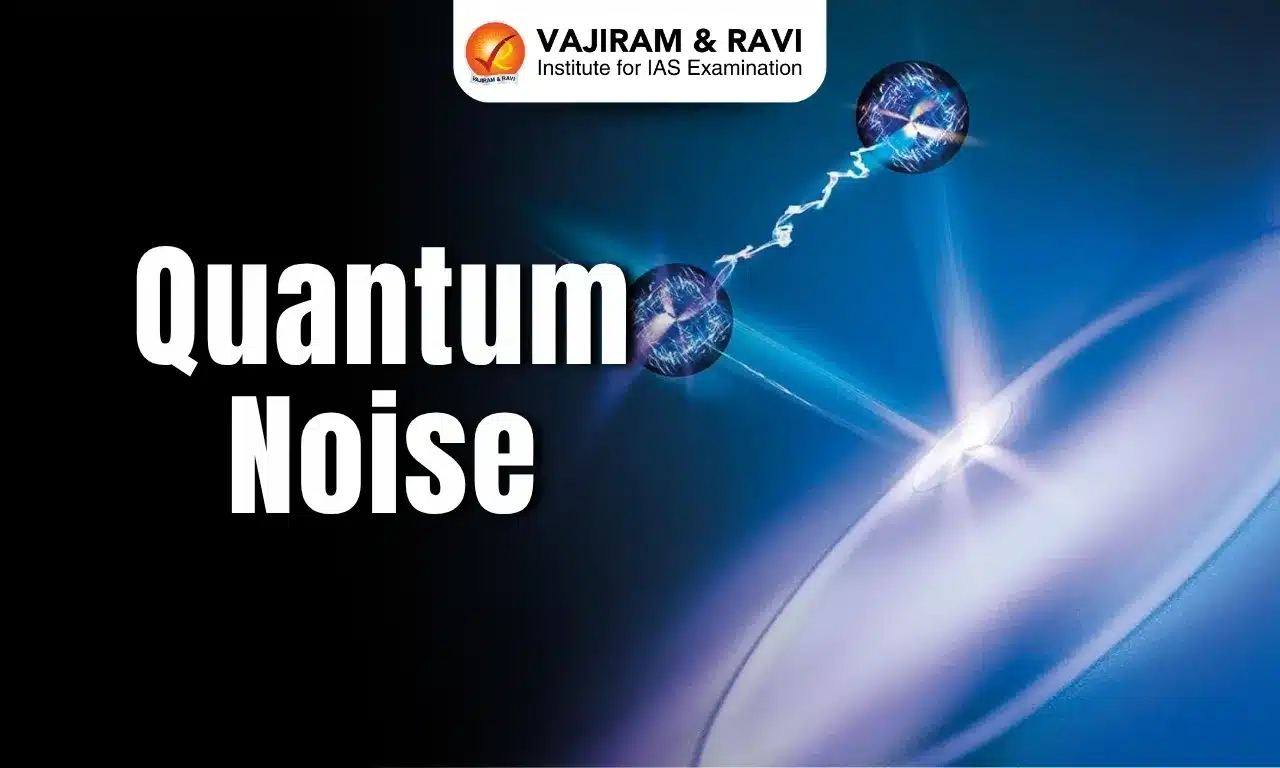
Quantum Noise

Quantum Noise

Quantum Noise Latest News

Researchers at the Raman Research Institute (RRI) recently made the discovery that “quantum noise” which was always thought to be detrimental to quantum systems, is potentially beneficial in some situations.

About Quantum Noise

  • It refers to the unwanted disturbances that affect quantum systems, leading to errors in quantum computations. 
  • Unlike classical noise, which might simply add random errors to a signal, quantum noise can have more complex and detrimental effects. 
  • What Causes Quantum Noise?
    • Quantum noise comes from the fact that energy—like light or radio waves—exists in discrete packets, or quanta. 
    • For example, light is made of photons, and radio waves are made of individual electromagnetic excitations. When you try to measure or amplify these signals, there’s a natural limit to how accurately you can do so.
    • This is a direct result of the Heisenberg uncertainty principle, which says you can’t perfectly measure certain pairs of properties (like the strength and phase of a wave) at the same time. These unavoidable fluctuations are what we call quantum noise.
    • Even if you had a perfect detector in a perfectly quiet room at absolute zero temperature, quantum noise would still be present.
  • Quantum noise can arise from various sources, including thermal fluctuations, electromagnetic interference, imperfections in quantum gates, and interactions with the environment. 
  • Different types of quantum noise affect qubits in distinct ways. For example, phase noise alters the relative phase between the basis states of a qubit, while amplitude noise affects the probabilities of measuring different states. 
  • Understanding and characterizing these noise sources is crucial for error mitigation.
  • It's a major challenge in the development of quantum computers, as it can cause qubits to lose their delicate quantum state, known as decoherence.
    • Even small amounts of noise can lead to decoherence, causing qubits to lose their superposition and entanglement properties. 
    • This loss of quantum information can render computations meaningless and limit the size and complexity of feasible quantum algorithms.

Source: PIB

Quantum Noise FAQs

Q1: What is quantum noise?

Ans: Quantum noise refers to the unwanted disturbances that affect quantum systems, leading to errors in quantum computations.

Q2: What fundamental principle of quantum mechanics explains the inevitability of quantum noise?

Ans: Heisenberg Uncertainty Principle

Q3: What is the consequence of quantum noise on qubits in quantum computing?

Ans: It causes decoherence and loss of quantum information.

Cnemaspis Brahmaputra

Cnemaspis Brahmaputra

Cnemaspis Brahmaputra  Latest News

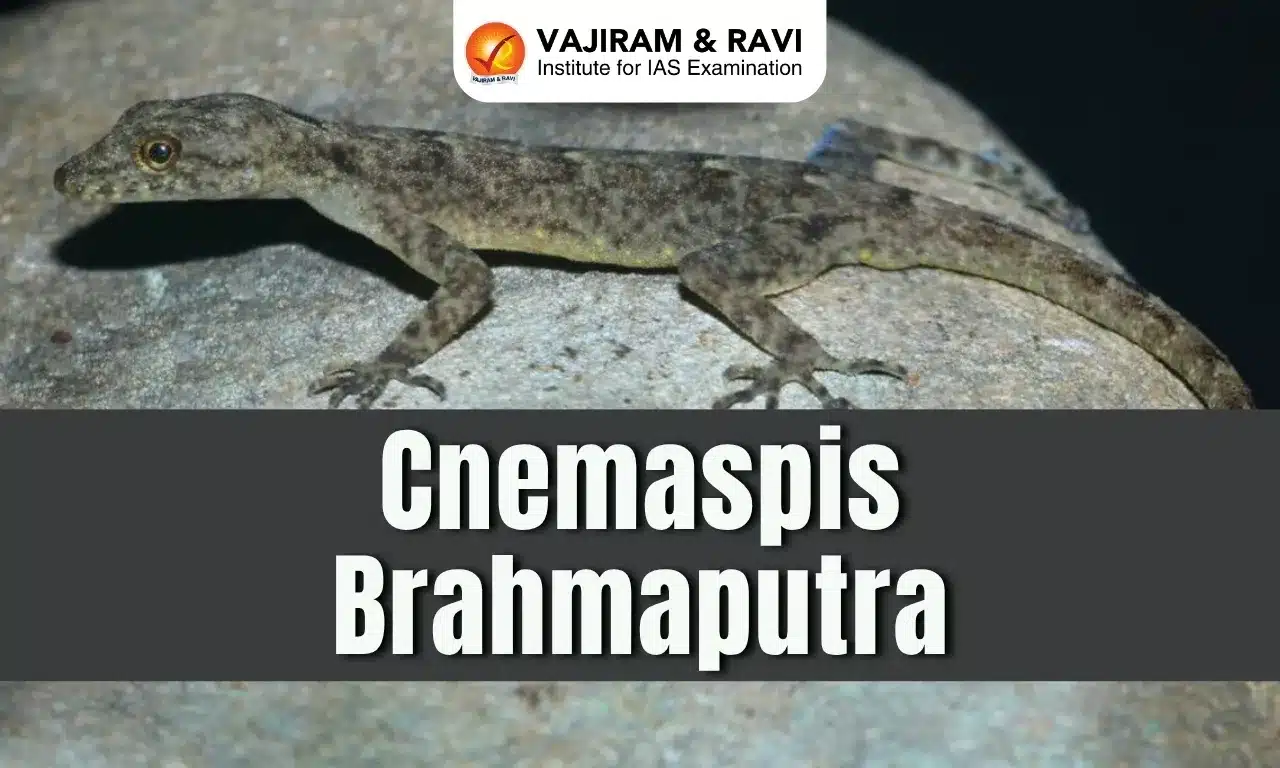
Recently, a new species of gecko recorded from Assam has been named after the Brahmaputra River.

About Cnemaspis Brahmaputra

  • It was found at Dirgheswari Temple on the northern bank of the Brahmaputra river in Assam.
  • The new species belongs to the Cnemaspis podihuna clade, a group of small, diurnal geckos previously thought to be largely restricted to Sri Lanka.
  • Its discovery in Assam strengthens the evidence for an ancient biogeographic link between Sri Lanka and India’s northeast, reflecting historical faunal exchanges across the Indian subcontinent.
  • The new species is genetically and morphologically distinct from its Sri Lankan relatives, showing significant evolutionary divergence.

Features of Cnemaspis Brahmaputra

  • It is distinguished by its larger body size but with fewer mid-body scale rows, more ventral scale rows across the belly, no tubercles on lower flanks, and three enlarged rows of thigh scales parallel to the enlarged femoral scale row.
  • Cnemaspis brahmaputra is the second species of the genus Cnemaspis known from the northeastern region. The first, Cnemaspis assamensis, was described in 2000.
  • Both species are members of the podihuna clade and are restricted to the Brahmaputra River valley.
  • They occur on opposite banks of the river and have significant genetic differences.

Source: TH

Cnemaspis brahmaputra FAQs

Q1: What is a gecko known for?

Ans: Geckos have many special abilities. They can climb with their sticky feet and regrow their tails if they lose them.

Q2: What is called Reptilia?

Ans: Reptiles are tetrapod animals in the class Reptilia, comprising today's turtles, crocodilians, snakes, amphisbaenians, lizards, tuatara, and their extinct relatives.

Behdeinkhlam Festival

Behdeinkhlam Festival

Behdeinkhlam Festival Latest News

The sacred Behdeinkhlam Festival was celebrated with fervor in Jowai, Meghalaya, blending ancient Pnar rituals with modern social themes.

About Behdeinkhlam Festival

  • Meaning: Beh Dien means to drive away the plague with sticks and prayers and Khlam means plague or pestilence.
  • It is a significant cultural festival celebrated by the Pnar community in Meghalaya.
  • It translates to “driving away the plague” or “chasing away the demon of cholera”;
  • It is a festival that seeks to ward off evil spirits, diseases, misfortune, and invoke blessings for a good harvest and communal prosperity.
  • Timing: It is celebrated annually in July after the sowing period.

Rituals of Behdeinkhlam Festival

  • The main part of the festival was the making of the Dein Khlam and Khnong which are rounded, polished and straight tree trunks from the forest.
  • During the cultural festival tour, young men make a symbolic gesture of driving away of the evil spirit, plague and disease by beating of the roof of every house with bamboo poles. 
  • It is carried out for three days and on the last day, in the afternoon people would gather in a place called Aitnar and both young and old would dance to the tunes of the pipes and drums.
  • On the final day people would converge to a place called Mynthong to witness a game played similar to football, called dad-lawakor.

Source: NA

Behdeinkhlam Festival FAQs

Q1: In which state is Behdienkhlam festival celebrated?

Ans: Meghalaya

Q2: What is the meaning of behdienkhlam?

Ans: Behdienkhlam (chasing away the Demon of Cholera) is celebrated annually in July after the sowing period, the most important dance festival of the Jaintia tribes.

Prime Minister Professorships

Prime Minister Professorship

Prime Minister Professorships Latest News

Recently, the Anusandhan National Research Foundation (ANRF) — the newly constituted body for funding scientific research — has announced the Prime Minister Professorships.

About Prime Minister Professorships

  • It is a prestigious initiative aimed at fostering world-class research and innovation within emerging institutions.
  • It seeks to leverage the expertise of eminent scientists, senior faculty, and accomplished industry professionals to provide mentorship and support to faculty and students in less-endowed state universities, thereby strengthening their research and development culture.
  • Objective: To utilize the extensive knowledge and experience of active, eminent, and superannuated/retired scientists and professionals.
  • Duration: The tenure of the PM Professorship will be up to 5 years, based on performance evaluated by the expert committee constituted for the purpose.
  • Age limit: Superannuated on the date of application (no upper age limit)
  • Funding Support: A PM Professor will receive a fellowship of Rs. 30 lakh plus Rs. 24 lakh as research grant (consumables, domestic travel, contingencies, equipment etc.) per annum. Also, an overhead of a fixed amount of Rs.1 lakh per year to be provided under the program.

Eligibility Criteria for Prime Minister Professorship

  • Superannuated faculty or scientists from reputed Indian institutions, research laboratories or from private institutions are eligible to apply.
  • Overseas scientists—including Non-Resident Indians (NRIs), Persons of Indian Origin (PIOs), and Overseas Citizens of India (OCIs)—are also encouraged to apply under this scheme.
  • In addition, professionals from industry/ experienced Professor of Practice, with a distinguished record of research and innovation may also apply.
  • Applicants with strong research credentials, must be actively involved in research and innovation activities, and demonstrate a strong commitment to mentor faculty at the eligible state universities where research and innovation is still at a nascent stage.
  • Eligible host institutions are the state universities which have been qualified as spoke institutions in Category A of recently awarded PAIR program of ANRF (see category list here) Applicants must  be willing to relocate to the proposed host institution on full time basis and should have a proper  plan to contribute significantly to the development of its research capabilities and innovation culture.

Source: TH

Prime Minister Professorships FAQs

Q1: What is the Anusandhan National research Scheme?

Ans: Anusandhan National Research Foundation (ANRF) - established through an Act of Parliament: ANRF Act, 2023, to provide high-level strategic directions for research, innovation, and entrepreneurship in the fields of natural sciences, including mathematical sciences, engineering and technology.

Q2: Who are overseas citizens of India?

Ans: A foreign national, who was eligible to become citizen of India on 26.01. 1950 or was a citizen of India on or at anytime after 26.01. 1950 or belonged to a territory that became part of India after 15.08. 1947 and his/her children and grand children, is eligible for registration as an Overseas Citizen of India (OCI).

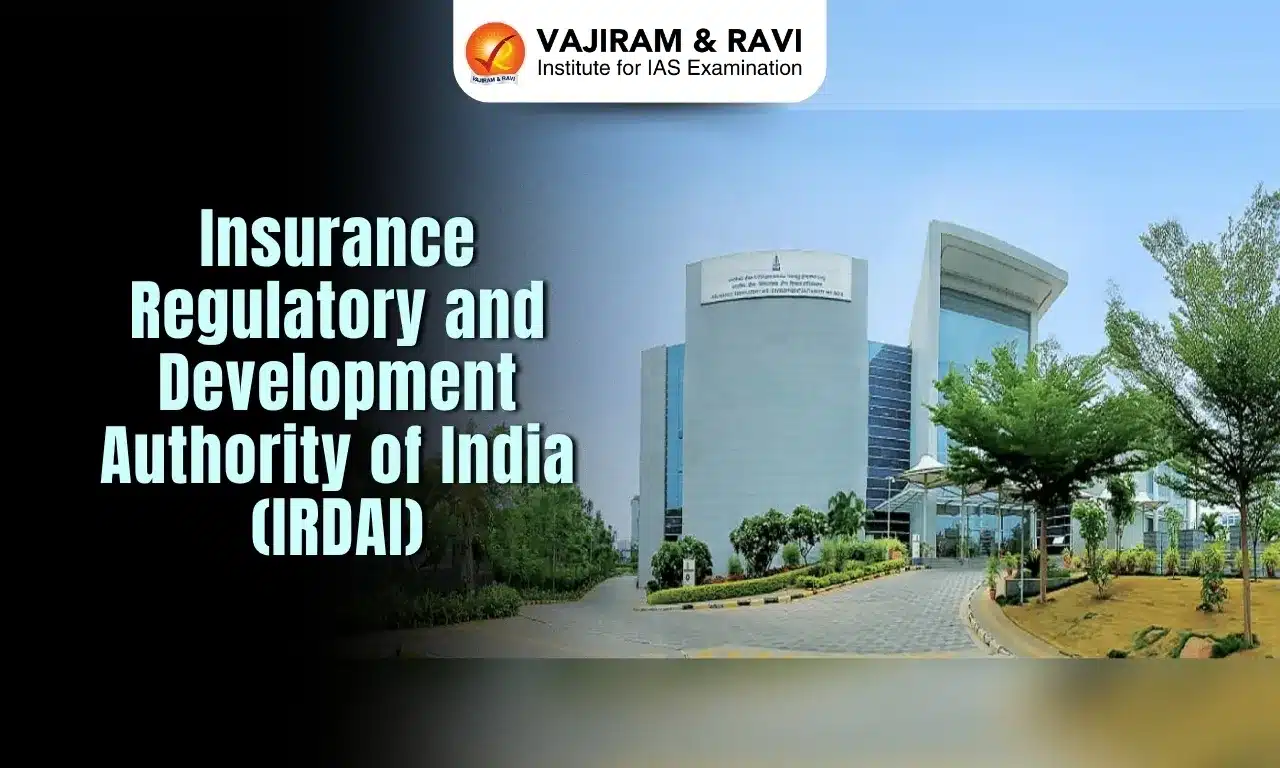
Insurance Regulatory and Development Authority of India (IRDAI)

insurance-regulatory-and-development-authority-of-india

Insurance Regulatory and Development Authority of India

The Insurance Regulatory and Development Authority of India (IRDAI) recently constituted panels of its whole-time members to decide on the violations by certain insurers/insurance intermediaries.

About Insurance Regulatory and Development Authority of India

  • It is a statutory body formed under an Act of Parliament, i.e., the Insurance Regulatory and Development Authority Act, 1999 (IRDAI Act 1999), for the overall supervision and development of the insurance sector in India.
  • It acts as an autonomous authority under the Ministry of Finance, Government of India.
  • The main goals of IRDAI are:
    • To safeguard the interest of the policyholders by fair business conduct and settlement of claims within time.
    • Developing and nurturing the Indian insurance industry.
    • To regulate the business of insurance with transparency, fairness, and honest practice.
    • Facilitating financial prudence of the insurers through solvency and stability checks of insurers.
    • To regulate premium charges and policy terms for preventing unscrupulous pricing and unaffordability.
  • It is responsible for registering and/or licensing insurance, reinsurance companies, and intermediaries according to the regulations. 
  • It sets the eligibility criteria, qualifications, and capital requirements for obtaining licenses in the insurance business.
  • Head Office: Hyderabad
  • Entities regulated by IRDAI:
    • Life Insurance Companies: Both public and private sector companies
    • General Insurance Companies: Both public and private sector companies. Among them, there are some standalone health insurance companies which offer health insurance policies.
    • Re-Insurance Companies
    • Agency Channel
    • Intermediaries, which include the following:
      • Corporate Agents
      • Brokers
      • Third-party Administrators
      • Surveyors and Loss Assessors.
  • Composition: It consists of a Chairman, five full-time members, and four part-time members, all appointed by the Government of India.
  • To protect the interests of policyholders, the IRDAI was granted significant responsibilities, including
    • Efficiently conducting the insurance business and protecting the interests of the policyholders in matters concerning assigning of policy, nomination by policyholders, insurable interest, settlement of insurance claims, surrender value of the policy, and other terms and conditions of contracts of insurance.
    • Approving product terms and conditions offered by various insurers.
    • Regulating the investment of funds by insurance companies and maintaining a margin of solvency.
    • Specifying the financial reporting norms of insurance companies.
    • Specify code of conduct, qualifications, and training for intermediary or insurance agents.
    • Undertaking inspections, calling for information, and investigations, including an audit of insurance companies, intermediaries, and other organizations associated with the insurance business.
    • Ensuring insurance coverage is provided in rural areas and also to the vulnerable sections of society.

Source: TH

Insurance Regulatory and Development Authority of India FAQs

Q1: Under which Act was the Insurance Regulatory and Development Authority of India (IRDAI) established?

Ans: Insurance Regulatory and Development Authority Act, 1999 (IRDAI Act 1999)

Q2: Where is the headquarters of IRDAI located?

Ans: Hyderabad

Q3: What is the primary objective of IRDAI?

Ans: To safeguard policyholders' interests and regulate the insurance industry.

Q4: IRDAI operates under which ministry?

Ans: Ministry of Finance

Klyuchevskoy Volcano

Klyuchevskoy Volcano

Klyuchevskoy Volcano Latest News

A false-color satellite photo from 2023 shows a devilish pair of lava flows and an enormous plume of smoke spewing from Klyuchevskoy, the tallest volcano in Europe and Asia.

About Klyuchevskoy Volcano

  • It is an active stratovolcano located on the Kamchatka Peninsula, far eastern Russia
  • It is one of the highest active volcanoes (tallest active volcano in Eurasia) in the world, rising to a height of 15,584 feet (4,750 meters), the highest point on the peninsula. 
  • The volcano consists of a truncated cone with a central crater, with some 70 lateral craters and cones on the lower slopes.
  • The volcano, which has erupted more than 50 times since 1700, is characterized by smoke continuously billowing above its summit. 
  • The Kamchatka Volcanological Station, established in 1935, is located at its base.

Key Facts about Kamchatka Peninsula

  • It is located in far eastern Russia. 
  • It is bordered by the Sea of Okhotsk on the west and the Pacific Ocean and Bering Sea on the east. 
  • Two mountain ranges, the Sredinny (“Central”) and Vostochny (“Eastern”) extend along the peninsula. 
  • It is one of the largest peninsulas in the world.
  • Climate: Severe, with prolonged, cold, and snowy winters and wet, cool summers.
  • The Kamchatka Peninsula is the northern link in the 2000 km Kuril-Kamchatka island arc. 
    • This region contains 68 active volcanoes, over 10 percent of the total found on land anywhere on Earth.
    • This arc is part of the "Ring of Fire," a string of volcanoes that encircles the Pacific Ocean.

Source: LS

Klyuchevskoy Volcano FAQs

Q1: Where is the Klyuchevskoy volcano?

Ans: Kamchatka Peninsula, far eastern Russia.

Q2: How tall is the Klyuchevskoy volcano?

Ans: It is the tallest active volcano in Eurasia rising to a height of 15,584 feet (4,750 meters).

Q3: What type of volcano is Klyuchevskoy?

Ans: Stratovolcano

India’s Linguistic Secularism – Constitutional Values and Cultural Unity

India’s Linguistic Secularism

India’s Linguistic Secularism Latest News

Amid rising instances of language-based tensions and cultural exclusion, the article highlights the need to reaffirm India’s constitutional commitment to linguistic secularism to protect national unity and cultural diversity.

Introduction

  • India's strength lies in its diversity, and language forms a critical component of this pluralistic fabric. With 121 languages and 270 mother tongues as per the 2011 Census, India's linguistic richness is protected under the constitutional umbrella of secularism. 
  • However, recent regional tensions and identity politics threaten this equilibrium. 

Understanding Linguistic Secularism in the Indian Context

  • Secularism in India extends beyond religion; it encompasses language as a vital dimension of cultural identity and democratic coexistence. 
  • Unlike Western secularism, which emphasises the separation of church and state, Indian secularism is embedded in the idea of inclusive pluralism. The state neither promotes nor suppresses any religion or language but ensures equal treatment for all.
  • This inclusive model allows the state to actively counter both religious and linguistic communalism. 
  • It also empowers citizens with the right to preserve their linguistic and cultural identity without fear of discrimination.

Constitutional Provisions Supporting Linguistic Plurality

  • The Indian Constitution provides multiple safeguards to preserve the linguistic diversity of the nation:
    • Article 343: Declares Hindi in Devanagari script as the official language of the Union, while allowing states to adopt their own official languages.
    • Eighth Schedule: Lists 22 scheduled languages that are accorded recognition and development support from the government.
    • Article 29: Grants every section of citizens the right to conserve their distinct language, script, or culture, ensuring that language is not a basis for exclusion or discrimination.
  • These provisions form the legal foundation of India’s linguistic secularism, preventing the dominance of any single language and promoting the coexistence of multiple languages within a single national identity.

Official Language vs. National Language

  • Contrary to popular perception, India does not have a national language. The Constitution deliberately avoids designating any language as national, recognising the sensitivities associated with India's multilingual reality.
  • While Hindi is the official language at the central level, states are free to conduct their affairs in their own official languages. 
  • This decentralised approach has helped maintain harmony but also led to periodic friction, especially where fears of cultural imposition arise.

Language Politics and Rising Tensions

  • The recent incidents of violence in Maharashtra against non-Marathi-speaking citizens, along with historic resistance to Hindi imposition in Tamil Nadu and parts of the Northeast, reflect deeper anxieties about identity and cultural domination.
  • Such incidents indicate that language-based identity politics, when unchecked, can fragment society. 
  • The misuse of linguistic pride for political gains undermines the inclusive ethos of the Indian Constitution. Instead of cultural preservation, these movements often descend into exclusionary practices that contradict India’s secular and federal ideals.

The Role of Political and Civil Institutions

  • The preservation of linguistic secularism is not only a constitutional mandate but also a political responsibility. 
  • Political parties must act as guardians of India's linguistic harmony, resisting the temptation to exploit language for electoral benefits.
  • Civil society, media, and educational institutions must also play a proactive role in promoting tolerance, mutual respect, and inter-lingual understanding. Recognition of each language’s value in the national narrative can strengthen India’s unity in diversity.

A Call for Respect and Inclusivity

  • The essence of India’s linguistic secularism lies in its ability to respect all languages equally. 
  • This respect must extend beyond scheduled languages to the many dialects and mother tongues that constitute the soul of India’s cultural heritage.
  • Respecting linguistic rights is not only a constitutional imperative but also a moral one. It ensures social harmony, fosters inclusive development, and strengthens democratic citizenship.

Source: TH

India’s Linguistic Secularism FAQs

Q1: What is linguistic secularism in the Indian context?

Ans: Linguistic secularism in India refers to the constitutional principle of treating all languages equally without promoting or suppressing any.

Q2: Does India have a national language?

Ans: No, India does not have a national language; Hindi is the official language of the Union, and states are free to adopt their own official languages.

Q3: How many languages are listed in the Eighth Schedule of the Constitution?

Ans: The Eighth Schedule includes 22 languages officially recognized by the Indian Constitution.

Q4: What constitutional article protects the rights of linguistic minorities?

Ans: Article 29 guarantees linguistic and cultural rights to all citizens, including minority groups.

Q5: Why is linguistic secularism important for India’s unity?

Ans: It ensures equal respect for all languages, prevents linguistic domination, and strengthens India’s unity in diversity.

Kaziranga National Park

Kaziranga National Park

Kaziranga National Park Latest News

Kaziranga National Park and Tiger Reserve has released its first Grassland Bird Survey Report, highlighting critical habitats and threatened species in the Brahmaputra floodplains.

About Kaziranga National Park

  • Location: It is situated in the north-eastern part of India in the state of Assam.
  • It is the single largest undisturbed and representative area in the Brahmaputra Valley floodplain.
  • In 1985, the park was declared a World Heritage Site by UNESCO.
  • Terrain: It is of sheer forest, tall elephant grass, rugged reeds, marshes, and shallow pools.
  • Rivers: The River Diffalu, a tributary of the Brahmaputra, flows through the National Park while another tributary, Moradifalu, flows along its southern boundary.

Flora and Fauna of Kaziranga National Park

  • Flora: It is primarily famous for its dense and tall elephant grasses intermixed with small swamplands. It also includes an abundant cover of water lilies, water hyacinths and lotus.
  • Fauna: Many endangered and threatened species like Rhino, Tiger, Eastern swamp deer, Elephant, Buffalo, Hoolock gibbon, Capped langur, and Gangetic River dolphin are commonly found in the habitat. It is inhabited by the world’s largest population of one-horned rhinoceroses, as well as many mammals.

Highlights of Grassland Bird Survey Report

  • Bird experts, scientists, and conservationists recorded 43 grassland species across Kaziranga’s three wildlife divisions. 
  • It reported that the Finn’s weaver (IUCN Status: Endangered), locally known as tukura chorai, is breeding successfully.
  • This bird is an important indicator of grassland health and is known for building nests atop trees.

Source: TH

Kaziranga National Park FAQs

Q1: In which state is Kaziranga National Park located?

Ans: Assam

Q2: Which river passes through Kaziranga National Park?

Ans: River Brahmaputra

Decarbonising Global Shipping: India’s Role, Green Fuels, and Shipbuilding Strategy

Global Shipping Decarbonisation

Global Shipping Decarbonisation Latest News

  • Global shipping aims for decarbonisation by 2040–50, shifting from Very Low Sulphur Fuel Oil (VLSFO), diesel, and LNG to green fuels like green ammonia, e-methanol, and biofuels. 
  • This transition offers significant opportunities for India.

Production of Green Fuels

  • Green hydrogen is produced via water electrolysis using renewable energy. 
  • For shipping, more stable alternatives like green ammonia (from green hydrogen and nitrogen) and green methanol (from green hydrogen and industrial carbon dioxide) are preferred. 
  • India promotes green ammonia to reduce LNG imports in fertilizer production.

Green Methanol as Shipping’s Preferred Transition Fuel

  • Shipping is gradually adopting green methanol as its primary decarbonisation fuel due to its ease of use and lower carbon emissions—about 10% compared to conventional fuels. 
  • Green methanol can largely replace VLSFO without major engine modifications, unlike green ammonia, which, despite emitting no greenhouse gases, requires complex onboard handling.
  • Over 360 methanol-capable ships are already operational or on order, supported by major companies like Maersk, CMA CGM, and Evergreen. 
  • However, green e-methanol is significantly more expensive—costing $1,950 per tonne in Singapore as of February, compared to $560 per tonne for VLSFO. 
    • This price gap is driven by high renewable electricity requirements (10–11 MWh per tonne of methanol) and the substantial upfront cost of electrolyser facilities. 
  • Demand for green methanol is projected to exceed 14 million tonnes by 2028, while supply is expected to lag at around 11 million tonnes, adding further price pressure.

India’s Shipping Decarbonisation Strategy and Global Green Fuel Ambitions

  • India plans to decarbonise its domestic shipping by promoting green fuels for container ships and establishing green fuel bunkering hubs at ports like Tuticorin (V.O. Chidambaranar) and Kandla. 
  • The government also aims to produce and export green fuels to Singapore, a major global ship fuelling hub handling nearly 25% of the world's ship fuel needs. 
  • With its large solar power capacity and expertise, India is positioning itself as a key global supplier of green fuels to support international shipping’s shift towards sustainability.

Building India’s Green Marine Fuel Hub: Challenges and Solutions

  • India aims to become a major producer of marine green fuels like green methanol but faces challenges such as dependence on imported solar panels and electrolysers. 
  • However, India’s solar power growth—from 2.82 GW in 2014 to 105 GW in 2025—shows how sovereign guarantees and strategic policies can overcome such hurdles. 
    • Sovereign guarantees help lower project costs by enabling cheaper international financing.
  • For large-scale green methanol production, India needs innovative financial tools, including Production-Linked Incentive (PLI) schemes for electrolysers and incentives for carbon capture, utilisation, and storage (CCUS). 
    • These measures would support local value chains, reduce raw material transport costs, and make green methanol production from captured CO₂ feasible. 
  • The government's push to establish 1.5 GW local electrolyser manufacturing capacity and expanded industrial CO₂ sourcing positions India well for developing integrated green fuel hubs. 
  • Multilateral development banks offering low-interest financing (around 4% compared to 11–12% from Indian lenders) can also be leveraged to scale up efforts.

Reviving Indian Shipbuilding Through Green Fuel Initiatives

  • To boost shipbuilding and shipowning, India is offering demand-side support and incentives for foreign partnerships, especially with South Korean and Japanese shipbuilders. 
  • The focus is on building new ships and retrofitting existing ones for green fuel compatibility. 
  • India has committed $10 billion to purchase over 110 ships, with plans to ensure 10–20% of these are green fuel-capable, built in Indian shipyards, and fly the Indian flag. 
  • This strategy aims to scale up local shipbuilding while aligning with global decarbonisation goals.

Source: PR | UNCTAD

Global Shipping Decarbonisation FAQs

Q1: What is global shipping’s decarbonisation target?

Ans: Global shipping aims for net-zero emissions by 2040–50, transitioning from fossil fuels to green ammonia, methanol, and biofuels.

Q2: Why is green methanol preferred over green ammonia?

Ans: Green methanol is easier to handle onboard ships, requires minimal engine changes, and emits lower carbon compared to VLSFO.

Q3: What is India’s plan for green fuel bunkering?

Ans: India plans bunkering hubs at Tuticorin and Kandla to supply green fuels domestically and export to Singapore’s shipping hub.

Q4: How will India finance green methanol production?

Ans: Through sovereign guarantees, PLI schemes, CCUS incentives, and low-interest financing from multilateral development banks to reduce project costs.

Q5: How is India reviving shipbuilding through green fuels?

Ans: India will invest $10 billion to build and retrofit over 110 ships, with incentives for green fuel-capable vessels.

PM Professorship Scheme: Strengthening State University Research with ANRF Mentorship

PM Professorship Scheme

PM Professorship Scheme Latest News

  • Under this, the expertise of retired and eminent scientists, industry professionals, and Professors of Practice will be used for mentoring State universities with emerging research ecosystems.

Partnerships for Accelerated Innovation and Research Programme

  • ANRF has launched the Partnerships for Accelerated Innovation and Research (PAIR) Programme to strengthen India’s R&D ecosystem.
  • PAIR aims to cultivate research excellence across Indian universities, especially those with limited research capabilities. 
  • It uses a mentorship-driven hub and spoke model, pairing top-tier institutions (hubs) with emerging universities (spokes) to bridge capability gaps and foster collaborative research growth.

Hub and Spoke Model Structure

  • Hubs
    • Institutions within the top 25 of the NIRF overall ranking.
    • Institutions of National Importance within the top 50 NIRF ranking.
  • Spokes
    • Central and State Public Universities.
    • Select NITs and IIITs.
  • Network Composition
    • One hub can mentor up to seven spoke institutions.
    • Multi-departmental faculty teams from spoke institutions must be involved.
    • Regional diversity among participants is mandatory.

Key Benefits and Goals

  • Strengthening research and innovation ecosystems in emerging institutions.
  • Facilitating access to advanced infrastructure and best practices.
  • Driving impactful, internationally competitive research outputs.
  • Establishing collaborative research networks across institutions.

Prime Minister Professorship Scheme

  • Launched by ANRF, the Prime Minister Professorship aims to strengthen research and innovation culture in emerging state universities in India. 
  • It provides a platform for eminent, active, and superannuated scientists, faculty, and industry professionals to mentor universities where research ecosystems are still developing.

Need for the Scheme

  • India seeks to boost R&D in less endowed state universities.
  • There is a need for structured mentoring from experienced professionals to foster world-class research and innovation.
  • The scheme addresses gaps in research capability, international collaboration, and technological development in state universities.

Eligibility Criteria

  • Superannuated (retired) faculty/scientists from reputed Indian or foreign institutions/research labs/industries.
  • Active professionals from industry or experienced Professors of Practice with a proven track record in research and innovation.
  • Non-Resident Indians (NRIs), Persons of Indian Origin (PIOs), and Overseas Citizens of India (OCIs) are also eligible.
  • Willingness to relocate full-time to the host university in India is mandatory.
  • Host universities must be Category A spoke institutions under ANRF’s PAIR program.

Scope of Work and Responsibilities

  • Mentor faculty and students for world-class research.
  • Help enhance R&D capabilities in state universities.
  • Facilitate collaborations with established institutions, research labs, and industry.
  • Promote interdisciplinary research and knowledge exchange.
  • Guide in establishing research labs or common research facilities.
  • Provide 6-month internships to scholars in established institutions.

Funding and Support

  • Each selected Professor will receive:
    • Fellowship: ₹30 lakh per annum.
    • Research Grant: ₹24 lakh per annum (for consumables, travel, contingencies, equipment, etc.).
    • Overhead for host institution: ₹1 lakh per year.

Duration and Terms

  • Tenure: Up to 5 years (based on performance review).
  • No upper age limit but applicant must be superannuated.
  • Full-time presence at the host university is required.
  • No simultaneous honorarium/fellowship/salary from other institutions.
  • Intellectual property rights governed by the host institution’s norms.

Focus on State Universities through the PAIR Framework

  • Under the scheme, recipients must be placed at State universities designated as spoke institutions within Category A of ANRF’s Promoting Advanced and Inclusive Research (PAIR) programme.
  • PAIR connects universities with limited research capacity to top-tier “hub” institutions. 
  • These hub institutions are ranked 25 or below in the National Institutional Ranking Framework. 
  • The goal is to promote structured mentorship and collaborative research development.

Source: TH | SERB | DST

PM Professorship Scheme FAQs

Q1: What is the PM Professorship Scheme?

Ans: A programme where retired scientists mentor state universities to strengthen research ecosystems and foster world-class research capabilities.

Q2: Who is eligible for PM Professorship?

Ans: Retired scientists, industry professionals, and Professors of Practice with strong research credentials willing to work full-time in India.

Q3: What is the PAIR programme’s role?

Ans: PAIR links top-ranked universities (hubs) with emerging state universities (spokes) for mentorship-driven collaborative research growth.

Q4: What are the benefits for selected professors?

Ans: Each professor receives ₹30 lakh fellowship and ₹24 lakh research grant annually, along with institutional overhead support.

Q5: What is the scheme’s duration and terms?

Ans: Up to 5 years tenure, full-time presence required, no dual fellowships allowed, with intellectual property governed by host university.

Enquire Now