Interstate and Intrastate GST, Meaning, Rate, Key Difference

Interstate and Intrastate GST

Interstate and Intrastate GST both have an important role in the Indian Economy especially for the MSME Sector. The MSME sector companies that are planning to operate in multiple states, this distinction between the interstate and intrastate GST can help them understand the impact of tax rates and the compliance procedure. In this article, we are going to cover the difference in between Interstate and Intrastate GST.  

Interstate Supply GST 

Interstate GST Supply means the transactions that take place in between two different states or Union Territories. These GST transactions can be collected by the central government since they fall under the integrated GST category. IGST is especially beneficial for the small businesses conducting business across state borders, as IGST enables them to pay under a single levy instead of going through the procedure of paying multiple taxes. This collected tax gets split in between the central and the state government, ensuring fair and effective revenue distribution. 

Intrastate Supply GST

Intrastate GST Supply refers to GST that is levied when both the business as well as the place of supply both are located in the same state. Intrastate GST is collected separately by the state and the central government in the form of CGST and SGST. Since the state has the power to decide the rate of State GST, these tax costs vary depending on the state. 

Difference in between  Interstate and Intrastate GST Supply 

Here is a difference in between Interstate and Intrastate GST Supply: 

Parameters Interstate GST Intrastate GST

Tax Applicability

Applies to transactions where the supplier and the place of supply are in different states.

Pertains to transactions where the supplier and the place of supply are within the same state.

Tax Levied By

The tax is levied solely by the Central Government.

Both the Central and State Governments impose taxes.

Tax Rate

Integrated Goods and Services Tax (IGST) is applied to the transaction.

The tax is split into Central Goods and Services Tax (CGST) and State Goods and Services Tax (SGST).

Destination State’s Share

The destination state receives a share of the IGST collected.

The entire amount of SGST collected remains with the same state.

Place of Supply

The place of supply is in a different state than the supplier’s location.

The place of supply remains within the same state as the supplier.

Input Tax Credit (ITC) Utilization

IGST credit can be used to offset IGST, CGST, or SGST liabilities.

CGST and SGST credits can only be used to offset their respective tax liabilities.

Interstate and Intrastate GST FAQs

Q1: What is intrastate and interstate GST?

Ans: Intrastate GST is applied when the buyer and seller are in the same state, while interstate GST is applied when they are in different states.

Q2: What is IGST with an example?

Ans: IGST (Integrated GST) is levied on interstate transactions; for example, if goods are sold from Delhi to Maharashtra, IGST is charged.

Q3: Who collects interstate GST?

Ans: The Central Government collects IGST and later distributes the share to the destination state.

Q4: Is Intrastate GST a central tax?

Ans: Intrastate GST includes both Central GST (CGST) and State GST (SGST), so only part of it is a central tax.

Q5: What is interstate GST?

Ans: Interstate GST refers to IGST, which is levied on the supply of goods and services between different states.

Maulana Azad Fellowship

Maulana Azad Fellowship

Maulana Azad Fellowship Latest News

Recently, the Union Ministry of Minority Affairs  announced that payments pending for seven months under Maulana Azad National Fellowship (MANF) have been released.

About Maulana Azad Fellowship

  • It is a five-year fellowship provided by the Centre in the form of financial assistance to six notified minority communities – Muslims, Buddhists, Christians, Jains, Parsis and Sikhsto pursue M Phil and PhD. 
  • The scheme covers all Universities/Institutions recognized by the University Grants Commission (UGC) as under:
    • Central/State Universities (including constituent and affiliated institutions) included under UGC Act, 1956 and having valid accreditation from NAAC.
    • Deemed Universities under Section 3 of UGC Act i.e. Institution for higher education notified by Central Government to be deemed University, in consultation with UGC and having valid accreditation from NAAC.
    • Institutions fully funded by the State / Central Government and empowered to award degrees.
    • Institutions of National Importance as notified by Ministry of Human Resource Development
  • The fellowship holders under this Fellowship will be known as Ministry of Minority Affairs scholars.
  • Scope: The Fellowship will cater to the minority community students pursuing regular and full time research studies leading to award of M.Phil/Ph.D degree within India only.
  • This will enable them to be eligible for employment to the posts with M.Phil and Ph.D as pre- requisites, including the posts of Assistant Professors in various academic institutions.
  • Nodal Ministry: Ministry of Minority Affairs
  • Implementing Agency: University Grants Commission

Source: IE

Maulana Azad Fellowship FAQ's

Q1: Who is eligible for Maulana Azad fellowship?

Ans: The scheme is open to candidates who belong to one of the Minority Community i.e. Muslim, Sikh, Parsi, Buddhist & Christian.

Q2: What is Buddhism?

Ans: It is a faith that was founded by Siddhartha Gautama—also known as “the Buddha”—more than 2,500 years ago in India. It is one of the major world religions. As a non-theistic faith with no god or deity to worship, some scholars describe Buddhism as a philosophy or a moral code rather than an organized religion.

Zimislecel Therapy

Zimislecel

Zimislecel Therapy Latest News

A small clinical trial, published in The New England Journal of Medicine, tested a therapy called zimislecel which can help in restoring insulin in people with type 1 diabetes.

About Zimislecel Therapy

  • It is a new allogeneic stem cell-derived islet cell therapy in which islet cells are infused into the liver.
  • The pancreas contains clusters of cells that produce hormones. These clusters are known as islets.
  • Scientists made zimislecel by growing islets from pluripotent stem cells in the lab.
  • These are matured into functioning islets and infused into the hepatic portal vein.
  • The hope is that these cells will take root, survive, and begin producing insulin from within the body.
  • Zimislecel has the potential to restore the body’s ability to regulate glucose levels by restoring pancreatic islet cell function, including glucose-responsive insulin production
  • These lab-grown cells began producing insulin again, improving blood sugar control, preventing dangerous lows, and, in most cases, eliminating the need for insulin.

What is Type 1 Diabetes?

  • It is a condition in which your immune system destroys insulin-making cells in your pancreas. These are called beta cells.
  • When you have type 1 diabetes, your body produces very little or no insulin.
  • It requires daily administration of insulin to maintain blood glucose levels under control.
  • It is usually diagnosed in children and young people, so it used to be called juvenile diabetes.
  • Symptoms include excessive excretion of urine (polyuria), thirst (polydipsia), constant hunger, weight loss, vision changes, and fatigue.

Source: TH

Zimislecel Therapy FAQs

Q1: Which two organs are connected by the hepatic portal vein?

Ans: The hepatic portal system is the venous system that returns blood from the digestive tract and spleen to the liver (where raw nutrients in blood are processed before the blood returns to the heart).

Q2: What is the main function of the stem cells?

Ans: Stem cells are cells with the potential to develop into many different types of cells in the body. They serve as a repair system for the body.

Allographa effusosoredica

Allographa effusosoredica

Allographa effusosoredica Latest News

Recently, a team of Indian scientists has uncovered a previously unknown species of lichen, Allographa effusosoredica, from the richly biodiverse Western Ghats.

About Allographa effusosoredica

  • It is crustose lichen with striking effuse soredia and comparably rare chemical traits.
  • It harboures chemical called norstictic acid which is considered rare in comparison to other morphologically similar species within the genus Allographa.
  • It was studied in detail using morphological, chemical and advanced molecular techniques.
  • This integrative approach also unveiled its algal partner, a Trentepohlia species, adding to the sparse but growing understanding of photobiont diversity in tropical lichens.
  • This is the first Indian species of Allographa ever sequenced from India.
  • It also sheds light on lichen-algal symbiosis, reinforcing the concept of locally adapted photobionts.
  • Allographa effusosoredica becomes the 53rd species from the genus reported from India and the 22nd from the Western Ghats alone.

What are Lichens?

  • Lichens are not just one organism but two (sometimes more) living in intimate symbiosis: a fungus that offers structure and protection, and a photobiont (usually a green alga or cyanobacterium) that captures sunlight and makes food.
  • Ecological Significance:  Lichens play critical roles in ecosystems, building soil, feeding insects and serving as nature’s bioindicators.

Source: PIB

Allographa effusosoredica FAQs

Q1: Is lichen a symbiotic relationship?

Ans: Lichens are commonly recognized as a symbiotic association of a fungus and a chlorophyll containing partner, either green algae or cyanobacteria, or both.

Q2: What is meant by symbiotic relationship?

Ans: A symbiotic relationship is an ongoing interaction between organisms of different species.

Monkey Puzzle Butterfly

Monkey Puzzle Butterfly

Monkey Puzzle Butterfly Latest News

In a heartening discovery, a vibrant Monkey Puzzle butterfly has been recently spotted in the Pench Tiger Reserve (PTR) of southeastern Madhya Pradesh, famously known as the ‘Land of Jungle Book’s Mowgli.’

About Monkey Puzzle Butterfly

  • Monkey puzzle (Rathinda amor) butterfly is a small lycaenid or blue butterfly.
  • Distribution: It is endemic to South Asia, specifically India's Western Ghats, the southern Indian plains, Bangladesh, and Sri Lanka. 
  • Habitat: 
    • This butterfly is found in jungle areas of moderate to heavy rainfall - both, in heavy forest and scrub. 
    • The butterfly occurs below 900 meters or so. It keeps to undergrowth and can be seen along forest paths and in clearings.
    • Conservation Status: This species is not legally protected in India under any schedules of the WildLife (Protection) Act, 1972.

Monkey Puzzle Butterfly Features

  • Sexes alike. 
  • Wingspan: 26 to 28 mm. 
  • Upperside: The butterfly is dark brown. It has a white-spot end cell. 
  • Underside: The butterfly is white to dark yellowish brown. The forewing has irregular dark basal markings with a curved white discal line. The apical two-fifths are a rich dark brown colour. 
  • The hindwing has a silvery margin with many irregular black lines and spots within. 
  • It has three tails, being 2 mm, 6 mm, and 2.5 mm in length. Its tails are tipped in white.    

Source: NIE

Monkey Puzzle Butterfly FAQs

Q1: The Monkey Puzzle butterfly is primarily found in which of the following regions?

Ans: It is endemic to South Asia, specifically India's Western Ghats, the southern Indian plains, Bangladesh, and Sri Lanka.

Q2: The Monkey Puzzle butterfly is generally seen in which type of habit?

Ans: Forest undergrowth and clearings below 900 m.

Q3: The Monkey Puzzle butterfly (Rathinda amor) belongs to which butterfly family?

Ans: Lycaenidae

Mangarh Dham

Mangarh Dham

Mangarh Dham Latest News

A congregation of tribals from Rajasthan, Madhya Pradesh, Maharashtra, and Gujarat held at the revered Mangarh Dham recently has raised demand for formation of a separate Bhil Pradesh.

About Mangarh Dham

  • It is a tribal pilgrimage and memorial site located in Banswara district, Rajasthan.
  • It is situated in the Aravalli mountain range, on the border of Rajasthan and Gujarat.
  • The site is associated with the revered saint, Govind Guru, who played a pivotal role in the freedom struggle of the Bhil tribes against British colonial rule. 
  • Govind Guru led the Mangarh rebellion, a significant event in Indian history, where thousands of Bhils sacrificed their lives for their rights and freedom.
    • The Mangarh rebellion took place on November 17, 1913, when British forces attacked the Bhil gathering at Mangarh Hill, resulting in a tragic massacre. 
    • This event is often referred to as the “Adivasi Jallianwala Bagh” due to its brutality and the number of lives lost.
  • The site is especially crowded during the annual fair held in November to commemorate the rebellion. 
    • Devotees participate in various religious activities, including prayers, bhajans (devotional songs), and communal meals.

Source: SM

Mangarh Dham FAQs

Q1: Where is Mangarh Dham located?

Ans: Banswara, Rajasthan

Q2: Who led the Mangarh rebellion?

Ans: Govind Guru

Q3: The tragic event at Mangarh Dham is often referred to as:

Ans: Adivasi Jallianwala Bagh

Q4: Which tribal community is primarily associated with the Mangarh Dham movement?

Ans: Bhil

Gravitational Waves

Gravitational Waves

Gravitational Waves Latest News

Scientists working with a network of observatories located around the world recently reported that they had detected a powerful and unusual burst of gravitational waves, which they called GW231123.

About Gravitational Waves

  • Gravitational waves are 'ripples' in space-time caused by some of the most violent and energetic processes in the Universe. 
  • Albert Einstein predicted the existence of gravitational waves in 1916 in his general theory of relativity. 
  • Einstein's mathematics showed that massive accelerating objects (things like neutron stars or black holes orbiting each other) would disrupt space-time in such a way that 'waves' of undulating space-time would propagate in all directions away from the source. 
  • These cosmic ripples would travel at the speed of light, carrying with them information about their origins, as well as clues to the nature of gravity itself.
  • These waves squeeze and stretch anything in their path as they pass by.
  • The frequency of the wave will depend on the masses of the objects, and the strength will depend on how far away the event occurs. 
  • The strongest gravitational waves are produced by cataclysmic events such as colliding black holes, supernovae (massive stars exploding at the end of their lifetimes), and colliding neutron stars. 
  • Other gravitational waves are predicted to be caused by the rotation of neutron stars that are not perfect spheres, and possibly even the remnants of gravitational radiation created by the Big Bang.

How do we know that Gravitational waves exist?

  • In 2015, scientists detected gravitational waves for the very first time. 
  • They used a very sensitive instrument called LIGO (Laser Interferometer Gravitational-Wave Observatory).
  • These first gravitational waves happened when two black holes crashed into one another.
  • The collision happened 1.3 billion years ago. But the ripples didn’t make it to Earth until 2015.

Source: TH

Gravitational Waves FAQs

Q1: What are the gravitational waves?

Ans: Gravitational waves are 'ripples' in space-time caused by some of the most violent and energetic processes in the Universe.

Q2: Who first predicted the existence of gravitational waves?

Ans: Albert Einstein

Q3: In which year were gravitational waves first detected by scientists?

Ans: In 2015, scientists detected gravitational waves for the very first time.

Q4: What instrument was used to detect gravitational waves for the first time?

Ans: LIGO (Laser Interferometer Gravitational-Wave Observatory)

Exercise SIMBEX

Exercise SIMBEX

Exercise SIMBEX Latest News

The Indian Navy will participate in the 32nd edition of exercise SIMBEX as part of its engagement with the Singapore Navy. 

About Exercise SIMBEX

  • The Singapore India Maritime Bilateral Exercise (SIMBEX) is conducted annually by the Indian Navy and the Republic of Singapore Navy (RSN). 
  • Background: SIMBEX, which began as 'Exercise Lion King' in 1994, has since evolved into one of the most significant bilateral maritime collaborations between the Indian Navy and the Republic of Singapore Navy (RSN).
  • It holds the distinction of being the longest continuous naval exercise that the Indian Navy has with any other country.
  • The exercise supports India’s Vision SAGAR and Act East policy, focused on regional cooperation and maritime security. 
  • The entire Indian Navy contingent comprising INS Delhi, Satpura, Shakti and Kiltan will participate in the exercise. These are indigenously built warships, equipped for modern naval operations.
  • The need for joint efforts is maritime safety, especially with rising threats like piracy and non-state actors.
  • Other Exercises with Singapore: Exercise AGNI WARRIOR (Military Exercise), Air Force Exercise  Joint Military Training (JMT).

Source: BS

Exercise SIMBEX FAQs

Q1: What is SIMBEX exercise?

Ans: A Maritime Bilateral Exercise between Singapore and India.

Q2: What is India's Look East Policy?

Ans: It is an effort to cultivate extensive economic and strategic relations with Southeast Asian regions.

Three-Person In Vitro Fertilization Technique

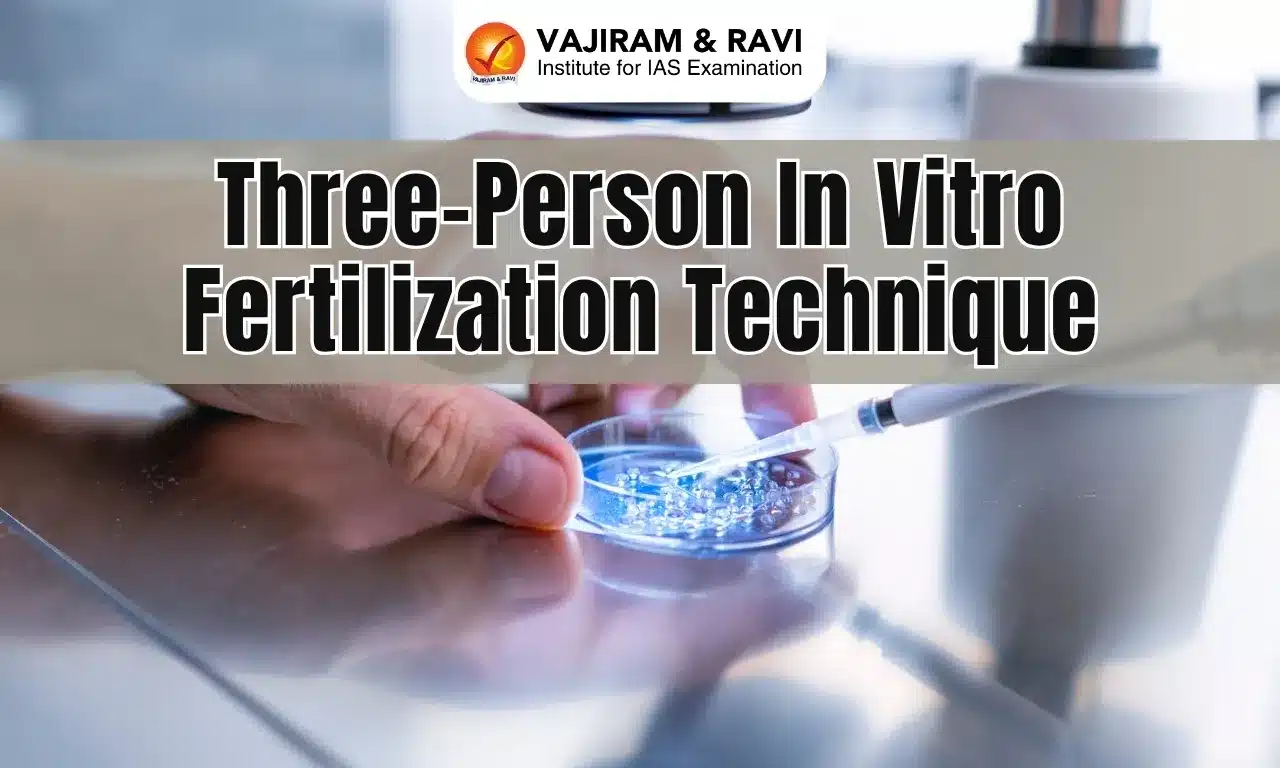
Three-Person In Vitro Fertilization

Three-Person In Vitro Fertilization Technique Latest News

Eight children in the UK have been spared from devastating genetic diseases thanks to a new three-person in vitro fertilization technique, scientists reported recently.

What is In Vitro Fertilization (IVF)?

  • It is a medical procedure used to assist individuals or couples who are facing fertility challenges in achieving pregnancy.
  • IVF is the most common and effective type of assisted reproductive technology (ART).
  • Process:
    • IVF is a complex process that involves retrieving eggs from ovaries and manually combining them with sperm in a lab for fertilization.
    • Several days after fertilization, the fertilized egg (now called an embryo) is placed inside a uterus. 
    • Pregnancy occurs when this embryo implants itself into the uterine wall.
  • The procedure can be done using a couple’s own eggs and sperm. Or IVF may involve eggs, sperm or embryos from a known or anonymous donor.
  • The success rate of IVF depends on a number of factors, including reproductive history, maternal age, the cause of infertility, and lifestyle factors.

About Three-Person In Vitro Fertilization

  • Most DNA is found in the nucleus of our cells, and it’s that genetic material—some inherited from mom, some from dad — that makes us who we are. 
  • But there’s also some DNA outside of the cell’s nucleus, in structures called mitochondria. 
  • Dangerous mutations there can cause a range of diseases in children that can lead to muscle weakness, seizures, developmental delays, major organ failure and death.
  • These disorders are inherited exclusively through the mother, as mitochondrial DNA is passed down maternally. 
  • While men can suffer from mitochondrial disease, they do not transmit it to their children. 
  • Currently, there is no cure for mitochondrial DNA disorders.
  • The three-person IVF technique offers a promising solution to this.
    • It involves a procedure in which the nucleus from the mother’s fertilized egg, along with the father’s sperm, is transferred into a healthy donor egg that has had its own nucleus removed. 
    • This process allows the child to inherit nuclear DNA from the biological parents and healthy mitochondrial DNA from the donor.
    • The procedure essentially replaces the faulty mitochondrial material in the mother’s egg with healthy mitochondria from the donor.
    • Therefore, the mother with the mitochondrial condition is still the biological mother of her child.
    • In fact, the egg donor’s DNA only accounts for about .2% of the baby’s genetics.

Source: DDN

Three-Person In Vitro Fertilization FAQs

Q1: How is mitochondrial DNA inherited?

Ans: Only from the mother

Q2: What is the main objective of the Three-Person In Vitro Fertilization technique?

Ans: To prevent transmission of mitochondrial diseases.

Q3: In the Three-Person In Vitro Fertilization, the donor contributes:

Ans: Only mitochondrial DNA

Q4: What part of the mother’s egg is replaced during the Three-Person In Vitro Fertilization process?

Ans: The mitochondria.

Q5: What happens to the donor egg’s nucleus during the Three-Person In Vitro Fertilization?

Ans: It is removed and replaced by the parents’ nuclear DNA.

Sexual Harassment of Women at Workplace (Prevention, Prohibition and Redressal) Act, 2013 (POSH Act)

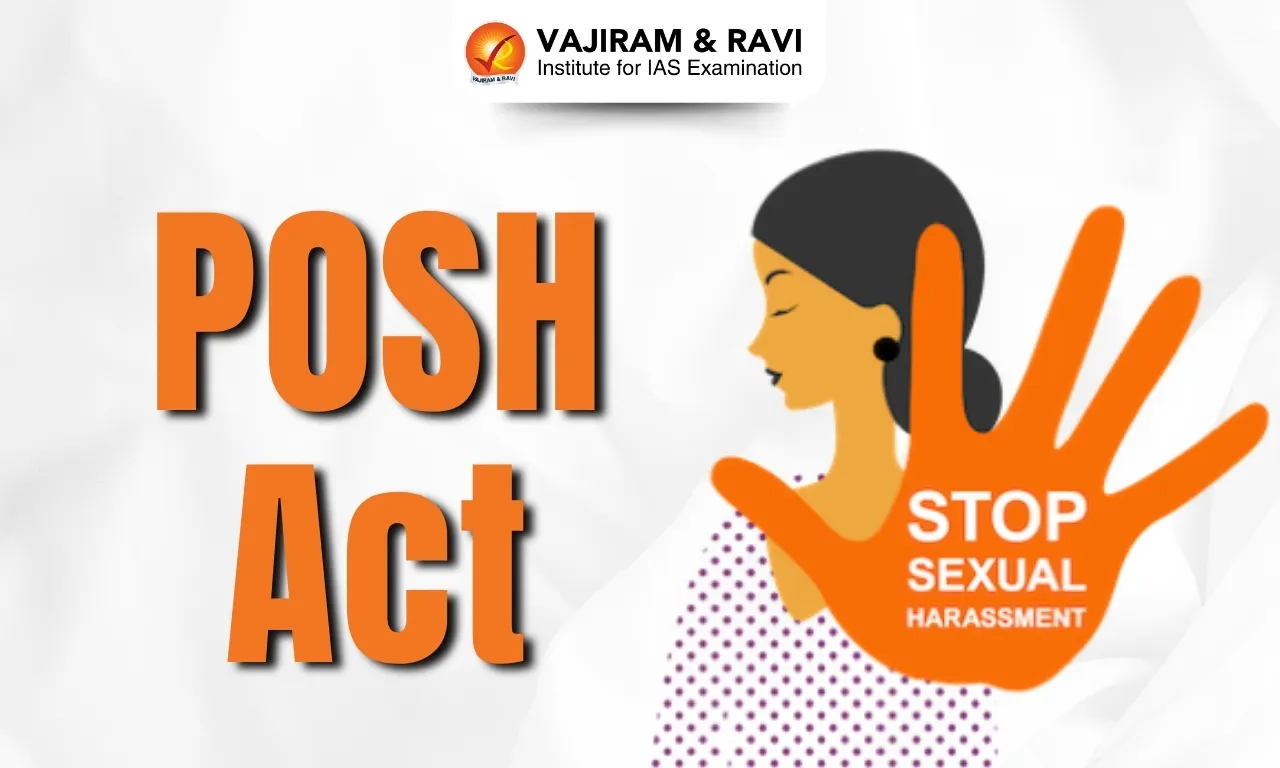
POSH Act

Sexual Harassment of Women at Workplace (Prevention, Prohibition and Redressal) Act, 2013 Latest News

Odisha government recently directed all colleges to sensitise teachers, non-teaching staff and students on the Sexual Harassment of Women at Workplace (Prevention, Prohibition and Redressal) Act, 2013, within three days.

About POSH Act

  • It was enacted to prevent and address incidents of sexual harassment of women at their place of work and provide a mechanism for redressal of complaints related to such harassment.
  • It was an initiative after the landmark judgment of 1997 by the Supreme Court on the Vishaka ruling that outlined guidelines regarding sexual harassment in the workplace.

POSH Act Key Provisions

  • Definition of Sexual Harassment: The Act provides a clear definition of sexual harassment, encompassing unwelcome acts or behaviour that are sexually colored, creating a hostile or intimidating work environment.
  • Applicability: The Act applies to all workplaces, including government, private, and non-governmental organizations, as well as any organization, institution, undertaking, or establishment.
  • Internal Committee (IC): The Act mandates every workplace employing more than ten persons to constitute an Internal Complaints Committee. This committee is responsible for addressing complaints of sexual harassment and ensuring a safe working environment.
  • Local Committee (LC): 
    • The appropriate Government may notify a District Magistrate or Additional District Magistrate or the Collector or Deputy Collector as a District Officer for every District to exercise powers or discharge functions under this Act.
    • In cases where the workplace does not have an IC, the district officer shall constitute a Local Committee to receive and redress complaints. 
  • Complaint Procedure: The Act lays down a specific procedure for making complaints, conducting inquiries, and resolving cases of sexual harassment. It ensures confidentiality and timely resolution of complaints.
  • Protection against Retaliation: The Act prohibits retaliation or adverse actions against the complainant for filing a complaint in good faith.
  • Penalties: If found guilty, the Act provides for penalties, which may include a monetary fine or termination of employment, depending on the severity of the offense.

POSH Act Complaint Procedure

  • Filing the Complaint:
    • The aggrieved woman or any person authorized on her behalf can file a written complaint of sexual harassment.
    • The complaint should be filed with the Internal Committee (IC) if the organization has more than ten employees. 
    • If the organization has less than ten employees or for any other valid reason, the complaint can be filed with the Local Committee (LC) constituted by the district officer.
  • Timeframe for Filing: The complaint should be filed within three months from the date of the incident of sexual harassment or within three months of the last incident, in case of a series of incidents.
  • Composition of the Committee:
    • The IC or LC, as applicable, must have a majority of women members.
    • One of the members should be from a women's rights organization or NGO.
  • Inquiry Process:
    • The committee shall conduct an inquiry into the complaint in a fair and impartial manner.
    • The complainant, as well as the accused, shall have the right to present their case and provide evidence during the inquiry.
  • Timeframe for Completion:
    • The committee is required to complete the inquiry within 90 days from the date of receipt of the complaint. 
    • However, if there are valid reasons, the time limit may be extended for an additional period, not exceeding 90 days.
  • Confidentiality: The Act mandates that the proceedings of the inquiry and the identity of the parties involved should be kept confidential.
  • Report and Action:
    • After completing the inquiry, the committee shall prepare a report of its findings and recommendations.
    • If the committee finds the accused guilty of sexual harassment, it shall recommend appropriate actions and penalties to the employer.
  • Employer's Action:
    • The employer is obligated to implement the recommendations of the committee within 60 days. 
    • The employer must provide appropriate relief to the aggrieved woman, which may include monetary compensation, counseling, or any other action to ensure a safe working environment.
  • Appeal: If either party is dissatisfied with the decision of the IC/LC or the action taken by the employer, they may appeal to the Appellate Authority, as notified by the State Government within a period of 60 days from the date of recommendations.

Source: TH

POSH Act FAQ's

Q1: The POSH Act was enacted in which year?

Ans: 2013

Q2: The POSH Act applies to which types of workplaces?

Ans: All workplaces including government, private, and NGOs.

Q3: What is the time limit for filing a complaint under the POSH Act?

Ans: 3 months

Q4: Who can file a complaint under the POSH Act?

Ans: A woman or any person authorized on her behalf.

Q5: What is the maximum timeframe for completing an inquiry under the POSH Act?

Ans: 90 days (extendable by 90 more days)

GST Rates in India 2025, Types, Item Wise & Product Wise Rates

GST Rates in India 2025

The Goods and Services Tax (GST) was introduced on July 1, 2017, is India’s unified indirect tax system that subsumed most central and state-level taxes. GST is destination-based and applies at every value-addition stage, but allows input tax credit, preventing tax-on-tax cascading.

India currently uses five standard GST slabs including 0%, 5%, 12%, 18%, and 28%. Other than this, two niche rates including 0.25% and 3% are apply to select luxury and precious goods, making it effectively seven rates.

GST Rates Meaning

GST, or Goods and Services Tax, is applied on the supply of goods and services across India. Introduced on 1st July 2017, GST replaced the indirect taxes like VAT, service tax, excise duty, and more. Under the GST system, goods and services are taxed at different slab rates depending on their nature, necessity, and usage. The government uses these rates to classify items as essential, standard, or luxury, thereby deciding how much tax should be charged on them.

Some goods attract a cess (extra charge), especially those causing environmental or social harm (e.g., tobacco, coal). GST Rates in India define how much tax a consumer pays when buying a good or service, and they form the backbone of India's unified tax system.

Types of GST Rates in India 2025

India follows a multi-tier GST Rate structure, with different slabs designed to balance affordability for consumers and revenue needs for the government. As of mid‑2025, the major GST slabs are:

Types of GST Rates in India 2025
GST Rate Type Category of Goods/Services Examples

0%

Zero Rate

Essential goods and services

Fresh fruits & vegetables, milk, education services, healthcare

5%

Lower Rate

Mass consumption items

Footwear (< ₹1000), packaged food, rail tickets, small restaurants

12%

Standard Rate (Lower Tier)

Standard goods & services

Processed food, garments (> ₹1000), mobile phones, fertilizers

18%

Standard Rate (Upper Tier)

Most goods and services

Soaps, toothpaste, dining in restaurants, ACs, IT services

28%

Higher Rate

Luxury and demerit goods

Cars, tobacco, pan masala, aerated drinks

Cess

Compensation Cess

Additional tax on sin and luxury goods (over GST rate)

Cigarettes, luxury cars, coal

List of Items Taxed at 0% GST Rate

Under the 0% GST rate category, essential goods and services are exempted from tax to ensure affordability and accessibility for all sections of society. These items List of Items Taxed at 0% GST Rate include unprocessed, unbranded, and basic necessities that are crucial for daily life and public welfare. The goal of the 0% rate is to reduce the financial burden on consumers, especially the economically weaker sections.

List of Items Taxed at 0% GST Rate
Product/Service GST rate

Milk

0%

Kajal

0%

Eggs

0%

Educational services

0%

Curd

0%

Lassi

0%

Health services

0%

Children's drawing and colouring books

0%

Unpacked foodgrains

0%

Unbranded atta/maida

0%

Unpacked paneer

0%

Gur (Jaggery)

0%

Besan (Gram flour)

0%

Unbranded natural honey

0%

Fresh vegetables

0%

Salt

0%

Prasad (Religious offerings)

0%

Palmyra jaggery

0%

Phool bhari jhadoo (Traditional broom)

0%

List of Items Taxed at 5% GST Rate

List of Items Taxed at 5% GST Rate slab are generally considered essential or semi-essential goods and services that are used widely by consumers but are slightly processed or branded. This lower tax rate ensures affordability while enabling some revenue generation for the government.

List of Items Taxed at 5% GST Rate
Product/Service GST Rate

Edible oil (packaged and branded)

5%

Footwear (priced below ₹1,000)

5%

Tea, coffee (except instant coffee)

5%

Sugar

5%

Coal

5%

Frozen vegetables (not canned)

5%

LPG for domestic use

5%

Life-saving drugs

5%

Packaged cereals and pulses

5%

Agarbatti (incense sticks)

5%

Cashew nuts

5%

Walking sticks

5%

List of Items Taxed at 12% GST Rate

List of Items Taxed at 12% GST Rate slab are generally processed or manufactured goods and services that are moderately essential but not critical to everyday survival. These include a range of FMCG and household utility products.

List of Items Taxed at 12% GST Rate
Product/Service GST Rate

Packed fruit juices

12%

Ghee

12%

Tooth powder

12%

Sewing machines

12%

Umbrellas

12%

Cell phones and telecom equipment

12%

Processed food products (cornflakes, etc.)

12%

Fertilizers

12%

Ayurvedic medicines

12%

Hotel accommodation (₹1,000–₹2,500/night)

12%

List of Items Taxed at 18% GST Rate

The List of Items Taxed at 18% GST Rate is one of the most commonly applied slabs in India. It is levied on standard goods and services that are not considered essentials. Most consumer durable goods, software services, and banking services fall under this category.

List of Items Taxed at 18% GST Rate
Product/Service GST Rate

Toothpaste and cosmetics

18%

Instant food items

18%

ACs and refrigerators

18%

Soaps and shampoos

18%

Restaurants (non-AC or without liquor)

18%

Financial and banking services

18%

Branded garments above ₹1,000

18%

IT services and telecom services

18%

Food delivery services

18%

Printer and computer monitors

18%

List of Items Taxed at 28% GST Rate

The List of Items Taxed at 28% GST Rate slab includes luxury goods, sin goods, and items considered non-essential or environmentally harmful. The intent is to discourage consumption of such goods while generating higher revenue from high-end usage.

List of Items Taxed at 28% GST Rate
Product/Service GST Rate

Luxury cars

28%

Tobacco and cigarette products

28% (+ cess)

Aerated drinks

28%

Air conditioners

28%

Dishwashers and vacuum cleaners

28%

Paints and varnishes

28%

Cement

28%

Motorcycles over 350cc

28%

Personal aircrafts and yachts

28%

Gambling and betting services

28%

List of Items Taxed at 3% GST Rate

The List of Items Taxed at 3% GST Rate is applicable to precious metals and articles related to the jewelry industry. These goods are taxed at a lower rate considering their high base value.

List of Items Taxed at 3% GST Rate
Product/Service GST Rate

Gold and gold jewelry

3%

Silver and silver jewelry

3%

Platinum and precious metals

3%

Diamonds (cut and polished)

3%

List of Items Taxed at 0.25% GST Rate

This ultra-low rate of 0.25% is specifically reserved for rough and semi-polished precious stones. It was introduced to support the gems and jewelry industry while still ensuring some taxation on high-value raw materials.

List of Items Taxed at 0.25% GST Rate
Product/Service GST Rate

Rough diamonds

0.25%

Precious and semi-precious stones (unpolished)

0.25%

What are the GST Rates in India 2025?

In 2025, businesses can expect a substantial progress in GST Rates rationalisation as proposed by the GST Council. The Group of Ministers (GoM) on Rate Rationalisation and the Fitment Committee are actively evaluating strategies to streamline the existing GST structure. This includes reducing the number of tax slabs by merging similar rates, correcting inverted duty structures, and reassessing current GST exemptions. 

These reforms aim to simplify compliance, enhance revenue efficiency, and create a more uniform taxation system across sectors. The government’s efforts reflect its commitment to making GST more business-friendly while maintaining fiscal stability.

GST Rate Changes at 55th GST Council Meeting

Several tariff changes were implemented in early 2025:

  1. Fortified Rice Kernels (HSN 1904): GST rate lowered from 18% to 5%.
  2. Gene therapy for life‑threatening conditions: Fully exempted.
  3. Food distributed under ICDS to weaker sections: Eligible for 5% conditional rate.
  4. Sale of used EVs: Taxed at 5% for individuals; 18% on profit margins for businesses.
  5. Medical training by approved NSDC partners and certain LRSAM sub‑systems: Exempted.
  6. Penal charges by banks/NBFCs: Clarified as non-GSTable (exempted)

GST Rate Changes at 54th GST Council Meeting

54th GST Council Meeting was led by FM Nirmala Sitharaman, the Council recommended several rate updates to align similar products and ease consumer burden:

  • Extruded/expanded snack pellets (HSN 1905 90 30): Reduced to 12% from 18%, matching other savory snacks. The existing 5% continues for uncooked pellets.
  • Cancer drugs (Trastuzumab Deruxtecan, Osimertinib, Durvalumab): GST lowered to 5% from 12%.
  • Car and motorcycle seats (HSN 9401): Increased to 28% (was 18%) for parity with motorcycle seats.
  • Roof-mounted railway AC units: Clearly classified under 28%.
  • Helicopter passenger transport (seat-sharing): GST set at 5%, though process of charters remains at 18%.

GST Rate Changes at 53rd GST Council Meeting

  • A series of rate rationalisations and new exemptions aimed at reducing costs and simplifying compliance :
  • Cartons/boxes (HS 4819): Slashed from 18% to 12%.
  • Milk cans (iron, steel, aluminum): Unified at 12%.
  • Solar cookers & sprinklers: Standardised at 12%.
  • Aircraft parts/toolkits: IGST set at 5% for the MRO sector.
  • Extra Neutral Alcohol (ENA) for making human liquors: Exempted from GST.
  • Railway services (platform tickets, retiring rooms, cloakrooms, battery-operated cars): Exempted.
  • Hostel accommodation (< ₹20,000/month, ≤ 90 days): Exempt.
  • TCS for e-commerce suppliers: Reduced from 1% to 0.5%

GST Rate Changes at 52nd GST Council Meeting

Indexed key recommendations that made the way for future rate changes including:

  • Exemption of ENA for liquor production confirmed in the 53rd Council

GST Rate Changes at 50th GST Council Meeting

  • Focused on compliance and procedural enhancements, no major rate shifts were introduced in this meeting.

GST Rates for Goods and Services with HSN Chapters

Understanding GST rates becomes easier when categorized through HSN (Harmonized System of Nomenclature) codes. These codes systematically classify goods and services under the GST regime in India. The following tables provide a detailed breakdown of GST Rates for Goods and Services with HSN Chapters. This classification helps businesses, professionals, and taxpayers identify the correct GST rate for compliance and invoicing purposes.

GST Rates for Goods and Services with HSN Chapters
HSN Chapter Category of Goods GST Rate(s)

01–05

Live animals, meat, fish, dairy, other animal products

Mostly 0%, some at 5%–12%

06–14

Plants, vegetables, coffee, spices, oilseeds, flowers

0%, 5%, some luxury items at 18%

15

Animal/vegetable fats and oils

5%, 12%, refined oils at 18%

16–24

Prepared food items (meat, sugar, bakery, beverages)

5%, 12%, processed at 18%

25–27

Minerals, fuels, petroleum products (excluding 5 listed petroleum items)

5%, 18%, 28% for coal

28–38

Chemicals, fertilizers, pharma, etc.

5% (fertilizers), 12–18% for most

39–40

Plastics, rubber and articles thereof

12%, 18%, special items at 28%

41–43

Leather and articles, fur

12%, 18%

44–46

Wood and wooden items

12%, 18%, luxury furniture at 28%

47–49

Paper, printed books, newspapers

Books at 0%, other items at 12–18%

50–63

Textiles and apparel

5%, 12%, luxury wear at 18%

64–67

Footwear, headgear, umbrellas

Footwear up to ₹1000 – 5%, above ₹1000 – 18%

68–70

Cement, ceramics, glass

18%, cement at 28%

71

Precious stones, jewellery

3% (gold, silver, diamonds)

72–83

Metals and articles thereof

18%, some at 12%

84–85

Machinery, electrical equipment

18%, mobile phones at 12%

86–89

Vehicles, ships, aircraft

12%, 18%, luxury cars at 28% + cess

90–92

Optical, medical instruments, musical instruments

12%, 18%

93

Arms and ammunition

18%, some at 28%

94–96

Furniture, toys, sports items, pens

12%, 18%, luxury items at 28%

97

Works of art and antiques

12%

GST Rates in India 2025 FAQs

Q1: Will GST rates change in 2025?

Ans: Yes. The GST Council is considering merging rate slabs to simplify the structure.

Q2: What are the GST rates in India for 2025?

Ans: They are: 0%, 5%, 12%, 18%, 28%, 3%, and 0.25%

Q3: Why do some items have 3% or 0.25% tax?

Ans: To accommodate trade in high-value goods like jewellery and rough stones, these niche slabs ensure a simplified tax structure.

Q4: What changed at the 54th GST Council?

Ans: Namkeens moved from 18% to 12%; select cancer drugs from 12% to 5%; car seats reclassified to 28%

Q5: How are GST rates decided?

Ans: By the GST Council based on Fitment Committee reports and revenue data.

PM Dhan Dhaanya Krishi Yojana, Benefits, Eligibility, Objectives

PM Dhan Dhaanya Krishi Yojana

The government has launched PM Dhan-Dhaanya Krishi Yojana, a major six-year agricultural mission beginning from the financial year 2025‑26. With an annual budget allocation of ₹24,000 crore, it targets 100 underperforming agricultural districts, selecting at least one district per state and union territory. The scheme aims to benefit around 1.7 crore farmers through a model of convergence and coordination. 

PM Dhan‑Dhaanya Krishi Yojana Overview

The table below includes the details related to the PM Dhan‑Dhaanya Krishi Yojana in a tabular format:

PM Dhan‑Dhaanya Krishi Yojana
Feature Details

Duration

Six years, starting FY 2025‑26

Budget

₹24,000 crore annually

Coverage

100 districts (≥1 per state/UT)

Beneficiaries

~1.7 crore farmers

Implementation

Convergence of 36 schemes across 11 ministries

Governance

District Samiti - State & National Committees - Digital monitoring

Outcomes aimed

Productivity, diversification, infrastructure, credit, livelihoods

PM Dhan‑Dhaanya Krishi Yojana Objectives

PM Dhan‑Dhaanya Krishi Yojana  focuses on four key goals:

  • Promoting farm productivity through modern techniques and sustainable practices
  • Promote crop diversification to ensure income stability and nutritional security
  • Enhance post-harvest infrastructure including storage and processing at panchayat/block level
  • Improve irrigation facilities and facilitate easy access to credit for farmers 

PM Dhan‑Dhaanya Krishi Yojana Implementation

  • The PM Dhan‑Dhaanya Krishi Yojana converges 36 existing central schemes, spanning 11 ministries, into a unified action plan.
  • District‑level Dhan‑Dhaanya Samitis, including progressive farmers and officials, will prepare Local Agriculture and Allied Activities Plans
  • State and national committees will oversee planning and implementation
  • Progress will be monitored through 117 key indicators via a digital dashboard updated monthly
  • NITI Aayog will guide strategy where Central Nodal Officers will ensure district-level execution.

PM Dhan‑Dhaanya Krishi Yojana District Selection Criteria

Districts are chosen based on measurable weaknesses which includes the below mentioned points, selection is proportional to a state’s share in net cropped area and operational holdings, with at least one district per region included

  • Low agricultural productivity
  • Low cropping intensity
  • Limited credit disbursement.

PM Dhan‑Dhaanya Krishi Yojana Expected Benefits

The PM Dhan‑Dhaanya Krishi Yojana is designed to:

  • Raise crop yields and productivity
  • Stabilize farmer incomes through diversified cropping
  • Generate rural employment in agri-processing and infrastructure
  • Minimize crop losses via strong post-harvest systems
  • Enable financial inclusion via accessible credit mechanism.

PM Dhan‑Dhaanya Krishi Yojana Significance 

PM Dhan‑Dhaanya Krishi Yojana builds on the Aspirational District Programme, applying its lessons to agriculture. It marks the first centrally focused agricultural mission of this scale. By converging multiple schemes, it eliminates duplication and drives higher impact.

PM Dhan Dhaanya Krishi Yojana FAQs

Q1: When will PMDDKY begin?

Ans: It starts from the financial year 2025‑26, with full-scale rollout across selected districts.

Q2: How many farmers stand to gain?

Ans: About 1.7 crore small and marginal farmers are expected to benefit.

Q3: Why focus on 100 districts?

Ans: These districts are underperforming in areas like productivity, crop density, and credit flow, and need targeted intervention.

Q4: How is it different from past schemes?

Ans: This is the first agriculture-specific mission of this scale built on scheme convergence, no parallel standalone programmes.

Q5: How will progress be measured?

Ans: Through a digital dashboard tracking 117 KPIs, updated monthly, for real-time oversight and course correction.

US Declares The Resistance Front as Global Terror Group: What It Means

The Resistance Front

The Resistance Front Latest News

  • The United States designated The Resistance Front (TRF) as a Foreign Terrorist Organization (FTO) and a Specially Designated Global Terrorist (SDGT). 
  • TRF, an offshoot of the Pakistan-based Lashkar-e-Taiba (LeT), had claimed responsibility for the April 22 Pahalgam attack in South Kashmir, which killed 26 people. 
  • The designation strengthens efforts to isolate the group globally by freezing its assets and restricting its international operations.

The Resistance Front: A Shadow Outfit of Lashkar-e-Taiba in Kashmir

  • The Resistance Front (TRF) is a terrorist group believed to be a proxy of Pakistan-based Lashkar-e-Taiba (LeT), formed shortly after the abrogation of Article 370 in August 2019. 
  • Announcing its existence via Telegram on October 12, 2019, TRF claims to be an "indigenous resistance group" operating in Jammu and Kashmir. 
  • While trying to project itself as secular and locally driven—steering clear of overt Islamic imagery—the group seeks to fight against what it calls the "settler colonial occupation" of the region. 
  • Its current chief is Sheikh Sajjad Gul, with Ahmad Khalid as its spokesperson, while its founder Muhammad Abbas Sheikh was killed in 2021.

Links to LeT

  • TRF is a rebranded front of the Pakistan-based Lashkar-e-Taiba (LeT), operating under the direction of Pakistan’s army and ISI. 
    • The rebranding helps it evade scrutiny from the Financial Action Task Force (FATF) and appear as an indigenous movement. 
  • TRF relies heavily on LeT’s operational, logistical, and financial support, with its leadership and bases located in Pakistan.

Modus Operandi 

  • Active in various districts of Jammu and Kashmir—especially Srinagar—TRF has been involved in several high-profile terror attacks. 
  • These include: 
    • the April 2025 Pahalgam attack that killed 26 tourists, 
    • the October 2024 Ganderbal killings of seven civilians, 
    • a June 2024 bus attack in Reasi, and 
    • a 2020 attack in Srinagar’s Lal Chowk that claimed six lives. 
  • Despite its effort to rebrand militancy as a local movement, TRF remains deeply intertwined with Pakistan-backed terror infrastructure.

Digital Warfare and Propaganda

  • TRF runs a sophisticated digital propaganda arm, including the portal KashmirFight, which spreads separatist narratives and claims responsibility for attacks. 
  • Although disguised as a human rights blog, it promotes terrorism and operates on various platforms. 
  • It also collaborates with Jhelum Media House (JMH), another TRF-linked propaganda outlet. 
  • These platforms are used for recruitment, coordination, and psychological operations.

India’s Crackdown on TRF

  • India officially banned TRF in January 2023, under the Unlawful Activities Prevention Act (UAPA), 1967, recognizing it as a serious threat to national security. 
  • The Ministry of External Affairs has consistently highlighted TRF’s role as a front for Pakistan-based terror groups like Lashkar-e-Taiba (LeT) and Jaish-e-Mohammed (JeM). 
  • In its biannual reports submitted to the UN’s 1267 Sanctions Committee in May and November 2024, India provided detailed inputs on TRF’s operations and affiliations. 
    • The UN’s 1267 Sanctions Committee, officially the ISIL (Da'esh) and Al-Qaida Sanctions Committee, is a UN Security Council body.
    • It is responsible for enforcing sanctions—such as travel bans, asset freezes, and arms embargoes—on individuals and entities linked to ISIL and Al-Qaida. 
    • Established in 1999 through Resolution 1267, it was initially focused on targeting the Taliban and Al-Qaida.

Implications of US Designation of TRF as a Terror Group

  • The United States designates foreign groups as Foreign Terrorist Organizations (FTOs) under Section 219 of the Immigration and Nationality Act to curb their operations and funding. 
  • This designation makes it illegal for any US-based individual or entity to offer material support to the group
  • Additionally, American financial institutions must block any transactions or assets linked to the group. 
  • The US Treasury’s Office of Foreign Assets Control (OFAC) may further classify such groups as Specially Designated Global Terrorists (SDGTs), leading to asset freezes and prohibitions on any financial dealings with them. 
  • These measures aim to isolate and weaken the group globally, and can also result in secondary sanctions on foreign individuals or companies that continue to support or conduct business with the designated group.


Source: TH | IE | IT

The Resistance Front FAQs

Q1: What is The Resistance Front (TRF)?

Ans: TRF is a Lashkar-e-Taiba proxy group active in Kashmir, involved in major terror attacks and digital propaganda operations.

Q2: Why did the US designate TRF as a terror group?

Ans: Due to its involvement in deadly attacks and links to Pakistan-based terror networks like LeT and ISI.

Q3: What does FTO and SDGT status mean for TRF?

Ans: It criminalizes US support, freezes TRF assets, and isolates the group financially and diplomatically on a global level.

Q4: What role has India played in countering TRF?

Ans: India banned TRF under UAPA, reported it to the UN, and highlighted its Pakistan-based operations and terror infrastructure.

Q5: How does TRF use digital propaganda?

Ans: Through portals like KashmirFight and Jhelum Media House to spread separatist narratives and coordinate terror activities.

Stray Dog Feeding Rules, Balancing Compassion and Public Safety

Stray Dog Feeding Rules

Stray Dog Feeding Rules Latest News

  • The Supreme Court, while hearing a case involving a Noida resident allegedly harassed for feeding stray dogs in common areas of her housing society, observed that those wishing to feed strays should consider doing so within their own homes. 
  • The case highlights the ongoing legal debates surrounding the feeding of community dogs—a contentious issue that has led to repeated litigation involving constitutional rights, civic responsibilities, and the use of shared public spaces.

Stray Dog Feeding Dispute and Legal Context

  • The case arose after a Noida woman alleged harassment by the president of her Residents’ Welfare Association (RWA) for feeding stray dogs. 
  • She claimed the RWA president broke pots placed for stray animals’ water, harassed her, and killed 10 sterilised dogs. 
  • Despite her complaints, local authorities failed to act and instead instructed her not to place the pots again. 
  • When she approached the Allahabad High Court, her petition was dismissed, citing the concerns of the “common man.” 
  • The court acknowledged that while the Animal Birth Control (ABC) Rules, 2023 protect street dogs through sterilisation and vaccination, authorities must also ensure that public movement is not disrupted or endangered by stray dog activity. 
    • ABC Rules was framed under the Prevention of Cruelty to Animals Act, 1960.
    • The rules aim to strike a balance between animal welfare and public safety.

Past Legal Precedents Uphold Feeding and ABC Guidelines

  • The Supreme Court had earlier stayed a controversial 2022 order by the Bombay High Court's Nagpur Bench, which banned public feeding of dogs and had required feeders to adopt the animals. 
  • The apex court put this order in abeyance, reinforcing the legal protection available for compassionate feeding under statutory and constitutional duties.

Legal Recognition of Community Dogs and Citizens’ Duties

  • The Animal Birth Control (ABC) Rules, 2023, replaced the earlier 2001 rules and introduced the term “community animals” instead of “stray dogs,” acknowledging that these dogs are territorial beings who belong to their local environment
  • The Supreme Court has expanded the scope of Article 21 of the Constitution (Animal Welfare Board of India vs A. Nagaraja)—right to life and liberty—to include animal life, as seen in the 2014 Jallikattu case. 
  • Additionally, Article 51A(g) of the Constitution places a duty on citizens to show compassion towards living creatures. 
  • Consequently, the mere presence of dogs in residential areas is not unlawful, nor is feeding them a punishable act—unless it violates specific legal norms related to behaviour or space.

Feeding Community Dogs: Legal Guidelines and Responsibilities

  • Rule 20 of the Animal Birth Control (ABC) Rules, 2023 outlines the legal framework for feeding community animals. 
  • It places the responsibility on Resident Welfare Associations (RWAs), Apartment Owner Associations, or local body representatives to facilitate feeding if a resident voluntarily cares for stray animals. 
  • The rule mandates that feeding areas be set up away from crowded spots like staircases, building entrances, and children’s play zones.
    • The rules aim to balance compassion with public safety by requiring that feeding areas be away from high-footfall zones and kept clean. 
  • These spaces must be kept clean, and feeding should occur at fixed times. 
  • To handle disputes, a resolution panel involving veterinary officers, police, local animal welfare bodies, and the RWA is prescribed. 
  • Overall, the rule affirms the right of community dogs to be fed while ensuring public safety and order in shared residential spaces.

Conclusion

  • Feeding community dogs is more than an act of kindness—it supports public health and animal welfare goals laid out in Indian law. 
  • The ABC Rules recognise the importance of designated feeding, sterilisation, and vaccination in managing dog populations safely and humanely. 
  • The petitioner in this case was not only exercising her rights under these rules but also fulfilling a constitutional duty under Article 51A(g), which encourages compassion for all living beings.
  • However, there is a need to balance compassion with public safety. To achieve this, feeding areas must be located away from high-footfall zones and maintained in a clean condition.

Source: IE | IE | IT

Stray Dog Feeding Rules FAQs

Q1: What are the ABC Rules, 2023?

Ans: They regulate dog sterilisation, vaccination, and feeding locations to ensure both animal welfare and public safety.

Q2: Are citizens allowed to feed stray dogs?

Ans: Yes, it's a statutory right and a constitutional duty under Article 51A(g), if done within legal guidelines.

Q3: Who must arrange feeding zones for dogs?

Ans: RWAs, apartment associations, or local authorities must set up designated clean feeding areas away from high-traffic zones.

Q4: What did the Supreme Court say about feeding dogs?

Ans: It suggested feeding dogs at home but issued no binding order against public feeding in designated areas.

Q5: Why is feeding stray dogs important?

Ans: Feeding ensures dogs are healthy for sterilisation, reduces aggression, and supports effective rabies control strategies.

INS Nistar and INS Nipun – Strengthening India’s Deep Sea Rescue and Maritime Capabilities

INS Nistar and INS Nipun

INS Nistar and INS Nipun Latest News

  • India has commissioned two state-of-the-art Diving Support Vessels (DSVs), INS Nistar and INS Nipun, developed indigenously by Hindustan Shipyard Limited (HSL), marking a significant milestone in India's self-reliance journey in maritime defence. 
  • These DSVs will serve as vital assets for the Indian Navy’s underwater rescue and salvage operations, enabling deep-sea interventions, including submarine rescue missions and Search and Rescue (SAR) operations.

Key Features and Capabilities of INS Nistar and INS Nipun

  • Indigenous Design and Construction
    • INS Nistar and INS Nipun are the first of their kind to be designed and constructed indigenously in India, demonstrating technological maturity in naval engineering. 
    • Developed by HSL, Visakhapatnam, under the Ministry of Defence’s ‘Aatmanirbhar Bharat’ initiative, these ships represent India's growing capability in shipbuilding and maritime technology.
  • Diving and Rescue Capabilities
      • Integrated Saturation Diving System (ISDS): Enables diver deployment at depths up to 300 meters, supporting underwater repairs, salvage, and rescue operations.
      • Remotely Operated Vehicles (ROVs): These can be deployed for underwater surveillance and recovery missions in deep waters.
      • Side Scan Sonar and Integrated Platform Management System (IPMS): Aid in locating submerged vessels or wreckage and managing onboard systems, respectively.
      • Submarine Rescue System: Especially crucial for submarine emergencies, allowing the timely and safe recovery of personnel from disabled submarines.
  • Humanitarian and Strategic Utility
    • Disaster relief operations during maritime calamities.
    • Search and Rescue (SAR) operations during shipwrecks or aircraft crashes at sea.
    • Offshore resource exploration support and underwater inspections of strategic infrastructure.

Significance of INS Nistar and INS Nipun for the Indian Navy

  • Enhancing Submarine Rescue Capabilities
      • With the increase in submarine deployments, having dedicated rescue vessels is critical. 
      • Previously, India relied on international collaboration for submarine rescue. 
      • These DSVs allow independent and rapid deployment of rescue missions, reducing response time in emergencies.
  • Strategic Deployment for Coastal and Deep-Sea Operations
      • The ships can be deployed in both shallow and deep-sea theatres, allowing flexibility and extended reach of operations. Their presence strengthens India's deterrence and operational preparedness in the Indian Ocean Region.
  • Boost to Indigenous Defence Manufacturing
    • The construction of INS Nistar and INS Nipun underlines India’s shift toward indigenous capability in defence infrastructure. 
    • It also bolsters local shipbuilding industries and reduces dependence on foreign technology for specialised maritime vessels.

Commissioning Ceremony and Namesake Legacy

  • INS Nistar: A Revival of Legacy
      • INS Nistar is named after a 1971-era ship that played a critical role in rescuing crew members from a submarine accident. 
      • The new vessel carries forward that legacy with modern capabilities and advanced systems.
  • INS Nipun: Symbol of Precision and Readiness
    • INS Nipun, derived from the Hindi word for “expert,” emphasises the vessel’s precision, technological edge, and mission-readiness in deep-sea operations.
    • The commissioning of these ships in Visakhapatnam underscores the strategic importance attached to undersea warfare readiness and maritime safety.

Future Outlook: Role in Regional Maritime Security

  • The Indian Ocean is becoming a focal point of strategic competition and increasing submarine activity. With INS Nistar and INS Nipun operational, the Indian Navy enhances its ability to:
    • Monitor underwater threats and respond to contingencies.
    • Provide maritime assistance to friendly nations in the region.
    • Conduct advanced deep-sea salvage and underwater inspections, including critical infrastructure security.
  • As India seeks a larger role in ensuring maritime security and freedom of navigation in the Indo-Pacific, these vessels are timely additions to its blue water navy aspirations.

Source: TH | IE

INS Nistar and INS Nipun FAQs

Q1: What are INS Nistar and INS Nipun?

Ans: They are indigenously built Diving Support Vessels commissioned by the Indian Navy for deep-sea rescue and submarine emergency operations.

Q2: Who constructed INS Nistar and INS Nipun?

Ans: Both vessels were built by Hindustan Shipyard Limited (HSL), Visakhapatnam under the Ministry of Defence’s Aatmanirbhar Bharat initiative.

Q3: What special equipment do these DSVs have?

Ans: They are equipped with Integrated Saturation Diving Systems, Submarine Rescue Systems, Remotely Operated Vehicles (ROVs), and Side Scan Sonar.

Q4: How will these vessels help in submarine emergencies?

Ans: They can deploy rescue systems and divers at depths up to 300 meters, allowing safe recovery of crew from distressed submarines.

Q5: What is the broader significance of these vessels?

Ans: They enhance India’s deep-sea capabilities, support humanitarian missions, and reflect indigenous defense manufacturing progress.

Daily Editorial Analysis 19 July 2025

Daily Editorial Analysis

Indian Inequality and The World Bank’s Claims

Context

  • Debates on inequality in India often suffer from selective data interpretation and exaggerated claims, which can distort public perception rather than improve understanding.
  • A recent controversy surrounding the World Bank’s India Poverty and Equity Brief: April 2025 illustrates this problem.
  • The report’s claims of near-eradication of extreme poverty and reduced consumption inequality in India have sparked sharp reactions, largely because they challenge the entrenched narrative of high inequality.
  • careful analysis of the data and methodology reveals a more nuanced picture of inequality and progress in the country.

The World Bank’s Findings and Methodology

  • The World Bank report bases its conclusions on the official Household Consumption Expenditure Survey (HCES) for 2022-23, which employs the modern Modified Mixed Reference Period (MMRP) methodology, aligned with international best practices.
  • According to the report, India has witnessed a significant decline in consumption inequality over the last decade.
  • The consumption-based Gini coefficient, a widely used measure of inequality, fell from 28.8 in 2011-12 to 25.5 in 2022-23.
  • These findings place India among the world’s four least unequal countries in terms of consumption inequality, a striking contrast to the narrative of extreme inequality prevalent in the media.
  • Critics, however, argue that the HCES data underestimates inequality as it fails to adequately capture the consumption patterns of the wealthy.

A Closer Examination of the HCES Data and The Debate on Income Inequality

  • A Closer Examination of the HCES Data: Improved Consumption Patterns and Living Standards
    • Per capita availability of milk and eggs increased by 45% and 63%, respectively, between 2012 and 2023.
    • The share of cereals in food expenditure and calorie intake has declined, while the consumption of healthier foods such as fruits, vegetables, and protein products has risen across all income groups.
    • This dietary transition indicates a broad-based improvement in nutrition and quality of life, particularly for the bottom 20% of households.
    • For example, the proportion of rural households consuming fresh fruits rose from 63.8% in 2011-12 to 90% in 2023.
    • The data also shows that extreme poverty has been nearly eradicated. Between 2011 and 2023, approximately 27 crore Indians were lifted out of extreme poverty as per the International Poverty Line of $3.
  • The Debate on Income Inequality
    • While consumption inequality has clearly declined, the question of income inequality is more complex due to the absence of reliable income survey data.
    • Most discussions rely on estimates from the World Inequality Lab (WIL), which uses income tax records combined with outdated consumption data.
    • Critics argue that these estimates rest on questionable assumptions, such as the notion that 70%-80% of households consistently spend more than they earn, a claim that defies economic logic.
    • As a result, the income of the bottom 80% is often underestimated, while that of the top income groups is exaggerated.
    • Even accepting the WIL data at face value, there is no evidence of a rising trend in income inequality.
    • In fact, between 2017 and 2022, the national income share of the bottom 50% increased from 13.9% to 15%, while the top 10% saw a slight decline from 58.8% to 57.7%.
    • Although the high-income share of the top 1% remains a concern, part of this is attributed to better income reporting following anti-tax evasion measures introduced since 2016-17.

Challenges and Future Directions

  • While India has made substantial progress in reducing poverty and consumption inequality, significant challenges remain.
  • Inequality in access to quality education and healthcare persists, particularly in rural areas. Moreover, as India transitions to a knowledge-driven economy, disparities in skills and opportunities could widen unless addressed through targeted policies.
  • Nevertheless, the overarching narrative of India is no longer defined solely by poverty and inequality.
  • It is equally about aspiration, progress, and structural transformation.
  • Improvements in infrastructure, welfare programs, and living standards have elevated millions out of poverty and provided them with the means to pursue better lives.

Conclusion

  • The World Bank’s findings, while controversial, highlight a reality that deserves recognition: India has made remarkable strides in reducing extreme poverty and narrowing consumption inequality over the last decade.
  • While debates on income inequality remain valid and necessary, they must be grounded in robust data and realistic assumptions.
  • balanced perspective demands acknowledging both the challenges and the achievements and India’s story today is not just about disparities but also about resilience, growth, and the aspirations of a billion people.

Indian Inequality and The World Bank’s Claims FAQs

Q1. What does the World Bank report claim about India’s extreme poverty?
Ans. The World Bank report claims that India has almost eradicated extreme poverty.

Q2. Which survey data forms the basis of the World Bank’s findings?
Ans. The findings are based on the Household Consumption Expenditure Survey (HCES) 2022-23.

Q3. How has India’s consumption-based Gini coefficient changed since 2011-12?
Ans. India’s consumption-based Gini coefficient has decreased from 28.8 in 2011-12 to 25.5 in 2022-23.

Q4. What evidence shows improved living standards among the poor?
Ans. Improved living standards are reflected in increased consumption of milk, eggs, fruits, better housing, and higher vehicle ownership among the poorest households.

Q5. Why are WIL’s income inequality estimates criticized?
Ans. WIL’s income inequality estimates are criticized because they rely on unrealistic assumptions that most households spend more than they earn, leading to distorted income shares.

Source:  The Hindu


Decoding the Slowdown in Bank Credit Growth and the MSME-Led Structural Shift

Context:

  • The article discusses the recent slowdown in credit growth of Scheduled Commercial Banks (SCBs) in India.
  • It highlights the contributing factors such as RBI policy interventions, sectoral shifts, and evolving credit market dynamics, while emphasizing the resilience of MSME credit and the structural improvements in the banking system.

Decline in Credit Growth - Recent Trends:

  • Credit growth fell to 9.5% for the fortnight ending June 27, 2025, compared to 17.4% a year earlier.
  • Decline started from May 2024, influenced by regulatory and market shifts.

Reasons Behind the Credit Slowdown:

  • RBI’s regulatory measures:
    • The RBI’s decision to increase risk weights on certain segments of consumer credit and bank lending to the NBFCs towards the end of 2023 saw loan growth in these two sectors fall sharply.
    • For example, unsecured loan growth dropped from 28.3% (Mar 2023) to 7.8% (May 2025). NBFC credit growth declined from 5.7% (Mar 2025) to -0.3% (May 2025).
    • Non-performing assets (NPAs) in unsecured retail loans rose to 1.8% in March 2025 (from 1.5% a year earlier), indicating credit risk build-up.
    • NPAs refer to loans or advances from banks and financial institutions where the borrower has stopped making payments (principal or interest) for a specified period, usually 90 days or more.
  • Incomplete transmission of interest rate benefits:
    • Private banks’ floating rate loans (EBLR-linked) are lower at 54.7%, compared to 59.8% for public sector banks (PSBs), slowing down monetary policy transmission.
    • External Benchmark Lending Rate (EBLR) is an interest rate framework used by banks in India to determine the interest rates for loans, particularly for retail and MSME loans.
    • EBLR is linked to an external benchmark rate set by the Reserve Bank of India (RBI) or other financial authorities.
    • This ensures faster and more transparent transmission of policy rate changes to borrowers.
  • Shift in market share:
    • There is a seemingly visible shift in balance from the private to public banks.
    • PSBs showed stable growth of 12.2% in 2024-25 compared to 13.6% in 2023-24.
    • However, the credit growth of private banks declined to 9.5% — the lowest since 2020-21.
    • PSBs’ share in incremental credit surged from 20% (FY18) to 56.9% (FY25), validating the government's 4R strategy – Recognition, Resolution, Recapitalisation, Reforms.

Improvement in Banking Health Indicators:

  • Gross Non-Performing Assets (GNPA): GNPA ratio dropped to a multi-decadal low of 2.3% in March 2025, with the provision coverage ratio of 76.3% in March 2025, as services and industry GNPAs declined significantly.
  • Decline in industry NPAs: From ~4% (Sep 2023) to 2.3% (Mar 2025). MSME NPAs decreased sharply from 10.8% (Mar 2021) to 3.6% (Mar 2025).

MSME Sector - A Structural Growth Story:

  • Credit growth to MSMEs:
    • Now growing at 18% (May 2025), compared to 5-7% (2011–2013).
    • MSMEs’ share in incremental industry credit rose to 17% (FY25) from 11% in FY24.
  • Supporting factors:
    • Improved balance sheets leading to more lending.
    • Substandard loans (90–120 days past due (DPD)) fell to a five-year low of 1.8%.
    • Revised MSME definition (higher turnover/investment limits) expands coverage.
  • Government initiatives
    • Enhanced credit guarantee cover and TReDS onboarding threshold reduced from Rs 500 crore to Rs 250 crore.
    • MSME Samadhaan being upgraded for better payment tracking and dispute resolution.
    • URN seeding and formalisation enabling better credit access.
  • MSMEs as economic multipliers:
    • MSMEs depend greatly on large corporates through backward integration (and at times, forward integration) and hence their activity level could be a latent gauge of corporate activities.
    • Future focus: Tech upgradation, supply chain resilience, and data-driven policy support.

Evolving Credit Market Landscape:

  • Rise of private credit markets: Increasing participation from global players with structured deals. Calls for regulatory stress testing and transparency, as seen in the US.
  • Shift to off-bank funding: Companies diversifying via Commercial Papers (CPs), External Commercial Borrowings (ECBs), and capital markets.

India Inc - Stronger Financial Position:

  • India Inc has significantly deleveraged (or reduced the amount of debt that a company carries) its balance sheet, while increasing cash holdings.
  • In the last two fiscals (FY24 and FY25), the cash and bank balance of corporates has jumped by around 18-19%.
  • Major sectors reporting increased cash holdings include IT, automobiles, refineries, power, and pharma.
  • The cash and bank balances of India Inc (excluding BFSI) is estimated at around Rs 13.5 lakh crore in FY25, indicating cash accruals are a potential vector in funding capex plans.

Household Savings and Credit Implications:

  • Financialisation of savings: Rise in equity share in household savings from 2.5% (FY20) to 5.1% (FY24). Implications for bank deposit growth, the traditional source for credit.
  • Comparison: China's equity share in savings is at 9%.

Conclusion:

  • India’s credit ecosystem is undergoing a structural transformation.
  • Despite the recent slowdown in aggregate credit growth, the resilience in MSME lending, improving asset quality, and a diversifying credit market underscore underlying economic strength.
  • Policymakers must now focus on deepening financial inclusion, regulating private credit flows, and leveraging fintech for MSME empowerment while monitoring shifts in household savings behavior.

Decoding the Slowdown in Bank Credit Growth and the MSME-Led Structural Shift FAQs

Q1. What are the key factors responsible for the recent decline in credit growth among Scheduled Commercial Banks in India?

Ans. The decline is driven by RBI’s increased risk weights on unsecured loans and NBFC lending, weak monetary transmission in private banks, and a shift in credit share from private to public sector banks.

Q2. How has the RBI’s regulatory intervention impacted the growth of unsecured loans and credit to NBFCs?

Ans. RBI’s decision to raise risk weights curtailed the growth of unsecured loans to 7.8% in May 2025 (from 28.3% in March 2023) and led to a contraction in NBFC credit, reflecting tighter risk management.

Q3. What is the structural turnaround in MSME credit growth and the contributing government initiatives?

Ans. MSME credit has revived to 18% growth (May 2025), aided by improved asset quality, revised MSME definitions, URN seeding, enhanced guarantee cover, and TReDS expansion, indicating focused policy support.

Q4. What is the significance of the declining Gross NPA ratio for Indian banks and its impact on sectoral credit flow?

Ans. The GNPA ratio declined to a multi-decade low of 2.3%, improving bank balance sheets and enabling increased credit flow especially to the MSME and industrial sectors.

Q5. How is the financialisation of household savings influencing the future trajectory of bank credit growth in India?

Ans. The rising share of equities in household savings (from 2.5% in FY20 to 5.1% in FY24) may constrain deposit growth, thereby impacting banks' traditional credit creation capacity.

Source: IE

Daily Editorial Analysis 19 July 2025 FAQs

Q1: What is editorial analysis?

Ans: Editorial analysis is the critical examination and interpretation of newspaper editorials to extract key insights, arguments, and perspectives relevant to UPSC preparation.

Q2: What is an editorial analyst?

Ans: An editorial analyst is someone who studies and breaks down editorials to highlight their relevance, structure, and usefulness for competitive exams like the UPSC.

Q3: What is an editorial for UPSC?

Ans: For UPSC, an editorial refers to opinion-based articles in reputed newspapers that provide analysis on current affairs, governance, policy, and socio-economic issues.

Q4: What are the sources of UPSC Editorial Analysis?

Ans: Key sources include editorials from The Hindu and Indian Express.

Q5: Can Editorial Analysis help in Mains Answer Writing?

Ans: Yes, editorial analysis enhances content quality, analytical depth, and structure in Mains answer writing.

Measles

Measles

Measles Latest News

A group of scientists have raised concerns over the alarming and sharp resurgence of measles cases in the United States and around the world.

About Measles

  • It is a highly contagious and serious airborne disease.
  • Cause: It is caused by a virus in the paramyxovirus family, and is normally passed through direct contact and the air.
  • Measles can affect anyone but is most common in children.
  • The virus infects the respiratory tract, then spreads throughout the body, causing severe disease, complications and even death.

Symptoms of Measles

  • The first sign of measles is usually high fever, beginning about 10 to 14 days after exposure to the virus and lasting four to seven days.
  • A runny nose, cough, red and watery eyes, and small white spots inside the cheeks can develop in the initial stage.
  • A rash erupts after several days, usually on the face and upper neck. The rash spreads over about three days, eventually reaching the hands and feet, and lasts five to six days before fading. 
  • Any non-immune person (not vaccinated or vaccinated but did not develop immunity) can become infected.
  • Unvaccinated young children and pregnant persons are at highest risk of severe measles complications.
  • Treatment: No specific antiviral treatment exists for measles.

Source: DTE

Measles FAQs

Q1: How do you treat measles in children?

Ans: Measles is caused by a virus, so there's no specific medical treatment for it.

Q2: What is the difference between measles and chickenpox?

Ans: Chickenpox develops due to the varicella-zoster virus, while measles is due to the measles virus.

Enquire Now