UPSC Daily Quiz 19 August 2025

UPSC Daily Quiz

The Daily UPSC Quiz by Vajiram & Ravi is a thoughtfully curated initiative designed to support UPSC aspirants in strengthening their current affairs knowledge and core conceptual understanding. Aligned with the UPSC Syllabus 2025, this daily quiz serves as a revision resource, helping candidates assess their preparation, revise key topics, and stay updated with relevant issues. Whether you are preparing for Prelims or sharpening your revision for Mains, consistent practice with these Daily UPSC Quiz can significantly enhance accuracy, speed, and confidence in solving exam-level questions

[WpProQuiz 48]  

UPSC Daily Quiz FAQs

Q1: What is the Daily UPSC Quiz?

Ans: The Daily UPSC Quiz is a set of practice questions based on current affairs, static subjects, and PYQs that help aspirants enhance retention and test conceptual clarity regularly.

Q2: How is the Daily Quiz useful for UPSC preparation?

Ans: Daily quizzes support learning, help in revision, improve time management, and boost accuracy for both UPSC Prelims and Mains through consistent practice.

Q3: Are the quiz questions based on the UPSC syllabus?

Ans: Yes, all questions are aligned with the UPSC Syllabus 2025, covering key areas like Polity, Economy, Environment, History, Geography, and Current Affairs.

Q4: Are solutions and explanations provided with the quiz?

Ans: Yes, each quiz includes detailed explanations and source references to enhance conceptual understanding and enable self-assessment.

Q5: Is the Daily UPSC Quiz suitable for both Prelims and Mains?

Ans: Primarily focused on Prelims (MCQ format), but it also indirectly helps in Mains by strengthening subject knowledge and factual clarity.

Thermal Pollution, Causes, Effects, Control Measures, Potential Uses

Thermal Pollution

Thermal Pollution happens when industries, factories, or power plants discharge heated water into rivers, lakes, or other natural water bodies. This sudden rise in temperature disturbs the natural balance of aquatic ecosystems. Warmer water holds less oxygen, which makes survival difficult for many species. It can also disturb breeding cycles, alter habitats, and in some cases drive certain species away altogether. Because of these effects, Thermal Pollution is considered a serious threat to the health of our water resources.

Thermal Pollution

Thermal Pollution refers to the rapid rise or fall in the temperature of natural water bodies such as rivers, lakes, ponds, or even oceans. This shift in temperature is largely the result of human activities. A common example is seen in power plants, where water from a nearby river is used for cooling and then released back at a much higher temperature. Such alterations in water temperature upset the ecological balance, making Thermal Pollution a form of environmental degradation.

Thermal Pollution Causes

The main sources of Thermal Pollution can be seen in both human activities and natural processes. Some of the key causes include:

  • Power plants and industries: Factories and power stations often use water from rivers or lakes as a coolant. Once used, the heated water is discharged back, raising the overall temperature of the water body.
  • Soil erosion: Continuous erosion increases the surface area of water bodies, leaving them more exposed to direct sunlight and consequently warmer.
  • Deforestation: Trees and vegetation usually act as a shield, preventing excess sunlight from directly hitting water bodies. When forests are cleared, this natural cover is lost, and water bodies heat up more quickly.
  • Urban runoff: Roads and pavements absorb heat during the summer. When it rains, the warm runoff enters drains and eventually flows into rivers and lakes, increasing their temperature.
  • Natural factors: Events like volcanic eruptions or geothermal activity under oceans release heat into surrounding waters. Even lightning strikes can add bursts of heat to seas and lakes, though on a smaller scale.

Thermal Pollution Effects

The Thermal Pollution Effects on aquatic ecosystems is wide-ranging and often severe. Some of the major effects include:

  • Decline in dissolved oxygen: Warmer water holds less oxygen, which makes survival difficult for fish, plants, and other organisms. In extreme cases, oxygen depletion can create anaerobic conditions, suffocating aquatic life.
  • Excessive algae growth: Higher temperatures encourage algae to multiply rapidly on the water’s surface. Over time, these blooms block sunlight, reduce oxygen, and disrupt the ecological balance of the water body.
  • Increase in toxins: Continuous discharge of heated industrial water may also carry harmful chemicals or even traces of radiation. These toxic elements accumulate in water bodies and directly threaten aquatic organisms.
  • Loss of biodiversity: Many species cannot tolerate sudden changes in water temperature. Some migrate in search of better conditions, leading to overcrowding and competition for resources, while others may die off, reducing biodiversity.
  • Ecological imbalance: Sudden temperature changes can cause a phenomenon known as thermal shock, killing large numbers of aquatic organisms at once. Even small shifts can either over-stimulate or suppress the activity of certain species, disrupting natural cycles.
  • Impact on reproduction: Most aquatic species reproduce within a specific temperature range. Elevated heat can cause premature release of eggs, hinder proper egg development, or even halt reproduction altogether.
  • Changes in metabolic rate: Warmer water raises the metabolic activity of organisms, forcing them to consume more oxygen and food. This can destabilize the food chain and alter the composition of species in the ecosystem.

Thermal Pollution Control Measures

Several strategies can be adopted to minimize the harmful effects of thermal pollution:

  • Cooling ponds: Heated water from industries can first be stored in specially designed ponds, where it is allowed to cool naturally before being released into rivers, lakes, or reused by the plant.
  • Cooling towers: Warm effluents leaving condensers can be passed through cooling towers, where heat is dissolved into the atmosphere. Once cooled, the water can either be discharged safely into a natural source or recycled back into the system.
  • Stormwater management systems: Facilities like infiltration basins and bio-retention systems help absorb or redirect heated runoff into the ground, reducing its direct impact on water bodies.
  • Modified dam design: Reservoirs and dams can be engineered to release surface water instead of colder water from the bottom, preventing sudden temperature shocks in downstream ecosystems.

Thermal Pollution Potential Uses

While usually seen as an environmental problem, the excess heat from Thermal Pollution can have certain benefits:

  • Industrial and space heating: The warm water discharged from plants can be redirected for industrial processes or even for heating buildings, reducing energy costs.
  • Soil warming: In agriculture, controlled use of heated water can warm soil, which supports biological activity and improves crop growth in colder regions.

Greenhouse heating: Warm water can be circulated through greenhouses to maintain suitable temperatures for plant cultivation, especially during winters.

Thermal Pollution FAQs

Q1: What is thermal pollution?

Ans: Thermal pollution is the degradation of water quality by sudden changes in temperature, usually caused by industrial discharge, power plants, and deforestation.

Q2: What are the main causes of thermal pollution?

Ans: Key causes include industrial effluents, nuclear power plants, hydroelectric projects, soil erosion, deforestation, and natural events like volcanic activity.

Q3: How does thermal pollution affect aquatic life?

Ans: It reduces dissolved oxygen, alters reproductive cycles, increases fish mortality, and disrupts biodiversity in aquatic ecosystems.

Q4: Which industries contribute most to thermal pollution?

Ans: Thermal power plants, nuclear plants, textile mills, petroleum refineries, and chemical industries contribute the most.

Q5: What are the harmful effects of thermal pollution?

Ans: It leads to oxygen depletion, habitat destruction, migration of species, algae growth, and increased toxicity of water.

Business Cycle, Definition, Phases, Cyclicity, Importance

Business Cycle

The business cycle is also known as economic cycle or trade cycle. It is a recurring fluctuation in the level of economic activity within an economy over a period of time.. The cycle highlights alternating periods of expansion and contractions and helps in giving insights for policymakers, businesses and investors in their decision making. In this article, we are going to cover the business cycle, its meaning, importance and types of business cycle models present in the economy.

Business Cycle Meaning

The Business Cycle shows the stages of rise and fall in the economy and reflects the fluctuations in production, employment, income and investment.
As defined by Parkin and Bade:
“The business cycle is the periodic but irregular up-and-down movements in economic activity measured by fluctuations in real GDP and other macroeconomic variables. It is not a regular, predictable, or repeating phenomenon like the swing of the pendulum of a clock. Its timing is random and largely unpredictable.”
Therefore, the business cycle is not mechanical or repetitive but is influenced by many internal and external economic factors. 

Business Cycle Phases

The phases of the business cycle represents the periods of expansion and contraction in the economy. These fluctuations can be classified into phases that are published by the RBI Bulletin based on the statistics to assess the current phase of the Indian economy. The important phases of Business Cycle are: 

  1. Peak: Peak economic phase represents the highest point of economic indicators like GDP, income, employment, investment, demand. During this time, prices reach their maximum and after this growth halts. The economy is said to have peaked out. 
  2. Recession: Recession is marked by a slowdown or contraction in economic activities like production, sales, income and employment. GDP, corporate profits and other indicators also fall during this time. 
  3. Depression: A severe and prolonged recession lasting three or more years, or with GDP falling by 10% or more in a year. It results in low business confidence, investments and consumer demand. The Great Depression of 1929 is an example of this period. 
  4. Trough : Trough is the lowest point in the cycle, where the economic activity bottoms out and marks the end of recession/depression and prepares ground for recovery.
  5. Recovery: Recovery is a turnaround phase where the economy starts reviving and the GDP grows, income rises, employment increases and demand picks up. The prices remain relatively low and encourage production and consumption. 
  6. Expansion: Expansion marks the first stage of a new economic cycle and is marked by steady increase in output, income, employment and sales. 
  7. Boom: Boom represents the stage of prosperity and expansion and is characterised by high GDP growth, strong consumer demand, rising investments and increased commercial activity. The economy should already be recovering in other to enter this phase.

Business Cycle Cyclicity

During the Boom Phase, the economy experiences high growth with rising demand, investment, lending, employment, income, and living standards. However, over-utilization of resources, unsustainable lending, and shortages of labor and raw materials push costs upward. This eventually slows down expansion, leading to contraction and repeating the cycle. 

Business Cycle and Inflation Relation

The Link between Business Cycle and inflation is dynamic. During the expansion period, higher demands boosts production, often leading to inflation. During the contraction period, economic slowdown reduces demand and controls inflation.

Types of Economic Recovery Shapes

Economies recover from recessions differently, and their paths are often illustrated using alphabet-shaped curves:

  • Z-Shaped Recovery - The economy rebounds sharply, surpassing pre-crash levels before returning to its growth trend. Disruptions are short, with spending capacity temporarily restricted.
  • V-Shaped Recovery - A swift recovery where incomes and jobs are restored quickly, bringing growth back to its pre-crisis path.
  • U-Shaped Recovery - After a fall, the economy stagnates at low growth for some time before recovering gradually; prolonged stagnation leads to an Elongated U.
  • W-Shaped Recovery - Growth rebounds but dips again before recovering, often due to shocks like a second pandemic wave.
  • L-Shaped Recovery -The most pessimistic scenario, where GDP never regains its previous level, causing permanent loss in productive capacity.

Business Cycle FAQs

Q1: What are the 4 types of business cycles?

Ans: The four types of business cycles are Expansion, Peak, Contraction, and Trough.

Q2: What do you mean by business cycle?

Ans: A business cycle refers to the fluctuating pattern of economic growth that an economy experiences over time.

Q3: What is the 5 cycle of business?

Ans: The five stages of a business cycle are Expansion, Peak, Recession, Trough, and Recovery.

Q4: What do you mean by U-shaped recovery?

Ans: A U-shaped recovery is when the economy stagnates at low growth for a while before gradually recovering.

Q5: What is trough phase of economy?

Ans: The trough phase is the lowest point of economic activity, marking the end of a recession before recovery begins.

Farming System, Definition, Types, Objectives, Needs, Components

Farming System

Farming Systems are the diverse methods and practices through which crops are cultivated and livestock is raised, shaped by environmental conditions, resource availability, economic needs, and technological advancements. Understanding these is essential for enhancing agricultural productivity, ensuring long-term food security, and addressing the challenges faced by climate change. The article explores in detail the major types of farming systems, such as subsistence, commercial, irrigated, rainfed, and dryland agriculture, along with their key features and significance.

Farming System

Agriculture, or farming, can be understood as a Farming System. The key inputs include seeds, fertilisers, machinery, and labour. The main operations carried out are ploughing, sowing, irrigation, weeding, and harvesting. Finally, the outputs of this system are crops, along with products such as wool, dairy, and poultry.

Farming System Objectives

  • Maximising Productivity - To secure higher crop yields and livestock production by optimising the use of available resources such as land, water, and agricultural inputs.
  • Sustainability - To ensure long-term soil fertility, water quality, and biodiversity through sustainable practices, enabling continuous farm productivity without exhausting natural resources.
  • Economic Viability - To maintain financial stability and profitability by managing resources efficiently, reducing input costs, and diversifying income sources through varied agricultural activities.
  • Risk Reduction - To minimise uncertainties like crop failure, climate stress, or market fluctuations by diversifying crops, integrating livestock, and adopting resilient farming practices.
  • Environmental Conservation - To safeguard the natural ecosystem by implementing measures that prevent soil erosion, conserve water, and promote biodiversity.

Farming System Types

Farming practices vary based on geographical conditions, market demand, availability of labour, and the level of technological adoption. Broadly, these practices can be categorised into:

  • Subsistence Farming
  • Commercial Farming
  • Irrigated Farming
  • Rainfed Agriculture
  • Dryland Agriculture

Subsistence Farming or Traditional Agriculture

Subsistence Farming focuses on producing just enough crops and livestock to meet the needs of the farmer’s family, with little or no surplus for sale. Traditionally, it relies on small landholdings, household labour, and minimal technological input, resulting in limited output.

Subsistence Farming Types

Subsistence Farming can be divided into intensive subsistence agriculture and primitive subsistence agriculture.

Intensive Subsistence Agriculture

In Intensive Subsistence Agriculture, farmers cultivate small plots of land using simple tools but invest more labour. Fertile soil and a favorable climate allow multiple crops to be grown annually on the same land. This type of farming is common in densely populated areas where land is scarce. High doses of chemical inputs and irrigation are often used to maximize yield. Major crops include rice, wheat, maize, pulses, and oilseeds. Intensive subsistence agriculture is widespread in the monsoon regions of South, Southeast, and East Asia.

Primitive Subsistence Agriculture

Primitive Subsistence Agriculture includes shifting cultivation and nomadic herding. Shifting cultivation is practiced in heavily forested regions such as the Amazon basin, tropical Africa, Southeast Asia, and Northeast India. These regions have high rainfall and rapid vegetation regrowth. Farmers clear a plot of land by cutting and burning trees, mixing the ashes into the soil, and planting crops like maize, yam, potatoes, and cassava. Once the soil loses fertility, the land is abandoned, and cultivation shifts to a new area. This method is also known as slash-and-burn farming.

                      Other Names of Shifting Cultivation
Name Country

Milpa

Mexico and Central America

Conuco

Venezuela

Roca

Brazil

Masole

Central Africa

Ladang

Indonesia

Ray

Vietnam

                                                      In India

Name

State

Bewar or Dahiya

Madhya Pradesh

Podu or Penda

Andhra Pradesh

Pama Dabi or Koman or Bringa

Odisha

Kumari

Western Ghats

Valre or Waltre

South-eastern Rajasthan

Khil

Himalayan Belt

Kuruwa

Jharkhand

Jhumming

North-eastern Region

Commercial Farming or Modern Agriculture

In Commercial Farming, crops and livestock are produced primarily for sale in the market rather than personal consumption. This system involves large-scale cultivation, significant capital investment, and extensive use of machinery. The degree of commercialization varies by region. For example, rice is a major commercial crop in Haryana and Punjab, whereas in Odisha, it is largely grown for subsistence purposes.

Commercial Farming Types

  1. Commercial Grain Farming - This type focuses on cultivating grains such as wheat and maize primarily for sale. It is common in the temperate grasslands of North America, Europe, and Asia, where sparse populations and vast farms covering hundreds of hectares prevail. Due to harsh winters, the growing season is short, limiting cultivation to a single crop annually.
  2. Mixed Farming - Mixed Farming combines crop cultivation (including fodder crops) with livestock rearing. This system diversifies income, efficiently utilises land and labour throughout the year, and is commonly practiced in the northern plains of India.
  3. Plantation Farming - Plantation farming involves large-scale cultivation of a single cash crop, such as tea, coffee, sugarcane, cashew, rubber, banana, or cotton. It requires substantial capital and labour, and the produce is often processed on the farm or nearby factories. Effective transport networks are essential. Major plantations are found in tropical regions worldwide, for example, rubber in Malaysia, coffee in Brazil, and tea in India and Sri Lanka.
Traditional and Modern Agriculture

Dimensions

Traditional Agriculture

Modern Agriculture

Economic aims

Primarily self-consumption.

Maximising output per head and minimising production cost.

Technology

This type of farming depends upon monsoon, natural fertility of the soil and suitability of other environmental conditions to the crops grown.

Strong reliance on technological innovations.Extensive use of fertilisers and pesticides.

Farm size

Small to medium.

Large.

Cropping system

Diversified cropping system.

Monoculture, i.e. single crop is grown continuously over many seasons.

Irrigation

Flood irrigation system, wells and tube wells.

Sprinklers and drip irrigation.

Livestock

Pasture-based system for keeping livestock.

Confined concentrated livestock system.

Irrigated Farming

Irrigated Farming involves supplying a controlled and regular amount of water to crops to support their growth and improve yields.

Types of Irrigated Farming

  • Protective Irrigation - Protective Irrigation is aimed at protecting crops from the adverse effects of soil moisture deficiency. It supplements natural rainfall, ensuring adequate moisture over the largest possible area.
  • Productive Irrigation - Productive Irrigation focuses on maximizing crop yield by providing ample water throughout the cropping season. Water input per unit area is higher than in protective irrigation, supporting intensive cultivation and high productivity.

Rainfed Agriculture

Rainfed Agriculture refers to cultivation that relies entirely on monsoon rainfall rather than artificial irrigation. Rain-dependent areas can be broadly classified into:

  • Dryland Areas: Receiving less than 750 mm of annual rainfall.
  • Rainfed Regions: Receiving more than 750 mm of annual rainfall.

This type of agriculture is practised across diverse soil types and agroclimatic conditions, with rainfall ranging from 400 mm to 1600 mm per year.

Dryland Agriculture

India has a total cropping area of 143 million hectares, of which 113 million hectares have the potential for irrigation, while 30 million hectares depend on rainfed agriculture even if the full irrigation potential is utilised. Currently, around 100 million hectares are actually under irrigation, leaving approximately 43 million hectares under rainfed conditions.

Dryland Agriculture refers to farming in sub-humid to arid regions with limited irrigation and complete reliance on monsoon rainfall. Cropping patterns in these areas typically include coarse grains, millets, oilseeds, pulses, and cotton.

Dryland Agriculture in India Need

India has one-third of its geographical area under humid conditions, while the remaining two-thirds fall under sub-humid or arid zones. Consequently, dryland agriculture occupies a larger portion of land than wet agriculture, supporting 40% of the population and covering 66% of the country’s land. Enhancing productivity in these regions is crucial. Need for Dryland Agriculture in India:

  • Employment Generation: It provides livelihood to a significant portion of the rural population.
  • Energy Security: Dryland crops like Jatropha can be used to produce biofuels, reducing dependence on petroleum without compromising efficiency.
  • Nutrition Security: Crops such as jowar and bajra are highly nutritious, contributing to dietary diversity.
  • Desertification Control: Dry farming helps combat land degradation in drought-prone areas.
  • Industrial Growth: Integration of dryland agriculture with cottage and rural industries supports forward and backward linkages, promoting rural development and industrialisation.

Farming System Components

The components of a Farming System comprise interrelated activities that collectively enhance the productivity, sustainability, and profitability of a farm. Key components include:

  • Crop Production: Cultivation of various crops suited to local climate, soil, and water conditions.
  • Livestock Rearing: Raising animals for milk, meat, and other products, while also providing manure to enrich soil fertility.
  • Aquaculture: Farming of fish and other aquatic organisms to diversify income and optimise water use.
  • Agroforestry: Integration of trees and shrubs into farmland, improving soil health and offering additional resources like timber, fodder, and fruits.
  • Horticulture: Cultivation of fruits, vegetables, and flowers, complementing main crops and boosting farm income.

Solution to Improve Efficiency and Productivity of Dryland Agriculture

Dryland areas play a vital role in producing pulses, oilseeds, coarse grains, and cotton. Optimising dryland technologies can help bridge the demand-supply gap in pulses and oilseeds, while enhancing farmer’s incomes. The following methods improve the efficiency and productivity of dryland agriculture:

  • Water Harvesting - Collecting rainwater where it falls or capturing runoff within villages and towns. Methods include:
    • Harvesting runoff from rooftops and local catchments.
    • Capturing seasonal floodwaters from streams.
    • Conserving water through watershed management.
    • Preventing contamination by maintaining cleanliness in the catchment area.
  • Agronomical Practices - Scientific techniques like crop rotation and intercropping help maintain soil fertility and improve yields.
  • Soil Preparation - Proper soil preparation is essential before sowing seeds. Key steps include ploughing, levelling, and manuring to replenish nutrients and maintain fertility.
  • Organic Farming - Relies on natural inputs instead of synthetic chemicals. Techniques include crop rotation, organic waste recycling, farm manure, rock additives, and use of crop residues to enhance soil fertility and plant health.
  • Watershed Management - Effective management of soil and water resources ensures sustainable production. It involves conserving land surface and vegetation, benefiting farmers, communities, and society over the long term.
  • Vegetative Barriers - Prevent soil erosion and manage water through:
    • Contour bunds along slopes.
    • Furrow and ridge cultivation.
    • Drip and sprinkler irrigation.
    • Planting horticultural species along contours.
  • Ecological Conservation Techniques - Regenerate ecosystems while boosting productivity through no-till farming, multispecies cover crops, strip cropping, terrace cultivation, shelterbelts, and pasture cropping. Benefits include enhanced water retention, soil conservation, carbon sequestration, and biodiversity.
  • Use of HYV (Drought-Resistant) Crops - High-yielding, climate-resilient varieties are critical in dryland regions to ensure food security and adapt to changing climatic conditions.

Integrated Farming System

Integrated Farming System (IFS) is an agricultural approach that integrates multiple activities crop cultivation, livestock rearing, aquaculture, agroforestry, and horticulture into a single, cohesive system. The main aim of IFS is to optimise resource use, enhance overall productivity, and ensure sustainability by creating a balanced and self-supporting farm ecosystem. Objectives of Integrated Farming System:

  • Resource Optimisation: Efficient use of land, water, labour, and nutrients.
  • Income Diversification: Multiple sources of income reduce economic risk for farmers.
  • Sustainability: Promotes ecological balance and long-term farm productivity.

Food Security: Ensures consistent production of diverse food products for household and market needs.

Farming System FAQs

Q1: What is a farming system?

Ans: A farming system is an integrated approach that combines crops, livestock, fisheries, forestry, and other enterprises for efficient resource use.

Q2: What are the main types of farming systems in India?

Ans: Subsistence farming, commercial farming, shifting cultivation, plantation farming, organic farming, and mixed farming.

Q3: What is mixed farming?

Ans: It is a system where crops and livestock are raised together on the same farm for better resource utilization and income.

Q4: What is organic farming?

Ans: Farming that avoids chemical fertilizers and pesticides, relying instead on natural inputs like compost and bio-fertilizers.

Q5: What is subsistence farming?

Ans: A system where farmers grow crops mainly for family consumption rather than for market sale.


Nationalisation of Banks in India, Meaning, Objective, Benefits

Nationalisation of Banks in India

Nationalisation of banks in India  was an important event that reshaped India’s financial landscape. While there were several benefits of this like the financial inclusion and stronger rural credit, the process also attracted a lot of criticism due to inefficiencies and political interference. In this article, we are going to cover all about the Nationalisation of banks, its meaning, objectives, impact and significance. 

Nationalisation of Banks Meaning 

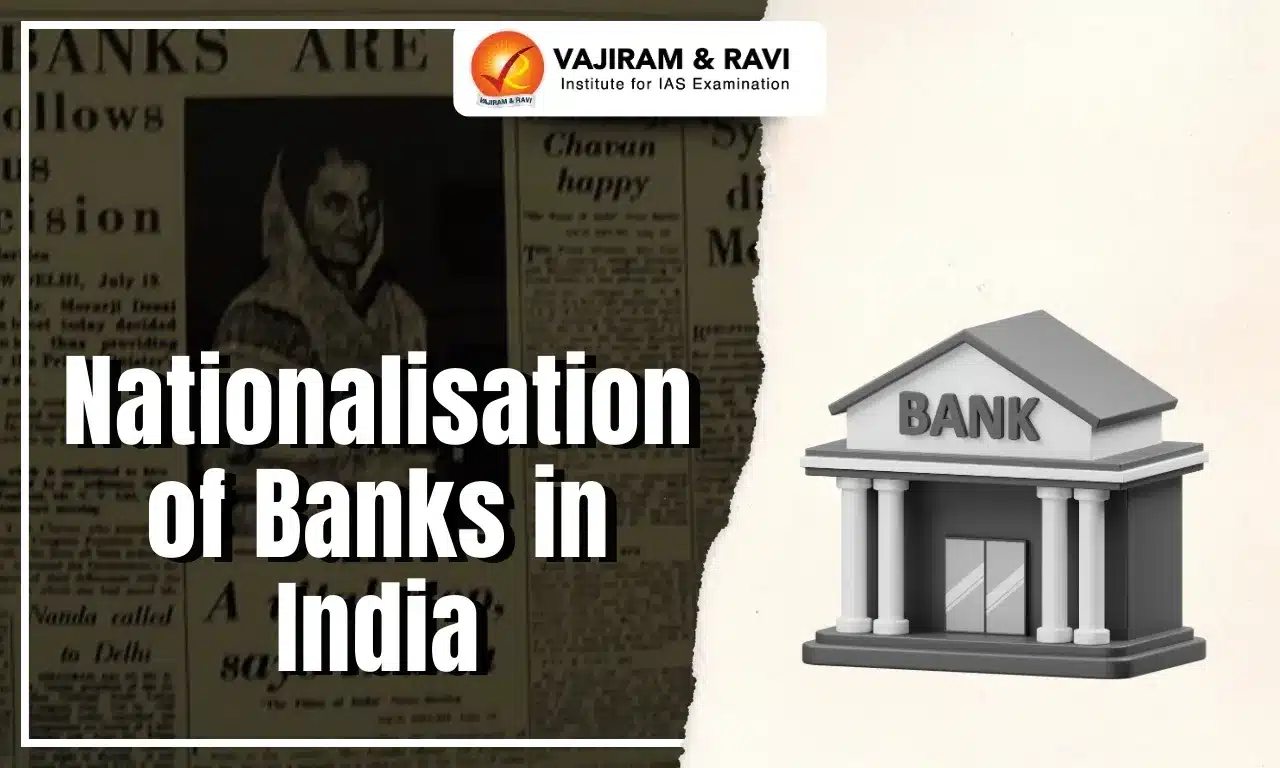
Nationalisation of Banks means the transfer of ownership and control of private banks into the hands of the government. Once nationalised, the government becomes the majority shareholder and the banks operate as public sector entities. 

Nationalisation of Banks Phases

The process of Nationalisation of Banks was conducted in multiple phases: 

  1. Partial Nationalisation: The first experiment began in 1955 with the State Bank of India Act, under which three Imperial Banks were merged to form the State Bank of India (SBI). This was the first public sector bank in India.
  2. Full-Scale Nationalisation:  Success of the initial step encouraged the government to nationalise private banks on a larger scale through the Banking Companies (Acquisition and Transfer of Undertakings) Act, 1969, and later in 1980.
    • Phase 1 (1969): 14 banks with deposits above ₹50 crores were nationalised.
    • Phase 2 (1980): 6 more banks with deposits above ₹200 crores were nationalised.

Nationalisation of Banks Requirements and Reasons

The nationalisation of banks was done due to many economic and political developments: 

  • Planned Development: Required government control over credit to support Five-Year Plans and socialist policies.
  • Agricultural Credit: Agriculture received less than 2% of total bank credit despite the Green Revolution, creating the need for rural banking.
  • Economic Shocks: Wars with China (1962) and Pakistan (1965), successive droughts, and food shortages pressured the economy.
  • Inequality in Credit Flow: Industry’s share in bank credit doubled between 1951–1968, while rural and weaker sections were neglected.
  • Wider Access: Private banks catered to urban elites, excluding rural India from banking facilities.
  • Other Needs: Promoting social welfare, reducing monopolies, financial inclusion, reducing regional imbalance, and directing credit to priority sectors.

Nationalisation of Banks Benefits 

Nationalisation of Banks had the following benefits: 

  • Wider Reach: Banks expanded into rural and remote areas, improving financial inclusion.
  • Branch Expansion: Between 1969–1997, public bank branches rose by nearly 800%, while deposits and advances increased exponentially.
  • Priority Sector Lending (PSL): Directed credit towards agriculture, MSMEs, and other under-served sectors.
  • Mobilisation of Savings: Household savings were channelised into productive investments.
  • Improved Credibility: Banking habits improved, and trust in the financial system grew.
  • Economic Development: Banking became a tool for planned development and poverty alleviation.

Nationalised Banks in India List 

Here is a list of banks that were nationalised in India: 

  • Banks of India
  • Bank of Maharashtra
  • Central Bank of India
  • Indian Overseas Bank
  • Punjab & Sindh Bank
  • Bank of Baroda
  • Canara Bank
  • Indian Bank
  • Oriental Bank of Commerce
  • Punjab National Bank
  • UCO Bank
  • Union Bank of India

Nationalisation of Banks in India FAQs

Q1: Which are the 14 nationalised banks of India?

Ans: Allahabad Bank, Bank of Baroda, Bank of India, Bank of Maharashtra, Canara Bank, Central Bank of India, Dena Bank, Indian Bank, Indian Overseas Bank, Punjab National Bank, Syndicate Bank, Union Bank of India, United Bank of India, and UCO Bank.

Q2: What do you mean by nationalisation of banks in India?

Ans: Nationalisation of banks in India refers to the transfer of ownership of private banks to the government, making them public sector entities.

Q3: Why were banks nationalised in 1969?

Ans: Banks were nationalised in 1969 to promote financial inclusion, direct credit to priority sectors, reduce regional imbalances, and align banking with developmental goals.

Q4: Which banks have been partially nationalised?

Ans: The Imperial Bank of India was partially nationalised in 1955 to form the State Bank of India, along with its seven associate banks.

Q5: What are the benefits of nationalisation of banks?

Ans: Nationalisation expanded rural banking, improved financial inclusion, mobilised savings, promoted priority sector lending, and supported planned economic development.

Environmental Laws in India, Meaning, Evolution, Important Laws

Environmental Laws in India

Environmental Laws in India are the backbone of India’s environment governance framework. These laws work on conserving natural resources, preventing ecological degradation and making sure that economic growth doesn’t come at the cost of environmental sustainability. Over these years, these laws have become a comprehensive legal framework that regulates human-environment interactions. 

Environmental Laws Meaning

Environmental Laws also known as environmental legislations are a set of legal rules, policies and regulations enacted in order to: 

  • Protect and conserve the environment 
  • Manage natural resources sustainably 
  • Minimise the negative impacts of human activities like industrialisation, urbanisation, agriculture and waste disposal.
  • These environmental laws serve as a safeguard to balance development with ecological well-being. 

Environmental Laws in India Evolution

Environmental Laws in India can be traced back to ancient and pre-modern times: 

  • Emperor Ashoka codified the rules to protect fauna and flora, in the 3rd century B.C. 
  • During the Colonial and Pre-Colonial period. Several environmental legislations were introduced to regulate forests and wildlife, such as: 
    • Cattle Trespass Act, 1871
    • Elephants Preservation Act, 1879
    • Indian Forest Act, 1927
  • In 1872, the UN Conference on the Human Environment Conference also known as the Stockholm Conference took place, which compelled India to frame comprehensive legislations. This marked a turning point in the environmental policy decisions in India. 
  • After 1972, there have been many landmark acts, policies and notifications that have helped shape the Environmental Framework for India and helped in setting the guidelines for the Environmental Governance System. 

Environmental Governance 

Environmental Governance means a set of institutions, processes and legal frameworks that guide the sustainable management of environmental resources. This includes: 

  • Laws and policies provide a legal structure 
  • Institutions and organisations ensure implementation and monitoring 
  • Initiatives and programs help drive conservation efforts on the ground 
  • Environmental governance provides a structured approach in order to protect biodiversity, conserve resources and make ecologically correct decisions. 

Important Environmental Laws in India

Since 1972, India has made many laws and policies that form the backbone of environmental protection. These important laws include: 

  • Wildlife Protection Act, 1972 – protection of wild animals, birds, and plants.
  • Environment Protection Act, 1986 – an umbrella legislation empowering the government to take direct action for environmental protection.
  • National Forest Policy, 1988 – focus on sustainable forest management.
  • Forest Rights Act, 2006 – recognising the rights of forest-dwelling communities.
  • Coastal Regulation Zone (CRZ) Notifications – regulating developmental activities along coastal areas.
  • Wetlands (Conservation and Management) Rules, 2010 & 2017 – ensuring wise use of wetlands.
  • Ozone Depleting Substances (Regulation and Control) Rules, 2000 – phasing out substances harmful to the ozone layer.
  • Biological Diversity Act, 2002 – conservation of biodiversity and equitable sharing of its benefits.

Wildlife Protection Act, 1972

The Wildlife Protection Act, 1972 was introduced to protect India’s wildlife and habitats and provides a legal framework for the protection of endangered species of flora and fauna. The act regulates activities that threaten their survival.  

Environment Protection Act, 1986 

The Environmental Protection Act, 1986 gives power to the government to overcome environmental challenges. The objectives of Environment Protection Act, 1986 are: 

  • Establishment of authorities with adequate powers
  • Coordination among regulatory agencies
  • Regulation of pollutant discharge & hazardous substances
  • Quick response to environmental accidents
  • Provision of deterrent penalties

National Forest Policy, 1988

The National Forest Policy, 1988 gives the guidelines for the management and conservation of India’s forests, providing ecological balance and supporting socio-economic development through sustainable forest use. 

Forest Rights Act, 2006 (FRA, 2006)

Forest Rights Act, 2006 also known as the Scheduled Tribes and Other Traditional Forest Dwellers (Recognition of Forest Rights) Act, FRA, 2006 recognises the rights of forest-dwelling communities over land and resources.
The objectives of Forest Rights Act, 2006 include: 

  • Empower local self-governance
  • Strengthen livelihood security & reduce poverty
  • Promote conservation & community-based resource management

Coastal Regulation Zone Notifications (CRZ)

First issued in 1991 under the EPA, 1986, CRZ rules regulate activities in coastal areas to prevent ecological damage, minimise erosion, and protect community livelihoods. Updated versions include CRZ Notification, 2011 and Island Protection Zone (IPZ) Notification, 2011.

Wetlands (Conservation and Management) Rules, 2010 & 2017

Introduced under the EPA, 1986, these rules provide a regulatory framework for wetland protection.

  • 2010 Rules: First attempt at wetland regulation.
  • 2017 Rules: Introduced to address gaps in the earlier framework, ensuring stricter conservation.

Ozone Depleting Substances (Regulation and Control) Rules, 2000

Framed under the EPA, 1986 to meet India’s commitments under the Montreal Protocol, these rules aim to phase out Ozone Depleting Substances (ODSs) and curb ozone layer depletion.

Biological Diversity Act, 2002 (BDA, 2002)

The Biological Diversity Act, 2002 was enacted to conserve India’s biodiversity, prevent biopiracy, and ensure fair benefit-sharing from the use of biological resources. It aligns with the Convention on Biological Diversity .
Focus Areas include: 

  • Conservation of biodiversity
  • Sustainable use of biological resources
  • Regulation of access to genetic resources
  • Fair & equitable benefit-sharing

Environmental Laws in India FAQs

Q1: What is the 7 environment Act?

Ans: The seven key environmental Acts in India include the Wildlife Protection Act (1972), Water Act (1974), Forest Conservation Act (1980), Air Act (1981), Environment Protection Act (1986), Public Liability Insurance Act (1991), and Biological Diversity Act (2002).

Q2: What are the 4 Environmental Protection Acts?

Ans: The four major Environmental Protection Acts are the Water Act (1974), Air Act (1981), Environment Protection Act (1986), and Biological Diversity Act (2002).

Q3: What is the Forest Policy Act, 1988?

Ans: The National Forest Policy, 1988 aims at environmental stability, maintenance of ecological balance, and sustainable management of forest resources.

Q4: What is Biological Diversity Act, 2002?

Ans: The Biological Diversity Act, 2002 seeks to conserve biodiversity, ensure sustainable use, and promote fair and equitable benefit sharing of biological resources.

Q5: Why was the Stockholm Conference held?

Ans: The 1972 Stockholm Conference was held to address global environmental issues and marked the beginning of international cooperation on sustainable development.

Minimum Public Shareholding (MPS)

Minimum Public Shareholding

Minimum Public Shareholding Latest News

SEBI recently proposed to increase the flexibility of minimum public shareholding (MPS) and minimum public offer (MPO) for companies aspiring to get listed, aimed at “simplifying fund-raising by issuers in India.

About Minimum Public Shareholding 

  • The Minimum Public Shareholding (MPS) rule is a regulatory requirement laid out by SEBI under the Securities Contracts (Regulation) Rules, 1957, and reinforced by the Listing Obligations and Disclosure Requirements (LODR) Regulations.
  • It is applicable to all listed companies in India.
  • As per these rules, all listed companies must ensure that at least 25% of their total issued and paid-up equity share capital is held by public shareholders—i.e., non-promoters and non-promoter group entities. 
  • Where promoters are holding more than 75%, they have to mandatorily divest additional shares to the public to comply with the MPS rule.
    • Such stake reduction could be done either by placing shares with institutions or by issuing rights shares to dilute their holdings.
  • The objective is to:
    • Enhance liquidity in the market
    • Promote fair price discovery
    • Ensure broader participation and corporate governance
  • Newly listed companies are expected to meet this requirement within three years from the date of listing.
  • For issuers with a post-issue market cap of over ₹1 trillion, the deadline for 25% MPS is five years.
  • If the public shareholding falls below 25% at any time, such company shall bring the public shareholding to 25% within a maximum period of 12 months from the date of such fall.

Source: TH

Minimum Public Shareholding FAQs

Q1: The regulatory requirement for Minimum Public Shareholding (MPS) is laid down under which rules/regulations?

Ans: Securities Contracts (Regulation) Rules, 1957 and SEBI LODR Regulations

Q2: What is the maximum period allowed for newly listed companies (with market cap less than ₹1 trillion) to comply with the 25% Minimum Public Shareholding (MPS) requirement?

Ans: 3 years

Q3: If the public shareholding of a listed company falls below 25%, what is the maximum time within which it must be restored to 25%?

Ans: 12 months

Palmyra Palm Tree

Palmyra Palm Tree

Palmyra Palm Tree Latest News

Palmyra palm trees in Odisha are providing dual benefits by reducing lightning-related deaths and serving as a food source for elephants during lean seasons.

About Palmyra Palm Tree

  • It is commonly named as sugar palm, or toddy palm or fan palm.
  • It is a native of tropical Africa but cultivated and naturalized throughout India.
  • In India, it is planted as a windbreak on the plains.
  • Required Climatic Conditions
    • Soil: It exhibits adaptability to a wide range of soil types, including arid and wastelands. They thrive particularly well in sandy soil, red soil, black soil, and river alluvium.
    • Rainfall: These palms are also suited for semi-arid regions with an annual rainfall of less than 750 mm.
    • They can grow at altitudes from sea level up to 800 meters.
    • Palmyra is mainly propagated through seeds and there is no vegetative method available for its propagation.

Benefits of Palmyra Palm Tree

  • It is used as a natural shelter by birds, bats and wild animals.
  • The chief product of the palmyra is the sweet sap (toddy) obtained by tapping the tip of the inflorescence.
  • The toddy ferments naturally within a few hours after sunrise and is locally popular as a beverage.
  • Palmyra palm jaggery (gur) is much more nutritious than crude cane sugar.
  • Traditionally, the Indian 'Nadar' community are the people who make their living from this tree using its wood, fruits, sap, stems, petioles and leaves to process a variety of food products, beverages, furniture, building materials, and handicrafts.

Source: DTE

Palmyra Palm Tree FAQs

Q1: What is the use of Palmyra tree?

Ans: The palmyra is considered as a tree of livelihood and used in, beverage, fibre, fodder, medicine and timber.

Q2: What is the other name for palmyra palm?

Ans: Borassus flabellifer

Rubella

Rubella

Rubella Latest News

The World Health Organization recently announced Nepal has eliminated rubella as a public health problem.

About Rubella

  • It is a highly contagious viral infection best known by its distinctive red rash
  • It's also called German measles or three-day measles.
  • Rubella isn't the same as measles, but the two illnesses share some signs and symptoms, such as the red rash. 
  • Rubella is caused by a different virus than measles, and rubella isn't as infectious or as severe as measles.
  • Rubella is caused by the Rubella virus, an enveloped, single-stranded RNA virus, different from the measles virus. 

Rubella Transmission

  • The Rubella virus spreads from person to person when you cough, sneeze, or touch surfaces with the virus on them.
  • It can also spread from a pregnant woman to the fetus. 
  • You can be contagious with rubella without symptoms.

Rubella Symptoms

  • This infection may cause mild or no symptoms in most people. 
  • The main symptom of rubella is a spotty rash that starts on the face or behind the ears and spreads to the neck and body.
  • The rash takes 2 to 3 weeks to appear after getting rubella.
  • Rubella can cause serious problems for unborn babies whose mothers become infected during pregnancy.
  • When a woman is infected with the rubella virus early in pregnancy, she has a 90% chance of passing the virus on to her fetus. 
  • This can cause the death of the fetus, or it may cause Congenital Rubella Syndrome (CRS). Infants with CRS may excrete the virus for a year or more.
  • Children with CRS can suffer hearing impairments, eye and heart defects, and other lifelong disabilities, including autism, diabetes mellitus, and thyroid dysfunction.

Rubella Prevention

  • The measles-mumps-rubella (MMR) vaccine is safe and highly effective in preventing rubella. 
  • The vaccine provides lifelong protection against rubella.

Rubella Treatment

  • There are currently no medications available to treat rubella.
  • Mild symptoms can be managed with bed rest and medicines for fever.

Source: WHO

Rubella FAQs

Q1: Rubella, also known as German measles, is caused by which organism?

Ans: Rubella is caused by the Rubella virus.

Q2: Which vaccine provides lifelong protection against rubella?

Ans: Measles-mumps-rubella (MMR) vaccine

Q3: What is the most common symptom of rubella?

Ans: The main symptom of rubella is a spotty rash that starts on the face or behind the ears and spreads to the neck and body.

Sakura Science Programme

Sakura Science Program

Sakura Science Programme Latest News

A group of thirty-four students from government schools in India are set to visit Japan under the Sakura Science Programme 2025.

About Sakura Science Programme

  • It is the prestigious Japan-Asia Youth Exchange Program in Science—better known as the Sakura Science Programme.
  • It was launched globally in 2014, aims to expand scientific curiosity amongst youth and encourage international collaboration.
  • India joined the Sakura Programme in 2016.
  • It is implemented by the Japan Science and Technology Agency (JST).
  • The initiative offers young learners a chance to explore cutting-edge science and immerse themselves in Japanese culture.
  • Under this programme, students are invited for short-term visits to Japan, providing them with the opportunity to experience Japan’s cutting-edge science and technology as well as its rich culture.
  • For the upcoming Sakura Programme 2025, JST has invited participants from six other countries Egypt, Ghana, Kenya, Nigeria, South Africa and Zambia.

Sakura Science Program's Objectives Include

  • To support the development of talented human resources from overseas who have the potential to contribute to innovation in science and technology.
  • To accelerate international brain circulation.
  • To promote continuous collaboration, cooperation and interaction between Japanese educational and research institutes and those overseas.
  • To strengthen good relationships between Japan and other countries and regions that can encourage diplomacy in science and technology.

Source: India Today

Sakura Science Programme FAQs

Q1: What is Sakura Exchange?

Ans: Under the framework of Sakura Science Plan, Japan-Asia Youth Science Exchange Program, Japan Science and Technology Agency, we invite young researchers and graduate students from the Asian region.

Q2: Who is eligible for the Sakura science program?

Ans: Applicants must be at least 18 years old on the day of their arrival in Japan, possess exceptional abilities in science and technology, and hold a valid passport.

Sliteye Shark

Sliteye Shark

Sliteye Shark Latest News

For the first time, scientists have recorded the sliteye shark in the Great Chagos Bank in the Indian Ocean, the world’s largest coral atoll.

About Sliteye Shark

  • It is a small-bodied shark species found in inshore waters throughout the Indo-West Pacific. 
  • It is a species of requiem shark, in the family Carcharhinidae, and the only member of its genus, Loxodon. 
  • Scientific Name: Loxodon macrorhinus
  • Named for its distinctive, slit-like eyes—thought to enhance vision in low-light conditions—the sliteye shark is well adapted to deeper, dimly lit environments as well as clear and shallow waters.
  • Distribution: Widespread in tropical waters of the Indian and western Pacific Oceans between 34°N and 30°S off the coasts of Australia, China, Djibouti, Egypt, Eritrea, India, Indonesia, Japan, Kenya, Madagascar, Mozambique, Myanmar, Oman, Pakistan, Saudi Arabia, Somalia, South Africa, Sri Lanka, Sudan, Taiwan, Tanzania, and Yemen. 

Sliteye Shark Features

  • It is a small shark with a very slender body, a long narrow face, large eyes, and short furrows at the corners of the mouth. 
  • It can reach a length of about 95 cm.
  • The teeth are small, with a protruding tip and smooth edges. 
  • The ridge between the dorsal fins is absent or rudimentary. 
  • The coloration of the Sliteye shark is gray, the belly is white, and the edges of the fins are pale (transparent when alive). 
  • The caudal and first dorsal fins have dark edges.

Sliteye Shark Conservation Status

It is classified as 'Near Threatened' under the IUCN Red List.

Source: MC

Sliteye Shark FAQs

Q1: In which oceans is the Sliteye Shark commonly found?

Ans: Indian and Western Pacific Oceans

Q2: What is the IUCN Red List status of the Sliteye Shark?

Ans: Near Threatened

Q3: What is the typical body coloration of the Sliteye Shark?

Ans: The coloration of the Sliteye shark is gray, the belly is white, and the edges of the fins are pale (transparent when alive).

Udyam Sakhi Portal

Udyam Sakhi Portal

Udyam Sakhi Portal Latest News

The Udyam Sakhi Portal, launched by the Ministry of Micro, Small and Medium Enterprises (MSME), is helping women entrepreneurs across the country start, build, and expand their businesses, said the Minister of State in a written reply in the Rajya Sabha recently.

About Udyam Sakhi Portal

  • Udyam Sakhi portal (http://udyamsakhi.msme.gov.in/) was launched by the Ministry of MSME in March 2018 to provide information regarding financial schemes, policies, and programmes of the Ministry of MSME to existing/prospective women entrepreneurs in the MSME sector. 
  • The portal is a network for nurturing entrepreneurship and creating business models for low-cost products and services in order to empower women and make them self-reliant and self-sufficient.
  • The portal helps women to start, build, and grow their businesses.
  • The portal accords the following services through its programmatic functions:
    • Entrepreneurship learning tools
    • Incubation facility
    • Training program for fund raising
    • Providing mentors
    • One-on-one investor meet
    • Provide facilities for market survey
    • Learning and development; be it by means of education, information, or technical assistance and training.

Source: DD

Udyam Sakhi Portal FAQs

Q1: Which ministry launched the Udyam Sakhi portal?

Ans: Ministry of Micro, Small and Medium Enterprises (MSME)

Q2: What is the primary aim of the Udyam Sakhi portal?

Ans: To empower women entrepreneurs in the MSME sector.

Q3: In which year was the Udyam Sakhi portal launched?

Ans: 2018

Daily Editorial Analysis 19 August 2025

Daily Editorial Analysis

Alaskan Winds, India and the Trump-Putin Summit

Context

  • The Alaska Moment between U.S. President Donald Trump and Russian President Vladimir Putin on August 15, 2025 has been hailed internationally as a potential turning point in the Russia-Ukraine conflict.
  • Yet, for New Delhi, the meeting of two of India’s closest partners produced few tangible benefits.
  • Instead, it reinforced India’s sense of vulnerability, of having a great deal at stake in the outcome of U.S.–Russia talks, but little direct agency in shaping them.
  • The aftermath of the summit underscores not only the challenges in India’s relations with Washington under Mr. Trump but also broader lessons for India’s foreign policy conduct.

The Outcome of the Summit: Limited Gains for India

  • The Modi government had hoped that a U.S.–Russia rapprochement might ease Washington’s pressure on New Delhi over its ties with Moscow.
  • Specifically, India sought relief from U.S. secondary sanctions on Russian oil imports, the resumption of stalled India–U.S. trade talks, and a possible rollback of steep reciprocal tariffs.
  • These expectations proved misplaced. Despite the warmth between Mr. Trump and Mr. Putin, no shift occurred in Washington’s hard line against India.
  • The S. administration has instead doubled down, with Senior Counsellor Peter Navarro framing the sanctions as a two-pronged policy to punish both Russian imports and India’s curbs on market access.
  • Simultaneously, Trump’s insistence on credit for mediating the India-Pakistan ceasefire during Operation Sindoor has clashed directly with New Delhi’s own  narrative, deepening tensions rather than alleviating them.

The Reason Behind Trump’s Secondary Tariff: Beyond Power Politics

  • The rationale behind U.S. secondary sanctions appears less about weakening Russia than about power politics and leverage over India.
  • Washington itself has expanded trade with Moscow since Mr. Trump’s return to office, while China’s oil imports from Russia dwarf those of India.
  • Targeting India selectively reflects more on Mr. Trump’s desire for recognition, particularly his fixation on being seen as a global peacemaker, than on any consistent policy principle.
  • Reports of Mr. Modi’s refusal to endorse Mr. Trump’s claims or sit down with Pakistan under U.S. auspices have only worsened bilateral friction.

Lessons for New Delhi

  • Do Not Overinvest in Summitry

    • The Alaska episode illustrates the perils of allowing diplomatic showmanship to eclipse substance.
    • For years, Modi has emphasised personal rapport with world leaders, from rallies with Mr. Trump to multiple meetings with China’s Xi Jinping.
    • Yet such interactions have not prevented serious crises, from the Galwan clashes with China to current strains with the U.S. India must reorient its diplomacy toward concrete agreements and institutional mechanisms, rather than optics.
  • Rebuild Bipartisan Engagement

    • India’s tendency to be seen as favouring one U.S. political faction has repeatedly backfired.
    • The Modi-Trump camaraderie alienated Democrats in 2020, while subsequent engagement with the Biden administration irritated Mr. Trump.
    • India’s long-term interests require cultivating bipartisan goodwill in Washington, just as it must balance competing political currents in neighbouring states such as Bangladesh, Nepal, and Sri Lanka.
  • Uphold Strategic Autonomy

    • Trump’s sanctions highlight the dangers of India departing from its principle of adhering only to UN-mandated sanctions.
    • Previous concessions to U.S. pressure, on Iranian and Venezuelan oil, may have emboldened Washington to demand similar compliance on Russian imports.
    • Resisting such pressures not only safeguards India’s economic interests but also strengthens its credibility as a leader of the Global South.
  • Prepare Countermeasures

    • New Delhi must also consider stronger responses to U.S. policies that harm its economic and strategic interests.
    • These may include measures against reciprocal tariffs, restrictions on U.S. manufacturing in India, or potential remittance taxes on Indian workers in America.
    • Restoring India’s agency requires a readiness to respond firmly rather than reactively to shifting U.S. policies.

The Way Forward

  • India now faces an important decision: whether to keep chasing Washington’s approval or to diversify its diplomatic bets.
  • Modi’s upcoming engagements, in Japan, China, South Africa, and with Russia, provide opportunities to reinforce alternative partnerships.
  • Meanwhile, the upcoming Quad summit will test the resilience of India–U.S. ties and may reveal whether Mr. Trump is willing to visit India at all.

Conclusion

  • Ultimately, the Alaska Summit demonstrates that India cannot afford to let its foreign policy be swayed by the pageantry of high-level meetings abroad.
  • Instead, New Delhi must ground its strategy in substance, principle, and balance.
  • Only then can it navigate the turbulent currents of U.S. unpredictability while safeguarding its autonomy and long-term national interests.

Alaskan Winds, India and the Trump-Putin Summit FAQs

Q1. What was India hoping to gain from the Alaska Summit?
Ans. India hoped that the U.S.–Russia rapprochement would reduce pressure on New Delhi, ease secondary sanctions on Russian oil imports, and revive stalled trade talks with Washington.

Q2. Why did these expectations not materialize?
Ans. Despite the cordiality between Mr. Trump and Mr. Putin, Mr. Trump maintained a hard stance against India, using sanctions and trade leverage for his own political goals.

Q3. What lesson does the Alaska Summit teach India about summit diplomacy?
Ans. It shows that India should not overinvest in personal rapport and diplomatic showmanship, but instead focus on substantive agreements and institutional mechanisms.

Q4. Why is bipartisan engagement in U.S. politics important for India?
Ans. Because leaning too closely toward one party creates long-term friction, India must maintain ties with both Republicans and Democrats to safeguard its interests.

Q5. How can India reclaim its strategic autonomy in foreign policy?
Ans. India must resist unilateral U.S. sanctions, diversify its trade and diplomatic partnerships, and prepare countermeasures against policies that harm its core interests.

Source: The Hindu


India’s Role in Ending Global Hunger

Context:

  • Global undernourishment is showing signs of decline after years of increase.
  • According to the UN’s State of Food Security and Nutrition in the World 2025, around 673 million people (8.2% of the global population) were undernourished in 2024 — an improvement from 688 million in 2023.
  • Though levels remain above pre-pandemic figures (7.3% in 2018), this reversal marks a crucial turning point in the fight against hunger.
  • This article highlights India’s decisive role in reducing global hunger by transforming its Public Distribution System, strengthening nutrition-focused initiatives, and leveraging digital and agrifood system reforms.

India’s Achievements

  • Through targeted policy measures, digital tools, and improved governance, India has significantly advanced food security and nutrition outcomes.
  • Revised estimates using new National Sample Survey data reveal that undernourishment in India fell from 14.3% in 2020–22 to 12% in 2022–24.
  • In real terms, this translates to 30 million fewer people living with hunger — a remarkable achievement considering India’s vast population and the severe disruptions of the COVID-19 pandemic.

Transformation of India’s Public Distribution System (PDS)

  • India’s Public Distribution System (PDS) has undergone a major transformation in recent years.
  • Through digitalisation, Aadhaar-enabled targeting, biometric authentication, and real-time inventory tracking, the system has become more efficient and transparent.
  • The One Nation One Ration Card scheme has made food entitlements portable across the country, which is crucial for migrant workers and vulnerable households.
  • These reforms allowed India to rapidly scale up food support during the pandemic and continue providing subsidised staples to over 800 million people.

Shift from Calories to Nutrition

  • While India has made remarkable progress in ensuring calorie sufficiency, the bigger challenge now is nutrition security.
  • A healthy diet still remains unaffordable for more than 60% of the population, largely due to high prices of nutrient-rich foods, weak cold chain infrastructure, and inefficient market linkages.
  • Recognising this, the government has introduced initiatives like:
    • the Pradhan Mantri Poshan Shakti Nirman (PM POSHAN) school feeding programme and
    • the Integrated Child Development Services (ICDS) with a focus on dietary diversity and nutrition sensitivity, particularly for children.

Progress and Structural Challenges

  • According to new UN data, India has made progress in making healthy diets relatively more affordable despite inflationary pressures.
  • However, a larger structural challenge persists: even as hunger levels decline, issues like malnutrition, obesity, and micronutrient deficiencies are on the rise, especially among poor urban and rural populations.
  • This underscores the need for policies that go beyond hunger eradication to address broader health and nutrition outcomes.

Transforming India’s Agrifood System

  • India can meet the challenge of ensuring both food security and nutrition security only by transforming its agrifood system.
  • This involves boosting the production and affordability of nutrient-rich foods like pulses, fruits, vegetables, and animal-based products, which are still unaffordable for many low-income households.
  • At the same time, investment in post-harvest infrastructure such as cold storage, warehouses, and digital logistics is vital to reduce the nearly 13% food loss that occurs between farm and market, directly affecting food prices and availability.
  • Equally important is support for women-led food enterprises, Farmer Producer Organizations (FPOs), and local cooperatives, especially those cultivating climate-resilient crops.
  • These initiatives not only enhance access to nutritious foods but also improve rural livelihoods.
  • Finally, India must continue to leverage its digital edge. Tools like AgriStack, e-NAM, and geospatial data systems can significantly improve market access, strengthen agricultural planning, and enable more effective delivery of nutrition-sensitive policies.
  • Together, these steps can help build a more resilient, equitable, and nutrition-focused agrifood system.

India’s Role as a Global Symbol of Hope

  • India’s progress in transforming its agrifood system is not just a national achievement but a global contribution.
  • The Food and Agriculture Organization (FAO) highlights that India’s advances in digital governance, social protection, and data-driven agriculture can serve as a model for the Global South.
    • It can demonstrate how hunger reduction is possible at scale when backed by political will, smart investments, and inclusive policies.
  • With only five years left to achieve the Sustainable Development Goals (SDGs), including SDG 2: Zero Hunger, India’s recent success offers optimism for the global fight against hunger.
  • However, sustaining this momentum will require a shift from ensuring food security to ensuring nutrition security, while also focusing on resilience and opportunity for vulnerable populations.

Conclusion

  • The “hunger clock” is ticking, and India’s leadership is now crucial for the world.
  • No longer just feeding itself, India stands as a pathway to ending global hunger, proving that progress in one nation can inspire and support change worldwide.

India’s Role in Ending Global Hunger FAQs

Q1. How has India contributed to the recent decline in global undernourishment?

Ans. India reduced hunger through targeted policies, digital governance, and nutrition programs, cutting undernourishment from 14.3% to 12%, impacting 30 million people positively.

Q2. What reforms have transformed India’s Public Distribution System (PDS)?

Ans. Digitalisation, Aadhaar-enabled targeting, biometric authentication, and One Nation One Ration Card reforms improved efficiency, portability, and transparency, supporting over 800 million people.

Q3. Why is there a shift from calorie sufficiency to nutrition security in India?

Ans. While hunger has declined, over 60% still cannot afford healthy diets, requiring focus on nutrient-rich foods and child nutrition programs.

Q4. What steps are needed to transform India’s agrifood system?

Ans. Boosting nutrient-rich food production, investing in cold storage, supporting FPOs and women-led enterprises, and leveraging digital tools like AgriStack and e-NAM are essential.

Q5. Why is India considered a global symbol of hope in ending hunger?

Ans. India’s digital and agrifood innovations showcase scalable solutions for the Global South, proving hunger reduction is achievable with inclusive policies and smart investments.

Source: TH


PM Modi’s 12th Independence Day Speech - A Roadmap to Viksit Bharat

Context:

  • On August 15, Prime Minister (PM) Narendra Modi delivered his 12th Independence Day speech from the Red Fort.
  • The address was described as unprecedented for its visionary scope, bold reforms, and long-term roadmap aimed at transforming India into a Viksit Bharat by 2047.
  • The focus was on next-generation reforms in the digital economy, energy security, critical minerals, national security, healthcare, taxation, and employment generation.
  • Below, we will try to analyse key highlights of the PM’s speech.

Digital Sovereignty and Technological Leadership:

  • Digital India Stack: Unified Payment Interface (UPI) accounts for 50% of global real-time digital transactions.
  • Semiconductor push: First Made-in-India chip to be rolled out by year-end. This is nothing less than digital Swaraj — India’s assertion of sovereignty over critical technologies.

Energy Security and Hydrocarbon Exploration:

  • Reduction of “No-Go” zones in Exclusive Economic Zones by 99%:

    • Freeing 10 lakh sq. km. for exploration and production (E&P).
    • Coupled with Open Acreage Licensing Policy (OALP), this has opened a vast canvas to Indian champions and global majors alike for E&P.
  • National Deepwater Exploration Mission:

    • Announced from the ramparts of the Red Fort, it aims to unlock 600-1,200 million metric tonnes (MMTs) of oil and gas reserves through the drilling of nearly 40 wildcat wells.
    • For the first time, India will systematically open up its complex offshore frontiers — from the Bay of Bengal to the Arabian Sea — with a framework that de-risks investment by allowing recovery of up to -
      • 80% of costs in the case of dry wells, and
      • 40% upon commercial discovery.
    • Broader blueprint:
      • Triple domestic oil and gas output to 85 million tonnes by 2032 and double national reserves to between one and two billion tonnes.
      • Build an Atmanirbhar E&P ecosystem where the share of local supply chains rises from today’s 25-30% to over 70%.

Energy Transition and Clean Power:

  • India has reached the 50% clean-power mark in 2025 – five years ahead of the 2030 target.
  • Biofuels and green hydrogen are moving from pilots to production; ethanol blending and CBG scale-up are building a new rural-industrial backbone; LNG infrastructure continues to expand.
  • The civilian nuclear sector has been opened to private participation.
    • Currently, 10 new nuclear reactors are operational, and India aims to increase its nuclear energy capacity tenfold by the 100th year of its independence.

National Critical Minerals Mission:

  • Recognising the strategic importance of lithium, rare earths, nickel, cobalt, India has launched exploration at 1,200+ sites.
  • It is structuring partnerships, processing and recycling so that renewable power, semiconductors, EVs and advanced defence are never hostage to external choke-points.

National Security and Defence:

  • Operation Sindoor: It displayed India’s military prowess in real time, ending the era of nuclear blackmail and sending a message that aggression will be met with swiftness and sophistication. Reversal of the Indus Waters Treaty (IWT): It is a bold assertion of sovereignty.
  • Unveiling of Mission Sudarshan Chakra:
    • Inspired by Lord Krishna shielding Arjun on the battlefield, it is a multi-layered indigenous security shield that will protect India’s critical institutions from cyber, physical and hybrid threats.
    • It is a blend of civilisational symbolism and advanced technology.

Healthcare and Biopharma:

  • Achievements: Pharmacy of the world, as it produces 60% of global vaccines. Push towards biopharma innovation under BioE3 policy.
  • Ambitions: To patent and produce medicines that are affordable and world-class, and lead the world in new medicines, vaccines, and devices.

Tax and Legal Reforms:

  • New Income Tax Bill:

    • Replaced the Income Tax Act of 1961, reducing complexity, abolishing 280 redundant sections, and offering relief up to Rs 12 lakh.
    • The introduction of faceless assessment has made the system transparent, efficient, and incorruptible.
  • GST 2.0: To be launched by Diwali, it will further rationalise rates and boost compliance.
  • Decriminalisation drive: Abolition of over 40,000 unnecessary compliances, repealing more than 1,500 outdated laws, and strengthening the Insolvency and Bankruptcy Code (IBC).
  • Direct Benefit Transfers (DBT) success: Touching over 25 crore beneficiaries (embedded accountability into welfare), and lifting 250 million Indians out of poverty.

Employment and Economic Growth:

  • PM Viksit Bharat Rozgar Yojana: Launched with an outlay of Rs 1 lakh crore, the programme aims to reach about 3.5 crore young Indians, incentivising -
    • Newly employed youth (will receive Rs 15,000 per month),
    • Companies (that generate fresh jobs).
  • Task Force for Next-Generation Reforms: A body designed to re-engineer the ecosystem of economic activity, its mandate is -
    • To slash compliance costs that weigh down startups and MSMEs,
    • To liberate enterprise from the shadow of arbitrary action, and
    • To streamline a thicket of laws into a framework that is simple and predictable.

Conclusion:

  • The Independence Day roadmap is not about immediate political mileage but a long-term civilisational project.
  • India is transforming from an ancient civilisation into a modern power by integrating its heritage with next-gen reforms.
  • The blueprint aims at Viksit Bharat by 2047, with India emerging as a technological, economic, and strategic powerhouse.

PM Modi’s 12th Independence Day Speech FAQs

Q1. What is the significance of “Digital Swaraj” in India’s development journey?

Ans: Digital Swaraj signifies India’s technological sovereignty through innovations like UPI and the launch of the first Made-in-India semiconductor chip, reducing dependence on global supply chains.

Q2. How does the National Deepwater Exploration Mission aim to address India’s energy security?

Ans: The Mission seeks to unlock 600–1,200 MMT of oil and gas reserves, triple domestic output by 2032, and build an Atmanirbhar exploration and production ecosystem.

Q3. Why is the National Critical Minerals Mission a strategic necessity for India?

Ans: It ensures supply of key minerals like lithium and rare earths for renewable energy, EVs, semiconductors, and defence, reducing vulnerability to external chokepoints.

Q4. What role do Operation Sindoor and Mission Sudarshan Chakra play in India’s national security?

Ans: They strengthen defence preparedness by showcasing military prowess and establishing a multi-layered indigenous shield against cyber, physical, and hybrid threats.

Q5. How does the PM Viksit Bharat Rozgar Yojana aim to tackle unemployment?

Ans: With a ₹1 lakh crore outlay, the scheme incentivises companies to create jobs and supports 3.5 crore youth with monthly employment-linked benefits.

Source: IE

Daily Editorial Analysis 19 August 2025 FAQs

Q1: What is editorial analysis?

Ans: Editorial analysis is the critical examination and interpretation of newspaper editorials to extract key insights, arguments, and perspectives relevant to UPSC preparation.

Q2: What is an editorial analyst?

Ans: An editorial analyst is someone who studies and breaks down editorials to highlight their relevance, structure, and usefulness for competitive exams like the UPSC.

Q3: What is an editorial for UPSC?

Ans: For UPSC, an editorial refers to opinion-based articles in reputed newspapers that provide analysis on current affairs, governance, policy, and socio-economic issues.

Q4: What are the sources of UPSC Editorial Analysis?

Ans: Key sources include editorials from The Hindu and Indian Express.

Q5: Can Editorial Analysis help in Mains Answer Writing?

Ans: Yes, editorial analysis enhances content quality, analytical depth, and structure in Mains answer writing.

Sustainable Aviation Fuel

Sustainable Aviation Fuel

Sustainable Aviation Fuel Latest News

India’s largest refiner and fuel retailer Indian Oil Corporation (IOC) expects to start producing sustainable aviation fuel (SAF) on a commercial scale at its Panipat refinery by December.

About Sustainable Aviation Fuel

  • It is a biofuel, also known as bio-jet fuel produced from sustainable feedstocks.
  • It has chemistry similar to conventional aviation turbine fuel (ATF) or jet fuel, which is derived from crude oil.
  • This means that existing aircraft engines can easily use the SAF-ATF blend.
  • It is made from renewable biomass and waste resources have the potential to deliver the performance of petroleum-based jet fuel. 
  • Various Indian airlines have already operated successfully a few test and demonstration flights using jet fuel doped with SAF in various proportions.
  • Production: It can be produced from a number of sources (feedstock) including waste oil and fats, green and municipal waste and non-food crops.
  • It can also be produced synthetically via a process that captures carbon directly from the air.

Significance of Sustainable Aviation Fuel

  • Its carbon footprint is significantly lower than aviation turbine fuel (ATF).
  • It is ‘sustainable’ because the raw feedstock does not compete with food crops or water supplies, or is responsible for forest degradation. 
  • It remains the major mature and viable pathway to decarbonise the aviation sector. At the same time, SAF only accounts for 0.3% of the current fuel use for aviation.

Source: IE

Sustainable Aviation Fuel FAQs

Q1: What is sustainable aviation fuel?

Ans: It is an alternative fuel made from non-petroleum feedstocks that reduces emissions from air transportation.

Q2: Why is sustainable aviation fuel so expensive?

Ans: It is due to the limited availability of sustainable feedstocks and the nascent stage of production technologies.

UPSC Daily Quiz 18 August 2025

UPSC Daily Quiz

The Daily UPSC Quiz by Vajiram & Ravi is a thoughtfully curated initiative designed to support UPSC aspirants in strengthening their current affairs knowledge and core conceptual understanding. Aligned with the UPSC Syllabus 2025, this daily quiz serves as a revision resource, helping candidates assess their preparation, revise key topics, and stay updated with relevant issues. Whether you are preparing for Prelims or sharpening your revision for Mains, consistent practice with these Daily UPSC Quiz can significantly enhance accuracy, speed, and confidence in solving exam-level questions

[WpProQuiz 47]  

UPSC Daily Quiz FAQs

Q1: What is the Daily UPSC Quiz?

Ans: The Daily UPSC Quiz is a set of practice questions based on current affairs, static subjects, and PYQs that help aspirants enhance retention and test conceptual clarity regularly.

Q2: How is the Daily Quiz useful for UPSC preparation?

Ans: Daily quizzes support learning, help in revision, improve time management, and boost accuracy for both UPSC Prelims and Mains through consistent practice.

Q3: Are the quiz questions based on the UPSC syllabus?

Ans: Yes, all questions are aligned with the UPSC Syllabus 2025, covering key areas like Polity, Economy, Environment, History, Geography, and Current Affairs.

Q4: Are solutions and explanations provided with the quiz?

Ans: Yes, each quiz includes detailed explanations and source references to enhance conceptual understanding and enable self-assessment.

Q5: Is the Daily UPSC Quiz suitable for both Prelims and Mains?

Ans: Primarily focused on Prelims (MCQ format), but it also indirectly helps in Mains by strengthening subject knowledge and factual clarity.

Centre Plans Uniform OBC Creamy Layer Policy Across Jobs

OBC Creamy Layer Equivalence

OBC Creamy Layer Equivalence Latest News

  • The central government is working on ensuring uniform application of the ‘creamy layer’ condition in OBC reservations across different sectors, including central and state government jobs, public sector enterprises, and universities.
  • A proposal—prepared after consultations with multiple ministries, NITI Aayog, and the National Commission for Backward Classes (NCBC)—seeks to address anomalies that have emerged from earlier Department of Personnel and Training (DoPT) circulars.
  • The move aims to ensure fairness and consistency in determining eligibility for reservation benefits, so that all deserving OBC candidates are treated equally across institutions and services.

The Concept of ‘Creamy Layer’

  • The idea of the creamy layer in OBC reservations originated from the Supreme Court’s Indra Sawhney vs Union of India (1992) judgment. 
  • The Court upheld the Mandal Commission’s recommendations for OBC reservations but ruled that the more affluent and advanced sections among OBCs — called the creamy layer — must be excluded from quota benefits.
  • Following this, the DoPT issued a circular in 1993 specifying who would fall under the creamy layer. 
  • Children of high constitutional functionaries, senior officers in government, PSUs, and armed forces (above certain ranks), as well as those in the professional class, trade, industry, or large property ownership, were excluded.
  • The rules also specified that:
    • Children of parents directly recruited to Group A/Class I posts, or promoted to such posts before age 40, were ineligible.
    • Children of parents both recruited to Group B posts also came under the creamy layer.
    • In the armed forces, only children of officials up to the rank of Lieutenant Colonel could avail reservation.
    • For non-government employees, an income/wealth ceiling was applied. 
      • Initially set at ₹1 lakh per year, this has been revised periodically and has stood at ₹8 lakh per annum since 2017
      • Importantly, income from salaries and agriculture is excluded from this limit.
  • Thus, the creamy layer framework ensures that reservation benefits go to the truly disadvantaged sections of OBCs and not to those who are already socially and economically advanced.

Also Check: Difference between Creamy Layer and Non-Creamy Layer of OBC

2004 Clarification on Creamy Layer

  • In 2004, the DoPT recognised gaps in the 1993 criteria, particularly for jobs outside the government sector, and issued a detailed clarification in October 2004. 
  • This aimed to standardise how the creamy layer status was determined for children of those working in non-government organisations.
  • The new rule specified that parental income from salary and other sources (excluding agriculture) would be calculated separately. 
  • If either income stream exceeded the then ceiling of ₹2.5 lakh annually for three consecutive years, the children would be deemed part of the creamy layer and ineligible for OBC reservation benefits.
  • However, during 2004–14, these clarifications were not widely enforced.

Stricter Enforcement Post-2014

  • In late 2014, DoPT began scrutinising caste certificates more rigorously to check their compliance with the 2004 clarification. 
  • This led to significant consequences in recruitment processes.
  • Between the Civil Services Examinations of 2015–2023 (batches 2016–24), the DoPT rejected more than 100 caste certificates of candidates who otherwise qualified as OBCs under the 1993 norms but were categorised as creamy layer under the 2004 criteria.
  • Interestingly, many of these candidates were still accepted as OBCs in other competitive exams based on the same caste certificates, highlighting inconsistencies in enforcement across different recruitment processes.

Efforts to Find ‘Equivalence’ in OBC Creamy Layer

  • The rejection of more than 100 OBC candidates’ caste certificates by DoPT (based on the 2004 clarification) created disputes. 
  • To address this, the government began consultations across ministries and institutions. 
  • The aim is to ensure uniformity and fairness in determining who falls under the creamy layer across sectors like universities, PSUs, and autonomous bodies.

Key Proposals under Consideration

  • University Teachers - Since salaries of assistant professors and above start at Level 10, equivalent to Group A jobs, their children are proposed to be classified as creamy layer.
  • Autonomous and Statutory Bodies - Employees’ positions would be aligned with central government posts based on group, level, and pay scale, to establish parity.
  • University Non-Teaching Staff - Their creamy layer status will also be decided based on group/level/pay scale equivalence with government jobs.
  • State PSU Executives - Proposed to be treated as creamy layer, just like central PSU executives since 2017.
    • However, executives with income within ₹8 lakh (the ceiling for private sector persons) will not be classified as creamy layer.
  • Government-Aided Institutions - Employees will be placed under creamy layer or non-creamy categories depending on the equivalence of their posts, service conditions, and pay scales with central or state governments.

The Likely Beneficiaries of Proposed Changes

  • Benefits for Government Employees’ Families
    • If the proposed reforms are implemented, the children of lower-level government employees with annual salaries above ₹8 lakh will gain the most. 
    • This would correct anomalies where, for instance, children of government teachers enjoy OBC quota benefits, while children of employees in government-aided institutions of similar rank are excluded solely based on income.
  • Addressing State-Level Anomalies
    • Similar inconsistencies exist in state government organisations. 
    • In one highlighted case, the child of an employee working at a fuel pump run by a state-owned oil company was declared creamy layer based on income, despite the post being equivalent to lower-level government jobs.
  • Limited Impact on Private Sector
    • For employees in the private sector, little change is expected. 
    • The proposal acknowledges that establishing ‘equivalence’ in posts and pay in private jobs is extremely difficult due to wide variations. 
    • Thus, their creamy layer status will continue to be decided only on the income/wealth test.

Source: IE | IE

OBC Creamy Layer Equivalence FAQs

Q1: What is the creamy layer concept in OBC reservation?

Ans: It excludes affluent OBC members from reservation benefits to ensure fairness.

Q2: Why is equivalence being considered in creamy layer application?

Ans: To bring uniformity across jobs, PSUs, and educational institutions.

Q3: Which ministries are involved in the OBC creamy layer proposal?

Ans: Social Justice, Education, Law, Labour, DoPT, NITI Aayog, and NCBC.

Q4: Who are most likely to benefit from creamy layer reforms?

Ans: Children of lower-rank government employees with annual salaries above ₹8 lakh.

Q5: What is the current income ceiling for creamy layer exclusion?

Ans: ₹8 lakh annually, excluding salary and agricultural income.

Ending Perpetual Tolling: PAC’s Push for Highway Toll Reforms

Highway Toll Collection Reform

Highway Toll Collection Reform Latest News

  • The Public Accounts Committee (PAC) of Parliament has recommended major reforms to toll collection practices on national highways. 
  • A key proposal is to end the system of perpetual tolling, where tolls continue indefinitely even after the full recovery of construction and maintenance costs.
  • The PAC submitted its report to Parliament recently, highlighting the need for fairness, transparency, and rationalisation in toll collection, ensuring that road users are not overburdened.

Key Recommendations of the PAC on Toll Collection

  • The Public Accounts Committee (PAC) has recommended a major overhaul of toll collection practices. 
  • It suggests that toll charges on national highways should be discontinued or reduced once construction costs and maintenance expenses have been fully recovered, ending the practice of perpetual tolling.
  • The committee raised concerns that current practices allow indefinite toll collection regardless of road quality, traffic volume, or affordability. 
  • It proposed the establishment of a specialised regulatory authority to ensure transparency and fairness in toll determination, collection, and regulation.
  • PAC also pointed out that toll charges currently increase annually by a fixed 3% plus partial indexation to the Wholesale Price Index (WPI).
  • However, there is no independent mechanism to verify whether these hikes are justified in relation to actual operational or maintenance costs. 
  • It further recommended that commuters should be reimbursed when road construction disrupts usage.
  • On FASTags, while acknowledging their widespread use, the committee noted that traffic bottlenecks persist due to scanner malfunctions at toll plazas. 
  • It recommended setting up on-site services for motorists to top up, buy, or replace FASTags, ensuring smoother traffic movement.

How Toll is Determined

  • Under Section 7 of the National Highways Act, 1956, the government is empowered to levy fees for services or benefits on national highways, while Section 9 authorises it to frame rules. 
  • Based on this, toll collection is governed by the National Highways Fee (Determination of Rates and Collection) Rules, 2008.
  • The user fee is based on base rates fixed under these rules, and not directly linked to the cost of highway construction or recovery. 
  • Toll rates increase annually by 3% since April 1, 2008, along with an additional adjustment of 40% of the Wholesale Price Index (WPI) rise to cover variable costs of operation and maintenance.
  • Tolls are collected either by the Union government (for publicly funded highways) or by private concessionaires under models like Build-Operate-Transfer (BoT), Toll-Operate-Transfer (ToT), or Infrastructure Investment Trusts (InvITs). 
  • A 2008 amendment allowed toll collection to continue in perpetuity, even after concession periods end, with revenues directed to the Consolidated Fund of India if NHAI manages the highway.
  • Toll revenues have grown significantly, from ₹1,046 crore in 2005-06 to about ₹55,000 crore in 2023-24, of which ₹25,000 crore is transferred to the Consolidated Fund of India, while the rest remains with concessionaires at toll plazas.

Ministry’s Response

  • The Ministry of Road Transport and Highways acknowledged the Public Accounts Committee’s concerns.
  • It confirmed that a comprehensive study with NITI Aayog has been initiated to revise the user fee determination framework.
  • The scope of the study has already been finalised and will consider key factors such as:
    • Vehicle operating costs
    • Damage to highways caused by vehicle use
    • Users’ willingness to pay
  • This reflects the Ministry’s intent to create a fairer and more transparent toll policy aligned with actual costs and user affordability.

Source: TH

Highway Toll Collection Reform FAQs

Q1: Why did PAC review India’s toll collection system?

Ans: PAC flagged perpetual tolling and lack of fairness in highway toll charges.

Q2: What major reform did PAC propose for toll collection?

Ans: Stopping tolls once construction and maintenance costs are fully recovered.

Q3: What role will a new toll authority play?

Ans: It will ensure fairness, transparency, and independent evaluation of tolls.

Q4: What issues did PAC highlight with FASTags?

Ans: Persistent bottlenecks due to faulty scanners at toll plazas.

Q5: How is toll currently determined in India?

Ans: By 2008 NH Fee Rules with 3% annual hikes plus WPI-linked adjustments.

Nominations to Union Territory Assemblies

Union Territory Assemblies

Union Territory Assemblies Latest News

  • The Union Home Ministry informed the J&K High Court that the Lieutenant Governor can nominate five members to the Assembly without ministerial advice, reviving the debate on nominations to Union Territory legislatures.

Introduction

  • The process of nominating members to Union Territory (UT) Assemblies has sparked a renewed debate after the Union Home Ministry submitted an affidavit before the Jammu & Kashmir and Ladakh High Court.
  • It stated that the Lieutenant Governor (LG) of Jammu & Kashmir can nominate five members to the Legislative Assembly without the aid and advice of the Council of Ministers
  • This position has revived discussions about the scope of executive power, constitutional principles, and the balance between the Union government and UT administrations.

Constitutional Provisions on Nominations

  • The Indian Constitution envisages nominated members in both Parliament and State legislatures. 
  • While the provision for Anglo-Indian representation in legislatures was abolished in 2020, the Rajya Sabha continues to have 12 nominated members appointed by the President on the advice of the Union Cabinet. 
  • Similarly, Legislative Councils in six States have one-sixth of their members nominated by the Governor based on ministerial advice.
  • In the context of UTs, nominations are guided by specific Parliamentary statutes.
    • Delhi: The Government of NCT of Delhi Act, 1991 provides for 70 elected members, with no nominated MLAs.
    • Puducherry: The Government of Union Territories Act, 1963 allows the Union government to nominate up to three members to the Assembly.
    • Jammu & Kashmir: The J&K Reorganisation Act, 2019 (amended in 2023) provides 90 elected seats and authorises the LG to nominate five members, including women, Kashmiri migrants, and displaced persons from Pakistan-occupied Kashmir.

Judicial Precedents

  • The nomination process has been tested before the courts multiple times.
  • Puducherry Case (2018): In K. Lakshminarayanan vs Union of India, the Madras High Court upheld the Union government’s power to nominate three members without ministerial advice. 
    • However, it recommended statutory clarity to avoid ambiguity. The Supreme Court later set aside these recommendations while upholding the nominations.
  • Delhi Services Case (2023): In Government of NCT of Delhi vs Union of India, the Supreme Court elaborated on the principle of the “triple chain of command,” ensuring accountability of civil servants to ministers, ministers to legislatures, and legislatures to the electorate. 
    • While not directly related to nominations, this reasoning strengthens the argument for requiring LGs to act on ministerial advice in matters of Assembly composition.

Implications for Democracy

  • The issue assumes importance because UTs with Assemblies have elected governments that are accountable to the people. 
  • When the ruling party at the Centre differs from that in the UT, nominations made unilaterally by the LG or Union government could alter the political balance, potentially converting a majority into a minority government.
  • This is particularly significant in smaller legislatures like J&K (90 seats) and Puducherry (30 seats), where nominated members could influence the stability of elected governments.

Jammu & Kashmir - A Special Case

  • J&K stands apart due to its history of statehood and greater autonomy prior to its reorganisation into a UT in 2019. 
  • Although the Supreme Court upheld this transition, the Union government has assured restoration of statehood in due course. 
  • Given this background, democratic principles suggest that the LG’s power to nominate should ideally be exercised on the advice of the elected Council of Ministers, rather than independently.

Way Forward

  • To avoid constitutional ambiguity and political friction, the following measures are necessary:
    • Statutory Clarity - Parliament should amend relevant laws to define the procedure and authority for nominations unambiguously.
    • Democratic Safeguards - Nominations should not undermine electoral mandates or alter Assembly majorities.
    • Advisory Role of Council of Ministers - LGs should generally act on ministerial advice to preserve representative democracy.
    • Case-Specific Adaptations - J&K’s unique political context requires sensitive handling to ensure legitimacy and fairness in nominations.

Source: TH

Union Territory Assemblies FAQs

Q1: Who has the power to nominate members to the J&K Assembly?

Ans: The J&K Lieutenant Governor can nominate up to five members as per the Reorganisation Act, 2019.

Q2: How many members can be nominated to the Puducherry Assembly?

Ans: The Union government can nominate up to three members to the Puducherry Assembly.

Q3: Does the Delhi Assembly have nominated members?

Ans: No, the Delhi Assembly has only 70 elected members with no nominated MLAs.

Q4: What did the Supreme Court’s ‘triple chain of command’ principle establish?

Ans: It established accountability of civil servants to ministers, ministers to legislatures, and legislatures to the electorate.

Q5: Why is the nomination issue significant for UTs?

Ans: In smaller assemblies like J&K and Puducherry, nominated members can influence majority equations, impacting democratic stability.

Enquire Now