Drake Passage

Drake Passage

Drake Passage Latest News

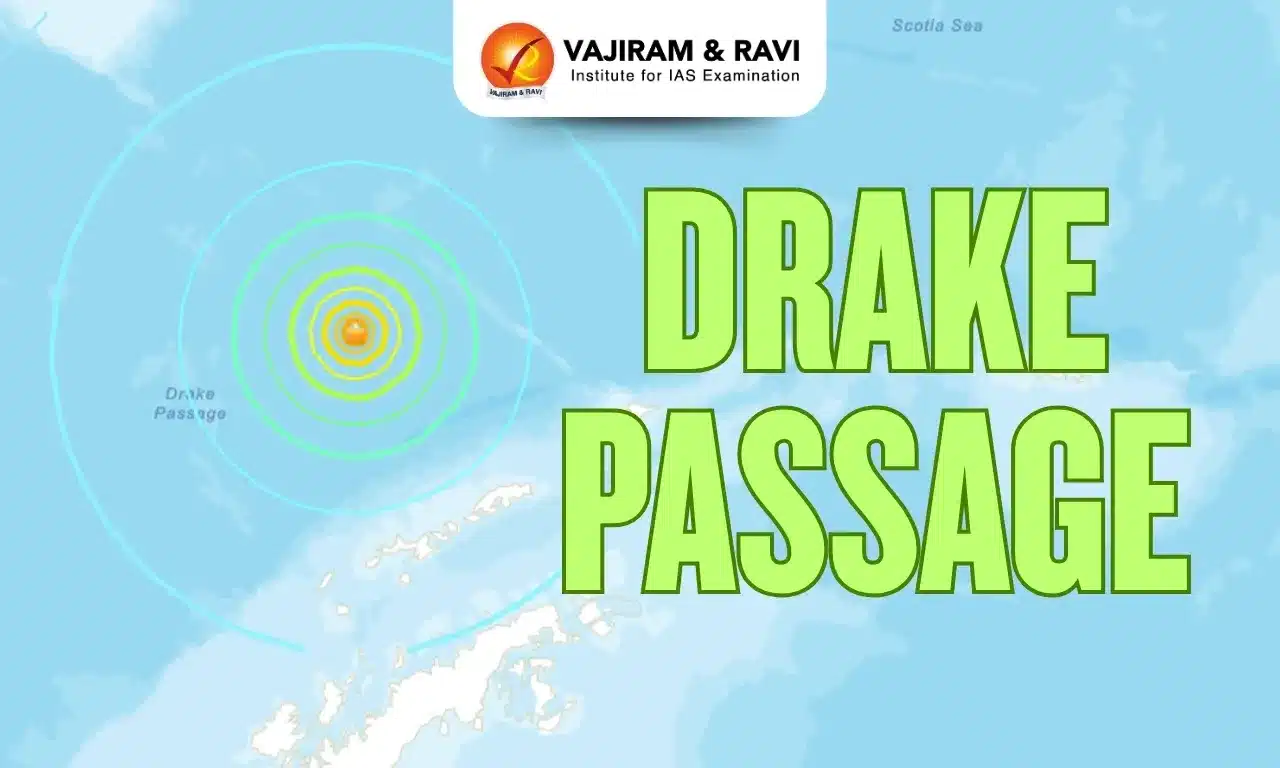
Recently, a strong earthquake of magnitude 7.5 hit Drake Passage and a tsunami alert was issued briefly.

About Drake Passage

  • It is located between South America's Cape Horn and the South Shetland Islands of Antarctica.
  • The passage is named after Sir Francis Drake, who was the first Englishman to circumnavigate the globe.
  • It is a deep and wide waterway that connects the southwestern Atlantic and southeastern Pacific Oceans.
  • It is considered one of the roughest waterways in the world because here, layers of cold seawater from the south and warm seawater from the north collide to form powerful eddies, which when combined with strong winds and storms can be treacherous for those attempting to navigate it.
  • It is also the narrowest stretch in the Southern Ocean and spans approximately 800 km between the southern tip of South America and the northern tip of the West Antarctic Peninsula
  • The Drake Passage defines the zone of climatic transition separating the cool, humid, subpolar conditions of Tierra del Fuego and the frigid, polar regions of Antarctica. 
  • The winds over the Drake Passage are predominantly from the west and are most intense to the north around Cape Horn. 
  • The Drake Passage played an important part in the trade of the 19th and early 20th centuries before the opening of the Panama Canal.

Source: HT

Drake Passage FAQs

Q1: Why is the Drake Passage so rough?

Ans: This is due to strong currents caused by the lack of nearby land, as well as the strength and structure of waves which can occur – particularly in stormy seasons.

Q2: What is the Drake Passage?

Ans: The Drake Passage defines the zone of climatic transition separating the cool, humid, subpolar conditions of Tierra del Fuego and the frigid, polar regions of Antarctica.

Spratly Islands

Spratly Islands

Spratly Islands Latest News

Vietnam has significantly expanded island-building work in areas it claims in the Spratly Islands chain of the disputed South China Sea and will match and likely surpass the scale of such activity there by China, a U.S. think tank reported recently.

About Spratly Islands

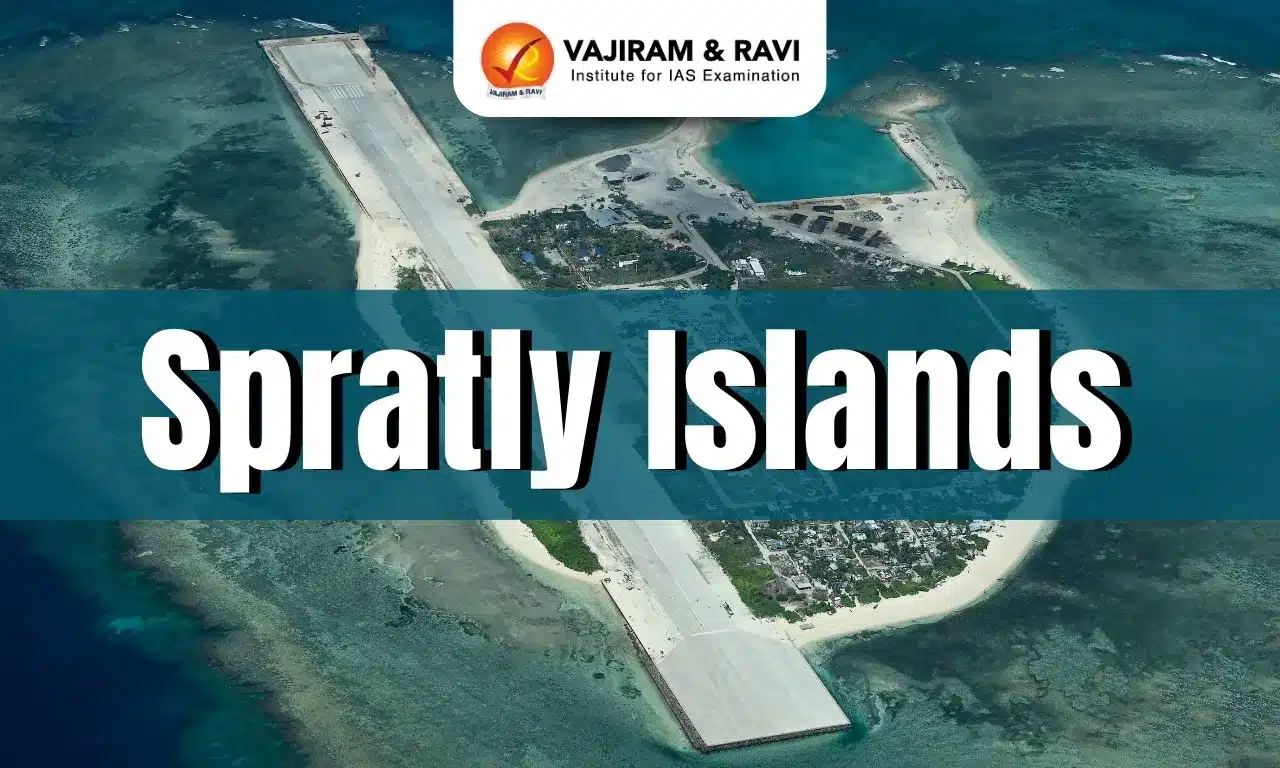
  • They are a large group of reefs, shoals, atolls, and small islets in the South China Sea of the Pacific Ocean. 
  • They are located north of insular Malaysia and are roughly midway between Vietnam and the Philippines.
  • They are spread out over a vast area of ocean measuring some 158,000 square miles (409,000 square km).
  • Climate: Tropical
  • A great number of them are submerged. 
  • Of the 12 main naturally occurring islets, the largest is the 90-acre (36-hectare) Itu Aba.
  • Another, called Spratly Island or Storm Island, measures 900 by 1,500 feet (275 by 450 metres). 
  • Turtles and seabirds are the only wildlife in these islands. There is no permanent human habitation.
  • History:
    • France held them between 1933 and 1939. 
    • During World War II Japan occupied the archipelago and developed it as a submarine base.
    • After the war the Chinese Nationalist government established a garrison on Itu Aba, which the Nationalists maintained after their exile to Taiwan in 1949.
    • When Japan renounced its claim to the islands in 1951, Taiwan, mainland China, and Vietnam all declared themselves the rightful owners, and the Philippines added a claim based on proximity in 1955.
  • Claims:
    • They are claimed in their entirety by China, Taiwan, and Vietnam, while portions are claimed by Malaysia and the Philippines.
    • Although Brunei did not claim any territory in the Spratlys, it claims an exclusive economic zone over this area that contained a Spratly reef.

Source: REUT

Spratly Islands FAQs

Q1: The Spratly Islands are located in which sea?

Ans: South China Sea

Q2: The Spratly Islands lie roughly midway between which two countries?

Ans: Vietnam and the Philippines

Q3: Which is the largest naturally occurring islet of the Spratly Islands?

Ans: Itu Aba

Q4: Which countries claim the Spratly Islands in their entirety?

Ans: China, Taiwan, and Vietnam, while portions are claimed by Malaysia and the Philippines.

SMILE Scheme

SMILE Scheme

SMILE Scheme Latest News

Recently, the central government of India launched a 15 days Entrepreneurship Development Programme under the SMILE scheme to make the transgender persons self-reliant by granting them economic empowerment.

About SMILE Scheme

  • The Support for Marginalized Individual for Livelihood and Enterprise (SMILE) scheme is a Central Sector Scheme.
  • It includes two sub-schemes
    • Central Sector Scheme for Comprehensive Rehabilitation for Welfare of Transgender Persons’ and
    • ‘Central Sector Scheme for Comprehensive Rehabilitation of persons engaged in the act of Begging’.
  • This umbrella scheme covers several comprehensive measures including welfare measures for both transgender persons and persons who are engaged in the act of begging.

Features of the SMILE Scheme

  • It provides Scholarships for Transgender Students studying in IX and till  post-graduation to enable them to complete their education.
  • It has provisions for Skill Development and Livelihood under the PM-DAKSH scheme.
  • Through Composite Medical Health it provides a comprehensive package in convergence with PM-JAY supporting Gender-Reaffirmation surgeries through selected hospitals.
  • The Housing facility in the form of ‘Garima Greh’ ensures food, clothing, recreational facilities, skill development opportunities, recreational activities and medical support etc. to the Transgender community and the people engaged in the act of begging.
  • The Provision of Transgender Protection Cell in each state will monitor cases of offences and to ensure timely registration, investigation and prosecution of offences.
  • The National Portal & Helpline will provide necessary information and solutions to the Transgender community and the people engaged in the act of begging when needed.
  • Nodal Ministry: Ministry of Social Justice & Empowerment

Source: PIB

SMILE Scheme FAQs

Q1: Which Ministry implements the SMILE Scheme?

Ans: Ministry of Social Justice and Empowerment

Q2: What are the two sub-schemes under the SMILE Scheme?

Ans: Central Sector Scheme for Comprehensive Rehabilitation for Welfare of Transgender Persons and Central Sector Scheme for Comprehensive Rehabilitation of Persons Engaged in Begging.

Q3: What is the role of ‘Garima Greh’ under the SMILE Scheme?

Ans: Shelter homes for transgender persons

Kilauea Volcano

Kilauea Volcano

Kilauea Volcano Latest News

Hawaii’s Kilauea volcano erupted again, sending lava fountains up to 30 metres high, marking its 31st eruption since December.

About Kilauea Volcano

  • It is one of the world’s most active volcanoes. 
  • It is a shield-type volcano located in the southeastern part of the island of Hawaii, Hawaii state, United States.
  • The volcano is 4,090 feet (1,250 meters) high.
  • It is a long dome built of lava eruptions. 
  • The summit caldera contains a lava lake known as Halema`uma`u that is said to be the home of the Hawaiian volcano goddess, Pele.
  • Kilauea’s slopes merge with those of the nearby volcano Mauna Loa on the west and north.
  • Kilauea has been erupting on a continuous basis since 1983.
  • Kilauea’s frequent eruptions are usually nonexplosive and are contained within Halema‘uma‘u, which sometimes rises and overflows along the floor and flanks of the caldera proper.

Key Facts about Shield Volcano

  • They are the largest volcanoes on Earth that actually look like volcanoes (i.e., not counting flood basalt flows). 
  • The Hawaiian shield volcanoes are the most famous examples. 
  • Shield volcanoes are almost exclusively basalt, a type of lava that is very fluid when erupted. For this reason, these volcanoes are not steep. They are broad volcanoes with gentle slopes.
  • Eruptions at shield volcanoes are only explosive if water somehow gets into the vent; otherwise they are characterized by low-explosivity fountaining that forms cinder cones and spatter cones at the vent; however, 90% of the volcano is lava rather than pyroclastic material.
  • They are built by repeated eruptions that occurred intermittently over vast periods of time (up to a million years or longer).

Source: TT

Kilauea Volcano FAQs

Q1: Kilauea Volcano is located in which country?

Ans: United States

Q2: What type of volcano is Kilauea?

Ans: Shield volcano

Q3: Kilauea’s slopes merge with which nearby volcano?

Ans: Mauna Loa

Daily Editorial Analysis 23 August 2025

Daily Editorial Analysis

A Court Order That Was Barking Up the Wrong Tree

Context

  • On August 11, 2025, the Supreme Court of India issued an order directing the rounding up and incarceration of all street dogs in New Delhi into mass shelters.
  • While the order was stayed just eleven days later, its initial pronouncement revealed deep flaws in legal reasoning, scientific understanding, and moral responsibility.
  • Far from solving the problem of dog bites and public health, the decree threatened to create a humanitarian and ecological disaster while diverting public attention from the city’s more urgent crises.

The Problematic Aspect of SC Order on Stray Dogs

  • A Blueprint for Catastrophe

    • The Court’s order was hailed in some quarters as a long-awaited solution to the so-called stray dog menace.
    • Yet, evidence from both India and abroad demonstrates that mass confinement of street dogs is an unscientific and counterproductive approach.
    • Experiences in the United States with the pound system show that such shelters become sites of overcrowding, psychological distress, aggression, and disease outbreaks.
    • Studies, such as those by sociologist Leslie Irvine and researcher David Tuber, confirm that long-term confinement causes severe behavioural deterioration in dogs.
    • In the Indian context, mass shelters would inevitably collapse under the sheer numbers involved.
    • Delhi’s lakhs of territorial dogs, suddenly captured and caged, would fight violently, leading to injuries and deaths.
  • Bypassing Established Guidelines

    • The order also ignored the well-documented vacuum effect: the mass removal of dogs from one area merely invites migration from surrounding regions.
    • Nature fills the void, and food sources in Delhi would continue to draw dogs from neighbouring states.
    • Simultaneously, the disappearance of street dogs, who serve as efficient scavengers, would likely trigger surges in rodent and monkey populations, creating new public health crises.
    • In bypassing global and national guidelines, such as the WHO’s recommendations and India’s National Action Plan for Dog Mediated Rabies Elimination (NAPRE), the Court’s directive strayed dangerously from science.

The Social and Ethical Dimensions and The Politics of Distraction

  • The Social and Ethical Dimensions

    • The narrative that the dog issue pits an elite against the poor is both simplistic and cruel.
    • As scholar Yamini Narayanan’s work highlights, street dogs occupy a symbiotic space within urban ecosystems.
    • For Delhi’s homeless, citizens failed repeatedly by the state, street dogs are not a menace but companions and guardians, providing comfort and protection in the harshness of life on the pavements.
    • To forcibly remove these animals would not only traumatise them but also strip vulnerable humans of their only source of emotional solidarity.
  • The Politics of Distraction

    • Perhaps most troublingly, the dog order functioned as a diversion from the governance failures that plague the capital.
    • By foregrounding an emotional and polarising issue, attention was drawn away from collapsing infrastructure, perennial flooding, corruption, inflation, and even allegations of voter manipulation.
    • Instead of holding the Municipal Corporation of Delhi (MCD) accountable for its inability to manage sanitation, public health, and statutory duties, the Court’s order offered a convenient scapegoat: the city’s dogs.

The Way Forward

  • Animal Birth Control

    • The answer to Delhi’s dog population challenge has long been known: the Animal Birth Control (ABC) programme.
    • Proven successful in cities like Jaipur and Jodhpur, ABC relies on sterilisation and vaccination to reduce dog populations gradually while ensuring high levels of rabies immunity.
    • A 2010 study from Jodhpur demonstrated measurable and sustainable declines in dog populations following such interventions.
    • The problem, therefore, lies not with the animals but with the MCD’s dereliction of duty.
    • Chronic underfunding, unmet sterilisation targets, and lack of accountability have crippled the programme’s implementation.
    • In fact, the Supreme Court’s own 2024 Maheshwari judgment upheld the ABC Rules, 2023, reaffirming their scientific and compassionate foundations.
  • Towards an Evidence-Based Future

    • There is no denying that dog bites must be addressed. But the answer is not mass incarceration, a final solution approach that is both inhumane and ineffective.
    • Instead, targeted and evidence-based strategies are needed.
    • Aggressive dogs must be identified, captured, and monitored, but indiscriminate round-ups serve no purpose.
    • Vaccination, sterilisation, and public education remain the only sustainable, humane, and scientifically grounded methods of control.

Conclusion

  • The Supreme Court’s August 11 order was a victory of hysteria over science, expedience over compassion, and distraction over accountability.
  • By staying the order, the Court has already corrected course, but the episode should serve as a warning.
  • India’s cities cannot afford policy dictated by panic or populist narratives; Instead, they must embrace proven, humane, and scientific strategies, while holding governance institutions accountable for their failures.

A Court Order That Was Barking Up the Wrong Tree FAQs

Q1. What was the Supreme Court’s order of August 11, 2025, regarding street dogs in New Delhi?
Ans. The Court ordered that all street dogs in New Delhi be rounded up and confined in mass shelters.

Q2. Why is mass sheltering of dogs considered a flawed solution?
Ans. Mass sheltering leads to overcrowding, disease outbreaks, aggression, and ecological problems such as the “vacuum effect,” where new dogs migrate into cleared areas.

Q3. How are street dogs significant to Delhi’s homeless population?

Ans. For many homeless people, street dogs provide companionship, protection, and emotional support in otherwise harsh living conditions.

Q4. What is the scientifically proven solution to managing street dog populations?
Ans. The Animal Birth Control (ABC) programme, based on sterilisation and vaccination, is the only sustainable and humane solution.

Q5. What larger issue does the focus on street dogs distract from?
Ans. The street dog debate diverts attention from governance failures in Delhi, such as poor infrastructure, corruption, and inadequate public health management.

Source: The Hindu


Set the Guardrails for AI Use in Courtrooms

Context

  • The integration of Artificial Intelligence (AI) into judicial processes represents one of the most significant shifts in the administration of justice in recent years.
  • In July 2025, the Kerala High Court became the first judicial body in India to release a policy regulating the use of AI in the district judiciary.
  • This policy is timely and forward-looking, given the enormity of India’s judicial backlog—over five crore pending cases, and the potential of AI to introduce efficiency, accuracy, and speed into a strained system.
  • However, while the allure of AI-enabled efficiency is undeniable, its risks and ethical implications demand equal attention.

The Promise of AI in Judicial Processes

  • AI tools offer numerous advantages for courts, particularly in automating routine tasks.
  • Document translation, transcription, defect identification in filings, and legal research can all be significantly accelerated through AI integration.
  • For a system plagued by excessive pendency and resource constraints, these efficiencies are attractive incentives.
  • Pilot projects in Indian courts have already explored AI transcription of oral arguments and witness depositions, with the potential to standardize records and reduce delays.
  • Beyond speed, AI can also increase accessibility by providing translations in regional languages, ensuring litigants and lawyers from diverse linguistic backgrounds can engage more effectively.
  • Moreover, AI-powered data analysis may help in identifying case patterns, facilitating judicial reforms, and streamlining case management.

Risks and Challenges

  • Translating and Transcription Errors

    • Instances such as the mistranslation of leave granted into holiday approved or transcription software mistaking Noel for no underscore the dangers of over-reliance on imperfect systems.
    • Large Language Models (LLMs), while powerful, are prone to hallucinations, generating false case laws or misrepresenting facts, an unacceptable risk in legal contexts where accuracy is paramount.
  • Lack of Clear Framework

    • AI risks reducing adjudication into mechanical, rule-based outcomes, neglecting the contextual interpretation, human reasoning, and moral judgment that underpin justice.
    • Furthermore, without clear frameworks for data storage, access, and security, the use of sensitive personal information through AI could lead to breaches of privacy.
    • Market-driven pilot projects offered on a test basis risk creating dependencies without long-term sustainability, especially in the absence of supporting infrastructure such as reliable internet connectivity and secure digital systems.
  • Absence of Robust Risk Management

    • Equally concerning is the absence of robust risk management frameworks in AI procurement by courts.
    • Current practices reveal little attention to ethical safeguards, technical accountability, or error mitigation.
    • Even where human oversight exists, such as retired judges manually vetting AI translations, the problem remains that AI systems continuously learn and adapt, introducing new forms of error in evolving contexts.

Safeguards and Frameworks for Responsible Adoption

  • AI Literacy

    • Judges, lawyers, and court staff require training not just in using AI tools but also in understanding their limitations and risks.
    • Judicial academies and bar associations, working alongside AI governance experts, can lead capacity-building programmes that equip legal professionals to critically assess AI outputs.
  • Clear Guidelines

    • Second, Clear Guidelines must govern the individual use of generative AI in research and judgment writing.
    • Litigants should have the right to know if AI has been used in a case, whether for transcription, legal research, or drafting.
    • Courts may also consider offering litigants the right to opt out of AI-assisted proceedings, ensuring respect for individual consent and safeguarding against blind reliance on machines.
  • Standardised Procurement Frameworks

    • These should include pre-procurement assessments to evaluate whether AI is the most suitable solution, followed by strict criteria for explainability, accountability, and data security.
    • Such frameworks can help courts monitor vendor performance and compliance with ethical and legal standards, tasks that often extend beyond judicial expertise.

The Way Forward

  • As Indian courts cautiously move toward AI adoption, it is essential not to lose sight of the ultimate purpose of judicial processes, the pursuit of justice.
  • Efficiency cannot come at the cost of fairness, transparency, or accountability.
  • The challenge lies not in rejecting AI altogether but in ensuring its careful, ethical, and context-sensitive adoption.
  • If deployed with appropriate literacy, guidelines, procurement frameworks, and institutional support, AI can become a valuable ally to the judiciary.

Conclusion

  • The Kerala High Court’s initiative in laying down the first policy framework for AI in the judiciary is a critical milestone.
  • It signals recognition of both the transformative potential of AI and the urgent need for safeguards.
  • As courts across the country experiment with digital solutions, the key lies in ensuring that
  • technology enhances human judgment rather than displaces it.

Set the Guardrails for AI Use in Courtrooms FAQs

Q1. What prompted the Kerala High Court to release AI guidelines in 2025?
Ans. The Kerala High Court released AI guidelines to regulate the use of AI in judicial processes, as India faces over five crore pending cases and AI tools promise greater speed and efficiency.

Q2. What are some benefits of AI in the judiciary?
Ans.
AI can improve efficiency by automating tasks such as document translation, transcription, and legal research, while also making courts more accessible to diverse linguistic groups.

Q3. Why is over-reliance on AI tools in courts risky?
Ans.
Over-reliance is risky because AI tools can make errors, generate false information, and reduce complex judicial decision-making into mechanical, rule-based outcomes.

Q4. What role does AI literacy play in responsible adoption?
Ans. AI literacy ensures that judges, lawyers, and court staff understand both how to use AI tools and the risks they carry, preventing blind trust in machine outputs.

Q5. What is the ultimate purpose of AI in the judicial system?
Ans.
The ultimate purpose of AI in the judicial system is to support and enhance the delivery of justice without replacing the human reasoning and fairness essential to adjudication.

Source: The Hindu


AI and the Future of Work in India - Towards Inclusive Growth

Context:

  • Artificial Intelligence (AI) is rapidly reshaping global economies.
  • For India, the challenge lies in ensuring that AI enhances productivity and generates inclusive employment rather than deepening inequalities.

AI’s Potential Impact on Jobs and Economy:

  • ServiceNow–Pearson AI Skills Research 2025 report: AI could reshape over 10.35 million jobs and create 3 million new tech roles in India by 2030, placing the country ahead of Singapore and Australia in AI transformation.
  • International Labour Organisation (ILO) 2025 study:
    • Jobs may evolve with AI, rather than disappear.
    • Structural challenges like low skilling levels and informal workforce vulnerabilities remain key hurdles.
  • Sectoral impact:
    • Agriculture: Limited exposure to AI.
    • Labour-intensive sectors: Especially services, which contributed 55% to GDP and 31% to employment in FY24, are highly vulnerable.

AI Pathways - Automation vs. Augmentation:

  • Automation:
    • Replaces workers, increases efficiency.
    • Risks large-scale job losses.
  • Augmentation:
    • Complements human effort.
    • Enhances productivity while preserving employment.
  • Key argument (by Economist and Nobel Laureate Daron Acemoglu):
    • AI’s impact is a policy choice, not destiny.
    • India must avoid the automation trap.

Policy Priorities for Inclusive AI:

  • Skilling and lifelong learning:

    • Embed digital and AI competencies across schools, ITIs, universities, and vocational centres.
    • Large-scale reskilling initiatives by firms like Infosys, Tata Steel, and Siemens show positive pathways.
  • Reducing inequality:

    • Build inclusive infrastructure.
    • Programs like Atal Innovation Mission, Startup India, Future Skills PRIME, and Youth for Unnati and Vikas with AI must be scaled up.
  • Fostering entrepreneurship:

    • Support MSMEs through access to digital tools, computing, and tailored skilling.
    • Focus on sustainable enterprises, not just unicorns.

Ensuring Competitive and Open AI Ecosystems:

  • Prevent monopolisation by vertically integrated firms.
  • Ensure contestability in AI markets:
    • Open APIs - A publicly available application programming interface that provides developers with programmatic access.
    • Interoperable systems.
    • Indigenous Small Language Models (SLMs) and vernacular AI tools.
  • Treat computing, storage, and datasets as public goods under India’s Digital Public Infrastructure model.

Way Forward:

  • AI should be seen as saarthi (charioteer), not vinashak (destroyer).
  • With right policies, infrastructure, and skilling, India can transform AI into a driver of inclusive growth.
  • Policy choices today will determine whether AI bridges or widens India’s employment and productivity gaps.

Conclusion:

  • India stands at a critical juncture where the trajectory of AI adoption will determine whether it deepens inequalities or drives inclusive prosperity.
  • By prioritising augmentation over automation, investing in skilling, and ensuring open, competitive AI ecosystems, India can harness AI as a transformative force for equitable and employment-rich growth.

AI and the Future of Work in India FAQs

Q1. How is AI expected to reshape employment in India by 2030?

Ans. AI could reshape over 10.35 million jobs and create 3 million new tech roles, positioning India ahead of Singapore and Australia in AI transformation.

Q2. What is the central dilemma of AI adoption in India?

Ans. The dilemma lies between automation (job replacement and efficiency) and augmentation (human-AI collaboration preserving employment).

Q3. Why is skilling critical for inclusive AI-led growth in India?

Ans. Skilling ensures that India’s workforce, especially informal workers, can adapt to evolving AI-driven tasks and avoid large-scale job displacement.

Q4. How can India prevent monopolisation in AI ecosystems?

Ans. By promoting open APIs, interoperability, indigenous AI models, and treating computing/storage as public goods under the Digital Public Infrastructure framework.

Q5. What role can MSMEs play in India’s AI-driven future?

Ans. Empowered with digital tools, computing access, and tailored skilling, MSMEs can emerge as engines of employment-rich and inclusive growth.

Source: IE

Daily Editorial Analysis 23 August 2025 FAQs

Q1: What is editorial analysis?

Ans: Editorial analysis is the critical examination and interpretation of newspaper editorials to extract key insights, arguments, and perspectives relevant to UPSC preparation.

Q2: What is an editorial analyst?

Ans: An editorial analyst is someone who studies and breaks down editorials to highlight their relevance, structure, and usefulness for competitive exams like the UPSC.

Q3: What is an editorial for UPSC?

Ans: For UPSC, an editorial refers to opinion-based articles in reputed newspapers that provide analysis on current affairs, governance, policy, and socio-economic issues.

Q4: What are the sources of UPSC Editorial Analysis?

Ans: Key sources include editorials from The Hindu and Indian Express.

Q5: Can Editorial Analysis help in Mains Answer Writing?

Ans: Yes, editorial analysis enhances content quality, analytical depth, and structure in Mains answer writing.

Amartya Sen: Migration Integral to Globalisation and Human Progress

Migration and Globalisation

Migration and Globalisation Latest News

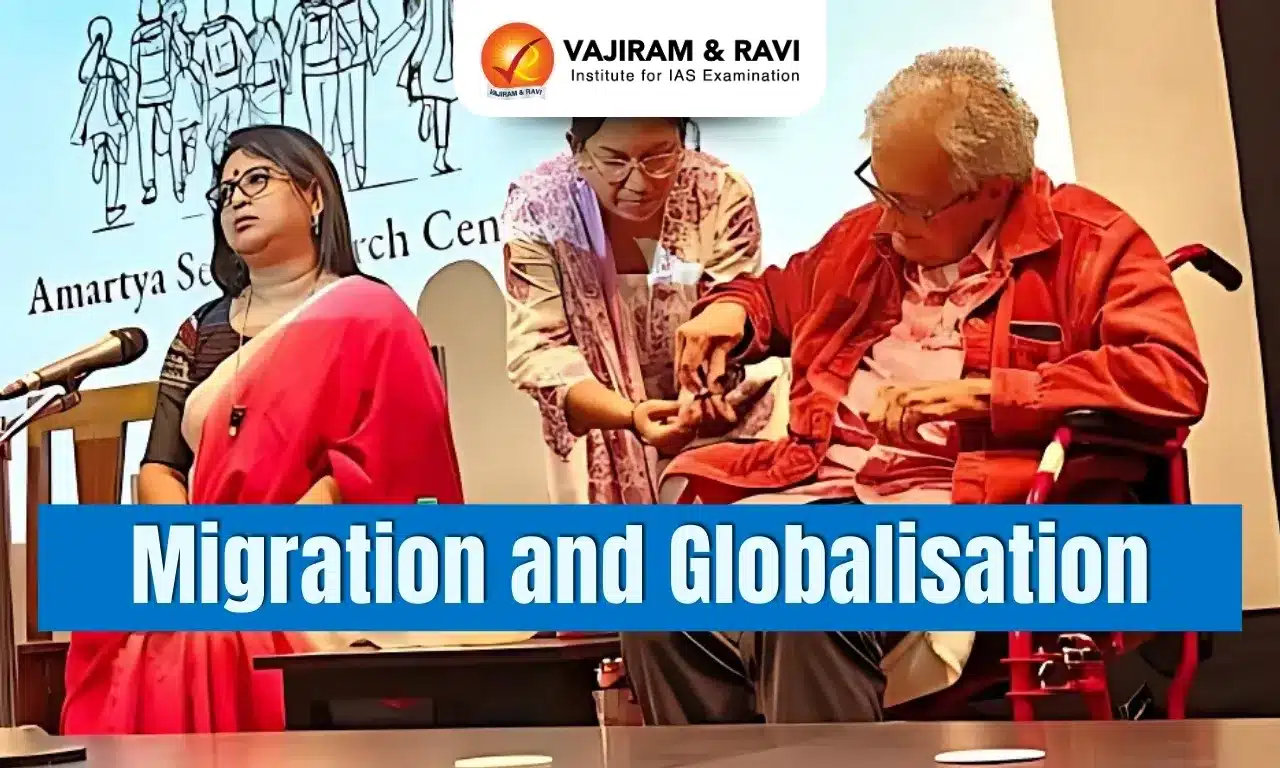
  • Nobel laureate Amartya Sen, during an interaction with students in Kolkata on August 22, 2025, highlighted that migration is essential to globalisation and has historically driven human progress. 
  • He further stressed that diversity is the foundation of Indian society, fostering genuine growth and development for the nation and its people.

Linkages Between Migration and Globalisation

  • Migration is both a cause and consequence of globalisation. It represents the mobility of people across and within borders in search of opportunities shaped by global economic changes.
  • While often portrayed as problematic, migration contributes significantly to sustainable development. 
  • In poorer regions, remittances improve household security and support local economies, while in ageing industrial societies, migrant workers fill labour shortages and sustain welfare systems.

Migration and Global Economic Changes

  • International Migration: Driven by global restructuring of labour markets, especially demand for semi-skilled and unskilled workers in developed countries. 
    • Migrants often find employment in informal sectors such as textiles, construction, and agriculture.
  • Internal Migration: Linked to relocation of industries and tourism growth in the Global South, where rural workers, especially women, migrate for low-paying but vital jobs. 
    • Migration is also a path for youth to gain independence and exposure.

Contributions of Migrants

  • Economic Support: Remittances are critical for household survival, investment in agriculture, housing, and local enterprises.
  • Skill Transfer: Returning migrants bring new skills and open non-farm opportunities if adequate infrastructure exists.
  • Social Impact: Migration fosters cultural exchange and reshapes community expectations, especially for women and youth seeking autonomy.

Key Challenges

  • Restrictive Policies: Immigration controls often strengthen illegal smuggling networks and exploitative employers, rather than addressing underlying labour market needs.
  • Exclusion from Urban Services: Internal migrants face difficulties in accessing housing, healthcare, and education due to restrictive policies.
  • Informal Labour Exploitation: Many undocumented migrants work under poor conditions with limited rights and protections.
  • Unequal Benefits: Skilled migrants earn more and invest productively, while unskilled migrants face lower incomes and limited capacity to send remittances.
  • Gender Disparities: Women migrants often face social pressures but can be strong agents of change where they have access to land and resources.

Policy Imperatives

  • The report stresses that migration should be recognised as both a choice and a contributor to development, not merely a problem to be controlled. 
  • Policies must:
    • Protect migrants’ rights and improve working conditions.
    • Support productive use of remittances through training and infrastructure.
    • Ensure equitable access to resources, especially for women.
    • Reduce structural constraints that force people into migration as the only survival strategy.

Amartya Sen on Migration and Diversity

  • During an interaction with students in Kolkata, Nobel laureate Amartya Sen underscored that migration is fundamental to globalisation and has historically driven human progress
  • He explained that cultural, linguistic, scientific, and artistic advancements—such as the repeated Arabic translations of Brahmagupta’s mathematical works—reflect migration’s role in collaboration and knowledge-sharing. 
  • Stressing that “almost nothing would happen” without the movement of people, Sen noted that migration enriches societies through food, music, culture, and ideas. 
  • He also highlighted that diversity forms the bedrock of Indian society, enabling true growth of the nation and its people. 
  • His remarks come amid recent attacks on migrants from West Bengal in other states, which have caused livelihood losses.

Conclusion

  • Migration is deeply linked with globalisation and has long been central to human survival and progress. 
  • Its contributions to economic growth, cultural exchange, and sustainable development are undeniable. 
  • However, without supportive policies, migrants remain vulnerable to exploitation, exclusion, and inequality. 
  • Recognising their role and safeguarding their rights is essential to harness migration as a force for inclusive global development.

Source: TH | IIED

Migration and Globalisation FAQs

Q1: What did Amartya Sen say about migration and globalisation?

Ans: He said migration has been a major source of global progress and is essential for cultural and economic advancement.

Q2: Why does Sen emphasise migration’s importance?

Ans: He argued that without migration, “almost nothing would happen,” as it fosters collaboration in culture, knowledge, food, and music.

Q3: What role does diversity play according to Sen?

Ans: He stated that diversity is the bedrock of Indian society and crucial for the nation’s genuine growth and development.

Q4: What historical example did Sen cite?

Ans: He mentioned that Brahmagupta’s mathematics book was translated six times into Arabic, showing migration’s role in knowledge exchange.

Q5: What is the contemporary context of his remarks?

Ans: His comments come amid rising attacks on Bengali migrants in other states, causing livelihood losses and political controversy.

NITI Aayog Proposes Model Homestay Policy to Boost Tourism Growth

NITI Aayog Homestay Policy

NITI Aayog Homestay Policy Latest News

  • NITI Aayog has released a report titled Rethinking Homestays: Navigating Policy Pathways
  • The report provides a framework for States to harmonise regulations and build an inclusive homestay ecosystem. 
  • It highlights the vast economic potential of alternative accommodations like homestays and Bed and Breakfast (BnB) in driving sustainable tourism growth. 
  • It also presents a strategic roadmap to unlock opportunities in this sector, aiming to boost local incomes, diversify India’s tourism offerings, and strengthen community-based tourism.

State of Travel and Tourism in India

  • India’s travel and tourism sector has shown remarkable post-pandemic recovery, driven largely by domestic tourism. 
  • According to WTTC’s 2024 Economic Impact Research, the sector contributed ₹21.15 lakh crore to the economy in 2024, marking a 21% rise from 2019, and is projected to reach ₹43.25 lakh crore by 2034, accounting for 7.6% of GDP
  • It currently employs 4.325 crore people—one in every eleven jobs in India—with employment expected to grow to 6.3 crore by 2034. 
  • Domestic tourist spending in 2024 stood at ₹16 lakh crore, 25% higher than 2019, and may nearly double by 2034, while international tourist spending reached ₹2.85 lakh crore and is expected to touch ₹4.07 lakh crore. 
  • The Draft National Tourism Policy 2022 envisions India as a top five global destination by 2030, with goals to boost tourist arrivals, foreign exchange earnings, and employment. 
  • To support this, the government has raised the Ministry of Tourism’s budget to ₹2,541 crore and is focusing on developing 50 top destinations, promoting PPP projects, supporting homestays through MUDRA loans, and incentivising hotel investments under the Harmonised Master List.

NITI Aayog’s Report on Homestays: Rethinking Homestays – Navigating Policy Pathways

  • NITI Aayog released its report proposing a model policy framework to help States harmonise regulations and create an inclusive homestay ecosystem. 
  • The report emphasises the economic and cultural potential of homestays and BnBs in driving sustainable tourism growth.

Key Insights and Objectives

  • Economic Potential: Homestays can promote sustainable growth, generate local employment, and foster entrepreneurship, especially in rural and semi-urban areas.
  • Cultural Value: They offer travellers culturally immersive experiences, blending authenticity with livelihood creation.
  • Policy Goal: To provide a strategic roadmap for States to strengthen homestays as an integral part of India’s tourism landscape.

Core Recommendations

  • Light-Touch Regulatory Framework
    • Regulations should remain simple, transparent, and flexible. 
    • Focus on safety, heritage protection, and inclusivity while avoiding over-regulation.
  • Digital Empowerment
    • Creation of a centralised digital portal for registration, compliance, renewals, and policy updates.
    • Ensures convenience for hosts and improves consumer trust.
  • Capacity Building and Local Empowerment
    • Training and skill development for hosts.
    • Use of digital platforms to expand outreach and strengthen credibility.
  • Financial Incentives
    • Move from focusing on individual amenities to destination-level incentives.
    • Promote tourism in underserved regions through tiered incentive structures.

Strategic Roadmap

  • The model policy framework aims to:
    • Simplify processes and encourage broader participation.
    • Integrate technology for greater efficiency.
    • Strengthen cultural authenticity while promoting sustainable tourism.
    • Position homestays as a tool for regional development, not just accommodation.

Conclusion

  • NITI Aayog’s report presents homestays as a driver of inclusive growth and sustainable tourism, calling for harmonised state policies, digital integration, and destination-focused incentives. 
  • This approach seeks to unlock the sector’s full potential while safeguarding culture and livelihoods.

Source: TH | PIB | NITI

NITI Aayog Homestay Policy FAQs

Q1: What does NITI Aayog’s report on homestays propose?

Ans: It suggests a model policy framework for States to harmonise regulations and build an inclusive homestay ecosystem in India.

Q2: Why are homestays important for tourism?

Ans: Homestays offer culturally immersive experiences, support local entrepreneurship, and create jobs in rural and semi-urban areas.

Q3: What digital measures does the report recommend?

Ans: It calls for a centralised digital portal for registration, renewals, compliance tracking, and policy updates for homestay operators.

Q4: How does the report link homestays to sustainable growth?

Ans: By blending cultural authenticity with livelihood creation, homestays contribute to inclusive, sustainable tourism development.

Q5: What financial incentives are suggested?

Ans: The report recommends destination-level incentives through a tiered approach, encouraging operators to promote growth in underserved areas.

Lesser Flamingo

Lesser Flamingo

Lesser Flamingo Latest News

A rare sighting of a lesser flamingo (popularly known as Raj Hamsa) near the Fish Mill in Malpe has created excitement among bird enthusiasts and ornithologists alike.

About Lesser Flamingo

  • It is the smallest and most numerous of the world’s flamingo species. 
  • Scientific Name: Phoeniconaias minor
  • Distribution: This species is indigenous to sub-Saharan Africa and western India, with occasional sightings further north, typically regarded as vagrants.
  • Habitat: Lesser flamingos favor environments with highly alkaline or saline lakes, lagoons, and mudflats.

Lesser Flamingo Features

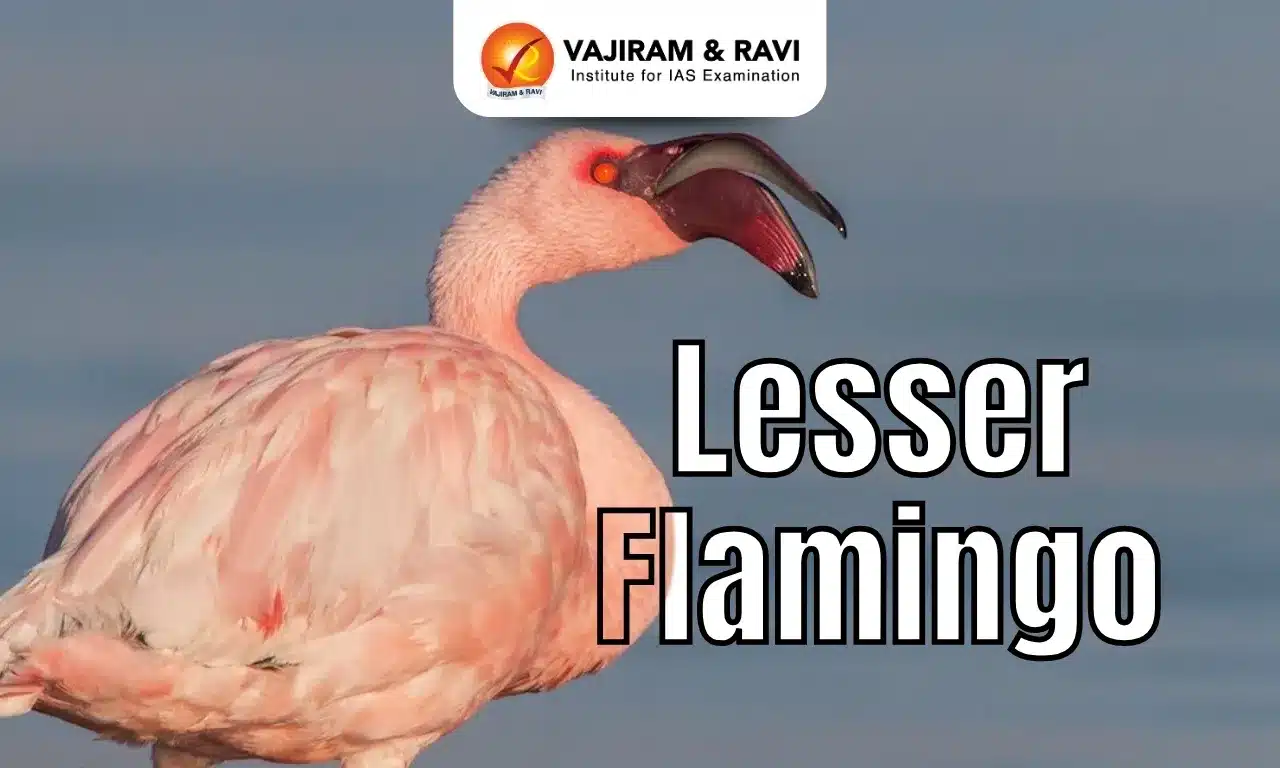
  • Lesser Flamingos stand out with their vivid pink colouring, long thin legs, and striking red eyes. 
  • Their bills are unique, deep red with a prominent black tip, and are specially adapted to filter-feed on microscopic algae and diatoms. 
  • It possesses the “hallux” or hind toe, that some other flamingos do not have.
  • On average, adult males measure significantly larger than females.
  • It is  serially monogamous, meaning they form pairs that remain together while they are raising the young.
  • It is a gregarious bird, often found in large flocks. They are known for their synchronized movements and group behaviors.

Lesser Flamingo Conservation Status

It is classified as 'Near Threatened' under the IUCN Red List.

Source: DAJ

Lesser Flamingo FAQs

Q1: What is the scientific name of the Lesser Flamingo?

Ans: Phoeniconaias minor

Q2: Which type of habitat do Lesser Flamingos prefer?

Ans: Lesser flamingos favor environments with highly alkaline or saline lakes, lagoons, and mudflats.

Q3: What is the IUCN conservation status of the Lesser Flamingo?

Ans: Near Threatened

UGC Draft Curriculum Highlights Ancient Wisdom in Higher Education

Ancient Wisdom

Ancient Wisdom Latest News

  • The UGC has released a draft curriculum framework that integrates Indian Knowledge Systems into undergraduate courses, sparking debate over tradition and academic rigour.

Introduction

  • The University Grants Commission (UGC) has unveiled a draft Learning Outcomes-based Curriculum Framework (LOCF) for undergraduate courses in disciplines such as anthropology, chemistry, commerce, economics, geography, home science, mathematics, physical education, and political science. 
  • A striking feature of this framework is the emphasis on Indian Knowledge Systems (IKS), with provisions to embed traditional wisdom, philosophies, and practices into modern pedagogy. 
  • The draft has been opened for stakeholder feedback.

Focus on Indian Knowledge Systems

  • The LOCF outlines an approach that seeks to contextualise higher education within India’s cultural and intellectual traditions. 
  • This aligns with the National Education Policy (NEP) 2020, which encouraged decolonisation of education and promotion of indigenous systems of knowledge. 
  • Each subject has been tasked with weaving elements of Indian thought into the curriculum, blending heritage with modern learning outcomes.

Subject-wise Integration of Ancient Wisdom

  • Mathematics
    • The draft proposes modules on mandala geometry, yantras, rangoli and kolam as algorithmic art forms, and the study of temple architecture through āyādi ratios. 
    • It highlights contributions of Indian mathematicians in arithmetic, algebra, geometry, and calculus, and their influence on global mathematical traditions.
  • Commerce
    • Commerce education is to incorporate Bhartiya philosophy and the Gurukul system’s holistic learning approach, linking ethical leadership and sustainable practices with modern corporate governance. 
    • Kautilya’s Arthashastra will be taught as a classical text offering insights into trade regulation and financial management. 
    • Concepts such as Ram Rajya in governance, CSR, ESG frameworks, and the Shubh-labh philosophy on profit with responsibility will also find space in the curriculum.
  • Economics
    • The LOCF emphasises dharmic perspectives on wealth and prosperity, trade ethics, and collective enterprise. 
    • Students will study indigenous exchange systems, agrarian values, principles of dana (charity), and the role of the king in the economy, contextualising economics within cultural and moral traditions.
  • Chemistry
    • In chemistry, traditional Indian fermented beverages like kanji, mahua, toddy will be included in a module on alcoholic beverages. 
    • The course also introduces ancient Indian concepts of the parmanu (atom) alongside modern atomic theory. 
    • This integration aims to balance modern scientific education with historical Indian perspectives.
  • Anthropology
    • The draft anthropology curriculum draws from thinkers such as Charaka, Sushruta, Buddha, and Mahavira. 
    • Their reflections on the relationship between nature and culture are presented as indigenous perspectives that enrich anthropological studies.

Criticism and Challenges

  • While the NEP 2020 encourages multidisciplinary learning, the LOCF prioritises single-major pathways. 
  • For instance, in chemistry, 96 out of 172 credits are allotted to discipline-specific core courses, leaving limited room for interdisciplinary exploration. 
  • Opposition-ruled states have criticised the framework, alleging attempts at “saffronisation.” The challenge lies in balancing respect for indigenous traditions with ensuring global competitiveness and academic rigour in higher education.

Significance of the Draft Curriculum

  • The draft curriculum signals a paradigm shift in India’s educational philosophy. By embedding Indian Knowledge Systems into mainstream education, UGC seeks to:
    • Decolonise curricula and promote indigenous heritage.
    • Provide culturally rooted yet globally relevant education.
    • Encourage ethical and sustainable practices in professional fields.
    • Revive the historical contributions of India to mathematics, economics, medicine, and governance.

Future Outlook

  • With feedback from stakeholders invited, the framework could undergo revisions before implementation. 
  • If adopted, this LOCF could redefine the intellectual foundation of Indian higher education, making it more rooted in cultural heritage while aligning with global standards. 
  • However, the challenge will be ensuring that ancient wisdom complements rather than replaces scientific temper, critical thinking, and multidisciplinary inquiry.

Source : TH

Ancient Wisdom FAQs

Q1: What is the UGC’s draft LOCF about?

Ans: The UGC’s draft Learning Outcomes-based Curriculum Framework integrates Indian Knowledge Systems into various undergraduate subjects.

Q2: Which subjects are covered under the draft curriculum?

Ans: The draft covers anthropology, chemistry, commerce, economics, geography, home science, mathematics, physical education, and political science.

Q3: What kind of ancient knowledge is being included in mathematics?

Ans: The draft includes mandala geometry, temple architecture ratios, and contributions of Indian mathematicians.

Q4: How does the draft link commerce education with Indian philosophy?

Ans: It incorporates Kautilya’s Arthashastra, Gurukul values, and concepts like Shubh-labh and Ram Rajya in governance and business ethics.

Q5: Why has the draft curriculum attracted criticism?

Ans: Critics argue it restricts multidisciplinary learning while prioritising Indian traditional systems.

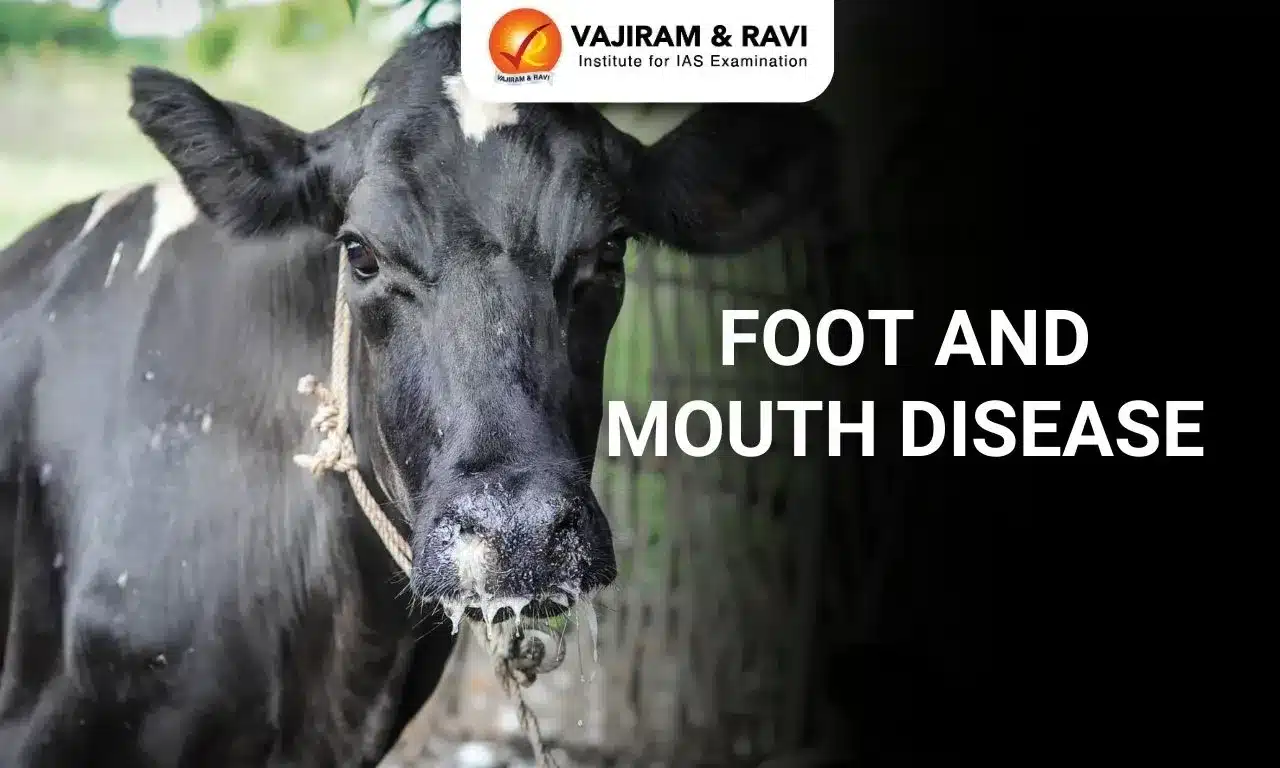
Foot and Mouth Disease (FMD)

What is Foot and Mouth Disease (FMD)?

Hand, Foot, and Mouth Disease Latest News

The national capital is experiencing a significant rise in Hand, Foot, and Mouth Disease (HFMD) cases, especially among children.

About Hand, Foot, and Mouth Disease

  • It is a common viral illness that usually affects infants and children but can also affect adults. 
  • Most adults have strong enough immune systems to defend the virus, but those with immune deficiencies are very susceptible.
  • It tends to spread quickly among children in daycare and schools.
  • The most common cause of HFMD is Coxsackie virus A16.
  • It is often confused with foot-and-mouth (also called hoof-and-mouth) disease, a disease of cattle, sheep, and swine; however, the two diseases are not related—they are caused by different viruses.
  • Symptoms of hand-foot-and-mouth disease include sores in the mouth and a rash on the hands and feet.
  • There's no specific treatment for hand-foot-and-mouth disease. 
  • Most people get better in 7 to 10 days.
  • Complications from HFMD are rare.
  • Rarely, the patient with Coxsackie virus A16 infection may also develop viral (“aseptic”) meningitis in which the person has fever, headache, stiff neck, or back pain and may need to be hospitalized for a few days.

Source: NIE

Foot and Mouth Disease FAQs

Q1: Foot and Mouth Disease (FMD) primarily affects which group of animals?

Ans: It affects all cloven-hoofed animals, including cattle, sheep, goats, camelids, deer, and pigs.

Q2: Does Foot and Mouth Disease (FMD affect humans?

Ans: No, Foot and Mouth Disease (FMD) does not affect humans.

Q3: What is the primary prevention method for Foot and Mouth Disease (FMD)?

Ans: Vaccination

Asia-Pacific Institute for Broadcasting Development

Asia-Pacific Institute for Broadcasting Development

Asia-Pacific Institute for Broadcasting Development Latest News

Recently, India has been elected as the Chairman of the Executive Board of Asia-Pacific Institute for Broadcasting Development (AIBD) during the 23rd AIBD General Conference, held in Phuket, Thailand. 

About Asia-Pacific Institute for Broadcasting Development

  • It was established in 1977 under the auspices of UNESCO.
  • It is a unique regional inter-governmental organisation servicing countries of the United Nations Economic and Social Commission for Asia and the Pacific (UN-ESCAP) in the field of electronic media development.
  • Mandate: The AIBD is mandated to achieve a vibrant and cohesive electronic media environment in the Asia-Pacific region through policy and resource development.
  • The International Telecommunication Union (ITU), the United Nations Development Programme (UNDP), and the United Nations Educational, Scientific and Cultural Organisation (UNESCO) are the founding organisations of the Institute and they are non-voting members of the General Conference.
  •  The AIBD currently has 92 member organisations from across 44 countries, including
    • 26 Government Members represented by 48 national broadcasters
    • 44 Affiliate Members from 28 countries and regions, spanning Asia-Pacific, Europe, Africa, Arab States, and North America
  • Secretariat: It is situated in Kuala Lumpur, Malaysia.

India and AIBD

  • India is one of the founding members of this organization.
  • India last held the position of AIBD Executive Council Chairman in 2016. 
  • Prasar Bharati, India’s public service broadcaster, is the representative body of the Ministry of Information & Broadcasting, Government of India, at AIBD.

Source: PIB

Asia-Pacific Institute for Broadcasting Development FAQs

Q1: What is UNESCO?

Ans: It stands for the United Nations Educational, Scientific and Cultural Organization. It is a specialized agency of the United Nations (UN) that was established on November 16, 1945.

Q2: Where is the secretariat of the Asia-Pacific Institute for Broadcasting Development (AIBD) situated?

Ans: Kuala Lumpur

Ramgarh Vishdhari Tiger Reserve

Ramgarh Vishdari Tiger Reserve

Ramgarh Visdhari Tiger Reserve

Villagers in Bhati Ki Bagchi, on the outskirts of Ramgarh Vishdhari Tiger Reserve, were gripped by fear as tigress RBT-2507, recently released into the wild, continued to prowl near human habitations.

About Ramgarh Visdhari Tiger Reserve

  • It lies in the southeastern part of Rajasthan in the Bindi district with representation of both Vindhyan and Aaravalli elements.
  • It consists of 481.91 sq. km. as the core area and 1019.98 sq. km. as the buffer area, for a total area of 1501.89 sq. km.
  • It is in continuation with the buffer area of Ranthambore Tiger reserve on the northeastern side and Mukundara Hills Tiger Reserve on the southern side.
  • It was notified as a tiger reserve on May 16, 2022.
  • The Mez, a tributary of the Chambal River, passes through the tiger reserve.
  • Vegetation: Dry Deciduous Forest
  • Topography: It varies from gentle slopes to steep rocky cliffs, from the flat-of hills of Vindhyas to the conical hillocks and sharp ridges of the Aravallis.
  • Flora:
    • The habitat is dominated by Dhok (Anogeissus pendula) trees.
    • Other important flora includes Khair (Acacia catechu), Ronj (Acacia Leucophloea), Amaltas (Cassia fistula), Gurjan (Lannea coromodelica), Saler (Boswellia serrata), etc.
  • Fauna:
    • The area is dominated by Leopards and Sloth bears.
    • Other important fauna include Jungle cat, Golden jackal, Hyaena, Crested Porcupine, Indian Hedgehog, Rhesus macaque, hanuman langur, etc.

Source: TOI

Ramgarh Visdhari Tiger Reserve FAQs

Q1: Ramgarh Visdhari Tiger Reserve is located in which state?

Ans: Rajasthan

Q2: What is the total area of Ramgarh Visdhari Tiger Reserve?

Ans: It consists of 481.91 sq. km. as the core area and 1019.98 sq. km. as the buffer area, for a total area of 1501.89 sq. km.

Q3: Which river flows through the Ramgarh Visdhari Tiger Reserve?

Ans: The Mez, a tributary of the Chambal River, passes through the tiger reserve.

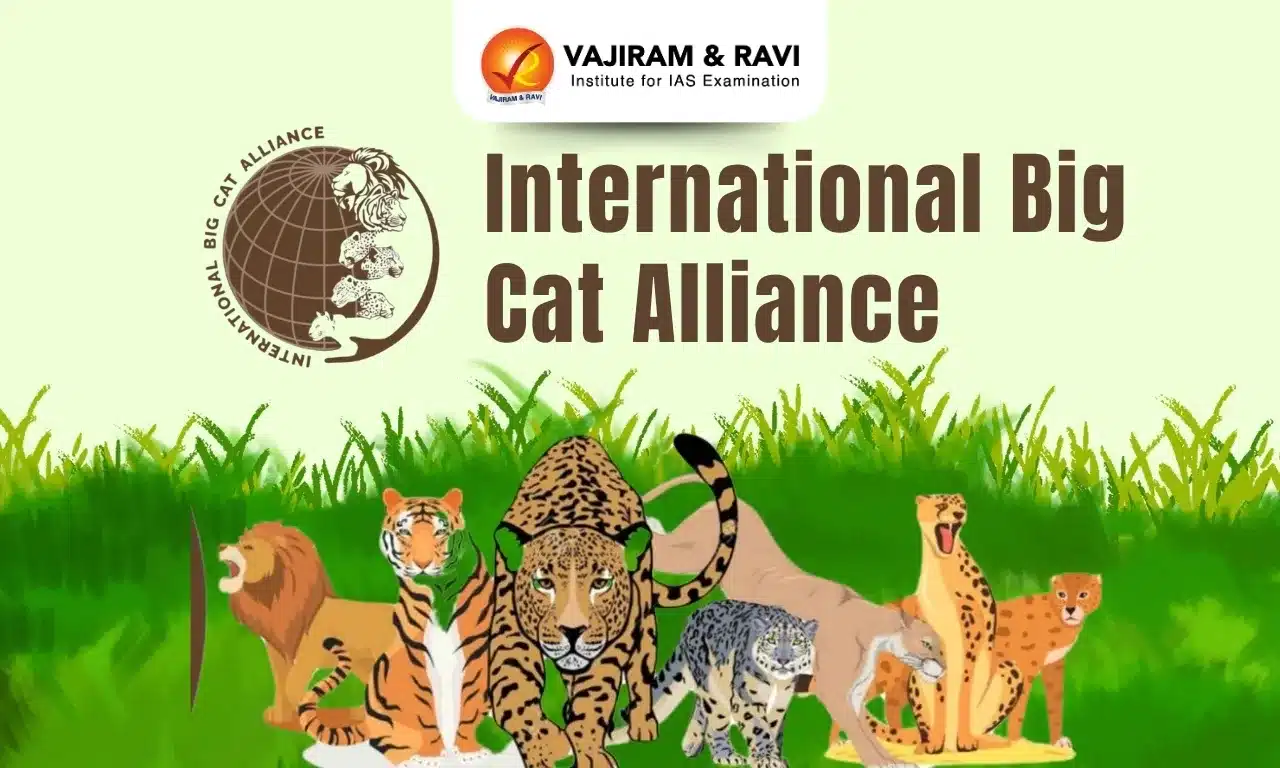
International Big Cat Alliance

International Big Cat Alliance

International Big Cat Alliance Latest News

India has extended privileges and immunities to the International Big Cat Alliance (IBCA) and its officials under the United Nations (Privileges and Immunities) Act, 1947.

About International Big Cat Alliance

  • It was launched in April 2023 during the 50th anniversary of Project Tiger.
  • It is a treaty-based inter-governmental organisation that covers conservation of seven big cats — tiger, lion, leopard, snow leopard, cheetah, jaguar, and puma.
  • The primary objective of the Alliance is to facilitate collaboration and synergy among stakeholders, consolidating successful conservation practices and expertise to achieve the conservation of big cats at a global level.
  • It brings together 95 range and non-range countries, conservation partners, scientific organisations, and corporates to promote collaboration and share conservation practices.
  • Implementation agency: The IBCA is implemented through the National Tiger Conservation Authority (NTCA) under the Ministry of Environment, Forest and Climate Change (MoEFCC).
  • Membership: Membership is open to all UN Member States, including:
    • Range countries, where big cats naturally occur.
    • Non-range countries that are interested in supporting global conservation of big cats.
  • Institutional Support and Funding: India has committed ₹150 crore (for the period 2023–2028) as budgetary support for: Creating a corpus fund, Building infrastructure, and Covering recurring expenses of the IBCA.
  • Members: 12 countries (including India).

Source: DD News

International Big Cat Alliance (IBCA) FAQs

Q1: What is the International Big Cat Alliance (IBCA)?

Ans: The International Big Cat Alliance is a global initiative launched by India in 2023 to facilitate collaboration in the protection and conservation of seven big cat species: Tiger, Lion, Leopard, Snow Leopard, Puma, Jaguar, and Cheetah.

Q2: Which organisation leads the IBCA?

Ans: The International Big Cat Alliance is led by India, leveraging its Project Tiger experience, and aims to unite countries for research, training, and conservation financing.

Q3: Why was the IBCA established?

Ans: The IBCA was created to combat poaching, illegal wildlife trade, and habitat loss, while fostering transboundary cooperation among range countries for big cat conservation.

Enquire Now