Daily Editorial Analysis 25 August 2025

Daily Editorial Analysis

The new Constitution Bill, the Need for a Balancing Act

Context

  • Indian voters expect their representatives to embody moral integrity, yet the persistence of leaders with criminal records occupying positions of power exposes a glaring contradiction.
  • The Constitution (One Hundred and Thirtieth Amendment) Bill, 2025, introduced in the Lok Sabha on August 20, 2025, seeks to address this paradox.
  • It proposes that Ministers, Chief Ministers, and even the Prime Minister must resign, or face automatic removal, if they remain in custody for over thirty consecutive days in connection with offences carrying a potential punishment of five or more years of imprisonment.
  • While this legislative move appears to strengthen accountability, it also presents constitutional and political dilemmas that complicate its promise.

The Constitutional Foundation of the Bill

  • The Bill draws upon Articles 75, 164, and 239AA of the Constitution, which govern the appointment and tenure of Ministers at the Union, State, and Delhi levels.
  • Historically, these provisions have been subject to judicial interpretation in cases such as Shamsher Singh v. State of Punjab and Nabam Rebia v. Deputy Speaker.
  • In S.R. Bommai v. Union of India, the Supreme Court emphasised constitutional morality as an essential guide for sustaining democratic institutions, while in Manoj Narula v. Union of India the Court underscored that individuals facing serious criminal charges should not wield executive power.
  • The Bill thus draws strength from judicial pronouncements, translating ethical expectations into legislative form.

Constitutional and Political Pitfalls

  • Undermining Presumption of Innocence

    • Despite its normative appeal, the Bill encounters serious challenges. Most notably, it undermines the presumption of innocence, a core element of Article 21’s protection of life and liberty.
    • Removal based solely on arrest and detention, rather than conviction, risks penalising individuals before guilt is established.
    • The Supreme Court’s decision in Lily Thomas v. Union of India is instructive here: disqualification of legislators arises only upon conviction, not arrest.
    • By departing from this principle, the Bill risks creating a lower threshold of accountability for Ministers compared to legislators.
  • Over-Reliance on Executive Discretion

    • The reliance on executive discretion further politicises the process.
    • Under the Bill, removal may occur either on the advice of the Prime Minister or Chief Minister, or automatically after thirty days of custody.
    • This dual structure opens the door to political manipulation: allies may be shielded while rivals are exposed to the automatic mechanism.
    • Instead of insulating governance from partisan gamesmanship, the Bill risks embedding it more deeply in political calculations.

Inconsistencies and Practical Dilemmas

  • The Bill also introduces inconsistencies between legislators and Ministers.
  • Legislators face disqualification only upon conviction, but Ministers could be removed on the basis of mere detention.
  • While this may appear to hold executive office to a higher ethical standard, it also creates asymmetry in constitutional treatment, potentially discouraging competent leaders from assuming ministerial responsibilities.
  • Practical complications add further instability. Because the Bill allows reappointment once a Minister is released from custody, political offices could fall into cycles of resignation and reinstatement.
  • This revolving door effect risks creating uncertainty in governance, while offering little real advancement in accountability.
  • Worse, it could invite strategic misuse of the law, with legal processes weaponised for political ends.

The Case for a More Nuanced Approach

  • None of these critiques negate the urgency of reform.
  • Data from the Association for Democratic Reforms shows that 46% of MPs elected in 2024 faced criminal charges, marking a steady increase over the past 15 years.
  • The criminalisation of politics is a corrosive reality that must be addressed. Yet blunt instruments, such as removal based on detention, threaten to sacrifice fairness and stability at the altar of integrity.
  • A more balanced approach is possible. Removal could be linked to judicial milestones such as the framing of charges, ensuring that only cases vetted by a court trigger accountability.
  • Independent mechanisms, such as judicial panels, could provide oversight and prevent executive overreach.
  • Interim suspension of ministerial duties, rather than outright removal, could strike a balance between governance and accountability.
  • Finally, the scope of the Bill should be limited to offences involving corruption or moral turpitude, avoiding overreach into less serious criminal matters.

Conclusion

  • The Constitution (One Hundred and Thirtieth Amendment) Bill, 2025, represents a bold attempt to confront the moral deficit in India’s politics.
  • By seeking to legislate accountability for those in power, it resonates with public demands for cleaner governance.
  • Yet its flaws are significant: it undermines the presumption of innocence, introduces asymmetry in constitutional standards, and risks politicising accountability.
  • Unless the Joint Parliamentary Committee refines the Bill with safeguards of due process and impartiality, it may destabilise governance while failing to deliver genuine reform.

The New Constitution Bill, the Need for a Balancing Act FAQs

Q1. What is the main aim of the Constitution (One Hundred and Thirtieth Amendment) Bill, 2025?
Ans. The Bill aims to ensure cleaner politics by mandating the resignation or removal of Ministers, Chief Ministers, and the Prime Minister if they remain in custody for over 30 consecutive days in serious criminal cases.

Q2. Why is the Bill criticised for undermining constitutional principles?
Ans. It is criticised because it undermines the presumption of innocence under Article 21 by treating detention as grounds for removal even before conviction.

Q3. How does the Bill risk politicising the removal of Ministers?
Ans. The Bill allows removal either on the advice of the Prime Minister or Chief Minister or automatically after 30 days, creating scope for political manipulation of allies and rivals.

Q4. What inconsistency does the Bill create between legislators and Ministers?
Ans. Legislators are disqualified only upon conviction, while Ministers could be removed merely on detention, creating unequal standards for public office.

Q5. What alternative reforms are suggested to balance integrity and fairness?
Ans. Suggested reforms include linking removal to judicial milestones like the framing of charges, creating independent review mechanisms, and limiting the Bill’s scope to offences involving corruption or moral turpitude.

Source: The Hindu


Nourish to Flourish, the Nutrition and Cognition Link

Context

  • Human development is deeply shaped by its earliest stages; Much like the urgency of leaving home at the right time to catch a flight, the first 1,000 days of a child’s life constitute a critical window of opportunity.
  • This period, stretching from conception to a child’s second birthday, is where nutrition, brain development, and cognitive growth converge to lay the foundation for lifelong health, learning, and productivity.
  • Missing this window, as research consistently demonstrates, creates setbacks that are nearly impossible to reverse.

The Science of Early Development

  • Significance of First 1000 Days

    • Scientific evidence underscores the irreplaceable significance of the first 1,000 days.
    • By the age of two, a child’s brain reaches 80% of its adult weight, with synaptic development peaking during this time.
    • The frontal lobes, which govern higher-order skills such as planning and self-regulation, undergo major growth spurts in these years.
    • If the brain’s early circuits are underdeveloped due to poor nutrition or insufficient stimulation, subsequent development is permanently constrained.
  • The Connection Between Nutrition and Cognitive Stimulation

    • Equally critical is nutrition. Deficiencies in the first three years can cause stunting, cognitive impairments, and lifelong disabilities.
    • India, despite decades of progress, continues to grapple with high rates of malnutrition.
    • At the present pace, the country will only reach a stunting prevalence of 10% by 2075, far from the aspirations of a rapidly developing society.
    • Accelerating progress requires recognising that nutrition and cognitive stimulation are inseparable, they are, as the article argues, cut from the same cloth.
    • Research illustrates this connection. Studies in Tamil Nadu found that early iron deficiencies impair language development and cognitive speed.
    • Stand-alone nutrition programmes, while beneficial, fall short compared to interventions that integrate both nutrition and stimulation.
    • This mirrors everyday observations: children absorb language and memory rapidly in their first years, illustrating the power of neuroplasticity.
    • The science is clear, the early years must be seen as the bedrock of human capability.

Childcare Programmes in India: Achievements and Innovations

  • Integrated Child Development Services (ICDS)

    • India has, over the decades, created ambitious frameworks to address this challenge.
    • The Integrated Child Development Services (ICDS), one of the world’s largest childcare programmes, places nutrition and education as twin priorities.
    • Recent initiatives such as Poshan Bhi Padhai Bhi explicitly seek to integrate both aspects, recognizing that one without the other is insufficient.
  • The Navchetana Framework

    • The Navchetana framework builds on this integration by offering structured stimulation activities tailored to children under three.
    • Through play-based approaches, parents, caregivers, and Anganwadi workers can support holistic development rather than replicating rote methods of formal schooling.
    • These innovations embody a recognition that care is relational, interactive, and must be embedded in both home and community.

Gaps and the Road Ahead

  • Yet, the challenges remain formidable. With 14 lakh Anganwadi centres across India, the infrastructure is vast, but coverage and quality vary significantly.
  • Urban areas, in particular, remain underserved, and technology has yet to be fully leveraged to ensure better delivery and accountability.
  • Early learning, health, and psychosocial well-being are often treated as separate silos rather than integrated components of development.
  • Moreover, women’s empowerment is tightly linked to childcare provision.
  • Without robust crèche systems, whether public, community-run, or through public-private partnerships, women are forced to exit the workforce, stalling both their productivity and their children’s opportunities.
  • Thus, childcare is not merely a social service but a catalyst for gender equality and national economic growth.

Why Early Childhood Matters in a Changing Economy

  • The urgency of investing in early childhood is magnified by the changing nature of work.
  • As automation and mechanisation reduce opportunities for unskilled labour, societies must cultivate citizens who are adaptable, creative, and cognitively resilient.
  • This is not possible without strong foundations in the first years of life.
  • In this sense, investment in early childhood is not charity but foresight. It is a strategy to prepare a nation for the future, where human potential will matter more than manual labour.
  • India’s demographic dividend can only be harnessed if today’s children are nourished and stimulated in their first 1,000 days.

Conclusion

  • The first 1,000 days of life are not merely a phase of infancy; they are the blueprint for an individual’s and a nation’s future.
  • Just as missing a critical departure window ensures a missed flight, neglecting this formative period ensures lost potential that cannot be recovered.
  • By strengthening nutrition and cognitive development programmes, enhancing the quality and coverage of ICDS, empowering women through childcare support, and recognising the inseparability of body and mind, India can transform its youngest citizens into capable leaders of tomorrow.


Nourish to Flourish, the Nutrition and Cognition Link FAQs 

Q1. Why are the first 1,000 days of a child’s life considered critical?
Ans. The first 1,000 days are critical because they shape brain development, nutrition, and cognitive growth, laying the foundation for lifelong health and success.

Q2. How much of the brain’s development is completed by the age of two?
Ans. By the age of two, a child’s brain reaches about 80% of its adult weight.

Q3. What is the main focus of the Integrated Child Development Services (ICDS) programme?

Ans. The ICDS programme focuses on providing nutrition and education as the twin pillars of early childhood development.

Q4. Why is combining nutrition with cognitive stimulation important?
Ans. Combining nutrition with cognitive stimulation is important because nutrition supports brain function, and stimulation ensures skills and learning are developed together.

Q5. How does investing in early childhood benefit society in the future?
Ans. Investing in early childhood benefits society by preparing children to be healthy, skilled, and adaptable citizens in a rapidly changing economy.

Source: The Hindu

Daily Editorial Analysis 25 August 2025 FAQs

Q1: What is editorial analysis?

Ans: Editorial analysis is the critical examination and interpretation of newspaper editorials to extract key insights, arguments, and perspectives relevant to UPSC preparation.

Q2: What is an editorial analyst?

Ans: An editorial analyst is someone who studies and breaks down editorials to highlight their relevance, structure, and usefulness for competitive exams like the UPSC.

Q3: What is an editorial for UPSC?

Ans: For UPSC, an editorial refers to opinion-based articles in reputed newspapers that provide analysis on current affairs, governance, policy, and socio-economic issues.

Q4: What are the sources of UPSC Editorial Analysis?

Ans: Key sources include editorials from The Hindu and Indian Express.

Q5: Can Editorial Analysis help in Mains Answer Writing?

Ans: Yes, editorial analysis enhances content quality, analytical depth, and structure in Mains answer writing.

Vithalbhai Patel

Vithalbhai Patel

Vithalbhai Patel Latest News

The Delhi Legislative Assembly held a two-day conference on ‘Vithalbhai Patel: His Role in Shaping India's Constitution and Legislative Institutions’ in New Delhi recently.

About Vithalbhai Patel

  • Vithalbhai Patel, born on 27 September 1873, was an Indian legislator and political leader, co-founder of the Swaraj Party, and elder brother of Sardar Patel. 
  • Much before Vallabhbhai Patel could enter politics, Vithalbhai got into the political world and became a prominent name in the Indian independence movement.
  • Despite not being completely in sync with Mahatma Gandhi's philosophy and practices, Vithalbhai joined Congress and began his struggle for India's independence. 
  • He managed to win a seat in the Bombay Legislative Council with the help of a band of supporters. 
  • After the incident of Chauri Chaura and the end of the Non-cooperation Movement in 1922, Vithalbhai left Congress and established his own party called Swaraj Party, along with Chittaranjan Das and Motilal Nehru.
  • The basic aim of the party was to enter the councils and abolish the government run by the British. 
  • He became popular amongst the masses through his oratorical and witty speeches.
  • Thereafter, he was elected to the Central Legislative Assembly in 1923 and later in 1925, became the Assembly's president.
  • He was the first Indian to hold the post of the President/Speaker of the Central Legislative Assembly. 
  • Vithalbhai Patel drew the attention of the world towards the importance and need of India’s freedom. Thus, he lit the flame of the Indian freedom struggle not only in the country but also abroad. 
  • He died in Geneva, Switzerland, on October 22, 1933. 

Source: TI

Vithalbhai Patel FAQs

Q1: Vithalbhai Patel was the elder brother of which Indian leader?

Ans: Sardar Patel

Q2: Who was the first Indian to become President/Speaker of the Central Legislative Assembly?

Ans: Vithalbhai Patel

Q3: Which political party did Vithalbhai Patel co-found?

Ans: Swaraj Party

Bloom Syndrome

Bloom Syndrome

Bloom Syndrome Latest News

Recently, a 12-year-old girl diagnosed with the Bloom Syndrome, underwent a bone marrow transplant using stem cells from her younger brother at a private hospital in Chennai.

About Bloom Syndrome

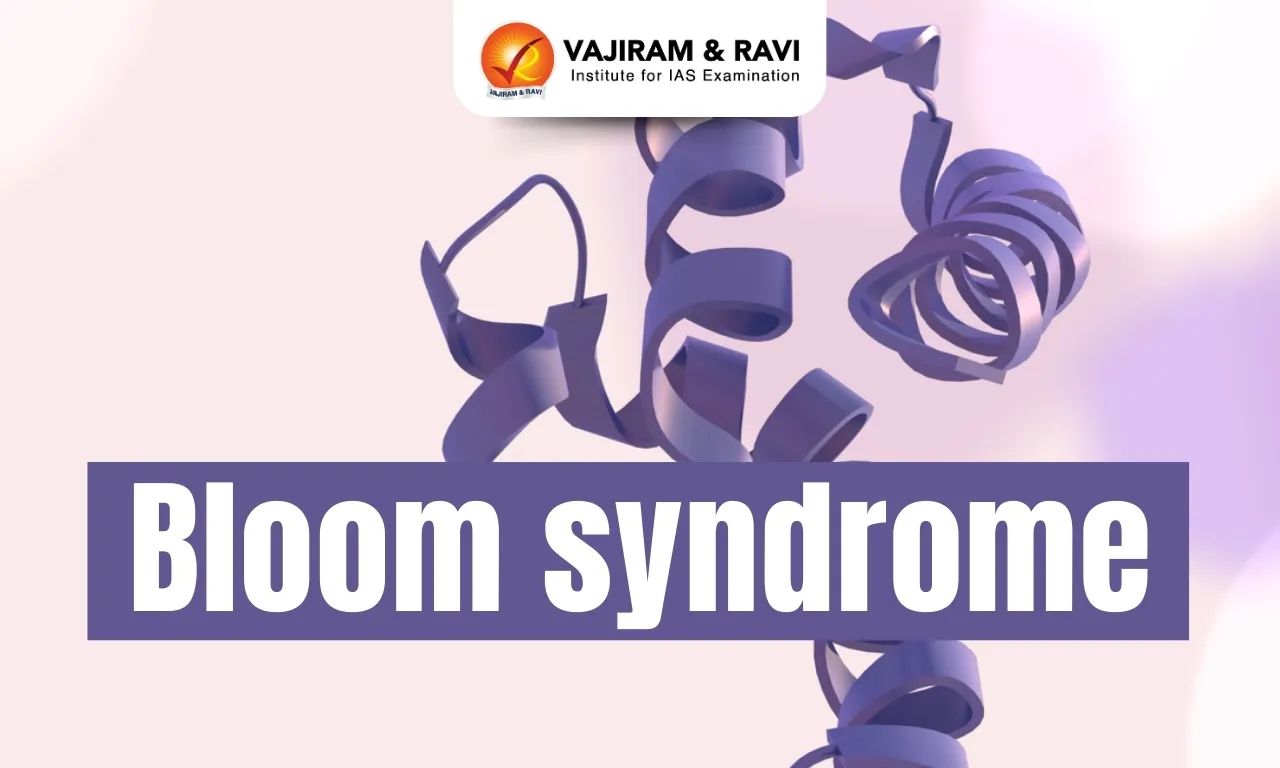
  • Bloom Syndrome or BSyn is a genetic disorder, in which the BLM gene, a protein-coding gene, does not function as it should.
  • It leads to growth delays, increased vulnerabilities to infections, sensitivity to the sun and an increased risk for certain cancers.
  • The BLM gene is a gene that makes a protein involved in maintaining the structure of DNA, when DNA is copied in a cell, and in repairing damaged DNA.
  •  Mutations in the BLM gene may cause cells to lose their ability to repair damaged DNA, which may lead to abnormal cell growth.
  • Other names for Bloom Syndrome are Bloom-Torre-Machacek syndrome and congenital telangiectatic erythema.

How does it Occur?

  • It is inherited in an autosomal recessive pattern. This means that if both parents have a mutation in one of their two BLM genes and if the child inherits two of the disease-causing variants of the gene, then the disorder occurs.
  • It is seen most commonly in the Eastern European (Ashkenazi) Jewish population.

Signs and Symptoms

  • Poor growth is a common clinical feature -- this happens during the development of the foetus and after birth. Below normal average height and head circumference may be seen. There may be abnormalities in certain features such as narrowing of the head and face, prominent ears and nose, long arms and legs and high-pitched voices.
  • Skin lesions: The skin is very sensitive to sunlight and red rashes may develop after exposure.
  • Insulin resistance leads to an increased risk of diabetes, while other issues include immune deficiencies.
  • People with Bloom Syndrome are at a higher risk of contracting infections such as ear and lung infections and also chronic obstructive pulmonary disease (COPD).
  • In adults, male sterility and female infertility may occur.
  • Bloom Syndrome increases the risk of developing cancer, and at an early age.
  • Treatment: It involves a multi-disciplinary approach. Since there is no specific treatment, the goal is to manage symptoms.

Source: TH

Bloom Syndrome FAQs

Q1: What is the cause of Bloom syndrome?

Ans: Bloom syndrome is caused by mutations in the BLM gene.

Q2: What are the main symptoms of Bloom's syndrome?

Ans: Shorter than average height, a narrow face, a red skin rash that occurs on sun-exposed areas of the body, and an increased risk of cancer

Integrated Air Defence Weapon System

Integrated Air Defence Weapon System

Integrated Air Defence Weapon System Latest News

Recently, the Defence Research and Development Organisation (DRDO) has successfully conducted the first flight-tests of an Integrated Air Defence Weapon System (IADWS).

About Integrated Air Defence Weapon System

  • It is a multi-layered air defence system, which includes three components — Quick Reaction Surface to Air Missiles (QRSAM), the advanced Very Short Range Air Defence System (VSHORADS) missiles, and a high-power laser-based Directed Energy Weapon (DEW).
  • QRSAM has been designed and developed by the DRDO, VSHORADS and DEW have been developed by Research Centre Imarat (RCI) and Centre for High Energy Systems and Sciences (CHESS) respectively, both Hyderabad-based facilities of the DRDO.
  • The integrated operation of all these weapon system components is controlled by a Centralised Command and Control Centre, developed by the Defence Research and Development Laboratory, Hyderabad.

The Three Components of the IADWS

  • QRSAM: It is a short-range Surface to Air Missile (SAM) system, primarily designed to provide a protective shield to moving armoured columns of the Army from enemy aerial attacks.
  • The entire weapon system is configured on highly mobile platforms. It has search and track capability and can fire on short halts. The system has an operation range of three to 30 kilometers.
  • The QRSAM weapon ensemble consists of a fully automated command and control system, two radars — Active Array Battery Surveillance Radar and Active Array Battery Multifunction Radar — and one launcher. Both the radars have a 360-degree coverage with ‘search on move’ and ‘track on move’ capabilities.
  • VSHORADS: It is a fourth-generation, technically advanced miniaturised Man Portable Air Defence System (MANPAD). This missile system has the capability to meet the needs of all the three branches of the Armed Forces — Army, Navy and Air Force.
  • Directed Energy Weapon (DEW): Earlier this April, the CHESS facility conducted a successful field demonstration of the land version of the Vehicle mounted Laser DEW MK-II(A).
  • It defeated fixed wing UAV and swarm drones, causing structural damage and disabling their surveillance sensors. With this, India has joined the exclusive club of global powers who possess such a system. DEW is said to have a range of less than three kilometers.

Source: IE

Integrated Air Defence Weapon System FAQ's

Q1: What is the primary benefit of using a laser weapon like the Mk-II(A) during conflict?

Ans: Reduced reliance on expensive ammunition and lower collateral damage

Q2: What is the short range air defense system?

Ans: Short range air defense (SHORAD) is a group of anti-aircraft weapons and tactics that have to do with defense against low-altitude air threats.

Mudumalai Tiger Reserve

Mudumalai Tiger Reserve (MTR)

Mudumalai Tiger Reserve Latest News

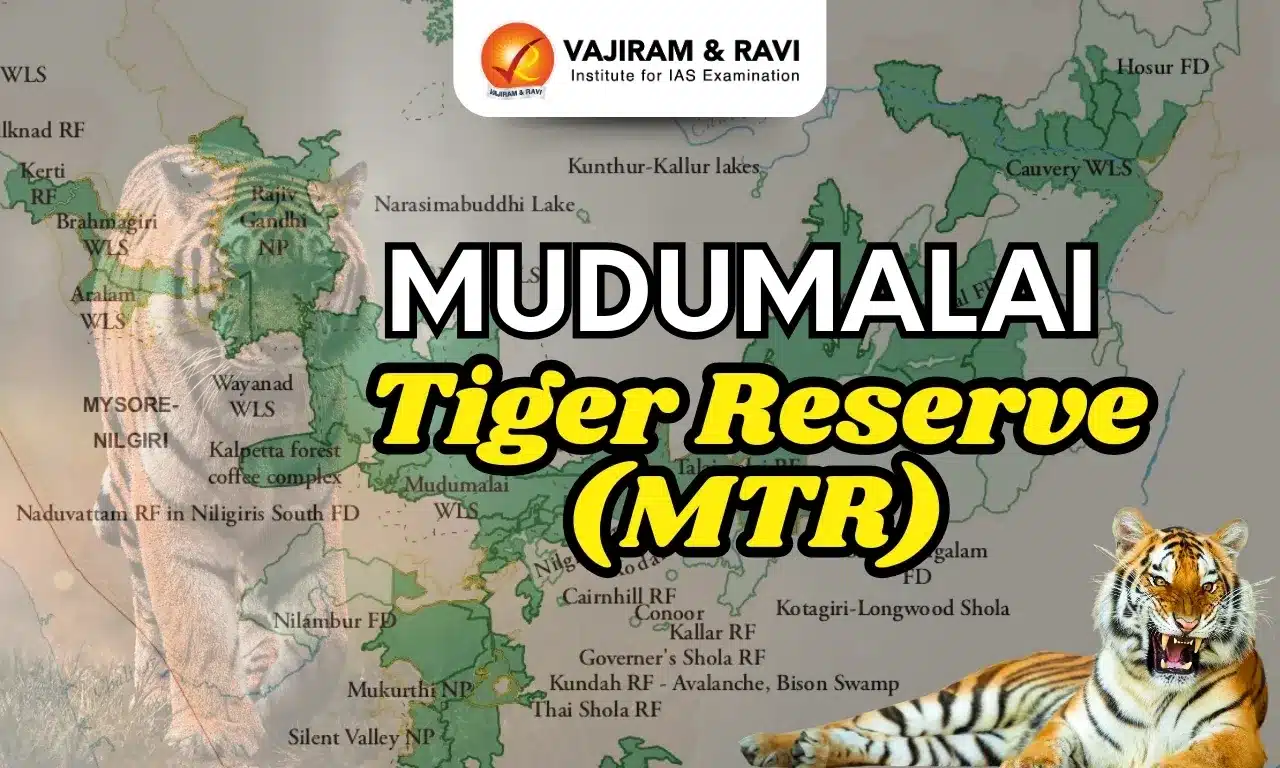
A 12-year-old tigress, which had been sick and roaming near the forest boundary in the Singara forest range of the Mudumalai Tiger Reserve (MTR) died recently.

About Mudumalai Tiger Reserve

  • It is located in the Nilgiris District of Tamil Nadu, spread over 321 sq. km. at the tri–junction of three states, viz, Karnataka, Kerala, and Tamil Nadu.
  • It lies on the Northeastern and Northwestern slopes of the Nilgiri hills, which is a part of the Western Ghats.
  • It is part of the Nilgiris Biosphere Reserve, the first biosphere reserve in India.
  • It has a common boundary with Wayanad Wildlife Sanctuary (Kerala) on the west, Bandipur Tiger Reserve (Karnataka) on the north, the Nilgiris North Division on the south and east, and Gudalur Forest Division on the south-west.
  • The name Mudumalai means ”the ancient hill range”. Indeed, it is as old as 65 million years when the Western Ghats were formed.
  • Terrain: The terrain is undulating, with the elevation ranging from 960m to 1266m.
  • Habitat: A variety of habitats ranging from tropical evergreen forest, moist deciduous forest, moist teak forest, dry teak forest, secondary grasslands, and swamps are found here.
  • River: The Moyar River runs through the reserve.
  • Flora:
    • It has tall grasses, commonly referred to as “Elephant Grass”, bamboo of the giant variety, and valuable timber species like Teak, Rosewood, etc.
    • It has wild relatives of cultivated plants, viz. wild rice, ginger, turmeric, cinnamon, etc.
    • The habitat also has swampy areas (Vayals) and grasslands.
  • Fauna:
    • The faunal assemblage includes: elephant, gaur, sambar, four-homed antelope, spotted deer, barking deer, blackbuck, wild pig, mouse deer, and predators like tigers, leopards, and wild dogs.
    • Around 8% of the total bird species in India can be found in the region.
    • The Oscar-winning ‘Elephant Whisperers’ was filmed at the Theppakadu Elephant Camp, located inside the Mudumalai Tiger Reserve.

Source: NIE

Mudumalai Tiger Reserve FAQs

Q1: Mudumalai Tiger Reserve is located in which Indian state?

Ans: Tamil Nadu

Q2: Mudumalai Tiger Reserve is part of which biosphere reserve?

Ans: Nilgiris Biosphere Reserve

Q3: Which river runs through the Mudumalai Tiger Reserve?

Ans: Moyar River

Integrated Food Security Phase Classification

Integrated Food Security Phase Classification

Integrated Food Security Phase Classification Latest News

According to a new Integrated Food Security Phase Classification (IPC) analysis more than half a million people in Gaza are trapped in famine, marked by widespread starvation, destitution and preventable deaths.

About Integrated Food Security Phase Classification

  • It is an independent body funded by Western countries and widely recognised as the main global system for measuring the severity of hunger crises.
  • It was set up to sound the alarm so that famine and mass starvation could be prevented and to help organisations respond.
  • The IPC is overseen by 19 major humanitarian organisations and regional bodies. It typically partners with national governments to analyse data.
  • It is an innovative multi-stakeholder global initiative aimed at enhancing food security and nutrition analysis to inform decisions.

How is Famine Determined?

  • The IPC system charts acute food insecurity on a five-phase scale. Its most extreme warning is Phase 5, which has two levels, catastrophe and famine.
  • If the IPC or one of its partners finds that at least one area is in famine, a famine review committee, led by up to six experts, is activated.
  • For an area to be classified as in famine, at least 20% of people must be suffering extreme food shortages, with one in three children acutely malnourished and two people out of every 10,000 dying daily from starvation or malnutrition and disease.
  • The IPC says it does not formally declare famine, but provides analysis for governments and others to do so.
  • The IPC relies on the U.N. World Food Programme and other relief organisations and government agencies to provide data.
  • The protocols used by the IPC are harmonized across the three individual scales (IPC Acute Food Insecurity, IPC Chronic Food Insecurity, and IPC Acute Malnutrition).

Source: IE

Integrated Food Security Phase Classification FAQs

Q1: What is the World Food Programme?

Ans: It is the leading humanitarian organization saving lives and changing lives, delivering food assistance in emergencies and working with communities to improve nutrition and build resilience.

Q2: Is India a member of WFP?

Ans: The World Food Programme (WFP) has been working in India since 1963.

Matua Community

Matua Community

Matua Community Latest News

A social outfit recently organised a march with members of the Matua community in Habra of North 24-Parganas to protest against the proposed special intensive revision (SIR) of electoral rolls in Bengal.

About Matua Community

  • The Matua community, a marginalized Hindu sect with roots in the 19th century, holds a significant socio- religious presence in the Bengal region, particularly across Bangladesh and West Bengal.
  • Founded by Harichand Thakur in the 1860s, the Matua movement arose as a response to the deep-seated caste discrimination present within Hindu society at the time. 
  • As followers of the Matua faith, the community primarily belongs to the "Namashudra" caste, traditionally regarded as a lower-caste group within Hinduism. 
  • Harichand Thakur’s teachings centered on principles of social equality, human dignity, and the empowerment of marginalized groups through education and religious reform, making the Matua movement a powerful counterforce to caste oppression.
  • Following the partition of Bengal in 1947, the Matua community experienced profound socio-political shifts. 
  • Many Matua families migrated to India to escape religious and political persecution, although a large portion of the community remained in what later became Bangladesh.
  • Today, Matuas constitute the second largest SC population of West Bengal.

Source: TI

Matua Community FAQs

Q1: The Matua community was founded in the 19th century by whom?

Ans: Harichand Thakur

Q2: The Matua community primarily belongs to which caste group?

Ans: Namashudra

Q3: The Matua community has significant socio-religious presence in which regions?

Ans: West Bengal and Bangladesh

Evolution of Deception Techniques in Modern Warfare

Modern Warfare

Modern Warfare Latest News

  • Deception techniques in warfare are in the news as India and other nations increasingly deploy AI-enabled aerial, land, and naval decoys to counter modern precision weapons.

Introduction

  • Warfare has always relied on deception, but in the 21st century, these techniques have evolved into highly sophisticated systems that integrate technology, artificial intelligence, and multi-domain capabilities. 
  • As modern combat platforms become more advanced and lethal, adversaries are deploying deception as a cost-effective yet powerful countermeasure. 
  • Today, decoys are no longer limited to simple tricks but are advanced systems designed to mislead enemy radars, sensors, and weapons, turning confusion into a strategic asset.

Evolution of Deception in Warfare

  • Historically, deception ranged from camouflage to battlefield trickery, but in the digital age, it has transformed into technologically enabled countermeasures. 
  • Modern decoys replicate radar, thermal, and acoustic signatures of real targets, forcing adversaries to waste expensive munitions while buying time for actual platforms to retaliate or evade. 
  • These innovations have made deception a strategic pillar of modern military doctrine.

India’s Use of AI-Enabled Decoys

  • During Operation Sindoor, the Indian Air Force reportedly deployed the X-Guard Fibre-Optic Towed Decoy (FOTD) system developed by Israel. 
  • These AI-enabled decoys trailed behind Rafale fighter jets, mimicking their radar cross-section, velocity, and spectral signature. 
  • Reports suggest that Pakistan Air Force missiles locked onto these decoys instead of real aircraft, saving Indian platforms and misleading enemy pilots. 
  • Analysts called this “one of the best instances of spoofing and deception ever seen,” highlighting the operational value of advanced decoys.

Functioning of the X-Guard System

  • The X-Guard decoy, weighing only 30 kg, integrates seamlessly with the Rafale’s SPECTRA electronic warfare suite
  • While SPECTRA detects and blocks threats, the X-Guard provides a trailing expendable shield, emitting jamming signals across multiple radar bands. Together, they form a multi-layered defensive system. 
  • Comparable systems globally include Leonardo’s BriteCloud, the AN/ALE-50/55 series by Raytheon/BAE Systems, and decoys integrated into platforms like the Eurofighter Typhoon and Gripen-E.

Land-Based Deception Techniques

  • On land, armies employ inflatable, radar-reflective, and heat-emitting decoys simulating tanks, artillery, and missile systems. 
  • These techniques have proven effective in conflicts from the 1991 Gulf War to the ongoing Russia-Ukraine war
  • Russia uses Inflatech decoys to simulate large armoured formations, while Ukraine relies on wooden and 3D-printed models to exhaust Russian drone and missile supplies. 
  • India, too, is investing in such technology. In April 2025, the Indian Army sought decoys for its T-90 tanks to replicate thermal and acoustic signatures, protecting assets from drone and loitering munition attacks.

Naval Counter-Deception Systems

  • Navies worldwide deploy layered countermeasures such as floating chaff, acoustic jammers, and advanced offboard systems. 
  • A notable example is the Nulka active missile decoy, jointly developed by the U.S. and Australia, which mimics the radar signature of large warships to lure enemy missiles away. 
  • India’s Kalvari-class submarines are also equipped with modern torpedo decoy systems, underlining the increasing role of deception in maritime defence.

Strategic Importance of Deception

  • Deception technologies offer high-impact protection at relatively low costs, making them indispensable in modern military strategies. 
  • By diverting enemy fire, they not only preserve expensive assets but also erode adversary confidence. 
  • For countries like India, deploying such technologies enhances deterrence against technologically superior adversaries and ensures survivability in contested environments.

Source: TH

Modern Warfare FAQs

Q1: What are deception techniques in modern warfare?

Ans: They are advanced methods using decoys and countermeasures to mislead enemy sensors and weapons.

Q2: How has India used aerial decoys?

Ans: India deployed AI-enabled X-Guard decoys on Rafale jets during Operation Sindoor to spoof enemy radars and missiles.

Q3: What role do land-based decoys play?

Ans: Inflatable and 3D-printed dummies mimic tanks and artillery, drawing enemy fire and depleting munitions.

Q4: How do navies use deception?

Ans: Naval forces employ systems like the Nulka active missile decoy and torpedo countermeasures to protect warships.

Q5: Why are decoys considered a strategic asset?

Ans: They preserve real assets, confuse adversaries, and provide cost-effective defence against precision weapons.

NAMASTE Scheme

NAMASTE Scheme

NAMASTE Scheme Latest News

Recently, the union minister of Social Justice & Empowerment, Government of India shared information about the NAMASTE scheme.

About NAMASTE Scheme

  • The objective of the “National Action for Mechanised Sanitation Ecosystem” (NAMASTE) scheme is to formalize and institutionalize the persons engaged in hazardous cleaning of sewers and septic tanks and promoting safe and mechanized cleaning through trained sanitation workers.
  • Ministries involved: It is jointly being implemented by the Ministry of Social Justice and Empowerment (MoSJE) and the Ministry of Housing and Urban Affairs (MoHUA).
  • Implementing agency: It is implemented by the National Safai Karmacharis Finance Development Corporation (NSKFDC) under the Ministry of Social Justice and Empowerment (MoSJE)
  • Duration: It would be implemented for three years from FY 2023-24 to FY 2025-26.
  • Target Groups: Sewer and septic tank sanitation workers (SSWs) and waste pickers in urban areas of India

What are the Aims of NAMASTE Scheme?

  • Zero fatalities in sanitation work in India
  • All sanitation work is performed by skilled workers
  • No sanitation workers come in direct contact with human faecal matter
  • Sanitation workers are collectivized into SHGs and are empowered to run sanitation enterprises
  • All Sewer and Septic tank sanitation workers (SSWs) have access to alternative livelihoods.

Source: PIB

NAMASTE Scheme FAQs

Q1: What is the tenure of the namaste scheme?

Ans: It would be implemented for three years from FY 2023-24 to FY 2025-26.

Q2: Who launched the Namaste scheme?

Ans: It is a joint initiative of the Ministry of Social Justice and Empowerment (MoSJE) and the Ministry of Housing and Urban Affairs (MoHUA).

Jan Vishwas 2.0 – Towards Trust-Based Governance

Jan Vishwas 2.0

Jan Vishwas 2.0 Latest News

  • The Jan Vishwas (Amendment of Provisions) Bill, 2025, also dubbed as Jan Vishwas 2.0, was recently introduced in the Lok Sabha.
  • The new Bill is an extension of the Jan Vishwas (Amendment of Provisions) Act, 2023 (decriminalised 183 provisions in 42 Acts), and aims to amend 16 Central Acts (administered by 10 ministries/departments) to decriminalise and rationalise some offences and penalties. 
  • This means the Bill  further enhances trust-based governance for ease of living and doing business.

Background - Need for Jan Vishwas 2.0

  • Overcriminalisation in Indian laws:
    • According to the Vidhi Centre for Legal Policy, 370 of the 882 central laws have criminal provisions for 7,305 crimes. 
    • Over 75% of all crimes are defined under laws that regulate areas beyond core criminal justice, such as shipping, taxation, financial institutions, and municipal governance.
  • Disproportionate punishments: For example, arrest is possible for trivial acts like milking a cow on the street or not exercising a pet dog, violating the principle of proportionality in crime and punishment.
  • Hindrance to business: 
    • According to an Observer Research Foundation's (ORF) 2022 report -
      • Of 1,536 business laws, over 50% carry imprisonment clauses.
      • Of 69,233 compliances, 37.8% entail jail terms.
    • Imprisonment clauses deter entrepreneurship, job creation, GDP growth.
  • Burden on judiciary:
    • According to the National Judicial Data Grid, currently there are over 3.6 crore pending criminal cases in India’s district courts, over 2.3 crore of which are more than 1 year old.
    • Minor procedural lapses clog courts, delaying justice for serious offences.

Provisions of the Jan Vishwas Bill 2025

  • Scope of amendments: The 2025 Bill proposes amending 355 provisions - 288 provisions decriminalised to foster ease of doing business, and 67 provisions proposed to be amended to facilitate ease of living.
  • Covers 16 Acts including: RBI Act 1934, Drugs and Cosmetics Act 1940, Motor Vehicles Act 1988, Electricity Act 2003, Legal Metrology Act 2009, MSME Act 2006, etc.

Key Features of the Bill

  • First-time offenders: 
    • Warning and improvement notice introduced for 76 offences under 10 Acts.
    • For example, non-standard weights and measures, earlier drew a penalty of ₹1 lakh, but now provides for improvement notice with rectification timeline.
  • Removal of imprisonment clauses:
    • Minor procedural or technical defaults no longer attract jail terms.
    • For instance, it proposes a fine (between Rs 10,000 and Rs 10 lakh) instead of the existing three-month imprisonment for non-compliance with orders under the Electricity Act 2023.
  • Rationalisation of penalties:
    • For example, an automatic 10% increase in penalty every 3 years ensures deterrence without fresh amendments.
    • Focus is on financial penalties rather than incarceration.

Government’s Rationale for Jan Vishwas 2.0

  • To build on “minimum government, maximum governance” philosophy.
  • To support Make in India, Ease of Doing Business, and judicial reforms.
  • To reiterate the government's commitment to remove “unnecessary and outdated laws” that criminalise trivial acts.

Conclusion

  • The Bill is under review by a Select Committee of Lok Sabha, and report is expected in the next parliamentary session.
  • If enacted, the Jan Vishwas 2.0 could reduce pendency in courts, enhance trust between state and citizens, and strengthen India’s image as a business-friendly destination.

Source: IE

Jan Vishwas 2.0 FAQs

Q1: Why was the Jan Vishwas (Amendment of Provisions) Bill, 2025 introduced?

Ans: To decriminalise minor offences, rationalise penalties, reduce judicial pendency, and promote trust-based governance.

Q2: What is the issue of overcriminalisation in Indian laws?

Ans: Over 75% of criminal provisions lie outside core criminal law, leading to disproportionate punishments, regulatory hurdles, and judicial backlog.

Q3: How does the Jan Vishwas Bill, 2025 balance deterrence with ease of compliance?

Ans: By introducing warnings for first-time offenders, replacing jail terms with fines, and ensuring periodic automatic penalty hikes.

Q4: Why is decriminalisation of minor offences significant for India’s economy?

Ans: It reduces compliance burden, fosters entrepreneurship, improves ease of doing business, and supports growth and job creation.

Q5: How does the Jan Vishwas Bill contribute to judicial reforms?

Ans: By eliminating imprisonment clauses for minor defaults, it reduces case pendency and allows courts to prioritise serious crimes.

DRDO Successfully Tests Indigenous Integrated Air Defence Weapon System

DRDO Air Defence System

DRDO Air Defence System Latest News

  • The Ministry of Defence announced that the DRDO successfully carried out the first flight-tests of the Integrated Air Defence Weapon System (IADWS). 
  • Conducted off the coast of Odisha, the system demonstrated its capability by simultaneously destroying three targets at varying ranges and altitudes, marking a significant milestone in India’s indigenous defence technology.

Integrated Air Defence Weapon System (IADWS)

  • The Integrated Air Defence Weapon System (IADWS) is a multi-layered defence system comprising three key components:
    • Quick Reaction Surface-to-Air Missiles (QRSAMs);
    • The advanced Very Short Range Air Defence System (VSHORADS) missiles;
    • A laser-based Directed Energy Weapon (DEW). 
  • During recent flight-tests at Chandipur, all components successfully performed their roles, as confirmed by range instruments, showcasing the system’s capability to intercept and neutralise multiple aerial threats with precision.

Components of the Integrated Air Defence Weapon System (IADWS)

  • The IADWS integrates three advanced weapon systems — QRSAM, VSHORADS, and DEW — controlled by a Centralised Command and Control Centre developed by DRDL, Hyderabad.
  • Together, QRSAM, VSHORADS, and DEW make IADWS a multi-layered, mobile, and technologically advanced defence shield capable of countering a wide spectrum of aerial threats.

Quick Reaction Surface-to-Air Missile (QRSAM)

  • Developer: DRDO
  • Role: Provides a protective shield to moving Army armoured columns against enemy aerial threats.
  • Range: 3–30 km
  • Features: Configured on highly mobile platforms with the ability to search, track, and fire on the move.
  • System Components: Automated command and control, two radars (Battery Surveillance Radar & Multifunction Radar, both with 360° coverage), and a launcher.

Very Short Range Air Defence System (VSHORADS)

  • Developer: Research Centre Imarat (RCI), Hyderabad
  • Type: Fourth-generation, man-portable air defence system (MANPAD).
  • Range: 300 m – 6 km
  • Capability: Neutralises drones, UAVs, and other aerial threats, usable by Army, Navy, and Air Force.

Directed Energy Weapon (DEW)

  • Developer: Centre for High Energy Systems and Sciences (CHESS), Hyderabad
  • Type: Vehicle-mounted Laser DEW MK-II(A)
  • Range: < 3 km
  • Recent Demonstration: In April, successfully destroyed UAVs and swarm drones by causing structural damage and disabling sensors.
  • Significance: Places India among a select group of nations with operational directed-energy systems.

Strategic Significance of the IADWS

  • The Integrated Air Defence Weapon System (IADWS) is strategically important as it can neutralise diverse aerial threats — from high-speed to low-speed, and fixed-wing to rotary-wing aircraft — within a 30 km range. 
  • Its indigenous command and control system and fully homegrown weapons mark a major milestone in India’s defence self-reliance
  • The maiden test demonstrated effective integration of missiles and directed energy weapons, strengthening India’s multi-layered air defence with faster response capability and reduced reliance on foreign systems. 
  • Officials view the test as both a strategic leap in indigenous defence capability and a stepping stone towards Mission Sudarshan Chakra.
    • PM Modi has announced Mission Sudarshan Chakra, a multi-layered, networked defence system designed to protect India and its critical installations from diverse enemy attacks. 
    • The shield will integrate surveillance, cybersecurity, and air defence systems to provide layered protection against threats such as long-range missiles, aircraft, and unmanned aerial vehicles. 
    • Covering both border areas and vital national assets, the mission aims to create a comprehensive security framework capable of detecting, intercepting, and neutralising threats across multiple domains.

India’s Air Defence Success in Operation Sindoor Aftermath

  • During the hostilities that followed Operation Sindoor, Indian air defences successfully intercepted Pakistani missiles and drones
  • Key systems such as the S-400 Triumf, Barak 8 MRSAM, and the indigenous Akash missile were deployed, while the Armed Forces activated an Integrated Counter-UAS Grid alongside other air defence measures. 
  • Together, these systems effectively neutralised enemy threats, underscoring the robustness of India’s layered air defence capability.

Source: IE | TH | IE

DRDO Air Defence System FAQs

Q1: What is the Integrated Air Defence Weapon System (IADWS)?

Ans: It is a multi-layered defence system with QRSAM, VSHORADS, and DEW, capable of neutralising diverse aerial threats within a 30 km range.

Q2: Which components make up the IADWS?

Ans: The system includes QRSAM missiles, VSHORADS man-portable missiles, and a laser-based Directed Energy Weapon, all controlled by a centralised command centre.

Q3: Why is the IADWS strategically significant?

Ans: It boosts indigenous defence, reduces reliance on foreign systems, integrates missile and laser weapons, and is a step towards Mission Sudarshan Chakra.

Q4: Where was the IADWS tested?

Ans: The first successful flight-tests were conducted off the coast of Odisha at Chandipur, confirming its precision and effectiveness against multiple aerial targets.

Q5: How did Indian air defence perform in Operation Sindoor aftermath?

Ans: Systems like S-400, Barak 8, and Akash, with an Integrated Counter-UAS Grid, intercepted Pakistani missiles and drones, showcasing India’s layered defence capability.

India’s Dairy Model: Competitiveness, Efficiency, and Emerging Challenges

India dairy sector challenges

India Dairy Sector Challenges Latest News

  • Unlike crops such as maize, where US farmers enjoy far higher yields and lower prices than their Indian counterparts, India’s dairy sector remains globally competitive
  • While American corn is far cheaper due to productivity advantages, this price edge does not extend to milk. 
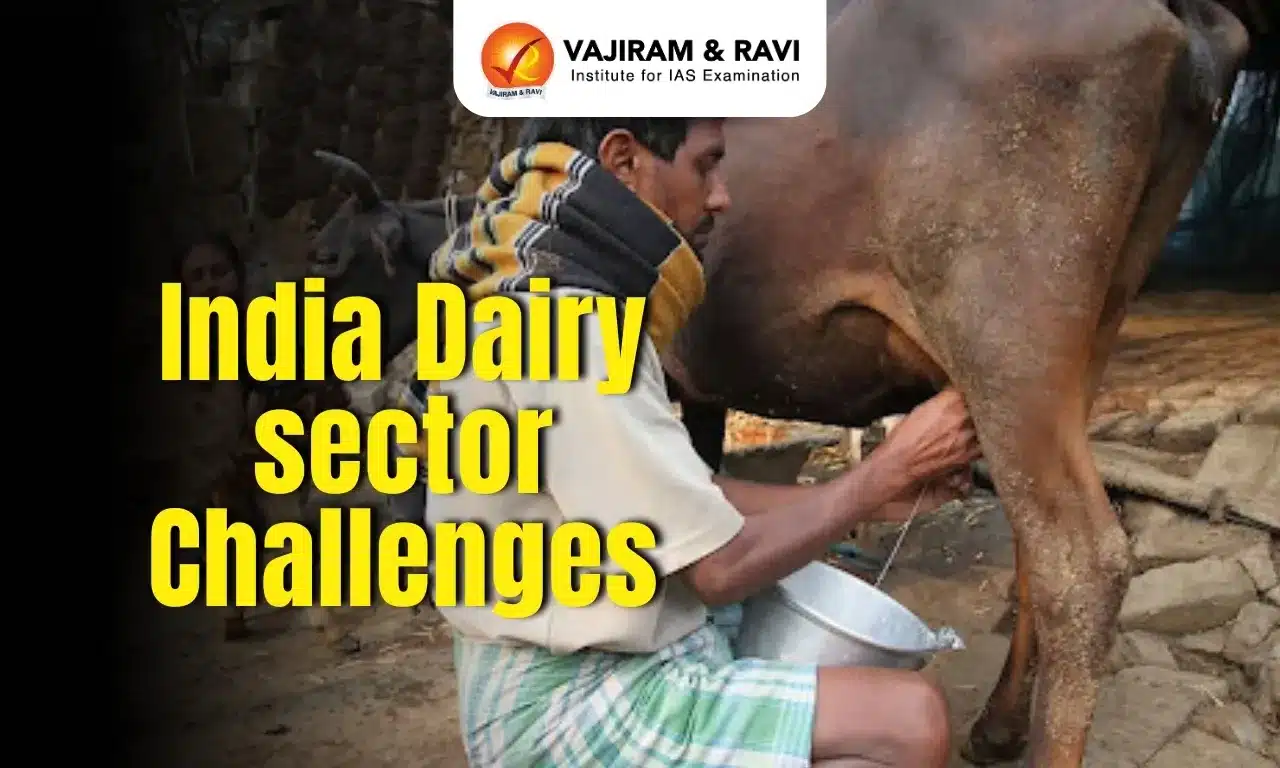
  • India’s unique low-cost dairying model—built on smallholder farmers feeding cattle crop residues and byproducts—keeps milk production costs low. 
  • This makes Indian milk prices competitive internationally, even without large-scale industrial farms, highlighting dairying as one of the few agricultural sectors where India matches global efficiency.

Dairy Industry in India

  • India has been the largest milk producer for over two decades, contributing about 25% of global milk output and 5% to the national economy
  • In 2024, production was estimated at 239 million metric tonnes (MMT).
  • The dairy sector employs over 80 million farmers, serving as a key livelihood source for rural households, especially small and marginal farmers.
  • India’s dairy market was valued at USD 135.3 billion in 2024, projected to grow to USD 274.09 billion by 2032 at a CAGR of 9.33%.

Production and Export

  • India is not only the largest milk producer but also among the leading global exporters of dairy products. 
  • Major producing states include Uttar Pradesh, Maharashtra, Himachal Pradesh, Madhya Pradesh, Rajasthan, Punjab, and Tamil Nadu.

Government Initiatives

  • To boost productivity and support farmers, several initiatives have been launched, including:
    • Rashtriya Gokul Mission
    • National Dairy Development Board (NDDB) programmes
    • State Cooperative Dairy Federations
    • National Programme for Dairy Development (NPDD)
    • Dairy Entrepreneurship Development Scheme (DEDS)

Price Competitiveness in Milk

  • The Federal Milk Marketing Order (FMMO) in the US fixes monthly minimum prices for four classes of milk – fluid, soft dairy products, cheese, and butter/powder. 
  • In July 2025, these averaged about Rs 36.7 per litre for milk with 3.5% fat content.
  • Indian dairies, such as in Maharashtra, paid farmers Rs 34 per litre for comparable milk quality. 
  • This places India’s farmgate milk price at par with or slightly below the US, and significantly lower than the European Union’s Rs 55.6 per litre.

Yield Comparisons

  • Milk yields in India are much lower – only 1.64 tonnes per cow annually, compared with 4.6 tonnes in New Zealand, 7.3 tonnes in the EU, and 11 tonnes in the US.
  • Despite low yields, India’s production costs remain competitive because dairying is labour-intensive
  • Tasks like feeding, milking, cleaning sheds, and managing fodder are performed manually at relatively low wage costs. 
  • In contrast, Western dairy farms rely heavily on costly automation and machinery.

Processing and Marketing Efficiency in India’s Dairy Sector

  • In the US, whole milk retails at about Rs 100.4 per litre, while Indian cooperative brand Amul sells toned milk at Rs 55–57 per litre. 
  • After adjusting for fat content, Indian farmers receive 55–57% of the consumer price, compared to just 35% in the US
  • This highlights India’s strong farm-to-consumer efficiency
  • The Gujarat Co-operative Milk Marketing Federation (GCMMF) goes further, sharing over three-fourths of the consumer rupee with farmers—paying them Rs 44–45 per litre for cow milk and Rs 65–66 for buffalo milk, much higher than private dairies. 
  • Such efficiency stems from streamlined procurement, processing, transport, and marketing systems within cooperatives, which aim to maximise farmers’ share in the final retail value of milk.

Challenges to India’s Dairy Competitiveness

  • India’s dairy sector is currently competitive mainly due to low-cost and unpaid family labour, with farmers focusing on recovering only out-of-pocket expenses like feed or veterinary care. 
  • However, this model is becoming unsustainable as farm labour grows scarce and costlier, and even family members face rising opportunity costs with better education and alternative jobs. 
  • Unlike New Zealand, India lacks large pastures for low-cost grazing, and unlike the US, it cannot rely on heavy mechanisation due to high capital and energy costs. 
  • While the US produces milk from just 24,470 large farms, India depends on over 50 million small farmers and 110 million animals. 
  • To stay globally competitive, the future of Indian dairying will require selective mechanisation, genetic improvement of breeds, better breeding technologies, and cultivation of high-yield protein-rich fodder grasses
  • Sustaining competitiveness must shift from reliance on cheap labour to efficiency and productivity gains.

Source: IE | FB | IE

India Dairy Sector Challenges FAQs

Q1: Why is India’s dairy sector globally competitive?

Ans: Smallholder farmers use crop residues and byproducts, keeping production costs low and milk prices internationally competitive despite low yields.

Q2: How do Indian milk prices compare globally?

Ans: Indian farmgate milk prices (~Rs 34/litre) are at par with the US and New Zealand, but much lower than the EU’s Rs 55.6/litre.

Q3: What makes India efficient in processing and marketing milk?

Ans: Cooperatives like Amul ensure farmers get 55–75% of consumer prices, compared to 35% in the US, through efficient procurement and value-chain management.

Q4: What challenges threaten India’s dairy competitiveness?

Ans: Dependence on cheap family labour, lack of pastures, high mechanisation costs, and low productivity pose risks to long-term competitiveness.

Q5: What future strategies are needed for India’s dairy sector?

Ans: Selective mechanisation, genetic improvement of breeds, better fodder cultivation, and productivity-driven models are essential to sustain global competitiveness.

INS Kadmatt

INS Kadmatt

INS Kadmatt Latest News

Recently, Indian Naval Ship INS Kadmatt, successfully completed a three-day port call at Surabaya, Indonesia.

About  INS Kadmatt

  • It is an indigenous stealth anti-submarine warfare corvette.
  • It is the second of four anti-submarine warfare corvettes built for the Indian Navy by the Garden Reach Shipbuilders and Engineers of Kolkata under Project 28.
  • It was commissioned into the Indian Navy in January 2016.
  • The ship was inducted into the Eastern Naval Command of the Indian Navy.
  • It has been named after the Kadmat Island of India's Lakshadweep Islands.
  • Role: The primary role of the INS Kadmatt is in anti-submarine warfare—to protect ships in convoys and ports from enemy submarine attacks.

Features of INS Kadmatt

  • The ship is fitted with state-of-the-art weapons, sensors, and machinery and is also designed to embark on the Sea king anti-submarine helicopter.
  • The ship also has on-board early warning, navigation, and fire control radars, besides underwater sensors and integrated communication and electronic warfare systems.
  • It produces low levels of radiated underwater noise, which reduces its chances of detection.
  • It is equipped with anti-aircraft guns, torpedoes, and rocket launchers. 

Source: PIB

INS Kadmatt FAQs

Q1: What is the motto of INS Kadmatt?

Ans: The ship's motto 'Nirvighnam Karomi' meaning 'I Remove Obstacles'

Q2: What does INS stand for in the Navy?

Ans: INS stands for Indian Naval Ship. Formerly Indian navy was known as Royal Indian Marine, Royal Indian Navy, etc.

Monetary Policy Committee (MPC)

Monetary Policy Committee (MPC)

Monetary Policy Committee Latest News

Reserve Bank of India (RBI) recently appointed Indranil Bhattacharyya, executive director, as a member of the Monetary Policy Committee (MPC).

About Monetary Policy Committee

  • Monetary policy refers to the use of monetary instruments under the control of the central bank to regulate magnitudes such as interest rates, money supply, and availability of credit with a view to achieving the ultimate objective of economic policy.
  • The RBI is vested with the responsibility of conducting monetary policy. This responsibility is explicitly mandated under the Reserve Bank of India Act, 1934.
  • The primary objective of monetary policy is to maintain price stability while keeping in mind the objective of growth. Price stability is a necessary precondition to sustainable growth.
  • In May 2016, the RBI Act, 1934, was amended to provide a statutory basis for the implementation of the flexible inflation targeting framework.
  • The amended RBI Act also provides for the inflation target to be set by the government of India, in consultation with the Reserve Bank, once in every five years.
  • The Monetary Policy Committee (MPC) constituted by the central government under Section 45ZB determines the policy interest rate required to achieve the inflation target.
  • Function: The MPC is entrusted with the task of fixing the benchmark policy rate (repo rate) required to contain inflation within the specified target level. 
  • The MPC replaced the previous arrangement of the Technical Advisory Committee.
  • Composition:
    • MPC will have six members: the RBI Governor (Chairperson), the RBI Deputy Governor in charge of monetary policy, one official nominated by the RBI Board, and the remaining three members would represent the Government of India.
    • The external members hold office for a period of four years.
  • The quorum for a meeting shall be four Members, at least one of whom shall be the Governor and, in his absence, the Deputy Governor, who is the Member of the MPC.
  • The MPC takes decisions based on a majority vote. In case of a tie, the RBI governor will have the second or casting vote.
  • The decision of the MPC would be binding on the RBI.
  • RBI’s Monetary Policy Department (MPD) assists the MPC in formulating the monetary policy.
  • The MPC is required to meet at least four times in a year.

Source: LM

Monetary Policy Committee FAQs

Q1: Who sets India’s inflation target?

Ans: Government of India in consultation with RBI

Q2: How many members are there in the Monetary Policy Committee (MPC)?

Ans: 6

Q3: Who chairs the Monetary Policy Committee?

Ans: RBI Governor

UPSC Daily Quiz 25 August 2025

UPSC Daily Quiz

The Daily UPSC Quiz by Vajiram & Ravi is a thoughtfully curated initiative designed to support UPSC aspirants in strengthening their current affairs knowledge and core conceptual understanding. Aligned with the UPSC Syllabus 2025, this daily quiz serves as a revision resource, helping candidates assess their preparation, revise key topics, and stay updated with relevant issues. Whether you are preparing for Prelims or sharpening your revision for Mains, consistent practice with these Daily UPSC Quiz can significantly enhance accuracy, speed, and confidence in solving exam-level questions

[WpProQuiz 53]  

UPSC Daily Quiz FAQs

Q1: What is the Daily UPSC Quiz?

Ans: The Daily UPSC Quiz is a set of practice questions based on current affairs, static subjects, and PYQs that help aspirants enhance retention and test conceptual clarity regularly.

Q2: How is the Daily Quiz useful for UPSC preparation?

Ans: Daily quizzes support learning, help in revision, improve time management, and boost accuracy for both UPSC Prelims and Mains through consistent practice.

Q3: Are the quiz questions based on the UPSC syllabus?

Ans: Yes, all questions are aligned with the UPSC Syllabus 2025, covering key areas like Polity, Economy, Environment, History, Geography, and Current Affairs.

Q4: Are solutions and explanations provided with the quiz?

Ans: Yes, each quiz includes detailed explanations and source references to enhance conceptual understanding and enable self-assessment.

Q5: Is the Daily UPSC Quiz suitable for both Prelims and Mains?

Ans: Primarily focused on Prelims (MCQ format), but it also indirectly helps in Mains by strengthening subject knowledge and factual clarity.

Enquire Now