Live Events Development Cell (LEDC)

Live Events Development Cell (LEDC)

Live Events Development Cell Latest News

The Information and Broadcasting Ministry recently established a Live Events Development Cell (LEDC) to facilitate the expansion of the “concert economy”, boosting employment and tourism in the country.

About Live Events Development Cell

  • It was established by the Ministry of Information & Broadcasting, Government of India.
  • Objective: Support the structured growth of India’s rapidly expanding live entertainment industry and strengthen the country’s emerging concert economy.
  • The LEDC will function as a single-window facilitation mechanism aimed at streamlining processes for the sector and positioning India among the world’s leading live entertainment destinations by 2030. 
  • It brings together representatives from the Central and State governments, industry bodies, and major event companies to coordinate policy support and sectoral expansion.
  • Key Focus Areas:
    • Single-Window Clearance System being developed on India Cine Hub (ICH) for permissions (fire, traffic, municipal, etc.) to ensure faster approvals and investor-friendly processes.
    • Model SOPs for States and removal of redundant permissions.
  • Need for Establishing a Dedicated LEDC:
    • The organised live events market in India recorded a valuation of Rs 20,861 crore in 2024, reflecting a growth rate of 15 percent. 
    • This sector currently outpaces several traditional media segments and maintains an expected compound annual growth rate of 18 percent.
    • The industry currently supports over 10 million jobs across the value chain, with a single large-format event generating more than 15,000 direct and indirect employment opportunities.
    • As per the report data, Tier-2 and Tier-3 cities are emerging as significant cultural hubs. 
    • Consumption across musical concerts, sports, and theatre rose by 17 percent, with over five lakh individuals travelling to other cities to attend events.
    • The establishment of the cell follows the address of the Prime Minister at the WAVES Summit in May 2025. 
    • During the summit, the Prime Minister highlighted the untapped potential of the live entertainment sector as a driver for investment, tourism, and cultural influence.

Source: TH

Live Events Development Cell FAQs

Q1: Which ministry established the Live Events Development Cell (LEDC)?

Ans: The Ministry of Information & Broadcasting, Government of India.

Q2: What is the main objective of the Live Events Development Cell (LEDC)?

Ans: To support the structured growth of India’s live entertainment industry and strengthen the emerging concert economy.

Q3: What is the purpose of the Single-Window Clearance System under Live Events Development Cell (LEDC)?

Ans: To streamline permissions related to fire, traffic, municipal authorities, etc., ensuring faster approvals.

Q4: What was the valuation of India’s organised live events market in 2024?

Ans: Rs 20,861 crore.

White-Bellied Heron

White-Bellied Heron

White-Bellied Heron Latest News

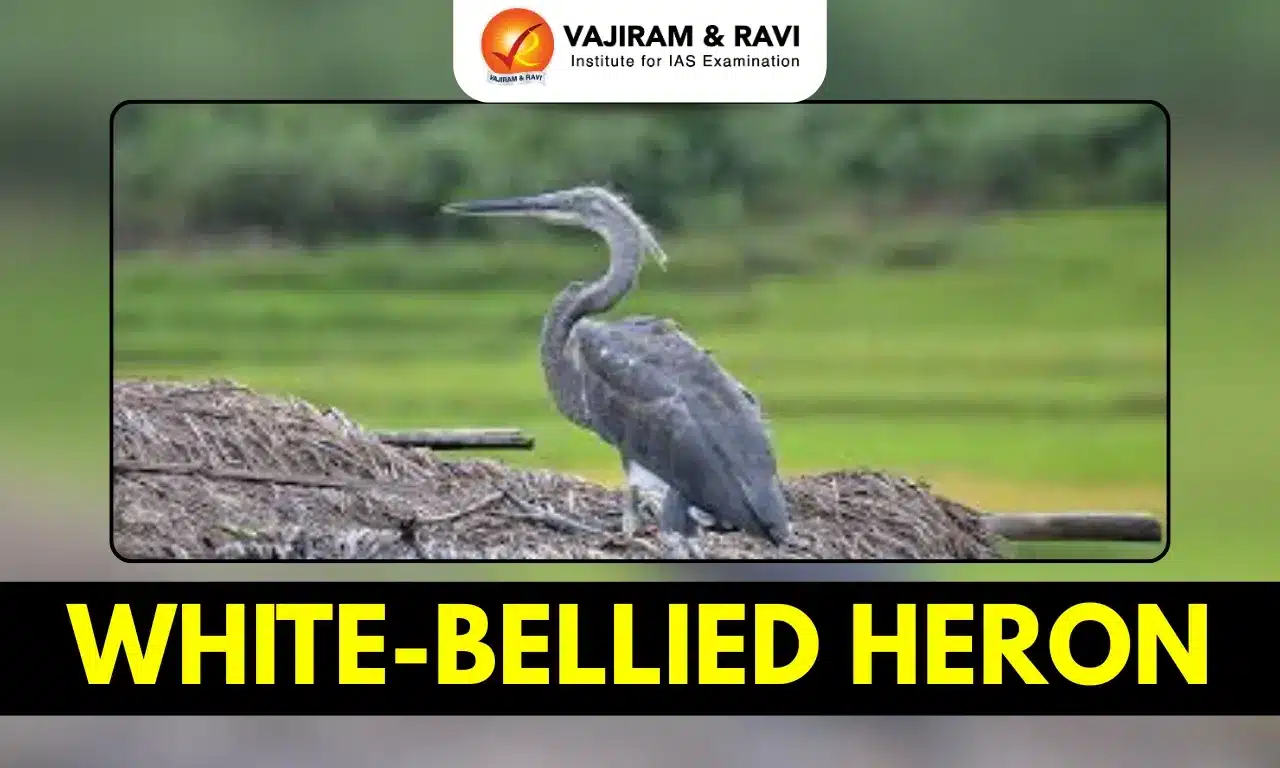
Recently, the Union Environment Ministry expert panel has recommended environmental clearance (EC) for the Kalai-II hydroelectric project on Lohit River which is a white-bellied heron habitat.

About White-Bellied Heron

  • The white-bellied heron (Ardea insignis ) is a large heron species. It is the second largest living species of heron.
  • Other Names: It is also known as the imperial heron or great white-bellied heron.
  • Its presence in our ecosystem indicates the health of the rivers, the environment, the fish population, and water quality.
  • Habitat: It inhabits the wetlands of tropical and subtropical forests in the foothills of the eastern Himalayas.
  • Distribution: It is mainly living in the foothills of the eastern Himalayas in northeast India and Bhutan to northern Myanmar.
  • Diet: It prefers free-flowing riverine habitats with low disturbance, and predominantly depends on fish found in the river rapids.
  • Threats: It is threatened by habitat loss, increasing disturbance and habitat degradation due to conversion of wetlands for agriculture and expansion of settlements

Conservation Status of White-Bellied Heron

  • IUCN Red List: Critically Endangered
  • Wildlife Protection Act 1972: Schedule-I

Source: IE

White-Bellied Heron FAQs

Q1: Where is the White-Bellied Heron mainly found?

Ans: Eastern Himalayas

Q2: What is the conservation status of White-Bellied Heron?

Ans: Critically Endangered

Sri Govindaraja Swamy Temple

Sri Govindaraja Swamy Temple

Sri Govindaraja Swamy Temple Latest News

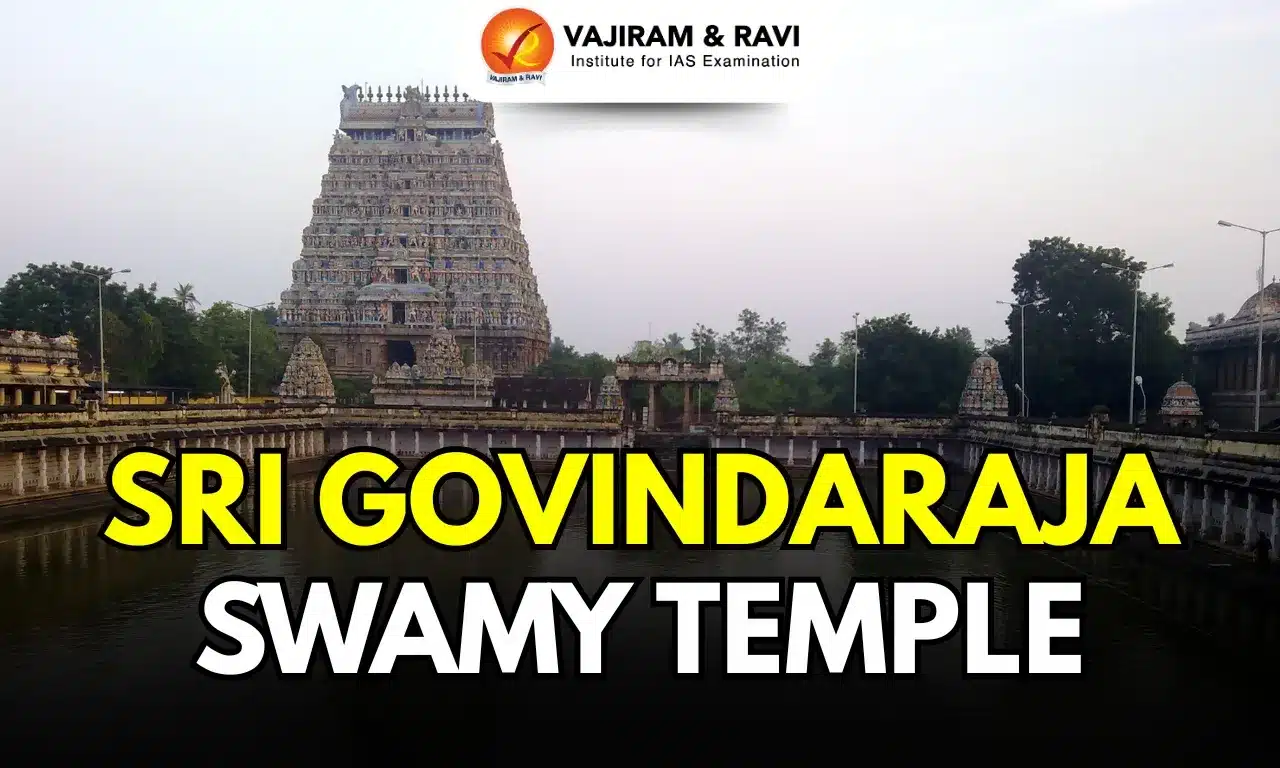
Under the influence of alcohol, a man climbed the main Gopuram of Sri Govindaraja Swamy temple in Tirupati recently.

About Sri Govindaraja Swamy Temple

  • It is a Hindu temple located in the town of Tirupati in Andhra Pradesh. 
  • It is situated 22 km from the Tirumala Tirupati Balaji Temple.
  • It is dedicated to Lord Govindaraja Swamy, a form of Lord Vishnu.
  • It was built in the 12th century by the Cholas and later expanded by the Vijayanagara kings.
  • Renowned Vaishnavite philosopher, Saint Ramanujacharya consecrated this temple in 1130 AD. 
  • The temple has a rich history and has been visited by several kings and emperors over the centuries.

Sri Govindaraja Swamy Temple Architecture

  • It is a beautiful blend of Dravidian and Vijayanagara styles. 
  • Its tall and remarkable seven storied outer Gopuram is adorned with intricate carvings and sculptures. 
  • The vimana (tower) above the main sanctum is an architectural highlight. It features a pyramidal shape and intricate carvings, symbolizing the cosmic journey of the deities.
  • The temple complex also includes a large courtyard, several smaller shrines, and a pillared hall.

Source: TH

Sri Govindaraja Swamy Temple FAQs

Q1: Where is the Sri Govindaraja Swamy Temple located?

Ans: It is located in the town of Tirupati in Andhra Pradesh.

Q2: To which deity is the Sri Govindaraja Swamy Temple dedicated?

Ans: It is dedicated to Lord Govindaraja Swamy, a form of Lord Vishnu.

Q3: Who consecrated the Sri Govindaraja Swamy Temple in 1130 AD?

Ans: Saint Ramanujacharya consecrated the temple.

Q4: Which dynasty originally built the Sri Govindaraja Swamy Temple?

Ans: The Cholas built it in the 12th century.

Q5: What architectural styles are reflected in the Sri Govindaraja Swamy Temple?

Ans: It showcases Dravidian and Vijayanagara architectural styles.

Rani Velu Nachiyar

Rani Velu Nachiyar

Rani Velu Nachiyar Latest News

Recently, the Prime Minister of India paid tributes to Rani Velu Nachiyar on her birth anniversary.

About Rani Velu Nachiyar

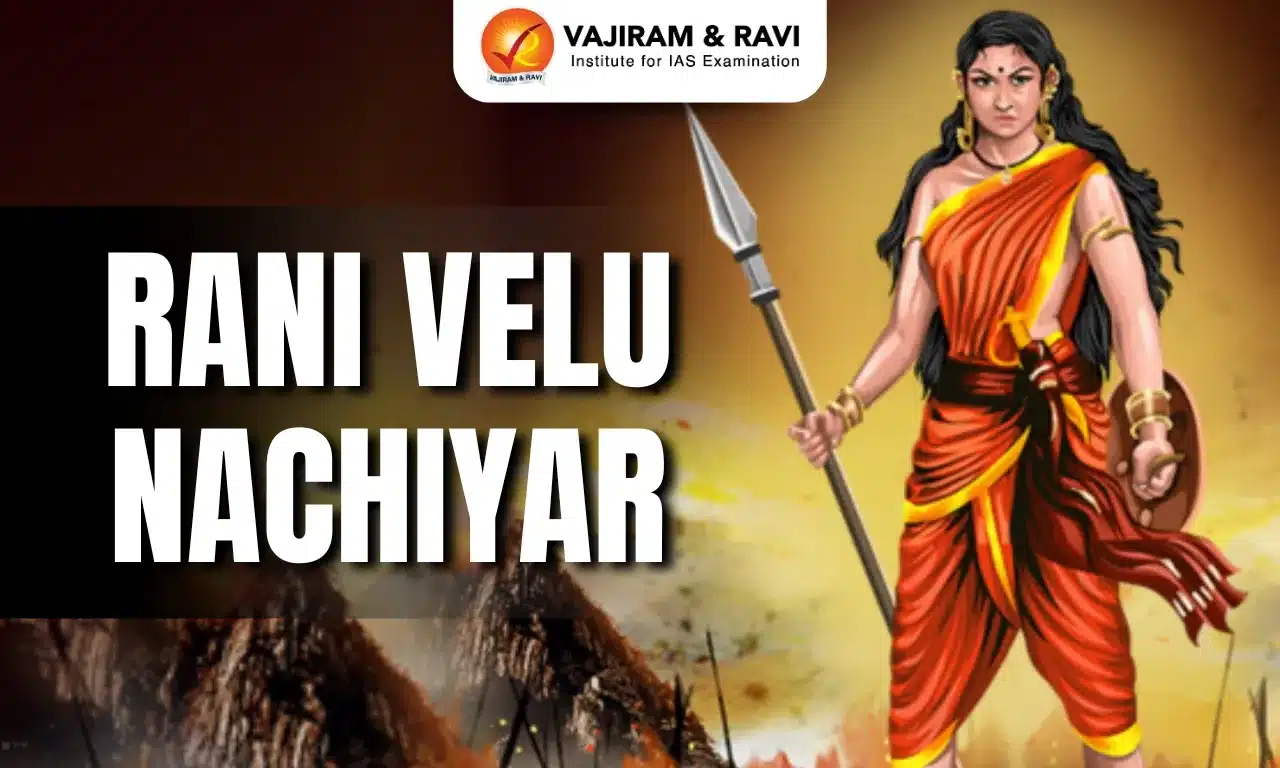
  • Rani Velu Nachiyar (1730–1796) was an 18th-century queen of Sivaganga in present-day Tamil Nadu.
  • She was the princess of Ramanathapuram and the only child of Raja Chellamuthu vijayaragunatha Sethupathy and Rani Sakandhimuthal of the Ramnad kingdom.
  • At the age of 16, she married the prince of Sivaganga, Muthuvadugananthur Udaiyathevar. 
  • She is also known as Veeramangai.
  • Skills: She was trained in handling various weapons, horse riding, archery, and traditional martial arts such as Silambam and Valari.
    • She was also a distinguished scholar. She was proficient in multiple languages, including Tamil, English, French, and Urdu.
  • Strategic Alliances: Velu Nachiyar forged strategic alliances with several powerful leaders of the time, including Hyder Ali of Mysore and Gopala Nayaker. 
  • She raised a formidable army that included a dedicated women’s battalion and the queen named her women’s army “Udaiyaal” in her adopted daughter’s honour.
  • Her army commander Kuyili, participated is considered the “first woman martyr” and the first suicide bomber in Indian history.
  • She was the first queen to fight for freedom from the British in India. She granted powers to the Marudu brothers to administer the country in 1780.

Source: DD News

Rani Velu Nachiyar FAQs

Q1: Which kingdom did Rani Velu Nachiyar rule?

Ans: Sivagangai

Q2: What was Rani Velu Nachiyar's role in Indian history?

Ans: First Indian queen to wage war against the British

Microlensing

Microlensing

Microlensing Latest News

A study recently used microlensing to weigh a rogue planet, i.e. not orbiting a star.

About Microlensing

  • It is a fascinating phenomenon where the light of a background star is deflected by the gravity of a foreground object towards an observer, temporarily magnifying the star as the foreground object crosses the observer's line of sight. 
  • It occurs due to gravitational lensing, predicted by Einstein’s General Theory of Relativity.
  • The intervening object acts as a gravitational lens, bending the background light.
  • We don't need to receive any light at all from the foreground object, and still we can use microlensing to measure its properties, like mass and distance. 
  • This makes it a great way to find objects that are too far away to be visible, like distant planets, brown dwarfs, and neutron stars, and even those that are entirely invisible, like isolated black holes.
  • Microlensing events are transient and generally unpredictable. 
  • Some events last for just 1 day, while others can continue for months or even years, and they can result in very sudden and dramatic changes in brightness. 
  • Why Use Microlensing for Exoplanet-Hunting?
    • Most exoplanet-hunting techniques either find planets really close to their star (like the transit and radial-velocity methods), or very big, young planets far away from their star (the direct-imaging method).
    • Microlensing is really helpful for catching the planets in the middle – planets that are similar to our own Jupiter – and smaller planets much further out, including free-floating ones.
    • It’s even quite effective at detecting Earth-like planets.
    • Other methods require many years to detect such planets. Instead, microlensing relies on the blind luck of the planet passing in front of a star.

Source: TH

Microlensing FAQs

Q1: What is microlensing?

Ans: It is a phenomenon where the light of a background star is temporarily magnified by the gravity of a foreground object crossing the observer’s line of sight.

Q2: Which theory predicts the microlensing phenomenon?

Ans: Einstein’s General Theory of Relativity.

Q3: What role does the intervening object play in microlensing?

Ans: It acts as a gravitational lens, bending the background star’s light.

Q4: Do we need to see the foreground object to study it through microlensing?

Ans: No, microlensing allows measurement of the foreground object's mass and distance even without detecting its light.

Q5: Are microlensing events predictable?

Ans: No, they are transient and generally unpredictable.

Thadou Tribe

Thadou Tribe

Thadou Tribe Latest News

The public broadcaster Prasar Bharati recently asked the programme head of All India Radio (AIR) in Manipur's capital, Imphal, for inputs on recruiting staff for resuming live broadcasts in the Thadou tribe's language and other major dialects of the border state.

About Thadou Tribe

  • They are an indigenous people who live in the hill country adjacent to the Imphal Valley in Manipur.
  • According to the 2011 census the total Thadou population in Manipur was 190,595. 
  • The Thadous are the second largest tribe in Manipur, preceded only by the Meiteis, or Manipuris.
  • They are also found in smaller numbers in Nagaland, Assam, Tripura, Meghalaya, Mizoram, and Delhi.
  • Language: They speak Chin and Thado, which belong to the Tibeto-Burman family of the Sino-Tibetan languages.
  • Thadous share a common culture with all the Chin-Kuki-Mizo community. 
  • Thadou settlements are located in forests. Sites on the tops of ridges or just below ridges are preferred. 
    • Villages are not arranged according to an established urban plan, and there is no marking of the perimeter of a village.
    • The village chief’s house is usually the largest dwelling within the village. 
    • Outside it there is a platform upon which men gather to discuss matters of importance and to mediate disputes.
  • Economy
    • They practice subsistence activities including animal domestication, cultivation, hunting, and fishing. 
    • Jhum (slash-and-burn) agriculture is predominant. 
  • Religious Beliefs: The Thadou tribe traditionally practiced an animistic religion centered on nature spirits and a supreme god, Pathen, but today, almost all Thadou people are Christians.
  • Festival: The Hun-Thadou cultural festival is an annual celebration of this community, which is celebrated at the arrival of the New Year.

Source: NDTV

Thadou Tribe FAQs

Q1: Where do the Thadou tribe primarily live?

Ans: They live in the hill country adjacent to the Imphal Valley in Manipur.

Q2: What was the total Thadou population in Manipur according to the 2011 Census?

Ans: 190,595.

Q3: Which languages do the Thadou people speak?

Ans: Chin and Thado, belonging to the Tibeto-Burman branch of the Sino-Tibetan family.

Q4: Where are Thadou settlements typically located?

Ans: In forests, usually on ridge tops or just below ridges.

Q5: What type of economy do the Thadou people engage in?

Ans: Subsistence activities such as animal domestication, cultivation, hunting, and fishing.

Cetacean morbillivirus

Cetacean morbillivirus

Cetacean morbillivirus Latest News

Recently, scientists used drones to find a dangerous Cetacean morbillivirus among whales in the Arctic.

About Cetacean morbillivirus

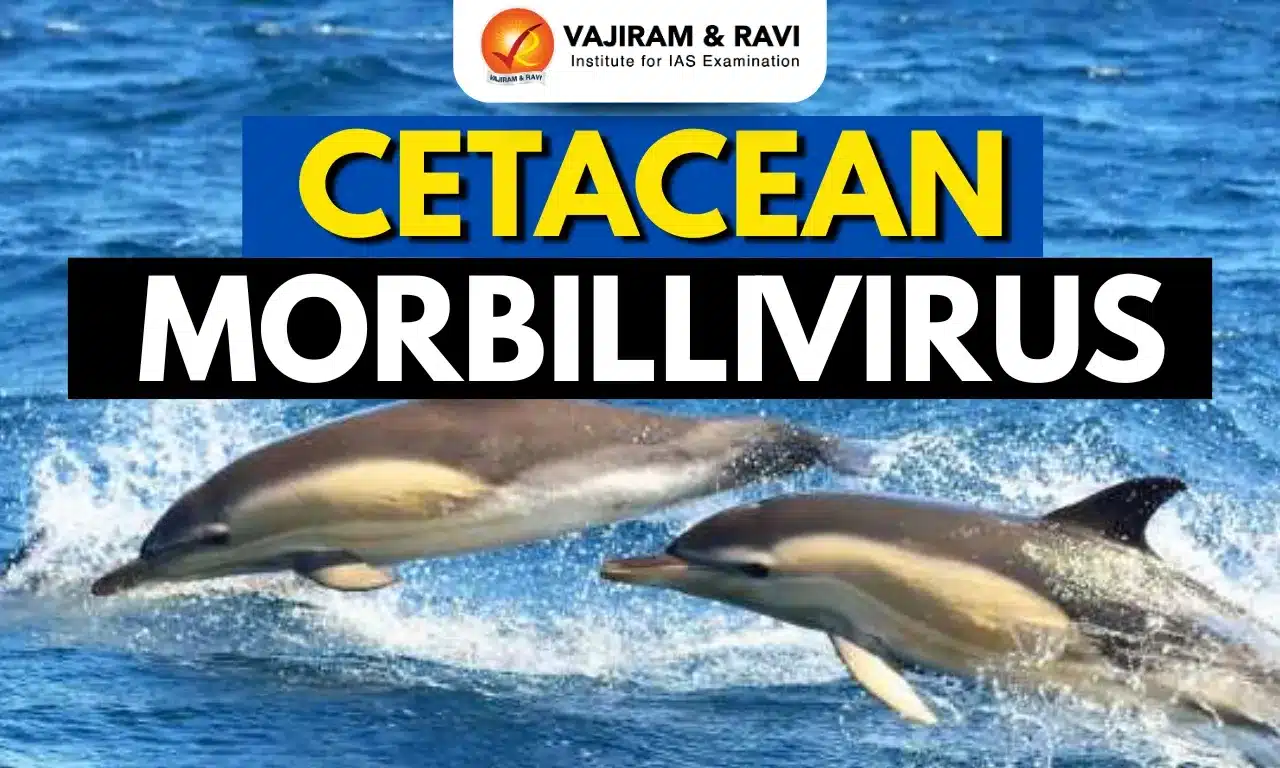
  • Cetacean morbillivirus (CeMV) refers to a viral infection affecting marine mammals, particularly cetaceans.
  • It belongs to the family ​Paramyxoviridae​, which affects  marine mammals such as dolphins, whales, and porpoises.
  • Characteristics: These viruses are enveloped, negative-sense single-stranded RNA viruses.
  • History: Morbilliviruses were first identified in marine mammals in 1987.
  • It has been responsible for numerous outbreaks across the world, especially in the North Atlantic and the Mediterranean.
  • Transmission:  It is highly infectious and spread by the respiratory route and direct contact. The virus is shed by infected animals in ocular and respiratory secretions, urine, feces, and sloughed skin.
  • It impacts the respiratory and neurological systems of the marine mammals, and can lead to mass strandings and deaths.
  • Treatment: There is no treatment for morbillivirus infections in marine mammals, only supportive care.

What are Cetaceans?

  • The Cetacea are one of the most distinctive and highly specialized orders of mammals. 
  • Cetaceans (order Cetacea) are aquatic mammals, including whales, dolphins, and porpoises. 
  • Cetaceans are entirely carnivorous and are distributed in all of the world's oceans.

Source: IE

Cetacean morbillivirus FAQs

Q1: Which marine mammals are affected by Cetacean morbillivirus?

Ans: Dolphins, whales, and porpoises

Q2: How is Cetacean morbillivirus transmitted?

Ans: Direct contact and respiratory droplets

Battery Pack Aadhaar System

Battery Pack Aadhaar System

Battery Pack Aadhaar System Latest News

Recently, the central government has released draft guidelines for a Battery Pack Aadhaar system.

About Battery Pack Aadhaar System

  • It is an indigenous digital identification and data storage system developed to ensure end-to-end traceability of batteries throughout their entire lifecycle.
  • Objective: This system aims to bring transparency, accountability, and sustainability to the battery ecosystem by enabling accurate tracking of performance, and environmental impact.

Features of Battery Pack Aadhaar System

  • The battery producer or importer shall have the obligation of assigning a unique Battery Pack Aadhaar Number (BPAN) to each battery that they introduce in the market and the battery they put to self-use.
  • Every Electric Vehicle battery pack and industrial battery above 2 kWh will be assigned a 21 character Battery Pack Aadhaar Number, or BPAN, along with a QR code.
  • The BPAN will store
    • Static information: It includes the manufacturer’s identity, battery specifications, material composition, and carbon footprint.
    • Dynamic data — including battery health, thermal events, charge-discharge cycles, and end-of-life status — will be maintained on a central server, enabling predictive maintenance and efficient recycling.
  • Significance: BPAN will play a crucial role in enabling second-life usage, regulatory compliance, and efficient recycling.

 Source: TH

Battery Pack Aadhaar System FAQs

Q1: Which ministry has proposed the Battery Pack Aadhaar System?

Ans: Ministry of Road Transport and Highways

Q2: What is the primary objective of the Battery Pack Aadhaar System?

Ans: To ensure end-to-end traceability of batteries

RQ-170 Sentinel

RQ-170 Sentinel

RQ-170 Sentinel Latest News

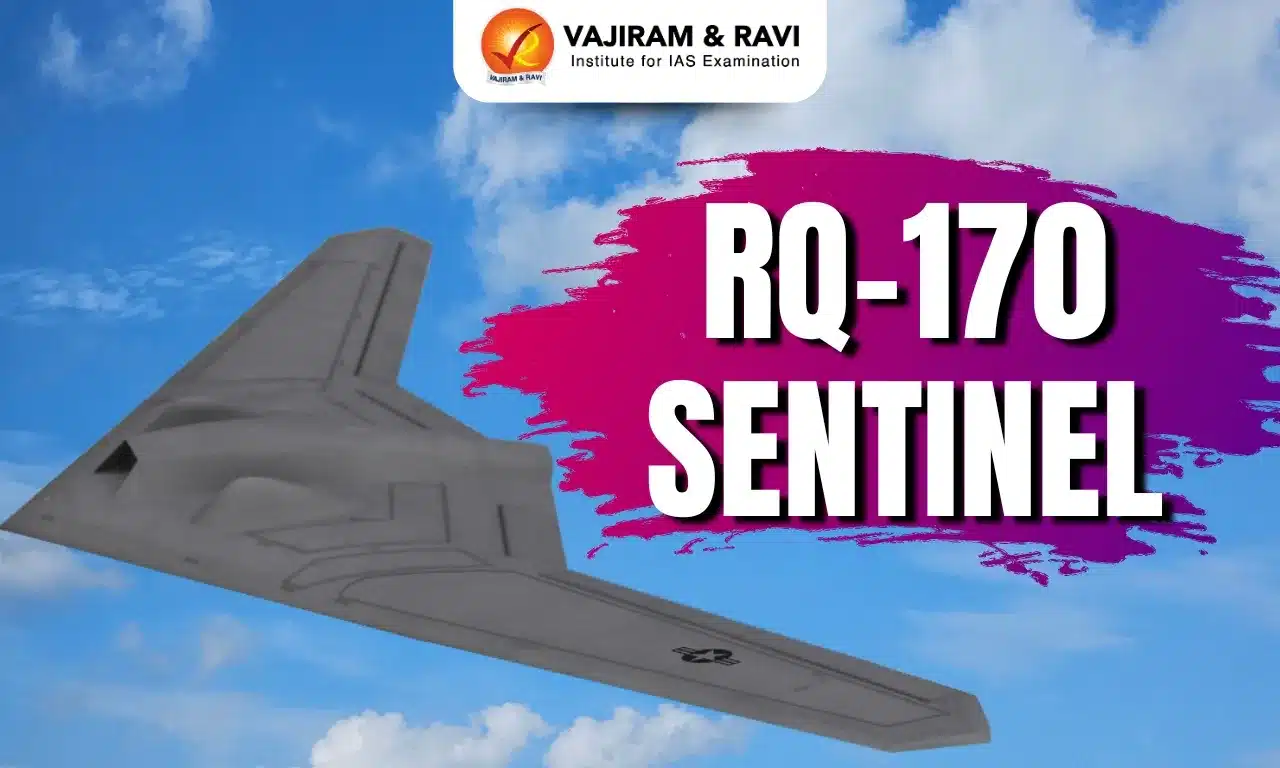
A rare U.S. Air Force RQ-170 “Sentinel” stealth surveillance drone was recently spotted returning to Roosevelt Roads Naval Station in eastern Puerto Rico, following U.S. military strikes conducted overnight against targets in Venezuela.

About RQ-170 Sentinel

  • It is an American high-altitude long-endurance unmanned aerial vehicle (UAV).
  • It was designed and manufactured by Skunk Works, a division of Lockheed Martin (an American defense and aerospace manufacturer), for the United States Air Force (USAF).
  • It is designed to execute intelligence, surveillance, target acquisition, and reconnaissance (ISTAR) and electronic warfare missions over a target area. 
  • The aircraft entered service in the mid-2000s and has previously been associated with U.S. operations in the Middle East and Asia.

RQ-170 Sentinel Features

  • It has a wingspan of 20 m and a length of 4.5 m.
  • It features a flying-wing design optimized for reduced radar visibility and long-endurance flights. 
  • It features a blended fuselage, pointed nose, and tricycle-type landing gear.
  • An electro-optic camera was incorporated beneath the front fuselage section to seize real-time imagery or videos of the battlefield it is surveying.
  • It can capture real-time imagery of the battlefield and transfer the data to the ground control station (GCS) through a line of sight (LOS) communication data link.
  • It is fitted with an active electronically scanned array radar, synthetic aperture radar, and signal intelligence in its belly fairings.
  • About 90% of the aircraft is made up of composite materials to decrease its overall weight.

Source: DB

RQ-170 Sentinel FAQs

Q1: What is the RQ-170 Sentinel?

Ans: It is an American high-altitude, long-endurance unmanned aerial vehicle (UAV).

Q2: What missions is the RQ-170 Sentinel designed to perform?

Ans: Intelligence, surveillance, target acquisition, reconnaissance (ISTAR), and electronic warfare missions.

Q3: When did the RQ-170 Sentinel enter service?

Ans: In the mid-2000s.

Q4: What is the primary purpose of RQ-170 Sentinel's flying-wing design?

Ans: To reduce radar visibility and enable long-endurance flight.

Re-Circulatory Aquaculture System

Re-circulatory Aquaculture System

Re-Circulatory Aquaculture System Latest News

The Union Minister, Ministry of Fisheries, Animal Husbandry and Dairying is set to inaugurate state-of-the-art Re-circulatory Aquaculture System (RAS) Facility in Hyderabad, Telangana.

About Re-circulatory Aquaculture System

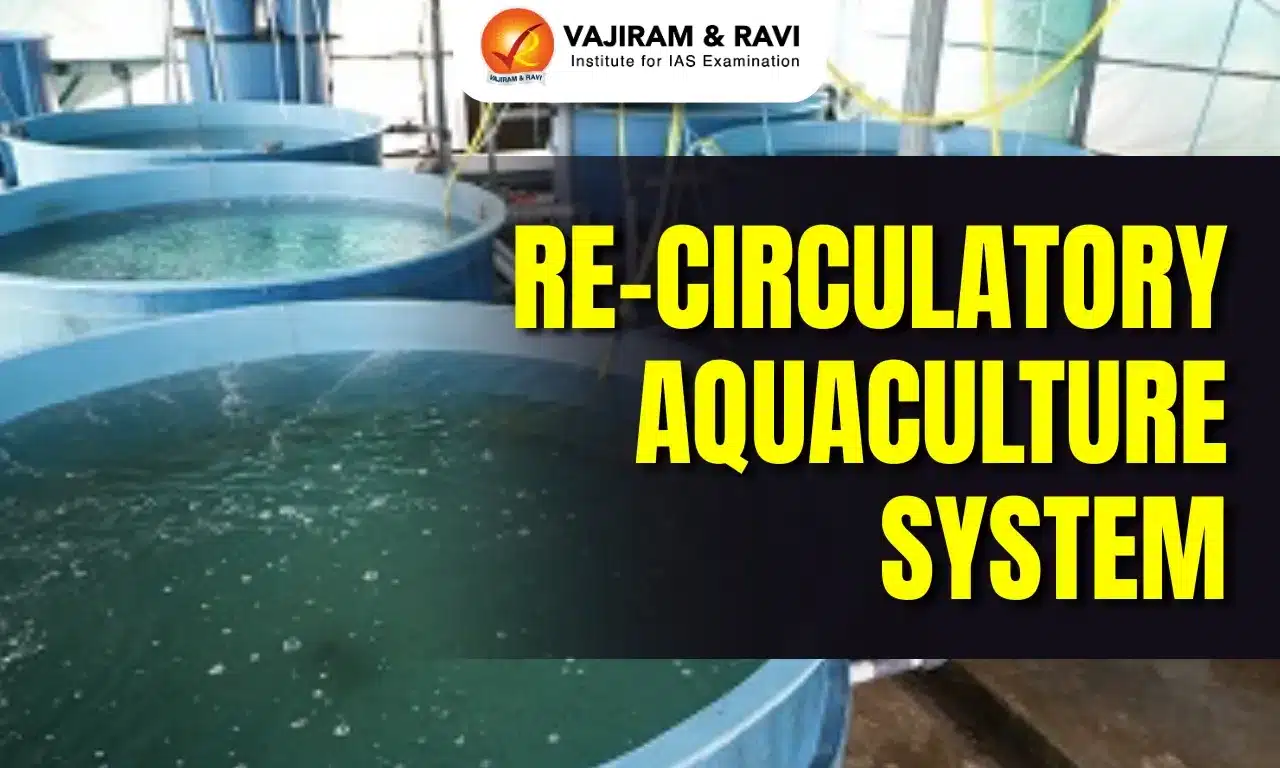
  • It is a technology where water is recycled and reused after mechanical and biological filtration and removal of suspended matter and metabolites.
  • This method is used for high- density culture of various species of fish, utilizing minimum land area and water.

Key Features of Re-circulatory Aquaculture System

  • It is an intensive high density fish culture unlike other aquaculture production systems.
  • It is also a closed-loop tank-based farming that recycles water after filtration.
  • RAS filters and cleans the water in the tank, removing waste and keeping it safe for the fish to live in.
  • It has automated set up of culture tanks with both mechanical and biological filtration units, and effectively prevents the entry of pathogens from external sources.
  • It requires the minimal interventions to assess the culture, water and disease monitoring, which allows for improved biosecurity.
  • It can be set up indoors or in areas without natural water sources, allowing fish to be raised closer to cities and where demand is high.

Source: PIB

Re-circulatory Aquaculture System FAQs

Q1: What is the primary benefit of RAS in aquaculture?

Ans: Minimal land requirement

Q2: What type of environment does RAS provide for fish?

Ans: Closed-loop tank-based

India’s Soft Power – Repatriation of Piprahwa Relics and the Diplomacy of Peace

India’s Soft Power

India’s Soft Power Latest News

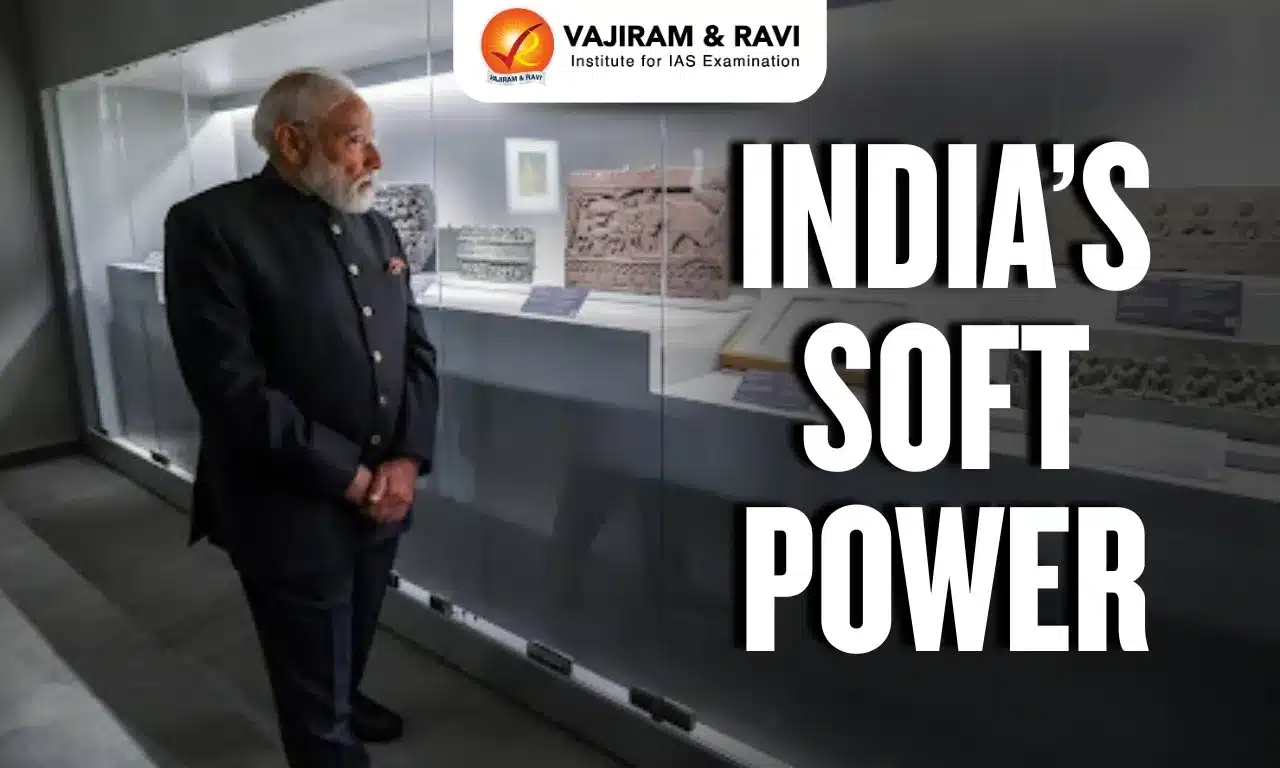
  • The Prime Minister of India inaugurated “The Light and The Lotus: Relics of the Awakened One”, an international exposition of the sacred Piprahwa relics associated with Lord Buddha in New Delhi. 
  • The event coincided with the recent repatriation of priceless Buddhist relics that had been taken out of India during the colonial period and were nearly auctioned abroad.
  • The episode highlights India’s approach to cultural diplomacy, heritage protection, repatriation of antiquities, and Buddhist soft power.

Significance of the PM’s Message

  • Strength with humanity:
    • The PM emphasised that strength is necessary against “enemies of humanity”, but dialogue and peace are essential where disputes exist.
    • This reflects India’s foreign policy doctrine of strategic restraint combined with moral leadership.
  • Buddha’s philosophy as India’s core worldview:
    • Buddha’s idea of “walking together instead of conflict and dominance” was described as India’s guiding philosophy in the 21st century.
    • The principle of “Sarvajan Hitaya, Sarvajan Sukhaya” (welfare and happiness of all) was reiterated as India’s civilisational ethos.

Piprahwa Relics - Historical Background

  • What are the Piprahwa gems: Excavated in 1898 by William Claxton Peppé from a Buddhist stupa at Piprahwa (Siddharthnagar district, Uttar Pradesh), near Nepal.
  • Include: 349 gemstones (pearls, rubies, sapphires, topaz, gold sheets). Bone fragments and ash believed to be of Lord Buddha. Reliquaries, sandstone coffers, soapstone and crystal caskets.
  • Colonial-era dispossession:
    • Under the Indian Treasure Trove Act, 1878, the British Crown claimed most relics.
    • A portion remained with the Peppé family and was held privately for over 127 years.

Rescue from Auction and Repatriation (2025)

  • Threat of auction:
    • Sotheby’s Hong Kong listed the relics for auction in 2025, with an estimated value of over $100 million.
    • The relics were treated as “antique collectibles”, ignoring their religious and civilisational value.
  • India’s response:
    • The Ministry of Culture issued a legal notice demanding cessation of the auction.
    • Asserted that the relics are inalienable religious and cultural heritage protected under Indian law and international conventions.
    • Archaeological Survey of India (ASI) and diplomatic channels were activated.
  • Innovative resolution:
    • Godrej Group purchased the collection. Relics were returned to India, and loaned to the National Museum for five years.
    • This avoided ethical issues of the State commercially purchasing sacred antiquities.

Shared Buddhist Heritage and India’s Soft Power

  • Global spiritual connect:
    • Relics inspired millions of devotees during exhibitions in Thailand, Mongolia, Vietnam, Russia, etc.
    • The PM noted that Indian officials were respected globally as representatives of the “Land of Buddha”.
  • Symbolic diplomacy:
    • India gifted Bodhi tree saplings to countries such as China, Japan, Korea, Mongolia.
    • Special mention - A Bodhi tree in Hiroshima, symbolising peace after nuclear devastation.

Preservation of Buddhist Heritage

  • International efforts:
    • Restoration of 11 pagodas in Bagan (Myanmar).
    • Assistance to Nepal after earthquake damage to heritage sites.
  • Domestic initiatives:
    • Development of a Buddhist Circuit connecting key pilgrimage sites.
    • Promotion of Pali as a classical language.
    • Infrastructure projects to improve accessibility and conservation of Buddhist sites.

Challenges and Way Ahead

  • Colonial-era legal ambiguities over ownership: Strengthen international cooperation on cultural property protection.
  • Grey areas in international law: Proactively use soft power and diplomacy for heritage repatriation.
  • Commercialisation of sacred objects by auction houses: Balance legal, ethical, and spiritual considerations in recovery efforts.
  • Limited enforceability: Of UNESCO conventions for pre-1970 removals. Create a comprehensive global database of stolen/alienated Indian antiquities. Expand cultural diplomacy through Buddhism, yoga, and civilisational narratives.

Conclusion

  • The return of the Piprahwa relics is more than a recovery of antiquities—it is a civilisational reclamation. 
  • By blending moral authority, legal assertion, cultural diplomacy, and innovative partnerships, India has reaffirmed its role as the custodian and living carrier of Buddha’s legacy.
  • The episode reinforces India’s global image as a nation that seeks peace through dialogue, strength with restraint, and unity through shared heritage—a message deeply relevant to both contemporary geopolitics and India’s ancient wisdom.

Source: TH  | IE

India’s Soft Power FAQs

Q1: What is the civilisational significance of the Piprahwa relics in India’s cultural history?

Ans: They are inalienable symbols of India’s Buddhist heritage, linking ancient Kapilavastu to Lord Buddha.

Q2: How does the repatriation of the Piprahwa relics reflect India’s use of soft power?

Ans: It showcases India’s civilisational diplomacy by leveraging Buddhism to strengthen people-to-people ties.

Q3: What legal and ethical challenges did India face in reclaiming the Piprahwa gems?

Ans: India faced colonial-era ownership ambiguities, absence of retrospective legal protection, and ethical concerns over commodifying sacred relics.

Q4: How Buddha’s philosophy shapes India’s contemporary diplomacy?

Ans: India’s foreign policy blends strategic strength against threats with dialogue and peace in disputes.

Q5: Why is the recovery of sacred relics considered a moral obligation?

Ans: They embody collective faith and civilisational identity, making their protection an ethical duty of the State beyond market valuation.

India’s Acid Attack Laws: High Acquittals and Implementation Gaps

Acid Attack

Acid Attack Latest News

  • The recent acquittal of the three main accused in a 2009 acid attack case by a Delhi court marked a crushing setback for survivor and social activist Shaheen Malik, who fought a 16-year legal battle. 
  • The case underscores broader concerns in India’s legal response to acid attacks. 
  • Official data shows that of 703 acid attack cases pending in courts in 2023, there were only 16 convictions against 27 acquittals, highlighting low conviction rates and prolonged judicial processes that continue to challenge survivors’ access to justice.

Acid Attacks

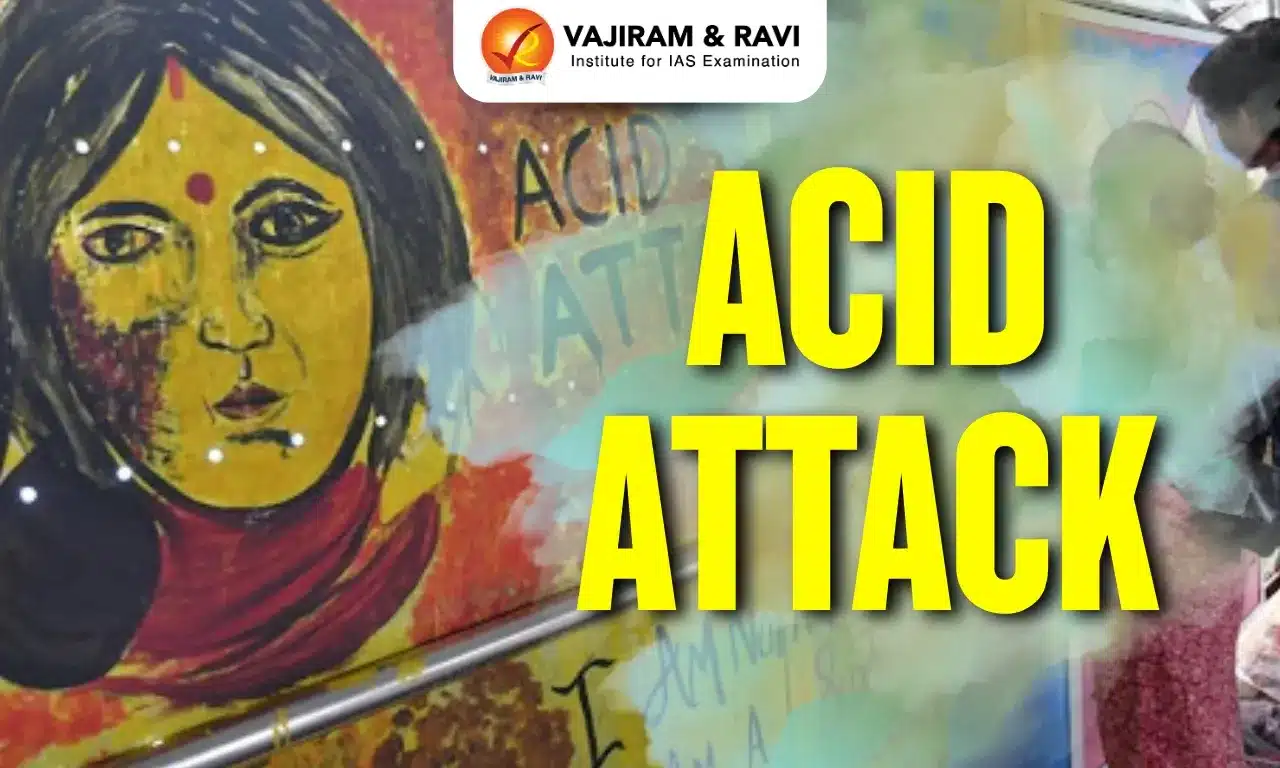
  • An acid attack involves throwing a corrosive substance—most commonly sulphuric, hydrochloric, or nitric acid—on a person with the intent to cause harm. 
  • Such attacks can melt skin and flesh, expose or dissolve bones, and result in severe burns, blindness, disfigurement, permanent disability, or even a vegetative state. 
  • Beyond physical injuries, survivors suffer deep psychological trauma and long-term socio-economic harm.
  • Acid attacks remain a grave, underreported crime in India, rooted in gendered violence, easy access to corrosives, and systemic enforcement gaps, with devastating consequences for survivors’ lives and livelihoods.

Who Are the Victims and Why Do Attacks Occur

  • Acid attacks in India predominantly target women and young girls, with perpetrators almost always men, making it a form of gender-based violence.
  • Children may also be harmed when present near the intended victim.
  • A 2024 analysis of 55 Indian cases by Acid Survivors Trust International found that in cases involving women, three-fourths were driven by personal relationship issues—often revenge for rejecting romantic or sexual advances.
  • Other motives include dowry disputes, suspicions of infidelity, and domestic abuse
  • For male victims, property disputes, professional jealousy, and political rivalry were more common.

How Often Do Acid Attacks Occur

  • According to the National Crime Records Bureau, 207 acid attacks were reported in 2023, up from 202 in 2022 and 176 in 2021, alongside 65 attempted attacks. 
  • Experts note significant underreporting due to stigma, family pressure, and fear of retaliation; ASTI estimates around 1,000 attacks annually in India.

Geographical Hotspots and Contributing Factors

  • In 2023, the highest reported cases were in West Bengal (57), Uttar Pradesh (31), and Gujarat (15). 
  • Researchers link prevalence not only to patriarchal attitudes and weak enforcement, but also to easy availability of acids near industrial clusters (e.g., textiles and rubber), which lowers barriers to access.

Legal Framework Against Acid Attacks in India

  • Following the Supreme Court of India’s landmark judgment in Laxmi vs Union of India, acid attacks were recognised as a distinct criminal offence, separate from general injury provisions.

Current Law and Punishments

  • With the replacement of the IPC by the Bharatiya Nyaya Sanhita, acid attacks are covered under Section 124:
    • Acid attack: Minimum 10 years’ imprisonment, extendable to life imprisonment, plus a “just and reasonable” fine to cover medical expenses
    • Attempt to acid attack: 5–7 years’ imprisonment
  • All public and private hospitals are legally required to provide free first aid and medical treatment to acid attack victims. Failure to comply is punishable with up to one year imprisonment and/or a fine.

Regulation of Acid Sale

  • The Supreme Court also directed strict regulation of acid sales:
    • Buyers must produce photo identification
    • Sellers must maintain a register of acid purchases
  • However, these rules are poorly enforced in most States.

Gaps in Implementation: Survivor’s Experience

  • Acid attack survivor and activist Shaheen Malik highlighted serious systemic failures:
    • 16-year delay in trial despite cases meant to be fast-tracked
    • Shoddy police investigation, ignored evidence, and judicial insensitivity
    • Pressure from police to settle out of court
    • Compensation of ₹3 lakh received nine years after the attack
  • She noted that none of the 300 survivors supported by her foundation have secured convictions, though many were offered monetary settlements.

Judicial Outcomes and NCRB Data

  • According to the National Crime Records Bureau (NCRB) for 2023:
    • 113 cases under investigation, plus 53 pending from previous year
    • 86 cases chargesheeted and sent for trial
    • 649 cases pending trial overall
    • Only 16 convictions, while 27 cases ended in acquittal

Ending Acid Attacks: What More Needs to Be Done

  • Survivors call for a comprehensive ban or far stricter control over acid sales, alongside rigorous enforcement of existing rules. 
  • Accountability of local authorities is crucial, with penalties for illegal sales to deter misuse.
  • Ensure Timely Compensation and Care- Compensation must be disbursed within months, enabling prompt medical treatment and rehabilitation. Delays undermine recovery and access to justice.
  • Implement Comprehensive Rehabilitation - The Justice J S Verma Committee recommended a national fund to cover survivors’ lifelong medical, psychological, educational, and skilling needs.

Learning from Bangladesh’s Experience

  • Bangladesh enacted stringent laws against acid sale and attacks in 2002, backed by sustained public awareness campaigns. 
  • According to the Acid Survivors Foundation of Bangladesh, reported attacks fell sharply—from 494 in 2002 to 13 in 2024, declining 15–20% annually.

Strengthen the Justice Delivery System

  • Improving convictions requires:
    • Sensitisation of police, prosecutors, and judges
    • Fast-track courts for acid attack cases
    • Legal aid and counselling for survivors
    • Penalising judicial delays to ensure timely trials

Source: TH

Acid Attack FAQs

Q1: What are the current legal punishments for acid attacks in India?

Ans: Under Section 124 of the Bharatiya Nyaya Sanhita, acid attacks carry a minimum 10-year sentence, extendable to life. Attempts are punishable by 5 to 7 years' imprisonment.

Q2: What does the data say about acid attack conviction rates?

Ans: Conviction rates remain alarmingly low; in 2023, there were only 16 convictions compared to 27 acquittals, with 649 cases still pending trial overall across the country.

Q3: What are the primary motives behind these attacks in India?

Ans: Attacks on women are often linked to personal relationship issues, such as rejected advances. For men, motives usually involve property disputes, professional jealousy, or political rivalry.

Q4: What regulations exist regarding the sale of acid?

Ans: The Supreme Court mandates that buyers provide photo identification and sellers maintain a register. However, these regulations are poorly enforced, especially near industrial clusters.

Q5: What steps are suggested to improve the situation for survivors?

Ans: Experts recommend fast-track courts, timely compensation within months, and a national fund for lifelong care. Stricter enforcement of sale bans is also considered crucial.


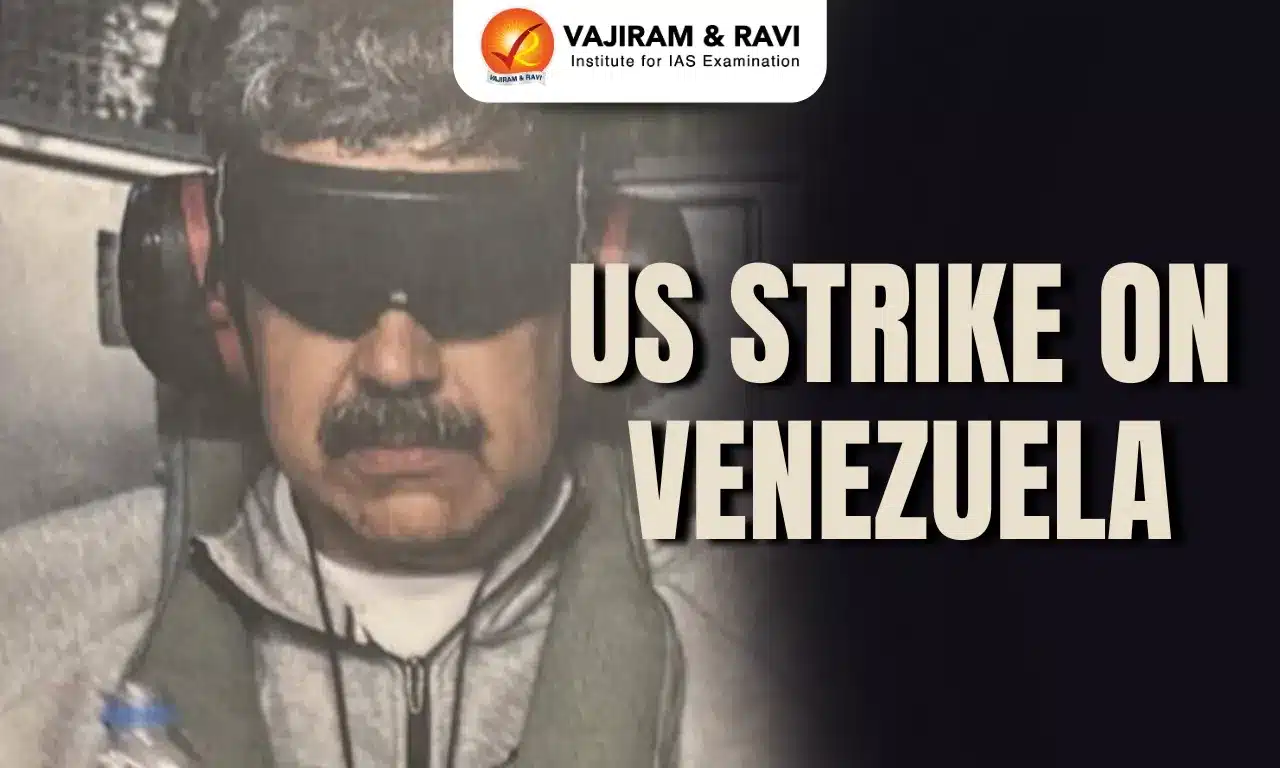
US Strike on Venezuela: Maduro Captured and Trump’s Transition Plan

US Strike on Venezuela

US Strike on Venezuela Latest News

  • The United States has captured Nicolás Maduro, Venezuela’s President, following a large-scale strike on Venezuela. 
  • Trump said Maduro and his wife were flown out in a joint military operation with US law enforcement and have been charged in New York with drug and weapons offences.

Why Did the US Attack Venezuela

  • The United States has cited migration, drugs, and “narco-terrorism” as the primary reasons for its action against Venezuela and President Nicolás Maduro.

Migration Crisis Narrative

  • US President Donald Trump has repeatedly linked Venezuela to rising migration at the US southern border.
    • Since 2013, an estimated eight million Venezuelans have fled economic collapse and political repression, mostly to other Latin American countries.
  • Trump has accused the Maduro government of “emptying prisons and asylums” and forcing inmates to migrate to the US—claims rejected by Caracas as baseless.

Drugs and ‘Narco-Terrorism’ Claims

  • Washington argues that Venezuela is a key transit route for cocaine and contributes to the US fentanyl crisis.
  • The US designated Tren de Aragua and Cartel de los Soles as Foreign Terrorist Organisations (FTOs).
  • Trump has alleged that the Cartel de los Soles is led by Maduro himself.

Venezuela’s Response 

  • The Venezuelan government denies all allegations, arguing that the US is weaponising the “war on drugs” to justify regime change rather than addressing migration or narcotics trafficking.

India’s Diplomatic Dilemma After US Action in Venezuela

  • The announcement by Donald Trump about the US attack in Venezuela has placed India between Washington’s unilateral move and New Delhi’s long-standing support for a rules-based international order and non-intervention.
  • India typically avoids commenting on distant conflicts. However, as a leading voice of the Global South, many countries expect India to underscore international law and sovereignty—creating pressure to respond, even as Delhi remains cautious.

US–India Context: Trade Tensions Persist

  • India and the US are negotiating a bilateral trade deal amid strains following 50% US tariffs, including a 25% penalty linked to India’s purchase of Russian oil. 
  • India has been tapering imports but feels singled out, as similar actions were not taken against China or Europe.

MEA Advisory to Indians

  • The Ministry of External Affairs issued an advisory urging Indians to avoid non-essential travel, exercise caution, restrict movement, and stay in touch with the Embassy of India in Caracas.
  • Given muted reactions from major G-20 countries and ongoing US–India negotiations, New Delhi is not rushing a statement.

India–Venezuela Ties: Limited but Historic

  • Energy-centric relationship: India once imported significant Venezuelan oil.

Trade trend (decline post-US sanctions)

  • 2019–20: USD 6,397 million (imports USD 6,057 million)
  • 2020–21: USD 1,271 million (imports USD 714 million)
  • 2021–22: USD 424 million (imports USD 89 million)
  • 2022–23: USD 431 million (imports USD 253 million)

High-Level Engagements Over the Years

  • 2005: President Hugo Chávez visited India; talks with PM Manmohan Singh.
  • 2012: Nicolás Maduro (then Foreign Minister) visited India for the India–CELAC Troika meet.
  • 2013: India sent Sachin Pilot (the then Minister of State for Corporate Affairs) to Chávez’s state funeral.
  • 2023: Venezuelan Executive Vice President Delcy Rodríguez visited India for the CII–LAC Conclave; met Nirmala Sitharaman and S Jaishankar.

Low On-Ground Stakes, High Principles

  • India’s diaspora presence in Venezuela is small (fewer than 100 Indians). 
  • Yet, the principle of sovereignty and concerns over US interventionism elevate the issue’s significance for India’s diplomacy.
  • While political stakes for India are limited, the normative stakes are high
  • India is carefully balancing principle, pragmatism, and partnerships amid a volatile geopolitical moment.

Global Reactions: Mixed Signals

  • Russia condemned the US move as an “act of armed aggression.”
  • The European Union called for respect for international law and the UN Charter, urging restraint.
  • Chile President Gabriel Boric expressed “concern and condemnation” of the “military actions of the US” and Colombian President Gustavo Petro expressed “deep concern”.

What Lies Ahead for Venezuela After US Intervention

  • US President Donald Trump said Washington would run Venezuela temporarily until a “safe, proper and judicious transition” is achieved. 
  • He dismissed opposition leader María Corina Machado as lacking support, despite her earlier call for Edmundo González Urrutia—whom her party claims won the 2024 election—to assume power.
  • Trump indicated a strong economic dimension to the US role, saying American oil companies would move in to repair infrastructure, extract oil, sell it internationally, and recoup US costs, sharing revenues with Venezuelans. 
  • He did not rule out deploying US troops, signaling the possibility of a prolonged and force-backed transition.

Source: IE | BBC | NDTV

US Strike on Venezuela FAQs

Q1: Why did the United States launch a military strike against Venezuela?

Ans: The US cited "narco-terrorism," cocaine trafficking, and the Venezuelan government's alleged role in the fentanyl crisis and migration at the US southern border as primary reasons for the action.

Q2: What has happened to President Nicolás Maduro following the strike?

Ans: President Maduro and his wife were flown out in a joint military operation. They have been charged in New York with various drug and weapons offenses.

Q3: How does the US plan to manage Venezuela moving forward?

Ans: President Trump stated the US will run Venezuela temporarily until a "proper" transition is achieved. US oil companies will repair infrastructure and extract oil to recoup costs.

Q4: What is India’s diplomatic stance on the US action in Venezuela?

Ans: India faces a dilemma, balancing its partnership with Washington against its commitment to international law and sovereignty. New Delhi is cautious, having issued travel advisories for citizens.

Q5: How have international leaders reacted to the US intervention?

Ans: Reactions are mixed; Russia condemned it as "armed aggression," while Chile and Colombia expressed deep concern. The EU urged restraint and respect for the UN Charter.

Airport Privatisation in India – Process, Rationale and Concerns

Airport Privatisation

Airport Privatisation Latest News

  • The Union government has moved forward with the third round of airport privatisation by proposing the leasing of 11 Airports Authority of India facilities to private operators under the PPP model. 

Background: Airport Privatisation in India

  • Airport privatisation in India is part of a broader strategy to improve infrastructure efficiency, mobilise private capital, and reduce the financial burden on the public exchequer. 
  • Airports in India are largely owned and operated by the Airports Authority of India (AAI), which manages both aeronautical services (runways, terminals) and non-aeronautical assets (retail, parking, real estate).
  • The process began in the early 2000s with the privatisation of Delhi and Mumbai airports, followed by greenfield PPP airports such as Bengaluru and Hyderabad. 
  • In 2019, six more airports were privatised, marking a shift from a revenue-share model to a per-passenger fee model. 
  • The current round represents a new phase, as it introduces the bundling of metro and non-metro airports for the first time.

Objectives of Airport Privatisation

  • The core objectives of airport privatisation include improving service quality, modernising infrastructure, and increasing operational efficiency. 
  • Private operators are expected to bring in investment, adopt global best practices, and expand non-aeronautical revenue streams to cross-subsidise passenger costs.
  • Airport privatisation is also linked to India’s long-term aviation growth strategy. 
  • With only about 6% of Indians currently using air travel, there is significant untapped demand. 
  • Expanding airport capacity and improving connectivity are seen as essential for economic growth, regional integration, and tourism.

Third Round of Airport Privatisation

  • The third round of privatisation covers 11 airports, grouped into five bundled packages. 
  • These airports are drawn from AAI facilities handling 0.1 to 1 million passengers annually, selected based on traffic potential, future growth projections, and geographical proximity.
  • Once approved by the Public Private Partnership Appraisal Committee (PPPAC) and the Union Cabinet, bids are expected to be invited, with the tender process likely to begin in 2026. 
  • This round is also aligned with the National Monetisation Pipeline (NMP), which seeks to monetise brownfield infrastructure to fund new public assets.
  • Under the NMP, airport privatisation of 25 airports was projected to generate over Rs. 20,000 crore. 
  • However, the aviation sector has lagged behind roads and railways in achieving monetisation targets, prompting renewed policy focus.

Revenue Models and Regulatory Framework

  • A major issue in airport privatisation is the shift from revenue-sharing to per-passenger fee models
  • Under this system, private operators pay AAI a fixed amount per passenger, indexed annually. 
  • While this provides revenue certainty to AAI, it raises concerns about higher user charges.
  • Airport tariffs are regulated by the Airport Economic Regulatory Authority (AERA), which approves user development fees, landing charges, and other tariffs. 
  • Non-aeronautical revenues are intended to offset passenger costs, but disputes have arisen over the under-reporting of such revenues by private operators.

Emerging Concerns and Criticisms

  • One of the biggest concerns is market concentration
  • Over the past few years, a single corporate group has acquired control over a large number of major airports, raising fears of monopoly or duopoly in the aviation ecosystem. 
  • This weakens the bargaining power of airlines and leaves passengers with limited choices.
  • There are also concerns over rising costs for passengers. In some privatised airports, user development fees and ancillary charges have increased significantly after tariff revisions. 
  • Additional issues reported by passengers include congestion, high taxi charges, limited accessibility services, and declining service quality.
  • To address this, the regulator has begun moving towards service-linked tariff regulation, proposing penalties for airports that fail to meet benchmarks such as security wait times, check-in duration, and passenger assistance.

Way Forward

  • India’s aviation market is expected to grow rapidly, with airport capacity projected to increase from about 550 million passengers per annum to nearly 850 million in the next five years. 
  • Meeting this demand will require not just new airports but also effective regulation, competition safeguards, and consumer protection.
  • Balancing private investment with public interest will be critical. 
  • Transparent bidding, caps on concentration, robust regulatory oversight, and accountability on service quality will determine whether airport privatisation delivers inclusive and affordable air travel.

Source: TH

Airport Privatisation FAQs

Q1: What is airport privatisation in India?

Ans: It refers to leasing AAI-owned airports to private operators under PPP models for operation, management, and development.

Q2: Why is the government privatising airports?

Ans: To improve efficiency, attract private investment, modernise infrastructure, and fund new public assets through monetisation.

Q3: What is new in the third round of airport privatisation?

Ans: Airports are being bundled together, combining metro and non-metro airports in a single concession package.

Q4: Who regulates airport tariffs after privatisation?

Ans: The Airport Economic Regulatory Authority (AERA) regulates user charges, fees, and service benchmarks.

Q5: What are the main concerns with airport privatisation?

Ans: Rising passenger costs, market concentration, reduced competition, and service quality issues.

Enquire Now