National IED Data Management System (NIDMS)

National IED Data Management System (NIDMS)

National IED Data Management System (NIDMS) Latest News

The Home and Cooperation Minister recently launched the National IED Data Management System (NIDMS), marking a significant step towards strengthening the country’s counter-IED and internal security architecture.

About National IED Data Management System (NIDMS)

  • It is a national-level digital platform developed by the National Security Guard’s (NSG) National Bomb Data Centre.
  • It will enable systematic data collection and analysis related to Improvised Explosive Devices (IEDs), enhancing the investigation process of terrorist incidents in the country. 
  • It will function as a two-way, integrated online platform accessible to the National Investigation Agency (NIA), Anti-Terrorism Squads, state police forces and all Central Armed Police Forces. 
  • Data related to any explosion or IED incident across the country can be uploaded and analysed to support investigations.
  • The platform will play a crucial role in "supporting post-blast investigations and enhancing coordination among various security and law enforcement agencies across the country.
  • NSG has maintained a comprehensive database of bomb explosions since 1999, which will now be made available to law enforcement agencies nationwide through NIDMS. 
  • The system will help analyse patterns of attacks, modus operandi and types of explosives used, and assist in establishing linkages between incidents.
  • This platform will strengthen the process of collecting, standardizing, integrating, and securely sharing IED-related data.

Source: NOA

National IED Data Management System (NIDMS) FAQs

Q1: What is the National IED Data Management System (NIDMS)?

Ans: It is a national-level digital platform for managing data related to Improvised Explosive Devices (IEDs).

Q2: Which organization developed the National IED Data Management System (NIDMS)?

Ans: It was developed by the National Security Guard’s (NSG) National Bomb Data Centre.

Q3: What is the main purpose of National IED Data Management System (NIDMS)?

Ans: To enable systematic collection and analysis of IED-related data to enhance investigation of terrorist incidents.

Q4: What kind of analysis can National IED Data Management System (NIDMS) perform on IED incidents?

Ans: Analysis of attack patterns, modus operandi, and types of explosives used.

Two New Frog Species

Two New Frog Species

Two New Frog Species Latest News

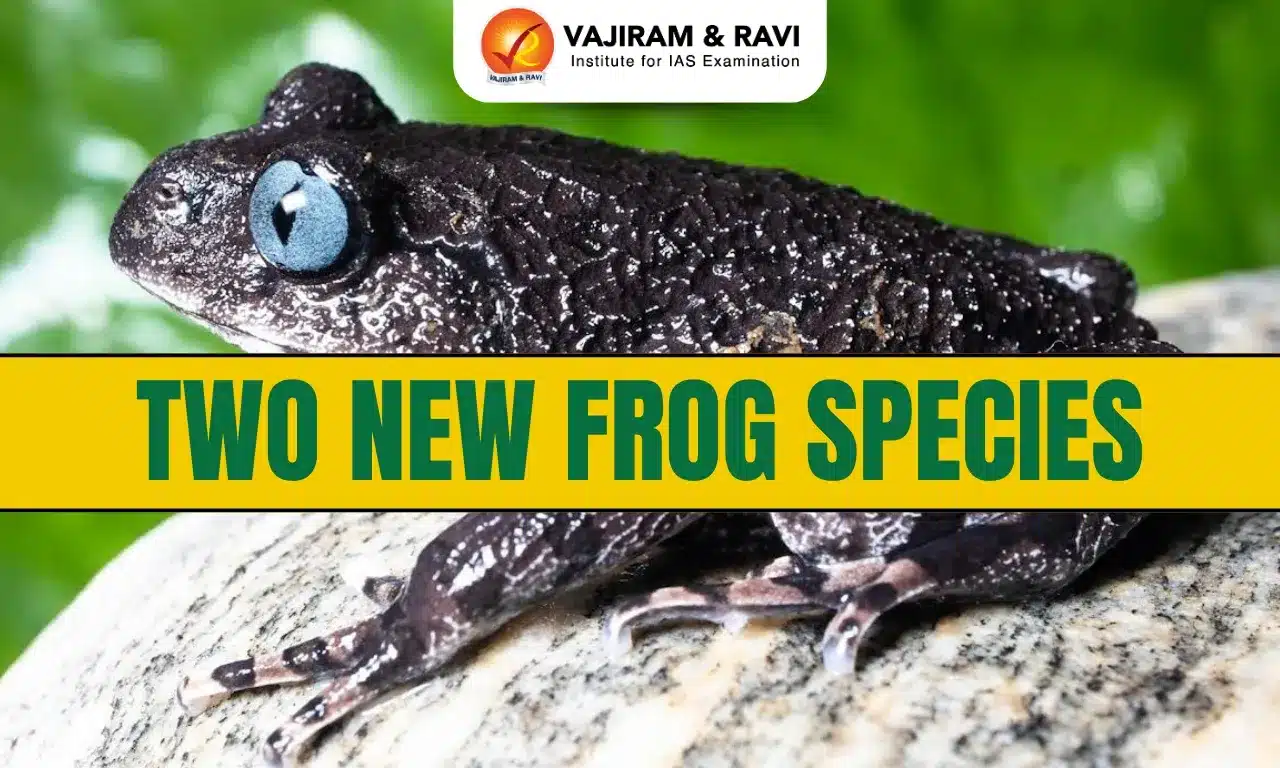
A team of scientists led by ‘Frogman of India’ S. D. Biju recently discovered two new frog species named Soman’s Slender Arm Frog (Leptobrachium somani) and Mechuka Slender Arm Frog (Leptobrachium mechuka) from the remote mountain habitats of Arunachal Pradesh.

About Soman’s Slender Arm Frog (Leptobrachium somani)

  • It is a new slender-armed frog species.
  • It was discovered at Tiwarigaon in Arunachal Pradesh.
  • It has been named in honour of the late journalist E. Somanath, recognising his lifelong commitment to environmental journalism.
  • This small frog measures about 55 mm in length. 
  • It has a greyish-brown body with irregular light-grey markings and distinctive silver-grey to light-blue eyes. 
  • An evergreen forest species, males are typically found calling from the banks of fast- or slow-flowing streams. 

About Mechuka Slender Arm Frog (Leptobrachium mechuka)

  • It is a new slender-armed frog species.
  • It is named after Mechuka, the town in Arunachal Pradesh where it was first collected. 
  • Measuring about 60 mm, this species occurs in evergreen forests and adjoining grasslands.
  • It has a uniformly brown body with a reddish tinge and striking silvery-white eyes.

Source: NIE

Two New Frog Species FAQs

Q1: Where was Soman’s Slender Arm Frog discovered?

Ans: It was discovered at Tiwarigaon in Arunachal Pradesh.

Q2: What is the body coloration of Soman’s Slender Arm Frog?

Ans: It has a greyish-brown body with irregular light-grey markings.

Q3: What is Mechuka Slender Arm Frog (Leptobrachium mechuka)?

Ans: What is the body coloration of Mechuka Slender Arm Frog?

United Nations Department of Economic and Social Affairs (UN DESA)

United Nations Department of Economic and Social Affairs (UN DESA)

United Nations Department of Economic and Social Affairs (UN DESA) Latest News

India is expected to grow by 7.4 per cent in the current financial year, driven by consumption and public investment, the United Nations Department of Economic and Social Affairs (UNDESA) said in a report recently.

About United Nations Department of Economic and Social Affairs (UN DESA)

  • Rooted in the United Nations Charter and guided by the transformative 2030 Agenda for Sustainable Development, the UN DESA upholds the development pillar of the United Nations.
  • It is based at UN Headquarters in New York, United States.
  • Its Divisions and Offices work together towards a common goal to promote the social, economic, and environmental dimensions of sustainable development.
  • Its work addresses a range of cross-cutting issues that affect peoples’ lives and livelihoods. 
  • From poverty reduction to governance to finance to the environment, UN DESA’s work is about human progress for all, especially the most vulnerable.
  • UN DESA’s work programme can be categorized into three areas: norm-setting, analysis, and capacity-building.
  • What is UN DESA doing?
    • Facilitates the negotiations of Members States in many intergovernmental bodies to address ongoing or emerging global challenges;
    • Provides substantive support to intergovernmental processes on development issues in the General Assembly and the Economic and Social Council;
    • Advises interested Governments on the ways and means of translating policy frameworks developed in the UN conferences and summits into programmes at the country level;
    • Collaborate closely with its partners at regional and country levels in helping countries to formulate and implement development strategies;
    • Compiles, generates, and analyses a wide range of economic, social, and environmental data and information on which member states of the United Nations draw.
  • Reports Published by UN DESA:
    • World Economic Situation and Prospects Report
    • World Social Report
    • Sustainable Development Goals Report

Source: NOA

United Nations Department of Economic and Social Affairs (UN DESA) FAQs

Q1: What does UN DESA stand for?

Ans: United Nations Department of Economic and Social Affairs.

Q2: Where is the United Nations Department of Economic and Social Affairs (UN DESA) based at?

Ans: At the United Nations Headquarters in New York, United States.

Q3: What is the common goal of United Nations Department of Economic and Social Affairs (UN DESA) divisions and offices?

Ans: To promote the social, economic, and environmental dimensions of sustainable development.

Grey Slender Loris

Grey Slender Loris

Grey Slender Loris Latest News

Recently, Kerala and Tamil Nadu have begun efforts to restore habitats and strengthen monitoring of the grey slender loris.

About Grey Slender Loris

  • The gray slender loris (Loris lydekkerianus ) is a species of primate in the family Loridae.
  • They are prosimians—which means they are part of the oldest and most primitive group of primates
  • Habitat: It is found in tropical primary and secondary rainforests, dry semi-deciduous forests, scrub, swamp, acacia, bamboo, edge, and montane cloud forest.
  • Distribution: It is mainly found in southern India (mainly in Karnataka, Kerala and Tamil Nadu) and Sri Lanka.

Characteristics of Grey Slender Loris

  • It is a nocturnal hunter.
  • It has no tail, its flexible spine and long limbs help it cross the canopy with agility.
  • It has opposable thumbs which allow it to cling motionless for long periods.
  • It has large, forward-facing eyes with extraordinary night vision.
  • Communication: Gray slender lorises communicate using vocalizations and scent marking.
  • Diet: It is almost entirely insectivorous, and more than half of its diet is composed of ants and termites. 
  • Threats: Illegal pet trade, hunting for body parts and roadside captures.

Conservation Status of Grey Slender Loris

  • IUCN Red List: Near threatened
  • CITES: Appendix II
  • Wildlife Protection Act, 1972: Schedule I

Source: DTE

Grey Slender Loris FAQs

Q1: What is the primary habitat of the Grey Slender Loris?

Ans: Tropical forests and scrublands

Q2: What is the conservation status of the Grey Slender Loris?

Ans: Near threatened

Ratapani Tiger Reserve

Ratapani Tiger Reserve

Ratapani Tiger Reserve Latest News

Madhya Pradesh Chief Minister recently announced that the newly designated Ratapani Tiger Reserve will be named after the renowned archaeologist and Padma Shri awardee Dr Vishnu Shridhar Wakankar.

About Ratapani Tiger Reserve

  • It is situated in the Raisen and Sehore districts of Madhya Pradesh.
  • This forest is spread over hills of the Vindhya ranges.
  • It is spread over an area of 1,271 sq.km.
  • It runs parallel on the northern side of the Narmada River. The Kolar River forms the western boundary of the reserve. 
  • Two large reservoirs, namely Barna Reservoir and Ratapani Dam (Barrusot Lake) are among the major water bodies adjacent to or inside the reserve.
  • The landscape is undulating, with hills, plateaus, valleys, and plains. 
  • The reserve has Bhimbetka, a group of rock shelters and rock paintings, which is one of the ” World Heritage Sites ” declared by UNESCO.
  • It also encompasses many other historical and religious destinations like Ginnourgarh Fort, POW camp, Keri Mahadeo, Ratapani Dam, Jholiyapur Dam, etc.
  • Flora: The forest of Ratapani is a dry deciduous and moist deciduous type, with teak (Tectona grandis) as the main tree species. About 55% of the area is covered by teak.
  • Fauna
    • The regal striped cat is the apex predator, and estimates suggest that 40 tigers roam these forests. 
    • Chinkara, an endangered species, is also found in the reserve.
    • It is also home to animals like the Panther, Hyena, Jackal, Indian Fox, Wild Dog, Jungle Cat, Small Indian Civet, Blue Bull, Chinkara, Black Buck, Chausingha, Spotted Deer, Barking Deer, etc.

Source: HANS

Ratapani Tiger Reserve FAQs

Q1: Where is Ratapani Tiger Reserve located?

Ans: It is located in the Raisen and Sehore districts of Madhya Pradesh.

Q2: Which mountain range does Ratapani Tiger Reserve lie in?

Ans: It lies in the hills of the Vindhya ranges.

Q3: Along which major river does Ratapani Tiger Reserve run parallel?

Ans: It runs parallel to the northern side of the Narmada River.

Q4: Which river forms the western boundary of Ratapani Tiger Reserve?

Ans: The Kolar River forms the western boundary.

Q5: Which UNESCO World Heritage Site is located within Ratapani Tiger Reserve?

Ans: Bhimbetka rock shelters and rock paintings.

Creator’s Corner Platform

Creator's Corner Platform

Creator's Corner Platform Latest News

Recently, Prasar Bharati launched ‘Creator’s Corner’ on DD News to empower digital creators nationwide.

About Creator's Corner Platform

  • It was launched by the Prasar Bharati.
  • It is a dedicated platform for showcasing content created by digital creators from across the country on DD News.
  • Aim: To promote the digital economy by encouraging the creation of quality content and expanding its reach through a partnership between Prasar Bharati and individual content creators.
  • It will feature content on a wide range of themes including;
    • News and Current Affairs, Culture, Travel, Cuisine, Art and Literature, Music and Dance, Health and Wellness, Education, Science and Technology, inspiring stories, Environment and Sustainable Development, and Entertainment
  • The programme will be telecasted from Monday to Friday on DD News.
  • This initiative would operate on a revenue-sharing model with 90 per cent of the revenue generated from the programming to be given to content creators, with Prasar Bharti retaining 10 per cent.
  • Significance: This initiative represents a mutually beneficial partnership, providing digital creators a credible platform and the extensive reach of Prasar Bharati/DD News to showcase their work.

Key Facts about Prasar Bharati

  • It is the Public Service Broadcaster of the country.
  • It is a statutory autonomous body established in 1997 under the Prasar Bharati Act.
  • Objective: To conduct public broadcasting services intended to inform and entertain the public.
  • It comprises the Doordarshan Television Network and All India Radio, which were earlier media units of the Ministry of Information and Broadcasting.
  • Headquarter: New Delhi

 Source: PIB

Creator's Corner Platform FAQs

Q1: What is the main objective of Creator's Corner Platform?

Ans: To boost the creator's economy and provide a platform for digital creators

Q2: Who launched the Creator's Corner Platform?

Ans: Prasar Bharati

PANKHUDI Portal

PANKHUDI Portal

PANKHUDI Portal Latest News

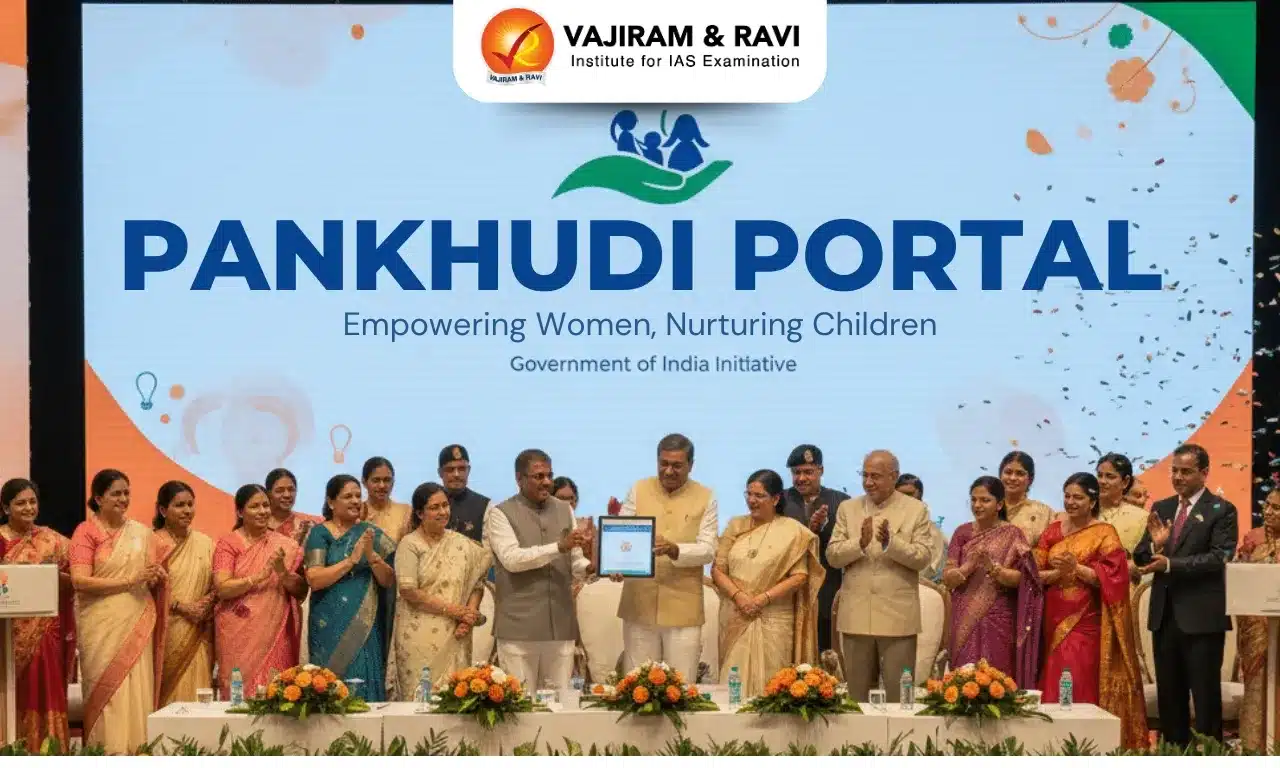
Recently, the Ministry of Women and Child Development launched the PANKHUDI portal.

About PANKHUDI Portal

  • It is launched by the Ministry of Women and Child Development.
  • It is an integrated Corporate Social Responsibility (CSR) and partnership facilitation digital portal.
  • Aim: It is aimed at strengthening coordination, transparency, and structured stakeholder participation in initiatives for women and child development.

Key Features of PANKHUDI Portal

  • Single-window digital platform: It works as a single-window digital platform, Non-Resident Indians (NRIs), Non-Governmental Organisations (NGOs), Corporate Social Responsibility (CSR) contributors, corporate entities, and government agencies.
  • Key Thematic Areas: Nutrition, health, Early Childhood Care and Education (ECCE), child welfare, protection and rehabilitation, and women’s safety and empowerment.
  • Supports Flagship Missions: It supports and strengthens the implementation of flagship missions—Mission Saksham Anganwadi & Poshan 2.0, Mission Vatsalya, and Mission Shakti.
  • Transparency: Contributors register on the portal, identify initiatives, submit proposals, and track the status of their contributions through clearly defined approval workflows.
  • Non- Cash Financial Transactions: All contributions through the portal are accepted only through non-cash modes.
  • Significance: It marks a significant step towards leveraging digital solutions for inclusive, collaborative, and outcome-oriented development of women and children across India.

Source: PIB

PANKHUDI Portal FAQs

Q1: What is PANKHUDI Portal primarily related to?

Ans: Women and Child Development

Q2: Who launched the PANKHUDI Portal?

Ans: Ministry of Women and Child Development

Dal Lake

Dal Lake

Dal Lake Latest News

Parts of the Dal Lake in Srinagar froze recently as the city recorded its coldest night of the winter, with temperatures plunging well below the freezing point across the Kashmir Valley.

About Dal Lake

  • It is a mid-altitude urban freshwater lake located in Srinagar, Jammu and Kashmir.
  • It is surrounded by the Pir Panjal mountains.
  • It is integral to tourism and recreation in Kashmir and is named the “Jewel in the crown of Kashmir” or “Srinagar’s Jewel”.
  • It covers an area of about 18 to 22 sq.km.
  • It is one of the world’s largest natural lakes and also known as the Lake of Flowers.
  • The lake gets its water mainly from the Telbal stream. This stream flows from the Jhelum River. 
  • During the winter season, the temperature sometimes reaches −11°C (12°F), freezing the lake.
  • The wetland is divided by causeways into four basins: Gagribal, Lokut Dal, Bod Dal, and Nagin (although Nagin is also considered an independent lake).
  • Lokut-dal and Bod-dal each have an island in the centre, known as Rup Lank (or Char Chinari) and Sona Lank, respectively.
  • The floating gardens, locally known as "Rad," are a spectacular highlight of the lake.
    • These are patches of land that float on the water. Farmers grow vegetables and flowers on them.
  • Dal Lake is also popular for the floating market, where vendors have their own Shikaras/wooden boats and approach tourists.
  • The shoreline of the lake is encompassed by a boulevard lined with Mughal-era gardens, parks, houseboats, and hotels. 
  • Mughal Gardens:
    • Nishat Bagh: This is known as the "Garden of Joy." It is a terraced garden with fountains.
    • Shalimar Bagh: This garden is called the "Abode of Love." It was built by Emperor Jahangir.
    • Chashma Shahi: This garden is famous for its natural spring.

Source: TELE

Dal Lake FAQs

Q1: Where is Dal Lake located?

Ans: Dal Lake is located in Srinagar, Jammu and Kashmir.

Q2: What type of lake is Dal Lake?

Ans: It is a mid-altitude urban freshwater lake.

Q3: What popular titles are given to Dal Lake?

Ans: It is called the “Jewel in the crown of Kashmir” and “Srinagar’s Jewel.”

Q4: What are the floating gardens of Dal Lake locally called?

Ans: They are locally known as “Rad.”

Q5: What is the floating market of Dal Lake known for?

Ans: Vendors sell goods from their own Shikaras (wooden boats).

Scramjet Engine

Scramjet Engine

Scramjet Engine Latest News

Recently, the Defence Research and Development Organisation (DRDO) conducted successful ground testing of full scale actively cooled long duration Scramjet Engine for Hypersonic Missile Programme.

About Scramjet Engine

  • A Scramjet (Supersonic Combustion Ramjet) is an air-breathing engine designed to operate efficiently at hypersonic speeds (Mach 5 and above).
  • It does not use rotating compressors, relying instead on the vehicle’s high speed to compress air.
  • Scramjets enable supersonic combustion, making them suitable for Hypersonic Cruise Missiles (HCMs).
  • It carries liquid Hydrogen as fuel and liquid Oxygen for combustion (oxidiser) to generate thrust.
  • India is the fourth country to demonstrate the flight testing of a Scramjet Engine.

Working Principle of Scramjet Engine

  • Air intake: Vehicle must already be flying at supersonic speeds (Mach 3+).
  • Compression: High-speed movement compresses the incoming air.
  • Combustion: Hydrogen fuel is injected and ignited while air remains supersonic.
  • Thrust Generation: Expanding gases create thrust (based on Newton’s Third Law).
  • Scramjets need rocket-assisted takeoff as they can’t generate thrust at zero speed.
  • The fuel efficiency of the scramjets tends to be significantly better than that of traditional turbojets and ramjets.

What are Hypersonic Missiles?

  • It refers to one which travels faster than Mach 5, or five times the speed of sound (330 m/s).
  • There are two types: 
    • Hypersonic Glide vehicles (HGV):These are launched from a rocket, similar to regular ballistic missiles, before gliding to a target.
    • Hypersonic Cruise Missiles: They are powered throughout their flight via air-breathing engines called Scramjets, after acquiring their target.

Source: PIB

Scramjet Engine FAQs

Q1: At what speed range do Scramjet engines typically operate?

Ans: Hypersonic (Mach 5+)

Q2: What is a unique feaure of Scramjet engines?

Ans: They have no moving parts in Scramjet.

Trump’s Russia Sanctions Bill Could Cripple India–US Trade

Trump’s Russia Sanctions Bill

Trump’s Russia Sanctions Bill Latest News

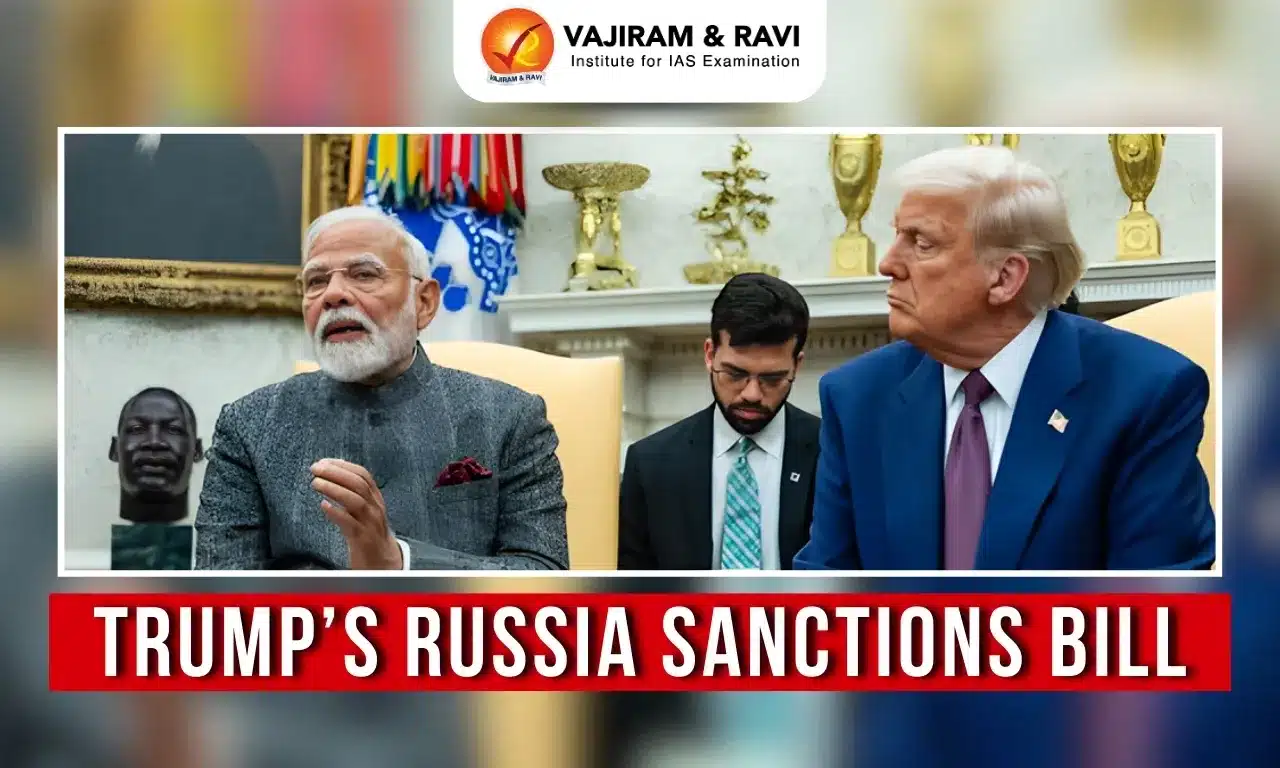
  • President Donald Trump has approved a sweeping Russia sanctions Bill that proposes 500% tariffs on all goods and services imported from countries that knowingly trade in Russian-origin uranium and petroleum products. 
  • The Bill also includes fresh restrictions on Vladimir Putin and certain Russian military commanders, along with 500% tariffs on direct Russian imports into the US.
  • For India, the impact could be severe. New Delhi has not yet concluded a trade deal with the US, leaving it exposed to escalating tariff actions. 
  • India already faces steep duties that threaten exports from labour-intensive sectors such as textiles, footwear, and marine products. 
  • If the Russia sanctions Bill passes, India’s continued purchases of discounted Russian energy could trigger punitive tariffs that effectively choke Indian exports to the US, compounding existing trade disruptions.

Sanctions Bill Sidesteps Courts, Strengthens Trump’s Tariff Powers

  • This announcement comes as the Donald Trump administration faces legal setbacks over its use of the International Emergency Economic Powers Act (IEEPA). 
  • Three lower courts — the US District Court for the Northern District of Illinois, the US Court of International Trade, and the US Court of Appeals for the Federal Circuit — have ruled against the administration’s reliance on IEEPA for imposing tariffs.
  • The proposed Russia Sanctions Bill would bypass these legal vulnerabilities, giving Trump a firmer statutory basis to penalise trade linked to Russian oil and uranium, while sustaining tariff pressure as part of efforts to end the Russia–Ukraine war. 
  • In parallel, the US has already initiated multiple Section 232 of the Trade Expansion Act investigations, enabling the imposition of 50% tariffs on steel, aluminium, and copper, further strengthening the administration’s trade arsenal.

500% Tariff Threat Could Halt India–US Trade

  • A key provision of the Russia Sanctions Bill mandates that the US President raise duties to at least 500% on all goods and services imported from countries that knowingly trade in Russian-origin uranium and petroleum products. 
  • Trade experts warn that such a levy would effectively shut down India’s exports to the United States, currently valued at over $85 billion annually.
  • The bill’s scope remains unclear and potentially expansive, raising concerns that it could extend beyond existing reciprocal tariffs. 
  • Products so far excluded—such as electronics, pharmaceuticals, coffee, and tea—could also be covered. 
  • This is critical for India, which has continued exporting fast-growing items like mobile phones despite earlier tariff actions.

China’s Export Diversification Blunts Tariff Shock, India More Exposed

  • While proposed US tariffs on countries buying Russian oil could disrupt global trade, India is likely to be hit harder than China due to weaker export diversification. 
  • Despite US tariffs, China recorded a $1 trillion trade surplus in 2025, driven by dominance in sunrise sectors and control over critical minerals.
  • India, though pushing manufacturing reforms and investment, remains vulnerable as many exports are less technology-intensive, making them easier to replace. 
  • By contrast, China—the largest buyer of Russian oil—has multiple levers to counter tariff pressure, as it has done before.

Russia Sanctions Bill Could Undercut India’s Trade Bargaining Power

  • If passed, the Russia sanctions Bill would weaken India’s negotiating leverage by pushing New Delhi to diversify exports away from the United States under pressure. 
  • This comes as India is in active trade talks with the European Union, ASEAN, and partners including Chile, Peru, Australia, Bahrain, the Gulf Cooperation Council, Eurasian Economic Union, Canada, and the Southern African Customs Union.
  • A weaker bargaining position typically invites steeper demands from partners. 
  • India has consistently held firm red lines on agriculture and dairy, even when counterparts insist on access. 
  • Notably, Australia and New Zealand did not receive deep access in these sectors during negotiations—an approach that could become harder to sustain if external pressures intensify.

US Tariff Threat Deepens Investment Uncertainty for India

  • Beyond goods trade, escalating US tariff risks are hurting investment sentiment in India. 
  • Investors are holding back amid the unresolved United States–India trade rift, and a potential 500% tariff linked to Russian oil purchases could further deter capital inflows.
  • A 2025 note by Bank of America highlights stalled capital flows across FDI, FPI, and debt. 
  • The Reserve Bank of India has sold $65 billion in the spot market and holds a large $63.6 billion short forward position, reflecting pressure on the rupee.
  • The rupee has weakened nearly 7% over the past year, underperforming peers and leading to a real effective exchange rate depreciation of over 9%. 
  • Persisting uncertainty around the US–India trade deal could amplify macroeconomic risks if capital pressures continue.

Source: IE

Trump’s Russia Sanctions Bill FAQs

Q1: What is Trump’s Russia sanctions bill and why is it significant for India?

Ans: Trump’s Russia sanctions bill proposes 500% tariffs on countries trading Russian oil or uranium, which could effectively end India’s exports to the United States.

Q2: How would Trump’s Russia sanctions bill impact Indian exports to the US?

Ans: Trump’s Russia sanctions bill could impose 500% duties on Indian goods, making exports commercially unviable and threatening over $85 billion in annual India–US trade.

Q3: Why does Trump’s Russia sanctions bill bypass legal challenges in the US?

Ans: Trump’s Russia sanctions bill avoids reliance on IEEPA, giving the administration a stronger legal basis after US courts questioned emergency tariff powers.

Q4: Why is India more vulnerable to Trump’s Russia sanctions bill than China?

Ans: India’s exports are less diversified and less technology-intensive, while China’s diversified exports and control over critical minerals reduce its exposure to Trump’s Russia sanctions bill.

Q5: How does Trump’s Russia sanctions bill affect India’s investment climate?

Ans: Trump’s Russia sanctions bill raises trade uncertainty, weakens capital flows, pressures the rupee, and discourages foreign investors amid unresolved India–US trade tensions.

US Climate Body Exit Brings Mixed Relief and Risks for India

US Climate Body Exit

US Climate Body Exit Latest News

  • The United States has announced its withdrawal from the UN Framework Convention on Climate Change (UNFCCC) and over 60 international treaties and organisations it says no longer serve American interests. 
  • The exit includes key climate bodies such as the Intergovernmental Panel on Climate Change (IPCC), the International Solar Alliance (ISA), and the International Renewable Energy Agency (IRENA).
  • This follows the earlier decision by President Donald Trump to withdraw from the Paris Agreement, a move that will take effect on January 20 after the mandatory one-year notice period. 
  • Over the past year, the Trump administration has also cut funding and staffing for US climate research agencies.
  • Together, these steps mark a near-total US disengagement from the global climate governance system, casting serious doubt on the effectiveness and future of multilateral efforts to address climate change.

The United States’ Emissions Profile

  • The United States ranks among the top countries for annual and per-capita carbon emissions. 
  • Data from the Global Carbon Project show that US territorial CO₂ emissions in 2024 were about 4.9 billion tonnes, accounting for roughly 12.7% of global emissions.
  • In 2024, US per-capita CO₂ emissions stood at around 14.6 tonnes per person, far exceeding the global average, underlining the country’s carbon-intensive consumption patterns.
  • The US is also the largest cumulative emitter of CO₂ from fossil fuels and industry. Its share of historical global emissions is about 24%.
  • According to the US Environmental Protection Agency, total US greenhouse gas emissions were 6.3 billion metric tonnes of CO₂-equivalent in 2022. 
  • Land use and forests offset roughly 13% of these emissions as a net carbon sink.

US and Climate Action: A Longstanding Love–Hate Relationship

  • The United States played a key role in shaping the UN Framework Convention on Climate Change (UNFCCC), recognising climate change and setting global principles. 
  • However, it never joined the Kyoto Protocol, which imposed binding emission targets.

Architect of Paris, Weak on Delivery

  • The US actively pushed for an alternative to Kyoto, culminating in the Paris Agreement. 
  • Yet, its performance under Paris has been poor, with limited emissions cuts and inadequate delivery on finance and technology commitments.

Engagement Without Denial (Pre-Trump Era)

  • Despite shortcomings, the US did not deny climate change. 
  • It remained engaged in global climate talks, invested heavily in climate science and clean technologies, and promoted green investments domestically and internationally.

Trump Era: From Ambivalence to Undermining

  • Under President Donald Trump, the US shifted sharply. 
  • A declared climate sceptic, Trump openly mocked climate action, withdrew from agreements, and slashed funding for climate research—moves that risk long-term global setbacks given the US’s scientific leadership.

Fallout of the US Exit from Global Climate Institutions

  • The US withdrawal from the UN Framework Convention on Climate Change and related bodies was not entirely unexpected, given its earlier exit from the Paris Agreement and cuts to climate research funding. 
  • Since the world was already off track to meet 2030 targets—and the US itself was not contributing meaningfully—the short-term global impact may be marginal.
  • The deeper fallout will hinge on whether future administrations reverse course. A prolonged US absence could weaken multilateral climate cooperation and delay collective action over the long run.
  • By disengaging, the United States risks surrendering leadership to China, which is aggressively expanding renewable energy manufacturing, deployment, and supply chains.

Renewables’ Irreversible Momentum

  • Most countries are already committed to renewables for energy security and affordability. 
  • Solar and wind are now economically and strategically attractive, making a full reversal of the energy transition unlikely.
  • Efforts to boost fossil fuel output—such as expanding oil supply—may slow the transition but won’t stop it. 
  • By vacating the clean energy space, the US risks undermining its own long-term economic interests and geopolitical leverage.

Impact on India’s Climate and Energy Transition

  • The United States exit from global climate bodies may ease short-term pressure on India to decarbonise rapidly. 
  • However, it also introduces uncertainty for India’s plans to attract investments in clean technologies.

Setback to India–US Climate Cooperation

  • Before President Donald Trump’s second term, India and the US shared a strong strategic partnership on climate and clean energy, with US support across multiple energy sectors. 
  • This collaboration is now expected to stall, potentially forcing India to recalibrate its energy transition pathways.

International Solar Alliance and Funding Gaps

  • The US has withdrawn from the International Solar Alliance (ISA), which India co-founded with France on the sidelines of COP21 Paris. 
  • Although the US joined the ISA in 2021 as its 101st member, it provided no financial support. 
  • A 2025 decision to levy annual membership fees is yet to be implemented, leaving questions over future funding and momentum.

Source: IE | TH

US Climate Body Exit FAQs

Q1: What does the US climate body exit include?

Ans: The US climate body exit covers withdrawal from UNFCCC, IPCC, ISA, IRENA, and the Paris Agreement, marking near-total disengagement from global climate governance.

Q2: Why has the US climate body exit raised global concern?

Ans: The US climate body exit weakens multilateral climate action, reduces funding, and undermines collective efforts to meet global emission reduction targets.

Q3: How does the US climate body exit affect India’s climate strategy?

Ans: The US climate body exit lowers pressure on India to decarbonise rapidly but creates uncertainty for clean energy investments and technology partnerships.

Q4: What is the impact of the US climate body exit on the International Solar Alliance?

Ans: The US climate body exit removes a major member from the ISA, though the US never provided funding, raising concerns about momentum and leadership.

Q5: Why could the US climate body exit benefit China strategically?

Ans: The US climate body exit cedes leadership in renewables to China, which dominates clean energy manufacturing and supply chains critical for global energy transition.

Samagra Shiksha 3.0 – Reimagining School Education Framework

Samagra Shiksha

Samagra Shiksha Latest News

  • The Union government has initiated nationwide consultations with States and stakeholders to chart a roadmap for Samagra Shiksha 3.0 for the 2026-27 academic cycle.

Samagra Shiksha 3.0

  • Background and Evolution
    • Samagra Shiksha is an integrated, centrally sponsored scheme for school education covering the entire continuum from pre-primary to senior secondary level. 
    • Launched in 2018 by subsuming Sarva Shiksha Abhiyan, Rashtriya Madhyamik Shiksha Abhiyan, and Teacher Education schemes, it marked a shift toward a holistic and unified approach to school education.
    • Samagra Shiksha 3.0 represents the next phase of this reform journey, aligned with five years of National Education Policy (NEP) 2020 implementation and India’s long-term vision of Viksit Bharat by 2047.
  • Core Objectives
    • Universal enrolment up to Class XII
    • Reduction in dropout rates
    • Improvement in foundational and grade-level learning outcomes
    • Strengthening teacher capacity and school leadership
    • Ensuring equity for socio-economically disadvantaged groups
  • Key Focus Areas
    • Access and Infrastructure: Bridging regional and social gaps in schooling facilities
    • Quality of Learning: Age-appropriate learning benchmarks, curriculum equivalence across boards, and competency-based assessments
    • Teacher Capacity Building: Continuous professional development, pedagogical reforms, and leadership training
    • Digital Education: Integration of technology, digital platforms, and Artificial Intelligence in classrooms
    • Equity and Inclusion: Support for girls, children with disabilities, SC/ST students, and aspirational districts
  • Governance and Planning Approach
    • A major shift under Samagra Shiksha 3.0 is the emphasis on consultative, bottom-up planning. 
    • States and Union Territories are encouraged to prepare robust annual plans grounded in local school realities while aligning with national priorities. 
    • The scheme promotes convergence among Ministries, States, and civil society to improve implementation efficiency.

News Summary

  • A high-level consultation was held in New Delhi to deliberate on the future direction of Samagra Shiksha 3.0, bringing together State Education Secretaries, State Project Directors, central ministries, and education experts. 
  • The meeting aimed to develop a clear, implementable national roadmap for the next phase of school education reforms.
  • Key Themes of Deliberation
    • Bridging learning gaps exacerbated by pandemic disruptions
    • Improving nutrition and learning outcomes simultaneously
    • Integrating vocational education and skilling pathways within schools
    • Leveraging digital tools and Artificial Intelligence for personalised learning
    • Making schools active agents of social and economic transformation
  • Alignment with National Development Goals
    • The consultations highlighted that human capital development is central to achieving India’s long-term growth ambitions. 
    • Strengthening school education was identified as the foundation for a skilled workforce, social mobility, and inclusive development.
  • Outcome-Oriented Vision
    • Globally competitive, while remaining rooted in Indian values
    • Responsive to diverse student needs across regions
    • Outcome-driven, with measurable improvements in learning indicators
    • Society-centric, encouraging community participation in school governance

Road Ahead

  • States have been urged to treat the 2026-27 planning cycle as a national movement rather than a routine administrative exercise. 
  • The convergence of best practices, technological innovation, and cooperative federalism is expected to strengthen India’s school education ecosystem in the coming decade.

Source: TH | PIB

Samagra Shiksha FAQs

Q1: What is Samagra Shiksha 3.0?

Ans: It is the next phase of India’s integrated school education scheme focused on outcome-based reforms aligned with NEP 2020.

Q2: Which levels of education does Samagra Shiksha cover?

Ans: It covers the entire continuum from pre-primary to senior secondary education.

Q3: What is the key shift under Samagra Shiksha 3.0?

Ans: The focus has shifted from infrastructure expansion to improving learning outcomes and governance quality.

Q4: How does Samagra Shiksha 3.0 support equity?

Ans: It provides targeted interventions for disadvantaged groups, including girls, SC/ST students, and children with disabilities.

Q5: Why is Samagra Shiksha 3.0 significant for India’s future?

Ans: It strengthens human capital development, which is essential for achieving the vision of Viksit Bharat by 2047.

Enquire Now