
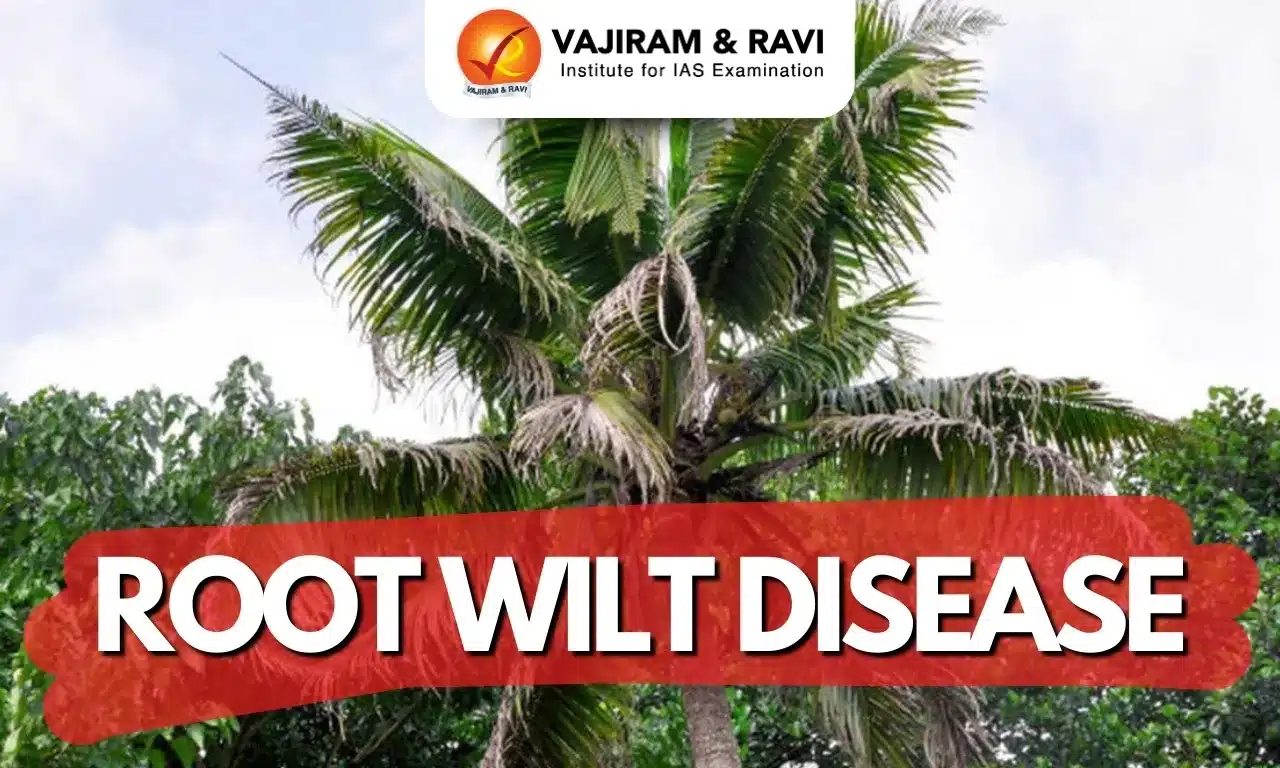
Root Wilt Disease Latest News
Recently, phytoplasma-induced root wilt disease has destroyed large tracts of traditional coconut-growing areas in Karnataka, Tamil Nadu, and Kerala states.
About Root Wilt Disease
- It is caused by phytoplasma (bacteria) which is one of the most devastating diseases of coconut palms.
- Origin: It is classified as a non-fatal disease of coconut palm and was first identified more than a century and a half ago in Erattupetta in Kerala.
- It is not lethal; but it debilitates the production potential of the palms.
- Transmission: The disease spreads through insect vectors, aided by the movement of wind and uninterrupted stretches of coconut plantations.
- The root (wilt) disease occurs in all major soil types but the spread is faster in sandy, sandy loam and alluvial soil.
- Factors accelerating spread: Erratic temperatures, especially extremes, and the rise of new sucking pests, particularly whiteflies, have significantly accelerated its spread.
- Symptoms of Root Wilt Disease
- Tapering of the terminal portion of the trunk of Coconut Tree.
- Reduction of leaf size
- Abnormal bending of leaflets termed as flaccidity.
- Flowering is delayed and yield is considerably reduced.
- The characteristic symptom is the flaccidity of leaflets.
- Impact: The tree quickly becomes unproductive, sheds all its nuts, and assumes a distorted appearance.
- Management: Breeding resistant and tolerant varieties remains one of the most successful tools for managing phytoplasma.
Source: TH
Root Wilt Disease FAQs
Q1: What is the causative agent of Root Wilt Disease?
Ans: Phytoplasma
Q2: Which crop is affected by Root Wilt Disease?
Ans: Coconut
