
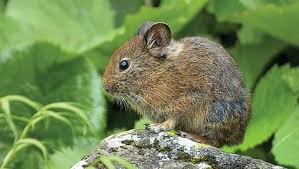
Royle’s Pika Latest News
Scientists said that climate change threatens creatures like Royle’s pika that have weathered extreme environments for thousands of years.
About Royle’s Pika
- Royle's pika (Ochotona roylei), also called the Himalayan mouse hare or hui shutu, is a species of pika.
- Habitat: It is found in open rocky landscapes and rhododendron forests at 2,400–5,000 m elevation in the Himalayan region.
- Distribution: It is found in northwestern Pakistan to Jammu and Kashmir, Himachal Pradesh, Uttarakhand, Sikkim and Arunachal Pradesh in India to Nepal and Tibet.
- Characteristics of Royle’s pika
- It does not hibernate. Instead it relies on a thick winter snowpack to act as an insulating blanket, shielding it from brutal sub-zero temperatures.
- It does not make its own nest; rather, it takes narrow creeks and existing burrow systems as its nest.
- Diet: Its primary food plants include alpine herbs and forbs, particularly moisture-loving Himalayan plants efficient at photosynthesis in cool wet climates.
- Reproduction: Pikas breed between late spring and summer. Sexual maturity is reached between 7-10 months.
- Conservation Status: IUCN: Least Concern
- Threats: Climate change and population isolation.
Source: DTE
Royle’s Pika FAQs
Q1: What is the primary habitat of Royle's Pika?
Ans: Open rocky landscapes and rhododendron forests
Q2: How does Royle's Pika adapt to harsh winters?
Ans: Relies on winter snowpack for insulation
