Umbilo Shree Ambalavaanar Alayam

Shree Ambalavaanar Alayam

Umbilo Shree Ambalavaanar Alayam Latest News

The 151-year-old Umbilo Shree Ambalavaanar Alayam temple in Durban, a national monument, faces potential discontinuation of civic services due to a pending bill amid fraud allegations.

About Umbilo Shree Ambalavaanar Alayam

  • It is a Hindu temple located in Durban, South Africa.
  • Built in 1875, it was established by indentured labourers who arrived in Durban from India. 
  • It is the oldest Hindu temple on the African continent.
  • It is also known as the Cato Manor Second River Temple and is situated on a hill amongst lush vegetation in Cato Manor. 
  • The temple complex is home to three deities - the first temple, dedicated to Lord Shiva, is known as Ambalavaanar; the second in honour of the 'mother', is known as Sri Draupadi Alayam; and the third is the Phutu (Phutuvan) Temple.
  • The temple's architecture reflects traditional South Indian design, featuring intricate carvings and vibrant colors. 
  • Over the years, the temple has been known as 'the temple that refused to die' because of the many challenges it faced.
  • It was declared a National Heritage Site in 1980 by the apartheid-era National Monuments Council.

Source: DEVD

Umbilo Shree Ambalavaanar Alayam FAQs

Q1: What is Umbilo Shree Ambalavaanar Alayam?

Ans: It is a Hindu temple located in Durban, South Africa.

Q2: In which year was Umbilo Shree Ambalavaanar Alayam built?

Ans: It was built in 1875.

Q3: Who established Umbilo Shree Ambalavaanar Alayam?

Ans: Indentured labourers who arrived in Durban from India.

Q4: By what other name is Umbilo Shree Ambalavaanar Alayam known?

Ans: The Cato Manor Second River Temple.

Q5: Which architectural tradition does Umbilo Shree Ambalavaanar Alayam follow?

Ans: Traditional South Indian temple architecture.
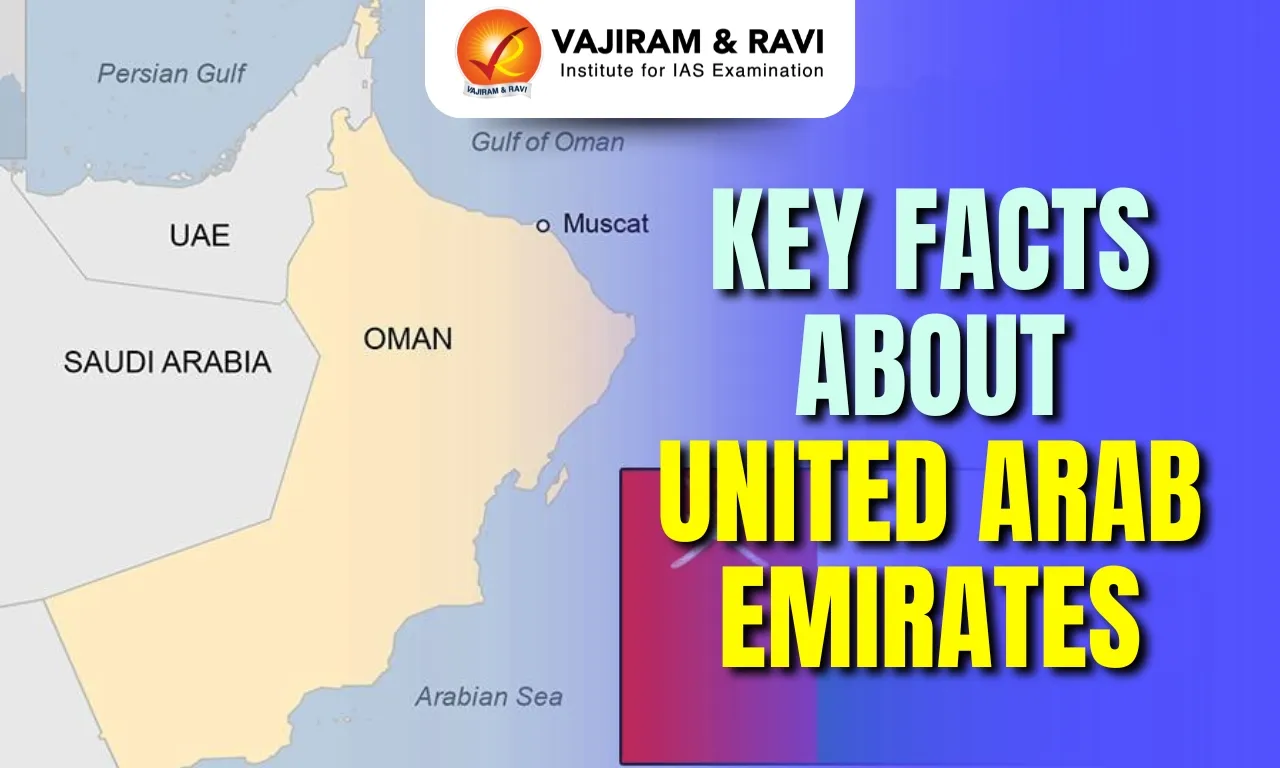
Key Facts about United Arab Emirates

Key Facts about United Arab Emirates

United Arab Emirates Latest News

The President of the United Arab Emirates Sheikh Mohamed bin Zayed Al Nahyan is visiting India and will hold official talks with the Prime Minister of India.

About United Arab Emirates

  • Location: It is a Middle East country that is located on the north east edge of the Arabian Peninsula.
  • Bordering Countries: It is bordered by Saudi Arabia in the south and west; and Oman in the east.
  • Maritime Boundary: Gulf of Oman (East), Persian Gulf (North).
  • Capital City: Abu Dhabi

Geographical Features of United Arab Emirates 

  • Terrain: The emirates comprise a mixed environment of rocky desert, coastal plains and wetlands, and waterless mountains. 
  • Climate: The climate is hot and humid along the coast and is hotter still, but dry, in the interior. 
  • Highest point: Jabal Bil 'Ays 1,905 m Mountain
  • Major Ports: Port Rāshid and Port Jebel Ali
  • Natural Resources: It mainly consists of petroleum and natural gas.
  • Tropic of Cancer passes through UAE, specifically Abu Dhabi emirate. 

Source: TH

United Arab Emirates FAQs

Q1: What is the capital city of the United Arab Emirates?

Ans: Abu Dhabi

Q2: What is the official language of the UAE?

Ans: Arabic

Indian Bison

Indian Bison

Indian Bison Latest News

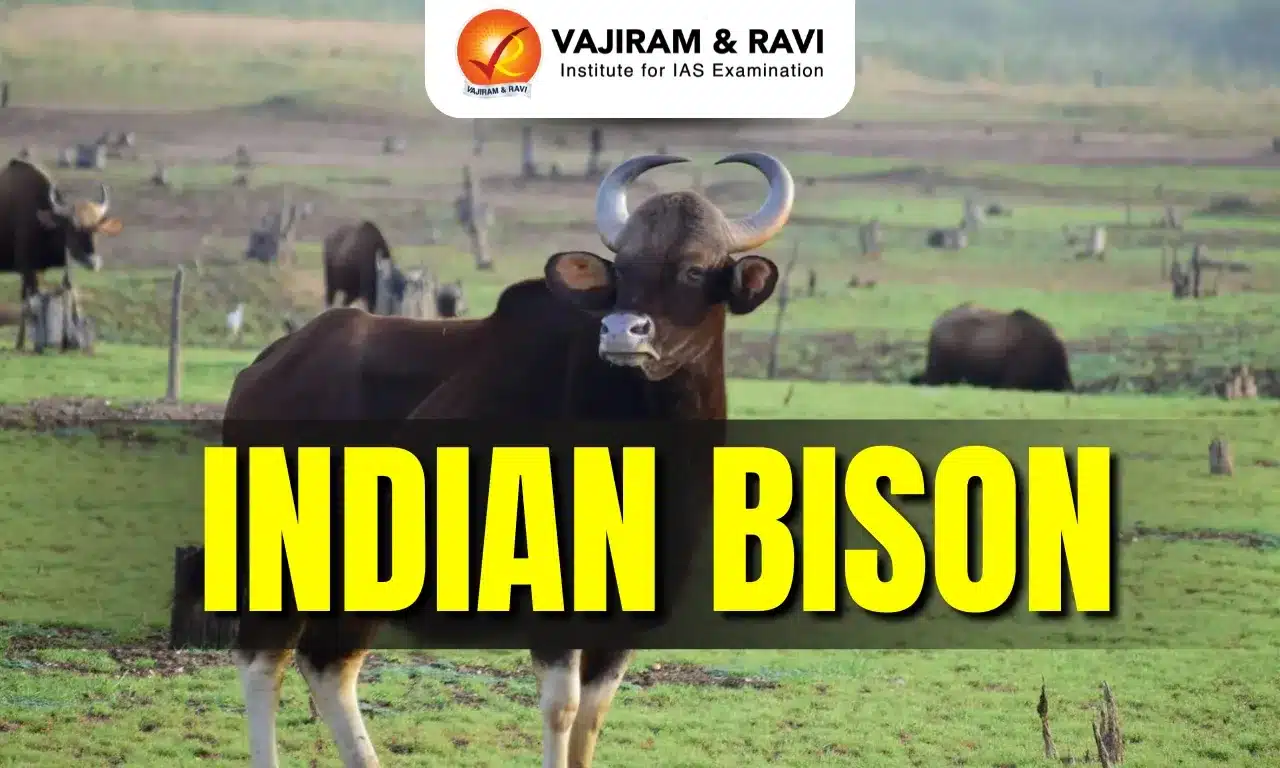
Recently, the Indian bison population in Debrigarh wildlife sanctuary has recorded a robust jump of 189 individuals within a year, taking the total head count to 848.

About Indian Bison

  • It is the largest species among the wild cattle and the Bovidae.
  • Distribution:  These are indigenous to the South and Southeast parts of Asia.
  • Habitat: Gaurs are primarily found in evergreen and semi-evergreen forests along with moist deciduous forests with open grasslands.
  • They prefer hilly-terrains below an altitude of 1,500-1,800 m with large and undisturbed forest tracts and abundant water.
  • Conservation Status of Indian Bison
  • Ecological Significance: It plays a vital role in maintaining ecological balance in forests besides serving as important prey species for tigers.
  • They also help shape vegetation dynamics and contribute to seed dispersal.
  • Threats: Loss of habitat throughout most of their range. Another serious concern is susceptibility to domestic cattle diseases like rinderpest, hoof, or mouth disease.

Key Facts about Debrigarh wildlife Sanctuary

  • Location: It is situated in the Bargarh district of Odisha.
  • It is located near Hirakud Dam (the longest dam in India and the longest earthen dam in the world) on the Mahanadi River.
  • Vegetation: Most of the plant sanctuary is covered with mixed and dry deciduous forest.
  • Flora: Major trees found here are Sal, Asana, Bija, Aanla, Dhaura, etc..
  • Fauna: Indian leopards, sloth bears, chousingha (four-horned antelope), sambar deer, gaurs (Indian bison).

Source: NIE

Indian Bison FAQs

Q1: Where is the Indian Bison primarily found?

Ans: India and Southeast Asia

Q2: What is the conservation status of Indian Bison?

Ans: Vulnerable

Brandt’s Hedgehog

Brandt’s Hedgehog

Brandt’s Hedgehog Latest News

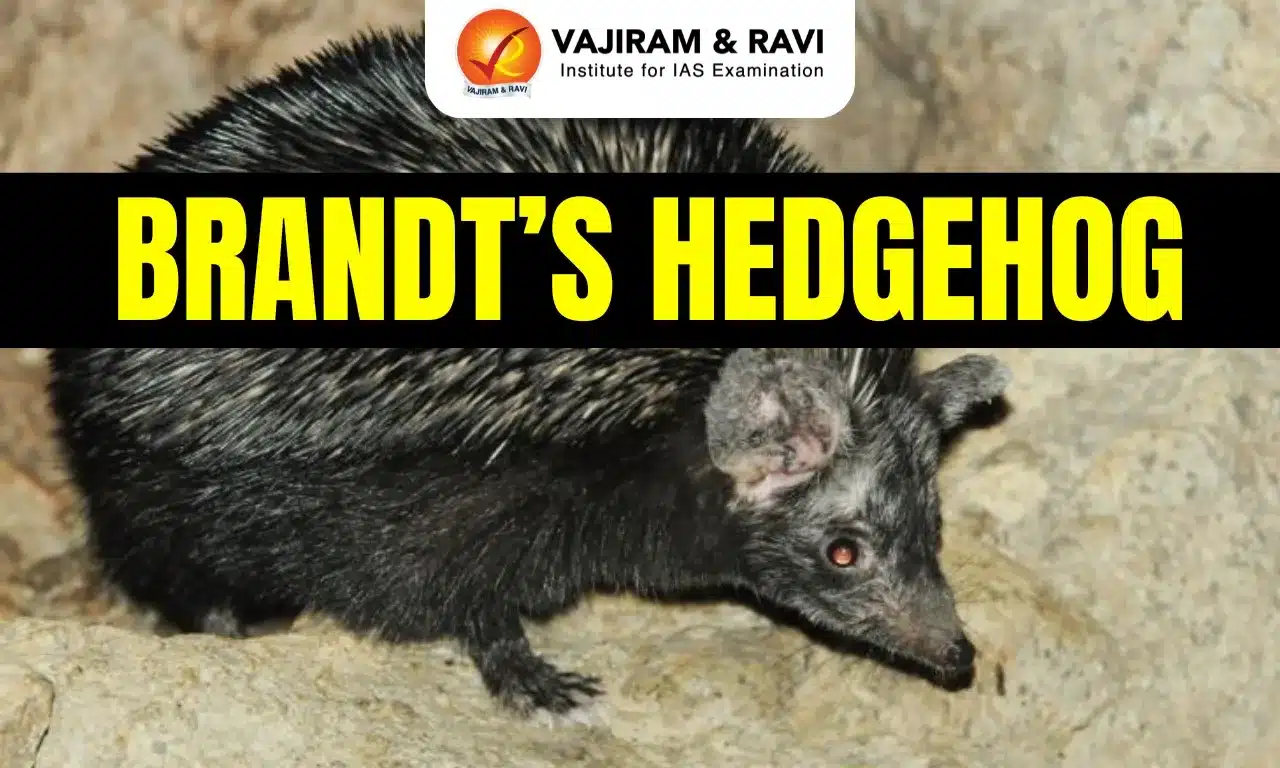
A new species of hedgehog, Brandt’s hedgehog, not so far found in India, has been recently discovered in Jammu and Kashmir, DNA analysis and morphological studies reveal.

About Brandt’s Hedgehog

  • It is a species of desert hedgehog.
  • Scientific Name: Paraechinus hypomelas

Brandt’s Hedgehog Distribution

It is native to parts of the Middle East and Central Asia, with a range that includes Iran, Afghanistan, Pakistan, and parts of Turkmenistan.

Brandt’s Hedgehog Habitat  

  • It inhabits arid and semi-arid regions, including rocky deserts, scrublands, and dry mountain slopes. 
  • The species is adapted to environments with sparse vegetation, loose or stony soils, and extreme temperature fluctuations between day and night. 
  • It is often associated with areas that provide natural shelter, such as rock crevices, abandoned burrows, or dense shrubs. 
  • It is still capable of digging dens when absolutely needed. It hibernates during colder weather.

Brandt’s Hedgehog Features

  • It is about 9-12 inches long and weighs around 500-900 grams. 
  • It has a black brownish face with a few white hairs interspersed on the forehead. 
  • They have large ears with a narrow base. 
  • Both the dorsal and ventral surfaces as well as the limbs are usually blackish brown. 
  • It has five short-nailed toes on each of its two front paws. 
  • Its back paws have four toes each with nails that constantly grow long. 
  • It is a faster runner due to lighter needle protection. 
  • It is predominantly nocturnal.

Brandt’s Hedgehog Conservation Status

It is classified as 'Least concern' under the IUCN Red List.

Source: HT

Brandt’s Hedgehog FAQs

Q1: What is Brandt’s Hedgehog?

Ans: It is a species of desert hedgehog.

Q2: Which regions are part of the natural distribution of Brandt’s Hedgehog?

Ans: The Middle East and Central Asia, including Iran, Afghanistan, Pakistan, and parts of Turkmenistan.

Q3: What type of habitat does Brandt’s Hedgehog prefer?

Ans: Arid and semi-arid regions such as rocky deserts, scrublands, and dry mountain slopes.

Q4: What is the IUCN Red List conservation status of Brandt’s Hedgehog?

Ans: Least Concern.

Soft Matter

Soft Matter

Soft Matter Latest News

Every morning, as you use either your toothpaste or shampoo, you engage with soft matter, materials that flow like liquids under force but hold their shape at rest.

About Soft Matter

  • Soft matter, or soft materials, is a sub-field of “condensed matter”, referring to a variety of materials that can be easily deformed or structurally altered by thermal fluctuations or nominal external stress. 
  • Soft materials include colloids, polymers, foams, gels, liquid crystals, and many biomaterials
  • They exhibit many useful and appealing properties, which account for their ubiquity in everyday life, finding use in a diverse range of applications in industry including, food, medical, automotive, construction, transportation, electronics, and manufacturing.
  • Everyday examples include curd, toothpaste, shampoo, soap bubbles, and living cells.
  • One of the important characteristics of soft matter is their physical structures in the mesoscopic scale. 
  • It is the properties and interactions of these structures that determine the overall behavior of the material. 
  • Unlike “hard materials” such as metals, ceramics, or glass, the building blocks of soft matter are held together by weak forces. 
  • As a result, soft material properties can be markedly affected as a result of small changes in temperature, applied force, time, and environment.

Source: TH

Soft Matter FAQs

Q1: What is soft matter?

Ans: It refers to a variety of materials that can be easily deformed or structurally altered by thermal fluctuations or nominal external stress.

Q2: What kind of external influences can easily deform soft materials?

Ans: Thermal fluctuations and nominal external stress.

Q3: Which types of materials are classified as soft matter?

Ans: Colloids, polymers, foams, gels, liquid crystals, and many biomaterials.

Q4: What are some everyday examples of soft matter?

Ans: Curd, toothpaste, shampoo, soap bubbles, and living cells.

Q5: How do soft materials differ from hard materials like metals or ceramics?

Ans: Soft materials are held together by weak forces and deform easily, unlike hard materials.

ICGS Sankalp

ICGS Sankalp

ICGS Sankalp Latest News

Recently, Indian Coast Guard Ship (ICGS) Sankalp visited Port Louis in Mauritius as part of overseas deployment in the Indian Ocean Region.

About ICGS Sankalp

  • ICGS Sankalp is an offshore patrol vessel which was commissioned in 2008.
  • The vessel is indigenously built by the Goa Shipyard Limited.
  • It is equipped with state-of-the-art navigation and communication equipment.
  • Functions: It is designed primarily for extended maritime surveillance, exclusive economic zone (EEZ) protection, search and rescue operations, and enforcement of maritime laws within India's vast oceanic domains.

Features of ICGS Sankalp

  • The ship is 105-meter-long with an endurance of 6,500 nautical miles.
  • Capacity: It has displacement capacity of approximately 2,325 tonnes at full load.
  • It consists of HAL Chetak rotary-wing aircraft for enhanced aerial surveillance and SAR.
  • Armaments: It is equipped with primary armament consisting of two 30 mm CRN-91 twin-barrel naval guns, designed for surface engagement and controlled by an integrated fire control system.
  • It is also fitted with davits to deploy up to five high-speed interceptor boats.

Source: DD News

ICGS Sankalp FAQs

Q1: What is ICGS Sankalp?

Ans: An offshore patrol vessel of the Indian Coast Guard

Q2: What is the primary role of ICGS Sankalp?

Ans: Maritime surveillance and patrol

Chips to Start-Up Programme

Chips to Start-up Programme

Chips to Start-Up Programme Latest News

The Chips to Start-up Programme has delivered measurable outcomes across capacity building, infrastructure access, and hands-on chip design enablement.

About Chips to Start-Up Programme

  • It is an umbrella capacity-building initiative launched by the Ministry of Electronics and Information Technology (MeitY) in 2022.
  • Funding and Tenure: Total outlay of ₹250 crore over five years.
  • Target: It targets the development of 85,000 industry-ready professionals across undergraduate, postgraduate, and doctoral levels.
  • It aims to catalyse the incubation of 25 start-ups and enable 10 technology transfers.

Features of Chips to Start-Up Programme

  • It seeks to provide access to SMART lab facilities, train one lakh students, generate 50 patents, and support at least 2,000 focused research publications. 
  • It supports innovation, enhances employability, and enables academic institutions to play a more active role in India’s semiconductor value chain.
  • Programme Approach and Implementation
    • The C2S Programme adopts a comprehensive approach, providing students with hands-on experience in chip design, fabrication, and testing.
    • It is achieved through regular training sessions in collaboration with industry partners, combined with mentorship and practical support.
      • Students gain access to advanced chip design tools, fabrication facilities, and testing resources, including state-of-the-art EDA software and semiconductor foundries.
      • These opportunities also include implementing R&D projects under the C2S Programme to develop working prototypes of Application-Specific Integrated Circuit (ASICs), Systems-on-Chip (SoCs), and Intellectual Property (IP) Core designs.

Source: PIB

Chips to Start-Up Programme FAQs

Q1: What is the nodal agency for implementing the C2S Programme?

Ans: C-DAC (Centre for Development of Advanced Computing)

Q2: Which ministry launched the Chips to Start-up (C2S) Programme?

Ans: Ministry of Electronics and Information Technology

Indiaphonte Bijoyi

Indiaphonte Bijoyi

Indiaphonte Bijoyi Latest News

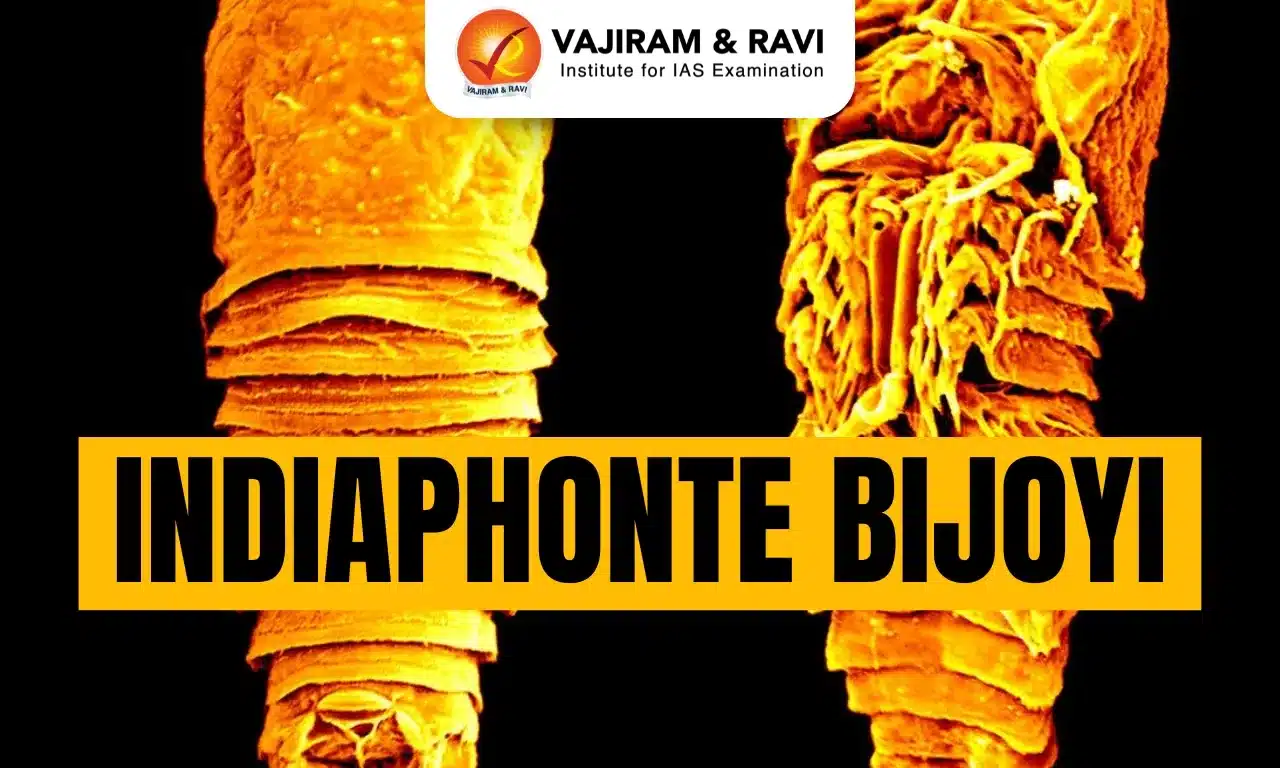
Recently, a microscopic crustacean was discovered in Kavaratti which has been named Indiaphonte bijoyi, with the generic name Indiaphonte.

About Indiaphonte Bijoyi

  • It is a tiny crustacean discovered from the Kavaratti lagoon in the Lakshadweep islands.
  • It belongs to the family Laophontidae within the Copepoda class.
  • Habitat: It lives in sediments in aquatic environments.

Characteristics of Indiaphonte Bijoyi

  • It has a semi-cylindrical, depressed body that is wider in the middle and tapering towards the posterior.
  • It also has antennae-like appendages at the front.
  • The females are slightly larger than the males.
  • It is essentially Meiofauna, tiny invertebrate animals less than 1 millimetre in size.

Key Facts about Laophontidae

  • It is the most diverse family with 350 species across 77 genera within the order Harpacticoida. 
  • They are microscopic in size and play a vital role in maintaining the health of marine and freshwater ecosystems.
  • Ecological Role
    • They are sensitive to pollution, oil spills, heavy metals, and climate change and are considered reliable bio-indicators of environmental change.
    • They are widely used in aquaculture and fisheries, especially as live feed for fish larvae.
    • They produce and convert omega-3 fatty acids such as Eicosapentaenoic Acid (EPA) and Docosahexaenoic Acid (DHA) that are essential for the growth of fish and shellfish and contribute significantly to human nutritional security.

Source: TH

Indiaphonte Bijoyi FAQs

Q1: Indiaphonte bijoyi belongs to which family?

Ans: Laophontidae

Q2: Where was Indiaphonte bijoyi discovered?

Ans: Kavaratti lagoon, Lakshadweep islands

Bor Tiger Reserve

Bor Tiger Reserve

Bor Tiger Reserve Latest News

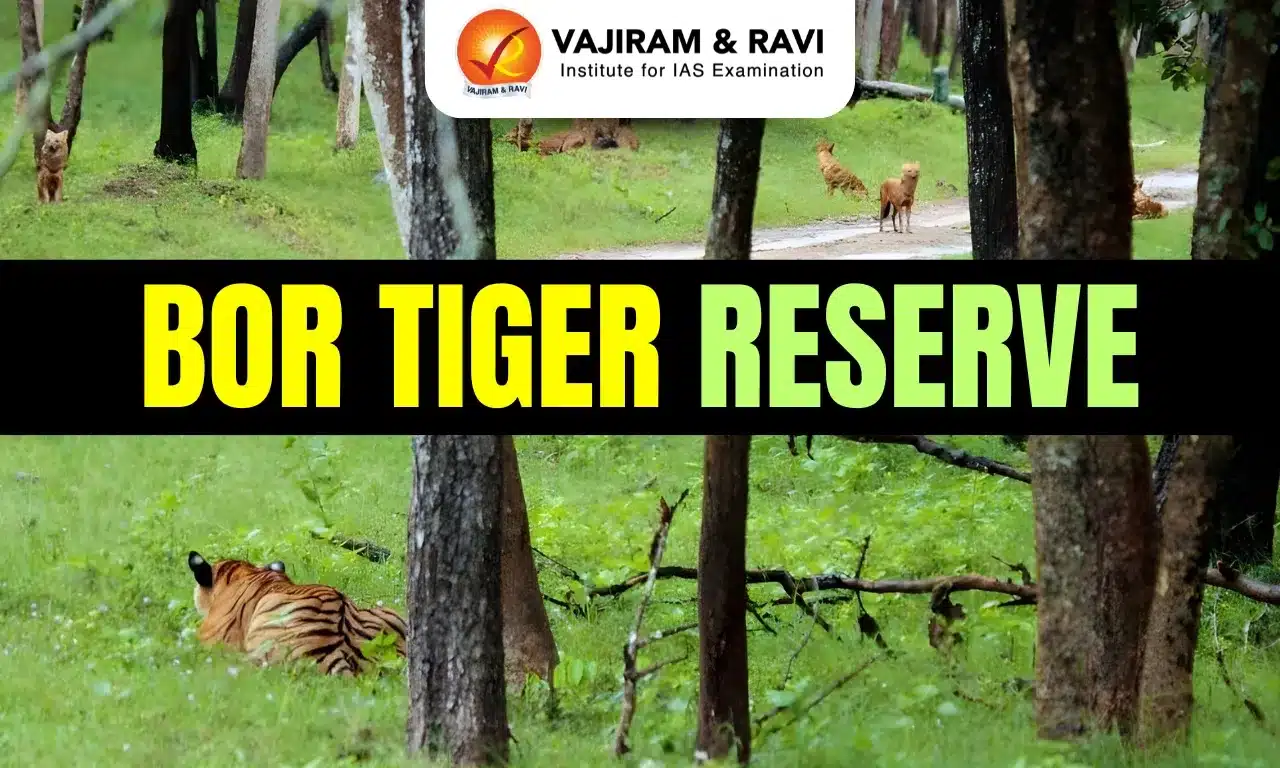
Two new safari gates at the Bor Tiger Project were inaugurated recently.

About Bor Tiger Reserve

  • It is located in the Wardha District of Maharashtra
  • It is the smallest tiger reserve in India by area.
  • It covers an area of 138.12 sq.km., which includes the drainage basin of the Bor Dam.
  • It is centrally located among several other Bengal tiger habitats.
    • Towards the northeast lies the Pench Tiger Reserve, towards the east is the Nagzira Navegaon Tiger Reserve, and to the southeast is the Karhandla Wildlife Sanctuary.
    • The Tadoba Andhari Tiger Reserve is located to the southeast, the Melghat Tiger Reserve stands to the west, and the Satpura Tiger Reserve lies to the northwest.
  • Vegetation: The area is populated by the Dry Deciduous Forest type.
  • Flora: Teak, tendu, bamboo, tarot, and gokhru are some of the abundant species.
  • Fauna
    • Apart from tigers, the reserve is home to several other mammals like leopards, sloth bears, sambar deer, Indian bison (gaur), chital, wild boars, and more.
    • It has recorded diversity of just under 200 avian species, with migratory waterfowl such as the tufted duck, northern shovelers, as well as the elegant fish specialist, the osprey. 
    • Commonly seen resident species include the Indian peafowl, black-hooded oriole, and Indian paradise flycatcher.

Source: TOI

Bor Tiger Reserve FAQs

Q1: Where is Bor Tiger Reserve located?

Ans: In the Wardha District of Maharashtra.

Q2: What distinction does Bor Tiger Reserve hold among India’s tiger reserves?

Ans: It is the smallest tiger reserve in India by area.

Q3: Which tiger reserve lies to the northeast of Bor Tiger Reserve?

Ans: Pench Tiger Reserve.

Q4: What type of forest vegetation dominates Bor Tiger Reserve?

Ans: Dry Deciduous Forest.

Tackling Child Trafficking in India – Legal Framework and Institutional Response

Child Trafficking

Child Trafficking Latest News

  • India’s response to child trafficking has come under focus following recent judicial directions and data highlighting low conviction rates despite large-scale child rescues. 

Understanding Child Trafficking in India

  • Child trafficking remains a persistent and grave violation of human rights in India. 
  • It involves the recruitment, transportation, harbouring or receipt of children for purposes of exploitation, including forced labour, sexual exploitation, slavery, servitude, or organ removal. 
  • Despite extensive constitutional and statutory safeguards, trafficking networks continue to operate due to socio-economic vulnerabilities and weak enforcement outcomes.
  • Official data indicate that thousands of children are rescued every year, yet convictions remain disproportionately low, exposing gaps between law, enforcement, and justice delivery. 

International and Domestic Legal Definitions

  • At the international level, child trafficking is defined under the Palermo Protocol (2000), which treats any movement or exploitation of a child for exploitative purposes as trafficking, irrespective of consent. 
  • This principle has been incorporated into India’s domestic legal framework.
  • Under the Bharatiya Nyaya Sanhita (BNS), 2023, trafficking is defined broadly to include recruitment, transportation or harbouring through coercion, deception, abuse of power, or inducement for exploitation. 
  • The law recognises multiple forms of exploitation, including physical, sexual, economic, and organ trafficking, ensuring a comprehensive scope. 

Constitutional Protection of Children

  • The Constitution of India provides a strong foundation for protecting children against exploitation. 
  • Article 23 prohibits human trafficking and forced labour, while Article 24 bans employment of children in hazardous industries. 
  • Additionally, Article 39(e) and (f) directs the State to ensure that children are protected from abuse and are provided conditions of freedom, dignity, and healthy development.
  • These constitutional principles impose a positive obligation on the State to prevent exploitation and address the structural conditions that enable trafficking. 

Key Legislations Addressing Child Trafficking

  • India has enacted multiple sector-specific laws to address different dimensions of child trafficking:
    • Bharatiya Nyaya Sanhita, 2023: Criminalises trafficking and the buying and selling of minors.
    • Immoral Traffic (Prevention) Act, 1956: Targets trafficking for sexual exploitation.
    • Juvenile Justice (Care and Protection of Children) Act, 2015: Focuses on care, rehabilitation, and reintegration of trafficked children.
    • Protection of Children from Sexual Offences (POCSO) Act, 2012: Provides stringent punishments for sexual offences against children, including life imprisonment and death penalty in extreme cases.
  • The POCSO Act is notable for being gender-neutral and for enabling fast-track courts to ensure speedy trials. 

Judicial Interventions and Supreme Court Guidelines

  • The judiciary has played a critical role in shaping India’s anti-trafficking response. In landmark judgments, the Supreme Court has recognised trafficking as a violation of the fundamental right to life and dignity.
  • Cases such as Vishal Jeet v. Union of India, M.C. Mehta v. State of Tamil Nadu, and Bachpan Bachao Andolan v. Union of India established preventive, rehabilitative, and regulatory principles. 
  • More recently, the Court has issued strict guidelines emphasising victim-centric approaches, accountability of authorities, and coordinated enforcement. 

Structural Challenges in Tackling Child Trafficking

  • Despite a robust legal framework, several challenges persist:
    • Low conviction rates, which weaken deterrence
    • Socio-economic vulnerabilities such as poverty, migration, disasters, and family breakdown
    • Misuse of digital platforms for recruitment under the guise of jobs or opportunities
    • Fragmented enforcement, due to trafficking networks operating across State boundaries
  • Law and order, being a State subject, further complicates coordinated action, making Centre-State cooperation essential. 

Way Forward: Strengthening India’s Anti-Trafficking Response

  • A multi-dimensional strategy is required to tackle child trafficking effectively. 
  • This includes improving investigation quality, strengthening rehabilitation mechanisms, enhancing digital surveillance, and ensuring faster trials. 
  • Most importantly, conviction rates must improve to establish credible deterrence.
  • Equally critical is addressing root causes through social protection, education, livelihood support, and awareness programmes. 
  • A strong institutional partnership between the Union and States is indispensable for disrupting trafficking networks operating across jurisdictions.

Source: TH

Child Trafficking FAQs

Q1: What is child trafficking under Indian law?

Ans: It involves recruiting, transporting or exploiting a child for forced labour, sexual exploitation, slavery or organ removal, irrespective of consent.

Q2: Which law currently defines trafficking in India?

Ans: The Bharatiya Nyaya Sanhita, 2023 provides the primary legal definition of trafficking.

Q3: How does the Constitution protect children from trafficking?

Ans: Articles 23, 24 and 39 prohibit trafficking, forced labour and child exploitation.

Q4: Why are conviction rates low despite large rescues?

Ans: Weak investigations, cross-border networks, and poor coordination reduce successful prosecutions.

Q5: Why is Centre-State cooperation crucial in tackling trafficking?

Ans: Trafficking networks operate across State boundaries while law and order is a State subject.

Board of Peace for Gaza – Trump Invites India to Join the Proposed Board

Board of Peace for Gaza

Board of Peace for Gaza Latest News

  • The U.S. President Donald Trump invited India to join the proposed Board of Peace for Gaza, a new governance and conflict-management mechanism.
  • The initiative emerges from  a group of Islamic countries backed Trump’s peace plan for Gaza and coincides with broader U.S. efforts to restructure global governance outside traditional multilateral institutions, especially the United Nations (UN).
  • The proposal has triggered a global debate on the future of the post-World War II international order, particularly the relevance and authority of the UN Security Council (UNSC).

Board of Peace for Gaza

  • Purpose and mandate:
    • To supervise Gaza’s transitional governance, stabilisation, and reconstruction.
    • To oversee a temporary technocratic, apolitical Palestinian administration.
    • To manage funding for redevelopment until the Palestinian Authority (PA) completes institutional reforms.
    • Trump now seeks to expand this Gaza-specific mechanism into a global conflict-resolution template.
  • Composition and leadership:
    • Chaired by U.S. President Donald Trump, its members include select invited countries and global leaders (e.g., Tony Blair).
    • It will operate as an invitation-only body, not based on universal membership.
  • UN linkage:
    • UNSC Resolution 2803 authorised a Board to supervise Gaza’s transition until 2027.
    • Russia and China abstained, but the countries of the Global South voted for it. 

India’s Position

  • Current status: India has received the invitation but has not formally responded. Pakistan has also been invited.
  • India’s stated principles:
    • Consistent support for a Two-State Solution (Israel and Palestine coexisting).
    • India welcomed the first phase of Trump’s peace plan, especially release of hostages, and enhanced humanitarian assistance to Gaza.
  • On military involvement: The U.S. is seeking troops for a temporary International Stabilisation Force (ISF). India has clearly ruled out participation, as ISF is not a UN peacekeeping mission.

Broader Global Governance Debate

  • Challenge to the UN system: 
    • Critics argue the Board of Peace undermines UN Charter principles, sovereign equality of states, and collective decision-making.
    • It is seen as an attempt to sidestep the UNSC and concentrate authority in the U.S.-led executive body.
  • Trump’s multilateral skepticism:
    • Because of the continuation of Trump’s long-standing approach. For example, withdrawal from UNESCO, WHO; exit from over 60 international organisations.
    • Aligned with Project 2025 (the Heritage Foundation’s blueprint for Trump’s second term), which called for sharp reductions in multilateral commitments and a preference for ad hoc coalitions where the US sets the agenda.
  • From Gaza to global template:
    • Trump aims to transform the Board into a general crisis-management club.
    • It is framed as a solution to UNSC paralysis, especially veto politics.
    • It risks diverting funds, legitimacy, and attention away from the UN if successful.

Key Challenges and Way Ahead

  • For global order:
    • Erosion of multilateralism and UN centrality. Rise of exclusive, power-driven governance mechanisms. Undermining rules-based international order.
  • For India:
    • Tension between commitment to reformed multilateralism, and pragmatic engagement with the U.S.-led initiatives.
    • Risk of legitimising a system that weakens India’s long-term push for UNSC reform, and marginalises voices of the Global South.
  • India’s options:
    • Calibrated engagement: Engage diplomatically without endorsing erosion of UN authority. Maintain distinction between political oversight and military involvement.
    • Defend UN-centric multilateralism: Reiterate support for UNSC-authorised mechanisms. Resist normalisation of extra-UN security architectures.
    • Strategic autonomy: Balance ties with the U.S. while safeguarding India’s principled positions. Coordinate with like-minded countries of the Global South.
    • Push for UN reform: Use the crisis to highlight urgency of UNSC reform, not its bypassing.

Conclusion

  • The invitation to India to join the Board of Peace for Gaza places New Delhi at a critical crossroads in global diplomacy. 
  • While the initiative promises flexibility and decisiveness in conflict management, it also represents a fundamental challenge to the UN-led multilateral order that India has long defended. 
  • As global governance enters a phase of extraordinary flux, it tests India’s ability to balance principle with pragmatism in an evolving world order.

Source: TH | IE

Board of Peace for Gaza FAQs

Q1: What is the ‘Board of Peace for Gaza’?

Ans: It is a U.S.-led, invitation-only body to oversee Gaza’s transitional governance, marking a shift away from UN-based multilateralism.

Q2: What is India’s dilemma in responding to the U.S. invitation to join the Board of Peace for Gaza?

Ans: Engaging pragmatically with the U.S.-led initiative or upholding its long-standing commitment to UN-centric multilateralism and a two-state solution.

Q3: How does the Board of Peace initiative challenge the authority and relevance of the UNSC?

Ans: By concentrating agenda-setting and decision-making under U.S. leadership.

Q4: Why has India ruled out participation in the proposed International Stabilisation Force (ISF) for Gaza?

Ans: Because the ISF is not a UN-mandated peacekeeping operation, consistent with India’s principled approach to overseas military deployments.

Q5: What lessons does the ‘Board of Peace’ debate hold for India’s pursuit of ‘reformed multilateralism’?

Ans: It underscores the need for India to push harder for UN reform while resisting the normalisation of exclusive, power-centric alternatives.

Tiger Global Tax Ruling: Supreme Court Impact on Startups

Tiger Global Tax Ruling

Tiger Global Tax Ruling Latest News

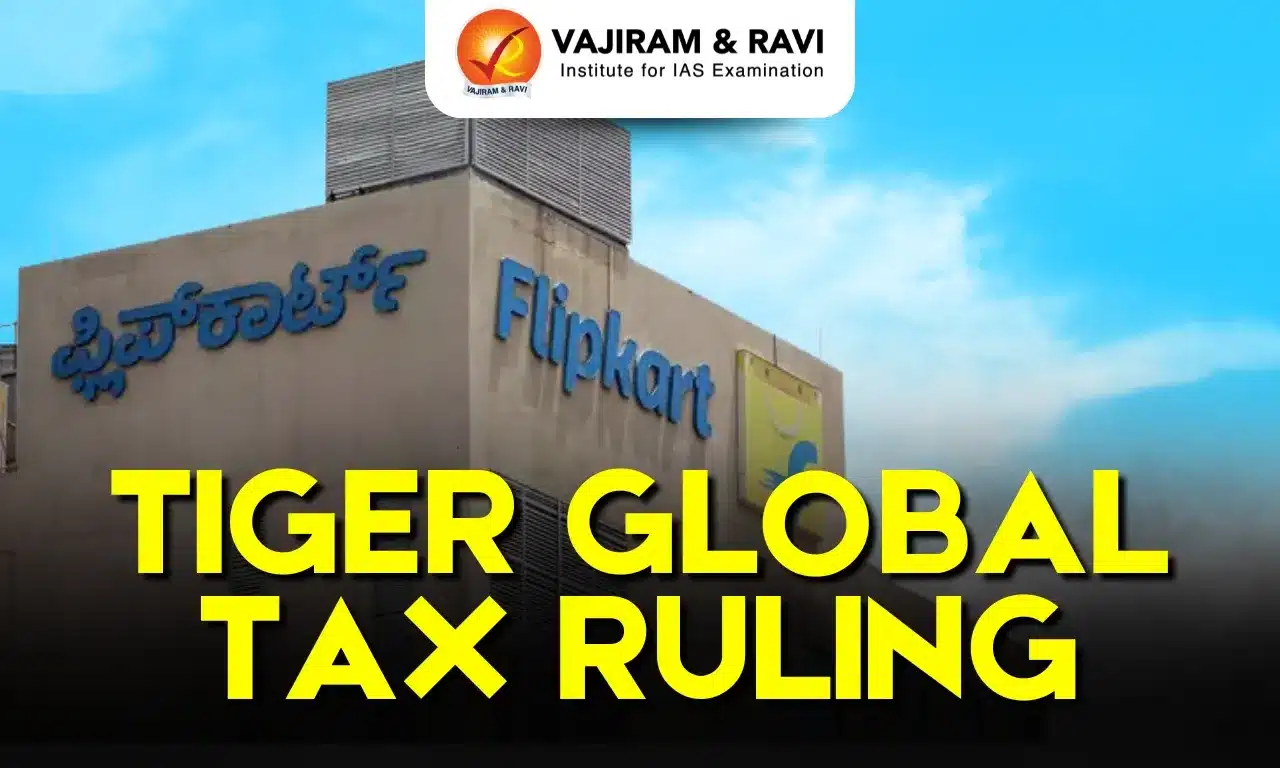
  • The Supreme Court of India has ruled that venture capital firm Tiger Global’s $1.6-billion stake sale in Flipkart to Walmart is subject to taxation. 
  • The verdict, closely watched by foreign investors, is seen as a landmark decision that could influence cross-border deal structures and have wider implications for India’s startup ecosystem.

Dispute Over India–Mauritius Tax Treaty

  • The case arose from Tiger Global’s 2018 exit, executed through its Mauritius-based entities. 
  • Tiger Global claimed protection under the India–Mauritius Double Taxation Avoidance Agreement (DTAA). 
    • A DTAA is a bilateral treaty to prevent the same income from being taxed in both nations — the country where the income is earned and the country where the company is based out of.
  • However, the Supreme Court ruled that the DTAA benefit could not be extended in this case.

Court Rejects Treaty Benefits, Overturns High Court Order

  • In denying DTAA protection, the Supreme Court overturned an August 2024 ruling of the Delhi High Court, which had set aside a 2020 decision of the Authority for Advance Rulings (AAR). 
  • The AAR had earlier concluded that the transaction was prima facie structured to avoid tax.

Broader Implications for Startup Investments

  • Mauritius had long been a favoured investment route into India due to the non-taxability of capital gains until 2016. 
  • The judgment comes amid slowing startup funding, as investors increasingly prioritise profitability and clear tax certainty, potentially reshaping how foreign capital approaches Indian startup exits.

Background: Tiger Global’s Flipkart Investment

  • After acquiring a stake in Flipkart, Mauritius-based entities of Tiger Global—Tiger Global International II, III, and IV Holdings—went on to invest in several Indian companies.
  • Claim for Tax Exemption - Following the stake sale, the Tiger Global entities sought a “nil” withholding tax certificate from Indian tax authorities. They argued that capital gains were exempt under the India–Mauritius DTAA due to the “grandfathering” clause for shares acquired before April 1, 2017.
    • Grandfathering essentially means exempting an activity from a new law or regulation.
  • Tax Authorities’ Rejection - Indian tax authorities rejected the request, concluding that the Mauritius entities lacked independent decision-making. They held that real control over share purchases and sales did not rest with these entities.
  • Authority for Advance Rulings (AAR) Decision - The matter was taken to the Authority for Advance Rulings, which in 2020 dismissed Tiger Global’s claim. 
    • The AAR found that the investment structure was primarily designed to obtain DTAA benefits and that effective control lay outside Mauritius—particularly in the United States—through a complex web of entities.
  • Delhi High Court Intervention - On appeal, the Delhi High Court overturned the AAR ruling, holding that the conclusion of tax avoidance was arbitrary and unsustainable.

Supreme Court’s Final Word

  • The Supreme Court of India reversed the High Court’s decision. 
  • It held that DTAA protection applies only where assets are directly owned by a Mauritian entity’s permanent establishment
  • The Flipkart transaction, he ruled, fell outside this scope—rendering the gains taxable in India.

Implications of the Verdict for Indian Startups and Investors

  • End of Automatic Treaty Benefits - Tax experts warn that the ruling weakens automatic reliance on the India–Mauritius DTAA. Merely holding a Tax Residency Certificate (TRC) will no longer guarantee capital gains tax exemption.
    • TRC is an official document from a country’s tax authority. 
    • It proves that an individual or entity is a tax resident there for a specific period. This is crucial for claiming benefits under a DTAA.
  • Substance Over Form Becomes the Test - The judgment reinforces a shift toward examining economic substance. Investors must now show genuine commercial rationale, autonomous decision-making, and real operations in treaty jurisdictions.
  • Higher Tax Uncertainty and Litigation Risk - According to practitioners, the ruling raises uncertainty for venture capital and private equity exits. Exit planning, valuations, and indemnities may need reassessment amid increased scrutiny and potential disputes.
  • Impact on Offshore Investment Structures - Structures routed through Mauritius or Singapore—especially pre-2017 investments—could face closer examination. While closed cases may not reopen automatically, reassessments are now more likely where legally permitted.
  • Costlier Risk Management - Experts anticipate tax insurance and indemnity mechanisms becoming scarcer and more expensive, adding to compliance costs and complicating deal-making for startups and foreign investors alike.

Startup Funding Slowdown Amid Investor Caution

  • The Supreme Court ruling comes against the backdrop of a broader slowdown in India’s startup funding. 
  • In 2025, tech startups raised $10.5 billion, down 17% from 2024 and 4% from 2023. While seed-stage funding fell sharply, early-stage investments showed resilience, signalling selective but continued investor confidence.

Source: IE | IE

Tiger Global Tax Ruling FAQs

Q1: What did the Supreme Court decide in the Tiger Global tax ruling?

Ans: The Tiger Global tax ruling held that Flipkart stake sale gains are taxable in India, denying treaty benefits under the India–Mauritius DTAA.

Q2: Why was DTAA protection denied?

Ans: The court found that Tiger Global’s Mauritius entities lacked real economic substance and independent decision-making, central to the Tiger Global tax ruling.

Q3: What is the impact on foreign investors?

Ans: The Tiger Global tax ruling increases tax uncertainty, requiring investors to demonstrate commercial substance rather than rely solely on residency certificates.

Q4: Does the ruling affect past investments?

Ans: While closed cases may not reopen automatically, the Tiger Global tax ruling strengthens reassessment powers where permitted under Indian tax law.

Q5: Why does this matter for Indian startups?

Ans: The Tiger Global tax ruling may reshape exit planning, valuations, and deal structures, especially as startup funding slows and investor caution rises.

India Rice Production: Growth, Surplus and Hidden Costs

India Rice Production

India Rice Production Latest News

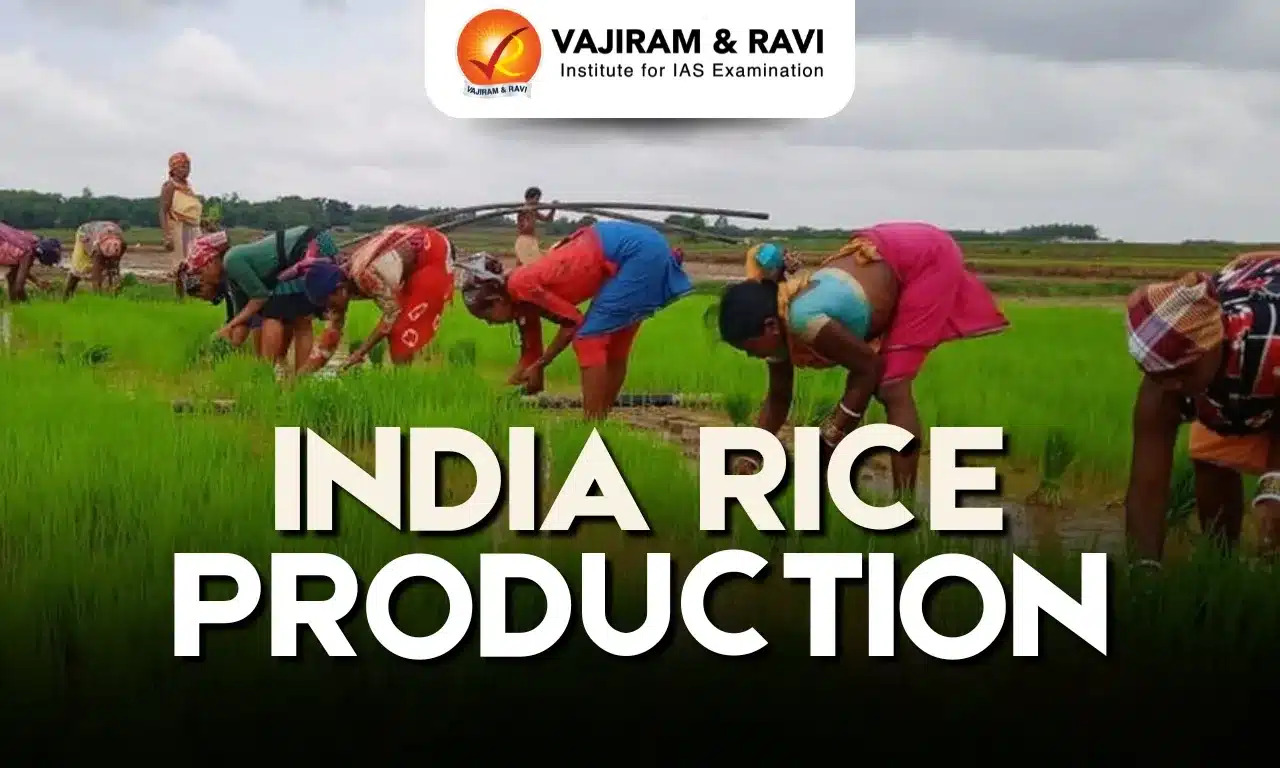
  • India has overtaken China to become the world’s largest rice producer in 2024–25, producing about 150 million metric tonnes and accounting for nearly 28% of global output. 
  • While this marks a sharp rise from a decade ago and reflects stagnant Chinese production, the achievement has downsides. 
  • Paddy’s profitability has encouraged its spread into water-scarce regions, yields remain uneven across states, and its dominance raises concerns about water stress, crop diversification, and long-term nutritional security.

Steady Rise in India’s Rice Production

  • Long-Term Growth Trend - India’s rice output has grown consistently since the Green Revolution era. Between 1969–70 and 2024–25, the area under paddy expanded by over 36%, yields tripled, and total production rose nearly fourfold.
  • Sharp Expansion in the Last Five Years - The most notable surge occurred recently. Paddy area increased from 43.66 million hectares in 2019–20 to 51.42 million hectares in 2024–25, while production jumped from 118.87 to 150 million metric tonnes.
  • Growing Global Share - As output rose, India’s share of global rice production climbed from 21.95% in 2011 to about 28% in 2024, placing it just ahead of China and far above other producers like Bangladesh and Indonesia.

India’s Rice Stocks: Surplus Beyond Food Security Needs

  • Rising Central Pool Reserves - With sustained production growth and high procurement, rice stocks in the central pool have risen steadily. As of January 1, 2026, stocks stood at 63.06 million metric tonnes, including unmilled paddy.
  • Far Above Buffer and Welfare Requirements - This level far exceeds prescribed norms. Stocking rules require only 7.61 million tonnes on January 1, while annual needs under the NFSA and welfare schemes are about 37.2 million tonnes.
  • Efforts to Reduce Excess - The government has attempted to offload surplus rice through open market sales and by diverting rice for ethanol production. Despite these measures, stocks remain elevated.
  • Procurement Concentrated in Few States - During the 2023–24 kharif season, the Food Corporation of India procured 525.48 lakh tonnes—about 38% of national output. Over half of this came from Punjab, Haryana, Chhattisgarh, and Odisha.

Why Paddy Dominates Indian Agriculture

  • Wide Cultivation and Scale - Paddy is India’s most widely grown crop, cultivated in over 600 districts and spread across more than 514 lakh hectares—far exceeding the area under wheat or other major crops.
  • Assured Returns Through MSP - A key attraction is assured procurement at Minimum Support Price. Paddy offers higher net returns per hectare than crops like maize and moong, making it financially safer for farmers.
  • Weak Performance of Alternative Crops - Stagnant or declining yields in crops such as cotton reduce their attractiveness. Compared to global averages, India’s yields in some non-paddy crops remain low.
  • Strong Export Demand - India is the world’s leading rice exporter, earning substantial foreign exchange from basmati and non-basmati rice exports to West Asia, North America, and Europe, reinforcing paddy’s appeal.
    • The country exported six million tonnes of basmati and 14.13 million tonnes of non-basmati rice during 2024-25, earning $5.9 billion and $6.5 billion respectively. 
    • India exported basmati to Saudi Arabia, Iraq, Iran, Yemen, the UAE, the US, the UK, Kuwait, Oman, Qatar, Jordan and Israel during 2024-25. 

Environmental and Regional Challenges of Paddy Cultivation

  • Paddy is an extremely water-intensive crop, requiring nearly 1–3 tonnes of water to produce just one kilogram of rice
  • Its widespread cultivation has severely depleted groundwater in many regions. 
  • In Punjab, excessive groundwater extraction has led to serious environmental and health problems, while paddy expansion into already water-stressed states has worsened declining water tables.
  • Rice productivity also varies sharply across states due to differing agro-climatic conditions. 
  • In 2024–25, yields ranged from 4,428 kg per hectare in Punjab and 3,928 kg in Andhra Pradesh to much lower levels in Bihar (2,561 kg) and Uttar Pradesh (2,824 kg), compared to the national average of 2,929 kg per hectare.

Push for Crop Diversification Away from Paddy

  • With a growing preference for paddy among farmers, the Union government is intensifying efforts to promote crop diversification. 
  • The objective goes beyond farm incomes to include nutritional security and conservation of scarce water resources.

Incentives Linked to Fiscal Savings

  • The Agriculture Ministry has proposed incentivising farmers who shift away from paddy to alternative crops. 
  • These incentives could be financed from savings in the economic cost of rice, estimated at ₹1.36 lakh per hectare
  • This cost reflects expenses borne by the Food Corporation of India on MSP-based procurement, milling, transport and storage.
    • According to officials, rice stored by the FCI costs around ₹33 per kg, and with an average yield of 41.25 quintals per hectare, government spending reaches about ₹1,36,000 per hectare, excluding subsidies on power, fertilisers and seeds.
  • Officials suggest focusing diversification efforts on districts with below-national-average paddy yields (2,929 kg per hectare) and relatively lower paddy coverage.

Promoting Oilseeds and Pulses

  • The strategy prioritises oilseeds and pulses to reduce India’s heavy dependence on edible oil imports. 
  • These crops would be promoted in a phased manner, aligned with agro-climatic suitability and soil conditions, to ensure sustainable transitions for farmers.

Source: IE

India Rice Production FAQs

Q1: Why has India rice production increased sharply in recent years?

Ans: India rice production rose due to higher MSP, assured procurement, expanded acreage, improved yields, and strong export demand, especially for basmati and non-basmati rice.

Q2: How does India rice production compare with China?

Ans: India rice production overtook China in 2024–25 with 150 million tonnes, while China produced about 145 million tonnes, reflecting stagnation in Chinese output.

Q3: Why are high rice stocks a concern?

Ans: Excess India rice production has pushed central stocks far above buffer norms, increasing storage costs and forcing the government to find disposal alternatives.

Q4: What environmental issues arise from India rice production?

Ans: India rice production strains groundwater resources, especially in water-scarce states, due to paddy’s high water requirement and widespread cultivation.

Q5: How is the government responding to paddy overdependence?

Ans: The government plans crop diversification incentives, encouraging oilseeds and pulses to reduce water stress and rebalance India rice production.

Guillain-Barre Syndrome

What is Guillain-Barre Syndrome?

Guillain-Barré Syndrome (GBS) Latest News

A Guillain-Barré Syndrome (GBS) outbreak has hit Madhya Pradesh’s Neemuch district recently, with two deaths reported in Manasa town.

About Guillain-Barré Syndrome (GBS)

  • It is a rare neurological disorder in which a person’s immune system mistakenly attacks part of their peripheral nervous system.
  • This is the part of the nervous system outside the brain and spinal cord. 
  • It controls muscle movement, pain signals, and temperature and touch sensations.
  • Since the body's own immune system does the damage, GBS is called an autoimmune disease.
  • GBS is also called acute inflammatory demyelinating polyradiculoneuropathy (AIDP).
  • It can occur at any age, but it most commonly affects people between 30 and 50.

Guillain-Barré Syndrome (GBS) Causes

  • The exact cause of the disease remains unclear, but it is often observed following a viral or bacterial infection, vaccination, or major surgery.
  • At such times, the immune system becomes hyperactive, leading to this rare condition.

Guillain-Barré Syndrome (GBS) Symptoms

  • Patients often begin with an unknown fever, followed by weakness and other nervous system-related symptoms. 
  • It can increase in intensity over a period of hours, days, or weeks until certain muscles cannot be used at all. 
  • Some cases of GBS are very mild and only marked by brief weakness. Others cause nearly devastating paralysis, leaving the person unable to breathe on their own.
  • It is potentially life-threatening. People with GBS should be treated and monitored as quickly as possible

Guillain-Barré Syndrome (GBS) Treatment

  • There’s no known cure for GBS. 
  • Several treatment options can ease symptoms and help speed recovery. 
  • Most people recover completely from GBS, but some serious illnesses can be fatal. 
  • While recovery may take up to several years, most people are able to walk again six months after symptoms first began.
  • Some people may have lasting effects, such as weakness, numbness, or fatigue.

Source: NDTV

Guillain-Barré Syndrome (GBS) FAQs

Q1: What is Guillain-Barré Syndrome (GBS)?

Ans: It is a rare neurological disorder in which the body’s immune system attacks the peripheral nervous system.

Q2: What is the other medical name for Guillain-Barré Syndrome?

Ans: Acute inflammatory demyelinating polyradiculoneuropathy (AIDP).

Q3: What are the commonly observed triggers of Guillain-Barré Syndrome?

Ans: Viral or bacterial infections, vaccination, or major surgery.

Q4: What are the initial symptoms of Guillain-Barré Syndrome?

Ans: An unknown fever followed by muscle weakness and nervous system-related symptoms.

Q5: Is there a permanent cure for Guillain-Barré Syndrome?

Ans: No, there is currently no known cure.

Enquire Now