
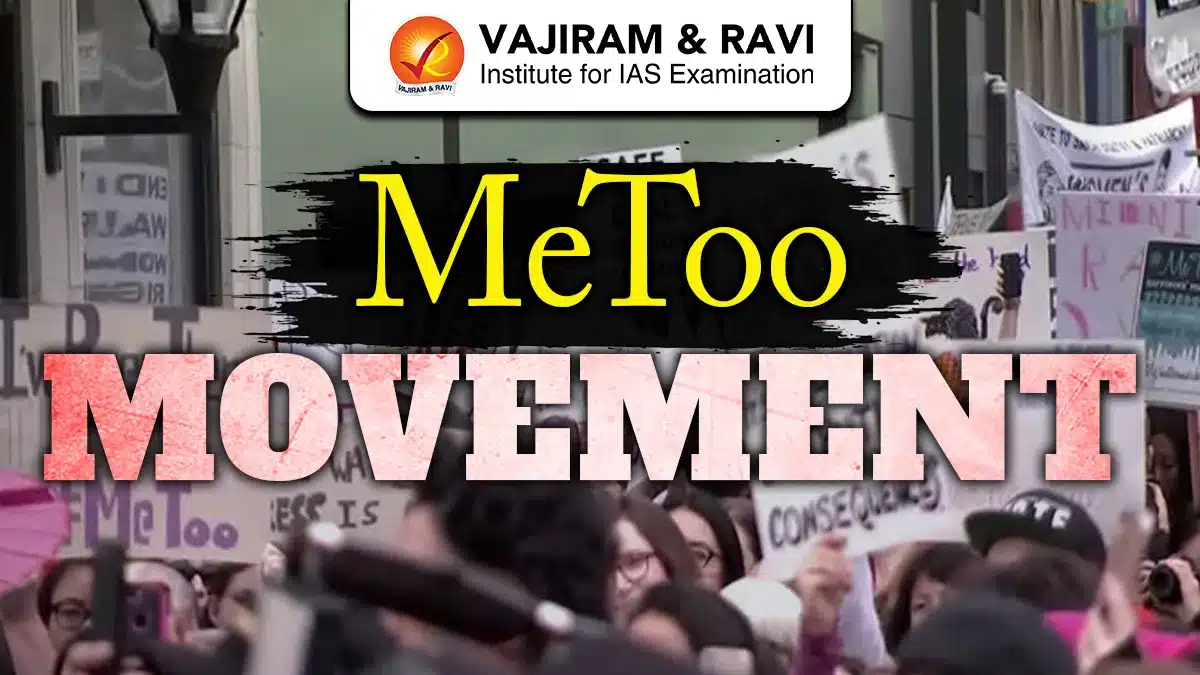
The MeToo Movement is a global social movement that aims to raise awareness about sexual harassment, sexual assault, and workplace misconduct, especially against women. It encouraged survivors to speak up about their experiences and exposed the deep-rooted culture of silence, power imbalance, and gender inequality in society. Over time, the movement has played a crucial role in reshaping conversations around consent, dignity, and accountability across the world, including India.
MeToo Movement Origin
- The MeToo Movement was founded in 2006 by Tarana Burke, a social activist from the United States.
- The term “Me Too” was initially used to support young women and girls from marginalized communities who had experienced sexual abuse.
- The main purpose of the movement was to create solidarity among survivors and help them understand that they were not alone.
- For several years, the movement worked at a community level without wide public attention.
- In October 2017, the movement gained global recognition when actress Alyssa Milano encouraged women to use the hashtag #MeToo on social media.
- Millions of women across countries shared their experiences of sexual harassment, assault, and workplace misconduct using the hashtag.
- The movement quickly spread beyond the entertainment industry to media, corporate offices, politics, education, and sports.
- In India, the #MeToo Movement gained momentum in 2018, when women journalists and professionals accused influential personalities of sexual misconduct.
- The Indian wave of #MeToo brought national attention to workplace safety, gender equality, and the need for strict implementation of sexual harassment laws.
- The movement transformed from a social media campaign into a global call for accountability, dignity, and justice for women.
MeToo Movement Objectives
The main objectives of the MeToo Movement are:
-
- To give voice to survivors of sexual harassment and assault
- To break the culture of silence and fear surrounding sexual abuse
- To promote accountability for perpetrators irrespective of their position or influence
- To ensure safer workplaces through awareness and institutional reforms
- To empower women and marginalized groups to speak up without fear of retaliation
- To promote gender equality and dignity at work
Legal Framework Related to Sexual Harassment in India
India has a strong legal framework to address sexual harassment, especially at the workplace. The major laws and provisions include:
- Sexual Harassment of Women at Workplace (Prevention, Prohibition and Redressal) Act, 2013
- Popularly known as the POSH Act, it provides protection against sexual harassment at the workplace and mandates:
- Every organization with 10 or more employees must constitute an Internal Complaints Committee (ICC).
- Time-bound inquiry and redressal mechanism
- Protection of complainant’s identity
- Penalties for non-compliance by employers
- Vishaka Guidelines (1997)
Issued by the Supreme Court, these guidelines laid the foundation for workplace safety laws in India until the POSH Act was enacted.
- Bhartiya Nyaya Sanhita (BNS) Provisions
- Sexual Harassment: IPC Section 354A is replaced by BNS Section 75, with clearer and gender-sensitive language focusing on dignity and consent.
- Assault on Women: IPC Section 354 becomes BNS Section 74, retaining punishment but strengthening protection of women’s dignity.
- Stalking & Cyber Crimes: IPC Section 354D is replaced by BNS Section 78, explicitly covering cyberstalking and digital surveillance.
- Voyeurism: IPC Section 354C becomes BNS Section 77, expanding scope to include online circulation of private images.
- Insult to Modesty: IPC Section 509 is replaced by BNS Section 79, covering online abuse and obscene communication.
Impact of MeToo Movement on Society and Workplace Culture
- Increased Awareness: The movement created mass awareness about sexual harassment, consent, and inappropriate workplace behavior.
- Empowerment of Survivors: Victims gained confidence to speak out against abuse without fear or shame.
- Stronger Workplace Policies: Organizations strengthened POSH compliance, ICC functioning, and internal grievance mechanisms.
- Accountability of Powerful Individuals: Influential persons in media, politics, and corporate sectors were held accountable for misconduct.
- Cultural Shift in Attitudes: Reduced victim-blaming and increased emphasis on dignity, respect, and gender sensitivity.
- Legal and Institutional Reforms: Encouraged stricter implementation of sexual harassment laws and workplace safety norms.
Challenges and Criticism
- Lack of Due Process: Allegations made on social media sometimes bypass legal investigation, raising concerns about fairness and natural justice.
- Possibility of False Accusations: Critics argue that misuse of the movement can harm reputations and careers without proper verification.
- Fear of Retaliation: Many victims hesitate to report harassment due to fear of job loss, social stigma, or professional backlash.
- Limited Reach: The movement largely benefited urban and educated women, while rural and informal sector workers remain underrepresented.
- Weak Implementation of Laws: Despite strong legal provisions, poor enforcement and inactive Internal Complaints Committees reduce effectiveness.
- Social Media Trial Culture: Public naming and shaming sometimes leads to media trials instead of lawful judicial processes.
Way Forward
- Strict implementation of the POSH Act must be ensured with regular monitoring of Internal Complaints Committees in all organizations.
- Awareness and gender-sensitization programs should be made mandatory to promote respectful workplace culture.
- Strong protection mechanisms are needed to safeguard complainants and witnesses from retaliation or victimization.
- Time-bound and transparent inquiry procedures should be followed to ensure justice while maintaining due process.
- Legal awareness and access to grievance redressal must be expanded to the unorganized and rural workforce.
- A balanced approach focusing on accountability, fairness, and cultural change is essential for the long-term success of the MeToo Movement.
MeToo Movement FAQs
Q1: What is the MeToo Movement?
Ans: The MeToo Movement is a global social movement against sexual harassment and sexual assault, encouraging survivors to speak out and seek justice.
Q2: Who started the MeToo Movement?
Ans: The movement was started in 2006 by Tarana Burke, an American social activist, to support survivors of sexual violence.
Q3: When did the MeToo Movement gain global attention?
Ans: It gained worldwide attention in 2017, after the hashtag #MeToo went viral on social media following allegations against Hollywood producer Harvey Weinstein.
Q4: When did the MeToo Movement begin in India?
Ans: In India, the MeToo Movement gained momentum in 2018, especially in media, film, and corporate sectors.
Q5: What is the main objective of the MeToo Movement?
Ans: Its main objective is to raise awareness about sexual harassment, empower survivors, ensure accountability, and promote safe workplaces.
