
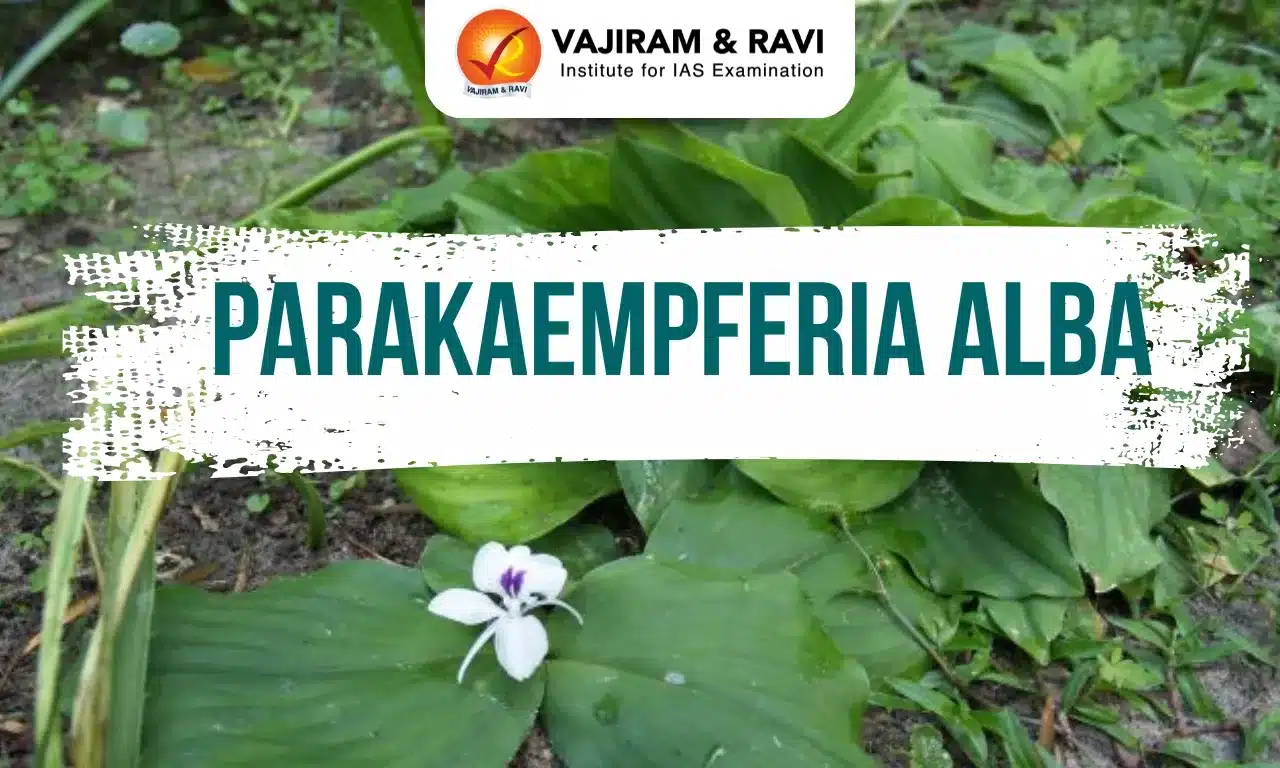
Parakaempferia Alba Latest News
A new species of ginger, Parakaempferia alba, has been discovered in the Siang Valley of Arunachal Pradesh.
About Parakaempferia Alba
- It is a new species of Zingiberaceae (ginger family).
- It was discovered in the Siang Valley of Arunachal Pradesh.
- The plant was found in the Miglung area of East Siang District at an altitude of 150–400 meters, growing along shaded streambanks in humid, sandy soil.
Key Facts about Zingiberaceae
- Zingiberaceae, the ginger family of flowering plants, is the largest family of the order Zingiberales, containing about 56 genera and about 1,300 species.
- These aromatic herbs grow in moist areas of the tropics and subtropics, including some regions that are seasonably dry.
- Members of the family are perennials that frequently have sympodial (forked) fleshy rhizomes (underground stems).
- They may grow to 6 metres (20 feet) in height.
- A few species are epiphytic—i.e., supported by other plants and having aerial roots exposed to the humid atmosphere.
- Many species are economically valuable for their spices and perfume.
- The dried thick rhizome of turmeric (Curcuma longa) is commonly ground for culinary, medicinal, and cosmetic uses.
- The seeds of Elettaria cardamomum are the source of cardamom.
- Ginger is obtained from the fresh or dried rhizomes of Zingiber officinale, and a number of ornamental gingers are grown for their attractive flowers and foliage.
- Several species of shellflower (Alpinia) are cultivated as ornamentals.
Source: NET
Parakaempferia Alba FAQs
Q1: What is Parakaempferia alba?
Ans: It is a newly discovered plant species belonging to the Zingiberaceae (ginger) family.
Q2: Where was Parakaempferia alba discovered?
Ans: It was discovered in the Siang Valley of Arunachal Pradesh.
Q3: In which climatic regions are Zingiberaceae plants commonly found?
Ans: They are found mainly in tropical and subtropical regions, including seasonally dry areas.
Q4: What type of underground stem is common in Zingiberaceae plants?
Ans: They commonly have sympodial, fleshy rhizomes.
