
Vitamin B1 Latest News
Analysis of bowel habits in over 268,000 people reveals how thiamine-related genes influence gut motility, linking constipation and diarrhea to shared biology and suggesting new IBS treatments.
About Vitamin B1
- Also known as thiamine or thiamin, vitamin B1 is a water-soluble vitamin, as are all vitamins of the B complex.
- Benefits:
- Thiamine helps convert carbohydrates into energy, allowing our cells to function optimally.
- It is also involved in supporting the nervous system, promoting healthy brain function, and aiding in the metabolism of proteins and fats.
- Vitamin B1 helps prevent complications in the:
- nervous system
- brain
- muscles
- heart
- stomach
- intestines
- It is also involved in the flow of electrolytes into and out of muscle and nerve cells.
- Thiamine occurs naturally in specific diets, is added to food products, and is available in dietary supplements.
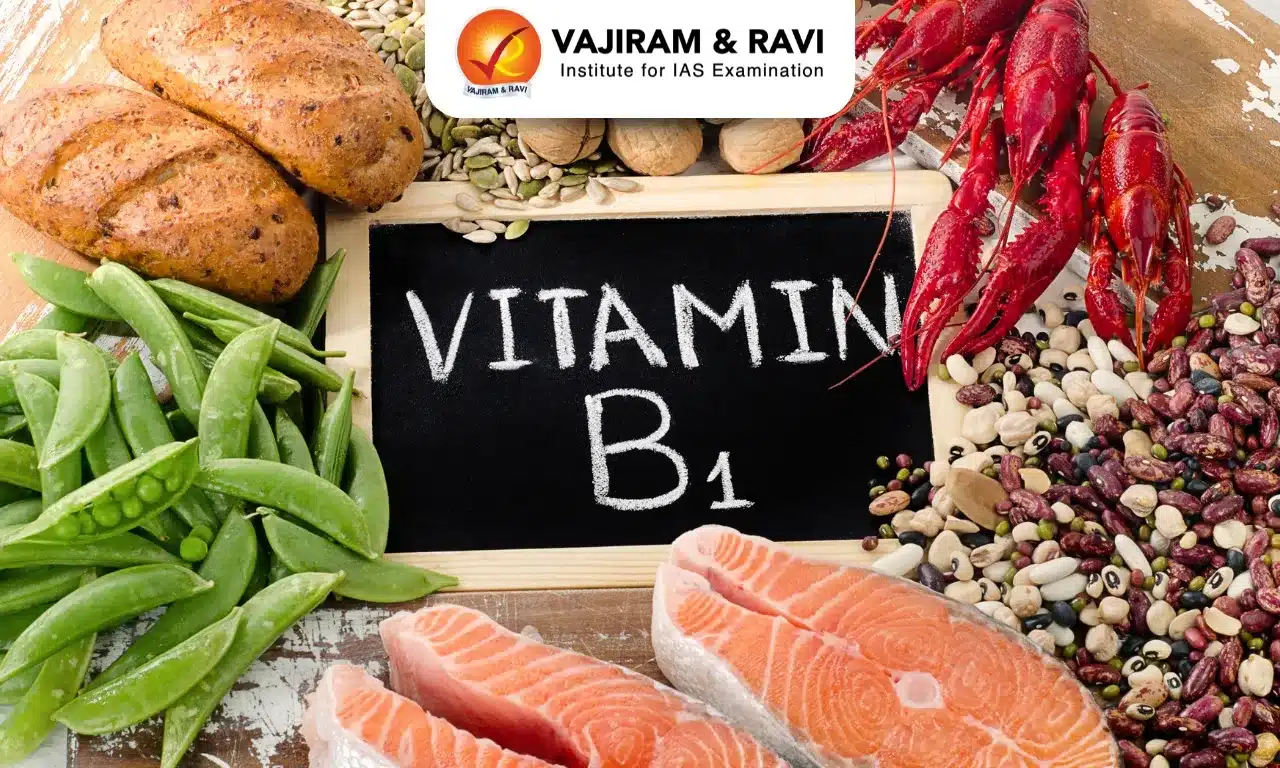
- Brown rice, whole grains, pork, poultry, soybeans, nuts, peas, dried beans, and fortified or enriched grain products such as bread, cereals, and infant formulas are rich sources of thiamine.
- Humans need a continuous supply of vitamin B1 because the body does not store it in significant amounts. It should be part of someone’s daily diet.
- Vitamin B1 Deficiency:
- A deficiency in thiamine can lead to a condition known as beriberi, which can cause symptoms like weakness, fatigue, nerve problems, and heart issues.
- Wernicke-Korsakoff syndrome: This severe form of thiamine deficiency is often associated with alcohol abuse and can lead to symptoms such as:
- Confusion and memory loss.
- Difficulty with balance and coordination.
- Visual disturbances, including double vision or eye muscle weakness.
Source: NM
Vitamin B1 FAQs
Q1: What is Vitamin B1 also known as?
Ans: Vitamin B1 is also known as thiamine or thiamin.
Q2: Is Vitamin B1 water-soluble or fat-soluble?
Ans: Vitamin B1 is a water-soluble vitamin.
Q3: What is the primary role of thiamine in the body?
Ans: Thiamine helps convert carbohydrates into energy for proper cellular function.
Q4: Which foods are rich sources of Vitamin B1?
Ans: Brown rice, whole grains, pork, poultry, soybeans, nuts, peas, dried beans, and fortified cereals and breads.
Q5: What disease is caused by Vitamin B1 deficiency?
Ans: Thiamine deficiency can cause beriberi.
