
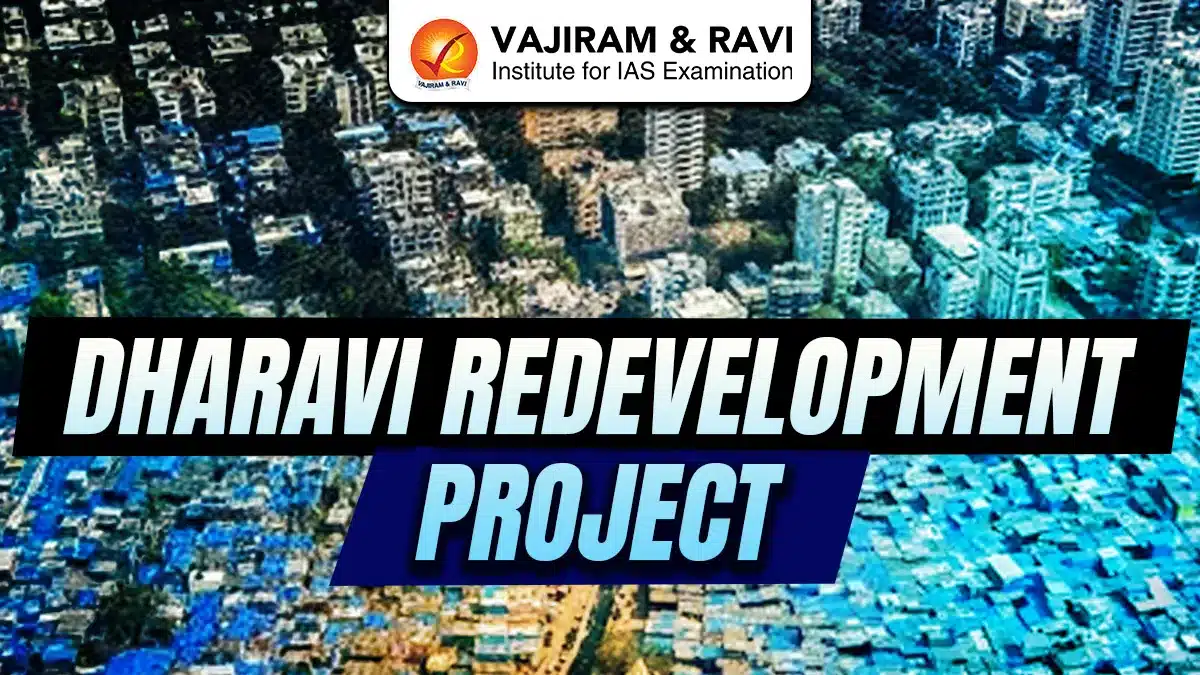
The Dharavi Redevelopment Project is one of the world’s largest urban redevelopment project, aiming to transform Dharavi - Asia’s largest slum located in central Mumbai, into a into a well-connected, transit-oriented urban zone, with emphasis on decongestion, multi-modal integration and inclusive public spaces.
It was approved in 2022 and aims to rehouse nearly 1 million residents by 2032 into modern, high-rise tenements while upgrading infrastructure and preserving local industries.
Dharavi Redevelopment Project Implementation
The Dharavi Redevelopment Project is being implemented as a Public-Private Partnership (PPP). The Government of Maharashtra owns the land and provides regulatory oversight through the Slum Rehabilitation Authority (SRA) while the private partner, the Adani Group, via its Special Purpose Vehicle Navbharat Mega Developers Private Limited (NMDPL) is responsible for financing, planning, construction, and execution. In this SPV, Adani Properties Private Limited (APPL) holds an 80 per cent stake, while the remaining 20 per cent is held by the SRA. The gross area of the Dharavi Notified Area is approximately 253.7 hectares. Of this, the redevelopment project covers 173.90 hectares (usable area), including land under the Railway Land Development Authority (RLDA), while 79 hectares of property are excluded from the project scope. The total estimated cost of the project is Rs 95,790 crore and the project is scheduled to be completed by January 2032.
Dharavi Redevelopment Project Significance
- Affordable and Safe Housing: Upgrades slums to planned apartments, promoting inclusive, resilient cities (SDG 11.1).
- Economic Inclusion: Formalizes informal industries, supporting sustainable urban livelihoods (SDG 11.3).
- Improved Infrastructure: Ensures water, sanitation, roads, and public spaces, enhancing access to safe urban services (SDG 11.2, 11.7).
- Urban Resilience and Planning: Reduces fire and health hazards through planned urbanization (SDG 11.a, 11.b).
Recent Initiatives in Urban Development in India
- Smart Cities Mission: Aims to develop 100 cities through integrated urban planning, digital governance, sustainable infrastructure, and citizen-centric services to improve quality of life.
- AMRUT (Atal Mission for Rejuvenation and Urban Transformation): Focuses on universal access to safe water supply, sewerage, stormwater drainage, and urban amenities, strengthening basic urban infrastructure.
- Pradhan Mantari Awas Yojana - Urban (PMAY-U): Seeks to achieve Housing for All by providing affordable housing to the urban poor through subsidies, in-situ slum redevelopment, and beneficiary-led construction.
- HRIDAY (Heritage City Development and Augmentation Yojana): Targets revitalization of historic urban cores by conserving cultural heritage while improving infrastructure and tourism potential.
Dharavi Redevelopment Project FAQs
Q1: What is the Dharavi Redevelopment Project?
Ans: It is a government-led initiative to redevelop Dharavi, Asia’s largest slum, into a planned urban area with proper housing, infrastructure, and commercial spaces.
Q2: Who is implementing the project?
Ans: The project is executed as a Public-Private Partnership (PPP): the Government of Maharashtra provides land and oversight, while the Adani Group handles financing, planning, and construction through its SPV.
Q3: What are the main objectives of the project?
Ans: To provide safe housing, improved sanitation and infrastructure, formalized economic opportunities, and planned urban development for Dharavi residents.
Q4: Name some recent initiatives related to Urban development
Ans: Smart Cities Mission, AMRUT (Atal Mission for Rejuvenation and Urban Transformation),Pradhan Mantari Awas Yojana – Urban, Heritage City Development & Augmentation Yojana (HRIDAY)
Q5: How does the project benefit residents?
Ans: Eligible slum dwellers receive permanent apartments, access to clean water, sanitation, roads, and formal commercial spaces, while livelihoods are integrated into redevelopment.
