
Paathara Practice Latest News
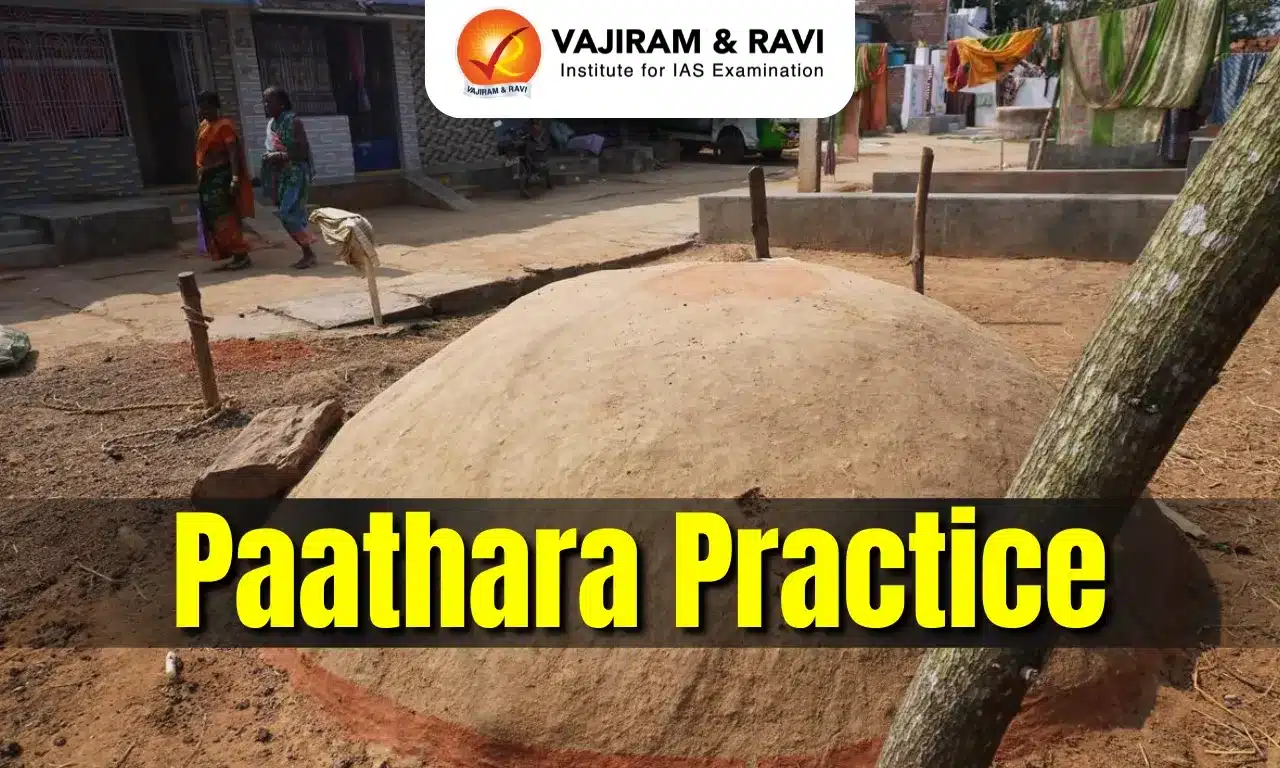
Recently, it is observed that the ancient grain storage tradition named Paathara practice or Khoni is fading fast in Srikakulam district.
About Paathara Practice
- It is an ancestral practice of underground grain storage pits.
- It is a storage pit in which freshly harvested grains, mostly paddy, are stored.
- It is observed by farmers along the banks of the Mahendratanaya River in the Uddanam region of Srikakulam district, near the Andhra Pradesh–Odisha border.
- This tradition thrived in the inland, hilly terrain, where underground grain storage was effective.
- Decline: Lack of space and awareness, as well as changes in rural architecture—have contributed to its decline.
Key Features of Paathara Practice
- Structure: The pit is dug in a rectangular shape, plastered with straw and clay, and sealed with a layer of cow dung on top.
- The Paathara was built in front of thatched houses and was an integral part of rural architecture, symbolising a thriving joint family system.
- Every paddy-growing family stores enough grain for its annual needs.
- Advantage: The Paathara protects grain from rodents, contamination, and theft.
Source: TH
Paathara Practice FAQs
Q1: What is the Paathara practice?
Ans: It is an ancestral practice of storing freshly harvested grains in underground storage pits.
Q2: Which crops are mainly stored using the Paathara practice
Ans: Mostly paddy is stored in Paathara pits.
Q3: Where is the Paathara practice traditionally observed?
Ans: It is observed by farmers along the banks of the Mahendratanaya River in the Uddanam region of Srikakulam district near the Andhra Pradesh–Odisha border.
Q4: Why was the Paathara practice suitable for the region?
Ans: It was effective in the inland, hilly terrain where underground grain storage worked well.
Q5: What is the structure of a Paathara pit?
Ans: It is a rectangular pit plastered with straw and clay and sealed with a layer of cow dung on top.
