
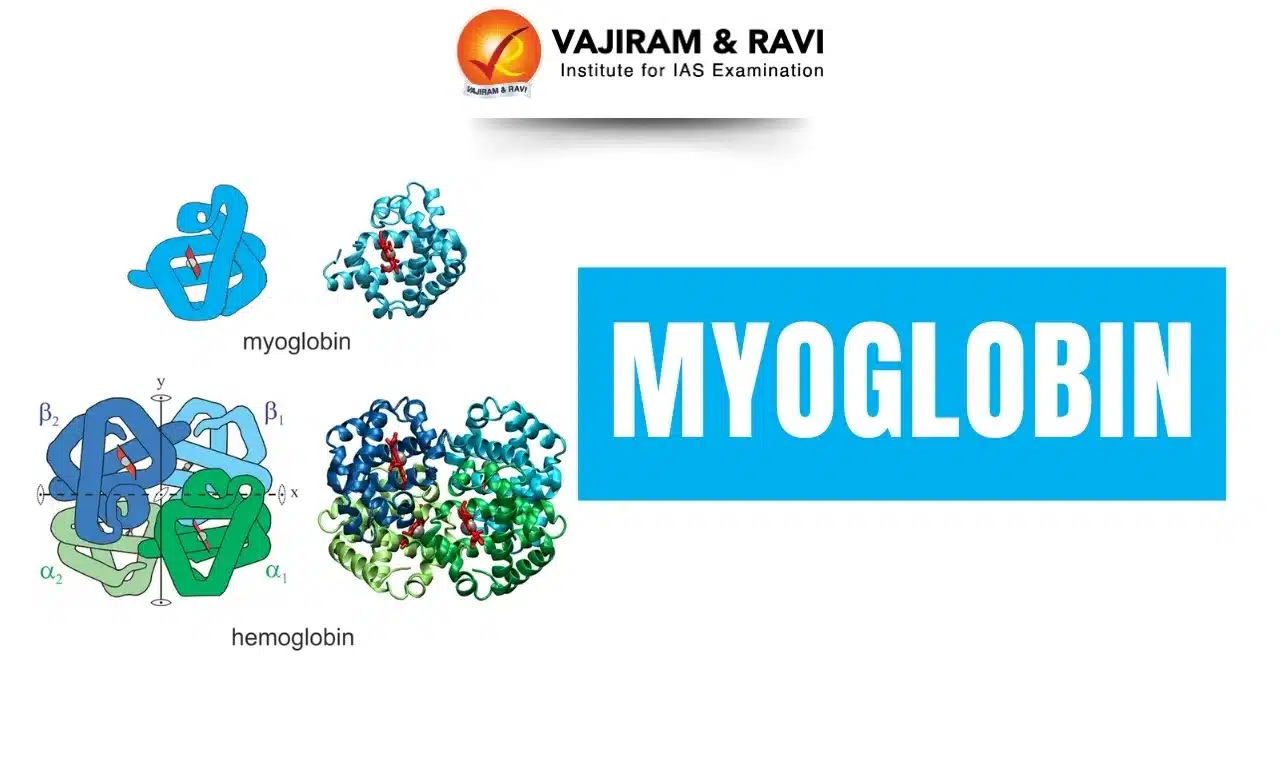
Myoglobin Latest News
Researchers have developed a flexible, low-cost biosensor capable of detecting myoglobin which is associated with the early stages of a heart attack.
About Myoglobin
- It is a small protein that accounts for about 2% of total muscle protein.
- It is found predominantly in striated muscle tissue, namely skeletal muscle and cardiac muscle.
- Specifically, it is in the cytoplasm of cardiac myocytes and the sarcoplasm of oxidative skeletal muscle fibers.
- It encodes a single polypeptide chain with one oxygen binding site.
- It is one of the members of the globin superfamily, which also includes hemoglobin. It often gets compared structurally and functionally to hemoglobin.
- Hemoglobin has four polypeptide chains and four oxygen binding sites.
- Composition: It’s made of amino acids, iron and other molecules that work together to hold onto oxygen.
Functions of Myoglobin
- Transports Oxygen: It transports oxygen from the bloodstream to your muscles when they need it to convert stored energy into movements.
- It serves as a sensitive indicator of cellular damage when detected in urine or plasma.
- It serves as a buffer of intracellular oxygen concentrations and as an oxygen reservoir in muscle.
- Enzymatic functions: It is necessary for the decomposition of bioactive nitric oxide to nitrate. The removal of nitric oxide enhances mitochondrial respiration.
- Remove reactive oxygen species: It can do this by interacting with fatty acids.
Source: TH
Myoglobin FAQs
Q1: What is Myoglobin?
Ans: A protein that stores oxygen in muscles
Q2: Where is Myoglobin primarily found?
Ans: Skeletal muscle and cardiac muscle
